
Octavia E. Butler (1947–2006)
Author of Parable of the Sower
About the Author
Science-fiction writer and novelist Octavia Estelle Butler was born in Pasadena, California, on June 22, 1947. She earned as Associate of Arts degree from Pasadena City College in 1968 and later attended California State University and the University of California. Her first novel, Patternmaster, show more was the first in a series about a society run by a group of telepaths who are mentally linked to one another. She explored the topics of race, poverty, politics, religion, and human nature in her works. She won a Hugo Award in 1984 for her short story Speech Sounds and a Hugo Award and Nebula Award in 1985 for her novella Bloodchild. She received a MacArthur Grant from the John D. and Catherine T. MacArthur Foundation. The award pays $295,000 over a five-year period to creative people who push the boundaries of their fields. She died in Lake Forest Park, Washington on February 24, 2006 at the age of 58. (Bowker Author Biography) show less
Series
Works by Octavia E. Butler
Octavia E. Butler: The Last Interview: and Other Conversations (The Last Interview Series) (2023) 57 copies, 1 review
Mauvaise graine 2 copies
Childfinder [short story] 1 copy
The Missing Relationship 1 copy
Kindred: A Reader's Guide 1 copy
Pilda semănătorului 1 copy
Butler, Octavia Archive 1 copy
O Mestre 1 copy
Book of the Living 1 copy
2000x: Bloodchild 1 copy
Associated Works
Dark Matter: A Century of Speculative Fiction from the African Diaspora (2000) — Contributor — 595 copies, 11 reviews
The Big Book of Science Fiction: The Ultimate Collection (2016) — Contributor — 520 copies, 8 reviews
The Norton Book of Science Fiction: North American Science Fiction, 1960-1990 (1993) — Contributor — 345 copies, 6 reviews
Sisters of the Revolution: A Feminist Speculative Fiction Anthology (2015) — Contributor — 345 copies, 8 reviews
Breaking Ice: An Anthology of Contemporary African-American Fiction (1990) — Contributor — 304 copies, 1 review
The Locus Awards: Thirty Years of the Best in Science Fiction and Fantasy (2004) — Contributor — 290 copies, 11 reviews
The Norton Anthology of African American Literature {2nd edition} (2003) — Contributor, some editions — 282 copies, 2 reviews
Women of Wonder, the Contemporary Years: Science Fiction by Women from the 1970s to the 1990s (1995) — Contributor — 216 copies, 2 reviews
Daughters of Earth: Feminist Science Fiction in the Twentieth Century (2006) — Contributor — 188 copies, 6 reviews
Daughters of Africa: An International Anthology of Words and Writings by Women of African Descent from the Ancient Egyptian to the Present (1992) — Contributor — 186 copies
Asimov's Science Fiction: Hugo & Nebula Award Winning Stories (1995) — Contributor — 103 copies, 2 reviews
The Prentice Hall Anthology of Science Fiction and Fantasy (2000) — Contributor — 100 copies, 2 reviews
New Eves: Science Fiction About the Extraordinary Women of Today and Tomorrow (1994) — Contributor — 70 copies, 3 reviews
Lightspeed Magazine, Issue 73 • June 2016 (People of Colo(u)r Destroy Science Fiction! special issue) (2016) — Contributor — 67 copies, 3 reviews
Asimov's Science Fiction Magazine: 30th Anniversary Anthology (2007) — Contributor — 60 copies, 1 review
Tales from Isaac Asimov's Science Fiction Magazine: Short Stories for Young Adults (1986) — Contributor — 42 copies
Nebula Awards 20: SFWA's Choices for the Best Science Fiction and Fantasy 1984 (1985) — Contributor — 28 copies
Bloodchildren: Stories by the Octavia E. Butler Scholars (2013) — Contributor — 27 copies, 2 reviews
Hive of Dreams: Contemporary Science Fiction from the Pacific Northwest (2003) — Contributor — 13 copies
Afro-Future Females: Black Writers Chart Science Fiction's Newest New-Wave Trajectory (2008) — Contributor — 12 copies
Terra Incognita, Number 1 — Interviewee — 1 copy
Tagged
Common Knowledge
- Legal name
- Butler, Octavia Estelle
- Birthdate
- 1947-06-22
- Date of death
- 2006-02-24
- Gender
- female
- Education
- Pasadena City College
California State University, Los Angeles - Occupations
- science fiction writer
- Organizations
- Science Fiction and Fantasy Writers of America
- Awards and honors
- Creative Arts Award L.A. YWCA (1980)
MacArthur Fellowship (1995)
Lifetime Achievement Award in Writing: PEN American Center (2000)
Guest of Honour, Eastercon, UK (1997)
SF Hall Of Fame (2010)
SFWA Infinity Award (2023) - Agent
- Merilee Heifetz (Writers House)
- Cause of death
- a fall
- Nationality
- USA
- Birthplace
- Pasadena, California, USA
- Places of residence
- Pasadena, California, USA
Seattle, Washington, USA - Place of death
- Lake Forest Park, Washington, USA
- Burial location
- Mountain View Cemetery, Altadena, California, USA
- Associated Place (for map)
- USA
Members
Discussions
January 2021: Octavia Butler in Monthly Author Reads (November 2021)
Octavia Butler: American Author Challenge in 75 Books Challenge for 2017 (August 2017)
Reviews
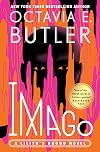
The final book of the series is just as highly readable as the first two. It is a bit more optimistic and closes the trilogy on a positive note - the power of love is infinite, it is able to overcome prejudice, fear, barriers of race and even irreconcilable differences between species.
Overall design of the trilogy strikes me as a good example of Hegelian dialectic. 'Dawn' is entirely focused on the thesis of Human Contradiction. We are a species endowed with intelligence yet bound by show more hierarchical behavior, which our rationality cannot overcome. We inevitably become self-destructive as a result of this contradiction. We are doomed, there is no possibility for us to survive, our time is running out, the Great Filter is already in action. This thesis is the central theme of the entire series and its main insight.
'Adulthood Rites' presents an antithesis - an alternative evolutionary path that is inclusive. Instead of attempting to climb to a pinnacle of creation by dominating other life forms, Oankali embrace whatever expression of life they meet - it becomes part of them. Life is precious, one can only kill in the act of desperate self-defense, one can never kill to attain a status or a privileged position. Closely following Hegel's norm Butler dismantles her antithesis. What is it if not a form of ultimate domination? Life being embraced has no choice even if it is an intelligent life. It cannot refuse to be absorbed, integrated, swallowed up by its gracious benefactor. It cannot retain its contradiction and attempt to overcome it independently. Humans obviously cannot accept this.
'Imago' formulates a synthesis. It unites the thesis and antithesis on a higher level. It chooses one aspect of human condition that can reach above hierarchal behavior - love. This unique selfless characteristic of humans is also important to Oankali, for whom it is rooted in partnership, family, raising of children - all these viewed as the highest possible reward for any individual. Humans and Oankali are brought together yet again but without coercion and subjugation. Turns out that love is all you need. show less
Overall design of the trilogy strikes me as a good example of Hegelian dialectic. 'Dawn' is entirely focused on the thesis of Human Contradiction. We are a species endowed with intelligence yet bound by show more hierarchical behavior, which our rationality cannot overcome. We inevitably become self-destructive as a result of this contradiction. We are doomed, there is no possibility for us to survive, our time is running out, the Great Filter is already in action. This thesis is the central theme of the entire series and its main insight.
'Adulthood Rites' presents an antithesis - an alternative evolutionary path that is inclusive. Instead of attempting to climb to a pinnacle of creation by dominating other life forms, Oankali embrace whatever expression of life they meet - it becomes part of them. Life is precious, one can only kill in the act of desperate self-defense, one can never kill to attain a status or a privileged position. Closely following Hegel's norm Butler dismantles her antithesis. What is it if not a form of ultimate domination? Life being embraced has no choice even if it is an intelligent life. It cannot refuse to be absorbed, integrated, swallowed up by its gracious benefactor. It cannot retain its contradiction and attempt to overcome it independently. Humans obviously cannot accept this.
'Imago' formulates a synthesis. It unites the thesis and antithesis on a higher level. It chooses one aspect of human condition that can reach above hierarchal behavior - love. This unique selfless characteristic of humans is also important to Oankali, for whom it is rooted in partnership, family, raising of children - all these viewed as the highest possible reward for any individual. Humans and Oankali are brought together yet again but without coercion and subjugation. Turns out that love is all you need. show less

Summary: The growth and heartbreaking destruction of Acorn, the Earthseed community founded by Lauren Olamina, and how Earthseed rose from the ashes.
In Parable of the Sower (review at https://bobonbooks.com/2020/04/03/review-parable-of-the-sower/) Octavia Butler creates a leader, Lauren Olamina, of a new religious movement in a dystopian America, and describes how she gathers a band of refugees into Acorn, a community formed around the principles of Earthseed. This work continues that story show more through the narration of Lauren’s daughter, who eventually, with the help of her uncle found her mother’s religious writings and journals, after being abducted as an infant by the extremist wing of a Christian nationalist group.
The chapters of the book begin with an Earthseed verse, then a section in bold print by daughter Asha Vere (born Larkin) followed by journal entries of Lauren that tell the story of the growth and heart-breaking destruction of Acorn, and what followed. Acorn was the place where Lauren and her husband Bankole built a community of refugees on his land and formulated the teachings of Earthseed, gradually drawing convinced adherents. Everyone worked and contributed, children were taught, and products of quality were sold in neighboring towns. She began to think about how they could send people out to teach Earthseed elsewhere. Amid this, the child they hoped for so long was born, who they named Larkin.
Meanwhile, Christian America, a church-based nationalist movement with political aspirations gained increasing sway in a country that wasn’t working. They brought order, housed the homeless, and their leader, Jarrett, became president on a platform of restoring American greatness by cleansing the country of all “heathen” beliefs. Her half-brother Marcos, rescued from slavers, refuses to join Earthseed, drawn by Christian America and his desire to preach. Bankole sees what is happening and wants to take Lauren and Larkin to a quiet town. Lauren refuses, convinced of the truth of Earthseed and the potential of a movement that would eventually take the human race to the stars.
Until, that is, the Crusaders, a radical arm of Christian America come, seize Acorn, imprisoning the men and women separately, and taking all the children away, placing them with adoptive parents, including Larkin. The adults were all “collared” with electronic collars. Bankole dies during the attack as does Olamina’s close childhood friend Zahra. They are supposedly being “re-educated” but no one succeeds in being released. Women are assaulted by their Christian captors and expected to be submissive.
How they escaped, overcoming their captors, and how Earthseed arose out of the ashes occupies the later part of the book. It comes down to Lauren’s “talents,” her abilities to lead and persuade people to follow, not blindly, but willingly. It also has to do with her “magnificent obsession” that she pursues, even when her brother won’t follow, or face the evils Christian America had perpetrated. Likewise, she seeks her daughter for years, but ironically, it is Marcos who finds her, misleads her about her mother and educates her, showing her love her adoptive family never did and her mother never could.
There is so much here. Butler presciently anticipates the Christian nationalism and demagoguery of our own day and its appeal, as well as the xenophobia of anything that is “other” and the subjugation of women. That is chilling. Equally interesting is her exploration of what it means to be a founder of a religious group, to know to the core of one’s being that a revelation is true, and how one cannot do other than pursue what one knows in one’s being is true. Persecution, the loss of family, and arduous work are all part of it, but also the forming of a community of the convinced.
Butler is a compelling but uneasy read. There are brutal and heartbreaking passages, but also much to provoke thought. In a sense, these books might also be parables that might come with the words of the greatest parable-teller, “Let the one who has ears, hear.” show less
In Parable of the Sower (review at https://bobonbooks.com/2020/04/03/review-parable-of-the-sower/) Octavia Butler creates a leader, Lauren Olamina, of a new religious movement in a dystopian America, and describes how she gathers a band of refugees into Acorn, a community formed around the principles of Earthseed. This work continues that story show more through the narration of Lauren’s daughter, who eventually, with the help of her uncle found her mother’s religious writings and journals, after being abducted as an infant by the extremist wing of a Christian nationalist group.
The chapters of the book begin with an Earthseed verse, then a section in bold print by daughter Asha Vere (born Larkin) followed by journal entries of Lauren that tell the story of the growth and heart-breaking destruction of Acorn, and what followed. Acorn was the place where Lauren and her husband Bankole built a community of refugees on his land and formulated the teachings of Earthseed, gradually drawing convinced adherents. Everyone worked and contributed, children were taught, and products of quality were sold in neighboring towns. She began to think about how they could send people out to teach Earthseed elsewhere. Amid this, the child they hoped for so long was born, who they named Larkin.
Meanwhile, Christian America, a church-based nationalist movement with political aspirations gained increasing sway in a country that wasn’t working. They brought order, housed the homeless, and their leader, Jarrett, became president on a platform of restoring American greatness by cleansing the country of all “heathen” beliefs. Her half-brother Marcos, rescued from slavers, refuses to join Earthseed, drawn by Christian America and his desire to preach. Bankole sees what is happening and wants to take Lauren and Larkin to a quiet town. Lauren refuses, convinced of the truth of Earthseed and the potential of a movement that would eventually take the human race to the stars.
Until, that is, the Crusaders, a radical arm of Christian America come, seize Acorn, imprisoning the men and women separately, and taking all the children away, placing them with adoptive parents, including Larkin. The adults were all “collared” with electronic collars. Bankole dies during the attack as does Olamina’s close childhood friend Zahra. They are supposedly being “re-educated” but no one succeeds in being released. Women are assaulted by their Christian captors and expected to be submissive.
How they escaped, overcoming their captors, and how Earthseed arose out of the ashes occupies the later part of the book. It comes down to Lauren’s “talents,” her abilities to lead and persuade people to follow, not blindly, but willingly. It also has to do with her “magnificent obsession” that she pursues, even when her brother won’t follow, or face the evils Christian America had perpetrated. Likewise, she seeks her daughter for years, but ironically, it is Marcos who finds her, misleads her about her mother and educates her, showing her love her adoptive family never did and her mother never could.
There is so much here. Butler presciently anticipates the Christian nationalism and demagoguery of our own day and its appeal, as well as the xenophobia of anything that is “other” and the subjugation of women. That is chilling. Equally interesting is her exploration of what it means to be a founder of a religious group, to know to the core of one’s being that a revelation is true, and how one cannot do other than pursue what one knows in one’s being is true. Persecution, the loss of family, and arduous work are all part of it, but also the forming of a community of the convinced.
Butler is a compelling but uneasy read. There are brutal and heartbreaking passages, but also much to provoke thought. In a sense, these books might also be parables that might come with the words of the greatest parable-teller, “Let the one who has ears, hear.” show less

This is the first of what I guess will be four Library of America volumes collecting all of Butler's work; it contains all of her non-series fiction: Kindred, Fledgling, and all of her short fiction except for one Patternist story. Kindred I had read twice before, a couple of the short stories once, and everything else here was new to me. As I often do, I chose to read it in (mostly) original publication order.
Kindred is a great book, and I don't really have anything to add to that show more summation. It's a harrowing look at the mentality of slavery, of how it changes the way you think, be you master or slave, by plunging a black woman and a white man from the 1970s into a situation where they must adapt or die. Lots of details that feel right.
Fledgling felt like minor Butler, probably the weakest novel I've read by her (though I certainly haven't read them all). The basic idea is sound and, as I'll get to below, pretty typical Butler: a species with an unusual means of reproduction that requires human cooperation. It's a decent enough take on vampires. But the book spends more time explaining the premise than doing anything interesting with it, and the trial sequence is a plod. You never feel any suspense, and one feels that the complexities of this situation have largely gone explored. Alas that there never was a sequel.
The short fiction was the big discovery for me here. Butler didn't consider herself much of a short story writer, but it's clear that when she wanted to write a piece of short fiction, she could by and large knock it out of the park. "Speech Sounds," "Bloodchild," "The Evening and the Morning and the Night," and "Amnesty" are all great, well observed, somewhat unsettling tales. Weird worlds that you can apply to our own, but not obvious or pat metaphors, either. The only one I didn't like was "The Book of Martha," which to be honest, felt like the kind of thing a beginning writer might come up with and wouldn't have been published if it wasn't by Butler.
Reading a bunch of one author in succession lets you see their themes and interest; the idea of people being biologically compelled to do something, especially reproduce, runs across almost everything in this volume. Often it's a compulsion that was externally injected in some way. Is this a violation of free will? Butler's stories seem to posit, no: if you don't think of your own compulsion to have sex and reproduce as a violation of free will, why should you think of these ones that way... no matter how distasteful they seem to us? Which of course encourages us to reflect on the biological drives we already have. In what I've read of her work, I think this theme reaches its peak in Xenogenesis: Dawn, but you can see it here, too. You could even claim it's what underlies Kindred: Dana must ensure reproduction, or she will die, even if it involves a rape of an innocent woman.
In light of Butler's own biography, it feels particularly interesting: no romantic partners, no offspring. Some have posited that she was asexual or aromantic, and if so, that might inform our understanding of all this. To her, human sexuality and reproduction may have been as alien as Tlic reproduction was to us! She makes us see it from the outside through science fiction because that is how she saw it herself.
As far as apparatus goes, this is the best Library of America volume I have read. Gerry Canavan provides a range of useful, enlightening material: I got more out of his twelve-page chronology of Butler's life than I did from the entirety of A Handful of Earth, A Handful of Sky, and he is a genuinely great writer of end notes. They don't just give you dictionary definitions, but explain why a reference matters in a way the enhances your understanding of the stories; a good example of this is when he doesn't just tell you what The Atlantic is, but tells you why Butler might have picked it as a literary journal to mention (p. 765). It was kind of funny to see many ordinary facts of 2006 life explained in the Fledgling notes, though. It's the past now, I guess!
So far no future Butler volumes from LOA have been announced, but I am hopeful for ones covering Xenogenesis, the Patternist series (in complete form, I pray), and the Parable novels. Based on this one, they will be well worth it. show less
Kindred is a great book, and I don't really have anything to add to that show more summation. It's a harrowing look at the mentality of slavery, of how it changes the way you think, be you master or slave, by plunging a black woman and a white man from the 1970s into a situation where they must adapt or die. Lots of details that feel right.
Fledgling felt like minor Butler, probably the weakest novel I've read by her (though I certainly haven't read them all). The basic idea is sound and, as I'll get to below, pretty typical Butler: a species with an unusual means of reproduction that requires human cooperation. It's a decent enough take on vampires. But the book spends more time explaining the premise than doing anything interesting with it, and the trial sequence is a plod. You never feel any suspense, and one feels that the complexities of this situation have largely gone explored. Alas that there never was a sequel.
The short fiction was the big discovery for me here. Butler didn't consider herself much of a short story writer, but it's clear that when she wanted to write a piece of short fiction, she could by and large knock it out of the park. "Speech Sounds," "Bloodchild," "The Evening and the Morning and the Night," and "Amnesty" are all great, well observed, somewhat unsettling tales. Weird worlds that you can apply to our own, but not obvious or pat metaphors, either. The only one I didn't like was "The Book of Martha," which to be honest, felt like the kind of thing a beginning writer might come up with and wouldn't have been published if it wasn't by Butler.
Reading a bunch of one author in succession lets you see their themes and interest; the idea of people being biologically compelled to do something, especially reproduce, runs across almost everything in this volume. Often it's a compulsion that was externally injected in some way. Is this a violation of free will? Butler's stories seem to posit, no: if you don't think of your own compulsion to have sex and reproduce as a violation of free will, why should you think of these ones that way... no matter how distasteful they seem to us? Which of course encourages us to reflect on the biological drives we already have. In what I've read of her work, I think this theme reaches its peak in Xenogenesis: Dawn, but you can see it here, too. You could even claim it's what underlies Kindred: Dana must ensure reproduction, or she will die, even if it involves a rape of an innocent woman.
In light of Butler's own biography, it feels particularly interesting: no romantic partners, no offspring. Some have posited that she was asexual or aromantic, and if so, that might inform our understanding of all this. To her, human sexuality and reproduction may have been as alien as Tlic reproduction was to us! She makes us see it from the outside through science fiction because that is how she saw it herself.
As far as apparatus goes, this is the best Library of America volume I have read. Gerry Canavan provides a range of useful, enlightening material: I got more out of his twelve-page chronology of Butler's life than I did from the entirety of A Handful of Earth, A Handful of Sky, and he is a genuinely great writer of end notes. They don't just give you dictionary definitions, but explain why a reference matters in a way the enhances your understanding of the stories; a good example of this is when he doesn't just tell you what The Atlantic is, but tells you why Butler might have picked it as a literary journal to mention (p. 765). It was kind of funny to see many ordinary facts of 2006 life explained in the Fledgling notes, though. It's the past now, I guess!
So far no future Butler volumes from LOA have been announced, but I am hopeful for ones covering Xenogenesis, the Patternist series (in complete form, I pray), and the Parable novels. Based on this one, they will be well worth it. show less

Lauren Olamina is 15, writing in her diary in 2024 about living in an impoverished but solid community in southern California dealing with the effects of climate change. Her father is the Baptist minister and leader of their community, and he trains her to survive, to shoot a gun if necessary, in this walled community that protects itself from people who would steal or kill to get what little they've scraped together. As she grows older, she starts to solidify her own beliefs - not in the show more God of her father - and realizes how dangerous their lives are and that she may have to run and live off the land.
There was something surreal about reading this book during a pandemic. The way human behavior is described - the best, of people banding together and forming community and the worst, killing or worse to get food and money - rang so true. Though the book was published in 1993, the dystopian world strikes me as incredibly prescient, something that still could happen despite the lack of cell phones. The diary format works perfectly. The pacing and story itself was enough to keep me turning pages without any manufactured cliffhangers at the end of a chapter. There was an intensity to it, and a lot of heartbreak, but ultimately a lot of hope in the human spirit. show less
There was something surreal about reading this book during a pandemic. The way human behavior is described - the best, of people banding together and forming community and the worst, killing or worse to get food and money - rang so true. Though the book was published in 1993, the dystopian world strikes me as incredibly prescient, something that still could happen despite the lack of cell phones. The diary format works perfectly. The pacing and story itself was enough to keep me turning pages without any manufactured cliffhangers at the end of a chapter. There was an intensity to it, and a lot of heartbreak, but ultimately a lot of hope in the human spirit. show less
Lists
Page Turners (1)
High Priority (1)
Diverse Horror (1)
1900s: America (1)
1980 great books (1)
To Read - Horror (1)
Summer 2026 (1)
Schwob Nederland (1)
Slavefic (1)
Literary SF/F (1)
Wishlist (1)
Books for Birute (1)
01 (1)
Best Audiobooks (1)
1980s (1)
1800s: America (1)
el (1)
Gaming Bookclub (1)
Plantations (1)
Florida (1)
SFFCat 2015 (1)
Literary Witches (3)
Favourite Books (3)
The Zora Canon (3)
2023 (2)
Best Dystopias (2)
1990s (2)
Overdue Podcast (2)
Read in 2021 (2)
Female Author (6)
Black Authors (6)
Five star books (3)
Zora Canon (3)
Sense of place (1)
2020 (1)
1970s (1)
Fiction For Men (1)
The "A" List (1)
Unread books (1)
Allie's Wishlist (1)
2021 (1)
Southern Fiction (1)
2024 (1)
Nebula Award (2)
AP Lit (2)
Nineties (2)
Awards


You May Also Like


Associated Authors
Statistics
- Works
- 58
- Also by
- 53
- Members
- 56,278
- Popularity
- #260
- Rating
- 4.1
- Reviews
- 1,759
- ISBNs
- 394
- Languages
- 15
- Favorited
- 296
