These Truths, by Jill Lepore - Part One - January
Talk 75 Books Challenge for 2019
Join LibraryThing to post.
This topic is currently marked as "dormant"—the last message is more than 90 days old. You can revive it by posting a reply.

2Berly
Welcome. To be truthful, I am not much of a history buff, but I heard Jill Lepore speak about this book and I was excited! Each month, January - April, we will read one section. This thread is a chance to talk about lots of things: what you knew, what you learned, what surprised you, the pictures, the people, the places....
I am not sure spoilers are needed, but it would be nice to start off your comments with a page number or a year, so others can look up what you are talking about.
The Breakdown of Sections...
January--Part One, The Idea, pages 1-149 (1492-1799)
February--Part Two, The People, pages 153-310 (1800-1865)
https://www.librarything.com/topic/303118
March--Part Three, The State, pages 311-520 (1866-1945
https://www.librarything.com/topic/304319#
April--Part Four, The Machine, pages 521-789 (1946-2016)
I am not sure spoilers are needed, but it would be nice to start off your comments with a page number or a year, so others can look up what you are talking about.
The Breakdown of Sections...
January--Part One, The Idea, pages 1-149 (1492-1799)
February--Part Two, The People, pages 153-310 (1800-1865)
https://www.librarything.com/topic/303118
March--Part Three, The State, pages 311-520 (1866-1945
https://www.librarything.com/topic/304319#
April--Part Four, The Machine, pages 521-789 (1946-2016)

4Berly

Literary Arts' podcast of Jill Lepore's visit can be found on iTunes for free. You can also follow the link from here:
https://literary-arts.org/archives/
and then click on the green highlighted line in the main paragraph: "Click here to visit The Archive Project on iTunes."
5ronincats
I did not get this for Christmas despite explicit hints. I'm #28 in line for 37 copies at the library. I guess I'd better go ahead and order it from Ammy. Thanks, Kimmers, for setting this up!
6Berly
>5 ronincats: Hi Roni--I made my daughter buy it for me for Christmas!! LOL
$25.31 on Amazon or $19.99 on Kindle....
$25.31 on Amazon or $19.99 on Kindle....
8Berly
>7 drneutron: Thank you!!! You da best!!
9Dejah_Thoris
I requested this from the library earlier today before I saw this thread - how cool! I may, like Roni, break down and buy it....
10Berly
>9 Dejah_Thoris: Welcome! I hope you get a copy soon (using whatever method) and that you have fun joining us on this read!
11katiekrug
I'm in! The books is downloaded to my Kindle and ready to go. I plan to read a bit of it tomorrow.
Thanks for setting this up, Kim.
Thanks for setting this up, Kim.
12Berly
>11 katiekrug: Yay!! Glad to see you here.
13EBT1002
I'm here! I don't have the book yet -- the campus bookstore wasn't open today -- but I will have it by the first weekend of the year. Thank you for hosting us, Kimmers!!
14EBT1002
Oh, and along with others, I'm thinking to buy this for my Kindle. It's a bit hefty....
ETA: Done.
ETA: Done.
15Berly
>14 EBT1002: Hello, Ellen. Congrats on finding a copy! ; )
16Familyhistorian
I got a hard cover copy at a Boxing Week sale so I'm all set. It is a bit heavy, though.
17Berly
>16 Familyhistorian: LOL. It is the history of a nation afterall! ; )
18charl08
Ok, I'm here. (I know you were all waiting for that, lol). I bought this when I was in the UCSD bookshop, but it's a good job Kim mentioned this group read on her thread as I had completely forgotten it.
19Berly
>18 charl08: Yay! Glad you remembered!
20katiekrug
I read the Introduction last night, and found even that interesting, so things are looking good :)
21Berly
>20 katiekrug: You overachiever, you! Glad to hear it. : )
22brenzi
Oh God I was hoping I wouldn't get sucked into this but I happen to love history so I guess I'll be forced to shell out for this because I don't think a library copy will work at the rate of one section per month.
23Berly
>22 brenzi: Sorry! Not sorry. I am glad you are going to be part of this. : )
24Familyhistorian
>18 charl08: Ha Charlotte, I bet a lot of this history will be newer to us than most of the rest of the readers on this thread. I'm looking forward to learning history that wasn't covered in school.
25lauralkeet
Count me in! I read the first two parts in November/December for a RL book group, and need to finish by late February. Even though I'll be reading ahead of this group's pace, I intend to join the discussion. I learned a lot from what I've read so far and am eager to join the conversation.
26katiekrug
Just from reading the Introduction, I'm struck by how often we take for granted the truly revolutionary nature of what the founders accomplished in terms of putting control into the hands of the (non-enslaved) people. The farther time moves on, the less unique it seems, I think.
I highlighted this bit:
"'The infant periods of most nations are buried in silence, or veiled in fable,' James Madison once remarked. Not the United States. Its infancy is preserved, like baby teeth kept in a glass jar, in the four parchment sheets of the Constitution, in the pages of almanacs that chart the weather of a long-ago climate, and in hundred of newspapers, where essays for and against the new system of government appeared alongside the shipping news, auction notices, and advertisements for the return of people who never were their own masters - women and children, slaves and servants - and who had run away, hoping to ordain and establish, for themselves and their posterity, the blessings of liberty."
Such a concise summing up of the fundamental tension inherent in the founding of a nation of free people built on the backs of slaves. There is so much to inspire and to disgust at the same time.
I highlighted this bit:
"'The infant periods of most nations are buried in silence, or veiled in fable,' James Madison once remarked. Not the United States. Its infancy is preserved, like baby teeth kept in a glass jar, in the four parchment sheets of the Constitution, in the pages of almanacs that chart the weather of a long-ago climate, and in hundred of newspapers, where essays for and against the new system of government appeared alongside the shipping news, auction notices, and advertisements for the return of people who never were their own masters - women and children, slaves and servants - and who had run away, hoping to ordain and establish, for themselves and their posterity, the blessings of liberty."
Such a concise summing up of the fundamental tension inherent in the founding of a nation of free people built on the backs of slaves. There is so much to inspire and to disgust at the same time.
27lauralkeet
One of my first highlights was this quote from Chapter 1:
Wow. That blew my mind.
In 1492, about sixty million people lived in Europe, fifteen million fewer than lived in the Americas.
Wow. That blew my mind.
28EBT1002
>27 lauralkeet: A true mind-bender. All the people who lived in the Americas who have been dismissed and disregarded -- made invisible! -- by history.
29Chatterbox
I'll start reading it next weekend, after I get through my end-of-week work binge, and return some high-priority reading items to the library. This is an Athenaeum item that I think will have to go back to them mid-January, so I'll prob have to take notes in order to keep discussing it throughout the whole period. Or win the lottery and get a copy for Kindle.
30Berly
Intro--
"...it has been the question ever since...Can a political society really be governed by reflection and election, by reason and truth, rather than by accident and violence, by prejudice and deceit?"
Still an excellent question. I am still hopeful.
"...it has been the question ever since...Can a political society really be governed by reflection and election, by reason and truth, rather than by accident and violence, by prejudice and deceit?"
Still an excellent question. I am still hopeful.
31ronincats
I will get my copy on Thursday. I went with the hard copy as I am hoping there will be charts and tables and maps involved.
32streamsong
Just ordered a copy. I went one whole day into 2019 without purchasing a book. (Applause, please).
33Donna828
For those of you who have the print version, I have a question. Just how small is the print? Does it make you squint or give you a headache? As one whose vision isn’t the greatest, I am trying to decide between the hardcover copy or the ebook. The comments on Amazon weren’t very favorable regarding the dead-tree book.
34Berly
>31 ronincats: Not so much tables and charts, but lots of images.
>32 streamsong:
>33 Donna828: I find the print size okay, but it is a lighter font. No headache yet.
>32 streamsong:

>33 Donna828: I find the print size okay, but it is a lighter font. No headache yet.
35charl08
I really admire everyone thinking about the high political / philosophical points, but I've got stuck on thinking how smelly the debates must have been in a room in Philadelphia in summer with the windows nailed down...
36katiekrug
>30 Berly: - Me too, Kim. (Hopeful, that is...)
37rosalita
>33 Donna828: Donna, I don't find the font terribly small, although it's probably smaller than I would set it on an ereader. But it is a handful, weight-wise, in hardcover, so if you also find it difficult to hold big heavy books that might be another strike against it.
38Berly
>35 charl08: I thought the very same thing! But that bunch of stinky men certainly got points for being dedicated to a good cause.
39Donna828
Thanks for the feedback on print size, Kim and Julia. My book will arrive on Saturday. I tend to ignore my Kindle books. It will be pretty difficult to ignore a physical door stopper! I’m looking forward to having company reading this tome.
42ffortsa
I decided to buy the Kindle edition - more a question of real estate than font size, but font size will help.
43katiekrug
I wish I understood the mysteries of e-books - my version of the book on my Kindle PAperwhite doesn't include page numbers. But I also downloaded it to the Kindle app on my phone, and that one has page numbers.... Annoying!
44ffortsa
>43 katiekrug: Oh, thanks for the tip. I can use my old Kindle, my tablet, or my phone, so I hope one of them has the page numbers you found.
45Forthwith
Excellent Choice! I have the Kindle version and it is definitely up for 2019. I have not heard her speak but have heard very good things.
It took some courage to take to the writing desk for this kind of book and bring a renewed look.
It took some courage to take to the writing desk for this kind of book and bring a renewed look.
46lauralkeet
>43 katiekrug: that's weird. Last time I checked, I have page numbers on both my Kindlel Paperwhite and iPad app.
47karenmarie
I used the last of my Christmas money to my hardcover copy - due to arrive tomorrow. I'm definitely in!
49Berly
p. 12 Love this:
"To write something down doesn't make it true. But the history of truth is lashed to the history of writing like a mast to a sail."
"To write something down is to make a fossil record of the mind. Stories are full of power and force; they seethe with meaning, with truth and lies, evasions and honesty."
"To write something down doesn't make it true. But the history of truth is lashed to the history of writing like a mast to a sail."
"To write something down is to make a fossil record of the mind. Stories are full of power and force; they seethe with meaning, with truth and lies, evasions and honesty."
50LovingLit
>49 Berly: aaah language, I am finding the same thing with words, discourses, that which we 'know' is true by the fact that everyone assumes it is. (sorry- thesis talk coming out there, it finds its way into everything)
I have my copy of the book!!!! It's pretty :)
I have my copy of the book!!!! It's pretty :)
51EBT1002
I read the introduction the other evening and I can tell this is going to be good. I'm highlighting liberally. I am reading it on my kindle if only to spare my wrists.
I'm glad we're reading this after I have spent the past year listening to the soundtrack to 'Hamilton' so much. It just feels like background theme music to accompany her work.
I appreciated the bit where she talked about how she chose what to include, what to leave out. That this is primarily a political history of the US provides focus.
I'm glad we're reading this after I have spent the past year listening to the soundtrack to 'Hamilton' so much. It just feels like background theme music to accompany her work.
I appreciated the bit where she talked about how she chose what to include, what to leave out. That this is primarily a political history of the US provides focus.
52katiekrug
I'm a bit into Chapter 2, and one thing I am appreciating is how Lepore includes the history of slavery right from the get go. I think it often happens that histories of the US don't do much with slavery until it all comes to a head in the mid-19th century, but it's really important to understand how one institution evolved alongside the other.
53lauralkeet
>51 EBT1002: I have the Kindle edition, bought initially because this book is so big. But I've made more highlights in this book than probably anything else I've ever read on Kindle. This is largely because I want to note passages for discussion here and elsewhere. For some reason I am far less likely to mark passages on physical books.
>52 katiekrug: I couldn't agree with you more, Katie. Lepore provides a long view of history vs. the more event-driven approach we are taught in school. I was also struck by the interdependence between the British involvement in the American colonies and their Caribbean colonies, as regards slavery and the economy. The Caribbean connection gave me a new perspective on developments that occurred in America -- again, a broader view of history than the US-centric view we are taught.
I also really liked this quote from Chapter 2:
>52 katiekrug: I couldn't agree with you more, Katie. Lepore provides a long view of history vs. the more event-driven approach we are taught in school. I was also struck by the interdependence between the British involvement in the American colonies and their Caribbean colonies, as regards slavery and the economy. The Caribbean connection gave me a new perspective on developments that occurred in America -- again, a broader view of history than the US-centric view we are taught.
I also really liked this quote from Chapter 2:
Slavery does not exist outside of politics. Slavery is a form of politics, and slave rebellion a form of violent political dissent.
54karenmarie
My book arrived yesterday!
From the Introduction, I thought 1492 was a bit arbitrary, but on page 9 Lepore made it clear, at least to me, why she chose that date:
Before 1492, Europe suffered from scarcity and famine. After 1492, the vast wealth carried to Europe from the Americas and extracted by the forced labor of Africans granted governments new powers that contributed to the rise of nation states.
In 1492 there were 75 million people in the Americas, only 60 million people in Europe.
So far this is fascinating.
From the Introduction, I thought 1492 was a bit arbitrary, but on page 9 Lepore made it clear, at least to me, why she chose that date:
Before 1492, Europe suffered from scarcity and famine. After 1492, the vast wealth carried to Europe from the Americas and extracted by the forced labor of Africans granted governments new powers that contributed to the rise of nation states.
In 1492 there were 75 million people in the Americas, only 60 million people in Europe.
So far this is fascinating.
55LovingLit
Up to page 75 now. Am liking the quick transitions from topic to topic, but that certain topics are returned to periodically. It makes for interesting reading.
:)
:)
56ffortsa
I started These Truths: A History of the United States, and couldn't help giggling through all those parallel pairs of words Lepore wields in the introduction. It makes the language soar a bit, don't you think?
Onward. I was thinking of the page number thing, and I wonder if it depends on the size of the font we choose? Some size may conform to the book page, whereas others won't. I'll check my tablet - haven't been paying attention to that. I'm a long way from 1799 anyway.
>54 karenmarie: The numbers cited for Haiti were horrifying - from three million to 500. What devastation.
Onward. I was thinking of the page number thing, and I wonder if it depends on the size of the font we choose? Some size may conform to the book page, whereas others won't. I'll check my tablet - haven't been paying attention to that. I'm a long way from 1799 anyway.
>54 karenmarie: The numbers cited for Haiti were horrifying - from three million to 500. What devastation.
57charl08
Mostly lurking but just to say how much I am enjoying this thread: fascinating to read what has caught each reader's attention.
58streamsong
Kim I added both of the quotes from >30 Berly: and >49 Berly: to the quotes on the book page. :)
I agree that her prose soars - it's quite easy to read. Reading history is often a chore for me; so far I am very pleasantly surprised
>27 lauralkeet: >54 karenmarie: >56 ffortsa: The numbers of Europeans vs Native Americans was a suprise; the numbers in the devastation of Haiti shocking.
I agree that her prose soars - it's quite easy to read. Reading history is often a chore for me; so far I am very pleasantly surprised
>27 lauralkeet: >54 karenmarie: >56 ffortsa: The numbers of Europeans vs Native Americans was a suprise; the numbers in the devastation of Haiti shocking.
59Familyhistorian
I was surprised by the numbers on p 16 - 17, "Between 1500 and 1800, roughly two and a half million Europeans moved to the Americas; they carried twelve million Africans there by force; and as many as fifty million Native Americans died." I was aware of the Native American deaths but not that so many more Africans went to America than Europeans. It seems counter-intuitive that 2.5 million people could subjugate 12 million, no wonder there was such a fear of slave rebellion.
60Berly
>54 karenmarie: But it isn't just that, it was also that the Founding Fathers wanted a longer history for America and its European history starting with the "discovery" by Columbus in 1492 (instead of 1776 and the Declaration of Independence). Still this date is based on English involvement, ignoring the natives and earlier settlements by Spain and France.
>58 streamsong: Oh, good idea! Thanks.
So another favorite quote at the end of Chapter One (28):
" 'Each man calls barbarism whatever is not his own practice.' (Montaigne) They are to us as we are to them, each true: out of two truths, one."
>59 Familyhistorian: Me, too!
>58 streamsong: Oh, good idea! Thanks.
So another favorite quote at the end of Chapter One (28):
" 'Each man calls barbarism whatever is not his own practice.' (Montaigne) They are to us as we are to them, each true: out of two truths, one."
>59 Familyhistorian: Me, too!
61streamsong
Another disturbing factoid: The first 20 African slaves were landed in the Carolinas in 1619, a year before the Pilgrims established Plymouth in 1620. p 38.
62msf59
I started These Truths. Thanks so much for setting this up, Kim. I am all ready deep into Part One and the Revolution has begun, so many interesting facts are presented here and I really like Lepore's approach, focusing on slightly more obscure stories. I also like her running theme of "Truth".
I am listening to this on audio, so it is tougher to share quotes but I will have to start writing some stuff down.
I am listening to this on audio, so it is tougher to share quotes but I will have to start writing some stuff down.
63karenmarie
>60 Berly: You are right, Kim. She does expand on the reasoning behind 1492. The quote above simply made it reasonable to me that she chose that date.
page 84
And yet this defiance did not extend to Quebec or to the sugar islands, where the burden of the Stamp Act was actually heavier. Thirteen colonies eventually cast off British rule; some thirteen more did not.
The issues leading up to rebellion are a fascinating dance. One thing that surprises me is that the colonists frequently used the word 'slavery' to define any attempt at controlling them from Britain yet still justified the true slavery of black people.
page 84
And yet this defiance did not extend to Quebec or to the sugar islands, where the burden of the Stamp Act was actually heavier. Thirteen colonies eventually cast off British rule; some thirteen more did not.
The issues leading up to rebellion are a fascinating dance. One thing that surprises me is that the colonists frequently used the word 'slavery' to define any attempt at controlling them from Britain yet still justified the true slavery of black people.
64lindapanzo
Kim, how did I not see this group read til Mark mentioned it? I will use some of my wellness credits at Amazon to grab a copy and get going with it.
One comment I saw is that the typeface for the book is small. True? Update: Never mind, I saw the previous discussion on this topic. I might opt for the Kindle edition. Between smallish typesize and hefty book...
I do note that Amazon has a discount coupon for the print copy.
One comment I saw is that the typeface for the book is small. True? Update: Never mind, I saw the previous discussion on this topic. I might opt for the Kindle edition. Between smallish typesize and hefty book...
I do note that Amazon has a discount coupon for the print copy.
65Berly
Rough week with not much reading time, but I just picked this book up again and was immediately struck by the background info on the Magna Carta and how King Charles' dissolution of Parliament was a major reason for the King's subjects to wish to flee England and his rule. In my days of school, I don't think we covered the impetus for leaving England very much. (pp 42-43).
66Berly
>63 karenmarie: Amazing how people can use a word (Slavery) so differently depending on whether or not it applies to them or to others. How can they have been so blind?
>64 lindapanzo: Welcome!! Glad Mark spoke up about this thread. : )
>64 lindapanzo: Welcome!! Glad Mark spoke up about this thread. : )
67lindapanzo
>66 Berly: Thanks, Kim. I picked up the Kindle edition yesterday and then promptly went out to the movies. Today hasn't allowed much reading time either but I'm hoping to get started today.
68ffortsa
I was struck by the notion that Parliament as a word comes from 'parlay', which is what the nobles were doing with King John. Duh.
69EBT1002
>52 katiekrug: and >53 lauralkeet: I agree with you both, Katie and Laura. I think she does an excellent job of telling the story of the philosophical underpinnings of the tenets of democracy, how slavery fit into that (and how the notion of 'race' had to be developed to justify the blatant contradictions), and the interconnection between the Caribbean and what was to become the US. I feel like the Caribbean was completely left out of my history education so I have never thought about how the colonization of this whole section of the globe was all of a piece.
>68 ffortsa: I thought that was a cool factoid too, Judy.
>68 ffortsa: I thought that was a cool factoid too, Judy.
70lauralkeet
>65 Berly: In my days of school, I don't think we covered the impetus for leaving England very much.
That was interesting to me, too. It seems like most of the history we've been taught was covered in a fairly narrow way, without context or things that connect events. I had a similar reaction to the story of the Mayflower, which is often told as if they were the only Europeans settling the country at that time. As Lepore makes clear, that was not the case.
>69 EBT1002: also the Caribbean, as Ellen noted.
That was interesting to me, too. It seems like most of the history we've been taught was covered in a fairly narrow way, without context or things that connect events. I had a similar reaction to the story of the Mayflower, which is often told as if they were the only Europeans settling the country at that time. As Lepore makes clear, that was not the case.
>69 EBT1002: also the Caribbean, as Ellen noted.
71japaul22
Hi everyone - I'm not a 75er but I know a few of you from other LT groups. I'm just about to start These Truths and hoping it's ok if I jump in on the discussion. I got this from the library in a kindle version, so I only have it for 3 weeks. If that's not enough time, I might end up buying it.
I do love Jill Lepore so I'm looking forward to this and already intrigued by the comments here.
I do love Jill Lepore so I'm looking forward to this and already intrigued by the comments here.
73katiekrug
I'm just hitting the start of the Revolution and I've highlighted a lot on my Kindle. I need to go back and remind myself about what's really been hitting me... Last night, I found the mention(s) of some abolitionist efforts in the mid-18th century interesting. I wasn't really aware of that. Also not covered in school (understandable, really, there is *so* much), is the tension between asserting natural rights to freedom and liberty and the institution of slavery. As I've mentioned before, slavery never got much mention in my middle- and high school US history classes until we got to the chapters on the Civil War...
74Berly
>71 japaul22: Welcome Jennifer!! We are planning one section a month so the total planned read is through April.
>72 katiekrug: : )
>72 katiekrug: : )
75Berly
>73 katiekrug: I also don't really remember any talk of slavery in school until the Civil War. I am even more appalled when I now know England used to disparage other nations for their use of slaves.
And in the beginning, it wasn't approved of in America either. From the Carolina Constitution and Locke's Two Treatises on Government): "Slavery is so vile and miserable an estate of man, and so directly opposite to the generous temper and courage of our nation, that it is hardly to be conceived that an Englishman, much less a gentleman, should plead for it." (p. 54)
But, that didn't last. Sugar happened and from then on there was a two-tier concept of slavery: while attempting to achieve freedom from England and arguing for the rights of all men, New Americans forgot (willfully overlooked) the rights of those enslaved.
"It was lost on no one that the loudest calls for liberty in the early modern world came from a part that world that was wholly dependent on slavery" (p. 64)
And in the beginning, it wasn't approved of in America either. From the Carolina Constitution and Locke's Two Treatises on Government): "Slavery is so vile and miserable an estate of man, and so directly opposite to the generous temper and courage of our nation, that it is hardly to be conceived that an Englishman, much less a gentleman, should plead for it." (p. 54)
But, that didn't last. Sugar happened and from then on there was a two-tier concept of slavery: while attempting to achieve freedom from England and arguing for the rights of all men, New Americans forgot (willfully overlooked) the rights of those enslaved.
"It was lost on no one that the loudest calls for liberty in the early modern world came from a part that world that was wholly dependent on slavery" (p. 64)

77charl08
I've picked this up again after a break: struck by Elizabeth's belief that Spanish cruelty was very different to how the English would do things. (p25) Wishful thinking or self-delusion?
78charl08
And I can't read about Walter Raleigh without thinking of the Blackadder episode where Raleigh comes back and everyone's wearing a pirate eyepatch...
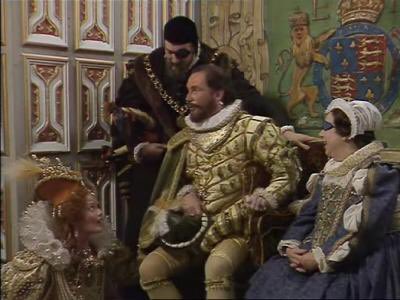
79lauralkeet
>76 Berly: ooh! That reminds me of something I just read last week. Check this out:
244-year-old Philly newspaper, found at New Jersey Goodwill, headed to Old City
244-year-old Philly newspaper, found at New Jersey Goodwill, headed to Old City
80Berly
>77 charl08: I think, for a while, the English rightly despaired of Spanish cruelty, but then they one-upped them.
>78 charl08: For fun?? Is this a TV series? Why? So lost....
: )
>79 lauralkeet: That's so cool!!! Thanks for posting the link.
>78 charl08: For fun?? Is this a TV series? Why? So lost....
: )
>79 lauralkeet: That's so cool!!! Thanks for posting the link.
81Familyhistorian
I think that a lot of the mythology of US history is told in isolation. I love the way that Lapore introduces the bigger picture and asks repeatedly by what right rulers did things because there were really atrocities on all sides and, it appears, rebellion by all who were suppressed as well. Only the victors get to be heroes of the story though.
82charl08
>80 Berly: It's a comedy historical series set in the reign of Elizabeth I. Maybe it didn't cross the pond.
83Berly
>82 charl08: I haven't heard of it, but that doesn't mean it isn't here. I will look for it. Thanks.
84lauralkeet
>82 charl08: Blackadder is available in the US, although it may not be as well known here as in the UK.
>83 Berly: Kim, each season is set in a different time period, so if you find and and it doesn't look Elizabethan, that's why.
>83 Berly: Kim, each season is set in a different time period, so if you find and and it doesn't look Elizabethan, that's why.
86EllaTim
>77 charl08: Maybe also a bit of propaganda. Engeland was at war with Spain. Spain was making loads of money off the America's. Spain was at war with Holland as well, and committing atrocities there. Holland and Engeland were allies, so the view of Spanish cruelty was useful. But they did believe they would do better, I think.
(I just read a book about this time period in Holland, where the whole point of Spanish cruelty came up, complete with the pamphlets about it)
(I just read a book about this time period in Holland, where the whole point of Spanish cruelty came up, complete with the pamphlets about it)
88LovingLit
I'll admit to loving this first section in part because of Outlander series 4 being set in mid 1700s US.....I can picture Jamie chopping wood by his log cabin in the woods. (lol)
Also, from a foreigner's perspective who never learned any American histories, it is a bit of a heavy load for me at times. The dates, names and events are not all familiar to me. But it is making sense, even if I don't have all the context to place it within.
Also, from a foreigner's perspective who never learned any American histories, it is a bit of a heavy load for me at times. The dates, names and events are not all familiar to me. But it is making sense, even if I don't have all the context to place it within.
89ronincats
I have finished Part 1. A lot of it I was familiar with, from sources such as David McCullough's John Adams, Hamilton, and a biography of King George the Third I read last year, but I really like the way Lepore pulls it all together and links it to the continuing themes of liberty and slavery.
90karenmarie
p 144 ('he' being Madison)
In an essay called "Public Opinion," he considered a source of instability particular to a large republic: the people might be deceived. "The larger a country, the less easy for its real opinion to be ascertained," he explained. That is, factions might not in the end, consist of wise, knowledgeable, and reasonable men. They might consist of passionate ignorant, and irrational men, who had been led to hold "counterfeit" opinions by persuasive men. (Madison was thinking of Hamilton and his ability to gain pubic support for his financial plan.) The way out of this political maze was the newspaper. "A circulation of newspapers throughout the entire body of the people," he explained, "is equivalent to a contraction of territorial limits." Newspapers would make the country, effectively, smaller.
This is painfully apparent right now here in the US.
…
I have also finished the first section. It is narrowly focused but couldn’t be anything but. Other books are out there to discuss in detail the Dutch in America, the French in America, the Spanish in America, the Native Americans and their relationship with the invaders and interlopers. This book focuses on the evolution of black slavery and the United States; intertwined, in conflict, playing out over decades and now centuries.
Totally excellent so far!
In an essay called "Public Opinion," he considered a source of instability particular to a large republic: the people might be deceived. "The larger a country, the less easy for its real opinion to be ascertained," he explained. That is, factions might not in the end, consist of wise, knowledgeable, and reasonable men. They might consist of passionate ignorant, and irrational men, who had been led to hold "counterfeit" opinions by persuasive men. (Madison was thinking of Hamilton and his ability to gain pubic support for his financial plan.) The way out of this political maze was the newspaper. "A circulation of newspapers throughout the entire body of the people," he explained, "is equivalent to a contraction of territorial limits." Newspapers would make the country, effectively, smaller.
This is painfully apparent right now here in the US.
…
I have also finished the first section. It is narrowly focused but couldn’t be anything but. Other books are out there to discuss in detail the Dutch in America, the French in America, the Spanish in America, the Native Americans and their relationship with the invaders and interlopers. This book focuses on the evolution of black slavery and the United States; intertwined, in conflict, playing out over decades and now centuries.
Totally excellent so far!
91lauralkeet
>90 karenmarie: re: this bit on p. 144: Newspapers would make the country, effectively, smaller.
I don't think it's too spoilery to say this belief resurfaces with each new innovation in communication technology (telegraph, radio, TV, etc.). And I dare say in our own lifetimes, we thought the internet would do this, too. And look where we are now.
Several years ago at an IT conference I attended for work, one session addressed the societal effects of technological change and noted that while these changes are nearly always viewed as a force for good, each one has had negative consequences. Take, for example, the automobile, which provided transportation to the masses. But it also contributed to the rise of the suburbs and shopping centers/malls. This in turn led to urban blight and the demise of small retailers.
It's interesting how we as a society tend to look at these new developments so optimistically, and not think about "how might this go wrong?"
I don't think it's too spoilery to say this belief resurfaces with each new innovation in communication technology (telegraph, radio, TV, etc.). And I dare say in our own lifetimes, we thought the internet would do this, too. And look where we are now.
Several years ago at an IT conference I attended for work, one session addressed the societal effects of technological change and noted that while these changes are nearly always viewed as a force for good, each one has had negative consequences. Take, for example, the automobile, which provided transportation to the masses. But it also contributed to the rise of the suburbs and shopping centers/malls. This in turn led to urban blight and the demise of small retailers.
It's interesting how we as a society tend to look at these new developments so optimistically, and not think about "how might this go wrong?"
92karenmarie
>91 lauralkeet: You're right, Laura, every innovation is supposed to solve all the world's problems yet creates different ones, frequently with a level of abuse/misuse exponentially greater than the one before.
The older I get the more I look at each innovation and automatically assume it will go wrong or be abused. I guess I'm turning into an old fogey. My favorite example is when Ma Bell was broken up. Everybody thought the competition and innovation would benefit people. If you live in a city or on the same line as a critical service that's true, but now, instead of having reliable voice and decent wifi and cell tower data, I'm in a 'low density' area and we don't even get repairs quickly, much less the latest and greatest.
The older I get the more I look at each innovation and automatically assume it will go wrong or be abused. I guess I'm turning into an old fogey. My favorite example is when Ma Bell was broken up. Everybody thought the competition and innovation would benefit people. If you live in a city or on the same line as a critical service that's true, but now, instead of having reliable voice and decent wifi and cell tower data, I'm in a 'low density' area and we don't even get repairs quickly, much less the latest and greatest.
93ffortsa
>92 karenmarie: oof. As a person in a high density area, I have benefited from the breakup of Ma Bell, and my father always thought it was a terrific idea. And considering how concentrated all the access was back then, and how invasive some of our 'cough' government officials would like to be, having choices isn't a bad idea. But if no one adequately serves the more rural areas, that's really bad. Sort of parallel to the historic availability of electricity, isn't it?
And, I just heard a podcast about the failure of a morning newspaper in Colorado (a few years ago, I guess) and how it led, on the one hand, to a non-profit news entity that makes its stories available to all comers, and of course the impoverishment of government oversight, among other things, in Colorado itself. I think the biggest question for news gathering and dissemination is who will pay for the work of good journalism?
And, I just heard a podcast about the failure of a morning newspaper in Colorado (a few years ago, I guess) and how it led, on the one hand, to a non-profit news entity that makes its stories available to all comers, and of course the impoverishment of government oversight, among other things, in Colorado itself. I think the biggest question for news gathering and dissemination is who will pay for the work of good journalism?
95EBT1002
>88 LovingLit: I'm interested in your experience of the book, Megan. I've been struck by what I think is an attempt to tell the story without falling back on what Americans would experience as legends.
For example, she tells the story of the "Boston Tea Party," but never once calls it that. It feels like it places the story meaningfully within the larger story and avoids the storybook quality that such "classic" tales have come to occupy in our narrative.
For example, she tells the story of the "Boston Tea Party," but never once calls it that. It feels like it places the story meaningfully within the larger story and avoids the storybook quality that such "classic" tales have come to occupy in our narrative.
96lauralkeet
>95 EBT1002: Yes. This.
And by avoiding the storybook quality, it becomes just another event in the narrative instead of a "legend" filled with more meaning than it merits.
And by avoiding the storybook quality, it becomes just another event in the narrative instead of a "legend" filled with more meaning than it merits.
97katiekrug
>95 EBT1002: - Well put, Ellen. I appreciate how she weaves some of these touchstone events (at least they are for most Americans) into the greater story, so it is at once familiar but more nuanced.
98karenmarie
I didn't plan this on purpose in conjunction with These Truths, but have just finished reading two books about slavery:
1. Zora Neale Hurston's nonfiction narrative of one of the last slaves brought to the US on the ship Clotilda in 1859, Barracoon, for my RL book club discussion in February.
2. A book of fiction about a 26-year old black woman in 1976 who time travels back to an 1819 plantation to interact with one of her ancestors and experiences the horrors of slavery first hand, Kindred by Octavia E. Butler.
1. Zora Neale Hurston's nonfiction narrative of one of the last slaves brought to the US on the ship Clotilda in 1859, Barracoon, for my RL book club discussion in February.
2. A book of fiction about a 26-year old black woman in 1976 who time travels back to an 1819 plantation to interact with one of her ancestors and experiences the horrors of slavery first hand, Kindred by Octavia E. Butler.
99EBT1002
I was thinking today about my education in US history. I'll admit that I never much liked history in school; it was taught as dates, names, and places. I didn't ever have a history teacher who helped me really understand or care about the stories. I think it's also true that I'm too much of an in-the-moment person to be very "good" at history. As with reading, I can be engaged in the story but not necessarily remember the details later.
Anyway, I also believe that 5th grade was supposed to be a big year for American history as a subject. We had a textbook dedicated to the subject. I lived in a small town in central Florida in which the schools were integrated when I was in 4th grade. In 5th grade I had my first teacher who was both male and African American (he was also my first teacher who was either). The year was 1970-71 and we read the first chapter of that textbook early in the year. We never touched it again. I've long believed that Mr. Henson looked at that textbook and decided he was not going to teach us that version of US history. I can imagine how distorted the stories would have been, how biased the perspective. He focused super intensively on math with us, as well as other subjects. I can wholly appreciate his refusal to teach us what he knew was a pack of lies.
Anyway, I also believe that 5th grade was supposed to be a big year for American history as a subject. We had a textbook dedicated to the subject. I lived in a small town in central Florida in which the schools were integrated when I was in 4th grade. In 5th grade I had my first teacher who was both male and African American (he was also my first teacher who was either). The year was 1970-71 and we read the first chapter of that textbook early in the year. We never touched it again. I've long believed that Mr. Henson looked at that textbook and decided he was not going to teach us that version of US history. I can imagine how distorted the stories would have been, how biased the perspective. He focused super intensively on math with us, as well as other subjects. I can wholly appreciate his refusal to teach us what he knew was a pack of lies.
100lauralkeet
>99 EBT1002: that's a really interesting story, Ellen. Mr. Henson was quite a pioneer. Even today we hear about certain states whose history textbooks aren't exactly up to scratch: outdated, omitting certain topics, or skewing the points of view.
I grew up in Cincinnati, OH during the 1970s. I had male teachers beginning in middle school, but your post prompted some reflection, and I realize now that I never had an African American teacher. Sheesh.
I grew up in Cincinnati, OH during the 1970s. I had male teachers beginning in middle school, but your post prompted some reflection, and I realize now that I never had an African American teacher. Sheesh.
101lindapanzo
>100 lauralkeet: You know, through grade school, high school, college, and law school, I never have either.
102lauralkeet
>101 lindapanzo: worse yet, I'm ashamed to say I never thought about it until Ellen mentioned it here.
103lindapanzo
>102 lauralkeet: The first three were all Catholic schools and I had only a handful of classmates who were not Catholic and, for the first two, I had a lot of nuns teaching me. No male teachers in grade school and, in all of HS, I had only two male teachers. Not a lot of diversity amongst my teachers or, for that matter, my classmates. I never really thought about the lack of diversity until I went to college.
This was the years from 1966 through 1985.
This was the years from 1966 through 1985.
104banjo123
I think I am a born history-buff. I always loved history in school, but it was taught in a boring and non-inclusive manner, so even then I could understand why most of my classmates glazed over in history class. It's too bad, because I think a good understanding of the past is important in planning for the future.
I just got a copy of These Truths and I am looking forward to it.
I just got a copy of These Truths and I am looking forward to it.
105Berly
So I am going off on a tangent here --1776 and Abigail Adams tries to get rights for women only to be met with this from her husband: " 'Depend upon it, We know better than to repeal our Masculine systems.' That women were left out of the nation's founding documents, and out of its founders idea of civil society, considered like slaves, to be confined to a state of nature, would trouble the political order for centuries." (p.97)

(image actually from French Revolution, but you get the idea.)
And it is still going on....
"According to the report, Iceland is the country with the greatest equality between the sexes as of 2015, followed in the top ten by Norway, Finland, Sweden, Ireland, Rwanda, Philippines, Switzerland, Slovenia, and New Zealand. And where does the U.S. rank, overall? We're number 28, the lowest ranking we've held in the report since 2007. Our overall score is .74, on a scale where 1.00 represents total equality, and 0.00 represents total inequality."
(Bustle article By GABRIELLE MOSS, Apr 12, 2016)
When are we going to get over sexism and racism? Soon, I continue to hope.

(image actually from French Revolution, but you get the idea.)
And it is still going on....
"According to the report, Iceland is the country with the greatest equality between the sexes as of 2015, followed in the top ten by Norway, Finland, Sweden, Ireland, Rwanda, Philippines, Switzerland, Slovenia, and New Zealand. And where does the U.S. rank, overall? We're number 28, the lowest ranking we've held in the report since 2007. Our overall score is .74, on a scale where 1.00 represents total equality, and 0.00 represents total inequality."
(Bustle article By GABRIELLE MOSS, Apr 12, 2016)
When are we going to get over sexism and racism? Soon, I continue to hope.
106Berly
Just some things that caught my eye...
"But Madison was shrewd to sense the importance of the relationship between technologies of communication and the forming of public opinion. The American two-party system, the nation's enduring source of political stability, was forged in -- and, fair to say, created by -- the nations's newspapers." (p. 145) Hmmmm....I sometimes wish we were not just a two-party system.
"Newspapers initially were "entirely and enthusiastically Partisan." (p. 145) And yet now they are ridiculed if they are thought to be biased!
"But Madison was shrewd to sense the importance of the relationship between technologies of communication and the forming of public opinion. The American two-party system, the nation's enduring source of political stability, was forged in -- and, fair to say, created by -- the nations's newspapers." (p. 145) Hmmmm....I sometimes wish we were not just a two-party system.
"Newspapers initially were "entirely and enthusiastically Partisan." (p. 145) And yet now they are ridiculed if they are thought to be biased!
107lauralkeet
>105 Berly: Amen, sister.
>106 Berly: I'm fascinated by Lepore's coverage of the "technologies of communication" throughout this book.
>106 Berly: I'm fascinated by Lepore's coverage of the "technologies of communication" throughout this book.
108weird_O
Amazon is having this book delivered to me on Friday. I guess I will read it. When will you people stop? I have no willpower, I can't say, "No, I don't have time to read those gazillions of words. I can't read it! I won't read it!" Oh well, I'll take a look...
109karenmarie
>105 Berly: There will not be an end to sexism and racism until there is a critical mass of women and people of color in positions of power and authority. White men will not give up their prerogatives. Why should they? Power and authority will have to be taken.
110brenzi
I finished Part One last night and was struck by many of the same things that other readers were. I wasn’t aware that slavery played such a big role at this early stage of our history and in the development of the Constitution. The idea that the British offered to free any slaves who would come and fight with them was completely new to me.
Most women at this time couldn’t read or write because, well, men. Jane Franklin was an exception to the rule.
Most women at this time couldn’t read or write because, well, men. Jane Franklin was an exception to the rule.
111ffortsa
I've also finished part 1. I was struck by the canonization of Washington, at his death, as having 'delivered' the Constitution. It speaks to the rigidity of the Originalist interpreters of that document that the joint effort, the negotiations, and the compromises captured by Monroe are concealed behind an essentially fundamentalist view of the result.
112charl08
Fascinated by the mention of John Locke. I didn't realise that he was a colonial secretary. The idea that you could argue for a natural right to liberty and still come up with a constitution that legitimate "absolute power and authority " to an owner of another human being is baffling.
113charl08
Also reminded that I want to read her book about slavery in New York (New York Burning).
114Familyhistorian
>106 Berly: The statement The American two-party system, the nation's enduring source of political stability, tripped me up, Kim, but that is probably because I live in a place with a government that has multiple parties which seems to be relatively politically stable.
I finished part one and have learned a lot of history that is new too me. I was also unaware of how slavery was such a contentious issue even at this point in time. It makes it seem like the new country was off to a rocky start from the beginning when they attempted to sweep such a fraught issue under the rug.
I finished part one and have learned a lot of history that is new too me. I was also unaware of how slavery was such a contentious issue even at this point in time. It makes it seem like the new country was off to a rocky start from the beginning when they attempted to sweep such a fraught issue under the rug.

116Berly
>114 Familyhistorian: Oh, I would love more than two parties!!
Did anyone else hear that Howard Schultz, the CEO of Starbucks, is thinking about running for President as an Independent? I like him!
>109 karenmarie: Why do other countries seem more egalitarian between the sexes? Why can't we get there?
Did anyone else hear that Howard Schultz, the CEO of Starbucks, is thinking about running for President as an Independent? I like him!
>109 karenmarie: Why do other countries seem more egalitarian between the sexes? Why can't we get there?
117karenmarie
Why do other countries seem more egalitarian between the sexes? Why can't we get there? Gotta cogitate a bit on that one....
118katiekrug
Outsider centrist candidates often split the anti-incumbent vote, so I am against Schultz's potential candidacy :)
119ffortsa
>118 katiekrug: Me too. And listening to his interview on 60 minutes, I detected a definite bias against a more sensibly graduated income tax. I guess he'd rather spend his money messing up the system than paying more to Uncle Sam.
Presidents by necessity have strong egos, but I don't like his.
Presidents by necessity have strong egos, but I don't like his.
120Berly
>117 karenmarie: Awaiting your thoughts....
>118 katiekrug: I know. That's been true in the past and I do NOT want another T term. But are we always doomed to be two-party? Or maybe that's not the problem. Maybe I want two new parties...
>119 ffortsa: I knew I shouldn't have said anything currently political! LOL
>118 katiekrug: I know. That's been true in the past and I do NOT want another T term. But are we always doomed to be two-party? Or maybe that's not the problem. Maybe I want two new parties...
>119 ffortsa: I knew I shouldn't have said anything currently political! LOL
121lauralkeet
>120 Berly: two-party
I'm currently reading Part 4 (I have to read ahead for a RL book group discussion). Lepore provides a fascinating analysis of how the two parties evolved during the 20th century, and the forces that created the s**tstorm we have now.
So, y'all have that to look forward to. 😀
I'm currently reading Part 4 (I have to read ahead for a RL book group discussion). Lepore provides a fascinating analysis of how the two parties evolved during the 20th century, and the forces that created the s**tstorm we have now.
So, y'all have that to look forward to. 😀
122Berly
>121 lauralkeet: I am psychic!! When is your RL book group? I'd love to be in a live one of this book. And you definitely have some real readers if they were willing to tackle this tome -- most of my fellow members balk at 350-400 pages!
123lauralkeet
>122 Berly: Kim, we spread the book out over two book group meetings to manage the page count. The first discussion, in December, covered parts 1 & 2. Some were eager to discuss parts 3 & 4 in January, but I whined and was able to kick it out to February. We meet February 21.
124EBT1002
>121 lauralkeet: "So, y'all have that to look forward to." LOL
I don't mean to throw fuel on the fire but I'm very nervous about any outsider centrist (or leftist) candidates splitting the D vote in 2020. I am watching Kamala Harris with cautious optimism (I'd be enthusiast but I'm too damn self-protective these days!).
Actually, I do look forward to that analysis of the evolution of the two parties because I'm interested in the pros and cons of the two-party system. Until now, I haven't thought very critically about it. Clearly the two have such consolidated power that no third party candidate has been able to do much in my lifetime beyond make a vaguely respectable showing (and, as we've been saying, sometimes split the votes on one side of the aisle or the other). It does seem like multiple valid, legitimate parties -- and by valid and legitimate, I mean able to participate fully and have a legitimate shot at winning -- would be "better," but I don't really know why. Do multiple parties lead to richer, more sophisticated debates about the issues of the day? Do multiple parties, with their varying perspectives, lead to more nuanced solutions, strategies, and plans? It seems like they should. Is that how it actually works?
(You can tell that I don't pay nearly as much attention to world politics as perhaps I should.)
Oh, and: I'm going to start part II this week.
Kim, your leading us in this group read is so wonderful. I'm learning, thinking, and enjoying the process. Thank you again.
I don't mean to throw fuel on the fire but I'm very nervous about any outsider centrist (or leftist) candidates splitting the D vote in 2020. I am watching Kamala Harris with cautious optimism (I'd be enthusiast but I'm too damn self-protective these days!).
Actually, I do look forward to that analysis of the evolution of the two parties because I'm interested in the pros and cons of the two-party system. Until now, I haven't thought very critically about it. Clearly the two have such consolidated power that no third party candidate has been able to do much in my lifetime beyond make a vaguely respectable showing (and, as we've been saying, sometimes split the votes on one side of the aisle or the other). It does seem like multiple valid, legitimate parties -- and by valid and legitimate, I mean able to participate fully and have a legitimate shot at winning -- would be "better," but I don't really know why. Do multiple parties lead to richer, more sophisticated debates about the issues of the day? Do multiple parties, with their varying perspectives, lead to more nuanced solutions, strategies, and plans? It seems like they should. Is that how it actually works?
(You can tell that I don't pay nearly as much attention to world politics as perhaps I should.)
Oh, and: I'm going to start part II this week.
Kim, your leading us in this group read is so wonderful. I'm learning, thinking, and enjoying the process. Thank you again.
125Familyhistorian
>124 EBT1002: Splitting the vote in a traditional two party system is a concern. I recently read The Poison Squad which brought up the 1912 election in which Teddy Roosevelt tried to run as a third party candidate when he was not able to unseat Taft as the Republican candidate. The republican vote was split and the Democrats won.
The parties in our government tend to wax and wan and there have always been more than two so we are not as entrenched in our voting choices. It isn't perfect but who gets elected is probably more indicative of public concerns at the time of the election.
The parties in our government tend to wax and wan and there have always been more than two so we are not as entrenched in our voting choices. It isn't perfect but who gets elected is probably more indicative of public concerns at the time of the election.
126ffortsa
>124 EBT1002:, >125 Familyhistorian: There are several countries that have had a multiple (more than two) party system, but it has frequently hamstrung decision making. Look, for instance, at Israel, where the most religiously orthodox party, tiny though it is, is frequently the majority-maker in a coalition, allowing it to dictate what many in the country feel are unfair carve-outs for their adherents, and forcing more absolute, uncompromising positions to hold sway. If parties are very small (like the Green Party or Working Families party in NYC), they can serve to bring up issues, but they are often one-issue groups. I feel uneasy about third parties here in the U.S., but if they are robust enough, they can signal a realignment, which might be what we will live through going forward. And I think that counts as 'interesting times'.
127lauralkeet
>124 EBT1002: Actually, I do look forward to that analysis of the evolution of the two parties because I'm interested in the pros and cons of the two-party system.
Lepore doesn't really explore the two-party system per se, but she does offer a history of how each party's ideology evolved and the forces that shaped them.
Lepore doesn't really explore the two-party system per se, but she does offer a history of how each party's ideology evolved and the forces that shaped them.
128EBT1002
Thanks, Meg, Judy, and Laura, for engaging with me. I'm planning to start Part II on the plane tomorrow. It seems like a good chunk of time to really engage.
I almost splurged for first class on the O'Hare-to-Spokane leg but I counted how many books I could buy with that $200....
I almost splurged for first class on the O'Hare-to-Spokane leg but I counted how many books I could buy with that $200....
129Berly
>128 EBT1002: Books or first class seat -- no brainer!!! LOL
130karenmarie
>120 Berly: Well, Kim, books, reports, articles, think tanks, study groups, universities/colleges, private enterprises, and other entities/publications I can't think of offhand have all put their oars in the water on this one. It would take a lifetime to really answer this one and then provide solutions. However, this is one interesting perspective:
A undispatch.com report on gender equality from January of last year ranks countries in terms of women’s economic participation, educational attainment, health, and political empowerment. Most of the best countries for gender equality were in Europe, but not all.
Top 10, first to tenth:
Iceland
Norway
Finland
Rwanda
Sweden
Nicaragua
Slovenia
Ireland
New Zealand
Philippines
The US is 49th, Canada 16th, Mexico 81st.
In the US women participate economically but in lower-paying jobs. The glass ceiling is still in effect, and more and more jobs are being handled through temp agencies, letting companies avoid providing health care and other financial benefits. Women are earning more degrees than men in the US, but this doesn’t necessarily translate into good paying or stable jobs. Women’s health care is under constant attack to reduce access to birth control, abortions, reasonable expenses for childbearing and child care. And political empowerment is shifting, more quickly in the past, but still glacially.
Simply put, men ‘grant’ power, women can’t seize it. There is an inherent cultural bias towards the white men who still control the US. There are religious aspects, cultural aspects, and economic aspects. We're talking thousands of years, a combination of biology and testosterone, gender roles good and bad, and the misperception of gender equality as rejection of men and family.
I firmly believe in a woman's right to choose what her life can and should be. Her choice should be based on knowledge of her rights and resources. She should be able to choose staying at home with the kids while her husband is the breadwinner, being the breadwinner while her husband stays at home with the kids, no kids, no husband, no wife. If her satisfaction comes from living with her parents her entire life, fine. If her satisfaction comes from rejecting society in favor of intellectual pursuits, fine. Informed choice is the key.
A undispatch.com report on gender equality from January of last year ranks countries in terms of women’s economic participation, educational attainment, health, and political empowerment. Most of the best countries for gender equality were in Europe, but not all.
Top 10, first to tenth:
Iceland
Norway
Finland
Rwanda
Sweden
Nicaragua
Slovenia
Ireland
New Zealand
Philippines
The US is 49th, Canada 16th, Mexico 81st.
In the US women participate economically but in lower-paying jobs. The glass ceiling is still in effect, and more and more jobs are being handled through temp agencies, letting companies avoid providing health care and other financial benefits. Women are earning more degrees than men in the US, but this doesn’t necessarily translate into good paying or stable jobs. Women’s health care is under constant attack to reduce access to birth control, abortions, reasonable expenses for childbearing and child care. And political empowerment is shifting, more quickly in the past, but still glacially.
Simply put, men ‘grant’ power, women can’t seize it. There is an inherent cultural bias towards the white men who still control the US. There are religious aspects, cultural aspects, and economic aspects. We're talking thousands of years, a combination of biology and testosterone, gender roles good and bad, and the misperception of gender equality as rejection of men and family.
I firmly believe in a woman's right to choose what her life can and should be. Her choice should be based on knowledge of her rights and resources. She should be able to choose staying at home with the kids while her husband is the breadwinner, being the breadwinner while her husband stays at home with the kids, no kids, no husband, no wife. If her satisfaction comes from living with her parents her entire life, fine. If her satisfaction comes from rejecting society in favor of intellectual pursuits, fine. Informed choice is the key.
131Familyhistorian
>126 ffortsa: You just reminded me to look at the BC by-election vote that was held in Nanaimo on Vancouver Island. Our last provincial election ended up with the two major parties so close that either of them could have formed a minority government, they just had to woe the Greens to their side. The Liberals formed a government but then were toppled by the NDP who had the Greens on their side. It was so close that if the by-election had voted in a Liberal instead of an NDP the provincial government would have changed hands yet again. (BC has some of the weirdest politics in Canada but we like our entertainment, I suppose.)
>130 karenmarie: Well put, Karen and what is currently happening in the US with women's health care and reproductive freedom, which is sparsely reported on outside the country, sounds very scary.
>130 karenmarie: Well put, Karen and what is currently happening in the US with women's health care and reproductive freedom, which is sparsely reported on outside the country, sounds very scary.
132weird_O
Interesting discourse. I'm behind, as I am in the middle of page 97. I got a poke from the Professor's writing on the spurious defense of slavery in the confrontation with all people being inherently equal, equal at birth. I'm ready to re-read Common Sense and read Rights of Man for the first time. James Otis, Jr. interests me. But Tom Paine will be held off until we get to "Founding Fathers" month in the AAC.
133karenmarie
>131 Familyhistorian: Thanks, Meg. It is very scary.
134weird_O
Finished Part One last night. I appreciated the Professor's account of the sparring about aspects of the Constitution. One of the What If? questions to ponder is what might have happened had South Carolina pulled out. And the non-slave states simply said goodbye. Surely the other slave states would have followed. What sorts of new nations might have been created?
Might the discussion have been different if slave-owners like Madison and Jefferson not been heard?
What about those slave-owners who fathered mixed-race children and consigned them to slavery? Did they sell their own children to some other plantation owner?
Learned new facts. Huzzah!
Might the discussion have been different if slave-owners like Madison and Jefferson not been heard?
What about those slave-owners who fathered mixed-race children and consigned them to slavery? Did they sell their own children to some other plantation owner?
Learned new facts. Huzzah!
135Berly
>134 weird_O: Nice to see you getting all caught up. Interesting questions, ones we will never know the answers to. Much like the one I posed in >120 Berly:, but at least I got a great response from Karen!!
Okay, one answer. "What about those slave-owners who fathered mixed-race children and consigned them to slavery? Did they sell their own children to some other plantation owner?" Sadly, some slave owners felt absolutely no kinship with their mixed-race children and had no compunction selling them off.
Okay, one answer. "What about those slave-owners who fathered mixed-race children and consigned them to slavery? Did they sell their own children to some other plantation owner?" Sadly, some slave owners felt absolutely no kinship with their mixed-race children and had no compunction selling them off.
136banjo123
Hi everyone! I am just getting into the book. It is really well-done so far. My main takeaway from the first 80 pages is how deeply entwined slavery and racism were with the country's begininnings.
137Donna828
After finishing the first 149 pages, I am hooked on this book. The slavery conundrum of liberty in a land dependent upon human bondage was dealt with thoughtfully and in great detail. The fresh insights and inclusion of new-to-me-tidbits like the horrifying reveal that George Washington's dentures included "nine teeth pulled from the mouths of his slaves" (120) make history come alive for me. I'm looking forward to Part Two.
138banjo123
>137 Donna828: Yes, it's amazing in reading this to realize how much the slavery conundrum is glossed over in most US history discussions.
139Berly
>137 Donna828: >138 banjo123: Hurray for the details (ewww!). That is one of the reasons I am enjoying the book; it is both more global and more personal than most history books. I love the little asides and the great insights.
140Familyhistorian
>137 Donna828: The part about the teeth really brought Washington down a peg in my estimation.
141charl08
I finally finished the first part (!) I found the last few pages recording the deification of Washington surreal: painting him as if he was receiving the constitution on tablets of stone seems pretty far away from (my ideas of) a state influenced by Puritanism.
Great to see the American history linked to the history of Sierra Leone and Haiti. That sense that politics never occurs in a closed national chamber, but reflects the international context, is so well done by Lepore.
And on to part II!
Great to see the American history linked to the history of Sierra Leone and Haiti. That sense that politics never occurs in a closed national chamber, but reflects the international context, is so well done by Lepore.
And on to part II!
142Familyhistorian
>141 charl08: But that's the thing, the picture shows the initial steps of the myth-making behind the noble deeds that created the new country which was not just some state influenced by Puritanism but a place governed by lofty ideals (well, at least if your skin was the right colour.)
143drneutron
Finally got my copy form Overdrive and finished up Part 1. Great comment on this thread!
A few years ago I did a challenge where I read biographies of each US President in order (ok, I stopped with George HW Bush because of lack of unbiased books on Clinton) and one of the things I got out of the experience was that what we're seeing now in the political arena and in culture in general is pretty much the norm for our country. There have always been strong divisions and strong beliefs and strong conflict between the sides. Lepore is reminding me of that.
Damn good writer, that's for sure.
A few years ago I did a challenge where I read biographies of each US President in order (ok, I stopped with George HW Bush because of lack of unbiased books on Clinton) and one of the things I got out of the experience was that what we're seeing now in the political arena and in culture in general is pretty much the norm for our country. There have always been strong divisions and strong beliefs and strong conflict between the sides. Lepore is reminding me of that.
Damn good writer, that's for sure.
145LovingLit
>143 drneutron: I agree that this tread is super interesting. It is making me want to get the book out from the library again and dive back in :)
146markon
I am just starting this book and coming back to the thread for others input/insight. I think the focus of this tome on politics and slavery is quite interesting. I also hadn't realized Locke was closely involved in writing the constitution for the colony of Carolina, or his involvement in development of a pro-slavery argument and an argument that Native Americans had no government because they didn't own property, so the land was up for grabs.
I'm on p. 54 in a library copy; I may have to buy this one, because I'm reading glacially.
>137 Donna828: If anyone comes back and looks at this thread, there's a story about Washington's teeth available online, The Secret Lives of the Nine Negro Teeth of George Washington by Phenderson Djèlí Clark in Fireside Magazine.
The story won the 2018 Nebula for best short story, and the 2019 Locus award for best short story. It was also a finalist for the Hugo and Theodore Sturgeon awards in 2019.
edited to correct spellin/punctuation
I'm on p. 54 in a library copy; I may have to buy this one, because I'm reading glacially.
>137 Donna828: If anyone comes back and looks at this thread, there's a story about Washington's teeth available online, The Secret Lives of the Nine Negro Teeth of George Washington by Phenderson Djèlí Clark in Fireside Magazine.
The story won the 2018 Nebula for best short story, and the 2019 Locus award for best short story. It was also a finalist for the Hugo and Theodore Sturgeon awards in 2019.
edited to correct spellin/punctuation
147banjo123
>146 markon: Glad that you are reading it.
Have people been reading the 1619 supplement in the NYT? It is a great addition to Lepore's These Truths. Nikole Hannah-Jones's excellent article is here.
Have people been reading the 1619 supplement in the NYT? It is a great addition to Lepore's These Truths. Nikole Hannah-Jones's excellent article is here.
148weird_O
>147 banjo123: I was going to mention NYT's The 1619 Project, Rhonda. Haven't started read it yet, but I will.
149lauralkeet
>147 banjo123: Funny coincidence: earlier today my husband handed me Sunday's NYT Magazine section, open to Nikole Hannah-Jones's article, and told me I simply HAD to read it. Which I will, probably later today.

