Pilgrim is still searching for Enlightenment and Entertainment (2019, Third Quarter)
This is a continuation of the topic Pilgrim continues the search for Enlightenment and Entertainment (2019, Second Quarter).
This topic was continued by Pilgrim continues searching for Enlightenment and Entertainment (2019, Final Quarter).
Talk The Green Dragon
Join LibraryThing to post.
1-pilgrim-
With half a year's reading behind me, the urge to statistically analyse is over whelming.
2pgmcc
I love statistical analysis.
One of the most enjoyable books on statistics I have read is Darrell Huff's little book, How to Lie with Statistics.
One of the most enjoyable books on statistics I have read is Darrell Huff's little book, How to Lie with Statistics.
3clamairy
Dagnabbit, I missed the piffle party! That will teach me to try to do 'things' like power-wash my patio!
Happy Third Quarter, >1 -pilgrim-:!
Happy Third Quarter, >1 -pilgrim-:!
4-pilgrim-
>3 clamairy: Thank you Clare! I hope that you found the experience satisfying nevertheless.
>2 pgmcc: I see that you are a disciple of Disraeli, sir. ;-)
>2 pgmcc: I see that you are a disciple of Disraeli, sir. ;-)
5pgmcc
>4 -pilgrim-: :-)
Lies, damned lies, and...
Lies, damned lies, and...
8-pilgrim-
Reposting my series tracker:
Series in progress (incomplete)
Rivers of London by Ben Aaronovitch: 1-6 - Lies Sleeping
Dania Gorska by Hania Allen: 1 - Clearing the Dark
Chronicles of Amber by John Gregory Betancourt: P1, 1-10 - Chaos and Amber
The Folk of the Air by Holly Black: P1-3, 1-2 -The Queen of Nothing
Pieter Posthumous by Britta Bolt: 3 - Lonely Graves
Alpha and Omega by Patricia Briggs: 1-2 - Fair Game
Mercy Thompson by Patricia Briggs: 1-8 - Fire Touched
Sianim by Patricia Briggs: 3-4 - Masques
World of the Five Gods by Lois McMasters Bujold: 1.1, 2 -Penric and the Shaman, The Paladin of Souls
Chains of Honor by Lindsay Buroker: P1-P3, 1-2 Assassin's Bond
The Emperor's Edge by Lindsay Buroker: 1-8 - Diplomats and Fugitives
Fallen Empire by Lindsay Buroker: P-3 - Relic of Sorrows
The War of the Fae by Elle Casey: 1 - Call to Arms
Spellslinger by Sebastian de Castell: 1-5 - Crownbreaker
Greatcoats by Sebastian de Castell: 1 - Knight's Shadow
The Daevabad Trilogy by S. A. Chakraborty: 1 - The Kingdom of Copper
Chronicles of an Age of Darkness by Hugh Cook: 1 - The Wordsmiths and the Warguild
The Saxon Chronicles by Bernard Cornwell: 1-2 - The Lords of the North
Sharpe by Bernard Cornwell:1, 6, 8-9, 13 - Sharpe's Triumph
Arkady Renko by Martin Cruz Smith: 1 - Polar Star
Hudson & Holmes by Martin Davies: 2 - Mrs Hudson and the Spirit's Curse
Marcus Didius Falco by Lindsey Davis: 1-6 - Time to Depart
Flavia Albia by Lindsey Davis: 1-2.5 - Deadly Election
Priya's Shakti by Ram Devineni & Dan Goldman: 1-2 - Priya and the Lost Girls
John Pearce by David Donachie: 1, 14 - A Shot-Rolling Ship
The Privateersman Mysteries by David Donachie: 1 - The Dying Trade
The Great God's War by Stephen R. Donaldson: 1 - The War Within
The Marie Antoinette Romances by Alexandre Dumas: 2 - Cagliostro
The Musketeers by Alexandre Dumas: 1-3 - Louise de la Vallière
Cliff Janeway by John Dunning: 1 - The Bookman's Wake
The Beginner's Guide to Necromancy by Hailey Edwards: 1 - How to Claim an Undead Soul
Metro 203x by Dmitry Glukhovsky: 1-1.5 - Metro 2034
The Archangel Project by C Gockel: 1- 1.5 - Noa's Ark
Matthew Bartholomew by Susanna Gregory: 23 - A Plague on Both Their Houses
The Earthsea Cycle by Ursula le Guin 1 - The Tombs of Atuan
Forever War by Joe Haldeman: 1 - Forever Free
Benjamin January by Barbara Hambly: 1 - Fever Season
Darwath by Barbara Hambly: 1-3 - Mother of Winter
James Asher by Barbara Hambly: 1-2, 4 - Blood Maidens
Sun Wolf and Star Hawk by Barbara Hambly: 1-3 - Hazard
The Windrose Chronicles by Barbara Hambly: 1-3 - Firemaggot
The Stainless Steel Rat by Harry Harrison 4-5, 9 - The Stainless Steel Rat Is Born
The Paper Magician by Charlie N. Holmberg: 1-2, 4 - The Master Magician
Numina by Charlie N. Holmberg: 1 - Myths and Mortals
The Soul Summoner Series by Elicia Hyder: 1-3 - The Taken
Conqueror by Conn Iggulden: 1 - Lords of the Bow
Alex Verus by Benedict Jacka: 9 - Fated
The Danilov Quintet by Jasper Kent:1 - Thirteen Years Later
The Jane Doe Chronicles by Jeremy Lachlan: 1 - The Key of All Souls
Robert Colbeck by Edward Marston: 1 - The Excursion Train
The Raven's Mark by Ed McDonald: 1 - Ravencry
Witchy World by Jamie McFarlane: P - Wizard in a Witchy World
Giordano Bruno by S.J. Parris: 5 - Heresy
Brother Cadfael by Ellis Peters: 1-12 - The Rose Rent
The Gaian Consortium by Christine Pope: 1 - Breath of Life
Discworld by Sir Terry Pratchett: 1-15.5 - Soul Music
Divergent by Veronica Roth: 1, 2.5 - Insurgent
The Witcher by Andrzej Sapkowski: 1 - The Last Wish, Time of Contempt
The Rhenwars Saga by M. L. Spencer: 1 - Darklands
The Dolphin Ring by Rosemary Sutcliff: 1, 3-6, 8 - The Silver Branch
The History of Middle Earth by Christopher Tolkien: ? ?
Miss Silver by Patricia Wentworth: 1 - The Case is Closed
Series Completed 2019
Agents of the Crown by Lindsay Buroker
Impossible Times by Mark Lawrence
N.b.
(i) This list is still probably incomplete.
(ii) The named book is the next to be read
(iii) Inclusion of a series does not imply intent to complete it.
(iv) I have read some of the series in bold type during this year, others are outstanding.
Series in progress (incomplete)
Rivers of London by Ben Aaronovitch: 1-6 - Lies Sleeping
Dania Gorska by Hania Allen: 1 - Clearing the Dark
Chronicles of Amber by John Gregory Betancourt: P1, 1-10 - Chaos and Amber
The Folk of the Air by Holly Black: P1-3, 1-2 -The Queen of Nothing
Pieter Posthumous by Britta Bolt: 3 - Lonely Graves
Alpha and Omega by Patricia Briggs: 1-2 - Fair Game
Mercy Thompson by Patricia Briggs: 1-8 - Fire Touched
Sianim by Patricia Briggs: 3-4 - Masques
World of the Five Gods by Lois McMasters Bujold: 1.1, 2 -Penric and the Shaman, The Paladin of Souls
Chains of Honor by Lindsay Buroker: P1-P3, 1-2 Assassin's Bond
The Emperor's Edge by Lindsay Buroker: 1-8 - Diplomats and Fugitives
Fallen Empire by Lindsay Buroker: P-3 - Relic of Sorrows
The War of the Fae by Elle Casey: 1 - Call to Arms
Spellslinger by Sebastian de Castell: 1-5 - Crownbreaker
Greatcoats by Sebastian de Castell: 1 - Knight's Shadow
The Daevabad Trilogy by S. A. Chakraborty: 1 - The Kingdom of Copper
Chronicles of an Age of Darkness by Hugh Cook: 1 - The Wordsmiths and the Warguild
The Saxon Chronicles by Bernard Cornwell: 1-2 - The Lords of the North
Sharpe by Bernard Cornwell:1, 6, 8-9, 13 - Sharpe's Triumph
Arkady Renko by Martin Cruz Smith: 1 - Polar Star
Hudson & Holmes by Martin Davies: 2 - Mrs Hudson and the Spirit's Curse
Marcus Didius Falco by Lindsey Davis: 1-6 - Time to Depart
Flavia Albia by Lindsey Davis: 1-2.5 - Deadly Election
Priya's Shakti by Ram Devineni & Dan Goldman: 1-2 - Priya and the Lost Girls
John Pearce by David Donachie: 1, 14 - A Shot-Rolling Ship
The Privateersman Mysteries by David Donachie: 1 - The Dying Trade
The Great God's War by Stephen R. Donaldson: 1 - The War Within
The Marie Antoinette Romances by Alexandre Dumas: 2 - Cagliostro
The Musketeers by Alexandre Dumas: 1-3 - Louise de la Vallière
Cliff Janeway by John Dunning: 1 - The Bookman's Wake
The Beginner's Guide to Necromancy by Hailey Edwards: 1 - How to Claim an Undead Soul
Metro 203x by Dmitry Glukhovsky: 1-1.5 - Metro 2034
The Archangel Project by C Gockel: 1- 1.5 - Noa's Ark
Matthew Bartholomew by Susanna Gregory: 23 - A Plague on Both Their Houses
The Earthsea Cycle by Ursula le Guin 1 - The Tombs of Atuan
Forever War by Joe Haldeman: 1 - Forever Free
Benjamin January by Barbara Hambly: 1 - Fever Season
Darwath by Barbara Hambly: 1-3 - Mother of Winter
James Asher by Barbara Hambly: 1-2, 4 - Blood Maidens
Sun Wolf and Star Hawk by Barbara Hambly: 1-3 - Hazard
The Windrose Chronicles by Barbara Hambly: 1-3 - Firemaggot
The Stainless Steel Rat by Harry Harrison 4-5, 9 - The Stainless Steel Rat Is Born
The Paper Magician by Charlie N. Holmberg: 1-2, 4 - The Master Magician
Numina by Charlie N. Holmberg: 1 - Myths and Mortals
The Soul Summoner Series by Elicia Hyder: 1-3 - The Taken
Conqueror by Conn Iggulden: 1 - Lords of the Bow
Alex Verus by Benedict Jacka: 9 - Fated
The Danilov Quintet by Jasper Kent:1 - Thirteen Years Later
The Jane Doe Chronicles by Jeremy Lachlan: 1 - The Key of All Souls
Robert Colbeck by Edward Marston: 1 - The Excursion Train
The Raven's Mark by Ed McDonald: 1 - Ravencry
Witchy World by Jamie McFarlane: P - Wizard in a Witchy World
Giordano Bruno by S.J. Parris: 5 - Heresy
Brother Cadfael by Ellis Peters: 1-12 - The Rose Rent
The Gaian Consortium by Christine Pope: 1 - Breath of Life
Discworld by Sir Terry Pratchett: 1-15.5 - Soul Music
Divergent by Veronica Roth: 1, 2.5 - Insurgent
The Witcher by Andrzej Sapkowski: 1 - The Last Wish, Time of Contempt
The Rhenwars Saga by M. L. Spencer: 1 - Darklands
The Dolphin Ring by Rosemary Sutcliff: 1, 3-6, 8 - The Silver Branch
The History of Middle Earth by Christopher Tolkien: ? ?
Miss Silver by Patricia Wentworth: 1 - The Case is Closed
Series Completed 2019
Agents of the Crown by Lindsay Buroker
Impossible Times by Mark Lawrence
N.b.
(i) This list is still probably incomplete.
(ii) The named book is the next to be read
(iii) Inclusion of a series does not imply intent to complete it.
(iv) I have read some of the series in bold type during this year, others are outstanding.
9-pilgrim-
Books Read
July
✓1. The Amputated Arms (short story) by Jorgen Wilhelm Bergsoe - 2 stars
✓2. The Orc of Many Questions by Shane Michael Murray - 4 stars
✓3. Evolution of Privacy (short story) by Vaishnav Shravan - 1.5 stars
✓4. Do Robots Make Love? by Laurent Alexandre and Jean-Michel Besnier - 5 stars
✓5. The Orthodox Veneration of Mary the Birthgiver of God by St. John Maximovitch (translated by Seraphim Rose) - 4 stars
✓6. The Hangman's Daughter by Oliver Pötzsch (translated by Lee Chadeayne) - 4 stars
✓7. Carl Sagan's Hunt for Intelligent Life in the Universe (novella) by C. Gockel - 2 stars
✓8. A Tale of Two Ships by Audrey Faye - 2.5 stars
✓9. Passage Out by Anthea Sharp - 2 stars
✓10. Micah Goes On A Date (short story) by Jim Heskett - 1 star
✓11. The Shaman and the Angel (short story) by Elvira Baryakina - 1.5 stars
✓12. Where Love Is, There Is God Also (novella) by Lyof N. Tolstoï (sic) (translated by Nathan Haskell Dole) - 2.5 stars
✓13. In Search of the Free Individual (essay) by Svetlana Alexievich - (translated by Jamey Gambrell) - 4 stars
Average = 2.76 stars
August
✓1. Dragon Tear by Lindsay Buroker - 3 stars
✓2. The Witch By Mistake by Anna Brusha - 3.5 stars
✓3. Anonymous (novella) by Uzodinma Iweala - 1 star
✓4. Unchained by Ruby Lionsdrake - 1.5 stars
✓5. The Cruel Prince by Holly Black - 3.5 stars
✓6. The Cradle of All Worlds by Jeremy Lachlan - 2 stars
✓7. What Men Live By and Other Tales (novella) by Graf Leo Tolstoy (sic) (translated by Louise Shanks Maude and Aylmer Maude) - 4 stars
✓8. Charmcaster by Sebastien de Castell - 4 stars
✓9. Soulbinder by Sebastien de Castell - 4 stars
✓10. 9 by Andrzej Stasiuk (translated by Bill Johnston) - 4.5 stars
Average = 3.1 stars
September
✓1. One Word Kill by Mark Lawrence - 4 stars
✓2. The Wicked King by Holly Black - 3.5 stars
✓3. Learn Polish In A Week (pamphlet) by Project Fluency - 1 star
✓4. Christmas Tale (short story) by Mark Lawrence - 1.5 stars
✓5. Locked In (short story) by Mark Lawrence - 3 stars
✓6. Quick (short story) by Mark Lawrence - 4.5 stars
✓7. During the Dance (shirt story) by Mark Lawrence - 4 stars
✓8. Dark Tide (shirt story) by Mark Lawrence - 3 stars
✓9. Limited Wish by Mark Lawrence - 3.5 stars
✓10. A Quick Guide to Writing Better Emails by Heather Wright (tract) - 1.5 stars
✓11. The Dowager Magus (short story) by Sebastien de Castell - 3 stars
✓12. New Kindle Fire HD Manual: the Complete Guide to Unlock the True Potential of your Device by Jake Jacobs (pamphlet) - 1.5 stars
✓13. Queenslayer by Sebastien de Castell - 3.stars
✓14. Booked To Die by John Dunning - 2.5 stars
Average = 2.82 stars
July
✓1. The Amputated Arms (short story) by Jorgen Wilhelm Bergsoe - 2 stars
✓2. The Orc of Many Questions by Shane Michael Murray - 4 stars
✓3. Evolution of Privacy (short story) by Vaishnav Shravan - 1.5 stars
✓4. Do Robots Make Love? by Laurent Alexandre and Jean-Michel Besnier - 5 stars
✓5. The Orthodox Veneration of Mary the Birthgiver of God by St. John Maximovitch (translated by Seraphim Rose) - 4 stars
✓6. The Hangman's Daughter by Oliver Pötzsch (translated by Lee Chadeayne) - 4 stars
✓7. Carl Sagan's Hunt for Intelligent Life in the Universe (novella) by C. Gockel - 2 stars
✓8. A Tale of Two Ships by Audrey Faye - 2.5 stars
✓9. Passage Out by Anthea Sharp - 2 stars
✓10. Micah Goes On A Date (short story) by Jim Heskett - 1 star
✓11. The Shaman and the Angel (short story) by Elvira Baryakina - 1.5 stars
✓12. Where Love Is, There Is God Also (novella) by Lyof N. Tolstoï (sic) (translated by Nathan Haskell Dole) - 2.5 stars
✓13. In Search of the Free Individual (essay) by Svetlana Alexievich - (translated by Jamey Gambrell) - 4 stars
Average = 2.76 stars
August
✓1. Dragon Tear by Lindsay Buroker - 3 stars
✓2. The Witch By Mistake by Anna Brusha - 3.5 stars
✓3. Anonymous (novella) by Uzodinma Iweala - 1 star
✓4. Unchained by Ruby Lionsdrake - 1.5 stars
✓5. The Cruel Prince by Holly Black - 3.5 stars
✓6. The Cradle of All Worlds by Jeremy Lachlan - 2 stars
✓7. What Men Live By and Other Tales (novella) by Graf Leo Tolstoy (sic) (translated by Louise Shanks Maude and Aylmer Maude) - 4 stars
✓8. Charmcaster by Sebastien de Castell - 4 stars
✓9. Soulbinder by Sebastien de Castell - 4 stars
✓10. 9 by Andrzej Stasiuk (translated by Bill Johnston) - 4.5 stars
Average = 3.1 stars
September
✓1. One Word Kill by Mark Lawrence - 4 stars
✓2. The Wicked King by Holly Black - 3.5 stars
✓3. Learn Polish In A Week (pamphlet) by Project Fluency - 1 star
✓4. Christmas Tale (short story) by Mark Lawrence - 1.5 stars
✓5. Locked In (short story) by Mark Lawrence - 3 stars
✓6. Quick (short story) by Mark Lawrence - 4.5 stars
✓7. During the Dance (shirt story) by Mark Lawrence - 4 stars
✓8. Dark Tide (shirt story) by Mark Lawrence - 3 stars
✓9. Limited Wish by Mark Lawrence - 3.5 stars
✓10. A Quick Guide to Writing Better Emails by Heather Wright (tract) - 1.5 stars
✓11. The Dowager Magus (short story) by Sebastien de Castell - 3 stars
✓12. New Kindle Fire HD Manual: the Complete Guide to Unlock the True Potential of your Device by Jake Jacobs (pamphlet) - 1.5 stars
✓13. Queenslayer by Sebastien de Castell - 3.stars
✓14. Booked To Die by John Dunning - 2.5 stars
Average = 2.82 stars
10Karlstar
I have to ask, isn't Chronicles of Amber by John Gregory Betancourt: P1, 1-10 - Chaos and Amber by Roger Zelazny?
Also, how'd you like the Darwath books?
Also, how'd you like the Darwath books?
11-pilgrim-
>10 Karlstar: Not exactly. The prequels by Betancourt were not written in collaboration with Zelazny - and according to people who knew him, were something he would not have wished written! Since the list is designed to jog my memory regarding the things that I have NOT read (I have not listed sequences that I have conpleted), and I HAVE read (and reread!) all the Amber novels that Zelazny wrote, it seemed inappropriate to put his name to the ones he didn't. But yes, the sequence as a whole includes his books.
I like the Darwath books considerably less than most of Barbara Hambly's other novels, but that is measuring by an extremely high standard, as she is one of my favourite fantasy authors.
My favourite sequences by her are, in order:
Sun-Cross
Winterlands
James Asher
Sun Wolf and Star Hawk
The Windrose Chronicles
Benjamin January
Darwath
You will note that the only books that I have not read in the higher rated sequences are the novellas.
I actually own the next books in the James Asher, Ben January and Darwath sequences. But I have been separated from my main library for some time now, and cannot justify repurchasing because of impatience!
I found the Darwath sequence rather generic fantasy/horror compared with her other work. And Ingold's "solution" at the end of the trilogy was definitely a cop-out. It seemed very much an "early work" when reading it.
Of course, it is possible that the (much later) continuations will ameliorate those criticisms...
Incidentally, I also highly rate two of her "stand alone" novels: Search the Seven Hills and Bride of the Rat God.
I like the Darwath books considerably less than most of Barbara Hambly's other novels, but that is measuring by an extremely high standard, as she is one of my favourite fantasy authors.
My favourite sequences by her are, in order:
Sun-Cross
Winterlands
James Asher
Sun Wolf and Star Hawk
The Windrose Chronicles
Benjamin January
Darwath
You will note that the only books that I have not read in the higher rated sequences are the novellas.
I actually own the next books in the James Asher, Ben January and Darwath sequences. But I have been separated from my main library for some time now, and cannot justify repurchasing because of impatience!
I found the Darwath sequence rather generic fantasy/horror compared with her other work. And Ingold's "solution" at the end of the trilogy was definitely a cop-out. It seemed very much an "early work" when reading it.
Of course, it is possible that the (much later) continuations will ameliorate those criticisms...
Incidentally, I also highly rate two of her "stand alone" novels: Search the Seven Hills and Bride of the Rat God.
12-pilgrim-
The Amputated Arms by Jorgen Wilhelm Bergsoe (sic) from The Lock and Key Library: The Most Interesting Stories of All Nations: North Europe - Russian - Swedish - Danish - Hungarian - 2 stars
I have read a lot of short stories by British and Russian authors; with this volume I was making a deliberate attempt to try to spread my reading to include the rest of Europe.
This was the first short story after the Russian authors section.
Jørgen Wilhelm Bergsøe was Danish zoologist, whose career was interrupted by loss of sight from contacting an eye infection through intensive use of a microscope, and who them sorted himself by writing (via dictation).
This little horror story is set in an unnamed university town (probably Copenhagen) in a period probably contemporaneous with the author, who lived 1835-1911. It concerns a group of jovial medical students, and the inadvisability of robbing graves to further your studies.
I found it quite amusing, but there were too many plot points that led nowhere for it to be really satisfying.
I have read a lot of short stories by British and Russian authors; with this volume I was making a deliberate attempt to try to spread my reading to include the rest of Europe.
This was the first short story after the Russian authors section.
Jørgen Wilhelm Bergsøe was Danish zoologist, whose career was interrupted by loss of sight from contacting an eye infection through intensive use of a microscope, and who them sorted himself by writing (via dictation).
This little horror story is set in an unnamed university town (probably Copenhagen) in a period probably contemporaneous with the author, who lived 1835-1911. It concerns a group of jovial medical students, and the inadvisability of robbing graves to further your studies.
I found it quite amusing, but there were too many plot points that led nowhere for it to be really satisfying.
13Karlstar
>11 -pilgrim-: I'm a fan of Hambly's work, but unfortunately either I borrowed some of the books from a friend or from the library, my collection is incomplete and my reading of her is probably incomplete as well.
I'd put them in this order:
Darwath
James Asher
Sun Wolf and Star Hawk
The Unschooled Wizard
The Windrose Chronicles
Winterlands
Benjamin January * I have read none of these
Sun-Cross * I'm not familiar with this series and based on the reviews, I'm probably glad I didn't?
I can't help it, the Darwath series was the first of hers I read and I've always been a fan. The fact that I was recently reminded by reading Fellowship that she completely stole the name of Ingold Inglorion from Fellowship is a little disconcerting, but still, I love the books.
After the Sun Wolf series, which I really like and wish there were more of them, I think the quality drops off. I enjoyed The Unschooled Wizard, but others here have recently discussed the weaknesses of the Windrose Chronicles and after the first book, I really didn't care much for the Winterlands series.
I notice you didn't mention her foray into Star Wars... :)
I'd put them in this order:
Darwath
James Asher
Sun Wolf and Star Hawk
The Unschooled Wizard
The Windrose Chronicles
Winterlands
Benjamin January * I have read none of these
Sun-Cross * I'm not familiar with this series and based on the reviews, I'm probably glad I didn't?
I can't help it, the Darwath series was the first of hers I read and I've always been a fan. The fact that I was recently reminded by reading Fellowship that she completely stole the name of Ingold Inglorion from Fellowship is a little disconcerting, but still, I love the books.
After the Sun Wolf series, which I really like and wish there were more of them, I think the quality drops off. I enjoyed The Unschooled Wizard, but others here have recently discussed the weaknesses of the Windrose Chronicles and after the first book, I really didn't care much for the Winterlands series.
I notice you didn't mention her foray into Star Wars... :)
14-pilgrim-
>13 Karlstar: I didn't mention her American presidents or Beauty and the Beast books either - because I haven't read any of them. I have not read the Raven Sisters novels either.
I did read her Ishmael (Star Trek novelisation), and thought it was OK. It was an interesting psychological idea, but a bit of the problem is that the changes that the events therein portrayed made to Spock's personality (of course) never manifested in the TV series. One of the problems of trying to write thoughtful SF using someone else's characters.
Another stand-alone that I didn't mention was Renfield: Slave of Dracula. I thought that was a brilliant piece of work - she captured both the style and themes of Bram Stoker's original novel perfectly, but I think it had been to long since I last read Dracula to appreciate Renfield properly, and I didn't love it enough for that to prompt me to reread.
I did read her Ishmael (Star Trek novelisation), and thought it was OK. It was an interesting psychological idea, but a bit of the problem is that the changes that the events therein portrayed made to Spock's personality (of course) never manifested in the TV series. One of the problems of trying to write thoughtful SF using someone else's characters.
Another stand-alone that I didn't mention was Renfield: Slave of Dracula. I thought that was a brilliant piece of work - she captured both the style and themes of Bram Stoker's original novel perfectly, but I think it had been to long since I last read Dracula to appreciate Renfield properly, and I didn't love it enough for that to prompt me to reread.
15-pilgrim-
>13 Karlstar: I would strongly recommend the Sun-Cross duology to you.
The Rainbow Abyss is a little generic, but is a necessary prequel to The Magicians of Night. I know that "Nazis in a fantasy novel" sounds like a blueprint for awfulness, but Himmler WAS a believer in the occult, and there was an SS Occult Division. This book is a historian taking a look at what those people were trying to do, and exploring the "what if?" of them succeeding.
My main complaint about the world of The Rainbow Abyss is the same as that I have of Darwath, and Antrygg's homeworld too - and that is the existence of a Church that seems to have no beliefs.
In.all these worlds there is a state Church, which, to a greater or lesser extent, persecutes or suppresses mages. But that is all that we ever see it do. It never seems to have any actual beliefs, any content that would give it traction.
From an anthropological standpoint, people follow a religion because they get something from it - whether that is courage to fight their enemies knowing that they have a god on their side, ability to tolerate their sufferings in the expectation of a better life in another world, a sense of safety because they are under a god's protection (or maybe simply that if they propitiate their god, it will stop inflicting whatever suffering that they are blaming it for), a belief in justice enforced by a deity's power etc. A god that is not believed to interact in some way with its worshippers is not worshipped.
But we never find out the tenets of the state religion in any of these worlds. Since I found the world-building as whole for Darwath to be extremely clichéd (and I had forgotten Ingold's surname and hence what a total rip-off his name was!), it didn't matter so much; but when she tries to get more philosophical, the fact that her religions have no apparent belief system jars more.
The Rainbow Abyss is a little generic, but is a necessary prequel to The Magicians of Night. I know that "Nazis in a fantasy novel" sounds like a blueprint for awfulness, but Himmler WAS a believer in the occult, and there was an SS Occult Division. This book is a historian taking a look at what those people were trying to do, and exploring the "what if?" of them succeeding.
My main complaint about the world of The Rainbow Abyss is the same as that I have of Darwath, and Antrygg's homeworld too - and that is the existence of a Church that seems to have no beliefs.
In.all these worlds there is a state Church, which, to a greater or lesser extent, persecutes or suppresses mages. But that is all that we ever see it do. It never seems to have any actual beliefs, any content that would give it traction.
From an anthropological standpoint, people follow a religion because they get something from it - whether that is courage to fight their enemies knowing that they have a god on their side, ability to tolerate their sufferings in the expectation of a better life in another world, a sense of safety because they are under a god's protection (or maybe simply that if they propitiate their god, it will stop inflicting whatever suffering that they are blaming it for), a belief in justice enforced by a deity's power etc. A god that is not believed to interact in some way with its worshippers is not worshipped.
But we never find out the tenets of the state religion in any of these worlds. Since I found the world-building as whole for Darwath to be extremely clichéd (and I had forgotten Ingold's surname and hence what a total rip-off his name was!), it didn't matter so much; but when she tries to get more philosophical, the fact that her religions have no apparent belief system jars more.
16Karlstar
>15 -pilgrim-: I'll give those a try sometime, though I'm not 100% positive that I haven't read The Rainbow Abyss before. I do know I don't own it, but I've read a lot of books I don't own over the years.
That is an excellent point about her 'Church', I'm trying to remember what it was about in Darwath, since it comes to play such a significant part, but I think you are correct, there's nothing to it.
That is an excellent point about her 'Church', I'm trying to remember what it was about in Darwath, since it comes to play such a significant part, but I think you are correct, there's nothing to it.
17-pilgrim-
>16 Karlstar: I'm not 100% positive that I haven't read The Rainbow Abyss before. I do know I don't own it, but I've read a lot of books I don't own over the years.
I sympathise wholeheartedly with your predicament! Now that In have spent nearly a year separated from the bulk of my book collection, I now also find myself uncertain whether X was "a book I have" or simply "on my Wishlist".
But then, solving these problems is what LT is for. ;-)
I sympathise wholeheartedly with your predicament! Now that In have spent nearly a year separated from the bulk of my book collection, I now also find myself uncertain whether X was "a book I have" or simply "on my Wishlist".
But then, solving these problems is what LT is for. ;-)
18-pilgrim-
>16 Karlstar: The opening set up for The Rainbow Abyss is that Rhion, the apprentice, is caring for his crippled master, Jaldis.
Jaldis was the court magician, until he came under suspicion of treason. They burned out his eyes (so that he could not cat the evil eye on his accusers) tore out his tongue and broke his hands (so he could not cast spells), so that he has been living in poverty after his acquittal.
Rhion is short-sighted because he put a lot of his own sight into the artificial eyes that he enchanted for Jaldis - and he also enchanted a voicebox to enable him to speak. But these are magical prostheses; Jaldis is not healed.
And he wants to help a world that has lost its magic...
Ring any bells, @Karlstar?
Jaldis was the court magician, until he came under suspicion of treason. They burned out his eyes (so that he could not cat the evil eye on his accusers) tore out his tongue and broke his hands (so he could not cast spells), so that he has been living in poverty after his acquittal.
Rhion is short-sighted because he put a lot of his own sight into the artificial eyes that he enchanted for Jaldis - and he also enchanted a voicebox to enable him to speak. But these are magical prostheses; Jaldis is not healed.
And he wants to help a world that has lost its magic...
Ring any bells, @Karlstar?
19Karlstar
>18 -pilgrim-: Not at all, so it must have been that I looked at the cover a few times in the bookstore and passed, I think I would remember something like that, even if I'd borrowed the book but didn't like it.
20-pilgrim-
I am so far behind on my reviewing that I decided to start with the most recently finished:
What Men Live By and Other Tales By Graf Leo Tolstoy (translated by Louise Shanks Maude and Aylmer Maude)
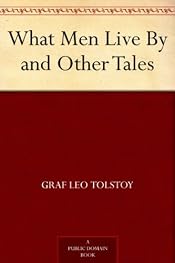
This collection contains 4 stories:
What Men Live By (3stars)
Three Questions (2 stars)
The Coffee-House of Surat (2 stars)
How Much Land Does A Man Need? (4 stars)
This translation has the advantage of being done by the British husband and wife team Aylmer and Louise Maude, who had lived in Russia until the Revolution (Louise was born in Moscow), and who were personal friends of Tolstoy.
They were also involved in sort of communal living advocated by Tolstoy, although never embracing all Tolstoyan precepts, and so, I hope, would be best placed to accurately convey his religious views.
All four of these tales are overtly religious works; they are probably best described as parables. The first and last involve supernatural beings, the other two, shorter, pieces revolve around gnomic utterances by wise individuals.
In Three Questions a king asks a hermit:
* How to know the right time for action
* How to know who are the important people to listen to &
*:What is the most important thing to do
and gets a lesson in seizing the moment .
A cosmopolitan group of travellers at The Coffee-House of Surat score points off one another over which religion is most advancedand get a lesson in the universality of God from a follower of Confucius .
I thought those two made their points quite well, but were not particularly brilliant.
What Men Live By takes the form of a folk-tale, with vivid characterisation of the village shoemaker and his wife. They are neither completely good or bad people, but demonstrate the type of simple faith that Tolstoy so admired. And there was a genuine sense of anticipation, not do much about who their guest was, but why he was there - it turns out that he also needs the answers to some questions.
How Much Land Does A Man Need? was my favourite of the lot. There is humour as well as excitement here, as Pahom makes a bet with some Bashkirs.
This last story is less specifically Christian, and more raising the general moral question of "how much is enough?" And it has the best answer that I have seen.
I had read the first and last tales before, in the Penguin Little Black Books series.
But I was glad to read the extra tales, as well as to have the translation by Tolstoy's preferred translators (and it's current price is £0, so I certainly have no reason to complain!)
What Men Live By and Other Tales By Graf Leo Tolstoy (translated by Louise Shanks Maude and Aylmer Maude)
This collection contains 4 stories:
What Men Live By (3stars)
Three Questions (2 stars)
The Coffee-House of Surat (2 stars)
How Much Land Does A Man Need? (4 stars)
This translation has the advantage of being done by the British husband and wife team Aylmer and Louise Maude, who had lived in Russia until the Revolution (Louise was born in Moscow), and who were personal friends of Tolstoy.
They were also involved in sort of communal living advocated by Tolstoy, although never embracing all Tolstoyan precepts, and so, I hope, would be best placed to accurately convey his religious views.
All four of these tales are overtly religious works; they are probably best described as parables. The first and last involve supernatural beings, the other two, shorter, pieces revolve around gnomic utterances by wise individuals.
In Three Questions a king asks a hermit:
* How to know the right time for action
* How to know who are the important people to listen to &
*:What is the most important thing to do
A cosmopolitan group of travellers at The Coffee-House of Surat score points off one another over which religion is most advanced
I thought those two made their points quite well, but were not particularly brilliant.
What Men Live By takes the form of a folk-tale, with vivid characterisation of the village shoemaker and his wife. They are neither completely good or bad people, but demonstrate the type of simple faith that Tolstoy so admired. And there was a genuine sense of anticipation, not do much about who their guest was, but why he was there - it turns out that he also needs the answers to some questions.
How Much Land Does A Man Need? was my favourite of the lot. There is humour as well as excitement here, as Pahom makes a bet with some Bashkirs.
This last story is less specifically Christian, and more raising the general moral question of "how much is enough?" And it has the best answer that I have seen.
I had read the first and last tales before, in the Penguin Little Black Books series.
But I was glad to read the extra tales, as well as to have the translation by Tolstoy's preferred translators (and it's current price is £0, so I certainly have no reason to complain!)
21pgmcc
>20 -pilgrim-: Your post has convinced me to acquire this volume despite the expense. Your detail on the translators is at least half of the reason I will seek this out and read it. Thank you for your post. Very helpful.
22-pilgrim-
>21 pgmcc: They appear to have translated their way through the entire Tolstoy corpus, Louise doing the fiction whilst Alymer handled the philosophical works.
Interesting couple - Aylmer also assisted in Tolstoy's project of helping the Doukhobors resettle in Canada.
I am now looking out for more of their translations.
Interesting couple - Aylmer also assisted in Tolstoy's project of helping the Doukhobors resettle in Canada.
I am now looking out for more of their translations.
23pgmcc
I regard translators as unsung heroes or, possibly, vile villains of the piece. The relationship of these translators with Tolstoy would have given them a unique insight into his real meaning in his works. As native English speakers they would be translating into their own language. These two facts imply worthy translations...unless they were determined to undermine Tolstoy's work. :-)
E.T.A. You may chalk up a notch on the stock of your book-bullet gun; I have this volume resting in the Kindle app on my phone.
E.T.A. You may chalk up a notch on the stock of your book-bullet gun; I have this volume resting in the Kindle app on my phone.
24-pilgrim-
>23 pgmcc: I agree with you wholeheartedly; the translator has a major impact on the impression one gets of the style of a work, yet their work is at its apogee when it is invisible.
25pgmcc
>24 -pilgrim-: That is so true. The first time I thought of a translator’s involvement was when I read The Three Musketeers. I was almost half way through and was commenting to myself how poetic the language was. Then it struck me that it was originally in French and that the translator had not only translated the story but had managed to present it in poetic English.
262wonderY
>25 pgmcc: Oh, now you have to tell which translator that was. Please? I have three translations of The Three Musketeers precisely because each has strengths that the others don't.
27Bookmarque
Yes, please share. I love Dumas and am open to trying alternate versions.
28pgmcc
>26 2wonderY: & >27 Bookmarque:
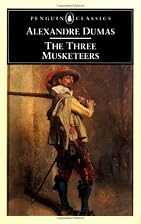
This is the edition I read, the Penquin Classic. I shall have to dig it out and get the name of the translator. It slips my mind for the moment.
This is the edition I read, the Penquin Classic. I shall have to dig it out and get the name of the translator. It slips my mind for the moment.
29-pilgrim-
>28 pgmcc: Please do. I remember the language of the translation that I read being very beautiful, but I was 10 at the time, and the translator did not register (even after sufficient rereads to know many passages by heart!)
>25 pgmcc: The first translations that I really noticed the translator's art was with David McDuff's translations of Dostoevsky. In his Memoirs from the House of the Dead , the narrator is an aristocrat, but he is meeting people from all walks of life - and characterising their backgrounds by their speech patterns.
We have
* the formal, slightly artificial language of the Polish political prisoners who are also aristocrats, very conscious of their rank (and the more so, because it is not bring recognised by the guards), but not speaking their native language,;
* the simple language of the peasants, but often fawningly laden with honorifics towards the narrator;
* the flowery allusive language of the thieves' can't, which often contains a hidden message at odds with boys overt one.
Realising the degree to which Dostoevsky was conveying characterisation as much by language choice as by what the character was actually saying, and that for each stylistic variation the translator was having to find an analogous English form, was my eye-opener into the degree of translator's skill required.
The exact moment was the anecdote by the two "vagrants" who identified themselves as "Scarper" and "Scarperanall" - because, they claimed, those were the names that "good people" gave them. (The term "good people" not only being ironic (since those people were not being kind, and giving names as being claimed, but simply telling beggars to clear out) but in fact being a technical term by professional criminals for people who follow a different code - that of the law-abiding, thus explaining - without ever explicitly stating - that the reason these two prefer being severely flogged to revealing their right names (claiming the above names are the only ones they can remember being called) is that they probably have a trail of worse crimes behind them, than the simple expectation of being runaway serfs that is behind their current imprisonment. Without the linguistic clues, their behaviour would appear incomprehensible. ) The subtlety of the English choice for their sobriquets in conveying how obtained, and how obviously not real names, was masterful.
>25 pgmcc: The first translations that I really noticed the translator's art was with David McDuff's translations of Dostoevsky. In his Memoirs from the House of the Dead , the narrator is an aristocrat, but he is meeting people from all walks of life - and characterising their backgrounds by their speech patterns.
We have
* the formal, slightly artificial language of the Polish political prisoners who are also aristocrats, very conscious of their rank (and the more so, because it is not bring recognised by the guards), but not speaking their native language,;
* the simple language of the peasants, but often fawningly laden with honorifics towards the narrator;
* the flowery allusive language of the thieves' can't, which often contains a hidden message at odds with boys overt one.
Realising the degree to which Dostoevsky was conveying characterisation as much by language choice as by what the character was actually saying, and that for each stylistic variation the translator was having to find an analogous English form, was my eye-opener into the degree of translator's skill required.
The exact moment was the anecdote by the two "vagrants" who identified themselves as "Scarper" and "Scarperanall" - because, they claimed, those were the names that "good people" gave them. (The term "good people" not only being ironic (since those people were not being kind, and giving names as being claimed, but simply telling beggars to clear out) but in fact being a technical term by professional criminals for people who follow a different code - that of the law-abiding, thus explaining - without ever explicitly stating - that the reason these two prefer being severely flogged to revealing their right names (claiming the above names are the only ones they can remember being called) is that they probably have a trail of worse crimes behind them, than the simple expectation of being runaway serfs that is behind their current imprisonment. Without the linguistic clues, their behaviour would appear incomprehensible. ) The subtlety of the English choice for their sobriquets in conveying how obtained, and how obviously not real names, was masterful.
30-pilgrim-
Having just posted a eulogy for a very grim Russian novel, here is a review for one that is perhaps even bleaker:
9 by Andrzej Stasiuk (translated by Bill Johnston) - 4.5 stars
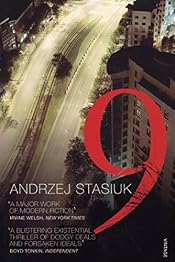
I have had this book a couple of years now and started it several times. It is compelling, but it requires attention; it is not a novel you can dip into or read in snippets.
People are on the move around Warsaw. Their thoughts are recorded in a stream of consciousness style, with vivid descriptions of bleak landscapes, and loving attention paid to the minutiae of the team, bus and train routes.
People come into the story; sometimes they are named, sometimes not. This is not necessarily an indication of their importance: some named people appear once, nameless characters recur, to take major roles.
Time is not linear; people's thoughts slip back to events in the past. It is the nineties, but the main characters lives were shaped by the fall of Polish communism in the eighties, when the old structure of life has disappeared, replaced by capitalist dreams, without any means to fulfill them.
Paweł wakes in his trashed apartment. He owes people money; he has three days to get it. The book follows his attempts to get it. The (unnamed) wife (and child) that he has evidently abandoned is his first target, then, Bolek, (a friend of their youth who is doing well by trading in less legal business), then Jacek (another old acquaintance, chance met, who is now an addict), Zosia (the assistant who runs his shop for him, whose wages he doesn't actually pay)...
He meets new people too: Beata (Jacek's girl), Luśka (her friend), Luśka's (unnamed) boyfriend.
And these people encounter others (and sometimes each other unawares). We get their thoughts, and sometimes glimpses of their pasts or future.
We flit between their viewpoints. Paragraphs begin with pronouns, and it can take a while, at times, to work out who is thinking.
Everyone's thoughts are trapped in an eternal 'now'. There is only the moment. Only the gangsters have agency, and plans, everyone else is mired in the helplessness of an unchanging existence... except when it suddenly all goes to hell. For the undercurrent of violence is everywhere. The same view that shows respectable citizens commuting to and from their dead-end jobs, shows quite different things if you look out at night.
Death is sudden, and fundamentally meaningless, since everyone is ultimately, existentially, alone. The men feel sexual desire for the women (despite his predicament, Paweł seems to think about it a lot!), but have no sense of attachment -Jacek simply can't be bothered to warn Beata that she is in danger . The women love their men, but accept this treatment. So, of course, they are the ones who suffer, and are raped and killed, because of what is going on in the world of men And their loyalty to their men is so strong that they sacrifice each other, without a qualm.
This is a book with such a low view of men, that if it had been written by a woman, it would have been denounced as simply misanthropic. But Stasiuk knows the milieu which is writing about; he spent a year and a half in prison after deserting from the army. (His first book was about prison life.)
The crudity of sexual language is unabashed in speech, but the actual violence and sexual activity tend to be described more in the foreplay and aftermath. There is no "torture porn" pleasure taken in writing about this; the emphasis is on states of mind rather than details - and the more genuinely horrific for that.
It is not an easy read, but sometimes grimly beautiful. This is his city. His attachment is undeniable, even as he describes its rottenness. Communism is not looked back on a any sort of golden age; the grinding poverty and poor diet feature prominently in all reminiscences. But its loss destroyed the rhythm of lives, and the sense of social bonds, replacing it with hopeless aspirations in a world where everyone is striving to "get ahead" and everyone is alone.
Paweł is at first an extremely unlikeable protagonist. Yet as the book progresses we see how the boy he once was, was actually rather admirable. It is the crushing of his dreams that has twisted his determination to make a better life, stripping him of all ideals, and leaving - nothing.
(edited for spelling)
9 by Andrzej Stasiuk (translated by Bill Johnston) - 4.5 stars
I have had this book a couple of years now and started it several times. It is compelling, but it requires attention; it is not a novel you can dip into or read in snippets.
People are on the move around Warsaw. Their thoughts are recorded in a stream of consciousness style, with vivid descriptions of bleak landscapes, and loving attention paid to the minutiae of the team, bus and train routes.
People come into the story; sometimes they are named, sometimes not. This is not necessarily an indication of their importance: some named people appear once, nameless characters recur, to take major roles.
Time is not linear; people's thoughts slip back to events in the past. It is the nineties, but the main characters lives were shaped by the fall of Polish communism in the eighties, when the old structure of life has disappeared, replaced by capitalist dreams, without any means to fulfill them.
Paweł wakes in his trashed apartment. He owes people money; he has three days to get it. The book follows his attempts to get it. The (unnamed) wife (and child) that he has evidently abandoned is his first target, then, Bolek, (a friend of their youth who is doing well by trading in less legal business), then Jacek (another old acquaintance, chance met, who is now an addict), Zosia (the assistant who runs his shop for him, whose wages he doesn't actually pay)...
He meets new people too: Beata (Jacek's girl), Luśka (her friend), Luśka's (unnamed) boyfriend.
And these people encounter others (and sometimes each other unawares). We get their thoughts, and sometimes glimpses of their pasts or future.
We flit between their viewpoints. Paragraphs begin with pronouns, and it can take a while, at times, to work out who is thinking.
Everyone's thoughts are trapped in an eternal 'now'. There is only the moment. Only the gangsters have agency, and plans, everyone else is mired in the helplessness of an unchanging existence... except when it suddenly all goes to hell. For the undercurrent of violence is everywhere. The same view that shows respectable citizens commuting to and from their dead-end jobs, shows quite different things if you look out at night.
Death is sudden, and fundamentally meaningless, since everyone is ultimately, existentially, alone. The men feel sexual desire for the women (despite his predicament, Paweł seems to think about it a lot!), but have no sense of attachment -
This is a book with such a low view of men, that if it had been written by a woman, it would have been denounced as simply misanthropic. But Stasiuk knows the milieu which is writing about; he spent a year and a half in prison after deserting from the army. (His first book was about prison life.)
The crudity of sexual language is unabashed in speech, but the actual violence and sexual activity tend to be described more in the foreplay and aftermath. There is no "torture porn" pleasure taken in writing about this; the emphasis is on states of mind rather than details - and the more genuinely horrific for that.
It is not an easy read, but sometimes grimly beautiful. This is his city. His attachment is undeniable, even as he describes its rottenness. Communism is not looked back on a any sort of golden age; the grinding poverty and poor diet feature prominently in all reminiscences. But its loss destroyed the rhythm of lives, and the sense of social bonds, replacing it with hopeless aspirations in a world where everyone is striving to "get ahead" and everyone is alone.
Paweł is at first an extremely unlikeable protagonist. Yet as the book progresses we see how the boy he once was, was actually rather admirable. It is the crushing of his dreams that has twisted his determination to make a better life, stripping him of all ideals, and leaving - nothing.
(edited for spelling)
31pgmcc
>29 -pilgrim-:
Against all odds, I found my copy of The Three Musketeers.
From the title page:
"Translated and with an introduction by Lord Sudley"
I remembered it was a titled person but could not recall the name.
Against all odds, I found my copy of The Three Musketeers.
From the title page:
"Translated and with an introduction by Lord Sudley"
I remembered it was a titled person but could not recall the name.
322wonderY
WorldCat gives his full name as Gore, Arthur Paul John Charles James, Viscount Sudley.
Arthur Paul Sudley
Thanks!!! I'll be looking for that translation.
Arthur Paul Sudley
Thanks!!! I'll be looking for that translation.
33pgmcc
>29 -pilgrim-: & >32 2wonderY:
I must go back and read the introduction. I never read the introduction before reading a book lest it has spoilers. I like to read a story the way the author wrote it for me, i.e. I want the detailes revealed at the point the author wants them revealed; not in some flowery introduction where and insensitive introduction writer thinks they have to demonstrate their knwoledge of the story before the reader reads it.
Sorry; introductions are a thing with me. I think many of them should be afterwords.
I must go back and read the introduction. I never read the introduction before reading a book lest it has spoilers. I like to read a story the way the author wrote it for me, i.e. I want the detailes revealed at the point the author wants them revealed; not in some flowery introduction where and insensitive introduction writer thinks they have to demonstrate their knwoledge of the story before the reader reads it.
Sorry; introductions are a thing with me. I think many of them should be afterwords.
34-pilgrim-
>31 pgmcc:, >32 2wonderY: Thank you both.
It seems a pity that it appears to be the only work that he is listed as having translated.
It seems a pity that it appears to be the only work that he is listed as having translated.
35ScoLgo
>33 pgmcc: I am in 100% agreement with you regarding forwards/introductions.
36-pilgrim-
>33 pgmcc:, >35 ScoLgo: As am I. It seems to be a common gripe here at GD.
37-pilgrim-
A quick review of a definite waste of time here:
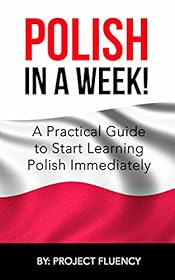
Polish in a Week by Project Fluency - 1 star
I had been hoping to make a trip back to Poland, before political and other circumstances intervene. With this in mind, I took a look at this (before my Internet went down over the weekend - see other thread).
Now, it's description clearly implies that its goal is to get you up to speed on a few basics, to impart some minimal communication skills prior to imminent travel.
With that in mind, it is completely useless to include a "pronunciation guide" that repeatedly says:
Anyone who studies languages knows that the pronunciation of letters do not map conveniently from one language to another. And there are many languages that have more distinct vowels than English's five (36 in Scottish Gaelic, for example, IIRC).
But no one is going to speak fluent Polish after perusing a 54 page book! So the goal here is clearly, making oneself understood rather than trying to impersonate a native - and for that, some idea of how to pronounce is better than none!
Advice to listen to a native speaker is specious, since no one who has a helpful native speaker available needs this sort of book.
The International Phonetic Alphabet is there to resolve precisely this sort of issue. I suppose that its arcane notation might look intimidating, but surely less so than leaving the reader completely to their own devices? And there is always the hoary "sounds like phoneme X in word Y" approach - although that frequently leaves me trying to research the background of the author, in order to determine how the vowel in question is pronounced in their dialect of English! Either, however is preferable to simply leaving the reader to guess.
Other than mentioning the 3 grammatical genders and 7 cases, this book simply consists of a few pages of listed words and phrases - which the aforementioned complete lack of declination guidance renders impossible to use in speech.
That being the case, devoting a page to Polish slang seems hopelessly optimistic.
I can see no useful features whatsoever in this book - other than that, as far as I know, nothing is actually wrong!
I would be furious if I had actually paid anything for this, as it is, I still resent the time wasted.
I am returning to Basic Polish Grammar by Dana Bielec.
Note: I do not intrinsically warm to a book that tries to persuade you that the language is worth the trouble of learning by referring to "hot Polish women"!
But a book can be useful even if the author is crass. However, when it isn't, then there is nothing to set against the boorishness of the author.
Polish in a Week by Project Fluency - 1 star
I had been hoping to make a trip back to Poland, before political and other circumstances intervene. With this in mind, I took a look at this (before my Internet went down over the weekend - see other thread).
Now, it's description clearly implies that its goal is to get you up to speed on a few basics, to impart some minimal communication skills prior to imminent travel.
With that in mind, it is completely useless to include a "pronunciation guide" that repeatedly says:
no real English equivalent - it’s best to hear it being spoken.
Anyone who studies languages knows that the pronunciation of letters do not map conveniently from one language to another. And there are many languages that have more distinct vowels than English's five (36 in Scottish Gaelic, for example, IIRC).
But no one is going to speak fluent Polish after perusing a 54 page book! So the goal here is clearly, making oneself understood rather than trying to impersonate a native - and for that, some idea of how to pronounce is better than none!
Advice to listen to a native speaker is specious, since no one who has a helpful native speaker available needs this sort of book.
The International Phonetic Alphabet is there to resolve precisely this sort of issue. I suppose that its arcane notation might look intimidating, but surely less so than leaving the reader completely to their own devices? And there is always the hoary "sounds like phoneme X in word Y" approach - although that frequently leaves me trying to research the background of the author, in order to determine how the vowel in question is pronounced in their dialect of English! Either, however is preferable to simply leaving the reader to guess.
Other than mentioning the 3 grammatical genders and 7 cases, this book simply consists of a few pages of listed words and phrases - which the aforementioned complete lack of declination guidance renders impossible to use in speech.
That being the case, devoting a page to Polish slang seems hopelessly optimistic.
I can see no useful features whatsoever in this book - other than that, as far as I know, nothing is actually wrong!
I would be furious if I had actually paid anything for this, as it is, I still resent the time wasted.
I am returning to Basic Polish Grammar by Dana Bielec.
Note: I do not intrinsically warm to a book that tries to persuade you that the language is worth the trouble of learning by referring to "hot Polish women"!
But a book can be useful even if the author is crass. However, when it isn't, then there is nothing to set against the boorishness of the author.
38-pilgrim-

One Word Kill (Impossible Times Book 1) by Mark Lawrence - 4 stars
This was the book that I got as my Prime First book from Amazon for April. On April 1st, a biopsy revealed cancerous cells. That made me a little reluctant to tackle this; however @Narilka's reassurances, following her own review of it, convinced me to give it a go.
It was hard not to identify strongly with the 16 year old protagonist. He was playing D&D in the eighties, as I was (although I was at university, not school). The difficulties of being the weird one, who likes maths and finds QM beautiful, were well described.
And the setting, vividly described, is a part of London that I knew at that time.
And then, there is the cancer. The description of the processes of chemotherapy seemed a bit wrong to me - the idea that they keep you in overnight after your first dose, but after subsequent sessions you can be discharged more quickly, seemed odd. But then, this is supposed to be in the eighties, not now.
However the description of what it feels like to have cancer was spot on (for me). There is the coming to terms with a seriously abbreviated timescale for one's plans, and the desperate urge to make that time count. (I am a lot older than Nico, the protagonist, but having had to put my life on hold for many years, the sense of not having really started is the same.) At the same time, there is the added exhaustion, and the long drawn out nature of the treatment itself, eating away such a large component of what time there is.
I was not sure how I was going to feel about the use of cancer as a plot device; it is commonly introduced in a rather cheap and exploitative manner. Here I felt it was both well-handled and justified: the main thrust of the plot concerned making decisions about other people's lives, and the assumptions commonly employed, which include those vis-à-vis life expectancy based on current age.
Time is the theme of this book, and I thoroughly enjoyed the "harder" aspects of the SF,v even though time travel is possibly my least favourite sub-genre, and the ensuing paradoxes were acknowledged, then openly pushed aside and ignored.
This is (despite the themes) quite a light read, possibly because the main characters are all quite likeable people (plus a slightly cartoonish villain). The heartwarming aspect is the way that people rallied round our sick protagonist, claims that he is isolated, and unable to talk to his mother about things that really matter, notwithstanding.
My own experience is that serious illness makes people uncomfortable, so that they respond to it by dropping contact. The idea that a group of teenagers, described as socially inept, would handle the situation so well, was the part that rubbed it home to me that this was YA fare. It was naive and unrealistic, and jarred against the realism of the rest of the writing, which was detailed, well-observed and provided the perfect counterpoint to the weirdness of the plot.
As a former D&Der, I automatically saw the solution to the "Tower of Tricks" puzzle
That this was written by a physicist is evident. His portrayal of the mindset in his characters was excellent, but also evident in the relative rigour of the plot.
So, this was an enjoyable story that also raised some interesting philosophical questions.
39pgmcc
>38 -pilgrim-: Thank you for sharing your views on this book. It cannot have been easy to read.
When my sister was diagnosed I kept close to her and her husband and offered what help I could. Once my sister was in remission my brother-in-law thanked me for that as everyone else had backed away and become more distant, a reaction supporting your experience.
When was the book written? I ask this as I notice many of today’s youth seem to pull together with a friend who has an illness. I was wondering if the unrealistic reactions you described due to the author’s putting today’s youth into the time of the story or if the author was trying to influence readers to act in a more supportive way to friends in need.
Again, thank you for sharing.
When my sister was diagnosed I kept close to her and her husband and offered what help I could. Once my sister was in remission my brother-in-law thanked me for that as everyone else had backed away and become more distant, a reaction supporting your experience.
When was the book written? I ask this as I notice many of today’s youth seem to pull together with a friend who has an illness. I was wondering if the unrealistic reactions you described due to the author’s putting today’s youth into the time of the story or if the author was trying to influence readers to act in a more supportive way to friends in need.
Again, thank you for sharing.
41-pilgrim-
>39 pgmcc: Thank you also for sharing your experience. I hope you are right in your perception of the youth of today (a phrase which makes both of us sound ancient beyond belief!); it just did not fit with the sort of social ineptitude that he was ascribing to his D&D group.
I am not sure that his writing teenagers behaving in a more positive way than is probable is a necessarily a bad thing; would it irritate/upset a teenager who IS going through a similar experience and finding their real life friends far less supportive, or does it provide a positive role model for teenagers who want to be a "good friend" to their sick friend, but don't know how best to do this? Writing from the latter motive is a hallmark of YA fiction, but not necessarily bad fiction.
Mark Lawrence is, according to Wikipedia, the carer for his own disabled child. I assume that will have familiarised him with the gamut of real children's and teenager's responses.
It seems to me that the reaction that I and your sister have experienced is very much a symptom of a general malaise in our modern culture; despite all the disability awareness campaigns etc. we very much tend to shy away from the topics of sickness and dying. Combine with the other modern assumption that we have some sort of right to a trouble-free existence, and that it is somehow psychologically healthy to avoid contemplating unpleasant realities, and we have possibly the era least prepared to face the truth. (When my aunt developed breast cancer, she simply vanished from my life without explanation; that was the generation that did not talk to children about serious illness. But I doubt that the adults around her evaded the issue in the same way.)
Whether religion is objectively true or not, the message, common to most, that media vita in morte sumus was a useful perspective. Modern medicine can be a wonderful thing, but it is a fallacy to think that we can ever outrun our own mortality.
The funding at the founding of the NHS was based on the assumption that as more cures were discovered, we would have a healthier population; the converse is true. As we eliminate various diseases, we increase longevity, and enable the debilitating, chronic illnesses to strike. As we enable babies to live that in previous generations would not, we leave many of them to cope with a lifetime of disability.
No one would wish for the shorter lives, or infant mortality, or previous generations; these developments are all good. But they show the unrealistic nature of the current search for perfection and control.
One Word Kill was not a difficult read for me (although I had anticipated that it might be). I would actually strongly recommend it to anyone in a similar situation. It doesn't make any heavy-handed points - it is basically a good SF adventure - but its message (if there is one) is about the infinity of possibilities, and the fact that extreme bad fortune (or extreme good) can strike anyone.
We have to live the life that we have - that is all anyone can do.
That we shall die we know; it is but the time and hour that men stand upon
- Shakespeare, Julius Caesar
I am not sure that his writing teenagers behaving in a more positive way than is probable is a necessarily a bad thing; would it irritate/upset a teenager who IS going through a similar experience and finding their real life friends far less supportive, or does it provide a positive role model for teenagers who want to be a "good friend" to their sick friend, but don't know how best to do this? Writing from the latter motive is a hallmark of YA fiction, but not necessarily bad fiction.
Mark Lawrence is, according to Wikipedia, the carer for his own disabled child. I assume that will have familiarised him with the gamut of real children's and teenager's responses.
It seems to me that the reaction that I and your sister have experienced is very much a symptom of a general malaise in our modern culture; despite all the disability awareness campaigns etc. we very much tend to shy away from the topics of sickness and dying. Combine with the other modern assumption that we have some sort of right to a trouble-free existence, and that it is somehow psychologically healthy to avoid contemplating unpleasant realities, and we have possibly the era least prepared to face the truth. (When my aunt developed breast cancer, she simply vanished from my life without explanation; that was the generation that did not talk to children about serious illness. But I doubt that the adults around her evaded the issue in the same way.)
Whether religion is objectively true or not, the message, common to most, that media vita in morte sumus was a useful perspective. Modern medicine can be a wonderful thing, but it is a fallacy to think that we can ever outrun our own mortality.
The funding at the founding of the NHS was based on the assumption that as more cures were discovered, we would have a healthier population; the converse is true. As we eliminate various diseases, we increase longevity, and enable the debilitating, chronic illnesses to strike. As we enable babies to live that in previous generations would not, we leave many of them to cope with a lifetime of disability.
No one would wish for the shorter lives, or infant mortality, or previous generations; these developments are all good. But they show the unrealistic nature of the current search for perfection and control.
One Word Kill was not a difficult read for me (although I had anticipated that it might be). I would actually strongly recommend it to anyone in a similar situation. It doesn't make any heavy-handed points - it is basically a good SF adventure - but its message (if there is one) is about the infinity of possibilities, and the fact that extreme bad fortune (or extreme good) can strike anyone.
We have to live the life that we have - that is all anyone can do.
That we shall die we know; it is but the time and hour that men stand upon
- Shakespeare, Julius Caesar
42-pilgrim-
>39 pgmcc: And I forgot, in all that lengthy response, to answer your original question - One Word Kill was first published in 2019.
43-pilgrim-
Christmas Tale (a short story) by Mark Lawrence - 1.5 stars
I was intrigued by Mark Lawrence's perspicacity enough to go to his website and look into his background.
That led me to the short stories that he has published there.
This was the first one that I read. It is a short satire on the commercialisation of Christmas. I thought it pretty obvious, but it did have a good opening joke.
I was intrigued by Mark Lawrence's perspicacity enough to go to his website and look into his background.
That led me to the short stories that he has published there.
This was the first one that I read. It is a short satire on the commercialisation of Christmas. I thought it pretty obvious, but it did have a good opening joke.
442wonderY
>43 -pilgrim-: Wrong touchstone there.=)
45-pilgrim-
>44 2wonderY: Got it. Thanks.
46-pilgrim-
Locked In (a short story) by Mark Lawrence - 3 stars
This science fiction tale was the second short story that I read from Mark Lawrence's website. Set in contemporary, America, I found the male protagonist an unlikeable, selfish character - the sort of man who is only interested in women if they are young and pretty enough, and has zero compunction towards helping others -but that was in some ways the point. I did not guess the twist (although in retrospect, I should have).
It is difficult to say more without revealing the plot. So I'll just say that it has themes that overlap with those in One Word Kill, and I would say is worth a read.
This science fiction tale was the second short story that I read from Mark Lawrence's website. Set in contemporary, America, I found the male protagonist an unlikeable, selfish character - the sort of man who is only interested in women if they are young and pretty enough, and has zero compunction towards helping others -but that was in some ways the point. I did not guess the twist (although in retrospect, I should have).
It is difficult to say more without revealing the plot. So I'll just say that it has themes that overlap with those in One Word Kill, and I would say is worth a read.
47Narilka
>38 -pilgrim-: I'm glad you enjoyed One Word Kill :) I've only read the authors Book of the Ancestor series, which I also enjoyed. I haven't checked out any of his short fiction or other series, which I hear is quite grimdark.
48-pilgrim-
>47 Narilka: I have his Red Sister on my TBR pile. It was not looking particularly appealing, but my recent reading of his work is promoting it upwards.
Thank you for encouraging me to take the plunge on One Word Kill, despite the circumstances.
Thank you for encouraging me to take the plunge on One Word Kill, despite the circumstances.
49-pilgrim-
I wanted to add a couple of comments to my, admittedly lengthy, review of 9.
Whilst writing it, I was tempted to include comments that would incidentally reveal who lives and who dies. That would, of course, be a huge spoiler. But it somehow doesn't feel like it, because everyone is dead inside already.
This may possibly be the bleakest novel that I have read - and I have read a lot of gulag literature. But even under the most horrendous conditions, there was usually there some glimmer of hope.
This is a searing indictment of the devastation wrought on the soul, when you cut away the moral and structural underpinnings of a society - no matter how fundamentally unsatisfactory that original structure was (there is no rosy vie of Communism here) - without erecting something in its place.
I would recommend to everyone to take a deep breath, then read it.
But one warning: Poles, like Russians, use different forms of someone's name, depending on their relationship to them. It helps to be familiar with Polish diminutive forms!
Whilst writing it, I was tempted to include comments that would incidentally reveal who lives and who dies. That would, of course, be a huge spoiler. But it somehow doesn't feel like it, because everyone is dead inside already.
This may possibly be the bleakest novel that I have read - and I have read a lot of gulag literature. But even under the most horrendous conditions, there was usually there some glimmer of hope.
This is a searing indictment of the devastation wrought on the soul, when you cut away the moral and structural underpinnings of a society - no matter how fundamentally unsatisfactory that original structure was (there is no rosy vie of Communism here) - without erecting something in its place.
I would recommend to everyone to take a deep breath, then read it.
But one warning: Poles, like Russians, use different forms of someone's name, depending on their relationship to them. It helps to be familiar with Polish diminutive forms!
50Busifer
I want to thank you for sharing your thoughts on One Word Kill. I'll probably not read it, but your thoughts on it are interesting to read. Maybe I'll drop by later for a word of my own.
People are strange.
People are strange.
51-pilgrim-
>50 Busifer: Thanks, @Busifer. I look forward to hearing your thoughts.
I am currently reading the sequel to One Word Kill.
I am currently reading the sequel to One Word Kill.
52-pilgrim-
Quick (a short story) by Mark Lawrence - 4.5 stars
This is the third short story that I read from the author's website, and I would recommend it as a great example of the author's way of mixing interesting philosophical points into lively adventure writing.
It is set in what seems to be a fantasy version of Japan in the Edo period. Hiro is a lowly waiter in a restaurant, who, over the course of the story, discovers that he has the capability to do much more. Hiro has a tendency to be clumsy and bump into people, because he is not concentrating on where he is going. However, when focussed, he can move very fast indeed.
If the protagonist were Chinese, then I would describe this as firmly in the wuxia genre, but I am not sufficiently familiar with Japanese culture to know whether there is a direct equivalent.
The fact that Hiro sees multiple possible futures and chooses between them echoes the choices made in One Word Kill , and seems to be a recurring theme with this author.
I am currently enjoying the wuxia classic Legends of the Condor Heroes: A Hero Born in paperback, so a quick diversion into this milieu by a SF author was a little treat.
This is the third short story that I read from the author's website, and I would recommend it as a great example of the author's way of mixing interesting philosophical points into lively adventure writing.
It is set in what seems to be a fantasy version of Japan in the Edo period. Hiro is a lowly waiter in a restaurant, who, over the course of the story, discovers that he has the capability to do much more. Hiro has a tendency to be clumsy and bump into people, because he is not concentrating on where he is going. However, when focussed, he can move very fast indeed.
If the protagonist were Chinese, then I would describe this as firmly in the wuxia genre, but I am not sufficiently familiar with Japanese culture to know whether there is a direct equivalent.
The fact that Hiro sees multiple possible futures and chooses between them echoes the choices made in One Word Kill , and seems to be a recurring theme with this author.
I am currently enjoying the wuxia classic Legends of the Condor Heroes: A Hero Born in paperback, so a quick diversion into this milieu by a SF author was a little treat.
53-pilgrim-
During the Dance (a short story) by Mark Lawrence - 4 stars
This one is set in a London slum, maybe 70, maybe 100 years ago. It is weird, haunting elegaic and beautiful.
What does your dancer look like?
It struck me on reading this how rare it is to have fiction about a truly good person. I don't mean simplistic, poorly written or fiction aimed at children, where a character is completely good because it is utterly one-dimensional. I mean a novel with a plausible, believable portrayal.
The narrator's little sister 'Me-Me' is such a character. She is a child with the knack of bringing out the best in people. Even the kid who is local bully simply smiles when he sees her.
The tone of this story is sad, but far from dark.
This one is set in a London slum, maybe 70, maybe 100 years ago. It is weird, haunting elegaic and beautiful.
What does your dancer look like?
It struck me on reading this how rare it is to have fiction about a truly good person. I don't mean simplistic, poorly written or fiction aimed at children, where a character is completely good because it is utterly one-dimensional. I mean a novel with a plausible, believable portrayal.
The narrator's little sister 'Me-Me' is such a character. She is a child with the knack of bringing out the best in people. Even the kid who is local bully simply smiles when he sees her.
The tone of this story is sad, but far from dark.
54-pilgrim-
Dark Tide (a short story) by Mark Lawrence - 3 stars
This is the last of the short stories published on Mark Lawrence's website. It is a creepy tale. Although the genre is horror, the technique is of eerie menace rather than shocks or gore. Man - in this case Kim Green (Kim thinks his beard makes him look like a young Cat Stevens. It doesn’t.) with a robotic mini-sub - disturbs things Man Was Not Meant To Wot Of. It was a very bad idea...
I am very conscious how different from each other these short stories have been, in genre and in tone. But there seem to be some constant themes - how to face death is one, and the importance of family is another.
I am starting to really like this author.
This is the last of the short stories published on Mark Lawrence's website. It is a creepy tale. Although the genre is horror, the technique is of eerie menace rather than shocks or gore. Man - in this case Kim Green (Kim thinks his beard makes him look like a young Cat Stevens. It doesn’t.) with a robotic mini-sub - disturbs things Man Was Not Meant To Wot Of. It was a very bad idea...
I am very conscious how different from each other these short stories have been, in genre and in tone. But there seem to be some constant themes - how to face death is one, and the importance of family is another.
I am starting to really like this author.
55pgmcc
>54 -pilgrim-: I think eerie menace is the horror of the skilled writer or film maker. I see shock and gore, particularly gore, as being the cheap option. Shock has its place but I have absolutely no time for gore in a horror film.
56-pilgrim-
>55 pgmcc: I agree completely. Actually I would say the same applies in books as well. (I think I may have argued this earlier, in another thread, comparing Sauron And Lord Foul.)
But so many film-makers do rely on gore, that the horror genre has become synonymous with it.
I specified the lack of gore here because I didn't want to scare away readers like @haydninvienna with the "horror" label.
But so many film-makers do rely on gore, that the horror genre has become synonymous with it.
I specified the lack of gore here because I didn't want to scare away readers like @haydninvienna with the "horror" label.
57haydninvienna
>56 -pilgrim-: I must admit that I have no use for gore, and precious little for realistic violence.
58-pilgrim-
>57 haydninvienna: Yes, you have said so - hence my desire to flag that this Dark Tide was not that sort of horror.
9 is, for me, an excellent example of how such things can (should?) be handled. Although, being set in a violent society in flux, terrible things are done, they are never described in detail. It is evident when such things have occurred, but the focus is on the mental states of perpetrators and victims, rather than the specifics of what has been done.
We know that human beings can do terrible things to one another.
We know human beings sometimes have sex with one another.
In both cases, a detailed description of the specifics rarely adds anything to a narrative
9 is, for me, an excellent example of how such things can (should?) be handled. Although, being set in a violent society in flux, terrible things are done, they are never described in detail. It is evident when such things have occurred, but the focus is on the mental states of perpetrators and victims, rather than the specifics of what has been done.
We know that human beings can do terrible things to one another.
We know human beings sometimes have sex with one another.
In both cases, a detailed description of the specifics rarely adds anything to a narrative
59pgmcc
>58 -pilgrim-:
OK! You can mark up a direct hit for 9. You set me up nicely and struck just when the iron was hot. :-)
OK! You can mark up a direct hit for 9. You set me up nicely and struck just when the iron was hot. :-)
60Narilka
>53 -pilgrim-: Book bullet for During the Dance. I need to go check that out.
61ScoLgo
>52 -pilgrim-: Thank you. I enjoyed Quick. Will plan to read his other works you have mentioned in this thread as time allows.
63pgmcc
>62 -pilgrim-: Quite the sharp-shooter. We will be calling you Annie Oakley from here on in.
64-pilgrim-
>63 pgmcc: Aw, shucks!
65-pilgrim-

Limited Wish (Impossible Times Book 2) by Mark Lawrence - 3.5 stars
This was a much harder read for me, as Nick's leukemia is very much to the fore here. What made me persist was the description of what it feels like (in the sense of the protagonist's thought processes, and the reactions of strangers) were, for me, spot on. As for the physical deterioration, I can't comment yet - although the level of physical activity that Nick was capable of seemed at time rather unrealistic.
The science aspect of the science fiction was even better than in the last book, with a sort of plausible explanation for the multiple timelines situation. The plot actually deals with the paradox that was evaded in One Word Kill.
And I liked the way that the "happy ending" of the first book did not remain neatly tied up - knowing your future dies not necessarily mean that you have a clue as to how to get there!
The portrayal of attitudes regarding class and homosexuality in the eighties remain spot on. Nick has now had to admit to his genius, and as a result is studying at Cambridge, as a prodigy. That makes him my university contemporary - and I shared university accommodation with the likes of Crispin Waugh!
Although still dealing with time travel (and D&D), this is most certainly not simply a rehash of the first book. It remains a fast-paced and unpredictable adventure (except for Eva's solution - which I predicted from early on), that continues to address major issues: how do you make a short life meaningful? What does the multiverse theory actually imply?
Again, this story is about making choices - and their unforeseeable consequences.
Theme music: Mick Jagger singing "You Can't Always Get What You Want
66-pilgrim-

A Quick Guide to Writing Better Emails by Heather Wright - 1.5 stars
This is part of a series about Better Business Communication.
A quick trip to the author's website shows that this appears to be a sideline for her; her main market appears to be in writing books about how to write. She also describes herself as s "freelance writer", who has written numerous non-fiction books on a highly diverse range of subjects.
Her credentials for writing this book appear to be that she "taught English and communications for over 20 years" in Canada - she does not say at what level, but given that her books on creative writing were aimed at teenagers, I suspect that she was a schoolteacher.
At no point does she mention having any business experience herself, and her CV shows plenty of willingness to author books on subjects in which she has no background, so I do wonder at her credentials for authoritative pronouncements on this topic.
The book itself is extremely short - only 54 pages long, written in an extremely large typeface. The author justifies this by saying that she knows her readers are too busy to read anything longer.
It contains such gems as the fact that it is not appropriate to use emoticons in a business email. Or that you can address someone as "Mr Smith" or "John Smith" but not "Mr John Smith".
In other words, the level of advice given is appropriate to someone who was not taught basic literacy at school. Either educational standards have declined considerably, or the only market that would find this useful are the overseas scammers, whose phishing emails are often sadly deficient in grammar.
I read this book because (i) it was a gift and (ii) has been a good number of years since I was working for a large corporation, and I wondered whether conventions had changed in my absence. I am now left feeling rather insulted by the sender's apparent opinion of my intelligence!
I gave this 1.5 stars because
(i) it does not contain any actually offensive or inaccurate material;
(ii) It did contain 1 item of information of which I was previously unaware: apparently EOM at the end of a subject line means that there is no body to the email, all the information is contained in the header.
67Karlstar
>66 -pilgrim-: So you're saying I should write a book about how to write better emails?
68-pilgrim-
I>67 Karlstar: I imagine that you could knock off one with as much information, and as much attention to presentation, as this one, if you have a couple of spare hours this afternoon!
69-pilgrim-

The Cruel Prince: Book 1 of The Folk of the Air by Holly Black - 3.5 stars
Jude, her twin sister Taryn, and her half-sister Vivienne, were stolen away to Faerie and raised by their abductor as his own children.
So in some ways, this is the standard "outsider" story; most of the folk of Faerie consider mortals as inferior, suitable only for use as glamoured servants. Consequently the twins are bullied; Taryn copes by trying to fit in and be invisible, Jude by fighting back.
What takes this far above the standard view of "spiteful teenagers in high school" is that this author has a real understanding of the traditional concept of the Gentry: Jude's peers are not spiteful, petty and mean because they are teenagers, but because they are fey - immortal, hauntingly beautiful, unthinkingly selfish (even her half-sister Vivienne), and with no real concept of what to do with their long lives and magical talents, except amuse themselves, including by playing spiteful tricks.
Unusually for a YA novel, Ms Black pays attention to the description, both of land and people; the result is both beautiful and a constant reminder of the otherness of Faerie.
This is not a "teens with powers" romance. Jude is fully mortal. She is not exceptionally gifted; where she succeeds (and she often fails), it is through sheer hard work and determination. The focus is on struggling to cope in an alien land, where the rules are very different. When Jude does things that no normal teenager would do, it is not because she is a "superior being" - she is not - but because extraordinary circumstances force abnormal actions.
Although the sisters are normal teenagers, which means a certain amount of crushing over boys, this is not the focus of the narrative. Jude certainly does not fall into the ridiculous trope of having romance-based dithers when momentous events are occurring.
The eponymous prince, Cardan, is Jude's personal nemesis. He is popular, and cruel. But we (and Jude) do get to see something of what has made him the way he is. Although I feared that this may eventually go the way of a "bad boy" romance, here in the first book, it does not.
I liked this book both for its real understanding of traditional beliefs about fairies, and for its willingness to portray it's characters as being really different. The fey are able to visit the mortal world and bring back American snacks if they have a fancy to, but they are not simply American teenagers in fancy dress. They behave differently, because they think differently.
Madoc is a loving father AND a bloodthirsty general
I grew up with these myths. I know the Eildon hills, between which lies the Road to Faerie. It is a personal thing, but I dislike it intensely when a writer takes a bit of tradition, then uses it as a peg on which to hang their own personal fantasy world.
Holly Black is being creative with tradition, but she understands it. Since the Good Folk, like the other early inhabitants of these isles, migrated west (according to the Nine Invasions of Ireland) I can accept them being now located off the coast of Maine. The King tied to the weal of the land, the dangers to a mortal of eating fairy food, the fact that the fey cannot lie (yet still deceive), the trickiness of fairy oaths, why you should never thank a fey, debts and obligations, glamours and curses - all are here, as are the distinctions between Seelie and Unseelie, and all the myriad varieties of fey folk.
And the story is a complex tale of politics as much as it is about an outsider fitting in.
I received a proof copy as part of the Amazon Vine programme (and, being stranded away from my library for so long, it has taken me some time to get to reading it!) Having done so, I immediately ordered the sequel.
70MrsLee
>69 -pilgrim-: So I take it that in your rating system, 3.5 stars is a pretty good read? I ask because when I give a mystery a 3 star rating, it means I enjoyed it, but won't be keeping it on my shelves. I might however, seek out another by that author to read. Some people think that I meant it was mediocre. I don't really have a mediocre in my rating system, unless it is 2 stars, which means that I didn't enjoy it, but others might.
71-pilgrim-
>69 -pilgrim-: 2 for me means that it was OK, but I don't think that I would have missed anything if I had never read it.
3 means that I enjoyed it but would not necessarily keep to read again.
So anything above 3 I would recommend: 3s as well, if you are looking for enjoyable light reading, rather than "keepers".
1.5 is my "I think that this is severely flawed, but it has something, so someone else might enjoy".
1 is utterly mediocre.
I reserve 0.5 for those books that you wish you had never touched, because they are either factually wrong, or utterly disgusting (IMO, of course) - the sort you actively regret reading (as opposed to simply regretting the waste of time).
3 means that I enjoyed it but would not necessarily keep to read again.
So anything above 3 I would recommend: 3s as well, if you are looking for enjoyable light reading, rather than "keepers".
1.5 is my "I think that this is severely flawed, but it has something, so someone else might enjoy".
1 is utterly mediocre.
I reserve 0.5 for those books that you wish you had never touched, because they are either factually wrong, or utterly disgusting (IMO, of course) - the sort you actively regret reading (as opposed to simply regretting the waste of time).
72MrsLee
>71 -pilgrim-: Thank you for the explanation. I think there is a better word, but my brain won't reveal it.
73-pilgrim-
>72 MrsLee: I suspect our scales are similar. Except that I may seek out the sequels of even a 2, if it occurred mid-sequence, or by an author I usually rate higher. It was not necessarily a bad book, I may have quite enjoyed it, but it was unexceptional.
I have a bad case of " so many books, so little time". Anything in the 2 range had enough that I wanted to finish it, but don't feel it was the best use of my time (from a personal satisfaction point of view - I am not thinking in terms of "books one ought to read").
That said, I have difficulty dropping even bad books. I keep hoping that they will get better - and I want to know what happened!
I sometimes wish that there was a website for detailed spoilers for books (and films). So that you could find out what happens without wasting the time ploughing through the prose to get there...
I have a bad case of " so many books, so little time". Anything in the 2 range had enough that I wanted to finish it, but don't feel it was the best use of my time (from a personal satisfaction point of view - I am not thinking in terms of "books one ought to read").
That said, I have difficulty dropping even bad books. I keep hoping that they will get better - and I want to know what happened!
I sometimes wish that there was a website for detailed spoilers for books (and films). So that you could find out what happens without wasting the time ploughing through the prose to get there...
74-pilgrim-

The Wicked King: Book 2 of The Folk of the Air By Holly Black - 3.5 Stars
The multiple betrayals at the end of The Cruel Prince included ones that I had not anticipated. Jude is now at the centre of things, so the political manoeuvring has become more intense, but she is still plagued with problems regarding who to trust - and there are fey determined to exacerbate her problem. She is also firmly now on a path of " doing what must be done (as she sees it) for the greater good" - and paying the price for such decisions.
It often happens that the weak protagonist of the first book in a series becomes gradually overpowered as the series progresses. This is not really what happens here. Jude's increased power means that she is now of sufficient note to put her in increased danger, and many of the steps she took on her way here are coming back to bite her - her chickens are coming home to roost.
The mutual sexual tension between Cardan and Jude that I had detected in the first book is complicating their professional relationship here.
They are both damaged by their pasts, but the story is not taking an easy route of them "finding solace in each other's arms", even though I do find Jude still a little too gib in excusing his past cruelties (in general, rather than those he aimed specifically at her) now that she knows more about his childhood. He is more understandable, but does that make it excusable? Maybe her own ruthless actions leave her feeling less capable of judging, but she was at least acting with the welfare of others in mind, whilst Cardan's petty cruelties seem to have protected only himself - even if he is now revealed to have a moral code of sorts, and one that balks at some of her choices.
Jude has more urgent problems than to be looking for love in this book, but the mistake that she made in the last is still haunting her, as he,
How to solve the problem Jude enunciated at the end of The Cruel Prince -
I am now extremely frustrated at having to wait for the sequel to be published.
75-pilgrim-
And with that, I appear to be up to date in writing about my September reading. Now to look back on earlier in the summer...
76-pilgrim-

The Dowager Magus (a short story) by Sebastien de Castell - 3 stars
Spoken too soon! In looking over my August reading, I came across a short story by Sebastien de Castell of which I was hitherto unaware. It follows on from his first book in his YA sequence, Spellslinger, and only really makes sense if you have already read that book.
If you have, however, thus brief account of a meeting between Mer'esan
It has been a long while since I read Spellslinger, back when it first came out. So this little story, set after the events of that book, also provided a welcome reminder.
77Narilka
Thanks for the Folk of the Air reviews. They've been on my radar for a while now and I'm still really intrigued. I think I may wait for the final book to publish before pulling the trigger.
78-pilgrim-
>77 Narilka: Glad to be of help. It was actually @quondame's response to @majkia's negative review, in her own thread, that piqued my interest and pulled The Cruel Prince to the top of my TBR pile. (When two reviewers, whose views I respect, disagree strongly, something interesting is likely to be going on!)
After reading it, I can see both sides. Yes, young far do behave like stereotypical mean teenagers, but that is exactly how fae traditionally are too. And the sense of otherness in the Faerie really comes across here, in a way that does not often happen in YA literature.
Extra note: Sections begin with quotes from literary poems, or ballads, about fairies. The juxtaposition is often ironic.
After reading it, I can see both sides. Yes, young far do behave like stereotypical mean teenagers, but that is exactly how fae traditionally are too. And the sense of otherness in the Faerie really comes across here, in a way that does not often happen in YA literature.
Extra note: Sections begin with quotes from literary poems, or ballads, about fairies. The juxtaposition is often ironic.
79-pilgrim-

Charmcaster (Spellslinger Book 3) by Sebastien de Castell - 4 stars
When I received a review copy of Spellslinger, I thought it had one of the most original magical settings that I had read for a long time. The plot looked as if it was going to be "teenager grows into their magical powers", but did not turn out that way at all: it was about a boy growing up in a society that valued only mages, and discovering that he would never be one. The magic system was interesting, and clearly defined, and their were intriguing hints of philosophy to come from the Argosi wanderer, Ferius Parfax, who takes the outcast boy under her wing. There were shades of the 'Wild West' in both Ferius' language and manner, which made an interesting contrast with formal Jan'Tep manners (although her having a Latinate make name jarred with me, rather irrationally, since this has no connection with our world).
I had been eagerly looking forward to the sequel, Shadowblack, perhaps because my expectations were so high, I was rather disappointed. Kellen of the House of Ke and Ferius go off somewhere else, and have a new set of adventures, with a new love interest for Kellen
However, spurred on by a Kindle sale, I finally got around to the next book. And I pleased to find that Sebastien de Castell is back on form. We learn a lot more about what it means to be Argosi, and the joys and pains of following a Path, even as Kellen learns that he has talent in a new branch of magic. (
Kellen and Ferius are hunted by Jan'Tep mages (as usual), fight Berabesq religious zealots, meet a charmcaster (another new branch of magic), and visit the Grand Exhibition at Gitabria, where charms seems too mild a word for the magical constructs made by contraptioneers. Gitabria has a vaguely 'Arabian Nights' Middle Eastern flavour to it, with a cosmopolitan atmosphere, but a secret police in the background, keeping order.
Kellen's first love reappears, in a way that he does not expect. She is very different from the girl he knew. He also meets Cressia, from the Academy of the Seven Sands, again, needing his help.
And all the mysterious mutterings of the Argosi about discordances take some shape, as it becomes clear that their world is heading towards a mighty conflict, into which all the different nations of their world will be pulled. This time Kellen and Ferius are trying to save more than their own necks; they are trying to avert disaster.
Ferius appears more human here; the Path of the Wild Daisy does not glibly surmount everything this time
Relationships are more mature, and choices harder. The great plot twist was well signposted, but that was only sad because it took the characters by surprise. We are back in the colourful, inventive world of the first book, with promise that there is a story arc underlying all this travelling between cultures.
I immediately moved on to the next book.
80-pilgrim-

Soulbinder (Spellslinger Book 4) by Sebastien de Castell - 4 stars
Kellen's decision at the end of Charmcaster means that Ferius Parfax is no longer with him. And the events at the opening of Soulbinder means that he is also without Reichis for most of the book.
Kellen started out, in Spellslinger, very weak, but with supportive friends. By the end of Charmcaster he was growing in power, and surrounded by extremely competent supporters. For most of Soulbinder he has only himself to rely on; he has to make his own decisions, with only his memories of Argosi wisdom to help.
Because Kellen is thus forced to think like an Argosi, paradoxically, Ferius' actual absence is the trigger for more insights into the Argosi way. But this book is mainly about the shadowblack.
Kellen has been seeking a cure for the shadowblack since the first book. A lot of otherwise decent people want to kill him on sight, because it presages his eventual demon possession (and some fear that has happened already!). In this book he meets people who do not consider it a curse. So Kellen, and we readers, learn more about the shadowblack - and about Kellen's in particular.
Kellen spends most of this book with s completely different set of people, on a completely different continent. Yet the overall picture starts to pull together - and start to get various insights into the possible motivations behind the actions of both Kellen's grandmother and his father in the first book. Not necessarily the correct versions, of course; Jan'Tep are secretive, and complex political animals after all.
All in all, this book was just as good as the previous one. Kellen is seventeen now; circumstances here force him to take a good, hard look at what exactly it is that matters to him most, and who he wants to be.
I immediately bought Book 5.
81-pilgrim-

New Kindle Fire HD Manual: the Complete Guide to Unlock the True Potential of your Device by Jake Jacobs - 1.5 stars
I have been having some trouble with my Kindle: when the display goes black on a time out, it cannot be "woken", except by plugging into the charger, even when the battery is full.
I borrowed this book from Amazon's Kindle Unlimited, in the hope of solving my problem. (It didn't.)
However, it would have been a good, if rather basic, guide to what can be done with a Kindle, except for one thing: it makes frequent references to diagrams and screenshots, none of which are included!
Since I was reading this "manual" on the device that it was describing, I have to assume that this was the intended device for reading this e-book, and hence that the problem is with the book itself, rather than a transmission issue.
82-pilgrim-

Queenslayer (Spellslinger Book 5) by Sebastien de Castell - 3 stars
And this is where I felt rather let down. Certainly my expectations were high, and this is not actually a bad book, but it could have been a lot more.
Kellen
The theme for this book is "Kellen as outlaw". He seems to have bought in wholeheartedly to the "outlaw mystique"; although he is still identifying as Argosi, he seems to be a long way from their teachings. Whereas the Kellen of Charmcaster agonised over having to kill someone for the greater good (to prevent, or at least delay, a continent-wide war), and felt sick afterwards, Kellen now has a reputation as a killer, which is apparently well-earned, and of which he seems rather proud. It feels like a long time has passed since we last saw him, yet he is still not yet eighteen at the start of the book.
Moreover, he seems to have thoroughly accepted Reichis' characterisation of him as a coward. Whereas, as Ferius once said, one of Kellen's most endearing characteristics was his steadfast refusal to abandon friends, in this book Kellen repeatedly promises to help someone, only to change plans to flight once the situation gets tough.
He usually comes through in the end, but sometimes too late. There is only so much self-pitying whining that I can take; particularly when his "I can't, I'm not worthy" funks cause good people to lose their lives.
Kellen has had love interests in previous books; this is where his attraction to someone becomes physical and the relationship is
I felt cheated; the changes in his personality did not seem justified. I know that time has passed since the events of Soulbinder, and that life on the run takes its toll, but Kellen has been on the run since the end of the first book, and none of the events referred to as happening in that intervening period seem sufficient to account for this deterioration in his character.
The underlying plot does not advance much in this book either.
There is plenty to enjoy about watching Kellen flounder his way through court intrigues - although his trust for a very obvious villain was infuriating.
I will continue reading, once the next book is published, and hope that it returns to form.
83-pilgrim-

Booked To Die (Book 1 of The Bookman series) by John Dunning - 2.5 stars
Taking the clichéd form of "the cop that goes off the rails when a case become too personal", this murder mystery nevertheless has quite a lot of interest deriving from the way in which it revolves around the second hand books trade.
The author was a second hand bookseller for many years, and the attitude of such a professional is shared by his protagonist (and point-of-view character).
The book was originally written in the eighties, and in the introduction the author describes how his profession has changed since that time, decrying the way that the Internet has changed things by enabling every amateur to act as their own book agent, since they can research both availability and market price online. His view is that this has distorted the market, as "the ignorant" push up the price of a book by buying without any understanding of the "real worth", or otherwise, of a book. He describes the new breed of booksellers as "knowing the price of everything and the value of nothing". The irony of this is, in my opinion, this also characterises the attitude of his protagonist (and, presumably, himself).
He also describes the phenomenon of collectors who will not touch anything by a dead author, and how this has reversed the traditional market response to an author's demise. Whilst I share his horror at this cavalier rejection of treasures from the past, I cannot help feeling that his attitude is simply snobbery when his hero - who is admired by other booksellers throughout the book, and is clearly supposed to have the correct attitude - buys fine editions of Faulkner, even though he has never got around to reading anything by that author. (The fact that, for him, Thomas Harris is evidently the epitome of a great author, did not help my reaction!)
I am not immune to the beauty of a beautifully bound and printed edition, or the fascination of a first edition with an interesting inscription by the author; but the attitude that will unhesitatingly sell on such a "once in a lifetime" find, unread, if the price is right, is one that is admirable in a trader but the antithesis of that of a book-lover.
The mindset being lauded here seems to me to also be that of one who "knows the price of everything and the value of nothing".
I found the details of the trade, its dealers and its book scouts, fascinating. The relative prices of various volumes were also interesting - particularly as the author updated these prices in his introduction, showing how the comparative values had changed. But its discussion of the delights of finding an elderly widow with no idea of how much her books are worth, the desperation of book scouts, who scrabble to make a living, but do it for the love of books, despite the fact that the bookseller's markup is such that the scout makes a relatively small profit on even a superb find, and their derision of the collector who buys without knowing the "real" worth of a book... all this rubbed home to me how truly parasitical this trade is.
As portrayed here, at any rate, the bookseller contributes nothing. They despise the potential purchaser who does not know in advance exactly what they want. Their success is directly proportional to the degree to which they have successfully exploited the gullible (or desperate) at every stage of the process.
This narcissistic self-interest extends to the attitude of the main character in other areas of his life. His bullying of a domestic abuse victim, because her refusal to testify against a politically powerful abuser (who is the cop's personal nemesis) was extremely unpleasant to read. Having, in the preceding chapter, expressed strong feelings about the untrustworthiness of erstwhile colleagues in the local police force (who appear to have been leaking information to aid his enemy), his demand that she should testify against that same man, because the local police "will protect her", is either ridiculously naive or ruthless in the extreme.
After indulging his ego by a display of machismo that focussed this enemy's attention on this poor woman, he then abandons her to her own devices because he is busy with the pursuit of a new love interest.
He is equally self-centred in matters of the heart.
Incidentally, the social care system in Scotland in the eighties had many flaws, not least it's expectation that children in care should leave at 16, as ready to support themselves as adults. They were, at this point, provided with a flat of their own (for which they were expected to pay either through working or with unemployment benefit). With little experience of running their own lives, and no network of experienced adults to provide support and advice, other than occasional visits from a busy social worker, it is not surprising that some failed to cope with budgeting, and succumbed to peer pressure regarding alcohol or drugs, resulting in homelessness. But it is utterly ridiculous to assume that a bright, intelligent, hard-working Glaswegian lass would see travelling to America, with no career in sight, and homelessness there, as some sort of golden dream. (And the protagonist's view of her accent as lovely to the ear is another rather unique perspective - has the author ever heard Glaswegian?)
A self-centred protagonist who takes no responsibility for the consequences of his actions, attitudes to women that judge them solely on how useful they are to men's needs, a complete lack of either sympathy or understanding for victims of abuse, and with a gloss of automatic assumptions of America's supposed superiority being everywhere recognised - I really disliked the tone of this book. There was a strong, intelligent female character; she deserved better than any of the men in the story.
The mystery was interesting, and I did enjoy the insight into the book trade. However I doubt that I would get on well with the author, and feel no desire to meet his hero again.
I have discussed this book's attitude towards books more than the murder mystery plot itself, partly because it seemed of particular interest to this group, but primarily because it was by far the most notable aspect of the novel.
84MrsLee
>83 -pilgrim-: It seems to be a popular thing to have stories revolving around bookshops, etc. I've seen more than a few in random places lately. From murder mysteries to regular fiction. I suppose that an author might have a ready market for their book with that ploy? I am always tempted to read about other folks loving books, but this one seems to be the opposite of that. Is it Lawrence Block who has a thief who runs a used bookstore as his protagonist? Bernie something? I read one of them. At least Bernie enjoys the books as well as sells them.
85-pilgrim-
>84 MrsLee: The protagonist here enjoys his books. It is just that his pleasure seems to involve admiring their condition, gloating over how rare they are, or what a bargain they were, rather than actually reading them!
I am certain my not immune to the attraction of a beautifully bound and printed book, it's that I then itch to read the thing...
This was certainly the least attractive "book lover" that I have come across. Other recommendations involving book-loving protagonists would be welcome.
I thought your review of the book-loving thief was rather negative, IIRC?
I am certain my not immune to the attraction of a beautifully bound and printed book, it's that I then itch to read the thing...
This was certainly the least attractive "book lover" that I have come across. Other recommendations involving book-loving protagonists would be welcome.
I thought your review of the book-loving thief was rather negative, IIRC?
86-pilgrim-
Having finally caught up with reviewing all books read in September, I will try adding reviews from reading earlier in the quarter.
87-pilgrim-

Dragon Tear: Book 5 of Agents of the Crown by Lindsay Buroker - 3 stars
This was the first book that I finished in August, and the lfinal book in Agents of the Crown, the fantasy series that I started reading towards the end of 2018, as my Kindle read.
I enjoyed it, but did not find myself rushing back to the story to find out what happens next. Lindsay Buroker is probably my favourite author of light fantasy and SF. I have read several sequences by her now, and that may be why the story structure is started to feel a little repetitive.
Again we have the serious-minded extremely competent, but somewhat insecure heroine, with a sidekick whole takes a lighter view of life, and keeps the witticisms flowing. Her love interest is a competent fighter, determined to protect her, whilst respecting her intellectual abilities - whilst being no fool himself.
Thankfully this time, the wisecracks are provided by Zenia's friend, and former underling, the erstwhile monk Rhi Lin (whose monastic vows also proved somewhat flexible, and is expert at pummelling opponents with her bo).
Zenia's love interest, Zyndar Jevlain Dharrow, is an former military intelligence officer, and intensely aware of his obligations as a zyndar, both to country, king and comrades and to family - in particular to those who live on his family's estates and are dependent on his family for their livelihood. (This is the concept of feudal loyalty, properly understood - a network of reciprocal obligations.) Although ten years on campaign have coarsened Jev's humour somewhat, there is none of the glib flippancy that makes the heroes of her more military-orientated fiction insufferable at times (I am thinking particularly of Ridgewalker Zirkander in the Dragon Blood series here.)
The nature of the Dragon Tear (an amulet that enables a suitable user's magical capabilities) given to Zenia by the King at the beginning of Blood Ties was clear by the end of Elven Fury; Dragon Tear provided the resolution of the obligations that that entailed.
Although the attraction between Jev and Zenia was apparent relatively early on in Eye of Truth, and was acknowledged by both characters to themselves, the way that the relationship develops over the course of the remaining four books was handled well. Disparity in rank was the reason why both tried to keep their relationship on a friendly/professional level. And they are determined to behave as competent professionals whilst doing so. There was some obsessing over relationship issues at times when common sense would suggest that the character should focus on other matters, but never to the extent of adversely affecting performance (as, for example, Captain Marchenko's behaviour in the Fallen Empire series).
As his father's only surviving son, Jev feels an obligation to provide an heir in the next generation. Zenia, as the unacknowledged illegitimate daughter of a zyndar - a situation that has left her bitter, and with a default state of hostility towards all the zyndar class - is not of a suitable rank. Jev does not want to goad his father into disinheriting him, not because he would mind losing the trappings of status as Zyndar Prime - he rather despised them, having been a field officer, used to roughing it - but because of his sense of responsibility to the people on his father's estate and reluctance to cause further pain to his grieving father. Zenia is sincerely religious, which precludes a more casual sexual relationship, and her father's cruel treatment of both herself and her mother have left her determined never to become a zyndar's mistress. I liked the way that both characters objections were treated respectfully, both by the author and the other protagonist.
It is common, when there is a long-reigning romance over several books, to keep the romantic leads apart through misunderstandings, even betrayals. It was refreshing to read a story where the problems arise from practical issues, external to the relationship, and the couple trust and respect each other.
I also liked all the minor characters here - the scholar king, who is growing into his role as monarch, the dwarf, who is obsessed with proving himself a worthy apprentice to his Mistress, and the lusty and irrespressible Rhi (and her chosen zyndar).
There is nothing to dislike, a lot to recommend, and Dragon Tear brought the series to a satisfying conclusion, whilst leaving the situation open for further adventures.
But I felt the world was interesting, and had been hoping that it would be further explored. (I would like to have learnt more about the other Orders.) If you are new to Lindsey Buroker, you may well rate these books higher than I have done. I really enjoyed them whilst reading, but they were sufficiently similar to her earlier books that I had no urge to rush back to find out what happens next.
88MrsLee
>85 -pilgrim-: I wasn't thrilled with the book I read. I didn't care for the thief aspect of the protagonist. There might have been more, but I don't remember. That's why I write reviews here, to refresh my memory, but it is hard to look them up on my phone.
89-pilgrim-
>88 MrsLee: I remember having a similar reaction to the protagonist of Roger Zelazny's foray into crime fiction (the title of which I cannot currently remember!) At least in his case, the crook got his comeuppance when his more nefarious connections resulted in him becoming the prime suspect in s murder (plus the bad guys thinking that he had what they wanted).
Why do so many fictional booklovers seem to be rather unpleasant types, I wonder?
Why do so many fictional booklovers seem to be rather unpleasant types, I wonder?
90-pilgrim-

The Witch By Mistake by Anna Brusha - 3.5 stars
Our heroine has a bad day at work. Then it gets even worse.
According to Maya's own account, she is an excellent personal assistant, but one "tiny mistake" by a bakery with which she placed an order, and she is summarily fired.
A bigger mistake is to grouse about it to a stranger, whom she meets whilst sitting in a park. Frightened, she then promises to help him in the way that he specifies. Then she is attacked.
When Maya wakes up, she is no longer in Moscow, but in a completely different world. She is, apparently, a witch. She must train under their rules, or die - but since she does not know the first thing about being a witch, she has to go to school, even if her classmates are children.
The writing style is somewhat clunky, although I am not sure how much that is due to the quality of the translation, since this book is apparently very popular in Russia.
But why I enjoyed it was that it was so refreshingly original. Maya does not understand how things work in this new world, and the reader has no reliable expectations either.
She has to cope with working out not only how to do magic, but the complex political machinations of the powerful people around her - and for once, the reader really has no idea who she should trust.
More than once, she is completely wrong-footed by the fact that her words have binding effect here, or by symbolic actions whose significance she does not recognise. She is being propelled into taking sides, without any clear understanding of what the sides actually are.
Maya's attitudes are a lot more tolerant of bullying, domineering behaviour from men, than would be normal in a girl raised in Britain or America. But the attitudes she encounters in the magical world are not so far from those in contemporary Moscow. And in both worlds, she needs a politically powerful male protector to turn to, in order to ensure her safety. She is strong-willed and determined. But she relies on her people skills to get her desired results.
Maya can also get a little gushy and airheaded at times. However it is refreshing to meet a heroine who is neither egotistically wanting to be "special", nor whiny and insecure. She simply gets on and does her best with what resources she has.
91-pilgrim-
I hope (forlornly, maybe?) to add reviews of the remainder of my summer reading. However, we are now half-way through October, and I have not yet started my 4th quarter reading thread.
To help me generate the link, I therefore invite all, sundry and their cats, dogs and swampdragons, to a PIFFLE party!
(Need I say "Cheese"?)
To help me generate the link, I therefore invite all, sundry and their cats, dogs and swampdragons, to a PIFFLE party!
(Need I say "Cheese"?)
93Busifer
Party?! Did anyone say party?!
*starts running around in circles*
Cheeeese! Crackers! Pears!
*starts running around in circles*
Cheeeese! Crackers! Pears!
94MrsLee
I made a lovely soft cheese the other day from yogurt and sour cream...*wanders off to the kitchen with cheese-on-the-brain*
95-pilgrim-
>94 MrsLee: SO much more tasty-sounding than your previous proposed PIFFLE party offering! ;-)
96-pilgrim-
>92 hfglen: Shhh... don't tell the enforcers. But they are handy for Roomba control.
I have not met Rosagra, however.
I have not met Rosagra, however.
97MrsLee
>96 -pilgrim-: Rosagra, or Rosie, is our lovely mascot Dragon. She usually hangs out in the garden behind the pub. Oh, did you think those were gentle hills back there? She has been known to take very long naps.
98MrsLee
>95 -pilgrim-: Along that line of thought, the current book I am reading (we have pilloried the author in my thread) mentions that truffles are thought to be an aphrodisiac due to their resemblance to scrotum. It then goes on to say that morels are not an aphrodisiac because they have no such resemblance or associations. Really?
There should be an image of a morel in all its suggestiveness here, but I am unable to do so from my tablet.
There should be an image of a morel in all its suggestiveness here, but I am unable to do so from my tablet.

100pgmcc
Never let it be said that I refused an invitation to a Piffle Party!
I shall pose a question and we shall see what piffle ensues. The question may be a little cliché, it may be a bit namby pamby, but I think it will mean something to most people if they think about it.
Q: Where is your happy place?
Answers in a piffle post on this thread.
I shall pose a question and we shall see what piffle ensues. The question may be a little cliché, it may be a bit namby pamby, but I think it will mean something to most people if they think about it.
Q: Where is your happy place?
Answers in a piffle post on this thread.
101pgmcc
My happy place is the top of Inch Island in County Donegal. It is 222 metres above sea-level and from it one has a 360 degree view that encompasses the mouth of Lough Swilly to the North, the hills of Inishowen to the East, Lough Swilly as it makes its way towards Letterkenny, and the Fanad peninsula to the West with a great view of Rathmullen and its distinctive pier.
I have only managed to visit this spot twice but it is the place I think of when I want to ease my mind and have a period of peace and quiet. I have some photographs in a album somewhere. When I come across them again I will scan them and post them.
I have only managed to visit this spot twice but it is the place I think of when I want to ease my mind and have a period of peace and quiet. I have some photographs in a album somewhere. When I come across them again I will scan them and post them.
102haydninvienna
>100 pgmcc: Apart from the Pub, you mean?
Mine isn't a physical place, exactly. It's this place:
Mine isn't a physical place, exactly. It's this place:
"…Pure “Northernness” engulfed me: a vision of huge, clear spaces hanging above the Atlantic in the endless twilight of Northern summer, remoteness, severity …I've been lucky enough to visit a couple of places like this.
103pgmcc
>102 haydninvienna: Of course Richard. You are right.
The Green Dragon is my happy place for hanging out with friends.
The Green Dragon is my happy place for hanging out with friends.
104-pilgrim-
>102 haydninvienna: Lewis, I believe?
And yes, that describes my "happy place" pretty well for me. I think he later described it as "the sense of the numinous".
Books more than physical places have tended to bring me peace, though these past few months I have been struck with how wonderful Nature has been all around me.
>101 pgmcc: I would still like to see those photos though, Peter.
And yes, that describes my "happy place" pretty well for me. I think he later described it as "the sense of the numinous".
Books more than physical places have tended to bring me peace, though these past few months I have been struck with how wonderful Nature has been all around me.
>101 pgmcc: I would still like to see those photos though, Peter.
105pgmcc
>104 -pilgrim-: I will start digging for them today. They will not be very good quality but you will get a sense of what the place is like.
106-pilgrim-
My goal, once the course of chemo is over, is to travel as much as I still can. It has been a long time since I have been able to at all, and I have missed so much.
107pgmcc

This is a photograph of Inch Island and is a photograph of my "happy place" rather than a photograph from it. The peak to the right of centre is the spot I speak of.
108-pilgrim-
>97 MrsLee: Please convey my apologies to the great Rosagra. What peace offering do you think might be appreciated?
>98 MrsLee: You have confirmed two suspicions - one about the track of your mind, the other about his complete idiocy!
>98 MrsLee: You have confirmed two suspicions - one about the track of your mind, the other about his complete idiocy!
109-pilgrim-
>107 pgmcc: Thank you Peter. The sky and sea combination is beautiful, and remind me of Arran. But I have just been checking, the furthest west that I have ever been is 5.71 degrees.
It would be a pity never to have visited Ireland. With practicalities in mind, do you have any suggestions as to where I should try to see?
It would be a pity never to have visited Ireland. With practicalities in mind, do you have any suggestions as to where I should try to see?
110pgmcc
>109 -pilgrim-: Assuming you want to see things from a vehicle with minimum walking the following would be some of the most beautiful areas:
- "The Wild Atlantic Way"; This is a 2,500km route that follows the coast from North Donegal to Cork. Following the route would expose the traveller to wonderful views of sea and coastal drama, i.e. cliffs, rocks, and sandy beaches.
In Donegal reasons to go inland would be Glenveagh National Park, Errigal Mountain and The Poisoned Glen.
Malin Head in Donegal is the most northerly point of the island. The tendency to refer to The Republic as The South, and Northern Ireland as The North, is turned on its head as we find the most northerly part of the island being in The South which is further north than The North.
If you have a head for heights and a good driver I suggest Mamore Gap if you want a great view.
Sligo will have you driving by Benbulben, a mountain that is beautiful and ever changing. I find that as I stand and watch it, as the light changes quality or direction, the view changes. As you move around the mountain it takes on different shapes. Every time I look at it I see a different view.
Mayo has a lovely coastline with sights including Clew Bay and Croagh Patrick.
Galway's coast if fantastic with Connemara (the western part of County Galway) being very beautiful. (Connemara is where The Quiet Man was filmed.)
North Clare has a karst landscape. It is an area of limestone highland. The rock is mostly bare and the mass of limestone acts like a storage heater. The rock heats up in the summer and during the winter it slowly releases its heat giving rise to continuing growth of grass and plants in the areas with soil. It is the only place I know where farmers move their cattle up hill during the winter to take advantage of the good feeding. This area is called The Burren. It looks quite weird as you approach it.
Not far from The Burren one finds The Cliffs of Moher. To get a view of these one would need to leave the vehicle.
Moving swiftly through Limerick you come to Kerry. Once in Kerry the best drive is The Ring of Kerry. There is ample wild coastline and at the southern end you will get a glimpse of The Skelligs, islands that were the site of a monastic settlement and which has in recent years, or should I say will in future centuries, see Luke Skywalker using the site for meditation.
West Kerry and West Cork are both beautiful and dramatic.
- Glendaghlough, site of a monastic settlement with the first stone church in Ireland. Glendaghlough is a U-shaped valley with two lakes, located in the Wicklow Mountains. It is a beautiful place.
Those would be some of the highlights.
I have assumed you want to see scenery in the above.
- "The Wild Atlantic Way"; This is a 2,500km route that follows the coast from North Donegal to Cork. Following the route would expose the traveller to wonderful views of sea and coastal drama, i.e. cliffs, rocks, and sandy beaches.
In Donegal reasons to go inland would be Glenveagh National Park, Errigal Mountain and The Poisoned Glen.
Malin Head in Donegal is the most northerly point of the island. The tendency to refer to The Republic as The South, and Northern Ireland as The North, is turned on its head as we find the most northerly part of the island being in The South which is further north than The North.
If you have a head for heights and a good driver I suggest Mamore Gap if you want a great view.
Sligo will have you driving by Benbulben, a mountain that is beautiful and ever changing. I find that as I stand and watch it, as the light changes quality or direction, the view changes. As you move around the mountain it takes on different shapes. Every time I look at it I see a different view.
Mayo has a lovely coastline with sights including Clew Bay and Croagh Patrick.
Galway's coast if fantastic with Connemara (the western part of County Galway) being very beautiful. (Connemara is where The Quiet Man was filmed.)
North Clare has a karst landscape. It is an area of limestone highland. The rock is mostly bare and the mass of limestone acts like a storage heater. The rock heats up in the summer and during the winter it slowly releases its heat giving rise to continuing growth of grass and plants in the areas with soil. It is the only place I know where farmers move their cattle up hill during the winter to take advantage of the good feeding. This area is called The Burren. It looks quite weird as you approach it.
Not far from The Burren one finds The Cliffs of Moher. To get a view of these one would need to leave the vehicle.
Moving swiftly through Limerick you come to Kerry. Once in Kerry the best drive is The Ring of Kerry. There is ample wild coastline and at the southern end you will get a glimpse of The Skelligs, islands that were the site of a monastic settlement and which has in recent years, or should I say will in future centuries, see Luke Skywalker using the site for meditation.
West Kerry and West Cork are both beautiful and dramatic.
- Glendaghlough, site of a monastic settlement with the first stone church in Ireland. Glendaghlough is a U-shaped valley with two lakes, located in the Wicklow Mountains. It is a beautiful place.
Those would be some of the highlights.
I have assumed you want to see scenery in the above.
111-pilgrim-
>111 -pilgrim-: That is a wonderful and evocative description of a sister island of which I know too little.
You are realistic about my limitations - I can be reasonablly agile, but for short periods only, and subject to not entirely predictable mobility failures.
I am thinking of turning in my pension for some sort of reasonably rugged travel vehicle, to do what I have missed for so long.
(General note: vehicle recommendations are also welcome - high mounted seats are a must, though.)
As to what to see in Ireland - the scenery is a must, but I am interested in history and culture as well.
You are realistic about my limitations - I can be reasonablly agile, but for short periods only, and subject to not entirely predictable mobility failures.
I am thinking of turning in my pension for some sort of reasonably rugged travel vehicle, to do what I have missed for so long.
(General note: vehicle recommendations are also welcome - high mounted seats are a must, though.)
As to what to see in Ireland - the scenery is a must, but I am interested in history and culture as well.
112haydninvienna
>104 -pilgrim-: yes indeed. It tends to be forgotten how good a writer Lewis was. Another less familiar comment was to the effect that he had seen landscapes in Ireland where a giant’s head peeping over the horizon wouldn’t have looked out of place.
And speaking of Ireland: I agree totally with Peter. I’ve not seen all the bits he describes but have seen the Burrens and the Cliffs of Moher, and I’ve been to Glendalough.
And speaking of Ireland: I agree totally with Peter. I’ve not seen all the bits he describes but have seen the Burrens and the Cliffs of Moher, and I’ve been to Glendalough.
113hfglen
>100 pgmcc: The GD of course. But there are several others, at least one of which is incompatible with the GD: Tsendze Campsite in the Kruger Park is hidden from the main road, has space for only 30 stands, and has no electricity, mobile-phone signal or wi-fi. While in hospital last year I found myself longing for this or one of the caves run by Ezemvelo in the Berg -- same conditions, different scenery. I believe there are also tiny camps in the desert in Kgalagadi Transfrontier park that sleep no more than four at a time, that would also be happy places. I shall post a picture of Tsendze in my thread if I can find one.
ETA: picture posted as promised.
ETA: picture posted as promised.
114haydninvienna
No-one has given @pggmc a "good show sir!" for the pun in #99, so I hereby do.
115hfglen
>99 pgmcc: >114 haydninvienna: Morels of both kinds are sadly scarce, sometimes vanishingly so, here.
116-pilgrim-
>115 hfglen: I admit that I have never encountered the kind illustrated in >99 pgmcc:
And Peter's perpetual punning is the eloquence we have simply come to expect from him. He has established a new norm.
And Peter's perpetual punning is the eloquence we have simply come to expect from him. He has established a new norm.
117pgmcc
I'm blushing. You are all so kind.
Now I am just annoyed I cannot think of a suitable pun for the occasion. I feel I am letting down the team. It makes me feel so deflated.
Now I am just annoyed I cannot think of a suitable pun for the occasion. I feel I am letting down the team. It makes me feel so deflated.
118haydninvienna
>117 pgmcc: Lowering the tone, as it were.
119pgmcc
>118 haydninvienna:
With your musical proclivities you would be attuned to such things.
With your musical proclivities you would be attuned to such things.
120Busifer
Picking up from >100 pgmcc:, and entirely circumventing the pun issues, for me a happy place is not so much a place as a mood. Carefree, not having to worry about tomorrow or the future, just existing in the present, experiencing the "now".
Some places enables that feeling, others less so. Corsica is definitely one such place, even when the people drive me crazy (few can be as obnoxious as a French person working in a service industry deciding that you are an idiot for not being able to converse fluently in French) (there are a lot of nice people, too).
Luckily often enough our cabin up north provides such a space, as well.
Some places enables that feeling, others less so. Corsica is definitely one such place, even when the people drive me crazy (few can be as obnoxious as a French person working in a service industry deciding that you are an idiot for not being able to converse fluently in French) (there are a lot of nice people, too).
Luckily often enough our cabin up north provides such a space, as well.
123-pilgrim-
I think that I have failed to suitably bribe the requisite authorities. Not only has my own Internet connection been intermittent, but LT itself had an outage designed to bar entry to the further reaches of the Western hemisphere.
(Either that, or the length of my recent reviews has put most Dragoneers off reading this thread!)
(Either that, or the length of my recent reviews has put most Dragoneers off reading this thread!)
124pgmcc
>123 -pilgrim-: I have always found Sunday to be a quiet day in the Green Dragon, so I do not think the absence of pifflers relates to any lose of interest in your thread.
125-pilgrim-
>124 pgmcc: Unlike hardy souls like yourself; I believe you said that you arrived at 4am, and yet are still here. Impressive stamina!
(You might like to know that your BBs are also hitting home: I just ordered Grace O'Malley.)
(You might like to know that your BBs are also hitting home: I just ordered Grace O'Malley.)
126MrsLee
>99 pgmcc: Perfect! Thank you for the photo and the smile. I had another comment, but perhaps it is a bit bawdy, so this time I will keep it to myself.
>108 -pilgrim-: Never let it be said that I have a one track mind, but I do enjoy a good nudge, nudge, wink, wink.
My happy place. I try to find moments of them everywhere, usually in nature, but sometimes in the style of a building, the color of a person's hair, the joy on a face I see, the whimsey of someone's imagination. Little things. I try to acknowledge them and take them for joy.
There are two recurring atmospheres/memories that I bring up when I need to escape in my head.
One is in the midst of a pine forest with no other noise except the wind rustling the needles on the trees, and the fragrance of the tree bark.
The other is the Rocky coastline of the Northern Pacific ocean. The waves sometimes crashing over the rocks, or pushing their way into all the crevices and then silently creeping back out to sea, only to come nosing about in another moment.
>108 -pilgrim-: Never let it be said that I have a one track mind, but I do enjoy a good nudge, nudge, wink, wink.
My happy place. I try to find moments of them everywhere, usually in nature, but sometimes in the style of a building, the color of a person's hair, the joy on a face I see, the whimsey of someone's imagination. Little things. I try to acknowledge them and take them for joy.
There are two recurring atmospheres/memories that I bring up when I need to escape in my head.
One is in the midst of a pine forest with no other noise except the wind rustling the needles on the trees, and the fragrance of the tree bark.
The other is the Rocky coastline of the Northern Pacific ocean. The waves sometimes crashing over the rocks, or pushing their way into all the crevices and then silently creeping back out to sea, only to come nosing about in another moment.
127haydninvienna
>123 -pilgrim-: It's fair to say that every so often the Pub goes quiet for no apparent reason. A while back it went so quiet for so long that I started wondering if we had run out of ale, and tried to introduce it to the works of the Australian icon Slim Dusty ("The Pub With No Beer").
128pgmcc
>126 MrsLee:
I am not aware of any prohibition on "bawdy" comments in the pub.
I am not aware of any prohibition on "bawdy" comments in the pub.
129pgmcc
>125 -pilgrim-: I hope you enjoy it. I learned a lot from it.
130-pilgrim-
>126 MrsLee:, >128 pgmcc: Peter Is quite correct. If not here, where indeed? Although I should warn you, subsequent teasing is likewise not prohibited. ;-)
131hfglen
>126 MrsLee: >130 -pilgrim-: Not to mention teasing while we're waiting. In that vein, may I introduce you to a fungus called Phallus impudicus?

Seen in Schovenhorst Arboretum, Netherlands, in October 2007; my thanks to the esteemed mycologist Dr Walter Gams for a delightful and most informative day out, which included showing me this beastie.
ETA: If anybody objects, I'll take this post down without hard feelings.

Seen in Schovenhorst Arboretum, Netherlands, in October 2007; my thanks to the esteemed mycologist Dr Walter Gams for a delightful and most informative day out, which included showing me this beastie.
ETA: If anybody objects, I'll take this post down without hard feelings.
132-pilgrim-
>131 hfglen: Who could object to a photograph of the Common Stinkhorn? Honi soit qui mal y pense.
Wikipedia informs me that it is considered "not recommended" for eating, then lists numerous instances of it being consumed as an aphrodisiac.
Given that it also apparently stinks "like carrion", this implies to me a certain degree of desperation on the part of the consumer.
And a willingness to share the mentality of the young idiot mentioned >98 MrsLee:. And I refer to him as such, because this too, is apparently considered a morel.
Wikipedia informs me that it is considered "not recommended" for eating, then lists numerous instances of it being consumed as an aphrodisiac.
Given that it also apparently stinks "like carrion", this implies to me a certain degree of desperation on the part of the consumer.
And a willingness to share the mentality of the young idiot mentioned >98 MrsLee:. And I refer to him as such, because this too, is apparently considered a morel.
133pgmcc
>131 hfglen: I'll take this post down without hard feelings.
I see Hugh is not averse to a bit of punning or innuendo.
I see Hugh is not averse to a bit of punning or innuendo.
135pgmcc
>132 -pilgrim-: Totally a morel!
136MrsLee
>128 pgmcc: Against my better judgement, and you forced me into this, but in answer to >99 pgmcc: my thought was, "Thank you for rising to the occasion." *Hides face in pint*
137haydninvienna
>136 MrsLee: Yes, Peter is definitely a fun guy.
138haydninvienna
>132 -pilgrim-: You sent me to the Wikipedia article, which also fetchingly quotes Gerard's names for the fungus in question. But it also mentions a lecture referring to it in Thomas Mann's The Magic Mountain. What was the symbolism of that, one wonders.
139littlegeek
Haha, you people reduced MrsLee to a dick joke. What a fun thread!
140suitable1
Wait! A piffle party? And I didn't see the invitation? Just because I reminded everyone about piffle quota!
141suitable1
So, If I go ahead and read Kingdom of Copper which just arrived, how long am I going to have to wait for number three?
142-pilgrim-
>139 littlegeek: She was talking about dicks at my last piffle party too... Should I be worried?
143-pilgrim-
>138 haydninvienna: One can usually trust the 16th century guys to tell it like it is.
Knowing Mann, I assume something about decaying fertility (she guessed wildly).
Knowing Mann, I assume something about decaying fertility (she guessed wildly).
144pgmcc
>141 suitable1: The current release date is June 2020. S. A. Chakraburty submitted her final edits last week.
146NorthernStar
I see I am late to the party, but better late than never!
My happy place is walking or skiing in the woods, or hiking in the mountains. Or sometimes just sitting in my livingroom reading a book or watching the birds outside. And, of course, sometimes the Green Dragon!
My happy place is walking or skiing in the woods, or hiking in the mountains. Or sometimes just sitting in my livingroom reading a book or watching the birds outside. And, of course, sometimes the Green Dragon!
152NorthernStar
>151 ScoLgo: you are the master of piffle!
153pgmcc
>141 suitable1:
Chakraborty has a tweet out this morning stating the official US publication date for The Empire of Gold is 30 June, 2020.
She does not know the release date elsewhere. :-(
Chakraborty has a tweet out this morning stating the official US publication date for The Empire of Gold is 30 June, 2020.
She does not know the release date elsewhere. :-(
155pgmcc
>154 -pilgrim-:
I am just a simple piffler doing my best to promote the art of piffling and to encourage others to enhance their piffling skills. Available for parties, envelope openings and family occasions where piffling is a requirement.
I am just a simple piffler doing my best to promote the art of piffling and to encourage others to enhance their piffling skills. Available for parties, envelope openings and family occasions where piffling is a requirement.
157ScoLgo
>155 pgmcc: What a nice coincidence! We are planning an envelope-opening this coming weekend.
158-pilgrim-
Having, with the aid of significant quantities of piffle supplied by significant pifflers (you know who you are), finally achieved my brand, spanking new thread for this quarter and this month, I instead find myself posting reviews of books read in the middle of summer. Well, I appear to be contrary...
Anonymous by Uzodinma Iweala - 1 star
This was a novella about what it feels like to be an American citizen, pulled out of an airport queue and interrogated on suspicion of - what? The narrator never finds out.
It is a competent enough description of what this feels like, the terror and helplessness, the disintegration of self and the way that the victim, even once released, is left permanently traumatized by the realisation that the citizenship that they were raised to believe made them a superior being, and inviolable while they obeyed its laws, in fact provides them with no protection against summary indefinite detention, accompanied by both violence and psychological torture.
But it has nothing new to say.
Anyone who has read any of the literature coming out of Eastern Europe and Russia - to name simply the literature with which I am most familiar - is familiar with such descriptions of these experiences and emotions, in response to detention in a police state. And the testimony, by great writers whose accounts are based on personal experience, is surely more powerful and informative than a work of imagination.
That such detentions and interrogations are currently carried out in the United States has been regularly in the news over the past decade or two. There are now several factual accounts of British citizens who have undergone such experiences, for more prolonged periods, sometimes on similarly trivial grounds, of which that by Moazzam Begg is perhaps the best known.
That American citizens can sometimes be suspected because of the colour of their skin, respectable professional career notwithstanding, is not news either - unfortunately such cases are also in the news regularly.
I cannot see who this story is aimed at. The only readership that would learn something new here is one that reads only fiction, and considers only American experiences either valid or interesting. But would a reader with such a narrow and parochial mindset ever read this book? Those who "read only fiction" tend not to be attracted to books with "distressing" subject matter. And are those who are not interested in the news, are unaware that such things are not currently going on, and think such experiences "do not apply to Americans" going to be interested in the fate of a non-white Muslim American either?
I am astonished that prizes have been awarded to such a derivative work. I felt reading this was a complete waste of my time, and had the distasteful impression that the writer was attempting to cash in on the suffering of others by using the "issue of the moment".
This review is not intended as a comment on the policies for the prevention of terrorism in the USA (or elsewhere). The novella is about an individual's experience, not a discussion of policy; my comments here are regarding the originality of the work, not any presumed political views of the author.
Anonymous by Uzodinma Iweala - 1 star
This was a novella about what it feels like to be an American citizen, pulled out of an airport queue and interrogated on suspicion of - what? The narrator never finds out.
It is a competent enough description of what this feels like, the terror and helplessness, the disintegration of self and the way that the victim, even once released, is left permanently traumatized by the realisation that the citizenship that they were raised to believe made them a superior being, and inviolable while they obeyed its laws, in fact provides them with no protection against summary indefinite detention, accompanied by both violence and psychological torture.
But it has nothing new to say.
Anyone who has read any of the literature coming out of Eastern Europe and Russia - to name simply the literature with which I am most familiar - is familiar with such descriptions of these experiences and emotions, in response to detention in a police state. And the testimony, by great writers whose accounts are based on personal experience, is surely more powerful and informative than a work of imagination.
That such detentions and interrogations are currently carried out in the United States has been regularly in the news over the past decade or two. There are now several factual accounts of British citizens who have undergone such experiences, for more prolonged periods, sometimes on similarly trivial grounds, of which that by Moazzam Begg is perhaps the best known.
That American citizens can sometimes be suspected because of the colour of their skin, respectable professional career notwithstanding, is not news either - unfortunately such cases are also in the news regularly.
I cannot see who this story is aimed at. The only readership that would learn something new here is one that reads only fiction, and considers only American experiences either valid or interesting. But would a reader with such a narrow and parochial mindset ever read this book? Those who "read only fiction" tend not to be attracted to books with "distressing" subject matter. And are those who are not interested in the news, are unaware that such things are not currently going on, and think such experiences "do not apply to Americans" going to be interested in the fate of a non-white Muslim American either?
I am astonished that prizes have been awarded to such a derivative work. I felt reading this was a complete waste of my time, and had the distasteful impression that the writer was attempting to cash in on the suffering of others by using the "issue of the moment".
This review is not intended as a comment on the policies for the prevention of terrorism in the USA (or elsewhere). The novella is about an individual's experience, not a discussion of policy; my comments here are regarding the originality of the work, not any presumed political views of the author.
159-pilgrim-
And another review from August reading:
Unchained By Ruby Lionsdrake - 1.5 stars
Lindsay Buroker writes both science fiction and fantasy under that name, some of which focusses on the romantic attraction between two protagonists. So I was curious as to why she had used a pseudonym, Ruby Lionsdrake for a science fiction romance.
The reason became obvious immediately. The sex scenes here are explicit - not to mention the disclaimer about the threesomes given at the beginning.
This was an extremely frustrating read. I don't enjoy explicit sex scenes, but I can happily skim over the pages of who touched what and how, and how did it make them feel, and get on with reading the story. (The fact that there was such a scene in every chapter made it clear the market aimed at.) What annoyed me was the way in which the genre conventions of erotica derailed an SF story that I was finding interesting.
Its theme was one I have met before, and was explored by Neville Shute and subsequent authors - how society creates killers by deliberately psychologically shaping its soldiers to be able to kill effectively and as an automatic response, suppressing the normal human revulsion to the act, but afterwards takes little responsibility for the human consequences in terms of their difficulties in adapting to normal civilian life.
I have also been reading On Killing, a book by an American colonel and psychologist about these psychological changes, and as a former soldier herself, Lindsay Buroker is well placed to write about soldiers' problems - this probably also contributes to her ability to write authentic-sounding military banter.
This story uses a science fiction setting to take these issues up a notch. The highly trained soldiers are actually cyborgs, so their combat superiority over ordinary humans is definitive - if they fight instinctively, they tend to kill. And many ordinary people are physically repulsed by the concept of such alterations, so that in addition to their own demons, these soldiers have to cope with a negative popular response (echoing the experience of American soldiers returning from Vietnam). Furthermore this hostility is mixed with the instinctive fear that many people have towards what is alien, particularly when demonstrably more capable than themselves, resulting in a tendency to overreact to minor issues, regarding them as inevitable precursors to serious problems, and take "preemptive measures".
The setting is a prison planetwhere the previous psychiatrist had been illegally experimenting on the cyborg inmates .
One of the male protagonists is a former soldier, facing the death sentence for murderfor a killing which he committed in the course of defending civilians from an aggressor. But his anger at the crime being perpetrated caused loss of control, so that the injuries he inflicted were disproportionate, and the victims he saved were so terrified that they did not come forward to testify in his defence, leaving only the police witness to the aftermath .
The other is an eminent university professor, who considered it his duty to volunteer for the Cyborg Corps and serve his people, but has now returned to academia and successfully put the horrors of war behind him. He is torn between the new life that he has built for himself and loyalty to his former comrades, and has to make an apparently irreversible choice.
The jailbreak raises the interesting question: how many should he rescue? All his former comrades, who are being maltreated - even those genuinely guilty of horrible crimes? Or only those who are victims of a miscarriage of justice? How can he judge (and who is he to take the decision upon himself)? And what if he really needs the help of all former comrades for his plan to succeed? And what about the other inmates, who are neither former comrades nor cyborgs? - he has evidence that the conditions there are both inhumane and illegal.
The female protagonist, like all Lindsay Buroker's female protagonists, is professionally competent, but somewhat insecure. She is also somewhat socially inept - her posting as replacement prison psychiatrist is something of a punishment for poorly handling confrontation with her superior. She is therefore flattered that TWO men want her, as it helps her overcome her insecurities.
In fairness, the second female lead is also a sympathetic character, and a professional pilot who is both extremely gifted (in a non-augmented way) and appropriately professionally focussed on the task in hand.
Because what put me off this book was not the explicitness of the sex scenes, but their ubiquity - and the consequent implausibility in characterisation.
It is plausible that a man incarcerated on Death Row for a significant period,then saved from execution by a matter of minutes, might find in sex catharsis for his terror, and be so overridingly horny that he even lusts over a woman that he has reasons to both fear and despise. It is also plausible that long military service together has induced a strong affection for his senior officer, which the constraints of rank disparity have rendered physical intimacy so impossible as to prevent him ever having to analyse the nature of his feelings towards the man, and that now, with the removal of such constraints, combined with the rush of gratitude towards his saviour, he finds himself unsure of what exactly he feels and wants
But I find it ridiculously implausible that an intelligent, extremely competent, military professional, who has decided to hazard everything for a moral cause that he considers overrides all other considerations, desires and duties, could then be distracted, and diverted mid-operation, by sexual dalliances with not one, but two partners.
Moreover the ease with which the psychiatrist slides into sexual involvement with the two men,whose prisoner she currently is , having previously had zero sexual experience, displays a level of neediness that her mentors during her psychiatric training should surely have detected and addressed. The "virgin to willing slut" transition may be a staple of erotic fantasies, but has little plausibility in reality.
And it was this adherence to the conventions of the erotic genre, at the expense of all believability, that destroyed what was potentially an interesting story for me.
I would have been interested in how the lives of the characters continued, and how well the proposed solution (to the practical situation, rather than the romantic one) worked out for them. But I suspect the emphasis in any sequels will be instead on the convulutions of the romantic triangle, and the tensions inherent in such a relationship, so I will not be looking for one.
Unchained By Ruby Lionsdrake - 1.5 stars
Lindsay Buroker writes both science fiction and fantasy under that name, some of which focusses on the romantic attraction between two protagonists. So I was curious as to why she had used a pseudonym, Ruby Lionsdrake for a science fiction romance.
The reason became obvious immediately. The sex scenes here are explicit - not to mention the disclaimer about the threesomes given at the beginning.
This was an extremely frustrating read. I don't enjoy explicit sex scenes, but I can happily skim over the pages of who touched what and how, and how did it make them feel, and get on with reading the story. (The fact that there was such a scene in every chapter made it clear the market aimed at.) What annoyed me was the way in which the genre conventions of erotica derailed an SF story that I was finding interesting.
Its theme was one I have met before, and was explored by Neville Shute and subsequent authors - how society creates killers by deliberately psychologically shaping its soldiers to be able to kill effectively and as an automatic response, suppressing the normal human revulsion to the act, but afterwards takes little responsibility for the human consequences in terms of their difficulties in adapting to normal civilian life.
I have also been reading On Killing, a book by an American colonel and psychologist about these psychological changes, and as a former soldier herself, Lindsay Buroker is well placed to write about soldiers' problems - this probably also contributes to her ability to write authentic-sounding military banter.
This story uses a science fiction setting to take these issues up a notch. The highly trained soldiers are actually cyborgs, so their combat superiority over ordinary humans is definitive - if they fight instinctively, they tend to kill. And many ordinary people are physically repulsed by the concept of such alterations, so that in addition to their own demons, these soldiers have to cope with a negative popular response (echoing the experience of American soldiers returning from Vietnam). Furthermore this hostility is mixed with the instinctive fear that many people have towards what is alien, particularly when demonstrably more capable than themselves, resulting in a tendency to overreact to minor issues, regarding them as inevitable precursors to serious problems, and take "preemptive measures".
The setting is a prison planet
One of the male protagonists is a former soldier, facing the death sentence for murder
The other is an eminent university professor, who considered it his duty to volunteer for the Cyborg Corps and serve his people, but has now returned to academia and successfully put the horrors of war behind him. He is torn between the new life that he has built for himself and loyalty to his former comrades, and has to make an apparently irreversible choice.
The female protagonist, like all Lindsay Buroker's female protagonists, is professionally competent, but somewhat insecure. She is also somewhat socially inept - her posting as replacement prison psychiatrist is something of a punishment for poorly handling confrontation with her superior. She is therefore flattered that TWO men want her, as it helps her overcome her insecurities.
In fairness, the second female lead is also a sympathetic character, and a professional pilot who is both extremely gifted (in a non-augmented way) and appropriately professionally focussed on the task in hand.
Because what put me off this book was not the explicitness of the sex scenes, but their ubiquity - and the consequent implausibility in characterisation.
It is plausible that a man incarcerated on Death Row for a significant period,
But I find it ridiculously implausible that an intelligent, extremely competent, military professional, who has decided to hazard everything for a moral cause that he considers overrides all other considerations, desires and duties, could then be distracted, and diverted mid-operation, by sexual dalliances with not one, but two partners.
Moreover the ease with which the psychiatrist slides into sexual involvement with the two men,
And it was this adherence to the conventions of the erotic genre, at the expense of all believability, that destroyed what was potentially an interesting story for me.
I would have been interested in how the lives of the characters continued, and how well the proposed solution (to the practical situation, rather than the romantic one) worked out for them. But I suspect the emphasis in any sequels will be instead on the convulutions of the romantic triangle, and the tensions inherent in such a relationship, so I will not be looking for one.
161-pilgrim-

The Cradle of All Worlds: Book 1 of the Jane Doe Chronicles by Jeremy Lachlan - 2:stars
I would say that this was a children's story, rather than YA fiction, because of the simple characterisations and vocabulary. However the violence and cruelty level seemed more appropriate to an older age group.
There seems to be a trend nowadays for authors to vie in giving their protagonists the most horrible childhoods possible. In this case the result is implausible: to imply that a child so thoroughly isolated, scapegoated and abused, denied all education or socialisation, could shrug this treatment off and be a self-taught reader with normal social skills, is an insult to all whose childhoods were less than ideal. It gives no comfort to such children to read that their experiences supposedly have such minimal impact, whilst encouraging the more fortunate to believe that bullying is a trivial activity that inflicts no lasting harm.
The setting seems poorly thought out: Jane grows up in an isolated location, with a rural, cod-mediaeval economy - agriculture/fishing based, where people where cloaks - yet they take photographs, and talk about "processing information" (a mindset which presupposes an industrial culture). The language used is similarly uneven; Jane tends to think in contemporary American slang, whilst the villagers around her speak more formally - yet this is the only home she has ever known.
There are some nice touches, such as Jane's devotion to a father she has only known as an invalid, unable to act or communicate.
The romantic subplot does not really seem to go anywhere, at least in this book, and feels rather unnecessary, but at least it is not based on superficial, instant attraction.
The plot does have satisfyingly inventive aspects, although the ending is definitely a cliffhanger.
So, a potentially interesting story, but rather flawed in the execution, particularly regarding attention to detail. It appears to be a debut novel by this author; I hope that his writing matures.
I received a free copy of this book from the Amazon Vine programme.
163-pilgrim-
So now I am going back to July:
The Orc of Many Questions by ,Shane Michael Murray - 4 stars
This was great fun, even if the humour did head into the scatologically gross at times.
The narrator is an orc. He is definitely not a Tolkien-style orc; I suspect this to be set in the Warhammer universe, with which I am unfamiliar. Being only a blunc (a juvenile orc), he does not have a name, but his friends call him Talking-Wind (and his father calls him Flapping-Gums).
Talking-Wind is called after his most notable characteristics. He is a most unusual orc; he keeps asking questions. He is also a very fast runner; this is a necessary survival trait, because he keeps asking questions.
Each chapter heading is presents itself as the answer to a question. For example, the prologue is "Why Orcs Don't Ask Many Questions".
As Talking-Wind's history unfolds, he learns many such life lessons. As it does, the reader learns why orcish society is the way it is.
Talking-Wind learns from his adventures; the maturing of his understanding of his relationship with his parents is a lovely touch.
We all know that orcs are violent, cruel, not very bright and enjoy torturing elves. They are the quintessential bad guys. This book attempts to give a plausible account of why orc society has evolved to be this way. For a lot of authors the answer is revisionist: orcs are not really that different from other fantasy races, it is just a lot of negative propaganda. For others, the answer is simple: because they are evil. In this version orcs are quite as bad as their reputation makes them out to be, but instead of the cop-out of "because they are", the author has tried to envisage a very non-human societal structure that has evolved in response to a particular set of circumstances.
Exploring orcish culture through the eyes of its ultimate misfit is fascinating, and I couldn't help rooting for him to survive to adulthood uneaten.
This is Book 1 out of two, but it does end at a natural break in the narrative, rather than on a complete cliff-hanger.
I was very impressed by this author's debut novel. There are s few logical inconsistencies in how this society works (was notably, about the raising of young orcs), but it did not ruin the novel - even for my nitpicking brain!
The Orc of Many Questions by ,Shane Michael Murray - 4 stars
This was great fun, even if the humour did head into the scatologically gross at times.
The narrator is an orc. He is definitely not a Tolkien-style orc; I suspect this to be set in the Warhammer universe, with which I am unfamiliar. Being only a blunc (a juvenile orc), he does not have a name, but his friends call him Talking-Wind (and his father calls him Flapping-Gums).
Talking-Wind is called after his most notable characteristics. He is a most unusual orc; he keeps asking questions. He is also a very fast runner; this is a necessary survival trait, because he keeps asking questions.
Each chapter heading is presents itself as the answer to a question. For example, the prologue is "Why Orcs Don't Ask Many Questions".
As Talking-Wind's history unfolds, he learns many such life lessons. As it does, the reader learns why orcish society is the way it is.
Talking-Wind learns from his adventures; the maturing of his understanding of his relationship with his parents is a lovely touch.
We all know that orcs are violent, cruel, not very bright and enjoy torturing elves. They are the quintessential bad guys. This book attempts to give a plausible account of why orc society has evolved to be this way. For a lot of authors the answer is revisionist: orcs are not really that different from other fantasy races, it is just a lot of negative propaganda. For others, the answer is simple: because they are evil. In this version orcs are quite as bad as their reputation makes them out to be, but instead of the cop-out of "because they are", the author has tried to envisage a very non-human societal structure that has evolved in response to a particular set of circumstances.
Exploring orcish culture through the eyes of its ultimate misfit is fascinating, and I couldn't help rooting for him to survive to adulthood uneaten.
This is Book 1 out of two, but it does end at a natural break in the narrative, rather than on a complete cliff-hanger.
I was very impressed by this author's debut novel. There are s few logical inconsistencies in how this society works (was notably, about the raising of young orcs), but it did not ruin the novel - even for my nitpicking brain!
164haydninvienna
>163 -pilgrim-: Direct hit!
165-pilgrim-
>164 haydninvienna: I definitely have not had enough sleep. I immediately envisioned your juvenile harassers of https://www.librarything.com/topic/309227#6951821 as green, and @haydninvienna as grumpily throwing an axe at them. :)
166haydninvienna
>165 -pilgrim-: Yes, I meant with a BB. But maybe in my imagination?
167-pilgrim-
>166 haydninvienna: I did not misunderstand you. It's just that my sleepless imagination can go to some very weird places. But admit it, orcish parenting style sounded tempting to you, didn't it?
168haydninvienna
>167 -pilgrim-: Well, there have been times, not only on trains ... I have 4 children, all of whom are now old enough to vote.
169MrsLee
>163 -pilgrim-: I went to look at the book on Amazon after reading your post, and see that it can be had (at least today) for $0.00! I have downloaded it to my husband's Kindle, but I will probably read it soon. I never know what he will like, but he does appreciate scatalogical humor. ;)
170NorthernStar
>169 MrsLee:, >163 -pilgrim-: another for my TBR!
172-pilgrim-

Evolution of Privacy by Vaishnav Shravan - 1.5 stars
This is a short story set in India. The narrator is not a particularly attractive character; he is a working adult, living at home with his mother, making judgmental remarks about the young woman who he is attracted to, but does not dare approach. There is a sense of entitlement, that he is annoyed with her for daring not to notice him but instead being interested in men that he considers inferior, that I found rather irritating.
It is also not particularly well-written; it does not read as of English is is the author's native language.
However the story does have a point, and it is quite an interesting one, so, given that it is short, it is worth enduring the protagonist's attitudes in order to read this.
173-pilgrim-

Do Robots Make Love?: From AI to Immortality - Understanding Transhumanism in 12 Questions by Laurent Alexandre and Jean-Michel Besnier - 5 stars
This is possibly the best non-fiction book that I have read this year. The title does not do it justice, focusing on a minor question, presumably for its more lurid potential implications. Transhumanism - transcending our current human form and capabilities - is the real subject of this book.
This book takes the form of a discussion between two French intellectuals; one is a technophile, who enthuses about the wonderful opportunities becoming available through developments in modern technology, the other is a philosopher who raised the issues of the implications for humanity and being human.
The ground that this relatively short book encompasses is staggering. Each topic is thought-provoking, and easily worthy of a book in its own right. There are no trite duatribes as the debate shows both sides of every argument, leaving the reader to draw their own conclusions.
For example: one enthuses about how we are approaching the era when we will be able to modify genes. Apart from the obvious implications for the fight against cancer, this would enable the elimination of many exceedingly unpleasant diseases, that are transmitted via faulty genes. But - spontaneous genetic mutation is what makes the gene pool varied, and capable of adapting. If we limit our gene pool, by eliminating spontaneous mutations (whose effects are, necessarily, unknown), do we impoverish our gene pool and leave ourselves, as a species, unable to biologically adapt to the next plague, it dramatic climatic event?
Many Dragoneers have been recommending books about the real approaching threat of climate change: the authors here are confident that by the time we need a solution, we will be capable of building AI so advanced that it will be able to solve the problem. But all is far from rosy. Because the solution may well require giving the AI autonomy to make decisions on our (humanity's) behalf. The danger is of creating an artificial intelligence that far exceeds our capabilities in reasoning and decision-making, without having developed the ability to transmit to it our values. If we fail there, we may not like the world but creates for us, but how could we take back control from our intellectual superiors?
The use of AI techniques to create artificial personalities is a minor question in comparison, but an interesting one. Real human relationships are messy. People do stupid things, and get things wrong.
We have seen the first stages of this in Japan, with carer robots who act as companions to the elderly whose relatives can't be bothered to interact with them.A caregiver who is always solicitous and never impatient is tempting - but is the relationship "real"? Will we reach a point where people prefer to have perfect relationships with idealised "lovers", who look and behave exactly as we specified, rather than real, frustrating, imperfect interactions with our fellow humans?
And those are just a few examples of issues raised in this book. It is neither technophobe nor technophile; its thesis is the importance of these questions being actually addressed.
The one claim that they make is that long-term strategic planning is necessary. Governments have life cycles measured in years, not decades. So their assessments of the consequences of granting permission for each step in the modification of humanity looks at the immediate benefits, hilst it is in the nature of scientists to push all available boundaries, to see what can be done.
The book argues, and I agree, that we need an international forum for debating these issues, so that we make the progress that we have decided is desirable, rather than slipping into situations by default.
ETA: Whoops! I forgot to mention: I actually received a free copy of this book, as part of the Amazon Vine programme.
174Narilka
>173 -pilgrim-: That sounds thought provoking.
175-pilgrim-
>174 Narilka: It is wide-ranging, and so necessarily more about raising questions than giving answers, but I found it fascinating. It makes an excellent starting point for discussions.
176-pilgrim-

The Orthodox Veneration of Mary The Birthgiver of God by St John Maximovitch (trans. Fr. Seraphim Rose - 4 stars
This is a short account of the Eastern Orthodox Christian doctrines concerning the mother of Jesus, an area in which Orthodoxy has a distinctive viewpoint. It shares with Catholicism a belief in her perpetual virginity, and celebrates the feast of her Dormition, whilst rejecting the Roman doctrine of "the Immaculate Conception" (i.e. that she herself was born without sin). The Eastern Church habitually venerates her as "Theotokos", a term that literally means "God-bearer".
The doctrines I have listed cannot be proven simply through quotations from the Bible. The author proceeds in the manner typical of Orthodox theologians. He considers the repository of doctrines agreed by the Church as a collective community, as an equally authoritative source.
The author is a saint of the Orthodox Church. He was an ascetic as well as an Archbishop. Born in pre-revolutionary Russia, he ran missions in Shanghai and San Francisco, and has miracles of healing attributed to him: he is known as St. John the Wonderworker. With that background, I assume that the orthodoxy (pun inevitable!) of his views is beyond doubt.
His style is not that of a theologian. He does not try to persuade, or appeal to the rationality of some argument. He simply states various articles of faith, and backs these statements by references to the authority of various texts; some are biblical, many are from the early Fathers of the Church, but often he quotes other Orthodox saints.
The explanations are clear and lucid. The content is succinct and informative. But the method of proof assumes acceptance of the concept of the authority of the Orthodox Church as the repository of accumulated Christian wisdom.
As such, this cannot be considered as a book intended to win over readers from other backgrounds. Nevertheless, it is an admirably clear exposition as to what the Orthodox Church teaches.
ETA: The translator, Fr. Seraphim Rose was a Californian Russian Orthodox hieromonk. He has also written a book on the miracles attributed to the author of this book. He has a reputation for sanctity and for rejection of the modern world. Some of his teachings are considered controversial. He adopted a hard line against ecumenism, and, for example, considers creationism the only acceptable viewpoint - which is not a teaching shared by all Orthodox theologians. However, as a protégé of St John Maximovitch, he is well placed to accurately translate the latter's intention.
In discussing a book where a major topic is the necessity of ascribing perpetual virginity to the Virgin Mary, it may be relevant to note that both author and translator were celibate monks, and that the translator was homosexual in orientation (since this implies that neither had any affinity for religion practiced in the context of married life).
177-pilgrim-

The Hangman's Daughter by Oliver Pötzsch (trans. Lee Chadeayne) - 4 stars
I found this to be a good historical novel. The author is writing fiction about his ancestor, a hereditary hangman in 17th century Bavaria. The theme is the deaths of children and apparent witchcraft; to avoid having to torture a woman whom he is personally indebted to, the hangman needs to find out what has really been going on.
The novel has a real sense of place; it is rooted in the geography of Priest's Corner, and the lovely descriptive passages are very evocative.
There were some flaws. At times I felt that I would scream if Magdalena, the eponymous hangman's daughter, started pondering again about being "dishonourable". Yes, Mr Pötzsch, we get it - it is a concept alien to a modern audience, but it was very pertinent to her contemporaries. But precisely because it was a concept that was so natural and integral to the way of thinking of those people in those times, it is implausible that she would be continually obsessing over it. If you are being discriminated against over an aspect of yourself that you cannot change, such as race, caste or hereditary social status, you endure it and get on with what life options are permitted you. That does not mean that you internally accept this assessment of your innate inferiority - although the overwhelming weight of cultural pressure may cause you to do so. But railing against systematic injustice implies a belief that things not only should, but could, be different. Life is not fair; it does not treat everyone alike. You concentrate on bettering your situation through the avenues open to you.
There were other repetitive aspects. We repeatedly both saw something happen, then had one character describe the event to another, going over it again. I do not think the author has a very high opinion of his readers; he switched between narrative streams, but seemed to assume that we will have forgotten a lot when he returns to the previous one.
However the author does well in creating a setting where attitudes are, for the most part, appropriate to the period, rather than pandering to modern sensibilities. Jacob Kuisl obviously loves his daughter, and admires her intelligence; yet he expects to be obeyed and does not hesitate to physically chastise rebelliousness.
One aspect that I felt was not handled well was that many characters are rather flippant on the subject of religion. Although disrespect for the church and its functionaries has a long and well-attested history, and the horrors of religious civil war, and subsequent famine, must have shaken many people's faith, this was a time where people were killing each other over matters of doctrine (or ostensibly so - political power considerations lay behind much of the actual engagements). Under such circumstances, I would expect people to be more circumspect in their speech. In a small community, everyone has enemies; "heresy" can be cast as "witchcraft", and either accusation is a potent weapon against you.
The author has researched the full range of roles that his ancestor was required to fulfill; he does an excellent job of portraying a mindset that enables a man to carry out brutal acts, without taking personal pleasure in them. There is, of course, no evidence regarding the real Jacob Kuisl's views, but it is logical to suppose that when the office is hereditary, and social stigma bars access to most alternative employment, there must have been many hangmen with no personal enjoyment of cruelty. (In English history, there are many references to executioners being drunk; maybe some of them drank in order to be able to stomach the work, just as the fictional Kuisl does.)
He also does an excellent job of conveying the psychological damage caused by a long period of continuous civil warfare. The attitudes of the townsfolk are often incredibly callous; he shows how this is the consequence of a long period of protracted suffering. From famine, war, and often grinding poverty, each family has suffered. Many respond by being grimly protective of their own, and indifferent to the plight of those outside their immediate circle.
There were other problems that may be a fault in translation rather than the original. The use of modern figures of speech jarred at times. The novel is set in the Wars of Religion, yet I could not work out initially which side the town was on (a mixed population being impossible in that period). Eventually I realised that it was because the terms pastor and priest were being used interchangeably.
But I enjoyed reading a historical novel set convincingly amongst a small community, rather than the great and the powerful. It is about the drama in ordinary lives, not momentous political events.
I received my copy of this book as part of the Amazon Vine programme.
178Karlstar
>176 -pilgrim-: Very interesting! Thank you.
179MrsLee
>177 -pilgrim-: That is one I've been on the fence about. Having heard praise from others, but a couple of my friends/relatives were "meh" about it. I think it's on my Kindle, so one of these days I will try it.
180-pilgrim-
>179 MrsLee: It took me a long time to get around to it too, but I am glad that I find. I can't say the same about the sequel though (review to come).
181-pilgrim-

Carl Sagan's Hunt for Intelligent Life in the Universe by C. Gockel - 2 stars
This is a novella set in the same universe as Archangel Down. It makes more sense if you have already met Carl Sagan from these books, but works well enough on its own.
The protagonist is not the famous astronomer; he is named after him. Carl Sagan is a werfle. From the human perspective, he is a pet, the childhood companion of the protagonist of Archangel Down - Noa.
This story is from the point of view of Hsissh, an extremely long-lived space traveller from a species with an unusual mode of perpetuating itself. He currently happens to currently be a werfle. And his perspective on the issue of who is the pet is quite different.
As an interesting, completely different perspective on what we thought we knew, this works quite well. As a stand alone, maybe less so. I enjoyed it, but would not have felt that I had missed out if I had not read it.
ETA: In retrospect, my rating of 2 stars seems rather harsh.
Note:This story is also included in the Star Rebels: Stories of Space Exploration, Alien Races and Adventure
182-pilgrim-

A Tale of Two Ships by Audrey Faye from Star Rebels: Stories of Space Exploration, Alien Races and Adventure - 2.5 stars
This is an obvious introduction to the author's KarmaCorp series. It succeeded in interesting me in the world, and was quite moving in its own right, if not very satisfying in terms of ending.
183-pilgrim-
Passage Out by Anthea Sharp from Star Rebels: Stories of Space Exploration, Alien Races and Adventure - 2 stars
This is an enjoyable little adventure about a streetwise teen breaking into a spaceport.
It was a read that I enjoyed, but forgettable enough that when I finally got around to reviewing it, I had to skim it again, because I had absolute no recollection of what it was about.
Yet again this is a story where the payoff is the especially talented nature of the heroine.
It is set in a steampunk universe where the British Empire never fell, and continues to be ruled by a cloned Queen Victoria - yet a street kid in an English spaceport speaks American English. Why?
This story feels as if I was overrating it, in retrospect.
184-pilgrim-

Micah Goes On A Date (a short story in the Micah Reed Adventures) by Jim Heskett - 1 star
This is a short story that was available for free. I read it as an introduction to the protagonist of sequence of books. It may work better as an incongruous variant on the usual problems of a well-loved character, but as an introduction to the series, it failed completely.
Micah Reed is your typical, hard-bitten noir protagonist, ill at ease in a dating scenario. When things descend into violence, he copes much better. Extremely predictable, at every turn.
185-pilgrim-

The Shaman and the Angel (A Russian Treasures short story) by Elvira Baryakina - 1.5 stars
This is really the separate backstories for two characters from the author's novel, Russian Treasures, explaining how they got their nicknames. It would probably be a more interesting read if I had read that book.
As it stands, it was disappointing. The characters may be interesting enough for me to pick up the novel some time, but they were not so arresting as to make me hurry to do so. Their stories, as they stand here, were unsatisfying in pacing, because the conclusion is elsewhere.
Elvira Baryakina was born in the Soviet Union, but lives in the United States. Her writings are set in the era of the Russian Revolution. She writes in Russian; maybe something was lost in translation.
187-pilgrim-
Where Love Is, There Is God Also by Lyof N. Tolstoï (sic) (trans. by Nathan Haskell Dole)
This short story is another parable by Tolstoy; this one is about a good, but unfortunate, shoemaker, who loses his faith.
Tolstoy's moral fables about peasant life usually feel true to life in terms of the characters that they portray, but this one felt a bit clunky.
It was not very memorable.
I read it in an 1887 translation by Nathan Haskell Dole. I am tempted to blame my lack of involvement here on the translation..
This short story is another parable by Tolstoy; this one is about a good, but unfortunate, shoemaker, who loses his faith.
Tolstoy's moral fables about peasant life usually feel true to life in terms of the characters that they portray, but this one felt a bit clunky.
It was not very memorable.
I read it in an 1887 translation by Nathan Haskell Dole. I am tempted to blame my lack of involvement here on the translation..
188-pilgrim-
Am getting a strange effect here, where what I have typed, and what I see in the "Preview" has been mutilated down to a single sentence after I post.
I tried deleting, and reposting. Initially I was getting prevented by "duplicate post" warnings - now I see the mutilated version again.
What does everyone else see here?
I tried deleting, and reposting. Initially I was getting prevented by "duplicate post" warnings - now I see the mutilated version again.
What does everyone else see here?
189MrsLee
>187 -pilgrim-: Two sentences, the second ending with ...
>188 -pilgrim-: Seems like a full post, third sentence ending with a ?
Check that you are on the htpps and not htpp link/page/whatever it is called in the address bar.
>188 -pilgrim-: Seems like a full post, third sentence ending with a ?
Check that you are on the htpps and not htpp link/page/whatever it is called in the address bar.
190-pilgrim-
>189 MrsLee: Yep. What you are seeing is the same as what I see, and for >187 -pilgrim-: that is not the multiple paragraphs that I wrote, and can see in the text box when I attempt to edit.
For >188 -pilgrim-: the results appear to be correct.
I have checked, and yes, I am on https page.
ETA: Since deleting and reposting seems to trigger some sort of spam filter, and then alter the repost in the same way as the original, I have no idea what to try now.
For >188 -pilgrim-: the results appear to be correct.
I have checked, and yes, I am on https page.
ETA: Since deleting and reposting seems to trigger some sort of spam filter, and then alter the repost in the same way as the original, I have no idea what to try now.
191MrsLee
I can only suggest an email to the powers that be. You might want to check on the bug Collectors group to see if there was a posting bug at the time of your trouble.
I used to have an app called Lazarus which saved your text while you typed. It was wonderful in these circumstances. The only other thing I know of would be in future to copy before you hit "post" just in case. I always forget to do so.
I used to have an app called Lazarus which saved your text while you typed. It was wonderful in these circumstances. The only other thing I know of would be in future to copy before you hit "post" just in case. I always forget to do so.
192-pilgrim-
>191 MrsLee: I kept a copy (having learnt by experience!) The problem is that if I post the correct text, it just gets mutilated back to the same 2 sentences that you see!
193YouKneeK
>192 -pilgrim-: Check that you don’t have any improperly formed HTML tags, or something that it might be interpreting as HTML tags, such as < or > symbols. (You can only insert those symbols by inserting them as: < and >.)
194YouKneeK
As an additional thought, maybe check for stray [ and ] symbols also, due to touchstones. I think those show up even if it can’t find a match, so that probably isn’t it.
What seems strange to me is that you said your preview looked fine, and improperly formed HTML is usually evident in the preview. So maybe it’s something else, but that’s what I would check first anyway.
If it’s repeatedly parsing your text the same way, it seems like it has to be something in the text itself. So my second troubleshooting step would be to paste a paragraph at a time and see which paragraph(s) cause the problem. That might make it easier to find the root cause.
What seems strange to me is that you said your preview looked fine, and improperly formed HTML is usually evident in the preview. So maybe it’s something else, but that’s what I would check first anyway.
If it’s repeatedly parsing your text the same way, it seems like it has to be something in the text itself. So my second troubleshooting step would be to paste a paragraph at a time and see which paragraph(s) cause the problem. That might make it easier to find the root cause.
195-pilgrim-
That was interesting. I found a misspelling within a touchstone, that had been preventing it finding the reference. Correcting that restored the missing paragraphs.
196-pilgrim-

In Search of the Free Individual: the History of the Russian-Soviet Soul by Svetlana Alexievich (translated by Jamey Gambrell) - 4 stars
This is an extended essay in form, rather than a book. Both the original Russian text and a translation are included.
Svetlana Alexievich is a Belarusian writer, and Nobel prizewinner, whom I have a great deal of respect for. She is well known for her work on oral histories of the Second World War era, and after. She has a particular interest in the role of women.
In this essay she critiques any ideology that subsumes the individual into a "greater good" .
Her thesis is clearly and cogently argued.
I highly recommend this, particularly to anyone who falls into the fallacy of assuming that everyone who does not embrace a capitalist worldview must automatically be in favour of Communism.
The translator, Jamey Gambrell, I have met before, translating a modern literary work (to wit, Day of the Oprichnik)
This topic was continued by Pilgrim continues searching for Enlightenment and Entertainment (2019, Final Quarter).

