QUESTIONS for the AVID READER Part IV
This is a continuation of the topic QUESTIONS for the AVID READER Part III.
This topic was continued by QUESTIONS for the AVID READER Part V.
Talk Club Read 2021
Join LibraryThing to post.
1SassyLassy
New Quarter, New Thread, New Questions
__________________________________
This question comes from a question nickelini posed in Ridgeway Girl's thread:
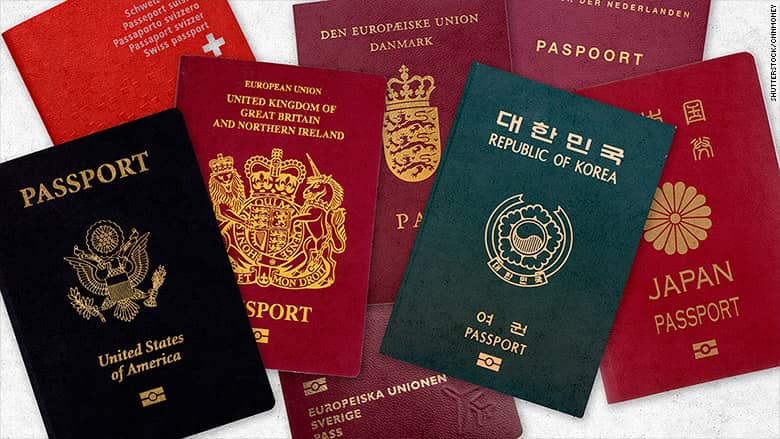
image from Wonderful Engineering
QUESTION 25: An Author's Nationality
Is an author's nationality important to you? Do you classify books at least in part by this identity?
If so, how do you define it: by country of birth, by current citizenship, by place of residence, by language of the particular author's written works, possibly by the cultural content and setting of the works?
Getting more complicated, what system do you use if the author is transnational?
One of the examples nickelini used was Jhumpa Lahiri born in England, to Indian immigrants, moved to the US and became a citizen. Now she lives in Italy, and says she's only going to write in Italian going forward. But she says she's not changing her citizenship. Indian, American, Italian, all three?
The ways to work this out are endless, and ultimately may not be consistent, but still the urge to classify persists. How do you work it out?
__________________________________
This question comes from a question nickelini posed in Ridgeway Girl's thread:
image from Wonderful Engineering
QUESTION 25: An Author's Nationality
Is an author's nationality important to you? Do you classify books at least in part by this identity?
If so, how do you define it: by country of birth, by current citizenship, by place of residence, by language of the particular author's written works, possibly by the cultural content and setting of the works?
Getting more complicated, what system do you use if the author is transnational?
One of the examples nickelini used was Jhumpa Lahiri born in England, to Indian immigrants, moved to the US and became a citizen. Now she lives in Italy, and says she's only going to write in Italian going forward. But she says she's not changing her citizenship. Indian, American, Italian, all three?
The ways to work this out are endless, and ultimately may not be consistent, but still the urge to classify persists. How do you work it out?
2cindydavid4
It was a long time before I even paid attention to the author names, let alone gender or nationality. I finally did when my sociolgy proff put the question 'who is the author of the text' and I didn't know. Turned out to be the prof! I notice names of authors I like or have heard of. But I honestly don't look at gender or nationaly or race when choosing a book, and I don't categorize them either. This has changed somewhat since being here; I now look more for women writers, poc, and international authors. But I still don't put them in their own category. I have fiction, genres (sci fi fan)non fiction (travel, religion biography, science, history by era etc) in categories because it makes sense to me.
3thorold
Q25:
I tend to take the view that it is all very arbitrary and subjective, I assign authors a “main national identity” in my list, but I don’t necessarily expect the author to agree with my choice, and I don’t use it for anything important. We’re dealing with human beings, often very complex people whose complexity is precisely what makes them interesting, and the chances are that people like that will not fit neatly into boxes, or stay in those boxes once you’ve squashed them in. My identity isn’t fully described by what I fill in on official forms under “nationality”, and I don’t expect that to be true for anyone else either.
I try to pick the identity that makes most sense in terms of the subject of the particular work and when it was written and the context in which I’m reading it. And I reserve the right to be inconsistent.
I do find it very interesting to know something about an author’s biography, and how that feeds into what they write, although I try to resist the urge to look them up on Wikipedia until I’ve read something by them.
I tend to take the view that it is all very arbitrary and subjective, I assign authors a “main national identity” in my list, but I don’t necessarily expect the author to agree with my choice, and I don’t use it for anything important. We’re dealing with human beings, often very complex people whose complexity is precisely what makes them interesting, and the chances are that people like that will not fit neatly into boxes, or stay in those boxes once you’ve squashed them in. My identity isn’t fully described by what I fill in on official forms under “nationality”, and I don’t expect that to be true for anyone else either.
I try to pick the identity that makes most sense in terms of the subject of the particular work and when it was written and the context in which I’m reading it. And I reserve the right to be inconsistent.
I do find it very interesting to know something about an author’s biography, and how that feeds into what they write, although I try to resist the urge to look them up on Wikipedia until I’ve read something by them.
4AnnieMod
Q25:
When I saw the question I was sure I know what I am doing and then I realized I really don't.
Two examples:
- Scholastique Mukasonga had lived in France since 1992 (when she was 36) and writes in French. And yet, for me she is a Rwandan author.
- Amin Maalouf had lived in France since ~1976 (when he was 27), writes in French and in my mind is a French author despite the fact that his writing is connected to his native Lebanon and his Arabic roots.
And I have no idea why I treat them differently. On paper, they should be the same - born outside of where they live now, moved as adults, write in their adopted country language, write about their "back home" culture. Part is how I discovered them I suspect and the first book I had read/seen by either - Mukasonga's was Rwandan down to its core, Maalouf's was about the Arabic experience and not specifically Lebanon-related. Had I discovered them differently, things may have been different. Which makes me a bit uncomfortable - I like ordered things that do not rely on what I may have read first...
If the adopted country is English speaking, I am a lot more likely to just call the author US/UK/Australian/Canadian/whatever one as long as they write in English.
I find the language chosen by the author to be more important than the pure geographical place - especially when one of the major languages is not involved (and even when it is - although that used to be different last century compared to these days). Take Nabokov - his switch in language may have coincided with his physical relocation but the move itself was irrelevant (his Russian novels were written in Berlin, Germany without making him a German writer), it is the change in language that signaled the change. That's why Iwaki Kei is a Japanese author for me even if she had lived in Australia for 20 years - she wrote her novel in Japanese.
When I saw the question I was sure I know what I am doing and then I realized I really don't.
Two examples:
- Scholastique Mukasonga had lived in France since 1992 (when she was 36) and writes in French. And yet, for me she is a Rwandan author.
- Amin Maalouf had lived in France since ~1976 (when he was 27), writes in French and in my mind is a French author despite the fact that his writing is connected to his native Lebanon and his Arabic roots.
And I have no idea why I treat them differently. On paper, they should be the same - born outside of where they live now, moved as adults, write in their adopted country language, write about their "back home" culture. Part is how I discovered them I suspect and the first book I had read/seen by either - Mukasonga's was Rwandan down to its core, Maalouf's was about the Arabic experience and not specifically Lebanon-related. Had I discovered them differently, things may have been different. Which makes me a bit uncomfortable - I like ordered things that do not rely on what I may have read first...
If the adopted country is English speaking, I am a lot more likely to just call the author US/UK/Australian/Canadian/whatever one as long as they write in English.
I find the language chosen by the author to be more important than the pure geographical place - especially when one of the major languages is not involved (and even when it is - although that used to be different last century compared to these days). Take Nabokov - his switch in language may have coincided with his physical relocation but the move itself was irrelevant (his Russian novels were written in Berlin, Germany without making him a German writer), it is the change in language that signaled the change. That's why Iwaki Kei is a Japanese author for me even if she had lived in Australia for 20 years - she wrote her novel in Japanese.
5Nickelini
>3 thorold: I tend to take the view that it is all very arbitrary and subjective, I assign authors a “main national identity” in my list, but I don’t necessarily expect the author to agree with my choice, and I don’t use it for anything important. We’re dealing with human beings, often very complex people whose complexity is precisely what makes them interesting, and the chances are that people like that will not fit neatly into boxes, or stay in those boxes once you’ve squashed them in. My identity isn’t fully described by what I fill in on official forms under “nationality”, and I don’t expect that to be true for anyone else either.
Nicely worded, all of it. And you capture much of my struggle when I try to categorize my reading (which currently is important to me because reasons).
I try to pick the identity that makes most sense in terms of the subject of the particular work and when it was written and the context in which I’m reading it. And I reserve the right to be inconsistent
Maybe this is the attitude I need to adopt, and stop trying to make it so clean and perfect.
Nicely worded, all of it. And you capture much of my struggle when I try to categorize my reading (which currently is important to me because reasons).
I try to pick the identity that makes most sense in terms of the subject of the particular work and when it was written and the context in which I’m reading it. And I reserve the right to be inconsistent
Maybe this is the attitude I need to adopt, and stop trying to make it so clean and perfect.
6Nickelini
>4 AnnieMod: When I saw the question I was sure I know what I am doing and then I realized I really don't.
LOL that was me about 18 months ago, when I started caring more.
Your examples are good and also relatable. I think some of it to me is just some sort of feeling that I get from the author. Nabokov is an interesting example as well. I always think of him as a Russian writer, but I read one of his novels in a course on British Literature. My professor really wanted us to read Bend Sinister because it fit the term's theme, but he went through some gymnastics explaining how Nabokov was a British writer for the purposes of this course (I think it might have been as weak as "he lived in the UK at some point"). I think my professor would have agreed with >3 thorold:
LOL that was me about 18 months ago, when I started caring more.
Your examples are good and also relatable. I think some of it to me is just some sort of feeling that I get from the author. Nabokov is an interesting example as well. I always think of him as a Russian writer, but I read one of his novels in a course on British Literature. My professor really wanted us to read Bend Sinister because it fit the term's theme, but he went through some gymnastics explaining how Nabokov was a British writer for the purposes of this course (I think it might have been as weak as "he lived in the UK at some point"). I think my professor would have agreed with >3 thorold:
7AnnieMod
>6 Nickelini: Nabokov is an interesting example as well. I always think of him as a Russian writer, but I read one of his novels in a course on British Literature. My professor really wanted us to read Bend Sinister because it fit the term's theme, but he went through some gymnastics explaining how Nabokov was a British writer for the purposes of this course
Well, he did get educated in UK after WWI but he did not even start working on that novel until 20 years later and safely living in the States. Technically he has a few novels that are based on his time in the UK but Bend Sinister is not one of them. Under that logic, a lot of the world's authors are US or UK ones because they went to school in one or the other... The professor may have been better off claiming him as a British writer because Massachusetts was a British colony at some point...
If I had found the reading list for that class (I occasionally peruse reading lists from colleges and universities to look for books I may be interested to read), I would have been very confused :)
Well, he did get educated in UK after WWI but he did not even start working on that novel until 20 years later and safely living in the States. Technically he has a few novels that are based on his time in the UK but Bend Sinister is not one of them. Under that logic, a lot of the world's authors are US or UK ones because they went to school in one or the other... The professor may have been better off claiming him as a British writer because Massachusetts was a British colony at some point...
If I had found the reading list for that class (I occasionally peruse reading lists from colleges and universities to look for books I may be interested to read), I would have been very confused :)
8Nickelini
>7 AnnieMod: The professor may have been better off claiming him as a British writer because Massachusetts was a British colony at some point...
LOL, if he'd thought of that, maybe he'd have used that instead. He apologized for his grasping with this, and told us that he just wanted to teach a course on dystopian literature, so he got creative with his excuses for including the books he did. He really wanted us to read We by Zamyatin, but he just couldn't figure that one out.
Yes, you would have been very confused as an outsider. I think the department frowned at him, but he was a very beloved professor and got away with it. The course was British Literature, and there were specific years . . . I want to say 1945 - ?. Mid-century at any rate. This is what we read:
Darkness at Noon, Arthur Koestler (can't remember how he justified this one)
Bend Sinister, Vladimir Nabokov
Lord of the Flies, Willaim Golding
Animal Farm, George Orwell
Nineteen Eighty-Four, George Orwell
Homage to Catalonia, George Orwell
High Rise, JG Ballard
Despite all the obvious silliness, it was actually a really great class. We also watched the Terry Gilliam film Brazil, which I never would have watched otherwise.
LOL, if he'd thought of that, maybe he'd have used that instead. He apologized for his grasping with this, and told us that he just wanted to teach a course on dystopian literature, so he got creative with his excuses for including the books he did. He really wanted us to read We by Zamyatin, but he just couldn't figure that one out.
Yes, you would have been very confused as an outsider. I think the department frowned at him, but he was a very beloved professor and got away with it. The course was British Literature, and there were specific years . . . I want to say 1945 - ?. Mid-century at any rate. This is what we read:
Darkness at Noon, Arthur Koestler (can't remember how he justified this one)
Bend Sinister, Vladimir Nabokov
Lord of the Flies, Willaim Golding
Animal Farm, George Orwell
Nineteen Eighty-Four, George Orwell
Homage to Catalonia, George Orwell
High Rise, JG Ballard
Despite all the obvious silliness, it was actually a really great class. We also watched the Terry Gilliam film Brazil, which I never would have watched otherwise.
9AnnieMod
>8 Nickelini: We as a precursor of the British dystopias would have made more sense than Nabokov.:) Thanks for sharing the list!
10thorold
>8 Nickelini: Sounds like an interesting course. Golding seems to be the odd one out, he doesn't have any obvious claim to being non-British, unless you're a Cornish nationalist... Orwell was born in India and Ballard in China, of course.
11LadyoftheLodge
I do not usually pay attention to the author's nationality or gender or anything else. That is not a criterion for me to select my reading material. I do not use that criteria as a classifying element either. I have some fave authors and usually stick with them, unless I get a BB from another reader.
12thorold
Q 25: Still thinking about writers and national identity, I just came across this in a piece called "Dangerous liaisons", dated March 2009, in the essay collection Karaoke culture by Dubravka Ugrešić:
The terms—émigré, immigrant, exile, nomad, minority, ethnic, hybrid literature—discriminate, but they are also affirmative. With these terms the home base expels the writer, while the same terms are used by the host environment to relegate the writer to an ethnic niche, and at the same time affirm his or her existence. The home base makes assumptions of monoculturalism and exclusivity, while the host environment make assumptions of multiculturalism and inclusivity, but both are essentially working with dusty labels of ethnicity and the politics of otherness. Even if I were to write a text about the desolation of frozen landscapes at the North Pole, I would still be chiefly labeled as a Croatian writer, or as a Croatian writer in exile writing about the desolation of the frozen landscapes at the North Pole. Reviewers would promptly populate the frozen wasteland of my text with concepts such as exile, Croatia, ex-Yugoslavia, post-communism, the Balkans, Eastern Europe, the Slavic world, Balkan feminism, or perhaps Balkan eco-feminism, while journalists would ask me whether I had the opportunity while up in the frozen wasteland to run into the Yugoslav diaspora, and how I perceived the situation in Kosovo from that frozen vantage point If an English writer writes his or her version of a visit to the North Pole, Englishness will not likely serve as the framework within which his or her text is read. This attitude of the host environment to writer-newcomers springs from a subconscious colonial attitude—just when the larger literary world is doing its best to reject this—in a market which relishes any form of the profitable exotic, what with the always vital relations between the periphery and the center.
13Nickelini
>12 thorold:
That's interesting. Thanks for sharing that post
That's interesting. Thanks for sharing that post
14SassyLassy
>12 thorold: Fascinating - thanks for that.
The book sounds really interesting and relevant to this question is the idea of "literature of the Eastern European ruins" used by David Williams who did his doctoral research on Ugrešić (according to the LT description of the book. Makes me think of Ismail Kadare and so many more.
The book sounds really interesting and relevant to this question is the idea of "literature of the Eastern European ruins" used by David Williams who did his doctoral research on Ugrešić (according to the LT description of the book. Makes me think of Ismail Kadare and so many more.
15thorold
>14 SassyLassy: I should imagine he would have got a pretty fiery response if he really did call her an Eastern European ruin! Living dangerously puts it mildly.
He seems to have written an afterword for the book without having anything to say about it, anyway. But apart from that, I enjoyed it very much — she’s quite something as an essayist. I’ll post a proper review shortly.
He seems to have written an afterword for the book without having anything to say about it, anyway. But apart from that, I enjoyed it very much — she’s quite something as an essayist. I’ll post a proper review shortly.
16LolaWalser
>1 SassyLassy: Q. 25
Part of my (generally vague and iffy) tagging system is noting the language of the book over any details about the author. Hence such tags like "Anglo literature" and "Hispano literature"--it's not that I don't think there's anything interesting about authors being Irish or Scottish or Argentinian or Spanish etc.; it's that to me languages have belongings, roots, and communication systems of their own.
The language of the book, IOW, comes first--especially in the case of fiction.
As for the authors nationalities, well that's simple or complicated, interesting or mundane as the case may be, just as for any number of people with mixed origins, well-travelled bios, polyglot background or usage. I mean, the fact that Einstein died in possession of American nationality is telling as part of his biography but in itself is a trivial bit of info.
Part of my (generally vague and iffy) tagging system is noting the language of the book over any details about the author. Hence such tags like "Anglo literature" and "Hispano literature"--it's not that I don't think there's anything interesting about authors being Irish or Scottish or Argentinian or Spanish etc.; it's that to me languages have belongings, roots, and communication systems of their own.
The language of the book, IOW, comes first--especially in the case of fiction.
As for the authors nationalities, well that's simple or complicated, interesting or mundane as the case may be, just as for any number of people with mixed origins, well-travelled bios, polyglot background or usage. I mean, the fact that Einstein died in possession of American nationality is telling as part of his biography but in itself is a trivial bit of info.
17baswood
An author's nationality is important to me, because I have in my head to start with an idea of a typical English person, a typical french person, a typical American person and as I read these images are either reinforced or not as the case maybe. The images are usually cultural not often physical. I think it can mean that you miss a layer of insight if you are not aware of the authors the country of origin.
18SassyLassy
For no reason that I can remember, since I was a child and started reading translations from other languages (mostly Verne and Dumas in those days), my fiction books have always been classified and shelved by the author's country of origin, with a few arbitrary exceptions. As >17 baswood: says, I think it can mean that you miss a layer of insight if you are not aware of the authors the country of origin. With those writers who may have moved as adults elsewhere in the world, as refugees or otherwise, but still remain culturally rooted in their homeland, I attribute their original country to them. So, following the same reasoning as >4 AnnieMod: with her example of Iwaki Kei, I tag Ismail Kadare as Fiction Albania. Although he lives in France, he usually writes in Albanian. Ha Jin's books I classify as Fiction China, as that is his major focus, although he lives in the US and writes in English. Kim Thuy, who came to Canada as a child and writes in French, I classify as Canadian.
There are only a few authors who give me trouble with classifying. Oddly most of them write in English, and most are peripatetic writers who have lived in multiple countries, like Janette Turner Hospital, who has been claimed by several countries. In my system, she is Australian, as no matter what country her books may have as a location, those from Australia, where she was born, always seem the most vivid. It will always seem weird labelling Michael Ondaatje as Canadian for some reason.
As a personal crank, I have a lot of difficulty when I see an author's nationality described as "British". It seems to me (cranky again) that most people who think of themselves as British are English; the others give their own country as their nationality. >16 LolaWalser: has said above correctly that ...languages have belongings, roots, and communication systems of their own and these emerge even within the English language in the different countries of origin. They may also be reflected within one country, and so my fiction works from Newfoundland are tagged as Fiction Canada, Newfoundland.
There are only a few authors who give me trouble with classifying. Oddly most of them write in English, and most are peripatetic writers who have lived in multiple countries, like Janette Turner Hospital, who has been claimed by several countries. In my system, she is Australian, as no matter what country her books may have as a location, those from Australia, where she was born, always seem the most vivid. It will always seem weird labelling Michael Ondaatje as Canadian for some reason.
As a personal crank, I have a lot of difficulty when I see an author's nationality described as "British". It seems to me (cranky again) that most people who think of themselves as British are English; the others give their own country as their nationality. >16 LolaWalser: has said above correctly that ...languages have belongings, roots, and communication systems of their own and these emerge even within the English language in the different countries of origin. They may also be reflected within one country, and so my fiction works from Newfoundland are tagged as Fiction Canada, Newfoundland.
19thorold
>18 SassyLassy: It seems to me (cranky again) that most people who think of themselves as British are English; the others give their own country as their nationality
I’m sure that’s true, and it’s at least partly for discreditable, tyranny-of-the-majority reasons. Cultural things that get labelled as “English” rather than “British” in the popular mind tend to be limited to folk songs, football, and morris dancing, although that’s maybe changing a bit under Boris-the-booster. But it’s always much easier to feel a strong identification with a minority culture than it is with a big, shapeless one. Imagine if an American told you they were from the Contiguous States…
But there’s also the elephant-in-the-room problem that “English” is the name of the language, so we don’t know if an “English writer” is a writer-in-English or a writer-from-England, and the label “British” is a handy way to sidestep that ambiguity.
I’m sure that’s true, and it’s at least partly for discreditable, tyranny-of-the-majority reasons. Cultural things that get labelled as “English” rather than “British” in the popular mind tend to be limited to folk songs, football, and morris dancing, although that’s maybe changing a bit under Boris-the-booster. But it’s always much easier to feel a strong identification with a minority culture than it is with a big, shapeless one. Imagine if an American told you they were from the Contiguous States…
But there’s also the elephant-in-the-room problem that “English” is the name of the language, so we don’t know if an “English writer” is a writer-in-English or a writer-from-England, and the label “British” is a handy way to sidestep that ambiguity.
20Deleted
I don't classify or catalogue the books I read, but I do pay attention to the "flavors" that language/ethnicity might impart. Couple of examples:
1. Kashuo Ishiguro was born in Japan, but has lived in England since the 1960s. The Remains of the Day explores the the inner life of the English servant class. The characters seem authentically English to me (I am an American, so my own background colors my understanding). But I have never read an English novel that digs into the experience of the servant in the particular way Ishiguro does. Ishiguro also mines the English servant experience for his two spec fiction novels, Never Let Me Go and Klara and the Sun, about clones and AI robots, respectively.
Ishiguro talked about how his bi-culturalism (yes, ugh, I just made up that word for convenience sake) affected his writing when he won the Nobel: "Growing up in England in a Japanese household was crucial to his writing, he says, enabling him to see things from a different perspective to many of his British peers.
"It is most obvious in the slightly detached nature of many of his narrators, which he explains as coming from 'a long tradition in Japanese art towards a surface calm and surface restraint. There is a feeling emotions can feel more intense if they are held down to the surface level.'"
https://www.bbc.com/news/entertainment-arts-41517882
2. Frank McCourt, an Irish-American whose lugubrious memoir Angela's Ashes was a massive bestseller, has lately been panned for fictionalizing his memoirs in order to pander to certain American stereotypes about the Irish. As someone who knows the story of my mother's Irish immigrant family very well, I think the way McCourt dressed up and whored out his family's experiences to make money proves he is more American than Irish. Whenever I get testy about people who object to kids having to read "Huckleberry Finn" in school, I try to remember that I got pretty testy when I learned my kid was assigned to read "Angela's Ashes" for senior English. Needless to say, we had some discussions about it ...
1. Kashuo Ishiguro was born in Japan, but has lived in England since the 1960s. The Remains of the Day explores the the inner life of the English servant class. The characters seem authentically English to me (I am an American, so my own background colors my understanding). But I have never read an English novel that digs into the experience of the servant in the particular way Ishiguro does. Ishiguro also mines the English servant experience for his two spec fiction novels, Never Let Me Go and Klara and the Sun, about clones and AI robots, respectively.
Ishiguro talked about how his bi-culturalism (yes, ugh, I just made up that word for convenience sake) affected his writing when he won the Nobel: "Growing up in England in a Japanese household was crucial to his writing, he says, enabling him to see things from a different perspective to many of his British peers.
"It is most obvious in the slightly detached nature of many of his narrators, which he explains as coming from 'a long tradition in Japanese art towards a surface calm and surface restraint. There is a feeling emotions can feel more intense if they are held down to the surface level.'"
https://www.bbc.com/news/entertainment-arts-41517882
2. Frank McCourt, an Irish-American whose lugubrious memoir Angela's Ashes was a massive bestseller, has lately been panned for fictionalizing his memoirs in order to pander to certain American stereotypes about the Irish. As someone who knows the story of my mother's Irish immigrant family very well, I think the way McCourt dressed up and whored out his family's experiences to make money proves he is more American than Irish. Whenever I get testy about people who object to kids having to read "Huckleberry Finn" in school, I try to remember that I got pretty testy when I learned my kid was assigned to read "Angela's Ashes" for senior English. Needless to say, we had some discussions about it ...
21SassyLassy
>20 nohrt4me2: bi-culturalism (yes, ugh, I just made up that word for convenience sake)
Biculturalism has actually been in use as a word in Canada since at least as far back as 1963 when the federal government established the Royal Commission on Bilingualism and Biculturalism, which eventually led to the Official Languages Act, passed in 1969. Biculturalism obviously can't be mandated, but since 1971, Canada has had a "policy of multiculturalism within a bilingual framework", introduced by the Trudeau who was then prime minister (the current Trudeau prime minister was born that year).
In other words, don't feel badly about the word!
Biculturalism has actually been in use as a word in Canada since at least as far back as 1963 when the federal government established the Royal Commission on Bilingualism and Biculturalism, which eventually led to the Official Languages Act, passed in 1969. Biculturalism obviously can't be mandated, but since 1971, Canada has had a "policy of multiculturalism within a bilingual framework", introduced by the Trudeau who was then prime minister (the current Trudeau prime minister was born that year).
In other words, don't feel badly about the word!
22Deleted
>21 SassyLassy: Thanks!
23librorumamans
We're talking here, I sense, about creative writing – fiction, poetry, drama mostly – where I don't often choose on the basis of nationality or culture. As for shelving, I let LC figure out where authors belong, whether T. S. Eliot is American or English.
The question intersects messily with culture and the current concern with appropriation. This issue is so complex that I haven't begun to wrap my head around its implications.
A similar and perhaps parallel question concerns an author's sexual orientation. Colm Tóibín's first novels were centrally concerned with gay men. How does his gayness colour our reading of some his later work that does not clearly examine gay experience? What may there be that we miss if we ignore that aspect of the writer? Or, if Eliot was closeted (as has been suggested), how does that alter our reading of The Waste Land? Profoundly, in one reading of it.
The question intersects messily with culture and the current concern with appropriation. This issue is so complex that I haven't begun to wrap my head around its implications.
A similar and perhaps parallel question concerns an author's sexual orientation. Colm Tóibín's first novels were centrally concerned with gay men. How does his gayness colour our reading of some his later work that does not clearly examine gay experience? What may there be that we miss if we ignore that aspect of the writer? Or, if Eliot was closeted (as has been suggested), how does that alter our reading of The Waste Land? Profoundly, in one reading of it.
24thorold
An example I thought of in the shower this morning (so don't take it too seriously) — when we did a Caribbean theme read in RG a few years ago, I read a bunch of books about, or set in, Haiti, all dealing with the same basic set of main themes (the revolution, political violence, Duvalier, US colonialism, voudou, racism, poverty) by writers with quite different backgrounds and perspectives:
— Marie Vieux-Chauvet was a middle-class Haitian writing for other Haitians from within the country, and trying to fly under the radar and criticise Duvalier's regime without naming him
— Jacques Stéphen Alexis was an exiled Haitian communist, writing for an international readership about his own experience
— Alejo Carpentier was a French-educated Cuban intellectual who spent time in Haiti but writes about it mainly from the point of view of his own theories about Caribbean culture and its relationship to Africa and Europe
— Graham Greene was an Englishman writing for an Anglo-American audience; as an expert in fictionalising crumbling third-world dictatorships he learnt everything he needed to know about Haiti from a few short trips there
— Edwidge Danticat writes as an American professor for American readers, but of course spent her early childhood in Haiti and has her roots in the Haitian diaspora in the US.
I don't think you could read any of their books without having that kind of information in the back of your mind and using it to understand where they are coming from and what they want to achieve in their writing.
Of course, the other thing I would have in the back of my mind is the time dimension: when the books were set and when they were written/published; how old the writer was at the time, etc.
— Marie Vieux-Chauvet was a middle-class Haitian writing for other Haitians from within the country, and trying to fly under the radar and criticise Duvalier's regime without naming him
— Jacques Stéphen Alexis was an exiled Haitian communist, writing for an international readership about his own experience
— Alejo Carpentier was a French-educated Cuban intellectual who spent time in Haiti but writes about it mainly from the point of view of his own theories about Caribbean culture and its relationship to Africa and Europe
— Graham Greene was an Englishman writing for an Anglo-American audience; as an expert in fictionalising crumbling third-world dictatorships he learnt everything he needed to know about Haiti from a few short trips there
— Edwidge Danticat writes as an American professor for American readers, but of course spent her early childhood in Haiti and has her roots in the Haitian diaspora in the US.
I don't think you could read any of their books without having that kind of information in the back of your mind and using it to understand where they are coming from and what they want to achieve in their writing.
Of course, the other thing I would have in the back of my mind is the time dimension: when the books were set and when they were written/published; how old the writer was at the time, etc.
25cindydavid4
while I do not choose books based on a specific category, I certainly notice the authors nationality via the book notes about the author. It definitely makes a difference knowing where they are from and like Thorold, consider when it was published and what time it takes place. One of my favorite books this year travels with herodutus is basically about ancient persia and greece, with roads into Africa Congo. Knowing hat the author was from the Czech Republic made he wrote this book with that pov in mind, tho did an excellent job exploring the topics. It would be interesting to read about similar events written by authors from those countries
26LolaWalser
>24 thorold:
That's far more information than just "nationality" offers, though.
Of course the question of identity, of roots, origins and the sense of belonging, is often more complicated. Btw, I've just finished an interesting book that deals with this theme--Afropean by Johnny Pitts. (I didn't mean to but I probably should jot a few notes about it...)
However, going back to your examples, I'd say that if a book is completely opaque without external knowledge, then it's probably not a good book (at least if it's not non-fiction).
That's far more information than just "nationality" offers, though.
Of course the question of identity, of roots, origins and the sense of belonging, is often more complicated. Btw, I've just finished an interesting book that deals with this theme--Afropean by Johnny Pitts. (I didn't mean to but I probably should jot a few notes about it...)
However, going back to your examples, I'd say that if a book is completely opaque without external knowledge, then it's probably not a good book (at least if it's not non-fiction).
27thorold
>26 LolaWalser: if a book is completely opaque without external knowledge, then it's probably not a good book
Agreed. My comment wasn't as clear as I would have liked: what I meant was something more like "I don't think you could get full value out of a reading of any of their books without..."
I'm pretty sure the external information I referred to would have been obvious at least to the original readers of the book: either as common knowledge, or from the context in which the book reached them. But it isn't necessarily as obvious a generation or two later.
---
I try to resist looking up an author on Wikipedia until I've finished at least one book, but what about the half-page author bio most publishers supply? Are there people who make a point out of always reading it or never reading it? Or reading it afterwards?
(With me it's "almost always", I probably only skip it if I already know something about the writer.)
Agreed. My comment wasn't as clear as I would have liked: what I meant was something more like "I don't think you could get full value out of a reading of any of their books without..."
I'm pretty sure the external information I referred to would have been obvious at least to the original readers of the book: either as common knowledge, or from the context in which the book reached them. But it isn't necessarily as obvious a generation or two later.
---
I try to resist looking up an author on Wikipedia until I've finished at least one book, but what about the half-page author bio most publishers supply? Are there people who make a point out of always reading it or never reading it? Or reading it afterwards?
(With me it's "almost always", I probably only skip it if I already know something about the writer.)
28cindydavid4
I always read it, and note the photo (loved Hilary Mantels photo in her last cromwell book she looks so much younger, alive and very happy. smiled when I saw it)
if a book is completely opaque without external knowledge, then it's probably not a good book
generally agree, like learning new things but if Im having to backtrack and find a context, I may not finish it (if it really good, Im liable to spend lots of time finding out more)
if a book is completely opaque without external knowledge, then it's probably not a good book
generally agree, like learning new things but if Im having to backtrack and find a context, I may not finish it (if it really good, Im liable to spend lots of time finding out more)
29librorumamans
>26 LolaWalser: if a book is completely opaque without external knowledge, then it's probably not a good book ...
Would you be offended if I apply that sentiment to Hegel's Philosophy of Right, even though it is non-fiction?
Would you be offended if I apply that sentiment to Hegel's Philosophy of Right, even though it is non-fiction?
30LolaWalser
>29 librorumamans:
Ha, not in the least, I'm not Hegel's keeper... :) but I'm not sure why you ask, as I noted the non-fiction exception?
>27 thorold:
I'm coasting on very little and bad sleep so not sure who dropped the thread I meant to pick up here, about stereotypes... I think you quoted Ugresic somewhere where she hints at the same thing... anyway, I was recalling in connection with it some discussions in Reading Globally I think, from ages ago, but this theme recurs, doesn't it, and basically it's how there is a real danger of finding in books what we think ought to be there while missing other stuff, especially in foreign literature, which means reading with a certain bias, or lens or whathaveyou...
Of course, things are not made easier for the reader by the fact that publishers often introduce the bias themselves, by selecting certain types of books or authors, advertising them in a certain way etc. I think this is especially notable with current fiction coming from Africa or the Middle East, where much of it (at least the books I see reviewed the most) seems to be made to non-native expectations, or at least with a strong awareness of talking to someone outside the culture.
Ha, not in the least, I'm not Hegel's keeper... :) but I'm not sure why you ask, as I noted the non-fiction exception?
>27 thorold:
I'm coasting on very little and bad sleep so not sure who dropped the thread I meant to pick up here, about stereotypes... I think you quoted Ugresic somewhere where she hints at the same thing... anyway, I was recalling in connection with it some discussions in Reading Globally I think, from ages ago, but this theme recurs, doesn't it, and basically it's how there is a real danger of finding in books what we think ought to be there while missing other stuff, especially in foreign literature, which means reading with a certain bias, or lens or whathaveyou...
Of course, things are not made easier for the reader by the fact that publishers often introduce the bias themselves, by selecting certain types of books or authors, advertising them in a certain way etc. I think this is especially notable with current fiction coming from Africa or the Middle East, where much of it (at least the books I see reviewed the most) seems to be made to non-native expectations, or at least with a strong awareness of talking to someone outside the culture.
31SassyLassy
cindydavid4 has suggested the idea for this question, which immediately put me in mind of authors from Saint Augustine to P G Wodehouse to Helen Fielding.
image from istockphoto
LIFE EVENTS and SOME INTERESTS ALONG THE LINE
With just a few books, you can start the core of a library for someone. Which books would you come up with in the following circumstances? Would they be classics, good old fashioned guides or admonitions, humorous books, books of enquiry - what would you select?
Mix up the categories, or add a category, to get perhaps a dedicated foodie traveller or whomever you can dream up.
- a new baby
- new parents
- a new graduate
- an armchair traveller
- a dedicated traveller
- a foodie
- an animal lover (I suspect this could be someone at any stage of life)
- a recently elected politician
- your ex
- a recently bereaved person
- a couple just starting out together
- that impossible adolescent
image from istockphoto
LIFE EVENTS and SOME INTERESTS ALONG THE LINE
With just a few books, you can start the core of a library for someone. Which books would you come up with in the following circumstances? Would they be classics, good old fashioned guides or admonitions, humorous books, books of enquiry - what would you select?
Mix up the categories, or add a category, to get perhaps a dedicated foodie traveller or whomever you can dream up.
- a new baby
- new parents
- a new graduate
- an armchair traveller
- a dedicated traveller
- a foodie
- an animal lover (I suspect this could be someone at any stage of life)
- a recently elected politician
- your ex
- a recently bereaved person
- a couple just starting out together
- that impossible adolescent
32librorumamans
>30 LolaWalser:
>29 librorumamans: was in part a rhetorical question, and in part I misconstrued the double negative in >26 LolaWalser:. :-)
>29 librorumamans: was in part a rhetorical question, and in part I misconstrued the double negative in >26 LolaWalser:. :-)
33Deleted
- a new baby
A bunch of those picture books by Jan Pienkowsi
- new parents
No, David! by David Shannon
- a new graduate
Not a book, but a link to John Waters' commencement speech at RISD
- an armchair traveller
The Little Book of the Icelanders by Alda Sigmundsdottir
- a foodie
Like Water for Chocolate by Laura Esquivel
- an animal lover (I suspect this could be someone at any stage of life)
Particularly Cats by Doris Lessing
- a recently elected politician
Nickel and Dimed by Barbara Ehrenreich
- your ex
Is there a book where an old man dies friendless and alone because he is a two-timing sh*t? That one.
- a couple just starting out together
Two Marriages by Philip Lopate
How about someone who has just retired and someone newly diagnosed with a chronic illness?
A bunch of those picture books by Jan Pienkowsi
- new parents
No, David! by David Shannon
- a new graduate
Not a book, but a link to John Waters' commencement speech at RISD
- an armchair traveller
The Little Book of the Icelanders by Alda Sigmundsdottir
- a foodie
Like Water for Chocolate by Laura Esquivel
- an animal lover (I suspect this could be someone at any stage of life)
Particularly Cats by Doris Lessing
- a recently elected politician
Nickel and Dimed by Barbara Ehrenreich
- your ex
Is there a book where an old man dies friendless and alone because he is a two-timing sh*t? That one.
- a couple just starting out together
Two Marriages by Philip Lopate
How about someone who has just retired and someone newly diagnosed with a chronic illness?
34LadyoftheLodge
*- your ex
Is there a book where an old man dies friendless and alone because he is a two-timing sh*t? That one.*
Love this!!! LOL and too true.
Is there a book where an old man dies friendless and alone because he is a two-timing sh*t? That one.*
Love this!!! LOL and too true.
35librorumamans
>33 nohrt4me2: Is there a book where an old man dies friendless and alone because he is a two-timing sh*t? That one.
Maybe Anna Karenina? (By our standards Vronsky was not old, but he was definitely well past his best-before date.)
Maybe Anna Karenina? (By our standards Vronsky was not old, but he was definitely well past his best-before date.)
36LolaWalser
>32 librorumamans:
Sorry, bad habit that, in no uncertain terms!
>31 SassyLassy:
For the armchair traveller, Voyage around my room. Had to get it in before someone beat me to it... :)
Sorry, bad habit that, in no uncertain terms!
>31 SassyLassy:
For the armchair traveller, Voyage around my room. Had to get it in before someone beat me to it... :)
37thorold
>31 SassyLassy: A few quick thoughts
- a new baby
No idea what newborns read. In another thread a while back I suggested that young children would be ideal recipients for those redundant multi-volume encyclopaedias, which are so useful for building forts out of, or steps to enable you to crawl up to interesting high places.
- new parents
The millstone, or The British Museum is falling down?
- a new graduate
The Bachelor of Arts
...more later
- a new baby
No idea what newborns read. In another thread a while back I suggested that young children would be ideal recipients for those redundant multi-volume encyclopaedias, which are so useful for building forts out of, or steps to enable you to crawl up to interesting high places.
- new parents
The millstone, or The British Museum is falling down?
- a new graduate
The Bachelor of Arts
...more later
38Limelite
-- baby
Beatrix Potter nursery tales
-- parents
It's about time someone wrote an owner's manual and every copy of Dr. Spock were burned.
-- graduate
Up from Slavery by Booker T Washington
-- armchair traveler
The Accidental Tourist by Anne Tyler
-- dedicated traveler
Book of the Marvels of the World, aka The Travels of Marco Polo
-- foodie
My Life in France by Julia Child
-- animal lover
all the James Harriot books
-- newbie politico
The Common Good by Robert Reich
-- ex
a handout
-- the bereaved
The Year of Magical Thinking by Joan Didion
--new lovers
Lady Windermere's Fan by Oscar Wilde (OK, it's a play. Split the roles and read it aloud together.)
-- impossible adolescent
To Kill a Mockingbird by Harper Lee
Beatrix Potter nursery tales
-- parents
It's about time someone wrote an owner's manual and every copy of Dr. Spock were burned.
-- graduate
Up from Slavery by Booker T Washington
-- armchair traveler
The Accidental Tourist by Anne Tyler
-- dedicated traveler
Book of the Marvels of the World, aka The Travels of Marco Polo
-- foodie
My Life in France by Julia Child
-- animal lover
all the James Harriot books
-- newbie politico
The Common Good by Robert Reich
-- ex
a handout
-- the bereaved
The Year of Magical Thinking by Joan Didion
--new lovers
Lady Windermere's Fan by Oscar Wilde (OK, it's a play. Split the roles and read it aloud together.)
-- impossible adolescent
To Kill a Mockingbird by Harper Lee
39cindydavid4
>37 thorold: well babies are read to, the more the better!
-My pic would be any in the Indestructibles: Baby Faces: Chew Proof · Rip Proof · Nontoxic · 100% Washable (Book for Babies, Newborn Books, Safe to Chew) preference Baby Faces, Night Night Baby and Peek a Boo Baby
- new parents Last Child in the Woods
- an animal lover creatures great and small Colette
more later
-My pic would be any in the Indestructibles: Baby Faces: Chew Proof · Rip Proof · Nontoxic · 100% Washable (Book for Babies, Newborn Books, Safe to Chew) preference Baby Faces, Night Night Baby and Peek a Boo Baby
- new parents Last Child in the Woods
- an animal lover creatures great and small Colette
more later
40Deleted
>38 Limelite: Gosh, what's wrong with Dr Spock? Saved me a bunch of calls to the doc's office.
Honestly, though, I think new parents suffer more from too much advice than not enough. I got about five copies of that What To Expect book, which was not a reassuring read for a 42-year-old with a surprise pregnancy and two miscarriages.
Honestly, though, I think new parents suffer more from too much advice than not enough. I got about five copies of that What To Expect book, which was not a reassuring read for a 42-year-old with a surprise pregnancy and two miscarriages.
41avaland
*a new baby
A colorful plastic or cloth book to chew on. We have a board book here called Rocket Science for Babies; for some reason it isn't that popular.
* new parents
Flash Fiction Forward: 80 Very Short Stories or more recent flash fiction or whatever it might be called these days.
* an armchair traveller
Skidoo: A Journey through the Ghost Towns of the American West by Alex Capus.
*a foodie
Fiction: Delicious!: A Novel by Ruth Reichl
*an animal lover (I suspect this could be someone at any stage of life)
We Are All Completely Beside Ourselves by Karen Joy Fowler (the human animal)
*a recently elected politician (of my party)
I'd skip the book and send them a DVD of Galaxy Quest.
*your ex
Why would I give my ex anything?
*a recently bereaved person
I thought about sending one of the many memoirs out there like JCO's A Widow's Story, but I would instead send poetry, maybe something like Donald Hall's Without...poetry is full of loss....
*a couple just starting out together
Do couples start out reading the same books? Come to think of it we used to occasionally read the same books, but now we seem to prefer to not to so we can cover more literary ground before we leave this world.
*that impossible adolescent
Depends on the adolescent. I need five minutes with them to get more information.
A colorful plastic or cloth book to chew on. We have a board book here called Rocket Science for Babies; for some reason it isn't that popular.
* new parents
Flash Fiction Forward: 80 Very Short Stories or more recent flash fiction or whatever it might be called these days.
* an armchair traveller
Skidoo: A Journey through the Ghost Towns of the American West by Alex Capus.
*a foodie
Fiction: Delicious!: A Novel by Ruth Reichl
*an animal lover (I suspect this could be someone at any stage of life)
We Are All Completely Beside Ourselves by Karen Joy Fowler (the human animal)
*a recently elected politician (of my party)
I'd skip the book and send them a DVD of Galaxy Quest.
*your ex
Why would I give my ex anything?
*a recently bereaved person
I thought about sending one of the many memoirs out there like JCO's A Widow's Story, but I would instead send poetry, maybe something like Donald Hall's Without...poetry is full of loss....
*a couple just starting out together
Do couples start out reading the same books? Come to think of it we used to occasionally read the same books, but now we seem to prefer to not to so we can cover more literary ground before we leave this world.
*that impossible adolescent
Depends on the adolescent. I need five minutes with them to get more information.
42SassyLassy
>41 avaland: *your ex
Why would I give my ex anything?
While this isn't something that applies, you did have me laughing out loud.
*that impossible adolescent
Depends on the adolescent. I need five minutes with them to get more information
You can get information from an adolescent in five minutes???
Why would I give my ex anything?
While this isn't something that applies, you did have me laughing out loud.
*that impossible adolescent
Depends on the adolescent. I need five minutes with them to get more information
You can get information from an adolescent in five minutes???
43avaland
>42 SassyLassy: Clearly, not all adolescents.... (I miss those days in the bookstore; I loved handselling to individuals, not just the books I read, but the books I heard others talk about. One just needs to ask the right questions. It was very rewarding. Groups like this one has more or less replaced that art, I think.
44librorumamans
>42 SassyLassy: >43 avaland:
I acquired a lot of experience playing twenty questions with students sent down to the library by their English teachers to choose novels for their independent study. Sometimes it worked; often it didn't. I had more success with those I already had some sort of relationship with, but that meant, of course, that they were already library users and probably bookish. It was one of the fun parts of the job.
I acquired a lot of experience playing twenty questions with students sent down to the library by their English teachers to choose novels for their independent study. Sometimes it worked; often it didn't. I had more success with those I already had some sort of relationship with, but that meant, of course, that they were already library users and probably bookish. It was one of the fun parts of the job.
45avaland
>44 librorumamans: Indeed.
46SassyLassy
Another idea from Thorold:

this is actually a real book
QUESTION 27: Let the Pun Shine
It's time to have some fun thinking up some author - title combinations for dummy books; books that have never been written. This idea was used at Chatsworth for book spines in a false bookcase in 1831*, and appears again as a challenge in In Tearing Haste. Examples include:
John Knox - On Death's Door
Cursory Remarks on Swearing
Boyle On Steam
The Scottish Bocaccio by D Cameron
What suggestions can you come up with?
__________________
* https://www.chatsworth.org/news-media/news-blogs-press-releases/blogs-from-the-l...

this is actually a real book
QUESTION 27: Let the Pun Shine
It's time to have some fun thinking up some author - title combinations for dummy books; books that have never been written. This idea was used at Chatsworth for book spines in a false bookcase in 1831*, and appears again as a challenge in In Tearing Haste. Examples include:
John Knox - On Death's Door
Cursory Remarks on Swearing
Boyle On Steam
The Scottish Bocaccio by D Cameron
What suggestions can you come up with?
__________________
* https://www.chatsworth.org/news-media/news-blogs-press-releases/blogs-from-the-l...
47librorumamans
Chekhov, Forty-four Capitals in Twenty-one Days : My Jaunt through Europe
48cindydavid4
>34 LadyoftheLodge: I know I hace been amiss responding to this question esp since I asked for it!!! I had the same trouble you guys all did - needed to know the person or situation, and i couldn't think of many books that would make it true for everyone in that category. Next time we do it maybe ask what book would you buy for your child, spouse or partner, boss, best friend, teacher etc. That might be easier!
49LadyoftheLodge
365 Favorite Cake Recipes by M. Antoinette
Tails of the Deep by A. Mermaid
Economics for Dummies by Adam Smith
Don't Sit Under the Apple Tree With Anyone Else but Me by Isaac Newton
Radioactivity Experiments for Fun and Profit by Marie and Pierre Curie
Principles of Detection by Nancy Drew
Father Knows Best by J. Christ and Associates (Sorry, really bad, but I could not resist. Not meant to offend anyone. Apologies.)
Cats in My Life by Claude Post
Feline Felons by F. Domesticus
Grimalkin's Lives on the Street (Volumes 1-9)
Tails of the Deep by A. Mermaid
Economics for Dummies by Adam Smith
Don't Sit Under the Apple Tree With Anyone Else but Me by Isaac Newton
Radioactivity Experiments for Fun and Profit by Marie and Pierre Curie
Principles of Detection by Nancy Drew
Father Knows Best by J. Christ and Associates (Sorry, really bad, but I could not resist. Not meant to offend anyone. Apologies.)
Cats in My Life by Claude Post
Feline Felons by F. Domesticus
Grimalkin's Lives on the Street (Volumes 1-9)
50cindydavid4
>49 LadyoftheLodge: OMG those are so wonderful!!! esp like the Isaac Newton and M. Antionette
51librorumamans
For Marie Antoinette's dairy at Le hameau de la Reine I've always fancied the marketing slogan, "We're out ahead !"
52thorold
Sorrow, by Walt & Pont
Reshaping China’s Railways, by Dr Bee Ching
Plant orientation, by Rootes Downe
Introduction to forestry, by Teresa Green (That’s an old one, not one of mine!)
—
Two more nice ones from Paddy Leigh Fermor:
Emile Zola, by Jack Hughes
Morgan forced her, by Howard Zend
Reshaping China’s Railways, by Dr Bee Ching
Plant orientation, by Rootes Downe
Introduction to forestry, by Teresa Green (That’s an old one, not one of mine!)
—
Two more nice ones from Paddy Leigh Fermor:
Emile Zola, by Jack Hughes
Morgan forced her, by Howard Zend
53thorold
Other than puns, one of the things you sometimes see people doing with those fake book-spines is making up titles that no-one would ever think to pull off the shelf —
Bears of Africa
Penguins of the northern hemisphere
A short history of Irish temperance (Vols.17-23 only)
Les meilleurs plats de la cuisine anglaise
The British Leyland guide to quality management
Icelandic Railways through the ages
Robert Walser's works — Large Print Edition
Bears of Africa
Penguins of the northern hemisphere
A short history of Irish temperance (Vols.17-23 only)
Les meilleurs plats de la cuisine anglaise
The British Leyland guide to quality management
Icelandic Railways through the ages
Robert Walser's works — Large Print Edition
54LadyoftheLodge
>50 cindydavid4: Thanks, when my brain gets going in that kind of track I have trouble turning it off. I enjoy those kinds of brain games.
55LadyoftheLodge
>51 librorumamans: Or "Let's roll with it!"
57SassyLassy
>53 thorold: I need fake titles like that on dust jackets to cover the books in my guest room. No matter how boring the titles appear, people still pick them up and crack the spines - a decided no-no in my house. As an example - History of West Africa: The Revolutionary Years 1815 to Independence suffered this fate right at the photos. There's no need to pick up a book just for the pictures, which is usually where the cracks are.
On second thought, maybe they were just trying to bore themselves to sleep.
Really appreciate the British Leyland one
On second thought, maybe they were just trying to bore themselves to sleep.
Really appreciate the British Leyland one
58thorold
>57 SassyLassy: If you really don’t want books to be touched, the thing to go for is technical books from a field so dull no outsider will go anywhere near it, but which are also carefully picked to be sufficiently out-of-date to be useless to insiders, but not so old that they become quaint and curious. Computer books from 20 years ago, theology books from 1900, electronics books from the 1970s (just having a cursory glance round my shelves for things I should have thrown out years ago). Maybe the ideal dust-jacket would be something like Windows ME, the complete reference guide, or Improve your productivity with Lotus 123.
What I actually have in the guest room, by accident rather than design, are a lot of pre-destroyed books: one shelf of children’s books and one of walking guides and maps. Short of a crazed toddler with a marker pen, there’s not much that could happen to those to make them any worse than they are.
What I actually have in the guest room, by accident rather than design, are a lot of pre-destroyed books: one shelf of children’s books and one of walking guides and maps. Short of a crazed toddler with a marker pen, there’s not much that could happen to those to make them any worse than they are.
59cindydavid4
>52 thorold: I don't get the fermor once, explain please
61thorold
>59 cindydavid4: >60 librorumamans: Sorry, you do rather have to know that “E.M.” stands for “Morgan”, otherwise that second one is unintelligible.
64thorold
>63 SassyLassy: Canon Burns on Religious Wars
… don’t forget his cousin’s related work:
Klezmer of the Scottish Borders, by Rabbi Burns
… don’t forget his cousin’s related work:
Klezmer of the Scottish Borders, by Rabbi Burns
65dypaloh
Risking a misfire, but . . .
The Glorious Rise and Gall of the Turd Reich by Wilhelm Scheißer
The Glorious Rise and Gall of the Turd Reich by Wilhelm Scheißer
66SassyLassy
This is addictive. Like >54 LadyoftheLodge:, "trouble turning it off"
Yorick's Neighbours by Doug Graves
The Art of Window Dressing by Sylvester Coates
for the more academically inclined
War and Piece: Studies in Redrawing Postwar Boundaries by Redmonde Inkster
Antiracism Protests in Sport by Neil Downs
Yorick's Neighbours by Doug Graves
The Art of Window Dressing by Sylvester Coates
for the more academically inclined
War and Piece: Studies in Redrawing Postwar Boundaries by Redmonde Inkster
Antiracism Protests in Sport by Neil Downs
67LadyoftheLodge
DIY Plastic Surgery by V. VanGogh
Sour Grapes by Char Donnay
Child Prodigies I Have Known by Wolfie Mozart, with M.Montessori
Sour Grapes by Char Donnay
Child Prodigies I Have Known by Wolfie Mozart, with M.Montessori
68SassyLassy

image from Financial Times
QUESTION 28: Detectives in their own Lands
Chen Cao, Armande Gamache, Montalbano, Rebus, Dave Robicheaux, Wallander -
One of the great things about reading a series of detective novels featuring the same protagonist, is that the reader gets to feel s/he knows that person.
Beyond this personal understanding however, do you feel these fictional characters are representative of their national cultures, or are they caricatures? Do you learn about a particular city or country from them? Do you find yourself perhaps wanting to go to Edinburgh to drink with Rebus, or wanting to have one of Montalbano's dinners because of the books?
Who's your favourite? Can you think of a possible new character and location for a series?
_________________
edited to remove "contemporary" from the title (see >71 thorold: and >73 SassyLassy: below)
69cindydavid4
Ill bow out of this one. Only detective novels Ive read is Caedfael and the ones by Penman :)
70Nickelini
>68 SassyLassy:
I don't think I've read more than one book by any contemporary detective novel series, but I'm sure Miss Marple taught me a lot about 1930s (?) English villages. And I desperately wanted to live in Trixie Belden's Virginia (if I remember correctly)
I don't think I've read more than one book by any contemporary detective novel series, but I'm sure Miss Marple taught me a lot about 1930s (?) English villages. And I desperately wanted to live in Trixie Belden's Virginia (if I remember correctly)
71thorold
>68 SassyLassy: By “contemporary”, do you mean contemporary with their writers (i.e. stories that aren’t set up as historical fiction)?
Some of my favourites are set and written a good few decades ago and by people one or two generations older than me — Van der Valk, Montalbano, Martin Beck, Dalziel and Pascoe, …
I guess there’s always got to be an element of caricature: as readers we expect location-focussed detective stories to pick up and reinforce the most distinctive features of the places where they are set. That’s often more conspicuous when the writer is someone specifically targeting a foreign (to the setting) audience — I find Donna Leon and Elizabeth George rather hard to take, in particular. The view of Botswana in the Mma Ramotswe stories, enticing and technically accurate as it evidently is, would surely make a lot of locals roll their eyes. Much as I love the van der Valk stories, Nicholas Freeling was (like me) an Englishman living and working in the Netherlands and was only here for a relatively short time, although some of that was spent in police custody, which subsequently proved very useful… The picture of Amsterdam in Janwillem van de Wetering’s crime stories from the same period is less touristy and more nuanced and interesting.
To date, I think Montalbano is the nearest to an ideal combination of writer and setting I’ve found: Camilleri obviously loved Sicily and understood it deep down, but he had enough of an outsider’s perspective from his time working in Rome to make it intelligible to strangers. There’s all the tourist stuff about food and scenery, and the political/historical bits about organised crime, refugees, the US diaspora, and so on, but there’s also a strong sense that we’re getting an insight into what Sicilian culture really means to Sicilians — of course you don’t really get profound insights from detective stories, but it’s nice to imagine that you do. And yes, it has made me want to go to Sicily, but that somehow keeps getting frustrated…
Some of my favourites are set and written a good few decades ago and by people one or two generations older than me — Van der Valk, Montalbano, Martin Beck, Dalziel and Pascoe, …
I guess there’s always got to be an element of caricature: as readers we expect location-focussed detective stories to pick up and reinforce the most distinctive features of the places where they are set. That’s often more conspicuous when the writer is someone specifically targeting a foreign (to the setting) audience — I find Donna Leon and Elizabeth George rather hard to take, in particular. The view of Botswana in the Mma Ramotswe stories, enticing and technically accurate as it evidently is, would surely make a lot of locals roll their eyes. Much as I love the van der Valk stories, Nicholas Freeling was (like me) an Englishman living and working in the Netherlands and was only here for a relatively short time, although some of that was spent in police custody, which subsequently proved very useful… The picture of Amsterdam in Janwillem van de Wetering’s crime stories from the same period is less touristy and more nuanced and interesting.
To date, I think Montalbano is the nearest to an ideal combination of writer and setting I’ve found: Camilleri obviously loved Sicily and understood it deep down, but he had enough of an outsider’s perspective from his time working in Rome to make it intelligible to strangers. There’s all the tourist stuff about food and scenery, and the political/historical bits about organised crime, refugees, the US diaspora, and so on, but there’s also a strong sense that we’re getting an insight into what Sicilian culture really means to Sicilians — of course you don’t really get profound insights from detective stories, but it’s nice to imagine that you do. And yes, it has made me want to go to Sicily, but that somehow keeps getting frustrated…
72cindydavid4
One of my favorite broadway plays, as well as movies was sleuth with Lawrence Olivier and Michael Caine, about a detective writer seeking revenge on the man who 'took' his wife from him
And Douglas Adams does a great take on the genre with his Dirk Gently's Holistic Detective Agency
And Douglas Adams does a great take on the genre with his Dirk Gently's Holistic Detective Agency
73SassyLassy
>71 thorold: You got me rethinking this with the Martin Beck reference. Originally I had meant "contemporary" in a current sense, not in a historical context. However, Martin Beck made me think that the series devoted to him followed by the Wallander one might give an insight into how Swedish society is evolving over time.
So giving us the means to time travel, or just learn about a different period, contemplating Miss Marple in >70 Nickelini: and Brother Cadfael in >69 cindydavid4:, I've removed the limiting word.
Sherlock Holmes anyone?
So giving us the means to time travel, or just learn about a different period, contemplating Miss Marple in >70 Nickelini: and Brother Cadfael in >69 cindydavid4:, I've removed the limiting word.
Sherlock Holmes anyone?
74Limelite
What local and regional detective series have taught me, whether in book form or other media form, is wherever they are located, get OUT of Dodge! Murder and mayhem follow them and decimate the populations where they reside.
England has to be the deadliest place on Earth. LEAVE NOW !!!
England has to be the deadliest place on Earth. LEAVE NOW !!!
75NanaCC
I love the Gamache series and would love to live in Three Pines with all of its quirky characters.. Gamache in particular. Or, get to know Ruth Galloway in Elly Griffiths’ series.
>74 Limelite: I think the village of Three Pines would vie for deadliest though..
As much as I love reading the mystery series, and I read many, I tend to agree with >71 thorold: that most of the main characters would be considered caricatures to natives of the areas in which they are portrayed.
>74 Limelite: I think the village of Three Pines would vie for deadliest though..
As much as I love reading the mystery series, and I read many, I tend to agree with >71 thorold: that most of the main characters would be considered caricatures to natives of the areas in which they are portrayed.
76AnnieMod
>68 SassyLassy:
There are two types of series that match here:
- The ones that use a real place - usually a big city.
- The ones that use an invented county/town/village/something but use a real country/culture to build it.
The first ones really depend on their authors. A good author make the place shine (and end up teaching you about the city and the region you are reading about); the latter is entertaining and despite the invented locale, the good ones manage to show enough of the real locale under it to make them as locale-centered as the first type. In the better of both types of series, the city/locale becomes a part of the series as much as the detective is.
Examples of cities/locales in series I really like from the first type (from the last few years): Robert B. Parker's Boston (in the Spencer and Sunny Randall series), Brunetti's Venice in Donna Leon's series, Sueño and Bascom's South Korea, Roy Grace's Brighton, Hugo Marston's Paris, Harriet Gordon's Singapore of the early 20th century, Gabriel Allon's Israel (which is semi-invented - probably more than some of the others in this list), Hal Challis' Australia, Martin Beck's Sweden.
And then there is Los Angeles and New York and Washington DC which are used so often that sometimes trying to separate the detective and series becomes a problem. And London - more in urban fantasy than straight detective stories but the supernatural detectives are very active in London.
From the second type: Joe Pickett's Twelve Sleep County in Wyoming, Ragnar Jónasson' Icelanding settings (which are tied to reality but are still invented for the most part).
I like mysteries and detective stories in strong locales so I can continue these lists with a lot more examples. And sometimes it is not easy to figure out where the series falls - some are somewhere between the two types. And some drift - they start close to reality but then move towards its own history. Which is fine by me.
There is something to be said about reading a novel set in a place you know well though - it makes the story pop. They can be a bit cliched sometimes but it all depends on the author. When they are good, they are really good. When they are not... well... The more you know the locale, the more caricaturish the detectives can be -- but again, it comes down to the author needing to somehow distinguish the detective - one way or another.
There are two types of series that match here:
- The ones that use a real place - usually a big city.
- The ones that use an invented county/town/village/something but use a real country/culture to build it.
The first ones really depend on their authors. A good author make the place shine (and end up teaching you about the city and the region you are reading about); the latter is entertaining and despite the invented locale, the good ones manage to show enough of the real locale under it to make them as locale-centered as the first type. In the better of both types of series, the city/locale becomes a part of the series as much as the detective is.
Examples of cities/locales in series I really like from the first type (from the last few years): Robert B. Parker's Boston (in the Spencer and Sunny Randall series), Brunetti's Venice in Donna Leon's series, Sueño and Bascom's South Korea, Roy Grace's Brighton, Hugo Marston's Paris, Harriet Gordon's Singapore of the early 20th century, Gabriel Allon's Israel (which is semi-invented - probably more than some of the others in this list), Hal Challis' Australia, Martin Beck's Sweden.
And then there is Los Angeles and New York and Washington DC which are used so often that sometimes trying to separate the detective and series becomes a problem. And London - more in urban fantasy than straight detective stories but the supernatural detectives are very active in London.
From the second type: Joe Pickett's Twelve Sleep County in Wyoming, Ragnar Jónasson' Icelanding settings (which are tied to reality but are still invented for the most part).
I like mysteries and detective stories in strong locales so I can continue these lists with a lot more examples. And sometimes it is not easy to figure out where the series falls - some are somewhere between the two types. And some drift - they start close to reality but then move towards its own history. Which is fine by me.
There is something to be said about reading a novel set in a place you know well though - it makes the story pop. They can be a bit cliched sometimes but it all depends on the author. When they are good, they are really good. When they are not... well... The more you know the locale, the more caricaturish the detectives can be -- but again, it comes down to the author needing to somehow distinguish the detective - one way or another.
77thorold
>74 Limelite: >75 NanaCC:
I imagine Iceland must be the place with the highest per capita fictional murder rate of anywhere in the world at present, as well as the greatest excess of fictional murders over real ones. "Generic English village" is hard to calculate, but would perhaps be a pretty close second.
I imagine Iceland must be the place with the highest per capita fictional murder rate of anywhere in the world at present, as well as the greatest excess of fictional murders over real ones. "Generic English village" is hard to calculate, but would perhaps be a pretty close second.
78avaland
>68 SassyLassy: I didn't start reading crime fiction until the early 80s at home with three small children. It's my literary candy.
My sentimental favorites in no particular order are:
*Henning Mankell (Wallander), Swedish
*Reginald Hill (Dalziel and Pascoe), UK
*P.D. James (Adam Dalgliesh), UK
*Dorothy Sayers (Lord Peter Wimsey& Harriet Vane), UK
*Ian Rankin (Rebus), UK
*Colin Dexter (Morse), UK
*Arnaldur Indridason (Erlunder), Icelandic
*Åke Edwardson (DCI Erik Winter), Swedish
*Garry Disher (Hal Challis/Ellen Destry), Australian
*Anne Holt (three series: 1. Selma Falck, 2.Hanne Wilhelmsen 3. Vik & Stubø) Norwegian
*Val McDermid (the standalones and Inspector Karen Pirie. I watched the Tony Hill series) UK
*Peter Robinson (Inspector Banks) UK
*Denise Mina (Alex Morrow, others) UK
*Jorn Lier Horst (William Wisting) Norwegian
*Ragnar Jonasson (1. Detective Ari Thor 2. The Hulda series 3. any standalones
My first love is a really good police procedural, as my list shows, but I will read others types of crime novels. I like seeing how detectives work in other countries/cultures. I have also read a lot of some series until I reach a volume that pisses me off in some way (Susan Hill, Elizabeth George) or I lose interest.
My sentimental favorites in no particular order are:
*Henning Mankell (Wallander), Swedish
*Reginald Hill (Dalziel and Pascoe), UK
*P.D. James (Adam Dalgliesh), UK
*Dorothy Sayers (Lord Peter Wimsey& Harriet Vane), UK
*Ian Rankin (Rebus), UK
*Colin Dexter (Morse), UK
*Arnaldur Indridason (Erlunder), Icelandic
*Åke Edwardson (DCI Erik Winter), Swedish
*Garry Disher (Hal Challis/Ellen Destry), Australian
*Anne Holt (three series: 1. Selma Falck, 2.Hanne Wilhelmsen 3. Vik & Stubø) Norwegian
*Val McDermid (the standalones and Inspector Karen Pirie. I watched the Tony Hill series) UK
*Peter Robinson (Inspector Banks) UK
*Denise Mina (Alex Morrow, others) UK
*Jorn Lier Horst (William Wisting) Norwegian
*Ragnar Jonasson (1. Detective Ari Thor 2. The Hulda series 3. any standalones
My first love is a really good police procedural, as my list shows, but I will read others types of crime novels. I like seeing how detectives work in other countries/cultures. I have also read a lot of some series until I reach a volume that pisses me off in some way (Susan Hill, Elizabeth George) or I lose interest.
79thorold
I keep thinking of more favourites as this discussion goes on. Another one that has a really powerful sense of place is the Marseille Trilogy by Jean-Claude Izzo — that also brings together food and music and poetry with a lot of stuff they wouldn't want tourists to know about...
Nobody's mentioned Paris yet, the haunt of innumerable great and not-so-great detectives. Most famous of all is Maigret, but oddly enough Simenon never really seems to be all that interested in Paris as a place — we tend to get detailed views of particular locations (canal wharves, apartment buildings, hotels, offices) but there's not much that makes you want to get out a street-plan and follow along, as you would in a Nestor Burma story, or an Adamsberg. Simenon only goes in for really detailed descriptions of towns and villages when he sets a murder in some provincial place where he's been on holiday, usually a port of some kind.
Nobody's mentioned Paris yet, the haunt of innumerable great and not-so-great detectives. Most famous of all is Maigret, but oddly enough Simenon never really seems to be all that interested in Paris as a place — we tend to get detailed views of particular locations (canal wharves, apartment buildings, hotels, offices) but there's not much that makes you want to get out a street-plan and follow along, as you would in a Nestor Burma story, or an Adamsberg. Simenon only goes in for really detailed descriptions of towns and villages when he sets a murder in some provincial place where he's been on holiday, usually a port of some kind.
80SassyLassy
>74 Limelite: >75 NanaCC: >77 thorold: Although I put this in yesterday, I guess I didn't hit "Post" .
Shetland, with its population of some 23,000 also seems to be a dangerous place, keeping Jimmy Perez busy all the time.
With regard to Jimmy, while promoting him online, Shetland.org says "In fact, Shetland is one of the least violent, safest places on the planet. It is thought there have been only two murders in the last half century."
>76 AnnieMod: >79 thorold: It must be that powerful sense of place that makes me follow Rebus, not to mention his self indulgent brooding. I can see so many of his routes and haunts in my mind, fictional or otherwise. I feel that same thing with with the Denise Mina books, although I don't like her plots.
>78 avaland: Some really interesting looking Scandinavian authors there I will have to follow up, as they are entirely new to me.
Just thought of another character no one has mentioned, Martin Cruz Smith's Arkady Renko, a big favourite of mine, starting with Gorky Park. Arkady is lucky enough to get out of Moscow from time to time, and this expands the geographical range of the novels, while highlighting Renko's justified political paranoia.
Shetland, with its population of some 23,000 also seems to be a dangerous place, keeping Jimmy Perez busy all the time.
With regard to Jimmy, while promoting him online, Shetland.org says "In fact, Shetland is one of the least violent, safest places on the planet. It is thought there have been only two murders in the last half century."
>76 AnnieMod: >79 thorold: It must be that powerful sense of place that makes me follow Rebus, not to mention his self indulgent brooding. I can see so many of his routes and haunts in my mind, fictional or otherwise. I feel that same thing with with the Denise Mina books, although I don't like her plots.
>78 avaland: Some really interesting looking Scandinavian authors there I will have to follow up, as they are entirely new to me.
Just thought of another character no one has mentioned, Martin Cruz Smith's Arkady Renko, a big favourite of mine, starting with Gorky Park. Arkady is lucky enough to get out of Moscow from time to time, and this expands the geographical range of the novels, while highlighting Renko's justified political paranoia.
81cindydavid4
Not sure if this could be a detective novel or mystery, but its one of my fav books Stone's Fall About a widow hiring a journalist to discover the reason why her husband died or fell out of a window. His search takes him to Paris 1953,London 1909, Paris 1890 and Venice 1867'. Very readable, and after I finished, I read it again to get a much better picture. Highly recommended
This reminds me of an art detective series Jonathan Argyll by the same author . Loved those books learned tons of art history from them and read through them like candy Guess I do have a few detective books hereabouts!
This reminds me of an art detective series Jonathan Argyll by the same author . Loved those books learned tons of art history from them and read through them like candy Guess I do have a few detective books hereabouts!
82rocketjk
I don't think anyone has has mentioned Bernie Gunther, yet. Gunther is Phillip Kerr's homicide detective whose story begins in 1930s Berlin. Kerr, who passed away a few years back, did a great job imagining what it would be like to be someone who hated Nazis working in the Berlin police department during those years, and what Berlin was like, as well. After the first three novels, the series moves forward in time, but also fills in much of Gunther's backstory, including many ethically compromising choices he has to make. A very good series.
83SassyLassy

QUESTION 29: LT Cataloguing beyond Books
LT offers ways to catalogue not only books, but also sound, video, multimedia, and all kinds of ephemera like posters, calendars and the like.
Do you use these categories? If so, how do you use them? For instance, looking at music as an example, do you catalogue by artist, composer, genre?
Does any of this cataloguing actually tell you where things are?!
84thorold
Q29: LT Beyond books
No. Books are what LT is really good at, that’s what I use it for.
For other things like journal articles, music, and video, it’s less a question of catalogueing physical carriers and their locations than of managing the actual (digitised) content of the carriers and combining that information with what’s available from streaming services or online databases. There are tools specifically designed for that — I use Roon for music, for instance — and they do the job much better than LT would be able to, and keep noise out of my LT catalogue. In both senses!
No. Books are what LT is really good at, that’s what I use it for.
For other things like journal articles, music, and video, it’s less a question of catalogueing physical carriers and their locations than of managing the actual (digitised) content of the carriers and combining that information with what’s available from streaming services or online databases. There are tools specifically designed for that — I use Roon for music, for instance — and they do the job much better than LT would be able to, and keep noise out of my LT catalogue. In both senses!
85librorumamans
>84 thorold:
Okay, I'm pretty techie and I've spent some time looking at the Roon web site, but I don't get what they're primarily providing. Cloud storage? Metadata? They're certainly not outstanding at explaining themselves to someone who has never heard of them.
At some point I'll likely need to digitize my recordings if I'm going to keep them at all. What happens to the liner notes, though, I wonder?
Okay, I'm pretty techie and I've spent some time looking at the Roon web site, but I don't get what they're primarily providing. Cloud storage? Metadata? They're certainly not outstanding at explaining themselves to someone who has never heard of them.
At some point I'll likely need to digitize my recordings if I'm going to keep them at all. What happens to the liner notes, though, I wonder?
86thorold
>85 librorumamans:
At the risk of getting off-topic rapidly — Roon is essentially a local server, plus pretty solid cloud metadata, plus an app, with (some) streaming services integrated. Liner notes are often already available in the metadata, or you can add them as pdf from your own scans.
I’ve found it convenient and it suits my (mostly classical) collection, because it understands “work” as distinct from “track” and “album”. But there are plenty of other tools that do much the same thing.
At the risk of getting off-topic rapidly — Roon is essentially a local server, plus pretty solid cloud metadata, plus an app, with (some) streaming services integrated. Liner notes are often already available in the metadata, or you can add them as pdf from your own scans.
I’ve found it convenient and it suits my (mostly classical) collection, because it understands “work” as distinct from “track” and “album”. But there are plenty of other tools that do much the same thing.
87SassyLassy
>84 thorold: Completely off topic
You've sent me on an interesting quest for rules around terminal 'e' and forming gerunds! I have to admit that "catalogueing" looks better, and was what I originally used. Spell check gently suggested it was incorrect. After my quest, I spent some time sitting here pronouncing the noun form, trying to determine if the 'ue' qualified as silent, which I suppose depends on accent. Then I realized my own pronunciation would engender a spelling something like 'catalogging', so gave up completely and returned to my first usage.
>84 thorold: Roon sounds interesting. How do you classify your recordings there: by composer, artist, form (concerto, sonata etc), instrument?
>85 librorumamans: Would you be digitizing from LPs? Do you worry about loss of depth?
You've sent me on an interesting quest for rules around terminal 'e' and forming gerunds! I have to admit that "catalogueing" looks better, and was what I originally used. Spell check gently suggested it was incorrect. After my quest, I spent some time sitting here pronouncing the noun form, trying to determine if the 'ue' qualified as silent, which I suppose depends on accent. Then I realized my own pronunciation would engender a spelling something like 'catalogging', so gave up completely and returned to my first usage.
>84 thorold: Roon sounds interesting. How do you classify your recordings there: by composer, artist, form (concerto, sonata etc), instrument?
>85 librorumamans: Would you be digitizing from LPs? Do you worry about loss of depth?
88thorold
>87 SassyLassy: I think "catalogueing" was simply wrong. Like you, I was feeling cleverer than the spelling checker. It was also very early in the morning.
Normal British spelling is "cataloguing" and US is "cataloging". The -ue doesn't do anything useful in catalogue, except to preserve the link with French, where it nowadays rarely does anything useful either, except to preserve the link to Greek. On balance, the US spelling is more sensible.
https://books.google.com/ngrams/graph?content=cataloging%2Ccataloguing%2Ccatalog...
Roon gives you fields for most of the obvious things — those you mention, plus things like composition date, period, performance date. Obviously the metadata gets less reliable the further you drill down, especially for things like budget reissues of CDs, but you can complete it manually. I usually find I can get where I want quickly enough by searching on composer and work, or composer and performer, but I only have around 1000 albums in my library.
Normal British spelling is "cataloguing" and US is "cataloging". The -ue doesn't do anything useful in catalogue, except to preserve the link with French, where it nowadays rarely does anything useful either, except to preserve the link to Greek. On balance, the US spelling is more sensible.
https://books.google.com/ngrams/graph?content=cataloging%2Ccataloguing%2Ccatalog...
Roon gives you fields for most of the obvious things — those you mention, plus things like composition date, period, performance date. Obviously the metadata gets less reliable the further you drill down, especially for things like budget reissues of CDs, but you can complete it manually. I usually find I can get where I want quickly enough by searching on composer and work, or composer and performer, but I only have around 1000 albums in my library.
89librorumamans
>87 SassyLassy:
That's part of the issue, at least for the disks that haven't been rereleased. DACs are thick on the ground; ADCs not so much, and there's the question of accuracy.
Twenty years ago (I think I've mentioned this in another thread), because I was no longer sure what music I had or what disk it was on, I did full MARC catalog(u)ing on my recordings and loaded that into koha. Thanks are certainly due to the Library of Congress, Harvard, Yale, Juilliard and others. The occasional original cataloguing I did was fun. And at top-level cataloguing, there's a huge amount of information that's searchable. Big libraries don't have a classification system for recorded music, so that's something you have to develop yourself.
That's part of the issue, at least for the disks that haven't been rereleased. DACs are thick on the ground; ADCs not so much, and there's the question of accuracy.
Twenty years ago (I think I've mentioned this in another thread), because I was no longer sure what music I had or what disk it was on, I did full MARC catalog(u)ing on my recordings and loaded that into koha. Thanks are certainly due to the Library of Congress, Harvard, Yale, Juilliard and others. The occasional original cataloguing I did was fun. And at top-level cataloguing, there's a huge amount of information that's searchable. Big libraries don't have a classification system for recorded music, so that's something you have to develop yourself.
90AnnieMod
>83 SassyLassy:
I catalog radio plays I listen to and stories (well... sometimes) - they can be written by the same authors I read so keeping track of them at the same place I track books makes sense to me.
Other from that, I keep things out from LT (for now).
I catalog radio plays I listen to and stories (well... sometimes) - they can be written by the same authors I read so keeping track of them at the same place I track books makes sense to me.
Other from that, I keep things out from LT (for now).
91LolaWalser
>83 SassyLassy:
Q. 29
I list books, movies, and music on various media, as I see them all as my inner life's furniture.
I made a second account a year after my first one for the music:
https://www.librarything.com/profile/LWMusic
However, I had already added scores and sheet music to the books so that's where they stayed.
If everyone, or almost everyone, included their music with the books I'd be tempted to merge the two. But that's unlikely to happen and this way I see novelties and recs for the music in a version that's more expanded and specific.
Q. 29
I list books, movies, and music on various media, as I see them all as my inner life's furniture.
I made a second account a year after my first one for the music:
https://www.librarything.com/profile/LWMusic
However, I had already added scores and sheet music to the books so that's where they stayed.
If everyone, or almost everyone, included their music with the books I'd be tempted to merge the two. But that's unlikely to happen and this way I see novelties and recs for the music in a version that's more expanded and specific.
92AnnieMod
>91 LolaWalser: Ha, I made a second account that used to be called Annie_comics then renamed to https://www.librarything.com/profile/Annie_magazines which was supposed to keep these away from the main account - and never really did anything about getting things cataloged (and if I ever do, it will be in the main account).
93LolaWalser
>92 AnnieMod:
I wondered what to do with the "skinny" comics and magazines. So far I haven't listed them, I can't make up my mind if they belong to my "forever-library" or not. Actually, I used to think that magazines, at least, would never enter it, but the older I get the more special some seem, for example the several last years of Christopher Street and a few other now defunct queer mags etc.
As for comics, I had thought originally I'd give them all to my niece and nephew along with those my brother and I had, but they have no more interest in them than they do in books, so it's all up in the air...
I wondered what to do with the "skinny" comics and magazines. So far I haven't listed them, I can't make up my mind if they belong to my "forever-library" or not. Actually, I used to think that magazines, at least, would never enter it, but the older I get the more special some seem, for example the several last years of Christopher Street and a few other now defunct queer mags etc.
As for comics, I had thought originally I'd give them all to my niece and nephew along with those my brother and I had, but they have no more interest in them than they do in books, so it's all up in the air...
94AnnieMod
>93 LolaWalser: Yeah - some magazines are part of my main collection (Granta, Paris Review and so on); some are not and get donated/given away as soon as I read them (New Yorker, Atlantic, Harper's). Not to mention quite a lot of SF magazines I had collected for various reasons.
Comics are yet another headache. At this point, I think these will go into a place where they can be properly cataloged but the TPBs and what's not are here (and for some runs, I have combinations of singles and TPBs which is causing me a headache). One of those days I need to decide what to do. :)
Comics are yet another headache. At this point, I think these will go into a place where they can be properly cataloged but the TPBs and what's not are here (and for some runs, I have combinations of singles and TPBs which is causing me a headache). One of those days I need to decide what to do. :)
95rocketjk
I use LT for books, only.
When Covid lockdown began I spent a bunch of time beginning to catalogue by LPs on Discogs. I have somewhere around 3 thousand LPs, having begun collecting them in 1968, and remain enamored with them.
Anyway, listing them on Discogs was fun for awhile, but Discogs members are creating a collective database and cataloguing thereby all the many details and variations of each release (different labels, different pressings, etc.). The problem is that not all the Discogs members are particularly friendly in terms of how they deal with what they see as syntactical errors. In other words, I got tired of receiving snooty messages about supposed errors that had actually been made by somebody else. I haven't explained that particularly well, but long story short, eventually I stopped finding the process enjoyable enough to continue spending time with it.
ETA: As some of you know, I have several stacks of older magazines I'm gradually working my way through. If they are old enough (say mid-60s and earlier), I add them to my LT library as I read them so I can report on my reading as I go. (Of course I could report on my reading without adding them to my collection, but somehow that doesn't seem as satisfying.)
When Covid lockdown began I spent a bunch of time beginning to catalogue by LPs on Discogs. I have somewhere around 3 thousand LPs, having begun collecting them in 1968, and remain enamored with them.
Anyway, listing them on Discogs was fun for awhile, but Discogs members are creating a collective database and cataloguing thereby all the many details and variations of each release (different labels, different pressings, etc.). The problem is that not all the Discogs members are particularly friendly in terms of how they deal with what they see as syntactical errors. In other words, I got tired of receiving snooty messages about supposed errors that had actually been made by somebody else. I haven't explained that particularly well, but long story short, eventually I stopped finding the process enjoyable enough to continue spending time with it.
ETA: As some of you know, I have several stacks of older magazines I'm gradually working my way through. If they are old enough (say mid-60s and earlier), I add them to my LT library as I read them so I can report on my reading as I go. (Of course I could report on my reading without adding them to my collection, but somehow that doesn't seem as satisfying.)
96lisapeet
I don't like cataloging at all—it feels like work to me—so no, I don't catalog anything. The only reason I have books listed here is to review them so I can refer back, because my memory is crummy that way. It's in no way a complete picture of my library, and that's fine.
97cindydavid4
>96 lisapeet: ditto.
98AnnieMod
>96 lisapeet: That’s partially why my own cataloging had stalled. But it is also why I keep finding 3 versions of the same book at home - occasionally 2 of them being the same edition. :)
99SassyLassy
>98 AnnieMod: I keep finding 3 versions of the same book at home - occasionally 2 of them being the same edition. :)
That's something I'm prone to myself. I try not to add books to LT until I'm actually reading them, feeling somehow that I'm artificially bumping up my collection by adding unread books. However, I've discovered that with certain favourite publishers it's a good idea to add the book as soon as purchased so that I don't "discover" it again and buy it again. That said, I have no way of knowing in a bookstore if I actually have that unread book or not, so usually have to rely on memory. My biggest lapse, mentioned elsewhere, was buying a copy of William Duiker's Ho Chi Minh one winter day in the city, and then buying it again six weeks later in another city. How could I have forgotten carrying that doorstop around?
>91 LolaWalser: I see them all as my inner life's furniture I agree completely, although I did read this initially as 'my inner life's future', which also works.
That's something I'm prone to myself. I try not to add books to LT until I'm actually reading them, feeling somehow that I'm artificially bumping up my collection by adding unread books. However, I've discovered that with certain favourite publishers it's a good idea to add the book as soon as purchased so that I don't "discover" it again and buy it again. That said, I have no way of knowing in a bookstore if I actually have that unread book or not, so usually have to rely on memory. My biggest lapse, mentioned elsewhere, was buying a copy of William Duiker's Ho Chi Minh one winter day in the city, and then buying it again six weeks later in another city. How could I have forgotten carrying that doorstop around?
>91 LolaWalser: I see them all as my inner life's furniture I agree completely, although I did read this initially as 'my inner life's future', which also works.
100librorumamans
>99 SassyLassy: That said, I have no way of knowing in a bookstore if I actually have that unread book or not
Remember, there's an app for that! (If you add books as acquired.)
Remember, there's an app for that! (If you add books as acquired.)
101thorold
>100 librorumamans: Remember, there's an app for that! (If you add books as acquired.)
So there you are, standing in front of your local Little Library with the door open and your phone in your hand, and someone walks past and wonders if you’re checking to see if you can get it cheaper from Amazon…
So there you are, standing in front of your local Little Library with the door open and your phone in your hand, and someone walks past and wonders if you’re checking to see if you can get it cheaper from Amazon…
103SassyLassy
>100 librorumamans: I am one of the last people on earth to walk out the door without any electronic devices, so I truly have to rely on memory, which is a good thing after all.
>101 thorold: Or if you're secretly making images of their property
>101 thorold: Or if you're secretly making images of their property
104rocketjk
>101 thorold: ". . . checking to see if you can get it cheaper from Amazon…"
When I owned my used bookstore, a couple of times I caught folks actually doing this in my store. It would make me angry, as I would think, "If you can't support a real bookstore by making your purchase, at least don't have the nerve to make use of all my hard work for your Amazon research." Once, though, I saw a relatively young woman pointing her phone at a shelf of books. I approached her and asked what she was doing. She turned around and with a big smile said, "I'm facetiming with my grandma! She would love this place!" That made me very happy.
When I owned my used bookstore, a couple of times I caught folks actually doing this in my store. It would make me angry, as I would think, "If you can't support a real bookstore by making your purchase, at least don't have the nerve to make use of all my hard work for your Amazon research." Once, though, I saw a relatively young woman pointing her phone at a shelf of books. I approached her and asked what she was doing. She turned around and with a big smile said, "I'm facetiming with my grandma! She would love this place!" That made me very happy.
105cindydavid4
cant remember the ? number but we were talking about self help books. When I was in Flagstaff (north arizona) this week, found a little library that was set up in memory of their son. All the books inside were about dealing with depression, anger and oversensitivity, oh and drug addiction. Poor guy. Recognized some of the books, and a few I remember using with good results (along with therapy and meds) They didntl ook like they were used at all... not sure what that says about the self help industry, the mental health and general health services available in our country, or just how we cannot always help another person. Was tempted to go up to the house and give them hugs or just condolunces. But didn't, which is probably just as well. Very sad
106cindydavid4
>104 rocketjk: I remember visiting Boston and seeing book tables set up in the subways stations always liked to see what they had. No cell phone at all, but always like to write down titles that looked interesting. The guy ran over to me tore the pad and pen out of my hands and screamed at me about Amazon. Um I was going to actually buy some books, but I'll just try another table....
107rocketjk
>106 cindydavid4: It's really unfortunate, but I guess understandable, that people get so primed about their irritations/pet peeves that they go on permanent auto-pilot over-react mode. I am including my own reaction as described in >104 rocketjk: in that category.
109cindydavid4
>107 rocketjk: thing is at that time, I had no idea people were taking pictures to check on Amazon. Oh then there was the time we got kicked out of a bookstore in Vancouver. i collect rare books and he had tons. I picked out some I really wanted, looked on my phone for prices, came up with what I thought was a fair amount and he showed us to the door. I even called a few weeks later to ask about a few books and he hung up on me. Whats funny is that over time, I got all of those books (with one exception) at close to the price we were asking. I did learn my lesson, the local guy I go to a lot of ssaid most booksellers really don't dicker . But Id never been kicked out of a bookstore before
>108 thorold: heh that looks like a book I really need!
>108 thorold: heh that looks like a book I really need!
110rocketjk
>109 cindydavid4: "the local guy I go to a lot of said most booksellers really don't dicker."
I did when I first got my store, but eventually I quit haggling. I would tell people, "Sorry, but I already price my books to sell," which was true. If there were, say 30 copies of a particular book/edition/etc. listed on abebooks, I'd sort them by least to most expensive and price mine at right around the 10th least expensive was. I thought that was fair and wasn't willing to go lower. Or sometimes I would tell people who tried to lowball me, "I can't make a living by selling that book for that price." Once I got secure that I knew how to price the books in my store, I stopped bargaining.
>108 thorold: That does look like fun!
I did when I first got my store, but eventually I quit haggling. I would tell people, "Sorry, but I already price my books to sell," which was true. If there were, say 30 copies of a particular book/edition/etc. listed on abebooks, I'd sort them by least to most expensive and price mine at right around the 10th least expensive was. I thought that was fair and wasn't willing to go lower. Or sometimes I would tell people who tried to lowball me, "I can't make a living by selling that book for that price." Once I got secure that I knew how to price the books in my store, I stopped bargaining.
>108 thorold: That does look like fun!
111AnnieMod
>109 cindydavid4: Even if it was a fair price on its own, if the book was bought at a higher price (or close to the price you were offering), it could have sounded as an insult to them. Moving along a lot of books is not the same as making a living with selling books if you are not careful. :)
112cindydavid4
>111 AnnieMod: yeah I get it, justi didn't realize it, I really wasn't aware i was lowballing, but I do understand. I do think however, he could of just nicely said what rocket saidI can't make a living by selling that book for that price." he didn't have to get mad, just say that. In fact if he had, I would have looked at the books again and decided which one or ones I wanted at his price, and chances are I would have bought them. ah well. I did learn my lesson Whats good about my store is that I trust him, and he wouldn't throw me out. :)
113AnnieMod
>112 cindydavid4: I, yes, I understand. But... if you were the 4th person in the last hour doing the same, he may have been fed up. Or he had a bad day. Or those books were simply not "your books" and they belonged to someone else that was still to come and find them ;)
One of my best friends used to sell books. When I was still back in Bulgaria, I would often visit with her. While you would have bought something eventually, most people who go that way, without even asking before that if she would entertain different prices, generally did not. For years she tried to explain why a book cannot be sold at whatever price the buyer wants just to be yelled at back that she is greedy (or worse). So she just started saying "the price is on the book" and even that could get people mad.
People are complicated - both when they buy and when they sell books :)
One of my best friends used to sell books. When I was still back in Bulgaria, I would often visit with her. While you would have bought something eventually, most people who go that way, without even asking before that if she would entertain different prices, generally did not. For years she tried to explain why a book cannot be sold at whatever price the buyer wants just to be yelled at back that she is greedy (or worse). So she just started saying "the price is on the book" and even that could get people mad.
People are complicated - both when they buy and when they sell books :)
114cindydavid4
>113 AnnieMod: I think because they are objects of our admiration, and want to keep them. (and no those books were not for someone else we took them off the shelves/ as far as having a bad day. well hanging up on me after two weeks he must have really been having a bad week. or something. And yeah we've seen in the last year how really angry people get, on and off line. i feel badly for anyone who is working behind a counter these days, or nurses and teachers.really a bit scary or anyone you happen to come across.
115AnnieMod
>114 cindydavid4: :) Not literally someone else’s - just meant to be. I believe that some books are just meant for someone - and anyone else trying to buy them/get them gets in trouble and fails. :)
116cindydavid4
oh ok, thx! totally get that
117SassyLassy
>115 AnnieMod: I believe that some books are just meant for someone - and anyone else trying to buy them/get them gets in trouble and fails. :)
Lovely idea
Lovely idea
118baswood
My vast music collection LP CD MP3 and whatever apple uses is catalogued on CDpedia. Too much of a task to think of shifting it anywhere else. The moral of this story is make sure you have the right platform/app before you start filing. I am happy with CDpedia for my music and very happy with LibraryThing for my books.
119Deleted
Sounds like bookstore experiences is a lively topic of conversation. Some indie owners are great, and I would have paid a 15% surcharge for the experience. Some are just dreadful. I think it boils down to which the owners like better--their customers or their books.
120LadyoftheLodge
Re. using my cell phone in a bookstore--I sometimes take a photo of the book cover so I can remember it and check at home to see if I have it. Not necessarily to check out the price on Amazon. I like to support onground bookstores so they will still be around in the future, although there are not too many near me right now.
121librorumamans
>120 LadyoftheLodge: I sometimes take a photo of the book cover so I can remember it and check . . .
whether the public library has an available copy or whether the hold queue is impractically long.
whether the public library has an available copy or whether the hold queue is impractically long.
122SassyLassy
>118 baswood: I was hoping you would "tune in" on this.
123SassyLassy
Another fun idea from Thorold

image on Twitter
QUESTION 30: Literary Neighbours
You know the literary dinner party question. Well neighbours are around a lot longer than dinner party guests, so can do far more good or otherwise. Putting yourself in a place where people actually interact with their neighbours (usually the country), who would you most and least like to have as a literary neighbours?
Here is an excerpt from a J R Ackerly 1950 letter complaining about his neighbour Sacheverell Sitwell and others:
What a bore to have Sacheverell for a neighbour! That is really the unkindest cut of all. And only shows how right I am to determine, as I always have, that before settling myself anywhere in the country in my old age, to find out what neighbours I shall have first. To find oneself locked up in a village with such monsters as Harcourt Smith, Roy Campbell, Dorothy Sayers, Sir Alfred Munnings, Nancy Price and a hundred other such reptiles I cd. mention. ...One can't be too careful.

image on Twitter
QUESTION 30: Literary Neighbours
You know the literary dinner party question. Well neighbours are around a lot longer than dinner party guests, so can do far more good or otherwise. Putting yourself in a place where people actually interact with their neighbours (usually the country), who would you most and least like to have as a literary neighbours?
Here is an excerpt from a J R Ackerly 1950 letter complaining about his neighbour Sacheverell Sitwell and others:
What a bore to have Sacheverell for a neighbour! That is really the unkindest cut of all. And only shows how right I am to determine, as I always have, that before settling myself anywhere in the country in my old age, to find out what neighbours I shall have first. To find oneself locked up in a village with such monsters as Harcourt Smith, Roy Campbell, Dorothy Sayers, Sir Alfred Munnings, Nancy Price and a hundred other such reptiles I cd. mention. ...One can't be too careful.
124Deleted
Haha! We used to play this game with ex-presidents. I guess they all qualify as authors, since they've written books:
Bill Clinton would be friendly but let his unneutered dog run loose. "Don't worry 'bout Buddy there, he ain't gonna bite ya. Buddy, get down offa them people! Just swat him away if he starts humpin' your leg. Hey, y'all want one of these brats?"
George Bush the Elder would bug us about our lawn disguised as helpful suggestions. "Gettin' pretty shaggy there, you want to borrow my riding mower? I can send Bar over to help with that edging. Got some weed killer here in the garage. Welcome to it. Help with those plantains."
Jimmy Carter would resort our recycling bin to make sure we hadn't mixed up our plastics and invite us to adult Sunday school at the Ba'tist Church, but wouldn't be a nuisance about it.
We would be on Gerry Ford's emergency call list for his Medic Alert button so we could pick him up if he fell in the driveway. He and my husband are fellow Grand Rapidians, so there would be the inevitable discussions about the latest improvements to downtown, where they're building on-ramps to I-96, and how long it takes somebody to drive to Jennison.
Barack Obama would put in a basketball hoop in his driveway and invite the wild-ass neighbor kids to play pick-up games with him. We'd see him sneaking occasional cigs out behind the garage after giving the dog a bath.
George Bush the Younger would set off big fireworks displays on the Fourth of July in his yard. Laura would whip our local library into shape and start a book club.
Nancy Regan would make Ron build a high fence along the property line, and we would never see them.
Bill Clinton would be friendly but let his unneutered dog run loose. "Don't worry 'bout Buddy there, he ain't gonna bite ya. Buddy, get down offa them people! Just swat him away if he starts humpin' your leg. Hey, y'all want one of these brats?"
George Bush the Elder would bug us about our lawn disguised as helpful suggestions. "Gettin' pretty shaggy there, you want to borrow my riding mower? I can send Bar over to help with that edging. Got some weed killer here in the garage. Welcome to it. Help with those plantains."
Jimmy Carter would resort our recycling bin to make sure we hadn't mixed up our plastics and invite us to adult Sunday school at the Ba'tist Church, but wouldn't be a nuisance about it.
We would be on Gerry Ford's emergency call list for his Medic Alert button so we could pick him up if he fell in the driveway. He and my husband are fellow Grand Rapidians, so there would be the inevitable discussions about the latest improvements to downtown, where they're building on-ramps to I-96, and how long it takes somebody to drive to Jennison.
Barack Obama would put in a basketball hoop in his driveway and invite the wild-ass neighbor kids to play pick-up games with him. We'd see him sneaking occasional cigs out behind the garage after giving the dog a bath.
George Bush the Younger would set off big fireworks displays on the Fourth of July in his yard. Laura would whip our local library into shape and start a book club.
Nancy Regan would make Ron build a high fence along the property line, and we would never see them.
126Deleted
>125 librorumamans: Having Dick Nixon or Donald Trump for neighbors was too horrifying to contemplate.
127thorold
I suspect Ackerley himself wouldn’t have been ideal as a country neighbour (not that he would have lasted more than a week or so out of London) — much as everyone loved him, no-one seems to have been able to get on with his dog, Queenie, and a country neighbour with an annoying dog is hard to avoid.
Paddy Leigh Fermor might have been fun as a neighbour, although you would know that you were unlikely to get home before dawn if invited for apéritifs. With the risk of being made to climb a mountain or swim several miles the next day.
A A Milne would be liable to bore you with endless tales of his (grand-)children and their soft toys.
Evelyn Waugh probably wouldn’t be too bad — he would just ignore you unless there was a suggestion that you might be descended from crypto-Catholic aristocrats. But he would be the sort of person to go in for angry letters to the Parish Council, which could get a bit tedious.
Elizabeth Taylor and Barbara Pym would both be good value as observers of the quirks of your other neighbours.
Robert Frost would obviously be the perfect neighbour. Maybe a bit too perfect, and he wouldn’t let you get away with postponing that little repair to the wall.
>124 nohrt4me2: …You forgot about the risk of George Washington getting into your orchard!
Paddy Leigh Fermor might have been fun as a neighbour, although you would know that you were unlikely to get home before dawn if invited for apéritifs. With the risk of being made to climb a mountain or swim several miles the next day.
A A Milne would be liable to bore you with endless tales of his (grand-)children and their soft toys.
Evelyn Waugh probably wouldn’t be too bad — he would just ignore you unless there was a suggestion that you might be descended from crypto-Catholic aristocrats. But he would be the sort of person to go in for angry letters to the Parish Council, which could get a bit tedious.
Elizabeth Taylor and Barbara Pym would both be good value as observers of the quirks of your other neighbours.
Robert Frost would obviously be the perfect neighbour. Maybe a bit too perfect, and he wouldn’t let you get away with postponing that little repair to the wall.
>124 nohrt4me2: …You forgot about the risk of George Washington getting into your orchard!
128librorumamans
>126 nohrt4me2:
I would expect Nixon to have his Secret Service agent break into your garden shed to steal your weed trimmer, blaming the theft on your other next door neighbour, the sociology prof, while telling the south Asian family up the street that it was you who had slashed their tires. Pat would look pained but remain silent. He would, of course, have a list on everyone.
ETA: If you were invited to dinner, you would find yourself sitting next to Roy Cohn. There would be no alcohol. Time would stop.
I would expect Nixon to have his Secret Service agent break into your garden shed to steal your weed trimmer, blaming the theft on your other next door neighbour, the sociology prof, while telling the south Asian family up the street that it was you who had slashed their tires. Pat would look pained but remain silent. He would, of course, have a list on everyone.
ETA: If you were invited to dinner, you would find yourself sitting next to Roy Cohn. There would be no alcohol. Time would stop.
129LolaWalser
>123 SassyLassy:
Oh my this is a fun question, but there is no good answer, for me anyway... I'd be equally embarrassed to find myself living next to the author(s) I liked as to those I disliked! In the first case I'd constantly worry about falling into fangirling and imposing on them, and in the second I'd feel guilty as hell and skulk about avoiding every sighting and trying not to let on how I felt about their rubbish books.
So I suppose the only tolerable situation would be neighbouring with the hermitlike: Bernhard and Pynchon and Salinger and such. Then I might even earn points for ignoring them!
Oh my this is a fun question, but there is no good answer, for me anyway... I'd be equally embarrassed to find myself living next to the author(s) I liked as to those I disliked! In the first case I'd constantly worry about falling into fangirling and imposing on them, and in the second I'd feel guilty as hell and skulk about avoiding every sighting and trying not to let on how I felt about their rubbish books.
So I suppose the only tolerable situation would be neighbouring with the hermitlike: Bernhard and Pynchon and Salinger and such. Then I might even earn points for ignoring them!
130cindydavid4
I always want a bit of humor in my literature, so I pick Douglass Adams, Terry Pratchett, Neil Gaiman Jane Austen, Nora Ephron and forgive me for including a cartoon writer, but must add Roz. Chast. I imagine that this group would put off many of the other neighbors, but we really won't care
131cindydavid4
>127 thorold: Not sure Id want Fermoor as my neighbor but I'd give a lot to be his traveling companion! Oh what fun we would have!
132Deleted
>127 thorold: We confine ourselves to presidents we remember. I have a feeling Lady Bird Johnson would have made a delightful neighbor and enjoyed my native plants that attract hummingbirds and butterflies.
133librorumamans
I think Oliver Sacks would have made a fascinating neighbour if you patiently overcame his shyness.
134SassyLassy
>123 SassyLassy: Since the literary crowd is unlikely to socialize with the likes of me, I think I would like to live between Christopher Lloyd and Penelope Lively so that at the very least I would be surrounded by beautiful gardens. Beatrix Potter would live somewhere downwind of the house so that there would be yet another landscaped space, but some separation from the noise and smell of her barnyard, which with luck would be to the rear of her property anyway.
If they were actually even the teeniest bit sociable, someone full of entertaining tidbits could live behind; maybe someone like Timothy Findley, or Alberto Manguel.
Lastly, just for the swoon factor, I'd like Robert Louis Stevenson around somewhere, but like >129 LolaWalser: I would ...constantly worry about falling into fangirling and imposing so would have to stay well out of his way.
If they were actually even the teeniest bit sociable, someone full of entertaining tidbits could live behind; maybe someone like Timothy Findley, or Alberto Manguel.
Lastly, just for the swoon factor, I'd like Robert Louis Stevenson around somewhere, but like >129 LolaWalser: I would ...constantly worry about falling into fangirling and imposing so would have to stay well out of his way.
135AlisonY
I'd enjoy the Bloomsbury set being far enough away to not annoy me with their comings and goings at all times of day and night but close enough to watch said comings and goings through a sturdy set of binoculars.
136SassyLassy

image from Carolina Knowledge Center
QUESTION 31: Charts and Graphs
LT has just changed the 'Stats' tab on each member's homepage to 'Charts and Graphs'. All kinds of information about your library is displayed there for you to ponder. It's always fun to look at your books from a new perspective, for instance genres, or entry dates by genre, which gives you a quick look at any changes in interests over time. You can track your activity in things like messages or reviewing over time.
Looking at your information, were there any surprises for you?
Just as a starter, what is your most "controversial" book?
Do you have any singles - books that only you have catalogued?
What's your largest Dewey Decimal category? Was that a surprise?
How does your library correspond to a favourite author's Legacy Library?
Did any activity change significantly since roughly March 2020?
What stands out for you?
137Deleted
Surprises:
I lost interest in recording books on here earlier than I thought, 2014. I think that was when the cancer fatigue was really bad and life was getting hectic with our son graduating high school and my mother's health failing. Keeping book records seemed like an obligation I could ditch without guilt.
Biggest genre in my library was "science fiction," but I expect they're throwing spec fx and dystopian fx into that basket
"Mysteries" surprisingly took up a much larger percentage than I thought, especially since I don't read crime fiction and loathe English "cosies." Wonder how they define that.
I am unclear on what makes a book "controversial." Why isn't Slaughterhouse Five on there?
I will say that, IMO, MANY people on here have vastly over-rated The Scarlet Letter and things by GRR Martin, and underrated The Martian Chronicles. Otherwise my ratings are generally in line with those of others.
I lost interest in recording books on here earlier than I thought, 2014. I think that was when the cancer fatigue was really bad and life was getting hectic with our son graduating high school and my mother's health failing. Keeping book records seemed like an obligation I could ditch without guilt.
Biggest genre in my library was "science fiction," but I expect they're throwing spec fx and dystopian fx into that basket
"Mysteries" surprisingly took up a much larger percentage than I thought, especially since I don't read crime fiction and loathe English "cosies." Wonder how they define that.
I am unclear on what makes a book "controversial." Why isn't Slaughterhouse Five on there?
I will say that, IMO, MANY people on here have vastly over-rated The Scarlet Letter and things by GRR Martin, and underrated The Martian Chronicles. Otherwise my ratings are generally in line with those of others.
138Nickelini
Q 30 I'd love to be neighbours with Jane Austen and hear all her observations about the other neightbours
Q 31
Looking at your information, were there any surprises for you? Not really. I keep my own stats for fun, so I'm on top of things. I do wonder why LT thinks I have so much historical fiction though.
Just as a starter, what is your most "controversial" book?: apparently it's The goalies Anxiety at the Penalty Kick by Peter Handke
Do you have any singles - books that only you have catalogued?: yes, I have 3. One is a biography that my uncle wrote about his parents living through the Russian Revolution, another is a collection of essays about Venetians surviving extreme flooding in 2019 and then the COVID pandemic the next year, and the final one is a mess of a book about an Australian businessman trying to learn Italian.
What's your largest Dewey Decimal category? Was that a surprise?: I belong to the Dewey Decimal group, so no surprises. 8XX is my largest category, but that just a mass of novels, so pretty meaningless. The next two biggest are 9XX History & Geography, and 3XX Social Sciences.
How does your library correspond to a favourite author's Legacy Library?: not really. My closest match is Gillian Rose who I see was a British scholar.
Did any activity change significantly since roughly March 2020?: It doesn't show up in the stats very clearly, but by summer 2020 I ended my 3 year long book buying drought
What stands out for you?: I love the new and expanded graphs! My daughter got me onto Storygraph earlier this year, but adding all my books was a lengthy chore. I just showed her the new graphs and she said "WoW! that's so much better than Storygraph!"
Q 31
Looking at your information, were there any surprises for you? Not really. I keep my own stats for fun, so I'm on top of things. I do wonder why LT thinks I have so much historical fiction though.
Just as a starter, what is your most "controversial" book?: apparently it's The goalies Anxiety at the Penalty Kick by Peter Handke
Do you have any singles - books that only you have catalogued?: yes, I have 3. One is a biography that my uncle wrote about his parents living through the Russian Revolution, another is a collection of essays about Venetians surviving extreme flooding in 2019 and then the COVID pandemic the next year, and the final one is a mess of a book about an Australian businessman trying to learn Italian.
What's your largest Dewey Decimal category? Was that a surprise?: I belong to the Dewey Decimal group, so no surprises. 8XX is my largest category, but that just a mass of novels, so pretty meaningless. The next two biggest are 9XX History & Geography, and 3XX Social Sciences.
How does your library correspond to a favourite author's Legacy Library?: not really. My closest match is Gillian Rose who I see was a British scholar.
Did any activity change significantly since roughly March 2020?: It doesn't show up in the stats very clearly, but by summer 2020 I ended my 3 year long book buying drought
What stands out for you?: I love the new and expanded graphs! My daughter got me onto Storygraph earlier this year, but adding all my books was a lengthy chore. I just showed her the new graphs and she said "WoW! that's so much better than Storygraph!"
139cindydavid4
If I look at my own library, i think travel books, and fiction/literature take up the most shelf space, but I also have plenty of sci fi/fantasy and historic ficion, a whole shelf of biographies, a shelf of books about books, a few shelves of history and science. Plus I have an entire cabinet of rare childrens illustrated and thats where Id find the most controversial book, Sambo and the tiger. I have always loved the story, its so much fun. But I understand the controversy so I don't bring it out much
140AlisonY
I was also surprised that historical fiction was by far and away my biggest genre. In my head I think of historical fiction as a fictional telling of real historical events, but I'm pretty sure I'm wrong on that from a quick Google - it seems to be much wider and covers any fiction that takes place in the past, so that being the case then I'd say that's pretty accurate as I enjoy book settings in previous eras.
Biography / memoir is my second biggest genre, but it doesn't look quite correct. A number of titles in there I would class under science & nature or travel.
My most controversial book was The Celestine Prophecy (which I hated anyway).
I've just 1 book that only I have catalogued (one of those Christmas stocking type books that's on gardening tips).
Donald and Mary Hyde is the legacy library I share most books with. In terms of most shared library with people on LT, interestingly I most share mine with Caroline_McElwee who posts in the 75ers but often drops into CR. In terms of CRers, Sallypursell is in my top 9 in terms of shared books.
All in all loving this new feature. I know from our own team how difficult graphs can be to get right from a tech perspective, so I appreciate just how much work has gone into this.
Biography / memoir is my second biggest genre, but it doesn't look quite correct. A number of titles in there I would class under science & nature or travel.
My most controversial book was The Celestine Prophecy (which I hated anyway).
I've just 1 book that only I have catalogued (one of those Christmas stocking type books that's on gardening tips).
Donald and Mary Hyde is the legacy library I share most books with. In terms of most shared library with people on LT, interestingly I most share mine with Caroline_McElwee who posts in the 75ers but often drops into CR. In terms of CRers, Sallypursell is in my top 9 in terms of shared books.
All in all loving this new feature. I know from our own team how difficult graphs can be to get right from a tech perspective, so I appreciate just how much work has gone into this.
141lisapeet
I wonder if the surplus of historical fiction is a glitch—like maybe any book that mentions a time period in the past gets lumped in there? I had similarly high numbers in that category, which is one that I don't actually read a ton of. Not more than fiction, for sure. But there's only a "Recent Fiction" category, so maybe other kinds of fiction get separated out and land in the other genres, because the other charts show "Fiction & Literature" as my most-read genre.
My most controversial book is Charles Bock's Beautiful Children—I guess a real love-it-or-hate-it book.
The only books I have that aren't shared by anyone else are my two current books that haven't been published yet—one of them is a PDF sent by the publisher because it doesn't even have galleys available.
Otherwise no big surprises, and I don't share much with any legacy authors—too much contemporary work, I guess. Anyway, it's a cool feature to play with. Thanks, LT!
My most controversial book is Charles Bock's Beautiful Children—I guess a real love-it-or-hate-it book.
The only books I have that aren't shared by anyone else are my two current books that haven't been published yet—one of them is a PDF sent by the publisher because it doesn't even have galleys available.
Otherwise no big surprises, and I don't share much with any legacy authors—too much contemporary work, I guess. Anyway, it's a cool feature to play with. Thanks, LT!
142Deleted
Just an observation/question: The graphs and charts would be a goldmine to marketers. Does LT make money aggregating and selling this info? Anybody really worried about having info like this floating around probably left all social media platforms long ago. But I have often wondered how LT makes money, since there are no ads and setting up an account is free.
143ELiz_M
>142 nohrt4me2: How LT makes its money: https://blog.librarything.com/2020/03/librarything-goes-free/
144Deleted
>143 ELiz_M: Sorry, but this didn't tell me how LT makes money. Just that it's free.
145librorumamans
>144 nohrt4me2:
From the blog:
From the blog:
These include Syndetics Unbound, co-developed with ProQuest, which enhances thousands of libraries around the world. We also made TinyCat, our library catalog for very small libraries. Both of these draw in various ways from LibraryThing infrastructure, software and data, but, in time these have become our primary source of revenue.So, check out Syndetics; one of their services to libraries is providing access to the reviews that we members write. Likely, there are other ways the metadata from this site is used.
146stretch
>136 SassyLassy:
Surprise: Is definitely how genre is broken down. I didn't really group genres in my own tracking until a few years ago, so it's surprising seeing how big poetry and biography is, seeing as how I don't really enjoy those things and really don't go out of my way to read them. I figured I read more midlist books then I do apparently, granted I still haven't logged all my books from ebooks, cause 10x my TBR. Also, how infrequently I post reviews is something I hadn't really thought about, now I kind of want to examine why that's the case.
Controversial: White is for Witching by Helen Oyeyemi Std. Dev.=1.415
Singles: Yep a bunch of geology books and long articles or reports that I've cataloged like court decisions, field reports, etc.
Dewy Decimal: Natural Sciences & Mathematics with earth science and geology leading the pack, which is no surprise.
Legacy Library: Virtually no overlap, guess I still don't read many classics.
Surprise: Is definitely how genre is broken down. I didn't really group genres in my own tracking until a few years ago, so it's surprising seeing how big poetry and biography is, seeing as how I don't really enjoy those things and really don't go out of my way to read them. I figured I read more midlist books then I do apparently, granted I still haven't logged all my books from ebooks, cause 10x my TBR. Also, how infrequently I post reviews is something I hadn't really thought about, now I kind of want to examine why that's the case.
Controversial: White is for Witching by Helen Oyeyemi Std. Dev.=1.415
Singles: Yep a bunch of geology books and long articles or reports that I've cataloged like court decisions, field reports, etc.
Dewy Decimal: Natural Sciences & Mathematics with earth science and geology leading the pack, which is no surprise.
Legacy Library: Virtually no overlap, guess I still don't read many classics.
147LolaWalser
I haven't paid much attention to the Stats page before and doubt that will change. But so that I would have something to say here, I went and looked a little (carefully avoiding bits I know will give me apoplexy...)
Here's one oddity to report: the top three Legacy Libraries I share most books with are all women! In order of size of the overlap, they are Gillian Rose (the philosopher?), Eeva-Liisa Manner (unknown to me, presumably a Scandi author?), and Hannah Arendt.
This is a very unexpected (and cool!) result given that my ratio of male to female authors is an abysmal 80% or so vs. 20% or so.
So I looked up the first two and it's interesting to note some overall similarities... Rose died at 48, Manner was Finnish (so, not Scandi), and Arendt doesn't need introducing. None had children and only Arendt was ever even married. Manner, the German Wiki says, lived alone and withdrawn. Frankly, I suppose we could all be seen as weird women, in some way or another, during most of human history. So, tip o' the hat to LT's powers of making "eerie" connections... :)
Here's one oddity to report: the top three Legacy Libraries I share most books with are all women! In order of size of the overlap, they are Gillian Rose (the philosopher?), Eeva-Liisa Manner (unknown to me, presumably a Scandi author?), and Hannah Arendt.
This is a very unexpected (and cool!) result given that my ratio of male to female authors is an abysmal 80% or so vs. 20% or so.
So I looked up the first two and it's interesting to note some overall similarities... Rose died at 48, Manner was Finnish (so, not Scandi), and Arendt doesn't need introducing. None had children and only Arendt was ever even married. Manner, the German Wiki says, lived alone and withdrawn. Frankly, I suppose we could all be seen as weird women, in some way or another, during most of human history. So, tip o' the hat to LT's powers of making "eerie" connections... :)
148Deleted
>145 librorumamans: Thank you, missed that phrase. Doh!
Another stupid Q: Where are you all seeing Legacy Library? Is the first book listed under Controversial Books the most contoversial? If so, when did Heart of Darkness become a controversial book?
Not that I really care about any of this. Overall, I'm kinda fed up with LT and its obsession with records and stats.
Another stupid Q: Where are you all seeing Legacy Library? Is the first book listed under Controversial Books the most contoversial? If so, when did Heart of Darkness become a controversial book?
Not that I really care about any of this. Overall, I'm kinda fed up with LT and its obsession with records and stats.
149AnnieMod
>148 nohrt4me2: Legacy Libraries is under Social on the left (https://www.librarything.com/stats/MEMBERNAME/legacy)
Noone makes anyone look at data they do not care about - if you just want to read/record your books, just ignore the new pages :) LT is a huge DB - making the data available is a good thing IMO - and they tend to put these into corners where you do not need to go into if you do not want to.
Noone makes anyone look at data they do not care about - if you just want to read/record your books, just ignore the new pages :) LT is a huge DB - making the data available is a good thing IMO - and they tend to put these into corners where you do not need to go into if you do not want to.
150stretch
>148 nohrt4me2: Legacy Libraries is under the social tab, it's a collaborative project here at LT that is under flux as members find new libraries and to existing ones.
Controversial is a measure of your rating deviates from the average rating of the members of LT. Not controversial as in books objected to by the general public, although Heart of Darkness does appear the banned books lists from time to time. For books that you haven't rated the standard deviation is calculated based on work to work relationships or something like that, it's been a while since that was discussed and could have changed somewhat since then.
Controversial is a measure of your rating deviates from the average rating of the members of LT. Not controversial as in books objected to by the general public, although Heart of Darkness does appear the banned books lists from time to time. For books that you haven't rated the standard deviation is calculated based on work to work relationships or something like that, it's been a while since that was discussed and could have changed somewhat since then.
151avaland
>136 SassyLassy:
Looking at your information, were there any surprises for you? Not really, But it was interesting that I shared more books with four other members before the hubby appeared at #5 on the list.
Just as a starter, what is your most "controversial" book? Molly Gloss's The Dazzle of Day . I thought that a bit interesting (it's about Quakers in space)
Do you have any singles - books that only you have catalogued? No.
What's your largest Dewey Decimal category? Was that a surprise?Literature...no surprise there!
Did any activity change significantly since roughly March 2020? Not that I can tell....
What stands out for you? Not really anything...
How does your library correspond to a favourite author's Legacy Library? I share 85 books with Astrid Lingren and 74 with Carl Sandburg. It's vaguely interesting.
Looking at your information, were there any surprises for you? Not really, But it was interesting that I shared more books with four other members before the hubby appeared at #5 on the list.
Just as a starter, what is your most "controversial" book? Molly Gloss's The Dazzle of Day . I thought that a bit interesting (it's about Quakers in space)
Do you have any singles - books that only you have catalogued? No.
What's your largest Dewey Decimal category? Was that a surprise?Literature...no surprise there!
Did any activity change significantly since roughly March 2020? Not that I can tell....
What stands out for you? Not really anything...
How does your library correspond to a favourite author's Legacy Library? I share 85 books with Astrid Lingren and 74 with Carl Sandburg. It's vaguely interesting.
152Deleted
>149 AnnieMod: I felt compelled to look at stats compiled abt my books recorded. Of course, I realize no one *has* to look at any of this stuff, but the stats and records available might tend to drive the conversations in that direction vs actually talking abt books and, you know, the ideas in them.
The medium is the message and like that.
Not complaining, just musing that LT is increasingly not my cuppa.
>150 stretch: Thank you. Anyone using a tablet may need to view in landscape to see the nav bar at left.
The medium is the message and like that.
Not complaining, just musing that LT is increasingly not my cuppa.
>150 stretch: Thank you. Anyone using a tablet may need to view in landscape to see the nav bar at left.
153cindydavid4
>148but the stats and records available might tend to drive the conversations in that direction vs actually talking abt books and, you know, the ideas in them.
totally agree with you. and yes we can just ignore data, but it seems these types of questions have been coming here a lot lately. I enjoy more questions that allow us to discuss a book or books. But thats just me
>150 stretch: oh ok. thats very different then since I don't compare my reads with others
totally agree with you. and yes we can just ignore data, but it seems these types of questions have been coming here a lot lately. I enjoy more questions that allow us to discuss a book or books. But thats just me
>150 stretch: oh ok. thats very different then since I don't compare my reads with others
154jjmcgaffey
Looking at your information, were there any surprises for you? Not really surprises, but some things that made me go huh - the stuff about midlist vs esoteric, for instance. Pleased to note that I have very few popular or blockbuster books...
Just as a starter, what is your most "controversial" book? The Last Centurion, by John Ringo. Interestingly, for most of the controversial books, I rated it pretty close to the average - what makes a book controversial is how wide the rating range is (that is, a lot of people rate it high, and a lot rate it low). Your own rating doesn't figure into the controversialness, except as a single data point.
Do you have any singles - books that only you have catalogued? Lots. I've been a member of the ULTB (Unique LibraryThing Book) group for quite a while, though I seldom bother to look at it these days. Mostly music books (filk, and guitar lessons), some maps, weird cookbooks...
What's your largest Dewey Decimal category? Was that a surprise? Not really - it's 6xx, technology, with 7xx arts and recreation close behind. I don't Dewey my fiction - it's totally useless (don't care what country the author came from!). So all my fiction is Fic (genre) (author) - and doesn't show up there at all.
How does your library correspond to a favourite author's Legacy Library? Um. I'm surprised at who I share with in the Legacy Libraries, but I don't have any favorite authors in the first few. Astrid Lindgren, Carl Sandberg, and Ernest Hemingway have the most books shared with me - I like Pippi, not sure I've ever read a Sandberg, and I actively avoid Hemingway. The fourth one is Edward Gorey, which is amusing. The seventh is Arthur Ransome - the first one I would consider a favorite author.
Did any activity change significantly since roughly March 2020? mmm...no. I don't think so. There are large bubbles of activity at various times (March 2007 when I started entering, and May 2013 when I entered all my ebooks (that I owned at the time)); other than that, pretty even.
What stands out for you? Nothing much - the things I was interested in, I could mostly see in the old charts; the new ones don't add more data though they're prettier (and more complicated). I did discover the genre stuff through the charts - after I figured it out and commented (else-Talk), someone mentioned GenreThing which rang faint bells, but I had otherwise completely missed it.
BTW, since it looks like others are as confused as I was - a) A book can be in multiple genres b) Two of the "genres" are Fiction & Literature, and Non-Fiction; that's what's used (at the moment) to populate those fields in the chart. So a book entered as, say, Science Fiction (but not Fiction) doesn't get rolled in; that's why there's a big gap between Fiction and Non-Fiction in most people's charts, books that have a genre assigned but not one of the two overriding ones. This is somewhat amusing because Tim said, in introducing GenreThing, that Fic & Non-Fic were supposed to be catchalls - used for books that didn't fit in any more specific genre, and NOT applied to every books. Also, what the heck should I assign music to? I have a _lot_ of music books/printed music/etc; is it fiction? The stories the songs tell often are. Non-fiction? Sure, the instruction books are...but a book of filk songs (science fiction folk songs) doesn't feel right as non-fiction. And there's no more specific genre they fit into either (yet, anyway - it's still being modified). Humor is the other one I want a genre for.
Because a book can be in multiple genres, Historical Fiction is being used as a catchall for "books set in times or places that feel like the past". I'm annoyed at this - there are books that are most definitely _not_ historical fiction (the standout for me is A Natural History of Dragons, set in a world that is (culturally) definitely not ours) that are being lumped in there. Hmph. And Heartless, and a good many other alternate history/fantasy books. A historical romance gets both Romance and Historical Fiction (and Fiction) (which is reasonable, if it's set in more-or-less accurate history). And so on.
You can enter your own genre data on your own books either on the work page for the book or with the column Genre (it's under Classification, in Settings for the library views). What you change will change things for that book in your catalog, and the larger algorithm will look at what people add or remove and possibly change the categorization at the work level (like most LT stuff).
Just as a starter, what is your most "controversial" book? The Last Centurion, by John Ringo. Interestingly, for most of the controversial books, I rated it pretty close to the average - what makes a book controversial is how wide the rating range is (that is, a lot of people rate it high, and a lot rate it low). Your own rating doesn't figure into the controversialness, except as a single data point.
Do you have any singles - books that only you have catalogued? Lots. I've been a member of the ULTB (Unique LibraryThing Book) group for quite a while, though I seldom bother to look at it these days. Mostly music books (filk, and guitar lessons), some maps, weird cookbooks...
What's your largest Dewey Decimal category? Was that a surprise? Not really - it's 6xx, technology, with 7xx arts and recreation close behind. I don't Dewey my fiction - it's totally useless (don't care what country the author came from!). So all my fiction is Fic (genre) (author) - and doesn't show up there at all.
How does your library correspond to a favourite author's Legacy Library? Um. I'm surprised at who I share with in the Legacy Libraries, but I don't have any favorite authors in the first few. Astrid Lindgren, Carl Sandberg, and Ernest Hemingway have the most books shared with me - I like Pippi, not sure I've ever read a Sandberg, and I actively avoid Hemingway. The fourth one is Edward Gorey, which is amusing. The seventh is Arthur Ransome - the first one I would consider a favorite author.
Did any activity change significantly since roughly March 2020? mmm...no. I don't think so. There are large bubbles of activity at various times (March 2007 when I started entering, and May 2013 when I entered all my ebooks (that I owned at the time)); other than that, pretty even.
What stands out for you? Nothing much - the things I was interested in, I could mostly see in the old charts; the new ones don't add more data though they're prettier (and more complicated). I did discover the genre stuff through the charts - after I figured it out and commented (else-Talk), someone mentioned GenreThing which rang faint bells, but I had otherwise completely missed it.
BTW, since it looks like others are as confused as I was - a) A book can be in multiple genres b) Two of the "genres" are Fiction & Literature, and Non-Fiction; that's what's used (at the moment) to populate those fields in the chart. So a book entered as, say, Science Fiction (but not Fiction) doesn't get rolled in; that's why there's a big gap between Fiction and Non-Fiction in most people's charts, books that have a genre assigned but not one of the two overriding ones. This is somewhat amusing because Tim said, in introducing GenreThing, that Fic & Non-Fic were supposed to be catchalls - used for books that didn't fit in any more specific genre, and NOT applied to every books. Also, what the heck should I assign music to? I have a _lot_ of music books/printed music/etc; is it fiction? The stories the songs tell often are. Non-fiction? Sure, the instruction books are...but a book of filk songs (science fiction folk songs) doesn't feel right as non-fiction. And there's no more specific genre they fit into either (yet, anyway - it's still being modified). Humor is the other one I want a genre for.
Because a book can be in multiple genres, Historical Fiction is being used as a catchall for "books set in times or places that feel like the past". I'm annoyed at this - there are books that are most definitely _not_ historical fiction (the standout for me is A Natural History of Dragons, set in a world that is (culturally) definitely not ours) that are being lumped in there. Hmph. And Heartless, and a good many other alternate history/fantasy books. A historical romance gets both Romance and Historical Fiction (and Fiction) (which is reasonable, if it's set in more-or-less accurate history). And so on.
You can enter your own genre data on your own books either on the work page for the book or with the column Genre (it's under Classification, in Settings for the library views). What you change will change things for that book in your catalog, and the larger algorithm will look at what people add or remove and possibly change the categorization at the work level (like most LT stuff).
155thorold
Q31:
Looking at your information, were there any surprises for you?
Not many, most of the data is stuff I monitor more or less closely anyway, but it’s nice to have it in a new presentation.
Just as a starter, what is your most "controversial" book?
Schiller’s Don Carlos, apparently, which seems to demonstrate nothing more than that the standard deviation of the star rating is a pointless thing to measure. If it’s “controversial” on this measure, it’s not because readers disagree with Schiller’s rather free interpretation of history, but because some people remember it as a tedious set book from school and others have read it for pleasure.
Do you have any singles - books that only you have catalogued?
Yes, 151. A few of those might disappear with a bit of combining, but most are just things that are old and of very minor interest, even to me (a 1950s German postcode list, anyone?), or in categories that don’t have a very big footprint among LT members, like German-language railway books.
What's your largest Dewey Decimal category? Was that a surprise?
8xx — I haven’t done any manual classification, so it’s not really a surprise that much of the fiction has got lumped in there. It was interesting to see that I only have about a third of the typical amount of 81x (“American and Canadian”), but I’m a lot over the average in most of the other second-level (language) categories in literature.
How does your library correspond to a favourite author's Legacy Library?
Apparently the legacy library I currently have the biggest overlap with (272 books) is that of British philosopher Gillian Rose, closely followed by LGBT bookseller Newton “Bud” Flounders. Not people I know much about, but both have fairly obvious centres of interest that would overlap with mine.
Among authors who mean something to me, I share 152 books with Thomas Mann and 177 with the Woolfs. Only 94 overlaps with Arthur Ransome and 92 with Hannah Arendt.
Did any activity change significantly since roughly March 2020?
I read a lot in 2020, but the rate seems to have gone up a few months before March, and stayed consistently high most of the year. What did change drastically in March was library-borrowing, but that’s not visible in the stats.
Looking at your information, were there any surprises for you?
Not many, most of the data is stuff I monitor more or less closely anyway, but it’s nice to have it in a new presentation.
Just as a starter, what is your most "controversial" book?
Schiller’s Don Carlos, apparently, which seems to demonstrate nothing more than that the standard deviation of the star rating is a pointless thing to measure. If it’s “controversial” on this measure, it’s not because readers disagree with Schiller’s rather free interpretation of history, but because some people remember it as a tedious set book from school and others have read it for pleasure.
Do you have any singles - books that only you have catalogued?
Yes, 151. A few of those might disappear with a bit of combining, but most are just things that are old and of very minor interest, even to me (a 1950s German postcode list, anyone?), or in categories that don’t have a very big footprint among LT members, like German-language railway books.
What's your largest Dewey Decimal category? Was that a surprise?
8xx — I haven’t done any manual classification, so it’s not really a surprise that much of the fiction has got lumped in there. It was interesting to see that I only have about a third of the typical amount of 81x (“American and Canadian”), but I’m a lot over the average in most of the other second-level (language) categories in literature.
How does your library correspond to a favourite author's Legacy Library?
Apparently the legacy library I currently have the biggest overlap with (272 books) is that of British philosopher Gillian Rose, closely followed by LGBT bookseller Newton “Bud” Flounders. Not people I know much about, but both have fairly obvious centres of interest that would overlap with mine.
Among authors who mean something to me, I share 152 books with Thomas Mann and 177 with the Woolfs. Only 94 overlaps with Arthur Ransome and 92 with Hannah Arendt.
Did any activity change significantly since roughly March 2020?
I read a lot in 2020, but the rate seems to have gone up a few months before March, and stayed consistently high most of the year. What did change drastically in March was library-borrowing, but that’s not visible in the stats.
156thorold
>155 thorold:
I didn't comment on my "genre" breakdown, because I couldn't make much sense of the charts at first when I was trying to look at them on a small screen. I haven't done much manual correction yet, but I did tidy up a few egregious wrong genres as the feature was being developed. I've left the "no genre" books more or less as they were.
"Fiction & Literature" is about 69% of my library, which is probably about what I would have expected, given that fiction (as I define it) accounts for about half my shelf-space, whilst poetry, drama, criticism and so on fill up a couple of bays of shelving elsewhere.
Fun to see that my "top" lower-level genre is LGBTQ+, with 404 books, about 9% of my library. Mystery and Biography & Memoir are within a couple of books of that, while History and Poetry are a bit behind at around 8%.
At the bottom of the pile are Recent Nonfiction (one book: The moth and the mountain), Health and Wellness (Gail Duff's vegetarian cookbook!) and Business (two books about the history of advertising).
The LT genre system is fun to play with, but it's not really very useful for visualising my library, as I seem to have quite a few interests that either fall outside the boat altogether (Language, Law, Music, ...) or get split up arbitrarily between several genres (Railways, Walking & Cycling Guides, ...).
I didn't comment on my "genre" breakdown, because I couldn't make much sense of the charts at first when I was trying to look at them on a small screen. I haven't done much manual correction yet, but I did tidy up a few egregious wrong genres as the feature was being developed. I've left the "no genre" books more or less as they were.
"Fiction & Literature" is about 69% of my library, which is probably about what I would have expected, given that fiction (as I define it) accounts for about half my shelf-space, whilst poetry, drama, criticism and so on fill up a couple of bays of shelving elsewhere.
Fun to see that my "top" lower-level genre is LGBTQ+, with 404 books, about 9% of my library. Mystery and Biography & Memoir are within a couple of books of that, while History and Poetry are a bit behind at around 8%.
At the bottom of the pile are Recent Nonfiction (one book: The moth and the mountain), Health and Wellness (Gail Duff's vegetarian cookbook!) and Business (two books about the history of advertising).
The LT genre system is fun to play with, but it's not really very useful for visualising my library, as I seem to have quite a few interests that either fall outside the boat altogether (Language, Law, Music, ...) or get split up arbitrarily between several genres (Railways, Walking & Cycling Guides, ...).
157librorumamans
>136 SassyLassy: Q31
What I notice missing from Genres is Philosophy, which seems to be lumped in with Religion, perhaps for Dewey reasons. I also doubt that I have quite as much Biography and Memoir as the graph suggests.
What I notice missing from Genres is Philosophy, which seems to be lumped in with Religion, perhaps for Dewey reasons. I also doubt that I have quite as much Biography and Memoir as the graph suggests.
158SassyLassy
>136 SassyLassy: No real surprises here once I realized that much of the work was based on the Dewey Decimal System, which is not a system I like, preferring the Library of Congress classifications, but that's a matter for another day. I was surprised by the number of authors in the Unknown category (vs dead or alive) and now have a project adding to Common Knowledge to help clarify some of these.
My most controversial book is Quotations from Chairman Mao Tse-Tung. While I can understand that might be controversial, somehow or other Anna Pavord's The Tulip is in my top ten. Most of the rest make sense.
I have single books ranging from The Apples of New York, Volume II: Report of the New York Agricultural Experiment Station for the Year 1903 to Victor Segalen's Literary Encounter with China: Chinese Moulds, Western Thoughts.
Although I have more non fiction than fiction, like most people here, my largest Dewey Decimal category was 8xx, Literature, but that contrasts sharply with my largest site vs member genre, which was far and away History, at almost twice the next category of Biography and Memoir.
Legacy Libraries was somewhat of a surprise as I thought I would share more books with certain people, but since most of them have been dead some time, overlap becomes difficult. Among the 10% or more were Susan Sontag, Norman Mailer, Carson McCullers, and Tupac Shakur: an odd assortment indeed. I shared only a few books with Arthur Ransome and Walter Scott and wonder why there is no Legacy Library for Robert Louis Stevenson.
The category I have the most difficulty with is 'Lists'. Do I really need to know that The 39 Steps appears variously as 'Short and Sweet', 'Books on my Kindle', 'my TBR' or 'Generation Joshua' on other people's lists? I don't, but wonder what others would do with this category.
All in all, I think it is a fun way to look at things, especially activity tracking, which reminds me that I have not been as active in reviewing or message making as I once was.
My most controversial book is Quotations from Chairman Mao Tse-Tung. While I can understand that might be controversial, somehow or other Anna Pavord's The Tulip is in my top ten. Most of the rest make sense.
I have single books ranging from The Apples of New York, Volume II: Report of the New York Agricultural Experiment Station for the Year 1903 to Victor Segalen's Literary Encounter with China: Chinese Moulds, Western Thoughts.
Although I have more non fiction than fiction, like most people here, my largest Dewey Decimal category was 8xx, Literature, but that contrasts sharply with my largest site vs member genre, which was far and away History, at almost twice the next category of Biography and Memoir.
Legacy Libraries was somewhat of a surprise as I thought I would share more books with certain people, but since most of them have been dead some time, overlap becomes difficult. Among the 10% or more were Susan Sontag, Norman Mailer, Carson McCullers, and Tupac Shakur: an odd assortment indeed. I shared only a few books with Arthur Ransome and Walter Scott and wonder why there is no Legacy Library for Robert Louis Stevenson.
The category I have the most difficulty with is 'Lists'. Do I really need to know that The 39 Steps appears variously as 'Short and Sweet', 'Books on my Kindle', 'my TBR' or 'Generation Joshua' on other people's lists? I don't, but wonder what others would do with this category.
All in all, I think it is a fun way to look at things, especially activity tracking, which reminds me that I have not been as active in reviewing or message making as I once was.
159SassyLassy
>150 stretch: Thanks for your explanations.
>153 cindydavid4: While most book discussions are in individual reader threads, or threads devoted to a particular author, book or topic, it's certainly appreciated when books are mentioned here, as it enhances the responses. I see you've set up a thread here recently, so hoping to see some book discussions there.
>157 librorumamans: I had trouble with this too, but then found it broken down better in 1XX: Philosophy and Psychology, which then breaks it down into more standard divisions like Ethics, Metaphysics and so on.
>153 cindydavid4: While most book discussions are in individual reader threads, or threads devoted to a particular author, book or topic, it's certainly appreciated when books are mentioned here, as it enhances the responses. I see you've set up a thread here recently, so hoping to see some book discussions there.
>157 librorumamans: I had trouble with this too, but then found it broken down better in 1XX: Philosophy and Psychology, which then breaks it down into more standard divisions like Ethics, Metaphysics and so on.
160jjmcgaffey
>158 SassyLassy: That is odd - maybe no one has found a list of RLS's books, to create said library. That's how most of them are created.
161SassyLassy

QUESTION 32: Calling All Foodies
We all eat of course. However, apart from kidzdoc's delicious La Cucina thread here in CR, we don't talk about food, food production and cookbooks much. So, since LT's August list of the month is 'The Cookbooks of Home', maybe it's time to look at food related books.
Do you collect books on food? Are they vintage, trendy, old but tried and true; what's on your shelves?
Would you buy or keep a cookbook just for that one fabulous recipe?
Is there one you couldn't part with?
Are they entered in LT? If not, why not?!
162librorumamans
>161 SassyLassy:
Now that you ask, I see that I haven't entered most of my cookbooks. I have accumulated cookbooks, but I do not collect them. The ones I have reflect my history in kitchens.
When I first started living on my own after university, I augmented what knowledge I'd picked up at home using Adelle Davis — Let's cook it right, Let's eat right — and Frances Moore Lappé Diet for a small planet. For years I baked bread using a modified recipe from Davis (and received many compliments). Craig Claiborne taught me some technique, but I didn't take on many of his recipes.
If it were still in print, I'd recommend The vegan gourmet. A couple of its simpler recipes committed to memory took me through hostelling in Australia.
Early in my career, when my workload was very heavy, Leave it to cook, with its system of setting up a week's meals to cook overnight kept me from surviving on takeout.
Now that I've found meal kits a much easier way to source ingredients for one person, my cookbooks sit in a drawer. These I've mentioned are only a few; it's a deep drawer. My experience is that even a good cookbook has only a couple of keepers, so I've never intentionally bought one for a single recipe. I should think that that's what libraries (and friends) are for.
Now that you ask, I see that I haven't entered most of my cookbooks. I have accumulated cookbooks, but I do not collect them. The ones I have reflect my history in kitchens.
When I first started living on my own after university, I augmented what knowledge I'd picked up at home using Adelle Davis — Let's cook it right, Let's eat right — and Frances Moore Lappé Diet for a small planet. For years I baked bread using a modified recipe from Davis (and received many compliments). Craig Claiborne taught me some technique, but I didn't take on many of his recipes.
If it were still in print, I'd recommend The vegan gourmet. A couple of its simpler recipes committed to memory took me through hostelling in Australia.
Early in my career, when my workload was very heavy, Leave it to cook, with its system of setting up a week's meals to cook overnight kept me from surviving on takeout.
Now that I've found meal kits a much easier way to source ingredients for one person, my cookbooks sit in a drawer. These I've mentioned are only a few; it's a deep drawer. My experience is that even a good cookbook has only a couple of keepers, so I've never intentionally bought one for a single recipe. I should think that that's what libraries (and friends) are for.
163jjmcgaffey
LOL. I am _always_ buying cookbooks - I pick them up at yard sales, open, flip through, and if I find a recipe I'm interested in I buy it. I currently have 884 books (admittedly, some are ebooks) tagged Cooking. And 99.44% of the time, when I go to cook something I either use my collected recipes in Zoho Notebook (my replacement for Evernote), or I search the internet (and the vast majority of recipes in Zoho came off the internet, too).
What I need to do (in my copious free time) is go through my cookbooks, extract the one-to-maybe-a-dozen recipes that most of them have that I will ever cook, put those into Zoho Notebook (scan and OCR them, probably), and get RID of the books.
I have keepers - books that have many recipes I like, or that are more sourcebooks than just recipe books. My 1964 Joy of Cooking, The Cake Bible, Home Cheese Making, several baking books (I'd need to go through them to decide which ones are the indispensables), some candy-making books (ditto)...but I also have a lot of product cookbooks, and books that contain wonderful things that I will never ever make so why am I keeping them?
Oh, wow. I shifted collections to My Library, which is my physically-owned books - and I only have 444 there. 440 ebooks? Not quite - there's a few in Discarded and a few in Read but Unowned (a total of 11, though, not many!). Well, this applies even more to ebooks - it's hard to put bookmarks in those (that will stay however I read them, whatever app I use). I need to extract the good recipes.
I don't cook much - occasionally, but mostly cooking feels like a slog to me. An hour's work is devoured in minutes...bah. Baking, though, baking I do a lot - bread and cake and cookies and and and. And candy-making, and I've started making cheese. I'm also a kitchen gadget nut - not everything, but everything that is or might be helpful for stuff I do make. Stand mixer, food processor, Magic Mill Assistant (otherwise known (or unknown) as Ankarsrum - sort of a super stand mixer), frothers, a Vitamix, an Instant Pot...
What I need to do (in my copious free time) is go through my cookbooks, extract the one-to-maybe-a-dozen recipes that most of them have that I will ever cook, put those into Zoho Notebook (scan and OCR them, probably), and get RID of the books.
I have keepers - books that have many recipes I like, or that are more sourcebooks than just recipe books. My 1964 Joy of Cooking, The Cake Bible, Home Cheese Making, several baking books (I'd need to go through them to decide which ones are the indispensables), some candy-making books (ditto)...but I also have a lot of product cookbooks, and books that contain wonderful things that I will never ever make so why am I keeping them?
Oh, wow. I shifted collections to My Library, which is my physically-owned books - and I only have 444 there. 440 ebooks? Not quite - there's a few in Discarded and a few in Read but Unowned (a total of 11, though, not many!). Well, this applies even more to ebooks - it's hard to put bookmarks in those (that will stay however I read them, whatever app I use). I need to extract the good recipes.
I don't cook much - occasionally, but mostly cooking feels like a slog to me. An hour's work is devoured in minutes...bah. Baking, though, baking I do a lot - bread and cake and cookies and and and. And candy-making, and I've started making cheese. I'm also a kitchen gadget nut - not everything, but everything that is or might be helpful for stuff I do make. Stand mixer, food processor, Magic Mill Assistant (otherwise known (or unknown) as Ankarsrum - sort of a super stand mixer), frothers, a Vitamix, an Instant Pot...
164AnnieMod
>161 SassyLassy:
I don't own any cookbooks (well, I have Elizabeth David's Christmas but I have it because it came with something else and I had not decided to send it to someone yet). I tend to cook freehand and rarely experiment in the kitchen (I'd rather get someone who knows what they are doing experiment for me instead of causing a fire in my kitchen). I bake a few things (very rarely), all of them recipes my Mom taught me (she is a professional pastry chef/baker (it is the same profession back home in a way - or at least the split is in a different place) even if she had not worked as one for the last 20 years).
We used to own a single cookbook when I was growing up - the one considered the "professional" one - essentially what the restaurants used back in the 80s (Mom got it while in school in the mid 70s). The only time I had seen Mom use it was when she made a fancy dessert she had not made in awhile - unlike cooking, baking and desserts get messed up if you experiment. Thus my style of cooking I guess. And my grandmother never used a cookbook in her life.
I don't own any cookbooks (well, I have Elizabeth David's Christmas but I have it because it came with something else and I had not decided to send it to someone yet). I tend to cook freehand and rarely experiment in the kitchen (I'd rather get someone who knows what they are doing experiment for me instead of causing a fire in my kitchen). I bake a few things (very rarely), all of them recipes my Mom taught me (she is a professional pastry chef/baker (it is the same profession back home in a way - or at least the split is in a different place) even if she had not worked as one for the last 20 years).
We used to own a single cookbook when I was growing up - the one considered the "professional" one - essentially what the restaurants used back in the 80s (Mom got it while in school in the mid 70s). The only time I had seen Mom use it was when she made a fancy dessert she had not made in awhile - unlike cooking, baking and desserts get messed up if you experiment. Thus my style of cooking I guess. And my grandmother never used a cookbook in her life.
165Deleted
I have too many cookbooks, i.e., about 10. Nowadays I mostly just Google recipes and make printouts to put in a notebook in plastic pockets so they don't get gunked up when I cook. I have three books I go thru for inspiration: The Moosewood Cookbook, the Frugal Gourmet's On Our Immigrant Ancestors, and The Pasta and Cheese Cookbook. Yes, I found Jeff Smith's show insufferable, but you don't have to deal with his aggressive and hyper Type A personality in a book. Plus his soda bread recipe is about the best one I found.
166baswood
I have a couple of shelves of cookbooks and when I am feeling adventurous I will take one down at random with the idea that I must do at least one of the recipes. I do the majority of the cooking as its something I enjoy doing. I am a self taught cook and my very first cookbook was Cooking in a bedsitter by Katherine Whitehorn and I still make one of the recipes from that book.
I don't write about cookbooks, but perhaps I should
I don't write about cookbooks, but perhaps I should
167cindydavid4
growing up, my mom had the 1944 edition of The Settlment Cookbook by"the way to a man's heart, and her original copy was filled with note, changes she made, what to try next. After mom passed my sis got it, and still uses the recipes that us kids remember, yiddeshe delights like matzo ball soup, chopped liver, knish, Kugle, honey cake, challah, tzimmis, strudel, blintes, in fact there is a whole section on just passover cooking. It includes appetizers, entress, drinks including cocktails)vdesserts and candy and frappes (sorta like smoothies) theres a secion on preserving and canning fruits. The chapter on menus hs provisions for 40 peope, food combinations, chinese dinner, sunday night supper, luncheon menus and menus for holidays, and how to make a fire for a cookout!
Im not much of a cook (I always say thet by the time my mom and dad, big brother and big sister, all gourmet cooks, that the cooking gene was all used up when I came along) but I appreciated this book so much that I found a very good copy of it online. Still amazed how much it covers.
My aunt made a Jewish cookbook for all us kids, and oh my, some of the ingredients....lets just say these are not for the weak hearted (literally) But I have used many of the cookie and cake ones, cutting back a bit on the butter, eggs and sugar.
And I do have a few cookbooks with favorite recipes esp for baking and breakfast. I use fix it and forget it cookbook with 700 slow cooker recipes, but i havent put a dent in it actually, and a family cookbook from one of my assistants that I just love. i generally get most of my recipes online
Im not much of a cook (I always say thet by the time my mom and dad, big brother and big sister, all gourmet cooks, that the cooking gene was all used up when I came along) but I appreciated this book so much that I found a very good copy of it online. Still amazed how much it covers.
My aunt made a Jewish cookbook for all us kids, and oh my, some of the ingredients....lets just say these are not for the weak hearted (literally) But I have used many of the cookie and cake ones, cutting back a bit on the butter, eggs and sugar.
And I do have a few cookbooks with favorite recipes esp for baking and breakfast. I use fix it and forget it cookbook with 700 slow cooker recipes, but i havent put a dent in it actually, and a family cookbook from one of my assistants that I just love. i generally get most of my recipes online
168Deleted
>167 cindydavid4: That is so cool that you have a strong ethic/family connection to food! My ancestors did not come from ethnicities known for great cooking (brewing and distilling more like ...). But my grammas made some good plain "supper" food--rarebit, pasties, colcannon, hot pork sandwiches, and a million and one things with cabbage and potatoes.
My great-gramma used to make Dutch stampot for the sheep shearers in the olden days. My gramma talked about how it was kind of a neighborhood competition to see who could put on the best feeds in sheep shearing season. Bottomless coffee pot and pies, pies, pies!
My great-gramma used to make Dutch stampot for the sheep shearers in the olden days. My gramma talked about how it was kind of a neighborhood competition to see who could put on the best feeds in sheep shearing season. Bottomless coffee pot and pies, pies, pies!
169Nickelini
Q 32 - foodies
I divide this question into 4 parts:
1. Food narrative
I love books about food. Likely to be my favourite book of this year was One More Croissant For the Road by Felicity Cloake, which is a memoir about a British food writer who cycled around France in search of the perfect croissant. I'm not sure if I'll get to it soon, but I really want to read the novel Chocolat (don't remember the movie very much, other than I liked it). One of my top 5 fav novels is Like Water for Chocolate (time for another reread).
2. Cook books
As for cook books, I only had a few special ones in LT, but about a year ago I added all of them. I do keep cookbooks for one recipe -- for some I used to make more recipes, but over the years they've dropped off but there's that one that I love. I try not to buy cookbooks, but I own about 25. They are incredibly tempting though and I've started buying them again
3. Science about food
Last year I started watching videos from Italia Squisita to learn proper Italian cooking (not our North American versions of Italian food which are mostly scifo) https://www.youtube.com/user/italiasquisita I was impressed about how much food science the chefs brought to their recipes and critiques (along with their horror at Paris Hilton's lasagna). So I've picked up a few books about the whys of cooking . . . Kitchenwise, and more recently On Food and Cooking: the Science and Lore of the Kitchen by Harold McGee, which was a gift from my daughter's boyfriend who raved about it.
4. Other food topics
I've really enjoyed books about the area that overlaps food, environment, culture, ethics and economics. Some of my favourites have been The Omnivore's Dilemma by the wonderful Michael Pollan; the 100 Mile Diet, by Alisa Smith; Animal, Vegetable, Miracle by Barbara Kingsolver; Old MacDonald's Factory Farm by C David Coats; The China Study by Colin Campbell; and The Devil's Picnic by Taras Grescoe.
I divide this question into 4 parts:
1. Food narrative
I love books about food. Likely to be my favourite book of this year was One More Croissant For the Road by Felicity Cloake, which is a memoir about a British food writer who cycled around France in search of the perfect croissant. I'm not sure if I'll get to it soon, but I really want to read the novel Chocolat (don't remember the movie very much, other than I liked it). One of my top 5 fav novels is Like Water for Chocolate (time for another reread).
2. Cook books
As for cook books, I only had a few special ones in LT, but about a year ago I added all of them. I do keep cookbooks for one recipe -- for some I used to make more recipes, but over the years they've dropped off but there's that one that I love. I try not to buy cookbooks, but I own about 25. They are incredibly tempting though and I've started buying them again
3. Science about food
Last year I started watching videos from Italia Squisita to learn proper Italian cooking (not our North American versions of Italian food which are mostly scifo) https://www.youtube.com/user/italiasquisita I was impressed about how much food science the chefs brought to their recipes and critiques (along with their horror at Paris Hilton's lasagna). So I've picked up a few books about the whys of cooking . . . Kitchenwise, and more recently On Food and Cooking: the Science and Lore of the Kitchen by Harold McGee, which was a gift from my daughter's boyfriend who raved about it.
4. Other food topics
I've really enjoyed books about the area that overlaps food, environment, culture, ethics and economics. Some of my favourites have been The Omnivore's Dilemma by the wonderful Michael Pollan; the 100 Mile Diet, by Alisa Smith; Animal, Vegetable, Miracle by Barbara Kingsolver; Old MacDonald's Factory Farm by C David Coats; The China Study by Colin Campbell; and The Devil's Picnic by Taras Grescoe.
170Nickelini
>163 jjmcgaffey: shifted collections to My Library, which is my physically-owned books - and I only have 444 there
wow! I don't know how you find anything! Or where you keep them!
wow! I don't know how you find anything! Or where you keep them!
172Nickelini
>171 librorumamans: On Food and Cooking is my most recent book acquisition and I'm very excited that he gave this to me
173SassyLassy
Fittingly, I had to rush off to dinner last night, so forgot to add this link in the question - a fascinating look at why cookbook covers differ in the UK and the US for the same book:
https://www.epicurious.com/expert-advice/british-vs-us-cookbook-covers-article
Apparently cover pictures of clams or tofu don't work in the US
https://www.epicurious.com/expert-advice/british-vs-us-cookbook-covers-article
Apparently cover pictures of clams or tofu don't work in the US
174AlisonY
I've probably got 30+ recipe books, but I find myself using recipes online much more now. I tend to have 1 or 2 favourites in many of them that I return to from time to time.
I'm not a bad cook, but I get no pleasure from cooking. I find it a massive chore and time drain. If I won the lottery the first thing I'd buy would be a chef.
Although I can't bear Jamie Oliver, I find his recipes are some of the most successful in terms of taste, although they generally use too many ingredients for me to bother with them too often. I also like my Delia Smith books - one is 30 years old but a classic with recipes that generally work out well.
I've had my eye on Joe Wickes' Lean in 15 series of cookbooks, but I keep holding off. I have so many already.
I'm not a bad cook, but I get no pleasure from cooking. I find it a massive chore and time drain. If I won the lottery the first thing I'd buy would be a chef.
Although I can't bear Jamie Oliver, I find his recipes are some of the most successful in terms of taste, although they generally use too many ingredients for me to bother with them too often. I also like my Delia Smith books - one is 30 years old but a classic with recipes that generally work out well.
I've had my eye on Joe Wickes' Lean in 15 series of cookbooks, but I keep holding off. I have so many already.
175ELiz_M
I have 37 owned books tagged "cookbook". 12 of them are vegetarian and the rest are cookie cookbooks.
I am a messy chef/baker and I'd rather smear sticky fingerprints on paper books that can be replaced relatively cheaply than a phone/tablet. (I am a better baker and can't make anything without referring incessantly to the recipe & following it as exactly as I can. I don't improvise). So, 98% of my cooking is from paper book recipes. I will occasionally go online to find a recipe if I have a particular ingredient I need to use up.
I am a messy chef/baker and I'd rather smear sticky fingerprints on paper books that can be replaced relatively cheaply than a phone/tablet. (I am a better baker and can't make anything without referring incessantly to the recipe & following it as exactly as I can. I don't improvise). So, 98% of my cooking is from paper book recipes. I will occasionally go online to find a recipe if I have a particular ingredient I need to use up.
176lisapeet
I have a fair number of cookbooks, culled down from a LOT of cookbooks. I used to be a really energetic and experimental cook, and even baked professionally for a while—custom cakes and cookies, mostly—so especially pre-internet, I collected a lot of cookbooks and cooking magazines. At a certain point, maybe 10 years ago, I culled a lot of the books I never used, and got rid of all the magazines (Gourmet, Bon Appetit, Food & Wine).
I get a lot of recipes online now, but I still go back to my tried-and-true favorites, both for favorite recipes and ideas. My energy for—and interest in—cooking big meals has really diminished over the years, and lately I'm happy just throwing together simple meals with good ingredients and calling it done (we're vegetarians who sometimes eat fish). But I still like to take on projects, or try new things, when I have weekend time. I don't tend to stick to recipes religiously—I like to improvise, and hate running out to the store for that one ingredient I don't have—but I think years and years of cooking have gotten me pretty fluent. I bake once in a while, when the mood hits me, though rarely anything fancy or decorated. But I like to have my cookbooks and baking books around, plus a few sentimental favorites—my mom's two-volume Gourmet cookbooks from 1962, the Silver Palate cookbooks I learned to make my first company-worthy meals from, New Recipes from Moosewood Restaurant, which a friend gave me for my first wedding, plus a few shelves' worth of good cookbooks that I turn to every now and then.
I also have On Food and Cooking—I love food science (and baking is really just a series of science experiments anyway) and that book is always good for settling a spousal argument. I have a lot more cooking experience than my husband, but he has... thoughts. Some of which are wrong. And Harold McGee is usually on my side.
I get a lot of recipes online now, but I still go back to my tried-and-true favorites, both for favorite recipes and ideas. My energy for—and interest in—cooking big meals has really diminished over the years, and lately I'm happy just throwing together simple meals with good ingredients and calling it done (we're vegetarians who sometimes eat fish). But I still like to take on projects, or try new things, when I have weekend time. I don't tend to stick to recipes religiously—I like to improvise, and hate running out to the store for that one ingredient I don't have—but I think years and years of cooking have gotten me pretty fluent. I bake once in a while, when the mood hits me, though rarely anything fancy or decorated. But I like to have my cookbooks and baking books around, plus a few sentimental favorites—my mom's two-volume Gourmet cookbooks from 1962, the Silver Palate cookbooks I learned to make my first company-worthy meals from, New Recipes from Moosewood Restaurant, which a friend gave me for my first wedding, plus a few shelves' worth of good cookbooks that I turn to every now and then.
I also have On Food and Cooking—I love food science (and baking is really just a series of science experiments anyway) and that book is always good for settling a spousal argument. I have a lot more cooking experience than my husband, but he has... thoughts. Some of which are wrong. And Harold McGee is usually on my side.
177jjmcgaffey
>167 cindydavid4: My mom took an old (don't know the year) copy of The Settlement Cookbook with her to Afghanistan for Peace Corps in the 60s. It was perfect - the recipes assume the kind of meat that basically doesn't exist in the US any more, but was all there was in Afghanistan (don't kill the animal until it's too old to produce anything else). I've found her the online version, though it doesn't have much she can use now.
>170 Nickelini: Yeah. My cookbooks fill (double-shelved) the three bottom shelves of a Billy bookcase, plus the top of my dish cabinet (those are the ones that actually get referred to). Plus a bunch in boxes that I got in yard sales more recently. Plus ebooks. Ghahh. Really need to cull...
I have On Food and Cooking - but haven't actually read it yet. Want to, I like what I've seen of Harold McGee. I have a couple others by him too.
>170 Nickelini: Yeah. My cookbooks fill (double-shelved) the three bottom shelves of a Billy bookcase, plus the top of my dish cabinet (those are the ones that actually get referred to). Plus a bunch in boxes that I got in yard sales more recently. Plus ebooks. Ghahh. Really need to cull...
I have On Food and Cooking - but haven't actually read it yet. Want to, I like what I've seen of Harold McGee. I have a couple others by him too.
178thorold
My cookbook shelf (a.k.a. kitchen windowledge) is the most neglected part of my library. Half a dozen old and fairly randomly-acquired books, plus a few of those free recipe books you used to get when you bought kitchen gadgets. Most of them bearing the scars of being stored too close to the cooker in my previous apartment. They occasionally get referred to, but mostly I tend to use the internet if I want to cook something outside my standard repertoire.
179cindydavid4
>177 jjmcgaffey: that is so cool! does your mom still have it ? would be fun to see the notes she wrote in it. And I too have noticed ingredients that i don't think we have now. Mom noted some variations in her book if she couldn't find something
180LadyoftheLodge
I had quite a large cookbook collection, most of which I acquired from a friend who was moving and sold me her collection. I have culled the collection over time and most recently when moving. I have a few fave cookbooks that are literally falling apart--a Betty Crocker (mine since age 12), a Fannie Farmer, and a book that was my mom's--The Parent's Magazine Family Cookbook, the pages of which are foxed and splattered with cooking remnants. I also have some cookie cookbooks and Christmas books, plus other specialty ones that I could not give up. I also have On Food and Cooking but it is still packed up, so I hope to unearth the rest of the books soon!
I only use the books for specific recipes, and do not cook often as my husband does that. We also do not cook elaborate dinners any more, just more simple and satisfying ones, soups and stews in the winter time. I used to bake bread every week, but have not done that for years. When I was growing up, we loved to bake, and there were always freshly baked cookies or brownies in the house.
I only use the books for specific recipes, and do not cook often as my husband does that. We also do not cook elaborate dinners any more, just more simple and satisfying ones, soups and stews in the winter time. I used to bake bread every week, but have not done that for years. When I was growing up, we loved to bake, and there were always freshly baked cookies or brownies in the house.
181jjmcgaffey
>179 cindydavid4: No, she left it behind for the next Peace Corps volunteer. Which is why we were looking for it online - found a paper copy first, but it's missing a chunk of pages at the beginning and end, including the index. Not too useful.
182SassyLassy
Following up on cookbooks, just wondering if there are dedicated cookbooks stores anywhere anymore.
Cookbook stores always used to have sections for presents, and some even had gift registries. Why is it that cookbooks were and are so frequently used as gifts?
_________
ETA "are" as people still give cookbooks and they are still gratefully received, at least in this house!
Cookbook stores always used to have sections for presents, and some even had gift registries. Why is it that cookbooks were and are so frequently used as gifts?
_________
ETA "are" as people still give cookbooks and they are still gratefully received, at least in this house!
183librorumamans
>182 SassyLassy: Why is it that cookbooks were so frequently used as gifts?
To encourage invitations to dinner?
To encourage invitations to dinner?
184Deleted
>182 SassyLassy: Cookbooks as gifts: We bought the Better Homes & Gardens cookbooks for our nieces and nephews when they got married because they didn't know how to cook.
They all seemed to like them. They would go through them together and pick out things they thought they would like to make or that they remembered someone else making.
One of our nephews asked specifically that we get that for them.
I was a little surprised, but very pleased that such a cheapo gift made them happy.
They all seemed to like them. They would go through them together and pick out things they thought they would like to make or that they remembered someone else making.
One of our nephews asked specifically that we get that for them.
I was a little surprised, but very pleased that such a cheapo gift made them happy.
185lisapeet
My mom's big Gourmet cookbooks were a gift from my dad circa 1962, with the inscription "Feed me." Ouch. But... 1962.
186cindydavid4
>185 lisapeet: Hahahaha!
187thorold
I expect cookbooks as presents for people setting up house function in much the same way as prayer-books for First Communion presents or gardening tools for retirement presents: no-one really expects them to be used, but they send the right sort of message about the way we see the recipients' future. Who's afraid of Virginia Woolf might be more in tune with the way we actually expect the relationship to turn out, but it's not really appropriate to say that...
188cindydavid4
or a dvd of War of the Roses, a movie that we watched early in our marriage totally not getting it, and then a few years back, oh yes!
189rocketjk
We have a 3-shelve cabinet near the kitchen made up of about two shelves of cookbooks and one shelf of gardening books. My wife does most of the cooking, and most of the cookbooks pre-date our marriage. Nowadays, though, she goes online to look for recipes more often than she pulls a cookbook off the shelves. I do cook sometimes, however, and I do like to use the physical books to find something fun. We like to bring cookbooks home as vacation momentos, and I particularly like to use those. The Finland cookbook is fun and the Recipes of Spain book is wonderful. I don't think we brought one home from Croatia, which is too bad.
190SassyLassy
>161 SassyLassy: Food and food production fascinate me in all its forms. I also love to cook and bake for people, and love feeding people.
Using >169 Nickelini:'s breakdown, I have books in all four categories.
Food narrative in my case would lean more to books about an actual crop like The Gunpowder Gardens: Travels through India and China in Search of Tea, but I certainly like the idea of One More Croissant for the Road. Authors like Margaret Visser would also figure in here.
Cookbooks for some reason I don't list on LT. First of all I have far too many, all of which I use, as the collection has gone through rigorous pruning with each move. I don't buy cookbooks anymore, but do have collections of various periodicals. Gourmet mentioned by several people above features prominently here, but I discontinued buying it when it changed hands. I keep track of periodical recipes on file cards set up by major ingredient or form: apple, soup, etc. Irish Puddings, Tarts, Crumbles, and Fools: 80 Glorious Desserts is an exception to the cookbook desert in my LT books. It is soooo good!
I don't use online recipes as I find these disappear over time, and if it was a favourite, I'm out of luck.
As for presents, anyone can give me a cookbook anytime.
Science about food is really important. I wish more people would read and understand the real science and not just what is popular on the internet. We would all be so much healthier then. I admit to being a crank here, but then I'm an aggie.
Other food categories For me these are mostly political and environmental, which are often the same thing.
In the last few years, this category would also include what I call "social history cookbooks": older cookbooks often produced locally by women's groups, or books produced by producers of something like flour. These are something I'm starting to pick up here and there, as I find they offer amazing glimpses of what life used to be. Unfortunately I have lost my Purity cookbook recipe that included these instructions for flipper pie: "Go up on deck and club a seal". The anniversary cookbook released about 20 years ago did not contain this recipe, indeed it did not include any seal recipes. Times change, and old cookbooks are one of the best places to discover how. At the other end of the scale is The Newport Cookbook, or Mrs Beeton, who tells you how to interview a butler (always done by the head male in the house hold!).
_________
>187 thorold: ...the way we see the recipients' futures
There's a depressing thought! Maybe if we gave gardening tools to people when they started work, we would all be happier and healthier.
Using >169 Nickelini:'s breakdown, I have books in all four categories.
Food narrative in my case would lean more to books about an actual crop like The Gunpowder Gardens: Travels through India and China in Search of Tea, but I certainly like the idea of One More Croissant for the Road. Authors like Margaret Visser would also figure in here.
Cookbooks for some reason I don't list on LT. First of all I have far too many, all of which I use, as the collection has gone through rigorous pruning with each move. I don't buy cookbooks anymore, but do have collections of various periodicals. Gourmet mentioned by several people above features prominently here, but I discontinued buying it when it changed hands. I keep track of periodical recipes on file cards set up by major ingredient or form: apple, soup, etc. Irish Puddings, Tarts, Crumbles, and Fools: 80 Glorious Desserts is an exception to the cookbook desert in my LT books. It is soooo good!
I don't use online recipes as I find these disappear over time, and if it was a favourite, I'm out of luck.
As for presents, anyone can give me a cookbook anytime.
Science about food is really important. I wish more people would read and understand the real science and not just what is popular on the internet. We would all be so much healthier then. I admit to being a crank here, but then I'm an aggie.
Other food categories For me these are mostly political and environmental, which are often the same thing.
In the last few years, this category would also include what I call "social history cookbooks": older cookbooks often produced locally by women's groups, or books produced by producers of something like flour. These are something I'm starting to pick up here and there, as I find they offer amazing glimpses of what life used to be. Unfortunately I have lost my Purity cookbook recipe that included these instructions for flipper pie: "Go up on deck and club a seal". The anniversary cookbook released about 20 years ago did not contain this recipe, indeed it did not include any seal recipes. Times change, and old cookbooks are one of the best places to discover how. At the other end of the scale is The Newport Cookbook, or Mrs Beeton, who tells you how to interview a butler (always done by the head male in the house hold!).
_________
>187 thorold: ...the way we see the recipients' futures
There's a depressing thought! Maybe if we gave gardening tools to people when they started work, we would all be happier and healthier.
191cindydavid4
Unfortunately I have lost my Purity cookbook recipe that included these instructions for flipper pie: "Go up on deck and club a seal".
>190 SassyLassy: Oh that reminds me! Back in the 90s we had friends who lived in San Diego. They didn't cook so i was surprised to see a cook book. Cant remember the name, but it was a great satire on them. one recipe was for salmon with a riff on salmonella. Another added extra iron to venison by not removing the bullets. and on and on. Ive tried looking for it, but never found it. Would love if any of you foodies remember it!
>190 SassyLassy: Oh that reminds me! Back in the 90s we had friends who lived in San Diego. They didn't cook so i was surprised to see a cook book. Cant remember the name, but it was a great satire on them. one recipe was for salmon with a riff on salmonella. Another added extra iron to venison by not removing the bullets. and on and on. Ive tried looking for it, but never found it. Would love if any of you foodies remember it!
This topic was continued by QUESTIONS for the AVID READER Part V.

