klobrien2 Karen O Reads in 2023 -- Part 5
This is a continuation of the topic klobrien2 Karen O Reads in 2023 -- Part 4.
This topic was continued by klobrien2 Karen O Reads in 2023 -- Part 6.
Talk 75 Books Challenge for 2023
Join LibraryThing to post.
1klobrien2

This is my dear, sweet gone-to-heaven husband Art. I miss him so incredibly much.
Welcome to my fifth 2023 reading thread!
I've been with the 75-bookers for many years now, and I enjoy so much the camaraderie and book talk that happens here. I'm very glad to join with you all again!
The year 2023 has continues to be a terrific time for reading. I find myself reading pretty much as the spirit leads. I participate in the American Author Challenge, and plan to continue with them. A long-term project of mine is to accomplish reads from the "1001 Books You Must Read Before You Die" book, so that may guide my reading a little. Current 1001 Books count: 215.
What directs my reading more are my friends here on LT, so keep those recommendations coming!
This is my fifteenth year participating in the 75 Books Challenge. In 2009, I read 94 books; in 2010, I made it to 148!; 153 in 2011; 160 in 2012; 114 in 2013; 92 in 2014; 109 in 2015; 145 in 2016, 210 in 2017, 200 in 2018, 180 in 2019, 225 (3 x 75!) in 2020, 242 in 2021, 286 in 2022. In 2023? Maybe I'll shoot for 287?
In addition to reading books, I've also discovered the world of Great Courses DVD lifelong learning courses. I love them! Below is a list of the courses I've completed, and I will try to always have at least one course going all the time.
A list of the Great Courses I have done can be found here: https://www.librarything.com/topic/331920
I've also begun some serious magazine reading, using my public library as source once again. I keep track of and read some fifteen magazines, on a range of topics: science, quilting, nature, birding, cats, news, etc.
I read three newspapers, two daily (St. Paul Pioneer Press and the Minneapolis Star Tribune), and one more on Sundays -- the New York Times). I also read a lot of daily newsletters from the NYTimes.
Here's where I'll list the books I read (the number at the end of each line represents the post number where I listed the book).
Books from January and February are detailed on my "Part 1" thread: https://www.librarything.com/topic/347174#
Books from March and April are detailed on my "Part 2" thread:
https://www.librarything.com/topic/349008#
Books from May and part of June are detailed on my "Part 3" thread: https://www.librarything.com/topic/350579#
Books from rest of June through part of August are detailed on my "Part 4" thread: https://www.librarything.com/topic/351719#
The books I read in January:
1. Yellowrocket by Todd Boss
2. Mara's Stories: Glimmers in the Darkness by Gary Schmidt
3. Flying Solo: A Novel by Linda Holmes
4. Murder in the Dark (Phryne Fisher #16) by Kerry Greenwood
5. The Lost Soul by Olga Tokarczuk
6. Agatha Raisin and the Wellspring of Death (Agatha Raisin #7) by M. C. Beaton
7. Molly on the Range: Recipes and Stories from an Unlikely Life on a Farm by Molly Yeh
8. Game of Thrones, Vol. 4 (Graphic) by Daniel Abrahamson
9. The Canary Trainer: From the Memoirs of John H. Watson, MD by Nicholas Meyer
10. Noah's Ark: From Genesis, Chapters 6 - 9 ad. by Linda Falken, from Metropolitan Museum of Art
11. Sherlock Holmes and the Secret Alliance by Larry Millett
12. Cat Kid Comic Club: On Purpose (Cat Kid Comic Club #3) by Dav Pilkey
13. Breakdowns: Portrait of the Artist as a Young &@&*! by Art Spiegelman
14. The Paper Chase by John Jay Osborn Jr
15. Cat Kid Comic Club: Collaborations (Cat Kid Comic Club #4) by Dav Pilkey
16. Captain Carter: Woman Out of Time by Jamie Mckelvie
17. Moonflower Murders (Susan Reyland #2) by Anthony Horowitz
18. Troll Magic: Hidden Folk from the Mountains and Forests of Norway by Theodor Kittelsen, trans. Tiina Nunnally
19. Milk Street: The World in a Skillet by Christopher Kimball
20. The Wonderful Wizard of Oz by L. Frank Baum
21. Selected Poems by U. A. Fanthorpe
22. Number One is Walking: My Life in the Movies and Other Diversions by Steve Martin, illus. Harry Bliss
23. Agatha Raisin and the Wizard of Evesham (Agatha Raisin #8) by M. C. Beaton
The books I read in February:
24. Zabar's: A Family Story, with Recipes by Lori Zabar
25. The Twilight Man: Rod Serling and the Birth of Television by Koren Shadmi
26. Home is Where the Eggs Are: Farmhouse Food for the People You Love by Molly Yeh
27. Museum Masterpieces: The Metropolitan Museum of Art by Richard Brettell
28. A Wealth of Pigeons: A Cartoon Collection by Harry Bliss and Steve Martin
29. Bleeding Heart Yard: A Novel by Elly Griffiths
30. "Modulation," from Best American Short Stories 2009, by Richard Powers
31. Foster by Claire Keegan
32. Library Lion by Michelle Knudsen, ill. by Kevin Hawkes
33. Agatha Raisin and the Witch of Wyckhadden (Agatha Raisin #9) by M. C. Beaton
34. The Adventures of Pinocchio by Carlo Collodi, ill. Robert Ingpen
35. Hickory Wind: The Life and Times of Gram Parsons by Ben Fong-Torres
36. Where the Wild Things Are: The Art of Maurice Sendak by Maurice Sendak
37. Agate: What Good is a Moose? by Joy Morgan Dey and Nikki Johnson
38. A Hole is to Dig by Ruth Krauss, ill. Maurice Sendak
39. Enola Holmes: The Missing Marquess (Enola Holmes #1) by Nancy Springer
40. Where the Sidewalk Ends: The Poems and Drawings of Shel Silverstein
41. Agatha Raisin and the Fairies of Fryfam (Agatha Raisin #10) by M. C. Beaton
42. Verity by Colleen Hoover
43. Small Batch Bakes: Baking Cakes, Cookies, Bars and Buns for One to Six People by Edd Kimber
44. The Cathedral (Great Courses) by William R. Cook
45. Triple Jeopardy (Nero Wolfe #20) by Rex Stout
46. Marigold and Rose: A Fiction by Louise Gluck
47. Lugosi: The Rise and Fall of Hollywood's Dracula by Koren Shadmi
48. No Filter: The Good, the Bad, and the Beautiful by Pauline Porizkova
49. Creature: Paintings, Drawings, and Reflections by Shaun Tan
The books I read in March:
50. Agatha Raisin and the Love from Hell (Agatha Raisin #11) by M. C. Beaton
51. The Case of the Left-Handed Lady: An Enola Holmes Mystery (Enola Holmes #2) by Nancy Springer
52. Barnum's Bones: How Barnum Brown Discovered the Most Famous Dinosaur in the World by Tracey Fern, ill. Boris Kulikov
53. Murder on a Midsummer Night (Phryne Fisher #17) by Kerry Greenwood
54. Treasures of Egypt: A Legacy of Photographs from the Pyramids to Cleopatra, ed. Ann R. Williams
55. 1066: The Year That Changed Everything (Great Courses) by Jennifer Paxton
56. Feels Like Home: A Song for the Sonoran Borderlands by Linda Ronstadt and Lawrence Downes, photographs by Bill Steen
57. Fen, Bog, and Swamp: A Short History of Peatland Destruction and it Role in the Climate Crisis by Annie Proulx
58. American Cult: A Graphic History of Religious Cults in America from the Colonial Era to Today, ed. by Robyn Chapman
59. Bliss on Toast: 75 Simple Recipes by Prue Leith
60. Agatha Raisin and the Day the Floods Came (Agatha Raisin #12) by M. C. Beaton
61. The Red Green Book: Wit and Wisdom from Possum Lodge by Red Green (Steve Smith and Rick Green)
62. North: Poems by Seamus Heaney
63. Maud Martha by Gwendolyn Brooks
64. The Rise of Rome (Great Courses) by Gregory S. Aldrete
I read these books in April:
65. Dr. No by Percival Everett
66. On Noah's Ark by Jan Brett
67. Arrowsmith #2: Behind Enemy Lines by Kurt Busiek
68. The Best American Poetry 2021, guest editor Tracy K. Smith
69. The Idea of North: The Paintings of Larwen Harris
70. Agatha Raisin and the Case of the Curious Curate (Agatha Raisin #13) by M. C. Beaton
71. Mirette on the High Wire by Emily Arnold McCully
72. The Next Place by Warren Henry
73. The Case of the Bizarre Bouquets (Enola Holmes #3) by Nancy Springer
74. Enola Holmes: The Graphic Novels, Volume 1 by Cerena Blasco
75. Agatha Raisin and the Haunted House (Agatha Raisin #14) by M. C. Beaton
76. Musical Tables: Poetry by Billy Collins
77. Dead Man's Chest (Phryne Fisher #18) by Kerry Greenwood
78. Primates: The Fearless Science of Jane Goodall, Dian Fossey, and Birute Galdikas by Jim Ottaviani and Maris Wicks
79. Two Old Women: An Alaska Legend of Betrayal, Courage, and Survival by Velma Wallis, ill. Jim Grant
80. Big Tree by Brian Selznick
I read these books in May:
81. The Windeby Puzzle by Lois Lowry
82. Dog Man: Twenty Thousand Fleas Under the Sea (Dog Man #11) by Dav Pilkey
83. The Deadly Dance (Agatha Raisin #15) by M. C. Beaton
84. Remember by Joy Harjo, illus. Michaela Goade
85. Castle Rock Kitchen: Wicked Good Recipes from the World of Stephen King by Theresa Carle-Sanders
86. The Case of the Peculiar Pink Fan (Enola Holmes #4) by Nancy Springer
87. Heathen, Volume 3 by Natasha Alterici
88. Creation Stories of the Ancient World (Great Courses) by Joseph Lam
89. Whatever Next? Lessons from an Unexpected Life by Anne Glenconner
90. Amazing Cows: A Book of Bovinely Inspired Misinformation by Sandra Boynton
91. The Cuckoo's Calling by Robert Galbraith
I read these books in June:
92. Daisy Jones and the Six by Taylor Jenkins Reid
93. The Perfect Paragon (Agatha Raisin #16) by M. C. Beaton
94. The World's Greatest Engineering Icons by Mike Bluett
95. The Last Remains (Dr. Ruth Galloway #15) by Elly Griffiths
96. The Case of the Cryptic Crinoline (Enola Holmes #5) by Nancy Springer
97. Harriet, You'll Drive Me Wild! by Mem Fox, illus. Marla Frazee
98. Howard and the Mummy: Howard Carter and the Search for King Tut's Tomb by Tracey Fern, illus. Boris Kulikov
99. Grandfather Twilight by Barbara Berger
100. Love, Lies and Liquor (Agatha Rasin #17) by M. C. Beaton
101. Amelia and Eleanor Go For a Ride by Pam Munoz Ryan, illus. Brian Selznick
102. All Systems Red (Murderbot Diaries #1) by Martha Wells
103. Rose Quartz: Poems by Sasha taqwseblu LaPointe
104. Two Bad Ants by Chris Van Allsburg
105. The Case of the Gypsy Goodbye by Nancy Springer
106. The Woman Who Fell From the Sky: Poems by Joy Harjo
107. Enola Holmes: The Graphic Novels (Volume 2) by Serena Blasco
I read these books in July:
108. American Born Chinese by Gene Luen Yang
109. The Violet Bakery Cookbook by Claire Ptak
110. The Lost Soul by Olga Tokarczuk, illus. Joanna Concejo
111. The Talk by Darrin Bell
112. Artificial Condition (Murderbot Diaries #2) by Martha Wells
113. Galatea: A Short Story by Madeline Miller
114. Never Forget Eleanor by Jason June, illus. Loren Long
115. The Imitation Game: Alan Turing Decoded by Jim Ottaviani, illus. Leland Purris
116. On the Curry Trail: Chasing the Flavor That Seduced the World by Raghavan Iyer
117. She-Hulk: The Complete Collection by Charles Soule, illus. Javier Polido
118. Promises of Gold by Jose Olivarez
119. Enola Holmes and the Black Barouche (Enola Holmes #7) by Nancy Springer
120. Maureen: A Harold Fry Novel by Rachel Joyce
121. Under the Blanket Sky by Tim Fischer
122. You're Strong With Me by Chitra Soundar and Poonam Mistry
123. She-Hulk, Volume 1: Jen, Again by Rainbow Rowell
124. Enola Holmes: Mycroft's Dangerous Game by Mickey George
125. Captain America: The Ghost Army by Alan Gratz, illus. Brent Schoonover
126. Rogue Protocol (Murderbot Diaries #3) by Martha Wells
127. The Bones of Birka: Unraveling the Mystery of a Female Viking Warrior by C. M. Surrisi
128. The Crane Husband by Kelly Barnhill
129. You're Safe With Me by Citra Soundar and Poonam Mistry
130. You're Snug With Me by Citra Soundar and Poonam Mistry
131. Owl Babies by Martin Waddell, illus. Patrick Benson
132. The Enigma of Garlic: A 44 Scotland Street Novel (44 Scotland Street #16) by Alexander McCall Smith 2
133. Exit Strategy (Murderbot Diaries #4) by Martha Wells
I read these books in August:
134. Enola Holmes and the Elegant Escapade (Enola Holmes#8) by Nancy Springer
135. Moses: When Harriet Tubman Led Her People to Freedom by Carole Boston Weatherford, illus. Kadir Nelson
136. The Farmer and the Clown by Marla Frazee
137. In Every Life by Marla Frazee
138. She-Hulk Volume 2: Jen of Hearts
139. Sailing Alone Around the Room: New and Selected Poems by Billy Collins
140. He's Got the Whole World in His Hands by Kadir Nelson
141. If You Plant a Seed by Kadir Nelson
142. Mirror by Jeannie Baker
143. 1964: Eyes of the Storm (Photographs and Reflections) by Paul McCartney
144. Quietly Hostile: Essays by Samantha Irby
145. Prisoner's Base (Nero Wolfe #21) by Rex Stout
146. All the Beauty in the World: The Metropolitan Museum of Art and Me by Patrick Bringley
147. Tigers & Tea with Toppy by Barbara Kerley with Rhoda Knight Kolt, illus. Matte Stephens
148. Jacques Pepin: The Art of the Chicken: A Master Chef's Paintings, Stories, and Recipes of the Humble Bird by Jacques Pepin --4
149. Kissing Christmas Goodbye (Agatha Raisin #18) by M. C. Beaton -- 21
150. A Dog So Small by Phillipa Pearce -- 39
151. Once Upon a Tome: The Misadventures of a Rare Bookseller by Oliver Darkshire -- 49
152. Blueberries for Sal by Robert McCloskey -- 84
153. Make Way for Ducklings by Robert McCloskey -- 84
154. Time of Wonder by Robert McCloskey -- 84
155. I Talk Like a River by Jordan Scott, ill. Sydney Smith -- 93
156. Big by Vashti Harrison -- 93
157. Once Upon a Time in Persia by Sahir Doustar, ill. Daniela Tieni -- 93
158. We Are Starlings: Inside the Mesmerizing Magic of a Murmuration by Robert Furrow and Donna Jo Napoli, ill Marc Merton -- 93
159. Weslandia by David Fleischman, ill. Kevin Hawkes -- 93
160. Love is a Pink Cake: Irresistible Bakes for Morning, Noon and Night by Claire Ptak -- 102
161. The Trees by Percival Everett -- 122
I read these books in September:
162. All the World by Liz Garton Scanlon, ill. Marla Frazee -- 131
163. A Spoonful of Poison (Agatha Raisin #19) by M. C. Beaton -- 166
164.The Dinosaurs of Waterhouse Hawkins by Barbara Kerley, ill. Brian Selznick -- 167
165. One Morning in Maine by Robert McCloskey -- 169
166. Make Way for McCloskey: A Robert McCloskey Treasury by Robert McCloskey, intro by Leonard S. Marcus -- 200
167. Cluny Brown by Margery Sharp -- 201
168. Wishes by Muon Thi Van, ill. Victo Ngai -- 214
169. What You Know First by Patricia MacLachlan, engravings by Barry Moser -- 224
170. My Shadow is Purple by Scott Stuart -- 224
171. In a Village by the Sea by Muon Thi Van, ill. April Chu -- 224
172. Leonardo da Vinci and the Italian High Renaissance (Great Course) by George R. Bent -- 226
173. There Goes the Bride (Agatha Raisin #20) by M. C. Beaton -- 227
174. Network Effect (Murderbot Diaries #5) by Martha Wells -- 239
175. Waiting for Godot: A Tragicomedy in Two Acts) by Samuel Beckett -- 245
176. It's Time to Sleep, My Love by Eric Metaxas, ill. Nancy Tillman -- 248
177. Bad Kitty by Nick Bruel -- 248
178. The Horror at Red Hook by H. P. Lovecraft, ed. Leslie S. Klinger -- 252
179. Track of the Cat (Anna Pigeon #1) by Nevada Barr -- 265
Here is where I'll list the authors selected for the 2023 American Authors Challenge, the books I will read, and if I complete them (here's hoping!)
2023 AAC
JANUARY: Children’s classics: The Wonderful Wizard of Oz by L. Frank Baum - COMPLETED
FEBRUARY: Richard Powers: short story "Modulation" -- COMPLETED
MARCH: Poetry: The Best American Poetry 2021, ed. David Lehman -- Reading, North by Seamus Heaney
APRIL: Ursula Hegi -- Going to skip
MAY: John Edgar Wideman -- Going to skip
JUNE: Mary Gordon -- Going to skip
JULY: US Presidents as authors -- Going to skip
AUGUST: Percival Everett -- The Trees - COMPLETED
SEPT: American Ladies of Crime -- Track of the Cat by Nevada Barr - COMPLETED
OCT.: Dorothy Canfield Fisher -- will read Understood Betsy
NOV.: Canadian authors
DEC.: Benjamin Alire Saenz
WILD CARD: AAC 2014 REDUX
My 2003 "Books Read" list (casually kept, and probably incomplete): http://librata.blogspot.com/2012/04/karens-2003-reading-list.html
My 2004 "Books Read" list (see above caveats: things get better!):
http://librata.blogspot.com/2012/04/karens-2004-reading-list.html
My 2005 "Books Read" list (most pathetic list yet): http://librata.blogspot.com/2012/04/karens-2005-reading-list.html
My 2006 "Books Read" list : http://librata.blogspot.com/2012/04/karens-2006-reading-list.htm
My 2007 "Books Read" list : http://librata.blogspot.com/2012/04/karens-2007-reading-list.html
My 2008 "Books Read" list : http://librata.blogspot.com/2012/04/karens-2008-reading-list.html
My 2009 "Books Read" list : http://librata.blogspot.com/2012/04/karens-2009-reading-list.html
My 2010 "Books Read" list : http://librata.blogspot.com/2012/04/karens-2010-reading-list.html
Here is a link to my last thread from 2011: http://www.librarything.com/topic/122919
Here is a link to my last thread from 2012: http://www.librarything.com/topic/138897
Here is a link to my last thread from 2013:
http://www.librarything.com/topic/156012
Here is a link to my thread from 2014: http://www.librarything.com/topic/163564
Here is a link to my thread from 2015: https://www.librarything.com/topic/186139
Here is a link to my thread from 2016: http://www.librarything.com/topic/211096
Here is a link to my last thread from 2017: http://www.librarything.com/topic/268142#
Here is a link to my last thread from 2018: https://www.librarything.com/topic/298557
Here is a link to my one-and-only thread from 2019: https://www.librarything.com/topic/301738
The books I've read in the first half of 2020 (115 of them) are here: https://www.librarything.com/topic/314888
The books I read in the second half of 2020 are here: https://www.librarything.com/topic/322010#
The books I read in the first half of 2021 are here:
https://www.librarything.com/topic/328372#
The books I read in the second half of 2021 are here: https://www.librarything.com/topic/333390#
The books I read in the first quarter of 2022 are here: https://www.librarything.com/topic/338204#n7791489
The books I read in April and May of 2022 are here: https://www.librarything.com/topic/340601#n7851702
The books I read in June, July, part of August of 2022 are here: https://www.librarything.com/topic/342092#
The books I read in August through part of October of 2022 are here:
https://www.librarything.com/topic/343494#n7961305
The books I read from October to the end of year are here:
https://www.librarything.com/topic/345382#
Good reading to you!
2The_Hibernator
Happy new thread!
3klobrien2
>2 The_Hibernator: Thank you!
4klobrien2

148. Jacques Pepin: Art of the Chicken: A Master Chef's Paintings, Stories, and Recipes of the Humble Bird by Jacques Pepin

Wonderful book! It's a cookbook, but also a memoir and a book of charming, gorgeous chicken paintings. Pepin is an excellent writer and painter (and of course, a chef). He talks about his life, the places and people he has known. Eminently re-readable book.
Near the end of the book, Pepin sums up the idea behind it: "Chicken and egg cooking, chicken stories, chicken lore, and chicken painting are all aspects of who I am. From early on, chickens and eggs have been tightly woven into my professional and social life. The unique characteristic of chicken is that it fits and is part of all levels of cooking in all parts of the world, from very rich to very poor. It is truly universal and essential in all cuisines."
Thanks, so much, to whoever recommended this book!
5vancouverdeb
Happy New Thread 🧵, Karen!
6FAMeulstee
Happy new thread, Karen!
7figsfromthistle
Happy new one!
8Carmenere
Happy new thread! Lovely topper pic and tribute.
I feel ya. Not a day goes by that I don't miss my husband and think of the void that remains.
I feel ya. Not a day goes by that I don't miss my husband and think of the void that remains.
11PaulCranswick
Happy new thread, Karen. xx
12klobrien2
>5 vancouverdeb: >6 FAMeulstee: >7 figsfromthistle: >8 Carmenere: >9 katiekrug: >10 BLBera: >11 PaulCranswick: Thank you all so much for visiting and sharing your good wishes! It means so much to me and I cherish each post! I visit all of your threads, every day. Books, music, and LT have helped to keep me steady these past several months (well, for fifteen years!)
You are the best!
You are the best!
13klobrien2
Wordle 790 4/6 irate, teach, enact, exact
⬜⬜🟧🟦🟦
🟦🟦🟧🟧⬜
🟧⬜🟧🟧🟧
🟧🟧🟧🟧🟧
Etymology: exact (adj.)
"precise, rigorous, accurate," 1530s, from Latin exactus "precise, accurate, highly finished," past-participle adjective from exigere "demand, require, enforce," literally "to drive or force out," also "to finish, measure," from ex "out" (see ex-) + agere "to set in motion, drive, drive forward; to do, perform" (from PIE root *ag- "to drive, draw out or forth, move").
also from 1530s
exact (v.)
"to force or compel to be paid or yielded," mid-15c., from Latin exactus, past participle of exigere "require, enforce, demand, collect (money);" see exact (adj.). Older in English than the adjective and retaining the literal sense of the Latin source. Related: Exacted; exacting.
⬜⬜🟧🟦🟦
🟦🟦🟧🟧⬜
🟧⬜🟧🟧🟧
🟧🟧🟧🟧🟧
Etymology:
"precise, rigorous, accurate," 1530s, from Latin exactus "precise, accurate, highly finished," past-participle adjective from exigere "demand, require, enforce," literally "to drive or force out," also "to finish, measure," from ex "out" (see ex-) + agere "to set in motion, drive, drive forward; to do, perform" (from PIE root *ag- "to drive, draw out or forth, move").
also from 1530s
exact (v.)
"to force or compel to be paid or yielded," mid-15c., from Latin exactus, past participle of exigere "require, enforce, demand, collect (money);" see exact (adj.). Older in English than the adjective and retaining the literal sense of the Latin source. Related: Exacted; exacting.
14klobrien2
Today: Got some paperwork-ey things to do today (ew!) Prep for my meeting with a Medicare advisor, follow up on a life insurance claim.
Do more cooking. I decided to try making eggplant chili with the lovely eggplant I got in my CSA box.🍆
What I’m reading: Agatha Raisin, Once Upon a Tome, and A Dog So Small. Need to be reading some magazines, too.
What I’m watching: Yesterday I watched the last two episodes of Wonder Years (very good), the penultimate And Just Like That (very good), and the latest Dark Winds (excellent, but nerve-wracking). I’ve requested the Tony Hillerman book that this season of Dark Winds is based on— The People of Darkness —but so have a lot of other people, so it will be awhile.
Do more cooking. I decided to try making eggplant chili with the lovely eggplant I got in my CSA box.🍆
What I’m reading: Agatha Raisin, Once Upon a Tome, and A Dog So Small. Need to be reading some magazines, too.
What I’m watching: Yesterday I watched the last two episodes of Wonder Years (very good), the penultimate And Just Like That (very good), and the latest Dark Winds (excellent, but nerve-wracking). I’ve requested the Tony Hillerman book that this season of Dark Winds is based on— The People of Darkness —but so have a lot of other people, so it will be awhile.
16klobrien2
Friday Reading Roundup!
Because I rely on libraries so much for my reading (and do so much eBook reading), what I'm reading at any given time changes often, and changes quickly.
Karen's current reading (08/18/2023):
Actively reading (or soon will be!)
Kissing Christmas Goodbye (Agatha Raisin #18) by M. C. Beaton -- p. 107 of 197
A Dog So Small by Phillipa Pearce -- p. 13 of 142
Network Effect (Murderbot Diaries #5) by Martha Wells -- p. 56 of 350
Once Upon a Tome by Oliver Darkshire -- p. 79 of 244
The Silkworm (Cormoran Strike #2) by Robert Galbraith -- p. 86 of 424
Unnatural Habits (Phryne Fisher #19) by Kerry Greenwood -- p. 31 of 255
Lapiderium: The Secret Lives of Stones by Hettie Judah -- p. 17 of 329
George: A Magpie Memoir by Frieda Hughes -- p. 14 of 264
I'm overbooked! I'll probably leave these on the list, but I can't truly say that I am actively reading them right now:
Portable Magic: A History of Books and Their Readers by Emma Smith -- p. 31 of 314
Ready Player One (audiobook) by Ernest Cline, read by Wil Wheaton
Lightfoot by Nicholas Jennings -- p. 10 of 315
Nine Nasty Words: English in the Gutter, Then, Now, and Forever by John McWhorter -- p. 11 of 276
Thursday Next in the Well of Lost Plots by Jasper Fforde -- p. of 373
I try to participate in the American Authors Challenge. In July the group is reading works authored by USA presidents. In August, we're reading Percival Everett. I plan to read Trees.
I usually am reading/watching Great Courses. My current course is Leonardo da Vinci and the Italian High Renaissance -- lecture 16 of 36 completed.
Not-So-Time-Sensitive-But-Still-Want-to-Get-to-Them (so, these are readily available to me although I might not be reading them quite yet or may have had to return them to the library; most are my own books)
Crook Manifesto by Colson Whitehead -- p. 26 of 288
The Adventure of the Peculiar Protocols by Nicholas Meyer -- p. 3 of 238
The Disappearance of Sherlock Holmes by Larry Millett -- p. 0 of 340
Marple: Twelve New Stories by assorted authors
Fairy Tale by Stephen King
The Bob-iverse books! (reread)
Because I rely on libraries so much for my reading (and do so much eBook reading), what I'm reading at any given time changes often, and changes quickly.
Karen's current reading (08/18/2023):
Actively reading (or soon will be!)
Kissing Christmas Goodbye (Agatha Raisin #18) by M. C. Beaton -- p. 107 of 197
A Dog So Small by Phillipa Pearce -- p. 13 of 142
Network Effect (Murderbot Diaries #5) by Martha Wells -- p. 56 of 350
Once Upon a Tome by Oliver Darkshire -- p. 79 of 244
The Silkworm (Cormoran Strike #2) by Robert Galbraith -- p. 86 of 424
Unnatural Habits (Phryne Fisher #19) by Kerry Greenwood -- p. 31 of 255
Lapiderium: The Secret Lives of Stones by Hettie Judah -- p. 17 of 329
George: A Magpie Memoir by Frieda Hughes -- p. 14 of 264
I'm overbooked! I'll probably leave these on the list, but I can't truly say that I am actively reading them right now:
Portable Magic: A History of Books and Their Readers by Emma Smith -- p. 31 of 314
Ready Player One (audiobook) by Ernest Cline, read by Wil Wheaton
Lightfoot by Nicholas Jennings -- p. 10 of 315
Nine Nasty Words: English in the Gutter, Then, Now, and Forever by John McWhorter -- p. 11 of 276
Thursday Next in the Well of Lost Plots by Jasper Fforde -- p. of 373
I try to participate in the American Authors Challenge. In July the group is reading works authored by USA presidents. In August, we're reading Percival Everett. I plan to read Trees.
I usually am reading/watching Great Courses. My current course is Leonardo da Vinci and the Italian High Renaissance -- lecture 16 of 36 completed.
Not-So-Time-Sensitive-But-Still-Want-to-Get-to-Them (so, these are readily available to me although I might not be reading them quite yet or may have had to return them to the library; most are my own books)
Crook Manifesto by Colson Whitehead -- p. 26 of 288
The Adventure of the Peculiar Protocols by Nicholas Meyer -- p. 3 of 238
The Disappearance of Sherlock Holmes by Larry Millett -- p. 0 of 340
Marple: Twelve New Stories by assorted authors
Fairy Tale by Stephen King
The Bob-iverse books! (reread)
17vancouverdeb
I hope you enjoy A Spell of Good Things when you get to it. I see you are reading an Agatha Raisin. I'm reading a book by Agatha Christie. Sometimes a nice cozy murder mystery is just the thing. Have a good weekend!
18richardderus
New 🧵 orisons, Karen O.
19PlatinumWarlock
Happy new thread, Karen! I hope you have a pleasant weekend. I noticed at the end of your last thread that you mentioned Inspector Morse... I loved that show. Haven't watched it in ages, but I remember enjoying it so much - John Thaw was so good. Did you ever see him as Peter Mayle in the TV adaptation of A Year in Provence? Also delightful - I recommend it! (And the books as well...)
20klobrien2
>17 vancouverdeb: I'm all set to start the 19th Agatha Raisin...well, I actually have to wait until it's in at the library! I really like them. She's basically a good person, but so snappy and clever. There is a TV series of Agatha Raisin that I've watched already, but it might be fun to dip back into it! Mysteries are really my favorite kind of read.
>18 richardderus: Hi, Richard! I really like that thread pic! So crafty!
>19 PlatinumWarlock: As for Inspector Morse, I am SO delighted that second series has turned out so much better than the first! They really worked on the characters in between the first and second seasons, I think. Morse is so much more likeable, in a crabby sort of way. I'll keep A Year in Provence in mind, and there is another one I've seen...Kavanagh QC. I had to go look up "QC" (Queen's Counsel). Now, it's "KC," of course. I just love British TV!
Thank you all for visiting! You bring my thread alive! Hope you all have great weekends!
>18 richardderus: Hi, Richard! I really like that thread pic! So crafty!
>19 PlatinumWarlock: As for Inspector Morse, I am SO delighted that second series has turned out so much better than the first! They really worked on the characters in between the first and second seasons, I think. Morse is so much more likeable, in a crabby sort of way. I'll keep A Year in Provence in mind, and there is another one I've seen...Kavanagh QC. I had to go look up "QC" (Queen's Counsel). Now, it's "KC," of course. I just love British TV!
Thank you all for visiting! You bring my thread alive! Hope you all have great weekends!
21klobrien2

149. Kissing Christmas Goodbye (Agatha Raisin #18) by M. C. Beaton

Delightful cozy, with a few murders, old and new characters, all set at cozy Christmas time.
22PlatinumWarlock
>20 klobrien2: I didn't know of Kavanagh QC, Karen - I'll check that out too! And have you watched Endeavor, the Morse sequel? (Please forgive me if you've mentioned it earlier in your thread - I didn't even know of it until I just spent a few minute on Wikipedia!) I'll have to add it to my list also. I have SUCH a hard time with television... my dear Jeff tends to fall asleep after dinner, so if I try to watch something with him, we're lucky to get through an episode or two, whereas I am a world-class binge-er when I set my mind to it. The last thing he was able to power through was Downton Abbey, which gives you a sense of how long ago THAT was!
23richardderus
>21 klobrien2: I do so love a Yule-set story! Luckily writers have grabbed the Hallmark bandwagon's trailing garlands and started to put lots of 'em out.
Happy weekend-ahead's reads, Karen O.! *smooch*
Happy weekend-ahead's reads, Karen O.! *smooch*
24klobrien2
>22 PlatinumWarlock: Oh, yes, I started in the Morse-universe with Endeavour, and loved it! So now I’m jumping back to Inspector Morse. I hope you find a way to see all these shows!
Thanks for stopping by!
>23 richardderus: So good to see you here, RD! *smooch* on its way back to you!
Thanks for stopping by!
>23 richardderus: So good to see you here, RD! *smooch* on its way back to you!
25klobrien2
Wordle 791 4/6 irate, gloam, mangy, magma
⬜⬜🟦⬜⬜
🟦⬜⬜🟦🟦
🟧🟧⬜🟦⬜
🟧🟧🟧🟧🟧
Etymology: magma (n.)
mid-15c., "dregs, any crude mixture of organic matter," from Latin magma "dregs of an ointment," from Greek magma "thick unguent, ointment," from root of massein "to knead, mold," from PIE root *mag- "to knead, fashion, fit." Geological meaning "molten or semi-molten rock" is by 1859. Related: Magmatic.
also from mid-15c.
Entries linking to magma
*mag-
also *mak-, Proto-Indo-European root meaning "to knead, fashion, fit." It forms all or part of: amass; among; macerate; magma; make; mason; mass (n.1) "lump, quantity, size;" match (n.2) "one of a pair, an equal;" mingle; mongrel.
It is the hypothetical source of/evidence for its existence is provided by: Greek magis "kneaded mass, cake," mageus "one who kneads, baker;" Latin macerare "soften, make soft, soak, steep;" Lithuanian minkyti "to knead;" Old Church Slavonic mazo "to anoint, smear;" Breton meza "to knead;" Old English macian "to make, form, construct, do," German machen "to make;" Middle Irish maistir "to churn."
⬜⬜🟦⬜⬜
🟦⬜⬜🟦🟦
🟧🟧⬜🟦⬜
🟧🟧🟧🟧🟧
Etymology:
mid-15c., "dregs, any crude mixture of organic matter," from Latin magma "dregs of an ointment," from Greek magma "thick unguent, ointment," from root of massein "to knead, mold," from PIE root *mag- "to knead, fashion, fit." Geological meaning "molten or semi-molten rock" is by 1859. Related: Magmatic.
also from mid-15c.
Entries linking to magma
*mag-
also *mak-, Proto-Indo-European root meaning "to knead, fashion, fit." It forms all or part of: amass; among; macerate; magma; make; mason; mass (n.1) "lump, quantity, size;" match (n.2) "one of a pair, an equal;" mingle; mongrel.
It is the hypothetical source of/evidence for its existence is provided by: Greek magis "kneaded mass, cake," mageus "one who kneads, baker;" Latin macerare "soften, make soft, soak, steep;" Lithuanian minkyti "to knead;" Old Church Slavonic mazo "to anoint, smear;" Breton meza "to knead;" Old English macian "to make, form, construct, do," German machen "to make;" Middle Irish maistir "to churn."
26klobrien2
Today: Paperwork-ey things continue, but the list is getting shorter.
What I’m reading: Once Upon a Tome, and A Dog So Small. Need to keep reading some magazines, too.
What I’m watching: Yesterday I gave in to my urge and re-watched the first Agatha Raisin episode of the Acorn TV series. It’s been long enough so I’d forgotten enough to keep me involved. I started the second 90-minute episode as well. I’m sure I’ll continue today for my watching.
What I’m reading: Once Upon a Tome, and A Dog So Small. Need to keep reading some magazines, too.
What I’m watching: Yesterday I gave in to my urge and re-watched the first Agatha Raisin episode of the Acorn TV series. It’s been long enough so I’d forgotten enough to keep me involved. I started the second 90-minute episode as well. I’m sure I’ll continue today for my watching.
28richardderus
>25 klobrien2: ...!!!...
Complete revelation time. Had no notion the sense that's the only one I've ever known dates back only 164 years! And the place it originated surprised me as much or more. Ain't words fascinatin'?
Complete revelation time. Had no notion the sense that's the only one I've ever known dates back only 164 years! And the place it originated surprised me as much or more. Ain't words fascinatin'?
29klobrien2
>28 richardderus: I know! And I included the “Entries linking to” because I thought it was so interesting. How language changes and words migrate just fascinates me.
30klobrien2
I found Wordle a little difficult today, but got it. I love it any time I get to use a “Q”!
Wordle 792 5/6 irate, theme, blest, guest, quest
⬜⬜⬜🟦🟦
🟦⬜🟧⬜⬜
⬜⬜🟧🟧🟧
⬜🟧🟧🟧🟧
🟧🟧🟧🟧🟧
Etymology: quest (n.)
c. 1300, "an inquest, a judicial inquiry;" early 14c., "a search for something, the act of seeking, pursuit" (especially in reference to hounds seeking game in the hunt), from Old French queste "search, quest, chase, hunt, pursuit; inquest, inquiry" (12c., Modern French quête), properly "the act of seeking," and directly from Medieval Latin questa "search, inquiry," alteration of Latin quaesitus (fem. quaesita) "sought-out, select," past participle of quaerere "seek, gain, ask" (see query (n.)).
The medieval romance sense of "adventure undertaken by a knight" (especially the search for the Grail) is attested from late 14c. Chaucer has questmonger (late 14c.), "one who profits from an unjust action at law."
also from c. 1300
quest (v.)
mid-14c., questen, "to seek game, hunt" (in reference to dogs, etc.), from quest (n.) and from Old French quester "to search, hunt," from queste (n.). Related: Quested; questing. Of persons, in the general sense of "go in search, make inquiry," by 1620s. Of hunting dogs, "to bark, bay," as when on the scent of game, mid-14c., hence the questing beast, fabulous animal in Arthurian romances, which was so-called according to Malory for the sound it made:
I am the knyght that folowyth the glatysaunte beste, that is in Englysh to sey the questynge beste, for the beste quested in the bealy with suche a noyse as hit had bene a thirty couple of howndis. "Le Morte Darthur"
Wordle 792 5/6
⬜⬜⬜🟦🟦
🟦⬜🟧⬜⬜
⬜⬜🟧🟧🟧
⬜🟧🟧🟧🟧
🟧🟧🟧🟧🟧
Etymology:
c. 1300, "an inquest, a judicial inquiry;" early 14c., "a search for something, the act of seeking, pursuit" (especially in reference to hounds seeking game in the hunt), from Old French queste "search, quest, chase, hunt, pursuit; inquest, inquiry" (12c., Modern French quête), properly "the act of seeking," and directly from Medieval Latin questa "search, inquiry," alteration of Latin quaesitus (fem. quaesita) "sought-out, select," past participle of quaerere "seek, gain, ask" (see query (n.)).
The medieval romance sense of "adventure undertaken by a knight" (especially the search for the Grail) is attested from late 14c. Chaucer has questmonger (late 14c.), "one who profits from an unjust action at law."
also from c. 1300
quest (v.)
mid-14c., questen, "to seek game, hunt" (in reference to dogs, etc.), from quest (n.) and from Old French quester "to search, hunt," from queste (n.). Related: Quested; questing. Of persons, in the general sense of "go in search, make inquiry," by 1620s. Of hunting dogs, "to bark, bay," as when on the scent of game, mid-14c., hence the questing beast, fabulous animal in Arthurian romances, which was so-called according to Malory for the sound it made:
I am the knyght that folowyth the glatysaunte beste, that is in Englysh to sey the questynge beste, for the beste quested in the bealy with suche a noyse as hit had bene a thirty couple of howndis. "Le Morte Darthur"
31klobrien2
Today: “Attended” my church service today. For the rest of the day, paperwork-ey things, etc. Clean out my “recipe book”—this is where I stash miscellaneous printed-off recipes that looked good to me at some point in time. It’s a real mess right now.
What I’m reading: Once Upon a Tome, and A Dog So Small. Would like to finish one or both of these today.
What I’m watching: Yes, indeed, I did watch more Agatha Raisin yesterday! I’m finding them eminently watchable and entertaining. I also caught the latest What We Do in the Shadows—so funny!
What I’m reading: Once Upon a Tome, and A Dog So Small. Would like to finish one or both of these today.
What I’m watching: Yes, indeed, I did watch more Agatha Raisin yesterday! I’m finding them eminently watchable and entertaining. I also caught the latest What We Do in the Shadows—so funny!
32richardderus
>31 klobrien2: Good solid productivity like that is beyond my grasp todaybut I'm only mildly jealous. It's so gorgeous out there and Rob showed up to surprise me!
33klobrien2
>32 richardderus: I’m sure you’ll have a happy day today! I’m very happy for you!
And, just because I put something on my list “to do” doesn’t mean I’ll actually do it! Ha!
Best to you, RD!
And, just because I put something on my list “to do” doesn’t mean I’ll actually do it! Ha!
Best to you, RD!
34klobrien2
Wordle 793 3/6 irate, peach, beach
⬜⬜🟧⬜🟦
⬜🟧🟧🟧🟧
🟧🟧🟧🟧🟧
Etymology: beach (n.)
1530s, "loose, water-worn pebbles of the seashore," probably from a dialectal survival of Old English bece, bece "stream," from Proto-Germanic *bakiz (source also of Dutch beek, German Bach, Swedish bäck "stream, brook, creek"), perhaps from PIE root *bhog- indicating flowing water.
It was extended to loose, pebbly shores (1590s), and in dialect around Sussex and Kent beach still has the meaning "pebbles worn by the waves." French grève shows the same evolution. Beach ball is recorded by 1940; beach bum by 1950.
also from 1530s
beach (v.)
"to haul or run up on a beach," 1814, from beach (n.). Related: Beached; beaching.
⬜⬜🟧⬜🟦
⬜🟧🟧🟧🟧
🟧🟧🟧🟧🟧
Etymology:
1530s, "loose, water-worn pebbles of the seashore," probably from a dialectal survival of Old English bece, bece "stream," from Proto-Germanic *bakiz (source also of Dutch beek, German Bach, Swedish bäck "stream, brook, creek"), perhaps from PIE root *bhog- indicating flowing water.
It was extended to loose, pebbly shores (1590s), and in dialect around Sussex and Kent beach still has the meaning "pebbles worn by the waves." French grève shows the same evolution. Beach ball is recorded by 1940; beach bum by 1950.
also from 1530s
beach (v.)
"to haul or run up on a beach," 1814, from beach (n.). Related: Beached; beaching.
35klobrien2
Today: Dealt with some rescheduling first thing this morning—phew! Cutting myself some slack because people are always telling me to go easy on myself (so I will!) For the rest of the day, paperwork-ey things, etc., maybe some more decluttering. I’m in constant need of better feng shui! 8>)
What I’m reading: Once Upon a Tome, and A Dog So Small. Would like to finish one or both of these today.
What I’m watching: Made it through the first season of Agatha Raisin yesterday! I’m finding them eminently watchable and entertaining. Might take a break from Aggie and catch up with Morse? Or, better yet, meet up with my Leonardo (course)!
What I’m reading: Once Upon a Tome, and A Dog So Small. Would like to finish one or both of these today.
What I’m watching: Made it through the first season of Agatha Raisin yesterday! I’m finding them eminently watchable and entertaining. Might take a break from Aggie and catch up with Morse? Or, better yet, meet up with my Leonardo (course)!
37klobrien2
Wordle 794 4/6 irate, mince, slice, spice
🟦⬜⬜⬜🟧
⬜🟦⬜🟧🟧
🟧⬜🟧🟧🟧
🟧🟧🟧🟧🟧
Etymology: spice (n.)
c. 1200, "vegetable substance aromatic or pungent to the taste added to food or drink to enhance the flavor," also "a spice used as a medication or an alchemical ingredient," from Anglo-French spece, Old French espice (Modern French épice), from Late Latin species (plural) "spices, goods, wares," in classical Latin "kind, sort" (see species, which is a doublet).
From c. 1300 as "an aromatic spice," also "spices as commodities;" from early 14c. as "a spice-bearing plant." Of odors or perfumes by 1560s. The figurative sense of "attractive or enjoyable variation" is from 13c.; that of "slight touch or trace of something" is recorded from 1530s. The meaning "specimen, sample" is from 1790. Early druggists recognized four "types" of spices: saffron, clove, cinnamon, nutmeg.
also from c. 1200
spice (v.)
"to season with spices, prepare with a condiment or seasoning," early 14c. (implied in spiced kake), from spice (n.), or from Old French espicier, from the French noun. The figurative sense of "to vary, diversify" is from 1520s.
🟦⬜⬜⬜🟧
⬜🟦⬜🟧🟧
🟧⬜🟧🟧🟧
🟧🟧🟧🟧🟧
Etymology:
c. 1200, "vegetable substance aromatic or pungent to the taste added to food or drink to enhance the flavor," also "a spice used as a medication or an alchemical ingredient," from Anglo-French spece, Old French espice (Modern French épice), from Late Latin species (plural) "spices, goods, wares," in classical Latin "kind, sort" (see species, which is a doublet).
From c. 1300 as "an aromatic spice," also "spices as commodities;" from early 14c. as "a spice-bearing plant." Of odors or perfumes by 1560s. The figurative sense of "attractive or enjoyable variation" is from 13c.; that of "slight touch or trace of something" is recorded from 1530s. The meaning "specimen, sample" is from 1790. Early druggists recognized four "types" of spices: saffron, clove, cinnamon, nutmeg.
also from c. 1200
spice (v.)
"to season with spices, prepare with a condiment or seasoning," early 14c. (implied in spiced kake), from spice (n.), or from Old French espicier, from the French noun. The figurative sense of "to vary, diversify" is from 1520s.
38klobrien2
Today: Grocery ordering/pickup. A few errands to run. For the rest of the day, paperwork-ey things, etc., maybe some more decluttering.
What I’m reading: Once Upon a Tome. George: A Magpie Memoir.
What I’m watching: Yesterday, I watched the new episode of Miracle Workers and the new episode of Men in Kilts. Added: I also watched this! The 1965 Rodgers & Hammerstein “Cinderella” on Freevee, and it was as lovely and sweet as I remember. This will always be “Cinderella” to me.

I read a few more lectures in Leonardo, today I should watch them.
What I’m reading: Once Upon a Tome. George: A Magpie Memoir.
What I’m watching: Yesterday, I watched the new episode of Miracle Workers and the new episode of Men in Kilts. Added: I also watched this! The 1965 Rodgers & Hammerstein “Cinderella” on Freevee, and it was as lovely and sweet as I remember. This will always be “Cinderella” to me.

I read a few more lectures in Leonardo, today I should watch them.
39klobrien2

150. A Dog So Small by Phillipa Pearce
Lovely, well-written book about a young boy who desperately wants a dog of his own. I read this because the TV character, C. B. Strike, said that he loved this book when he was young. I can see that!
And, with that, I'm at 2 X 75!! Will I make another 75?
40richardderus
>37 klobrien2: Wonderful word, isn't it. The relationship to the scientific world's common word wasn't known to me but doesn't surprise me, either.
Enjoy the loveliness of having absolute control over your own schedule, my dear lady!
Enjoy the loveliness of having absolute control over your own schedule, my dear lady!
41FAMeulstee
>39 klobrien2: Congratulations on reaching 2 x 75, Karen!
42klobrien2
>41 FAMeulstee: Thanks!
43klobrien2
Bombed out today. Pfui! I was up to a max streak of 79. The next streak begins tomorrow!
Wordle 795 X/6 irate, shore, rouge, spree, eerie, nerve, (verve)
⬜🟦⬜⬜🟧
⬜⬜⬜🟦🟧
🟦⬜⬜⬜🟧
⬜⬜🟧🟦🟧
⬜🟧🟧⬜🟧
⬜🟧🟧🟧🟧
Etymology of that cool word (though I missed it): verve (n.)
1690s, "special talent in writing, enthusiasm in what pertains to art and literature," from French verve "enthusiasm" (especially pertaining to the arts), in Old French "caprice, odd humor, proverb, saying; messenger's report" (12c.), probably from Gallo-Roman *verva, from Latin verba "(whimsical) words," plural of verbum "word" (see verb). Meaning "mental vigor" is first recorded 1803.
Wordle 795 X/6
⬜🟦⬜⬜🟧
⬜⬜⬜🟦🟧
🟦⬜⬜⬜🟧
⬜⬜🟧🟦🟧
⬜🟧🟧⬜🟧
⬜🟧🟧🟧🟧
Etymology of that cool word (though I missed it):
1690s, "special talent in writing, enthusiasm in what pertains to art and literature," from French verve "enthusiasm" (especially pertaining to the arts), in Old French "caprice, odd humor, proverb, saying; messenger's report" (12c.), probably from Gallo-Roman *verva, from Latin verba "(whimsical) words," plural of verbum "word" (see verb). Meaning "mental vigor" is first recorded 1803.
44richardderus
>43 klobrien2: Also a legendarily excellent jazz-music record label. Adored by me since I was old enough to know what kind of music I liked.
New-streak orisons, Karen O.
New-streak orisons, Karen O.
45klobrien2
>44 richardderus: Hi, Richard!
I had to look it up… “Founded in 1956 by impresario Norman Granz in order to create a fair and just label home for Ella Fitzgerald, Verve Records has become home to some of the most pioneering acts in music, including Ella Fitzgerald, Billie Holiday, Louis Armstrong, Nina Simone, The Velvet Underground, Frank Zappa, Dizzy Gillespie, Sister Rosetta Tharpe, Oscar Peterson, Sarah Vaughn, and more. Today, the label continues this rich legacy with artists such as Jon Batiste, Harry Connick, Jr., Cynthia Erivo, Diana Krall, Bettye LaVette, and more.”
That’s quite an assortment!
I had to look it up… “Founded in 1956 by impresario Norman Granz in order to create a fair and just label home for Ella Fitzgerald, Verve Records has become home to some of the most pioneering acts in music, including Ella Fitzgerald, Billie Holiday, Louis Armstrong, Nina Simone, The Velvet Underground, Frank Zappa, Dizzy Gillespie, Sister Rosetta Tharpe, Oscar Peterson, Sarah Vaughn, and more. Today, the label continues this rich legacy with artists such as Jon Batiste, Harry Connick, Jr., Cynthia Erivo, Diana Krall, Bettye LaVette, and more.”
That’s quite an assortment!
46richardderus
>45 klobrien2: It is...not all to my personal taste, but all musically talented and very interesting. Do love me some Billie Holiday and Nina Simone....
47klobrien2
Today: I didn’t go out at all yesterday because it was so blessed hot. So, today’s plans are the same as yesterday’s, with an added: pick up the weekly CSA box. (Supposed to have strawberries! I thought they were done for the year. I had said “goodbye” in my heart!) Grocery ordering/pickup. A few errands to run. For the rest of the day, paperwork-ey things, etc., maybe some more decluttering.
What I’m reading: Once Upon a Tome (I’ll finish very quickly). George: A Magpie Memoir.
What I’m watching: Yesterday, I watched the new episode of Only Murders in the Building (parts with Steve Martin were very reminiscent of “A Wild and Crazy Guy”—Loved it!) and the next Inspector Morse (a little convoluted, but I enjoyed it). I also watched two more Leonardo lectures. Want to do more today.
What I’m reading: Once Upon a Tome (I’ll finish very quickly). George: A Magpie Memoir.
What I’m watching: Yesterday, I watched the new episode of Only Murders in the Building (parts with Steve Martin were very reminiscent of “A Wild and Crazy Guy”—Loved it!) and the next Inspector Morse (a little convoluted, but I enjoyed it). I also watched two more Leonardo lectures. Want to do more today.
48klobrien2
Connections: One mistake! One has to be ready to abandon a grouping if it doesn’t pan out!
Puzzle #73
🟩🟩🟩🟩
🟦🟦🟪🟦
🟨🟨🟨🟨
🟪🟪🟪🟪
🟦🟦🟦🟦
Puzzle #73
🟩🟩🟩🟩
🟦🟦🟪🟦
🟨🟨🟨🟨
🟪🟪🟪🟪
🟦🟦🟦🟦
49klobrien2

151. Once Upon a Tome: The Misadventures of a Rare Bookseller by Oliver Darkshire
What a fun, interesting read! I think I found out about this book from PlatinumWarlock, but whoever warbled about it, thank you!
The author spent some years interning at Sotheran's and came into real public view on the-website-formerly-known-as-Twitter. He posted about happenings at Sotheran's (established 1761), an antique bookseller in London. The managing director of the shop says, "we can't deny that the boundaries are shifting, and turning a bricks-and-mortar bookshop into a digital universe into a physical book feels very modern."
Here's one of my favorite passages (actually a footnote, about a favorite correspondent who sent gifts sometimes. "My favorite remains a set of personalized bookplates, emblazoned with the motto 'estne volumen in toga an solum tibi libet me videre,' which I believe translates roughly to 'Is that a book in your pocket, or are you just happy to see me?'"
The writing is great, the humor is very much there, and this is a fun read.
50msf59
Happy Wednesday, Karen. Happy New Thread. I hope you are having a good week. I finally started S1 of "Endeavour". I am hooked.
51klobrien2
>50 msf59: Oh, goody! That show caught me right away. With Inspector Morse, it wasn’t until Season 2 that I was ready to commit!
Have a great (hot!) rest of the week!
Have a great (hot!) rest of the week!
52klobrien2
Yikes! Almost missed this one, too! But I really like the final word!
Wordle 796 6/6 irate, roomy, sorry, horny, porky, wordy
⬜🟦⬜⬜⬜
🟦🟧⬜⬜🟧
⬜🟧🟧⬜🟧
⬜🟧🟧⬜🟧
⬜🟧🟧⬜🟧
🟧🟧🟧🟧🟧
Etymology: wordy (adj.)
Old English wordig "verbose;" see word (n.) + -y (2).
Entries linking to wordy
word (n.)
Origin and meaning of word
Old English word "speech, talk, utterance, sentence, statement, news, report, word," from Proto-Germanic *wurda- (source also of Old Saxon, Old Frisian word, Dutch woord, Old High German, German wort, Old Norse orð, Gothic waurd), from PIE *were- (3) "speak, say" (see verb).
The meaning "promise" was in Old English, as was the theological sense. In the plural, the meaning "verbal altercation" (as in have words with someone) dates from mid-15c. Word-processor first recorded 1971; word-processing is from 1972; word-wrap is from 1977. A word to the wise is from Latin phrase verbum sapienti satis est "a word to the wise is enough." Word-for-word "in the exact word or terms" is late 14c. Word of mouth "spoken words, oral communication" (as distinguished from written words) is by 1550s.
It is dangerous to leave written that which is badly written. A chance word, upon paper, may destroy the world. Watch carefully and erase, while the power is still yours, I say to myself, for all that is put down, once it escapes, may rot its way into a thousand minds, the corn become a black smut, and all libraries, of necessity, be burned to the ground as a consequence. William Carlos Williams, "Paterson"
Wordle 796 6/6
⬜🟦⬜⬜⬜
🟦🟧⬜⬜🟧
⬜🟧🟧⬜🟧
⬜🟧🟧⬜🟧
⬜🟧🟧⬜🟧
🟧🟧🟧🟧🟧
Etymology:
Old English wordig "verbose;" see word (n.) + -y (2).
Entries linking to wordy
word (n.)
Origin and meaning of word
Old English word "speech, talk, utterance, sentence, statement, news, report, word," from Proto-Germanic *wurda- (source also of Old Saxon, Old Frisian word, Dutch woord, Old High German, German wort, Old Norse orð, Gothic waurd), from PIE *were- (3) "speak, say" (see verb).
The meaning "promise" was in Old English, as was the theological sense. In the plural, the meaning "verbal altercation" (as in have words with someone) dates from mid-15c. Word-processor first recorded 1971; word-processing is from 1972; word-wrap is from 1977. A word to the wise is from Latin phrase verbum sapienti satis est "a word to the wise is enough." Word-for-word "in the exact word or terms" is late 14c. Word of mouth "spoken words, oral communication" (as distinguished from written words) is by 1550s.
It is dangerous to leave written that which is badly written. A chance word, upon paper, may destroy the world. Watch carefully and erase, while the power is still yours, I say to myself, for all that is put down, once it escapes, may rot its way into a thousand minds, the corn become a black smut, and all libraries, of necessity, be burned to the ground as a consequence. William Carlos Williams, "Paterson"
53richardderus
>52 klobrien2: That last quote is chillingly accurate and unnervingly ignored in modern discourse.
54klobrien2
>53 richardderus: I know, right?! I had thought maybe I should take it the quote off of the etymology, but it’s just too good!
Have a great rest of the week, RD!
Have a great rest of the week, RD!
55klobrien2
Today: Picked up the weekly CSA box and it did have strawberries! Looking great, too! Don’t want to go out in the heat, so I’ll look to be doing grocery ordering/pickup tomorrow. I picked up a little pasta salad and some baked beans at the CSA pickup store along with my veggies, so I have plenty to eat.
What I’m reading: George: A Magpie Memoir. Murderbot!
What I’m watching: Jerry was over, so we watched three eps of Good Omens season 2 (he hadn’t seen them yet and I don’t mind seeing them again, at all). I read three more Leonardo lectures, so I will seek to watch them today.
What I’m reading: George: A Magpie Memoir. Murderbot!
What I’m watching: Jerry was over, so we watched three eps of Good Omens season 2 (he hadn’t seen them yet and I don’t mind seeing them again, at all). I read three more Leonardo lectures, so I will seek to watch them today.
57klobrien2
One misstep, but I solved it. Builds my confidence a little!
Connections
Puzzle #74
🟨🟨🟨🟨
🟩🟦🟩🟩
🟦🟦🟦🟦
🟩🟩🟩🟩
🟪🟪🟪🟪
Connections
Puzzle #74
🟨🟨🟨🟨
🟩🟦🟩🟩
🟦🟦🟦🟦
🟩🟩🟩🟩
🟪🟪🟪🟪
58PlatinumWarlock
>50 msf59: & >51 klobrien2: I watched the first episode of "Endeavor" the other day and also loved it! Especially loved that rear-view mirror scene at the end of episode 1... warmed my heart. ❤️
59klobrien2
>58 PlatinumWarlock: Now I have to go watch that scene because I don’t remember it! Glad you’re liking the show, you two!
Have a great weekend!
Have a great weekend!
60jessibud2
>57 klobrien2: - Karen, what is that??!
61klobrien2
After my second word, I had 4 out of 5 letters, so just had to do a little shifting…
Wordle 797 3/6 irate, cloud, ocean
⬜⬜🟦⬜🟦
🟦⬜🟦⬜⬜
🟧🟧🟧🟧🟧
etymology: ocean (n.)
c. 1300, occean, "the vast body of water on the surface of the globe," from Old French occean "ocean" (12c., Modern French océan), from Latin oceanus, from Greek ōkeanos, the great river or sea surrounding the disk of the Earth (as opposed to the Mediterranean), a word of unknown origin; Beekes suggests it is Pre-Greek. Personified as Oceanus, son of Uranus and Gaia and husband of Tethys.
In early times, when the only known land masses were Eurasia and Africa, the ocean was an endless river that flowed around them. Until c. 1650, commonly ocean sea, translating Latin mare oceanum. Application to individual bodies of water began 14c. (occean Atlantyke, 1387); five of them are usually reckoned, but this is arbitrary. The English word also occasionally was applied to smaller subdivisions, such as German Ocean "North Sea."
Wordle 797 3/6
⬜⬜🟦⬜🟦
🟦⬜🟦⬜⬜
🟧🟧🟧🟧🟧
etymology:
c. 1300, occean, "the vast body of water on the surface of the globe," from Old French occean "ocean" (12c., Modern French océan), from Latin oceanus, from Greek ōkeanos, the great river or sea surrounding the disk of the Earth (as opposed to the Mediterranean), a word of unknown origin; Beekes suggests it is Pre-Greek. Personified as Oceanus, son of Uranus and Gaia and husband of Tethys.
In early times, when the only known land masses were Eurasia and Africa, the ocean was an endless river that flowed around them. Until c. 1650, commonly ocean sea, translating Latin mare oceanum. Application to individual bodies of water began 14c. (occean Atlantyke, 1387); five of them are usually reckoned, but this is arbitrary. The English word also occasionally was applied to smaller subdivisions, such as German Ocean "North Sea."
62msf59
Happy Friday, Karen. I am so glad you will join us on The Gift of Rain. I have 2 books to get through, so I should be able to start it, the first week of September.
63klobrien2
>60 jessibud2: It’s a new game the NY Times has out called “Connections.” I guess it’s in beta testing, so it’s not on the “Games” page yet. I subscribe to the NYT games, and I pull it up by just googling it.
You’re given 16 words, and you have to find groups of four words that share something in common. And you’re allowed four mistakes.
I’m finding it pretty fun. And I love the colors!
You’re given 16 words, and you have to find groups of four words that share something in common. And you’re allowed four mistakes.
I’m finding it pretty fun. And I love the colors!
65klobrien2
Today: I have all those errands to run today that I’ve been avoiding because of the heat: gas up the car, pick up groceries, pick up bakery, library runs (two different libraries).
What I’m reading: George: A Magpie Memoir. Murderbot! New books from the library!
What I’m watching: An episode of Dark Winds, which is so good, and very tense! An episode of the After Party which is also very good. The final episode of the current season of And Just Like That (also enjoyed this a lot). And the last episode of season 2 of Inspector Morse. Yes, I watched a lot of TV! Today, I really want to watch those three Leonardo lectures.
What I’m reading: George: A Magpie Memoir. Murderbot! New books from the library!
What I’m watching: An episode of Dark Winds, which is so good, and very tense! An episode of the After Party which is also very good. The final episode of the current season of And Just Like That (also enjoyed this a lot). And the last episode of season 2 of Inspector Morse. Yes, I watched a lot of TV! Today, I really want to watch those three Leonardo lectures.
66jessibud2
>63 klobrien2: - I also subscribe to the MYT (online only). I hadn't known about this! Off to check it out (like I need another time suck...)
67klobrien2
>66 jessibud2: Oh, but Connections is fun! And it encourages flexibility in thinking! If you think you have a category set, and it turns out you’re wrong, you have to change your mindset, and move on. I find that exercise very helpful in real life situations.
Can’t wait to see how you like it!
Can’t wait to see how you like it!
70richardderus
>61 klobrien2: Pre-Greek? That's pretty vague. The usual theorizing about PIE root words and the like is absent. I wonder why...?
Anyway, Connectionsmeister, have a lovely weekend-ahead's reads! *smooch*
Anyway, Connectionsmeister, have a lovely weekend-ahead's reads! *smooch*
71BLBera
Hi Karen - Congratulations on reaching 75 X 2. Amazing.
Once Upon a Tome sounds like fun. I will look for it. Books about books, what's not to like?
Once Upon a Tome sounds like fun. I will look for it. Books about books, what's not to like?
72klobrien2
>68 katiekrug: Was it you who was warbling about Connections? I don’t remember who it was who posted about it on the list, but I’m quite grateful.
>69 jessibud2: Aha! It’s fun, isn’t it?! And it IS on the app Games page, so very handy.
>70 richardderus: I saw the “pre-Greek” hypothesis thing…so much mystery about some words. When even the scholars don’t have any pat answers about where they came from.
>71 BLBera: Once Upon a Tome was a terrific “book about books,” even more so than I’ve usually found. Very down to earth, and uproariously funny.
Thank you all for visiting! Have a great weekend!
>69 jessibud2: Aha! It’s fun, isn’t it?! And it IS on the app Games page, so very handy.
>70 richardderus: I saw the “pre-Greek” hypothesis thing…so much mystery about some words. When even the scholars don’t have any pat answers about where they came from.
>71 BLBera: Once Upon a Tome was a terrific “book about books,” even more so than I’ve usually found. Very down to earth, and uproariously funny.
Thank you all for visiting! Have a great weekend!
73klobrien2
Friday Reading Roundup!
Because I rely on libraries so much for my reading (and do so much eBook reading), what I'm reading at any given time changes often, and changes quickly.
Karen's current reading (08/25/2023):
Actively reading (or soon will be!)
Network Effect (Murderbot Diaries #5) by Martha Wells -- p. 74 of 350
The Silkworm (Cormoran Strike #2) by Robert Galbraith -- p. 97 of 424
Unnatural Habits (Phryne Fisher #19) by Kerry Greenwood -- p. 40 of 255
The Golden Spiders (Nero Wolfe #22) by Rex Stout -- p. 9 of 148
The Gift of Rain by Tan Twan Eng -- p. 11 of 381
A Spell of Good Things by Ayobomi Adebayo -- p. 11 of 325
Lapiderium: The Secret Lives of Stones by Hettie Judah -- p. 27 of 329
George: A Magpie Memoir by Frieda Hughes -- p. 57 of 264
I'm overbooked! I'll probably leave these on the list, but I can't truly say that I am actively reading them right now:
Portable Magic: A History of Books and Their Readers by Emma Smith -- p. 31 of 314
Ready Player One (audiobook) by Ernest Cline, read by Wil Wheaton
Thursday Next in the Well of Lost Plots by Jasper Fforde -- p. 10 of 373
I try to participate in the American Authors Challenge. In July the group is reading works authored by USA presidents. In August, we're reading Percival Everett. I plan to read Trees -- p. 11 of 271
I usually am reading/watching Great Courses. My current course is Leonardo da Vinci and the Italian High Renaissance -- lecture 18 of 36 completed.
Not-So-Time-Sensitive-But-Still-Want-to-Get-to-Them (so, these are readily available to me although I might not be reading them quite yet or may have had to return them to the library; most are my own books)
Crook Manifesto by Colson Whitehead -- p. 26 of 288
The Adventure of the Peculiar Protocols by Nicholas Meyer -- p. 3 of 238
The Disappearance of Sherlock Holmes by Larry Millett -- p. 0 of 340
Marple: Twelve New Stories by assorted authors
Fairy Tale by Stephen King
The Bob-iverse books! (reread)
Because I rely on libraries so much for my reading (and do so much eBook reading), what I'm reading at any given time changes often, and changes quickly.
Karen's current reading (08/25/2023):
Actively reading (or soon will be!)
Network Effect (Murderbot Diaries #5) by Martha Wells -- p. 74 of 350
The Silkworm (Cormoran Strike #2) by Robert Galbraith -- p. 97 of 424
Unnatural Habits (Phryne Fisher #19) by Kerry Greenwood -- p. 40 of 255
The Golden Spiders (Nero Wolfe #22) by Rex Stout -- p. 9 of 148
The Gift of Rain by Tan Twan Eng -- p. 11 of 381
A Spell of Good Things by Ayobomi Adebayo -- p. 11 of 325
Lapiderium: The Secret Lives of Stones by Hettie Judah -- p. 27 of 329
George: A Magpie Memoir by Frieda Hughes -- p. 57 of 264
I'm overbooked! I'll probably leave these on the list, but I can't truly say that I am actively reading them right now:
Portable Magic: A History of Books and Their Readers by Emma Smith -- p. 31 of 314
Ready Player One (audiobook) by Ernest Cline, read by Wil Wheaton
Thursday Next in the Well of Lost Plots by Jasper Fforde -- p. 10 of 373
I try to participate in the American Authors Challenge. In July the group is reading works authored by USA presidents. In August, we're reading Percival Everett. I plan to read Trees -- p. 11 of 271
I usually am reading/watching Great Courses. My current course is Leonardo da Vinci and the Italian High Renaissance -- lecture 18 of 36 completed.
Not-So-Time-Sensitive-But-Still-Want-to-Get-to-Them (so, these are readily available to me although I might not be reading them quite yet or may have had to return them to the library; most are my own books)
Crook Manifesto by Colson Whitehead -- p. 26 of 288
The Adventure of the Peculiar Protocols by Nicholas Meyer -- p. 3 of 238
The Disappearance of Sherlock Holmes by Larry Millett -- p. 0 of 340
Marple: Twelve New Stories by assorted authors
Fairy Tale by Stephen King
The Bob-iverse books! (reread)
74RebaRelishesReading
>64 klobrien2: I got it in six but I will admit that my last category was just left-overs. I had no idea how they were connected until it told me lol
75alcottacre
Happy new-ish thread, Karen! Yes, I know I am a week behind. . .
>49 klobrien2: I bought that one recently and really need to get it read. Thanks for the reminder!
Have a wonderful weekend!
>49 klobrien2: I bought that one recently and really need to get it read. Thanks for the reminder!
Have a wonderful weekend!
76klobrien2
>74 RebaRelishesReading: That “finding the common thing” is what makes it so fun, I think. And having to shift my thinking if my first hunch wasn’t right!
>75 alcottacre: I found Once Upon a Tome to be a very enjoyable read. I hope you like it as much when you get to it!
Thank you both for visiting!
>75 alcottacre: I found Once Upon a Tome to be a very enjoyable read. I hope you like it as much when you get to it!
Thank you both for visiting!
77klobrien2
I was so lucky with my second guess! I’ll take it!
Wordle 798 2/6 irate, choir
🟦🟦⬜⬜⬜
🟧🟧🟧🟧🟧
Etymology: choir (n.)
c. 1300, queor "part of the church where the choir sings," from Old French cuer, quer "(architectural) choir of a church; chorus of singers" (13c., Modern French choeur), from Latin chorus "choir" (see chorus).
The meaning "band of singers" in English is from c. 1400, quyre. It was re-spelled mid-17c. in an attempt to match classical forms, but the pronunciation has not changed.
Wordle 798 2/6
🟦🟦⬜⬜⬜
🟧🟧🟧🟧🟧
Etymology:
c. 1300, queor "part of the church where the choir sings," from Old French cuer, quer "(architectural) choir of a church; chorus of singers" (13c., Modern French choeur), from Latin chorus "choir" (see chorus).
The meaning "band of singers" in English is from c. 1400, quyre. It was re-spelled mid-17c. in an attempt to match classical forms, but the pronunciation has not changed.
78jessibud2
I totally bombed out on connections today. I guess my luck yesterday was beginner's luck. ;-p
79klobrien2
>78 jessibud2: No, there are so many factors involved. For instance, what was your state of caffeination? 😁
Well, I’m going to go play it now. Be right back.
Well, I’m going to go play it now. Be right back.
80klobrien2
I had one false start, but one of the best features in the game is the “deselect all” button. It’s a real prompt to drop everything, to get a clean start to your thinking.
I hope you’re not discouraged!
Connections
Puzzle #76
🟨🟨🟨🟪
🟩🟩🟩🟩
🟨🟨🟨🟨
🟦🟦🟦🟦
🟪🟪🟪🟪
I hope you’re not discouraged!
Connections
Puzzle #76
🟨🟨🟨🟪
🟩🟩🟩🟩
🟨🟨🟨🟨
🟦🟦🟦🟦
🟪🟪🟪🟪
81klobrien2
I swiped this from PlatinumWarlock’s thread— libraryperilous posted it.
Oh, hey, an excuse to post one of my all-time favorite poems! As the kids say, read to the end. :)
Polterguest, My Polterguest
by Ogden Nash
I've put Miss Hopper upon the train,
And I hope to do so never again,
For must I do so, I shouldn't wonder
If, instead of upon it, I put her under.
Never has host encountered a visitor
Less desirable, less exquisiter,
Or experienced such a tangy zest
In beholding the back of a parting guest.
Hoitful-toitful Hecate Hopper
Haunted our house and haunted it proper,
Hecate Hopper left the property
Irredeemably Hecate Hopperty.
The morning paper was her monopoly
She read it first, and Hecate Hopperly,
Handing on to the old subscriber
A wad of Dorothy Dix and fiber.
Shall we coin a phrase for "to unco-operate"?
How about trying "to Hecate Hopperate"?
On the maid's days off she found it fun
To breakfast in bed at quarter to one.
Not only was Hecate on a diet,
She insisted that all the family try it,
And all one week we gobbled like pigs
On rutabagas and salted figs.
She clogged the pipes and she blew the fuses,
She broke the rocker that Grandma uses,
And she ran amok in the medicine chest,
Hecate Hopper, the Polterguest.
Hecate Hopper, the Polterguest
Left stuff to be posted or expressed,
And absconded, her suavity undiminished,
With a mystery story I hadn't finished.
If I pushed Miss Hopper under the train
I'd probably have to do it again,
For the time that I pushed her off the boat
I regretfully found Miss Hopper could float.
Oh, hey, an excuse to post one of my all-time favorite poems! As the kids say, read to the end. :)
Polterguest, My Polterguest
by Ogden Nash
I've put Miss Hopper upon the train,
And I hope to do so never again,
For must I do so, I shouldn't wonder
If, instead of upon it, I put her under.
Never has host encountered a visitor
Less desirable, less exquisiter,
Or experienced such a tangy zest
In beholding the back of a parting guest.
Hoitful-toitful Hecate Hopper
Haunted our house and haunted it proper,
Hecate Hopper left the property
Irredeemably Hecate Hopperty.
The morning paper was her monopoly
She read it first, and Hecate Hopperly,
Handing on to the old subscriber
A wad of Dorothy Dix and fiber.
Shall we coin a phrase for "to unco-operate"?
How about trying "to Hecate Hopperate"?
On the maid's days off she found it fun
To breakfast in bed at quarter to one.
Not only was Hecate on a diet,
She insisted that all the family try it,
And all one week we gobbled like pigs
On rutabagas and salted figs.
She clogged the pipes and she blew the fuses,
She broke the rocker that Grandma uses,
And she ran amok in the medicine chest,
Hecate Hopper, the Polterguest.
Hecate Hopper, the Polterguest
Left stuff to be posted or expressed,
And absconded, her suavity undiminished,
With a mystery story I hadn't finished.
If I pushed Miss Hopper under the train
I'd probably have to do it again,
For the time that I pushed her off the boat
I regretfully found Miss Hopper could float.
82richardderus
>81 klobrien2: I wonder if the "Miss Hopper" was Hedda?
83jessibud2
>79 klobrien2:, 80 - I don't drink coffee so caffeination is not a factor for me. I hit that deselect button but don't really get it yet.
84klobrien2
Well, I've just had a small Robert McCloskey Fest and enjoyed the heck out of it! I'd never heard of the fellow before, but I had read at least one of his books. McCloskey was the author of several books for children, and two of them won Caldecott awards, and the ones I read today were all magical and true classics of children's literature, IMO.
"The first ever two-time Caldecott Medal winner, for Make Way for Ducklings and Time of Wonder, McCloskey was also awarded Caldecott Honors for Blueberries for Sal, One Morning in Maine, and Journey Cake, Ho! by Ruth Sawyer. He was declared a Living Legend by the Library of Congress in 2000."
The New York Times recently had an article about Sarah McCloskey (daughter of Robert), the same "Sal" featured in Blueberries for Sal. She read for children at a Maine library, and enchanted them with her father's books about Maine life and what it was like to grow up there. https://www.nytimes.com/2023/08/25/books/robert-mccloskey-books-maine.html
I've got a few more McCloskeys left to read, but here are the three I read today:
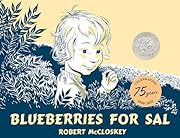
152. Blueberries for Sal by Robert McCloskey


So charming and funny!
153. Make Way for Ducklings by Robert McCloskey

Charming, lovely artwork and writing. Set in Boston. This one won a Caldecott.

154. Time of Wonder by Robert McCloskey
Amazing, charming story of life in the islands on the Maine coast. Beautiful!
"The first ever two-time Caldecott Medal winner, for Make Way for Ducklings and Time of Wonder, McCloskey was also awarded Caldecott Honors for Blueberries for Sal, One Morning in Maine, and Journey Cake, Ho! by Ruth Sawyer. He was declared a Living Legend by the Library of Congress in 2000."
The New York Times recently had an article about Sarah McCloskey (daughter of Robert), the same "Sal" featured in Blueberries for Sal. She read for children at a Maine library, and enchanted them with her father's books about Maine life and what it was like to grow up there. https://www.nytimes.com/2023/08/25/books/robert-mccloskey-books-maine.html
I've got a few more McCloskeys left to read, but here are the three I read today:
152. Blueberries for Sal by Robert McCloskey


So charming and funny!
153. Make Way for Ducklings by Robert McCloskey
Charming, lovely artwork and writing. Set in Boston. This one won a Caldecott.

154. Time of Wonder by Robert McCloskey
Amazing, charming story of life in the islands on the Maine coast. Beautiful!
85atozgrl
Belated happy new thread, Karen! I don't know how I haven't made it over to your new thread until now.
>38 klobrien2: I love that Cinderella too! Love the songs, love the story, love the performances, it was just one of the best things from my childhood. Glad to know there's another fan out there.
I first heard of Connections just recently over on @LizzieD's thread. I actually got a perfect score on it today! I was very surprised.
>77 klobrien2: How in the world did you get today's Wordle in 2? It took me 3, and I thought I was lucky.
I've watched a couple more Huston movies this month, and may get one more. I'll try to add my thoughts on the Huston Fest page at some point.
Have a good weekend!
>38 klobrien2: I love that Cinderella too! Love the songs, love the story, love the performances, it was just one of the best things from my childhood. Glad to know there's another fan out there.
I first heard of Connections just recently over on @LizzieD's thread. I actually got a perfect score on it today! I was very surprised.
>77 klobrien2: How in the world did you get today's Wordle in 2? It took me 3, and I thought I was lucky.
I've watched a couple more Huston movies this month, and may get one more. I'll try to add my thoughts on the Huston Fest page at some point.
Have a good weekend!
86vancouverdeb
I subscribe to the NYT times too, but have not seen the game Connections. I'll to look for it and see if my brain is up for it, Karen.
87klobrien2
>85 atozgrl: Hi, there! Thanks for stopping by! I’m really enjoying Connections and Wordle. My 2-worder was almost pure luck. Today, for instance, I guessy-guessed for a five-word day. I’ll look forward to hearing about your Huston watching! Good Sunday to you!
>86 vancouverdeb: Oh, I hope you find Connections and have fun playing it! Thanks for being here!
>86 vancouverdeb: Oh, I hope you find Connections and have fun playing it! Thanks for being here!
88klobrien2
Yikes! Lots of guessy-guessy here!
Wordle 799 5/6 irate, flame, shade, weave, peace
⬜⬜🟧⬜🟧
⬜⬜🟧⬜🟧
⬜⬜🟧⬜🟧
⬜🟧🟧⬜🟧
🟧🟧🟧🟧🟧
Etymology: peace (n.)
mid-12c., pes, "freedom from civil disorder, internal peace of a nation," from Anglo-French pes, Old French pais "peace, reconciliation, silence, permission" (11c., Modern French paix), from Latin pacem (nominative pax) "compact, agreement, treaty of peace, tranquility, absence of war" (source of Provençal patz, Spanish paz, Italian pace), from PIE root *pag- "to fasten" (which is the source also of Latin pacisci "to covenant or agree;" see pact), on the notion of "a binding together" by treaty or agreement.
It replaced Old English frið, also sibb, which also meant "happiness." The modern spelling is from 1500s, reflecting vowel shift. From mid-13c. as "friendly relations between people." The sense of "spiritual peace of the heart, soul or conscience, freedom from disturbance by the passions" (as in peace of mind) is from c. 1200. Sense of "state of quiet or tranquility" is by 1300, as in the meaning "absence or cessation of war or hostility." Specifically as "treaty or agreement made between conflicting parties to refrain from further hostilities," c. 1400.
Used in various greetings from c. 1300, from Biblical Latin pax, Greek eirēnē, which were used by translators to render Hebrew shalom, properly "safety, welfare, prosperity." As a type of hybrid tea rose (developed 1939 in France by François Meilland), so called from 1944.
The Native American peace pipe, supposedly smoked as the accompaniment of a treaty, is recorded by 1760. Peace-officer "civil officer whose duty it is to preserve public peace" is attested from 1714. Peace offering "offering that procures peace or reconciliation, satisfaction offered to an offended person" is from 1530s. Phrase peace with honor dates to 1607 (in "Coriolanus"). The U.S. Peace Corps was set up March 1, 1962. Peace sign, in reference to both the hand gesture and the graphic, is attested from 1968.
Wordle 799 5/6
⬜⬜🟧⬜🟧
⬜⬜🟧⬜🟧
⬜⬜🟧⬜🟧
⬜🟧🟧⬜🟧
🟧🟧🟧🟧🟧
Etymology:
mid-12c., pes, "freedom from civil disorder, internal peace of a nation," from Anglo-French pes, Old French pais "peace, reconciliation, silence, permission" (11c., Modern French paix), from Latin pacem (nominative pax) "compact, agreement, treaty of peace, tranquility, absence of war" (source of Provençal patz, Spanish paz, Italian pace), from PIE root *pag- "to fasten" (which is the source also of Latin pacisci "to covenant or agree;" see pact), on the notion of "a binding together" by treaty or agreement.
It replaced Old English frið, also sibb, which also meant "happiness." The modern spelling is from 1500s, reflecting vowel shift. From mid-13c. as "friendly relations between people." The sense of "spiritual peace of the heart, soul or conscience, freedom from disturbance by the passions" (as in peace of mind) is from c. 1200. Sense of "state of quiet or tranquility" is by 1300, as in the meaning "absence or cessation of war or hostility." Specifically as "treaty or agreement made between conflicting parties to refrain from further hostilities," c. 1400.
Used in various greetings from c. 1300, from Biblical Latin pax, Greek eirēnē, which were used by translators to render Hebrew shalom, properly "safety, welfare, prosperity." As a type of hybrid tea rose (developed 1939 in France by François Meilland), so called from 1944.
The Native American peace pipe, supposedly smoked as the accompaniment of a treaty, is recorded by 1760. Peace-officer "civil officer whose duty it is to preserve public peace" is attested from 1714. Peace offering "offering that procures peace or reconciliation, satisfaction offered to an offended person" is from 1530s. Phrase peace with honor dates to 1607 (in "Coriolanus"). The U.S. Peace Corps was set up March 1, 1962. Peace sign, in reference to both the hand gesture and the graphic, is attested from 1968.
89klobrien2
One stumble today, but I got there eventually. I love the “shuffle” button— it help me to change my view of how things are related. It seems I solve the easiest groupings first—the purple is the toughest. I suppose that’s the usual approach.
Connections
Puzzle #77
🟨🟨🟨🟨
🟩🟩🟩🟩
🟦🟦🟦🟪
🟦🟦🟦🟦
🟪🟪🟪🟪
Connections
Puzzle #77
🟨🟨🟨🟨
🟩🟩🟩🟩
🟦🟦🟦🟪
🟦🟦🟦🟦
🟪🟪🟪🟪
90klobrien2
“Connections” news— the NY Times has made the game the focus of its “Morning” newsletter. Great introduction to the game! https://www.nytimes.com/series/us-morning-briefing I hope the link works for any who want to check it out!
91jessibud2
>90 klobrien2: - Thanks for that article link, Karen! I'll stick to it until or unless it utterly defeats me. I like a challenge, especially a word game challenge, but I also don't have a lot of patience, so we shall see..., lol
92figsfromthistle
>49 klobrien2: that looks fantastic! BB for me.
Never heard of the game connections. I am going to have to check it out!
Never heard of the game connections. I am going to have to check it out!
93klobrien2
My time with the beautifully-Easy books continues:
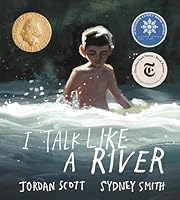
155. I Talk Like a River by Jordan Scott, illus. Sydney Smith

Beautiful words, marvelous paintings (especially of water surfaces). A young boy learns a wonderful way to think of his speech impediment--he talks like a river.
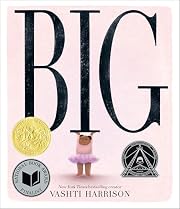
156. Big by Vashti Harrison
A young girl learns about self-identity, and how to deal with hurtful words.
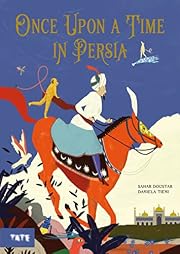
157. Once Upon a Time in Persia by Sahir Doustar, ill. Daniela Tieni
Beautiful drawings, with fantastical animals and nature elements. It is difficult to describe this book, but it is about a wedding of two people, self-identity, and self-knowledge. I wouldn't exactly think this would be a book for kids, except for the beautiful drawings.
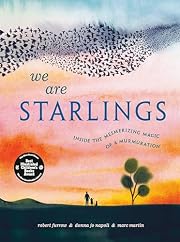
158. We are Starlings: Inside the Mesmerizing Magic of a Murmuration by Robert Furrow and Donna Jo Napoli, ill. Marc Merton
Robert Furrow is a scientist, Donna Jo Napoli writes children's literature, and Marc Merton is an illustrator. Between them, they created a beautifully-written and -drawn study of a murmuration of starlings. An amazing book!

159. Weslandia by Paul Fleischman, ill. by Kevin Hawkes
Amazing created world, in an Easy picture book! Wesley finds his summer project, creating his own backyard world, learning agriculture, manufacture, and caring for the earth, and, in the process, gains friends and brings them into his wonderful way of looking at life.
Thanks, as always, to whoever brought these books to my attention! LT is great!
155. I Talk Like a River by Jordan Scott, illus. Sydney Smith
Beautiful words, marvelous paintings (especially of water surfaces). A young boy learns a wonderful way to think of his speech impediment--he talks like a river.
156. Big by Vashti Harrison
A young girl learns about self-identity, and how to deal with hurtful words.
157. Once Upon a Time in Persia by Sahir Doustar, ill. Daniela Tieni
Beautiful drawings, with fantastical animals and nature elements. It is difficult to describe this book, but it is about a wedding of two people, self-identity, and self-knowledge. I wouldn't exactly think this would be a book for kids, except for the beautiful drawings.
158. We are Starlings: Inside the Mesmerizing Magic of a Murmuration by Robert Furrow and Donna Jo Napoli, ill. Marc Merton
Robert Furrow is a scientist, Donna Jo Napoli writes children's literature, and Marc Merton is an illustrator. Between them, they created a beautifully-written and -drawn study of a murmuration of starlings. An amazing book!

159. Weslandia by Paul Fleischman, ill. by Kevin Hawkes
Amazing created world, in an Easy picture book! Wesley finds his summer project, creating his own backyard world, learning agriculture, manufacture, and caring for the earth, and, in the process, gains friends and brings them into his wonderful way of looking at life.
Thanks, as always, to whoever brought these books to my attention! LT is great!
94vancouverdeb
Karen , as you know from my thread, I did find The NYT Connections game. I tried it and then was able to find about 8 more games online to play and practice. It’s a lot fun, and I’ll be a daily player now . Thanks for the introduction!
95klobrien2
>94 vancouverdeb: I really enjoy the NY Times games! They really help get my morning started. So glad I was able to get you in there, too!
Thanks for stopping by!
Thanks for stopping by!
96klobrien2
Surprising, but very welcome solution! My usual first word came through again.
Wordle 800 2/6 irate, write
🟦🟧⬜🟧🟧
🟧🟧🟧🟧🟧
Etymology: write (v.)
Old English writan "to score, outline, draw the figure of," later "to set down in writing" (class I strong verb; past tense wrat, past participle writen), from Proto-Germanic *writan "tear, scratch" (source also of Old Frisian writa "to write," Old Saxon writan "to tear, scratch, write," Old Norse rita "write, scratch, outline," Old High German rizan "to write, scratch, tear," German reißen "to tear, pull, tug, sketch, draw, design"), outside connections doubtful.
For men use to write an evill turne in marble stone, but a good turne in the dust. More, 1513
Words for "write" in most Indo-European languages originally mean "carve, scratch, cut" (such as Latin scribere, Greek graphein, glyphein, Sanskrit rikh-); a few originally meant "paint" (Gothic meljan, Old Church Slavonic pisati, and most of the modern Slavic cognates). To write (something) off (1680s) originally was from accounting; figurative sense is recorded from 1889. Write-in "unlisted candidate" is recorded from 1932.
Wordle 800 2/6
🟦🟧⬜🟧🟧
🟧🟧🟧🟧🟧
Etymology:
Old English writan "to score, outline, draw the figure of," later "to set down in writing" (class I strong verb; past tense wrat, past participle writen), from Proto-Germanic *writan "tear, scratch" (source also of Old Frisian writa "to write," Old Saxon writan "to tear, scratch, write," Old Norse rita "write, scratch, outline," Old High German rizan "to write, scratch, tear," German reißen "to tear, pull, tug, sketch, draw, design"), outside connections doubtful.
For men use to write an evill turne in marble stone, but a good turne in the dust. More, 1513
Words for "write" in most Indo-European languages originally mean "carve, scratch, cut" (such as Latin scribere, Greek graphein, glyphein, Sanskrit rikh-); a few originally meant "paint" (Gothic meljan, Old Church Slavonic pisati, and most of the modern Slavic cognates). To write (something) off (1680s) originally was from accounting; figurative sense is recorded from 1889. Write-in "unlisted candidate" is recorded from 1932.
97richardderus
Morning, Karen O.! Happy new week's reads.
The 1932 sense of today's Wordle-word shocks me anew at it recency. I'd've thought that would go back to Tammany Hall days, this being one of their tactics. I sometimes regret not pursuing my interest in linguistics, but it was never enough of a passion to make it worthwhile as a life-organizing principle.
*smooch*
The 1932 sense of today's Wordle-word shocks me anew at it recency. I'd've thought that would go back to Tammany Hall days, this being one of their tactics. I sometimes regret not pursuing my interest in linguistics, but it was never enough of a passion to make it worthwhile as a life-organizing principle.
*smooch*
98klobrien2
>97 richardderus: Hi, Richard! I’ve developed a real fascination with where words came from, and how it happened. I took a Great Course with John McWhorter on the subject, and he’s a hero to me now.
And a big old *smooch* right back to you! Have a great week!
And a big old *smooch* right back to you! Have a great week!
99richardderus
>98 klobrien2: I really, really enjoyed Our Magnificent Bastard Tongue: The Untold History of English. He has such a clear an convincing writing style that it educates me without feeling Good For Me. Stealthy smartness, I suppose...
100klobrien2
I wonder if the Connection game starts off easier in the week? This one seemed really easy. Maybe I’m just figuring it out!
Connections
Puzzle #78
🟦🟦🟦🟦
🟨🟨🟨🟨
🟪🟪🟪🟪
🟩🟩🟩🟩
Connections
Puzzle #78
🟦🟦🟦🟦
🟨🟨🟨🟨
🟪🟪🟪🟪
🟩🟩🟩🟩
101vancouverdeb
>100 klobrien2: I had no problem with Connections either , Karen . Maybe you are correct that it starts easier early in the week. I guess we’ll find out . Happy week ahead !
102klobrien2

160. Love is a Pink Cake: Irresistible Bakes for Morning, Noon and Night by Claire Ptak
This book is beautiful, both as a cookbook and as a collection of great writing and photography.
Ptak is a baker who got her start in life (and bakeries) in California, then moved to England in the 2000s. She has a modus operandi of using fresh, local produce, and aiming to create healthy food. I first heard about her when she was chosen to create the wedding cake for Prince Harry and Megan. The recipe for the cake is in here, and it is gorgeous. So many gorgeous bakes are in here!
This book is split into two sections: California and England. Both main sections contain the same subsections: Mornings, Afternoons, After a Meal, Party Party, and Savouries and Holiday Treats. The recipes are presented clearly and crisply, with oodles of illustrations.
At the front is a section on "Tips to Make You a Better Baker," and a really handy English English/American English translator table. At the end, there is a "Pastry Doughs" section, Ingredient Conversions, Oven Temperature Conversions, and Index.
Truly a pleasure to browse through this book!
103klobrien2
Wordle 801 3/6 irate, clear, caper
⬜🟦🟦⬜🟦
🟧⬜🟦🟦🟧
🟧🟧🟧🟧🟧
Etymology (this one seems a bit uncertain!):
caper (v.)
"to leap, skip, prance," 1580s, apparently short for obsolete capriole "to leap, skip," which is probably from Italian capriolare "jump in the air" (see cab). Related: Capered; capering.
also from 1580s
caper (n.1)
type of prickly Mediterranean bush, also in reference to the plant's edible buds, late 14c., from Latin capparis (source of Italian cappero, French câpre, German Kaper), from Greek kapparis "the caper plant or its fruit," which is of uncertain origin. Arabic kabbar, Persian kabar are from Greek. Perhaps reborrowed into English 16c. The final -s was mistaken for a plural inflection in English and dropped.
also from late 14c.
caper (n.2)
by 1590s, "a playful leap or jump, a skip or spring as in dancing," from caper (v.). The meaning "prank" is from 1840 via notion of "sportive action;" that of "crime" is from 1926. To cut capers "dance in a frolicsome way" is from c. 1600, from cut (v.) in the sense of "perform, execute."
⬜🟦🟦⬜🟦
🟧⬜🟦🟦🟧
🟧🟧🟧🟧🟧
Etymology (this one seems a bit uncertain!):
caper (v.)
"to leap, skip, prance," 1580s, apparently short for obsolete capriole "to leap, skip," which is probably from Italian capriolare "jump in the air" (see cab). Related: Capered; capering.
also from 1580s
caper (n.1)
type of prickly Mediterranean bush, also in reference to the plant's edible buds, late 14c., from Latin capparis (source of Italian cappero, French câpre, German Kaper), from Greek kapparis "the caper plant or its fruit," which is of uncertain origin. Arabic kabbar, Persian kabar are from Greek. Perhaps reborrowed into English 16c. The final -s was mistaken for a plural inflection in English and dropped.
also from late 14c.
caper (n.2)
by 1590s, "a playful leap or jump, a skip or spring as in dancing," from caper (v.). The meaning "prank" is from 1840 via notion of "sportive action;" that of "crime" is from 1926. To cut capers "dance in a frolicsome way" is from c. 1600, from cut (v.) in the sense of "perform, execute."
104klobrien2
Connections: Came close, but couldn’t group them up today. Still had fun!
Puzzle #79
🟩🟩🟩🟦
🟪🟦🟪🟦
🟦🟦🟦🟪
🟪🟦🟨🟨
Puzzle #79
🟩🟩🟩🟦
🟪🟦🟪🟦
🟦🟦🟦🟪
🟪🟦🟨🟨
105klobrien2
Wordle 802 4/6 irate, axiom, aboil, audio
🟦⬜🟦⬜⬜
🟧⬜🟦🟦⬜
🟧⬜🟦🟧⬜
🟧🟧🟧🟧🟧
Etymology: audio (n.)
"sound," especially recorded or transmitted sound signals, 1934, abstracted from word-forming element audio- (q.v.), which is from Latin audire "to hear" (from PIE root *au- "to perceive").
Entries linking to audio
*au-
Proto-Indo-European root meaning "to perceive."
It forms all or part of: aesthete; aesthetic; anesthesia; audible; audience; audio; audio-; audit; audition; auditor; auditorium; auditory; hyperaesthesia; kinesthetic; oyer; oyez; obedient; obey; paraesthesia; synaesthesia.
It is the hypothetical source of/evidence for its existence is provided by: Sanskrit avih, Avestan avish "openly, evidently;" Greek aisthanesthai "to feel;" Latin audire "to hear;" Old Church Slavonic javiti "to reveal."
🟦⬜🟦⬜⬜
🟧⬜🟦🟦⬜
🟧⬜🟦🟧⬜
🟧🟧🟧🟧🟧
Etymology:
"sound," especially recorded or transmitted sound signals, 1934, abstracted from word-forming element audio- (q.v.), which is from Latin audire "to hear" (from PIE root *au- "to perceive").
Entries linking to audio
*au-
Proto-Indo-European root meaning "to perceive."
It forms all or part of: aesthete; aesthetic; anesthesia; audible; audience; audio; audio-; audit; audition; auditor; auditorium; auditory; hyperaesthesia; kinesthetic; oyer; oyez; obedient; obey; paraesthesia; synaesthesia.
It is the hypothetical source of/evidence for its existence is provided by: Sanskrit avih, Avestan avish "openly, evidently;" Greek aisthanesthai "to feel;" Latin audire "to hear;" Old Church Slavonic javiti "to reveal."
106richardderus
>105 klobrien2: Wow...1934, that's earlier than I'd've bet on it being coined. The PIE root word seems like a stretch, doesn't it? That little tiny sound meaning such a huge area of language's basis...well, not incredible (in the original sense) but way deeper than I'd've eve thought to dive.
>102 klobrien2: Have I mentioned my favorite-ever book about baking to you yet? Bakewise is a wonderful, well-written explainer on the science behind baking in the form of giving you master recipes that you can customize. The author's a food scientist and a very amusing writer.
>102 klobrien2: Have I mentioned my favorite-ever book about baking to you yet? Bakewise is a wonderful, well-written explainer on the science behind baking in the form of giving you master recipes that you can customize. The author's a food scientist and a very amusing writer.
107klobrien2
>106 richardderus: Thanks for the tip on Bakewise! I’ve added it to my TBR.
As for the deep dive of the root word, I’ve seen this disclaimer before on etymonline.com: “It is the hypothetical source of/evidence for its existence is provided by”.
Hope you have a great day!
As for the deep dive of the root word, I’ve seen this disclaimer before on etymonline.com: “It is the hypothetical source of/evidence for its existence is provided by”.
Hope you have a great day!
109alcottacre
>84 klobrien2: I picked up Time of Wonder at the library yesterday and will read it in the next few days. I hope I enjoy it as much as everyone else seems to have done!
>102 klobrien2: Staying away from that one. Too much temptation, lol!
Have a wonderful Wednesday, Karen!
>102 klobrien2: Staying away from that one. Too much temptation, lol!
Have a wonderful Wednesday, Karen!
110klobrien2
>109 alcottacre: Hi, Stasi! I hope you find Time of Wonder to be a treat. I’ve got the big McCloskey collection waiting for me at the library—yay!
Thanks for stopping by!
Thanks for stopping by!
111alcottacre
>110 klobrien2: Yay for you!
112jessibud2
Karen, I posted a link to yet another treat about McCloskey, over on Linda's thread (laytonwoman3)
113richardderus
*smooch*
114klobrien2
>112 jessibud2: Funny! I posted the same story up above in >84 klobrien2:…it was a good one!
115klobrien2
Wordle 803 4/6 irate, prime, brine, bride
🟦🟧⬜⬜🟧
⬜🟧🟧⬜🟧
🟧🟧🟧⬜🟧
🟧🟧🟧🟧🟧
Etymology du jour: bride (n.)
"woman newly married or about to be," Old English bryd "bride, betrothed or newly married woman," from Proto-Germanic *bruthiz "woman being married" (source also of Old Frisian breid, Dutch bruid, Old High German brut, German Braut "bride"), a word of uncertain origin.
Gothic cognate bruþs, however, meant "daughter-in-law," and the form of the word borrowed from Old High German into Medieval Latin (bruta) and Old French (bruy) had only this sense. In ancient Indo-European custom, the married woman went to live with her husband's family, thus the sole "newly wed female" in such a household would have been the daughter-in-law. On the same notion, some trace the word itself to the PIE verbal root *bhreu-, which forms words for cooking and brewing, as this likely was the daughter-in-law's job. An Old Frisian word for "bride" was fletieve, literally "house-gift."
🟦🟧⬜⬜🟧
⬜🟧🟧⬜🟧
🟧🟧🟧⬜🟧
🟧🟧🟧🟧🟧
Etymology du jour:
"woman newly married or about to be," Old English bryd "bride, betrothed or newly married woman," from Proto-Germanic *bruthiz "woman being married" (source also of Old Frisian breid, Dutch bruid, Old High German brut, German Braut "bride"), a word of uncertain origin.
Gothic cognate bruþs, however, meant "daughter-in-law," and the form of the word borrowed from Old High German into Medieval Latin (bruta) and Old French (bruy) had only this sense. In ancient Indo-European custom, the married woman went to live with her husband's family, thus the sole "newly wed female" in such a household would have been the daughter-in-law. On the same notion, some trace the word itself to the PIE verbal root *bhreu-, which forms words for cooking and brewing, as this likely was the daughter-in-law's job. An Old Frisian word for "bride" was fletieve, literally "house-gift."
116klobrien2
It has been ages since I posted a “what’s up?” So here goes:
Today: I did some errands, accounting, and house stuff yesterday, so I’m in pretty good shape today. I have a lot of produce waiting to be prepared (eggplant and zucchini “pizzas,” corn salad (corn, tomatoes, onions), cucumbers, grapes and berries). Mmm…
What I’m reading: Trees, Cluny Brown. Do some catching up on magazines.
What I’m watching: The Norwegian show “Ragnarok” has a new season out there, so I’ve picked that up. Penultimate “After Party,” last ep of the new “Good Omens,” since Jerry was here. I’m almost done with third season of “Inspector Morse.” Today, I really want to watch those three Leonardo lectures. And I just got the second season of “Before We Die” (DVD) from the library.
Today: I did some errands, accounting, and house stuff yesterday, so I’m in pretty good shape today. I have a lot of produce waiting to be prepared (eggplant and zucchini “pizzas,” corn salad (corn, tomatoes, onions), cucumbers, grapes and berries). Mmm…
What I’m reading: Trees, Cluny Brown. Do some catching up on magazines.
What I’m watching: The Norwegian show “Ragnarok” has a new season out there, so I’ve picked that up. Penultimate “After Party,” last ep of the new “Good Omens,” since Jerry was here. I’m almost done with third season of “Inspector Morse.” Today, I really want to watch those three Leonardo lectures. And I just got the second season of “Before We Die” (DVD) from the library.
117klobrien2
Tried to take my time and be a little more suspicious of “easy” groupings. This game is designed to be tricky.
Connections
Puzzle #81
🟩🟩🟩🟩
🟨🟨🟨🟨
🟦🟦🟦🟦
🟪🟪🟪🟪
Connections
Puzzle #81
🟩🟩🟩🟩
🟨🟨🟨🟨
🟦🟦🟦🟦
🟪🟪🟪🟪
118RebaRelishesReading
>117 klobrien2: I'm impressed, Karen. I got the first two right away but then couldn't figure the other two out to save me. I'm not good at ones where it's a combining word that makes the set.
119richardderus
>115 klobrien2: IJBOL at the Old Frisian sense of the word! How clear an insight into the culture then prevailing.
Happy, smoochy Thursday Karen O.!
Happy, smoochy Thursday Karen O.!
120klobrien2
>118 RebaRelishesReading: Yes, I agree--the grouping where there's another word that makes them a group, are tough! I usually leave that for last (if I can) so I don't need to think of the word.
I was pretty pleased today. But just two days ago, I bombed out!
I was pretty pleased today. But just two days ago, I bombed out!
121klobrien2
>119 richardderus: IJBOL when I forgot what the acronym means and went looking for it in the etymology listing! Have a great weekend, RD!
122klobrien2

161. The Trees by Percival Everett
Wow! I've read three Percival Everett books now (God's Country, Dr. No: A Novel, and The Trees, and I've really liked all of them. I think it's because they all seem so fresh and inventive, and you can tell that Everett has taken his time with the writing.
I'm still mulling over the book, with its spotlight on the culture of lynching and racism that has been America. But I will say that I enjoyed the sense of humor (although sometimes very dark), the gender equality displayed by the detectives involved, and the prompting for reader involvement in what was going on here. Even the format of the book, short chapters (sometimes very short!) made the pace quick and electric. Percival Everett was an excellent choice for the American Authors Challenge!
I know I'll be reading more Percival Everett in the future.
123klobrien2
Very guessy-guessy solution, but my current streak is up to 9! Woo-hoo!
Wordle 804 5/6 irate, flame, quake, shake, space (my middle three words made me think of a current news report!)
⬜⬜🟧⬜🟧
⬜⬜🟧⬜🟧
⬜⬜🟧⬜🟧
🟧⬜🟧🟦🟧
🟧🟧🟧🟧🟧
Etymology: Lengthy, but very enjoyable entry today! space (n.)
c. 1300, "extent or area; room" (to do something), a shortening of Old French espace "period of time, distance, interval" (12c.), from Latin spatium "room, area, distance, stretch of time," a word of unknown origin (also source of Spanish espacio, Italian spazio).
From early 14c. as "amount or extent of time," and in Middle English the word was largely used of time (space of an hour, etc.). Also from early 14c. as "a place;" it is attested from mid-14c. as "distance, interval between two or more objects;" from late 14c. as "ground, land, territory; extension in three dimensions; distance between two or more points." It is recorded by early 15c. as "size, bulk," also "an assigned position."
Typographical sense of "blank type to separate words in print" is attested from 1670s. The typewriter's space-bar is from 1876, earlier space-key (1860).
The astronomical sense of "stellar depths, immense emptiness between the worlds as a characteristic of the universe" is by 1723, perhaps as early as "Paradise Lost" (1667), but common from 1890s.
In this sense a prolific 20c. compound-breeder, many perhaps modeled on earlier ones in air-: Space age is attested from 1946 in reference to the era of human conquest of space but often rather of commercial products that spun off the effort. Many of these first appear in science fiction and speculative writing: spaceship (1894, "A Journey in Other Worlds," John Jacob Astor); spacecraft (1928, Popular Science); space travel (1931); space station "large artificial satellite used as a base for space exploration" (1936, "Rockets Through Space"); space flight (June 1931, Popular Science, from April in newspapers); spaceman (1942, Thrilling Wonder Stories).
Space race in reference to competition among nations to explore space is attested from 1959. Space shuttle attested by 1970.
***Space isn't remote at all. It's only an hour's drive away if your car could go straight upwards. Sir Fred Hoyle, London Observer, 1979***
Space-saving as an adjective is from 1855 (time-and-space-saving is by 1847). Related: space-saver.
also from c. 1300
space (v.)
in various senses from space (n.); by c. 1400 as "walk, pace" in transitive space out "measure by walking." By 1540s as "to make of a certain extent." By 1680s in typography, "to separate words in print by blank types." It is attested by 1703 in a general sense of "arrange at set intervals."
The slang meaning "be in a state of drug-induced euphoria" is recorded by 1968; spaced-out in reference to this is by 1965, and space cadet "eccentric person disconnected with reality" (often implying an intimacy with hallucinogenic drugs) is a 1960s phrase. All probably are traceable to the popular 1950s U.S. sci-fi television program about a spaceman in training, "Tom Corbett, Space Cadet." Related: Spaced; spacing.
space (adj.)
c. 1600, from space (n.). The meaning "having to do with outer space" is from 1894.
Wordle 804 5/6
⬜⬜🟧⬜🟧
⬜⬜🟧⬜🟧
⬜⬜🟧⬜🟧
🟧⬜🟧🟦🟧
🟧🟧🟧🟧🟧
Etymology: Lengthy, but very enjoyable entry today!
c. 1300, "extent or area; room" (to do something), a shortening of Old French espace "period of time, distance, interval" (12c.), from Latin spatium "room, area, distance, stretch of time," a word of unknown origin (also source of Spanish espacio, Italian spazio).
From early 14c. as "amount or extent of time," and in Middle English the word was largely used of time (space of an hour, etc.). Also from early 14c. as "a place;" it is attested from mid-14c. as "distance, interval between two or more objects;" from late 14c. as "ground, land, territory; extension in three dimensions; distance between two or more points." It is recorded by early 15c. as "size, bulk," also "an assigned position."
Typographical sense of "blank type to separate words in print" is attested from 1670s. The typewriter's space-bar is from 1876, earlier space-key (1860).
The astronomical sense of "stellar depths, immense emptiness between the worlds as a characteristic of the universe" is by 1723, perhaps as early as "Paradise Lost" (1667), but common from 1890s.
In this sense a prolific 20c. compound-breeder, many perhaps modeled on earlier ones in air-: Space age is attested from 1946 in reference to the era of human conquest of space but often rather of commercial products that spun off the effort. Many of these first appear in science fiction and speculative writing: spaceship (1894, "A Journey in Other Worlds," John Jacob Astor); spacecraft (1928, Popular Science); space travel (1931); space station "large artificial satellite used as a base for space exploration" (1936, "Rockets Through Space"); space flight (June 1931, Popular Science, from April in newspapers); spaceman (1942, Thrilling Wonder Stories).
Space race in reference to competition among nations to explore space is attested from 1959. Space shuttle attested by 1970.
***Space isn't remote at all. It's only an hour's drive away if your car could go straight upwards. Sir Fred Hoyle, London Observer, 1979***
Space-saving as an adjective is from 1855 (time-and-space-saving is by 1847). Related: space-saver.
also from c. 1300
space (v.)
in various senses from space (n.); by c. 1400 as "walk, pace" in transitive space out "measure by walking." By 1540s as "to make of a certain extent." By 1680s in typography, "to separate words in print by blank types." It is attested by 1703 in a general sense of "arrange at set intervals."
The slang meaning "be in a state of drug-induced euphoria" is recorded by 1968; spaced-out in reference to this is by 1965, and space cadet "eccentric person disconnected with reality" (often implying an intimacy with hallucinogenic drugs) is a 1960s phrase. All probably are traceable to the popular 1950s U.S. sci-fi television program about a spaceman in training, "Tom Corbett, Space Cadet." Related: Spaced; spacing.
space (adj.)
c. 1600, from space (n.). The meaning "having to do with outer space" is from 1894.
124alcottacre
>122 klobrien2: It was a terrific book, wasn't it? I had never heard of Percival Everett until August, but I read 2 of his books then and am looking forward to reading more of his.
125klobrien2
>123 klobrien2: I like Everett so much—he is funny, clear-writing, innovative…I’m glad you liked him, too!
Thanks for visiting!
Thanks for visiting!
126alcottacre
>125 klobrien2: I love discovering authors that I have never read before, but that I really enjoy!
Have a wonderful weekend, Karen!
Have a wonderful weekend, Karen!
127klobrien2
No luck (or skill!) today. I came close a few guesses. Bah!
Connections
Puzzle #82
🟩🟪🟩🟩
🟨🟨🟨🟩
🟨🟨🟨🟩
🟩🟪🟨🟩
Connections
Puzzle #82
🟩🟪🟩🟩
🟨🟨🟨🟩
🟨🟨🟨🟩
🟩🟪🟨🟩
128RebaRelishesReading
>127 klobrien2: I totally bombed on my first two and then had an epiphany poets...ah, American poets...checked Olds (had never heard of him) and had been trying to force him into auto makers. and tried it whew!! I still had too many woodwinds but started noticing the double letters in the remaining words and, whew, just in time!
I'll have to keep Percival Everett in mind.
I'll have to keep Percival Everett in mind.
129atozgrl
>128 RebaRelishesReading: Well, today's Connections just made me mad. I started with the woodwinds but had the wrong grouping. My first grouping was woodwinds used in orchestras, so omitted the saxophone (where it's rare) but that wasn't it, so I took flute out and put saxophone in, to group reed woodwinds but that wasn't it either. So I wasted two guesses on that group, gave up on it and started over, and eventually bombed out because I didn't have enough guesses left. I'm still p.o.'ed that my second guess was marked wrong, even though it was clearly legitimate, and maybe a better grouping than what the puzzle-maker decided was right for today. I've gotten so used to the most difficult group being one that uses words in combination with another word that looking for double letters never crossed my mind. Oh well, live and learn.
130klobrien2
>128 RebaRelishesReading: >129 atozgrl: Yep, Connections is all about seeing the different possibilities and being willing to back off of a guess. The first thing I do when I miss is to "deselect" my choices, and I might even shuffle the words around. Well, I did that today and it didn't help much, but I think it does, overall.
Regardless, the game is really fun!
Thanks to you both for stopping by!
Regardless, the game is really fun!
Thanks to you both for stopping by!
131klobrien2

162. All the World by Liz Garton Scanlon, ill. Marla Frazee
Lovely picture book with wonderful writing and beautiful illustrations. All about what things are made of, and how we are all connected to each other, we are all a community. Lots of deep thoughts here for the kiddos (and for adults!)
132klobrien2
Friday Reading Roundup!
Because I rely on libraries so much for my reading (and do so much eBook reading), what I'm reading at any given time changes often, and changes quickly.
Karen's current reading (09/01/2023):
Actively reading (or soon will be!)
Cluny Brown by Margery Sharp -- p. 81 of 270
Network Effect (Murderbot Diaries #5) by Martha Wells -- p. 92 of 350
The Silkworm (Cormoran Strike #2) by Robert Galbraith -- p. 101 of 424
Unnatural Habits (Phryne Fisher #19) by Kerry Greenwood -- p. 40 of 255
The Golden Spiders (Nero Wolfe #22) by Rex Stout -- p. 19 of 148
The Gift of Rain by Tan Twan Eng -- p. 11 of 381
A Spoonful of Poison (Agatha Raisin #19) by M. C. Beaton
People of Darkness by Tony Hillerman
I'm overbooked! I'll probably leave these on the list, but I can't truly say that I am actively reading them right now:
Understanding Your Grief by Alan D. Wolfelt
Portable Magic: A History of Books and Their Readers by Emma Smith -- p. 31 of 314
Ready Player One (audiobook) by Ernest Cline, read by Wil Wheaton
Thursday Next in the Well of Lost Plots by Jasper Fforde -- p. 10 of 373
A Spell of Good Things by Ayobomi Adebayo -- p. 11 of 325
I try to participate in the American Authors Challenge. In September, we are reading Women Authors of Crime. I plan to read the first Anna Pigeon, Track of the Cat by Nevada Barr.
I usually am reading/watching Great Courses. My current course is Leonardo da Vinci and the Italian High Renaissance -- lectures 21 of 36 completed.
Not-So-Time-Sensitive-But-Still-Want-to-Get-to-Them (so, these are readily available to me although I might not be reading them quite yet or may have had to return them to the library; most are my own books)
Crook Manifesto by Colson Whitehead -- p. 26 of 288
The Adventure of the Peculiar Protocols by Nicholas Meyer -- p. 3 of 238
The Disappearance of Sherlock Holmes by Larry Millett -- p. 0 of 340
Marple: Twelve New Stories by assorted authors
Fairy Tale by Stephen King
The Bob-iverse books! (reread)
Because I rely on libraries so much for my reading (and do so much eBook reading), what I'm reading at any given time changes often, and changes quickly.
Karen's current reading (09/01/2023):
Actively reading (or soon will be!)
Cluny Brown by Margery Sharp -- p. 81 of 270
Network Effect (Murderbot Diaries #5) by Martha Wells -- p. 92 of 350
The Silkworm (Cormoran Strike #2) by Robert Galbraith -- p. 101 of 424
Unnatural Habits (Phryne Fisher #19) by Kerry Greenwood -- p. 40 of 255
The Golden Spiders (Nero Wolfe #22) by Rex Stout -- p. 19 of 148
The Gift of Rain by Tan Twan Eng -- p. 11 of 381
A Spoonful of Poison (Agatha Raisin #19) by M. C. Beaton
People of Darkness by Tony Hillerman
I'm overbooked! I'll probably leave these on the list, but I can't truly say that I am actively reading them right now:
Understanding Your Grief by Alan D. Wolfelt
Portable Magic: A History of Books and Their Readers by Emma Smith -- p. 31 of 314
Ready Player One (audiobook) by Ernest Cline, read by Wil Wheaton
Thursday Next in the Well of Lost Plots by Jasper Fforde -- p. 10 of 373
A Spell of Good Things by Ayobomi Adebayo -- p. 11 of 325
I try to participate in the American Authors Challenge. In September, we are reading Women Authors of Crime. I plan to read the first Anna Pigeon, Track of the Cat by Nevada Barr.
I usually am reading/watching Great Courses. My current course is Leonardo da Vinci and the Italian High Renaissance -- lectures 21 of 36 completed.
Not-So-Time-Sensitive-But-Still-Want-to-Get-to-Them (so, these are readily available to me although I might not be reading them quite yet or may have had to return them to the library; most are my own books)
Crook Manifesto by Colson Whitehead -- p. 26 of 288
The Adventure of the Peculiar Protocols by Nicholas Meyer -- p. 3 of 238
The Disappearance of Sherlock Holmes by Larry Millett -- p. 0 of 340
Marple: Twelve New Stories by assorted authors
Fairy Tale by Stephen King
The Bob-iverse books! (reread)
133atozgrl
>130 klobrien2: The times I've tried Connections so far it's been interesting, whether I bombed out or got a perfect score. Until today. I still think the games they played with the woodwinds was just plain mean today. There was no way to know which one was not included in the group without solving the hardest/purple line first, since all 5 of the instruments fit their generic "woodwinds" category. And I had come up with reasons to group the ones I grouped together that made more sense than the four that were grouped together in the puzzle.
I hope they don't do that again, or I might stop playing around with it. It's not a puzzle I've gotten committed to, the way I have with Wordle.
I hope they don't do that again, or I might stop playing around with it. It's not a puzzle I've gotten committed to, the way I have with Wordle.
134msf59
Happy Saturday, Karen. Hooray for The Trees. Glad it was such a hit for you. I gave it 4 stars, so I liked it too. Have you been watching anything interesting? We are into the 3rd season of Last Tango. We started "The Split", a British drama about a family of divorce lawyers. We are enjoying it very much. It is on Hulu but we are watching the DVDs. Have a good holiday weekend.
136klobrien2
>133 atozgrl: Yes, it was frustrating. And I don’t think they’ll change their modus operandi. Maybe just give it a break, until you feel like trying again? Have a great weekend and thanks for stopping by!
137alcottacre
Have a super Saturday, Karen!
138klobrien2
>134 msf59: Hi, Mark! I’m deep into Inspector Morse, but I have the second season of Before We Die on DVD, and that is really good (and tense). The shows you mention sound good!
139klobrien2
>135 richardderus: You always bring a smile to my face! Good to see you, RD, and *smoochiesmoochsmooch* to you, too!
140klobrien2
Took a big leap on guess three, but I figured it had ti be something a little goofy.
Wordle 805 3/6 irate, shiny, onion
🟦⬜⬜⬜⬜
⬜⬜🟧🟦⬜
🟧🟧🟧🟧🟧
Etymology: onion (n.)
early 12c., ungeon, oinyon, unione, "the underground bulb of the common onion plant," from Anglo-French union, Old French oignon "onion" (formerly also oingnon), and directly from Latin unionem (nominative unio), a colloquial rustic Roman word for a kind of onion, also "pearl" (via the notion of a string of onions), literally "one, unity." The sense connection is the unity of the successive layers of an onion, in contrast with garlic or cloves.
Old English had ynne (in ynne-leac), from the same Latin source, which also produced Irish inniun, Welsh wynwyn and similar words in Germanic. In Dutch, the ending in -n was mistaken for a plural inflection and new singular ui formed. The usual Indo-European name is represented by Greek kromion, Irish crem, Welsh craf, Old English hramsa, Lithuanian kermušė.
The usual Latin word was cepa, a loan from an unknown language; it is the source of Old French cive, Old English cipe, and, via Late Latin diminutive cepulla, Italian cipolla, Spanish cebolla, Polish cebula. German Zwiebel also is from this source, but altered by folk etymology in Old High German (zwibolla) from words for "two" and "ball."
Onion-ring "circular segment of an onion" (especially battered and deep-fried) is attested by 1904. Onion-dome on a church-tower, etc., is attested by 1950, so called for the resemblance of shape; onion-grass, which forms tuberous nodes in its roots (also onion-couch) is from 1823; onion-skin as a type of paper (so called for its thinness, transparency, and finish, which resemble the skin of an onion) is from 1879.
Wordle 805 3/6
🟦⬜⬜⬜⬜
⬜⬜🟧🟦⬜
🟧🟧🟧🟧🟧
Etymology:
early 12c., ungeon, oinyon, unione, "the underground bulb of the common onion plant," from Anglo-French union, Old French oignon "onion" (formerly also oingnon), and directly from Latin unionem (nominative unio), a colloquial rustic Roman word for a kind of onion, also "pearl" (via the notion of a string of onions), literally "one, unity." The sense connection is the unity of the successive layers of an onion, in contrast with garlic or cloves.
Old English had ynne (in ynne-leac), from the same Latin source, which also produced Irish inniun, Welsh wynwyn and similar words in Germanic. In Dutch, the ending in -n was mistaken for a plural inflection and new singular ui formed. The usual Indo-European name is represented by Greek kromion, Irish crem, Welsh craf, Old English hramsa, Lithuanian kermušė.
The usual Latin word was cepa, a loan from an unknown language; it is the source of Old French cive, Old English cipe, and, via Late Latin diminutive cepulla, Italian cipolla, Spanish cebolla, Polish cebula. German Zwiebel also is from this source, but altered by folk etymology in Old High German (zwibolla) from words for "two" and "ball."
Onion-ring "circular segment of an onion" (especially battered and deep-fried) is attested by 1904. Onion-dome on a church-tower, etc., is attested by 1950, so called for the resemblance of shape; onion-grass, which forms tuberous nodes in its roots (also onion-couch) is from 1823; onion-skin as a type of paper (so called for its thinness, transparency, and finish, which resemble the skin of an onion) is from 1879.
141klobrien2
A false start, but then proceeded to get today’s.
Connections
Puzzle #83
🟩🟩🟩🟩
🟪🟨🟨🟨
🟪🟪🟪🟪
🟦🟦🟦🟦
🟨🟨🟨🟨
Connections
Puzzle #83
🟩🟩🟩🟩
🟪🟨🟨🟨
🟪🟪🟪🟪
🟦🟦🟦🟦
🟨🟨🟨🟨
142richardderus
>140 klobrien2: ...honestly never once thought about this word's etymology...not once...the 1950 attestation does giv me pause because I'd swear an oath I saw it in a book published a lot earlier. Still, their database access is hugely superior to mine so I'll believe them in the absence of evidence to the contrary.
another *smooch*
another *smooch*
143RebaRelishesReading
>130 klobrien2: I've started doing Connections on paper first. I write down combinations I see and then see if I can figure out where the duplicates actually go. Sometimes it helps (today it did) other times it doesn't.
144BLBera
What a lot of great reading, Karen. We love McCloskey here. I told my granddaughter I would take her to Boston one day so she could see the ducklings park.
145msf59
Happy Sunday, Karen. I am starting The Gift of Rain today. Just a heads-up. You did mention that you might join us, right?
146klobrien2
>145 msf59: Yes, I’m all set to go on The Gift of Rain. I’ll make a point of getting some pages read today! Happy Sunday to you as well!
147klobrien2
Wordle 806 4/6 irate, giant, plait, await
🟦⬜🟧🟦⬜
⬜🟦🟧⬜🟧
⬜⬜🟧🟧🟧
🟧🟧🟧🟧🟧
Etymology, baby: await (v.)
mid-13c., awaiten, "to wait for," from Old North French awaitier (Old French agaitier) "to lie in wait for, watch, observe," from a- "to" (see ad-) + waitier "to watch" (see wait (v.)). Originally especially "wait for with hostile intent, wait to ambush or spy upon." Related: Awaited; awaiting.
🟦⬜🟧🟦⬜
⬜🟦🟧⬜🟧
⬜⬜🟧🟧🟧
🟧🟧🟧🟧🟧
Etymology, baby:
mid-13c., awaiten, "to wait for," from Old North French awaitier (Old French agaitier) "to lie in wait for, watch, observe," from a- "to" (see ad-) + waitier "to watch" (see wait (v.)). Originally especially "wait for with hostile intent, wait to ambush or spy upon." Related: Awaited; awaiting.
148klobrien2
Pulled it out by the skin of my teeth!
Connections
Puzzle #84
🟪🟩🟩🟩
🟨🟪🟨🟨
🟨🟨🟨🟪
🟦🟦🟦🟦
🟪🟪🟪🟪
🟨🟨🟨🟨
🟩🟩🟩🟩
Connections
Puzzle #84
🟪🟩🟩🟩
🟨🟪🟨🟨
🟨🟨🟨🟪
🟦🟦🟦🟦
🟪🟪🟪🟪
🟨🟨🟨🟨
🟩🟩🟩🟩
149richardderus
>147 klobrien2: I love that word, and its etymology makes perfect sense of its...sense...English can be irritatingly imprecise despite its magpie tendency to filch words for concepts it doesn't have words for. Dearie me, that was a strange sentence.
Have a lovely Monday, my dear lady. *smooch*
Have a lovely Monday, my dear lady. *smooch*
150richardderus
>147 klobrien2: I love that word, and its etymology makes perfect sense of its...sense. English, despite its magpie tendency to filch words from other languages for concepts it doesn't have words to describe, can be irritatingly vague.
Have a lovely Monday, dear lady. *smooch*
Have a lovely Monday, dear lady. *smooch*
151richardderus
A double post! Those're rare these days.
153klobrien2
Rats, I missed it completely…maybe I’m not awake enough yet. Oh, well, tomorrow I get another chance!
Wordle 807 X/6 irate, smily, picky, jiffy, dizzy, windy, (giddy)
🟦⬜⬜⬜⬜
⬜⬜🟦⬜🟧
⬜🟧⬜⬜🟧
⬜🟧⬜⬜🟧
🟦🟧⬜⬜🟧
⬜🟧⬜🟧🟧
Etymology do jour: giddy (adj.)
Old English gidig, variant of gydig "insane, mad, stupid," perhaps literally "possessed (by a spirit)," if it is from Proto-Germanic *gud-iga- "possessed by a god," from *gudam "god" (see god (n.)) + *-ig "possessed." Meaning "having a confused, swimming sensation" is from 1560s (compare sense evolution of dizzy). Meaning "elated" is from 1540s. Related: Giddily; giddiness.
Entries linking to giddy
dizzy (adj.)
Middle English dusie, from Old English dysig "foolish, stupid" (obsolete in the original sense except in dialect from 13c.), from Proto-Germanic *dusijaz (source also of Low German düsig "dizzy," Dutch duizelen "to be dizzy," Old High German dusig "foolish," German Tor "fool," Old English dwæs, Dutch dwaas "foolish"), perhaps from PIE *dheu- (1) "dust, vapor, smoke; to rise in a cloud" (and related notions of "defective perception or wits"). Old English used related dyslic to gloss Latin absurdum, which also seems to imply some defect of the senses (see absurd).
The meaning "having a whirling sensation" is from c. 1400; that of "giddy, thoughtless, heedless," is from c. 1500 and seems to merge the two earlier meanings. Used of the "foolish virgins" in early translations of Matthew xxv; used especially of blondes since 1870s. Related: Dizzily.
Wordle 807 X/6
🟦⬜⬜⬜⬜
⬜⬜🟦⬜🟧
⬜🟧⬜⬜🟧
⬜🟧⬜⬜🟧
🟦🟧⬜⬜🟧
⬜🟧⬜🟧🟧
Etymology do jour:
Old English gidig, variant of gydig "insane, mad, stupid," perhaps literally "possessed (by a spirit)," if it is from Proto-Germanic *gud-iga- "possessed by a god," from *gudam "god" (see god (n.)) + *-ig "possessed." Meaning "having a confused, swimming sensation" is from 1560s (compare sense evolution of dizzy). Meaning "elated" is from 1540s. Related: Giddily; giddiness.
Entries linking to giddy
dizzy (adj.)
Middle English dusie, from Old English dysig "foolish, stupid" (obsolete in the original sense except in dialect from 13c.), from Proto-Germanic *dusijaz (source also of Low German düsig "dizzy," Dutch duizelen "to be dizzy," Old High German dusig "foolish," German Tor "fool," Old English dwæs, Dutch dwaas "foolish"), perhaps from PIE *dheu- (1) "dust, vapor, smoke; to rise in a cloud" (and related notions of "defective perception or wits"). Old English used related dyslic to gloss Latin absurdum, which also seems to imply some defect of the senses (see absurd).
The meaning "having a whirling sensation" is from c. 1400; that of "giddy, thoughtless, heedless," is from c. 1500 and seems to merge the two earlier meanings. Used of the "foolish virgins" in early translations of Matthew xxv; used especially of blondes since 1870s. Related: Dizzily.
154klobrien2
Connections — Just eked it out today, but made it!
Puzzle #85
🟨🟨🟨🟨
🟦🟦🟦🟦
🟪🟪🟩🟩
🟪🟩🟩🟩
🟩🟪🟩🟩
🟪🟪🟪🟪
🟩🟩🟩🟩
Puzzle #85
🟨🟨🟨🟨
🟦🟦🟦🟦
🟪🟪🟩🟩
🟪🟩🟩🟩
🟩🟪🟩🟩
🟪🟪🟪🟪
🟩🟩🟩🟩
155atozgrl
>148 klobrien2: I went back and tried Connections again yesterday. After staring at it a bit, I caught on to the homophones first. I was very surprised at the end to see that they rated that one the "trickiest" row in the puzzle; I've never solved the hardest one first and usually don't even know what the grouping is until after the puzzle is completed. I thought that one was the most obvious in yesterday's puzzle. After that, the rest fell into place. Connections is odd; I just never know how it's going to work out. I haven't tried today's puzzle yet.
156klobrien2
>155 atozgrl: Yes, I think those Connections people are pretty crafty! Wouldn’t it be cool to have a job like that?!
I’ll get over to your thread to see how you did, if you got a chance to try it.
Thanks for stopping by!
I’ll get over to your thread to see how you did, if you got a chance to try it.
Thanks for stopping by!
157atozgrl
>156 klobrien2: That would be an interesting job! But I'm not sure that I'm good enough with words to do something like that.
I couldn't get on LT yesterday but I'm glad I can get on again today. I was not surprised to see that the site was under attack. I hope the bad guys go away!
Have a good week!
I couldn't get on LT yesterday but I'm glad I can get on again today. I was not surprised to see that the site was under attack. I hope the bad guys go away!
Have a good week!
158klobrien2
Back on the Wordle train…
Wordle 808 3/6 irate, briny, birch
🟦🟦⬜⬜⬜
🟧🟦🟦⬜⬜
🟧🟧🟧🟧🟧
Etymology: birch (n.)
"hardy, slender northern forest tree noted for its white bark," Old English berc, beorc (also the name of the rune for "b"), from Proto-Germanic *berkjon (source also of Old Saxon birka, Old Norse börk, Danish birk, Swedish and Icelandic björk (which is also a girl's given name), Middle Dutch berke, Dutch berk, Old High German birihha, German Birke).
This is from PIE *bhergo (source also of Ossetian barz, Old Church Slavonic breza, Russian bereza, Lithuanian beržas, Sanskrit bhurjah, all names of birch-like trees, Latin fraxinus "mountain ash"), from root *bhereg- "to shine; bright, white," in reference to the bark. Birch beer is by 1827, American English.
birch (v.)
"to flog," 1830, from the noun in the sense "bunch of birch twigs used for flogging" (1640s); see birch (n.). Related: Birched; birching.
Wordle 808 3/6
🟦🟦⬜⬜⬜
🟧🟦🟦⬜⬜
🟧🟧🟧🟧🟧
Etymology:
"hardy, slender northern forest tree noted for its white bark," Old English berc, beorc (also the name of the rune for "b"), from Proto-Germanic *berkjon (source also of Old Saxon birka, Old Norse börk, Danish birk, Swedish and Icelandic björk (which is also a girl's given name), Middle Dutch berke, Dutch berk, Old High German birihha, German Birke).
This is from PIE *bhergo (source also of Ossetian barz, Old Church Slavonic breza, Russian bereza, Lithuanian beržas, Sanskrit bhurjah, all names of birch-like trees, Latin fraxinus "mountain ash"), from root *bhereg- "to shine; bright, white," in reference to the bark. Birch beer is by 1827, American English.
birch (v.)
"to flog," 1830, from the noun in the sense "bunch of birch twigs used for flogging" (1640s); see birch (n.). Related: Birched; birching.
159vancouverdeb
I agree, those Connections people are crafty! Sometimes is seems a word or more can belong in more than one group. I've bombed out once so far.
160klobrien2
LibraryThing is back! I was just sick at not being able to get in, and so angry! I’m so relieved, but I’ll never take Library Thing for granted again.
Hello, everybody!
Hello, everybody!
161klobrien2
This solution is me, flipping the bird to the DOSers! But I got to try some fun words!
Wordle 809 5/6 irate, flack, swamp, quash, gnash
⬜⬜🟧⬜⬜
⬜⬜🟧⬜⬜
🟦⬜🟧⬜⬜
⬜⬜🟧🟧🟧
🟧🟧🟧🟧🟧
Etymology (this should be good): gnash (v.)
early 15c. variant of Middle English gnasten "to grind the teeth together" in rage, sorrow, or menace (early 14c.), perhaps from Old Norse gnasta, gnista "to gnash the teeth," of unknown origin, probably imitative. Compare German knistern "to crackle," Old English gnidan "to rub, bruise, pound, break to pieces," Danish knaske "crush with the teeth." Related: Gnashed; gnashing.
Wordle 809 5/6
⬜⬜🟧⬜⬜
⬜⬜🟧⬜⬜
🟦⬜🟧⬜⬜
⬜⬜🟧🟧🟧
🟧🟧🟧🟧🟧
Etymology (this should be good):
early 15c. variant of Middle English gnasten "to grind the teeth together" in rage, sorrow, or menace (early 14c.), perhaps from Old Norse gnasta, gnista "to gnash the teeth," of unknown origin, probably imitative. Compare German knistern "to crackle," Old English gnidan "to rub, bruise, pound, break to pieces," Danish knaske "crush with the teeth." Related: Gnashed; gnashing.
162alcottacre
Have a wonderful Wednesday, Karen!
164alcottacre
>163 klobrien2: Glad to hear that your Wednesday is starting out good and I hope it stays that way!
166klobrien2

163. A Spoonful of Poison: An Agatha Raisin Mystery (Agatha Raisin #19) by M. C. Beaton
I enjoyed this fine, little cozy of Agatha Raisin. This one's about some drug poisonings that happen at a neighboring village's fete (and of course Agatha is right in the middle of it).
167klobrien2

164. The Dinosaurs of Waterhouse Hawkins by Barbara Kerley, ill. Brian Selznick
Beautiful words and illustrations about a very interesting bit of American history. Waterhouse Hawkins developed the first large models of dinosaurs and put them on display for the world. Selznick's illustration is wonderful, as always.
168richardderus
>161 klobrien2: It's a perfect word for my feelings the past few days!
Speaking of words, I think you'll enjoy this article on the new words added to Dictionary.com in 2023:
https://www.dictionary.com/e/new-dictionary-words-fall-2023/
My favorite is, of course: jolabokaflod
noun. an Icelandic tradition in which books are given as Christmas presents and opened on December 24, after which the evening is spent reading the books: from a practice begun in 1944, when paper goods were among the most available items in postwar Iceland.
📝 The name of this charming tradition, pronounced yoh-luh–boh-kuh-flawd , comes from the Icelandic word Jólabókaflóðið that literally translates to “(the) Christmas book flood.” (The first part of the word, Jól, is equivalent to the word Yule.)
I call it #Booksgiving and blog my reviews of the books I think y'all oughta be givin' for Yule.
Speaking of words, I think you'll enjoy this article on the new words added to Dictionary.com in 2023:
https://www.dictionary.com/e/new-dictionary-words-fall-2023/
My favorite is, of course: jolabokaflod
noun. an Icelandic tradition in which books are given as Christmas presents and opened on December 24, after which the evening is spent reading the books: from a practice begun in 1944, when paper goods were among the most available items in postwar Iceland.
📝 The name of this charming tradition, pronounced yoh-luh–boh-kuh-flawd , comes from the Icelandic word Jólabókaflóðið that literally translates to “(the) Christmas book flood.” (The first part of the word, Jól, is equivalent to the word Yule.)
I call it #Booksgiving and blog my reviews of the books I think y'all oughta be givin' for Yule.
169klobrien2

165. One Morning in Maine by Robert McCloskey
Wonderful, sweet classic about the simple (or is it so simple?) life of a young girl. The depictions of her family and the people in her village are enchanting. No wonder it's a classic.
171RebaRelishesReading
>168 richardderus: Those Icelanders really know what they're doing!!
172klobrien2
Wordle 810 4/6 irate, sheen, weepy, dwell
⬜⬜⬜⬜🟦
⬜⬜🟧⬜⬜
🟦⬜🟧⬜⬜
🟧🟧🟧🟧🟧
Etymology: dwell (v.)
Old English dwellan "to lead into error, deceive, mislead," related to dwelian "to be led into error, go wrong in belief or judgment," from Proto-Germanic *dwaljana "to delay, hesitate," *dwelana "go astray" (source also of Old Norse dvelja "to retard, delay," Danish dvæle “to linger, dwell,” Swedish dväljas “to dwell, reside;” Middle Dutch dwellen "to stun, perplex;" Old High German twellen "to hinder, delay") from PIE *dhwel-, extended form of root *dheu- (1) "dust, cloud, vapor, smoke" (also forming words with the related notions of "defective perception or wits").
The apparent sense evolution in Middle English was through "to procrastinate, delay, be tardy in coming" (late 12c.), to "linger, remain, stay, sojourn," to "make a home, abide as a permanent resident" (mid-14c.). From late 14c. as "remain (in a certain condition or status)," as in phrase dwell upon "keep the attention fixed on." Related: Dwelled; dwelt (for which see went); dwells.
It had a noun form in Old English, gedweola "error, heresy, madness." Also compare Middle English dwale "deception, trickery," from Old English dwala or from a Scandinavian cognate (such as Danish dvale "trance, stupor, stupefaction"); dwale survived into late Middle English as "a sleeping potion, narcotic drink, deadly nightshade."
⬜⬜⬜⬜🟦
⬜⬜🟧⬜⬜
🟦⬜🟧⬜⬜
🟧🟧🟧🟧🟧
Etymology:
Old English dwellan "to lead into error, deceive, mislead," related to dwelian "to be led into error, go wrong in belief or judgment," from Proto-Germanic *dwaljana "to delay, hesitate," *dwelana "go astray" (source also of Old Norse dvelja "to retard, delay," Danish dvæle “to linger, dwell,” Swedish dväljas “to dwell, reside;” Middle Dutch dwellen "to stun, perplex;" Old High German twellen "to hinder, delay") from PIE *dhwel-, extended form of root *dheu- (1) "dust, cloud, vapor, smoke" (also forming words with the related notions of "defective perception or wits").
The apparent sense evolution in Middle English was through "to procrastinate, delay, be tardy in coming" (late 12c.), to "linger, remain, stay, sojourn," to "make a home, abide as a permanent resident" (mid-14c.). From late 14c. as "remain (in a certain condition or status)," as in phrase dwell upon "keep the attention fixed on." Related: Dwelled; dwelt (for which see went); dwells.
It had a noun form in Old English, gedweola "error, heresy, madness." Also compare Middle English dwale "deception, trickery," from Old English dwala or from a Scandinavian cognate (such as Danish dvale "trance, stupor, stupefaction"); dwale survived into late Middle English as "a sleeping potion, narcotic drink, deadly nightshade."
173richardderus
>170 klobrien2: >171 RebaRelishesReading: Ain't they just! I hope we can catch it on....
174richardderus
>172 klobrien2: Now THERE's a meaning drift for the ages.
175klobrien2
>174 richardderus: Isn’t that something?! How the meaning of the word kind of twisted around?
Have a great Thursday, Richard!
Have a great Thursday, Richard!
176klobrien2
I had no errors but I must say I read an offhand remark on someone else’s thread (can’t remember whose) that should probably have been “spoiler”ed. I think in the future, I’ll do Connections right after I do Wordle, before reading any threads. Fun solution, anyway!
Connections
Puzzle #88
🟦🟦🟦🟦
🟩🟩🟩🟩
🟨🟨🟨🟨
🟪🟪🟪🟪
Connections
Puzzle #88
🟦🟦🟦🟦
🟩🟩🟩🟩
🟨🟨🟨🟨
🟪🟪🟪🟪
177klobrien2
Wordle 811 3/6 irate, forge, rouse
⬜🟦⬜⬜🟧
⬜🟧🟦⬜🟧
🟧🟧🟧🟧🟧
Etymology: rouse (v.)
mid-15c., rousen, intransitive, probably from Anglo-French or Old French reuser, ruser; Middle English Compendium compares 16c. French rousee "abrupt movement." Sometimes also said to be from Latin recusare "refuse, decline," with loss of the medial -c-. Originally in English a technical term in hawking, "to shaking the feathers of the body," but like many medieval hawking and hunting terms it is of obscure origin.
The sense of "cause game to rise from cover or lair" is from 1520s. The word became general from 16c. in the figurative, transitive, meaning "stir up, cause to start up by noise or clamor, provoke to activity; waken from torpor or inaction" (1580s); that of "to awaken, cause to start from slumber or repose" is recorded by 1590s. Related: Roused; rousing.
Connections (got halfway through and couldn’t get the last two)
Puzzle #89
🟦🟦🟦🟦
🟨🟨🟨🟨
🟩🟩🟩🟪
🟪🟩🟪🟩
🟩🟩🟪🟩
🟩🟩🟪🟩
⬜🟦⬜⬜🟧
⬜🟧🟦⬜🟧
🟧🟧🟧🟧🟧
Etymology:
mid-15c., rousen, intransitive, probably from Anglo-French or Old French reuser, ruser; Middle English Compendium compares 16c. French rousee "abrupt movement." Sometimes also said to be from Latin recusare "refuse, decline," with loss of the medial -c-. Originally in English a technical term in hawking, "to shaking the feathers of the body," but like many medieval hawking and hunting terms it is of obscure origin.
The sense of "cause game to rise from cover or lair" is from 1520s. The word became general from 16c. in the figurative, transitive, meaning "stir up, cause to start up by noise or clamor, provoke to activity; waken from torpor or inaction" (1580s); that of "to awaken, cause to start from slumber or repose" is recorded by 1590s. Related: Roused; rousing.
Connections (got halfway through and couldn’t get the last two)
Puzzle #89
🟦🟦🟦🟦
🟨🟨🟨🟨
🟩🟩🟩🟪
🟪🟩🟪🟩
🟩🟩🟪🟩
🟩🟩🟪🟩
178RebaRelishesReading
I got the yellow and green but couldn't get the other two -- we should have been working together lol
179richardderus
>177 klobrien2: Hawking! Never expected that one. Cool stuff. Happy weekend-ahead's reads, Karen O.!
180klobrien2
>178 RebaRelishesReading: I find that once I get a sorting in mind, it's hard for me to budge it! Aargh! And the solutions make so much sense in hindsight. It's a lot of fun, and I don't really mind when I don't guess right.
Have a great weekend!
Have a great weekend!
181klobrien2
>179 richardderus: Yeah, but they put the "obscure origin" caveat on that! It is really interesting, isn't it?! It's like being language detectives.
Have a great weekend, Richard!
Have a great weekend, Richard!
182klobrien2
Friday Reading Roundup!
Because I rely on libraries so much for my reading (and do so much eBook reading), what I'm reading at any given time changes often, and changes quickly.
Karen's current reading (09/08/2023):
Actively reading (or soon will be!)
Cluny Brown by Margery Sharp -- p. 182 of 270
Crook Manifesto by Colson Whitehead -- p. 26 of 288
Network Effect (Murderbot Diaries #5) by Martha Wells -- p. 92 of 350
The Silkworm (Cormoran Strike #2) by Robert Galbraith -- p. 128 of 424
Unnatural Habits (Phryne Fisher #19) by Kerry Greenwood -- p. 49 of 255
The Golden Spiders (Nero Wolfe #22) by Rex Stout -- p. 32 of 148
People of Darkness by Tony Hillerman
I'm overbooked! I'll probably leave these on the list, but I can't truly say that I am actively reading them right now:
I Have Some Questions For You by Rebecca Makkai
The Corinthian by Georgette Heyer
Understanding Your Grief by Alan D. Wolfelt
Portable Magic: A History of Books and Their Readers by Emma Smith -- p. 31 of 314
Ready Player One (audiobook) by Ernest Cline, read by Wil Wheaton
Thursday Next in the Well of Lost Plots by Jasper Fforde -- p. 10 of 373
A Spell of Good Things by Ayobomi Adebayo -- p. 11 of 325
I try to participate in the American Authors Challenge. In September, we are reading Women Authors of Crime. I plan to read the first Anna Pigeon, Track of the Cat by Nevada Barr.
I usually am reading/watching Great Courses. My current course is Leonardo da Vinci and the Italian High Renaissance -- lectures 24 of 36 completed.
Not-So-Time-Sensitive-But-Still-Want-to-Get-to-Them (so, these are readily available to me although I might not be reading them quite yet or may have had to return them to the library; most are my own books)
The Adventure of the Peculiar Protocols by Nicholas Meyer -- p. 3 of 238
The Disappearance of Sherlock Holmes by Larry Millett -- p. 0 of 340
Marple: Twelve New Stories by assorted authors
Fairy Tale by Stephen King
The Bob-iverse books! (reread)
Because I rely on libraries so much for my reading (and do so much eBook reading), what I'm reading at any given time changes often, and changes quickly.
Karen's current reading (09/08/2023):
Actively reading (or soon will be!)
Cluny Brown by Margery Sharp -- p. 182 of 270
Crook Manifesto by Colson Whitehead -- p. 26 of 288
Network Effect (Murderbot Diaries #5) by Martha Wells -- p. 92 of 350
The Silkworm (Cormoran Strike #2) by Robert Galbraith -- p. 128 of 424
Unnatural Habits (Phryne Fisher #19) by Kerry Greenwood -- p. 49 of 255
The Golden Spiders (Nero Wolfe #22) by Rex Stout -- p. 32 of 148
People of Darkness by Tony Hillerman
I'm overbooked! I'll probably leave these on the list, but I can't truly say that I am actively reading them right now:
I Have Some Questions For You by Rebecca Makkai
The Corinthian by Georgette Heyer
Understanding Your Grief by Alan D. Wolfelt
Portable Magic: A History of Books and Their Readers by Emma Smith -- p. 31 of 314
Ready Player One (audiobook) by Ernest Cline, read by Wil Wheaton
Thursday Next in the Well of Lost Plots by Jasper Fforde -- p. 10 of 373
A Spell of Good Things by Ayobomi Adebayo -- p. 11 of 325
I try to participate in the American Authors Challenge. In September, we are reading Women Authors of Crime. I plan to read the first Anna Pigeon, Track of the Cat by Nevada Barr.
I usually am reading/watching Great Courses. My current course is Leonardo da Vinci and the Italian High Renaissance -- lectures 24 of 36 completed.
Not-So-Time-Sensitive-But-Still-Want-to-Get-to-Them (so, these are readily available to me although I might not be reading them quite yet or may have had to return them to the library; most are my own books)
The Adventure of the Peculiar Protocols by Nicholas Meyer -- p. 3 of 238
The Disappearance of Sherlock Holmes by Larry Millett -- p. 0 of 340
Marple: Twelve New Stories by assorted authors
Fairy Tale by Stephen King
The Bob-iverse books! (reread)
183vancouverdeb
I just love connections. I managed to do it yesterday night, but they are tricky with the words. Some seem overlap into each other's " categories" or so it seems to me until I get them sorted out. Happy Weekend reading!
184figsfromthistle
I don't know how I ended up so far behind on your thread.....but I am here now and caught up :)
I am just getting the hang of connections. I enjoy adding it to my morning routine ( along with wordle) . I just hope that there are no more interesting games coming out soon or I will have to get up earlier in the morning ;)
Happy weekend ahead!
I am just getting the hang of connections. I enjoy adding it to my morning routine ( along with wordle) . I just hope that there are no more interesting games coming out soon or I will have to get up earlier in the morning ;)
Happy weekend ahead!
185Whisper1
>81 klobrien2: I laughed out loud at the ending of this poem!
186klobrien2
Wordle 812 3/6 irate, cloud, lucky
⬜⬜⬜⬜⬜
🟦🟦⬜🟦⬜
🟧🟧🟧🟧🟧
Etymology: lucky (adj.)
mid-15c., of persons; 1540s, of actions or objects, "likely to bring luck;" from luck (n.) + -y (2). Meaning "occurring by chance" is 1590s. Related: Luckier; luckiest; luckiness.
Lucky break is attested from 1884 in billiards; 1872 as "failure or break-down which turns out to be fortunate." Lucky accident is from 1660s. Lucky dog "unusually lucky person" is from 1842. Lucky Strike as the name of a U.S. brand of cigarettes (originally chewing tobacco) popular in the World War II years is said to date from 1871. Its popularity grew from 1935 when the brand's maker picked up sponsorship of radio's "Your Hit Parade."
also from mid-15c.
Entries linking to lucky
luck (n.)
c. 1500, "fortune good or bad, what happens to one by chance (conceived as being favorable or not); good luck, quality of having a tendency to receive desired or beneficial outcomes," not found in Old English, probably from early Middle Dutch luc, shortening of gheluc "happiness, good fortune," a word of unknown origin. It has cognates in Modern Dutch geluk, Middle High German g(e)lücke, German Glück "fortune, good luck."
Perhaps first borrowed in English as a gambling term. To be down on (one's) luck is from 1832; to be in luck is from 1857; to push (one's) luck is from 1911. Good luck as a salutation to one setting off to do something is from 1805. Expression no such luck, expressing disappointment that something did not or will not happen, is by 1835. Better luck next time as an expression of encouragement in the face of disappointment is from 1858, but the expression itself is older:
A gentleman was lately walking through St Giles's, where a levelling citizen attempting to pick his pocket of a handkerchief, which the gentleman caught in time, and secured, observing to the fellow, that he had missed his aim, the latter, with perfect sang-froid, answered, "better luck next time master." Monthly Mirror, London, September 1802
Luck of the draw (1892) is from card-playing. In expressions often ironical, as in just (my) luck (1909). To be out of luck is from 1789; to have one's luck run out is from 1966.
⬜⬜⬜⬜⬜
🟦🟦⬜🟦⬜
🟧🟧🟧🟧🟧
Etymology:
mid-15c., of persons; 1540s, of actions or objects, "likely to bring luck;" from luck (n.) + -y (2). Meaning "occurring by chance" is 1590s. Related: Luckier; luckiest; luckiness.
Lucky break is attested from 1884 in billiards; 1872 as "failure or break-down which turns out to be fortunate." Lucky accident is from 1660s. Lucky dog "unusually lucky person" is from 1842. Lucky Strike as the name of a U.S. brand of cigarettes (originally chewing tobacco) popular in the World War II years is said to date from 1871. Its popularity grew from 1935 when the brand's maker picked up sponsorship of radio's "Your Hit Parade."
also from mid-15c.
Entries linking to lucky
luck (n.)
c. 1500, "fortune good or bad, what happens to one by chance (conceived as being favorable or not); good luck, quality of having a tendency to receive desired or beneficial outcomes," not found in Old English, probably from early Middle Dutch luc, shortening of gheluc "happiness, good fortune," a word of unknown origin. It has cognates in Modern Dutch geluk, Middle High German g(e)lücke, German Glück "fortune, good luck."
Perhaps first borrowed in English as a gambling term. To be down on (one's) luck is from 1832; to be in luck is from 1857; to push (one's) luck is from 1911. Good luck as a salutation to one setting off to do something is from 1805. Expression no such luck, expressing disappointment that something did not or will not happen, is by 1835. Better luck next time as an expression of encouragement in the face of disappointment is from 1858, but the expression itself is older:
A gentleman was lately walking through St Giles's, where a levelling citizen attempting to pick his pocket of a handkerchief, which the gentleman caught in time, and secured, observing to the fellow, that he had missed his aim, the latter, with perfect sang-froid, answered, "better luck next time master." Monthly Mirror, London, September 1802
Luck of the draw (1892) is from card-playing. In expressions often ironical, as in just (my) luck (1909). To be out of luck is from 1789; to have one's luck run out is from 1966.
187klobrien2
>183 vancouverdeb: Hi Deb! I like Connections even when I bomb! Makes the times I solve it even better. Happy solving (and reading!) to you too!
>184 figsfromthistle: great to see you here! Happy weekend to you, too!
>185 Whisper1: I just love Ogden Nash! I hadn’t seen the Miss Hopper poem before, I don’t think. Must do research!
Thanks to you all for stopping by!
>184 figsfromthistle: great to see you here! Happy weekend to you, too!
>185 Whisper1: I just love Ogden Nash! I hadn’t seen the Miss Hopper poem before, I don’t think. Must do research!
Thanks to you all for stopping by!
188jessibud2
I bombed at Connections today and it annoyed me because I am a huge baseball fan and thought that should have been easier. And it wasn't! Too much overlap of words and categories!
190klobrien2
>188 jessibud2: I know! I got stuck on the baseball thing/an “egg”? thing? forever . So I went away from it for a while and played Spelling Bee (do you play that one?)
There’s always tomorrow…
There’s always tomorrow…
191jessibud2
I sometimes play Spelling Bee, also Letter Boxed and Tiles. But Wordle and now Connections are my staples, every morning. I also do the mini crossword
192RebaRelishesReading
>189 klobrien2: Congratulations -- I bombed out today :(
>191 jessibud2: Sounds familiar. I warm my brain with Tiles, then do the mini-crossword (and compare scores with my granddaughter and her boy friend), then Connections and finally Wordle.
>191 jessibud2: Sounds familiar. I warm my brain with Tiles, then do the mini-crossword (and compare scores with my granddaughter and her boy friend), then Connections and finally Wordle.
193klobrien2
Wordle 813 4/6 irate, flute, butte, quote
⬜⬜⬜🟧🟧
⬜⬜🟦🟧🟧
⬜🟧⬜🟧🟧
🟧🟧🟧🟧🟧
Etymology du jour: quote (v.)
late 14c., coten, "to mark or annotate (a book) with chapter numbers or marginal references" (a sense now obsolete), from Old French coter and directly from Medieval Latin quotare "distinguish by numbers, mark off into chapters and verses," from Latin quotus "which in order? what number (in sequence)?," from quot "how many," from PIE *kwo-ti-, from pronominal root *kwo-.
The sense development is via "to give as a reference, to cite as an authority" (1570s) to "to copy out or repeat exact words" (1670s), in writing or printing, "inclose within quotation marks." In Middle English also "to compute, reckon." The modern spelling with qu- is attested from early 15c. The business sense of "to state the price of a commodity" (1866) revives the etymological meaning. Also see unquote. Related: Quoted; quoting.
also from late 14c.
quote (n.)
"a quotation," 1885, from quote (v.). Earlier in a now-obsolete sense of "a marginal reference" (c. 1600). Quotes as short for quotation marks is by 1869.
also from 1885
⬜⬜⬜🟧🟧
⬜⬜🟦🟧🟧
⬜🟧⬜🟧🟧
🟧🟧🟧🟧🟧
Etymology du jour:
late 14c., coten, "to mark or annotate (a book) with chapter numbers or marginal references" (a sense now obsolete), from Old French coter and directly from Medieval Latin quotare "distinguish by numbers, mark off into chapters and verses," from Latin quotus "which in order? what number (in sequence)?," from quot "how many," from PIE *kwo-ti-, from pronominal root *kwo-.
The sense development is via "to give as a reference, to cite as an authority" (1570s) to "to copy out or repeat exact words" (1670s), in writing or printing, "inclose within quotation marks." In Middle English also "to compute, reckon." The modern spelling with qu- is attested from early 15c. The business sense of "to state the price of a commodity" (1866) revives the etymological meaning. Also see unquote. Related: Quoted; quoting.
also from late 14c.
quote (n.)
"a quotation," 1885, from quote (v.). Earlier in a now-obsolete sense of "a marginal reference" (c. 1600). Quotes as short for quotation marks is by 1869.
also from 1885
195richardderus
>193 klobrien2: The 1869 citation makes me think, not for the first time, that citations are simply the heads of spears...the long shafts of usage coming, finally, to a point that pierces the fabric of Norma Loquendi's skirts.
Super-Sunday *smooch*
Super-Sunday *smooch*
196klobrien2
>195 richardderus: So I had to google “Norma Loquendi” and, hey, I learned something new today! “norma loquendi“ is Latin for “the everyday voice of the native speaker.'' Very cool. And William Safire wrote a book, In Love With Norma Loquendi, which I think I need to read.
I really like your analogy! Or would it be a metaphor? Aargh.
Have a great day!
I really like your analogy! Or would it be a metaphor? Aargh.
Have a great day!
197richardderus
>196 klobrien2: I'm really glad my analogy worked for you! And I'll strongly nudge you towards the Safire read...he's reliably fun to follow as he wanders in the garden of English. I could've made it a simile by saying citations are like the heads of the long spears of habitual usage; a metaphor by saying the spearhead of a citation reminds us of the existence of long shafts of everyday usage. The analogy feels to me, as is so often the case, less labored, less preciously prissy.
198RebaRelishesReading
and here I am learning something from your thread too, Karen -- cool indeed
199klobrien2
>198 RebaRelishesReading: Hi, Reba! How had I never heard the term "norma loquendi" before?? Oh, well, better late than never!
200klobrien2

166. Make Way for McCloskey: A Robert McCloskey Treasury by Robert McCloskey, intro by Leonard S. Marcus
Wonderful collection/selection of all of McCloskey's children's books. The books cover the span of 1940 (Lentil) to 1963 (Burt Dow, Deep-Water Man). McCloskey produced a few chapter books, and a selections from Homer Price and Centerburg Tales are included in this volume. And even the chapter books are illustrated.
This is, indeed, a treasury. I think I need my own copy of this one, because the McCloskey treasures are very re-readable. Full of humor, and the joy, not just of language, but of spoken SOUNDS.
201klobrien2

167. Cluny Brown by Margery Sharp
Wonderfully-written and thought-out story of Cluny ("short" for "Clover," figure that out) Brown. This is a story about Cluny finding her way in life; she goes from being a London orphan raised by a loving but clueless uncle, to working as a parlor maid at a country estate, and she meets a rich assortment of people along the way.
I was left guessing as to the ending until the very end (and I was very worried about how it WOULD end.) Very satisfying read, in an old-fashioned hardback copy that smells like a library book and whose pages are velvety smooth and a little faded. Lovely!
And now I get to watch the movie!
203klobrien2

(1946) Directed by Ernst Lubitsch ("the renowned master of spicy comedy"!); starring Charles Boyer, Jennifer Jones, Peter Lawford.
204jessibud2
>200 klobrien2: - So funny, Karen! Once again, thanks to discussions on various threads, you and I are reading the same book at the same time. I have this one out from the library and will start it tonight! It's due back next week but I don't think it will take me that long to get through it.
205PaulCranswick
>201 klobrien2: The same Margery Sharp who wrote The Rescuers which I loved as a boy?
What a wonderful group this is for turning up books that should not be forgotten!
What a wonderful group this is for turning up books that should not be forgotten!
206klobrien2
>205 PaulCranswick: I owe my “discovery” of Cluny Brown to jnwelch, who puts ebook bargain posts in his thread. Thank you, Joe! I didn’t realize that Margery Sharp wrote The Rescuers. I will have to do some research! Thanks for the heads up! And thanks for stopping by!
>204 jessibud2: I think I’ve finished my Robert McCloskey fest for a while now. This Make Way for McCloskey is such a fun book, and it won’t take you long to get through it. It’s the kind of book where the reader can set the pace.
Great to see you both here!
>204 jessibud2: I think I’ve finished my Robert McCloskey fest for a while now. This Make Way for McCloskey is such a fun book, and it won’t take you long to get through it. It’s the kind of book where the reader can set the pace.
Great to see you both here!
207klobrien2
Ooh, almost muffed it! A definite “Phew!” moment!
Wordle 814 6/6 irate, ferny, sheer, bluer, elder, older
⬜🟦⬜⬜🟦
⬜🟦🟦⬜⬜
⬜⬜⬜🟧🟧
⬜🟧⬜🟧🟧
⬜🟧🟧🟧🟧
🟧🟧🟧🟧🟧
Etymology: Went at this from a different route: first, elderly (adj.)
"bordering on old age, somewhat old," 1610s, from elder + -ly (1). Now, generally, "old." Old English ealdorlic meant "chief, princely, excellent, authentic." Old English had also the related eldernliche "of old time," literally "forefatherly."
also from 1610s
Entries linking to elderly
elder (adj.)
"more old," Old English (Mercian) eldra, comparative of eald, ald (see old); only English survival of umlaut in comparison. Superseded by older since 16c. Elder statesman (1921) originally was a translation of Japanese genro (plural).
Wordle 814 6/6
⬜🟦⬜⬜🟦
⬜🟦🟦⬜⬜
⬜⬜⬜🟧🟧
⬜🟧⬜🟧🟧
⬜🟧🟧🟧🟧
🟧🟧🟧🟧🟧
Etymology:
"bordering on old age, somewhat old," 1610s, from elder + -ly (1). Now, generally, "old." Old English ealdorlic meant "chief, princely, excellent, authentic." Old English had also the related eldernliche "of old time," literally "forefatherly."
also from 1610s
Entries linking to elderly
elder (adj.)
"more old," Old English (Mercian) eldra, comparative of eald, ald (see old); only English survival of umlaut in comparison. Superseded by older since 16c. Elder statesman (1921) originally was a translation of Japanese genro (plural).
209richardderus
>207 klobrien2: The OE word related to this one reminds me of eldritch though there appears not to be an etymological connection between them. The 1921 sense, again, startles me with the recency of it AND its origin.
210jessibud2
>208 klobrien2: - I got the yellow and purple ones correct fairly easily but I am stuck and see no connections at all for the remaining 8 words. Not sure I will get it later either
211RebaRelishesReading
>208 klobrien2: I'm impressed. I sat and stared at it for a while and then decided to move on because I don't even see a place to start!! -- so tempted to click on Richard's spoiler...
212klobrien2
>211 RebaRelishesReading: Richard's spoiler had to do with the Wordle etymology that I put out there. If you were thinking of the Connections puzzle (>208 klobrien2:), the spoiler wouldn't have helped you a bit!
Sometimes, the puzzles are just TOO puzzling! 8>)
Sometimes, the puzzles are just TOO puzzling! 8>)
213RebaRelishesReading
>212 klobrien2: Oh well :) I may get back to it in a little while but I am totally puzzled today and most impressed that you got it.
214klobrien2

168. Wishes by Muon Thi Van, ill. Victo Ngai
Beautifully illustrated, words (75 of 'em) that read like poetry. As the illustrator, Victo Ngai, tells us: "There are only 75 words in total, yet a substantial amount of story and emotion are packed in between the lines." Moving, incredibly sad yet hopeful story of immigration.
215klobrien2
I am sorry to say that I have stopped reading a couple of books that I really wanted to read. My poor attention span, five months into my grieving for my husband, has finally set a "you shall not pass!" mark. The first book I'm setting aside (for now, hopefully) is The Gift of Rain, a shared read with msf59 and others. I just couldn't get past the first chapter, and felt no drive to continue. I am making sure that the book is firmly in my TBR list, however.
The second book, The Night Eaters: Book 1: She Eats the Night, I feel no compunction about dropping after about 20 pages. It's a graphic novel, but a horror graphic novel, and that really doesn't suit my needs right now.
The second book, The Night Eaters: Book 1: She Eats the Night, I feel no compunction about dropping after about 20 pages. It's a graphic novel, but a horror graphic novel, and that really doesn't suit my needs right now.
216msf59
Sorry to hear that The Gift of Rain just wasn't working for you. Glad to hear that you will put it to the side and give it another chance, at some point. We do agree on The Night Eaters, which I also recently read. I liked the artwork but the story was violent and ugly.
217atozgrl
>207 klobrien2: I was missing the noun sense in the etymology, so I went to look that up online. I was surprised to see just how many entries they have!
>208 klobrien2: I tried Connections today. I got the purple row pretty quicklyit was a good grouping for a reader , and never could get the rest. Too many options for Halloween , and I wondered if 24 could be the TV show, but I didn't recognize anything else as a TV show . Good for you for getting it today!
>208 klobrien2: I tried Connections today. I got the purple row pretty quickly
218klobrien2
Real guessing game today after I lucked into my second word…
Wordle 815 5/6 irate, whiny, which, whiff, whisk
🟦⬜⬜⬜⬜
🟧🟧🟧⬜⬜
🟧🟧🟧⬜⬜
🟧🟧🟧⬜⬜
🟧🟧🟧🟧🟧
Etymology:whisk (n.)
late 14c., "quick stroke, sweeping movement," probably from Old Norse visk "wisp of hay, something to sweep with," from Proto-Germanic *wisk- "move quickly" (source also of Danish visk "broom," Middle Dutch wisch, Dutch wis, Old High German wisc, German wisch "wisp, brush"), from PIE root *weis- "to turn, twist" (source also of Sanskrit veskah "noose," Czech vechet "a wisp of straw," Old English wiscian "to plait," weoxian "to clean" with a whisk or brush). Unetymological spelling with wh- is from 1570s. Meaning "implement for beating eggs, etc." first recorded 1660s.
also from late 14c.
whisk (v.)
late 15c., "move with a rapid sweeping motion" (intransitive), from a Scandinavian source (compare Danish viske "to wipe, rub, sponge," Norwegian, Swedish viska "wipe," also "wag the tail"), from the source of whisk (n.). Transitive sense is from 1510s; meaning "to brush or sweep (something) lightly over a surface" is from 1620s. Related: Whisked; whisking.
Connections
Puzzle #93
🟨🟨🟨🟨
🟩🟪🟪🟪
🟦🟦🟦🟦
🟩🟩🟩🟩
🟪🟪🟪🟪
Wordle 815 5/6
🟦⬜⬜⬜⬜
🟧🟧🟧⬜⬜
🟧🟧🟧⬜⬜
🟧🟧🟧⬜⬜
🟧🟧🟧🟧🟧
Etymology:
late 14c., "quick stroke, sweeping movement," probably from Old Norse visk "wisp of hay, something to sweep with," from Proto-Germanic *wisk- "move quickly" (source also of Danish visk "broom," Middle Dutch wisch, Dutch wis, Old High German wisc, German wisch "wisp, brush"), from PIE root *weis- "to turn, twist" (source also of Sanskrit veskah "noose," Czech vechet "a wisp of straw," Old English wiscian "to plait," weoxian "to clean" with a whisk or brush). Unetymological spelling with wh- is from 1570s. Meaning "implement for beating eggs, etc." first recorded 1660s.
also from late 14c.
whisk (v.)
late 15c., "move with a rapid sweeping motion" (intransitive), from a Scandinavian source (compare Danish viske "to wipe, rub, sponge," Norwegian, Swedish viska "wipe," also "wag the tail"), from the source of whisk (n.). Transitive sense is from 1510s; meaning "to brush or sweep (something) lightly over a surface" is from 1620s. Related: Whisked; whisking.
Connections
Puzzle #93
🟨🟨🟨🟨
🟩🟪🟪🟪
🟦🟦🟦🟦
🟩🟩🟩🟩
🟪🟪🟪🟪
219klobrien2
Lots of flailing around today…
Wordle 816 5/6 irate, range, early, alder, clear
⬜🟦🟦⬜🟦
🟦🟦⬜⬜🟦
🟦🟦🟦🟦⬜
🟦🟧⬜🟦🟧
🟧🟧🟧🟧🟧
Etymology: I’m including the adjective etym. only here; the word can also serve as verb, adverb, and noun.
clear (adj.)
c. 1300, "giving light, shining, luminous;" also "not turbid; transparent, allowing light to pass through; free from impurities; morally pure, guiltless, innocent;" of colors, "bright, pure;" of weather or the sky or sea, "not stormy; mild, fair, not overcast, fully light, free from darkness or clouds;" of the eyes or vision, "clear, keen;" of the voice or sound, "plainly audible, distinct, resonant;" of the mind, "keen-witted, perspicacious;" of words or speech, "readily understood, manifest to the mind, lucid" (an Old English word for this was sweotol "distinct, clear, evident"); of land, "cleared, leveled;" from Old French cler "clear" (of sight and hearing), "light, bright, shining; sparse" (12c., Modern French clair), from Latin clarus "clear, loud," of sounds; figuratively "manifest, plain, evident," in transferred use, of sights, "bright, distinct;" also "illustrious, famous, glorious" (source of Italian chiaro, Spanish claro), from PIE *kle-ro-, from root *kele- (2) "to shout."
The prehistoric sense evolution to light and color involves an identification of the spreading of sound and the spreading of light (compare English loud, used of colors; German hell "clear, bright, shining," of pitch, "distinct, ringing, high").
Also in Middle English "beautiful, magnificent, excellent" (c. 1300); of possession or title, "unrestricted, unconditional, absolute," early 15c. Of complexion, from c. 1300. Sense of "free from encumbrance," later largely nautical, developed c. 1500. Meaning "obvious to the senses" is from 1835. Clear-sighted is from 1580s (clear-eyed is from 1520s); clear-headed is from 1709. For coast is clear see clear (v.).
Connections — I was close with the blue and purple, but couldn’t get the right mix.
Puzzle #94
🟨🟨🟨🟨
🟩🟩🟩🟩
🟪🟪🟦🟪
🟪🟪🟦🟪
🟦🟦🟪🟦
🟪🟪🟦🟪
Wordle 816 5/6
⬜🟦🟦⬜🟦
🟦🟦⬜⬜🟦
🟦🟦🟦🟦⬜
🟦🟧⬜🟦🟧
🟧🟧🟧🟧🟧
Etymology:
clear (adj.)
c. 1300, "giving light, shining, luminous;" also "not turbid; transparent, allowing light to pass through; free from impurities; morally pure, guiltless, innocent;" of colors, "bright, pure;" of weather or the sky or sea, "not stormy; mild, fair, not overcast, fully light, free from darkness or clouds;" of the eyes or vision, "clear, keen;" of the voice or sound, "plainly audible, distinct, resonant;" of the mind, "keen-witted, perspicacious;" of words or speech, "readily understood, manifest to the mind, lucid" (an Old English word for this was sweotol "distinct, clear, evident"); of land, "cleared, leveled;" from Old French cler "clear" (of sight and hearing), "light, bright, shining; sparse" (12c., Modern French clair), from Latin clarus "clear, loud," of sounds; figuratively "manifest, plain, evident," in transferred use, of sights, "bright, distinct;" also "illustrious, famous, glorious" (source of Italian chiaro, Spanish claro), from PIE *kle-ro-, from root *kele- (2) "to shout."
The prehistoric sense evolution to light and color involves an identification of the spreading of sound and the spreading of light (compare English loud, used of colors; German hell "clear, bright, shining," of pitch, "distinct, ringing, high").
Also in Middle English "beautiful, magnificent, excellent" (c. 1300); of possession or title, "unrestricted, unconditional, absolute," early 15c. Of complexion, from c. 1300. Sense of "free from encumbrance," later largely nautical, developed c. 1500. Meaning "obvious to the senses" is from 1835. Clear-sighted is from 1580s (clear-eyed is from 1520s); clear-headed is from 1709. For coast is clear see clear (v.).
Connections — I was close with the blue and purple, but couldn’t get the right mix.
Puzzle #94
🟨🟨🟨🟨
🟩🟩🟩🟩
🟪🟪🟦🟪
🟪🟪🟦🟪
🟦🟦🟪🟦
🟪🟪🟦🟪
220richardderus
>219 klobrien2: The PIE root-word had me a bit verschmeckeled. It seems like semanticist overreach to me. Stranger leaps have happened, though, but it still rings oddly in my psychic ear.
*smooch*
*smooch*
221klobrien2
Wordle 817 3/6 irate, rangy, rayon
⬜🟦🟦⬜⬜
🟧🟧🟦⬜🟦
🟧🟧🟧🟧🟧
Etymology: rayon (n.)
type of manufactured fiber, 1924, chosen by National Retail Dry Goods Association of America, probably from French rayon "beam of light, ray," from rai (see ray (n.1)) and so called because it is shiny. A marketer's alternative to the original patented name, artificial silk (1884) and the other marketing attempt, Glos, which was "killed by ridicule" Draper's Record, June 14, 1924.
The production of rayon in American plants, which in 1920 had been only eight million pounds, had by 1925 reached fifty-three million pounds. The flesh-colored stocking became as standard as the short skirt. ... No longer were silk stockings the mark of the rich; as the wife of a workingman with a total family income of $1,638 a year told the authors of Middletown, "No girl can wear cotton stockings to high school. Even in winter my children wear silk stockings with lisle or imitations underneath." Frederick Lewis Allen, "Only Yesterday," 1931
By coincidence, Old French rayon had been borrowed into Middle English centuries earlier as a name for a type of cloth.
Perfect Connections today!
Connections
Puzzle #95
🟨🟨🟨🟨
🟦🟦🟦🟦
🟩🟩🟩🟩
🟪🟪🟪🟪
⬜🟦🟦⬜⬜
🟧🟧🟦⬜🟦
🟧🟧🟧🟧🟧
Etymology:
type of manufactured fiber, 1924, chosen by National Retail Dry Goods Association of America, probably from French rayon "beam of light, ray," from rai (see ray (n.1)) and so called because it is shiny. A marketer's alternative to the original patented name, artificial silk (1884) and the other marketing attempt, Glos, which was "killed by ridicule" Draper's Record, June 14, 1924.
The production of rayon in American plants, which in 1920 had been only eight million pounds, had by 1925 reached fifty-three million pounds. The flesh-colored stocking became as standard as the short skirt. ... No longer were silk stockings the mark of the rich; as the wife of a workingman with a total family income of $1,638 a year told the authors of Middletown, "No girl can wear cotton stockings to high school. Even in winter my children wear silk stockings with lisle or imitations underneath." Frederick Lewis Allen, "Only Yesterday," 1931
By coincidence, Old French rayon had been borrowed into Middle English centuries earlier as a name for a type of cloth.
Perfect Connections today!
Connections
Puzzle #95
🟨🟨🟨🟨
🟦🟦🟦🟦
🟩🟩🟩🟩
🟪🟪🟪🟪
222klobrien2
It has been ages since I posted a “what’s up?” So here goes:
Today: I’ll spend some time on kitchen duty. I’ve got a lot of produce from my CSA to be dealt with, and I did a grocery shop yesterday, so I have a plethora of good food to prep and/or eat. New items in the CSA box: Zestar! Apples, Leeks, Delicata squash, Buttercup Squash. Not new, but very much appreciated: Tomatoes, Cucumbers, Sweet Corn. Mmm…
What I’m reading: the latest Agatha Raisin, Network Effect, Crook Manifesto. Do some catching up on magazines.
What I’m watching: I’ve finished up the second season of “After Party,” the second season of “Before We Die,” and my rewatch of “Agatha Raisin.” Today, I really want to finish up my Leonardo course—I’ve finished the reading, now just have 6 half-hour lectures to watch.
Today: I’ll spend some time on kitchen duty. I’ve got a lot of produce from my CSA to be dealt with, and I did a grocery shop yesterday, so I have a plethora of good food to prep and/or eat. New items in the CSA box: Zestar! Apples, Leeks, Delicata squash, Buttercup Squash. Not new, but very much appreciated: Tomatoes, Cucumbers, Sweet Corn. Mmm…
What I’m reading: the latest Agatha Raisin, Network Effect, Crook Manifesto. Do some catching up on magazines.
What I’m watching: I’ve finished up the second season of “After Party,” the second season of “Before We Die,” and my rewatch of “Agatha Raisin.” Today, I really want to finish up my Leonardo course—I’ve finished the reading, now just have 6 half-hour lectures to watch.
224klobrien2
Well, I have three very lovely books to "review"--these are books that I probably found out about from whisper1, and I am, as always, grateful.
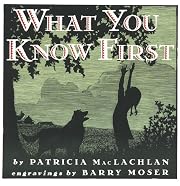
169. What You Know First by Patricia MacLachlan, engravings by Barry Moser
Beautiful writing, very sad story of a family that is having to move from the prairie to an unknown new home. The narrator, a young girl, is very sad and afraid. Her father tells her that "what you know first, stays with you."
The text reads like poetry; the engravings are gorgeous.
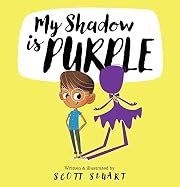
170. My Shadow is Purple by Scott Stuart
From the cover: "This story considers gender beyond binary in a vibrant spectrum of color." Really nice (and simple) depiction of individuality and inclusivity (and lots of great colors!).

171. In a Village by the Sea by Muon Thi Van, ill. April Chu
Beautiful depiction of life in a seaside village, where the employment of most of the people is fishing. The illustrations are really great, with attention to detail, and some of the best depictions of a dog I've ever seen. Very sweet story.
169. What You Know First by Patricia MacLachlan, engravings by Barry Moser
Beautiful writing, very sad story of a family that is having to move from the prairie to an unknown new home. The narrator, a young girl, is very sad and afraid. Her father tells her that "what you know first, stays with you."
The text reads like poetry; the engravings are gorgeous.
170. My Shadow is Purple by Scott Stuart
From the cover: "This story considers gender beyond binary in a vibrant spectrum of color." Really nice (and simple) depiction of individuality and inclusivity (and lots of great colors!).

171. In a Village by the Sea by Muon Thi Van, ill. April Chu
Beautiful depiction of life in a seaside village, where the employment of most of the people is fishing. The illustrations are really great, with attention to detail, and some of the best depictions of a dog I've ever seen. Very sweet story.
225klobrien2
Wordle 818 4/6 irate, voter, recut, exert
⬜🟦⬜🟦🟦
⬜⬜🟦🟦🟦
🟦🟦⬜⬜🟧
🟧🟧🟧🟧🟧
Etymology du jour: exert (v.)
1660s, "thrust forth, push out," from Latin exertus/exsertus, past participle of exerere/exserere "thrust out, put forth," from ex "out, from within" (see ex-) + serere "attach, join; arrange, line up" (from PIE root *ser- (2) "to line up"). Meaning "put into use" is 1680s. Related: Exerted; exerting.
also from 1660s
Entries linking to exert
ex-
word-forming element, in English meaning usually "out of, from," but also "upwards, completely, deprive of, without," and "former;" from Latin ex "out of, from within; from which time, since; according to; in regard to," from PIE *eghs "out" (source also of Gaulish ex-, Old Irish ess-, Old Church Slavonic izu, Russian iz). In some cases also from Greek cognate ex, ek. PIE *eghs had comparative form *eks-tero and superlative *eks-t(e)r-emo-. Often reduced to e- before -b-, -d-, -g-, consonantal -i-, -l-, -m-, -n-, -v- (as in elude, emerge, evaporate, etc.).
*ser- (2)
Proto-Indo-European root meaning "to line up."
It forms all or part of: assert; assertion; assort; consort; desert (v.) "to leave one's duty;" desertion; dissertation; ensorcell; exert; exsert; insert; seriatim; seriation; series; sermon; serried; sorcerer; sorcery; sort.
It is the hypothetical source of/evidence for its existence is provided by: Sanskrit sarat- "thread;" Greek eirein "to fasten together in rows;" Latin serere "to join, link, bind together," series "row, chain, series, sequence, succession;" Gothic sarwa (plural) "armor, arms;" Old Norse sörve "necklace of stringed pearls;" Old Irish sernaid "he joins together;" Welsh ystret "a row."
Squeaked out a solve today!
Connections
Puzzle #96
🟨🟦🟨🟨
🟩🟩🟪🟩
🟩🟦🟦🟦
🟩🟩🟩🟩
🟦🟦🟦🟦
🟨🟨🟨🟨
🟪🟪🟪🟪
⬜🟦⬜🟦🟦
⬜⬜🟦🟦🟦
🟦🟦⬜⬜🟧
🟧🟧🟧🟧🟧
Etymology du jour:
1660s, "thrust forth, push out," from Latin exertus/exsertus, past participle of exerere/exserere "thrust out, put forth," from ex "out, from within" (see ex-) + serere "attach, join; arrange, line up" (from PIE root *ser- (2) "to line up"). Meaning "put into use" is 1680s. Related: Exerted; exerting.
also from 1660s
Entries linking to exert
ex-
word-forming element, in English meaning usually "out of, from," but also "upwards, completely, deprive of, without," and "former;" from Latin ex "out of, from within; from which time, since; according to; in regard to," from PIE *eghs "out" (source also of Gaulish ex-, Old Irish ess-, Old Church Slavonic izu, Russian iz). In some cases also from Greek cognate ex, ek. PIE *eghs had comparative form *eks-tero and superlative *eks-t(e)r-emo-. Often reduced to e- before -b-, -d-, -g-, consonantal -i-, -l-, -m-, -n-, -v- (as in elude, emerge, evaporate, etc.).
*ser- (2)
Proto-Indo-European root meaning "to line up."
It forms all or part of: assert; assertion; assort; consort; desert (v.) "to leave one's duty;" desertion; dissertation; ensorcell; exert; exsert; insert; seriatim; seriation; series; sermon; serried; sorcerer; sorcery; sort.
It is the hypothetical source of/evidence for its existence is provided by: Sanskrit sarat- "thread;" Greek eirein "to fasten together in rows;" Latin serere "to join, link, bind together," series "row, chain, series, sequence, succession;" Gothic sarwa (plural) "armor, arms;" Old Norse sörve "necklace of stringed pearls;" Old Irish sernaid "he joins together;" Welsh ystret "a row."
Squeaked out a solve today!
Connections
Puzzle #96
🟨🟦🟨🟨
🟩🟩🟪🟩
🟩🟦🟦🟦
🟩🟩🟩🟩
🟦🟦🟦🟦
🟨🟨🟨🟨
🟪🟪🟪🟪
226klobrien2

172. Leonardo da Vinci and the Italian High Renaissance (Great Course) by George R. Bent
I really enjoyed this course, though it took me a long time to make my way through the in-depth coverage of Leonardo, his times, and his legacy. Instruction was great! George R. Bent is very knowledgeable and organized, and the course was beautifully populated with drawings, paintings, and historical portraits.
227klobrien2

173. There Goes the Bride (Agatha Raisin #20) by M. C. Beaton
Nice entry in the Agatha Raisin series. James is getting married, and Agatha will be there (as a friend). What could go wrong?
It was interesting to read this at about the same time as I was watching the Agatha Raisin TV series, and "There Goes the Bride" was the very last episode in the series. As often happens with screen adaptations, the stories were very different, but the framework was the same. I liked both versions.
228klobrien2
Friday Reading Roundup!
Because I rely on libraries so much for my reading (and do so much eBook reading), what I'm reading at any given time changes often, and changes quickly.
Karen's current reading (09/15/2023):
Actively reading (or soon will be!)
Waiting for Godot by Samuel Beckett -- p. 33 of 109
Crook Manifesto by Colson Whitehead -- p. 26 of 288
Network Effect (Murderbot Diaries #5) by Martha Wells -- p. 92 of 350
The Silkworm (Cormoran Strike #2) by Robert Galbraith -- p. 128 of 424
Unnatural Habits (Phryne Fisher #19) by Kerry Greenwood -- p. 49 of 255
The Golden Spiders (Nero Wolfe #22) by Rex Stout -- p. 32 of 148
People of Darkness by Tony Hillerman
I'm overbooked! I'll probably leave these on the list, but I can't truly say that I am actively reading them right now:
Sister of Grendel by Susan Thurston
The Remarkable Retirement of Edna Fisher by E. M. Anderson -- p. 11 of 310
The Private Life of Spies and The Exquisite Art of Getting Even by Alexander McCall Smith
I Have Some Questions For You by Rebecca Makkai
The Corinthian by Georgette Heyer, p. 4 of 202The
Portable Magic: A History of Books and Their Readers by Emma Smith -- p. 31 of 314
Ready Player One (audiobook) by Ernest Cline, read by Wil Wheaton
Thursday Next in the Well of Lost Plots by Jasper Fforde -- p. 10 of 373
I try to participate in the American Authors Challenge. In September, we are reading Women Authors of Crime. I am reading the first Anna Pigeon, Track of the Cat by Nevada Barr --p. 14 of 245.
I usually am reading/watching Great Courses. My next course will be Understanding the Periodic Table
Not-So-Time-Sensitive-But-Still-Want-to-Get-to-Them (so, these are readily available to me although I might not be reading them quite yet or may have had to return them to the library; most are my own books)
The Adventure of the Peculiar Protocols by Nicholas Meyer -- p. 3 of 238
The Disappearance of Sherlock Holmes by Larry Millett -- p. 0 of 340
Marple: Twelve New Stories by assorted authors
Fairy Tale by Stephen King
The Bob-iverse books! (reread)
Because I rely on libraries so much for my reading (and do so much eBook reading), what I'm reading at any given time changes often, and changes quickly.
Karen's current reading (09/15/2023):
Actively reading (or soon will be!)
Waiting for Godot by Samuel Beckett -- p. 33 of 109
Crook Manifesto by Colson Whitehead -- p. 26 of 288
Network Effect (Murderbot Diaries #5) by Martha Wells -- p. 92 of 350
The Silkworm (Cormoran Strike #2) by Robert Galbraith -- p. 128 of 424
Unnatural Habits (Phryne Fisher #19) by Kerry Greenwood -- p. 49 of 255
The Golden Spiders (Nero Wolfe #22) by Rex Stout -- p. 32 of 148
People of Darkness by Tony Hillerman
I'm overbooked! I'll probably leave these on the list, but I can't truly say that I am actively reading them right now:
Sister of Grendel by Susan Thurston
The Remarkable Retirement of Edna Fisher by E. M. Anderson -- p. 11 of 310
The Private Life of Spies and The Exquisite Art of Getting Even by Alexander McCall Smith
I Have Some Questions For You by Rebecca Makkai
The Corinthian by Georgette Heyer, p. 4 of 202The
Portable Magic: A History of Books and Their Readers by Emma Smith -- p. 31 of 314
Ready Player One (audiobook) by Ernest Cline, read by Wil Wheaton
Thursday Next in the Well of Lost Plots by Jasper Fforde -- p. 10 of 373
I try to participate in the American Authors Challenge. In September, we are reading Women Authors of Crime. I am reading the first Anna Pigeon, Track of the Cat by Nevada Barr --p. 14 of 245.
I usually am reading/watching Great Courses. My next course will be Understanding the Periodic Table
Not-So-Time-Sensitive-But-Still-Want-to-Get-to-Them (so, these are readily available to me although I might not be reading them quite yet or may have had to return them to the library; most are my own books)
The Adventure of the Peculiar Protocols by Nicholas Meyer -- p. 3 of 238
The Disappearance of Sherlock Holmes by Larry Millett -- p. 0 of 340
Marple: Twelve New Stories by assorted authors
Fairy Tale by Stephen King
The Bob-iverse books! (reread)
229richardderus
>225 klobrien2: This etymology makes perfect sense to me, but not immediately; had to think hard about the Latin root verb and its permutations before connecting the dots finally happened.
I really enjoy these tidbits, Karen O., so thank you again for it.
*smooch* for a happy weekend-ahead's reads.
I really enjoy these tidbits, Karen O., so thank you again for it.
*smooch* for a happy weekend-ahead's reads.
230klobrien2
>229 richardderus: I’m learning so much from the etymology checks! I’m glad you like them! With each one, I hope for little snippets that you’ll find amusing or interesting.
231klobrien2
Second word was a total guess, but it gave me ALL the letters! Hard to miss the solution at that point.
Wordle 819 3/6 irate, glean, angel
⬜⬜🟦⬜🟦
🟦🟦🟦🟦🟦
🟧🟧🟧🟧🟧
Etymology: angel (n.)
"one of a class of spiritual beings, attendants and messengers of God," a c. 1300 fusion of Old English engel (with hard -g-) and Old French angele. Both are from Late Latin angelus, from Greek angelos, literally "messenger, envoy, one that announces," in the New Testament "divine messenger," which is possibly related to angaros "mounted courier," both from an unknown Oriental word (Watkins compares Sanskrit ajira- "swift;" Klein suggests Semitic sources).
The Greek word was used in Scriptural translations for Hebrew mal'akh (yehowah) "messenger (of Jehovah)," from base l-'-k "to send." An Old English word for it was aerendgast, literally "errand-spirit."
Of persons, "one who is loving, gracious, or lovely," by 1590s. The medieval English gold coin (a new issue of the noble, first struck 1465 by Edward VI) was so called for the image of archangel Michael slaying the dragon, which was stamped on it. It was the coin given to patients who had been "touched" for the King's Evil. Angel food cake is from 1881; angel dust "phencyclidine" is from 1968.
Connections — I got the first two connections with one false start. Couldn’t break the final two, although I had the third connection right. Oh, well, lotsa fun anyway.
Puzzle #97
🟦🟦🟪🟦
🟨🟨🟨🟨
🟩🟩🟩🟩
🟦🟦🟪🟦
🟦🟦🟪🟪
🟪🟪🟪🟦
Wordle 819 3/6
⬜⬜🟦⬜🟦
🟦🟦🟦🟦🟦
🟧🟧🟧🟧🟧
Etymology: angel (n.)
"one of a class of spiritual beings, attendants and messengers of God," a c. 1300 fusion of Old English engel (with hard -g-) and Old French angele. Both are from Late Latin angelus, from Greek angelos, literally "messenger, envoy, one that announces," in the New Testament "divine messenger," which is possibly related to angaros "mounted courier," both from an unknown Oriental word (Watkins compares Sanskrit ajira- "swift;" Klein suggests Semitic sources).
The Greek word was used in Scriptural translations for Hebrew mal'akh (yehowah) "messenger (of Jehovah)," from base l-'-k "to send." An Old English word for it was aerendgast, literally "errand-spirit."
Of persons, "one who is loving, gracious, or lovely," by 1590s. The medieval English gold coin (a new issue of the noble, first struck 1465 by Edward VI) was so called for the image of archangel Michael slaying the dragon, which was stamped on it. It was the coin given to patients who had been "touched" for the King's Evil. Angel food cake is from 1881; angel dust "phencyclidine" is from 1968.
Connections — I got the first two connections with one false start. Couldn’t break the final two, although I had the third connection right. Oh, well, lotsa fun anyway.
Puzzle #97
🟦🟦🟪🟦
🟨🟨🟨🟨
🟩🟩🟩🟩
🟦🟦🟪🟦
🟦🟦🟪🟪
🟪🟪🟪🟦
232klobrien2
Wordle 820 4/6 irate, windy, climb, music
🟦⬜⬜⬜⬜
⬜🟦⬜⬜⬜
🟦⬜🟦🟦⬜
🟧🟧🟧🟧🟧
Etymonline.com: music (n.)
mid-13c., musike, "a pleasing succession of sounds or combinations of sounds; the science of combining sounds in rhythmic, melodic, and (later) harmonic order," from Old French musique (12c.) and directly from Latin musica "the art of music," also including poetry (also source of Spanish musica, Italian musica, Old High German mosica, German Musik, Dutch muziek, Danish musik), from Greek mousikē (technē) "(art) of the Muses," from fem. of mousikos "pertaining to the Muses; musical; educated," from Mousa "Muse" (see muse (n.)).
The modern spelling is from 1630s. In classical Greece, any art in which the Muses presided, but especially music and lyric poetry.
Music is the sound of the universal laws promulgated. Thoreau
The use of letters to denote music pitch probably is at least as old as ancient Greece, as their numbering system was ill-suited to the job. Natural scales begin at C (not A) because in ancient times the minor mode was more often used than the major one, and the natural minor scale begins at A.
Meaning "the written or printed score of a composition" is from 1650s.
Music box is from 1773, originally "barrel organ," by 1845 in reference to the wind-up mechanical device; music hall is by 1842 as "interior space used for musical performances," especially "public hall licensed for musical entertainment" (1857). To face the music "accept the consequences" is from 1850; the exact image is uncertain, one theory ties it to stage performers, another to cavalry horses having to be taught to stay calm while the regimental band plays. To make (beautiful) music with someone "have sexual intercourse" is from 1967.
Phew! Pulled out a Connections solve at my last chance. Ended up with the toughest Connections, first. Very happy with that!
Connections
Puzzle #98
🟩🟩🟩🟦
🟪🟪🟪🟪
🟩🟩🟦🟩
🟦🟦🟩🟦
🟦🟦🟦🟦
🟨🟨🟨🟨
🟩🟩🟩🟩
🟦⬜⬜⬜⬜
⬜🟦⬜⬜⬜
🟦⬜🟦🟦⬜
🟧🟧🟧🟧🟧
Etymonline.com:
mid-13c., musike, "a pleasing succession of sounds or combinations of sounds; the science of combining sounds in rhythmic, melodic, and (later) harmonic order," from Old French musique (12c.) and directly from Latin musica "the art of music," also including poetry (also source of Spanish musica, Italian musica, Old High German mosica, German Musik, Dutch muziek, Danish musik), from Greek mousikē (technē) "(art) of the Muses," from fem. of mousikos "pertaining to the Muses; musical; educated," from Mousa "Muse" (see muse (n.)).
The modern spelling is from 1630s. In classical Greece, any art in which the Muses presided, but especially music and lyric poetry.
Music is the sound of the universal laws promulgated. Thoreau
The use of letters to denote music pitch probably is at least as old as ancient Greece, as their numbering system was ill-suited to the job. Natural scales begin at C (not A) because in ancient times the minor mode was more often used than the major one, and the natural minor scale begins at A.
Meaning "the written or printed score of a composition" is from 1650s.
Music box is from 1773, originally "barrel organ," by 1845 in reference to the wind-up mechanical device; music hall is by 1842 as "interior space used for musical performances," especially "public hall licensed for musical entertainment" (1857). To face the music "accept the consequences" is from 1850; the exact image is uncertain, one theory ties it to stage performers, another to cavalry horses having to be taught to stay calm while the regimental band plays. To make (beautiful) music with someone "have sexual intercourse" is from 1967.
Phew! Pulled out a Connections solve at my last chance. Ended up with the toughest Connections, first. Very happy with that!
Connections
Puzzle #98
🟩🟩🟩🟦
🟪🟪🟪🟪
🟩🟩🟦🟩
🟦🟦🟩🟦
🟦🟦🟦🟦
🟨🟨🟨🟨
🟩🟩🟩🟩
234vancouverdeb
It's very often a Phew, or worse for me on Connections, Karen, but yesterday I managed it in four. Happy Week ahead!
235klobrien2
Doing a little flailing this morning…
Wordle 821 5/6 irate, gravy, brawn, prank, frank
⬜🟧🟧⬜⬜
⬜🟧🟧⬜⬜
⬜🟧🟧⬜🟦
⬜🟧🟧🟧🟧
🟧🟧🟧🟧🟧
Etymonline.com: (just showing the adjective form here) frank (adj.)
c. 1300, "free, liberal, generous;" 1540s, "outspoken," from Old French franc "free (not servile); without hindrance, exempt from; sincere, genuine, open, gracious, generous; worthy, noble, illustrious" (12c.), from Medieval Latin francus "free, at liberty, exempt from service," as a noun, "a freeman, a Frank" (see Frank).
Frank, literally, free; the freedom may be in regard to one's own opinions, which is the same as openness, or in regard to things belonging to others, where the freedom may go so far as to be unpleasant, or it may disregard conventional ideas as to reticence. Hence, while openness is consistent with timidity, frankness implies some degree of boldness. Century Dictionary
A generalization of the tribal name; the connection is that Franks, as the conquering class, alone had the status of freemen in a world that knew only free, captive, or slave. For sense connection of "being one of the nation" and "free," compare Latin liber "free," from the same root as German Leute "nation, people" (see liberal (adj.)) and Slavic "free" words (Old Church Slavonic svobodi, Polish swobodny, Serbo-Croatian slobodan) which are cognates of the first element in English sibling "brother, sister" (in Old English used more generally: "relative, kinsman"). For the later sense development, compare ingenuity.
also from c. 1300
Connections — solved without a hitch today…
Puzzle #99
🟦🟦🟦🟦
🟩🟩🟩🟩
🟪🟪🟪🟪
🟨🟨🟨🟨
Wordle 821 5/6
⬜🟧🟧⬜⬜
⬜🟧🟧⬜⬜
⬜🟧🟧⬜🟦
⬜🟧🟧🟧🟧
🟧🟧🟧🟧🟧
Etymonline.com:
c. 1300, "free, liberal, generous;" 1540s, "outspoken," from Old French franc "free (not servile); without hindrance, exempt from; sincere, genuine, open, gracious, generous; worthy, noble, illustrious" (12c.), from Medieval Latin francus "free, at liberty, exempt from service," as a noun, "a freeman, a Frank" (see Frank).
Frank, literally, free; the freedom may be in regard to one's own opinions, which is the same as openness, or in regard to things belonging to others, where the freedom may go so far as to be unpleasant, or it may disregard conventional ideas as to reticence. Hence, while openness is consistent with timidity, frankness implies some degree of boldness. Century Dictionary
A generalization of the tribal name; the connection is that Franks, as the conquering class, alone had the status of freemen in a world that knew only free, captive, or slave. For sense connection of "being one of the nation" and "free," compare Latin liber "free," from the same root as German Leute "nation, people" (see liberal (adj.)) and Slavic "free" words (Old Church Slavonic svobodi, Polish swobodny, Serbo-Croatian slobodan) which are cognates of the first element in English sibling "brother, sister" (in Old English used more generally: "relative, kinsman"). For the later sense development, compare ingenuity.
also from c. 1300
Connections — solved without a hitch today…
Puzzle #99
🟦🟦🟦🟦
🟩🟩🟩🟩
🟪🟪🟪🟪
🟨🟨🟨🟨
236richardderus
>235 klobrien2: Had never thought to wonder about the deeper roots of this one. I've been told I'm far too much of it many times, so permaybehaps that's why I never thought deeply....
*smooch*
*smooch*
237klobrien2
>233 richardderus: >236 richardderus: Hi, Richard! Have a great week!
238klobrien2
Wordle 822 5/6 irate, globe, clove, clone, close
⬜⬜⬜⬜🟧
⬜🟧🟧⬜🟧
🟧🟧🟧⬜🟧
🟧🟧🟧⬜🟧
🟧🟧🟧🟧🟧
Etyonline.com: One of those English words that can serve as more than one part of speech. close (v.)
(klōz), c. 1200, "to shut, cover in," from Old French clos- (past participle stem of clore "to shut, to cut off from"), 12c., from Latin clausus, past participle of claudere "to shut, close; to block up, make inaccessible; put an end to; shut in, enclose, confine" (always -clusus, -cludere in compounds), from PIE root *klau- "hook," also "peg, nail, pin," all things used as locks or bolts in primitive structures.
Also partly from Old English beclysan "close in, shut up." Intransitive sense "become shut" is from late 14c. Meaning "draw near to" is from 1520s. Intransitive meaning "draw together, come together" is from 1550s, hence the idea in military verbal phrase close ranks (mid-17c.), later with figurative extensions. Meaning "bring to an end, finish" is from c. 1400; intransitive sense "come to an end" is from 1826. Of stock prices, from 1860. Meaning "bring together the parts of" (a book, etc.) is from 1560s. Related: Closed; closing.
also from c. 1200
close (adj.)
(klōs), late 14c., "strictly confined," also "secret," in part a past-participle adjective from close (v.), in part from Old French clos "confined; concealed, secret; taciturn" (12c.), from Latin clausus "close, reserved," past-participle adjective from claudere "stop up, fasten, shut" (see close (v.)). The main sense shifted to "near" (late 15c.) from the verbal sense of "close the gap or opening between two things." Related: Closely.
In English, the meaning "narrowly confined, pent up" is from late 14c. The meaning "near" in a figurative sense, of persons, is from 1560s. The sense of "full of attention to detail" is from 1660s. The sense of "stingy, penurious" is from 1650s. Of races or other contests, by 1855.
Close call "narrow escape" is from 1866, in a quotation in an anecdote from 1863, possibly a term from the American Civil War; close shave in the figurative sense is 1820, American English. Close range (n.) "a short distance" is from 1814. Close-minded is attested from 1818. Close-fisted "penurious, miserly" is from c. 1600, on the notion of "keeping the hands tightly shut."
also from late 14c.
close (n.)
(klōz), late 14c., "act of closing, conclusion, termination," from close (v.). Also in early use "enclosure, enclosed space" (late 13c.), from Old French clos, noun use of the past participle. Specifically in music, "conclusion of a strain or passage," 1590s.
Connections —
Puzzle #100
🟩🟩🟩🟩
🟦🟦🟦🟦
🟪🟪🟪🟪
🟨🟨🟨🟨
⬜⬜⬜⬜🟧
⬜🟧🟧⬜🟧
🟧🟧🟧⬜🟧
🟧🟧🟧⬜🟧
🟧🟧🟧🟧🟧
Etyonline.com:
(klōz), c. 1200, "to shut, cover in," from Old French clos- (past participle stem of clore "to shut, to cut off from"), 12c., from Latin clausus, past participle of claudere "to shut, close; to block up, make inaccessible; put an end to; shut in, enclose, confine" (always -clusus, -cludere in compounds), from PIE root *klau- "hook," also "peg, nail, pin," all things used as locks or bolts in primitive structures.
Also partly from Old English beclysan "close in, shut up." Intransitive sense "become shut" is from late 14c. Meaning "draw near to" is from 1520s. Intransitive meaning "draw together, come together" is from 1550s, hence the idea in military verbal phrase close ranks (mid-17c.), later with figurative extensions. Meaning "bring to an end, finish" is from c. 1400; intransitive sense "come to an end" is from 1826. Of stock prices, from 1860. Meaning "bring together the parts of" (a book, etc.) is from 1560s. Related: Closed; closing.
also from c. 1200
close (adj.)
(klōs), late 14c., "strictly confined," also "secret," in part a past-participle adjective from close (v.), in part from Old French clos "confined; concealed, secret; taciturn" (12c.), from Latin clausus "close, reserved," past-participle adjective from claudere "stop up, fasten, shut" (see close (v.)). The main sense shifted to "near" (late 15c.) from the verbal sense of "close the gap or opening between two things." Related: Closely.
In English, the meaning "narrowly confined, pent up" is from late 14c. The meaning "near" in a figurative sense, of persons, is from 1560s. The sense of "full of attention to detail" is from 1660s. The sense of "stingy, penurious" is from 1650s. Of races or other contests, by 1855.
Close call "narrow escape" is from 1866, in a quotation in an anecdote from 1863, possibly a term from the American Civil War; close shave in the figurative sense is 1820, American English. Close range (n.) "a short distance" is from 1814. Close-minded is attested from 1818. Close-fisted "penurious, miserly" is from c. 1600, on the notion of "keeping the hands tightly shut."
also from late 14c.
close (n.)
(klōz), late 14c., "act of closing, conclusion, termination," from close (v.). Also in early use "enclosure, enclosed space" (late 13c.), from Old French clos, noun use of the past participle. Specifically in music, "conclusion of a strain or passage," 1590s.
Connections —
Puzzle #100
🟩🟩🟩🟩
🟦🟦🟦🟦
🟪🟪🟪🟪
🟨🟨🟨🟨
239klobrien2

174. Network Effect (Murderbot Diaries #5) by Martha Wells
So loving this reread of the Murderbot Diaries! There's so much going on in this book, that I'm catching more, and keeping up better.
I came across a definition of "network effect" in other reading: "A network grows in value as it adds nodes." And that is certainly is the case for Murderbot's network.
Here's one of my favorite passages from the book (and one of the funniest!):
(If I got angry at myself for being angry I would be angry constantly and I wouldn't have time to think about anything else.)
(Wait, I think I am angry constantly. That might explain a lot.)
240alcottacre
Well, I managed to get 70+ posts behind again, Karen. *sigh*
>239 klobrien2: I am also a fan of Murderbot and, having caught up with the series again, I am very much looking forward to System Collapse later on this year!
>239 klobrien2: I am also a fan of Murderbot and, having caught up with the series again, I am very much looking forward to System Collapse later on this year!
241vancouverdeb
You are doing very well with Connections, Karen. So often I bomb out.
242klobrien2
Lots of guessy-guessy today. I try to play the “hard mode,” where any revealed letters have to be played in the guess, which makes it really tough when there’s only one letter missing and it’s a solution like today’s. That’s my excuse and I’m sticking with it! 🥴
Wordle 823 5/6 irate, scare, share, snare, spare
⬜🟦🟧⬜🟧
🟧⬜🟧🟧🟧
🟧⬜🟧🟧🟧
🟧⬜🟧🟧🟧
🟧🟧🟧🟧🟧
Etymonline.com: snare (n.1)
"noose for catching animals," late Old English snearu, and also from a Scandinavian source such as Old Norse snara "noose, snare," related to soenri "twisted rope," from Proto-Germanic *snarkho (source also of Middle Dutch snare, Dutch snaar, Old High German snare, German Schnur "noose, cord," Old English snear "a string, cord"). Figuratively from c. 1300, "anything by which one is entangled or entrapped."
snare (n.2)
"string stretched across the lower head of a drum," so as to produce a rattling vibration, 1680s, probably OED from Dutch snaar "string," from same source as snare (n.1). From 1938 as a shortening of snare-drum (which is attested by 1873).
also from 1680s
snare (v.)
late 14c., snaren, "ensnare, catch or take (small animals, birds, etc.)," also figurative, from snare (n.1). Related: Snared; snaring.
Connections —felt pretty easy today
Puzzle #101
🟨🟨🟨🟨
🟩🟩🟩🟩
🟦🟦🟦🟦
🟪🟪🟪🟪
Wordle 823 5/6
⬜🟦🟧⬜🟧
🟧⬜🟧🟧🟧
🟧⬜🟧🟧🟧
🟧⬜🟧🟧🟧
🟧🟧🟧🟧🟧
Etymonline.com:
"noose for catching animals," late Old English snearu, and also from a Scandinavian source such as Old Norse snara "noose, snare," related to soenri "twisted rope," from Proto-Germanic *snarkho (source also of Middle Dutch snare, Dutch snaar, Old High German snare, German Schnur "noose, cord," Old English snear "a string, cord"). Figuratively from c. 1300, "anything by which one is entangled or entrapped."
snare (n.2)
"string stretched across the lower head of a drum," so as to produce a rattling vibration, 1680s, probably OED from Dutch snaar "string," from same source as snare (n.1). From 1938 as a shortening of snare-drum (which is attested by 1873).
also from 1680s
snare (v.)
late 14c., snaren, "ensnare, catch or take (small animals, birds, etc.)," also figurative, from snare (n.1). Related: Snared; snaring.
Connections —felt pretty easy today
Puzzle #101
🟨🟨🟨🟨
🟩🟩🟩🟩
🟦🟦🟦🟦
🟪🟪🟪🟪
243The_Hibernator
Huh. I just realized that if you didn't have the second letter how hard today's word would be. I don't like it when they do that.
244klobrien2
>243 The_Hibernator: Hi, Rachel! That one-missing-letter situation happens sometimes. I try to be philosophical about it! 9>)
Thanks for stopping by!
Thanks for stopping by!
245klobrien2

175. Waiting for Godot: A Tragicomedy in Two Acts by Samuel Beckett
Excellent review by the London Times: "One of the most noble and moving plays of our generation, a threnody of hope deceived but never extinguished; a play suffused with tenderness for the whole human perplexity; with phrases that come like a sharp stab of beauty and pain."
I'd wanted to read this play for ages because I was always seeing and hearing it described as a classic, important to know. I'm glad I did read it, although I was often confused and a little upset at times at what seemed like the folly of life. That's why the Times's take on the play clarified things for me. Life is pretty much a very foolish thing, but we have to keep on, have to keep "waiting for Godot."
"Let us not then speak ill of our generation, it is not any unhappier than its predecessors. (Pause.) Let us not speak of it at all. (Pause. Judiciously.) It is true the population has increased."
246richardderus
>245 klobrien2: One play I am actually glad I read. So much weary, worn-out getting on with it vindicated by being made into art.
247klobrien2
Wordle 824 4/6 irate, theme, stove, stone
⬜⬜⬜🟦🟧
🟦⬜⬜⬜🟧
🟧🟧🟧⬜🟧
🟧🟧🟧🟧🟧
Etymonline: stone (n.)
"discrete piece of rock," especially not a large one, Old English stan, which was used of common rocks, precious gems, concretions in the body, memorial stones, from Proto-Germanic *stainaz (source also of Old Norse steinn, Danish steen, Old Saxon sten, Old Frisian sten, Dutch steen, Old High German stein, German Stein, Gothic stains).
This is reconstructed to be from PIE *stoi-no-, suffixed form of root *stai- "stone," also "to thicken, stiffen" (source also of Sanskrit styayate "curdles, becomes hard;" Avestan stay- "heap;" Greek stear "fat, tallow," stia, stion "pebble;" Old Church Slavonic stena, Russian stiena "wall").
From late 12c. as "substance of which stones consist, rock, stone as a medium." The sense of "testicle" was in late Old English. The British measure of weight (usually equal to 14 pounds) is from late 14c., originally a specific stone.
Stone-fruit, "drupe, fruit with a hard stone or nut at the center," is from 1520s. Stone's throw for "a short distance" is attested from 1580s; stone's cast in the same sense is from late 13c., also "a short time." Stone age, "period of human cultural development marked by tools or weapons made of stone," is from 1864; adjectival extended sense of "outmoded, unsophisticated" is by 1927.
To kill two birds with one stone "accomplish two purposes with one act" is attested by 1650s. To leave no stone unturned "use every possible expedient" is from 1540s. To have a heart of stone figuratively is by late 14c.
stone (v.)
c. 1200, "throw stones at, pelt with stones," from stone (n.). From c. 1600 as "to fit with stones;" 1630s as "to free from stones" (of fruit, etc.). Related: Stoned; stoning.
also from c. 1200
stone (adj.)
"made of stone," Old English; see stone (n.). Old English also had stænan, Middle English stonen, which seems to have faded in 15c.
As an intensifying adjective it is recorded from 1935, first in African-American vernacular, probably from earlier use in phrases such as stone blind (late 14c., literally "blind as a stone"), stone-dead ("lifeless," c. 1300, ston-ded), stone deaf, stone-cold (1590s), etc. Stone cold sober dates from 1937.
Connections
Puzzle #102
🟨🟨🟨🟨
🟩🟩🟩🟩
🟦🟪🟦🟦
🟦🟦🟪🟦
🟦🟦🟦🟦
🟪🟪🟪🟪
⬜⬜⬜🟦🟧
🟦⬜⬜⬜🟧
🟧🟧🟧⬜🟧
🟧🟧🟧🟧🟧
Etymonline:
"discrete piece of rock," especially not a large one, Old English stan, which was used of common rocks, precious gems, concretions in the body, memorial stones, from Proto-Germanic *stainaz (source also of Old Norse steinn, Danish steen, Old Saxon sten, Old Frisian sten, Dutch steen, Old High German stein, German Stein, Gothic stains).
This is reconstructed to be from PIE *stoi-no-, suffixed form of root *stai- "stone," also "to thicken, stiffen" (source also of Sanskrit styayate "curdles, becomes hard;" Avestan stay- "heap;" Greek stear "fat, tallow," stia, stion "pebble;" Old Church Slavonic stena, Russian stiena "wall").
From late 12c. as "substance of which stones consist, rock, stone as a medium." The sense of "testicle" was in late Old English. The British measure of weight (usually equal to 14 pounds) is from late 14c., originally a specific stone.
Stone-fruit, "drupe, fruit with a hard stone or nut at the center," is from 1520s. Stone's throw for "a short distance" is attested from 1580s; stone's cast in the same sense is from late 13c., also "a short time." Stone age, "period of human cultural development marked by tools or weapons made of stone," is from 1864; adjectival extended sense of "outmoded, unsophisticated" is by 1927.
To kill two birds with one stone "accomplish two purposes with one act" is attested by 1650s. To leave no stone unturned "use every possible expedient" is from 1540s. To have a heart of stone figuratively is by late 14c.
stone (v.)
c. 1200, "throw stones at, pelt with stones," from stone (n.). From c. 1600 as "to fit with stones;" 1630s as "to free from stones" (of fruit, etc.). Related: Stoned; stoning.
also from c. 1200
stone (adj.)
"made of stone," Old English; see stone (n.). Old English also had stænan, Middle English stonen, which seems to have faded in 15c.
As an intensifying adjective it is recorded from 1935, first in African-American vernacular, probably from earlier use in phrases such as stone blind (late 14c., literally "blind as a stone"), stone-dead ("lifeless," c. 1300, ston-ded), stone deaf, stone-cold (1590s), etc. Stone cold sober dates from 1937.
Connections
Puzzle #102
🟨🟨🟨🟨
🟩🟩🟩🟩
🟦🟪🟦🟦
🟦🟦🟪🟦
🟦🟦🟦🟦
🟪🟪🟪🟪
248klobrien2

176. It's Time to Sleep, My Love by Eric Metaxas, ill. Nancy Tillman
Beautiful, beautiful book, in both words and illustrations. Surprisingly sophisticated, for a board book. The child to whom this book is being read is being urged, guided to sleep. So sweet!

177. Bad Kitty by Nick Bruel
I'd read this book years ago, but it is definitely a good one! Bad Kitty is really only bad when he's hungry. The book is great at teaching the ABCs, and the author/illustrator comes up with outrageous phrases and illustrations to work his way through the alphabet 3? 4? times. Lots of fun!
249jessibud2
Coincidentally, the first book you mention in >248 klobrien2: is one of the 2 I pulled off my shelf to bring to my cousin for her little grand daughter when I head back to Montreal next week. It is a beautiful book!
250alcottacre
>245 klobrien2: I have never read that play. I do not read plays that often, although I actually have one home from the library now to read, and I read one of Shakespeare's earlier this year. I will have to see if my local library has a copy of Beckett. Thanks for the recommendation, Karen!
251klobrien2
>249 jessibud2: It's Time to Sleep, My Love is just gorgeous! I know your cousin and her granddaughter will love the book! What was the other one that you are bringing her?
>250 alcottacre: Hi, Stasia! I don't usually read plays, but I'm glad I finally got to Waiting for Godot. I bet your library has a copy--it's a classic, and very widely read. LT has over 12,000 members who have it in their catalogs. If you do find a copy and decide to give it ago, it requires a little patience and tolerance (that's what I found, anyway).
>250 alcottacre: Hi, Stasia! I don't usually read plays, but I'm glad I finally got to Waiting for Godot. I bet your library has a copy--it's a classic, and very widely read. LT has over 12,000 members who have it in their catalogs. If you do find a copy and decide to give it ago, it requires a little patience and tolerance (that's what I found, anyway).
252klobrien2

178. The Horror at Red Hook by H. P. Lovecraft

I read this short story from the impressive The New Annotated H. P. Lovecraft: Beyond Arkham, ed. Leslie S. Klinger.
I tracked down this short story to prepare me for The Ballad of Black Tom by Victor LaValle. LT user SkuliSael says, "The one good thing I can say about this is that Victor LaValle decided to make something of it. Run don't walk over to The Ballad of Black Tom and enjoy a complex and moving horror story instead."
"The Horror at Red Hook" is bleak and racist, almost comical in its racism (although how can that be funny?) Thankfully, the story is pretty short. The editor of the compendium calls it, "HPL's most racist story," and says that "Lovecraft's antipathy to New York and its inhabitants is well documented." So that's the background for the story. The story is set in Red Hook, Brooklyn, N.Y. The protagonist is a police detective, who investigates some weird (!) goings-on.
253jessibud2
>251 klobrien2: - It's called The World That We Want and it written in the style of The House that Jack Built, a kind of cumulative narrative. The illustrations are stunning. Her granddaughter is still too young for it (almost 2), I think, and neither are board books, but she can keep them at her own house for when they visit.
254richardderus
>252 klobrien2: I agree with SkuliSael, it's a repugnant piece...many of his are.
255klobrien2
>253 jessibud2: I looked for The World That We Want—is it the one by Kim Michelle Toft? Sounds great!
>254 richardderus: But I’m still glad I read the Lovecraft story for the context. And I’m glad I’m not going to read any more. Ugh.
Thank you both for stopping by!
>254 richardderus: But I’m still glad I read the Lovecraft story for the context. And I’m glad I’m not going to read any more. Ugh.
Thank you both for stopping by!
256klobrien2
Wordle 825 3/6 I dipped into the “2309” list for my third word—I had the second letter and I knew what the vowel had to be—irate, frown, brush
⬜🟧⬜⬜⬜
⬜🟧⬜⬜⬜
🟧🟧🟧🟧🟧
Etymonline.com: Wow—lots of variations for this word! brush (n.1)
"instrument consisting of flexible material (bristles, hair, etc.) attached to a handle or stock," late 14c., "dust-sweeper, a brush for sweeping," from Old French broisse, broce "a brush" (13c., Modern French brosse), perhaps from Vulgar Latin *bruscia "a bunch of new shoots" (used to sweep away dust), perhaps from Proto-Germanic *bruskaz "underbrush." Compare brush (n.2). As an instrument for applying paint, late 15c.; as an instrument for playing drums, 1927. Meaning "an application of a brush" is from 1822.
also from late 14c.
brush (n.2)
"shrubbery, small trees and shrubs of a wood; branches of trees lopped off," mid-14c., from Anglo-French bruce "brushwood," Old North French broche, Old French broce "bush, thicket, undergrowth" (12c., Modern French brosse), from Gallo-Roman *brocia, perhaps from *brucus "heather," or possibly from the same source as brush (n.1).
also from mid-14c.
brush (v.1)
late 15c., "clean or rub (clothing) with a brush," also (mid-15c.) "beat with a brush," from brush (n.1). The meaning "move or skim over with a slight contact" is from 1640s. Related: Brushed; brushing. To brush off someone or something, "rebuff, dismiss," is from 1941. To brush up is from c. 1600 as "clean by brushing;" the figurative sense of "revive or refresh one's knowledge" of anything is from 1788.
also from late 15c.
brush (v.2)
"move briskly" especially past or against something or someone, 1670s, from earlier sense "to hasten, rush" (c. 1400); probably from brush (n.2) on the notion of a horse, etc., passing through dense undergrowth (compare Old French brosser "to dash (through woods or thickets)," and Middle English noun brush "charge, onslaught, encounter," mid-14c.). But brush (n.1) probably has contributed something to it, and OED suggests the English word could be all or partly onomatopoeic. Related: Brushed; brushing.
also from 1670s
brush (n.3)
"a skirmish, a light encounter," c. 1400, probably from brush (v.2).
Connections — couldn’t get the last two today.
Puzzle #103
🟦🟨🟨🟨
🟩🟩🟩🟩
🟦🟨🟨🟨
🟨🟨🟨🟨
🟪🟦🟦🟪
🟪🟪🟦🟪
⬜🟧⬜⬜⬜
⬜🟧⬜⬜⬜
🟧🟧🟧🟧🟧
Etymonline.com:
"instrument consisting of flexible material (bristles, hair, etc.) attached to a handle or stock," late 14c., "dust-sweeper, a brush for sweeping," from Old French broisse, broce "a brush" (13c., Modern French brosse), perhaps from Vulgar Latin *bruscia "a bunch of new shoots" (used to sweep away dust), perhaps from Proto-Germanic *bruskaz "underbrush." Compare brush (n.2). As an instrument for applying paint, late 15c.; as an instrument for playing drums, 1927. Meaning "an application of a brush" is from 1822.
also from late 14c.
brush (n.2)
"shrubbery, small trees and shrubs of a wood; branches of trees lopped off," mid-14c., from Anglo-French bruce "brushwood," Old North French broche, Old French broce "bush, thicket, undergrowth" (12c., Modern French brosse), from Gallo-Roman *brocia, perhaps from *brucus "heather," or possibly from the same source as brush (n.1).
also from mid-14c.
brush (v.1)
late 15c., "clean or rub (clothing) with a brush," also (mid-15c.) "beat with a brush," from brush (n.1). The meaning "move or skim over with a slight contact" is from 1640s. Related: Brushed; brushing. To brush off someone or something, "rebuff, dismiss," is from 1941. To brush up is from c. 1600 as "clean by brushing;" the figurative sense of "revive or refresh one's knowledge" of anything is from 1788.
also from late 15c.
brush (v.2)
"move briskly" especially past or against something or someone, 1670s, from earlier sense "to hasten, rush" (c. 1400); probably from brush (n.2) on the notion of a horse, etc., passing through dense undergrowth (compare Old French brosser "to dash (through woods or thickets)," and Middle English noun brush "charge, onslaught, encounter," mid-14c.). But brush (n.1) probably has contributed something to it, and OED suggests the English word could be all or partly onomatopoeic. Related: Brushed; brushing.
also from 1670s
brush (n.3)
"a skirmish, a light encounter," c. 1400, probably from brush (v.2).
Connections — couldn’t get the last two today.
Puzzle #103
🟦🟨🟨🟨
🟩🟩🟩🟩
🟦🟨🟨🟨
🟨🟨🟨🟨
🟪🟦🟦🟪
🟪🟪🟦🟪
257richardderus
>256 klobrien2: Another absolutely riveting etymological rabbit-hole! I've spent thirty minutes with some feminist scholars who see misogyny in the word's negative and warlike senses before realizing life's too short and bailing out.
Hope you can avoid that time-sink today, Karen O.! *smooch*
Hope you can avoid that time-sink today, Karen O.! *smooch*
258alcottacre
>251 klobrien2: My local library does have a copy, now it is just a matter of my being able to get to it!
Have a fantastic Friday, Karen!
Have a fantastic Friday, Karen!
259klobrien2
Friday Reading Roundup!
Because I rely on libraries so much for my reading (and do so much eBook reading), what I'm reading at any given time changes often, and changes quickly.
Karen's current reading (09/22/2023):
Actively reading (or soon will be!)
Fugitive Telemetry (Murderbot #6) by Martha Wells -- p. 2 of 168
The Last Devil to Die (Thursday Murder Club #4) by Richard Osman -- p. 17 of 322
The Wind in the Willows by Kenneth Grahame, ill. Grahame Baker Smith -- p. 6 of 191
The Silkworm (Cormoran Strike #2) by Robert Galbraith -- p. 128 of 424
Unnatural Habits (Phryne Fisher #19) by Kerry Greenwood -- p. 49 of 255
The Golden Spiders (Nero Wolfe #22) by Rex Stout -- p. 50 of 148
People of Darkness by Tony Hillerman -- p. 24 of 305
Busy Body (Agatha Raisin #21) by M. C. Beaton -- p. 23 of 278
Funny Things: A Comic Strip Biography of Charles M Schulz by Luca Debus and Francesco Matteuzi -- p. 50 of 440
I'm overbooked! I'll probably leave these on the list, but I can't truly say that I am actively reading them right now:
Sister of Grendel by Susan Thurston -- p. 4 of 164
The Remarkable Retirement of Edna Fisher by E. M. Anderson -- p. 11 of 310
The Private Life of Spies and The Exquisite Art of Getting Even by Alexander McCall Smith
I Have Some Questions For You by Rebecca Makkai
The Corinthian by Georgette Heyer, p. 4 of 202
Portable Magic: A History of Books and Their Readers by Emma Smith -- p. 31 of 314
Ready Player One (audiobook) by Ernest Cline, read by Wil Wheaton
Thursday Next in the Well of Lost Plots by Jasper Fforde -- p. 10 of 373
Crook Manifesto by Colson Whitehead -- p. 26 of 288
I try to participate in the American Authors Challenge. In September, we are reading Women Authors of Crime. I am reading the first Anna Pigeon, Track of the Cat by Nevada Barr -- p. 144 of 245.
I usually am reading/watching Great Courses. My current course is Understanding the Periodic Table by Ron B. Davis Jr, 24 half-hour lectures. I've finished 1 of 24.
Not-So-Time-Sensitive-But-Still-Want-to-Get-to-Them (so, these are readily available to me although I might not be reading them quite yet or may have had to return them to the library; most are my own books)
The Adventure of the Peculiar Protocols by Nicholas Meyer -- p. 3 of 238
The Disappearance of Sherlock Holmes by Larry Millett -- p. 0 of 340
Marple: Twelve New Stories by assorted authors
Fairy Tale by Stephen King
The Bob-iverse books! (reread)
Because I rely on libraries so much for my reading (and do so much eBook reading), what I'm reading at any given time changes often, and changes quickly.
Karen's current reading (09/22/2023):
Actively reading (or soon will be!)
Fugitive Telemetry (Murderbot #6) by Martha Wells -- p. 2 of 168
The Last Devil to Die (Thursday Murder Club #4) by Richard Osman -- p. 17 of 322
The Wind in the Willows by Kenneth Grahame, ill. Grahame Baker Smith -- p. 6 of 191
The Silkworm (Cormoran Strike #2) by Robert Galbraith -- p. 128 of 424
Unnatural Habits (Phryne Fisher #19) by Kerry Greenwood -- p. 49 of 255
The Golden Spiders (Nero Wolfe #22) by Rex Stout -- p. 50 of 148
People of Darkness by Tony Hillerman -- p. 24 of 305
Busy Body (Agatha Raisin #21) by M. C. Beaton -- p. 23 of 278
Funny Things: A Comic Strip Biography of Charles M Schulz by Luca Debus and Francesco Matteuzi -- p. 50 of 440
I'm overbooked! I'll probably leave these on the list, but I can't truly say that I am actively reading them right now:
Sister of Grendel by Susan Thurston -- p. 4 of 164
The Remarkable Retirement of Edna Fisher by E. M. Anderson -- p. 11 of 310
The Private Life of Spies and The Exquisite Art of Getting Even by Alexander McCall Smith
I Have Some Questions For You by Rebecca Makkai
The Corinthian by Georgette Heyer, p. 4 of 202
Portable Magic: A History of Books and Their Readers by Emma Smith -- p. 31 of 314
Ready Player One (audiobook) by Ernest Cline, read by Wil Wheaton
Thursday Next in the Well of Lost Plots by Jasper Fforde -- p. 10 of 373
Crook Manifesto by Colson Whitehead -- p. 26 of 288
I try to participate in the American Authors Challenge. In September, we are reading Women Authors of Crime. I am reading the first Anna Pigeon, Track of the Cat by Nevada Barr -- p. 144 of 245.
I usually am reading/watching Great Courses. My current course is Understanding the Periodic Table by Ron B. Davis Jr, 24 half-hour lectures. I've finished 1 of 24.
Not-So-Time-Sensitive-But-Still-Want-to-Get-to-Them (so, these are readily available to me although I might not be reading them quite yet or may have had to return them to the library; most are my own books)
The Adventure of the Peculiar Protocols by Nicholas Meyer -- p. 3 of 238
The Disappearance of Sherlock Holmes by Larry Millett -- p. 0 of 340
Marple: Twelve New Stories by assorted authors
Fairy Tale by Stephen King
The Bob-iverse books! (reread)
260atozgrl
>256 klobrien2: It strikes me as odd that the verb form doesn't specifically mention the sense of brush as in brushing your hair, which is the first thing I think of. Brushing hair isn't really done to "clean" it, rather to get it in order, which is different. Another interesting etymology.
I thought Connections was a stumper today. I got the yellow and green rows this morning, then couldn't make heads or tails of what was left. I went away, then came back this afternoon and looked at it again. I finally just typed SPLIT into Google to see what would come up. That led me to checkto see if some of the other words related to M. Night Shyamalan movies , and that finally let me solve it. Very difficult this time.
Have a great weekend!
I thought Connections was a stumper today. I got the yellow and green rows this morning, then couldn't make heads or tails of what was left. I went away, then came back this afternoon and looked at it again. I finally just typed SPLIT into Google to see what would come up. That led me to check
Have a great weekend!
261jessibud2
I also got the first 2 categories easily then saw absolutely nothing to connect the remaining 8 words. I bailed.
But... I found a new game, thanks to another LTer....(see my thread). It's hard (for me anyhow!)
But... I found a new game, thanks to another LTer....(see my thread). It's hard (for me anyhow!)
262klobrien2
>261 jessibud2: I saw that! Was it a guess-the-animal game? Did you like it? I’ll watch to see if you stick to it to see if I want to give it a try.
Life is just fun and games, right?
Thanks for stopping by to chat!
Life is just fun and games, right?
Thanks for stopping by to chat!
263klobrien2
Wordle 826 5/6 irate, marvy, parch, cargo, carol
⬜🟦🟦⬜⬜
⬜🟧🟧⬜⬜
⬜🟧🟧🟦⬜
🟧🟧🟧⬜🟦
🟧🟧🟧🟧🟧
Erymonline.com: carol (n.)
c. 1300, "joyful song," also a kind of dance in a ring, from Old French carole "kind of dance in a ring, round dance accompanied by singers," a word of uncertain origin. Perhaps from Medieval Latin choraula "a dance to the flute," from Latin choraules "flute-player," from Greek khoraulēs "flute player who accompanies the choral dance," from khoros "chorus" (see chorus) + aulein "to play the flute," from aulos "reed instrument" (see alveolus). OED writes that "a Celtic origin is out of the question." The meaning "Christmas hymn of joy" is attested from c. 1500.
also from c. 1300
Carol
masc. proper name, from Medieval Latin Carolus, which is of Germanic origin, from the common noun meaning "man, husband" (see carl). As a fem. proper name, an abbreviation of Caroline. The masc. name never has been popular in U.S.; the fem. form was common after c. 1900 and was a top-10 name for U.S. girls born 1936-1950.
carol (v.)
c. 1300, "to dance in a ring," from Old French caroler, from carole (see carol (n.)). As "to sing with joy or festivity" from late 14c. As "go around from place to place in a group singing Christmas carols" it is from 1879, said to be a Victorian revival of an older English custom. Related: Caroled; caroling; caroler.
Connections
Puzzle #104
🟩🟩🟩🟩
🟦🟦🟦🟦
🟪🟪🟪🟪
🟨🟨🟨🟨
⬜🟦🟦⬜⬜
⬜🟧🟧⬜⬜
⬜🟧🟧🟦⬜
🟧🟧🟧⬜🟦
🟧🟧🟧🟧🟧
Erymonline.com:
c. 1300, "joyful song," also a kind of dance in a ring, from Old French carole "kind of dance in a ring, round dance accompanied by singers," a word of uncertain origin. Perhaps from Medieval Latin choraula "a dance to the flute," from Latin choraules "flute-player," from Greek khoraulēs "flute player who accompanies the choral dance," from khoros "chorus" (see chorus) + aulein "to play the flute," from aulos "reed instrument" (see alveolus). OED writes that "a Celtic origin is out of the question." The meaning "Christmas hymn of joy" is attested from c. 1500.
also from c. 1300
Carol
masc. proper name, from Medieval Latin Carolus, which is of Germanic origin, from the common noun meaning "man, husband" (see carl). As a fem. proper name, an abbreviation of Caroline. The masc. name never has been popular in U.S.; the fem. form was common after c. 1900 and was a top-10 name for U.S. girls born 1936-1950.
carol (v.)
c. 1300, "to dance in a ring," from Old French caroler, from carole (see carol (n.)). As "to sing with joy or festivity" from late 14c. As "go around from place to place in a group singing Christmas carols" it is from 1879, said to be a Victorian revival of an older English custom. Related: Caroled; caroling; caroler.
Connections
Puzzle #104
🟩🟩🟩🟩
🟦🟦🟦🟦
🟪🟪🟪🟪
🟨🟨🟨🟨
264klobrien2
Wordle 827 4/6 irate, cloud, shirt, right
🟦🟦⬜🟦⬜
⬜⬜⬜⬜⬜
⬜🟦🟦🟦🟧
🟧🟧🟧🟧🟧
Etymology: The etymology for today’s solution is very, very lengthy, so I won’t post it here. It’s really interesting, though, so if you wish, go to etymonline.com and take a look.
Connections
Puzzle #105
🟩🟩🟩🟩
🟪🟪🟪🟪
🟨🟨🟨🟨
🟦🟦🟦🟦
🟦🟦⬜🟦⬜
⬜⬜⬜⬜⬜
⬜🟦🟦🟦🟧
🟧🟧🟧🟧🟧
Etymology: The etymology for today’s solution is very, very lengthy, so I won’t post it here. It’s really interesting, though, so if you wish, go to etymonline.com and take a look.
Connections
Puzzle #105
🟩🟩🟩🟩
🟪🟪🟪🟪
🟨🟨🟨🟨
🟦🟦🟦🟦
265klobrien2

179. Track of the Cat (Anna Pigeon #1) by Nevada Barr
I read this book for the September American Authors Challenge. I really enjoyed the reread (I read it for the first time years ago, so long ago that I should probably call this a first read). I just love it when a book holds you fast at the end, so much so that you HAVE to keep reading. And I am going to keep going with this series!
266atozgrl
>264 klobrien2: You've gotten really good at Connections, Karen! Hope you have a great week!
267EBT1002
Hi Karen. I love the etymology info you're tracking with Wordle. What a fun way to expand your engagement with that puzzle. I've been playing Connections, too, but not posting my results. I love it. Sometimes the categories are a bit obscure for me -- my age shows for some of them.
>265 klobrien2: That's a fun series.
>265 klobrien2: That's a fun series.
268richardderus
>264 klobrien2: It's a bleedin' encyclopedia! All by itself! Whew, I'm eyestrained and utterly worn out from that journey. It's very telling to me that it's the word I got to go deep into on the same day as I polished up my two Bayard Rustin book reviews.
Happy week-ahead's reads, smooching.
Happy week-ahead's reads, smooching.
270vancouverdeb
Happy Week ahead, Karen! Wishing you many good reads and good Wordle and connections results. They are fun games!
271klobrien2
>266 atozgrl: As for Connections, sometimes the groups are in my “wheelhouse,” sometimes, they aren’t! I really find the game fun, though.
>267 EBT1002: I really enjoy the etymology too, and google makes it so easy.
>268 richardderus: I know! That etymology was just huge, but there were lots of fun facts there. I’m on my way around the threads, so I’ll check in with your reviews, for sure!
>269 BLBera: Hi, there! I’ll visit you in a little bit!
>270 vancouverdeb: I start my day off with the games, and they get me going!
Thanks to you all for stopping by to chat! Gives me a nice warm feeling to see you all here! Have a great week!
>267 EBT1002: I really enjoy the etymology too, and google makes it so easy.
>268 richardderus: I know! That etymology was just huge, but there were lots of fun facts there. I’m on my way around the threads, so I’ll check in with your reviews, for sure!
>269 BLBera: Hi, there! I’ll visit you in a little bit!
>270 vancouverdeb: I start my day off with the games, and they get me going!
Thanks to you all for stopping by to chat! Gives me a nice warm feeling to see you all here! Have a great week!
272klobrien2
Wordle 828 3/6 irate, round, rocky
⬜🟦⬜⬜⬜
🟧🟧⬜⬜⬜
🟧🟧🟧🟧🟧
Etymonline.com: rocky (adj.)
"full of rocks," late 15c., rokki, from rock (n.1) + -y (2). Earlier in Middle English as rochi (c. 1300), from French roche. The sense of "unsteady, unstable, tottering" is by 1737, from rock (v.1). The meaning "difficult, hard" is recorded from 1873, and may represent a bit of both.
The Rocky Mountains were so called by 1802, translating French Montagnes Rocheuses, first applied to the Canadian Rockies. "The name is not directly self-descriptive but is an approximate translation of the name of the former Native American people here known as the Assiniboin .... The mountains are in fact not noticeably rocky" Room. Bright notes that "These Indians were called /assiniipwaan/, lit. 'stone Sioux', by their Cree (Algonkian) neighbors".
Connections —Got half the groups, was close on a third.
Puzzle #106
🟨🟦🟦🟦
🟩🟨🟩🟩
🟨🟨🟨🟩
🟦🟦🟦🟦
🟨🟨🟨🟨
🟪🟩🟩🟩
⬜🟦⬜⬜⬜
🟧🟧⬜⬜⬜
🟧🟧🟧🟧🟧
Etymonline.com:
"full of rocks," late 15c., rokki, from rock (n.1) + -y (2). Earlier in Middle English as rochi (c. 1300), from French roche. The sense of "unsteady, unstable, tottering" is by 1737, from rock (v.1). The meaning "difficult, hard" is recorded from 1873, and may represent a bit of both.
The Rocky Mountains were so called by 1802, translating French Montagnes Rocheuses, first applied to the Canadian Rockies. "The name is not directly self-descriptive but is an approximate translation of the name of the former Native American people here known as the Assiniboin .... The mountains are in fact not noticeably rocky" Room. Bright notes that "These Indians were called /assiniipwaan/, lit. 'stone Sioux', by their Cree (Algonkian) neighbors".
Connections —Got half the groups, was close on a third.
Puzzle #106
🟨🟦🟦🟦
🟩🟨🟩🟩
🟨🟨🟨🟩
🟦🟦🟦🟦
🟨🟨🟨🟨
🟪🟩🟩🟩
273richardderus
>272 klobrien2: The Assiniboin name's connection was completely new to me. Really enjoyable to learn the source of the otherwise-bewildering name of the geographical feature.
*smooch*
*smooch*
274klobrien2
Wordle 829 5/6 irate, aloud, focal, zonal, loyal
⬜⬜🟦⬜⬜
🟦🟦🟦⬜⬜
⬜🟧⬜🟧🟧
⬜🟧⬜🟧🟧
🟧🟧🟧🟧🟧
Etymonline.com: loyal (adj.)
"true or faithful in allegiance," 1530s, in reference to subjects of sovereigns or governments, from French loyal, from Old French loial, leal "of good quality; faithful; honorable; law-abiding; legitimate, born in wedlock," from Latin legalem, from lex "law" (see legal).
Identical with legal, which maintains the Latin form; in most uses it has displaced Middle English leal, which is an older borrowing of the French word. For the twinning, compare royal/regal. Sense development in English is feudal, via notion of "faithful in carrying out legal obligations; conformable to the laws of honor." In a general sense (of dogs, lovers, etc.), from c. 1600. As a noun meaning "those who are loyal" from 1530s (originally often in plural).
Connections
Puzzle #107
🟩🟩🟩🟩
🟦🟦🟦🟦
🟨🟨🟨🟨
🟪🟪🟪🟪
⬜⬜🟦⬜⬜
🟦🟦🟦⬜⬜
⬜🟧⬜🟧🟧
⬜🟧⬜🟧🟧
🟧🟧🟧🟧🟧
Etymonline.com:
"true or faithful in allegiance," 1530s, in reference to subjects of sovereigns or governments, from French loyal, from Old French loial, leal "of good quality; faithful; honorable; law-abiding; legitimate, born in wedlock," from Latin legalem, from lex "law" (see legal).
Identical with legal, which maintains the Latin form; in most uses it has displaced Middle English leal, which is an older borrowing of the French word. For the twinning, compare royal/regal. Sense development in English is feudal, via notion of "faithful in carrying out legal obligations; conformable to the laws of honor." In a general sense (of dogs, lovers, etc.), from c. 1600. As a noun meaning "those who are loyal" from 1530s (originally often in plural).
Connections
Puzzle #107
🟩🟩🟩🟩
🟦🟦🟦🟦
🟨🟨🟨🟨
🟪🟪🟪🟪
275richardderus
>274 klobrien2: The best proof that English is a magpie language that snatches gaudy, shiny things from any-old-where and uses them for its own purposes is in today's etymology.
Long live our weird, greedy language.
Long live our weird, greedy language.
276klobrien2
>275 richardderus: Very well stated, Richard! That’s why discovering how that happened is so interesting!
277klobrien2
I hope that you follow along with me to my new thread, here: https://www.librarything.com/topic/353943#
This topic was continued by klobrien2 Karen O Reads in 2023 -- Part 6.

