klobrien2 Karen O Reads in 2023 -- Part 4
This is a continuation of the topic klobrien2 Karen O Reads in 2023 -- Part 3.
This topic was continued by klobrien2 Karen O Reads in 2023 -- Part 5.
Talk 75 Books Challenge for 2023
Join LibraryThing to post.
1klobrien2

This is my dear, sweet gone-to-heaven husband Art. I miss him so incredibly much.
Welcome to my fourth 2023 reading thread!
I've been with the 75-bookers for many years now, and I enjoy so much the camaraderie and book talk that happens here. I'm very glad to join with you all again!
The year 2023 has continues to be a terrific time for reading. I find myself reading pretty much as the spirit leads. I participate in the American Author Challenge, and plan to continue with them. A long-term project of mine is to accomplish reads from the "1001 Books You Must Read Before You Die" book, so that may guide my reading a little. Current 1001 Books count: 215.
What directs my reading more are my friends here on LT, so keep those recommendations coming!
This is my fifteenth year participating in the 75 Books Challenge. In 2009, I read 94 books; in 2010, I made it to 148!; 153 in 2011; 160 in 2012; 114 in 2013; 92 in 2014; 109 in 2015; 145 in 2016, 210 in 2017, 200 in 2018, 180 in 2019, 225 (3 x 75!) in 2020, 242 in 2021, 286 in 2022. In 2023? Maybe I'll shoot for 287?
In addition to reading books, I've also discovered the world of Great Courses DVD lifelong learning courses. I love them! Below is a list of the courses I've completed, and I will try to always have at least one course going all the time.
A list of the Great Courses I have done can be found here: https://www.librarything.com/topic/331920
I've also begun some serious magazine reading, using my public library as source once again. I keep track of and read some fifteen magazines, on a range of topics: science, quilting, nature, birding, cats, news, etc.
I read three newspapers, two daily (St. Paul Pioneer Press and the Minneapolis Star Tribune), and one more on Sundays -- the New York Times). I also read a lot of daily newsletters from the NYTimes.
Here's where I'll list the books I read (the number at the end of each line represents the post number where I listed the book).
Books from January and February are detailed on my "Part 1" thread: https://www.librarything.com/topic/347174#
Books from March and April are detailed on my "Part 2" thread:
https://www.librarything.com/topic/349008#
Books from May and part of June are detailed on my "Part 2" thread:
thread 3 url here
The books I read in January:
1. Yellowrocket by Todd Boss
2. Mara's Stories: Glimmers in the Darkness by Gary Schmidt
3. Flying Solo: A Novel by Linda Holmes
4. Murder in the Dark (Phryne Fisher #16) by Kerry Greenwood
5. The Lost Soul by Olga Tokarczuk
6. Agatha Raisin and the Wellspring of Death (Agatha Raisin #7) by M. C. Beaton
7. Molly on the Range: Recipes and Stories from an Unlikely Life on a Farm by Molly Yeh
8. Game of Thrones, Vol. 4 (Graphic) by Daniel Abrahamson
9. The Canary Trainer: From the Memoirs of John H. Watson, MD by Nicholas Meyer
10. Noah's Ark: From Genesis, Chapters 6 - 9 ad. by Linda Falken, from Metropolitan Museum of Art
11. Sherlock Holmes and the Secret Alliance by Larry Millett
12. Cat Kid Comic Club: On Purpose (Cat Kid Comic Club #3) by Dav Pilkey
13. Breakdowns: Portrait of the Artist as a Young &@&*! by Art Spiegelman
14. The Paper Chase by John Jay Osborn Jr
15. Cat Kid Comic Club: Collaborations (Cat Kid Comic Club #4) by Dav Pilkey
16. Captain Carter: Woman Out of Time by Jamie Mckelvie
17. Moonflower Murders (Susan Reyland #2) by Anthony Horowitz
18. Troll Magic: Hidden Folk from the Mountains and Forests of Norway by Theodor Kittelsen, trans. Tiina Nunnally
19. Milk Street: The World in a Skillet by Christopher Kimball
20. The Wonderful Wizard of Oz by L. Frank Baum
21. Selected Poems by U. A. Fanthorpe
22. Number One is Walking: My Life in the Movies and Other Diversions by Steve Martin, illus. Harry Bliss
23. Agatha Raisin and the Wizard of Evesham (Agatha Raisin #8) by M. C. Beaton
The books I read in February:
24. Zabar's: A Family Story, with Recipes by Lori Zabar
25. The Twilight Man: Rod Serling and the Birth of Television by Koren Shadmi
26. Home is Where the Eggs Are: Farmhouse Food for the People You Love by Molly Yeh
27. Museum Masterpieces: The Metropolitan Museum of Art by Richard Brettell
28. A Wealth of Pigeons: A Cartoon Collection by Harry Bliss and Steve Martin
29. Bleeding Heart Yard: A Novel by Elly Griffiths
30. "Modulation," from Best American Short Stories 2009, by Richard Powers
31. Foster by Claire Keegan
32. Library Lion by Michelle Knudsen, ill. by Kevin Hawkes
33. Agatha Raisin and the Witch of Wyckhadden (Agatha Raisin #9) by M. C. Beaton
34. The Adventures of Pinocchio by Carlo Collodi, ill. Robert Ingpen
35. Hickory Wind: The Life and Times of Gram Parsons by Ben Fong-Torres
36. Where the Wild Things Are: The Art of Maurice Sendak by Maurice Sendak
37. Agate: What Good is a Moose? by Joy Morgan Dey and Nikki Johnson
38. A Hole is to Dig by Ruth Krauss, ill. Maurice Sendak
39. Enola Holmes: The Missing Marquess (Enola Holmes #1) by Nancy Springer
40. Where the Sidewalk Ends: The Poems and Drawings of Shel Silverstein
41. Agatha Raisin and the Fairies of Fryfam (Agatha Raisin #10) by M. C. Beaton
42. Verity by Colleen Hoover
43. Small Batch Bakes: Baking Cakes, Cookies, Bars and Buns for One to Six People by Edd Kimber
44. The Cathedral (Great Courses) by William R. Cook
45. Triple Jeopardy (Nero Wolfe #20) by Rex Stout
46. Marigold and Rose: A Fiction by Louise Gluck
47. Lugosi: The Rise and Fall of Hollywood's Dracula by Koren Shadmi
48. No Filter: The Good, the Bad, and the Beautiful by Pauline Porizkova
49. Creature: Paintings, Drawings, and Reflections by Shaun Tan
The books I read in March:
50. Agatha Raisin and the Love from Hell (Agatha Raisin #11) by M. C. Beaton
51. The Case of the Left-Handed Lady: An Enola Holmes Mystery (Enola Holmes #2) by Nancy Springer
52. Barnum's Bones: How Barnum Brown Discovered the Most Famous Dinosaur in the World by Tracey Fern, ill. Boris Kulikov
53. Murder on a Midsummer Night (Phryne Fisher #17) by Kerry Greenwood
54. Treasures of Egypt: A Legacy of Photographs from the Pyramids to Cleopatra, ed. Ann R. Williams
55. 1066: The Year That Changed Everything (Great Courses) by Jennifer Paxton
56. Feels Like Home: A Song for the Sonoran Borderlands by Linda Ronstadt and Lawrence Downes, photographs by Bill Steen
57. Fen, Bog, and Swamp: A Short History of Peatland Destruction and it Role in the Climate Crisis by Annie Proulx
58. American Cult: A Graphic History of Religious Cults in America from the Colonial Era to Today, ed. by Robyn Chapman
59. Bliss on Toast: 75 Simple Recipes by Prue Leith
60. Agatha Raisin and the Day the Floods Came (Agatha Raisin #12) by M. C. Beaton
61. The Red Green Book: Wit and Wisdom from Possum Lodge by Red Green (Steve Smith and Rick Green)
62. North: Poems by Seamus Heaney
63. Maud Martha by Gwendolyn Brooks
64. The Rise of Rome (Great Courses) by Gregory S. Aldrete
I read these books in April:
65. Dr. No by Percival Everett
66. On Noah's Ark by Jan Brett
67. Arrowsmith #2: Behind Enemy Lines by Kurt Busiek
68. The Best American Poetry 2021, guest editor Tracy K. Smith
69. The Idea of North: The Paintings of Larwen Harris
70. Agatha Raisin and the Case of the Curious Curate (Agatha Raisin #13) by M. C. Beaton
71. Mirette on the High Wire by Emily Arnold McCully
72. The Next Place by Warren Henry
73. The Case of the Bizarre Bouquets (Enola Holmes #3) by Nancy Springer
74. Enola Holmes: The Graphic Novels, Volume 1 by Cerena Blasco
75. Agatha Raisin and the Haunted House (Agatha Raisin #14) by M. C. Beaton
76. Musical Tables: Poetry by Billy Collins
77. Dead Man's Chest (Phryne Fisher #18) by Kerry Greenwood
78. Primates: The Fearless Science of Jane Goodall, Dian Fossey, and Birute Galdikas by Jim Ottaviani and Maris Wicks
79. Two Old Women: An Alaska Legend of Betrayal, Courage, and Survival by Velma Wallis, ill. Jim Grant
80. Big Tree by Brian Selznick
I read these books in May:
81. The Windeby Puzzle by Lois Lowry
82. Dog Man: Twenty Thousand Fleas Under the Sea (Dog Man #11) by Dav Pilkey
83. The Deadly Dance (Agatha Raisin #15) by M. C. Beaton
84. Remember by Joy Harjo, illus. Michaela Goade
85. Castle Rock Kitchen: Wicked Good Recipes from the World of Stephen King by Theresa Carle-Sanders
86. The Case of the Peculiar Pink Fan (Enola Holmes #4) by Nancy Springer
87. Heathen, Volume 3 by Natasha Alterici
88. Creation Stories of the Ancient World (Great Courses) by Joseph Lam
89. Whatever Next? Lessons from an Unexpected Life by Anne Glenconner
90. Amazing Cows: A Book of Bovinely Inspired Misinformation by Sandra Boynton
91. The Cuckoo's Calling by Robert Galbraith
I read these books in June:
92. Daisy Jones and the Six by Taylor Jenkins Reid
93. The Perfect Paragon (Agatha Raisin #16) by M. C. Beaton
94. The World's Greatest Engineering Icons by Mike Bluett
95. The Last Remains (Dr. Ruth Galloway #15) by Elly Griffiths
96. The Case of the Cryptic Crinoline (Enola Holmes #5) by Nancy Springer
97. Harriet, You'll Drive Me Wild! by Mem Fox, illus. Marla Frazee
98. Howard and the Mummy: Howard Carter and the Search for King Tut's Tomb by Tracey Fern, illus. Boris Kulikov
99. Grandfather Twilight by Barbara Berger
100. Love, Lies and Liquor (Agatha Rasin #17) by M. C. Beaton
101. Amelia and Eleanor Go For a Ride by Pam Munoz Ryan, illus. Brian Selznick -- 22
102. All Systems Red (Murderbot Diaries #1) by Martha Wells -- 25
103. Rose Quartz: Poems by Sasha taqwseblu LaPointe -- 28
104. Two Bad Ants by Chris Van Allsburg -- 36
105. The Case of the Gypsy Goodbye by Nancy Springer -- 43
106. The Woman Who Fell From the Sky: Poems by Joy Harjo -- 44
107. Enola Holmes: The Graphic Novels (Volume 2) by Serena Blasco -- 46
I read these books in July:
108. American Born Chinese by Gene Luen Yang -- 52
109. The Violet Bakery Cookbook by Claire Ptak -- 63
110. The Lost Soul by Olga Tokarczuk, illus. Joanna Concejo -- 70
111. The Talk by Darrin Bell -- 76
112. Artificial Condition (Murderbot Diaries #2) by Martha Wells -- 87
113. Galatea: A Short Story by Madeline Miller -- 90
114. Never Forget Eleanor by Jason June, illus. Loren Long -- 91
115. The Imitation Game: Alan Turing Decoded by Jim Ottaviani, illus. Leland Purris -- 97
116. On the Curry Trail: Chasing the Flavor That Seduced the World by Raghavan Iyer -- 104
117. She-Hulk: The Complete Collection by Charles Soule, illus. Javier Polido -- 105
118. Promises of Gold by Jose Olivarez -- 111
119. Enola Holmes and the Black Barouche (Enola Holmes #7) by Nancy Springer -- 112
120. Maureen: A Harold Fry Novel by Rachel Joyce -- 120
121. Under the Blanket Sky by Tim Fischer -- 139
122. You're Strong With Me by Chitra Soundar and Poonam Mistry -- 139
123. She-Hulk, Volume 1: Jen, Again by Rainbow Rowell -- 140
124. Enola Holmes: Mycroft's Dangerous Game by Mickey George -- 145
125. Captain America: The Ghost Army by Alan Gratz, illus. Brent Schoonover -- 146
126. Rogue Protocol (Murderbot Diaries #3) by Martha Wells -- 150
127. The Bones of Birka: Unraveling the Mystery of a Female Viking Warrior by C. M. Surrisi -- 166
128. The Crane Husband by Kelly Barnhill -- 168
129. You're Safe With Me by Citra Soundar and Poonam Mistry -- 176
130. You're Snug With Me by Citra Soundar and Poonam Mistry -- 176
131. Owl Babies by Martin Waddell, illus. Patrick Benson -- 176
132. The Enigma of Garlic: A 44 Scotland Street Novel (44 Scotland Street #16) by Alexander McCall Smith --192
133. Exit Strategy (Murderbot Diaries #4) by Martha Wells -- 193
I read these books in August:
134. Enola Holmes and the Elegant Escapade (Enola Holmes#8) by Nancy Springer -- 206
135. Moses: When Harriet Tubman Led Her People to Freedom by Carole Boston Weatherford, illus. Kadir Nelson -- 215
136. The Farmer and the Clown by Marla Frazee -- 215
137. In Every Life by Marla Frazee -- 215
138. She-Hulk Volume 2: Jen of Hearts -- 224
139. Sailing Alone Around the Room: New and Selected Poems by Billy Collins -- 238
140. He's Got the Whole World in His Hands by Kadir Nelson -- 241
141. If You Plant a Seed by Kadir Nelson -- 241
142. Mirror by Jeannie Baker -- 241
143. 1964: Eyes of the Storm (Photographs and Reflections) by Paul McCartney -- 252
144. Quietly Hostile: Essays by Samantha Irby -- 264
145. Prisoner's Base (Nero Wolfe #21) by Rex Stout -- 274
146. All the Beauty in the World: The Metropolitan Museum of Art and Me by Patrick Bringley -- 283
147. Tigers & Tea with Toppy by Barbara Kerley with Rhoda Knight Kolt, illus. Matte Stephens
Here is where I'll list the authors selected for the 2023 American Authors Challenge, the books I will read, and if I complete them (here's hoping!)
2023 AAC
JANUARY: Children’s classics: The Wonderful Wizard of Oz by L. Frank Baum - COMPLETED
FEBRUARY: Richard Powers: short story "Modulation" -- COMPLETED
MARCH: Poetry: The Best American Poetry 2021, ed. David Lehman -- Reading, North by Seamus Heaney
APRIL: Ursula Hegi -- Going to skip
MAY: John Edgar Wideman -- Going to skip
JUNE: Mary Gordon -- Going to skip
JULY: US Presidents as authors -- Going to skip
AUGUST: Percival Everett -- planning to read Trees
SEPT: American Ladies of Crime
OCT.: Dorothy Canfield Fisher
NOV.: Canadian authors
DEC.: Benjamin Alire Saenz
WILD CARD: AAC 2014 REDUX
My 2003 "Books Read" list (casually kept, and probably incomplete): http://librata.blogspot.com/2012/04/karens-2003-reading-list.html
My 2004 "Books Read" list (see above caveats: things get better!):
http://librata.blogspot.com/2012/04/karens-2004-reading-list.html
My 2005 "Books Read" list (most pathetic list yet): http://librata.blogspot.com/2012/04/karens-2005-reading-list.html
My 2006 "Books Read" list : http://librata.blogspot.com/2012/04/karens-2006-reading-list.htm
My 2007 "Books Read" list : http://librata.blogspot.com/2012/04/karens-2007-reading-list.html
My 2008 "Books Read" list : http://librata.blogspot.com/2012/04/karens-2008-reading-list.html
My 2009 "Books Read" list : http://librata.blogspot.com/2012/04/karens-2009-reading-list.html
My 2010 "Books Read" list : http://librata.blogspot.com/2012/04/karens-2010-reading-list.html
Here is a link to my last thread from 2011: http://www.librarything.com/topic/122919
Here is a link to my last thread from 2012: http://www.librarything.com/topic/138897
Here is a link to my last thread from 2013:
http://www.librarything.com/topic/156012
Here is a link to my thread from 2014: http://www.librarything.com/topic/163564
Here is a link to my thread from 2015: https://www.librarything.com/topic/186139
Here is a link to my thread from 2016: http://www.librarything.com/topic/211096
Here is a link to my last thread from 2017: http://www.librarything.com/topic/268142#
Here is a link to my last thread from 2018: https://www.librarything.com/topic/298557
Here is a link to my one-and-only thread from 2019: https://www.librarything.com/topic/301738
The books I've read in the first half of 2020 (115 of them) are here: https://www.librarything.com/topic/314888
The books I read in the second half of 2020 are here: https://www.librarything.com/topic/322010#
The books I read in the first half of 2021 are here:
https://www.librarything.com/topic/328372#
The books I read in the second half of 2021 are here: https://www.librarything.com/topic/333390#
The books I read in the first quarter of 2022 are here: https://www.librarything.com/topic/338204#n7791489
The books I read in April and May of 2022 are here: https://www.librarything.com/topic/340601#n7851702
The books I read in June, July, part of August of 2022 are here: https://www.librarything.com/topic/342092#
The books I read in August through part of October of 2022 are here:
https://www.librarything.com/topic/343494#n7961305
The books I read from October to the end of year are here:
https://www.librarything.com/topic/345382#
Good reading to you!
2klobrien2
Today:
Need to arrange to have the roof checked for any hail damage. Neighbors have urged me to do this. The storm that might have done damage was a while ago, but best to have it checked. I finished sorting through CDs yesterday! now have to reshelve the ones I am keeping. Sorting/Decluttering as the spirit leads. It’s never-ending, but thirty-plus years’ worth of accumulating adds up!
What I’m reading: All Systems Red! Maybe some magazines—the weekly ones pile up pretty quickly.
What I’m watching: Watched two lectures in my Leonardo course, and Jerry and I watched two Good Omens. Today I do want to get to The Man Who Would Be King. There are two new episodes of And Just Like That and The Bear Season 2!
Need to arrange to have the roof checked for any hail damage. Neighbors have urged me to do this. The storm that might have done damage was a while ago, but best to have it checked. I finished sorting through CDs yesterday! now have to reshelve the ones I am keeping. Sorting/Decluttering as the spirit leads. It’s never-ending, but thirty-plus years’ worth of accumulating adds up!
What I’m reading: All Systems Red! Maybe some magazines—the weekly ones pile up pretty quickly.
What I’m watching: Watched two lectures in my Leonardo course, and Jerry and I watched two Good Omens. Today I do want to get to The Man Who Would Be King. There are two new episodes of And Just Like That and The Bear Season 2!
4klobrien2
Friday Reading Roundup!
Because I rely on libraries so much for my reading (and do so much eBook reading), what I'm reading at any given time changes often, and changes quickly.
Karen's current reading (06/23/2023):
Actively reading (or soon will be!)
All Systems Red (Murderbot #1) by Martha Wells -- p. 53 of 149
The Silkworm (Cormoran Strike #2) by Robert Galbraith -- p. 39 of 424
Unnatural Habits (Phryne Fisher #19) by Kerry Greenwood -- p. 23 of 255
Prisoner's Base (Nero Wolfe #21) by Rex Stout -- p. 54 of 168
Rose Quartz: Poems by Sasha tequseblu (sorry!) LaPointe -- p. 15 of 111
The Woman Who Fell from the Sky: Poems by Joy Harjo -- p. 14 of 69
Portable Magic: A History of Books and Their Readers by Emma Smith -- p. 31 of 314
She-Hulk: The Complete Collection by Charles Soule
The Violet Bakery Cookbook by Claire Ptak -- p. 61 of 271
I'm overbooked (get it?!) I'll leave these on the list, but I can't truly say that I am actively reading them right now:
The Bones of Birka: Unraveling the Mystery of a Female Viking Warrior by C. M. Surrisi
Maureen: A Harold Fry Novel by Rachel Joyce -- p. 15 of 157
The Enigma of Garlic (44 Scotland St) by Alexander McCall Smith
The Brief and Frightening Reign of Phil by George Saunders
When Bad Things Happen to Good People by Harold S. Cushner
I try to participate in the American Authors Challenge. In June the group is reading Mary Gordon. I plan to read Joan of Arc.
I usually am reading/watching Great Courses. My current course is Leonardo da Vinci and the Italian High Renaissance -- lecture 3 of 36 completed.
Not-So-Time-Sensitive-But-Still-Want-to-Get-to-Them (so, these are readily available to me although I might not be reading them quite yet or may have had to return them to the library; most are my own books).
The Adventure of the Peculiar Protocols by Nicholas Meyer -- p. 3 of 238
The Disappearance of Sherlock Holmes by Larry Millett -- p. 0 of 340
Marple: Twelve New Stories by assorted authors
Fairy Tale by Stephen King
The Bob-iverse books! (reread)
Because I rely on libraries so much for my reading (and do so much eBook reading), what I'm reading at any given time changes often, and changes quickly.
Karen's current reading (06/23/2023):
Actively reading (or soon will be!)
All Systems Red (Murderbot #1) by Martha Wells -- p. 53 of 149
The Silkworm (Cormoran Strike #2) by Robert Galbraith -- p. 39 of 424
Unnatural Habits (Phryne Fisher #19) by Kerry Greenwood -- p. 23 of 255
Prisoner's Base (Nero Wolfe #21) by Rex Stout -- p. 54 of 168
Rose Quartz: Poems by Sasha tequseblu (sorry!) LaPointe -- p. 15 of 111
The Woman Who Fell from the Sky: Poems by Joy Harjo -- p. 14 of 69
Portable Magic: A History of Books and Their Readers by Emma Smith -- p. 31 of 314
She-Hulk: The Complete Collection by Charles Soule
The Violet Bakery Cookbook by Claire Ptak -- p. 61 of 271
I'm overbooked (get it?!) I'll leave these on the list, but I can't truly say that I am actively reading them right now:
The Bones of Birka: Unraveling the Mystery of a Female Viking Warrior by C. M. Surrisi
Maureen: A Harold Fry Novel by Rachel Joyce -- p. 15 of 157
The Enigma of Garlic (44 Scotland St) by Alexander McCall Smith
The Brief and Frightening Reign of Phil by George Saunders
When Bad Things Happen to Good People by Harold S. Cushner
I try to participate in the American Authors Challenge. In June the group is reading Mary Gordon. I plan to read Joan of Arc.
I usually am reading/watching Great Courses. My current course is Leonardo da Vinci and the Italian High Renaissance -- lecture 3 of 36 completed.
Not-So-Time-Sensitive-But-Still-Want-to-Get-to-Them (so, these are readily available to me although I might not be reading them quite yet or may have had to return them to the library; most are my own books).
The Adventure of the Peculiar Protocols by Nicholas Meyer -- p. 3 of 238
The Disappearance of Sherlock Holmes by Larry Millett -- p. 0 of 340
Marple: Twelve New Stories by assorted authors
Fairy Tale by Stephen King
The Bob-iverse books! (reread)
5klobrien2
>3 drneutron: Thanks! I've never had four threads before! Of course, I post my Wordle, and lately I've been posting my "to do," so that increases the number of threads!
Thanks for taking care of the 75-ers!
Thanks for taking care of the 75-ers!
8vancouverdeb
Happy New Thread, Karen ! Wishing you many good reads ahead!
9FAMeulstee
Happy first fourth thread, Karen!
10PlatinumWarlock
Happy fourth thread, Karen!
11PaulCranswick
Happy number four, Karen.
Art was a lucky man. Thank you for continuing that moving tribute.
Art was a lucky man. Thank you for continuing that moving tribute.
12figsfromthistle
Happy new one!
13PlatinumWarlock
Happy new thread, Karen. 🙂
15msf59
Happy Saturday, Karen. Happy New Thread. Not a Huston pick but I watched The Night of the Hunter the other night. What a fantastic film. Still packs a punch and Mitchum is terrific. A one of a kind film.
16klobrien2
>15 msf59: That film looks good! I’ve certainly heard about it, but I’ve never seen it. I think I’ll go find it now! Thanks!
Have a great weekend!
Have a great weekend!
17klobrien2
>6 jessibud2: >7 katiekrug: >8 vancouverdeb: >9 FAMeulstee: >10 PlatinumWarlock: >11 PaulCranswick: >12 figsfromthistle: >13 PlatinumWarlock: >14 humouress: Thank you all for stopping by! It’s heartwarming to see you all here!
Hope you all have great weekends!
Hope you all have great weekends!
18klobrien2
This one felt a little tricky. I almost ran out of consonants…
Wordle 735 5/6 irate, crazy, brash, drama, grand
⬜🟧🟧⬜⬜
⬜🟧🟧⬜⬜
⬜🟧🟧⬜⬜
🟦🟧🟧⬜⬜
🟧🟧🟧🟧🟧
Etymology du jour: grand (adj.)
late 14c., grant "large, big" (early 12c. in surnames), from Anglo-French graunt and directly from Old French grant, grand (10c., Modern French grand) "large, tall; grown-up; great, powerful, important; strict, severe; extensive; numerous," from Latin grandis "big, great; full, abundant," also "full-grown;" figuratively "strong, powerful, weighty, severe," of unknown origin.
In Vulgar Latin it supplanted magnus and continued in the Romanic languages. The connotations of "noble, sublime, lofty, dignified," etc., were in Latin. In English it developed a special sense of "imposing." Meaning "principal, chief, most important" (especially in titles) is from 1560s; that of "of very high or noble quality" is from 1712. As a general term of admiration, "magnificent, splendid," from 1816. Related: Grander; grandest.
Grand jury is late 15c. Grand piano from 1797. The grand tour of the principal sites of continental Europe, as part of a gentleman's education, is attested by that name from 1660s. The Grand Canyon of the Colorado River in western U.S. was so called by 1869, popularized by Maj. John Wesley Powell, scientific adventurer, who explored it; earlier it had been known as Big Canyon. For grand slam see slam (n.2).
also from late 14c.
grand (n.)
"thousand dollars," 1915, American English underworld slang, from grand (adj.).
Wordle 735 5/6
⬜🟧🟧⬜⬜
⬜🟧🟧⬜⬜
⬜🟧🟧⬜⬜
🟦🟧🟧⬜⬜
🟧🟧🟧🟧🟧
Etymology du jour:
late 14c., grant "large, big" (early 12c. in surnames), from Anglo-French graunt and directly from Old French grant, grand (10c., Modern French grand) "large, tall; grown-up; great, powerful, important; strict, severe; extensive; numerous," from Latin grandis "big, great; full, abundant," also "full-grown;" figuratively "strong, powerful, weighty, severe," of unknown origin.
In Vulgar Latin it supplanted magnus and continued in the Romanic languages. The connotations of "noble, sublime, lofty, dignified," etc., were in Latin. In English it developed a special sense of "imposing." Meaning "principal, chief, most important" (especially in titles) is from 1560s; that of "of very high or noble quality" is from 1712. As a general term of admiration, "magnificent, splendid," from 1816. Related: Grander; grandest.
Grand jury is late 15c. Grand piano from 1797. The grand tour of the principal sites of continental Europe, as part of a gentleman's education, is attested by that name from 1660s. The Grand Canyon of the Colorado River in western U.S. was so called by 1869, popularized by Maj. John Wesley Powell, scientific adventurer, who explored it; earlier it had been known as Big Canyon. For grand slam see slam (n.2).
also from late 14c.
grand (n.)
"thousand dollars," 1915, American English underworld slang, from grand (adj.).
19klobrien2
Today:
Reshelve the CDs the I am keeping (three stashes: Christmas, favorites, everything else). Sorting/Decluttering as the spirit leads. Pulled out the binders of “gadget” booklets, so I can donate small appliances (like a small laminator, and an “oral irrigator”)that haven’t been used in years, if ever.
What I’m reading: Magazines, All Systems Red (to finish?), other smaller books. I need to clear some out! So I can get more from the library! JK.
What I’m watching: Watched two “Bear”s (they’re all out!), two “And Just Like That”s, and part of The Man Who Would Be King. Today I want to finish that film, and catch up on Outlander and Wonder Years. And there’s a new-to-me show called “Swedish Death Cleaning” that sounds like what I’m doing now (see above). Must check that out. I read the book a few years back.
Reshelve the CDs the I am keeping (three stashes: Christmas, favorites, everything else). Sorting/Decluttering as the spirit leads. Pulled out the binders of “gadget” booklets, so I can donate small appliances (like a small laminator, and an “oral irrigator”)that haven’t been used in years, if ever.
What I’m reading: Magazines, All Systems Red (to finish?), other smaller books. I need to clear some out! So I can get more from the library! JK.
What I’m watching: Watched two “Bear”s (they’re all out!), two “And Just Like That”s, and part of The Man Who Would Be King. Today I want to finish that film, and catch up on Outlander and Wonder Years. And there’s a new-to-me show called “Swedish Death Cleaning” that sounds like what I’m doing now (see above). Must check that out. I read the book a few years back.
20PlatinumWarlock
>19 klobrien2: Oooh, the new season of "And Just Like That" is out?? I missed that news! I have a lovely long quiet day ahead of me (first time THAT'S happened in a while), so I may indulge with a couple of episodes of that.
21klobrien2
>20 PlatinumWarlock: Sounds like a good plan! Thanks for stopping by!
22klobrien2

101. Amelia and Eleanor Go For a Ride by Pam Munoz Ryan, illus. Brian Selznick

Thanks again to whisper1 for her recommendation of this lovely kids' book with a "what if?" plot based on a true story, and featuring the wonderful drawings of Brian Selznick. It's a very fun read!
23klobrien2
Wordle 736 3/6 irate, boxer, rodeo
⬜🟦⬜⬜🟦
⬜🟧⬜🟧🟦
🟧🟧🟧🟧🟧
Etymology: rodeo (n.)
"public entertainment show of horse-riding skill," 1914, from the earlier meaning "cattle round-up" (1834), from Spanish rodeo, "pen for cattle at a fair or market," literally "a going round," from rodear "go round, surround," related to rodare "revolve, roll," from Latin rotare "go around" (see rotary).
⬜🟦⬜⬜🟦
⬜🟧⬜🟧🟦
🟧🟧🟧🟧🟧
Etymology:
"public entertainment show of horse-riding skill," 1914, from the earlier meaning "cattle round-up" (1834), from Spanish rodeo, "pen for cattle at a fair or market," literally "a going round," from rodear "go round, surround," related to rodare "revolve, roll," from Latin rotare "go around" (see rotary).
24klobrien2
Today:
I watched my church’s service on Youtube. Doing this is bringing me comfort, and I find myself humming a hymn every once in a while.
Sorting/Decluttering as the spirit leads.
What I’m reading: Magazines, All Systems Red (to finish?), other smaller books.
What I’m watching: Finished up The Man Who Would Be King, watched the Outlander and Wonder Years episodes. Also watched the first Swedish Death Cleaning episode and really enjoyed it. Today I want to make some progress on my Leonardo course and maybe pick up on the Before We Die DVD I have out from the library.
I watched my church’s service on Youtube. Doing this is bringing me comfort, and I find myself humming a hymn every once in a while.
Sorting/Decluttering as the spirit leads.
What I’m reading: Magazines, All Systems Red (to finish?), other smaller books.
What I’m watching: Finished up The Man Who Would Be King, watched the Outlander and Wonder Years episodes. Also watched the first Swedish Death Cleaning episode and really enjoyed it. Today I want to make some progress on my Leonardo course and maybe pick up on the Before We Die DVD I have out from the library.
25klobrien2

102. All Systems Red (Murderbot Diaries #1) by Martha Wells
First book in the Murderbot series; a reread for me. I really enjoy these books, and I'm so glad to finally be doing my reread, in anticipation of the seventh book, System Collapse, due out in November. I have a chance to re-read all of the books, but they seem to be much in demand right now at my libraries. I'm in the queue for the second book, Artificial Condition.
26klobrien2
Wordle 737 5/6 irate, theme, steep, blest, guest
⬜⬜⬜🟦🟦
🟦⬜🟧⬜⬜
🟦🟦🟧⬜⬜
⬜⬜🟧🟧🟧
🟧🟧🟧🟧🟧
Etymology: guest (n.)
Old English gæst, giest (Anglian gest) "an accidental guest, a chance comer, a stranger," from Proto-Germanic *gastiz (source also of Old Frisian jest, Dutch gast, German Gast, Gothic gasts "guest," originally "stranger"), from PIE root *ghos-ti- "stranger, guest, host" (source also of Latin hostis, in earlier use "a stranger," in classical use "an enemy"); the root sense, according to Watkins, probably is "someone with whom one has reciprocal duties of hospitality."
Spelling evolution influenced by Old Norse cognate gestr (the usual sound changes from the Old English word would have yielded Modern English *yest). Meaning "person entertained for pay" (at an inn, etc.) is from late 13c. Old English also had cuma "stranger, guest," literally "a comer." Phrase be my guest in the sense of "go right ahead" first recorded 1955.
guest (v.)
early 14c., "receive as a guest;" 1610s, "be a guest;" 1936, American English, "appear as a guest performer," from guest (n.). Related: Guested; guesting.
⬜⬜⬜🟦🟦
🟦⬜🟧⬜⬜
🟦🟦🟧⬜⬜
⬜⬜🟧🟧🟧
🟧🟧🟧🟧🟧
Etymology:
Old English gæst, giest (Anglian gest) "an accidental guest, a chance comer, a stranger," from Proto-Germanic *gastiz (source also of Old Frisian jest, Dutch gast, German Gast, Gothic gasts "guest," originally "stranger"), from PIE root *ghos-ti- "stranger, guest, host" (source also of Latin hostis, in earlier use "a stranger," in classical use "an enemy"); the root sense, according to Watkins, probably is "someone with whom one has reciprocal duties of hospitality."
Spelling evolution influenced by Old Norse cognate gestr (the usual sound changes from the Old English word would have yielded Modern English *yest). Meaning "person entertained for pay" (at an inn, etc.) is from late 13c. Old English also had cuma "stranger, guest," literally "a comer." Phrase be my guest in the sense of "go right ahead" first recorded 1955.
guest (v.)
early 14c., "receive as a guest;" 1610s, "be a guest;" 1936, American English, "appear as a guest performer," from guest (n.). Related: Guested; guesting.
27klobrien2
Today:
Jerry boxed up our cassette tape collection, which antedate even the aged CDs. I didn’t know we had so many! Sorting/Decluttering as the spirit leads.
What I’m reading: Magazines (always). The Silkworm is calling my name.
What I’m watching: One episode left in Good Omens season 1! Again today, I want to make some progress on my Leonardo course and maybe pick up on the Before We Die DVD I have out from the library. I feel like I need another episode of Swedish Death Cleaning (ha!)
Jerry boxed up our cassette tape collection, which antedate even the aged CDs. I didn’t know we had so many! Sorting/Decluttering as the spirit leads.
What I’m reading: Magazines (always). The Silkworm is calling my name.
What I’m watching: One episode left in Good Omens season 1! Again today, I want to make some progress on my Leonardo course and maybe pick up on the Before We Die DVD I have out from the library. I feel like I need another episode of Swedish Death Cleaning (ha!)
28klobrien2

103. Rose Quartz: Poems by Sash taqseblu LaPointe

I kept reading this short book of poems even though it wasn't resonating with me. I didn't locate any one poem that stuck with me; the poems all seemed to be so dark, some violent. I usually can find some bits that ring true for me, but not in this book. This is a first with me, I think.
29vancouverdeb
Stopping by to say hi, Karen and see how life is going. I"m glad things are going okay. I notice that many people are enjoying the Murderbot mysteries here on LT, including you. I finally had a look at one several days ago at the library, but so far it does not appeal to me.
30figsfromthistle
>25 klobrien2: I really need to start this series. Not one person has given bad ratings.
Happy Tuesday
Happy Tuesday
32klobrien2
Wordle 738 3/6 irate, haunt, about
⬜⬜🟦🟦⬜
⬜🟦🟦⬜🟧
🟧🟧🟧🟧🟧
Etymology du jour: about (adv., prep.)
Middle English aboute, from Old English abutan (adv., prep.), earlier onbutan "on the outside of; around the circumference of, enveloping; in the vicinity of, near; hither and thither, from place to place," also "with a rotating or spinning motion," in late Old English "near in time, number, degree, etc., approximately;" a compound or contraction of on (see on; also see a- (1)) + be "by" (see by) + utan "outside," from ut (see out (adv.)).
By c. 1300 it had developed senses of "around, in a circular course, round and round; on every side, so as to surround; in every direction;" also "engaged in" (Wist ye not that I must be about my Father's business?), and gradually it forced out Old English ymbe, ymbutan (from PIE root *ambhi- "around") in the sense "round about, in the neighborhood of."
From mid-13c. as "in the matter, in connection with." From early 14c. as "in partial rotation, so as to face in a different direction." From late 14c. as "near at hand, about one's person." "In a circuitous course," hence "on the move" (late 13c.), and in Middle English "be about to do, be busy in preparation for," hence its use as a future participle in (to be) about to "in readiness, intending." Abouts (late 14c.), with adverbial genitive, still found in hereabouts, etc., probably is a northern dialectal form.
To bring about "cause or affect" and to come about "happen" are from late 14c. About face as a military command (short for right about face) is first attested 1861, American English.
⬜⬜🟦🟦⬜
⬜🟦🟦⬜🟧
🟧🟧🟧🟧🟧
Etymology du jour:
Middle English aboute, from Old English abutan (adv., prep.), earlier onbutan "on the outside of; around the circumference of, enveloping; in the vicinity of, near; hither and thither, from place to place," also "with a rotating or spinning motion," in late Old English "near in time, number, degree, etc., approximately;" a compound or contraction of on (see on; also see a- (1)) + be "by" (see by) + utan "outside," from ut (see out (adv.)).
By c. 1300 it had developed senses of "around, in a circular course, round and round; on every side, so as to surround; in every direction;" also "engaged in" (Wist ye not that I must be about my Father's business?), and gradually it forced out Old English ymbe, ymbutan (from PIE root *ambhi- "around") in the sense "round about, in the neighborhood of."
From mid-13c. as "in the matter, in connection with." From early 14c. as "in partial rotation, so as to face in a different direction." From late 14c. as "near at hand, about one's person." "In a circuitous course," hence "on the move" (late 13c.), and in Middle English "be about to do, be busy in preparation for," hence its use as a future participle in (to be) about to "in readiness, intending." Abouts (late 14c.), with adverbial genitive, still found in hereabouts, etc., probably is a northern dialectal form.
To bring about "cause or affect" and to come about "happen" are from late 14c. About face as a military command (short for right about face) is first attested 1861, American English.
33klobrien2
Today:
I’ve got some financial stuff to sort through today, including documents to be filled out for Art’s HSA and Stock Purchase Plan. Then, there’s monthly bill paying, quite domestic, after that. Sorting/Decluttering as the spirit leads.
What I’m reading: Magazines (always). I think I’ll try to get at some smaller books today.
What I’m watching: Finished Good Omens 1 and my rewatch of Silicon Valley yesterday. Both very good shows! Again today, I want to make some progress on my Leonardo course and maybe pick up on the Before We Die DVD I have out from the library. I feel like I need another episode of Swedish Death Cleaning (ha!), ooh! And an episode or two of the new Bear.
I’ve got some financial stuff to sort through today, including documents to be filled out for Art’s HSA and Stock Purchase Plan. Then, there’s monthly bill paying, quite domestic, after that. Sorting/Decluttering as the spirit leads.
What I’m reading: Magazines (always). I think I’ll try to get at some smaller books today.
What I’m watching: Finished Good Omens 1 and my rewatch of Silicon Valley yesterday. Both very good shows! Again today, I want to make some progress on my Leonardo course and maybe pick up on the Before We Die DVD I have out from the library. I feel like I need another episode of Swedish Death Cleaning (ha!), ooh! And an episode or two of the new Bear.
34PlatinumWarlock
>33 klobrien2: I can't believe I haven't heard of Swedish Death Cleaning (or that there's a show!). As a compulsive organizer, and as a member of a family that talks openly and comfortably about planning for one's eventual passing (whether from an estate-planning standpoint, or from a "what the hell will the kids do with all my books?" standpoint), this is the kind of thing that would be right up my alley.
I can imagine, Karen, that some of these tasks are emotionally challenging, as you deal with Art's affairs, but I hope that also you find some comfort in handling them well. Several years ago, my son's dad (my ex-husband) died of a heart attack on his 53rd birthday; while we had divorced many years before, we were still exceptionally good friends as well as co-parents, and he had chosen me as the executor of his estate. There definitely were hard emotional moments in that journey, but I took pride and comfort in knowing that I was doing that job well and conscientiously, especially since it is our son who will ultimately benefit. I hope there are ways in which you experience a similar solace.
I love that you spend so much time on magazines (I addressed my interest in that area by subscribing to Apple News+, but my local public library might be a better avenue for that!). What are your several favorite ones?
I can imagine, Karen, that some of these tasks are emotionally challenging, as you deal with Art's affairs, but I hope that also you find some comfort in handling them well. Several years ago, my son's dad (my ex-husband) died of a heart attack on his 53rd birthday; while we had divorced many years before, we were still exceptionally good friends as well as co-parents, and he had chosen me as the executor of his estate. There definitely were hard emotional moments in that journey, but I took pride and comfort in knowing that I was doing that job well and conscientiously, especially since it is our son who will ultimately benefit. I hope there are ways in which you experience a similar solace.
I love that you spend so much time on magazines (I addressed my interest in that area by subscribing to Apple News+, but my local public library might be a better avenue for that!). What are your several favorite ones?
35klobrien2
>34 PlatinumWarlock: I read The Gentle Art of Swedish Death Cleaning a few years back, and really enjoyed it. It addresses more the thinking behind the activity; the philosophy of "lose the stuff, keep the memories." It is supposed to be a joyful thing.
I'm sorry about your ex-husband, but proud of you for handling the executor's job so well! And I do feel solace in taking care of Art's things, and getting them ready to pass on to Cindy and Jerry (our kids), and in straightening up my own things at the same time.
Oh, boy, magazines! I feel like I am drowning in magazines right now. I keep a spreadsheet, because so many of them are extremely accessible on my library's Libby, and there is NO limit as to how many you can have checked out at any one time. That's dangerous! 8>)
The weekly ones I get are The Week, New Yorker, and the Sunday NYT Magazine and Book Review. There's a pretty broad range of topics, I guess. Sometimes, I page through pretty quickly; depends on my mood, I guess.
American Patchwork & Quilting (mine)
Archaeology (Libby)
Astronomy (Libby)
Atlantic Monthly
Audubon Magazine (Libby)
Birdwatching (Libby)
Bon Appetit (Libby)
The Booklist
Catster
Consumer Reports (Art's)
Elle (Libby)
Fons & Porter's Love of Quilting (Libby)
Lake Superior Magazine
McCall's Quilting (Libby)
Minnesota History (Libn)
Minnesota Monthly (mine)
Mother Jones (Libby)
National Geographic (Libby)
New York Times Book Review
New York Times Magazine
New Yorker(Libby)
Quilting Arts (Libby)
Quiltmaker (Libby)
Rolling Stone (Libby)
Science Illustrated (Libby)
Scientific American
Smithsonian (Libby)
Threads
Vanity Fair (Libby)
The Week (Libby)
Wired (Libby)
If they don't have "(Libby)" or "(mine)" or "(Art's)" then I have to get the paper copy from the library.
Aren't you glad you asked?? (hehe) I really do enjoy all of the magazines, and they're worth the time expenditure. Most are monthly or every two months, which helps.
Thanks for visiting, and for making such meaningful comments and asking such important questions!
I'm sorry about your ex-husband, but proud of you for handling the executor's job so well! And I do feel solace in taking care of Art's things, and getting them ready to pass on to Cindy and Jerry (our kids), and in straightening up my own things at the same time.
Oh, boy, magazines! I feel like I am drowning in magazines right now. I keep a spreadsheet, because so many of them are extremely accessible on my library's Libby, and there is NO limit as to how many you can have checked out at any one time. That's dangerous! 8>)
The weekly ones I get are The Week, New Yorker, and the Sunday NYT Magazine and Book Review. There's a pretty broad range of topics, I guess. Sometimes, I page through pretty quickly; depends on my mood, I guess.
American Patchwork & Quilting (mine)
Archaeology (Libby)
Astronomy (Libby)
Atlantic Monthly
Audubon Magazine (Libby)
Birdwatching (Libby)
Bon Appetit (Libby)
The Booklist
Catster
Consumer Reports (Art's)
Elle (Libby)
Fons & Porter's Love of Quilting (Libby)
Lake Superior Magazine
McCall's Quilting (Libby)
Minnesota History (Libn)
Minnesota Monthly (mine)
Mother Jones (Libby)
National Geographic (Libby)
New York Times Book Review
New York Times Magazine
New Yorker(Libby)
Quilting Arts (Libby)
Quiltmaker (Libby)
Rolling Stone (Libby)
Science Illustrated (Libby)
Scientific American
Smithsonian (Libby)
Threads
Vanity Fair (Libby)
The Week (Libby)
Wired (Libby)
If they don't have "(Libby)" or "(mine)" or "(Art's)" then I have to get the paper copy from the library.
Aren't you glad you asked?? (hehe) I really do enjoy all of the magazines, and they're worth the time expenditure. Most are monthly or every two months, which helps.
Thanks for visiting, and for making such meaningful comments and asking such important questions!
36klobrien2

104. Two Bad Ants by Chris Van Allsburg
Another great, funny book recommendation from Whisper1! These ants learn a very important lesson during their adventure. Great lesson in thinking of other points of view.
37msf59
Happy Wednesday, Karen. I watched Prizzi's Honor. What a perfect way to end Huston Fest and it proved that Huston still had the chops right to the end. A pure delight. I am so glad we were able to do this.
38klobrien2
Hi, Mark! I’ve got Prizzi’s Honor, and I’m looking forward to watching it. I watched it several years ago, but don’t remember much about it. I’ve really enjoyed the Huston Film Fest, and I’ve learned a lot. Thank you so much for participating!
39klobrien2
Wordle 739 4/6 irate, trash, track, tract
⬜🟧🟧🟦⬜
🟧🟧🟧⬜⬜
🟧🟧🟧🟧⬜
🟧🟧🟧🟧🟧
Etymology: tract (n.1)
"area," mid-15c., "period or lapse of time," from Latin tractus "track, course, space, duration," lit, "a drawing out or pulling," from stem of trahere "to pull, draw," from PIE root *tragh- "to draw, drag, move" (source also of Slovenian trag "trace, track," Middle Irish tragud "ebb;" perhaps with a variant form *dhragh-; see drag (v.)). The meaning "stretch of land or water" is first recorded 1550s. Specific U.S. sense of "plot of land for development" is recorded from 1912; tract housing attested from 1953.
also from mid-15c.
tract (n.2)
"little book, treatise" mid-12c., probably a shortened form of Latin tractatus "a handling, treatise, treatment," from tractare "to handle" (see treat (v.)). Related: Tractarian.
⬜🟧🟧🟦⬜
🟧🟧🟧⬜⬜
🟧🟧🟧🟧⬜
🟧🟧🟧🟧🟧
Etymology:
"area," mid-15c., "period or lapse of time," from Latin tractus "track, course, space, duration," lit, "a drawing out or pulling," from stem of trahere "to pull, draw," from PIE root *tragh- "to draw, drag, move" (source also of Slovenian trag "trace, track," Middle Irish tragud "ebb;" perhaps with a variant form *dhragh-; see drag (v.)). The meaning "stretch of land or water" is first recorded 1550s. Specific U.S. sense of "plot of land for development" is recorded from 1912; tract housing attested from 1953.
also from mid-15c.
tract (n.2)
"little book, treatise" mid-12c., probably a shortened form of Latin tractatus "a handling, treatise, treatment," from tractare "to handle" (see treat (v.)). Related: Tractarian.
40klobrien2
Today:
Today is my first CSA pickup of the summer, and I’m so excited! I haven’t done Community Supported Agriculture before, and I have a “Teaser Share” only (good thing, that!), but it feels a little like Christmas. I’ve got a few errands to run, then get back inside as quick as I can because Minnesota has bad air (163 right now), and stagnation to boot. Sorting/Decluttering as the spirit leads.
What I’m reading: Magazines (always). Hopefully, some Silkworm.
What I’m watching: Watched 3 lectures of my Leonardo course, 2 episodes of Before We Die, and 2 of the second season of The Bear. Sounds like a good goal of today’s watching.
Today is my first CSA pickup of the summer, and I’m so excited! I haven’t done Community Supported Agriculture before, and I have a “Teaser Share” only (good thing, that!), but it feels a little like Christmas. I’ve got a few errands to run, then get back inside as quick as I can because Minnesota has bad air (163 right now), and stagnation to boot. Sorting/Decluttering as the spirit leads.
What I’m reading: Magazines (always). Hopefully, some Silkworm.
What I’m watching: Watched 3 lectures of my Leonardo course, 2 episodes of Before We Die, and 2 of the second season of The Bear. Sounds like a good goal of today’s watching.
41klobrien2
Wordle 740 4/6 irate, weird, diver, diner
🟦🟦⬜⬜🟦
⬜🟦🟦🟦🟦
🟧🟧⬜🟧🟧
🟧🟧🟧🟧🟧
Etymology: diner (n.)
1815, "one who dines," agent noun from dine. Meaning "railway car for eating" is 1890, American English; of restaurants built to resemble dining cars (or in some cases actual converted dining cars) from 1935. The Diner's Club credit card system dates from 1952.
Entries linking to diner
dine (v.)
c. 1300, dinen, "eat the chief meal of the day, take dinner;" also in a general sense "to eat," from Old French disner "to dine, eat, have a meal" (Modern French dîner), originally "take the first meal of the day," from stem of Gallo-Roman *desjunare "to break one's fast," from Vulgar Latin *disjejunare, from dis- "undo, do the opposite of" (see dis-) + Late Latin jejunare "to fast," from Latin iejunus "fasting, hungry, not partaking of food" (see jejune).
Transitive sense of "give a dinner to" is from late 14c. To dine out "take dinner away from home" is by 1758.
🟦🟦⬜⬜🟦
⬜🟦🟦🟦🟦
🟧🟧⬜🟧🟧
🟧🟧🟧🟧🟧
Etymology:
1815, "one who dines," agent noun from dine. Meaning "railway car for eating" is 1890, American English; of restaurants built to resemble dining cars (or in some cases actual converted dining cars) from 1935. The Diner's Club credit card system dates from 1952.
Entries linking to diner
dine (v.)
c. 1300, dinen, "eat the chief meal of the day, take dinner;" also in a general sense "to eat," from Old French disner "to dine, eat, have a meal" (Modern French dîner), originally "take the first meal of the day," from stem of Gallo-Roman *desjunare "to break one's fast," from Vulgar Latin *disjejunare, from dis- "undo, do the opposite of" (see dis-) + Late Latin jejunare "to fast," from Latin iejunus "fasting, hungry, not partaking of food" (see jejune).
Transitive sense of "give a dinner to" is from late 14c. To dine out "take dinner away from home" is by 1758.
42klobrien2
Today:
Administrative stuff, but Art’s work legacy stuff is getting taken care of. Sorting/Decluttering as the spirit leads.
What I’m reading: Magazines (always). Read smaller books (nothing mind-stretching today).
What I’m watching: Watched an Endeavour, and a CB Strike (my guilty pleasure). Want to get to my Leonardo course today.
Administrative stuff, but Art’s work legacy stuff is getting taken care of. Sorting/Decluttering as the spirit leads.
What I’m reading: Magazines (always). Read smaller books (nothing mind-stretching today).
What I’m watching: Watched an Endeavour, and a CB Strike (my guilty pleasure). Want to get to my Leonardo course today.
43klobrien2

105. The Case of the Gypsy Good-Bye (Enola Holmes #6) by Nancy Springer
Good romp in London, in seedy parts of town, in posh parts. More time spent with Sherlock and Mycroft, which I was glad to see. And I'm so happy that there are more Enola Holmes adventures out there!
44klobrien2

106. The Woman Who Fell From the Sky: Poems by Joy Harjo
These poems are mostly written in a "paragraphs" style, which I'm not at all comfortable reading as poetry. They seem like well-thought-out journal entries, more than poems. I do appreciate the little explanations that Harjo puts with each poem: it helped me understand a little better. I was really surprised to read in the LT reviews that one person had the opposite feeling about the explanations. Oh, well, different strokes.
Here's a section of one poem that jumped out at me. It's a section of the book called "The World Ends Here, " and a subsection entitled, "Witness."
"Once, we were driving the back roads around Albuquerque, the radio on country and a six-pack. It wasn't me flipping the tabs as we traded one-word jokes in Navajo, but I have remembered the story so often that I will always ride with her in the careening truck.
"Soon there were sirens, turning lights and she pulled to a stop at the side of the road. Damn the cops. She rolled down the window, wailing Jennings tearing up the cab. They cited her for weaving! (She came from a family renowned for weaving.)
We laughed and laughed. And the laugher resurrected the lost ones two-stepping in the Bandbox Bar, where we had danced those nights we thought we had lost everything, hearing the stabbings outside the door."
45klobrien2
Wordle 741 4/6 irate, harsh, stray, straw
⬜🟦🟦🟦⬜
⬜🟦🟧🟦⬜
🟧🟧🟧🟧⬜
🟧🟧🟧🟧🟧
Etymology: straw (n.)
Old English streaw (rare) "stems or stalks of certain species of grains," apparently literally "that which is scattered or strewn," related to streowian (see strew), from Proto-Germanic *straw- "that which is scattered" (source also of Old Norse stra, Danish straa, Swedish strå, Old Saxon stro, Old Frisian stre, Old Dutch, Old High German stro, Dutch stroo, German Stroh "straw"), from PIE root *stere- "to spread." The notion perhaps is of dried grain stalks strewn on a floor as carpeting or bedding.
As a type of what is trifling or unimportant, attested from late 13c. Meaning "hollow tube through which a drink is sucked" is recorded from 1851. To draw straws as a means of deciding something is recorded from 1779 (the custom probably is older). As an adjective, "made of straw," mid-15c.; hence "false, sham." Straw poll is from 1932; earlier straw vote (1866). Straw hat first attested mid-15c. To clutch (or grasp or catch) at straws (1748) is what a drowning man proverbially would do. The last straw (1836 apart from the full phrase) is from the proverbial image: "it is the last straw that breaks the camel's back" (or, less often, the mare's, the horse's, or the elephant's), an image in use in English by 1755.
⬜🟦🟦🟦⬜
⬜🟦🟧🟦⬜
🟧🟧🟧🟧⬜
🟧🟧🟧🟧🟧
Etymology:
Old English streaw (rare) "stems or stalks of certain species of grains," apparently literally "that which is scattered or strewn," related to streowian (see strew), from Proto-Germanic *straw- "that which is scattered" (source also of Old Norse stra, Danish straa, Swedish strå, Old Saxon stro, Old Frisian stre, Old Dutch, Old High German stro, Dutch stroo, German Stroh "straw"), from PIE root *stere- "to spread." The notion perhaps is of dried grain stalks strewn on a floor as carpeting or bedding.
As a type of what is trifling or unimportant, attested from late 13c. Meaning "hollow tube through which a drink is sucked" is recorded from 1851. To draw straws as a means of deciding something is recorded from 1779 (the custom probably is older). As an adjective, "made of straw," mid-15c.; hence "false, sham." Straw poll is from 1932; earlier straw vote (1866). Straw hat first attested mid-15c. To clutch (or grasp or catch) at straws (1748) is what a drowning man proverbially would do. The last straw (1836 apart from the full phrase) is from the proverbial image: "it is the last straw that breaks the camel's back" (or, less often, the mare's, the horse's, or the elephant's), an image in use in English by 1755.
46klobrien2

107. Enola Holmes: The Graphic Novels (Volume 2) by Serena Blasco
Lots of fun with the graphic versions by Serena Blasco of the Nancy Springer Enola Holmes books, 4 through 6. Excellent artwork and judicial adaptation by Blasco made this a very good read.
Springer had called the sixth book, "The Case of the Gypsy Good-bye." She stated her reason for using the now politically-incorrect term, "gypsy," but Blasco avoided the issue altogether by calling her rendition of that book, "The Case of the Baker Street Station." I think it's a better name, anyway.
47klobrien2
Friday Reading Roundup!
Because I rely on libraries so much for my reading (and do so much eBook reading), what I'm reading at any given time changes often, and changes quickly.
Karen's current reading (06/30/2023):
Actively reading (or soon will be!)
The Silkworm (Cormoran Strike #2) by Robert Galbraith -- p. 39 of 424
Unnatural Habits (Phryne Fisher #19) by Kerry Greenwood -- p. 23 of 255
Prisoner's Base (Nero Wolfe #21) by Rex Stout -- p. 54 of 168
She-Hulk: The Complete Collection by Charles Soule(unnumbered)
The Violet Bakery Cookbook by Claire Ptak -- p. 61 of 271
Promises of Gold by Jose Oliverez -- p. 15 of 141
Maureen: A Harold Fry Novel by Rachel Joyce -- p. 15 of 157
The Bones of Birka: Unraveling the Mystery of a Female Viking Warrior by C. M. Surrisi
I'm overbooked (get it?!) I'll probably leave these on the list, but I can't truly say that I am actively reading them right now:
Ink, Blood, Sister, Scribe by Emma Torzs
Old Babes in the Woods by Margaret Atwood
Thursday Next in the Well of Lost Plots by Jasper Fforde
My Plain Jane by Cynthia Hand
The Enigma of Garlic (44 Scotland St) by Alexander McCall Smith
The Brief and Frightening Reign of Phil by George Saunders
When Bad Things Happen to Good People by Harold S. Cushner
Portable Magic: A History of Books and Their Readers by Emma Smith -- p. 31 of 314
I try to participate in the American Authors Challenge. In July the group is reading works authored by USA presidents. Don't know if I'll participate...
I usually am reading/watching Great Courses. My current course is Leonardo da Vinci and the Italian High Renaissance -- lecture 9 of 36 completed.
Not-So-Time-Sensitive-But-Still-Want-to-Get-to-Them (so, these are readily available to me although I might not be reading them quite yet or may have had to return them to the library; most are my own books).
The Adventure of the Peculiar Protocols by Nicholas Meyer -- p. 3 of 238
The Disappearance of Sherlock Holmes by Larry Millett -- p. 0 of 340
Marple: Twelve New Stories by assorted authors
Fairy Tale by Stephen King
The Bob-iverse books! (reread)
Because I rely on libraries so much for my reading (and do so much eBook reading), what I'm reading at any given time changes often, and changes quickly.
Karen's current reading (06/30/2023):
Actively reading (or soon will be!)
The Silkworm (Cormoran Strike #2) by Robert Galbraith -- p. 39 of 424
Unnatural Habits (Phryne Fisher #19) by Kerry Greenwood -- p. 23 of 255
Prisoner's Base (Nero Wolfe #21) by Rex Stout -- p. 54 of 168
She-Hulk: The Complete Collection by Charles Soule(unnumbered)
The Violet Bakery Cookbook by Claire Ptak -- p. 61 of 271
Promises of Gold by Jose Oliverez -- p. 15 of 141
Maureen: A Harold Fry Novel by Rachel Joyce -- p. 15 of 157
The Bones of Birka: Unraveling the Mystery of a Female Viking Warrior by C. M. Surrisi
I'm overbooked (get it?!) I'll probably leave these on the list, but I can't truly say that I am actively reading them right now:
Ink, Blood, Sister, Scribe by Emma Torzs
Old Babes in the Woods by Margaret Atwood
Thursday Next in the Well of Lost Plots by Jasper Fforde
My Plain Jane by Cynthia Hand
The Enigma of Garlic (44 Scotland St) by Alexander McCall Smith
The Brief and Frightening Reign of Phil by George Saunders
When Bad Things Happen to Good People by Harold S. Cushner
Portable Magic: A History of Books and Their Readers by Emma Smith -- p. 31 of 314
I try to participate in the American Authors Challenge. In July the group is reading works authored by USA presidents. Don't know if I'll participate...
I usually am reading/watching Great Courses. My current course is Leonardo da Vinci and the Italian High Renaissance -- lecture 9 of 36 completed.
Not-So-Time-Sensitive-But-Still-Want-to-Get-to-Them (so, these are readily available to me although I might not be reading them quite yet or may have had to return them to the library; most are my own books).
The Adventure of the Peculiar Protocols by Nicholas Meyer -- p. 3 of 238
The Disappearance of Sherlock Holmes by Larry Millett -- p. 0 of 340
Marple: Twelve New Stories by assorted authors
Fairy Tale by Stephen King
The Bob-iverse books! (reread)
48vancouverdeb
Karen, I'm so pleased that you are enjoying " Before We Die' and even better that you can get from your library. I'm sad to have finished watching Endeavour, and I just finished watching the 3rd and last season of "Happy Valley". Here is a link. https://www.imdb.com/title/tt3428912/
Happy Valley was really excellent - I had watched the two previous seasons a few years ago. It's won several BAFTA awards in Britain.
I'm trying to spend 15 minutes a day de-cluttering. I really need to do that as general thing.
I have Maureen in somewhere on my shelves. I'll have to try to " bookhorn " it in. I'm currently reading a library book. Like you, I am trying to rely more on the library.
Happy Valley was really excellent - I had watched the two previous seasons a few years ago. It's won several BAFTA awards in Britain.
I'm trying to spend 15 minutes a day de-cluttering. I really need to do that as general thing.
I have Maureen in somewhere on my shelves. I'll have to try to " bookhorn " it in. I'm currently reading a library book. Like you, I am trying to rely more on the library.
49klobrien2
>48 vancouverdeb: Happy Valley looks good! I’ll have to check it out. And I’m really liking Endeavour. I’ll be starting season two soon.
Thanks for the tips!
Thanks for the tips!
50klobrien2
Really surprised it accepted my third word, and what a strange solution!
Wordle 742 4/6 irate, woven, bluey, bleep
⬜⬜⬜⬜🟦
⬜⬜⬜🟧⬜
🟧🟧⬜🟧⬜
🟧🟧🟧🟧🟧
Etymology: bleep (n.)
"electronic noise," 1953 (originally in reference to a Geiger counter), imitative; later associated with Sputnik. As "bleeping sound edited over a spoken word deemed unfit for broadcast" from 1968.
bleep (v.)
1957, "make an electronic noise" (originally in reference to Sputnik), from bleep (n.); the specific sense of "edit a sound over a word deemed unfit for broadcast" is from 1964. Related: Bleeped; bleeping. Bleeper "pager consisting of a mini radio receiver that announces reception of signals by emitting a bleeping noise" is from 1964.
Wordle 742 4/6
⬜⬜⬜⬜🟦
⬜⬜⬜🟧⬜
🟧🟧⬜🟧⬜
🟧🟧🟧🟧🟧
Etymology:
"electronic noise," 1953 (originally in reference to a Geiger counter), imitative; later associated with Sputnik. As "bleeping sound edited over a spoken word deemed unfit for broadcast" from 1968.
bleep (v.)
1957, "make an electronic noise" (originally in reference to Sputnik), from bleep (n.); the specific sense of "edit a sound over a word deemed unfit for broadcast" is from 1964. Related: Bleeped; bleeping. Bleeper "pager consisting of a mini radio receiver that announces reception of signals by emitting a bleeping noise" is from 1964.
51klobrien2
Today:
Sorting/Decluttering as the spirit leads.
What I’m reading: Magazines (always). I have a few graphic books going; I think I’ll try to finish them today.
What I’m watching: Watched a few The Bear episodes and they were great. Third episode of And Just Like That—dealt with Carrie’s loss of her husband, and it really resonated with me. Finished the first season of Before We Die (good!)
Sorting/Decluttering as the spirit leads.
What I’m reading: Magazines (always). I have a few graphic books going; I think I’ll try to finish them today.
What I’m watching: Watched a few The Bear episodes and they were great. Third episode of And Just Like That—dealt with Carrie’s loss of her husband, and it really resonated with me. Finished the first season of Before We Die (good!)
52klobrien2

108. American Born Chinese by Gene Luen Yang
Alternates three interrelated stories about the problems of young Chinese Americans trying to participate in the popular culture. A TV show has been adapted from the book (Prime). I thought the book was powerful and compelling.
53PlatinumWarlock
>51 klobrien2: Have you finished The Bear yet, Karen? We just did last night - wow. Some really outstanding episodes.
54The_Hibernator
Wow Karen, I should come to your thread more often for ideas on graphic novels. I'm trying to borrow from the library for my stepson, who reads them very quickly. But I'm running out of ideas. Luckily, he doesn't care if the main character is a girl, which means I'm not held back by that. Maybe I should try the Enola Holmes ones. I loved the movies. 666666
55The_Hibernator
Sorry. 9IL4 is 9ty9ping9 99999too9. 99
56The_Hibernator
it makes it difficult to get a message through.
57vancouverdeb
Found myself a new series to watch. I've read a few of Denise Mina's books, and this series is based on one of her books. https://en.wikipedia.org/wiki/The_Field_of_Blood_(TV_series) I'm not sure if it is on Amazon Prime or Britbox. Just so you know, nearly every day I pray for you, and the grief that you feel losing your beloved Art. I find when I am out walking, I do most of my praying.
58klobrien2
>56 The_Hibernator: That is funny—although it probably didn’t seem so at the time! Yes, you should give the Enola Holmes graphics a shot with your step-son! There is a lot of cool detecting stuff, and Enola is intelligent, nice, and funny.
Thanks for stopping by to chat!
Thanks for stopping by to chat!
59klobrien2
>57 vancouverdeb: The Field of Blood has Peter Capaldi! That’s a good sign. I’ll add it to my list. It’s available to me on Acorn.
Thank you for your kind words about me and my grief journey. I’m still “keeping on” and finding some comfort with reading and remembering. And, of course, lovely words from friends help a lot! Thank you!
Thank you for your kind words about me and my grief journey. I’m still “keeping on” and finding some comfort with reading and remembering. And, of course, lovely words from friends help a lot! Thank you!
60klobrien2
Well, I didn’t know if I’d get this one, after my first two words. Once I found my vowels, I felt better.
Wordle 743 4/6 irate, cloud, soppy, mossy
⬜⬜⬜⬜⬜
⬜⬜🟦⬜⬜
🟦🟧⬜⬜🟧
🟧🟧🟧🟧🟧
Etymology: mossy (adj.)
early 15c., "like moss, downy, velvety, or hairy;" 1560s, "overgrown with moss," from moss + -y (2).
Entries linking to mossy
moss (n.)
the meanings "mass of small, cryptogamous, herbaceous plants growing together" and "bog, peat-bog" are the same word: Old English meos "moss plant" and mos "bog;" both are from Proto-Germanic *musan (source also of Old High German mios, Danish mos, German Moos), also in part from Old Norse mosi "moss, bog," and Medieval Latin mossa "moss," from the same Germanic source.
These are from PIE *meus- "damp," with derivatives referring to swamps and swamp vegetation (source also of Latin muscus "moss," Lithuanian mūsai "mold, mildew," Old Church Slavonic muchu "moss"). The Germanic languages have the word in both senses, which is natural because moss is the characteristic plant of boggy places. It is impossible to say which sense is original. The proverb that a rolling stone gathers no moss is suggested from 14c.:
Selden Moseþ þe Marbelston þat men ofte treden. "Piers Plowman," 1362
Moss-agate "agate stone with moss-like dendrite forms (caused by metallic oxides)" is from 1790. Scott (1805) revived 17c. moss-trooper "freebooter infesting Scottish border marshes" (compare bog-trotter).
-y (2)
adjective suffix, "full of or characterized by," from Old English -ig, from Proto-Germanic *-iga- (source also of Dutch, Danish, German -ig, Gothic -egs), from PIE -(i)ko-, adjectival suffix, cognate with elements in Greek -ikos, Latin -icus (see -ic). Originally added to nouns in Old English; used from 13c. with verbs, and by 15c. even with other adjectives (for example crispy). Adjectives such as hugy, vasty are artificial words that exist for the sake of poetical metrics.
Wordle 743 4/6
⬜⬜⬜⬜⬜
⬜⬜🟦⬜⬜
🟦🟧⬜⬜🟧
🟧🟧🟧🟧🟧
Etymology:
early 15c., "like moss, downy, velvety, or hairy;" 1560s, "overgrown with moss," from moss + -y (2).
Entries linking to mossy
moss (n.)
the meanings "mass of small, cryptogamous, herbaceous plants growing together" and "bog, peat-bog" are the same word: Old English meos "moss plant" and mos "bog;" both are from Proto-Germanic *musan (source also of Old High German mios, Danish mos, German Moos), also in part from Old Norse mosi "moss, bog," and Medieval Latin mossa "moss," from the same Germanic source.
These are from PIE *meus- "damp," with derivatives referring to swamps and swamp vegetation (source also of Latin muscus "moss," Lithuanian mūsai "mold, mildew," Old Church Slavonic muchu "moss"). The Germanic languages have the word in both senses, which is natural because moss is the characteristic plant of boggy places. It is impossible to say which sense is original. The proverb that a rolling stone gathers no moss is suggested from 14c.:
Selden Moseþ þe Marbelston þat men ofte treden. "Piers Plowman," 1362
Moss-agate "agate stone with moss-like dendrite forms (caused by metallic oxides)" is from 1790. Scott (1805) revived 17c. moss-trooper "freebooter infesting Scottish border marshes" (compare bog-trotter).
-y (2)
adjective suffix, "full of or characterized by," from Old English -ig, from Proto-Germanic *-iga- (source also of Dutch, Danish, German -ig, Gothic -egs), from PIE -(i)ko-, adjectival suffix, cognate with elements in Greek -ikos, Latin -icus (see -ic). Originally added to nouns in Old English; used from 13c. with verbs, and by 15c. even with other adjectives (for example crispy). Adjectives such as hugy, vasty are artificial words that exist for the sake of poetical metrics.
61klobrien2
>53 PlatinumWarlock: Yes! I finished The Bear last night, too! I found that I just had to keep watching, to find out what happened next. I agree with you—some really great acting and writing! I love how the different characters have evolved and grown. I’m sure there will be a season three, and I’m really looking forward to it!
62klobrien2
Today:
Sorting/Decluttering as the spirit leads.
What I’m reading: Magazines (always). I want to get into/move further with ALL of the books I have out from the library. Maybe send some back if they just aren’t gonna work for me right now.
What I’m watching: As I posted above, I finished season 2 of The Bear and found it phenomenally good! Lots of great and unexpected guest stars—real treats. I also watched Annie for the Huston Film Fest. It was so different from the other Huston films I’ve watched, but I enjoyed it for itself. I’ll put my thoughts on the Huston thread sometime soon.
Sorting/Decluttering as the spirit leads.
What I’m reading: Magazines (always). I want to get into/move further with ALL of the books I have out from the library. Maybe send some back if they just aren’t gonna work for me right now.
What I’m watching: As I posted above, I finished season 2 of The Bear and found it phenomenally good! Lots of great and unexpected guest stars—real treats. I also watched Annie for the Huston Film Fest. It was so different from the other Huston films I’ve watched, but I enjoyed it for itself. I’ll put my thoughts on the Huston thread sometime soon.
63klobrien2

109. The Violet Bakery Cookbook by Claire Ptak
I do love a nice mosey through a cookbook, and this one is pretty great. The author has gained renown for her baking. She started at Chez Panisse in California, then moved to England, and started the Violet Bakery.
The book's recipes are sorted into times of day (e.g., Morning). Lots of great baking recipes, for scones, cakes, cookies. There is a very nice Pantry section, where the author gets more detailed with stocking the ingredients and preparing the special ones. I was quite impressed when I encountered a few food stains on pages--someone had been using this cookbook!
So many recipes that I wouldn't mind trying! I feel like there is a slant towards ingredients that could be available only seasonally, and only in certain places. But, in that case, the author often provides suggestions to substitute ingredients that are available locally.
This might be a cookbook that I need for my shelves.
64klobrien2
Wordle 744 4/6 irate, steel, towel, hotel
⬜⬜⬜🟦🟦
⬜🟦⬜🟧🟧
🟦🟧⬜🟧🟧
🟧🟧🟧🟧🟧
Etymology: hotel (n.)
1640s, "public official residence; large private residence," from French hôtel "a mansion, palace, large house," from Old French ostel, hostel "a lodging" (see hostel). Modern sense of "an inn of the better sort" is first recorded 1765. The same word as hospital.
Entries linking to hotel
hospital (n.)
mid-13c., "shelter for the needy," from Old French hospital, ospital "hostel, shelter, lodging" (Modern French hôpital), from Late Latin hospitale "guest-house, inn," noun use of neuter of Latin adjective hospitalis "of a guest or host" (as a noun, "a guest; the duties of hospitality"), from hospes (genitive hospitis) "guest; host;" see host (n.1).
The sense of "charitable institution to house and maintain the needy" in English is from early 15c.; the meaning "institution for sick or wounded people" is recorded by 1540s. The same word, contracted, is hostel and hotel. The sense shift in Latin from duties to buildings might have been via the common term cubiculum hospitalis "guest-chamber." The Latin adjective use continued in Old French, where ospital also could mean "hospitable" and ospitalite could mean "hospital."
hostel (n.)
early 13c., "inn, house of entertainment," from Old French ostel, hostel "house, home, dwelling; inn, lodgings, shelter" (11c., Modern French hôtel), from Medieval Latin hospitale "inn; large house" (see hospital). Obsolete after 16c., revived 1808, along with hostelry by Sir Walter Scott. Youth hostel is recorded by 1931.
⬜⬜⬜🟦🟦
⬜🟦⬜🟧🟧
🟦🟧⬜🟧🟧
🟧🟧🟧🟧🟧
Etymology:
1640s, "public official residence; large private residence," from French hôtel "a mansion, palace, large house," from Old French ostel, hostel "a lodging" (see hostel). Modern sense of "an inn of the better sort" is first recorded 1765. The same word as hospital.
Entries linking to hotel
hospital (n.)
mid-13c., "shelter for the needy," from Old French hospital, ospital "hostel, shelter, lodging" (Modern French hôpital), from Late Latin hospitale "guest-house, inn," noun use of neuter of Latin adjective hospitalis "of a guest or host" (as a noun, "a guest; the duties of hospitality"), from hospes (genitive hospitis) "guest; host;" see host (n.1).
The sense of "charitable institution to house and maintain the needy" in English is from early 15c.; the meaning "institution for sick or wounded people" is recorded by 1540s. The same word, contracted, is hostel and hotel. The sense shift in Latin from duties to buildings might have been via the common term cubiculum hospitalis "guest-chamber." The Latin adjective use continued in Old French, where ospital also could mean "hospitable" and ospitalite could mean "hospital."
hostel (n.)
early 13c., "inn, house of entertainment," from Old French ostel, hostel "house, home, dwelling; inn, lodgings, shelter" (11c., Modern French hôtel), from Medieval Latin hospitale "inn; large house" (see hospital). Obsolete after 16c., revived 1808, along with hostelry by Sir Walter Scott. Youth hostel is recorded by 1931.
65klobrien2
Today:
Sorting/Decluttering as the spirit leads. Really want to finish with the cassette sorting today. A little bookkeeping to get done. Jerry will do library run for me, and pick up my grocery order, kind soul that he is.
What I’m reading: Magazines (always). Finishing up a few smaller books; want an hour or two with The Silkworm.
What I’m watching: We caught up on Strange New Worlds—continues really good. I watched the very first episode of The Field of Blood (thanks, vancouverdeb!), and I’m in for the rest (there’s only four episodes total). I located “Hello Bookstore) on Kanopy, so might try to fit that in today.
Sorting/Decluttering as the spirit leads. Really want to finish with the cassette sorting today. A little bookkeeping to get done. Jerry will do library run for me, and pick up my grocery order, kind soul that he is.
What I’m reading: Magazines (always). Finishing up a few smaller books; want an hour or two with The Silkworm.
What I’m watching: We caught up on Strange New Worlds—continues really good. I watched the very first episode of The Field of Blood (thanks, vancouverdeb!), and I’m in for the rest (there’s only four episodes total). I located “Hello Bookstore) on Kanopy, so might try to fit that in today.
66PlatinumWarlock
>65 klobrien2: Happy Monday, Karen! I watched the most recent ST:SNW last night too... I didn't like it quite as much as the first two episodes this season, but I still thought it was very good. They're doing a great job with the series! I also found "Hello Bookstore" on Kanopy - I was hoping I could download it to my iPad as I have a cross-country flight tomorrow, but that doesn't seem to be possible. Oh, well... I'll find time. I'll be interested to hear what you think!
67klobrien2
Holy smokes! It has happened to me! Wordle in one! I’ll stick with my first; it has served me well!
Wordle 745 1/6 irate
🟧🟧🟧🟧🟧
Etymology du jour:irate (adj.)
1838, from Latin iratus "angry, enraged, violent, furious," past participle of irasci "grow angry," from ira "anger" (see ire).
Wordle 745 1/6
🟧🟧🟧🟧🟧
Etymology du jour:
1838, from Latin iratus "angry, enraged, violent, furious," past participle of irasci "grow angry," from ira "anger" (see ire).
68BLBera
Hi Karen - Happy newish thread.
>63 klobrien2: That cookbook does sound like a good one. I am a sucker for cookbooks.
I am also a Murderbot fan; I've listened to the audiobooks, which are great fun. I look forward to the new one.
>63 klobrien2: That cookbook does sound like a good one. I am a sucker for cookbooks.
I am also a Murderbot fan; I've listened to the audiobooks, which are great fun. I look forward to the new one.
69klobrien2
>68 BLBera: Hi, there…I got another cookbook from the library yesterday—On the Curry Trail: Chasing the Flavor That Seduced the World. Looks great.
And I’ve got the next Murderbot book—Artificial Condition. I’ll have to look for the audio versions. Trying to imagine Murderbot’s voice…
Thanks for stopping by!
And I’ve got the next Murderbot book—Artificial Condition. I’ll have to look for the audio versions. Trying to imagine Murderbot’s voice…
Thanks for stopping by!
70klobrien2

110. The Lost Soul by Olga Tokarczuk, illus. Joanna Concejo
Beautiful book, about slowing down to enjoy life, to recapture joy. This was a reread, and I think I need to keep this in a permanent rotation.
72vancouverdeb
I enjoy a mosey through cook books too, Karen. I made this minestrone soup a couple of weeks ago and I may yet get one of her cook books out from the library. https://www.loveandlemons.com/minestrone-soup/ It turned out really well, I thought. I'll make it again.
73klobrien2
>72 vancouverdeb: The soup looks great. You posted about the soup on your thread, didn’t you? Now I’ll be able to find the recipe very easily! Thanks!
74klobrien2
Back to normal today…
Wordle 746 4/6 irate, flesh, coven, venom
⬜⬜⬜⬜🟦
⬜⬜🟦⬜⬜
⬜🟦🟦🟦🟦
🟧🟧🟧🟧🟧
Etymology: venom (n.)
mid-13c., venim, venym, "poison secreted by some animals and transferred by biting," from Anglo-French and Old French venim, venin "poison; malice," from Vulgar Latin *venimen (source also of Italian veleno, Spanish veneno), from Latin venenum "poison," earlier (pre-classical) "drug, medical potion," also "charm, seduction," probably originally "love potion," from PIE *wenes-no-, from root *wen- (1) "to desire, strive for." Variously deformed in post-Latin languages, apparently by dissimilation. Modern spelling in English from late 14c. The meaning "bitter, virulent feeling or language" is first recorded c. 1300.
Wordle 746 4/6
⬜⬜⬜⬜🟦
⬜⬜🟦⬜⬜
⬜🟦🟦🟦🟦
🟧🟧🟧🟧🟧
Etymology:
mid-13c., venim, venym, "poison secreted by some animals and transferred by biting," from Anglo-French and Old French venim, venin "poison; malice," from Vulgar Latin *venimen (source also of Italian veleno, Spanish veneno), from Latin venenum "poison," earlier (pre-classical) "drug, medical potion," also "charm, seduction," probably originally "love potion," from PIE *wenes-no-, from root *wen- (1) "to desire, strive for." Variously deformed in post-Latin languages, apparently by dissimilation. Modern spelling in English from late 14c. The meaning "bitter, virulent feeling or language" is first recorded c. 1300.
75atozgrl
Hi Karen, and wishing you a belated new thread! It looks like you started the new one on the same day I had made all my last LT visits before leaving town, but after I logged off.
>67 klobrien2: I wasirate by the time I solved this one. It took me the usual four, even after getting the last three letters on my first guess. It was just one of those guessy, guessy Wordles for me.
Glad to see you are continuing to do so well after your loss, and making progress with all the paperwork, as well as decluttering.
>67 klobrien2: I was
Glad to see you are continuing to do so well after your loss, and making progress with all the paperwork, as well as decluttering.
76klobrien2

111. The Talk by Darrin Bell

Terrific graphic book by one of my favorite cartoonists ("Candorville")! Besides being an incredible artist, Bell is a heckuva writer, and this "memoir" brings events of his lifetime and mine to incredible light and feeling. He shows how it has felt to be Black in white America, but also how it was to live through growing up, the Covid pandemic, through racial unrest, through making a family. I didn't want to stop reading.
77klobrien2
Finding the vowels…
Wordle 747 3/6 irate, cloud, windy
🟦⬜⬜⬜⬜
⬜⬜⬜⬜🟦
🟧🟧🟧🟧🟧
Etymology: windy (adj.)
Old English windig "windy, breezy;" see wind (n.1) + -y (2). Meaning "affected by flatulence" is in late Old English. Chicago has been the Windy City at least since 1885.
wind (n.1)
"air in motion," Old English wind "wind," from Proto-Germanic *winda- (source also of Old Saxon, Old Frisian, Middle Dutch, Dutch wind, Old Norse vindr, Old High German wind, German Wind, Gothic winds), from PIE *wē-nt-o‑ "blowing," suffixed (participial) form of root *we- "to blow."
Normal pronunciation evolution made this word rhyme with kind and rind (Donne rhymes it with mind and Thomas Moore with behind), but it shifted to a short vowel 18c., probably from influence of windy, where the short vowel is natural. A sad loss for poets, who now must rhyme it only with sinned and a handful of weak words. Symbolic of emptiness and vanity since late 13c.
I have forgot much, Cynara! gone with the wind. Ernest Dowson, 1896
Meaning "breath" is attested from late Old English; especially "breath in speaking" (early 14c.), so long-winded, also "easy or regular breathing" (early 14c.), hence second wind in the figurative sense (by 1830), an image from the sport of hunting.
Winds "wind instruments of an orchestra" is from 1876. Figurative phrase which way the wind blows for "the current state of affairs" is suggested from c. 1400. To get wind of "receive information about" is by 1809, perhaps inspired by French avoir le vent de. To take the wind out of (one's) sails in the figurative sense (by 1883) is an image from sailing, where a ship without wind can make no progress. Wind-chill index is recorded from 1939. Wind energy from 1976. Wind vane from 1725.
-y (2)
adjective suffix, "full of or characterized by," from Old English -ig, from Proto-Germanic *-iga- (source also of Dutch, Danish, German -ig, Gothic -egs), from PIE -(i)ko-, adjectival suffix, cognate with elements in Greek -ikos, Latin -icus (see -ic). Originally added to nouns in Old English; used from 13c. with verbs, and by 15c. even with other adjectives (for example crispy). Adjectives such as hugy, vasty are artificial words that exist for the sake of poetical metrics.
Wordle 747 3/6
🟦⬜⬜⬜⬜
⬜⬜⬜⬜🟦
🟧🟧🟧🟧🟧
Etymology:
Old English windig "windy, breezy;" see wind (n.1) + -y (2). Meaning "affected by flatulence" is in late Old English. Chicago has been the Windy City at least since 1885.
wind (n.1)
"air in motion," Old English wind "wind," from Proto-Germanic *winda- (source also of Old Saxon, Old Frisian, Middle Dutch, Dutch wind, Old Norse vindr, Old High German wind, German Wind, Gothic winds), from PIE *wē-nt-o‑ "blowing," suffixed (participial) form of root *we- "to blow."
Normal pronunciation evolution made this word rhyme with kind and rind (Donne rhymes it with mind and Thomas Moore with behind), but it shifted to a short vowel 18c., probably from influence of windy, where the short vowel is natural. A sad loss for poets, who now must rhyme it only with sinned and a handful of weak words. Symbolic of emptiness and vanity since late 13c.
I have forgot much, Cynara! gone with the wind. Ernest Dowson, 1896
Meaning "breath" is attested from late Old English; especially "breath in speaking" (early 14c.), so long-winded, also "easy or regular breathing" (early 14c.), hence second wind in the figurative sense (by 1830), an image from the sport of hunting.
Winds "wind instruments of an orchestra" is from 1876. Figurative phrase which way the wind blows for "the current state of affairs" is suggested from c. 1400. To get wind of "receive information about" is by 1809, perhaps inspired by French avoir le vent de. To take the wind out of (one's) sails in the figurative sense (by 1883) is an image from sailing, where a ship without wind can make no progress. Wind-chill index is recorded from 1939. Wind energy from 1976. Wind vane from 1725.
-y (2)
adjective suffix, "full of or characterized by," from Old English -ig, from Proto-Germanic *-iga- (source also of Dutch, Danish, German -ig, Gothic -egs), from PIE -(i)ko-, adjectival suffix, cognate with elements in Greek -ikos, Latin -icus (see -ic). Originally added to nouns in Old English; used from 13c. with verbs, and by 15c. even with other adjectives (for example crispy). Adjectives such as hugy, vasty are artificial words that exist for the sake of poetical metrics.
78msf59
Sweet Thursday, Karen. I am so glad to see that you enjoyed Under the Volcano. I was on the fence with that one but you changed my mind.
I am also really enjoying S2 of "The Bear". Such a good show. I also highly recommend "A Small Light", also streaming on Hulu. Have you watched "Happy Valley"? My wife and I just started it and it is very good.
I am also really enjoying S2 of "The Bear". Such a good show. I also highly recommend "A Small Light", also streaming on Hulu. Have you watched "Happy Valley"? My wife and I just started it and it is very good.
79klobrien2
>78 msf59: I’ve heard and read nice things about both “A Small Light” and “Happy Valley.” I will check them out, maybe today! Thanks for the reccies, and thanks for stopping by!
80klobrien2
Today:
Sorting/Decluttering as the spirit leads. Finished cassette sorting yesterday! Fun reminiscing about the music we listened to all those years ago. I kept maybe two dozen cassettes as we still have a player in our stereo system. Grocery bag full for donation, and the rest (mostly home-recorded) went bye-bye. Sigh.
What I’m reading: Magazines (always). Might finish Artificial Condition today! Want to make progress on Leonardo.
What I’m watching: Watched a Huston film, Under the Volcano. Really glad I included it. Caught up on “Endeavour” the say before—the DVD of season 1 had wonderful captions on episode two (which the Prime version did not). It also had the pilot episode, which I can’t find on Prime. I have one more episode left in season 2.
Today, I hope to watch another Huston—Unforgiven (recommended by atozgrl). Also want to check out “Happy Valley” and “A Small Light” (recommended by msf59).
Sorting/Decluttering as the spirit leads. Finished cassette sorting yesterday! Fun reminiscing about the music we listened to all those years ago. I kept maybe two dozen cassettes as we still have a player in our stereo system. Grocery bag full for donation, and the rest (mostly home-recorded) went bye-bye. Sigh.
What I’m reading: Magazines (always). Might finish Artificial Condition today! Want to make progress on Leonardo.
What I’m watching: Watched a Huston film, Under the Volcano. Really glad I included it. Caught up on “Endeavour” the say before—the DVD of season 1 had wonderful captions on episode two (which the Prime version did not). It also had the pilot episode, which I can’t find on Prime. I have one more episode left in season 2.
Today, I hope to watch another Huston—Unforgiven (recommended by atozgrl). Also want to check out “Happy Valley” and “A Small Light” (recommended by msf59).
81klobrien2
Wordle 748 3/6 irate, cloud, donut
⬜⬜⬜🟦⬜
⬜⬜🟦🟧🟦
🟧🟧🟧🟧🟧
Etymology du jour: donut (n.)
see doughnut. It turns up as an alternate spelling in U.S. as early as 1870 ("Josh Billings"), common from c. 1920 in names of bakeries. Halliwell ("Dictionary of Archaic and Provincial Words," 1847) has donnut "a pancake made of dough instead of batter," which Bartlett (1848) writes "is no doubt the same word" as the American one. doughnut (n.)
"small, spongy cake made of dough and fried in lard," 1809, American English, from dough + nut (n.), probably on the notion of being a small round lump (the holes came later; they are first mentioned c. 1861). First recorded by Washington Irving, who described them as "balls of sweetened dough, fried in hog's fat, and called doughnuts, or olykoeks."
Earlier name for it was dough-boy (1680s). Bartlett (1848) meanwhile lists doughnuts and crullers among the types of olycokes, a word he derives from Dutch olikoek, literally "oil-cake," to indicate a cake fried in lard.
The ladies of Augusta, Maine, set in operation and carried out a novel idea, namely, the distribution of over fifty bushels of doughnuts to the Third volunteer regiment of that State. A procession of ladies, headed by music, passed between double lines of troops, who presented arms, and were afterwards drawn up in hollow square to receive from tender and gracious hands the welcome doughnation. Frazar Kirkland, "Anecdotes of the Rebellion," 1866
Meaning "a driving in tight circles" is U.S. slang, 1981. Compare also donut.
⬜⬜⬜🟦⬜
⬜⬜🟦🟧🟦
🟧🟧🟧🟧🟧
Etymology du jour:
see doughnut. It turns up as an alternate spelling in U.S. as early as 1870 ("Josh Billings"), common from c. 1920 in names of bakeries. Halliwell ("Dictionary of Archaic and Provincial Words," 1847) has donnut "a pancake made of dough instead of batter," which Bartlett (1848) writes "is no doubt the same word" as the American one. doughnut (n.)
"small, spongy cake made of dough and fried in lard," 1809, American English, from dough + nut (n.), probably on the notion of being a small round lump (the holes came later; they are first mentioned c. 1861). First recorded by Washington Irving, who described them as "balls of sweetened dough, fried in hog's fat, and called doughnuts, or olykoeks."
Earlier name for it was dough-boy (1680s). Bartlett (1848) meanwhile lists doughnuts and crullers among the types of olycokes, a word he derives from Dutch olikoek, literally "oil-cake," to indicate a cake fried in lard.
The ladies of Augusta, Maine, set in operation and carried out a novel idea, namely, the distribution of over fifty bushels of doughnuts to the Third volunteer regiment of that State. A procession of ladies, headed by music, passed between double lines of troops, who presented arms, and were afterwards drawn up in hollow square to receive from tender and gracious hands the welcome doughnation. Frazar Kirkland, "Anecdotes of the Rebellion," 1866
Meaning "a driving in tight circles" is U.S. slang, 1981. Compare also donut.
82klobrien2
Today:
Sorting/Decluttering as the spirit leads. Maybe work on Mom’s memento boxes?
What I’m reading: Magazines (always). Oops, same as yesterday. Might finish Artificial Condition today! Want to make progress on Leonardo.
What I’m watching: Watched a Huston film, The Unforgiven (back to 1960). Watched two more Endeavours, which I’m just loving. Watched first episode of “Happy Valley,” and I’m sure I’ll keep going with that.
Today, I’ll check all the current shows I’m watching (Outlander 8, And Just Like That 2, Strange New Worlds 2, Wonder Years 2; Grantchester 8 starts Sunday!) and I’ll maybe start the new season of “Witcher (3.1).
Sorting/Decluttering as the spirit leads. Maybe work on Mom’s memento boxes?
What I’m reading: Magazines (always). Oops, same as yesterday. Might finish Artificial Condition today! Want to make progress on Leonardo.
What I’m watching: Watched a Huston film, The Unforgiven (back to 1960). Watched two more Endeavours, which I’m just loving. Watched first episode of “Happy Valley,” and I’m sure I’ll keep going with that.
Today, I’ll check all the current shows I’m watching (Outlander 8, And Just Like That 2, Strange New Worlds 2, Wonder Years 2; Grantchester 8 starts Sunday!) and I’ll maybe start the new season of “Witcher (3.1).
83klobrien2
Friday Reading Roundup!
Because I rely on libraries so much for my reading (and do so much eBook reading), what I'm reading at any given time changes often, and changes quickly.
Karen's current reading (07/07/2023):
Actively reading (or soon will be!)
Artificial Condition (Murderbot #2) by Martha Wells -- p. 75 of 158
On the Curry Trail (cookbook) by Raghavan Iyer -- p. 38 0f 200
Promises of Gold by Jose Oliverez -- p. 86 of 141
Enola Holmes and the Black Barouche (Enola Holmes #7) by Nancy Springer -- p. 13 of 261
The Silkworm (Cormoran Strike #2) by Robert Galbraith -- p. 39 of 424
Unnatural Habits (Phryne Fisher #19) by Kerry Greenwood -- p. 23 of 255
Prisoner's Base (Nero Wolfe #21) by Rex Stout -- p. 54 of 168
She-Hulk: The Complete Collection by Charles Soule(unnumbered) -- #3 of 12+
Maureen: A Harold Fry Novel by Rachel Joyce -- p. 15 of 157
The Bones of Birka: Unraveling the Mystery of a Female Viking Warrior by C. M. Surrisi -- p. 14 of 174
I'm overbooked (get it?!) I'll probably leave these on the list, but I can't truly say that I am actively reading them right now:
Thursday Next in the Well of Lost Plots by Jasper Fforde
My Plain Jane by Cynthia Hand
The Enigma of Garlic (44 Scotland St) by Alexander McCall Smith
When Bad Things Happen to Good People by Harold S. Cushner
I try to participate in the American Authors Challenge. In July the group is reading works authored by USA presidents. Don't know if I'll participate...
I usually am reading/watching Great Courses. My current course is Leonardo da Vinci and the Italian High Renaissance -- lecture 9 of 36 completed.
Not-So-Time-Sensitive-But-Still-Want-to-Get-to-Them (so, these are readily available to me although I might not be reading them quite yet or may have had to return them to the library; most are my own books).
Portable Magic: A History of Books and Their Readers by Emma Smith -- p. 31 of 314
Ink, Blood, Sister, Scribe by Emma Torzs
Old Babes in the Woods by Margaret Atwood
The Adventure of the Peculiar Protocols by Nicholas Meyer -- p. 3 of 238
The Disappearance of Sherlock Holmes by Larry Millett -- p. 0 of 340
Marple: Twelve New Stories by assorted authors
Fairy Tale by Stephen King
The Bob-iverse books! (reread)
Because I rely on libraries so much for my reading (and do so much eBook reading), what I'm reading at any given time changes often, and changes quickly.
Karen's current reading (07/07/2023):
Actively reading (or soon will be!)
Artificial Condition (Murderbot #2) by Martha Wells -- p. 75 of 158
On the Curry Trail (cookbook) by Raghavan Iyer -- p. 38 0f 200
Promises of Gold by Jose Oliverez -- p. 86 of 141
Enola Holmes and the Black Barouche (Enola Holmes #7) by Nancy Springer -- p. 13 of 261
The Silkworm (Cormoran Strike #2) by Robert Galbraith -- p. 39 of 424
Unnatural Habits (Phryne Fisher #19) by Kerry Greenwood -- p. 23 of 255
Prisoner's Base (Nero Wolfe #21) by Rex Stout -- p. 54 of 168
She-Hulk: The Complete Collection by Charles Soule(unnumbered) -- #3 of 12+
Maureen: A Harold Fry Novel by Rachel Joyce -- p. 15 of 157
The Bones of Birka: Unraveling the Mystery of a Female Viking Warrior by C. M. Surrisi -- p. 14 of 174
I'm overbooked (get it?!) I'll probably leave these on the list, but I can't truly say that I am actively reading them right now:
Thursday Next in the Well of Lost Plots by Jasper Fforde
My Plain Jane by Cynthia Hand
The Enigma of Garlic (44 Scotland St) by Alexander McCall Smith
When Bad Things Happen to Good People by Harold S. Cushner
I try to participate in the American Authors Challenge. In July the group is reading works authored by USA presidents. Don't know if I'll participate...
I usually am reading/watching Great Courses. My current course is Leonardo da Vinci and the Italian High Renaissance -- lecture 9 of 36 completed.
Not-So-Time-Sensitive-But-Still-Want-to-Get-to-Them (so, these are readily available to me although I might not be reading them quite yet or may have had to return them to the library; most are my own books).
Portable Magic: A History of Books and Their Readers by Emma Smith -- p. 31 of 314
Ink, Blood, Sister, Scribe by Emma Torzs
Old Babes in the Woods by Margaret Atwood
The Adventure of the Peculiar Protocols by Nicholas Meyer -- p. 3 of 238
The Disappearance of Sherlock Holmes by Larry Millett -- p. 0 of 340
Marple: Twelve New Stories by assorted authors
Fairy Tale by Stephen King
The Bob-iverse books! (reread)
84klobrien2
My second word isn’t even a word! Got a little guessy-guessy today.
Wordle 749 5/6 irate, rougy, lover, power, cower
⬜🟦⬜⬜🟦
🟦🟧⬜⬜⬜
⬜🟧⬜🟧🟧
⬜🟧🟧🟧🟧
🟧🟧🟧🟧🟧
Etymology: cower (v.)
early 14c., "to crouch, squat, or kneel;" late 14c., "to stoop or sink down, especially in fear or shame," probably from Middle Low German *kuren "lie in wait" (Modern German kauern), or similar Scandinavian words meaning "to squat" and "to doze" (such as Old Norse kura, Danish, Norwegian kure, Swedish kura). Thus it is unrelated to coward. Related: Cowered; cowering.
Wordle 749 5/6
⬜🟦⬜⬜🟦
🟦🟧⬜⬜⬜
⬜🟧⬜🟧🟧
⬜🟧🟧🟧🟧
🟧🟧🟧🟧🟧
Etymology:
early 14c., "to crouch, squat, or kneel;" late 14c., "to stoop or sink down, especially in fear or shame," probably from Middle Low German *kuren "lie in wait" (Modern German kauern), or similar Scandinavian words meaning "to squat" and "to doze" (such as Old Norse kura, Danish, Norwegian kure, Swedish kura). Thus it is unrelated to coward. Related: Cowered; cowering.
85klobrien2
Today:
Sorting/Decluttering as the spirit leads. A few accounting things to take care of. Want to get the CDs that I’m keeping back on the shelves, in order.
What I’m reading: Magazines (always). Artificial Condition. I have so many options!
What I’m watching: Watched two more Endeavours—very good. Maybe Prizzi’s Honor today?
Sorting/Decluttering as the spirit leads. A few accounting things to take care of. Want to get the CDs that I’m keeping back on the shelves, in order.
What I’m reading: Magazines (always). Artificial Condition. I have so many options!
What I’m watching: Watched two more Endeavours—very good. Maybe Prizzi’s Honor today?
86klobrien2
A little flailing about, but got it…
Wordle 750 4/6 irate, thorn, rents, enter
⬜🟦⬜🟦🟦
🟦⬜⬜🟦🟦
🟦🟦🟦🟦⬜
🟧🟧🟧🟧🟧
etymology: enter (v.)
late 13c. entren, "enter into a place or a situation; join a group or society" (trans.); early 14c., "make one's entrance" (intrans.), from Old French entrer "enter, go in; enter upon, assume; initiate," from Latin intrare "to go into, enter" (source of Spanish entrar, Italian entrare), from intra "within," related to inter (prep., adv.) "among, between," from PIE *enter "between, among," comparative of root *en "in."
Transitive and intransitive in Latin; in French intransitive only. From c. 1300 in English as "join or engage in: (an activity);" late 14c. as "penetrate," also "have sexual intercourse" (with a woman);" also "make an entry in a record or list," also "assume the duties" (of office, etc.). Related: Entered; entering.
Wordle 750 4/6
⬜🟦⬜🟦🟦
🟦⬜⬜🟦🟦
🟦🟦🟦🟦⬜
🟧🟧🟧🟧🟧
etymology:
late 13c. entren, "enter into a place or a situation; join a group or society" (trans.); early 14c., "make one's entrance" (intrans.), from Old French entrer "enter, go in; enter upon, assume; initiate," from Latin intrare "to go into, enter" (source of Spanish entrar, Italian entrare), from intra "within," related to inter (prep., adv.) "among, between," from PIE *enter "between, among," comparative of root *en "in."
Transitive and intransitive in Latin; in French intransitive only. From c. 1300 in English as "join or engage in: (an activity);" late 14c. as "penetrate," also "have sexual intercourse" (with a woman);" also "make an entry in a record or list," also "assume the duties" (of office, etc.). Related: Entered; entering.
87klobrien2

112. Artificial Condition (Murderbot Diaries #2) by Martha Wells
Reread for me, but oh! so good. Easier to follow the workings of Murderbot's mind this time through.
When I read, I try to find the author's source for the title of the book: and I found the source for "Artificial Condition" here:
(Murderbot is wondering about someone saying that being unafraid is good:
She explained, "In the creche, our moms always said that fear was an artificial condition. It's imposed from the outside. So it's possible to fight it. You should do the things you're afraid of."
If a bot with a brain the size of a transport could roll its eyes, that was what ART was doing. I said, "That isn't the purpose of fear." They didn't give us an education module on human evolution, but I had looked it up in the HubSystem knowledge bases I'd had access to, in an effort to figure out what the hell was going on with humans. It hadn't helped.
She said, "I know, it's supposed to be inspirational."
Next up in my read of The Murderbot Diaries is Rogue Protocol.
88klobrien2
Happy to get it in 5 today! Could have been a real guess-a-thon.
Wordle 751 5/6 irate, cloud, loony, wooly, folly
⬜⬜⬜⬜⬜
⬜🟦🟦⬜⬜
🟦🟧⬜⬜🟧
⬜🟧⬜🟧🟧
🟧🟧🟧🟧🟧
Etymology: folly (n.)
early 13c., "mental weakness; foolish behavior or character; unwise conduct" (in Middle English including wickedness, lewdness, madness), from Old French folie "folly, madness, stupidity" (12c.), from fol (see fool (n.)). From c. 1300 as "an example of foolishness;" sense of "costly structure considered to have shown folly in the builder" is attested from 1650s. But used much earlier, since Middle English, in place names, especially country estates, probably as a form of Old French folie in its meaning "delight." Related: Follies.
Wordle 751 5/6
⬜⬜⬜⬜⬜
⬜🟦🟦⬜⬜
🟦🟧⬜⬜🟧
⬜🟧⬜🟧🟧
🟧🟧🟧🟧🟧
Etymology:
early 13c., "mental weakness; foolish behavior or character; unwise conduct" (in Middle English including wickedness, lewdness, madness), from Old French folie "folly, madness, stupidity" (12c.), from fol (see fool (n.)). From c. 1300 as "an example of foolishness;" sense of "costly structure considered to have shown folly in the builder" is attested from 1650s. But used much earlier, since Middle English, in place names, especially country estates, probably as a form of Old French folie in its meaning "delight." Related: Follies.
89The_Hibernator
I've put the Enola Holmes graphic on reserve. We'll see if he likes it
90klobrien2

113. Galatea: A Short Story by Madeline Miller

I love Miller's books, so this short story was an automatic fit for me. Beautifully told, in a lovely, little book. Galatea, the woman created from marble by Pygmalion, and brought to animate life by the goddess, deals with the controlling and deadly Pygmalion.
91klobrien2

114. Never Forget Eleanor by Jason June, illus. Loren Long
Lovely children's book about grandparents, love, aging, and death. Thanks to whisper1 (again!) for bringing it to our attention. This one has a beautiful story, and terrific illustrations.
92ocgreg34
>1 klobrien2: Happy new thread!
93vancouverdeb
Just stopping by to say Hi, Karen.
>114 klobrien2: Looks like a lovely read! I'm glad you are enjoying Endeavour. My current series in The Alienist based on the book that I have never read ! :-) But it's good.
>114 klobrien2: Looks like a lovely read! I'm glad you are enjoying Endeavour. My current series in The Alienist based on the book that I have never read ! :-) But it's good.
94klobrien2
>93 vancouverdeb: Hi, Deb! I’m just loving Endeavour. Just finished season 4. The Alienist sounds interesting.
Thanks for stopping by!
Thanks for stopping by!
95klobrien2
I like today’s word! My first word really came through for me again.
Wordle 752 2/6 irate, earth
⬜🟦🟦🟧🟦
🟧🟧🟧🟧🟧
Etymology: earth (n.)
Old English eorþe "ground, soil, dirt, dry land; country, district," also used (along with middangeard) for "the (material) world, the abode of man" (as opposed to the heavens or the underworld), from Proto-Germanic *ertho (source also of Old Frisian erthe "earth," Old Saxon ertha, Old Norse jörð, Middle Dutch eerde, Dutch aarde, Old High German erda, German Erde, Gothic airþa), perhaps from an extended form of PIE root *er- (2) "earth, ground."
The earth considered as a planet was so called from c. 1400. Use in old chemistry is from 1728. Earth-mover "large digging machine" is from 1940.
earth (v.)
"to commit (a corpse) to earth," late 14c., from earth (n.). Related: Earthed; earthing.
also from late 14c.
Wordle 752 2/6
⬜🟦🟦🟧🟦
🟧🟧🟧🟧🟧
Etymology:
Old English eorþe "ground, soil, dirt, dry land; country, district," also used (along with middangeard) for "the (material) world, the abode of man" (as opposed to the heavens or the underworld), from Proto-Germanic *ertho (source also of Old Frisian erthe "earth," Old Saxon ertha, Old Norse jörð, Middle Dutch eerde, Dutch aarde, Old High German erda, German Erde, Gothic airþa), perhaps from an extended form of PIE root *er- (2) "earth, ground."
The earth considered as a planet was so called from c. 1400. Use in old chemistry is from 1728. Earth-mover "large digging machine" is from 1940.
earth (v.)
"to commit (a corpse) to earth," late 14c., from earth (n.). Related: Earthed; earthing.
also from late 14c.
96klobrien2
Today:
Sorting/Decluttering as the spirit leads. A few accounting things to take care of. Want to get the CDs that I’m keeping back on the shelves, in order.
What I’m reading: Magazines (always). I have a cookbook and a few graphics that it would be good to finish (they are in heavy demand).
What I’m watching: Watched the latest Strange New Worlds and the first episode of the new season of Grantchester. Finished the fourth season of Endeavour. I actually got started on Leonardo again—more of that today!
Sorting/Decluttering as the spirit leads. A few accounting things to take care of. Want to get the CDs that I’m keeping back on the shelves, in order.
What I’m reading: Magazines (always). I have a cookbook and a few graphics that it would be good to finish (they are in heavy demand).
What I’m watching: Watched the latest Strange New Worlds and the first episode of the new season of Grantchester. Finished the fourth season of Endeavour. I actually got started on Leonardo again—more of that today!
97klobrien2

115. The Imitation Game: Alan Turing Decoded by Jim Ottaviani, ill. Leyland Purris
I'd read a few of Ottaviani's graphic books about science (Primates, Feynman) so when mahsdad reported on this one, I knew I must have a read of it. Although most of the scientific thinking is a bit past me, I was able to follow along. And the representation of Alan Turing's life was very nicely presented. Turing's horrible treatment at the hands of the government that he had served and honored is so sad, but Turing's legacy lives on. I really enjoyed this read.
I've never seen The Imitation Game movie, but I think I will, sooner rather than later.
99msf59
Hi, Karen. I plan on watching Under the Volcano soon. I am glad to hear that you are enjoying Endeavour. I have recently had my eye on that series. Have you watched "Happy Valley"? We have one more ep to watch in S1 and it has been intense but excellent.
101klobrien2
>98 atozgrl: Great to hear your rave on the film The Imitation Game. I'm looking forward to watching it!
102klobrien2
>99 msf59: I'm glad that you're going to watch Under the Volcano, Mark. One review I read blamed the lackluster reaction to the film on the graphics used in the ad campaign! I think there may be some truth there!

I found it a really good film.
And I, even as I type this, have Prizzi's Honor in my DVD player, ready to go!

I found it a really good film.
And I, even as I type this, have Prizzi's Honor in my DVD player, ready to go!
103klobrien2
>100 BLBera: I'm now waiting for the third book, Rogue Protocol. There are waiting lists at the libraries, and there are no cheap copies around. So I guess I must be patient. I did buy an ebook copy of the #4.5 short story, Home: Habitat, Range, Niche, Territory, so I'll be ready when I get to that point. I've read it before, but then my reread will be orderly...
If you liked Circe, I'm sure you'll like Galatea. It's a small thing, but the book, itself, is beautiful; it's a physical pleasure to read, as well as a mental pleasure.
Thanks for stopping by to chat!
If you liked Circe, I'm sure you'll like Galatea. It's a small thing, but the book, itself, is beautiful; it's a physical pleasure to read, as well as a mental pleasure.
Thanks for stopping by to chat!
104klobrien2

116. On the Curry Trail: Chasing the Flavor That Seduced the World by Ragharan Iyer
This is such a fun read; for me, not so much in the recipes, but in everything else about the book. This "cookbook" has geography, history, politics, religion, as well as the expected food and spice. The author traces the diaspora of Indian curry cooking throughout the world (Asia, Africa & the Middle East, Europe & Oceania, and The Americas). He "compares and contrasts" all along the way. Lots of tips for creating the various dishes, and for sourcing the ingredients.
Here is a passage I just loved:
"Quit Equating Spice with Heat!
...each and every chile is different in shape, color, size, texture, aroma, and level of heat. Please don't equate heat with spice, as in "Ooh, is it spicy?" or even "I love spicy!" Spice to me refers to the world of spices; the majority of spices used in cooking are to impart aromas and flavors, not heat--that's a chile's job. Hot is a taste element; spicy is not. So to conflate spicy and hot does such a disservice to both. (Yes, I will step off my soap box for now, but know that at a moment's notice I can climb back on it.)"
Isn't that great?!
The book is nicely illustrated, but there are no photographs, just drawings. Appendices include Conversion Tables, Abridged Bibliography, and an Index.
The author was born in Mumbai, but for many years (decades?) has lived in Minneapolis, Minnesota, my neck of the woods!
105klobrien2

117. She-Hulk: The Complete Collection by Charles Soule, illus. Javier Polido
Terrific collection of She-Hulk issues from around 2014; this collection was printed in 2022.
I really enjoyed the book; there's a lot of old-fashioned comics about it, but now we see the super-hero world through the eyes and experiences of a female lawyer. These stories reminded me a lot of the recent TV series (ooh, I hope there's a second season).
The book has some extras -- a Deadpool story, and there's a great Christmas She-Hulk story to close out the book. Lots of fun here!
106atozgrl
>102 klobrien2: Since you mentioned that Under the Volcano is available on Max, I'm also planning to watch, as soon as I have some time for it.
>104 klobrien2: I love the quote about not equating spice with heat! I tend not to like foods that are too hot, because once my tongue starts burning, I can't taste the food. And as he says, spice is for flavor. I want to be able to taste what I'm eating.
>104 klobrien2: I love the quote about not equating spice with heat! I tend not to like foods that are too hot, because once my tongue starts burning, I can't taste the food. And as he says, spice is for flavor. I want to be able to taste what I'm eating.
107klobrien2
>106 atozgrl: Exactly! (about “heat” not= “spice”)
I hope you enjoy Under the Volcano when you get to it. It’s a real Huston.
I hope you enjoy Under the Volcano when you get to it. It’s a real Huston.
108klobrien2
I liked playing these guesses!
Wordle 753 4/6 irate, choir, shirk, whirl
🟦🟦⬜⬜⬜
⬜🟧⬜🟦🟦
⬜🟧🟧🟧⬜
🟧🟧🟧🟧🟧
etymology of the day: whirl (v.)
c. 1300, probably from Old Norse hvirfla "to go round, spin," related to hvirfill "circle, ring, crown," and to Old English hweorfan "to turn" (see wharf). Related: Whirled; whirling. Whirlybird "helicopter" is from 1951.
also from c. 1300
whirl (n.)
early 15c., "flywheel of a spindle," from whirl (v.). The meaning "act of whirling" is recorded from late 15c.; figurative sense of "confused activity" is recorded from 1550s. Colloquial sense of "tentative attempt" is attested from 1884, American English.
Wordle 753 4/6
🟦🟦⬜⬜⬜
⬜🟧⬜🟦🟦
⬜🟧🟧🟧⬜
🟧🟧🟧🟧🟧
etymology of the day:
c. 1300, probably from Old Norse hvirfla "to go round, spin," related to hvirfill "circle, ring, crown," and to Old English hweorfan "to turn" (see wharf). Related: Whirled; whirling. Whirlybird "helicopter" is from 1951.
also from c. 1300
whirl (n.)
early 15c., "flywheel of a spindle," from whirl (v.). The meaning "act of whirling" is recorded from late 15c.; figurative sense of "confused activity" is recorded from 1550s. Colloquial sense of "tentative attempt" is attested from 1884, American English.
109klobrien2
Today:
Sorting/Decluttering as the spirit leads. A few accounting things to take care of. Want to get the CDs that I’m keeping back on the shelves, in order. (Repetition of the preceding due to inaction on my part the last few days. Bah.)
I’ll run some errands this afternoon— pick up weekly CSA (yay!), return books to libraries, mail some letters.
What I’m reading: Magazines (always).
What I’m watching: Finish up Prizzi’s Honor, read/watch some Leonardo, maybe there will be time for an Endeavour?
Sorting/Decluttering as the spirit leads. A few accounting things to take care of. Want to get the CDs that I’m keeping back on the shelves, in order. (Repetition of the preceding due to inaction on my part the last few days. Bah.)
I’ll run some errands this afternoon— pick up weekly CSA (yay!), return books to libraries, mail some letters.
What I’m reading: Magazines (always).
What I’m watching: Finish up Prizzi’s Honor, read/watch some Leonardo, maybe there will be time for an Endeavour?
110klobrien2
Helpful first word and freaky-good guess on second…
Wordle 754 2/6 spoiler irate, barge
⬜🟦🟦⬜🟧
🟧🟧🟧🟧🟧
Etymology: barge (n.)
early 14c., "seagoing vessel of moderate size with sails," from Old French barge "boat, ship," Old Provençal barca, from Medieval Latin barga, perhaps from Celtic, or perhaps from Latin *barica, from Greek baris "Egyptian boat," from Coptic bari "small boat."
From late 14c. as "river craft; barge used on state occasions; raft for ferrying;" the meaning "flat-bottomed freight boat" dates from late 15c. In former times also "a magnificently adorned, elegant boat of state," for royalty, magistrates, etc. (1580s).
also from early 14c.
barge (v.)
"to journey by barge," 1590s, from barge (n.). The form barge into and the sense of "crash heavily into," in reference to the rough handling of barges, are attested by 1898. Related: Barged; barging.
Wordle 754 2/6 spoiler irate, barge
⬜🟦🟦⬜🟧
🟧🟧🟧🟧🟧
Etymology:
early 14c., "seagoing vessel of moderate size with sails," from Old French barge "boat, ship," Old Provençal barca, from Medieval Latin barga, perhaps from Celtic, or perhaps from Latin *barica, from Greek baris "Egyptian boat," from Coptic bari "small boat."
From late 14c. as "river craft; barge used on state occasions; raft for ferrying;" the meaning "flat-bottomed freight boat" dates from late 15c. In former times also "a magnificently adorned, elegant boat of state," for royalty, magistrates, etc. (1580s).
also from early 14c.
barge (v.)
"to journey by barge," 1590s, from barge (n.). The form barge into and the sense of "crash heavily into," in reference to the rough handling of barges, are attested by 1898. Related: Barged; barging.
111klobrien2

118. Promises of Gold by Jose Olivarez
Powerful book of poems! The inside cover tells us "In this groundbreaking collection of poems, Jose Olivarez explores every kind of love--self, brotherly, romantic, familial, cultural. Grappling with the contradictions of the American Dream with unflinching humanity, he lays bare the ways in which 'love is complicated by forces larger than our hearts'."
These are not soft, gentle poems. They sometimes require a little pain of recognition of the unfairness of life, of empathy for others. They are often unexpected in form, but that doesn't distract from their messages.
The book is provided (fittingly) in two languages; the author wrote them in English, and then they are translated into Spanish. What a great idea!
I think it was msf59 who brought this book to my attention; whoever did that, thank you very much!
Here's one of my favorites:
"Chosen"
every living thing has a mouth--
potato on my cutting board, it mouths
more sunlight, please. potatoes want
more sunlight. me too fam. humans
believe we are chosen by our gods.
but what if the gods chose potatoes?
don't laugh. here we go inventing new ways
to kill each other while potatoes sleep.
while potatoes drink sunlight & water
& wiggle their toes in the dirt.
And, another (this one resonates with me in my new status as widow):
"Healing"
we want to be done--
to take the test
& forget the material--
lord, after my last big breakup,
holding my own hand from meal to meal.
all of it tasted the same. tacos & cake.
i had to force myself to eat. to drink
water. the sunlight insulting me
with its insistence. i was learning
something about showing up. everywhere
i walked happy couples held hands.
what was it that i desired?
for the pain to dissolve like sugar?
for someone else to hold my hand?
for the burden of loving me
to be given to someone else?
112klobrien2

119. Enola Holmes and the Black Barouche (Enola Holmes #7) by Nancy Springer
Fun adventure with Enola and her brother Sherlock. I like the books so much better now that Enola and her brothers (Sherlock and Mycroft) are reconciled, and they recognize Enola's independence and equality. Returning characters of Dr. Watson and Tewky!
113vancouverdeb
You are doing well with your reading, Karen! Two more books read. Glad you enjoyed them. I sure enjoyed Endeavoor and I'm glad you are too.
114klobrien2
>112 klobrien2: I just get on a roll with finishing things up, don't I?! I've really been enjoying my reading (and Endeavour)!
115klobrien2
Like this solve!
Wordle 755 3/6 irate, wield, fiend
🟦⬜⬜⬜🟦
⬜🟧🟧⬜🟧
🟧🟧🟧🟧🟧
Etymology: fiend (n.)
Old English feond "enemy, foe, adversary," originally present participle of feogan "to hate," from Proto-Germanic *fijand- "hating, hostile" (source also of Old Frisian fiand "enemy," Old Saxon fiond, Middle Dutch viant, Dutch vijand "enemy," Old Norse fjandi, Old High German fiant, Gothic fijands), from suffixed form of PIE root *pe(i)- "to hurt" (source also of Sanskrit pijati "reviles, scorns;" Avestan paman-, name of a skin disease; Greek pema "disaster, sorrow, misery, woe;" Gothic faian "to blame").
As spelling suggests, the word originally was the opposite of friend (n.). Both are from the active participles of the Germanic verbs for "to love" and "to hate." Boutkan says the "fiend" word was a Germanic analogical formation from the "friend" word. According to Bammesberger "English Etymology", "The long vowel in FIEND is regular. In FRIEND the vowel has been shortened; perhaps the shortening is due to compounds like FRIENDSHIP, in which the consonant group (-nds-) regularly caused shortening of the preceeding long vowel."
Fiend at first described any hostile enemy (male and female, with abstract noun form feondscipe "fiendship"), but it began to be used in late Old English for "the Devil, Satan" (literally "adversary") as the "enemy of mankind," which shifted its sense to "diabolical person" (early 13c.). The old sense of the word devolved to foe, then to the imported word enemy. For spelling with -ie- see field. Meaning "devotee (of whatever is indicated)," as in dope fiend, is from 1865.
Wordle 755 3/6
🟦⬜⬜⬜🟦
⬜🟧🟧⬜🟧
🟧🟧🟧🟧🟧
Etymology:
Old English feond "enemy, foe, adversary," originally present participle of feogan "to hate," from Proto-Germanic *fijand- "hating, hostile" (source also of Old Frisian fiand "enemy," Old Saxon fiond, Middle Dutch viant, Dutch vijand "enemy," Old Norse fjandi, Old High German fiant, Gothic fijands), from suffixed form of PIE root *pe(i)- "to hurt" (source also of Sanskrit pijati "reviles, scorns;" Avestan paman-, name of a skin disease; Greek pema "disaster, sorrow, misery, woe;" Gothic faian "to blame").
As spelling suggests, the word originally was the opposite of friend (n.). Both are from the active participles of the Germanic verbs for "to love" and "to hate." Boutkan says the "fiend" word was a Germanic analogical formation from the "friend" word. According to Bammesberger "English Etymology", "The long vowel in FIEND is regular. In FRIEND the vowel has been shortened; perhaps the shortening is due to compounds like FRIENDSHIP, in which the consonant group (-nds-) regularly caused shortening of the preceeding long vowel."
Fiend at first described any hostile enemy (male and female, with abstract noun form feondscipe "fiendship"), but it began to be used in late Old English for "the Devil, Satan" (literally "adversary") as the "enemy of mankind," which shifted its sense to "diabolical person" (early 13c.). The old sense of the word devolved to foe, then to the imported word enemy. For spelling with -ie- see field. Meaning "devotee (of whatever is indicated)," as in dope fiend, is from 1865.
116klobrien2
Today:
My daughter, son-in-law and their two boys are coming for the weekend! So I have some preparing (read: cleaning) to do. I’m also cooking tonight (just haven’t been in the mood much lately) but it will be a simple shepherd’s pie.
I’ll run some errands this afternoon— finally get to the DMV to do the final title transfer stuff on Art’s car, pick up an order at the bakery, post letters.
What I’m reading: Magazines (always). Maureen: A Harold Fry Novel is calling my name.
What I’m watching: Finished The Dead yesterday. Watched an Endeavour. Two lectures of Leonardo.
My daughter, son-in-law and their two boys are coming for the weekend! So I have some preparing (read: cleaning) to do. I’m also cooking tonight (just haven’t been in the mood much lately) but it will be a simple shepherd’s pie.
I’ll run some errands this afternoon— finally get to the DMV to do the final title transfer stuff on Art’s car, pick up an order at the bakery, post letters.
What I’m reading: Magazines (always). Maureen: A Harold Fry Novel is calling my name.
What I’m watching: Finished The Dead yesterday. Watched an Endeavour. Two lectures of Leonardo.
117klobrien2
Friday Reading Roundup!
Because I rely on libraries so much for my reading (and do so much eBook reading), what I'm reading at any given time changes often, and changes quickly.
Karen's current reading (07/14/2023):
Actively reading (or soon will be!)
The Silkworm (Cormoran Strike #2) by Robert Galbraith -- p. 39 of 424
Unnatural Habits (Phryne Fisher #19) by Kerry Greenwood -- p. 23 of 255
Prisoner's Base (Nero Wolfe #21) by Rex Stout -- p. 54 of 168
Maureen: A Harold Fry Novel by Rachel Joyce -- p. 15 of 157
The Bones of Birka: Unraveling the Mystery of a Female Viking Warrior by C. M. Surrisi -- p. 14 of 174
I'm overbooked (get it?!) I'll probably leave these on the list, but I can't truly say that I am actively reading them right now:
Thursday Next in the Well of Lost Plots by Jasper Fforde
My Plain Jane by Cynthia Hand
The Enigma of Garlic (44 Scotland St) by Alexander McCall Smith
When Bad Things Happen to Good People by Harold S. Cushner
I try to participate in the American Authors Challenge. In July the group is reading works authored by USA presidents. Don't know if I'll participate...
I usually am reading/watching Great Courses. My current course is Leonardo da Vinci and the Italian High Renaissance -- lecture 14 of 36 completed.
Not-So-Time-Sensitive-But-Still-Want-to-Get-to-Them (so, these are readily available to me although I might not be reading them quite yet or may have had to return them to the library; most are my own books).
Portable Magic: A History of Books and Their Readers by Emma Smith -- p. 31 of 314
Ink, Blood, Sister, Scribe by Emma Torzs
Old Babes in the Woods by Margaret Atwood
The Adventure of the Peculiar Protocols by Nicholas Meyer -- p. 3 of 238
The Disappearance of Sherlock Holmes by Larry Millett -- p. 0 of 340
Marple: Twelve New Stories by assorted authors
Fairy Tale by Stephen King
The Bob-iverse books! (reread)
Because I rely on libraries so much for my reading (and do so much eBook reading), what I'm reading at any given time changes often, and changes quickly.
Karen's current reading (07/14/2023):
Actively reading (or soon will be!)
The Silkworm (Cormoran Strike #2) by Robert Galbraith -- p. 39 of 424
Unnatural Habits (Phryne Fisher #19) by Kerry Greenwood -- p. 23 of 255
Prisoner's Base (Nero Wolfe #21) by Rex Stout -- p. 54 of 168
Maureen: A Harold Fry Novel by Rachel Joyce -- p. 15 of 157
The Bones of Birka: Unraveling the Mystery of a Female Viking Warrior by C. M. Surrisi -- p. 14 of 174
I'm overbooked (get it?!) I'll probably leave these on the list, but I can't truly say that I am actively reading them right now:
Thursday Next in the Well of Lost Plots by Jasper Fforde
My Plain Jane by Cynthia Hand
The Enigma of Garlic (44 Scotland St) by Alexander McCall Smith
When Bad Things Happen to Good People by Harold S. Cushner
I try to participate in the American Authors Challenge. In July the group is reading works authored by USA presidents. Don't know if I'll participate...
I usually am reading/watching Great Courses. My current course is Leonardo da Vinci and the Italian High Renaissance -- lecture 14 of 36 completed.
Not-So-Time-Sensitive-But-Still-Want-to-Get-to-Them (so, these are readily available to me although I might not be reading them quite yet or may have had to return them to the library; most are my own books).
Portable Magic: A History of Books and Their Readers by Emma Smith -- p. 31 of 314
Ink, Blood, Sister, Scribe by Emma Torzs
Old Babes in the Woods by Margaret Atwood
The Adventure of the Peculiar Protocols by Nicholas Meyer -- p. 3 of 238
The Disappearance of Sherlock Holmes by Larry Millett -- p. 0 of 340
Marple: Twelve New Stories by assorted authors
Fairy Tale by Stephen King
The Bob-iverse books! (reread)
118klobrien2
Wordle 756 3/6 irate, prove, crone
⬜🟧⬜⬜🟧
⬜🟧🟧⬜🟧
🟧🟧🟧🟧🟧
Etymology: crone (n.)
late 14c., "a feeble and withered old woman," in Middle English a strong term of abuse, from Anglo-French carogne "carrion, carcass; an old ewe," also a term of abuse, from Old North French carogne, Old French charogne, term of abuse for a cantankerous or withered woman, also "old sheep," literally "carrion," from Vulgar Latin *caronia (see carrion).
Perhaps the "old ewe" sense is older than the "old woman" one in French, but the former is attested in English only from 16c. Since mid-20c. the word has been somewhat reclaimed in feminism and neo-paganism as a symbol of mature female wisdom and power.
⬜🟧⬜⬜🟧
⬜🟧🟧⬜🟧
🟧🟧🟧🟧🟧
Etymology:
late 14c., "a feeble and withered old woman," in Middle English a strong term of abuse, from Anglo-French carogne "carrion, carcass; an old ewe," also a term of abuse, from Old North French carogne, Old French charogne, term of abuse for a cantankerous or withered woman, also "old sheep," literally "carrion," from Vulgar Latin *caronia (see carrion).
Perhaps the "old ewe" sense is older than the "old woman" one in French, but the former is attested in English only from 16c. Since mid-20c. the word has been somewhat reclaimed in feminism and neo-paganism as a symbol of mature female wisdom and power.
119klobrien2
Wordle 757 4/6 irate, gloat, today, topaz
⬜⬜🟦🟦⬜
⬜⬜🟦🟧🟦
🟧🟧⬜🟧⬜
🟧🟧🟧🟧🟧
Etymology: topaz (n.)
colored crystalline gem, late 13c., from Old French topace (11c.), from Latin topazus (source also of Spanish topacio, Italian topazio), from Greek topazos, topazion, of obscure origin. Pliny says it was named for a remote island in the Red or Arabian Sea, where it was mined, the island so named for being hard to find (from Greek topazein "to divine, to try to locate"); but this might be folk etymology, and instead the word might be from the root of Sanskrit tapas "heat, fire." In the Middle Ages used for almost any yellow stone. To the Greeks and Romans, possibly yellow olivine or yellow sapphire. In modern science, fluo-silicate of aluminum. As a color name from 1908.
⬜⬜🟦🟦⬜
⬜⬜🟦🟧🟦
🟧🟧⬜🟧⬜
🟧🟧🟧🟧🟧
Etymology:
colored crystalline gem, late 13c., from Old French topace (11c.), from Latin topazus (source also of Spanish topacio, Italian topazio), from Greek topazos, topazion, of obscure origin. Pliny says it was named for a remote island in the Red or Arabian Sea, where it was mined, the island so named for being hard to find (from Greek topazein "to divine, to try to locate"); but this might be folk etymology, and instead the word might be from the root of Sanskrit tapas "heat, fire." In the Middle Ages used for almost any yellow stone. To the Greeks and Romans, possibly yellow olivine or yellow sapphire. In modern science, fluo-silicate of aluminum. As a color name from 1908.
120klobrien2

120. Maureen: A Harold Fry Novel by Rachel Joyce
Final book in the "Harold Fry" trilogy; The first was The Unlikely Pilgrimage of Harold Fry, the second was The Love Song of Miss Queenie Hennessy. This third book focuses on Maureen Fry, Harold's wife. Maureen undertakes a journey (she drives her car, doesn't walk like Harold did); we're not told right away what her mission is, but all is revealed during the course of her journey there and back.
Really enjoyed this book, much as I did the first two in the series. They are undemanding, but have many lessons to teach. I came across a succinct way to talk about grief: we have to learn to "accept the unacceptable." Very apt!
And, look! My 120th book of the year, in post 120 of this thread! Spooky!
121vancouverdeb
>Woo hoo, Karen, your 120th read on your 120th post ! Spooky indeed! I"ve not read Maureen, but I have read The Unlikely Pilgrimage of Harold Fry , which I really enjoyed. Wishing you a good week ahead.
122The_Hibernator
How was your daughter's visit?
123jessibud2
>120 klobrien2:- Hi Karen. I also really enjoyed the first of this trilogy and own both of the others though I have not yet got to them. I look forward to them sooner than later.
And that 120 thing, funny!
And that 120 thing, funny!
124klobrien2
>122 The_Hibernator: I forgot, I posted this on Facebook, and not here: Lovely weekend with Cindy, Mike, Rory, and Quin in town, here for Canny reunion, and to visit…with ME! Very nice and relaxing. It was so great to have these peeps here!
p.s. Over the course of 3 days, we watched the Disney+ series “Muppets Mayhem.” It is a good one, especially for fans of the old Muppets. Lots of laughs, and great music!
It was a really nice visit. Now the cats and I can veg out a little!
Thanks for stopping by!
p.s. Over the course of 3 days, we watched the Disney+ series “Muppets Mayhem.” It is a good one, especially for fans of the old Muppets. Lots of laughs, and great music!
It was a really nice visit. Now the cats and I can veg out a little!
Thanks for stopping by!
125klobrien2
>123 jessibud2: Hi, there! I hope you get to the rest of the Harold Fry trilogy soon—and that you like them when you do.
Thanks for stopping to chat!
Thanks for stopping to chat!
126klobrien2
Had me a little worried, or, should I say, “Wordle-ied” there!
Wordle 758 5/6 irate, brown, proxy, croup, droop
⬜🟧⬜⬜⬜
⬜🟧🟧⬜⬜
🟦🟧🟧⬜⬜
⬜🟧🟧⬜🟧
🟧🟧🟧🟧🟧
etymology: droop (v.)
c. 1300, droupen, "to sink or hang down; be downcast or sad," from Old Norse drupa "to drop, sink, hang (the head)," related to Old English dropian "to drop" (see drop (v.)). Related: Drooped; drooping. As a noun, "act of drooping," from 1640s.
Wordle 758 5/6
⬜🟧⬜⬜⬜
⬜🟧🟧⬜⬜
🟦🟧🟧⬜⬜
⬜🟧🟧⬜🟧
🟧🟧🟧🟧🟧
etymology:
c. 1300, droupen, "to sink or hang down; be downcast or sad," from Old Norse drupa "to drop, sink, hang (the head)," related to Old English dropian "to drop" (see drop (v.)). Related: Drooped; drooping. As a noun, "act of drooping," from 1640s.
127klobrien2
Today:
Great weekend visit with daughter and her little family! Now, the house is a little quieter, but son Jerry is here for a few hours and I’m making him work. And maybe we’ll watch a “Star Trek Strange New Worlds” (they’re all out there! Probably to beat the writers’ and actors’ strikes?
Had a routine doctor appt today, no surprises. The tree people are supposed to be coming to clean up some storm damage and remove a leaning-on-the -neighbor’s-fence scrawny tree. Haven’t seen them yet…
What I’m reading: Magazines (always). Good old Alexander McCall Smith, The Enigma of Garlic finally caught my interest (I’ve had it checked out for weeks!)
What I’m watching: First two episodes of the new season of “What We Do in the Shadows”—very funny, as usual. The latest “Grantchester.” Today, I’ll work on catching up current shows, and hopefully another Endeavour!
Great weekend visit with daughter and her little family! Now, the house is a little quieter, but son Jerry is here for a few hours and I’m making him work. And maybe we’ll watch a “Star Trek Strange New Worlds” (they’re all out there! Probably to beat the writers’ and actors’ strikes?
Had a routine doctor appt today, no surprises. The tree people are supposed to be coming to clean up some storm damage and remove a leaning-on-the -neighbor’s-fence scrawny tree. Haven’t seen them yet…
What I’m reading: Magazines (always). Good old Alexander McCall Smith, The Enigma of Garlic finally caught my interest (I’ve had it checked out for weeks!)
What I’m watching: First two episodes of the new season of “What We Do in the Shadows”—very funny, as usual. The latest “Grantchester.” Today, I’ll work on catching up current shows, and hopefully another Endeavour!
128richardderus
Greetings, Karen O.! As a devotee of garlic, the enigma I want solved is how anyone could not love it.
*smooch*
*smooch*
129klobrien2
Hi, Richard! Great to have you here! I agree with you about the garlic. Funny—it’s smell is one of those food smells that’s easily imagined, like bacon, or turkey…
Must be time to get some breakfast! 😁
*smooch* right back to you!
Must be time to get some breakfast! 😁
*smooch* right back to you!
130klobrien2
A bit of flailing about today…
Wordle 759 5/6 irate, pound, sheer, fever, flyer
⬜🟦⬜⬜🟦
⬜⬜⬜⬜⬜
⬜⬜⬜🟧🟧
🟧⬜⬜🟧🟧
🟧🟧🟧🟧🟧
etymology: flyer (n.)
also flier, mid-15c., "that which flies, thing or creature that flies," agent noun of fly (v.1). Meaning "something that goes fast" is from 1795. Meaning "speculative investment, financial venture" is from 1846 (on the notion of a "flying leap"). Meaning "small handbill or fly-sheet" is from 1889, U.S. slang (originally especially of police bulletins), on notion of "made to be scattered broadcast." Meaning "aviator" (1916) developed in World War I. Related: Fliers; flyers.
fly (v.1)
"to soar through air; move through the air with wings," Old English fleogan "to fly, take flight, rise into the air" (class II strong verb; past tense fleag, past participle flogen), from Proto-Germanic *fleugan "to fly" (source also of Old Saxon fliogan, Old Frisian fliaga, Middle Dutch vlieghen, Dutch vliegen, Old High German fliogan, German fliegen, Old Norse flügja), from PIE *pleuk-, extended form of root *pleu- "to flow."
Meaning "go at full speed" is from c. 1300. In reference to flags, 1650s. Transitive sense "cause to move or float in air" (as a flag, kite, etc.) is from 1739; sense of "convey through the air" ("Fly Me to the Moon") is from 1864. Related: Flew; flied (baseball); flown; flying. Slang phrase fly off the handle "lose one's cool" dates from 1825.
Wordle 759 5/6
⬜🟦⬜⬜🟦
⬜⬜⬜⬜⬜
⬜⬜⬜🟧🟧
🟧⬜⬜🟧🟧
🟧🟧🟧🟧🟧
etymology:
also flier, mid-15c., "that which flies, thing or creature that flies," agent noun of fly (v.1). Meaning "something that goes fast" is from 1795. Meaning "speculative investment, financial venture" is from 1846 (on the notion of a "flying leap"). Meaning "small handbill or fly-sheet" is from 1889, U.S. slang (originally especially of police bulletins), on notion of "made to be scattered broadcast." Meaning "aviator" (1916) developed in World War I. Related: Fliers; flyers.
fly (v.1)
"to soar through air; move through the air with wings," Old English fleogan "to fly, take flight, rise into the air" (class II strong verb; past tense fleag, past participle flogen), from Proto-Germanic *fleugan "to fly" (source also of Old Saxon fliogan, Old Frisian fliaga, Middle Dutch vlieghen, Dutch vliegen, Old High German fliogan, German fliegen, Old Norse flügja), from PIE *pleuk-, extended form of root *pleu- "to flow."
Meaning "go at full speed" is from c. 1300. In reference to flags, 1650s. Transitive sense "cause to move or float in air" (as a flag, kite, etc.) is from 1739; sense of "convey through the air" ("Fly Me to the Moon") is from 1864. Related: Flew; flied (baseball); flown; flying. Slang phrase fly off the handle "lose one's cool" dates from 1825.
131vancouverdeb
I'm glad you had a good visit with your daughter and her family on the weekend, Karen. I've enjoyed some of Alexander McCall Smith's books in the past, so I hope you enjoy your current read.
132klobrien2
>131 vancouverdeb: Hi, Deb! I got distracted by the next Murderbot book, so poor McCall Smith is waiting patiently. I’ll stop by your thread in a bit!
133klobrien2
Wordle 760 3/6 irate, piton, tonic
🟦⬜⬜🟦⬜
⬜🟦🟦🟦🟦
🟧🟧🟧🟧🟧
Etymology du jour: tonic (adj.)
1640s, "relating to or characterized by muscular tension," from Greek tonikos "of stretching," from tonos "a stretching," from PIE root *ten- "to stretch." The meaning "maintaining the healthy firmness of tissues" is recorded from 1680s, first extended 1756 to "having the property of restoring to health." Related: Tonical (1580s).
also from 1640s
tonic (n.1)
"a tonic medicine," 1799, from tonic (adj.). From 1873 (in gin and tonic) as short for tonic water (1861 as a commercial product, water infused with quinine), so called because held to aid digestion and stimulate appetite.
also from 1799
tonic (n.2)
in the musical sense, 1760, short for tonic note, from tone (n.) in the musical sense + -ic. Related: Tonicity.
🟦⬜⬜🟦⬜
⬜🟦🟦🟦🟦
🟧🟧🟧🟧🟧
Etymology du jour:
1640s, "relating to or characterized by muscular tension," from Greek tonikos "of stretching," from tonos "a stretching," from PIE root *ten- "to stretch." The meaning "maintaining the healthy firmness of tissues" is recorded from 1680s, first extended 1756 to "having the property of restoring to health." Related: Tonical (1580s).
also from 1640s
tonic (n.1)
"a tonic medicine," 1799, from tonic (adj.). From 1873 (in gin and tonic) as short for tonic water (1861 as a commercial product, water infused with quinine), so called because held to aid digestion and stimulate appetite.
also from 1799
tonic (n.2)
in the musical sense, 1760, short for tonic note, from tone (n.) in the musical sense + -ic. Related: Tonicity.
134klobrien2
Today: The tree guys were out yesterday and cleaned up the storm damaged trees. They’ll be back out today to do a little more on my big silver maple, and to take out the monstrous arborvitae in front of the house. I’ll pick up my CSA in the afternoon (it will have corn this week!)
What I’m reading: Magazines (always). Rogue Protocol (Murderbot) came in, and grabbed my reading attention. So good!
What I’m watching: Miracle Workers (funny!), The After Party (a film noir episode), and the first Witcher of the new season!
What I’m reading: Magazines (always). Rogue Protocol (Murderbot) came in, and grabbed my reading attention. So good!
What I’m watching: Miracle Workers (funny!), The After Party (a film noir episode), and the first Witcher of the new season!
135LizzieD
Good morning, Karen. I can't catch up, but I sort of/kind of envy your ability to declutter. I'm not sure why I'm so disinclined to let stuff go. I guess I need to work on myself before I can work on our houses.
I love *Murderbot* too, of course. Have you tried Wells's new fantasy, Witch King? I'm eager to get to it, but I have other things demanding my puny amount of reading time right now.
Stay cool!
I love *Murderbot* too, of course. Have you tried Wells's new fantasy, Witch King? I'm eager to get to it, but I have other things demanding my puny amount of reading time right now.
Stay cool!
136richardderus
*smoochiesmoochsmooch* for a good, Murderbot-ty day, Karen O.
137klobrien2
>135 LizzieD: It IS hard to get rid of things, sometimes. The easiest things for me have been the school books and notebooks that I haven't referenced in decades! Another thing that helps is being able to donate books and music to the library, household things to charities, even the few things that I've been able to get the kids to take. I read a book, Keep the Memories, Lose the Stuff: Declutter, Downsize, and Move Forward with Your Life. I should read that again! I found it very helpful, both from a practical viewpoint, and in considering the reasons behind the holding onto things.
I've got Witch King requested, will have to wait for it. So I'm joining others in re-reading the Murderbot Diaries, in preparation for the next book in that series: System Collapse (what? not until 11/14? Wah.)
We have rain in Roseville, MN! It has been perfectly lovely weather (and air), but the rain is wonderful. As long as it stays nice, and not torrential! We've just finished cleaning up the trees damaged on July 4.
Thanks so much for stopping by!
I've got Witch King requested, will have to wait for it. So I'm joining others in re-reading the Murderbot Diaries, in preparation for the next book in that series: System Collapse (what? not until 11/14? Wah.)
We have rain in Roseville, MN! It has been perfectly lovely weather (and air), but the rain is wonderful. As long as it stays nice, and not torrential! We've just finished cleaning up the trees damaged on July 4.
Thanks so much for stopping by!
138klobrien2
>136 richardderus: You are always so welcome here, Richard, and you always bring a smile to my face. Goddess bless you! And a big old *smooch* *smooch* (a very sophisticated double air kiss) to you!
139klobrien2
Two books that were brought to our attention by whisper1. Lovely, wonderful books.

121. Under the Blanket Sky by Tim Fischer
This book deals with friendship, love, and eternal love. All seen through the eyes of a young boy and an owlet who meet each other one summer. The artwork is magical; everything is hazy, beautiful summertime. The book brought me solace on my grief journey; the owlet represents Art in my mind, and I am the little boy. I think I need my own copy of this one.

122. You're Strong With Me by Chitra Soundar and Poonam Mistry
Seeing the illustrations of this book on a computer aren't as good as holding it your hands and seeing it. Spectacular, complex drawings fill the pages. The cover does have some real metallic looking pieces, but one can swear that the plain paper pages are somehow adorned with sparkly bits. Sweet story, about the little giraffe who learns as he grows, who is told that he will someday be able to do everything on his own, but for now, "You're strong with me."
There are two other books in the series, You're Safe With Me and You're Snug With Me. I've already got them requested.
140klobrien2

123. She-Hulk By Rainbow Rowell, Vol. 1: Jen, Again by Rainbow Rowell
I was really impressed by the writing in this one; it was smooth, and fun, and made a bit more sense than your run-of-the-mill comic book. Lots of fun!
141klobrien2
Nice Christmas tree shape!
Wordle 761 4/6 irate, gland, plank, flank
⬜⬜🟧⬜⬜
⬜🟧🟧🟧⬜
⬜🟧🟧🟧🟧
🟧🟧🟧🟧🟧
etymology, baby!: flank (n.)
late Old English flanc "flank, fleshy part of the side," from Old French flanc "hip, side," from Frankish or another Germanic source, from Proto-Germanic *hlanca- (source also of Old High German (h)lanca, Middle High German lanke "hip joint," German lenken "to bend, turn aside;" Old English hlanc "loose and empty, slender, flaccid;" Old Norse hlykkr "a bend, noose, loop"), from PIE root *kleng- "to bend, turn" (see link (n.)). Showing characteristic change of Germanic hl- to Romanic fl-. The military sense is first attested 1540s. Meaning "side" of anything is by 1620s. As an adjective, "pertaining to the flank or side," 1660s. Related: Flanked; flanking.
flank (v.)
1590s (military), "to guard the flank," also, "to menace the flank, fire sideways upon," from flank (n.). Meaning "stand or be placed at the side of" is from 1650s. Related: Flanked; flanking.
Wordle 761 4/6
⬜⬜🟧⬜⬜
⬜🟧🟧🟧⬜
⬜🟧🟧🟧🟧
🟧🟧🟧🟧🟧
etymology, baby!:
late Old English flanc "flank, fleshy part of the side," from Old French flanc "hip, side," from Frankish or another Germanic source, from Proto-Germanic *hlanca- (source also of Old High German (h)lanca, Middle High German lanke "hip joint," German lenken "to bend, turn aside;" Old English hlanc "loose and empty, slender, flaccid;" Old Norse hlykkr "a bend, noose, loop"), from PIE root *kleng- "to bend, turn" (see link (n.)). Showing characteristic change of Germanic hl- to Romanic fl-. The military sense is first attested 1540s. Meaning "side" of anything is by 1620s. As an adjective, "pertaining to the flank or side," 1660s. Related: Flanked; flanking.
flank (v.)
1590s (military), "to guard the flank," also, "to menace the flank, fire sideways upon," from flank (n.). Meaning "stand or be placed at the side of" is from 1650s. Related: Flanked; flanking.
143klobrien2
Today: The only appointment I have today is a Medicare webinar this evening, for an hour. My 65th is coming up, and my friend recommended this particular company for guidance. I also need to finish dealing with the lovely CSA produce. Maybe a corn/tomato/green onion salad?
What I’m reading: Magazines (always). Actually have been taking care of those lately. I’ve got a few new, in demand books to get going on (The Crane Husband, espec.). Oh, such problems I have!
What I’m watching: I watched a few Endeavours yesterday. I’m through Season 5, just took a look at the first of Season 6 (Morse with a mustache! Does he keep that?). Today I’d like to catch up on And Just Like That and Outlander. I’ve got a DVD of The Imitation Game that I want to get to.
What I’m reading: Magazines (always). Actually have been taking care of those lately. I’ve got a few new, in demand books to get going on (The Crane Husband, espec.). Oh, such problems I have!
What I’m watching: I watched a few Endeavours yesterday. I’m through Season 5, just took a look at the first of Season 6 (Morse with a mustache! Does he keep that?). Today I’d like to catch up on And Just Like That and Outlander. I’ve got a DVD of The Imitation Game that I want to get to.
145klobrien2

124. Enola Holmes: Mycroft's Dangerous Game by Mickey George, art by Giorgia Sposito, based on Nancy Springer's book, Netflix adaptation
Nice graphic adaptation of Enola Holmes characters of the Netflix adaptation. Yikes! Enjoyable read, but who gets credit for it?
146klobrien2

125. Captain America: The Ghost Army by Alan Gratz, illus. Brent Schoonover
Fun, retro-feeling graphic novel/comic with Captain America and Bucky. Fun to see that it was published under the Scholastic imprint.
147klobrien2
Wordle 762 4/6 irate, round, lurch, burly
⬜🟦⬜⬜⬜
🟦⬜🟦⬜⬜
🟦🟧🟧⬜⬜
🟧🟧🟧🟧🟧
Etymology: burly (adj.)
c. 1300, borlich, "excellent, noble; handsome, beautiful," probably from Old English borlice "noble, stately," literally "bowerly," that is, fit to frequent a lady's apartment (see bower). The sense descended through "stout, sturdy" (c. 1400) to "heavily built." Another theory connects the Old English word to Old High German burlih "lofty, exalted," related to burjan "to raise, lift." In Middle English also of things; now only of persons. Related: Burliness.
⬜🟦⬜⬜⬜
🟦⬜🟦⬜⬜
🟦🟧🟧⬜⬜
🟧🟧🟧🟧🟧
Etymology:
c. 1300, borlich, "excellent, noble; handsome, beautiful," probably from Old English borlice "noble, stately," literally "bowerly," that is, fit to frequent a lady's apartment (see bower). The sense descended through "stout, sturdy" (c. 1400) to "heavily built." Another theory connects the Old English word to Old High German burlih "lofty, exalted," related to burjan "to raise, lift." In Middle English also of things; now only of persons. Related: Burliness.
148richardderus
Weird etymology today, no? Yesterday's fascinated me...today's has me scratching my head in puzzlement at how the word evolved...just not intuitive to my li'l pea-brain.
149klobrien2
>148 richardderus: I'm learning so much from doing the etymology look-ups. English is a fascinating language, having so many different sources.
Thanks for stopping by, Richard! Have a great weekend!
Thanks for stopping by, Richard! Have a great weekend!
150klobrien2

126. Rogue Protocol (Murderbot Diaries #3) by Martha Wells
Such a fun re-read! Murderbot is so funny, intelligent, and brave.
151klobrien2
Friday Reading Roundup!
Because I rely on libraries so much for my reading (and do so much eBook reading), what I'm reading at any given time changes often, and changes quickly.
Karen's current reading (07/21/2023):
Actively reading (or soon will be!)
Crook Manifesto by Colson Whitehead -- p. 11 of 288
The Crane Husband by Kelly Barnhill -- p. 11 of 120
The Enigma of Garlic (44 Scotland St #16) by Alexander McCall Smith -- p. 35 of 247
The Silkworm (Cormoran Strike #2) by Robert Galbraith -- p. 56 of 424
Unnatural Habits (Phryne Fisher #19) by Kerry Greenwood -- p. 31 of 255
Prisoner's Base (Nero Wolfe #21) by Rex Stout -- p. 65 of 168
The Bones of Birka: Unraveling the Mystery of a Female Viking Warrior by C. M. Surrisi -- p. 85 of 174
I'm overbooked I'll probably leave these on the list, but I can't truly say that I am actively reading them right now:
Ready Player One (audiobook) by Ernest Cline, read by Wil Wheaton
Lightfoot by Nicholas Jennings -- p. of 315
Nine Nasty Words: English in the Gutter, Then, Now, and Forever by John McWhorter
Enola Holmes and the Elegant Escapade (Enola Holmes #8) by Nancy Springer
Mort by Terry Pratchett -- p. 5 of 295
Trees by Percival Everett -- p. `6 of 271
Thursday Next in the Well of Lost Plots by Jasper Fforde -- p. of 373
My Plain Jane by Cynthia Hand
When Bad Things Happen to Good People by Harold S. Cushner
I try to participate in the American Authors Challenge. In July the group is reading works authored by USA presidents. Don't know if I'll participate...
I usually am reading/watching Great Courses. My current course is Leonardo da Vinci and the Italian High Renaissance -- lecture 14 of 36 completed.
Not-So-Time-Sensitive-But-Still-Want-to-Get-to-Them (so, these are readily available to me although I might not be reading them quite yet or may have had to return them to the library; most are my own books).
Portable Magic: A History of Books and Their Readers by Emma Smith -- p. 31 of 314
Ink, Blood, Sister, Scribe by Emma Torzs
Old Babes in the Woods by Margaret Atwood
The Adventure of the Peculiar Protocols by Nicholas Meyer -- p. 3 of 238
The Disappearance of Sherlock Holmes by Larry Millett -- p. 0 of 340
Marple: Twelve New Stories by assorted authors
Fairy Tale by Stephen King
The Bob-iverse books! (reread)
Because I rely on libraries so much for my reading (and do so much eBook reading), what I'm reading at any given time changes often, and changes quickly.
Karen's current reading (07/21/2023):
Actively reading (or soon will be!)
Crook Manifesto by Colson Whitehead -- p. 11 of 288
The Crane Husband by Kelly Barnhill -- p. 11 of 120
The Enigma of Garlic (44 Scotland St #16) by Alexander McCall Smith -- p. 35 of 247
The Silkworm (Cormoran Strike #2) by Robert Galbraith -- p. 56 of 424
Unnatural Habits (Phryne Fisher #19) by Kerry Greenwood -- p. 31 of 255
Prisoner's Base (Nero Wolfe #21) by Rex Stout -- p. 65 of 168
The Bones of Birka: Unraveling the Mystery of a Female Viking Warrior by C. M. Surrisi -- p. 85 of 174
I'm overbooked I'll probably leave these on the list, but I can't truly say that I am actively reading them right now:
Ready Player One (audiobook) by Ernest Cline, read by Wil Wheaton
Lightfoot by Nicholas Jennings -- p. of 315
Nine Nasty Words: English in the Gutter, Then, Now, and Forever by John McWhorter
Enola Holmes and the Elegant Escapade (Enola Holmes #8) by Nancy Springer
Mort by Terry Pratchett -- p. 5 of 295
Trees by Percival Everett -- p. `6 of 271
Thursday Next in the Well of Lost Plots by Jasper Fforde -- p. of 373
My Plain Jane by Cynthia Hand
When Bad Things Happen to Good People by Harold S. Cushner
I try to participate in the American Authors Challenge. In July the group is reading works authored by USA presidents. Don't know if I'll participate...
I usually am reading/watching Great Courses. My current course is Leonardo da Vinci and the Italian High Renaissance -- lecture 14 of 36 completed.
Not-So-Time-Sensitive-But-Still-Want-to-Get-to-Them (so, these are readily available to me although I might not be reading them quite yet or may have had to return them to the library; most are my own books).
Portable Magic: A History of Books and Their Readers by Emma Smith -- p. 31 of 314
Ink, Blood, Sister, Scribe by Emma Torzs
Old Babes in the Woods by Margaret Atwood
The Adventure of the Peculiar Protocols by Nicholas Meyer -- p. 3 of 238
The Disappearance of Sherlock Holmes by Larry Millett -- p. 0 of 340
Marple: Twelve New Stories by assorted authors
Fairy Tale by Stephen King
The Bob-iverse books! (reread)
152klobrien2
Uggh….guessy-guessy today…but I got it.
Wordle 763 5/6 irate, grove, probe, drone, froze
⬜🟧⬜⬜🟧
⬜🟧🟧⬜🟧
⬜🟧🟧⬜🟧
⬜🟧🟧⬜🟧
🟧🟧🟧🟧🟧
Today’s etymology: “froze” is past tense of freeze (v.)
alteration of freese, friese, from Middle English fresen, from Old English freosan (intransitive) "turn to ice" (class II strong verb; past tense freas, past participle froren), from Proto-Germanic *freusan "to freeze" (source also of Dutch vriezen, Old Norse frjosa, Old High German friosan, German frieren "to freeze," and related to Gothic frius "frost"), from Proto-Germanic *freus-, equivalent to PIE root *preus- "to freeze," also "to burn" (source also of Sanskrit prusva, Latin pruina "hoarfrost," Welsh rhew "frost," Sanskrit prustah "burnt," Albanian prus "burning coals," Latin pruna "a live coal").
Of weather, "be cold enough to freeze," 13c. Meaning "perish from cold" is c. 1300. Transitive sense "harden into ice, congeal as if by frost" first recorded late 14c.; figurative sense late 14c., "make hard or unfeeling." Intransitive meaning "become rigid or motionless" attested by 1720. Sense of "fix at a certain level" is from 1933; of assets, "make non-transactable," from 1922. Freeze frame is from 1960, originally "a briefly Frozen Shot after the Jingle to allow ample time for Change over at the end of a T.V. 'Commercial.' " "ABC of Film & TV," 1960.
freeze (n.)
"freezing conditions," c. 1400, from freeze (v.).
Wordle 763 5/6
⬜🟧⬜⬜🟧
⬜🟧🟧⬜🟧
⬜🟧🟧⬜🟧
⬜🟧🟧⬜🟧
🟧🟧🟧🟧🟧
Today’s etymology:
alteration of freese, friese, from Middle English fresen, from Old English freosan (intransitive) "turn to ice" (class II strong verb; past tense freas, past participle froren), from Proto-Germanic *freusan "to freeze" (source also of Dutch vriezen, Old Norse frjosa, Old High German friosan, German frieren "to freeze," and related to Gothic frius "frost"), from Proto-Germanic *freus-, equivalent to PIE root *preus- "to freeze," also "to burn" (source also of Sanskrit prusva, Latin pruina "hoarfrost," Welsh rhew "frost," Sanskrit prustah "burnt," Albanian prus "burning coals," Latin pruna "a live coal").
Of weather, "be cold enough to freeze," 13c. Meaning "perish from cold" is c. 1300. Transitive sense "harden into ice, congeal as if by frost" first recorded late 14c.; figurative sense late 14c., "make hard or unfeeling." Intransitive meaning "become rigid or motionless" attested by 1720. Sense of "fix at a certain level" is from 1933; of assets, "make non-transactable," from 1922. Freeze frame is from 1960, originally "a briefly Frozen Shot after the Jingle to allow ample time for Change over at the end of a T.V. 'Commercial.' " "ABC of Film & TV," 1960.
freeze (n.)
"freezing conditions," c. 1400, from freeze (v.).
153richardderus
Today's etymology is so very intriguing...two things we commonly accept as opposites were seen ancestrally as related, even interlinked. The Sanskrit speakers knew whereof they spake, no?
*smooch*
*smooch*
154atozgrl
>152 klobrien2: Wordle took me 5 today as well.
I'm curious--in the etymologies you have been posting, there's often a reference to PIE. Today's wasequivalent to PIE root *preus- "to freeze". Do you know what PIE stands for?
I'm curious--in the etymologies you have been posting, there's often a reference to PIE. Today's was
155richardderus
Proto-Indo-European. It's a reconstruction by linguists of the likeliest root language that results in today's Indo-European language family. The whole topic is dauntingly huge and complex, but here's a really good place to start: https://en.wikipedia.org/wiki/Indo-European_languages#Proto-Indo-European
156MickyFine
>140 klobrien2: Yay! I'm glad you liked this one. I think Rainbow Rowell's been doing a great job with She-Hulk.
157atozgrl
>155 richardderus: Thank you for the explanation! I've been wondering...
158ocgreg34
>112 klobrien2: Have you watched either of the Enola Holmes movies on Netflix? They're quite a bit of fun.
159ocgreg34
>120 klobrien2: Congratulations on book 120! I finished "The Unlikely Pilgrimage of Harold Fry" a few days ago and enjoyed it! One of my coworkers pointed out that it was recently adapted into a move starring Jim Broadbent and Penelope Wilton. Hopefully, it will get some type of release in the States because I'm interested in seeing it.
160klobrien2
>158 ocgreg34: Yes, I’ve seen them both. The first one is what got me started on the books. I was just thinking that it might be fun to watch it again.
Thanks for stopping by to chat!
Thanks for stopping by to chat!
161klobrien2
>153 richardderus: >154 atozgrl: >155 richardderus: >157 atozgrl: I had to look up PIE to know what they were talking about. It explains so much about our language.
I’m really enjoying doing the etymology thing. Www.etymonline.com is such a great site—it usually pops up first in the search.
Good weekend to you both!
I’m really enjoying doing the etymology thing. Www.etymonline.com is such a great site—it usually pops up first in the search.
Good weekend to you both!
162klobrien2
>159 ocgreg34: “Harold” as a movie? Great! And I love both Jim Broadbent and Penelope Wilton!
Great to see you here! Have a great weekend!
Great to see you here! Have a great weekend!
163klobrien2
>156 MickyFine: Rainbow Rowell (what a name!) did a great job of making She-Hulk very retro feeling, but with a feminist foundation. I’ll be looking for more.
And I bet I have you to thank for bringing the book to my attention! Thank you!
And I bet I have you to thank for bringing the book to my attention! Thank you!
164klobrien2
Wordle 764 3/6 irate, flame, whale
⬜⬜🟧⬜🟧
⬜🟦🟧⬜🟧
🟧🟧🟧🟧🟧
Etymology-a-mundo: whale (n.)
"animals of the mammalian order Cetacea," Old English hwæl "whale," also "walrus," from Proto-Germanic *hwalaz (source also of Old Saxon hwal, Old Norse hvalr, hvalfiskr, Swedish val, Middle Dutch wal, walvisc, Dutch walvis, Old High German wal, German Wal), from PIE *(s)kwal-o- (source also of Latin squalus "a kind of large sea fish"). In popular use it was applied to any large sea animal. Phrase whale of a "excellent or large example" is c. 1900, student slang. Whale-oil attested from mid-15c.
whale (v.1)
"pursue the business of whale-fishing," 1700, from whale (n.). Whale-fishing is attested from 1570s.
whale (v.2)
"beat, whip severely," 1790, possibly a variant of wale (v.) "to mark with 'wales' or stripes" (early 15c.), from wale (n.). Related: Whaled; whaling.
⬜⬜🟧⬜🟧
⬜🟦🟧⬜🟧
🟧🟧🟧🟧🟧
Etymology-a-mundo:
"animals of the mammalian order Cetacea," Old English hwæl "whale," also "walrus," from Proto-Germanic *hwalaz (source also of Old Saxon hwal, Old Norse hvalr, hvalfiskr, Swedish val, Middle Dutch wal, walvisc, Dutch walvis, Old High German wal, German Wal), from PIE *(s)kwal-o- (source also of Latin squalus "a kind of large sea fish"). In popular use it was applied to any large sea animal. Phrase whale of a "excellent or large example" is c. 1900, student slang. Whale-oil attested from mid-15c.
whale (v.1)
"pursue the business of whale-fishing," 1700, from whale (n.). Whale-fishing is attested from 1570s.
whale (v.2)
"beat, whip severely," 1790, possibly a variant of wale (v.) "to mark with 'wales' or stripes" (early 15c.), from wale (n.). Related: Whaled; whaling.
165richardderus
I quibble with the use of th term "fishing," when it should really be "slaughtering." But I am a testy old party...as you well know. etymonline's one of my most-used browser extensions because it almost always gives me three new tidbits I never thought about before for each explanation I read.
166klobrien2

127. The Bones of Birka: Unraveling the Mystery of a Female Viking Warrior by C. M. Surrisi
Fascinating account of a small part of the history of Viking archeology, and specifically, of a particular grave which, it turns out, contains the remains of a female, buried with weapons.
The author explains the genesis of the book: "This book began when I went to a lecture at the American Swedish Institute in Minneapolis, Minnesota, in 2019 and learned of the Bj 581 DNA results. As Charlotte Hedenstierna-Jonson showed slides of the grave and explained the history of the excavation and the century-later genomic project and Neil Price described the research and publication of results, I could hardly sit in my seat. I knew immediately that I wanted to tell young people about this incredible discovery. Before long, I learned of the academic disputes that arose out of the research, and I quickly realized the greater implications for gender discussions. A three-year deep dive into Viking studies and related research ensured."
Lots of illustrations throughout, and end of book information (glossary, resources, notes, discussion questions, index).
The book is addressed to a young adult audience, but it is nicely accessible to fully-grown adults, too. 8>)
167atozgrl
>166 klobrien2: I think there was an episode of "Secrets of the Dead" on PBS that reported on this. It was fascinating!
168klobrien2

128. The Crane Husband by Kelly Barnhill
I'd read The Girl Who Drank the Moon, When Women Were Dragons, and The Ogress and the Orphans by Kelly Barnhill, and really liked them. The author is a whiz at magical realism and this new novella fits right into her area of expertise.
This is a coming of age story, but also a story of loss and betrayal. The novella is a twist on the classic fairy tale, The Crane Wife. Although it is a dark and painful story, the protagonist, a teen-aged girl, is interesting and heroic.
169klobrien2
Flailed a little on this one…
Wordle 765 5/6 irate, cloud, moony, sophy (is this even a word?), hobby
⬜⬜⬜⬜⬜
⬜⬜🟦⬜⬜
⬜🟧⬜⬜🟧
⬜🟧⬜🟦🟧
🟧🟧🟧🟧🟧
Etymology: hobby (n.)
c. 1400, hobi, "small, active horse," short for hobyn (mid-14c.; late 13c. in Anglo-Latin), probably originally a proper name for a horse (compare dobbin), a diminutive of Robert or Robin. Old French hobi, hobin, once considered possible sources, now are held to be borrowings from English.
The modern sense of "a favorite pursuit, object, or topic" is from 1816, a shortening of hobbyhorse (q.v.) in this sense, which is attested from 1670s. Earlier it meant "a wooden or wickerwork figure of a horse," as a child's toy or a costume in the morris-dance, the connecting notion being "activity that doesn't go anywhere." Hobby as a shortening of hobbyhorse also was used in the "morris horse" sense (1760) and the "child's toy horse" sense (1680s).
Wordle 765 5/6
⬜⬜⬜⬜⬜
⬜⬜🟦⬜⬜
⬜🟧⬜⬜🟧
⬜🟧⬜🟦🟧
🟧🟧🟧🟧🟧
Etymology:
c. 1400, hobi, "small, active horse," short for hobyn (mid-14c.; late 13c. in Anglo-Latin), probably originally a proper name for a horse (compare dobbin), a diminutive of Robert or Robin. Old French hobi, hobin, once considered possible sources, now are held to be borrowings from English.
The modern sense of "a favorite pursuit, object, or topic" is from 1816, a shortening of hobbyhorse (q.v.) in this sense, which is attested from 1670s. Earlier it meant "a wooden or wickerwork figure of a horse," as a child's toy or a costume in the morris-dance, the connecting notion being "activity that doesn't go anywhere." Hobby as a shortening of hobbyhorse also was used in the "morris horse" sense (1760) and the "child's toy horse" sense (1680s).
170BLBera
Hi Karen. The Bones of Birka sounds fascinating. I will look for that one. What age group is the intended audience?
171klobrien2
>170 BLBera: My library calls it YA (young adult) and from her statement, young people were the author’s target audience. But I never felt that anything was over-simplified, or “jazzed up.” On the other hand, such a nice overview and a solid basis is provided, into both archeology and the sociology of archeology.
172klobrien2
Wordle 766 5/6 irate, money, sheep, cheek, wheel
⬜⬜⬜⬜🟦
⬜⬜⬜🟧⬜
⬜🟧🟧🟧⬜
⬜🟧🟧🟧⬜
🟧🟧🟧🟧🟧
Etymology, baby!: wheel (n.)
Old English hweol, hweogol "wheel," from Proto-Germanic *hwewlaz (source also of Old Norse hvel, Old Swedish hiughl, Old Frisian hwel, Middle Dutch weel), from PIE *kw(e)-kwl-o- "wheel, circle," suffixed, reduplicated form of root *kwel- (1) "revolve, move round; sojourn, dwell."
Figurative sense is early 14c. Wheel of fortune attested from early 15c. Slang wheels "a car" is recorded from 1959. Wheeler-dealer is from 1954, a rhyming elaboration of dealer.
wheel (v.)
"to turn like a wheel," c. 1200, from wheel (n.); transitive sense attested from late 14c. Related: Wheeled; wheeling.
⬜⬜⬜⬜🟦
⬜⬜⬜🟧⬜
⬜🟧🟧🟧⬜
⬜🟧🟧🟧⬜
🟧🟧🟧🟧🟧
Etymology, baby!:
Old English hweol, hweogol "wheel," from Proto-Germanic *hwewlaz (source also of Old Norse hvel, Old Swedish hiughl, Old Frisian hwel, Middle Dutch weel), from PIE *kw(e)-kwl-o- "wheel, circle," suffixed, reduplicated form of root *kwel- (1) "revolve, move round; sojourn, dwell."
Figurative sense is early 14c. Wheel of fortune attested from early 15c. Slang wheels "a car" is recorded from 1959. Wheeler-dealer is from 1954, a rhyming elaboration of dealer.
wheel (v.)
"to turn like a wheel," c. 1200, from wheel (n.); transitive sense attested from late 14c. Related: Wheeled; wheeling.
173richardderus
The 1959 sense of today's word seems awfully late to me, but I guess it's a matter of attestation-v-usage.
Lovely Tuesday! *smooch*
Lovely Tuesday! *smooch*
174klobrien2
Today: I had a meeting with my financial guy yesterday, so I need to follow up on a few items. I really think all of this paperwork crap is winding down for me. In the Wordle-word, “Phew!”
What I’m reading: Magazines (always). I’m getting them under control. Reading has been great—I’ve got the 4th Murderbot, Exit Strategy, and the new Colson Whitehead, Crook Manifesto, at the top of my stack.
What I’m watching: I watched a few “Miracle Workers,” a few “Strange New Worlds,” but mostly, I’ve been watching “Endeavour.” One more episode of Season 8, then on to the final season. Such a great series!
What I’m reading: Magazines (always). I’m getting them under control. Reading has been great—I’ve got the 4th Murderbot, Exit Strategy, and the new Colson Whitehead, Crook Manifesto, at the top of my stack.
What I’m watching: I watched a few “Miracle Workers,” a few “Strange New Worlds,” but mostly, I’ve been watching “Endeavour.” One more episode of Season 8, then on to the final season. Such a great series!
175klobrien2
>173 richardderus: Lovely Tuesday to you, too! Here’s a special etymology for you, in honor of the day, and of your fine self!:
Tuesday (n.)
third day of the week, Old English tiwesdæg, from Tiwes, genitive of Tiw "Tiu," from Proto-Germanic *Tiwaz "god of the sky," the original supreme deity of ancient Germanic mythology, differentiated specifically as Tiu, ancient Germanic god of war, from PIE *deiwos "god," from root *dyeu- "to shine," in derivatives "sky, heaven, god." Cognate with Old Frisian tiesdei, Old Norse tysdagr, Swedish tisdag, Old High German ziestag.
The day name (second element dæg, see day) is a translation of Latin dies Martis (source of Italian martedi, French Mardi) "Day of Mars," from the Roman god of war, who was identified with Germanic Tiw (though etymologically Tiw is related to Zeus), itself a loan-translation of Greek Areos hēmera. In cognate German Dienstag and Dutch Dinsdag, the first element would appear to be Germanic ding, þing "public assembly," but it is now thought to be from Thinxus, one of the names of the war-god in Latin inscriptions.
Tuesday (n.)
third day of the week, Old English tiwesdæg, from Tiwes, genitive of Tiw "Tiu," from Proto-Germanic *Tiwaz "god of the sky," the original supreme deity of ancient Germanic mythology, differentiated specifically as Tiu, ancient Germanic god of war, from PIE *deiwos "god," from root *dyeu- "to shine," in derivatives "sky, heaven, god." Cognate with Old Frisian tiesdei, Old Norse tysdagr, Swedish tisdag, Old High German ziestag.
The day name (second element dæg, see day) is a translation of Latin dies Martis (source of Italian martedi, French Mardi) "Day of Mars," from the Roman god of war, who was identified with Germanic Tiw (though etymologically Tiw is related to Zeus), itself a loan-translation of Greek Areos hēmera. In cognate German Dienstag and Dutch Dinsdag, the first element would appear to be Germanic ding, þing "public assembly," but it is now thought to be from Thinxus, one of the names of the war-god in Latin inscriptions.
176klobrien2

129. You're Safe With Me by Chitra Soundar and Poonom Mistry
This set of books by Soundar and Mistry are just so unbelievably beautiful and charming! Thanks to my source of all Easy books bright and beautiful, whisper1.
A front-of-the-book blurb says it so well: "A modern fable that reads like a folktale, this beautifully illustrated tale of motherly love is a perfect bedtime story."

130. You're Snug With Me by Chitra Soundar and Poonom Mistry
I realized why the spectacular illustrations in these books seemed strangely familiar to me--they resemble lavishly pieced and embroidered QUILTS! Every page is so beautiful.
Soundar explains the thinking behind this book: "I wrote this book to show the wonders of our polar lands. This is where we find the pristine white of snow, the trembling blue of seas and the shimmering green and pink of the Northern Lights. This is where we find the majestic polar bear, the largest land carnivore....But this book is more than a story about Mama Bear and her two curious cubs. It is a tale to help us understand that this natural world is our only home. Even if we are the mightiest predator on Earth, we don't live alone and should only ever take what we need....Let's all work together to care for this awe-inspiring planet that is our home."

131. Owl Babies by Martin Waddell, illus. Patrick Benson
I loved this sweet, beautiful book about three little owlets and their mother. American Bookseller describes the book: "A sweet and tender story for the young child. All children have to adjust to that first separation from mother, and this may help to ease that fear. The illustrations are perfect for the story."
177klobrien2
Fun solve today, after a couple of Wordle-in-5 days.
Wordle 767 3/6 irate, teary, heart
⬜🟦🟧🟦🟦
🟦🟧🟧🟧⬜
🟧🟧🟧🟧🟧
Etymology today: heart (n.)
Old English heorte "heart (hollow muscular organ that circulates blood); breast, soul, spirit, will, desire; courage; mind, intellect," from Proto-Germanic *hertan- (source also of Old Saxon herta, Old Frisian herte, Old Norse hjarta, Dutch hart, Old High German herza, German Herz, Gothic hairto), from PIE root *kerd- "heart."
Spelling with -ea- is c. 1500, reflecting what then was a long vowel, and the spelling remained when the pronunciation shifted. Most of the modern figurative senses were present in Old English, including "memory" (from the notion of the heart as the seat of all mental faculties, now only in by heart, which is from late 14c.), "seat of inmost feelings; will; seat of emotions, especially love and affection; seat of courage." Meaning "inner part of anything" is from early 14c. In reference to the conventional heart-shape in illustration, late 15c.; heart-shaped is from 1744.
Heart attack attested from 1875; heart disease is from 1864. The card game hearts is so called from 1886. To have one's heart in the right place "mean well" is from 1774. Heart and soul "one's whole being" is from 1650s. To eat (one's own) heart "waste away with grief, resentment, etc." is from 1580s.
heart (v.)
Old English hiertan "give heart to," from heart (n.). Shakespeare used it as "take to heart" (c. 1600); 1866 of cabbages, "to form a heart." Meaning "to love" is by 1993, from the popular New York state tourism campaign that used the heart symbol in place of the word "love."
Wordle 767 3/6
⬜🟦🟧🟦🟦
🟦🟧🟧🟧⬜
🟧🟧🟧🟧🟧
Etymology today:
Old English heorte "heart (hollow muscular organ that circulates blood); breast, soul, spirit, will, desire; courage; mind, intellect," from Proto-Germanic *hertan- (source also of Old Saxon herta, Old Frisian herte, Old Norse hjarta, Dutch hart, Old High German herza, German Herz, Gothic hairto), from PIE root *kerd- "heart."
Spelling with -ea- is c. 1500, reflecting what then was a long vowel, and the spelling remained when the pronunciation shifted. Most of the modern figurative senses were present in Old English, including "memory" (from the notion of the heart as the seat of all mental faculties, now only in by heart, which is from late 14c.), "seat of inmost feelings; will; seat of emotions, especially love and affection; seat of courage." Meaning "inner part of anything" is from early 14c. In reference to the conventional heart-shape in illustration, late 15c.; heart-shaped is from 1744.
Heart attack attested from 1875; heart disease is from 1864. The card game hearts is so called from 1886. To have one's heart in the right place "mean well" is from 1774. Heart and soul "one's whole being" is from 1650s. To eat (one's own) heart "waste away with grief, resentment, etc." is from 1580s.
heart (v.)
Old English hiertan "give heart to," from heart (n.). Shakespeare used it as "take to heart" (c. 1600); 1866 of cabbages, "to form a heart." Meaning "to love" is by 1993, from the popular New York state tourism campaign that used the heart symbol in place of the word "love."
178richardderus
>175 klobrien2: Iiiiiinteresting...þing being the root of Tiw's Day, or holding assemblies of the Volk on the day sacred to the Big God, was always how I was taught to think of Tuesday...still resonating in US culture because all elections take place on Tuesdays.
179richardderus
>177 klobrien2: I now will not rest until I find out how the word is used in reference to cabbages.
"Thanks"
*smooch*
"Thanks"
*smooch*
180The_Hibernator
>176 klobrien2: these look good
181klobrien2
>180 The_Hibernator: I “read” a lot of picture books, and these Soundar and Mistry books are among the best, I think.
Thanks for stopping by!
Thanks for stopping by!
182klobrien2
>178 richardderus: I never thought about the significance of Tuesdays for American elections!
>179 richardderus: It’s amazing the things you learn when studying etymologies! I’m having such fun with it. Kind of another layer of Wordle fun, for me…
Always great to see you here, Richard!
>179 richardderus: It’s amazing the things you learn when studying etymologies! I’m having such fun with it. Kind of another layer of Wordle fun, for me…
Always great to see you here, Richard!
183klobrien2
Fun Wordle word! Can’t wait to see the etymology of this one!
Wordle 768 4/6 irate, whiny, cloud, disco
🟦⬜⬜⬜⬜
⬜⬜🟦⬜⬜
🟦⬜🟦⬜🟦
🟧🟧🟧🟧🟧
Today’s fun etymology!: disco (n.)
1964, American English shortening of discotheque; sense extended by 1972 to the kind of dance music played there and the subculture of urban night-clubs built around it in the 1970s. As an adjective by 1965.
Well, that wasn’t THAT interesting…
Wordle 768 4/6
🟦⬜⬜⬜⬜
⬜⬜🟦⬜⬜
🟦⬜🟦⬜🟦
🟧🟧🟧🟧🟧
Today’s fun etymology!:
1964, American English shortening of discotheque; sense extended by 1972 to the kind of dance music played there and the subculture of urban night-clubs built around it in the 1970s. As an adjective by 1965.
Well, that wasn’t THAT interesting…
184klobrien2
Today: A few paperwork-ey items to take care of today. Processing of my weekly CSA (strawberries this week!) The place I pick up my CSA has a very nice deli, and I had a $20 gift certificate burning a hole in my pocket, so I did a little shopping: smoked salmon, ham/pea/cheese salad, and some nice looking baked beans. This splurge might be a weekly thing, too.
What I’m reading: Magazines (always). I’m getting them under control. Reading has been great—I’ve got the 4th Murderbot, Exit Strategy, and the new Colson Whitehead, Crook Manifesto, at the top of my stack. Finishing up The Enigma of Garlic.
What I’m watching: I watched a few “And Just Like That” episodes (the show has been a god-send to me, with some episodes dealing with Carrie’s widowhood). Only two more episodes of “Endeavour” to watch—maybe today?
What I’m reading: Magazines (always). I’m getting them under control. Reading has been great—I’ve got the 4th Murderbot, Exit Strategy, and the new Colson Whitehead, Crook Manifesto, at the top of my stack. Finishing up The Enigma of Garlic.
What I’m watching: I watched a few “And Just Like That” episodes (the show has been a god-send to me, with some episodes dealing with Carrie’s widowhood). Only two more episodes of “Endeavour” to watch—maybe today?
185klobrien2
Wordle 769 4/6 irate, doubt, extol, ethos
⬜⬜⬜🟦🟦
⬜🟦⬜⬜🟦
🟧⬜🟦🟧⬜
🟧🟧🟧🟧🟧
Etymology: ethos (n.)
"the 'genius' of a people, characteristic spirit of a time and place," 1851 (Palgrave) from Greek ēthos "habitual character and disposition; moral character; habit, custom; an accustomed place," in plural, "manners," from suffixed form of PIE root *s(w)e- third person pronoun and reflexive (see idiom). An important concept in Aristotle (as in "Rhetoric" II xii-xiv).
⬜⬜⬜🟦🟦
⬜🟦⬜⬜🟦
🟧⬜🟦🟧⬜
🟧🟧🟧🟧🟧
Etymology:
"the 'genius' of a people, characteristic spirit of a time and place," 1851 (Palgrave) from Greek ēthos "habitual character and disposition; moral character; habit, custom; an accustomed place," in plural, "manners," from suffixed form of PIE root *s(w)e- third person pronoun and reflexive (see idiom). An important concept in Aristotle (as in "Rhetoric" II xii-xiv).
186klobrien2
Today: Few errands to run today and I need to get my monthly bill paying set up.
What I’m reading: Magazines (always). I’m getting them under control. Reading has been great—I’ve got the 4th Murderbot, Exit Strategy, and the new Colson Whitehead, Crook Manifesto, at the top of my stack. Finishing up The Enigma of Garlic.
What I’m watching: Finished up my watch of Endeavour! Great show: I’ll really miss it! Good thing there are so many other things to watch: The new season of Good Omens!!, Outlander, After Party, Witcher, What We Do in the Shadows, Wonder Years, and there’s a Ghosts (the UK one) special, I think. Sooner or later, I’ll start Inspector Morse!
What I’m reading: Magazines (always). I’m getting them under control. Reading has been great—I’ve got the 4th Murderbot, Exit Strategy, and the new Colson Whitehead, Crook Manifesto, at the top of my stack. Finishing up The Enigma of Garlic.
What I’m watching: Finished up my watch of Endeavour! Great show: I’ll really miss it! Good thing there are so many other things to watch: The new season of Good Omens!!, Outlander, After Party, Witcher, What We Do in the Shadows, Wonder Years, and there’s a Ghosts (the UK one) special, I think. Sooner or later, I’ll start Inspector Morse!
187klobrien2
Friday Reading Roundup!
Because I rely on libraries so much for my reading (and do so much eBook reading), what I'm reading at any given time changes often, and changes quickly.
Karen's current reading (07/28/2023):
Actively reading (or soon will be!)
Exit Strategy (Murderbot Diaries #4) by Martha Wells -- p. 69 of 172
Crook Manifesto by Colson Whitehead -- p. 11 of 288
The Enigma of Garlic (44 Scotland St #16) by Alexander McCall Smith -- p. 191 of 247
The Silkworm (Cormoran Strike #2) by Robert Galbraith -- p. 56 of 424
Unnatural Habits (Phryne Fisher #19) by Kerry Greenwood -- p. 31 of 255
Prisoner's Base (Nero Wolfe #21) by Rex Stout -- p. 75 of 168
All the Beauty in the World: The Metropolitan Museum of Art and Me by Patrick Bringley -- p. 15 of 226
Everybody Just Breathe: A Covid Nurse Memoir of Stamina and Swear Words by Amanda V. Peterson -- p. 17 of 260
I'm overbooked! I'll probably leave these on the list, but I can't truly say that I am actively reading them right now:
Ready Player One (audiobook) by Ernest Cline, read by Wil Wheaton
Lightfoot by Nicholas Jennings -- p. of 315
Nine Nasty Words: English in the Gutter, Then, Now, and Forever by John McWhorter -- p. 11 of 276
Enola Holmes and the Elegant Escapade (Enola Holmes #8) by Nancy Springer -- p. 7 of 232
Mort by Terry Pratchett -- p. 5 of 295
Thursday Next in the Well of Lost Plots by Jasper Fforde -- p. of 373
My Plain Jane by Cynthia Hand
When Bad Things Happen to Good People by Harold S. Cushner
I try to participate in the American Authors Challenge. In July the group is reading works authored by USA presidents. In August, we're reading Percival Everett. I plan to read Trees.
I usually am reading/watching Great Courses. My current course is Leonardo da Vinci and the Italian High Renaissance -- lecture 16 of 36 completed.
Not-So-Time-Sensitive-But-Still-Want-to-Get-to-Them (so, these are readily available to me although I might not be reading them quite yet or may have had to return them to the library; most are my own books).
Portable Magic: A History of Books and Their Readers by Emma Smith -- p. 31 of 314
The Adventure of the Peculiar Protocols by Nicholas Meyer -- p. 3 of 238
The Disappearance of Sherlock Holmes by Larry Millett -- p. 0 of 340
Marple: Twelve New Stories by assorted authors
Fairy Tale by Stephen King
The Bob-iverse books! (reread)
Because I rely on libraries so much for my reading (and do so much eBook reading), what I'm reading at any given time changes often, and changes quickly.
Karen's current reading (07/28/2023):
Actively reading (or soon will be!)
Exit Strategy (Murderbot Diaries #4) by Martha Wells -- p. 69 of 172
Crook Manifesto by Colson Whitehead -- p. 11 of 288
The Enigma of Garlic (44 Scotland St #16) by Alexander McCall Smith -- p. 191 of 247
The Silkworm (Cormoran Strike #2) by Robert Galbraith -- p. 56 of 424
Unnatural Habits (Phryne Fisher #19) by Kerry Greenwood -- p. 31 of 255
Prisoner's Base (Nero Wolfe #21) by Rex Stout -- p. 75 of 168
All the Beauty in the World: The Metropolitan Museum of Art and Me by Patrick Bringley -- p. 15 of 226
Everybody Just Breathe: A Covid Nurse Memoir of Stamina and Swear Words by Amanda V. Peterson -- p. 17 of 260
I'm overbooked! I'll probably leave these on the list, but I can't truly say that I am actively reading them right now:
Ready Player One (audiobook) by Ernest Cline, read by Wil Wheaton
Lightfoot by Nicholas Jennings -- p. of 315
Nine Nasty Words: English in the Gutter, Then, Now, and Forever by John McWhorter -- p. 11 of 276
Enola Holmes and the Elegant Escapade (Enola Holmes #8) by Nancy Springer -- p. 7 of 232
Mort by Terry Pratchett -- p. 5 of 295
Thursday Next in the Well of Lost Plots by Jasper Fforde -- p. of 373
My Plain Jane by Cynthia Hand
When Bad Things Happen to Good People by Harold S. Cushner
I try to participate in the American Authors Challenge. In July the group is reading works authored by USA presidents. In August, we're reading Percival Everett. I plan to read Trees.
I usually am reading/watching Great Courses. My current course is Leonardo da Vinci and the Italian High Renaissance -- lecture 16 of 36 completed.
Not-So-Time-Sensitive-But-Still-Want-to-Get-to-Them (so, these are readily available to me although I might not be reading them quite yet or may have had to return them to the library; most are my own books).
Portable Magic: A History of Books and Their Readers by Emma Smith -- p. 31 of 314
The Adventure of the Peculiar Protocols by Nicholas Meyer -- p. 3 of 238
The Disappearance of Sherlock Holmes by Larry Millett -- p. 0 of 340
Marple: Twelve New Stories by assorted authors
Fairy Tale by Stephen King
The Bob-iverse books! (reread)
188PlatinumWarlock
>187 klobrien2: Karen, I'm in awe of all you have going at once!
189klobrien2
It’s ridiculous, isn’t it?! I do actually finish books, but sometimes I face facts and take things off the list (and return books to the library).
Thanks for stopping by!
Thanks for stopping by!
190klobrien2
Struggled a little today. Almost went with my word 6 at word 5, but second-guessed it. Oh, well, I didn’t bomb out!
Wordle 770 6/6 irate, gourd, rummy, burly, surly, curly
⬜🟦⬜⬜⬜
⬜⬜🟦🟦⬜
🟦🟧⬜⬜🟧
⬜🟧🟧🟧🟧
⬜🟧🟧🟧🟧
🟧🟧🟧🟧🟧
Etymology a-go-go!: (the main etymology is kind of boring, so I’ve included some related links):
curly (adj.)
"having curls, tending to curl," 1770s, from curl (n.) + -y (2); earliest use is of hair. Related: Curliness.
also from 1770s
Entries linking to curly
curl (n.)
c. 1600, "a ringlet of hair;" by 1610s in reference to anything of similar spiral or undulating form; from curl (v.). Surfer slang for "curved top of a breaking wave" is by 1962.
-y (2)
adjective suffix, "full of or characterized by," from Old English -ig, from Proto-Germanic *-iga- (source also of Dutch, Danish, German -ig, Gothic -egs), from PIE -(i)ko-, adjectival suffix, cognate with elements in Greek -ikos, Latin -icus (see -ic). Originally added to nouns in Old English; used from 13c. with verbs, and by 15c. even with other adjectives (for example crispy). Adjectives such as hugy, vasty are artificial words that exist for the sake of poetical metrics.
curlicue (n.)
"something fantastically curved or twisted," 1843, American English, from combining form of curly. The cue is perhaps from French queue "tail" or an image from the letter Q in its looping script form. Earlier in this sense was the rhyming reduplication curlie-wurlie (1772).
Wordle 770 6/6
⬜🟦⬜⬜⬜
⬜⬜🟦🟦⬜
🟦🟧⬜⬜🟧
⬜🟧🟧🟧🟧
⬜🟧🟧🟧🟧
🟧🟧🟧🟧🟧
Etymology a-go-go!:
curly (adj.)
"having curls, tending to curl," 1770s, from curl (n.) + -y (2); earliest use is of hair. Related: Curliness.
also from 1770s
Entries linking to curly
curl (n.)
c. 1600, "a ringlet of hair;" by 1610s in reference to anything of similar spiral or undulating form; from curl (v.). Surfer slang for "curved top of a breaking wave" is by 1962.
-y (2)
adjective suffix, "full of or characterized by," from Old English -ig, from Proto-Germanic *-iga- (source also of Dutch, Danish, German -ig, Gothic -egs), from PIE -(i)ko-, adjectival suffix, cognate with elements in Greek -ikos, Latin -icus (see -ic). Originally added to nouns in Old English; used from 13c. with verbs, and by 15c. even with other adjectives (for example crispy). Adjectives such as hugy, vasty are artificial words that exist for the sake of poetical metrics.
curlicue (n.)
"something fantastically curved or twisted," 1843, American English, from combining form of curly. The cue is perhaps from French queue "tail" or an image from the letter Q in its looping script form. Earlier in this sense was the rhyming reduplication curlie-wurlie (1772).
191richardderus
>190 klobrien2: That last noun is truly surprising to me...I thought it'd have a much earlier provenance, it's such a useful descriptive term.
Lovely weekend-ahead's reads, Karen O.
Lovely weekend-ahead's reads, Karen O.
192klobrien2

132. The Enigma of Garlic (44 Scotland Street #16) by Alexander McCall Smith
Lovely new entry to the "44 Scotland Street" series. These books (really, all of McCall Smith's books) are like new, yet old, friends. Very soothing to troubled brows.
McCall Smith ends the books in this series with a poem written by one of the characters (Angus, a sweet Scottish painter and poet). Here is the ending poem of this book:
Our life is a short one, or so we're told:
Youth, middle-age, and then we're old,
The world we occupy is so small,
A fragile planet is our all;
But I raise my eyes to survey a sky
That goes on for ever, blue and high,
Beside that immensity, what are we?
Two people in love, my dear, you and me,
Two people in love, my dear, you and me.
193klobrien2

133. Exit Strategy (Murderbot Diaries #4) by Martha Wells
One of my favorites of the Murderbot Diaries. This was a reread, of course, and I'm well on my way to being ready for the November release of the seventh book.
A portion of the book that really caught me this time was later on, in the unfolding events of the book, Murderbot realizes something bad, and tells us her (she has no gender, but I have always thought of her as "she"), tells us her reactions. I don't think the portion I will put here is a spoiler, but I'll mark it as such, just in case.
And, then, a few pages later, in the middle of everything,
Reaction 5: I can't keep this up.
I do enjoy these books! On to Network Effect.
194Whisper1
>176 klobrien2: Thanks ever so much Karen!!! I've had many spine and neck surgeries in the last ten or more years, thus I'm left with pain issues that I deal with, but some days are better than others.
I've found the beauty of illustrated books get me through some tough (and some wonderful) days! A very good source of illustrated, and children's books -- though I don't consider many of these books as only "children's" books,-- can be found on AbigailAdams26 thread.
Often, after I've finished an illustrated book, I find she's read the same book. Then, in visiting her thread I find so many other gems. She is employed by LT! And she is a great resource. Her reviews are stellar! And, her work with LT is wonderful as well.
I appreciate your kind words! The cheer me greatly.
I've found the beauty of illustrated books get me through some tough (and some wonderful) days! A very good source of illustrated, and children's books -- though I don't consider many of these books as only "children's" books,-- can be found on AbigailAdams26 thread.
Often, after I've finished an illustrated book, I find she's read the same book. Then, in visiting her thread I find so many other gems. She is employed by LT! And she is a great resource. Her reviews are stellar! And, her work with LT is wonderful as well.
I appreciate your kind words! The cheer me greatly.
195klobrien2
>194 Whisper1: Good morning! What a lovely message from you! I have enjoyed your picture book recommendations so much: these books, in their simplicity and beauty, can really be a balm for a sad heart. I know you know that! I am so grateful to you for all of the treasures you’ve brought to my attention!
I’ve looked up AbigailAdams26, and there is a lot of good stuff there. Thanks for the recommendation!
I’ve looked up AbigailAdams26, and there is a lot of good stuff there. Thanks for the recommendation!
196klobrien2
Wordle 771 4/6 irate, thane, lathe, bathe
⬜⬜🟦🟦🟧
🟦🟦🟦⬜🟧
⬜🟧🟧🟧🟧
🟧🟧🟧🟧🟧
Etymology for the hip and happenin’: bathe (v.)
Middle English bathen, from Old English baþian "to wash, lave, place in a bath, take a bath" (transitive and intransitive), from the source of bath (q.v.), with different vowel sound due to i-mutation. Related: Bathed; bathing. Similar verbs in Old Norse baða, Old High German badon, German baden.
Entries linking to bathe
bath (n.)
Old English bæð "an immersing of the body in water, mud, etc.," also "a quantity of water, etc., for bathing," from Proto-Germanic *badan (source also of Old Frisian beth, Old Saxon bath, Old Norse bað, Middle Dutch bat, German Bad), from PIE root *bhē- "to warm" + *-thuz, Germanic suffix indicating "act, process, condition" (as in birth, death). The etymological sense is of heating, not immersing.
The city in Somerset, England (Old English Baðun) was so called from its hot springs. Bath salts is attested from 1875 (Dr. Julius Braun, "On the Curative Effects of Baths and Waters"). Bath-house is from 1705; bath-towel is from 1958.
bathing (n.)
1540s, verbal noun from bathe (v.). Bathing suit is recorded from 1852 (bathing costume from 1830); bathing beauty is from 1891, in reference to Frederick Leighton's "The Bath of Venus."
⬜⬜🟦🟦🟧
🟦🟦🟦⬜🟧
⬜🟧🟧🟧🟧
🟧🟧🟧🟧🟧
Etymology for the hip and happenin’:
Middle English bathen, from Old English baþian "to wash, lave, place in a bath, take a bath" (transitive and intransitive), from the source of bath (q.v.), with different vowel sound due to i-mutation. Related: Bathed; bathing. Similar verbs in Old Norse baða, Old High German badon, German baden.
Entries linking to bathe
bath (n.)
Old English bæð "an immersing of the body in water, mud, etc.," also "a quantity of water, etc., for bathing," from Proto-Germanic *badan (source also of Old Frisian beth, Old Saxon bath, Old Norse bað, Middle Dutch bat, German Bad), from PIE root *bhē- "to warm" + *-thuz, Germanic suffix indicating "act, process, condition" (as in birth, death). The etymological sense is of heating, not immersing.
The city in Somerset, England (Old English Baðun) was so called from its hot springs. Bath salts is attested from 1875 (Dr. Julius Braun, "On the Curative Effects of Baths and Waters"). Bath-house is from 1705; bath-towel is from 1958.
bathing (n.)
1540s, verbal noun from bathe (v.). Bathing suit is recorded from 1852 (bathing costume from 1830); bathing beauty is from 1891, in reference to Frederick Leighton's "The Bath of Venus."
197klobrien2
Today: Kitchen is a little messy so I’ll spend some time in there. Grocery list (I actually feel like doing some cooking).
What I’m reading: Billy Collins’ poetry, Enola Holmes, Sunday papers.
What I’m watching: I said, only two days ago: Finished up my watch of Endeavour! Great show: Sooner or later, I’ll start Inspector Morse! Update: I started watching Inspector Morse the very next day! Ha! Really liking it, but it is different from Endeavour.
Also watched the first two episodes of the new Good Omens, and am loving it!
What I’m reading: Billy Collins’ poetry, Enola Holmes, Sunday papers.
What I’m watching: I said, only two days ago: Finished up my watch of Endeavour! Great show: Sooner or later, I’ll start Inspector Morse! Update: I started watching Inspector Morse the very next day! Ha! Really liking it, but it is different from Endeavour.
Also watched the first two episodes of the new Good Omens, and am loving it!
198richardderus
NINETEEN FIFTY-EIGHT?! How is that possible?! Bath towels had no name before the second Eisenhower administration? Bizarre.
*smooch* for a happy, interesting Sunday
*smooch* for a happy, interesting Sunday
199atozgrl
>198 richardderus: Agreed! That late date also struck me as odd.
200klobrien2
>198 richardderus: >199 atozgrl: maybe 1958 is the first occurrence of the hyphenated word?
Always great to see you both here!
Always great to see you both here!
201klobrien2
Wordle 772 4/6 irate, theme, stone, style
⬜⬜⬜🟦🟧
🟦⬜⬜⬜🟧
🟧🟧⬜⬜🟧
🟧🟧🟧🟧🟧
Etymology for all: style (n.)
early 14c., stile, "writing instrument, pen, stylus; piece of written discourse, a narrative, treatise;" also "characteristic rhetorical mode of an author, manner or mode of expression," and "way of life, manner, behavior, conduct," from Old French stile, estile "style, fashion, manner; a stake, pale," from Latin stilus "stake, instrument for writing, manner of writing, mode of expression," perhaps from the same source as stick (v.)). Spelling modified incorrectly by influence of Greek stylos "pillar," which probably is not directly related. As distinguished from substance, 1570s. Meaning "mode of dress" is from 1814.
also from early 14c.
style (v.)
c. 1500, "address with a title;" 1560s, "to give a name to," from style (n.). Meaning "to arrange in (fashionable) style" (especially of hair) is attested from 1934. Slang sense of "act or play in a showy way" is by 1974, African-American vernacular. Related: Styled; styling.
⬜⬜⬜🟦🟧
🟦⬜⬜⬜🟧
🟧🟧⬜⬜🟧
🟧🟧🟧🟧🟧
Etymology for all:
early 14c., stile, "writing instrument, pen, stylus; piece of written discourse, a narrative, treatise;" also "characteristic rhetorical mode of an author, manner or mode of expression," and "way of life, manner, behavior, conduct," from Old French stile, estile "style, fashion, manner; a stake, pale," from Latin stilus "stake, instrument for writing, manner of writing, mode of expression," perhaps from the same source as stick (v.)). Spelling modified incorrectly by influence of Greek stylos "pillar," which probably is not directly related. As distinguished from substance, 1570s. Meaning "mode of dress" is from 1814.
also from early 14c.
style (v.)
c. 1500, "address with a title;" 1560s, "to give a name to," from style (n.). Meaning "to arrange in (fashionable) style" (especially of hair) is attested from 1934. Slang sense of "act or play in a showy way" is by 1974, African-American vernacular. Related: Styled; styling.
202vancouverdeb
Have a lovely week ahead, Karen! I'm glad you have enjoyed Endeavour. I really missed it when it ended. I'm glad you have several new series in the offing.
203klobrien2
Wordle 773 4/6 irate, pouty, teeth, tenth
⬜⬜⬜🟧🟦
⬜⬜⬜🟧⬜
🟧🟧⬜🟧🟧
🟧🟧🟧🟧🟧
Etymology: tenth (adj., n.)
"next in order after the ninth; an ordinal numeral; being one of ten equal parts into which a whole is regarded as divided;" mid-12c., tenðe; see ten + -th (1). Replacing Old English teoða (West Saxon), teiða (Northumbrian), which is preserved in tithe. Compare Old Saxon tehando, Old Frisian tegotha, Dutch tiende, Old High German zehanto, German zehnte, Gothic taihunda. Compare seventh, replacing seofunda, seofoþa; ninth, replacing niend, ninde). As a noun from c. 1200.
⬜⬜⬜🟧🟦
⬜⬜⬜🟧⬜
🟧🟧⬜🟧🟧
🟧🟧🟧🟧🟧
Etymology:
"next in order after the ninth; an ordinal numeral; being one of ten equal parts into which a whole is regarded as divided;" mid-12c., tenðe; see ten + -th (1). Replacing Old English teoða (West Saxon), teiða (Northumbrian), which is preserved in tithe. Compare Old Saxon tehando, Old Frisian tegotha, Dutch tiende, Old High German zehanto, German zehnte, Gothic taihunda. Compare seventh, replacing seofunda, seofoþa; ninth, replacing niend, ninde). As a noun from c. 1200.
204klobrien2
>202 vancouverdeb: Hi, Deb! Thanks for stopping by!
205richardderus
>203 klobrien2: Interesting that there was little standardization in English until about that date...like a sudden mania for order and efficiency struck but sure as heck didn't stick.
Tuesday *smooch*
Tuesday *smooch*
206klobrien2

134. Enola Holmes and the Elegant Escapade (Enola Holmes #8) by Nancy Springer
Another great entry in this series. Springer does an amazing job of combining elements of the historical times, with an emphasis on women making their way in a man's world, bringing change and equality. I am coming to love the relationship between Enola and her brother Sherlock.
Well, I think this is the last Enola for now (published in 2022). I'm fairly certain there will be another!
207The_Hibernator
>192 klobrien2: How is this series compared to No 1 Ladies' Detective Agency?
208klobrien2
>207 The_Hibernator: “44 Scotland St” is similar, in that it has the same kind of gentle humor and quiet speed of events. The books are arranged in chapters of a few pages, a few chapters dealing with a set of characters and plot point. Easy to read.
I hope you give them a look-see, sometime. Thanks for stopping by!
I hope you give them a look-see, sometime. Thanks for stopping by!
209klobrien2
A little flailing today. Quite relieved to get it!
Wordle 774 5/6 irate, cloud, sheet, tenet, beget
⬜⬜⬜🟦🟦
⬜⬜⬜⬜⬜
⬜⬜🟦🟧🟧
⬜🟧⬜🟧🟧
🟧🟧🟧🟧🟧
Etymology: beget (v.)
Middle English biyeten, from Old English begietan (West Saxon), bigetan, bigeotan (Anglian) "to get by effort, find, acquire, attain, seize" (class V strong verb, past tense begeat, past participle begeaton), from be- + get (v.). The sense of "to procreate" is from c. 1200, generally used of the father only. Similar formation in Old Saxon bigitan, Old High German pigezzan, Gothic bigitan "to get, obtain." Related: Begot; begotten.
Note: I had posted the etymology of my fourth guess (obviously, I thought that should have been the Wordle!) THAT etymology is especially interesting (see Richard’s comment, next post). Worth a Google!
So you don’t have to Google it, here is that etymology: tenet (n.)
"principle, opinion, or dogma maintained as true by a person, sect, school, etc.," properly "a thing held (to be true)," early 15c., from Latin tenet "he holds," third person singular present indicative of tenere "to hold, grasp, keep, have possession, maintain," also "reach, gain, acquire, obtain; hold back, repress, restrain;" figuratively "hold in mind, take in, understand," from PIE root *ten- "to stretch." The connecting notion between "stretch" and "hold" is "cause to maintain." The modern sense is probably because tenet was used in Medieval Latin to introduce a statement of doctrine.
also from early 15c.
Entries linking to tenet
*ten-
Proto-Indo-European root meaning "to stretch," with derivatives meaning "something stretched, a string; thin."
It forms all or part of: abstain; abstention; abstinence; abstinent; atelectasis; attend; attenuate; attenuation; baritone; catatonia; catatonic; contain; contend; continue; detain; detente; detention; diatonic; distend; entertain; extend; extenuate; hypotenuse; hypotonia; intend; intone (v.1) "to sing, chant;" isotonic; lieutenant; locum-tenens; maintain; monotony; neoteny; obtain; ostensible; peritoneum; pertain; pertinacious; portend; pretend; rein; retain; retinue; sitar; subtend; sustain; tantra; telangiectasia; temple (n.1) "building for worship;" temple (n.2) "flattened area on either side of the forehead;" temporal; tenable; tenacious; tenacity; tenant; tend (v.1) "to incline, to move in a certain direction;" tendency; tender (adj.) "soft, easily injured;" tender (v.) "to offer formally;" tendon; tendril; tenement; tenesmus; tenet; tennis; tenon; tenor; tense (adj.) "stretched tight;" tensile; tension; tensor; tent (n.) "portable shelter;" tenterhooks; tenuous; tenure; tetanus; thin; tone; tonic.
It is the hypothetical source of/evidence for its existence is provided by: Sanskrit tantram "loom," tanoti "stretches, lasts," tanuh "thin," literally "stretched out;" Persian tar "string;" Lithuanian tankus "compact," i.e. "tightened;" Greek teinein "to stretch," tasis "a stretching, tension," tenos "sinew," tetanos "stiff, rigid," tonos "string," hence "sound, pitch;" Latin tenere "to hold, grasp, keep, have possession, maintain," tendere "to stretch," tenuis "thin, rare, fine;" Old Church Slavonic tento "cord;" Old English þynne "thin."
Wordle 774 5/6
⬜⬜⬜🟦🟦
⬜⬜⬜⬜⬜
⬜⬜🟦🟧🟧
⬜🟧⬜🟧🟧
🟧🟧🟧🟧🟧
Etymology:
Middle English biyeten, from Old English begietan (West Saxon), bigetan, bigeotan (Anglian) "to get by effort, find, acquire, attain, seize" (class V strong verb, past tense begeat, past participle begeaton), from be- + get (v.). The sense of "to procreate" is from c. 1200, generally used of the father only. Similar formation in Old Saxon bigitan, Old High German pigezzan, Gothic bigitan "to get, obtain." Related: Begot; begotten.
Note: I had posted the etymology of my fourth guess (obviously, I thought that should have been the Wordle!) THAT etymology is especially interesting (see Richard’s comment, next post). Worth a Google!
So you don’t have to Google it, here is that etymology:
"principle, opinion, or dogma maintained as true by a person, sect, school, etc.," properly "a thing held (to be true)," early 15c., from Latin tenet "he holds," third person singular present indicative of tenere "to hold, grasp, keep, have possession, maintain," also "reach, gain, acquire, obtain; hold back, repress, restrain;" figuratively "hold in mind, take in, understand," from PIE root *ten- "to stretch." The connecting notion between "stretch" and "hold" is "cause to maintain." The modern sense is probably because tenet was used in Medieval Latin to introduce a statement of doctrine.
also from early 15c.
Entries linking to tenet
*ten-
Proto-Indo-European root meaning "to stretch," with derivatives meaning "something stretched, a string; thin."
It forms all or part of: abstain; abstention; abstinence; abstinent; atelectasis; attend; attenuate; attenuation; baritone; catatonia; catatonic; contain; contend; continue; detain; detente; detention; diatonic; distend; entertain; extend; extenuate; hypotenuse; hypotonia; intend; intone (v.1) "to sing, chant;" isotonic; lieutenant; locum-tenens; maintain; monotony; neoteny; obtain; ostensible; peritoneum; pertain; pertinacious; portend; pretend; rein; retain; retinue; sitar; subtend; sustain; tantra; telangiectasia; temple (n.1) "building for worship;" temple (n.2) "flattened area on either side of the forehead;" temporal; tenable; tenacious; tenacity; tenant; tend (v.1) "to incline, to move in a certain direction;" tendency; tender (adj.) "soft, easily injured;" tender (v.) "to offer formally;" tendon; tendril; tenement; tenesmus; tenet; tennis; tenon; tenor; tense (adj.) "stretched tight;" tensile; tension; tensor; tent (n.) "portable shelter;" tenterhooks; tenuous; tenure; tetanus; thin; tone; tonic.
It is the hypothetical source of/evidence for its existence is provided by: Sanskrit tantram "loom," tanoti "stretches, lasts," tanuh "thin," literally "stretched out;" Persian tar "string;" Lithuanian tankus "compact," i.e. "tightened;" Greek teinein "to stretch," tasis "a stretching, tension," tenos "sinew," tetanos "stiff, rigid," tonos "string," hence "sound, pitch;" Latin tenere "to hold, grasp, keep, have possession, maintain," tendere "to stretch," tenuis "thin, rare, fine;" Old Church Slavonic tento "cord;" Old English þynne "thin."
210richardderus
>209 klobrien2: That one root sprouted an incredibly diverse collection of branches. How beautiful language is, how wonderfully complexly interwoven our ideas are in it and with it. Thanks, Karen O.
211klobrien2
Today: I’ve got some errands to run: pick up weekly CSA box, then deal with produce. Get to both of my regular libraries, to take back and pick up. Order groceries, then pick up (I’ve got the list set).
What I’m reading: Billy Collins’ poetry. A book about MOMA All the Beauty in the World.
What I’m watching: Finished up the new Good Omens. I pretty much loved it, but the ending was a little messy. They are certainly set up for another season, though.
I’d like to watch some more of the new Witcher season today.
What I’m reading: Billy Collins’ poetry. A book about MOMA All the Beauty in the World.
What I’m watching: Finished up the new Good Omens. I pretty much loved it, but the ending was a little messy. They are certainly set up for another season, though.
I’d like to watch some more of the new Witcher season today.
212klobrien2
Wordle 775 3/6 irate, aorta, party
⬜🟦🟦🟧⬜
🟦⬜🟧🟧⬜
🟧🟧🟧🟧🟧
Etymology of today’s Wordle: party (n.)
c. 1300, partie, "a part, division, section, portion," a sense now obsolete; also "physical piece, fragment; section of a book or treatise," from Old French partie "side, part; portion, share; separation, division" (12c.), literally "that which is divided," noun use of fem. past participle of partir "to divide, separate" (10c.), from Latin partire/partiri "to share, part, distribute, divide," from pars "a part, piece, a share" (from PIE root *pere- (2) "to grant, allot").
In early use the word often appears where we would have its relative part (n.). Also from c. 1300 in the legal sense "person or group of persons involved in a lawsuit, agreement, etc.," and in the political sense of "a number of persons united in supporting a person, policy, or cause." From early 14c. as any "group of people," also "a social class." Meaning "a person, a particular person" is from mid-15c.
The military sense of "a detached part of a larger body or company" is by 1640s. The sense of "a gathering for social pleasure" is found by 1716, from general sense of persons gathered (originally for some specific, temporary purpose, such as dinner party, hunting party).
Phrase the party is over "enjoyment or pleasant times have come to an end" is from 1937; party line is recorded by 1834 in the sense of "policy adopted by a political party," and by 1893 in the sense of "telephone line shared by two or more subscribers." Party pooper "one who casts gloom over a convivial event" is from 1951, American English.
also from c. 1300
party (v.)
"have a good time," 1922, from party (n.). Earlier as "to take the side of" (1630s). Related: Partied; partying.
⬜🟦🟦🟧⬜
🟦⬜🟧🟧⬜
🟧🟧🟧🟧🟧
Etymology of today’s Wordle:
c. 1300, partie, "a part, division, section, portion," a sense now obsolete; also "physical piece, fragment; section of a book or treatise," from Old French partie "side, part; portion, share; separation, division" (12c.), literally "that which is divided," noun use of fem. past participle of partir "to divide, separate" (10c.), from Latin partire/partiri "to share, part, distribute, divide," from pars "a part, piece, a share" (from PIE root *pere- (2) "to grant, allot").
In early use the word often appears where we would have its relative part (n.). Also from c. 1300 in the legal sense "person or group of persons involved in a lawsuit, agreement, etc.," and in the political sense of "a number of persons united in supporting a person, policy, or cause." From early 14c. as any "group of people," also "a social class." Meaning "a person, a particular person" is from mid-15c.
The military sense of "a detached part of a larger body or company" is by 1640s. The sense of "a gathering for social pleasure" is found by 1716, from general sense of persons gathered (originally for some specific, temporary purpose, such as dinner party, hunting party).
Phrase the party is over "enjoyment or pleasant times have come to an end" is from 1937; party line is recorded by 1834 in the sense of "policy adopted by a political party," and by 1893 in the sense of "telephone line shared by two or more subscribers." Party pooper "one who casts gloom over a convivial event" is from 1951, American English.
also from c. 1300
party (v.)
"have a good time," 1922, from party (n.). Earlier as "to take the side of" (1630s). Related: Partied; partying.
213richardderus
>212 klobrien2: Very apt word today, no? Also liked the Merriam-Webster tweet of their vocabulary word of the day: INCARCERATE.
214klobrien2
>213 richardderus: Good word, incarcerate! I hope the word becomes deed in the case of a certain orange person.
215klobrien2
I had a small illustrated-books-recommended-by-whisper1 fest today! What a treat!

135. Moses: When Harriet Tubman Led Her People to Freedom by Carole Boston Weatherford, illus. Kadir Nelson

Harriet Tubman was my hero when I was young, after I read this book: Harriet Tubman, Runaway Slave by Ann McGovern (the name of the book has been edited to be: Wanted Dead or Alive: The True Story of Harriet Tubman), for some very important reasons.
This book is a wonderful telling of the story, and imparts the heroic actions of Tubman in the face of such danger. Brought back my younger feelings of awe and gratitude. The words are wonderful; the illustration is spectacular.

136. The Farmer and the Clown by Marla Frazee

This book conveys some very lovely concepts, all without words! There is a series of these "Farmer and the..." books; I'm sure that I need to read more of them!
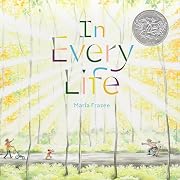
137. In Every Life by Marla Frazee
Beautiful, meaningful book. The concept is exceptional and the working out of that concept is truly wonderful. Reading this book brought me to tears, but they were healing tears.
I've decided that these illustrated books bring me back to my childhood and the pleasures of reading just for the joy of it. They are so accessible, even in times of grief and sadness (which is kind of my life these days!) Very little thinking or puzzling out is required; only a bit of attention and patience. I'm so thankful to whisper1 for putting them in front of us!

135. Moses: When Harriet Tubman Led Her People to Freedom by Carole Boston Weatherford, illus. Kadir Nelson
Harriet Tubman was my hero when I was young, after I read this book: Harriet Tubman, Runaway Slave by Ann McGovern (the name of the book has been edited to be: Wanted Dead or Alive: The True Story of Harriet Tubman), for some very important reasons.
This book is a wonderful telling of the story, and imparts the heroic actions of Tubman in the face of such danger. Brought back my younger feelings of awe and gratitude. The words are wonderful; the illustration is spectacular.

136. The Farmer and the Clown by Marla Frazee
This book conveys some very lovely concepts, all without words! There is a series of these "Farmer and the..." books; I'm sure that I need to read more of them!
137. In Every Life by Marla Frazee
Beautiful, meaningful book. The concept is exceptional and the working out of that concept is truly wonderful. Reading this book brought me to tears, but they were healing tears.
I've decided that these illustrated books bring me back to my childhood and the pleasures of reading just for the joy of it. They are so accessible, even in times of grief and sadness (which is kind of my life these days!) Very little thinking or puzzling out is required; only a bit of attention and patience. I'm so thankful to whisper1 for putting them in front of us!
216klobrien2
I’ve done a bit of checking threads, but I can’t determine who said they were missing The IT Crowd TV show (or did I imagine that?) Anyway, Britbox has put it back on their lineup. I’m watching it even as I type these words (well, I paused it). Great show!
217jessibud2
>215 klobrien2: - So funny that you just read that book by Kadir Nelson. Just yesterday, I picked it up from my library, too, in addition to a couple of other titles by him: If You Plant a Seed, which I loved, and He's Got the Whole World in His hands. I really love his artistry!
218msf59
Happy Friday, Karen. Just checking in. I hope all is well and those books are treating you fine. Have a good weekend.
219klobrien2
>217 jessibud2: I get so many leads to great illustrated books from whisper1! I was just amazed at the Harriet Tubman book, and I’ll have to check out these two that you mention. Thanks for stopping by to chat!
220klobrien2
>218 msf59: Hi, Mark! All is well here, and reading rocks! You have a good weekend, too, and thank you for stopping by! I’m making my daily rounds through the threads, so I’ll see you in a bit!
221klobrien2
Wordle 776 3/6 irate, quart, chart
⬜🟦🟧🟦⬜
⬜⬜🟧🟧🟧
🟧🟧🟧🟧🟧
Etymology-a-go-go: chart (n.)
1570s, "map for the use of navigators," from French charte "card, map," from Late Latin charta "paper, card, map" (see card (n.1)).
Charte is the original form of the French word in all senses, but after 14c. (perhaps by influence of Italian cognate carta), carte began to supplant it. English used both carte and card 15c.-17c. for "chart, map," and in 17c. chart could mean "playing card," but the words have gone their separate ways and chart has predominated since in the "map" sense.
The meaning "sheet on which information is presented in a methodical or tabulated form" is from 1840; specifically in the music score sense from 1957.
also from 1570s
chart (v.)
1837, "to enter onto a map or chart," from chart (n.). In the commercial recording sense, in reference to appearing on the chart of top-selling or most played records published in Billboard magazine, by 1961. The chart itself was printed from c. 1942. Related: Charted; charting.
⬜🟦🟧🟦⬜
⬜⬜🟧🟧🟧
🟧🟧🟧🟧🟧
Etymology-a-go-go:
1570s, "map for the use of navigators," from French charte "card, map," from Late Latin charta "paper, card, map" (see card (n.1)).
Charte is the original form of the French word in all senses, but after 14c. (perhaps by influence of Italian cognate carta), carte began to supplant it. English used both carte and card 15c.-17c. for "chart, map," and in 17c. chart could mean "playing card," but the words have gone their separate ways and chart has predominated since in the "map" sense.
The meaning "sheet on which information is presented in a methodical or tabulated form" is from 1840; specifically in the music score sense from 1957.
also from 1570s
chart (v.)
1837, "to enter onto a map or chart," from chart (n.). In the commercial recording sense, in reference to appearing on the chart of top-selling or most played records published in Billboard magazine, by 1961. The chart itself was printed from c. 1942. Related: Charted; charting.
222jessibud2
>219 klobrien2: - You may have missed a couple of my recommendations to Linda on her thread. If you have not yet encountered the books and spectacular artwork of Jeannie Baker, see if your library has any of her books. Her artwork is all collage and her stories are written for children but have impact that adults can appreciate. Some of her titles that I love include Mirror, Where the Forest Meets the Sea, The Story of Rosie Dock .
223klobrien2
>222 jessibud2: Thank you! I will go request them right now! I would not bypass a recommendation like that! Thanks again!
224klobrien2

138. She-Hulk, Vol. 2: Jen of Hearts by Rainbow Rowell
Fun collection of issues 6-10 of this series.
225klobrien2
Friday Reading Roundup!
Because I rely on libraries so much for my reading (and do so much eBook reading), what I'm reading at any given time changes often, and changes quickly.
Karen's current reading (08/04/2023):
Actively reading (or soon will be!)
Network Effect (Murderbot Diaries #5) by Martha Wells -- p. 38 of 350
Quietly Hostile: Essays by Samantha Irby -- p. 50 of 240
Once Upon a Tome by Oliver Darkshire -- p. 17 of 244
Sailing Alone Around the Room: New and Selected Poems by Billy Collins -- p. 61 of 172
Crook Manifesto by Colson Whitehead -- p. 26 of 288
The Silkworm (Cormoran Strike #2) by Robert Galbraith -- p. 81 of 424
Unnatural Habits (Phryne Fisher #19) by Kerry Greenwood -- p. 31 of 255
Prisoner's Base (Nero Wolfe #21) by Rex Stout -- p. 86 of 168
All the Beauty in the World: The Metropolitan Museum of Art and Me by Patrick Bringley -- p. 35 of 226
I'm overbooked! I'll probably leave these on the list, but I can't truly say that I am actively reading them right now:
Ready Player One (audiobook) by Ernest Cline, read by Wil Wheaton
Lightfoot by Nicholas Jennings -- p. 10 of 315
Nine Nasty Words: English in the Gutter, Then, Now, and Forever by John McWhorter -- p. 11 of 276
Mort by Terry Pratchett -- p. 5 of 295
Thursday Next in the Well of Lost Plots by Jasper Fforde -- p. of 373
My Plain Jane by Cynthia Hand -- p. 20 of 450
When Bad Things Happen to Good People by Harold S. Cushner
I try to participate in the American Authors Challenge. In July the group is reading works authored by USA presidents. In August, we're reading Percival Everett. I plan to read Trees.
I usually am reading/watching Great Courses. My current course is Leonardo da Vinci and the Italian High Renaissance -- lecture 16 of 36 completed.
Not-So-Time-Sensitive-But-Still-Want-to-Get-to-Them (so, these are readily available to me although I might not be reading them quite yet or may have had to return them to the library; most are my own books).
Portable Magic: A History of Books and Their Readers by Emma Smith -- p. 31 of 314
The Adventure of the Peculiar Protocols by Nicholas Meyer -- p. 3 of 238
The Disappearance of Sherlock Holmes by Larry Millett -- p. 0 of 340
Marple: Twelve New Stories by assorted authors
Fairy Tale by Stephen King
The Bob-iverse books! (reread)
Because I rely on libraries so much for my reading (and do so much eBook reading), what I'm reading at any given time changes often, and changes quickly.
Karen's current reading (08/04/2023):
Actively reading (or soon will be!)
Network Effect (Murderbot Diaries #5) by Martha Wells -- p. 38 of 350
Quietly Hostile: Essays by Samantha Irby -- p. 50 of 240
Once Upon a Tome by Oliver Darkshire -- p. 17 of 244
Sailing Alone Around the Room: New and Selected Poems by Billy Collins -- p. 61 of 172
Crook Manifesto by Colson Whitehead -- p. 26 of 288
The Silkworm (Cormoran Strike #2) by Robert Galbraith -- p. 81 of 424
Unnatural Habits (Phryne Fisher #19) by Kerry Greenwood -- p. 31 of 255
Prisoner's Base (Nero Wolfe #21) by Rex Stout -- p. 86 of 168
All the Beauty in the World: The Metropolitan Museum of Art and Me by Patrick Bringley -- p. 35 of 226
I'm overbooked! I'll probably leave these on the list, but I can't truly say that I am actively reading them right now:
Ready Player One (audiobook) by Ernest Cline, read by Wil Wheaton
Lightfoot by Nicholas Jennings -- p. 10 of 315
Nine Nasty Words: English in the Gutter, Then, Now, and Forever by John McWhorter -- p. 11 of 276
Mort by Terry Pratchett -- p. 5 of 295
Thursday Next in the Well of Lost Plots by Jasper Fforde -- p. of 373
My Plain Jane by Cynthia Hand -- p. 20 of 450
When Bad Things Happen to Good People by Harold S. Cushner
I try to participate in the American Authors Challenge. In July the group is reading works authored by USA presidents. In August, we're reading Percival Everett. I plan to read Trees.
I usually am reading/watching Great Courses. My current course is Leonardo da Vinci and the Italian High Renaissance -- lecture 16 of 36 completed.
Not-So-Time-Sensitive-But-Still-Want-to-Get-to-Them (so, these are readily available to me although I might not be reading them quite yet or may have had to return them to the library; most are my own books).
Portable Magic: A History of Books and Their Readers by Emma Smith -- p. 31 of 314
The Adventure of the Peculiar Protocols by Nicholas Meyer -- p. 3 of 238
The Disappearance of Sherlock Holmes by Larry Millett -- p. 0 of 340
Marple: Twelve New Stories by assorted authors
Fairy Tale by Stephen King
The Bob-iverse books! (reread)
227atozgrl
>221 klobrien2: I'm surprised that chart in the music score sense dates only from 1957. My husband plays in a couple of bands, and he uses that term all the time. I really would have thought it was older than that.
228klobrien2
>226 richardderus: >227 atozgrl: I’m finding the etymology thing so interesting. It seems at least a few others are, too! 😁
Glad to see you both here! Enjoy your weekends!
Glad to see you both here! Enjoy your weekends!
229klobrien2
Used the “2309” list, once I had the first and last letters. Strange word!
Wordle 777 3/6 irate, amble, anode
⬜⬜🟦⬜🟧
🟧⬜⬜⬜🟧
🟧🟧🟧🟧🟧
Etymology: anode (n.)
1834, coined from Greek anodos "way upward," from ano "upward," from ana "up" (see ana-) + hodos "a way," a word of uncertain origin (see Exodus). Proposed by the Rev. William Whewell, English polymath, and published by English chemist and physicist Michael Faraday. So called from the path the electrical current was thought to take. Compare cathode. Related: Anodic, anodal.
Wordle 777 3/6
⬜⬜🟦⬜🟧
🟧⬜⬜⬜🟧
🟧🟧🟧🟧🟧
Etymology:
1834, coined from Greek anodos "way upward," from ano "upward," from ana "up" (see ana-) + hodos "a way," a word of uncertain origin (see Exodus). Proposed by the Rev. William Whewell, English polymath, and published by English chemist and physicist Michael Faraday. So called from the path the electrical current was thought to take. Compare cathode. Related: Anodic, anodal.
230atozgrl
>229 klobrien2: Today was one of those Wordles where I had most of the letters, but not in the right order, and had to resort to writing things down to figure out the answer. But at least I didn't have to resort to looking at a list, unlike one day earlier this week. But I don't think I would have thought of it without writing words down. This one was definitely not an easy word!
231richardderus
>229 klobrien2: What completely fascinates me is the obscurity of the root-word "Hodos" in etymology. Considering its centrality in so many culturally important words, I'd expect the academics to have hammered out some consensus on its roots since its branches are in so many widespread yards.
Saturday *smooch*
Saturday *smooch*
232klobrien2
>230 atozgrl: Yes, it was an unusual word! Today’s was equally unusual.
>231 richardderus: I know what you mean about “hodos.” Etymonline.com always seems so knowledgeable, and I’ve never had a word NOT be there. I might do more research on that one.
Thank you both for stopping by!
>231 richardderus: I know what you mean about “hodos.” Etymonline.com always seems so knowledgeable, and I’ve never had a word NOT be there. I might do more research on that one.
Thank you both for stopping by!
233klobrien2
Started with nothing from my first word, then got the first two letters with my second. Went immediately to the 2309 list because, why not?! A tool is a tool…
Wordle 778 3/6 irate, pound, polyp
⬜⬜⬜⬜⬜
🟧🟧⬜⬜⬜
🟧🟧🟧🟧🟧
polyp (n.)
c. 1400, "nasal tumor," from Old French polype and directly from Latin polypus "cuttlefish," also "nasal tumor," from Greek (Doric, Aeolic) polypos "octopus, cuttlefish," from polys "many" (from PIE root *pele- (1) "to fill") + pous "foot" (from PIE root *ped- "foot"). The etymological sense was revived 1742 as a name for hydras and sea anemones (earlier polypus, early 16c.). The Latin word is the source of French poulpe "octopus," and polyp was used in English from 1580s for "octopus, cuttlefish, eight- or ten-armed cephalopod," though this sense seems now to be obsolete.
Wordle 778 3/6
⬜⬜⬜⬜⬜
🟧🟧⬜⬜⬜
🟧🟧🟧🟧🟧
c. 1400, "nasal tumor," from Old French polype and directly from Latin polypus "cuttlefish," also "nasal tumor," from Greek (Doric, Aeolic) polypos "octopus, cuttlefish," from polys "many" (from PIE root *pele- (1) "to fill") + pous "foot" (from PIE root *ped- "foot"). The etymological sense was revived 1742 as a name for hydras and sea anemones (earlier polypus, early 16c.). The Latin word is the source of French poulpe "octopus," and polyp was used in English from 1580s for "octopus, cuttlefish, eight- or ten-armed cephalopod," though this sense seems now to be obsolete.
234klobrien2
I haven’t done one of these for a few days, so it’s probably time. They do seem to make me a little more productive (or, at least, more aware of how I’m spending my time).
Today: “Attended” my church’s service on my tablet. Technology is great!
What I’m reading: Billy Collins’ poetry. A book about MOMA All the Beauty in the World. I need to work on Crook Manifesto— the ebook will vanish in a few days.
I’ve also started a bit of daily “grief reading” (a set of books sent to me right after Art’s passing by my cousin, who had recently lost her husband). The reading does bring tears, but I’m sure they are tears of healing.
What I’m watching: watched “The Imitation Game” yesterday, and it was great. Excellent acting (Benedict Cumberbatch especially).
l’ve been rewatching “The IT Crowd” and loving it! Still very funny, all these years later. I’ll probably watch some more today, but a trailer on the Imitation Game DVD brought “The King’s Speech” to my recollection, so I think I’ll watch that again soon.
Excellent Sunday to all!
Today: “Attended” my church’s service on my tablet. Technology is great!
What I’m reading: Billy Collins’ poetry. A book about MOMA All the Beauty in the World. I need to work on Crook Manifesto— the ebook will vanish in a few days.
I’ve also started a bit of daily “grief reading” (a set of books sent to me right after Art’s passing by my cousin, who had recently lost her husband). The reading does bring tears, but I’m sure they are tears of healing.
What I’m watching: watched “The Imitation Game” yesterday, and it was great. Excellent acting (Benedict Cumberbatch especially).
l’ve been rewatching “The IT Crowd” and loving it! Still very funny, all these years later. I’ll probably watch some more today, but a trailer on the Imitation Game DVD brought “The King’s Speech” to my recollection, so I think I’ll watch that again soon.
Excellent Sunday to all!
235The_Hibernator
I watched Imitation Game the other day, too. It was great.
236klobrien2
A little flailing today, but I have a nice Statue of Liberty thing going on…
Wordle 779 5/6 irate, crowd, proof, broom, brook
⬜🟧⬜⬜⬜
⬜🟧🟧⬜⬜
⬜🟧🟧🟧⬜
🟧🟧🟧🟧⬜
🟧🟧🟧🟧🟧
brook (n.)
"small natural stream," Old English broc "flowing stream, torrent," of obscure origin, probably from Proto-Germanic *broka- which yielded words in German (Bruch) and Dutch (broek) that have a sense of "marsh, bog." In Sussex and Kent, it means "water-meadow," and in plural, "low, marshy ground."
brook (v.)
"to endure," Old English brucan "to use, enjoy the use of, possess; eat; cohabit with," from Proto-Germanic *brukjanan "to make use of, enjoy" (source also of Old Saxon brukan, Old Frisian bruka "to use, practice," Dutch gebruiken "to use," Old High German bruhhan, German brauchen "to use, need," Gothic brukjan), from PIE root *bhrug- "to enjoy." The sense of "use" as applied to food led to that of "be able to digest," and by 16c. to "endure, tolerate," always in a negative sense. The original meanings have become obsolete.
Wordle 779 5/6
⬜🟧⬜⬜⬜
⬜🟧🟧⬜⬜
⬜🟧🟧🟧⬜
🟧🟧🟧🟧⬜
🟧🟧🟧🟧🟧
"small natural stream," Old English broc "flowing stream, torrent," of obscure origin, probably from Proto-Germanic *broka- which yielded words in German (Bruch) and Dutch (broek) that have a sense of "marsh, bog." In Sussex and Kent, it means "water-meadow," and in plural, "low, marshy ground."
brook (v.)
"to endure," Old English brucan "to use, enjoy the use of, possess; eat; cohabit with," from Proto-Germanic *brukjanan "to make use of, enjoy" (source also of Old Saxon brukan, Old Frisian bruka "to use, practice," Dutch gebruiken "to use," Old High German bruhhan, German brauchen "to use, need," Gothic brukjan), from PIE root *bhrug- "to enjoy." The sense of "use" as applied to food led to that of "be able to digest," and by 16c. to "endure, tolerate," always in a negative sense. The original meanings have become obsolete.
237richardderus
>236 klobrien2: Isn't linguistic drift fascinating? How our pattern-generating brains make associations and cause shifts in our language through their repeated use. I'm guilty of wanting some things not to change (eg, spellings I'm accustomed to) but adding senses and meanings to words as our culture's needs change is often delightful and always interesting to me.
Your current reading matter choice should make a positive difference, I expect, since it did for me like it did for your very kind and thoughtful cousin.
Your current reading matter choice should make a positive difference, I expect, since it did for me like it did for your very kind and thoughtful cousin.
238klobrien2

139. Sailing Alone Around the Room: New and Selected Poems by Billy Collins
Nice collection of poems, some quite serious, some humorous, and all over a broad range of topics and "feelings." Recommended by the 75ers' own jnwelch. Thanks, Joe!
A blurb on the inside front cover first caught my attention: (This book "offers the lyric equivalent of an album of Greatest Hits.")
My copy of the book had numerous dog-eared pages left by a previous reader. Drives me batty, but I understand why they did it--marking poems that they particularly liked. As I read poetry, I jot down page numbers and beginning words of passages I like, and I had a few after finishing this book!
Here's one of my favorites:
Introduction to Poetry
I ask them to take a poem
and hold it up to the light
like a color slide
or press an ear against its hive.
I say drop a mouse into a poem
and watch him probe his way out,
or walk inside the poem's room
and feel the walls for a light switch.
I want them to water-ski
across the surface of a poem
waving at the author's name on the shore.
But all they want to do
is tie the poem to a chair with rope
and torture a confession out of it.
They begin beating it with a hose
to find out what it really means.
And, just a portion of one more, which left me in awe of its beauty:
From Canada:
O Canada, I have not forgotten you,
and as I kneel in my canoe, beholding this vision
of a bookcase, I pray that I remain in your vast,
polar, North American memory.
You are the paddle, the snowshoe, the cabin in the pines.
You are Jean de Brebeuf with his martyr's necklace of
hatchet heads.
You are the moose in the clearing and the moosehead on
the wall.
You are the rapids, the propeller, the kerosene lamp
You are the dust that coats the roadside berries.
But not only that.
You are the two boys with pails walking along that road,
and one of them, the taller one minus the straw hat, is me.
239Whisper1
>215 klobrien2: Karen, Many thanks for your very kind words. I confess, they brought tears. Struggling with near-constant pain, I find illustrated books to be my solace. There is such beauty and wisdom contained therein. I learn a lot, for example, last night I read Tigers & Tea With Toppy by Barbara Kerley who is a recent author that I found, and Rhoda Knight Kalt, and a new to me illustrator, Matte Stephens.
I first went to the New York City Museum of Natural History on a fifth grade school trip. I was mesmerized by the settings in which the taxidermed animals were placed. In the book, I learned that a famous wildlife artist, Charles R. Knight who was the grandfather of Rhoda Knight Kalt, was responsible for many of the paintings used as backdrop settings. Long before the movie A Night at the Museum, I sat on the bench in a darkened room, with large elephants in the center, and while looking at the three-dimensional paintings/settings, I truly believed they came alive at night!
It was delightful to learn the name of the person responsible for bringing prehistoric animals to adorn the vast halls of the museum.
I've learned quite a lot through my readings of illustrated books! Thank you for your affirmation of the joy of learning in these treasured pages.
I first went to the New York City Museum of Natural History on a fifth grade school trip. I was mesmerized by the settings in which the taxidermed animals were placed. In the book, I learned that a famous wildlife artist, Charles R. Knight who was the grandfather of Rhoda Knight Kalt, was responsible for many of the paintings used as backdrop settings. Long before the movie A Night at the Museum, I sat on the bench in a darkened room, with large elephants in the center, and while looking at the three-dimensional paintings/settings, I truly believed they came alive at night!
It was delightful to learn the name of the person responsible for bringing prehistoric animals to adorn the vast halls of the museum.
I've learned quite a lot through my readings of illustrated books! Thank you for your affirmation of the joy of learning in these treasured pages.
240klobrien2
>239 Whisper1: Oh, dear lady, you continue to give me such good leads with the illustrated books! I have really come to love them, and to appreciate the work of the authors and artists who make these books.
I enjoyed them before, but now they give me so much more--they are great solace and enlightenment to someone in grief or in pain.
I hope that you see some relief in your pain, and in your grief journey.
I enjoyed them before, but now they give me so much more--they are great solace and enlightenment to someone in grief or in pain.
I hope that you see some relief in your pain, and in your grief journey.
241klobrien2
So, as a treat to myself for doing my daily "grief reading," and other assorted necessities of life, I had a "Picture Book Fest!" with the latest books from the library:
The first two are Kadir Nelson books, each one a beauty:
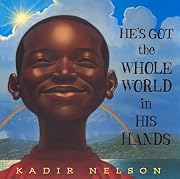
140. He's Got the Whole World in His Hands by Kadir Nelson
With this one, Nelson focuses on the "kid" point of view, and "kid"-type illustrations. Just gorgeous!
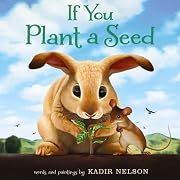
141. If You Plant a Seed by Kadir Nelson
Wonderfully BIG pictures, that get right in your face and almost overwhelm with their colors and beauty. Terrific message about choosing the path of kindness.
Then, here's one by an artist new to me, Jeannie Baker. It's a wonderful concept book, with two separate stories, representing two different families, with two different boys; one in the author's Australia, one in Morocco. The author's goal in producing this double-book is to increase global understanding and kindness.

142. Mirror by Jeannie Baker
These are wordless books, with the stories told through the pictures. The author explains that she starts with drawings, which get shaped into collages, with other natural and artificial elements incorporated. Sometimes, she adds color. Finally, she photographs the artwork to create the illustration for the book. Wonderfully expressive way to illustrate!
The first two are Kadir Nelson books, each one a beauty:
140. He's Got the Whole World in His Hands by Kadir Nelson
With this one, Nelson focuses on the "kid" point of view, and "kid"-type illustrations. Just gorgeous!
141. If You Plant a Seed by Kadir Nelson
Wonderfully BIG pictures, that get right in your face and almost overwhelm with their colors and beauty. Terrific message about choosing the path of kindness.
Then, here's one by an artist new to me, Jeannie Baker. It's a wonderful concept book, with two separate stories, representing two different families, with two different boys; one in the author's Australia, one in Morocco. The author's goal in producing this double-book is to increase global understanding and kindness.

142. Mirror by Jeannie Baker
These are wordless books, with the stories told through the pictures. The author explains that she starts with drawings, which get shaped into collages, with other natural and artificial elements incorporated. Sometimes, she adds color. Finally, she photographs the artwork to create the illustration for the book. Wonderfully expressive way to illustrate!
242jessibud2
>241 klobrien2:- Funny, I also posted about and reviewed these books and authors on my thread this evening! :-)
243klobrien2
>242 jessibud2: How cool is that?! I don't know why I hadn't starred your thread, but I've certainly seen you around the threads. Now that I put that little star in, I'll be even more in touch with you! Thanks for stopping by!
244klobrien2
Wordle 780 5/6 irate, mound, gulch, fully, bully
⬜⬜⬜⬜⬜
⬜⬜🟦⬜⬜
⬜🟧🟧⬜⬜
⬜🟧🟧🟧🟧
🟧🟧🟧🟧🟧
Interesting etymology: bully (n.)
1530s, "sweetheart," a term of endearment applied to either sex, of uncertain origin; perhaps from Dutch boel "lover; brother," which probably is a diminutive of Middle Dutch broeder "brother" (compare Middle High German buole "brother," source of German Buhle "lover;" see brother (n.)).
The meaning deteriorated 17c. through "fine fellow" and "blusterer" to "harasser of the weak" (1680s, from bully-ruffian, 1650s). Perhaps this was by influence of bull (n.1), but a connecting sense between "lover" and "ruffian" might be "protector of a prostitute," which was one sense of bully (though it is not specifically attested until 1706). "Sweetheart" words often go bad in this way; compare leman, also ladybird, which in Farmer and Henley ("Slang and Its Analogues") is "1. A whore; and (2) a term of endearment." Shakespeare has bully-rook "jolly comrade."
The adjective meaning "worthy, jolly, admirable" is attested from 1680s and preserves an earlier, positive sense of the word. It enjoyed popularity in late 19c. American English, and was used from 1864 in expressions, such as bully for you! "bravo!"
also from 1530s
bully (v.)
"overbear with bluster or menaces," 1710, from bully (n.). Related: Bullied; bullying.
⬜⬜⬜⬜⬜
⬜⬜🟦⬜⬜
⬜🟧🟧⬜⬜
⬜🟧🟧🟧🟧
🟧🟧🟧🟧🟧
Interesting etymology:
1530s, "sweetheart," a term of endearment applied to either sex, of uncertain origin; perhaps from Dutch boel "lover; brother," which probably is a diminutive of Middle Dutch broeder "brother" (compare Middle High German buole "brother," source of German Buhle "lover;" see brother (n.)).
The meaning deteriorated 17c. through "fine fellow" and "blusterer" to "harasser of the weak" (1680s, from bully-ruffian, 1650s). Perhaps this was by influence of bull (n.1), but a connecting sense between "lover" and "ruffian" might be "protector of a prostitute," which was one sense of bully (though it is not specifically attested until 1706). "Sweetheart" words often go bad in this way; compare leman, also ladybird, which in Farmer and Henley ("Slang and Its Analogues") is "1. A whore; and (2) a term of endearment." Shakespeare has bully-rook "jolly comrade."
The adjective meaning "worthy, jolly, admirable" is attested from 1680s and preserves an earlier, positive sense of the word. It enjoyed popularity in late 19c. American English, and was used from 1864 in expressions, such as bully for you! "bravo!"
also from 1530s
bully (v.)
"overbear with bluster or menaces," 1710, from bully (n.). Related: Bullied; bullying.
245atozgrl
>234 klobrien2: We saw "The Imitation Game" when it was in theaters. We thought it was excellent! My husband has been a fan of Benedict Cumberbatch ever since.
247klobrien2
Started out really slow, but picked up speed quickly!
Wordle 781 4/6 irate, mercy, hover, lover
⬜🟦⬜⬜🟦
⬜🟦🟦⬜⬜
⬜🟧🟧🟧🟧
🟧🟧🟧🟧🟧
Etymology: lover (n.)
"one who is enamored, person in love," early 13c., agent noun from love (v.). Old English had lufend for male lovers, lufestre for women. Meaning "one who has a predilection for" (a thing, concept, pursuit, etc.) is mid-14c. As a form of address to a lover, from 1911. Related: Loverly (adj.) "like a lover, suitable for a lover" (1853); loverless (1819).
Lover's quarrel is from 1660s; lover's leap, usually involving a local crag and a fanciful story, is by 1712; Lover's Lane for a remote and shady road, little-traveled and thus popular with lovers, is by 1853. It seems also to have been an actual road-name in some places.
Wordle 781 4/6
⬜🟦⬜⬜🟦
⬜🟦🟦⬜⬜
⬜🟧🟧🟧🟧
🟧🟧🟧🟧🟧
Etymology:
"one who is enamored, person in love," early 13c., agent noun from love (v.). Old English had lufend for male lovers, lufestre for women. Meaning "one who has a predilection for" (a thing, concept, pursuit, etc.) is mid-14c. As a form of address to a lover, from 1911. Related: Loverly (adj.) "like a lover, suitable for a lover" (1853); loverless (1819).
Lover's quarrel is from 1660s; lover's leap, usually involving a local crag and a fanciful story, is by 1712; Lover's Lane for a remote and shady road, little-traveled and thus popular with lovers, is by 1853. It seems also to have been an actual road-name in some places.
248klobrien2
Very happy with this Wordle! After my first word, knew what the last letter probably was, had my fourth letter, used my other correct but misplaced letter as first letter, and Bob’s your uncle!
Wordle 782 2/6 irate, empty
⬜⬜⬜🟧🟦
🟧🟧🟧🟧🟧
Today’s etymology: empty (adj.)
c. 1200, from Old English æmettig, of persons, "at leisure, not occupied; unmarried" (senses now obsolete), also, of receptacles, "containing nothing," of places, "unoccupied," from æmetta "leisure."
Watkins explains it as from Proto-Germanic *e-mot-ja-, with a prefix of uncertain meaning + Germanic *mot- "ability, leisure," possibly from PIE root *med- "take appropriate measures." A sense evolution from "at leisure" to "containing nothing, unoccupied" is found in several languages, such as Modern Greek adeios "empty," originally "freedom from fear," from deios "fear." "The adj. adeios must have been applied first to persons who enjoyed freedom from duties, leisure, and so were unoccupied, whence it was extended to objects that were unoccupied" Buck.
The -p- is a euphonic insertion. Of words, etc., "destitute of force or effect," mid-14c. Related: Emptier. The figurative sense of empty-nester is attested by 1960.
also from c. 1200
empty (n.)
"an empty thing" that was or is expected to be full, 1865, from empty (adj.). At first of barges, freight cars, mail pouches.
also from 1865
empty (v.)
1520s, from empty (adj.); replacing Middle English empten, from Old English geæmtigian. Related: Emptied; emptying.
Wordle 782 2/6
⬜⬜⬜🟧🟦
🟧🟧🟧🟧🟧
Today’s etymology:
c. 1200, from Old English æmettig, of persons, "at leisure, not occupied; unmarried" (senses now obsolete), also, of receptacles, "containing nothing," of places, "unoccupied," from æmetta "leisure."
Watkins explains it as from Proto-Germanic *e-mot-ja-, with a prefix of uncertain meaning + Germanic *mot- "ability, leisure," possibly from PIE root *med- "take appropriate measures." A sense evolution from "at leisure" to "containing nothing, unoccupied" is found in several languages, such as Modern Greek adeios "empty," originally "freedom from fear," from deios "fear." "The adj. adeios must have been applied first to persons who enjoyed freedom from duties, leisure, and so were unoccupied, whence it was extended to objects that were unoccupied" Buck.
The -p- is a euphonic insertion. Of words, etc., "destitute of force or effect," mid-14c. Related: Emptier. The figurative sense of empty-nester is attested by 1960.
also from c. 1200
empty (n.)
"an empty thing" that was or is expected to be full, 1865, from empty (adj.). At first of barges, freight cars, mail pouches.
also from 1865
empty (v.)
1520s, from empty (adj.); replacing Middle English empten, from Old English geæmtigian. Related: Emptied; emptying.
249klobrien2
I haven’t done one of these for a few days, so it’s probably time. They do seem to make me a little more productive (or, at least, more aware of how I’m spending my time).
Today: I’ll deal with the produce I got from my weekly CSA yesterday (strawberries! Corn! Beans! Poblano peppers?) Declutter a bit. Try to arrange a furnace maintenance visit so that they can show Jerry how to replace the HVAC filters. We successfully replaced the fridge water filter on Monday! Yay!
What I’m reading: Had to give Crook Manifesto back to Libby but I’ve still got the paper book requested (just have to wait a little bit). I’ve got plenty of others on the go so maybe I’ll try to finish some up today.
Daily “grief reading.” Like a little dose of medicine for my spirit.
What I’m watching: Finished “The IT Crowd” (good) and the 8th season of “Grantchester” (very good). Maybe watch some “Outlander” and “Witcher” today.
Today: I’ll deal with the produce I got from my weekly CSA yesterday (strawberries! Corn! Beans! Poblano peppers?) Declutter a bit. Try to arrange a furnace maintenance visit so that they can show Jerry how to replace the HVAC filters. We successfully replaced the fridge water filter on Monday! Yay!
What I’m reading: Had to give Crook Manifesto back to Libby but I’ve still got the paper book requested (just have to wait a little bit). I’ve got plenty of others on the go so maybe I’ll try to finish some up today.
Daily “grief reading.” Like a little dose of medicine for my spirit.
What I’m watching: Finished “The IT Crowd” (good) and the 8th season of “Grantchester” (very good). Maybe watch some “Outlander” and “Witcher” today.
250atozgrl
>248 klobrien2: Good Wordling, Karen! It took me 3 today.
251richardderus
>248 klobrien2: I confess I spent longer than I probably should've needed to figuring out the noun sense of the Wordle word. Something just didn't click in my li'l punkin haid reading the definition until I mentally supplied an article in front of it.
Weirdly feeble-minded of me.
Grief reading is a lovely gift to give yourself. *smooch*
Weirdly feeble-minded of me.
Grief reading is a lovely gift to give yourself. *smooch*
252klobrien2

143. 1964: Eyes of the Storm (Photographs and Reflections) by Paul McCartney
McCartney starts off this book with, "Somewhere in the back of my mind, I always knew I had taken some pictures in the 1960s." Kind of an understatement! The photos in the book (and many more) were lost for decades, then were discovered in the MPL archives (I had to look it up--MPL is the umbrella company for Paul McCartney's business interests). The photos were curated for a show at the National Portrait Gallery in London, and this book was produced.
This is a huge, fascinating, illuminating book of photographs and a few essays about the photographs from the early days of the band during a three-month period of travel ("the Storm") by the Beatles ending in February 1964. McCartney introduces each "city" of photographs in short and sweet essays. The book is well worth a perusal for fans of the band or for students of modern history.
253figsfromthistle
>252 klobrien2: This one looks awesome. I will put it on my WL!
254jessibud2
>252 klobrien2: - I saw an interview with him about this book, on CBS Sunday Morning a few weeks ago. I bet if you went to the website of the show, and looked at their back episodes, you'd find it. It was great and now, I have put a request in for it from the library. There are 34 copies in our system but 127 holds ahead of me. I'll wait!
256klobrien2
>253 figsfromthistle: I’m sure you’ll enjoy McCartney’s book!
>254 jessibud2: I’ll have to look for that interview! Thanks!
>255 vancouverdeb: My “grief reading” is, right now, from a set of small books called “Journeying Through Grief” by Kenneth C. Hauck. One of the main tenets of the books is that one “cannot NOT grieve”—one way or another, the grief has to be borne. I think reading and pondering them is really helping me.
Thank you all for stopping by to chat!
>254 jessibud2: I’ll have to look for that interview! Thanks!
>255 vancouverdeb: My “grief reading” is, right now, from a set of small books called “Journeying Through Grief” by Kenneth C. Hauck. One of the main tenets of the books is that one “cannot NOT grieve”—one way or another, the grief has to be borne. I think reading and pondering them is really helping me.
Thank you all for stopping by to chat!
257klobrien2
Flail-a-rama today, but got it! Current streak is 69; max streak was 95.
Wordle 783 5/6 irate, olden, loess, jelly, hello
⬜⬜⬜⬜🟦
🟦🟦⬜🟦⬜
🟦🟦🟦⬜⬜
⬜🟧🟧🟧⬜
🟧🟧🟧🟧🟧
Etymology: hello (interj.)
greeting between persons meeting, 1848, the early references are to the U.S. western frontier (where hello, the house was said to be the usual greeting upon approaching a habitation).
It is an alteration of hallo, itself an alteration of holla, hollo, a shout to attract attention, which seems to go back at least to late 14c. (compare Middle English verb halouen "to shout in the chase," hallouing). OED cites Old High German hala, hola, emphatic imperative of halon, holon "to fetch," "used especially in hailing a ferryman." Fowler, an Englishman, in the 1920s listed variants halloo, hallo, halloa, halloo, hello, hillo, hilloa, holla, holler, hollo, holloa, hollow, hullo, and writes, "The multiplicity of forms is bewildering ...."
Its rise to popularity as a greeting (1880s) coincides with the spread of the telephone, where it won out as the word said in answering, over Alexander Graham Bell's suggestion, ahoy. Central telephone exchange operators were known as hello-girls (1889).
Hello, formerly an Americanism, is now nearly as common as hullo in Britain ( Say who you are; do not just say 'hello' is the warning given in our telephone directories) and the Englishman cannot be expected to give up the right to say hello if he likes it better than his native hullo. H.W. Fowler, "A Dictionary of Modern English Usage," 1926
Wordle 783 5/6
⬜⬜⬜⬜🟦
🟦🟦⬜🟦⬜
🟦🟦🟦⬜⬜
⬜🟧🟧🟧⬜
🟧🟧🟧🟧🟧
Etymology:
greeting between persons meeting, 1848, the early references are to the U.S. western frontier (where hello, the house was said to be the usual greeting upon approaching a habitation).
It is an alteration of hallo, itself an alteration of holla, hollo, a shout to attract attention, which seems to go back at least to late 14c. (compare Middle English verb halouen "to shout in the chase," hallouing). OED cites Old High German hala, hola, emphatic imperative of halon, holon "to fetch," "used especially in hailing a ferryman." Fowler, an Englishman, in the 1920s listed variants halloo, hallo, halloa, halloo, hello, hillo, hilloa, holla, holler, hollo, holloa, hollow, hullo, and writes, "The multiplicity of forms is bewildering ...."
Its rise to popularity as a greeting (1880s) coincides with the spread of the telephone, where it won out as the word said in answering, over Alexander Graham Bell's suggestion, ahoy. Central telephone exchange operators were known as hello-girls (1889).
Hello, formerly an Americanism, is now nearly as common as hullo in Britain ( Say who you are; do not just say 'hello' is the warning given in our telephone directories) and the Englishman cannot be expected to give up the right to say hello if he likes it better than his native hullo. H.W. Fowler, "A Dictionary of Modern English Usage," 1926
258richardderus
>252 klobrien2: What a treasure trove that is. I'm glad it spoke to you, ancient history to you though it may be. He's a very interesting man and always was. Deeply creative and a born observer.
259klobrien2
Today: I’ll do a little cleaning, as two of my sisters are stopping over for supper, and I haven’t vacuumed for a bit (and I have 3 cats).
What I’m reading: Quietly Hostile by Samantha Irby (very funny). Daily “grief reading.”
What I’m watching: Two episodes of The Wonder Years, to catch me up. One of And Just Like That. One of Dark Winds (so good). One of season 1 of Happy Valley, which will most likely be my focus for today’s viewing. I should get going on my Leonardo class again (which is s hybrid reading/watching thing).
What I’m reading: Quietly Hostile by Samantha Irby (very funny). Daily “grief reading.”
What I’m watching: Two episodes of The Wonder Years, to catch me up. One of And Just Like That. One of Dark Winds (so good). One of season 1 of Happy Valley, which will most likely be my focus for today’s viewing. I should get going on my Leonardo class again (which is s hybrid reading/watching thing).
260BLBera
Hi Karen. Love the Billy Collins poems. I used to use "Introduction to Poetry" in class - great illustration of metaphor, and also a good message for students as they read poetry!
261atozgrl
>257 klobrien2: Good grief, the variants to hello use up all the vowels!
Wishing you a good reading and watching day!
Wishing you a good reading and watching day!
262alcottacre
>252 klobrien2: Adding that one to the BlackHole. Thanks for the recommendation, Karen!
Have a fantastic Friday!
Have a fantastic Friday!
263klobrien2
>260 BLBera: I like Collins's style--you never really know what to expect from one of his poems.
>261 atozgrl: Wasn't that amazing?! Have a great weekend!
>262 alcottacre: Hope you like the McCartney! I'm sure you will. Have a great weekend!
Thank you all for stopping by!
>261 atozgrl: Wasn't that amazing?! Have a great weekend!
>262 alcottacre: Hope you like the McCartney! I'm sure you will. Have a great weekend!
Thank you all for stopping by!
264klobrien2

144. Quietly Hostile: Essays by Samantha Irby
I've always enjoyed Irby's writing--she is really funny, although often pretty edgy.
The title of this book comes from this passage in the book where she is considering why she never had a child: "Quietly hostile is how i would describe my public personality; I am mild-mannered and super polite, but just beneath the surface of my skin, my blood is electrified and I am one inconsiderate driver away from a full Falling Down-style emotional collapse. I don't know how to teach a child not to seethe and instead to develop a healthy coping communication style, because I do not know how to do that for myself."
Her writing is not always so serious and tough. She is "wildly, seditiously funny" (Parul Sehgal, NYT). She is supremely honest and her humor is a protective things for her, and I respect that. Your mileage may vary, but I didn't want to set this book down.
265klobrien2
Friday Reading Roundup!
Because I rely on libraries so much for my reading (and do so much eBook reading), what I'm reading at any given time changes often, and changes quickly.
Karen's current reading (08/11/2023):
Actively reading (or soon will be!)
Network Effect (Murderbot Diaries #5) by Martha Wells -- p. 38 of 350
Once Upon a Tome by Oliver Darkshire -- p. 47 of 244
The Silkworm (Cormoran Strike #2) by Robert Galbraith -- p. 81 of 424
Unnatural Habits (Phryne Fisher #19) by Kerry Greenwood -- p. 31 of 255
Prisoner's Base (Nero Wolfe #21) by Rex Stout -- p. 108 of 168
All the Beauty in the World: The Metropolitan Museum of Art and Me by Patrick Bringley -- p. 44 of 226
Kissing Christmas Goodbye (Agatha Raisin #18) by M. C. Beaton -- p. 22 of 197
I'm overbooked! I'll probably leave these on the list, but I can't truly say that I am actively reading them right now:
Portable Magic: A History of Books and Their Readers by Emma Smith -- p. 31 of 314
Ready Player One (audiobook) by Ernest Cline, read by Wil Wheaton
Lightfoot by Nicholas Jennings -- p. 10 of 315
Nine Nasty Words: English in the Gutter, Then, Now, and Forever by John McWhorter -- p. 11 of 276
Mort by Terry Pratchett -- p. 5 of 295
Thursday Next in the Well of Lost Plots by Jasper Fforde -- p. of 373
I try to participate in the American Authors Challenge. In July the group is reading works authored by USA presidents. In August, we're reading Percival Everett. I plan to read Trees.
I usually am reading/watching Great Courses. My current course is Leonardo da Vinci and the Italian High Renaissance -- lecture 16 of 36 completed.
Not-So-Time-Sensitive-But-Still-Want-to-Get-to-Them (so, these are readily available to me although I might not be reading them quite yet or may have had to return them to the library; most are my own books)
Crook Manifesto by Colson Whitehead -- p. 26 of 288
The Adventure of the Peculiar Protocols by Nicholas Meyer -- p. 3 of 238
The Disappearance of Sherlock Holmes by Larry Millett -- p. 0 of 340
Marple: Twelve New Stories by assorted authors
Fairy Tale by Stephen King
The Bob-iverse books! (reread)
Because I rely on libraries so much for my reading (and do so much eBook reading), what I'm reading at any given time changes often, and changes quickly.
Karen's current reading (08/11/2023):
Actively reading (or soon will be!)
Network Effect (Murderbot Diaries #5) by Martha Wells -- p. 38 of 350
Once Upon a Tome by Oliver Darkshire -- p. 47 of 244
The Silkworm (Cormoran Strike #2) by Robert Galbraith -- p. 81 of 424
Unnatural Habits (Phryne Fisher #19) by Kerry Greenwood -- p. 31 of 255
Prisoner's Base (Nero Wolfe #21) by Rex Stout -- p. 108 of 168
All the Beauty in the World: The Metropolitan Museum of Art and Me by Patrick Bringley -- p. 44 of 226
Kissing Christmas Goodbye (Agatha Raisin #18) by M. C. Beaton -- p. 22 of 197
I'm overbooked! I'll probably leave these on the list, but I can't truly say that I am actively reading them right now:
Portable Magic: A History of Books and Their Readers by Emma Smith -- p. 31 of 314
Ready Player One (audiobook) by Ernest Cline, read by Wil Wheaton
Lightfoot by Nicholas Jennings -- p. 10 of 315
Nine Nasty Words: English in the Gutter, Then, Now, and Forever by John McWhorter -- p. 11 of 276
Mort by Terry Pratchett -- p. 5 of 295
Thursday Next in the Well of Lost Plots by Jasper Fforde -- p. of 373
I try to participate in the American Authors Challenge. In July the group is reading works authored by USA presidents. In August, we're reading Percival Everett. I plan to read Trees.
I usually am reading/watching Great Courses. My current course is Leonardo da Vinci and the Italian High Renaissance -- lecture 16 of 36 completed.
Not-So-Time-Sensitive-But-Still-Want-to-Get-to-Them (so, these are readily available to me although I might not be reading them quite yet or may have had to return them to the library; most are my own books)
Crook Manifesto by Colson Whitehead -- p. 26 of 288
The Adventure of the Peculiar Protocols by Nicholas Meyer -- p. 3 of 238
The Disappearance of Sherlock Holmes by Larry Millett -- p. 0 of 340
Marple: Twelve New Stories by assorted authors
Fairy Tale by Stephen King
The Bob-iverse books! (reread)
266vancouverdeb
Journeying Through Grief” by Kenneth C. Hauck sounds very helpful and hope that it is. I know it does not compare to losing a spouse, but when I was 40, I became pregnant with a third son. Sadly, at 17 weeks of pregnancy, I had a little spotting and discovered that little one has passed away but I had not miscarried. That was a very terrible time for me. I grieved that very much, and became so depressed and troubled with anxiety, I could not leave the house for close to year. I had panic attacks very frequently. Grief reading very much helped me.
I'm glad you are enjoying Happy Valley! I really loved that too.
I'm glad you are enjoying Happy Valley! I really loved that too.
267klobrien2
>266 vancouverdeb: Oh, dear Deborah…I’m so sorry for your loss! It doesn’t matter how long it’s been, does it? The grief comes around again. But I’m told that it does get easier…I hope that you are finding it so. I’m finding that my reading, both grief reading and my normal reading, is really helping me. As is hanging out on LT!
And the world goes on…
Thank you so much for sharing your grief. I wish you peace and joy!
And the world goes on…
Thank you so much for sharing your grief. I wish you peace and joy!
268klobrien2
Wordle 784 4/6 irate, doily, chimp, quick
🟦⬜⬜⬜⬜
⬜⬜🟧⬜⬜
🟦⬜🟧⬜⬜
🟧🟧🟧🟧🟧
Etymology (this is a long one, but I found it really interesting): quick (adj.) Middle English quik, from Old English cwic "living, alive, animate, characterized by the presence of life" (now archaic), and figuratively, of mental qualities, "rapid, ready," from Proto-Germanic *kwikwaz (source also of Old Saxon and Old Frisian quik, Old Norse kvikr "living, alive," Dutch kwik "lively, bright, sprightly," Old High German quec "lively," German keck "bold"), from PIE root *gwei- "to live." Sense of "lively, active, swift, speedy, hasty," developed by c. 1300, on notion of "full of life."
NE swift or the now more common fast may apply to rapid motion of any duration, while in quick (in accordance with its original sense of 'live, lively') there is a notion of 'sudden' or 'soon over.' We speak of a fast horse or runner in a race, a quick starter but not a quick horse. A somewhat similar feeling may distinguish NHG schnell and rasch or it may be more a matter of local preference. Carl Darling Buck, "A Dictionary of Selected Synonyms in the Principal Indo-European Languages," 1949
Of persons, "mentally active, prompt to perceive or respond to impressions" from late 15c. Of an action, process, etc., "done in little time" 1540s. Also in Middle English used of soft soils, gravel pits, etc. where the ground is shifting and yielding (mid-14c., compare quicksand). Also in Middle English "with child, in an advanced state of pregnancy" (when the woman can feel the child move within). Also formerly of bright flowers or colors (c. 1200).
As an adverb, "quickly, in a quick manner," from c. 1300. To be quick about something is from 1937. Quick buck is from 1946, American English. Quick-change artist (1886) originally was an actor expert in playing different roles in the same performance of a show. Quick-witted is from 1520s.
quick (n.)
"living persons," Old English cwic, from quick (adj.). Frequently paired with the dead, from phrasing in the Nicene and Apostles' creeds, as in Middle English þan cwike and þa deaden, Old English cwicum & deadum. The quick "tender part of the flesh" (under a nail, etc.) is from late 14c. (quick (adj.) in the extended sense of "sensitive to pain" is from c. 1200); the figurative use of it, in touch (someone) to the quick is from 1520s.
🟦⬜⬜⬜⬜
⬜⬜🟧⬜⬜
🟦⬜🟧⬜⬜
🟧🟧🟧🟧🟧
Etymology (this is a long one, but I found it really interesting):
NE swift or the now more common fast may apply to rapid motion of any duration, while in quick (in accordance with its original sense of 'live, lively') there is a notion of 'sudden' or 'soon over.' We speak of a fast horse or runner in a race, a quick starter but not a quick horse. A somewhat similar feeling may distinguish NHG schnell and rasch or it may be more a matter of local preference. Carl Darling Buck, "A Dictionary of Selected Synonyms in the Principal Indo-European Languages," 1949
Of persons, "mentally active, prompt to perceive or respond to impressions" from late 15c. Of an action, process, etc., "done in little time" 1540s. Also in Middle English used of soft soils, gravel pits, etc. where the ground is shifting and yielding (mid-14c., compare quicksand). Also in Middle English "with child, in an advanced state of pregnancy" (when the woman can feel the child move within). Also formerly of bright flowers or colors (c. 1200).
As an adverb, "quickly, in a quick manner," from c. 1300. To be quick about something is from 1937. Quick buck is from 1946, American English. Quick-change artist (1886) originally was an actor expert in playing different roles in the same performance of a show. Quick-witted is from 1520s.
quick (n.)
"living persons," Old English cwic, from quick (adj.). Frequently paired with the dead, from phrasing in the Nicene and Apostles' creeds, as in Middle English þan cwike and þa deaden, Old English cwicum & deadum. The quick "tender part of the flesh" (under a nail, etc.) is from late 14c. (quick (adj.) in the extended sense of "sensitive to pain" is from c. 1200); the figurative use of it, in touch (someone) to the quick is from 1520s.
269msf59
Happy Saturday, Karen. I am so glad you have started Happy Valley. Such a good show and I love having only 6 eps to get through. Also in S2 of Last Tango in Halifax. Another really good one.
Have a good weekend.
Have a good weekend.
271klobrien2
Today: I’ll do a little puttering around, tidying up. Financial guy is stopping over on Monday (ye gods, I’m tired of all the paperwork! The end is in sight, I think).
What I’m reading: All the Beauty in the World (the MOMA book) and maybe my current Nero Wolfe.
What I’m watching: an episode of What We Do in the Shadows (great!), first of Men in Kilts season 2 (fun!) and most of the last episode of Inspector Morse season 1 (need to finish that up today). I should get going on my Leonardo class again (which is a hybrid reading/watching thing).
What I’m reading: All the Beauty in the World (the MOMA book) and maybe my current Nero Wolfe.
What I’m watching: an episode of What We Do in the Shadows (great!), first of Men in Kilts season 2 (fun!) and most of the last episode of Inspector Morse season 1 (need to finish that up today). I should get going on my Leonardo class again (which is a hybrid reading/watching thing).
272richardderus
>268 klobrien2: One of the most useful words in my own vocabulary. I hadn't heard of the 1200 sense of it at all, though now I want to find a way to use it in such a manner.
Is the Inspector Morse a re-watch? Enjoy the weekend, Karen O.
Is the Inspector Morse a re-watch? Enjoy the weekend, Karen O.
273klobrien2
>272 richardderus: I have recently finished up watching Endeavour, so now I'm watching the Inspector Morse series. I realize that that is the opposite of how everybody else did it, but it's working out okay. And then there's Inspector Lewis: that follows Inspector Morse, right (chronologically speaking?)
I find myself looking for clues to Endeavour's character in the Inspector Morse episodes.
Thanks for stopping by, RD!
I find myself looking for clues to Endeavour's character in the Inspector Morse episodes.
Thanks for stopping by, RD!
274klobrien2

145. Prisoner's Base (Nero Wolfe #21) by Rex Stout
Really fun episode in the Nero Wolfe series. Wolfe and Goodwin's relationship continues to mature and is affirmed. Is also as funny as heck!
"...prisoner's base. The phone in the living room was one base, and the elevator outside was the other, and it was up to Sarah Jaffee to make the run without being tagged. It had been a lot of years since I had played prisoner's base."
275klobrien2
Wow! Really happy with this one! Cool word, too!
Wordle 785 2/6 irate, wrath
⬜🟧🟧🟧⬜
🟧🟧🟧🟧🟧
Etymology of the cool word: wrath (n.)
Old English wræððu "anger," from wrað "angry" (see wroth) + -þu, from Proto-Germanic -itho (as in strength, width etc.; see -th (2)).
Entries linking to wrath
strength (n.)
Old English strengþu, strengð "bodily power, force, vigor, firmness, fortitude, manhood, violence, moral resistance," from Proto-Germanic *strangitho (source also of Old High German strengida "strength"), from PIE *strenk- "tight, narrow" (see string (n.)), with Proto-Germanic abstract noun suffix *-itho (see -th (2)). Compare length/long. From the same root as strong,
-th (2)
suffix forming nouns of action, state, or quality from verbs or adjectives (such as depth, strength, truth), from Old English -ðu, -ð, from Proto-Germanic *-itho (cognates: Old Norse -þ, Old High German -ida, Gothic -iþa), abstract noun suffix, from PIE *-ita (cognates: Sanskrit -tati-; Greek -tet-; Latin -tati-, as in libertatem "liberty" from liber "free"). Sometimes in English reduced to -t, especially after -h- (as in height). Formerly more widespread, and in recent centuries often tempting to new coinages. Middle English had stilþe "silence" (c. 1200).
Wordle 785 2/6
⬜🟧🟧🟧⬜
🟧🟧🟧🟧🟧
Etymology of the cool word:
Old English wræððu "anger," from wrað "angry" (see wroth) + -þu, from Proto-Germanic -itho (as in strength, width etc.; see -th (2)).
Entries linking to wrath
strength (n.)
Old English strengþu, strengð "bodily power, force, vigor, firmness, fortitude, manhood, violence, moral resistance," from Proto-Germanic *strangitho (source also of Old High German strengida "strength"), from PIE *strenk- "tight, narrow" (see string (n.)), with Proto-Germanic abstract noun suffix *-itho (see -th (2)). Compare length/long. From the same root as strong,
-th (2)
suffix forming nouns of action, state, or quality from verbs or adjectives (such as depth, strength, truth), from Old English -ðu, -ð, from Proto-Germanic *-itho (cognates: Old Norse -þ, Old High German -ida, Gothic -iþa), abstract noun suffix, from PIE *-ita (cognates: Sanskrit -tati-; Greek -tet-; Latin -tati-, as in libertatem "liberty" from liber "free"). Sometimes in English reduced to -t, especially after -h- (as in height). Formerly more widespread, and in recent centuries often tempting to new coinages. Middle English had stilþe "silence" (c. 1200).
276klobrien2
Today: My sisters finally came by today and we had a nice chat. Financial guy comes by tomorrow morning. Stepson Kerry will come here after work and stay until tomorrow afternoon. I’m such a social butterfly!
I’ll do a little puttering around, tidying up. Gathering things for donation.
What I’m reading: All the Beauty in the World (the MOMA book) and my current Murderbot!
What I’m watching: Finished the first season of “Toast of London” with Matt Berry (only 7 episodes, each about 20 minutes). Silly, fun show. We (Jerry and I) will probably watch the last episode of Strange New Worlds and maybe one of Good Omens second season. I should get going on my Leonardo class again (which is a hybrid reading/watching thing).
I’ll do a little puttering around, tidying up. Gathering things for donation.
What I’m reading: All the Beauty in the World (the MOMA book) and my current Murderbot!
What I’m watching: Finished the first season of “Toast of London” with Matt Berry (only 7 episodes, each about 20 minutes). Silly, fun show. We (Jerry and I) will probably watch the last episode of Strange New Worlds and maybe one of Good Omens second season. I should get going on my Leonardo class again (which is a hybrid reading/watching thing).
277klobrien2
Wordle 786 5/6 irate, foamy, shady, scaly, snaky
⬜⬜🟧⬜⬜
⬜⬜🟧⬜🟧
🟧⬜🟧⬜🟧
🟧⬜🟧⬜🟧
🟧🟧🟧🟧🟧
Etymology: snaky (adj.)
1560s, "full of snakes" (originally of the hair of the Furies in classical mythology), from snake (n.) + -y (2). By 1580s as "of or resembling a snake." In Australia and New Zealand slang, "angry, annoyed" (1919). Snakish "of or pertaining to serpents" is from 1530s. The present-participle adjective snaking "winding, sinuous" is from 1590s.
⬜⬜🟧⬜⬜
⬜⬜🟧⬜🟧
🟧⬜🟧⬜🟧
🟧⬜🟧⬜🟧
🟧🟧🟧🟧🟧
Etymology:
1560s, "full of snakes" (originally of the hair of the Furies in classical mythology), from snake (n.) + -y (2). By 1580s as "of or resembling a snake." In Australia and New Zealand slang, "angry, annoyed" (1919). Snakish "of or pertaining to serpents" is from 1530s. The present-participle adjective snaking "winding, sinuous" is from 1590s.
278LizzieD
Hi, Karen. There's no way I can catch up, especially since I keep getting entrapped in the etymology. Thank you for taking time to do that! I do love words!
Hope your social weekend was enjoyable and that your back-to-normal gives you some time to recover - and read!!!!
Hope your social weekend was enjoyable and that your back-to-normal gives you some time to recover - and read!!!!
279richardderus
>277 klobrien2: Cool word indeed, but I love >275 klobrien2: better...more useful, more beuatiful to my ears than the hissiness of today's word.
Hoping the financials all go uncomplicatedly. *smooch*
Hoping the financials all go uncomplicatedly. *smooch*
280klobrien2
>278 LizzieD: I love reading the etymology info on the Wordle words! The etymonline.com site is such a great source. I’m glad you like it!
I like people, but I like alone time too. I think I’m right in with most people on LT!
Thanks for stopping by to chat!
>279 richardderus: Financial stuff all done, and it was a breeze. I have a few things to check on, but the great paperwork storms of 2023 appear to be nearly over.
You have a good day, RD! *smooch* right back to you!
I like people, but I like alone time too. I think I’m right in with most people on LT!
Thanks for stopping by to chat!
>279 richardderus: Financial stuff all done, and it was a breeze. I have a few things to check on, but the great paperwork storms of 2023 appear to be nearly over.
You have a good day, RD! *smooch* right back to you!
281klobrien2
Today: Financial guy stuff done for today! Went well. Mike will set me up with the budget program on the financial website. I’m doing okay with paying everything, but I’d like to do a little more analysis of where the money is going.
I’ll do a little puttering around, tidying up. Gathering things for donation.
What I’m reading: All the Beauty in the World (the Met book) and my current Murderbot! Jacques Pepin, Art of the Chicken—lovely book!
What I’m watching: Watched the first episode of the second season of Inspector Morse and was thrilled to find it so much improved from the first season! Looking at IMDB, I find I am not alone in this feeling! I should get going on my Leonardo class again (which is a hybrid reading/watching thing). Catch up on new episodes from current shows.
I’ll do a little puttering around, tidying up. Gathering things for donation.
What I’m reading: All the Beauty in the World (the Met book) and my current Murderbot! Jacques Pepin, Art of the Chicken—lovely book!
What I’m watching: Watched the first episode of the second season of Inspector Morse and was thrilled to find it so much improved from the first season! Looking at IMDB, I find I am not alone in this feeling! I should get going on my Leonardo class again (which is a hybrid reading/watching thing). Catch up on new episodes from current shows.
283klobrien2

146. All the Beauty in the World: The Metropolitan Museum of Art and Me by Patrick Bringley
Lovely, interesting book, on many levels. Bringley deals with the loss of his brother by stepping back from his job in the corporate world, and stepping into the shoes of a museum guard at the Metropolitan Museum of Art. The book is about the author's life, it's about the Museum and the people who go to it, and it's also very much philosophical and sociological.
Didn't want to put it down once I got into it. This guy can really write. Highly recommended!
"The more time I spend in the Met, the more convinced I am it isn't a museum of art history, not principally. Its interests reach up to the heavens and down into worm-ridden tombs and touch on virtually every aspect of how it feels and what it means to live in the space between."
284katiekrug
>283 klobrien2: - Adding this one to the list! I've spent many happy hours at the Met since I was a teenager...
285klobrien2
>284 katiekrug: I think you'll really like All the Beauty in the World! I certainly hope you do! I took a Great Course on the Met, and at times in the book, I felt like I really knew the layout and the items he was describing. Very cool!
286klobrien2
Wordle 787 3/6 irate, impel, index
🟧⬜⬜⬜🟦
🟧⬜⬜🟧⬜
🟧🟧🟧🟧🟧
Etymology du jour index (n.)
late 14c., "the forefinger," from Latin index (genitive indicis) "one who points out, discloser, discoverer, informer; forefinger (because used in pointing); pointer, sign; title, inscription, list," literally "anything which points out," from indicare "to point out," from in- "into, in, on, upon" (from PIE root *en "in") + dicare "proclaim" (from PIE root *deik- "to show," also "pronounce solemnly," and see diction). Related: Indexical.
Obsolete in English in its original sense (index finger is recorded from 1768). Meaning "alphabetical list of a book's contents with directions where in the text to find them" is from late 16c., from Latin phrases such as Index Nominum "Index of Names."
Meaning "object serving as a pointer on an instrument, hand of a clock or watch" is from 1590s. Scientific sense (refractive index, etc.) is from 1829, from notion of "an indicator." Economic sense (cost-of-living index, etc.) is from 1870, from the scientific usage.
The Church sense of "forbidden books" is from index librorum prohibitorum, first published 1564 by authority of Pius IV. The Index Expurgatorius was the catalogue of books that Catholics were forbidden to read unless certain passages were deleted, first printed 1571.
also from late 14c.
index (v.)
"compile an index," 1720, from index (n.). Related: Indexed; indexing.
🟧⬜⬜⬜🟦
🟧⬜⬜🟧⬜
🟧🟧🟧🟧🟧
Etymology du jour
late 14c., "the forefinger," from Latin index (genitive indicis) "one who points out, discloser, discoverer, informer; forefinger (because used in pointing); pointer, sign; title, inscription, list," literally "anything which points out," from indicare "to point out," from in- "into, in, on, upon" (from PIE root *en "in") + dicare "proclaim" (from PIE root *deik- "to show," also "pronounce solemnly," and see diction). Related: Indexical.
Obsolete in English in its original sense (index finger is recorded from 1768). Meaning "alphabetical list of a book's contents with directions where in the text to find them" is from late 16c., from Latin phrases such as Index Nominum "Index of Names."
Meaning "object serving as a pointer on an instrument, hand of a clock or watch" is from 1590s. Scientific sense (refractive index, etc.) is from 1829, from notion of "an indicator." Economic sense (cost-of-living index, etc.) is from 1870, from the scientific usage.
The Church sense of "forbidden books" is from index librorum prohibitorum, first published 1564 by authority of Pius IV. The Index Expurgatorius was the catalogue of books that Catholics were forbidden to read unless certain passages were deleted, first printed 1571.
also from late 14c.
index (v.)
"compile an index," 1720, from index (n.). Related: Indexed; indexing.
287richardderus
>286 klobrien2: I do so love the sheer audaucity of the twelfth-fourteenth century Latinists who plundered the classical world for its vocabulary. We're so much richer for their shamelessness.
Happy Tuesday, Karen O.!
Happy Tuesday, Karen O.!
288klobrien2

147. Tigers and Tea with Toppy by Barbara Kerley with Rhoda Knight Kolt, illus. Matte Stephens
Two books in a row, centered in New York City! This New York book is a lovely children's picture book, a biography in memories from the granddaughter of the artist Charles R. Knight. Look at this subtitle: "A true adventure with wildlife artist Charles R. Knight, who loved saber-toothed cats, parties at the Plaza, and people and animals of all stripes."
We visit several New York places in this book: The American Museum of Natural History, the Central Park Zoo, the Plaza Hotel, and the apartment of the grandparents ("Toppy" and "Nonny"). The places and the characters that reside there are all delightfully fun and beautifully drawn and written.
Thanks, again, to our whisper1, for bringing this book to my attention.
289klobrien2
Wordle 788 4/6 irate, rougy, scrum, scrub
⬜🟦⬜⬜⬜
🟦⬜🟦⬜⬜
🟧🟧🟧🟧⬜
🟧🟧🟧🟧🟧
Etymology: scrub (v.)
c. 1400, scrobben, "to rub hard; rub or scratch (someone, an animal)," a variant of shrubben (c. 1300), which is perhaps from Middle Dutch or Middle Low German schrubben, schrobben "to scrub," or from an unrecorded Old English cognate of these, or from a Scandinavian source (such as Danish skrubbe "to scrub"). Probably ultimately from the Proto-Germanic root of shrub, an ancient cleaning tool. Compare the evolution of broom, brush (n.1), also compare scrub (n.1).
Meaning "to cancel" is attested from 1828, probably from notion of "to rub out, erase" an entry on a listing. It was popularized during World War II with reference to air missions. Related: Scrubbed; scrubbing.
also from c. 1400
scrub (n.1)
late 14c., "a low, stunted tree; a shrub," variant of shrobbe, from Old English scrybb, scrub (see shrub, which is the common form of the same word), perhaps influenced by a cognate Scandinavian word (such as Danish dialectal skrub, Old Danish skrubbe, "a stunted tree, brushwood").
The collective sense of "brush, stunted trees, shrubs; a tract of these" is attested by 1805. Transferred sense of "mean, insignificant fellow" is from 1580s; earlier it meant a small breed of cattle (1550s). The U.S. sports meaning "athlete not on the varsity team" is recorded from 1892, probably from this "insignificant" sense, but compare scrub "hard-working servant, drudge" (1709), which is perhaps from influence of scrub (v.).
As an adjective from 1710, "of inferior breed or stunted growth," from the noun. Scrub oak for a kind of low American species, is recorded from 1766.
also from late 14c.
scrub (n.2)
1620s, "act of scrubbing," from scrub (v.). Meaning "thing that is used in scrubbing" is from 1680s. By 1952 as "act of cancellation, an abandonment."
⬜🟦⬜⬜⬜
🟦⬜🟦⬜⬜
🟧🟧🟧🟧⬜
🟧🟧🟧🟧🟧
Etymology:
c. 1400, scrobben, "to rub hard; rub or scratch (someone, an animal)," a variant of shrubben (c. 1300), which is perhaps from Middle Dutch or Middle Low German schrubben, schrobben "to scrub," or from an unrecorded Old English cognate of these, or from a Scandinavian source (such as Danish skrubbe "to scrub"). Probably ultimately from the Proto-Germanic root of shrub, an ancient cleaning tool. Compare the evolution of broom, brush (n.1), also compare scrub (n.1).
Meaning "to cancel" is attested from 1828, probably from notion of "to rub out, erase" an entry on a listing. It was popularized during World War II with reference to air missions. Related: Scrubbed; scrubbing.
also from c. 1400
scrub (n.1)
late 14c., "a low, stunted tree; a shrub," variant of shrobbe, from Old English scrybb, scrub (see shrub, which is the common form of the same word), perhaps influenced by a cognate Scandinavian word (such as Danish dialectal skrub, Old Danish skrubbe, "a stunted tree, brushwood").
The collective sense of "brush, stunted trees, shrubs; a tract of these" is attested by 1805. Transferred sense of "mean, insignificant fellow" is from 1580s; earlier it meant a small breed of cattle (1550s). The U.S. sports meaning "athlete not on the varsity team" is recorded from 1892, probably from this "insignificant" sense, but compare scrub "hard-working servant, drudge" (1709), which is perhaps from influence of scrub (v.).
As an adjective from 1710, "of inferior breed or stunted growth," from the noun. Scrub oak for a kind of low American species, is recorded from 1766.
also from late 14c.
scrub (n.2)
1620s, "act of scrubbing," from scrub (v.). Meaning "thing that is used in scrubbing" is from 1680s. By 1952 as "act of cancellation, an abandonment."
290klobrien2
Today: My first PT session today. Goal is to become steadier and stronger on my feet. Then I’ll pick up this week’s farm box, and deal with all the produce. New this week are Gypsy Peppers (a sweet bell pepper) and eggplant.
What I’m reading: Jacques Pepin, Agatha Raisin, and A Dog So Small ( the character Cormoran Strike loved this book as a child, so of course I had to check it out).
What I’m watching: Over about a week, I watched the first three seasons of Toast of London (only 18 short episodes of 20 minutes each). Really silly, pretty funny. One of Miracle Workers, one of Only Murders in the Building. Final episode of season 2 of Star Trek: Strange New Worlds, which ended on a huge cliffhanger until next season. This has turned out to be my favorite Star Trek show—great writing and acting.
What I’m reading: Jacques Pepin, Agatha Raisin, and A Dog So Small ( the character Cormoran Strike loved this book as a child, so of course I had to check it out).
What I’m watching: Over about a week, I watched the first three seasons of Toast of London (only 18 short episodes of 20 minutes each). Really silly, pretty funny. One of Miracle Workers, one of Only Murders in the Building. Final episode of season 2 of Star Trek: Strange New Worlds, which ended on a huge cliffhanger until next season. This has turned out to be my favorite Star Trek show—great writing and acting.
291richardderus
>289 klobrien2: What an interesting word. I'm not at all sure I understand n.2's sense at all. It doesn't feel different from n.1 to me, but there must be something I'm missing...
Happy Wednesday, Karen O.!
Happy Wednesday, Karen O.!
292jessibud2
>289 klobrien2: - So where does the definition for *scrubs* (what hospital people wear) fit in?
Karen, have you read The Dictionary of Lost Words by Pip Williams? I really enjoyed that book. Also, a much older but really excellent pair by Simon Winchester, The Professor and The Madman and The Meaning of Everything.
Karen, have you read The Dictionary of Lost Words by Pip Williams? I really enjoyed that book. Also, a much older but really excellent pair by Simon Winchester, The Professor and The Madman and The Meaning of Everything.
293atozgrl
>291 richardderus: I had the same reaction. Or else I've never heard the word used in the sense of n.2.
294vancouverdeb
Just stopping by to say hi, Karen. I'm glad you have all of your financial stuff done. That must be a big relief. I'm glad you PT session went well ! Best to you.
295richardderus
>293 atozgrl: I feel better knowing I'm not alone in my puzzlement, Irene. I can't sift through the immense number of citations for the word, haven't got the patience, to find one that matches n.2 so I guess I'll just sit here with my teeth in my mouth.
296klobrien2
>292 jessibud2: Good question—about the missing etymology. The particular site I use (etymonline.com) doesn’t address it, but others do.
I haven’t read The Dictionary of Lost Words but I had marked it to be read. I read The Professor and the Madman back a while ago, but not the second book. Perhaps I must needs do some catch-up! Thanks for reminding me of them.
>293 atozgrl: >295 richardderus: Some of the “etyms” are really confusing, aren’t they?! I usually go for the root, and where the root came from.
>294 vancouverdeb: Hi, Deb! Thanks for stopping by!
Thank you all for stopping by!
I haven’t read The Dictionary of Lost Words but I had marked it to be read. I read The Professor and the Madman back a while ago, but not the second book. Perhaps I must needs do some catch-up! Thanks for reminding me of them.
>293 atozgrl: >295 richardderus: Some of the “etyms” are really confusing, aren’t they?! I usually go for the root, and where the root came from.
>294 vancouverdeb: Hi, Deb! Thanks for stopping by!
Thank you all for stopping by!
297klobrien2
Not too much flailing about today. I did use the 2309 list to check possibility of a particular combination. Lucky guess!
Wordle 789 3/6 irate, maxim, amiss
🟦⬜🟦⬜⬜
🟦🟦⬜🟦⬜
🟧🟧🟧🟧🟧
Etymology-a-roni: (I included the linking entries because I thought they were important for the complete etym.)
amiss (adv.)
mid-13c., amis "off the mark," also "out of order," literally "on the miss," from a "in, on" (see a- (1)) + missen "fail to hit" (see miss (v.)). From late 14c. as "improper, wrong, faulty;" to take (something) amiss originally (late 14c.) was "to miss the meaning of" (see mistake). Now it means "to misinterpret in a bad sense."
also from mid-13c.
Entries linking to amiss
a- (1)
prefix or inseparable particle, a conglomerate of various Germanic and Latin elements.
In words derived from Old English, it commonly represents Old English an "on, in, into" (see on (prep.)), as in alive, above, asleep, aback, abroad, afoot, ashore, ahead, abed, aside, obsolete arank "in rank and file," etc., forming adjectives and adverbs from nouns, with the notion "in, at; engaged in." In this use it is identical to a (2).
It also can represent Middle English of (prep.) "off, from," as in anew, afresh, akin, abreast. Or it can be a reduced form of the Old English past participle prefix ge-, as in aware.
Or it can be the Old English intensive a-, originally ar- (cognate with German er- and probably implying originally "motion away from"), as in abide, arise, awake, ashamed, marking a verb as momentary, a single event. Such words sometimes were refashioned in early modern English as though the prefix were Latin (accursed, allay, affright are examples).
In words from Romanic languages, often it represents reduced forms of Latin ad "to, toward; for" (see ad-), or ab "from, away, off" (see ab-); both of which by about 7c. had been reduced to a in the ancestor of Old French. In a few cases it represents Latin ex.
It naturally happened that all these a- prefixes were at length confusedly lumped together in idea, and the resultant a- looked upon as vaguely intensive, rhetorical, euphonic, or even archaic, and wholly otiose. OED
miss (v.)
Old English missan "fail to hit, miss (a mark); fail in what was aimed at; escape (someone's notice)," from Proto-Germanic *missjan "to go wrong" (source also of Old Frisian missa, Middle Dutch, Dutch missen, German missen "to miss, fail"), from *missa- "in a changed manner," hence "abnormally, wrongly," from PIE root *mei- (1) "to change, go, move." Reinforced or influenced by cognate Old Norse missa "to miss, to lack." Related: Missed; missing.
Sense of "fail to find" (someone or something) is by late 12c. Meaning "fail to note, perceive, or observe" is from early 13c. Meaning "fail to reach or attain what one wants" is from mid-13c. Sense of "perceive with regret the absence or loss of (something or someone)" is from c. 1300. Meaning "omit, leave out, skip" is by mid-14c. Sense of "to escape, avoid" is from 1520s.
Sense of "to not be on time for" is from 1823; to miss the boat in the figurative sense of "be too late for" is from 1929, originally nautical slang. To miss out (on) "fail to get" is by 1929.
Wordle 789 3/6
🟦⬜🟦⬜⬜
🟦🟦⬜🟦⬜
🟧🟧🟧🟧🟧
Etymology-a-roni:
amiss (adv.)
mid-13c., amis "off the mark," also "out of order," literally "on the miss," from a "in, on" (see a- (1)) + missen "fail to hit" (see miss (v.)). From late 14c. as "improper, wrong, faulty;" to take (something) amiss originally (late 14c.) was "to miss the meaning of" (see mistake). Now it means "to misinterpret in a bad sense."
also from mid-13c.
Entries linking to amiss
a- (1)
prefix or inseparable particle, a conglomerate of various Germanic and Latin elements.
In words derived from Old English, it commonly represents Old English an "on, in, into" (see on (prep.)), as in alive, above, asleep, aback, abroad, afoot, ashore, ahead, abed, aside, obsolete arank "in rank and file," etc., forming adjectives and adverbs from nouns, with the notion "in, at; engaged in." In this use it is identical to a (2).
It also can represent Middle English of (prep.) "off, from," as in anew, afresh, akin, abreast. Or it can be a reduced form of the Old English past participle prefix ge-, as in aware.
Or it can be the Old English intensive a-, originally ar- (cognate with German er- and probably implying originally "motion away from"), as in abide, arise, awake, ashamed, marking a verb as momentary, a single event. Such words sometimes were refashioned in early modern English as though the prefix were Latin (accursed, allay, affright are examples).
In words from Romanic languages, often it represents reduced forms of Latin ad "to, toward; for" (see ad-), or ab "from, away, off" (see ab-); both of which by about 7c. had been reduced to a in the ancestor of Old French. In a few cases it represents Latin ex.
It naturally happened that all these a- prefixes were at length confusedly lumped together in idea, and the resultant a- looked upon as vaguely intensive, rhetorical, euphonic, or even archaic, and wholly otiose. OED
miss (v.)
Old English missan "fail to hit, miss (a mark); fail in what was aimed at; escape (someone's notice)," from Proto-Germanic *missjan "to go wrong" (source also of Old Frisian missa, Middle Dutch, Dutch missen, German missen "to miss, fail"), from *missa- "in a changed manner," hence "abnormally, wrongly," from PIE root *mei- (1) "to change, go, move." Reinforced or influenced by cognate Old Norse missa "to miss, to lack." Related: Missed; missing.
Sense of "fail to find" (someone or something) is by late 12c. Meaning "fail to note, perceive, or observe" is from early 13c. Meaning "fail to reach or attain what one wants" is from mid-13c. Sense of "perceive with regret the absence or loss of (something or someone)" is from c. 1300. Meaning "omit, leave out, skip" is by mid-14c. Sense of "to escape, avoid" is from 1520s.
Sense of "to not be on time for" is from 1823; to miss the boat in the figurative sense of "be too late for" is from 1929, originally nautical slang. To miss out (on) "fail to get" is by 1929.
298richardderus
>297 klobrien2: That's a very deep dive into a very useful word's really interesting history. Thanks!
299klobrien2
Today: I was thinking I could hold off on making a new thread until I’d posted my 150th read, but this thread is just too long and I’m at least a few days off from that goal. So, one task for today is to start a new thread!
I’ll also do some cooking (sausage and peppers, corn, maybe roast the eggplant?) I got some fun deli food from Von Hanson’s yesterday when I picked up the CSA box (BBQ pork, ham/pea/cheese pasta salad, some spicy-for-me salmon salad). Definitely not lacking for things to eat!
PT went great yesterday! I have a routine of exercises to do every day, and I’m expecting continued progress.
What I’m reading: Jacques Pepin, Agatha Raisin, and A Dog So Small (the TV character Cormoran Strike loved this book as a child, so of course I had to check it out). I should finish these up shortly.
What I’m watching: Yesterday I watched the latest AfterParty, and another Inspector Morse. I’ll make the rounds today to see if there are new episodes of the current shows I’m watching. NYT had a bit about a dinosaurs-and-aliens movie, 65, with Adam Driver, that looks fun. It’s on Netflix.
I’ll also do some cooking (sausage and peppers, corn, maybe roast the eggplant?) I got some fun deli food from Von Hanson’s yesterday when I picked up the CSA box (BBQ pork, ham/pea/cheese pasta salad, some spicy-for-me salmon salad). Definitely not lacking for things to eat!
PT went great yesterday! I have a routine of exercises to do every day, and I’m expecting continued progress.
What I’m reading: Jacques Pepin, Agatha Raisin, and A Dog So Small (the TV character Cormoran Strike loved this book as a child, so of course I had to check it out). I should finish these up shortly.
What I’m watching: Yesterday I watched the latest AfterParty, and another Inspector Morse. I’ll make the rounds today to see if there are new episodes of the current shows I’m watching. NYT had a bit about a dinosaurs-and-aliens movie, 65, with Adam Driver, that looks fun. It’s on Netflix.
This topic was continued by klobrien2 Karen O Reads in 2023 -- Part 5.

