
labfs39 wanders the world of words pt. 3
This is a continuation of the topic labfs39 wanders on in 2024.
This topic was continued by labfs39 wanders the world of words pt. 4.
Talk Club Read 2024
Join LibraryThing to post.
1labfs39
Currently Reading

The Lily Pond by Annika Thor, translated from the Swedish by Linda Schenck
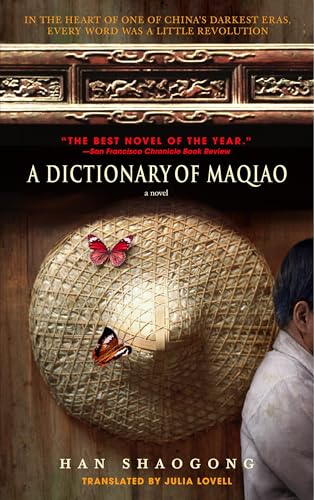
A Dictionary of Maqiao by Han Shaogong, translated from the Chinese by Julia Lovell

The Lily Pond by Annika Thor, translated from the Swedish by Linda Schenck
A Dictionary of Maqiao by Han Shaogong, translated from the Chinese by Julia Lovell
2labfs39
Books Read in 2024
January
1. Study for Obedience by Sarah Bernstein (F, 3.5*)
2. The Old Capital by Yasunari Kawabata, translated from the Japanese by J. Martin Holman (TF, 3*)
3. The Seventh Cross by Anna Seghers, translated from the German by Margot Bettauer Dembo (TF, 3.5*)
4. All Systems Red by Martha Wells (SF, 4*)
5. Chekhov by Henri Troyat, translated from the French by Michael Henry Heim (TNF, 4.5*)
6. The Song of Achilles by Madeline Miller (F, 5*)
7. Artificial Condition by Martha Wells (SF, 3*)
8. Hidden Valley Road: Inside the Mind of an American Family by Robert Kolker (NF, 4*)
9. Minor Detail by Shibli Adania, translated from the Arabic by Elisabeth Jaquette (TF, 3.5*)
February
10. Peter Duck by Arthur Ransome (F, 3*)
11. Days at the Morisaki Bookshop by Satoshi Yagisawa, translated from the Japanese by Eric Ozawa (TF, 3*)
12. Rogue Protocol by Martha Wells (SF, 3.5*)
13. Mãn by Kim Thúy, translated from the French by Sheila Fischman (TF, 3.5*)
14. River of the Gods by Candice Millard (NF, 3*)
15. The Day Lasts More than a Hundred Years by Chingiz Aitmatov, translated from the Russian by John French (TF, 4*)
16. Exit Strategy by Martha Wells (SF, 3.5*)
March
17. My Vietnam, Your Vietnam: A Dual Memoir by Christina Vo & Nghia M. Vo (NF, 3*)
18. Grass Soup by Zhang Xianliang, translated from the Chinese by Martha Avery (TNF, 4*)
19. Tinkers by Paul Harding (F, 3.5*)
20. Red Scarf Girl: A Memoir of the Cultural Revolution by Ji-li Jiang (YANF, 3.5*)
21. Feather in the Storm: A Childhood Lost in China by Emily Wu and Larry Engelmann (NF, 4*)
22. Network Effect by Martha Wells (SF, 4.5*)
23. Hungry Ghosts: Mao's Secret Famine by Jasper Becker (NF, 3.5*)
April
24. Fugitive Telemetry by Martha Wells (SF, 3.5*)
25. Mao's Great Famine by Frank Dikötter (NF, 4*)
26. Apeirogon by Colum McCann (F, 4.5*)
27. System Collapse by Martha Wells (SF, 4*)
28. A Faraway Island by Annika Thor, translated from the Swedish by Linda Schenck (TYA, 4*)
May
29. Half of Man is Woman by Zhang Xianliang, translated from the Chinese by Martha Avery (TF, 3.5*)
30. When We Were Colored by Clifton L. Taulbert (NF, 3*)
31. The Lily Pond by Annika Thor, translated from the Swedish by Linda Schenck (TF, 3*)
January
1. Study for Obedience by Sarah Bernstein (F, 3.5*)
2. The Old Capital by Yasunari Kawabata, translated from the Japanese by J. Martin Holman (TF, 3*)
3. The Seventh Cross by Anna Seghers, translated from the German by Margot Bettauer Dembo (TF, 3.5*)
4. All Systems Red by Martha Wells (SF, 4*)
5. Chekhov by Henri Troyat, translated from the French by Michael Henry Heim (TNF, 4.5*)
6. The Song of Achilles by Madeline Miller (F, 5*)
7. Artificial Condition by Martha Wells (SF, 3*)
8. Hidden Valley Road: Inside the Mind of an American Family by Robert Kolker (NF, 4*)
9. Minor Detail by Shibli Adania, translated from the Arabic by Elisabeth Jaquette (TF, 3.5*)
February
10. Peter Duck by Arthur Ransome (F, 3*)
11. Days at the Morisaki Bookshop by Satoshi Yagisawa, translated from the Japanese by Eric Ozawa (TF, 3*)
12. Rogue Protocol by Martha Wells (SF, 3.5*)
13. Mãn by Kim Thúy, translated from the French by Sheila Fischman (TF, 3.5*)
14. River of the Gods by Candice Millard (NF, 3*)
15. The Day Lasts More than a Hundred Years by Chingiz Aitmatov, translated from the Russian by John French (TF, 4*)
16. Exit Strategy by Martha Wells (SF, 3.5*)
March
17. My Vietnam, Your Vietnam: A Dual Memoir by Christina Vo & Nghia M. Vo (NF, 3*)
18. Grass Soup by Zhang Xianliang, translated from the Chinese by Martha Avery (TNF, 4*)
19. Tinkers by Paul Harding (F, 3.5*)
20. Red Scarf Girl: A Memoir of the Cultural Revolution by Ji-li Jiang (YANF, 3.5*)
21. Feather in the Storm: A Childhood Lost in China by Emily Wu and Larry Engelmann (NF, 4*)
22. Network Effect by Martha Wells (SF, 4.5*)
23. Hungry Ghosts: Mao's Secret Famine by Jasper Becker (NF, 3.5*)
April
24. Fugitive Telemetry by Martha Wells (SF, 3.5*)
25. Mao's Great Famine by Frank Dikötter (NF, 4*)
26. Apeirogon by Colum McCann (F, 4.5*)
27. System Collapse by Martha Wells (SF, 4*)
28. A Faraway Island by Annika Thor, translated from the Swedish by Linda Schenck (TYA, 4*)
May
29. Half of Man is Woman by Zhang Xianliang, translated from the Chinese by Martha Avery (TF, 3.5*)
30. When We Were Colored by Clifton L. Taulbert (NF, 3*)
31. The Lily Pond by Annika Thor, translated from the Swedish by Linda Schenck (TF, 3*)
3labfs39
Short Stories
See the previous thread for list of Chekhov stories read in January.
1. The Victim by Junichirō Tanizaki, translated by Ivan Morris
2. Rome 16 October 1943 a visual adaptation by Sarah Laing of a short story by Giacomo Debenedetti
Anton Chekhov, translated by Constance Garnett
3. The Trousseau
4. An Inquiry
5. Fat and Thin
6. A Tragic Actor
7. A Slander
8. The Bird Market
9. Choristers
10. The Album
See the previous thread for list of Chekhov stories read in January.
1. The Victim by Junichirō Tanizaki, translated by Ivan Morris
2. Rome 16 October 1943 a visual adaptation by Sarah Laing of a short story by Giacomo Debenedetti
Anton Chekhov, translated by Constance Garnett
3. The Trousseau
4. An Inquiry
5. Fat and Thin
6. A Tragic Actor
7. A Slander
8. The Bird Market
9. Choristers
10. The Album
4labfs39
Book Club
✔January: The Song of Achilles by Madeline Miller
✔February: This Other Eden by Paul Harding
March: The Lone Winter by Anne Bosworth Greene
✔April: Apeirogon by Colum McCann
May: The Revised Fundamentals of Caregiving by Jonathan Evison
June: The Frozen River by Ariel Lawhon
Holocaust Literature
1. Rome 16 October 1943 adaptation by Sarah Laing, original story by Giacomo Debenedetti
2. A Faraway Island by Annika Thor
Nobel Laureates
1. The Old Capital by Yasunari Kawabata
Graphic Stories
1. 1. Rome 16 October 1943 adaptation by Sarah Laing, original story by Giacomo Debenedetti
In French
✔January: The Song of Achilles by Madeline Miller
✔February: This Other Eden by Paul Harding
✔April: Apeirogon by Colum McCann
May: The Revised Fundamentals of Caregiving by Jonathan Evison
June: The Frozen River by Ariel Lawhon
Holocaust Literature
1. Rome 16 October 1943 adaptation by Sarah Laing, original story by Giacomo Debenedetti
2. A Faraway Island by Annika Thor
Nobel Laureates
1. The Old Capital by Yasunari Kawabata
Graphic Stories
1. 1. Rome 16 October 1943 adaptation by Sarah Laing, original story by Giacomo Debenedetti
In French
5labfs39
Reading Globally
Books I've read in 2024 by nationality of author (a tricky business):
American: 13 (7 in Murderbot series)
Canadian: 1
Chinese: 4
Dutch: 1
English: 1
French (Russian): 1
German: 1
Irish: 1
Japanese: 2
Kyrgyz: 1
Palestinian: 1
Swedish: 2
Vietnamese American: 1
Vietnamese Canadian: 1
Check out my Global Challenge thread, labfs39 reads around the world, for a look at a cumulative list since around 2010. And I've broken out the US by state in my labfs39 tackles the states thread.
Books I've read in 2024 by nationality of author (a tricky business):
American: 13 (7 in Murderbot series)
Canadian: 1
Chinese: 4
Dutch: 1
English: 1
French (Russian): 1
German: 1
Irish: 1
Japanese: 2
Kyrgyz: 1
Palestinian: 1
Swedish: 2
Vietnamese American: 1
Vietnamese Canadian: 1
Check out my Global Challenge thread, labfs39 reads around the world, for a look at a cumulative list since around 2010. And I've broken out the US by state in my labfs39 tackles the states thread.
6labfs39
Book stats for 2024:
I am trying to promote diversity in my reading and, for the lack of a more refined method, am tracking the following:
books:
total: 31 (9 in 2 series)
countries: 13
translations: 11 (34%)
in French:
nonfiction: 10 (33%)
Authors:
women: 16 (55%)
men: 13 (45%)
both: 2
nonbinary:
nonwhite and/or non-European/US/British Commonwealth: 11 (34%)
new to me authors: 16 (55%)
Genres:
literary fiction: 10
contemporary fiction: 1
children's fiction: 1
young adult: 3
science fiction: 7
biography/memoir: 6
history: 3
medical history: 1
I am trying to promote diversity in my reading and, for the lack of a more refined method, am tracking the following:
books:
total: 31 (9 in 2 series)
countries: 13
translations: 11 (34%)
in French:
nonfiction: 10 (33%)
Authors:
women: 16 (55%)
men: 13 (45%)
both: 2
nonbinary:
nonwhite and/or non-European/US/British Commonwealth: 11 (34%)
new to me authors: 16 (55%)
Genres:
literary fiction: 10
contemporary fiction: 1
children's fiction: 1
young adult: 3
science fiction: 7
biography/memoir: 6
history: 3
medical history: 1
7labfs39
Unread E-Books:
2022
North to Paradise: A Memoir by Ousman Umar
Where the Desert Meets the Sea by Werner Sonne
American Seoul: A Memoir by Helena Rho
Light to the Hills by Bonnie Blaylock
Local: A Memoir by Jessica Machado
This Time Next Year We'll Be Laughing by Jacqueline Winspear
The Singing Trees by Boo Walker (accidental purchase)
2023
Bird of Paradise by Ada Leverson (public domain)
The Limit by Ada Leverson (public domain)
The Hired Man by Aminatta Forna
Transcendent Kingdom by Yaa Gyasi
Kamusari Tales Told at Night (Forest Book 2) by Shion Miura
Where Waters Meet by Zhang Ling (First Reads)
The Wren and the Swordfish Pilot by Stella Hutchinson (First Reads)
Elizabeth's Star by Rhonda Forrest (First Reads)
The Lost Girl from Belzec: A WW2 Historical Novel, Based on a True Story of a Jewish Holocaust Survivor by Ravit Raufman
Ester and Ruzya: How My Grandmothers Survived Hitler's War and Stalin's Peace by Masha Gessen
The Quiet American by Graham Greene
The Girl with the Louding Voice by Abi Daré (First Reads)
Americanah by Chimamanda Ngozi Adichie
The Guernsey Saga: The moving story of one English family under Nazi occupation by Diana Bachmann (First Reads)
Journey To The Heartland by Xiaolong Huang (First Reads)
Don't Forget to Write by Sara Goodman Confino (First Reads)
Hard-Boiled Wonderland and the End of the World by Haruki Murakami
A Thousand Ships by Natalie Haynes
Scorpio by Marko Kloos (First Reads)
Freydis by Gunhild Haugnes (First Reads)
2024
Intimacies by Katie Kitamura
Mr. Britling Sees It Through by H. G. Wells
The Lone Winter by Anne Bosworth Greene (book club selection, public domain)
The Great Escape: Nine Jews Who Fled Hitler and Changed the World by Kati Marton
Operation Columba—The Secret Pigeon Service: The Untold Story of World War II Resistance in Europe by Gordon Corera
The Tiger in the Attic by Edith Milton
Lovers at the Museum (short story) by Isabel Allende (First Reads)
Cut and Thirst: A Short Story by Margaret Atwood (First Reads)
A Light through the Cracks: A Climber's Story by Beth Rodden (First Reads)
The White Lady by Jacqueline Winspear
To Keep the Sun Alive by Rabeah Ghaffari (First Reads)
The Diary of a Provincial Lady by E.M. Delafield
The Curious Secrets of Yesterday by Namrata Patel (First Reads)
2022
North to Paradise: A Memoir by Ousman Umar
Where the Desert Meets the Sea by Werner Sonne
American Seoul: A Memoir by Helena Rho
Light to the Hills by Bonnie Blaylock
Local: A Memoir by Jessica Machado
This Time Next Year We'll Be Laughing by Jacqueline Winspear
The Singing Trees by Boo Walker (accidental purchase)
2023
Bird of Paradise by Ada Leverson (public domain)
The Limit by Ada Leverson (public domain)
The Hired Man by Aminatta Forna
Transcendent Kingdom by Yaa Gyasi
Kamusari Tales Told at Night (Forest Book 2) by Shion Miura
Where Waters Meet by Zhang Ling (First Reads)
The Wren and the Swordfish Pilot by Stella Hutchinson (First Reads)
Elizabeth's Star by Rhonda Forrest (First Reads)
The Lost Girl from Belzec: A WW2 Historical Novel, Based on a True Story of a Jewish Holocaust Survivor by Ravit Raufman
Ester and Ruzya: How My Grandmothers Survived Hitler's War and Stalin's Peace by Masha Gessen
The Quiet American by Graham Greene
The Girl with the Louding Voice by Abi Daré (First Reads)
Americanah by Chimamanda Ngozi Adichie
The Guernsey Saga: The moving story of one English family under Nazi occupation by Diana Bachmann (First Reads)
Journey To The Heartland by Xiaolong Huang (First Reads)
Don't Forget to Write by Sara Goodman Confino (First Reads)
Hard-Boiled Wonderland and the End of the World by Haruki Murakami
A Thousand Ships by Natalie Haynes
Scorpio by Marko Kloos (First Reads)
Freydis by Gunhild Haugnes (First Reads)
2024
Intimacies by Katie Kitamura
Mr. Britling Sees It Through by H. G. Wells
The Lone Winter by Anne Bosworth Greene (book club selection, public domain)
The Great Escape: Nine Jews Who Fled Hitler and Changed the World by Kati Marton
Operation Columba—The Secret Pigeon Service: The Untold Story of World War II Resistance in Europe by Gordon Corera
The Tiger in the Attic by Edith Milton
Lovers at the Museum (short story) by Isabel Allende (First Reads)
Cut and Thirst: A Short Story by Margaret Atwood (First Reads)
A Light through the Cracks: A Climber's Story by Beth Rodden (First Reads)
The White Lady by Jacqueline Winspear
To Keep the Sun Alive by Rabeah Ghaffari (First Reads)
The Diary of a Provincial Lady by E.M. Delafield
The Curious Secrets of Yesterday by Namrata Patel (First Reads)
8labfs39
TIOLI Challenges
March
Challenge #2: Read a book whose author has three names
My Vietnam, Your Vietnam (Nghia M. Vo)
Challenge #4: Read a book whose title has only one word, but the word is polysyllabic
Tinkers
Challenge #5: Read a book where there is at least one embedded word of 3 letters or more in the author’s name
Feather in the Storm (Engelmann)
Network Effect (Marsha Wells)
Challenge #6: Saint Patrick's Day SHAMROCK rolling title challenge
Hungry Ghosts
Challenge #12: Read a book that is set or was published in the 1960s
Grass Soup (June-Sept 1960)
Red Scarf Girl (1966-68)
April
Challenge #3: Read a book in which you learn something
Mao's Great Famine
Challenge #6: Historical fiction set in WWII
A Faraway Island
Challenge #7: Read a book about a war that divides a nation, name the war
Apeirogon (Palestine/Israel)
Challenge #9: Read a book where there are at least two of the letter “s” in the title
System Collapse
Challenge #10: Read a book whose title includes one, and only one, adjective
Fugitive Telemetry
May
Challenge #5: Read a book that you acquired in 2024
When We Were Colored
Challenge #10: Read a book with first person narration
Half of Man is Woman
March
Challenge #2: Read a book whose author has three names
My Vietnam, Your Vietnam (Nghia M. Vo)
Challenge #4: Read a book whose title has only one word, but the word is polysyllabic
Tinkers
Challenge #5: Read a book where there is at least one embedded word of 3 letters or more in the author’s name
Feather in the Storm (Engelmann)
Network Effect (Marsha Wells)
Challenge #6: Saint Patrick's Day SHAMROCK rolling title challenge
Hungry Ghosts
Challenge #12: Read a book that is set or was published in the 1960s
Grass Soup (June-Sept 1960)
Red Scarf Girl (1966-68)
April
Challenge #3: Read a book in which you learn something
Mao's Great Famine
Challenge #6: Historical fiction set in WWII
A Faraway Island
Challenge #7: Read a book about a war that divides a nation, name the war
Apeirogon (Palestine/Israel)
Challenge #9: Read a book where there are at least two of the letter “s” in the title
System Collapse
Challenge #10: Read a book whose title includes one, and only one, adjective
Fugitive Telemetry
May
Challenge #5: Read a book that you acquired in 2024
When We Were Colored
Challenge #10: Read a book with first person narration
Half of Man is Woman
9labfs39
New month, new thread. It's always nice to start afresh. Thanks as always for joining me on my reading journey. I'm currently not reading much despite enjoying the book I've got going: My Vietnam, Your Vietnam. Not sure why I'm finding it hard to sit and read. The weather is conducive to sitting inside with a book: a wind chill of 10F today, our one and only truly cold day this winter. May turn out to be the warmest winter in Maine on record.
11RidgewayGirl
>9 labfs39: You've had a lot of great reading already this year. Maybe your brain just wants to digest it all for a bit.
12EBT1002
Hi Lisa. Happy New Thread. I'll be interested in how My Vietnam, Your Vietnam settles for you. It sounds interesting.
13cindydavid4
>1 labfs39: hope you enjoy the Checkov. He is my fav russian writer. Like you I dont care to read plays but his seem easier than most; plus you can always watch them performed on youtube
14rasdhar
Happy New Thread! I'm so impressed by the impeccable organisation of your thread. Looking forward to your reviews as you read!
15labfs39
>10 msf59: Thanks, Mark. Busy morning at the feeders: downy woodpecker, mourning dove, cardinals, titmouse, goldfinch... It's only 3F so they are needing to eat, eat, eat.
>11 RidgewayGirl: My reading year has started off well. Lots of good books with only a few so-so ones. I'm enjoying My Vietnam, Your Vietnam, but I read a few pages then wander off.
You know, looking back over the books I've read, I realized I rated The Old Capital only three stars, yet I think back on it often and with pleasure. Funny how that works sometimes.
>12 EBT1002: Thanks, Ellen. I think My Vietnam, Your Vietnam is a good book, but since the chapters alternate voices, they tend to be short, and it's easy to find a stopping spot.
>13 cindydavid4: I need to get back to Chekhov's short stories. It's easy for me to fall off the short story bandwagon. I would like to cultivate the habit. Seeing live performances would be great, but I'm limited here in Maine. I need to take advantage of recorded performances more often.
>14 rasdhar: Thanks. I love lists and data, so my threads are always clogged at the top.
>11 RidgewayGirl: My reading year has started off well. Lots of good books with only a few so-so ones. I'm enjoying My Vietnam, Your Vietnam, but I read a few pages then wander off.
You know, looking back over the books I've read, I realized I rated The Old Capital only three stars, yet I think back on it often and with pleasure. Funny how that works sometimes.
>12 EBT1002: Thanks, Ellen. I think My Vietnam, Your Vietnam is a good book, but since the chapters alternate voices, they tend to be short, and it's easy to find a stopping spot.
>13 cindydavid4: I need to get back to Chekhov's short stories. It's easy for me to fall off the short story bandwagon. I would like to cultivate the habit. Seeing live performances would be great, but I'm limited here in Maine. I need to take advantage of recorded performances more often.
>14 rasdhar: Thanks. I love lists and data, so my threads are always clogged at the top.
16FlorenceArt
>15 labfs39: Books with multiple viewpoints are terrible for me. I tend to wander off every time there is a switch.
17markon
Interesting discussion of holocaust literature in fiction towards the end of your last thread Lisa. There is a lot of "trauma drama" out there - I think the trick will be discerning this from good fiction - and I know, that's so subjective, and many people just want to be entertained. (Not a bad thing in itself, but about the holocaust - not entertaining!)
18dianeham
>16 FlorenceArt: I’ve actually read some books like that out of order. I read all person a’s chapters then all person b’s, etc.
19labfs39
>16 FlorenceArt: Yes, that's what's happening with me. Because the POV switches every 2-3 pages, I'm finding it harder to stay focused for long periods of time.
>17 markon: Exactly. Looking for authenticity used to be easier, as I looked to see if the author was a survivor or family member of a survivor, and, although not foolproof, it was a helpful guide. Now, authors are choosing to write about the Holocaust for any number of reasons, and sometimes it makes me uncomfortable. The proliferation of "The _________ of Auschwitz" books is astonishing.
>18 dianeham: That's an interesting idea, Diane. I am much more interested in the father's story than the daughter's. The book is well-structured though, the chapters often fit together in surprising ways. I powered through a bunch this afternoon, missing my haircut appointment, which I've been waiting for all week! Gah.
>17 markon: Exactly. Looking for authenticity used to be easier, as I looked to see if the author was a survivor or family member of a survivor, and, although not foolproof, it was a helpful guide. Now, authors are choosing to write about the Holocaust for any number of reasons, and sometimes it makes me uncomfortable. The proliferation of "The _________ of Auschwitz" books is astonishing.
>18 dianeham: That's an interesting idea, Diane. I am much more interested in the father's story than the daughter's. The book is well-structured though, the chapters often fit together in surprising ways. I powered through a bunch this afternoon, missing my haircut appointment, which I've been waiting for all week! Gah.
20labfs39
Phew! I finally finished My Vietnam, Your Vietnam and it's going to be a hard review to write because I have mixed feelings about it. I'm going to end up with the kids today (unexpectedly) so I won't have time to write it until later. But in the meantime, I get to start a new book. Woohoo!
21labfs39
After pulling Swallowdale off the shelf, I began reading Grass Soup. How's that for a change of tone? So far the writing is excellent, although the experience is brutal. Here's a sample:
The rehabilitation labor camp convicts are weeding rice paddies, but the water contains a bacteria that causes excruciating blisters.
The best solution was to get out of the water. To get out of the mud soup. We would bind a thick wad of weeds with other weeds and then toss the bundle up on to the nearby bank, and every time we did this we glimpsed that oh-so-desirable dry land. We were like sailors, out at sea for days, finally catching sight of land on the horizon. It was so close to us and yet so remote. We never knew when we would be allowed to dock, to enjoy the land's dryness.
The rehabilitation labor camp convicts are weeding rice paddies, but the water contains a bacteria that causes excruciating blisters.
The best solution was to get out of the water. To get out of the mud soup. We would bind a thick wad of weeds with other weeds and then toss the bundle up on to the nearby bank, and every time we did this we glimpsed that oh-so-desirable dry land. We were like sailors, out at sea for days, finally catching sight of land on the horizon. It was so close to us and yet so remote. We never knew when we would be allowed to dock, to enjoy the land's dryness.
23labfs39
This was an Early Reviewer book I picked up because of a) the cover and b) the dual authors.

My Vietnam, Your Vietnam: A Father Flees. A Daughter Returns. A Dual Memoir (working title) by Christina Vo & Nghia M. Vo
Advance reader copy, to be published April 16, 2024, 303 p., Three Rooms Press
Christina Vo grew up in a series of small towns across the US, almost always the only Asian family in town. Her father, Nghia, was frequently moving to new internships, residencies, and eventually practices as a physician surgeon interested in neuropsychiatry. She was never close to her taciturn father, a relationship that only worsened when her mother died when Christina was fourteen. After college, Christina worked an office job for a giant pharmaceutical company, but felt unfulfilled. What she needed, she thought, was to go to Vietnam. With little forethought or planning, she headed for Hanoi, not understanding her father's silent grief at her decision.
Nghia was raised for several years by his grandmother in the countryside of South Vietnam and the rest by his single mother in Saigon. He unwittingly embraced the dual nature of Vietnam (North and South, rural and urban, Catholic and Buddhist). He became a doctor and upon graduating, became a joined the Army of the Republic of Vietnam. He was stationed in the South and when the Communists took over, he was able to escape to the US. He had to leave behind his wife and wasn't reunited for several years. He immediately began working on translating his French-based medical degree to an American one and led a successful, if quiet, life in the US.
The book is told in alternating chapters between Christina's impressions of Vietnam on three separate trips, living there for extended periods throughout her twenties, and Nghia's memories and longing for a country that no longer exists. Each chapter is only a few pages long, so the change between perspectives is frequent, but often with overlapping subjects. Nghia's chapters are taken from his previously published memoir, The Pink Lotus.
Christina's journey of self-discovery is sometimes self-sabotaging, as she refuses for years to learn Vietnamese and often acts impulsively, not unlike many twenty-year-olds. I had hoped for more of a reconciliation between father and daughter, but their relationship is, I feel, still a work in progress. Both authors are good writers, and I especially enjoyed Nghia's childhood memories. Overall the dual memoir is a look at how differently two generations of family can view their country of origin and yet both feel a connection and love despite living abroad for most of their lives.

My Vietnam, Your Vietnam: A Father Flees. A Daughter Returns. A Dual Memoir (working title) by Christina Vo & Nghia M. Vo
Advance reader copy, to be published April 16, 2024, 303 p., Three Rooms Press
Christina Vo grew up in a series of small towns across the US, almost always the only Asian family in town. Her father, Nghia, was frequently moving to new internships, residencies, and eventually practices as a physician surgeon interested in neuropsychiatry. She was never close to her taciturn father, a relationship that only worsened when her mother died when Christina was fourteen. After college, Christina worked an office job for a giant pharmaceutical company, but felt unfulfilled. What she needed, she thought, was to go to Vietnam. With little forethought or planning, she headed for Hanoi, not understanding her father's silent grief at her decision.
Nghia was raised for several years by his grandmother in the countryside of South Vietnam and the rest by his single mother in Saigon. He unwittingly embraced the dual nature of Vietnam (North and South, rural and urban, Catholic and Buddhist). He became a doctor and upon graduating, became a joined the Army of the Republic of Vietnam. He was stationed in the South and when the Communists took over, he was able to escape to the US. He had to leave behind his wife and wasn't reunited for several years. He immediately began working on translating his French-based medical degree to an American one and led a successful, if quiet, life in the US.
The book is told in alternating chapters between Christina's impressions of Vietnam on three separate trips, living there for extended periods throughout her twenties, and Nghia's memories and longing for a country that no longer exists. Each chapter is only a few pages long, so the change between perspectives is frequent, but often with overlapping subjects. Nghia's chapters are taken from his previously published memoir, The Pink Lotus.
Christina's journey of self-discovery is sometimes self-sabotaging, as she refuses for years to learn Vietnamese and often acts impulsively, not unlike many twenty-year-olds. I had hoped for more of a reconciliation between father and daughter, but their relationship is, I feel, still a work in progress. Both authors are good writers, and I especially enjoyed Nghia's childhood memories. Overall the dual memoir is a look at how differently two generations of family can view their country of origin and yet both feel a connection and love despite living abroad for most of their lives.
24BLBera
>23 labfs39: This does sound good, Lisa. Great comments.
25labfs39
>24 BLBera: I sometimes found Christina frustrating, and I was disappointed that father and daughter never talked: about how he felt when she decided to move to Hanoi or even about the book. In the afterward she said the only interaction they had was when she sent him the final proof and he said good job. She took all of his parts from his memoir.
I think this is a case where I didn't want to be too negative about a semi-novice author's book, so wrote a more positive piece than I truly felt. I don't know. The beginning was good, and I liked the father's parts.
I think this is a case where I didn't want to be too negative about a semi-novice author's book, so wrote a more positive piece than I truly felt. I don't know. The beginning was good, and I liked the father's parts.
26rasdhar
>23 labfs39: This sounds interesting, thanks for such a good review. I can see how a lack of resolution might be frustrating.
27labfs39
>26 rasdhar: It wasn't even that I needed a resolution, but she spent the whole book saying how she didn't have a relationship with her father and then never talked to him. And the few times he reached out to her, she shut him down. She even wrote a whole book about it, but never once asked her father, "what did you think when I went to Hanoi?"
28labfs39
I forget who suggested this TED talk, but it was quite interesting and funny:
The hilarious art of book design by Chip Kidd. Reminded me a bit of What We See When We Read in that the book designer has to distill and give form to the text. Chip Kidd has designed some amazing jackets.
The hilarious art of book design by Chip Kidd. Reminded me a bit of What We See When We Read in that the book designer has to distill and give form to the text. Chip Kidd has designed some amazing jackets.
29labfs39
Dan, per our discussion on the last thread about kids science books, I wanted to ask if you had a recommendation for a book about magnetic fields. My niece was fascinated by the idea that the north and south poles on the sun flip every 11 years or so. How? Why? I have no idea! I finally found a website that explained why it takes thousands, if not hundreds of thousands of years for energy/light/photons to make their way from the sun's core to the surface, but only 8 minutes to reach Earth. Now to distill it into kid language...
30rasdhar
>28 labfs39: Oh, got it! Yes, that does sound a bit bewildering. Thanks for the Chip Kidd link - I enjoyed that.
31labfs39
>30 rasdhar: Glad you enjoyed the TED talk, Rasdhar. Wish I remembered who originally posted it.
32labfs39
I purchased this one in December after a recommendation from wandering_star. I have read one other memoir about time spent in a Chinese forced labor reeducation camp: In search of my homeland by Ertai Gao. It was less well-written and/or translated than Grass Soup.

Grass Soup by Zhang Xianliang, translated from the Chinese by Martha Avery
Originally published 1992, English translation 1994, Godine Publishers
Xianliang Zhang was 21-years-old when he was first sent to a forced labor reeducation camp during the Anti-Rightist Campaign. His poetry had been deemed counter-revolutionary and he would spend a total of 22 years in the camps and prisons over the course of his life. This book is based on scraps of a diary he kept and covers a relatively short amount of time: June 11-September 8, 1960. Each chapter begins with a few diary entries, usually only a sentence or two per entry, and then the author describes all that he could not say about what happened on those days. Because his diary was subject to confiscation and reading by the censors at any time, he had to be extremely circumspect about what he said. But now the author is able to reconstruct the past from the clues in what was said, and equally important what was not said, as well as reflect on the experience from a point decades in the future. The result is a fascinating diary/memoir/history of the day-to-day life of an intellectual struggling to survive famine, but also of the mental gymnastics required to "rehabilitate" oneself when accused of wrong thoughts.
Recommended to those interested in the topics of labor camps or the Anti-Rightist Campaign.

Grass Soup by Zhang Xianliang, translated from the Chinese by Martha Avery
Originally published 1992, English translation 1994, Godine Publishers
Xianliang Zhang was 21-years-old when he was first sent to a forced labor reeducation camp during the Anti-Rightist Campaign. His poetry had been deemed counter-revolutionary and he would spend a total of 22 years in the camps and prisons over the course of his life. This book is based on scraps of a diary he kept and covers a relatively short amount of time: June 11-September 8, 1960. Each chapter begins with a few diary entries, usually only a sentence or two per entry, and then the author describes all that he could not say about what happened on those days. Because his diary was subject to confiscation and reading by the censors at any time, he had to be extremely circumspect about what he said. But now the author is able to reconstruct the past from the clues in what was said, and equally important what was not said, as well as reflect on the experience from a point decades in the future. The result is a fascinating diary/memoir/history of the day-to-day life of an intellectual struggling to survive famine, but also of the mental gymnastics required to "rehabilitate" oneself when accused of wrong thoughts.
Recommended to those interested in the topics of labor camps or the Anti-Rightist Campaign.
33kjuliff
>32 labfs39: This sounds very interesting. I doubt I’ll be able to get it on audio, but it never ceases to surprise me how people survive years of imprisonment for their political views. I just don’t know how they do it, especially when they are forbidden or unable to write.
34SassyLassy
>32 labfs39: Noted and thanks. Martha Avery is a translator I haven't seen before, but it sounds as if she did a good job.
35labfs39
>33 kjuliff: The author talks about this a fair amount: how it's excruciating punishment for a writer to be prevented from writing. He tried to fulfill his desire by expression his emotions as eulogies to appropriate topics or people. So he tried to translate his rapture at a beautiful sunset into an ode to the tractor. In so doing he also hoped to impress the censors with his sincerity of correct thinking. I'm not sure it helped him though as he was imprisoned for 22 years.
36labfs39
>34 SassyLassy: I did think Martha Avery did a nice job with the translation. It read smoothly and occasional footnotes helped with a few cultural points or terms that the general reader might not know. She has translated other books by him which I will seek out. You might be interested in this 1991 article, which talks about her work with Zhang.
37kjuliff
>35 labfs39: Yes I’m sure the writing helped him. Behrouz Boochani an asylum seeker imprisoned on Manus Island by Australian authorities managed to get his book out by short SMS texts. No Friends But the Mountains eventually published and the writer freed. A poet, Behrouz Boochani was able to survive and keep sane by writing.
38labfs39
>37 kjuliff: I've heard about Boochani's story, but haven't read his book.
Here's a quote from Zhang:
I used the pen to survive. This diary was written in the interstices, the cracks of time, when I wasn't either working in the fields or writing something else. As I wrote it, the first thing I would think of was not what had happened on a particular day, nor of the thoughts I might have had that were worth setting down. Instead, I would think first of the events or thoughts that I must absolutely not write down.
Here's a quote from Zhang:
I used the pen to survive. This diary was written in the interstices, the cracks of time, when I wasn't either working in the fields or writing something else. As I wrote it, the first thing I would think of was not what had happened on a particular day, nor of the thoughts I might have had that were worth setting down. Instead, I would think first of the events or thoughts that I must absolutely not write down.
39cindydavid4
>33 kjuliff: Ive wondered the same. Lots more determination and strength than Id have thats for sure.
40labfs39
>39 cindydavid4: Not being a writer, I would have had a much harder time with the grass soup.
41wandering_star
>32 labfs39: I had forgotten that I mentioned this to you! It's a powerful read isn't it? It's decades since I read it but your review has really brought it back to me.
42baswood
>32 labfs39: Recommended to those interested in the topics of labor camps or the Anti-Rightist Campaign.
I dream of an anti-rightest campaign!
I dream of an anti-rightest campaign!
43labfs39
>41 wandering_star: Thanks, Margaret. It has made me interested in learning more about the time period. I thought I had Mao's Great Famine on my shelves, but I don't. I do have Mao: The Unknown Story by Jung Chang. I might attempt that. I know nothing about Chinese history, so it will be a steep learning curve.
46mabith
Mao's Great Famine is worth getting too, though it's an overload of facts and figures at times. Hungry Ghosts is another about the famine but focuses a little more heavily on individual stories. I read them essentially as companion pieces, which worked well for me.
I've not read Chang's Mao biography, though I know there's some criticism about it (I'd highly recommend her multi-generational family memoir Wild Swans though, and her book Big Sister, Red Sister, Little Sister: Three Women at the Heart of Twentieth-Century China). I did a heap of 20th century China reading some years back.
I've not read Chang's Mao biography, though I know there's some criticism about it (I'd highly recommend her multi-generational family memoir Wild Swans though, and her book Big Sister, Red Sister, Little Sister: Three Women at the Heart of Twentieth-Century China). I did a heap of 20th century China reading some years back.
47labfs39
>46 mabith: Thanks for alerting me to the controversy about Chang's book. I will definitely not start there and may get rid of it. I'm not interested in a polemic. Would you recommend starting with the famine books, or is there another book you would recommend for an introduction?
48Jim53
Hi Lisa, just getting caught up and sticking my head in to say hi. That list at the top is quite impressive!
49cindydavid4
>43 labfs39: before you read Mao; read this authors first book wild swans covers three geneations of women in china (with the author is the last) She tells their story using major events happening from the Boxer Rebellion through the cultual revolutoin, that will give you a taste of whats coming in Mao in HF you cant beat Amy Tam* Start with Joy Luck club Most of her books deal with immigation , with traitional way struggling with their new life in America
wrong Amy Tam Go here instead https://www.librarything.com/author/tanamy-1
wrong Amy Tam Go here instead https://www.librarything.com/author/tanamy-1
50cindydavid4
double post
51mabith
Knowing Chang's history, I think it was always too big an ask to do that kind of biography. I'm sure there's some value in it, but how many biographies about Mao is one going to read, after all. I will say her biography, Empress Dowager Cixi, had criticisms about excusing deaths caused or potentially caused by Cixi, but I found no merit in those comments myself after reading it, so it can be hard to tell the full extent of these things (but the Mao bio criticism seemed more serious).
52labfs39
>48 Jim53: Thanks, Jim, I appreciate your stopping by.
>49 cindydavid4: I thought I had Wild Swans, but it appears I don't. I'll look for a copy. I read some Amy Tan books back in the day, featuring, as you say, Chinese American immigrants. I was never wowed by them. I preferred Jean Kwok and Maxine Hong Kingston for that type of fiction.
>51 mabith: I'm new to Chinese history and historians, so I would have no frame of reference for the Mao bio. I need to start with something more objective. I have the Cixi bio too. I'll keep that one, but want to start with something in the 20th century.
>49 cindydavid4: I thought I had Wild Swans, but it appears I don't. I'll look for a copy. I read some Amy Tan books back in the day, featuring, as you say, Chinese American immigrants. I was never wowed by them. I preferred Jean Kwok and Maxine Hong Kingston for that type of fiction.
>51 mabith: I'm new to Chinese history and historians, so I would have no frame of reference for the Mao bio. I need to start with something more objective. I have the Cixi bio too. I'll keep that one, but want to start with something in the 20th century.
53msf59
Sweet Thursday, Lisa. Nothing much to report on the feeder front but I have been enjoying my trail walks. I enjoy seeing the returning birds like wood ducks and meadowlarks. I have not seen any cowbirds yet but they have been reported.
54SassyLassy
>43 labfs39: re Mao's Great Famine. Here is my review: https://www.librarything.com/topic/140064 post 121. I thought I had put it on the review page, but when I look at it my thread, I realize my review was probably too long for there. It is a truly worthwhile book. That particular thread has several books, fiction and nonfiction from China, so there might be some things you are interested in there, as is Hungry Ghosts which is also referenced there.
Below my post on the Dikotter book, dmsteyn recommends Tombstone: The Great Chinese Famine 1958-1962. The completist in me ordered and read that book too.
If you are just starting with China, I would recommend any of Jonathan Spence's books.
Below my post on the Dikotter book, dmsteyn recommends Tombstone: The Great Chinese Famine 1958-1962. The completist in me ordered and read that book too.
If you are just starting with China, I would recommend any of Jonathan Spence's books.
55ELiz_M
>43 labfs39: Two 1001 books that cover changes in China's culture:
Half of Man Is Woman takes place roughly from 1966-1976 in a Labor Reform Camp and State Farms in the province of Ningxia, during the time when the rest of the country was undergoing the Cultural Revolution and Leaden Wings is snapshot of the beginnings of a modernization movement in 1980s China. Told from multiple viewpoints, it is the story of reformers in the ministry of heavy industry and in a factory pushing against the established order.
Half of Man Is Woman takes place roughly from 1966-1976 in a Labor Reform Camp and State Farms in the province of Ningxia, during the time when the rest of the country was undergoing the Cultural Revolution and Leaden Wings is snapshot of the beginnings of a modernization movement in 1980s China. Told from multiple viewpoints, it is the story of reformers in the ministry of heavy industry and in a factory pushing against the established order.
56labfs39
>53 msf59: Not much happening at my feeders either. It's been raining cats and dogs, so maybe that's why. The snow is almost gone. An unprecedently warm winter for Maine.
>54 SassyLassy: Thanks, Sassy. Your review was fantastic, as were the suggestions below it (including by rebeccanyc). I will definitely be ordering some of these. A plethora of riches.
>55 ELiz_M: Half of Man is Woman is by the same author (and translator) as Grass Soup, but covers some later years in his "rehabilitation". I definitely want to read it. So many books!
>54 SassyLassy: Thanks, Sassy. Your review was fantastic, as were the suggestions below it (including by rebeccanyc). I will definitely be ordering some of these. A plethora of riches.
>55 ELiz_M: Half of Man is Woman is by the same author (and translator) as Grass Soup, but covers some later years in his "rehabilitation". I definitely want to read it. So many books!
58lilisin
Jumping into the China conversation as that has been my current reading obsession.
In Hongci Xu's memoir, No Wall Too High: One Man's Daring Escape from Mao's Darkest Prison, my biggest memory of the memoir was his amazing perseverance in writing his memoir considering the number of times it was destroyed by Chinese authorities, several times after completion which means each time he had to start again from scratch. I know I would not have had the mental fortitude to continue and the Chinese government would have indeed defeated me.
As for Jung Chang's Mao biography; I loved it and thought it was a fascinating and thorough look into Mao's life and it was a greatly written narrative that made very clear the direction of his life which I think is the most important when trying to understand a time period. My thought is that reading one book is not going to make you an expert in a field so even if there are errors, the likelihood of remembering the exact fact that is an error is low and shouldn't be a problem. It's more important to get the right flow to a life and her linear way of presenting him is excellent.
Jonathan Spence is of course excellent but upon reflection his works are much academic than Chang and I feel it best to have a previous base of knowledge of China before getting into his books. Again, they are superb and excellent, but much more difficult to read. But if you want to start with Spence, I believe his The Chinese and Their Revolution is a great place to start with.
In terms of more recent history I really enjoyed Yiwu Liao's Des balles et de l'opium (Bullets and Opium) about his Tiannemen Square experience and the length the Chinese government went to to destroy his life.
Of course Iris Chang's The Rape Of Nanking is a must read for Chinese history and sets the setting for what is to come after. This book also was of course heavily criticized so I think like the Jung Chang Mao book, you really need to take into consideration where the criticism is coming from and what is actually being criticized.
In Hongci Xu's memoir, No Wall Too High: One Man's Daring Escape from Mao's Darkest Prison, my biggest memory of the memoir was his amazing perseverance in writing his memoir considering the number of times it was destroyed by Chinese authorities, several times after completion which means each time he had to start again from scratch. I know I would not have had the mental fortitude to continue and the Chinese government would have indeed defeated me.
As for Jung Chang's Mao biography; I loved it and thought it was a fascinating and thorough look into Mao's life and it was a greatly written narrative that made very clear the direction of his life which I think is the most important when trying to understand a time period. My thought is that reading one book is not going to make you an expert in a field so even if there are errors, the likelihood of remembering the exact fact that is an error is low and shouldn't be a problem. It's more important to get the right flow to a life and her linear way of presenting him is excellent.
Jonathan Spence is of course excellent but upon reflection his works are much academic than Chang and I feel it best to have a previous base of knowledge of China before getting into his books. Again, they are superb and excellent, but much more difficult to read. But if you want to start with Spence, I believe his The Chinese and Their Revolution is a great place to start with.
In terms of more recent history I really enjoyed Yiwu Liao's Des balles et de l'opium (Bullets and Opium) about his Tiannemen Square experience and the length the Chinese government went to to destroy his life.
Of course Iris Chang's The Rape Of Nanking is a must read for Chinese history and sets the setting for what is to come after. This book also was of course heavily criticized so I think like the Jung Chang Mao book, you really need to take into consideration where the criticism is coming from and what is actually being criticized.
59avatiakh
I haven't read much modern Chinese history but will mention the graphic memoir, A Chinese Life by Li Kunwu in collaboration with Phillippe Otie. I found it a fascinating read.
60labfs39
Books to read on Chinese history:
general
The Gate of Heavenly Peace: The Chinese and Their Revolution, 1895-1980 by Jonathan Spence
The Search for Modern China by Jonathan Spence
Leaden Wings by Jie Zhang (rec by Eliz_M)
Zhou Enlai : the last perfect revolutionary by Wenqian Gao (rec by SassyLassy)
Maoism: A Global History by Julia Lovell (rec by wandering_star)
Quotations of Chairman Mao aka Little Red Book
dynasties
Empress Dowager Cixi by Jung Chang (on shelves, rec by mabith)
Two Years in the Forbidden City by Princess Der Ling (rec by lilisin)
WWII and Communist Revolution
Stilwell and the American Experience in China, 1911-45 by Barbara W. Tuchman
The Long March: The True History of Communist China's Founding Myth by Sun Shuyun
The Women of the Long March by Lily Xiao Hong Lee
Forgotten Ally: China's World War II, 1937-1945 by Rana Mitter
Red Star Over China: The Classic Account of the Birth of Chinese Communism by Edgar Snow (rec by dchaikin)
famine (1958-1962)
Mao's Great Famine by Frank Dikötter (rec by mabith and Sassy)
Hungry Ghosts by Jasper Becker (rec by mabith)
Tombstone: The Great Chinese Famine 1958-1962 by Yang Jisheng (rec by SassyLassy)
The corpse walker : real life stories, China from the bottom up by Liao Yiwu (rec by SassyLassy)
Cultural Revolution (1966-1976)
The Cultural Revolution by Frank Dikötter (on shelves)
memoirs/bios
Grass Soup by Zhang Xianliang
Wild Swans: Three Daughters of China by Jung Chang (rec by mabith, rec by cindydavid4)
Big Sister, Red Sister, Little Sister: Three Women at the Heart of Twentieth-Century China by Jung Chang (rec by mabith)
No Wall Too High: One Man's Daring Escape from Mao's Darkest Prison by Xu Hongci (rec by lilisin)
Bullets and Opium: Real-Life Stories of China After the Tiananmen Square Massacre by Yiwu Liao (rec by lilisin)
A Chinese Life by Li Kunwu (graphic novel) (rec by avatiakh)
Feather in the storm : a childhood lost in chaos by Emily Wu (on shelves)
No tears for Mao : growing up in the Cultural Revolution by Niu-niu (on shelves)
Colors of the mountain by Da Chen (on shelves)
Chinese Lives: An Oral History of Contemporary China by Zhang XinXin (on shelves)
Red Scarf Girl : A Memoir of the Cultural Revolution by Ji-li Jiang (on shelves)
The Private Life of Chairman Mao by Zhisui Li (on shelves, rec by wandering_star)
1000 Years of Joys and Sorrows by Ai Weiwei (on shelves, rec by rocketj)
A Gang of One by Fan Shen (rec by BLBera)
Red Azalea by Anchee Min (rec by RidgewayGirl)
historical fiction
A Dictionary of Maqiao by Shaogong Han (on shelves)
Half of Man is Woman by Xianliang Zhang (on shelves, rec by Eliz_M)
Naked Earth by Eileen Chang (rec by SassyLassy)
Raise the red lantern : three novellas by Tong Su (on shelves, rec by steven03tx)
Nanjing Requiem by Ha Jin (on shelves)
The Good Earth by Pearl Buck (on shelves)
The Concert by Ismail Kadare (rec by SassyLassy)
Cocoon by Zhang Yueran
Peripheral
Prison Diary by Hồ Chí Minh (rec by LolaWalser)
general
The Gate of Heavenly Peace: The Chinese and Their Revolution, 1895-1980 by Jonathan Spence
The Search for Modern China by Jonathan Spence
Leaden Wings by Jie Zhang (rec by Eliz_M)
Zhou Enlai : the last perfect revolutionary by Wenqian Gao (rec by SassyLassy)
Maoism: A Global History by Julia Lovell (rec by wandering_star)
Quotations of Chairman Mao aka Little Red Book
dynasties
Empress Dowager Cixi by Jung Chang (on shelves, rec by mabith)
Two Years in the Forbidden City by Princess Der Ling (rec by lilisin)
WWII and Communist Revolution
Stilwell and the American Experience in China, 1911-45 by Barbara W. Tuchman
The Long March: The True History of Communist China's Founding Myth by Sun Shuyun
The Women of the Long March by Lily Xiao Hong Lee
Forgotten Ally: China's World War II, 1937-1945 by Rana Mitter
Red Star Over China: The Classic Account of the Birth of Chinese Communism by Edgar Snow (rec by dchaikin)
famine (1958-1962)
Tombstone: The Great Chinese Famine 1958-1962 by Yang Jisheng (rec by SassyLassy)
The corpse walker : real life stories, China from the bottom up by Liao Yiwu (rec by SassyLassy)
Cultural Revolution (1966-1976)
The Cultural Revolution by Frank Dikötter (on shelves)
memoirs/bios
Big Sister, Red Sister, Little Sister: Three Women at the Heart of Twentieth-Century China by Jung Chang (rec by mabith)
No Wall Too High: One Man's Daring Escape from Mao's Darkest Prison by Xu Hongci (rec by lilisin)
Bullets and Opium: Real-Life Stories of China After the Tiananmen Square Massacre by Yiwu Liao (rec by lilisin)
A Chinese Life by Li Kunwu (graphic novel) (rec by avatiakh)
No tears for Mao : growing up in the Cultural Revolution by Niu-niu (on shelves)
Colors of the mountain by Da Chen (on shelves)
Chinese Lives: An Oral History of Contemporary China by Zhang XinXin (on shelves)
The Private Life of Chairman Mao by Zhisui Li (on shelves, rec by wandering_star)
A Gang of One by Fan Shen (rec by BLBera)
Red Azalea by Anchee Min (rec by RidgewayGirl)
historical fiction
A Dictionary of Maqiao by Shaogong Han (on shelves)
Naked Earth by Eileen Chang (rec by SassyLassy)
Raise the red lantern : three novellas by Tong Su (on shelves, rec by steven03tx)
Nanjing Requiem by Ha Jin (on shelves)
The Good Earth by Pearl Buck (on shelves)
The Concert by Ismail Kadare (rec by SassyLassy)
Cocoon by Zhang Yueran
Peripheral
Prison Diary by Hồ Chí Minh (rec by LolaWalser)
61labfs39
>57 dianeham: I love watching the birds. When I lived in Washington, I had an amazing number and variety of birds coming to the feeders. I just put some up this past fall here in Maine, and it's been slow going.
>58 lilisin: Thank you for the suggestions, Lilisin. I've added them to the list and will take into account your thoughts on the Mao biography. I have read The Rape of Nanking, one of the few books about China I have read. I have some reading to do!
>59 avatiakh: Thanks, Kerry. A graphic memoir will be a nice change pace. I think I added that to one of my lists at some point, but haven't read it yet.
>58 lilisin: Thank you for the suggestions, Lilisin. I've added them to the list and will take into account your thoughts on the Mao biography. I have read The Rape of Nanking, one of the few books about China I have read. I have some reading to do!
>59 avatiakh: Thanks, Kerry. A graphic memoir will be a nice change pace. I think I added that to one of my lists at some point, but haven't read it yet.
62cindydavid4
>60 labfs39: Can we mention pearl buck? I know there were lots of issues about her, but you might want to add this to your HF list. the good earthwas probably the first book I read about chinese history and it blew me away, reread it many times through jr and high school. the writing is great the characters real,Just dont watch the movie starring Katerine Hepburn?!!!!
63SassyLassy
At one time, the PRC and Albania had a close relationship. One of my favourite Ismail Kadare novels tackles this in The Concert. Paranoia is everywhere!
I am one of the few who was not a fan of Wild Swans, feeling she perhaps sacrificed some realism to make a book more palatable to a mass market audience. Her biography of Mao was much better.
All this talk makes me want to get back to China reading.
I am one of the few who was not a fan of Wild Swans, feeling she perhaps sacrificed some realism to make a book more palatable to a mass market audience. Her biography of Mao was much better.
All this talk makes me want to get back to China reading.
64labfs39
>62 cindydavid4: I have a copy of The Good Earth, two actually, on the shelves. I've been curious about this Nobel Prize winning author, but have never read anything by her.
>63 SassyLassy: Any excuse to work in a Kadare recommendation! ;-)
I'm home sans kiddos, sick today. Came on like a ton of bricks yesterday and spent the night coughing instead of sleeping. All the China recommendations have me eager to get started on the list, but I wanted to finish Tinkers first. I have to admit that I skimmed some of the pages on clock repair instructions. I liked parts of it, but think This Other Eden is much better. Review to come.
>63 SassyLassy: Any excuse to work in a Kadare recommendation! ;-)
I'm home sans kiddos, sick today. Came on like a ton of bricks yesterday and spent the night coughing instead of sleeping. All the China recommendations have me eager to get started on the list, but I wanted to finish Tinkers first. I have to admit that I skimmed some of the pages on clock repair instructions. I liked parts of it, but think This Other Eden is much better. Review to come.
65mabith
I absolutely love Pearl Buck and I've really enjoyed everything I've read by her. If you want any more historical fiction on the Chinese-American/immigrant side, Shanghai Girls and Dreams of Joy by Lisa See are excellent, the latter is what got me started on reading about the famine (the action of that book is all back in China).
66ELiz_M
>64 labfs39: I much preferred Pavilion of Women.
67cindydavid4
>66 ELiz_M: oh I read that, quite good.
needed to do some major editing here! Pls reread so it will make more sense I hope!
Buck also has a book about her child who was born "normal" but her body was unable to produce certain enzymes ( PKU ) so her cognitive skills declined rapidly eventually having to be placed in an institution. The book, the who never grew covers Bucks life with Carol, trying to teach her basic life skills.
For over sixty years of her life Carol lived in a home that helped the mentally disabled. Over her lifetime "The Child Who Never Grew" learned how to operate her radio and phonograph, hum along to songs, tie her shoes, roller skate, shoot baskets in basketball, run in the special Olympics, comb her hair, brush her teeth, ride her tricycle, bathe and dress herself, and several more tasks that were completely unexpected for Carol to be able to preform. , due in the most part from the work Buck did with her.
after reading this realized that she might be the imputis for 'poor little fool' character in the good earth. the child who never grew
needed to do some major editing here! Pls reread so it will make more sense I hope!
Buck also has a book about her child who was born "normal" but her body was unable to produce certain enzymes ( PKU ) so her cognitive skills declined rapidly eventually having to be placed in an institution. The book, the who never grew covers Bucks life with Carol, trying to teach her basic life skills.
For over sixty years of her life Carol lived in a home that helped the mentally disabled. Over her lifetime "The Child Who Never Grew" learned how to operate her radio and phonograph, hum along to songs, tie her shoes, roller skate, shoot baskets in basketball, run in the special Olympics, comb her hair, brush her teeth, ride her tricycle, bathe and dress herself, and several more tasks that were completely unexpected for Carol to be able to preform. , due in the most part from the work Buck did with her.
after reading this realized that she might be the imputis for 'poor little fool' character in the good earth. the child who never grew
68LolaWalser
I feel this mad urge to put in a good word for Maoism.
I'll just go and make a pot of tea and wait until it passes.
I'll just go and make a pot of tea and wait until it passes.
70avatiakh
I read Buck's Imperial Woman some years ago and always meant to read more around that period of Chinese history. The Good Earth was one I read as a teenager.
I also read a couple of books by Xinran after hearing her speak at a literary event.
I also read a couple of books by Xinran after hearing her speak at a literary event.
71labfs39
>65 mabith: I read Shanghai Girls and thought it okay, but I've never been inspired to pick up the other two books by her that I own: Dreams of Joy and Snow Flower. Part of it is my discomfort with the fact that she has made a lot of money writing about the Chinese immigrant experience, but her connection is distant. My own issue, as no one else seems to have a problem with it.
>66 ELiz_M: I will keep an eye out for Pavilion of Women too, Liz.
>67 cindydavid4: I remember you speaking about this memoir before, Cindy. Clearly it made a tremendous impression on you. I will keep it in mind when I read The Good Earth.
>68 LolaWalser: I thought you might! Is there a book(s) you would suggest I add to my list?
>69 dianeham: Ha, and here I was thinking that I had managed to dodge the bullet when the rest of the family was sick this winter.
>66 ELiz_M: I will keep an eye out for Pavilion of Women too, Liz.
>67 cindydavid4: I remember you speaking about this memoir before, Cindy. Clearly it made a tremendous impression on you. I will keep it in mind when I read The Good Earth.
>68 LolaWalser: I thought you might! Is there a book(s) you would suggest I add to my list?
>69 dianeham: Ha, and here I was thinking that I had managed to dodge the bullet when the rest of the family was sick this winter.
72labfs39
>70 avatiakh: Whoops, we posted at the same time. You remind me that I have Sky Burial on my shelves unread as well, also by Xinran.
73labfs39
Before this gets lost in the discussion about China, I want to give a quick review of Tinkers, which I finished today. I have owned this small book for since 2011, and I like the cover for its atmosphere, even if it doesn't have a lot to do with the book.
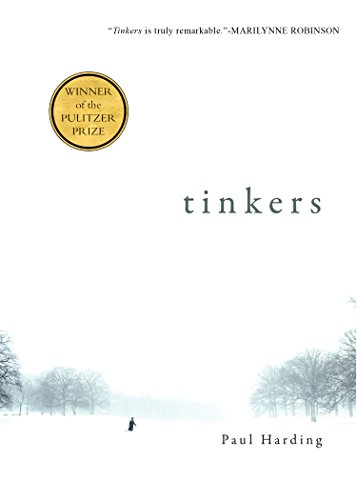
Tinkers by Paul Harding
Published 2009, 191 p., Bellevue Literary Press
George Washington Crosby began to hallucinate eight days before he died.
So begins Paul Harding's debut novel about a man whose memories subsume him as he lies in a hospital bed in his living room, surrounded by family. We learn about his passion for repairing antique clocks, where with "calm reason the imps of disorder are banished" and his handiness in building his own home. His story is broken by flashbacks to his father, Howard, a tinker who earned a living bringing goods to remote cabins in his mule-drawn wagon. Howard was a poet, a dreamer, and an epileptic, whose disease was considered a form of insanity at the time. Weaving back and forth we see the two men from their own perspectives and from each other's, a father and son more alike than perhaps either admits.
Like in This Other Eden, Harding weaves historical fiction with threads of metaphysics, mental illness, and poetry. In this book, I think we see the bones of Zachary Hand to God (a character in This Other Eden), and the metaphor of lightning is similar to the role the flood will play in his later novel. Although I could appreciate Tinkers, I found myself skimming some of the pages of detailed clock repair instructions. I'm a bit surprised it won the Pulitzer Prize.
Tinkers by Paul Harding
Published 2009, 191 p., Bellevue Literary Press
George Washington Crosby began to hallucinate eight days before he died.
So begins Paul Harding's debut novel about a man whose memories subsume him as he lies in a hospital bed in his living room, surrounded by family. We learn about his passion for repairing antique clocks, where with "calm reason the imps of disorder are banished" and his handiness in building his own home. His story is broken by flashbacks to his father, Howard, a tinker who earned a living bringing goods to remote cabins in his mule-drawn wagon. Howard was a poet, a dreamer, and an epileptic, whose disease was considered a form of insanity at the time. Weaving back and forth we see the two men from their own perspectives and from each other's, a father and son more alike than perhaps either admits.
Like in This Other Eden, Harding weaves historical fiction with threads of metaphysics, mental illness, and poetry. In this book, I think we see the bones of Zachary Hand to God (a character in This Other Eden), and the metaphor of lightning is similar to the role the flood will play in his later novel. Although I could appreciate Tinkers, I found myself skimming some of the pages of detailed clock repair instructions. I'm a bit surprised it won the Pulitzer Prize.
74labfs39
Next up: I picked the book off the list with the highest LT rating (that I had in the house). It's a YA memoir. Has anyone read it?

Red Scarf Girl: A Memoir of the Cultural Revolution by Ji-li Jiang

Red Scarf Girl: A Memoir of the Cultural Revolution by Ji-li Jiang
75wandering_star
Seconding Jonathan D Spence and A Chinese Life. One book I found interesting was The Private Life of Chairman Mao by Zhisui Li, Mao's doctor - it's a muckraking "insider view" and I think some of the more scandalous stories need to be taken with a pinch of salt, but what I found fascinating was the dynamics of how people behave around an all-powerful but erratic man. I don't know if Hilary Mantel read it before writing Wolf Hall but there are many echoes with how people behave around Henry VIII in that.
I haven't read it, but I've heard good things about Maoism: A Global History! (and I liked the same author's book on the Opium War).
I haven't read it, but I've heard good things about Maoism: A Global History! (and I liked the same author's book on the Opium War).
76avaland
>73 labfs39: Nice review if Tinkers. I loved that book (I think you know that). But I'm not a person who believes that everyone should :-)
77labfs39
>75 wandering_star: Thank you, Margaret. I have added these two titles to my every growing list.
>76 avaland: It could have been wrong book for the moment, Lois. I did like parts of it, I thought the description of what it felt like to have an epileptic seizure was excellent. And I can see why you liked it. It reads like poetry.
>76 avaland: It could have been wrong book for the moment, Lois. I did like parts of it, I thought the description of what it felt like to have an epileptic seizure was excellent. And I can see why you liked it. It reads like poetry.
78labfs39
A quick but interesting memoir written for young adults.
Red Scarf Girl: A Memoir of the Cultural Revolution by Ji-li Jiang
Published 1997, 285 p.
Ji-li Jiang turned twelve in 1966, the year The Cultural Revolution began. She was an excellent student and lived with her parents, two siblings, and grandmother in one room in Shanghai. At first, she joyfully embraces the new revolutionary mandates and dreams of becoming a Red Guard. When Chairman Mao instructs the country to sweep out the Fourolds (old ideas, old culture, old customs, and old habits), she joins in readily. When this is followed by sweeping educational reforms, and she has to denounce her teachers, she becomes uncertain. Then her family is attacked, and she must make even tougher decisions about whether to be loyal to family, tainted by a landowning grandfather who died when her father was seven, or remain an "educable" child.
The author grew up in Shanghai, but moved to the United States when she was thirty. She wrote this book in the hopes of helping Americans understand China a bit more. Because the audience is for middle school or high school students, the book is written simply, but it remains a powerful story. I was surprised at the extent to which elementary aged students were embroiled in the work of the revolution (writing propaganda or da-zi-bao posters, participating in study groups and struggle sessions, and working on rural farms during the summer). It was interesting seeing Ji-li evolve from being a unquestioning follower as she experiences more of life during the Cultural Revolution. It was also interesting to see traces of her family's Muslim faith appear during times of stress. Her afterward provides updates on the fates of several of her schoolfriends, as well as her family, after the book ends in 1968. There is a helpful glossary as well.
Edited to fix touchstone
Red Scarf Girl: A Memoir of the Cultural Revolution by Ji-li Jiang
Published 1997, 285 p.
Ji-li Jiang turned twelve in 1966, the year The Cultural Revolution began. She was an excellent student and lived with her parents, two siblings, and grandmother in one room in Shanghai. At first, she joyfully embraces the new revolutionary mandates and dreams of becoming a Red Guard. When Chairman Mao instructs the country to sweep out the Fourolds (old ideas, old culture, old customs, and old habits), she joins in readily. When this is followed by sweeping educational reforms, and she has to denounce her teachers, she becomes uncertain. Then her family is attacked, and she must make even tougher decisions about whether to be loyal to family, tainted by a landowning grandfather who died when her father was seven, or remain an "educable" child.
The author grew up in Shanghai, but moved to the United States when she was thirty. She wrote this book in the hopes of helping Americans understand China a bit more. Because the audience is for middle school or high school students, the book is written simply, but it remains a powerful story. I was surprised at the extent to which elementary aged students were embroiled in the work of the revolution (writing propaganda or da-zi-bao posters, participating in study groups and struggle sessions, and working on rural farms during the summer). It was interesting seeing Ji-li evolve from being a unquestioning follower as she experiences more of life during the Cultural Revolution. It was also interesting to see traces of her family's Muslim faith appear during times of stress. Her afterward provides updates on the fates of several of her schoolfriends, as well as her family, after the book ends in 1968. There is a helpful glossary as well.
Edited to fix touchstone
79rocketjk
One more book to add to the memoir list above is 1000 Years of Joys and Sorrows by Chinese artist Ai Weiwei. He details his childhood, much of which was spent in a punitive exile with his father, who was sent to a remote farming village for the crime of being a popular poet. The whole book is a bit of a mixed bag, but I found it interesting and valuable in the long run. My full review is here:
https://www.librarything.com/topic/338366#7867638
https://www.librarything.com/topic/338366#7867638
80labfs39
>79 rocketjk: Thanks, Jerry. I had this on my wishlist after reading your review originally. It didn't come up in my search results due to a faulty tag. Have now corrected that and added it to my list. It looks really good.
For now, I have started Feather in the Storm: A Childhood Lost in Chaos. I am considering it a memoir, although she obviously had to reconstruct conversations since she was very young when the book opens. She talks about how she did this in her introduction. In any case, the book is gripping so far.
For now, I have started Feather in the Storm: A Childhood Lost in Chaos. I am considering it a memoir, although she obviously had to reconstruct conversations since she was very young when the book opens. She talks about how she did this in her introduction. In any case, the book is gripping so far.
81SassyLassy
>68 LolaWalser: Sounds familiar!
>71 labfs39: I know the question was directed at LW, but there's nothing like going to the source and reading Quotations of Chairman Mao.
>75 wandering_star: Seconding the recommendation of Julia Lovell, and thanks - I will look for the new book.
>71 labfs39: I know the question was directed at LW, but there's nothing like going to the source and reading Quotations of Chairman Mao.
>75 wandering_star: Seconding the recommendation of Julia Lovell, and thanks - I will look for the new book.
82BLBera
A Gang of One was written by a colleague of mine.
83labfs39
>81 SassyLassy: I see that there are annotated versions of Quotations of Chairman Mao. That might be a helpful resource. Good to know that you recommend the Lovell as well. It takes an interesting slant, looking at the global reach of Mao's influence.
>82 BLBera: Wow, that sounds like a tough read. Did you read it, Beth?
Edited to fix typo
>82 BLBera: Wow, that sounds like a tough read. Did you read it, Beth?
Edited to fix typo
84labfs39
Margaret/wandering_star had recommended The Private Life of Chairman Mao by Zhisui Li, Mao's private doctor in >75 wandering_star:. Interestingly, the book I am currently reading, Feather in the Storm, mentions Zhisui Li. The author's father was the first cousin of Li's wife. At one point the author's mother goes to her asking for help, but the cousin and Li refuse to acknowledge her, although they had met and the two cousins grew up together. Only a small incident but it stuck in my mind due to your mentioning Li's memoir.
85labfs39
Newsy update:
I have ordered three books: Mao's Great Famine, Hungry Ghosts, and Half of Man is Woman.
Yesterday I went to a Pop concert at the Portland Symphony Orchestra. My first time at one of their concerts. My daughter and I had a good time, and I look forward to taking my nieces to a family concert there in a couple of weeks.
I have ordered three books: Mao's Great Famine, Hungry Ghosts, and Half of Man is Woman.
Yesterday I went to a Pop concert at the Portland Symphony Orchestra. My first time at one of their concerts. My daughter and I had a good time, and I look forward to taking my nieces to a family concert there in a couple of weeks.
86JoeB1934
I can't remember how long ago you recommended The Vanishing Act of Esme Lennox by Maggie O’Farrell to me but I finally got to read it and reported yesterday on my reaction. It is a nearly flawless example of my favorite literary mysteries, and it struck me close to home. Thanks.
87labfs39
Continuing down the rabbit hole of Chinese history in the 1960s. This book too has been on my shelves for over a dozen years. I'm glad I finally got to it.
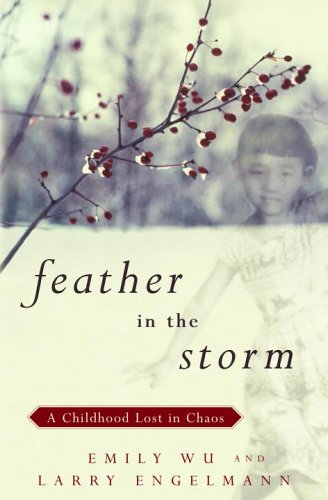
Feather in the Storm by Emily Wu and Larry Engelmann
Published 2006, 336 p.
Wu Maomao was born during the famine of 1958-1962. With her father in a reeducation camp, her mother was forced to let relatives raise her until she was a few years old. Reunited with a family she didn't remember, Maomao grew up sandwiched between two brothers who were favored for being boys. She was an excellent student, but because her father had received his PhD at the University of Chicago, she was continually harassed for belonging to a black (as opposed to red) family. This is the story of her first 19 years: her early years in the city, her family's forced relocation to a remote village, and her years working as an "educated youth" (i.e. middle or high school graduate) in the mountains. It's a brutal story at times, but also a story of family, friendship, and the beauty of rural China. I couldn't put it down.
Be forewarned that the book contains the sexual assault of a child and rape.
Feather in the Storm by Emily Wu and Larry Engelmann
Published 2006, 336 p.
Wu Maomao was born during the famine of 1958-1962. With her father in a reeducation camp, her mother was forced to let relatives raise her until she was a few years old. Reunited with a family she didn't remember, Maomao grew up sandwiched between two brothers who were favored for being boys. She was an excellent student, but because her father had received his PhD at the University of Chicago, she was continually harassed for belonging to a black (as opposed to red) family. This is the story of her first 19 years: her early years in the city, her family's forced relocation to a remote village, and her years working as an "educated youth" (i.e. middle or high school graduate) in the mountains. It's a brutal story at times, but also a story of family, friendship, and the beauty of rural China. I couldn't put it down.
Be forewarned that the book contains the sexual assault of a child and rape.
88labfs39
>86 JoeB1934: I'm so glad you enjoyed it, Joe. When I read it some years ago, I stayed up most of the night reading, unable to set it aside.
89BLBera
>83 labfs39: I did read it, Lisa. It was interesting to read and talk with the author. Since he taught with us, he did several reading and class visits on campus.
90JoeB1934
>88 labfs39: Your reaction to the book is exactly what I am looking for and finding in my search for literary mysteries. Especially when the 'mystery' isn't crime oriented. In this case the story was more personal than all others I have read.
91labfs39
>89 BLBera: Those must have been interesting conversations. I've add his book to my list.
>90 JoeB1934: I'm glad when one of my recommendations works for you, Joe.
Next up:
A Dictionary of Maqiao by Han Shaogong. I was pleasantly surprised to see that this book is translated by Julia Lovell, the author of several nonfiction books that were recommended above. Her translator's note was interesting. I can't imagine the challenges of translating a book in Chinese about a minor dialect and organized like a dictionary!
I'm glad I held off on reading this one until I had read a few other memoirs. I think I'll have more context for the novel, which while about the same time period, is written in a more experimental style.
>90 JoeB1934: I'm glad when one of my recommendations works for you, Joe.
Next up:
A Dictionary of Maqiao by Han Shaogong. I was pleasantly surprised to see that this book is translated by Julia Lovell, the author of several nonfiction books that were recommended above. Her translator's note was interesting. I can't imagine the challenges of translating a book in Chinese about a minor dialect and organized like a dictionary!
I'm glad I held off on reading this one until I had read a few other memoirs. I think I'll have more context for the novel, which while about the same time period, is written in a more experimental style.
92labfs39
Today I picked up several books that I had requested through interlibrary loan. Network Effect and A Man on the Moon by Andrew Chaikin, volume 2. How odd that the loaning library sent the second volume, but not the first, or all three. So I've asked the librarian if she can contact the loaning library and get them to send the first volume. Disappointing.
Meanwhile I am continuing to enjoy A Dictionary of Maqiao, although it's a bit slow going. Without a plot driving the momentum forward, it's easy for me to get distracted.
Meanwhile I am continuing to enjoy A Dictionary of Maqiao, although it's a bit slow going. Without a plot driving the momentum forward, it's easy for me to get distracted.
93labfs39
Thanks to everyone on Club Read who turned me on to Murderbot. I love the series! Note: I read this as the fifth book in the series (as published), which is out of chronological order.

Network Effect by Martha Wells
Published 2020, 350 p.
What a fantastic story! My favorite so far, in part because it is also the longest (nearly double the usual length). The length allowed the author to do a deep dive into SecUnit's relationships with its key people, but she did so without sacrificing the fast pace. She ratcheted up the tension without losing any of the wiseass banter. I think it is these dichotomies—depth yet action packed, tense yet funny—that is part of the series' charm for me. I don't want to the series to end!

Network Effect by Martha Wells
Published 2020, 350 p.
What a fantastic story! My favorite so far, in part because it is also the longest (nearly double the usual length). The length allowed the author to do a deep dive into SecUnit's relationships with its key people, but she did so without sacrificing the fast pace. She ratcheted up the tension without losing any of the wiseass banter. I think it is these dichotomies—depth yet action packed, tense yet funny—that is part of the series' charm for me. I don't want to the series to end!
94RidgewayGirl
>60 labfs39: A belated addition to your lists of memoirs about the Cultural Revolution -- Anchee Min's Red Azalea is extraordinary. She also has another memoir about after she managed to immigrate to the US that is also worthwhile.
95labfs39
>94 RidgewayGirl: Thanks, Kay, I've added it.
96labfs39
From Network Effect:
Overse added, "Just remember you're not alone here."
I never know what to say to that. I am actually alone in my head, and that's where 90 plus percent of my problems are.
Overse added, "Just remember you're not alone here."
I never know what to say to that. I am actually alone in my head, and that's where 90 plus percent of my problems are.
97msf59
I am with you on Tinkers. I gave it 4 stars but was also puzzled about the Pulitzer win. He did much better with This Other Eden, which is a top read of 2023 for me.
Hooray for the Murderbot series!!
Hooray for the Murderbot series!!
98labfs39
>97 msf59: This Other Eden, which is a top read of 2023 for me
For me too. Prize awards are often a mystery to me.
I've been borrowing the Murderbot series from the library, unsure at first that I would like them, and doubting I would want to read them twice. Wrong on both counts! I wish now that I had purchased them. Ah, well. Maybe the boxed set is in my future.
For me too. Prize awards are often a mystery to me.
I've been borrowing the Murderbot series from the library, unsure at first that I would like them, and doubting I would want to read them twice. Wrong on both counts! I wish now that I had purchased them. Ah, well. Maybe the boxed set is in my future.
99labfs39
A couple of books have arrived. First Epitaph, the sequel to the wonderful Doc, came, along with the promised original watercolor. Then today my first Chinese history arrived: Hungry Ghosts: Mao's Secret Famine. I'm looking forward to reading both.


100Willoyd
>99 labfs39:
Managed to obtain copies of both Doc and Epitaph through Blackwell's here in the UK. Given the time they took to arrive, I think they ordered them from the States. Have dipped in, and look really promising.
Managed to obtain copies of both Doc and Epitaph through Blackwell's here in the UK. Given the time they took to arrive, I think they ordered them from the States. Have dipped in, and look really promising.
101labfs39
>100 Willoyd: I hope you enjoy. I like her writing, and her treatment of Doc Holliday is very interesting, IMO.
I have read the forward and first chapter in Hungry Ghosts and wowzer, it's eye-opening. I've started taking notes. Some things he's mentioned (like the causes of famine during WWII and under the Nationalists) match things said in the memoirs I've read. I like when my reading forms a web of information.
I have read the forward and first chapter in Hungry Ghosts and wowzer, it's eye-opening. I've started taking notes. Some things he's mentioned (like the causes of famine during WWII and under the Nationalists) match things said in the memoirs I've read. I like when my reading forms a web of information.
103bragan
>92 labfs39: Huh, I didn't know there were editions of A Man on the Moon broken up into multiple volumes. Mine is all in one. It sounds incredibly annoying to only be able to get the middle one.
>96 labfs39: God, I relate to Muderbot so hard. :)
>96 labfs39: God, I relate to Muderbot so hard. :)
104labfs39
>102 avaland: Hi Lois!
>103 bragan: Ah, you read a different beast. Andrew Chaikin wrote the book you read, A Man on the Moon: The Voyages of the Apollo Astronauts, but he also wrote a three volume set also called Man on the Moon but with three volumes: One Giant Leap, The Odyssey Continues, Lunar Explorers. I was sent, The Odyssey Continues. I didn't know all this until I received one volume and did some investigation. I should have ordered the one you read and saved myself hundreds of pages of reading! I may yet, although the set has great photographs.
ETA: Murderbot is the best!
>103 bragan: Ah, you read a different beast. Andrew Chaikin wrote the book you read, A Man on the Moon: The Voyages of the Apollo Astronauts, but he also wrote a three volume set also called Man on the Moon but with three volumes: One Giant Leap, The Odyssey Continues, Lunar Explorers. I was sent, The Odyssey Continues. I didn't know all this until I received one volume and did some investigation. I should have ordered the one you read and saved myself hundreds of pages of reading! I may yet, although the set has great photographs.
ETA: Murderbot is the best!
105bragan
>104 labfs39: OK, that is just confusing!
106Willoyd
>104 labfs39:
I wonder if that was just on your side of the pond. I've not come across a trace of the 3-vol edition here. What I do have, having found the one volume paperback to be absolutely enthralling, is a copy of the Folio Society edition. Having been a fan of their editions in the 90s and noughties, I've bought hardly anything from them in the last decade or so, but managed to get a cheap(er) copy of this. The photography in it made it worthwhile! Don't know what I'd have made of 3 vols though!
If you enjoy the subject, and haven't already read it, I can recommend Andrew Smith's Moondust, focusing on the astronauts themselves. An even better read IMO!
I wonder if that was just on your side of the pond. I've not come across a trace of the 3-vol edition here. What I do have, having found the one volume paperback to be absolutely enthralling, is a copy of the Folio Society edition. Having been a fan of their editions in the 90s and noughties, I've bought hardly anything from them in the last decade or so, but managed to get a cheap(er) copy of this. The photography in it made it worthwhile! Don't know what I'd have made of 3 vols though!
If you enjoy the subject, and haven't already read it, I can recommend Andrew Smith's Moondust, focusing on the astronauts themselves. An even better read IMO!
107labfs39
>105 bragan: Right? Why couldn't he have named it something slightly different??
>106 Willoyd: The three volume set is oversized, almost a pictorial, but it's unclear to me if the text is substantially different or augmented. Volume 2 has three chapters covering Apollo missions 12-14.
I am over 125 pages into Hungry Ghosts and slowing only to take notes. Despite not knowing much Chinese history, Becker's writing is easy to follow and there are biographical sketches at the end that help me keep track of who the key players are. It is exceedingly well documented, although he does have a bias.
It snowed here last night, just a dusting, and is quite cold (9F) and windy. Since I won't be going out to do yard work tonight after the girls leave, I'll have more time to read. :-)
>106 Willoyd: The three volume set is oversized, almost a pictorial, but it's unclear to me if the text is substantially different or augmented. Volume 2 has three chapters covering Apollo missions 12-14.
I am over 125 pages into Hungry Ghosts and slowing only to take notes. Despite not knowing much Chinese history, Becker's writing is easy to follow and there are biographical sketches at the end that help me keep track of who the key players are. It is exceedingly well documented, although he does have a bias.
It snowed here last night, just a dusting, and is quite cold (9F) and windy. Since I won't be going out to do yard work tonight after the girls leave, I'll have more time to read. :-)
108labfs39
Archipelago Press is having a sale: 20% off 2 books, 30% off 3, etc. So I immediately went and scoured their lists for books I don't have yet. I came away with three:

Eastbound by Maylis De Kerangal
The Last Pomegranate Tree by Bachtyar Ali
Journal of an Ordinary Grief by Mahmoud Darwish

Eastbound by Maylis De Kerangal
The Last Pomegranate Tree by Bachtyar Ali
Journal of an Ordinary Grief by Mahmoud Darwish
109LolaWalser
May I point out that "propaganda" is whatever the enemy does, whereas when we do it, it's "just" education, history, tradition etc. Yes, Chinese students are taught along the lines of their Communist framework and expected to produce work reflecting that specific worldview--how is this different from what's expected of young Americans? Consider the revelations of recent few decades, the upheaval that such projects like 1619 and all the anti-racist movements caused. Why did that happen, and how could it happen, if American education were something other than indoctrination, specifically into a capitalist white-supremacist view that no sooner got attacked than Trumpism arose to defend it?
Americans have been indoctrinated too, with anti-communism, to the point that just the term makes you lose vision. You (general you) don't see reality, you see a fetish. Because China is a country led by something called a communist party, you lose view of the fact that they are managers, no worse or better than those of any American business corporation that ever slaughtered the indigenes in the Latin America and elsewhere. You lose view of their ordinariness. Because Chinese kids write compositions reflecting communist democratic values, your fetishistic reaction to "communist" obscures the fact that this is no different to American kids writing compositions reflecting American democratic values.
The irony is that those Chinese students have proven time and again, generation after generation, that not just despite but BECAUSE of their communist upbringing, they inevitably REBEL against the restrictions of the single rule, whereas those American natural-born freedom lovers, reared in the "greatest" democracy ever anywhere, somehow produce in the 21st century near a hundred million wannabe fascists.
Americans have been indoctrinated too, with anti-communism, to the point that just the term makes you lose vision. You (general you) don't see reality, you see a fetish. Because China is a country led by something called a communist party, you lose view of the fact that they are managers, no worse or better than those of any American business corporation that ever slaughtered the indigenes in the Latin America and elsewhere. You lose view of their ordinariness. Because Chinese kids write compositions reflecting communist democratic values, your fetishistic reaction to "communist" obscures the fact that this is no different to American kids writing compositions reflecting American democratic values.
The irony is that those Chinese students have proven time and again, generation after generation, that not just despite but BECAUSE of their communist upbringing, they inevitably REBEL against the restrictions of the single rule, whereas those American natural-born freedom lovers, reared in the "greatest" democracy ever anywhere, somehow produce in the 21st century near a hundred million wannabe fascists.
110labfs39
>109 LolaWalser: All good points, and I am trying to better educate myself both to what other countries do and to what my own country does. I certainly do not defend the US worldview in many ways, yet I know that I am a product of that worldview with unconscious biases. I don't think communism is evil, but like any system, including capitalism, terrible things are sometimes done in its name. I often feel impotent and uninformed, and I keep reading in the hopes of opening my eyes and mind to more worldviews and different aspects of history. I am only beginning to learn about Chinese history, so I am open to any and all suggestions. Please feel free to point me in the different of good books. I've started a list which is growing faster than my reading pace, but I hope to keep working at it.
111labfs39
We had a horrible spring storm, which any other year would not have seemed so bad, but after weeks of bare ground and temps in the 50s, it was rough. 8-9" of snow with ice on top of that. Despite shoveling several times yesterday (my snowblower of course wouldn't start), we had more snow after dark plus the ice. I cleaned off the top 1", but the three inches below that are there until the sun warms it up. May take awhile as it is only 25F currently. The worst was the end of the driveway where the town plows had created a bank 2' high made of boulder-sized rock-hard clumps. I cleared enough space to get one car out, and I'm done.
I'm supposed to take the kids to the symphony today for a family concert, but I don't know if I'll make it.
I'm running out of birdseed. My feeders are hopping.
I'm supposed to take the kids to the symphony today for a family concert, but I don't know if I'll make it.
I'm running out of birdseed. My feeders are hopping.
112msf59
I am sorry to hear about this nasty snowstorm. Just what you needed, right? Good luck with it and I hope it doesn't stick around long. At least your feeders are hopping. You can enjoy that.
113JoeB1934
>111 labfs39: I don't know that the book I am reading Hotel on the Corner of Bitter and Sweet by Jamie Ford fits exactly your interest but it is educating me about the intersection of Chinese, Japanese and American cultures in 1942 when all Japanese, even American born are sent to internment camps. The story lasts from 1942 up to 1986 through the eyes of 2 teenagers, both American born but one of Chinese and one of Japanese cultures..
115rasdhar
>108 labfs39: Mahmoud Darwish's writing is wonderful. Hope things are better after the snowstorm!
116BLBera
We are finally getting some winter here as well, Lisa. It is supposed to snow all day, and then rain tonight, so that is not good.
117kjuliff
>108 labfs39: As you know I was very impressed with Eastbound, and I’m pretty sure you will like it. I was put onto it I think, by Arubabookwoman.
118dchaikin
>109 LolaWalser: i have a lot of issues with this. Ok, first my politics and perspectives are different. I have no interest in Communism. Capitalism is, I feel, what the world needs to deal with. It’s the situation of the moment and no ideology will change that. Which implies to me that other systems can only be enforced, and cannot exist today without an oligarchy/autocracy. That’s my perspective. It’s not an endorsement of capitalism. I’m not saying the system is wonderful or good. But i am saying it’s our reality on open political and economic systems today. For what it’s worth, I do appreciate socialist efforts in general.
So issue one is a contradiction: This post presents China as Communist while also acknowledging the government is capitalist (state capitalism). “they are managers, no worse or better than those of any American business corporation”. That’s a contradiction. I’ll leave that here as I truly don’t know enough to comment further.
But my second and main issue is that this doesn’t acknowledge that the American (dirty) balance of powers is missing in China’s one party, no tolerance for criticism status. That’s a broad difference. Whatever American corporate crimes, misinformation and political manipulation, there are competing interests that have influence and power. And this manipulation needs to be sold, which fundamentally changes how it’s done. China doesn’t need to sell their propaganda in the same way because that have so much control. It’s a vastly more restrictive intolerant country. I think your examples in general aren’t equivalent at all. There are parallels, but these are very different systems. That is, I feel you are equating the parallels and that makes me uncomfortable.
Let’s consider discussing further on your thread instead of Lisa’s. 🙂
So issue one is a contradiction: This post presents China as Communist while also acknowledging the government is capitalist (state capitalism). “they are managers, no worse or better than those of any American business corporation”. That’s a contradiction. I’ll leave that here as I truly don’t know enough to comment further.
But my second and main issue is that this doesn’t acknowledge that the American (dirty) balance of powers is missing in China’s one party, no tolerance for criticism status. That’s a broad difference. Whatever American corporate crimes, misinformation and political manipulation, there are competing interests that have influence and power. And this manipulation needs to be sold, which fundamentally changes how it’s done. China doesn’t need to sell their propaganda in the same way because that have so much control. It’s a vastly more restrictive intolerant country. I think your examples in general aren’t equivalent at all. There are parallels, but these are very different systems. That is, I feel you are equating the parallels and that makes me uncomfortable.
Let’s consider discussing further on your thread instead of Lisa’s. 🙂
119lisapeet
Hi Lisa—just getting caught up on your thread here after a little time away. As always, you've got some great reading going and good conversations. And I promise I'll be back soon to say something actually useful.
120labfs39
>112 msf59: Although it was cold today, it did get above freezing, so we had a little melt. It should get into the high 40s with rain by the end of the week, so hopefully the snow will be gone soon.
>113 JoeB1934: Thanks for thinking of me, Joe. I listened to Hotel on the Corner of Bitter and Sweet some years ago when I was living in Seattle, where the original hotel is located. I remember feeling like it was a young adult book, perhaps because of the age of the protagonist and the gentle treatment. For fiction on the topic, I preferred When the Emperor was Divine the memoirs that I have read.
>114 dchaikin: I love Archipelago Press books. A tactile treat.
>115 rasdhar: I am looking forward to reading Darwish, he's been on my radar for awhile, but this is the first book of his that I have acquired.
>116 BLBera: Fortunately we didn't lose power, although my sister did. My brother in law came over with a plow and helped push the bankings back. I hope you don't get flooding.
>117 kjuliff: Your review pushed me over the edge when it came to Eastbound. I'm looking forward to it. I'm not sure when it will arrive, however, as Archipelago has to do another print run.
>118 dchaikin: I think people are horrible to each other regardless of the political system they operate within. The more history I read, the less optimistic I am, and I wasn't very optimistic to begin with!
>119 lisapeet: Thanks for stopping by, Lisa. It's always nice to hear from you, even if it's just a quick hello.
>113 JoeB1934: Thanks for thinking of me, Joe. I listened to Hotel on the Corner of Bitter and Sweet some years ago when I was living in Seattle, where the original hotel is located. I remember feeling like it was a young adult book, perhaps because of the age of the protagonist and the gentle treatment. For fiction on the topic, I preferred When the Emperor was Divine the memoirs that I have read.
>114 dchaikin: I love Archipelago Press books. A tactile treat.
>115 rasdhar: I am looking forward to reading Darwish, he's been on my radar for awhile, but this is the first book of his that I have acquired.
>116 BLBera: Fortunately we didn't lose power, although my sister did. My brother in law came over with a plow and helped push the bankings back. I hope you don't get flooding.
>117 kjuliff: Your review pushed me over the edge when it came to Eastbound. I'm looking forward to it. I'm not sure when it will arrive, however, as Archipelago has to do another print run.
>118 dchaikin: I think people are horrible to each other regardless of the political system they operate within. The more history I read, the less optimistic I am, and I wasn't very optimistic to begin with!
>119 lisapeet: Thanks for stopping by, Lisa. It's always nice to hear from you, even if it's just a quick hello.
121labfs39
I finished Hungry Ghosts: Mao's Secret Famine today. It was very readable, and well-documented. I took tons of notes. I didn't care for his dismissive tone at times; I felt his word choice sometimes betrayed his biases. I'm also curious how the research holds up today, as the book was written in 1996. In particular I'm curious as to China's current stance vis a vis the famine and other events at that time. The more I read the more I realize I don't know. The other two books I ordered haven't arrived yet, so I'll return to Dictionary of Maqiao and perhaps another memoir. Review to come.
122cindydavid4
>113 JoeB1934: very good book;
123SassyLassy
>121 labfs39: I'm also curious how the research holds up today, as the book was written in 1996 Dikotter referenced Becker several times in a positive way. Looking forward to your review.
124labfs39
>122 cindydavid4: Hi Cindy
>123 SassyLassy: My copy of Mao's Great Famine arrived in the mail today, so I will be reading it soon. I think Becker's book was well-written and documented. I sometimes had a bit of an issue with his tone. I was happy that Becker referred to and quoted from Grass Soup and Ertai Gao's book, both of which I've read, as it made me feel that I was reading good sources. He also referenced Wild Swans, a book that multiple people have recommended. It's on "the list".
>123 SassyLassy: My copy of Mao's Great Famine arrived in the mail today, so I will be reading it soon. I think Becker's book was well-written and documented. I sometimes had a bit of an issue with his tone. I was happy that Becker referred to and quoted from Grass Soup and Ertai Gao's book, both of which I've read, as it made me feel that I was reading good sources. He also referenced Wild Swans, a book that multiple people have recommended. It's on "the list".
125labfs39
My first history book on China. Quick and engrossing reading, and I took 9 pages of notes. Thanks to Meredith/mabith for a great recommendation.
Hungry Ghosts: Mao's Secret Famine by Jasper Becker
Published 1996, 380 p.
I came to this book after reading Grass Soup and In Search of My Homeland, both memoirs by "rightists" who had been sentenced to a labor camp during the 1958-1962 famine in China. I was interested in learning more about this time period of Chinese history, and Hungry Ghosts was a good overview: well-written and well-documented. He relied on hundreds of sources, both written and oral, Chinese and Western. One of the things I liked was that he references many internal reports and Chinese demographers, not relying on Western ones. There are extensive endnote citations and pages of bibliography. This is important because the famine has at various times been denied, acknowledged, ignored, and blamed on various factors by various people.
Becker begins with an overview of famine in China and elsewhere in the world, and in particular the Soviet famine of 1930-33. He discusses the causes of the famine, it's effect on various regions and groups of people (like the Tibetans and prisoners in the labor camps), and the aftermath, which led to the Cultural Revolution. He situates it in both Chinese history and in the world and spends several chapters at the end of the book discussing how the famine was documented, how the various death toll estimates were arrived at, and how the Western press influenced policy and was influenced.
I came at the book already knowing something about the famine from the memoirs I had read, and I think Becker was writing for an audience that either didn't know it had happened or denied it had happened. His tone at times was, I don't know, strident? in making his points. He was definitely trying to convince people. All in all, however, I found the book both easy to read and yet comprehensive and well-documented. I would recommend it to anyone interested in this time period.
Hungry Ghosts: Mao's Secret Famine by Jasper Becker
Published 1996, 380 p.
I came to this book after reading Grass Soup and In Search of My Homeland, both memoirs by "rightists" who had been sentenced to a labor camp during the 1958-1962 famine in China. I was interested in learning more about this time period of Chinese history, and Hungry Ghosts was a good overview: well-written and well-documented. He relied on hundreds of sources, both written and oral, Chinese and Western. One of the things I liked was that he references many internal reports and Chinese demographers, not relying on Western ones. There are extensive endnote citations and pages of bibliography. This is important because the famine has at various times been denied, acknowledged, ignored, and blamed on various factors by various people.
Becker begins with an overview of famine in China and elsewhere in the world, and in particular the Soviet famine of 1930-33. He discusses the causes of the famine, it's effect on various regions and groups of people (like the Tibetans and prisoners in the labor camps), and the aftermath, which led to the Cultural Revolution. He situates it in both Chinese history and in the world and spends several chapters at the end of the book discussing how the famine was documented, how the various death toll estimates were arrived at, and how the Western press influenced policy and was influenced.
I came at the book already knowing something about the famine from the memoirs I had read, and I think Becker was writing for an audience that either didn't know it had happened or denied it had happened. His tone at times was, I don't know, strident? in making his points. He was definitely trying to convince people. All in all, however, I found the book both easy to read and yet comprehensive and well-documented. I would recommend it to anyone interested in this time period.
126SassyLassy
>125 labfs39: Nice review of an well done book.
I think if Becker appears somewhat strident (I didn't get that impression), it may be because he faced so much opposition to his report on many fronts. He was attacked for his methodology, which seemed solid to me given the constraints he faced as a westerner; for the very idea of a famine, which many academics said they would have known about had it actually happened; and in the PRC for bringing up topics that were "off limits"
I think if Becker appears somewhat strident (I didn't get that impression), it may be because he faced so much opposition to his report on many fronts. He was attacked for his methodology, which seemed solid to me given the constraints he faced as a westerner; for the very idea of a famine, which many academics said they would have known about had it actually happened; and in the PRC for bringing up topics that were "off limits"
127labfs39
>126 SassyLassy: I don't have much context for Becker's book yet. The Dikotter arrived yesterday, so that will help. I think what I may have been reacting to was that Becker is a journalist, not an historian, so his tone is not as dispassionately academic as I was expecting. But I feel that this is belaboring a small point. Overall I thought the book very good, and I read with absorption.
This discussion has made me think about other books I have read by journalists that I would consider good to great:
Hiroshima
Nothing to Envy
Killers of the Flower Moon
Five Days at Memorial
ETA: The Coldest Winter: America and the Korean War
This discussion has made me think about other books I have read by journalists that I would consider good to great:
Hiroshima
Nothing to Envy
Killers of the Flower Moon
Five Days at Memorial
ETA: The Coldest Winter: America and the Korean War
128SassyLassy
>127 labfs39: Nice distinction between Becker and Dikotter.
Great idea for a list. I'll have to think about this one, but automatically all of Joan Didion came to mind. I F Stone and David Halberstam would be up there too, along with Gary Wills. Getting carried away - will stop here!
Great idea for a list. I'll have to think about this one, but automatically all of Joan Didion came to mind. I F Stone and David Halberstam would be up there too, along with Gary Wills. Getting carried away - will stop here!
129dchaikin
>125 labfs39: sounds excellent. I’m interested. I’ve had a Chinese coworker talk me about the permanent effects of his childhood starvation. He would have been born probably in the early or later 1960’s. (??)
131BLBera
>125 labfs39: This sounds really interesting, Lisa. I will keep it in mind.
132labfs39
>128 SassyLassy: Yes, Halberstam for sure. I've only read The Coldest Winter: America and the Korean War, but it was excellent too. I haven't read the others.
>129 dchaikin: One of the things I learned from the Becker book was that China has always had famines. It's such a big country with such diverse climates that there always seemed to be a drought or flood or other weather event somewhere (or a war, such as when the Japanese invaded in WWII and took the food), but also because it was so large, the rest of the country would be okay. The difference with this one was that the country was at peace with a unified government and the weather was not a factor. The entire country starved at the same time. Malnutrition was also pretty common, as it is everywhere poverty exists, so your friend may have grown up in a poor area or before the reforms of 1961 saw results or in an area where there was a flood/drought/etc.
>130 markon: Thanks, Ardene. Not exactly cheerful reading, but interesting. I know so little about China's history and I am drawn to depressing aspects of history, so the famine is a good fit, oddly enough.
>131 BLBera: It is well written, Beth, but not a comfortable read. I'm tempted to shoehorn in Red Famine about the Ukrainian famine too, as there are parallels that would be interesting to follow.
>129 dchaikin: One of the things I learned from the Becker book was that China has always had famines. It's such a big country with such diverse climates that there always seemed to be a drought or flood or other weather event somewhere (or a war, such as when the Japanese invaded in WWII and took the food), but also because it was so large, the rest of the country would be okay. The difference with this one was that the country was at peace with a unified government and the weather was not a factor. The entire country starved at the same time. Malnutrition was also pretty common, as it is everywhere poverty exists, so your friend may have grown up in a poor area or before the reforms of 1961 saw results or in an area where there was a flood/drought/etc.
>130 markon: Thanks, Ardene. Not exactly cheerful reading, but interesting. I know so little about China's history and I am drawn to depressing aspects of history, so the famine is a good fit, oddly enough.
>131 BLBera: It is well written, Beth, but not a comfortable read. I'm tempted to shoehorn in Red Famine about the Ukrainian famine too, as there are parallels that would be interesting to follow.
133labfs39
Next up:

Mao's Great Famine: The History of China's Most Devastating Catastrophe, 1958-1962 by Frank Dikötter
I am looking forward to reading this history of the famine, which was written 15 years after Becker's book, and is written by a British historian based in Hong Kong. From the cover description, it seems that he had access to records that Becker did not.
I am also continuing with A Dictionary of Maqiao, but as you can imagine from a book of word entries, it is a bit slow, but surprisingly good.

Mao's Great Famine: The History of China's Most Devastating Catastrophe, 1958-1962 by Frank Dikötter
I am looking forward to reading this history of the famine, which was written 15 years after Becker's book, and is written by a British historian based in Hong Kong. From the cover description, it seems that he had access to records that Becker did not.
I am also continuing with A Dictionary of Maqiao, but as you can imagine from a book of word entries, it is a bit slow, but surprisingly good.
134dchaikin
>132 labfs39: interesting. I don’t know these details about him
135labfs39
The Dikotter book is excellent so far (I'm starting chapter 5). Very well-written in an academic style. He had access to thousands of documents from provincial archives (the main Party archive in Beijing was still off limits) that weren't available when Becker wrote his book. Although it's different from the Becker book, so far there are no discrepancies. The Becker book is more passionate with anecdotal detail. This book is more of a traditional history book. They come at events from different angles, but both are very engaging and well-done, IMO. Becker's book had a helpful who's who at the back of his book. Dikotter has a nice chronology at the front of his. They are working well together.
136labfs39
My Archipelago order arrived today. I just love their books. A tactile feast.
I continue to pick away at the Dikotter. Great book. I got distracted this week by a Chinese drama starring Lin Yi as a young person who is diagnosed with ALS. Interesting to see in Chinese film.
I continue to pick away at the Dikotter. Great book. I got distracted this week by a Chinese drama starring Lin Yi as a young person who is diagnosed with ALS. Interesting to see in Chinese film.
137wandering_star
On the subject of famine I would like to highlight Amartya Sen's work on famines and democracy. His research suggested there had never been a famine in a democracy and he used India as an example - famine under the British, no famine since independence. The argument being that famines are not the result of not enough food, but of particular choices. For example Ireland continued to export grain during the potato famine.
Googling to check my facts before I wrote this comment I discovered that in the 25 years since Sen developed this idea, it has become contested - see for example https://www.nytimes.com/2003/03/01/arts/does-democracy-avert-famine.html - but I thought it was still worth sharing in this chat.
Googling to check my facts before I wrote this comment I discovered that in the 25 years since Sen developed this idea, it has become contested - see for example https://www.nytimes.com/2003/03/01/arts/does-democracy-avert-famine.html - but I thought it was still worth sharing in this chat.
138kjuliff
>137 wandering_star: That’s amazing Lisa. Thanks for sharing this.
139labfs39
>137 wandering_star: I am no expert on famines, but from my reading about the 1958-62 famine in China, it was indeed the result of choices. Not evil choices like, "I want to starve this ethnic group into submission," but choices about how agriculture should be organized, as well as society as a whole. Some of the choices were naive, IMO, some were born of ignorance, and some were unintended, but fear and a desire to move up the power structure kept people from speaking up and pride kept Mao from being willing to change course. There were places where grain rotted in the fields for lack of labor, and there were many state grainaries with stockpiles that were not released to the starving people. Mao also exported grain during this time.
The NYT article made some interesting points about how capitalist democracies turn a blind eye to rampant malnutrition and the grinding poverty that leads to hunger. I appreciate your mentioning Sen's work and sharing the article, Margaret. More food for thought (so to speak) as I continue to explore this topic.
The NYT article made some interesting points about how capitalist democracies turn a blind eye to rampant malnutrition and the grinding poverty that leads to hunger. I appreciate your mentioning Sen's work and sharing the article, Margaret. More food for thought (so to speak) as I continue to explore this topic.
140RidgewayGirl
>136 labfs39: The Archipelago books are really pleasing physical objects.
141LolaWalser
>118 dchaikin:
I just saw this post. You're welcome to repost it in my thread for an answer.
>110 labfs39:
Changed my mind; maybe later. :)
>139 labfs39:
capitalist democracies turn a blind eye to rampant malnutrition and the grinding poverty that leads to hunger.
They do more than turn a blind eye, most notably the US. The US deliberately contributed to famines all over the world, including the USSR after the October revolution to Vietnam to North Korea, Cuba, Venezuela etc. and Gaza as we speak.
I just saw this post. You're welcome to repost it in my thread for an answer.
>110 labfs39:
Changed my mind; maybe later. :)
>139 labfs39:
capitalist democracies turn a blind eye to rampant malnutrition and the grinding poverty that leads to hunger.
They do more than turn a blind eye, most notably the US. The US deliberately contributed to famines all over the world, including the USSR after the October revolution to Vietnam to North Korea, Cuba, Venezuela etc. and Gaza as we speak.
142labfs39
>140 RidgewayGirl: The Archipelago books are really pleasing physical objects.
They really are lovely.
>141 LolaWalser: Fair enough. I was paraphrasing the article and didn't make that clear.
They really are lovely.
>141 LolaWalser: Fair enough. I was paraphrasing the article and didn't make that clear.
143labfs39
First quarter has come and gone, and overall I am pleased with my reading so far, even if it is down a bit from last year quantity-wise. I'm enjoying the lack of structure from formal challenges, even if I have fallen into a rabbit warren about Chinese history that is driving my choices at the moment.
American: 10 (5 in series)
Canadian: 1
Chinese: 3
English: 1
French (Russian): 1
German: 1
Japanese: 2
Kyrgyz: 1
Palestinian: 1
Vietnamese American: 1
Vietnamese Canadian: 1
35% books in translation
35% nonfiction
57% women authors
43% POC and/or non-European/US/British Commonwealth
Favorite character and series: Murderbot by Martha Wells
Favorite biography: Chekhov by Henri Troyat
Favorite reread: Song of Achilles by Madeline Miller
Favorite book featuring a camel: Day Lasts More Than a Hundred Years by Chingiz Aitmatov
Favorite memoir: Grass Soup by Zhang Xianliang
American: 10 (5 in series)
Canadian: 1
Chinese: 3
English: 1
French (Russian): 1
German: 1
Japanese: 2
Kyrgyz: 1
Palestinian: 1
Vietnamese American: 1
Vietnamese Canadian: 1
35% books in translation
35% nonfiction
57% women authors
43% POC and/or non-European/US/British Commonwealth
Favorite character and series: Murderbot by Martha Wells
Favorite biography: Chekhov by Henri Troyat
Favorite reread: Song of Achilles by Madeline Miller
Favorite book featuring a camel: Day Lasts More Than a Hundred Years by Chingiz Aitmatov
Favorite memoir: Grass Soup by Zhang Xianliang
144rasdhar
Sounds like you a had a great reading quarter. I'm even more tempted to get into Murderbot after all these great reviews.
145labfs39
We have no power and will probably lose internet soon. 10” of snow in last eight hours. Will continue to snow until Sat am. Very heavy snow and terrible winds. Trees down on both sides of us, but our house is ok so far. Can hear limbs snapping all around. I hope all Club Readerse effected by this nor’easter stay safe and warm!
146FlorenceArt
>145 labfs39: Oh no! Hope you manage to keep warm and have lots of good books stacked up.
147SassyLassy
>145 labfs39: It's just starting here. Hoping the power will stay on - the bath tub is full.
The upside is lots of reading time as long as it stays light.
It's always so sad when trees succumb. What were they? Given all the rain in March (390 mm+), the ground is supersaturated in places, giving the tree roots no purchase, so that will be a threat as the storm gains power (just read that, no pun intended).
The upside is lots of reading time as long as it stays light.
It's always so sad when trees succumb. What were they? Given all the rain in March (390 mm+), the ground is supersaturated in places, giving the tree roots no purchase, so that will be a threat as the storm gains power (just read that, no pun intended).
148cindydavid4
>145 labfs39: yeouza!!!!
149avatiakh
>145 labfs39: Hope all gets back to normal quickly. I have no experience of living through snowstorms.
152rasdhar
>145 labfs39: Oh gosh! Stay safe.
153labfs39
Internet is on for brief times then goes back out. Writing this quickly. 20+ inches of snow. It has slowed down but continues to fall. No power for much of Maine including all of my region. Running a generator during the day. Roads are terrible. Lots of trees and wires down. We’ve had no damage thankfully.
Hope everyone else in the region is doing okay. Lois and Michael are on generator but only got 8” of snow. Sassy, hope you are doing ok.
So much for our exceptionally mild winter!
Hope everyone else in the region is doing okay. Lois and Michael are on generator but only got 8” of snow. Sassy, hope you are doing ok.
So much for our exceptionally mild winter!
154dukedom_enough
>153 labfs39: The winter wasn't so bad. Now, the spring...
Our power came back last night at 9:50 PM.
Our power came back last night at 9:50 PM.
155msf59
Sorry, to hear about the snowstorm, Lisa. 20"plus? Yikes. I was just going to check in with you and I read your update. Good luck.
157kidzdoc
Excuse my protracted absence, Lisa! In addition to not being very active on LT in general, as I adjust to my new medications, I had somehow blocked your thread; of all of the Club Read threads yours is the last one I would block!
20+ inches of snow?! I was about to complain about all the rain we've had in April, more in four days than we normally get in the entire month, but I think I'll zip it...
This weekend is supposed to be dry and seasonably warm, so I'll put up the bird feeder. We have floor to ceiling plate glass windows along the back wall of the house, which would be a great place to watch thesquirrels birds feed.
Lots of great reviews here, as usual. I was particularly taken with My Vietnam, Your Vietnam, Grass Soup and Tinkers; thanks for the reminder of the last book, which I've been meaning to read for several years.
20+ inches of snow?! I was about to complain about all the rain we've had in April, more in four days than we normally get in the entire month, but I think I'll zip it...
This weekend is supposed to be dry and seasonably warm, so I'll put up the bird feeder. We have floor to ceiling plate glass windows along the back wall of the house, which would be a great place to watch the
Lots of great reviews here, as usual. I was particularly taken with My Vietnam, Your Vietnam, Grass Soup and Tinkers; thanks for the reminder of the last book, which I've been meaning to read for several years.
158dchaikin
>157 kidzdoc: i do that all the time on my phone. I have to check the blocked list occasionally
Lisa - did you just get an earthquake too?
Lisa - did you just get an earthquake too?
159Jim53
>145 labfs39: Thinking of you and hoping you're doing Ok with all the weather.
160kjuliff
>159 Jim53: we had a small earthquake in NYC.
161cindydavid4
I heard! thats scary, didn't think you had many of those out east
162kidzdoc
>160 kjuliff: With no disrespect I find it hilarious and ironic that some New Yorkers are claiming the earthquake, which struck 40 miles west of NYC in northwestern New Jersey, when many of them view people from New Jersey as their poor country cousins. I was born in Jersey City and live there until we moved to the Philadelphia area when I was 13, and I remember hearing disparaging and condescending comments about people from Jersey on a regular basis, some of which were directed towards me.
Nothing personal, Kate; I'm sure that you aren't one of those people. 😎
Nothing personal, Kate; I'm sure that you aren't one of those people. 😎

164rocketjk
>162 kidzdoc: As a Jersey kid myself (Newark and then Maplewood, with my mother born and raised in Bayonne and my father a Newark native), I've always said that New Yorkers are the only people actually authorized to make fun of New Jersey. Most other people who make knee jerk "what exit" jokes (yes, still) have never actually been there.
165kjuliff
>164 rocketjk: I agree. It’s standard fare here in NYC and I don’t think people in Jersey take it seriously. It’s more the NY sense of humor being closer to the Australian one that I don’t feel it’s offensive. We are used to “taking the Mickey” in OZ.
166kjuliff
>164 rocketjk: Most other people who make knee jerk "what exit" jokes (yes, still) have never actually been there.
Ate you implying that if you’ve actually been there, then the jokes have a basis? 😉
Ate you implying that if you’ve actually been there, then the jokes have a basis? 😉
167cindydavid4
>163 kjuliff: HAhahahahaha!!
168labfs39
I’m at my relative’s house and have Internet so I thought I would do another update.
We still have no power, no internet, and cell phone coverage is hit or miss. Mostly miss. Power company says we should have power by Tuesday 10pm, but that must be worst case scenario.
The generator started acting up today, problem with carburetor probably. Low wattage seems to have screwed up the blower on the furnace because all the carbon monoxide detectors went off. Shut everything down, opened all the windows, and left.
I am done with this storm.
We still have no power, no internet, and cell phone coverage is hit or miss. Mostly miss. Power company says we should have power by Tuesday 10pm, but that must be worst case scenario.
The generator started acting up today, problem with carburetor probably. Low wattage seems to have screwed up the blower on the furnace because all the carbon monoxide detectors went off. Shut everything down, opened all the windows, and left.
I am done with this storm.
170RidgewayGirl
May this be the last snowstorm of the year for you. And may it be over soon and things quickly repaired. This is very inconsiderate behavior for Spring.
171cindydavid4
oh no! hope this ends for you soon. stay warm and saft
172labfs39
I'm spending the night at a house with power and internet and will try to get caught up a bit.
Thanks for the well wishes during the storm, Florence, Sassy, Cindy, Kerry, Dan, Diane, Rasdhar, Michael, Mark, Kate, Darryl, Jim, Jerry, and Kay!
>144 rasdhar: I did have a good reading quarter. I'm enjoying my foray into Chinese history. I just finished the next to last Murderbot book. It's going to be hard to wait for the next one!
>147 SassyLassy: I hope you are doing okay through the storm, Sassy. Some of my trees lost limbs and a few snapped about ten feet from the top. I'm not sure if they will survive or not. The neighbor across the street lost a huge maple. It fell across their driveway and into the road. The plow was able to squeeze through to keep one lane open. Cleanup is going to take time, as there are trees down everywhere. Today it changed over to mostly rain, so the snow is already dissolving. The ground was already saturated and the lakes high, so I'm not sure where all the water is going to go. Hopefully we won't have flooding.
>149 avatiakh: Shortly after I moved to Seattle, we had the 6.8 Nisqually Earthquake. Shortly after I moved to Florida, Hurricane Michael struck. Shortly after I moved to Maine, the covid epidemic hit. I'm never moving again!
>154 dukedom_enough: Glad you've got power back, Michael. I'm hoping ours comes back soon. The main street in town came back online tonight, so unless there is an issue with my street, I'm hoping tomorrow.
>157 kidzdoc: Thanks for stopping by, Darryl. I hope you get some enjoyment from your bird feeder. The birds have been mobbing my station during this weather event. I've had to don snow pants in addition to mukluks in order to put out more seed. Crazy times.
>158 dchaikin: et al. I'm glad the earthquake wasn't more serious. I have had no access to news or weather reports since Thursday morning, so I'll have to catch up in the coming days.
>163 kjuliff: LOL, Kate.
Thanks for the well wishes during the storm, Florence, Sassy, Cindy, Kerry, Dan, Diane, Rasdhar, Michael, Mark, Kate, Darryl, Jim, Jerry, and Kay!
>144 rasdhar: I did have a good reading quarter. I'm enjoying my foray into Chinese history. I just finished the next to last Murderbot book. It's going to be hard to wait for the next one!
>147 SassyLassy: I hope you are doing okay through the storm, Sassy. Some of my trees lost limbs and a few snapped about ten feet from the top. I'm not sure if they will survive or not. The neighbor across the street lost a huge maple. It fell across their driveway and into the road. The plow was able to squeeze through to keep one lane open. Cleanup is going to take time, as there are trees down everywhere. Today it changed over to mostly rain, so the snow is already dissolving. The ground was already saturated and the lakes high, so I'm not sure where all the water is going to go. Hopefully we won't have flooding.
>149 avatiakh: Shortly after I moved to Seattle, we had the 6.8 Nisqually Earthquake. Shortly after I moved to Florida, Hurricane Michael struck. Shortly after I moved to Maine, the covid epidemic hit. I'm never moving again!
>154 dukedom_enough: Glad you've got power back, Michael. I'm hoping ours comes back soon. The main street in town came back online tonight, so unless there is an issue with my street, I'm hoping tomorrow.
>157 kidzdoc: Thanks for stopping by, Darryl. I hope you get some enjoyment from your bird feeder. The birds have been mobbing my station during this weather event. I've had to don snow pants in addition to mukluks in order to put out more seed. Crazy times.
>158 dchaikin: et al. I'm glad the earthquake wasn't more serious. I have had no access to news or weather reports since Thursday morning, so I'll have to catch up in the coming days.
>163 kjuliff: LOL, Kate.
174rocketjk
>166 kjuliff: "Ate you implying that if you’ve actually been there, then the jokes have a basis? 😉"
Why, I oughta . . . ! :)
Why, I oughta . . . ! :)
175msf59
I am so sorry you are still without power. Hope they get it up and running on Tuesday. Glad to hear the feeders are hopping.
176labfs39
Thanks, Beth and Mark. Day four with no power, but I have a small generator running the fridge. Don't dare try the furnace again until the power is back on. The house is still 57F so the pipes are fine.
I'm nearing the end of Mao's Great Famine. Very interesting. Slow because I'm taking pages of notes. Also snuck a Murderbot book in (Fugitive Telemetry). Only one left to go. :-(
I'm nearing the end of Mao's Great Famine. Very interesting. Slow because I'm taking pages of notes. Also snuck a Murderbot book in (Fugitive Telemetry). Only one left to go. :-(
177labfs39
We have power! And internet! It's been a tiring few days, but we are back home, the house is warming up, and life is good again.
178kjuliff
>177 labfs39: Whew! You’ve had a tough time Lisa. Good to know you are home and safe.
179kidzdoc
>177 labfs39: Great news!
182rasdhar
>177 labfs39: Glad you're home, safe and with the power back on!
183labfs39
Thanks, all! It's good to have things working again. There's a rumor going around that our cell phones are bad because they are diverting capacity north for all the eclipse goers who inundated northern Maine. Is that possible? If so, perhaps we'll get stable service back soon.
Did those in the path enjoy the eclipse? I was on the West Coast for the 2017 eclipse. This time I was in about 96% of totality. Made a pinhole viewer with the girls and the older one drew pictures every ten minutes and tracked the temperature changes. The younger one drew eclipse pictures in the snow. Nine members of the family had gathered for the big event. Fun.
Here's the latest and next to last Murderbot book that I read during the power outage:
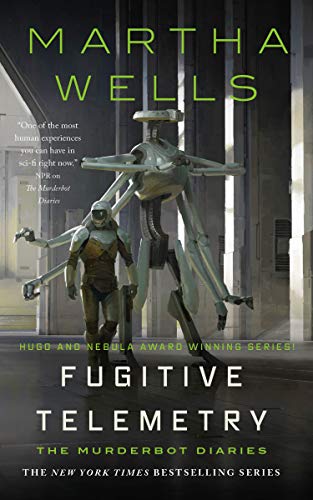
Fugitive Telemetry by Martha Wells
Published 2021, 168 p.
Although this novella took place before Network Effect, I don't think it's necessary to read them out of publication order. In this one, Murderbot discovers a dead human on Preservation Station, and Dr. Mensah asks SecUnit to work with station security to solve the mystery of who the victim was and to catch the killer or killers involved. Is GrayCris behind this? Is Dr. Mensah in danger?
A solid entry in the Murderbot Diaries series, my favorite remains the single novel in the series, Network Effect. It might be a personal preference for the longer format. In any case, I am sad that there is only one book left in the series!
Did those in the path enjoy the eclipse? I was on the West Coast for the 2017 eclipse. This time I was in about 96% of totality. Made a pinhole viewer with the girls and the older one drew pictures every ten minutes and tracked the temperature changes. The younger one drew eclipse pictures in the snow. Nine members of the family had gathered for the big event. Fun.
Here's the latest and next to last Murderbot book that I read during the power outage:
Fugitive Telemetry by Martha Wells
Published 2021, 168 p.
Although this novella took place before Network Effect, I don't think it's necessary to read them out of publication order. In this one, Murderbot discovers a dead human on Preservation Station, and Dr. Mensah asks SecUnit to work with station security to solve the mystery of who the victim was and to catch the killer or killers involved. Is GrayCris behind this? Is Dr. Mensah in danger?
A solid entry in the Murderbot Diaries series, my favorite remains the single novel in the series, Network Effect. It might be a personal preference for the longer format. In any case, I am sad that there is only one book left in the series!
184dchaikin
What a lovely way to experience the eclipse. We had 94% and mostly cloud cover. But the sun came out a few minutes. People claimed that it got cooler for a bit. But I didn’t notice. Actually with the cloud cover we could look directly at the eclipse, and its hints through the clouds. I was happy to see something.
187labfs39
>184 dchaikin: The eclipse was fun. We had perfectly clear weather, although it has rained every day since. The temperature dropped by about 7 degrees, very noticeable. We were in 97.2% of totality. In Caribou, Maine, the temperature dropped 9 degrees. We had eclipse glasses, plus the pinhole viewer and a colander. A nice event for our year-long homeschool study of astronomy.
>185 dianeham: Thanks, Diane.
>186 Willoyd: It's been a little crazy. Maine used to have a storm and outage like this once every 18 months or so. Last year we had three, this year two. This time, my town was the epicenter so the entire town and county were out. It was especially dramatic because we had had bare ground for a month and a particularly mild winter. The snow has melted quickly, and now, one week later, only the bankings are left. And lots and lots of felled trees and limbs. Clean up will take a long time.
>185 dianeham: Thanks, Diane.
>186 Willoyd: It's been a little crazy. Maine used to have a storm and outage like this once every 18 months or so. Last year we had three, this year two. This time, my town was the epicenter so the entire town and county were out. It was especially dramatic because we had had bare ground for a month and a particularly mild winter. The snow has melted quickly, and now, one week later, only the bankings are left. And lots and lots of felled trees and limbs. Clean up will take a long time.
188labfs39
Last night, I took my seven year old niece and parents to a concert by the US Army Field Band and Soldiers Chorus.

The music was excellent. I was very impressed with the vocals. The tenor who led the chorus in singing the Korean folk song, "Arirang", had an impressive range. I liked that they made a special recognition of Vietnam Vets in the audience, in addition to vets from all branches of the military at the end. The older gentlemen seemed moved by the recognition, and quite a few women stood up as well.
It's hard for me to feel much patriotism for my country these days as it seems to have been co-opted by the far right, but it was a pleasant musical experience with songs such as "Sitting by the Dock of the Bay", "Lakes of Ponchartrain", "We'll Meet Again", and "Stompin' at the Savoy" as well as Sousa classics and more marital airs like "Pines of the Appian Way".

The music was excellent. I was very impressed with the vocals. The tenor who led the chorus in singing the Korean folk song, "Arirang", had an impressive range. I liked that they made a special recognition of Vietnam Vets in the audience, in addition to vets from all branches of the military at the end. The older gentlemen seemed moved by the recognition, and quite a few women stood up as well.
It's hard for me to feel much patriotism for my country these days as it seems to have been co-opted by the far right, but it was a pleasant musical experience with songs such as "Sitting by the Dock of the Bay", "Lakes of Ponchartrain", "We'll Meet Again", and "Stompin' at the Savoy" as well as Sousa classics and more marital airs like "Pines of the Appian Way".
189labfs39
Although it took me a long time to get through this book, it was because of interruptions and the fact that I took 18 pages of typed notes, not because the book was inferior. Quite the contrary. Thank you to Meredith and Sassy for recommending it. As Meredith said, it and Hungry Ghosts worked well as companion reads.
Mao's Great Famine: The History of China's Most Devastating Catastrophe, 1958-1962 by Frank Dikötter
Published 2010, 420 p.
Historian Frank Dikötter is the author of a trilogy on the history of communism in China. This is the second volume and covers the years 1958-1962, the years of the Great Leap Forward and a devastating famine in which 45 million Chinese lost their lives. It is exceedingly well-researched and -documented, with a heavy reliance on provincial archives which were only recently opened at the time of his writing. It provides a very thorough and scholarly assessment and is a nice counterbalance to the journalistic history, Hungry Ghosts by Jasper Becker. Although the two books have few discrepancies, they approach the topic differently.
The first half of the book is a chronological step-by-step analysis of the Great Leap Forward and how it caused the massive famine. The second half of the book is organized by topic: agriculture, industry, housing, children, women, the elderly, accidents, disease, gulags, violence, etc. The last chapter discusses how the total number of deaths has been calculated and by whom. The epilogue discusses the author's sources, an important addition for those interested in the methodology. There is a 13 page bibliography and extensive endnote citations. The book won the Samuel Johnson Prize for Non-Fiction.
Despite it's scholarly nature, I found Mao's Great Famine compelling reading. Only twice did I find myself skimming due to dense statistical analysis. I would recommend it not only for it's authority on the subject, but for its readability. I intend to purchase the other two volumes of Dikötter's trilogy: Volume 1 on the Chinese Revolution and Volume 3 on the Cultural Revolution.
Other books I've read on the famine:
Hungry Ghosts by Jasper Becker
Grass Soup by Xianliang Zhang
Mao's Great Famine: The History of China's Most Devastating Catastrophe, 1958-1962 by Frank Dikötter
Published 2010, 420 p.
Historian Frank Dikötter is the author of a trilogy on the history of communism in China. This is the second volume and covers the years 1958-1962, the years of the Great Leap Forward and a devastating famine in which 45 million Chinese lost their lives. It is exceedingly well-researched and -documented, with a heavy reliance on provincial archives which were only recently opened at the time of his writing. It provides a very thorough and scholarly assessment and is a nice counterbalance to the journalistic history, Hungry Ghosts by Jasper Becker. Although the two books have few discrepancies, they approach the topic differently.
The first half of the book is a chronological step-by-step analysis of the Great Leap Forward and how it caused the massive famine. The second half of the book is organized by topic: agriculture, industry, housing, children, women, the elderly, accidents, disease, gulags, violence, etc. The last chapter discusses how the total number of deaths has been calculated and by whom. The epilogue discusses the author's sources, an important addition for those interested in the methodology. There is a 13 page bibliography and extensive endnote citations. The book won the Samuel Johnson Prize for Non-Fiction.
Despite it's scholarly nature, I found Mao's Great Famine compelling reading. Only twice did I find myself skimming due to dense statistical analysis. I would recommend it not only for it's authority on the subject, but for its readability. I intend to purchase the other two volumes of Dikötter's trilogy: Volume 1 on the Chinese Revolution and Volume 3 on the Cultural Revolution.
Other books I've read on the famine:
Hungry Ghosts by Jasper Becker
Grass Soup by Xianliang Zhang
190dchaikin
How interesting. I checked audible and there are other books by Dikotter, but not this one. His book The Cultural Revolution covers 1962-1976. He also covers the post-ww2 years in The Tragedy of Liberation
191dukedom_enough
>189 labfs39: Wow, 18 pages of notes! I usually think I'm overdoing it with like 4 pages of handwritten notes.
192labfs39
>190 dchaikin: I ordered Dikotter's book on the Cultural Revolution last night, as well as Weiwei's memoir. Dikotter has written widely on China from his post in Hong Kong.
>191 dukedom_enough: You should have seen the notes I took on Bloodlands! I find taking notes while reading academic history helps me retain the material better. Now I do it on my laptop so that I can use search functions. I left the laptop open on my lap and a bookmark in the book. I recently had my eyes checked and have ordered new glasses which should help me toggle back and forth between print and computer better.
>191 dukedom_enough: You should have seen the notes I took on Bloodlands! I find taking notes while reading academic history helps me retain the material better. Now I do it on my laptop so that I can use search functions. I left the laptop open on my lap and a bookmark in the book. I recently had my eyes checked and have ordered new glasses which should help me toggle back and forth between print and computer better.
193labfs39
Although I'm also still plugging away at Dictionary of Maqiao, last night I started Half of Man is Woman, a novel set during the Cultural Revolution, by the author of Grass Soup.


194kjuliff
>193 labfs39: I looked it up. A promiscuous woman and a man with erectile dysfunction- not a good match ;)
195labfs39
>194 kjuliff: Quite scandalous for China in the mid-1980s, in fact it caused Zhang to be blacklisted as "vulgar". However, according the introduction by his translator, Martha Avery, it is a metaphor for the emasculation of the intelligentsia during the Cultural Revolution. Zhang's protagonist, like he himself did, is working on a state farm in Ningxia after doing time in a labor camp for being a "rightist".
196kjuliff
>195 labfs39: I see. I am in admiration of your reading on China. I was really interested in China when I was at school but lost interest. I’m now interested in Japanese fiction. It’s so different than ours.
197labfs39
>196 kjuliff: I have never studied Chinese or Japanese history, so my interest is long overdue. I like Japanese fiction too. Often much more spare and poetic than American fiction.
198kjuliff
>197 labfs39: I went to “Chinese school” as a teenager. I was obsessed with China back then and went out of my way to befriend the Chinese girls at school. So I ended up going to Chinese school every weekend. It was really for the children of Chinese people who had fled what was Malaya before it lost Singapore. There were loads of anti-communist films and the teaching method was archaic. I learned a little Cantonese before I was thrown out because of my lack of skill in calligraphy.
199BLBera
I'm glad you have power; it sounds like life is getting back to normal? Your eclipse "party" sounds like fun. It was cloudy here but I could tell it got a little darker about the time we would have seen a partial eclipse.
200lisapeet
Yikes on your Nor'easter. We just had torrential wind and rain, and the power (incl. heat and hot water) was out from midnight to 5 p.m. on Thursday. I was in Columbus so missed all the fun, and ditto the earthquake, which my husband and dog both slept through. The cats aren't telling what they thought.
I did play hooky for a few hours to have lunch with a friend who came up from Harlem—we had a good late afternoon diner breakfast and traded my pair of eclipse glasses out on the sidewalk, and while the actual 90% of totality wasn't a knockout, it was a fun day. Seeing all the loud teenagers who are usually hanging around after school standing around solemnly instead was fun.
I did play hooky for a few hours to have lunch with a friend who came up from Harlem—we had a good late afternoon diner breakfast and traded my pair of eclipse glasses out on the sidewalk, and while the actual 90% of totality wasn't a knockout, it was a fun day. Seeing all the loud teenagers who are usually hanging around after school standing around solemnly instead was fun.
201labfs39
>198 kjuliff: How interesting, Kate. Nice that you had both opportunity and initiative to follow your interests. Lack of calligraphy skills was grounds for expulsion? Harsh!
>199 BLBera: We lost power for several hours on Friday. I was not pleased at the thought of another lengthy outage, but it was repaired quickly. Otherwise we are getting back to normal. Today my daughter and I took two pickup truck loads of branches (several up to 7" in diameter) to the dump. The town is allowing people to bring brush for free until the end of the month. Our county was also one of several which has been declared a disaster zone by the IRS, and people don't need to file their taxes until July 15!
>200 lisapeet: I'm glad you weren't effected too much by either the storm or the quake. Do you think cats are conspiracy theorists?
It's fun to be around other people during the eclipse. In October the girls and I saw a partial eclipse (16%)—this time was much more festive.
>199 BLBera: We lost power for several hours on Friday. I was not pleased at the thought of another lengthy outage, but it was repaired quickly. Otherwise we are getting back to normal. Today my daughter and I took two pickup truck loads of branches (several up to 7" in diameter) to the dump. The town is allowing people to bring brush for free until the end of the month. Our county was also one of several which has been declared a disaster zone by the IRS, and people don't need to file their taxes until July 15!
>200 lisapeet: I'm glad you weren't effected too much by either the storm or the quake. Do you think cats are conspiracy theorists?
It's fun to be around other people during the eclipse. In October the girls and I saw a partial eclipse (16%)—this time was much more festive.
202kjuliff
>201 labfs39: The teaching was meant to be harsh. The idea was that you had to be proficient in writing the Chinese characters with a brush and ink before you could progress to speaking. If I’d been more serious I could have practiced at home. My friend stayed on.
203rasdhar
Sounds like a wonderful experience with the eclipse. I'm sure the kids will remember it for a long time. I hope that the power outage issues are finally resolved.
>189 labfs39: Wonderful review. I also find that taking notes while doing this sort of reading is very helpful.
>189 labfs39: Wonderful review. I also find that taking notes while doing this sort of reading is very helpful.
204kjuliff
I’ve been reading about Yan Lianke. Have you come across any of his works while exploring Chinese literature? He sounds interesting.
205labfs39
>202 kjuliff: How interesting that writing proficiency was meant to precede speaking. Did your friend speak Chinese at home?
>203 rasdhar: I am currently trying to purchase a new generator and new snowblower so that new winter will hopefully be less stressful!
Thanks. My copy of Dikötter's The Cultural Revolution came yesterday. I want to jump right in, but I have two novels started plus I need to read Apeirogon for my book club.
>204 kjuliff: I have not yet read any Yan Lianke. He does sound interesting. I will keep an eye out for him.
>203 rasdhar: I am currently trying to purchase a new generator and new snowblower so that new winter will hopefully be less stressful!
Thanks. My copy of Dikötter's The Cultural Revolution came yesterday. I want to jump right in, but I have two novels started plus I need to read Apeirogon for my book club.
>204 kjuliff: I have not yet read any Yan Lianke. He does sound interesting. I will keep an eye out for him.
206msf59
Hi, Lisa. Just checking in. How is everything at the house? Getting back to normal? I put up my hummingbird feeder yesterday. It may be a bit too early for you yet.
207kjuliff
>205 labfs39: Yes my friend spoke Chinese at home and with her older relatives.
208labfs39
>206 msf59: Thanks for the reminder. I will put my hummingbird feeder up today. Hope springs eternal! I have had a pileated woodpecker visiting my suet feeder lately. I love them.
>207 kjuliff: As you know I am engrossed in Chinese history lately. I just purchased The Cultural Revolution by Dikötter, but won't start it until I finish a stack of novels I've started.
>207 kjuliff: As you know I am engrossed in Chinese history lately. I just purchased The Cultural Revolution by Dikötter, but won't start it until I finish a stack of novels I've started.
209labfs39
I'll be in NYC with family again this summer for a long weekend. July 4-7th. I would love to have another meetup. Who's going to be around? Ideas?
210lisapeet
I'll definitely be around—I can't go away over the 4th because there are too many fireworks in the neighborhood for me to feel comfortable leaving the house, and even if we could take the poor scared dog away (which I would love to) I don't want to leave the poor scared cats. I'll think about what might be fun/interesting/air conditioned.
211ELiz_M
>209 labfs39: I'm flying to MN to visit family on July 5th.
212rocketjk
We'll be in town through the end of May. Then we head back to California to pack up the house there and ship whatever we're keeping back to New York. We hope to be back by mid-August, depending on whether we drive again or fly. I'm afraid we're likely to miss you this time, but do let us know what your NYC dates turn out to be.
213labfs39
>210 lisapeet: It sounds like it may just be us, Lisa. Unless we can coerce Darryl or qebo to make a trip over. I am happy to travel toward you, if that makes it easier. Maybe Jasper could join us :)
>211 ELiz_M: Unless you are up for something on the 4th, Liz, I may miss you this time. Minnesota sounds like a cooler place to be in July than NYC.
>212 rocketjk: Too bad I'll miss you and Stephanie, Jerry. I'm so glad you found (and secured) an apartment though. Good luck with the moving process. I did it twice in three years, and I have vowed to never move again!
>211 ELiz_M: Unless you are up for something on the 4th, Liz, I may miss you this time. Minnesota sounds like a cooler place to be in July than NYC.
>212 rocketjk: Too bad I'll miss you and Stephanie, Jerry. I'm so glad you found (and secured) an apartment though. Good luck with the moving process. I did it twice in three years, and I have vowed to never move again!
214rocketjk
>213 labfs39: Sorry we'll miss you, too. On the moving, yeah, we actually have two moving processes to go through, (from our current rental space to the new digs, and then from California to the new digs) but we keep telling ourselves that someday it will all be accomplished.
I hope you have lots of fun in NYC this summer.
I hope you have lots of fun in NYC this summer.
215mabith
I'm glad you enjoyed (not quite the perfect work, but you know what I mean) the Frank Dikotter and also found pairing it with Hungry Ghosts to be a good reading decision. I do think he's very readable, but I've become oversensitive to what my book club thinks is dry non-fiction vs what I think is dry (admittedly as long as I'm interested in the subject and it's not just history of individual battles, nothing is too dry).
If you're looking for anything pre-takeover I enjoyed The Long March, The Women of the Long March, Forgotten Ally, and Stillwell and the American Experience in China.
If you're looking for anything pre-takeover I enjoyed The Long March, The Women of the Long March, Forgotten Ally, and Stillwell and the American Experience in China.
216qebo
>209 labfs39:, >213 labfs39: Unless we can coerce
Randomly dropping by apparently at just the right moment. I'd be a maybe, will keep an eye on plans. IIRC when you were in NYC last year (?) your windows of opportunity were limited.
Randomly dropping by apparently at just the right moment. I'd be a maybe, will keep an eye on plans. IIRC when you were in NYC last year (?) your windows of opportunity were limited.
217labfs39
>214 rocketjk: That's true, you have two moves ahead of you. At least one is local. Good luck!
>215 mabith: I know what you mean, my book club prefers narrative history too. And yes, there is dry history (what I think of as academic history) and then there is military history. I am usually okay with dry, but, like you, don't read a lot of military history. That said, I found Stalingrad by Antony Beevor very readable. Granted the tank positions got old and I never did figure out all the Russian and German terms for patrols, divisions, battalions, etc., but overall it was very interesting.
Thank you for the book suggestions for the early days of Chinese communism. I probably should have started there, but my entry point was several memoirs from the Anti-Rightist/famine era, so that's where I started my history reading. I may loop back to the early days, although I'm becoming interested in how the post-Mao years played out too. So much to learn! In any case, I'll add the books to my master list in >60 labfs39:.
>216 qebo: It would be lovely to see you again, qebo. It's been a decade? more? I have a little more flexibility this time around, although Saturday am may be the hardest to get away.
>215 mabith: I know what you mean, my book club prefers narrative history too. And yes, there is dry history (what I think of as academic history) and then there is military history. I am usually okay with dry, but, like you, don't read a lot of military history. That said, I found Stalingrad by Antony Beevor very readable. Granted the tank positions got old and I never did figure out all the Russian and German terms for patrols, divisions, battalions, etc., but overall it was very interesting.
Thank you for the book suggestions for the early days of Chinese communism. I probably should have started there, but my entry point was several memoirs from the Anti-Rightist/famine era, so that's where I started my history reading. I may loop back to the early days, although I'm becoming interested in how the post-Mao years played out too. So much to learn! In any case, I'll add the books to my master list in >60 labfs39:.
>216 qebo: It would be lovely to see you again, qebo. It's been a decade? more? I have a little more flexibility this time around, although Saturday am may be the hardest to get away.
218qebo
>217 labfs39: It's been a decade?
I was going to say it can't be... but it was! My niece got married in Brunswick in late May 2014 (they're still there, now with 2 kids), before you returned to live in Maine but IIRC you were in Portland at the same time for a family event.
I was going to say it can't be... but it was! My niece got married in Brunswick in late May 2014 (they're still there, now with 2 kids), before you returned to live in Maine but IIRC you were in Portland at the same time for a family event.
219labfs39
>218 qebo: Lol, time flies. It would have been right before Katie's 11th birthday. Too bad she won't come to NY with me, she remembers you fondly as a fellow science lover.
220labfs39
Chag same’ach to all who are celebrating Passover. My mind and heart are conflicted this year with the events in Gaza. Let my people go indeed.
221rachbxl
Now that I've caught up with your thread I understand why some of your daffodils didn't survive the snowstorm!
222labfs39
>221 rachbxl: It's amazing that any of my bulbs survived. Most of the trees had budded out, but many were snapped between 10 and 20 feet above the ground. Widow-makers (big limbs hanging down but that haven't fallen, when they do they can be deadly) abound. I'm afraid to let the girls play in the woods until I have a couple of trees taken down. I've raked up hundreds of pounds of pine cones. The squirrels will be hungry next winter.
223lisapeet
>213 labfs39: We'll figure something out! My neighborhood is completely devoid of anything interesting (other than me and Jasper), but I'm good to travel north or south, whatever you want to do while you're here. Jasper is, so far, not a fan of traveling anywhere, sadly.
224labfs39
>223 lisapeet: Excellent. And >216 qebo: qebo might be able to come up. Have you guys met?
Kate, maybe you can message me about whether you would be up for a visit.
Kate, maybe you can message me about whether you would be up for a visit.
225labfs39
Today I took the girls to Portland to see a performance by Brush Theatre, a travelling group based in South Korea. It was amazing and hard to describe. The show was called Poli Pop and was a play about Poli and Pola, two siblings who get up to mischief, instead of going to bed. They meet a mysterious character called "Mong", which means dream in Korean, and have some wild adventures. The set was seemingly very simple and there were only three actors, the magic comes from the creative use of projected art, shadows, and a mix of live music and sounds. The result is a visually stunning and extremely engaging show. I would recommend it to anyone, with or without the kids in tow.
Brush Theatre
Poli Pop
Brush Theatre
Poli Pop
226EBT1002
>60 labfs39: What a great list. I'll never read them all but I have favorited that post so I can refer to it later. I'm also making note of the graphic autobiography A Chinese Life.
227labfs39
I started this twice on audio and could not stay in the story. McCann is a good reader, but it just didn't work for me. When my book club chose this as its April selection, I bought the print and whizzed through it.

Apeirogon by Colum McCann
Published 2020, 463 p.
This is the first book I've read by Colum McCann, and I was so impressed. He takes a very difficult subject, the Israeli-Palestinian conflict, and renders it into relatable human terms without losing any of its complexity. Apeirogon means a shape with countable yet infinite sides—a perfect title for such a complex situation.
As a whole, an apeirogon approaches the shape of a circle, but a magnified view of a small piece appears to be a straight line. One can finally arrive at any point within the whole. Anywhere is reachable. Anything is possible, even the seemingly impossible.
At the same time, one can arrive anywhere within an apeirogon and the entirety of the shape is complicit in the journey, even that which has not yet been imagined.
Peace is achievable, in fact, inevitable, say the protagonists. After all, who would have thought that Germany and Israel would have diplomatic relations? Who would have thought that a Palestinian man whose daughter was killed by an Israeli sniper and an Israeli man whose daughter was killed by a suicide bomber could be friends? Could work together toward the end of the Occupation and peace? Bassam Aramin and Rami Elhanan are the two men. They are real and their stories are real. You can Google them and see photos of their daughters. They gave Colum McCann permission to tell their story, and to do so in a novel.
McCann structures his story in a 1001 chapters, in homage to One Thousand and One Nights. In the center of the book, at its heart, are two chapters, based on transcripts of the speeches that Bassam and Rami give all over the world. The rest of the book is a build up to and a descent from these two stories. Switching between characters and time periods, their stories are told in layers interwoven with dozens of other stories: Mitterand's last meal, films shot in Terezin concentration camp, the habits of migratory birds, a high wire walker, Picasso's Dove. But always the story is pulled back to these two men and their shared pain.
In 1932 Einstein and Freud exchanged letters about the possibility of preventing war. McCann paraphrases Freud's response: "...anything which creates emotional ties between human beings inevitably counteracts war. What had to be sought was a community of feeling, and a mythology of the instincts." I think that the work that Bassam and Rami are doing, and the book that McCann has written, are direct attempts at just that—to create a community of feeling. It's impossible to consider someone you empathize with as your enemy. As Rami says, it won't be over until we talk. So let's talk. And this book is a good place to begin.

Apeirogon by Colum McCann
Published 2020, 463 p.
This is the first book I've read by Colum McCann, and I was so impressed. He takes a very difficult subject, the Israeli-Palestinian conflict, and renders it into relatable human terms without losing any of its complexity. Apeirogon means a shape with countable yet infinite sides—a perfect title for such a complex situation.
As a whole, an apeirogon approaches the shape of a circle, but a magnified view of a small piece appears to be a straight line. One can finally arrive at any point within the whole. Anywhere is reachable. Anything is possible, even the seemingly impossible.
At the same time, one can arrive anywhere within an apeirogon and the entirety of the shape is complicit in the journey, even that which has not yet been imagined.
Peace is achievable, in fact, inevitable, say the protagonists. After all, who would have thought that Germany and Israel would have diplomatic relations? Who would have thought that a Palestinian man whose daughter was killed by an Israeli sniper and an Israeli man whose daughter was killed by a suicide bomber could be friends? Could work together toward the end of the Occupation and peace? Bassam Aramin and Rami Elhanan are the two men. They are real and their stories are real. You can Google them and see photos of their daughters. They gave Colum McCann permission to tell their story, and to do so in a novel.
McCann structures his story in a 1001 chapters, in homage to One Thousand and One Nights. In the center of the book, at its heart, are two chapters, based on transcripts of the speeches that Bassam and Rami give all over the world. The rest of the book is a build up to and a descent from these two stories. Switching between characters and time periods, their stories are told in layers interwoven with dozens of other stories: Mitterand's last meal, films shot in Terezin concentration camp, the habits of migratory birds, a high wire walker, Picasso's Dove. But always the story is pulled back to these two men and their shared pain.
In 1932 Einstein and Freud exchanged letters about the possibility of preventing war. McCann paraphrases Freud's response: "...anything which creates emotional ties between human beings inevitably counteracts war. What had to be sought was a community of feeling, and a mythology of the instincts." I think that the work that Bassam and Rami are doing, and the book that McCann has written, are direct attempts at just that—to create a community of feeling. It's impossible to consider someone you empathize with as your enemy. As Rami says, it won't be over until we talk. So let's talk. And this book is a good place to begin.
228janoorani24
Fantastic review! Thank you.
229rasdhar
>227 labfs39: This is a great review. I've been very curious about this book. I like how you emphasized the idea of a 'community of feeling'.
230labfs39
>226 EBT1002: I don't know how many I'll get to either, Ellen, but it's a great list and the ones I have read so far have been very good.
>228 janoorani24: Thank you for stopping in, Janiece.
>229 rasdhar: I'm very glad I persevered and purchased the print copy, Rasdhar. It was one of those books that's heartrending to read, but so worthwhile.
>228 janoorani24: Thank you for stopping in, Janiece.
>229 rasdhar: I'm very glad I persevered and purchased the print copy, Rasdhar. It was one of those books that's heartrending to read, but so worthwhile.
231rachbxl
>227 labfs39: What a great review, thanks. I’ve got a bit of a mental block about this book, no idea why. You make it sound like something I might actually want to read.
232arubabookwoman
>227 labfs39: Wonderful review of a great book!
233labfs39
>231 rachbxl: I had trouble getting into the audio, but otherwise I found the book engaging. I did have to give myself breaks due to the emotional nature of the content, however.
>232 arubabookwoman: Thanks, Deborah. I'm glad I switched to print and was able to read the entire book. It's an impressive work, both the writing and the content.
>232 arubabookwoman: Thanks, Deborah. I'm glad I switched to print and was able to read the entire book. It's an impressive work, both the writing and the content.
234kjuliff
>227 labfs39: Great review Lisa. I managed to manage the audio version, but then I’m very used to “reading” audio. I did however lose the interesting structure (1001chapters) that you commented on. I missed knowing/experiencing this reference to One Thousand and One Nights. It’s a while since I listened to the book, and your comments illustrate the sort of thing that remains out of sight (pun intended) in audio format.
235lisapeet
>227 labfs39: I've had that on the virtual pile forever... and unfortunately it only seems to get more timely. I like McCann, so I should get to it one of these days before the world gets even worse.
236labfs39
This is the most recent Murderbot book published. I hope I don't have to wait too long before the next one is published!

System Collapse by Martha Wells
Published 2023, 245 p.
This novel takes place immediately after the only other novel in the series, Network Effect. I wish that I had read them back to back, not in publication order, but this is a minor point.
Our SecUnit has physically recovered from being imprisoned by the alien contaminant, but something is off. As the Preservation members and University team work together to try and convince the colonists to leave with them, SecUnit finds it challenging to manage both job and emotions.
I loved Network Effect, and this novel is set in the same world and situation. Murderbot's journey to self-actualization is relatable, which is odd, since SecUnits are cyborgs. But there is such a human vulnerability behind the wise-cracking smartass. ART, on the other hand, is so superior to humans in processing ability that I find it harder to relate. I can't wait to see where the author takes us next. Wherever it is, I will be along for the ride.

System Collapse by Martha Wells
Published 2023, 245 p.
This novel takes place immediately after the only other novel in the series, Network Effect. I wish that I had read them back to back, not in publication order, but this is a minor point.
Our SecUnit has physically recovered from being imprisoned by the alien contaminant, but something is off. As the Preservation members and University team work together to try and convince the colonists to leave with them, SecUnit finds it challenging to manage both job and emotions.
I loved Network Effect, and this novel is set in the same world and situation. Murderbot's journey to self-actualization is relatable, which is odd, since SecUnits are cyborgs. But there is such a human vulnerability behind the wise-cracking smartass. ART, on the other hand, is so superior to humans in processing ability that I find it harder to relate. I can't wait to see where the author takes us next. Wherever it is, I will be along for the ride.
237labfs39
>234 kjuliff: Thanks, Kate. I do think that a more experienced and capable listener wouldn't struggle the way I did with the audio. That said, the structure is interesting. The chapters are numbered up to 500, then there is chapter 1001, and then the chapters decrease from 500 to 1. The first line of the book and the last mirror one another.
Another thing the print has is photos. They are small, black and white photos, interspersed much like those in the book Austerlitz. Each is usually a chapter unto itself. The photos of Adir and Smadar are as heart-wrenching to see as the photo of Bassam and Rami asleep on a train together is heart-warming.
Finally, my paperback edition had an interview with the author at the end, and I found it very interesting. One of the things he talks about is whether he has the right, being Irish, to tell this story. He says having experienced "The Troubles" firsthand gave him insight. He goes on to talk about cultural appropriation and the way he approaches subjects outside his own experience in order to avoid the hubris of the outsider. I might type it up here at some point, as it was thoughtful.
>235 lisapeet: Although this was my first book by McCann, it won't be my last. His intelligence combined with writing ability makes me think he could write an interesting piece about anything, and after browsing his titles, I think he has. To read this book now gives it even more cache and power.
As things escalate at Columbia, I am reminded of my undergraduate days when similar encampments were set up on the campus green of my alma mater calling for divestment from South Africa. There was a sit-in in the administrative hall, but no police. The biggest threat was from other students who came at night and tried to tear down the encampments. While I support the right of students to protest (and agree with the call for an end to the war and Occupation), the rise of anti-Semitism on campuses is real and unacceptable. If we can't even manage the conflict between pro-Palestinians and Pro-Israelis in our country, how can we expect Palestinians and Israelis to manage their much deeper conflict? It's such a morass. It makes Bassam and Rami's message of hope so important to hear.
Another thing the print has is photos. They are small, black and white photos, interspersed much like those in the book Austerlitz. Each is usually a chapter unto itself. The photos of Adir and Smadar are as heart-wrenching to see as the photo of Bassam and Rami asleep on a train together is heart-warming.
Finally, my paperback edition had an interview with the author at the end, and I found it very interesting. One of the things he talks about is whether he has the right, being Irish, to tell this story. He says having experienced "The Troubles" firsthand gave him insight. He goes on to talk about cultural appropriation and the way he approaches subjects outside his own experience in order to avoid the hubris of the outsider. I might type it up here at some point, as it was thoughtful.
>235 lisapeet: Although this was my first book by McCann, it won't be my last. His intelligence combined with writing ability makes me think he could write an interesting piece about anything, and after browsing his titles, I think he has. To read this book now gives it even more cache and power.
As things escalate at Columbia, I am reminded of my undergraduate days when similar encampments were set up on the campus green of my alma mater calling for divestment from South Africa. There was a sit-in in the administrative hall, but no police. The biggest threat was from other students who came at night and tried to tear down the encampments. While I support the right of students to protest (and agree with the call for an end to the war and Occupation), the rise of anti-Semitism on campuses is real and unacceptable. If we can't even manage the conflict between pro-Palestinians and Pro-Israelis in our country, how can we expect Palestinians and Israelis to manage their much deeper conflict? It's such a morass. It makes Bassam and Rami's message of hope so important to hear.
238Ameise1
>227 labfs39: wonderful review. I put it on my library list.
239labfs39
>238 Ameise1: Thanks, Barbara
So a third of the way into the year, I stopped to see how my reading was shaping up. First, quantity: last year by this point I had read 38 books, this year 28. What accounts for the discrepancy? Perhaps because last spring I was reading for the Africa challenge. By the end of April I had read 11 books related to it alone, plus a handful more for the Baltic Sea Challenge I was curating. This year I decided not to participate in these big challenges, and I wonder if I'm less motivated as a result? Interesting. Second, quality: last year I had read 4 books that I rated 4.5 or 5* by May, same this year. So despite reading fewer books, I am reading some good ones. Finally, how do I feel about my reading? I think I was feeling a bit scattershot, so I started reading books about Chinese history, and that felt good. I'm not going to change my serendipitous approach this year, but perhaps I am a person who does better with the open ended challenges (read a book about x, not, read this book) or even self-designed challenges (like my current preoccupation with Chinese history). Something to think about.
So a third of the way into the year, I stopped to see how my reading was shaping up. First, quantity: last year by this point I had read 38 books, this year 28. What accounts for the discrepancy? Perhaps because last spring I was reading for the Africa challenge. By the end of April I had read 11 books related to it alone, plus a handful more for the Baltic Sea Challenge I was curating. This year I decided not to participate in these big challenges, and I wonder if I'm less motivated as a result? Interesting. Second, quality: last year I had read 4 books that I rated 4.5 or 5* by May, same this year. So despite reading fewer books, I am reading some good ones. Finally, how do I feel about my reading? I think I was feeling a bit scattershot, so I started reading books about Chinese history, and that felt good. I'm not going to change my serendipitous approach this year, but perhaps I am a person who does better with the open ended challenges (read a book about x, not, read this book) or even self-designed challenges (like my current preoccupation with Chinese history). Something to think about.
240labfs39
I can't for the life of me remember who recommended this one. Tess?

A Faraway Island by Annika Thor, translated from the Swedish by Linda Schenck
Published 2009, 247 p.
This is what I would call a young adult book with wide appeal. It's the story of two Jewish sisters, Stephie and Nellie Steiner, who are sent to Sweden from Vienna in the summer of 1939. Their parents are trying to get visas to leave for America, and the girls expect to join them for the trip in three months, maybe six. Upon arriving in Göteborg, they are told that they will not be in the same household, but that they will be hosted in the same village on an island. Seven-year-old Nellie is placed with in a cheerful family with two young children, and twelve-year-old Stephie with an older couple further out of the village, "at the end of the world." Stephie's host mother is stern and her husband is away a lot of the time with a fishing crew, but when he's home, he is sympathetic and kind. As Stephie tries to fit in and behave as expected, she is faced with challenges at home, at school, and in making friends. As the war begins in Europe, her fears for her parents increases. Will they be able to get visas?
I enjoyed this novel, the first in a quartet about the Steiner sisters. It reminded me of Anne of Green Gables. Like Anne, Stephie feels very different from those around her: she doesn't speak the language, she's Jewish, from an urban city, and without her parents. Her host mother is very reminiscent of Miss Cuthburt and her husband plays a role like Matthew's. But A Faraway Island is more somber, with the war looming in the background and fears for her parents running as an undercurrent through her life. I enjoyed this story and have ordered the next one in the series.
The author was born and raised in a Jewish family in Göteborg. Her mother's cousins were among the few Jewish refugees from Nazi Germany that were granted asylum in Sweden. According to the author, after Kristallnacht in November 1938, Jewish congregations in Sweden persuaded the government to accept refugees, and 500 children from Germany, Austria, and Czechoslovakia were accepted. No adults.** Compare that to a year later, when Sweden accepted 70,000 Finnish children when the USSR invaded Finland, or the 10,000 Jewish children that were taken in by England. Half of the children were young teenagers, and fifteen percent were younger than seven, some as young as one. Almost two thirds were girls. The majority of the children came from urban areas and were well-educated. In Sweden at the time, there was only six years of compulsory education. Many ended up working as farm hands or maids. Most came believing they would be reunited with their families soon. In reality, only about one in four had even a single parent survive. More than half of the children remained in Sweden for the rest of their lives. The author interviewed some of these people for the book, as well as talked with her parents about growing up Jewish in Sweden during the war. Although this is a work of fiction it is rooted in what was and what might have been.
**Note that later in the war, the Norwegian resistance was able to smuggle approximately 1,100 Jews into Sweden and finally in the last months of 1943, the Swedish government agreed to accept roughly 8,000 Jews from Denmark, saving almost the entire population of Danish Jews. Because of this, Sweden was seen in the post-war years as a humanitarian savior, when in fact, throughout the 1930s and early 1940s, Sweden denied entry to almost all Jews.

A Faraway Island by Annika Thor, translated from the Swedish by Linda Schenck
Published 2009, 247 p.
This is what I would call a young adult book with wide appeal. It's the story of two Jewish sisters, Stephie and Nellie Steiner, who are sent to Sweden from Vienna in the summer of 1939. Their parents are trying to get visas to leave for America, and the girls expect to join them for the trip in three months, maybe six. Upon arriving in Göteborg, they are told that they will not be in the same household, but that they will be hosted in the same village on an island. Seven-year-old Nellie is placed with in a cheerful family with two young children, and twelve-year-old Stephie with an older couple further out of the village, "at the end of the world." Stephie's host mother is stern and her husband is away a lot of the time with a fishing crew, but when he's home, he is sympathetic and kind. As Stephie tries to fit in and behave as expected, she is faced with challenges at home, at school, and in making friends. As the war begins in Europe, her fears for her parents increases. Will they be able to get visas?
I enjoyed this novel, the first in a quartet about the Steiner sisters. It reminded me of Anne of Green Gables. Like Anne, Stephie feels very different from those around her: she doesn't speak the language, she's Jewish, from an urban city, and without her parents. Her host mother is very reminiscent of Miss Cuthburt and her husband plays a role like Matthew's. But A Faraway Island is more somber, with the war looming in the background and fears for her parents running as an undercurrent through her life. I enjoyed this story and have ordered the next one in the series.
The author was born and raised in a Jewish family in Göteborg. Her mother's cousins were among the few Jewish refugees from Nazi Germany that were granted asylum in Sweden. According to the author, after Kristallnacht in November 1938, Jewish congregations in Sweden persuaded the government to accept refugees, and 500 children from Germany, Austria, and Czechoslovakia were accepted. No adults.** Compare that to a year later, when Sweden accepted 70,000 Finnish children when the USSR invaded Finland, or the 10,000 Jewish children that were taken in by England. Half of the children were young teenagers, and fifteen percent were younger than seven, some as young as one. Almost two thirds were girls. The majority of the children came from urban areas and were well-educated. In Sweden at the time, there was only six years of compulsory education. Many ended up working as farm hands or maids. Most came believing they would be reunited with their families soon. In reality, only about one in four had even a single parent survive. More than half of the children remained in Sweden for the rest of their lives. The author interviewed some of these people for the book, as well as talked with her parents about growing up Jewish in Sweden during the war. Although this is a work of fiction it is rooted in what was and what might have been.
**Note that later in the war, the Norwegian resistance was able to smuggle approximately 1,100 Jews into Sweden and finally in the last months of 1943, the Swedish government agreed to accept roughly 8,000 Jews from Denmark, saving almost the entire population of Danish Jews. Because of this, Sweden was seen in the post-war years as a humanitarian savior, when in fact, throughout the 1930s and early 1940s, Sweden denied entry to almost all Jews.
241labfs39
Yesterday was a fun day. My mom, sister, and I went to three different library book sales. We are all readers, but read different things, so there was no competing for our favorite books. :-) I came away with 52 books for myself and 29 for the girls, and we helped three local libraries with their budgets. These little libraries rely on their book sales to help fund programing, acquisitions, and one library is even adding an addition with no financial support from the town. Win-win.
Highlights: 2 NYRB editions, 1 very short introduction, 2 Europa Editions, 1 Murderbot book, 4 Holocaust memoirs, and The Private Life of Chairman Mao, which I was intending to buy for my Chinese history reading wormhole. I also bought a copy of Wild Swans, but when I got home I realized it was marked up on every page with red pen. Too distracting for me to read.


and for the kids

Highlights: 2 NYRB editions, 1 very short introduction, 2 Europa Editions, 1 Murderbot book, 4 Holocaust memoirs, and The Private Life of Chairman Mao, which I was intending to buy for my Chinese history reading wormhole. I also bought a copy of Wild Swans, but when I got home I realized it was marked up on every page with red pen. Too distracting for me to read.


and for the kids

242avatiakh
>240 labfs39: I've requested this one, the cover seems familiar but I know I haven't read it.
...and wow your library haul is amazing. I got a book package delivered today so I'm also in a happy place.
...and wow your library haul is amazing. I got a book package delivered today so I'm also in a happy place.
243labfs39
>242 avatiakh: A Faraway Island was also made into a tv series, but I can't seem to find it via a streaming service. Could you maybe have seen the show?
I was so happy to find such great books, and at the best place, paperbacks were four for a dollar. I gave them a donation too, because that's crazy. None of them were ex-libris either.
The four Holocaust memoirs I found were:
Fragments of a Lost Childhood by Zahava Kohn
The last Jew of Treblinka : a survivor's memory, 1942-1943 by Chil Rajchman (written in Yiddish in 1945 and only now translated and published)
Hiding to Survive: Stories of Jewish Children Rescued from the Holocaust by Maxine B. Rosenberg (which is a collection of first hand accounts)
I am a star : child of the Holocaust by Inge Auerbacher (YA)
I also found Jerusalem, battlegrounds of memory by Amos Elon, which is the only one of these books that I see in your catalog. Have you read it?
I was so happy to find such great books, and at the best place, paperbacks were four for a dollar. I gave them a donation too, because that's crazy. None of them were ex-libris either.
The four Holocaust memoirs I found were:
Fragments of a Lost Childhood by Zahava Kohn
The last Jew of Treblinka : a survivor's memory, 1942-1943 by Chil Rajchman (written in Yiddish in 1945 and only now translated and published)
Hiding to Survive: Stories of Jewish Children Rescued from the Holocaust by Maxine B. Rosenberg (which is a collection of first hand accounts)
I am a star : child of the Holocaust by Inge Auerbacher (YA)
I also found Jerusalem, battlegrounds of memory by Amos Elon, which is the only one of these books that I see in your catalog. Have you read it?
244RidgewayGirl
>241 labfs39: Now that is an excellent haul! I also like Alan Furst's novels, the Ocean Vuong is gorgeously written and will break your heart.
245avatiakh
>243 labfs39: No, I haven't come across the tv series either.
Our library has had a sale going these past couple of weeks, they only have one table with about 40-50 books on it and many are in Chinese. You have to be there early to see what they bring out new each day. I picked up a few but nothing too great.
There're so many Holocaust related memoirs and each one tells a sad personal story.
I haven't read Elon's Jerusalem book but did read Sebag-Montefiore's Jerusalem: the biography. I have collected a number of history books on Israel over the years but haven't managed to read that many of them.
Our library has had a sale going these past couple of weeks, they only have one table with about 40-50 books on it and many are in Chinese. You have to be there early to see what they bring out new each day. I picked up a few but nothing too great.
There're so many Holocaust related memoirs and each one tells a sad personal story.
I haven't read Elon's Jerusalem book but did read Sebag-Montefiore's Jerusalem: the biography. I have collected a number of history books on Israel over the years but haven't managed to read that many of them.
247ursula
>239 labfs39: It seems like you most want to follow your interests where they lead, which can seem like a "challenge" - all on one topic or in one area. I admire that sort of completist reading, I am more like a butterfly, usually only coming back to something when I have forgotten everything I read the first time through. ;)
>241 labfs39: I really loved Interior Chinatown, Argo was interesting, and I liked Jude the Obscure, but I love Hardy and the way he tortures his characters for some reason.
>241 labfs39: I really loved Interior Chinatown, Argo was interesting, and I liked Jude the Obscure, but I love Hardy and the way he tortures his characters for some reason.
248labfs39
>244 RidgewayGirl: Lol. I don't have nearly your restraint, Kay. I have read a couple of Furst's novels, but decided I wanted to read them in order. I've been collecting them, but I'm still missing two, including the first, so I haven't started yet. I'm looking forward to the Vuong and several others that I've been hearing about here on LT but haven't been motivated enough to request through the library. Now I have no excuse!
>245 avatiakh: The two little libraries I use regularly, have ongoing sales, but they rarely have anything that I feel I must have. Lots of genre fiction, beat up ex-libris, and out-of-date nonfiction. Two of the sales I went to on Saturday were on the coast, where, frankly, the wealthy out-of-staters live. The quality of the books was much higher, and I found more interesting titles.
There are so many Holocaust memoirs. No matter how many I read, I am drawn to read more. The last few years I've been busy with Paul's challenges and haven't read as many as I usually do.
I've only read Sebag-Montefiore's Young Stalin, and it was excellent. He's an historian I would like to read more of. Was Jerusalem: the biography good?
>246 kjuliff: Hi, Kate!
>247 ursula: I think I like the community aspect of Paul's geographic challenges, but I've certainly been enjoying my foray into Chinese history this year. Fellow Club Readers have had enough suggestions for me, that it's almost like a challenge, and now that I've started I am seeing more aspects that I would like to explore. For instance, I would like to read a biography of Deng Xiaoping now, and he wasn't someone I even knew of prior to this spring. It's been an interesting rabbit hole, for sure.
only coming back to something when I have forgotten everything I read the first time through
I can relate to that! Thankfully my LT catalog reminds me of what I've read or I would be rereading all the time. I also take notes when I read a dense history book, and although I don't always refer back to my notes, the act of writing seems to help me remember.
I read Jude and Tess when I was young, but have not read anything by him in decades. I suspect my impressions will be different now.
>245 avatiakh: The two little libraries I use regularly, have ongoing sales, but they rarely have anything that I feel I must have. Lots of genre fiction, beat up ex-libris, and out-of-date nonfiction. Two of the sales I went to on Saturday were on the coast, where, frankly, the wealthy out-of-staters live. The quality of the books was much higher, and I found more interesting titles.
There are so many Holocaust memoirs. No matter how many I read, I am drawn to read more. The last few years I've been busy with Paul's challenges and haven't read as many as I usually do.
I've only read Sebag-Montefiore's Young Stalin, and it was excellent. He's an historian I would like to read more of. Was Jerusalem: the biography good?
>246 kjuliff: Hi, Kate!
>247 ursula: I think I like the community aspect of Paul's geographic challenges, but I've certainly been enjoying my foray into Chinese history this year. Fellow Club Readers have had enough suggestions for me, that it's almost like a challenge, and now that I've started I am seeing more aspects that I would like to explore. For instance, I would like to read a biography of Deng Xiaoping now, and he wasn't someone I even knew of prior to this spring. It's been an interesting rabbit hole, for sure.
only coming back to something when I have forgotten everything I read the first time through
I can relate to that! Thankfully my LT catalog reminds me of what I've read or I would be rereading all the time. I also take notes when I read a dense history book, and although I don't always refer back to my notes, the act of writing seems to help me remember.
I read Jude and Tess when I was young, but have not read anything by him in decades. I suspect my impressions will be different now.
249SassyLassy
>247 ursula: >248 labfs39: Jude the Obscure is definitely on my all time top ten. My real life book club didn't seem to agree with me though when we read it last year! It was a reread of a reread... for me, and each time there's something new.
Good haul - I'll be interested in hearing about the Edwige Danticat, someone I've yet to read.
Good haul - I'll be interested in hearing about the Edwige Danticat, someone I've yet to read.
250labfs39
>249 SassyLassy: I look forward to seeing what I think of Jude the Obscure now. I think it washed over me as a teen/young adult.
I've read two of Danticat's novels, Farming of Bones and Dew Breaker, both of which were good, but didn't blow me away. I also have Breath, Eyes, Memory and a YA autobiographical novel called Behind the Mountains on my shelves unread.
I've read two of Danticat's novels, Farming of Bones and Dew Breaker, both of which were good, but didn't blow me away. I also have Breath, Eyes, Memory and a YA autobiographical novel called Behind the Mountains on my shelves unread.
251ELiz_M
>241 labfs39: I loved Interior Chinatown, one of the best books I read that year. I've only read four Auster books, but Invisible was my favorite of them. Brother, I'm Dying was one of the first audio books I listened to. It was quite affecting.
252labfs39
>251 ELiz_M: It sounds like I picked some good ones. The only Auster I've read was Travels in the Scriptorium, which was memorable but quite strange.
253avatiakh
>248 labfs39: I try not to go to any book sales now, happy for an occasional serendipitous find at my local library.
Sebag-Montefiore's biography was very thorough and interesting, one book he quoted from that I read afterwards was Storyteller of Jerusalem: The Life and Times of Wasif Jawhariyyeh, 1904-1948 which expanded on Jerusalem's vibrant social life during the early Mandate period.
Sebag-Montefiore's biography was very thorough and interesting, one book he quoted from that I read afterwards was Storyteller of Jerusalem: The Life and Times of Wasif Jawhariyyeh, 1904-1948 which expanded on Jerusalem's vibrant social life during the early Mandate period.
254labfs39
>253 avatiakh: I enjoy book sales far too much to try and curtail my attendance. Besides nature abhors a vacuum, and I still have a few book shelves with room. :-) And it was very fun attending with my mom and sister. The sales attendants were teasing us, and we were all laughing. Good fun.
The only history of Jerusalem I've read is Jerusalem : One City, Three Faiths, which I listened to on audio, which may have influenced my low rating. Have you read the graphic novel Jerusalem : a family portrait by Boaz Yakin? That was interesting.
The only history of Jerusalem I've read is Jerusalem : One City, Three Faiths, which I listened to on audio, which may have influenced my low rating. Have you read the graphic novel Jerusalem : a family portrait by Boaz Yakin? That was interesting.
255rasdhar
>241 labfs39: What a wonderful haul. I'm envious! I spotted Lewis Carroll's poems in the books for the kids. I'm sure they will enjoy them. My dad would read them to us when we were young.
256avatiakh
>254 labfs39: I'm all for book fairs and library book sales, just that I won't seek them out now. I don't have an abundance of shelves so I have a lot sitting in boxes which is annoying whn you want a particular book and it's easier to borrow from the library than go searching for it.
I've read both those Jerusalem books. The Karen Armstrong one I also listened to an audiobook, I didn't realise that I had it on shuffle which made it a little difficult to follow. I was in Israel and it was wonderful to visit Jerusalem the day after I finished it. I gave up on her books after that one and possibly one other.
I'll recommend O Jerusalem if you haven't already read it. Adele Geras wrote a collection of stories, Golden Windows and Other Stories of Jerusalem, she lived in Jerusalem as a child.
One I've had out from the library Queens of Jerusalem: The Women Who Dared to Rule by Katherine Pangonis though I don't seem to have managed to read it.
I've read both those Jerusalem books. The Karen Armstrong one I also listened to an audiobook, I didn't realise that I had it on shuffle which made it a little difficult to follow. I was in Israel and it was wonderful to visit Jerusalem the day after I finished it. I gave up on her books after that one and possibly one other.
I'll recommend O Jerusalem if you haven't already read it. Adele Geras wrote a collection of stories, Golden Windows and Other Stories of Jerusalem, she lived in Jerusalem as a child.
One I've had out from the library Queens of Jerusalem: The Women Who Dared to Rule by Katherine Pangonis though I don't seem to have managed to read it.
257labfs39
>255 rasdhar: I'm looking forward to reading the Carroll poems to them. We've read Shel Silverstein and Jack Prelutsky, as well as various collections, but I don't think we've read any of Carroll's yet. Having my nieces is a fun excuse for revisiting childhood favorites, or books from my daughter's childhood.
>256 avatiakh: I liked Karen Armstrong's History of God and thought her memoir The Spiral Staircase was okay, but both the Jerusalem and Muhammad books were disappointing. I'm done with her too.
I'm noting your Jerusalem suggestions in case I ever explore that rabbit hole one day.
>256 avatiakh: I liked Karen Armstrong's History of God and thought her memoir The Spiral Staircase was okay, but both the Jerusalem and Muhammad books were disappointing. I'm done with her too.
I'm noting your Jerusalem suggestions in case I ever explore that rabbit hole one day.
258labfs39
I purchased this book after reading the author's memoir, Grass Soup.
Half of Man is Woman by Zhang Xianliang, translated from the Chinese by Martha Avery
Originally published 1985, English translation 1986, 253 p.
In 1956 during the Hundred Flowers Movement, the author, Zhang Xianliang, was imprisoned for writing rightist poetry. He was shuttled between prison, labor camps, and state farms for the next twenty years and was only rehabilitated after Mao's death. This novel takes place in the same places he was held, and his protagonist is also named Zhang. This is not, however, a memoir, it's a philosophical novel about the emasculation of the intelligentsia by the waves of repression that swept the country and about the cost of survival in such a regime.
One night in 1966, Zhang is out inspecting the irrigation canals and hoping to bag a duck, when he sees a naked woman bathing in a secluded spot. He is mesmerized. Having been in prison and labor camps since he was a youth, he is a virgin and has rarely even seen women in the last decade. Their eyes meet and Zhang feels that he has met the feminine ideal. She is more crude about it. Ten years later they meet again. This time they make a connection and although he has been "hatted" as a counter-revolutionary and rightist, and she has been married and divorced twice, they decide to marry. Unfortunately, Zhang is impotent and their relationship is tested.
This novel was very popular in China when it was published in 1985, but Zhang's writings were later banned during the crackdowns on writers for being "vulgar" . Although the novel is critical of the regime of the time, his protagonist remains a committed Communist and struggles with how best to help his country get back on the right track. I wish there had been a few more footnotes, because some of the allusions to contemporaneous events and personages were difficult to place. Despite the grim circumstances, the novel is funny at times and not a slog to read. The most philosophical passages are exchanges between Zhang and his horse. Although I wouldn't recommend it as the first book to read about the time period, it is an interesting take on the absurdities of life at the time.
Half of Man is Woman by Zhang Xianliang, translated from the Chinese by Martha Avery
Originally published 1985, English translation 1986, 253 p.
In 1956 during the Hundred Flowers Movement, the author, Zhang Xianliang, was imprisoned for writing rightist poetry. He was shuttled between prison, labor camps, and state farms for the next twenty years and was only rehabilitated after Mao's death. This novel takes place in the same places he was held, and his protagonist is also named Zhang. This is not, however, a memoir, it's a philosophical novel about the emasculation of the intelligentsia by the waves of repression that swept the country and about the cost of survival in such a regime.
One night in 1966, Zhang is out inspecting the irrigation canals and hoping to bag a duck, when he sees a naked woman bathing in a secluded spot. He is mesmerized. Having been in prison and labor camps since he was a youth, he is a virgin and has rarely even seen women in the last decade. Their eyes meet and Zhang feels that he has met the feminine ideal. She is more crude about it. Ten years later they meet again. This time they make a connection and although he has been "hatted" as a counter-revolutionary and rightist, and she has been married and divorced twice, they decide to marry. Unfortunately, Zhang is impotent and their relationship is tested.
This novel was very popular in China when it was published in 1985, but Zhang's writings were later banned during the crackdowns on writers for being "vulgar" . Although the novel is critical of the regime of the time, his protagonist remains a committed Communist and struggles with how best to help his country get back on the right track. I wish there had been a few more footnotes, because some of the allusions to contemporaneous events and personages were difficult to place. Despite the grim circumstances, the novel is funny at times and not a slog to read. The most philosophical passages are exchanges between Zhang and his horse. Although I wouldn't recommend it as the first book to read about the time period, it is an interesting take on the absurdities of life at the time.
259labfs39
Breaking news: The Maisie Dobbs series is coming to an end with #18: The Comfort of Ghosts. Although #17 left us in 1942, #18 is set in 1945 with the end of the war. I'm disappointed that the series is ending, but I'm glad she's writing one more to wrap things up before stopping. All good things must come to an end, I suppose. While not every book in the series was a homerun, I enjoyed most of them very much. With a memoir and a couple of novels already under her belt, I wonder where Winspear will go next in her writing?
260rhian_of_oz
>259 labfs39: It will be interesting to see how she finishes this off. It's on order at my local library and I'm third in line so thanks for letting us know.
261japaul22
>259 labfs39: thanks for the update! I just finished #9, so I have lots to look forward to still. I did hear from some of you that the second half of this series is more uneven than the first, but I have liked them enough so far to be excited to continue.
262JoeB1934
The Maisie Dobbs series is at the top my favorites list, but I am not surprised as I think the author came to a logical conclusion of this story.
I will miss Maisie greatly and I hope Jacqueline Winspear continues with a new story as she is very talented.
I will miss Maisie greatly and I hope Jacqueline Winspear continues with a new story as she is very talented.
263dicentra8
>241 labfs39: My local library is also having a book sale now! I think they still sell with the retail price (not the prices a person might find in a second-hand shop), but I still bought 2 books. I always go with the intention of buying adult fiction (romance, general fiction) and I always walk out with things I'm not expecting to buy. This time it was a children's picture book for "tough days when you need something more kind" and a graphic novel (a first for me). The sale will go on until May 18th so I might still be tempted until then.
264labfs39
>260 rhian_of_oz: I'm torn, Rhian, if I want to read it right away, knowing it will be the last, or if I want to "save it." For what, I'm not sure, but I sometimes do that.
>261 japaul22: I did hear from some of you that the second half of this series is more uneven than the first
You sparked my interest with your comment, so I went and checked my ratings. Numbers 3, 7, 9, 11, and 12 were my favorites. Numbers 4, 13, 16, and 17 were least favorites (although still good). Take from that what you will!
>262 JoeB1934: I tried to start reading The White Lady, one of Winspear's standalone novels, today when I was out and about, as it was on my Kindle. Unfortunately I hadn't downloaded it yet, so wasn't able to access it.
>263 dicentra8: Yikes, a library sale that charges retail prices for used books? That's rough. Sort of takes the fun out of the "lost treasure" find. Which graphic novel did you get? I read them from time to time, usually memoirs.
>261 japaul22: I did hear from some of you that the second half of this series is more uneven than the first
You sparked my interest with your comment, so I went and checked my ratings. Numbers 3, 7, 9, 11, and 12 were my favorites. Numbers 4, 13, 16, and 17 were least favorites (although still good). Take from that what you will!
>262 JoeB1934: I tried to start reading The White Lady, one of Winspear's standalone novels, today when I was out and about, as it was on my Kindle. Unfortunately I hadn't downloaded it yet, so wasn't able to access it.
>263 dicentra8: Yikes, a library sale that charges retail prices for used books? That's rough. Sort of takes the fun out of the "lost treasure" find. Which graphic novel did you get? I read them from time to time, usually memoirs.
265labfs39
While at the indoor playground today with my niece, I read some Chekhov short stories. I had such good intentions at the beginning of the year (after reading the Chekhov biography by Troyat) of reading Chekhov's short stories, but that goal was short-lived. Today I finally got back to it, and read several early ones from 1883-84 that I would call vignettes, not the meatier (and longer) ones of his later years.
The following is for my own memory:
The Trousseau - a young man visits a woman and her daughter of marriageable age several times over the years and sees their decline.
An Inquiry - a country landowner goes to the city to inquire about some legal matters, but discovers he must bribe the clerk to get any response, then the clerk is obsequious.
Fat and Thin - two former schoolmates meet many years later, and one has risen much further up the ranks than the other, changing the dynamic between them.
A Tragic Actor - a young woman runs off with an actor who then abuses her because her father won't send them money.
A Slander - a funny piece about a man who, in trying to forestall a slander, creates it instead.
The Bird Market - descriptions of some of the regulars to the bird market.
Choristers - a church choirmaster works for months getting ready for a concert for a prince, only to find out that the prince is atheist and doesn't want to listen to a concert.
The Album - an beautiful album of photos of his subordinates is presented to a retiring official. He is very moved, but when he gets home allows his daughter to make off with it for her own purposes, and the photos are made into caricatures by his son.
The following is for my own memory:
The Trousseau - a young man visits a woman and her daughter of marriageable age several times over the years and sees their decline.
An Inquiry - a country landowner goes to the city to inquire about some legal matters, but discovers he must bribe the clerk to get any response, then the clerk is obsequious.
Fat and Thin - two former schoolmates meet many years later, and one has risen much further up the ranks than the other, changing the dynamic between them.
A Tragic Actor - a young woman runs off with an actor who then abuses her because her father won't send them money.
A Slander - a funny piece about a man who, in trying to forestall a slander, creates it instead.
The Bird Market - descriptions of some of the regulars to the bird market.
Choristers - a church choirmaster works for months getting ready for a concert for a prince, only to find out that the prince is atheist and doesn't want to listen to a concert.
The Album - an beautiful album of photos of his subordinates is presented to a retiring official. He is very moved, but when he gets home allows his daughter to make off with it for her own purposes, and the photos are made into caricatures by his son.
266kjuliff
>258 labfs39: I’m fascinated by all your reading about China. I’m not so interested in Chinese history but every now and then I peep into your thread hoping to see a review of a book set in Sri Lanka or Morocco - two countries I’m currently stuck on. When will our reading paths converge again?
267labfs39
>266 kjuliff: Sorry, Kate! I haven't read anything recently from those countries, but I do have an author from each that I like. I really enjoyed The Bottom of the Jar by Abdellatif Laâbi, but didn't care so much for his prison memoir, Rue du retour. Several years ago I read two books by Ru Freeman: On Sal Mal Lane and A Disobedient Girl (I liked the first more than the second). Have you read either of these?
Edited to fix typo
Edited to fix typo
268kjuliff
>267 labfs39: No I haven’t read either. I’ll check them out. Thanks.
269labfs39
I posted the following on Kate's thread, in response to her book ennui and thought it was such a great word, I wanted to posted it here too so I don't lose it:
Now I have that book hang-over thing that I get when I finish a special book.
I know exactly what you mean. I began wondering if there is a word for that emotion. My internet search led me to the Sydney Morning Herald (go Aussies!), which introduced me to the word "looseleft." According to the Dictionary of Obscure Sorrows it means:
looseleft
adj. feeling a sense of loss upon finishing a good book, sensing the weight of the back cover locking away the lives of characters you’ve gotten to know so well.
From looseleaf, a removable sheet of paper + left, departed.
And now we know!
Now I have that book hang-over thing that I get when I finish a special book.
I know exactly what you mean. I began wondering if there is a word for that emotion. My internet search led me to the Sydney Morning Herald (go Aussies!), which introduced me to the word "looseleft." According to the Dictionary of Obscure Sorrows it means:
looseleft
adj. feeling a sense of loss upon finishing a good book, sensing the weight of the back cover locking away the lives of characters you’ve gotten to know so well.
From looseleaf, a removable sheet of paper + left, departed.
And now we know!
270dicentra8
>264 labfs39: Oh they're not used books so it makes sense. I think the publishers send the books and then the library sells them. But the price still slightly hurts on some. The graphic novel is called Utopia, about the Carnation Revolution.
271rocketjk
>269 labfs39: Given the definition, the word seems like it would make a great title for a literary periodical.
272rhian_of_oz
>264 labfs39: I know exactly what you mean. I felt the same about Y is for Yesterday and The Dark Tower.
273labfs39
>270 dicentra8: Oh, well that makes more sense. Are books in Portugal expensive?
>271 rocketjk: True!
>272 rhian_of_oz: I wish I had left the final installation of The Dark Tower. It was such a gut punch. I only got halfway through the Kinsey Millhone books.
The Northern lights were gorgeous in Maine last night, and I missed them! I'm so disappointed. I'm going to look tonight, but not sure what I'll see.
>271 rocketjk: True!
>272 rhian_of_oz: I wish I had left the final installation of The Dark Tower. It was such a gut punch. I only got halfway through the Kinsey Millhone books.
The Northern lights were gorgeous in Maine last night, and I missed them! I'm so disappointed. I'm going to look tonight, but not sure what I'll see.
275labfs39
This little memoir was one of my purchases at a recent library sale.
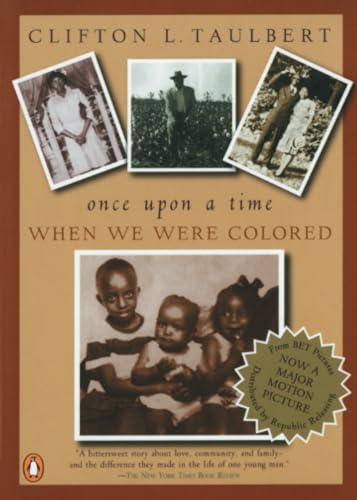
When We Were Colored by Clifton L. Taulbert
Published 1989, 153 p.
This book is not the story of Freemount and the years when blacks owned the land. It is the story of a mostly landless people, the coloreds, who lived in Glen Allan and other small southern towns during the last years of segregation. I have written it to recall a treasure more valuable and enduring than land ownership. It is the treasure that stood out in my colored childhood when there was so little else, and it has been a source of strength to me in all the years since then. That treasure is the nourishing love that came to me from my extended family of aunts, uncles, parents, grandparents, great-grandparents, cousins, neighbors, and friends... They are the reason I want today's world to remember an era that in our haste we might mistakenly forget—that era when we were called colored.
Although I understand that the author was looking back with fondness at his childhood and the community that raised him, I was uncomfortable with his acceptance of, and almost nostalgia for, a time when blacks were oppressed. His pride on the day he is first able to pick 200 lbs. of cotton, his happiness at having two white boys as almost-friends, and his love for his Poppa as he waits at a stop sign until all the white drivers have gone first were all scenes that made me cringe. But the author's point, that he was happy despite segregation, has more to do with the resilience of his family and community than with acceptance of bad treatment. Raised first by his grandfather and then his great-aunt, his childhood was the epitome of "it takes a village." His portrayals of the people in his past are compassionate and generous, and he only has kind things to say, which is in itself a reflection of how he was raised. An interesting glimpse into the 1950s American South for this Northern reader.
Edited to fix formatting
When We Were Colored by Clifton L. Taulbert
Published 1989, 153 p.
This book is not the story of Freemount and the years when blacks owned the land. It is the story of a mostly landless people, the coloreds, who lived in Glen Allan and other small southern towns during the last years of segregation. I have written it to recall a treasure more valuable and enduring than land ownership. It is the treasure that stood out in my colored childhood when there was so little else, and it has been a source of strength to me in all the years since then. That treasure is the nourishing love that came to me from my extended family of aunts, uncles, parents, grandparents, great-grandparents, cousins, neighbors, and friends... They are the reason I want today's world to remember an era that in our haste we might mistakenly forget—that era when we were called colored.
Although I understand that the author was looking back with fondness at his childhood and the community that raised him, I was uncomfortable with his acceptance of, and almost nostalgia for, a time when blacks were oppressed. His pride on the day he is first able to pick 200 lbs. of cotton, his happiness at having two white boys as almost-friends, and his love for his Poppa as he waits at a stop sign until all the white drivers have gone first were all scenes that made me cringe. But the author's point, that he was happy despite segregation, has more to do with the resilience of his family and community than with acceptance of bad treatment. Raised first by his grandfather and then his great-aunt, his childhood was the epitome of "it takes a village." His portrayals of the people in his past are compassionate and generous, and he only has kind things to say, which is in itself a reflection of how he was raised. An interesting glimpse into the 1950s American South for this Northern reader.
Edited to fix formatting
276FlorenceArt
>275 labfs39: Interesting review. This quote sounds a little disrespectful to those who may have experienced segregation differently.
277dicentra8
>273 labfs39: Are books in Portugal expensive?
Not excessively expensive, I think. It's just for me, when I see the price being too near or above 20 euros, it makes me stop and start pondering things like "is it really worth it? do I really need it?".
Not excessively expensive, I think. It's just for me, when I see the price being too near or above 20 euros, it makes me stop and start pondering things like "is it really worth it? do I really need it?".
278labfs39
>276 FlorenceArt: I think he was trying to portray the positives of community and family during difficult times, which is legitimate, but to not address segregation more strongly made me uncomfortable.
>277 dicentra8: I think most bibliophiles have a point at which they stop and consider borrowing from the library, and anything above that point is "expensive". 20 euros a book would limit my spending for sure. My preferred format is trade paperback, which is a nice balance between font size and heft, and fortunately they run closer to $15 a book, but even that can add up quickly. To satisfy my insatiable desire for books, which far exceeds my budget, I haunt the sales tables and library sales. Plus I love the serendipitous nature of sales—you never know what you will find.
>277 dicentra8: I think most bibliophiles have a point at which they stop and consider borrowing from the library, and anything above that point is "expensive". 20 euros a book would limit my spending for sure. My preferred format is trade paperback, which is a nice balance between font size and heft, and fortunately they run closer to $15 a book, but even that can add up quickly. To satisfy my insatiable desire for books, which far exceeds my budget, I haunt the sales tables and library sales. Plus I love the serendipitous nature of sales—you never know what you will find.
279labfs39
The Lily Pond by Annika Thor, translated from the Swedish by Linda Schenck
Published 1997, 217 p.
The Lily Pond continues the story of Stephie Steiner, which began in A Faraway Island. Stephie is now attending grammar school in Göteborg, Sweden on scholarship. She is rooming with a wealthy family who rented her foster family's house during the summer. Despite the altruism with which they took her in, the doctor and his wife are disrespectful, sometimes treating her as hired help. The bright spot is their son, Sven, a budding socialist with whom Stephie imagines a relationship. This second installment in the series is full of teenage intrigue and angst, and the war plays only a marginal role as Stephie's parent continue to try and find a way out of Vienna.
280BLBera
>241 labfs39: Great book haul, Lisa. Our library also has book sales, and a little store to support the library. Last year we made $70,000 to donate to the library!
The Thor books sound really good. I think my granddaughter might like them. Recently she has become very interested in refugee stories.
Interesting news about Maisie Dobbs. It's good that she is ending while the series is still good. I have a few books to go before I reach the end.
The Thor books sound really good. I think my granddaughter might like them. Recently she has become very interested in refugee stories.
Interesting news about Maisie Dobbs. It's good that she is ending while the series is still good. I have a few books to go before I reach the end.
281labfs39
>280 BLBera: Thanks, Beth. For small libraries, a large portion of their programming budget can come from their book sales. $70K is amazing! That's a lot of books.
Yes, I think Scout might like the Thor books.
Yes, I think Scout might like the Thor books.
282labfs39
Happy Mother's Day to my fellow moms out there!
I just got back from taking my seven-year-old niece to the symphony. Once a month they have a family concert. Today was Carnival of the Animals Remix. It started with a flute concertina, then went into the main program, which was a trip around the world highlighting animals with accompanying music. First was the eagle (US) and featured a local Mi'kmaq tribe member who played a native flute that he made himself from a white cedar that had been struck by lightning. The panda (China) was a erhu player, and a 16-year-old cellist and ballet dancer were for the swan (France). There was a drumming group from Burundi (lion) and a local school kettle drum (snake/Trinidad and Tobago). And so on. Fantastic show. Before the performance there were members of the orchestra in the lobby talking about their instruments and how they play them. Inside the theatre they had a little podium set up with two musicians and kids could take turns conducting. And the highlight is the instrument petting zoo, where kids get to play various instruments. My niece wanted to try the bass, but it had the longest line. Instead she tried the viola and the percussion table which had various small instruments. I'm glad I didn't have the four-year-old too today, as it was very loud and stimulating. And so that was my day. :-)
I just got back from taking my seven-year-old niece to the symphony. Once a month they have a family concert. Today was Carnival of the Animals Remix. It started with a flute concertina, then went into the main program, which was a trip around the world highlighting animals with accompanying music. First was the eagle (US) and featured a local Mi'kmaq tribe member who played a native flute that he made himself from a white cedar that had been struck by lightning. The panda (China) was a erhu player, and a 16-year-old cellist and ballet dancer were for the swan (France). There was a drumming group from Burundi (lion) and a local school kettle drum (snake/Trinidad and Tobago). And so on. Fantastic show. Before the performance there were members of the orchestra in the lobby talking about their instruments and how they play them. Inside the theatre they had a little podium set up with two musicians and kids could take turns conducting. And the highlight is the instrument petting zoo, where kids get to play various instruments. My niece wanted to try the bass, but it had the longest line. Instead she tried the viola and the percussion table which had various small instruments. I'm glad I didn't have the four-year-old too today, as it was very loud and stimulating. And so that was my day. :-)
283RidgewayGirl
>282 labfs39: You are such a good teacher, Lisa. For myself, it was reading quietly with an old cat snoring next to me, with a stretch outside caring for the new container plants on the front patio.
284japaul22
>282 labfs39: That sounds lovely! What symphony is it that you are near to?
285labfs39
>283 RidgewayGirl: Sounds lovely, Kay. I love my nieces dearly, but I'm getting old. I treasure my weekends alone with my books and garden, lol. Unfortunately if I don't take them to things like this, they don't get the opportunity, so...
>284 japaul22: The Portland Symphony Orchestra is about an hour away from me. I thought of you today because the French horn was one of the instruments in the foyer. The musician demonstrated the different ways of using his hand in the bell. He was quick to share his connect with the Boston Pops and John Williams, which was kind of funny, but my niece appreciated it because we've studied some of Williams' music.
>284 japaul22: The Portland Symphony Orchestra is about an hour away from me. I thought of you today because the French horn was one of the instruments in the foyer. The musician demonstrated the different ways of using his hand in the bell. He was quick to share his connect with the Boston Pops and John Williams, which was kind of funny, but my niece appreciated it because we've studied some of Williams' music.
287WelshBookworm
>211 ELiz_M: Hey, I'm in Minnesota....
288japaul22
>285 labfs39: Thanks! I thought it was probably Portland. Glad you and your niece had a good time!
289cindydavid4
>241 labfs39: re the wild swans being written in: I hate that, and have returned books I purchase from indie stores on line if I find one like that. and always make sure the books Im giving away are clean. When Im looking online, I try to find ones labled 'very good' and usually its an accurate lable, but I know thats hard to do at a used sale. Hope you can find a good copy!
290labfs39
>288 japaul22: We did. I will definitely take the girls again, as I thought the symphony did a great job at engaging kids and making the symphony accessible to the next generation. This particular concert tied in well with our geography lessons too.
>289 cindydavid4: I should have flipped through the book, but I was so excited when I found the title, that I just plopped it in my bag. I like buying from Better World Books, because of their mission, but twice I have gotten copies that were less than optimal. In both cases the store credited my account, no questions asked.
>289 cindydavid4: I should have flipped through the book, but I was so excited when I found the title, that I just plopped it in my bag. I like buying from Better World Books, because of their mission, but twice I have gotten copies that were less than optimal. In both cases the store credited my account, no questions asked.
This topic was continued by labfs39 wanders the world of words pt. 4.

