APRIL thread on the Grand European Tour - The Ottoman World
Talk 75 Books Challenge for 2025
Join LibraryThing to post.
1PaulCranswick

The Ottoman Empire spanned slightly in excess of 600 years and covered most of Southern Europe, North Africa and West Asia.
2PaulCranswick
I will be quite liberal here but these are some of the countries obviously part of the Ottoman Empire in Europe:
Turkey
Greece
Bulgaria
Albania
Croatia
Serbia
Bosnia
Kosovo
Macedonia
Montenegro
Hungary
Romania
Ukraine (parts)
Turkey
Greece
Bulgaria
Albania
Croatia
Serbia
Bosnia
Kosovo
Macedonia
Montenegro
Hungary
Romania
Ukraine (parts)
3PaulCranswick
What will I read?
I don't want to set too many targets this month but definitely:
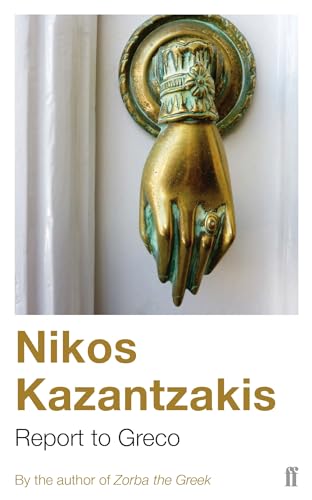
Report to Greco by Nikos Kazantzakis
I don't want to set too many targets this month but definitely:
Report to Greco by Nikos Kazantzakis
4alcottacre
I will be reading The Wildcat Behind Glass by Greek author Alki Zei for this month's challenge.
5kac522
I was going to read The Appointment by Herta Muller, who was born in Romania, and the novel is set in Romania. But now I realize that she writes in German, so I'm not sure if this fits the spirit of the challenge.
6PaulCranswick
>5 kac522: The spirit is entirely up to you, Kathy, but the book qualifies if you want to read it for the challenge. x
7kac522
>6 PaulCranswick: I think I will, Paul. Two of my maternal g-grandparents were Romanian immigrants to the U.S. and I know very little about them or the country's history. So I am intrigued by the book, even though it's set in the 20th century. (My other two maternal g-grandparents were from Bristol, UK--quite a difference--and I know a lot about them!)
8PaulCranswick
>7 kac522: That is extremely interesting, Kathy. I must say that Romanian history is not one of my strongest suits either.
9Ameise1
Thank you for this thread. I will certainly read the following books:
Zone Defence by Greek author Petros Markaris
My Name Is Red by the Turkish author Orhan Pamuk
Both books have been on my TBR pile for ages.
Zone Defence by Greek author Petros Markaris
My Name Is Red by the Turkish author Orhan Pamuk
Both books have been on my TBR pile for ages.
10EllaTim
I am reading Olivia Manning’s The Balkan Trilogy. I had started it earlier, because Mark was reading it, a group read. I had put it aside to focus on Stalingrad. But it fits in this month’s reading as it is set in Romania.
I finished the first book, liked it. I like Olivia Manning’s writing style. It’s set during WWII and is proving very interesting, the times and the country. I knew nothing of Romanian history.
I finished the first book, liked it. I like Olivia Manning’s writing style. It’s set during WWII and is proving very interesting, the times and the country. I knew nothing of Romanian history.
11PaulCranswick
>9 Ameise1: Most welcome, Barbara.
>10 EllaTim: The idea was originally meant to be for authors from those places but I'll allow it anyway, Ella, as the spirit of the challenge is met at the least.
>10 EllaTim: The idea was originally meant to be for authors from those places but I'll allow it anyway, Ella, as the spirit of the challenge is met at the least.
12PaulCranswick
I'm still in the first of April and already DNF'd my April read. I find that I am not in the mood for philosophical novels.
Turned my attention instead to Orhan Pamuk's whopper The Museum of Innocence.
Turned my attention instead to Orhan Pamuk's whopper The Museum of Innocence.
13EllaTim
>11 PaulCranswick: Yes, I would have liked that as well. I have found an author who was born there in my library, but she is now living in Holland. Anyway, mrs. Manning is telling me a lot about Romanian society, even if it is a real outsiders view.
14alcottacre
>12 PaulCranswick: Well, at least you got the DNF in quickly rather than slogging through it.
I will be curious to see your thoughts on The Museum of Innocence. I have only read Pamuk's My Name is Red, which I quite enjoyed giving it 4.5 stars.
I will be curious to see your thoughts on The Museum of Innocence. I have only read Pamuk's My Name is Red, which I quite enjoyed giving it 4.5 stars.
15booksaplenty1949
How could I resist a title like Madonna in a Fur Coat? Guess I’m not alone; tried to borrow from the library but there are 101 people in the queue for ten copies in the system. So had to purchase in order to read this month. By a Turkish writer, but involving a trip to Berlin, which fulfills my personal aim to read books about European travel by authors of the Nationality of the Month.
16PawsforThought
I'll be focusing on Greece this month and have a whole heap of Ancient Greek tragedies lines up. I might need to add some comedies, too, to lived things up a bit.
17mnleona
I have been to Montenegro, Croatia, and Greece so I will choose a book from one of these places.
18m.belljackson
Cyprus by Tim Boatswain (can't locate Touch) and Islamic Empires will be my choices for quotes.
19labfs39
>9 Ameise1: I loved My Name is Red. I didn't care for Snow as much. I have three more by Pamuk on my shelves unread, but I think I'm going to try and read a book by Elif Shafak for this month's challenge. I have both Island of Missing Trees and 10 minutes 38 Seconds on my shelves. Other contenders from my shelves include:
Shards by Ismet Prcic
Encyclopedia of the Dead by Danilo Kiš
Landscape Painted with Tea or Dictionary of the Khazars by Milorad Pavić
Shards by Ismet Prcic
Encyclopedia of the Dead by Danilo Kiš
Landscape Painted with Tea or Dictionary of the Khazars by Milorad Pavić
20avatiakh
I've started reading The Murderess by Alexandros Papadiamantis (1903) which is set on the island of Skiathos.
21booksaplenty1949
>18 m.belljackson: Do you mean A Traveller’s History of Cyprus? Your touchstone goes to a DK travel guide.
22m.belljackson
>21 booksaplenty1949: Yes, thank you, that is the complete title, yet with no mention in book of DK, it was confusing to locate.
23Ameise1
>19 labfs39: Nice to hear that you enjoyed it. I'll probably start it tomorrow.
24m.belljackson
The author of A Traveller's History of Cyprus ended it in 2005, with fierce conflicts between the Turkish Muslim North
and the Christian Greek (and many others) South continuing even today.
The Ottoman Rule lasted from 1571 to 1878, following the horrifying conquest of the Venetian people.
Along with beautiful art and architecture, highlights of The Ottoman Rule include massacres, extortion, atrocities,
executions, and torture. For readers, of which I am not one, who can stomach real crime and horror,
Bragadin tops the list.
Greece and Russia both tried to take control of the endlessly besieged Island which was finally turned over to Great Britain in 1878.
Cyprus continues to be divided with the invading Turkish Muslims holding the North and Christians of all sorts holding the South.
The border between the two is monitored by military outposts.
and the Christian Greek (and many others) South continuing even today.
The Ottoman Rule lasted from 1571 to 1878, following the horrifying conquest of the Venetian people.
Along with beautiful art and architecture, highlights of The Ottoman Rule include massacres, extortion, atrocities,
executions, and torture. For readers, of which I am not one, who can stomach real crime and horror,
Bragadin tops the list.
Greece and Russia both tried to take control of the endlessly besieged Island which was finally turned over to Great Britain in 1878.
Cyprus continues to be divided with the invading Turkish Muslims holding the North and Christians of all sorts holding the South.
The border between the two is monitored by military outposts.
25booksaplenty1949
Was about to dip into Madonna in a Fur Coat, my Grand European Tour choice for this month, when I discovered that it has no chapter divisions. Just 245 pages of text. Perhaps I’ll wait until I can make serious inroads.
26stefepaul
>3 PaulCranswick: Great reminder! Meant to read. Traveled a lot in Greece my second home. I have that door knocker
27PaulCranswick
>26 stefepaul: Nice to see you here Stefanie. My parents unwittingly picked for me your surname!
28stefepaul
>27 PaulCranswick: Hello Paul! When spelling my name I spell out the first Stefanie because my mother chose an f instead of ph but then I just say Paul like the boy’s name 🙂
29PaulCranswick
>28 stefepaul: It sounds good in combination anyhow.
30m.belljackson
Minar Sinan stands as the most fascinating and inspiring leader in ISLAMIC EMPIRES.
Renowned as the "Ottoman Empire's Master Architect," he created over 300 palaces, mosques,
tombs and classical buildings that still stand in Turkey.
Born to a Christian family in Anatolia, he converted to Islam (and thankfully did not attempt to re-convert)
and was appointed by ruler Suleyman the Magnificent who oversaw cultural and legal revivals, including safety to Jewish people.
(Word descriptions pale - check online to be impressed.)
As illuminating as was this Ottoman time, famine, plague (Muslims did not subscribe to the quarantine which saved others),
unfathomable massacres, piracy, African and European Slave trade, female sex slaves, destruction of the interior of Hagia Sophia, etc.
dominated from the time of Osman I and Timur through Gaddafi.
Following Turkey's support of Germany in World War I, Kemal Ataturk rescued Turkey.
Renowned as the "Ottoman Empire's Master Architect," he created over 300 palaces, mosques,
tombs and classical buildings that still stand in Turkey.
Born to a Christian family in Anatolia, he converted to Islam (and thankfully did not attempt to re-convert)
and was appointed by ruler Suleyman the Magnificent who oversaw cultural and legal revivals, including safety to Jewish people.
(Word descriptions pale - check online to be impressed.)
As illuminating as was this Ottoman time, famine, plague (Muslims did not subscribe to the quarantine which saved others),
unfathomable massacres, piracy, African and European Slave trade, female sex slaves, destruction of the interior of Hagia Sophia, etc.
dominated from the time of Osman I and Timur through Gaddafi.
Following Turkey's support of Germany in World War I, Kemal Ataturk rescued Turkey.
31Tess_W
Just got back from my cruise, so I'm really behind, reading wise! I would like to read Chronicle in Stone by Ismail Kadare (Albania).
32alcottacre
Well, I would have sworn that I posted that I am reading The Wildcat Behind Glass by Greek author Alki Zei for this month's reading, but I cannot find my post, so obviously not!
33avatiakh
>32 alcottacre: I have this one on my tbr pile but decided to read The Murderess for this challenge.
34Ameise1
I have finished reading Zone Defence. I liked it very much. Now I'm reading My Name Is Red.
35stefepaul
>29 PaulCranswick: thanks! Paul is a solid first name too. It’s actually my son’s middle name.
36PaulCranswick
>35 stefepaul: But he isn't called Paul Paul?
37stefepaul
Hahaha! I guess that wasn’t clear. My kids have my husbands last name. I never changed to his
38Tess_W
Chronicle in Stone by Ismail Kadare This was my first Kadare read and I was underwhelmed. The blurb on the back cover describes the book as "stunning", "compelling" and "enchanting." I found those adjectives overstated. I was hoping to get some insight into Albanian culture, but there was such a hollowness about it, that hope was not realized. The story is told by a young boy, aged 10-12, during the WWII invasion by the Germans and counter-invasion by the Greeks. The narrator doesn't bring a closeness between himself and the reader, but a more distant relationship. Perhaps it is the large amount of magical realism that kept this reader from engaging. 322 pages 2.5 stars
39booksaplenty1949
Public transit demanded a portable paperback so I have finally started my choice for this month’s Challenge—-Madonna in a Fur Coat. Fits my “tourist” agenda as it is a novel by a Turkish writer involving a stay in Germany. Despite its lack of any chapter divisions—-the narrator is supposedly reading a notebook kept by another character—-the story is moving along quite coherently so far.
40alcottacre
I finished The Wildcat Behind Glass by Alki Zei for this month's reading. I thought it was very good and gave it 4.25 stars.
41booksaplenty1949
Discovered that the author of Auto da Fé, a book I started and then misplaced, was born in Bulgaria, although he wrote in German. Have found book under sofa, so I guess this means I should take opportunity of this month’s Challenge to finish reading it. Mr Cranswick is a hard taskmaster, but sense of accomplishment is great when one can click and remove the “To read” designation.
42amanda4242
>38 Tess_W: I've read two books by Kadare, Elegy for Kosovo and Spring Flowers, Spring Frost, and was not impressed with either.
43EllaTim
I finished They would never hurt a Fly by Slavenka Drakulic. About the The Hague Tribunal for War Criminals. Milosevic and other perpetrators were heard and tried. Slavenka Drakulic tries to answer the question of how people could do what they did. Not easy reading but I thought it worth while.
She’s a good writer, and I wouldn’t mind reading one of her books on other subjects. But just now I was interested in this one.
She’s a good writer, and I wouldn’t mind reading one of her books on other subjects. But just now I was interested in this one.
44PawsforThought
>43 EllaTim: Ooh, I think that one is on a must-read list that I recently printed out for myself.
45labfs39
>38 Tess_W: If you are looking for more insight into Albanian culture, Broken April by Kadare is very good. It's set in the highlands and deals with the blood feud.
I've started Memed, My Hawk by Yaşar Kemal. Vivid descriptions of the land and the people who live there.
I've started Memed, My Hawk by Yaşar Kemal. Vivid descriptions of the land and the people who live there.
46booksaplenty1949
Finished Madonna in a Fur Coat. Cover blurb assures me this is a “masterpiece” by “one of the greatest literary and intellectual figures that Turkiye has ever produced” but I have to say I was underwhelmed.
47booksaplenty1949
Was thinking of reading The Voyage of Argo when we got to Latin authors, in June, but turns out the original language was Greek. But that makes it eligible for “The Ottoman World,” and since it turns out that the Argo navigated European rivers and not just the Mediterranean this book also fulfills my personal requirement of European travel.
48alcottacre
>43 EllaTim: Thanks for mentioning that one, EllaTim. Into the BlackHole it goes!
>46 booksaplenty1949: I was underwhelmed by it as well when I read it a few years ago. Glad to know it was not just me.
>46 booksaplenty1949: I was underwhelmed by it as well when I read it a few years ago. Glad to know it was not just me.
49SirThomas
>9 Ameise1: Thank you for the hint on the author, Barbara.
I just finished Late-Night News by Pétros Márkarīs and enjoyed it.
I just finished Late-Night News by Pétros Márkarīs and enjoyed it.
50avatiakh
I finished The Murderess (1903) by Alexandros Papadiamantis which is set on the Greek island of Skiathos. Brutal poverty and vivid landscapes.
51annushka
I finished Eurydice Street: A Place In Athens for this challenge. I enjoyed it a lot.
52PaulCranswick
>38 Tess_W: & >42 amanda4242: I think Broken April is half decent but I agree with you both in that his novels have never really blown me away either.
>41 booksaplenty1949: And there was I thinking I was the softest touch going!
>45 labfs39: Ah I see Lisa agrees with me!
I must say that I am impressed by the range of reading this month.
For my part I am closing in on the completion of The Museum of Innocence by Orhan Pamuk. An odd but compelling chunkster.
>41 booksaplenty1949: And there was I thinking I was the softest touch going!
>45 labfs39: Ah I see Lisa agrees with me!
I must say that I am impressed by the range of reading this month.
For my part I am closing in on the completion of The Museum of Innocence by Orhan Pamuk. An odd but compelling chunkster.
53PawsforThought
I’ve now finished Aeschylus and moved on to the next Greek on my list.
I’ve read all seven plays we have by Aeschylus:
The Persians
Seven Against Thebes
The Suppliant Women
Agamemnon
The Libation Bearers
The Eumenides
Prometheus Bound
My take on these as a whole is that the men suck, the women are the best and most interesting characters and Aeschylus himself probably liked women (which is not a given in the ancient world).
I liked all of them, with my favourite probably being The Suppliant Women. I really dislike Athena, but otherwise The Eumenides was interesting, and Prometheus Bound was a bit of an anti-climax as it’s so famous but not much really happens.
I’ve read all seven plays we have by Aeschylus:
The Persians
Seven Against Thebes
The Suppliant Women
Agamemnon
The Libation Bearers
The Eumenides
Prometheus Bound
My take on these as a whole is that the men suck, the women are the best and most interesting characters and Aeschylus himself probably liked women (which is not a given in the ancient world).
I liked all of them, with my favourite probably being The Suppliant Women. I really dislike Athena, but otherwise The Eumenides was interesting, and Prometheus Bound was a bit of an anti-climax as it’s so famous but not much really happens.
54booksaplenty1949
Finished The Voyage of Argo. The narrative style of the epic had clearly evolved considerably since Homer’s time, 500 years earlier; this was a very different experience than reading The Odyssey. Had its own charms. Also did not realise that Medea’s story as recounted in Euripides’ play unfolds after the Argo lands in Pagasae at the end of this epic. Apollonius’ ending note is “they all lived happily ever after.”
55PawsforThought
>54 booksaplenty1949: Did you prefer the style of Apollonius or Homer? It’s been ages sun I read The Odyssey, but I remember finding it a fairy quick and surprisingly easy read.
56booksaplenty1949
>55 PawsforThought: I enjoyed Lattimore’s translation of Homer many years ago but more recently read Fagles’ translation out loud with a reading group (over several months) and found it highly engaging. Comparing Homer and Apollonius is a bit like comparing Shakespeare and Edward Albee; the more recent writer is excellent in his way but has nothing of the weight and cultural significance of his predecessor. Rieu’s translation of The Voyage of Argo is quite readable; no one else seems to have been motivated to attempt another.
57PawsforThought
>56 booksaplenty1949: The translator certainly makes a big difference. I read The Odyssey in Swedish but don’t know which version of Argonautica I’d be able to get hold of.
58booksaplenty1949
>57 PawsforThought: Erik Sjöstrand apparently translated The Voyage of Argo into Swedish.
59booksaplenty1949
This message has been deleted by its author.
60EllaTim
I finished The Bridge by Geert Mak. A lively and interesting account of spending time on the Galata Bridge in Istanbul. Mak talked to people who make their living on the bridge. They’re among the poorest of Istanbul, but they are interesting, and their stories give a good view of what Turkey is like. Mak also gives a background in the history of Istanbul and Turkey.
61PawsforThought
>58 booksaplenty1949: Where did you get the information? I can’t find that anywhere, only the 2005 translation of Argonautica into Swedish by Ingvar Björkeson.
62labfs39
I finished Memed, My Hawk. I enjoyed the story of a young man and his (sometimes) ethical brigandry. The descriptions of the landscape of Anatolia were wonderful.
63booksaplenty1949
>61 PawsforThought: Did it come to me in a vision? Because I can’t seem to find it again on the web. ☹️
64PawsforThought
>63 booksaplenty1949: Could it have been an AI hallucination? Otherwise my only suggestion is some form of literature ghost (it’d have to be a poltergeist if it’s being mean and making up things like that).
65booksaplenty1949
>64 PawsforThought: I think now that Erik appeared to me in a dream and said he *wanted* to translate the Argonautica into Swedish. My Swedish is poor so I misunderstood.
66PawsforThought
>65 booksaplenty1949: Ah, that sounds reasonable. I look forward to Erik’s translation whenever it arrives.
67booksaplenty1949
Have picked up Auto da Fé, I hope somewhere near where I left it in early 2024 ☹️. Originally written in German but by a multi-lingual author born in Bulgaria, which qualifies it for The Ottoman World, I’ve decided. Any excuse to get those never-started/never-finished vols off the TBR pile.
68alcottacre
I have to say that I am really enjoying seeing what everyone is reading for these challenges!
69PawsforThought
>67 booksaplenty1949: Ooh, that ones on my “classics-to-read” list. I hope you get to finish it so I can hear your thoughts.
70Kristelh
>67 booksaplenty1949: I read that one a while back. I gave it 4 stars and wrote quite a long review which is not the norm for me. I mentioned growing weary with the length and some of the ideas but I was glad to have read it. I hope you can finish it. I look forward to your thoughts.
71booksaplenty1949
>70 Kristelh: I failed to finish it before only because I mislaid the book. That said, it is a “high concept” work rather than a story meant to engage the reader on the human level. I enjoyed Canetti’s 3-part autobiography more.
72Kristelh
I finished The Last Temptation of Christ by Greek author, Nikos Kazantzakis. It is the second book I’ve read by him. The first was Zorba the Greek. I found this book hard to read. I need to think upon it a bit. He certainly had Jesus tempted in all ways that man experiences. He also builds a whole new idea of Judas Iscariot as well as other disciples. I found this book probably a good read during this time of Lent.
73amanda4242
>72 Kristelh: He also builds a whole new idea of Judas Iscariot as well as other disciples.
His idea of Judas is similar to what's found in the Gospel of Judas, which wasn't rediscovered until a few decades after The Last Temptation of Christ was written. So I suppose we could say it is both new *and* ancient.
His idea of Judas is similar to what's found in the Gospel of Judas, which wasn't rediscovered until a few decades after The Last Temptation of Christ was written. So I suppose we could say it is both new *and* ancient.
74Kristelh
>73 amanda4242:. That is interesting Amanda. Perhaps he was aware of traditions set in the Middle East that I am not aware. It was definitely different from my ideas.
75booksaplenty1949
>7 kac522:Gospel of Judas has the usual Gnostic agenda: “real” Christian message was only made available to a few who are in the know. We all want a God like that—not. Gnosticism died out for good reasons.
76kac522
>75 booksaplenty1949: umm...I don't think my comment in >7 kac522: was part of this discussion....maybe >73 amanda4242: ??
77booksaplenty1949
>76 kac522: Whoops!
78booksaplenty1949
The “action” of Auto da Fé has now moved entirely inside the characters’ heads. In retrospect I might have been better to listen to this book on CDs, as I did that other paranoid fantasy, Gravity’s Rainbow. I put the discs in the car sound system and let the book wash over me. Turning the last 100 pages of Canetti’s novel is far more challenging.
79Ameise1
I have a little question:
May : Interlude - Non National Languages - Books originally written in European languages that are not tied to a particular nation i.e. Yiddish, Regional languages such as Catalan, French, Spanish and Portuguese outside their borders including Latin America, Africa etc)
Is there a thread about this that I can't find? I'd be interested to know what you all read. Thank you very much.
May : Interlude - Non National Languages - Books originally written in European languages that are not tied to a particular nation i.e. Yiddish, Regional languages such as Catalan, French, Spanish and Portuguese outside their borders including Latin America, Africa etc)
Is there a thread about this that I can't find? I'd be interested to know what you all read. Thank you very much.
80EllaTim
>79 Ameise1: Hi Barbara! I don’t think so. Thanks for posting this description. It sounds like there should be lots of possibilities. Either a Non-National language? Like Welsh? Or Yiddish? Or Catalan? Or a language outside of the borders like French, Spanish in South-America?
I’m now thinking of reading something from one of the South-American writers that everybody talks about and I have not read.
Added: Paul will be setting up the new thread shortly he just said on his own thread.
I’m now thinking of reading something from one of the South-American writers that everybody talks about and I have not read.
Added: Paul will be setting up the new thread shortly he just said on his own thread.
81Ameise1
>80 EllaTim: Thanks so much Ella.
82quondame
>79 Ameise1: Books written in English by Indians and/or Pakistanis?
83Ameise1
>82 quondame: First of all: I took the italics from Paul's thread that he wrote in December to introduce this challenge.
I was immediately drawn to the May challenge as it was a 'dig' for a suitable author. At first I was looking for a Corsican writer. Unfortunately, they all wrote/write in French and not Corsican. Then I searched among the Basques (Spain as well as France). I found what I was looking for.
But I really don't know exactly what Paul wants.
I was immediately drawn to the May challenge as it was a 'dig' for a suitable author. At first I was looking for a Corsican writer. Unfortunately, they all wrote/write in French and not Corsican. Then I searched among the Basques (Spain as well as France). I found what I was looking for.
But I really don't know exactly what Paul wants.
84EllaTim
>83 Ameise1: I have been looking for a book originally written in Frisian, but it’s very hard to find one. I think getting a book published in a small minority language is difficult (small language area, so not enough readers). And then it’d have to be translated. So writers would choose to write in the majority language, I think.
I didn’t know Corsican is a language? And are you reading a book written in Basque now?
I didn’t know Corsican is a language? And are you reading a book written in Basque now?
85Ameise1
>84 EllaTim: Ella, this task is indeed challenging, but also fun 😃.
Yes, I'm going to read Obabakoak by the Spanish Basque author Bernardo Atxaga. He always writes his books in Basque, which are then translated. I'm going to read it in German
Yes, I'm going to read Obabakoak by the Spanish Basque author Bernardo Atxaga. He always writes his books in Basque, which are then translated. I'm going to read it in German
86EllaTim
>85 Ameise1: From the description the book sounds like a good one! And yes, not in Basque of course. Supposed to be a really difficult language.
I’m planning on ‘reading’ a series of songs. From the album de Maisfrou, by Nienke Laverman. Written in Friesian, translations available. Fun too, as Friesian is a language that is very closely related to dutch and english, but different enough, to be interesting.
I’m planning on ‘reading’ a series of songs. From the album de Maisfrou, by Nienke Laverman. Written in Friesian, translations available. Fun too, as Friesian is a language that is very closely related to dutch and english, but different enough, to be interesting.
87Ameise1
>86 EllaTim: Oh Ella, that's a great idea too. I'll have to see if there's a book that was originally written in Low German.
88PaulCranswick
>79 Ameise1: Barbara, I have been traveling so I haven't got the thread up yet.
ALL please bear with me a short while.
ALL please bear with me a short while.
89PaulCranswick
>82 quondame: That is a tricky one, Susan.
I suppose if the author is a national of Pakistan, India or elsewhere then it would qualify even though it was something I hadn't originally thought of.
I suppose if the author is a national of Pakistan, India or elsewhere then it would qualify even though it was something I hadn't originally thought of.
91quondame
>83 Ameise1: >89 PaulCranswick: I was somewhat joshing, but also noting that a number of books I've read recently are published in English by those living in countries that adopted it out of colonial necessity, but who retain strong native languages. The education of the authors in English universities does muddle the waters, especially when they choose to reside in the UK or USA.
92booksaplenty1949
Finally finished Auto da Fé. I recognise that it is a thought-provoking, even brilliant novel; it just wasn’t very enjoyable to read, most of the time. Blurbers (Iris Murdoch, Philip Toynbee, C Day Lewis) use words like “strange,” “savage,” and “terrifying.” I was interested that the translation was done “under the personal supervision of the author” by C. V. Wedgwood, herself author of several fine works of history.
93PawsforThought
I completely forgot to update my reads here but I have been making my way through most of the surviving Greek plays. I listen the Aeschylos ones above, but I’ve also read the following by Sophocles:
* Antigone
* Oedipus Rex
* The Trachian Women
* Oedipus at Colonus
* Philoctetes
* Ajax
* Electra
And I’ve read these by Euripides:
* Orestes
* Bacchae
* The Phoenician Women
* Iphigenia in Aulis
* Iphigenia in Tauris
* Heracles
* Ion
* The Trojan Women
* Medea
* Helen
* Alcestis
* Hippolytus
* The Suppliant Women
I’ve read a total of 27 Greek plays and that will do for now. My plan was to read them during April for the challenge, but life got in the way a bit so it took me a few extra weeks to read them all. I’d enjoyed reading these, much more than I even thought I would. There is a lot of repetition in terms of plots, but you get different perspectives in the same or similar events, which is nice.
One things that greatly surprised me, and was extra noticeable in the last play, is how much space the women have in these plays. Even in our modern times, women do not get anywhere near as much screen time as men in movies and TV, but I think it’s the opposite way in these plays. The women are also much more interesting characters than the men and way better lines. Methinks the Greek playwrights (Euripides in particular) actually liked women.
* Antigone
* Oedipus Rex
* The Trachian Women
* Oedipus at Colonus
* Philoctetes
* Ajax
* Electra
And I’ve read these by Euripides:
* Orestes
* Bacchae
* The Phoenician Women
* Iphigenia in Aulis
* Iphigenia in Tauris
* Heracles
* Ion
* The Trojan Women
* Medea
* Helen
* Alcestis
* Hippolytus
* The Suppliant Women
I’ve read a total of 27 Greek plays and that will do for now. My plan was to read them during April for the challenge, but life got in the way a bit so it took me a few extra weeks to read them all. I’d enjoyed reading these, much more than I even thought I would. There is a lot of repetition in terms of plots, but you get different perspectives in the same or similar events, which is nice.
One things that greatly surprised me, and was extra noticeable in the last play, is how much space the women have in these plays. Even in our modern times, women do not get anywhere near as much screen time as men in movies and TV, but I think it’s the opposite way in these plays. The women are also much more interesting characters than the men and way better lines. Methinks the Greek playwrights (Euripides in particular) actually liked women.
94amanda4242
>93 PawsforThought: I took a world lit class some years ago and the beginning of the semester was great because so many of the ancient works were full of amazing female characters; then we hit the middle ages and they almost all disappeared!
One of the things that irks me about the current trend of "reimagining" ancient Greek myths is that a lot of the writers act like their books are the first time anyone has ever told these stories from a female point of view. It's like they've never even heard of Medea or Heroides or...
One of the things that irks me about the current trend of "reimagining" ancient Greek myths is that a lot of the writers act like their books are the first time anyone has ever told these stories from a female point of view. It's like they've never even heard of Medea or Heroides or...

