Kathy's (kac522) 2026 Challenges--Still in My Shelves
Talk 2026 Category Challenge
Join LibraryThing to post.
1kac522

Welcome to My 2026 Challenges: "Still in My Shelves"
Once again I'm reading and re-reading mostly classics and early 20th century titles from my shelves, with a few cozy and nonfiction books in between.
My Challenges are pretty similar to last year. I've got a number of authors that I want to "complete" and lots of books on the shelves that need to be read. One change for this year: if a book fits in multiple challenges, I'm going to list it in all of them. So there will be "double" (or even "triple") counting.
I'll be participating in RandomKIT, AlphaKit and the new DecadesCAT. I've already been organizing some of my books by decades to get into the swing of things. They'll fall within the above personal goals
I have a thread in the 2026 75ers Group:
https://www.librarything.com/topic/377299#9059696
I'll be counting my "Roots" read (books owned before 2026) for the ROOTs Group:

Let's get reading!
2kac522
Challenge I: 26 books from my ongoing "Complete the Author" Challenge
I have been slowly making my way through the major novels of these favorite authors. I've listed some possible reads for each author this year, and hope to read at least 26 books from this list in 2026. (This category may include some library books, as I don't own all of these titles).
Elizabeth Bowen
✔️The Hotel
Friends and Relations
To The North

Willa Cather
The Song of the Lark
My Antonia, 1918 (re-read)
Death Comes for the Archbishop, 1927 (re-read)
Shadows on the Rock, 1931
Lucy Gayheart, 1935
✔️Sapphira and the Slave Girl, 1940

Agatha Christie
✔️There is a Tide, 1948
✔️A Murder is Announced, 1950
✔️Three Blind Mice and Other Stories, 1950
They Came to Baghdad, 1951
They Do It with Mirrors, 1952
Mrs McGinty's Dead, 1952

George Eliot
Felix Holt, the Radical
Romola

Elizabeth Gaskell
The Moorland Cottage and Other Stories, re-read
A Dark Night's Work and Other Stories
Right at Last and Other Tales

Thomas Hardy
This is the second half of the Thomas Hardy monthly chronological read:
✔️A Laodicean, January
✔️Two on a Tower, February
✔️The Mayor of Casterbridge, March, a re-read
✔️The Woodlanders, April
✔️Tess of the D'urbervilles, May, a re-read
✔️The Well-Beloved, June
Jude the Obscure, July, a re-read
Desperate Remedies, a re-read

Winifred Holtby
Mandoa, Mandoa
✔️South Riding

D. E. Stevenson
The Tall Stranger, 1957
Anna and Her Daughters, 1958
✔️Still Glides the Stream, 1959

Anthony Trollope
✔️The American Senator
✔️John Caldigate
✔️Ayala's Angel
Cousin Henry
Marion Fay

Elizabeth von Arnim
The Benefactress
✔️Christine
In the Mountains
Vera
Expiation

Edith Wharton
✔️The House of Mirth, 1905 (re-read)
The Reef, 1912
The Custom of the Country, 1913

Dorothy Whipple
✔️They Were Sisters
Because of the Lockwoods
Someone at a Distance
I have been slowly making my way through the major novels of these favorite authors. I've listed some possible reads for each author this year, and hope to read at least 26 books from this list in 2026. (This category may include some library books, as I don't own all of these titles).
Elizabeth Bowen
✔️The Hotel
Friends and Relations
To The North

Willa Cather
The Song of the Lark
My Antonia, 1918 (re-read)
Death Comes for the Archbishop, 1927 (re-read)
Shadows on the Rock, 1931
Lucy Gayheart, 1935
✔️Sapphira and the Slave Girl, 1940

Agatha Christie
✔️There is a Tide, 1948
✔️A Murder is Announced, 1950
✔️Three Blind Mice and Other Stories, 1950
They Came to Baghdad, 1951
They Do It with Mirrors, 1952
Mrs McGinty's Dead, 1952

George Eliot
Felix Holt, the Radical
Romola

Elizabeth Gaskell
The Moorland Cottage and Other Stories, re-read
A Dark Night's Work and Other Stories
Right at Last and Other Tales

Thomas Hardy
This is the second half of the Thomas Hardy monthly chronological read:
✔️A Laodicean, January
✔️Two on a Tower, February
✔️The Mayor of Casterbridge, March, a re-read
✔️The Woodlanders, April
✔️Tess of the D'urbervilles, May, a re-read
✔️The Well-Beloved, June
Jude the Obscure, July, a re-read
Desperate Remedies, a re-read

Winifred Holtby
Mandoa, Mandoa
✔️South Riding

D. E. Stevenson
The Tall Stranger, 1957
Anna and Her Daughters, 1958
✔️Still Glides the Stream, 1959

Anthony Trollope
✔️The American Senator
✔️John Caldigate
✔️Ayala's Angel
Cousin Henry
Marion Fay

Elizabeth von Arnim
The Benefactress
✔️Christine
In the Mountains
Vera
Expiation

Edith Wharton
✔️The House of Mirth, 1905 (re-read)
The Reef, 1912
The Custom of the Country, 1913

Dorothy Whipple
✔️They Were Sisters
Because of the Lockwoods
Someone at a Distance
3kac522

Challenge II: 13 books from My Virago Collection
I've sorted the Virago titles on my shelves in original publication order, and hope this inspires me to read a few of these books:
*1856 The Daisy Chain, Charlotte Mary Yonge
*1885 Marcella, Mrs Humphrey Ward
*1894 Diana of the Crossways, George Meredith
✔️1908 Crossriggs, Jane & Mary Findlater (1908)--completed February 2026; a re-read
1913 Virginia, Ellen Glasgow
1915-17 Pilgrimage I, Dorothy Richardson
✔️1919 Mary Olivier, May Sinclair
1920 Open the Door, Catherine Carswell
1922 The Judge, Rebecca West
1924 The Constant Nymph, Margaret Kennedy
1932 Family History, Vita Sackville-West
1933 Mandoa, Mandoa!, Winifred Holtby
1934 Devoted Ladies, Molly Keane
1934 Company Parade, Storm Jameson
1935 Love in Winter, Storm Jameson
1935 Full House, Molly Keane
1936 Mary Lavelle, Kate O'Brien
✔️1936 South Riding, Winifred Holtby
Other Virago titles read:
✔️1991 Letters from Constance, Mary Hocking
✔️1893 Through Connemara in a Governess Cart, E. Somerville & V. M. Ross
*possibilities for Victober 2026
4kac522


a few of the books I acquired in 2025
Challenge III: 78 (26x3) Books on my shelf before 2026
1. Tea with Mr Rochester, Frances Towers (1949); short stories; acquired 2025
2. A Murder is Announced, Agatha Christie (1950); acquired 2017
3. A Laodicean, Thomas Hardy (1881); acquired 2005
4. Crossriggs, Jane & Mary Findlater (1908); acquired 2025
5. Ten Days in a Mad House, Nellie Bly (1887); acquired 2025
6. Mary Olivier, May Sinclair (1919); acquired 2017
7. Two on a Tower, Thomas Hardy (1882); acquired 2005
8. Anna of the Five Towns, Arnold Bennett (1902); acquired 2023
9. Christine, Elizabeth von Arnim (1917); download 2023
10. Sherlock Holmes: The Complete Novels and Stories, Volume II, Arthur Conan Doyle; acquired before 2009
11. The Hotel, Elizabeth Bowen (1927); acquired 2019
12. Ayala's Angel, Anthony Trollope (1881); acquired 2021
13. There is a Tide, Agatha Christie (1948); acquired 2023
14. Sapphira and the Slave Girl, Willa Cather (1940); acquired 2015
15. Letters from Constance, Mary Hocking (1991); acquired 2025
16. Robinson Crusoe, Daniel DeFoe (1719); acquired 2022
17. The Mayor of Casterbridge, Thomas Hardy (1886); this audio narration (Simon Vance) acquired 2025
18. Chicago History, Spring 1995, Volume XXIV, Number 1, Rosemary Adams, ed. (1995); acquired 1995
19. Les Miserables, Victor Hugo (1862); acquired 2013
20. A Little Princess, Frances Hodgson Burnett (1905); acquired 2025
21. John Caldigate, Anthony Trollope (1879); acquired 2019
22. Chicago History, Spring 1996, Volume XXV, Number 1, Rosemary Adams, ed. (1996); acquired 1996
23. Miss Pym Disposes, Josephine Tey (1946); mystery; acquired 2023
24. The Woodlanders, Thomas Hardy (1887); fiction; acquired 2005
25. Cross Channel, Julian Barnes (1996); short stories; acquired 2024
26. Braiding Sweetgrass, Robin Wall Kimmerer (2013), on audiobook read by the author; nonfiction; acquired 2022
27. Tess of the D'Urbervilles, Thomas Hardy; fiction; acquired before 2009
28. South Riding, Winifred Holtby (1936 post); fiction; acquired 2015
29. Crooked Cross, Sally Carson (1934); fiction; acquired 2025
30. The American Senator, Anthony Trollope (1877); fiction; acquired 2022
31. The Man Who Was Thursday, G. K. Chesterton (1908); fiction; acquired 2025
32. Three Blind Mice and Other Stories, Agatha Christie (1950); short stories; acquired 2017
33. Anne of Ingleside, L. M. Montgomery (1939); fiction; acquired 2024
34. They Were Sisters, Dorothy Whipple (1943); fiction; acquired 2023
35. The Well-Beloved, Thomas Hardy (1897); fiction; acquired 2012
5kac522


some re-read possibilities for 2026
Challenge IV: 26 Re-reads and 26 Library books
Re-reads:
1. 84, Charing Cross Road, Helene Hanff (1970); on audiobook
2. Lady Susan, Jane Austen (1871); on audiobook
3. The Moonstone, Wilkie Collins (1868)
4. Our Mutual Friend, Charles Dickens (1865)
5. Crossriggs, Jane & Mary Findlater (1908)
6. Fahrenheit 451, Ray Bradbury (1953)
7. The Mayor of Casterbridge, Thomas Hardy (1886)
8. The House of Mirth, Edith Wharton (1905)
9. Pride and Prejudice, Jane Austen (1813); on audiobook
10. The Johnstown Flood, David McCullough (1968); on audiobook
11. Jane Eyre, Charlotte Bronte (1847); on audiobook
Library books:
1. Letters for Literary Ladies, Maria Edgeworth (1795)
2. The Notting Hill Mystery, Charles Felix aka Charles Warren Adams (1863)
3. A Year's Turning, Michael Viney (1996; this edition 2022)
4. Facing Unpleasant Facts: Narrative Essays, George Orwell (2009)
5. Mrs Miniver, Jan Struther (1939)
6. Reunion, Fred Uhlman (1971)
7. The Indomitable Mrs. Trollope, Eileen Bigland (1953)
8. Still Glides the Stream, D. E. Stevenson (1959)
9. When the Cranes Fly South, Lisa Ridzen, translated from the Swedish by Alice Munzies (2025)
10. The Eye of Love, Margery Sharp (1957)
11. The Foolish Gentlewoman, Margery Sharp (1948)
12. Martha in Paris, Margery Sharp (1962)
13. Martha, Eric and George, Margery Sharp (1964)
14. The Innocents, Margery Sharp (1972)
15. A Writer's Eye: Field Notes and Watercolors, Paul Horgan (1988)
16. Introducing Mrs. Collins, Rachel Parris (2025)
6kac522
Challenge V: 13 Books Purchased in 2026 and read in 2026
1. Fahrenheit 451, Ray Bradbury (1953); re-read; purchased in January and read in February
2. The Gipsy in the Parlour, Margery Sharp (1953); purchased in March and read in April
3. Five Days in London: May 1940, John Lukacs (1999); nonfiction; audiobook read by John Cosham; purchased & read in May
4. History Matters, David McCullough (2025); essays; purchased in April and finished in June
5. Through Connemara in a Governess Cart, E. Somerville & V. M. Ross (1893); travel; purchased in April and finished in June
6. The American Spirit: Who We Are and What We Stand For, David McCullough (2017); speeches read by McCullough; purchased & read in July
1. Fahrenheit 451, Ray Bradbury (1953); re-read; purchased in January and read in February
2. The Gipsy in the Parlour, Margery Sharp (1953); purchased in March and read in April
3. Five Days in London: May 1940, John Lukacs (1999); nonfiction; audiobook read by John Cosham; purchased & read in May
4. History Matters, David McCullough (2025); essays; purchased in April and finished in June
5. Through Connemara in a Governess Cart, E. Somerville & V. M. Ross (1893); travel; purchased in April and finished in June
6. The American Spirit: Who We Are and What We Stand For, David McCullough (2017); speeches read by McCullough; purchased & read in July
7kac522
2025 Highlights
Despite a lackluster ending to the year, overall I had a great reading year. I had some long-term projects and am fairly pleased with my reading.
📚Jane Austen: For the 250th anniversary of Jane Austen's birth, I read (or re-read) the following in 2025:
Novels:
✔️Sense and Sensibility, audiobook re-read and reading the 350+ pages of annotations of David M. Shapard
✔️Pride and Prejudice, audiobook re-read
✔️Mansfield Park, audiobook re-read
✔️Persuasion; audiobook re-read
✔️Northanger Abbey: Norton Critical Edition; listened to the audiobook and read the 200+ pages of critical material in this edition
Shorter works:
✔️Lady Susan; audiobook re-read, January
✔️The history of England by a partial, prejudiced & ignorant historian from the Juvenilia
Nonfiction: about Jane Austen and her time:
✔️The Making of Jane Austen, Devoney Looser; Jane Austen in popular culture
✔️In the Steps of Jane Austen, Anne-Marie Edwards; her biography through the places she lived
✔️Jane Austen's Bookshelf : a rare book collector's quest to find the women writers who shaped a legend, Rebecca Romney (2025); part memoir/biography/look at the rare book business through the 6 women writers who influenced Austen
✔️So You Think You Know Jane Austen?, Sutherland and Le Faye; a quiz book of the 6 novels with questions & answers
✔️Memoir of Jane Austen, James Austen-Leigh (1870); the first biography of Austen written by her nephew
Works that influenced Jane Austen:
✔️"Lovers' Vows", Elizabeth Inchbald (1798), a play, referred to in Mansfield Park
✔️Evelina, Fanny Burney (1778); an author Jane Austen read and admired, and mentioned in Northanger Abbey
✔️The Female Quixote, Charlotte Lennox (1752), on audiobook, read by Juliet Stevenson; a book Jane Austen read several times and influenced Northanger Abbey
✔️Finally, I watched half a dozen film adaptations of Austen's works.
📚Other long-term goals:
✔️I've kept up with the Thomas Hardy chronological read of his 14 novels, reading 6 this year and hope to read the remaining next year, starting with A Laodicean in January 2026
✔️And I finished my reading of all of the major works of Elizabeth Gaskell, Elizabeth Taylor and E. H. Young.
Overall here are the highlights from my 2025 reading:
Fiction Highlights:
William: an Englishman, Cicely Hamilton, a Persphone reprint
The Life and Death of Harriet Frean, May Sinclair, A Virago reprint
Dr Wortle's School, Anthony Trollope
The Christmas Hirelings, Mary Elizabeth Braddon
Wives and Daughters, Elizabeth Gaskell
Business as Usual, Jane Oliver and Ann Stafford
Rhododendron Pie, Margery Sharp
Two spooky stories: "The Canterville Ghost", Oscar Wilde and "The Library Window", Margaret Oliphant
Nonfiction Highlights:
The Country Diary of an Edwardian Lady, Edith Holden, a naturalist's diary from 1906
Brave Companions, David McCullough, essays
Jane Austen's Bookshelf :a rare book collector's quest to find the women writers who shaped a legend, Rebecca Romney
The Truth About Immigration, Zeke Hernandez
The Life of Mendelssohn, Peter Mercer-Taylor
World of Wonders, Aimee Nezhukumatathil
Most Rewarding Re-reads
Thomas Hardy: Under the Greenwood Tree, A Pair of Blue Eyes, Far from the Madding Crowd, The Return of the Native
Howards End, E. M Forster
No Fond Return of Love, Barbara Pym
Pleasant Surprises--books that exceeded my expectations
A Song of Sixpence, A. J. Cronin
The Black Tulip, Alexandre Dumas
The Trumpet-Major, Thomas Hardy
Despite a lackluster ending to the year, overall I had a great reading year. I had some long-term projects and am fairly pleased with my reading.
📚Jane Austen: For the 250th anniversary of Jane Austen's birth, I read (or re-read) the following in 2025:
Novels:
✔️Sense and Sensibility, audiobook re-read and reading the 350+ pages of annotations of David M. Shapard
✔️Pride and Prejudice, audiobook re-read
✔️Mansfield Park, audiobook re-read
✔️Persuasion; audiobook re-read
✔️Northanger Abbey: Norton Critical Edition; listened to the audiobook and read the 200+ pages of critical material in this edition
Shorter works:
✔️Lady Susan; audiobook re-read, January
✔️The history of England by a partial, prejudiced & ignorant historian from the Juvenilia
Nonfiction: about Jane Austen and her time:
✔️The Making of Jane Austen, Devoney Looser; Jane Austen in popular culture
✔️In the Steps of Jane Austen, Anne-Marie Edwards; her biography through the places she lived
✔️Jane Austen's Bookshelf : a rare book collector's quest to find the women writers who shaped a legend, Rebecca Romney (2025); part memoir/biography/look at the rare book business through the 6 women writers who influenced Austen
✔️So You Think You Know Jane Austen?, Sutherland and Le Faye; a quiz book of the 6 novels with questions & answers
✔️Memoir of Jane Austen, James Austen-Leigh (1870); the first biography of Austen written by her nephew
Works that influenced Jane Austen:
✔️"Lovers' Vows", Elizabeth Inchbald (1798), a play, referred to in Mansfield Park
✔️Evelina, Fanny Burney (1778); an author Jane Austen read and admired, and mentioned in Northanger Abbey
✔️The Female Quixote, Charlotte Lennox (1752), on audiobook, read by Juliet Stevenson; a book Jane Austen read several times and influenced Northanger Abbey
✔️Finally, I watched half a dozen film adaptations of Austen's works.
📚Other long-term goals:
✔️I've kept up with the Thomas Hardy chronological read of his 14 novels, reading 6 this year and hope to read the remaining next year, starting with A Laodicean in January 2026
✔️And I finished my reading of all of the major works of Elizabeth Gaskell, Elizabeth Taylor and E. H. Young.
Overall here are the highlights from my 2025 reading:
Fiction Highlights:
William: an Englishman, Cicely Hamilton, a Persphone reprint
The Life and Death of Harriet Frean, May Sinclair, A Virago reprint
Dr Wortle's School, Anthony Trollope
The Christmas Hirelings, Mary Elizabeth Braddon
Wives and Daughters, Elizabeth Gaskell
Business as Usual, Jane Oliver and Ann Stafford
Rhododendron Pie, Margery Sharp
Two spooky stories: "The Canterville Ghost", Oscar Wilde and "The Library Window", Margaret Oliphant
Nonfiction Highlights:
The Country Diary of an Edwardian Lady, Edith Holden, a naturalist's diary from 1906
Brave Companions, David McCullough, essays
Jane Austen's Bookshelf :a rare book collector's quest to find the women writers who shaped a legend, Rebecca Romney
The Truth About Immigration, Zeke Hernandez
The Life of Mendelssohn, Peter Mercer-Taylor
World of Wonders, Aimee Nezhukumatathil
Most Rewarding Re-reads
Thomas Hardy: Under the Greenwood Tree, A Pair of Blue Eyes, Far from the Madding Crowd, The Return of the Native
Howards End, E. M Forster
No Fond Return of Love, Barbara Pym
Pleasant Surprises--books that exceeded my expectations
A Song of Sixpence, A. J. Cronin
The Black Tulip, Alexandre Dumas
The Trumpet-Major, Thomas Hardy
8kac522
Some Final 2025 Stats:
Books read: 134
Fiction: 103 (77%)
Nonfiction: 26 (19%)
Other (plays, poetry, etc.): 5 (3%)
Re-reads: 30 (22%)
Library books: 36 (27%)
Audiobooks: 17 (13%)
Female authors: 79 (60%)
Male authors: 53 (40%)
By century publication date:
Prior to the 19th century: 5 (4%)
19th century: 40 (30%)
20th century: 62 (46%)
21st century: 27 (20%)
In translation: 9 (6%)
Books read: 134
Fiction: 103 (77%)
Nonfiction: 26 (19%)
Other (plays, poetry, etc.): 5 (3%)
Re-reads: 30 (22%)
Library books: 36 (27%)
Audiobooks: 17 (13%)
Female authors: 79 (60%)
Male authors: 53 (40%)
By century publication date:
Prior to the 19th century: 5 (4%)
19th century: 40 (30%)
20th century: 62 (46%)
21st century: 27 (20%)
In translation: 9 (6%)
9kac522

Cannot Wait or the Letter
Telemaco Signorini (Italian, 1835-1901)
On the very tall January reading pile of possibilities:
📚Currently reading: Les Miserables by Victor Hugo--I've never read it and there's an online reading taking place over January through March. I hope I can keep up. I'm sure it's wonderful (I've seen the movie version of the musical), but I often bail out on long-term projects like this.
📚In the 2026 Category Challenge group, I'm participating in the "DecadesCAT" challenge. January's decade is the 50s--1750s, 1850s, 1950s, etc.
*Books marked below are ones that meet the 50s challenge for January
📚In January I'll also be participating in an "epistolary" challenge, which includes letters, diaries and journals. I have a few possibilities lined up to meet this challenge and hope to read several of these:
✔️84, Charing Cross Road, Helene Hanff, a re-read on audiobook
✔️Lady Susan, Jane Austen, a re-read on audiobook
✔️Letters for Literary Ladies, Maria Edgeworth (1795)--Jane Austen greatly admired Edgeworth's writing
*Forbidden Notebook, Alba de Cespedes (1952), translated from the Italian by Ann Goldstein--a novel in diary format
*Troy Chimneys, Margaret Kennedy (1953)--a novel written as a 19th century memoir
Letters from Constance, Mary Hocking (1991)--a novel in letters
📚Other reading:
✔️Tea with Mr Rochester, Frances Towers (1949); short stories from my Persephone collection
✔️A Murder is Announced, Agatha Christie (1950)
✔️A Laodicean, Thomas Hardy--for my monthly reading of Hardy's novels in chronological order
✔️The Moonstone, Wilkie Collins (1868)--for my RL book club--it's a re-read for me & I'll be leading the discussion
✔️The Notting Hill Mystery, Charles Warren Adams (1862-63)--now considered the first novel length detective story
✔️A Year's Turning, Michael Viney (1996); memoir
Currently reading: Facing Unpleasant Facts, George Orwell; essays
Currently reading: Our Mutual Friend, Charles Dickens--on audiobook
There is a Tide, Agatha Christie (1948)
Paused: Braiding Sweetgrass, Robin Wall Kimmerer--started in November, but will continue on audiobook in January
Deborah, Esther Singer Kreitman (1936)
📚As time allows, a few re-reads:
*The Three Clerks, Anthony Trollope (1859)--a re-read
Crossriggs, Jane & Mary Findlater (1908)
At Mrs Lippincote's, Elizabeth Taylor (1945)
*Thrush Green, Miss Read (1959)
Currently reading: Our Mutual Friend, Charles Dickens--on audiobook
Paused: All Things Wise and Wonderful, James Herriot
10lowelibrary

Great blessings to you and your reading in the new year.
11JayneCM
Ooh, you have some fabulous reading planned. I will be joining the readalong for Les Mis - like you, I am hoping I can keep up! I did War and Peace a while back with Katie and was MILES behind. And I haven't even started the Dickens-along (most of which are rereads for me but I still hope to 'participate' and read them in order).
Look forward to seeing more of your green Viragos. Here's hoping we can both find some more in 2026 to add to our collections.
Look forward to seeing more of your green Viragos. Here's hoping we can both find some more in 2026 to add to our collections.
12kac522
>10 lowelibrary: Thanks, I hope yours will be a good one, too.
13kac522
>11 JayneCM: So I started tonight and read the Introduction to my edition of Les Miserables. Normally I don't read intros, but this book is SO long and SO complex that I felt I needed the additional info, even if there are spoilers. So my first baby step into Hugo.
And just to make me feel even more determined, I was talking to my son on the phone on Christmas (he lives in Sheffield, UK and we're in Chicago), and he told me he read Les Miserables as a class in his senior year of college IN FRENCH. It took the whole semester! So I suppose I can muddle through in English....
I read War and Peace in 2011. I want to re-read it at some point. I did most of Katie's Dickensalong--I skipped Pickwick & Old Curiosity Shop, but did all the others in order. I have read all of them before, some several times. Probably David Copperfield, Bleak House & Little Dorrit are my favorites. One that surprised me was Barnaby Rudge--I enjoyed that more than I expected.
I'm having a harder and harder time finding green Viragos. There's a little used bookshop here that specializes in women's fiction. I've re-sold some of mine to them (they are eager to have them!) and they sometimes have a few for sale, although, with my luck, they're usually ones I've already read. In fact I have a pile now to take to them, but you need to email them with the titles and make an appointment.
Did you ever participate in the "Virago Chronological Read" group reads with Liz (lyzard) here on LT? I've always wondered what happened to Liz--she was just so knowledgeable and took us through so many wonderful books that I wouldn't have read otherwise. I miss her a lot. It's one of the reasons I have the challenge above to read my Viragos in publication order--sort of "in memory" of Liz's project, as well as to get me to commit to reading them.
And just to make me feel even more determined, I was talking to my son on the phone on Christmas (he lives in Sheffield, UK and we're in Chicago), and he told me he read Les Miserables as a class in his senior year of college IN FRENCH. It took the whole semester! So I suppose I can muddle through in English....
I read War and Peace in 2011. I want to re-read it at some point. I did most of Katie's Dickensalong--I skipped Pickwick & Old Curiosity Shop, but did all the others in order. I have read all of them before, some several times. Probably David Copperfield, Bleak House & Little Dorrit are my favorites. One that surprised me was Barnaby Rudge--I enjoyed that more than I expected.
I'm having a harder and harder time finding green Viragos. There's a little used bookshop here that specializes in women's fiction. I've re-sold some of mine to them (they are eager to have them!) and they sometimes have a few for sale, although, with my luck, they're usually ones I've already read. In fact I have a pile now to take to them, but you need to email them with the titles and make an appointment.
Did you ever participate in the "Virago Chronological Read" group reads with Liz (lyzard) here on LT? I've always wondered what happened to Liz--she was just so knowledgeable and took us through so many wonderful books that I wouldn't have read otherwise. I miss her a lot. It's one of the reasons I have the challenge above to read my Viragos in publication order--sort of "in memory" of Liz's project, as well as to get me to commit to reading them.
14JayneCM
>13 kac522: Wow, reading it in French - that would have been an epic undertaking. I know I have a copy of Les Mis somewhere in my house. But we are in the process of sorting out to do renovations and I have moved things and who knows where anything is now! So I am waiting for my library to reopen after the Christmas break to get a copy.
It is very hard to find green Viragos here too. I came across a used bookshop last year that had quite a few. I guess as we collectors get them, they are then out of circulation. There are too many collectors of them. But I live in hope!
I did not see that group but that would have been fantastic. I may have to see if I have any of the ones you are planning to read and add them to my list.
It is very hard to find green Viragos here too. I came across a used bookshop last year that had quite a few. I guess as we collectors get them, they are then out of circulation. There are too many collectors of them. But I live in hope!
I did not see that group but that would have been fantastic. I may have to see if I have any of the ones you are planning to read and add them to my list.
15kac522
>14 JayneCM: That's too bad--I was hoping to find someone who knew what happened to Liz. I believe she lived in Sydney and there was a university library where she went to read rare titles that could only be read in person at the library. She hasn't posted since early 2024, I think. Here's her profile:
https://www.librarything.com/profile/lyzard
Many of the Virago group reads she led are still accessible in the Virago Modern Classics group:
https://www.librarything.com/ngroups/875/Virago-Modern-Classics
She also led group reads of Trollope (Barsetshire series, Palliser series, and we were going through the stand-alones)
https://www.librarything.com/profile/lyzard
Many of the Virago group reads she led are still accessible in the Virago Modern Classics group:
https://www.librarything.com/ngroups/875/Virago-Modern-Classics
She also led group reads of Trollope (Barsetshire series, Palliser series, and we were going through the stand-alones)
16japaul22
>13 kac522: I also miss Liz. Her tutored reads of Trollope were so fantastic. And I used several of her Virago group reads for reference as well. I hope she reappears some day.
17kac522
>16 japaul22: Yes, Jennifer, Liz was a such an important part of LT for me. I felt like I developed as a reader with her group reads. Now I'm just reading; with Liz I was reading and _thinking_ about what I was reading.
18dudes22
I've placed my star and will be watching your reading of Les Miserables. I was going to read it over a year once and figured I only needed to read 10 pages each day. I found the beginning so wordy (?) that I quickly lost interest and quit. But I'd still like to read it someday.
19kac522
>18 dudes22: Don't watch too closely--I may jump ship! Well, I hope not, but you never know. I'm following a reading plan set up by a booktuber (Katie from the channel "Books and Things") for January through March, about 100 pages a week. There's also a website I found, but haven't looked into much:
https://sites.google.com/view/readlesmis/home-menu
I may look into it in a few days, after I've read a bit.
https://sites.google.com/view/readlesmis/home-menu
I may look into it in a few days, after I've read a bit.
20NinieB
Happy to see your thread up, Kathy! As usual your plans look wonderful. I was able to pick up a copy of Because of the Lockwoods in December! It's a US book club edition from when it was first published.
21kac522
>20 NinieB: Oh how interesting and what a lucky find! I never knew any of her books were published in the states. I'm reading them in order, so next up for me is They Were Sisters, followed by the Lockwoods and then the final book. I also have one of the Persephone short story collections.
22DeltaQueen50
Your challenge is very intriguing. I noted that Christmas Hirelings and Rhododendron Pie were in your list of fiction favorites, they were both favorites of mine as well. I, too, miss, Liz. I mostly knew her from the TIOLI challenges and she is greatly missed there as well.
23kac522
>22 DeltaQueen50: Let's hope I keep to the Challenges! I've got to read more Margery Sharp; I've read Cluny Brown which was OK but didn't grab me like Rhododendron Pie. I also want to read Aurora Floyd, although her sensational novels are very different from The Christmas Hirelings. Have you read Braddon's The Doctor's Wife?
24MissWatson
It’s so great to see your plans, Kathy, I am looking forward to your comments! Good luck with Les Mis.
25rabbitprincess
Have fun with your reading and good luck with Les Mis! I received the Christine Donougher translation for Christmas a while ago but have yet to crack it open.
26kac522
>24 MissWatson: Hi Birgit--I've been thinking I should have made Les Miserables its very own Challenge! I appreciate all the encouragement; I need it.
>25 rabbitprincess: Thanks for stopping by! Only about 25+ pages in, and the Les Mis reading so far is smooth and engaging, so that's a good sign. Only 1,275 more pages to go! The only quibble I have with it so far (besides being unwieldy to hold) is that the endnotes are not marked in the text (like with an asterisk or a number), so you don't know if a term or reference to a name or place is in the 100 pages of endnotes or not. So I'm constantly flipping back and forth, only to be 1) disappointed there's no note about something that's unknown to me or 2) there's a note about a term/name that I passed by and now I have to go back to the text and figure out where it was and in what context. (Not sure if that explanation makes sense or not.)
>25 rabbitprincess: Thanks for stopping by! Only about 25+ pages in, and the Les Mis reading so far is smooth and engaging, so that's a good sign. Only 1,275 more pages to go! The only quibble I have with it so far (besides being unwieldy to hold) is that the endnotes are not marked in the text (like with an asterisk or a number), so you don't know if a term or reference to a name or place is in the 100 pages of endnotes or not. So I'm constantly flipping back and forth, only to be 1) disappointed there's no note about something that's unknown to me or 2) there's a note about a term/name that I passed by and now I have to go back to the text and figure out where it was and in what context. (Not sure if that explanation makes sense or not.)
27japaul22
I remember Les Miserables fondly, but interestingly, when I looked up my review I only gave it three stars and found it hard to engage with the characters and was annoyed by the long stories of Napoleon.
I also read it about 15 years ago, when I was a much less experienced reader. Maybe I'll do a reread at some point.
I also read it about 15 years ago, when I was a much less experienced reader. Maybe I'll do a reread at some point.
28kac522
>27 japaul22: I think I've heard enough about it to know that the overall story is memorable, but that there are long digressions on various topics. I'm hoping that being prepared for these will make them slightly less annoying. From what I've read, Hugo wrote the story first and inserted many of the digressions later.
Of the little I've read, this Donougher translation is easy to read and I already like the Bishop.
I would imagine a re-read on audiobook, although long, might be a possibility--enjoying the good parts again and zoning out (or fast-forwarding) on the boring ones.
Of the little I've read, this Donougher translation is easy to read and I already like the Bishop.
I would imagine a re-read on audiobook, although long, might be a possibility--enjoying the good parts again and zoning out (or fast-forwarding) on the boring ones.
29Charon07
My reading skews heavily toward very recently published books, so I’ll be checking your thread for inspiration to work on my goal of reading more older and classic books.
30DeltaQueen50
>23 kac522: I haven't read anything by Braddon other than The Christmas Hirelings but I certainly will look for more by her. I have one other Margery Sharp on my shelves, Harlequin House and I can't resist filling my Kindle with the Furrowed Middlebrow editions.
31kac522
>29 Charon07: I read very few recently published books--there are so many old ones I still haven't read! Yes, I do read (and re-read) a ton of classics and early 20th century books, you might find something that catches your eye here.
Of the few recent books I read, they are usually non-fiction (like Jane Austen's Bookshelf). However, right now I have a hold request in for The Correspondent, as it sounds like something I would like; not sure where I am in the queue of 600+ holds in my library system.
>30 DeltaQueen50: From Braddon I've read Lady Audley's Secret, probably her most famous novel, and The Doctor's Wife. The Doctor's Wife is particularly interesting because it was Braddon's "response" to Madame Bovary. I want to read The Trail of the Serpent at some point, which I think is her first published novel.
Yep, love Furrowed Middlebrow--I'm very slowly making my way through all of D. E. Stevenson's novels, which years ago would have been hard to find, but now so many are easily available because of Dean Street Press.
Of the few recent books I read, they are usually non-fiction (like Jane Austen's Bookshelf). However, right now I have a hold request in for The Correspondent, as it sounds like something I would like; not sure where I am in the queue of 600+ holds in my library system.
>30 DeltaQueen50: From Braddon I've read Lady Audley's Secret, probably her most famous novel, and The Doctor's Wife. The Doctor's Wife is particularly interesting because it was Braddon's "response" to Madame Bovary. I want to read The Trail of the Serpent at some point, which I think is her first published novel.
Yep, love Furrowed Middlebrow--I'm very slowly making my way through all of D. E. Stevenson's novels, which years ago would have been hard to find, but now so many are easily available because of Dean Street Press.
33kac522
>32 Tess_W: Thanks, Tess--happy new reading year to you, too!
34rabbitprincess
>26 kac522: That makes sense! I hope the notes are at least grouped by chapter rather than by random page ranges (e.g., "Notes from pages 10 to 25"), which would be an even bigger pain to navigate.
35kac522
>34 rabbitprincess: You called it--organized by page range *sigh*. There's an occasional note at the bottom of a page, too, generally for an extended translation/explanation of an idiomatic French term. At least these rate an *.
36JayneCM
>19 kac522: Just received my library notification that Les Mis has arrived! Now I'll need to spend the weekend attempting to catch up.
>31 kac522: I also collect Dean Street Press/Furrowed Middlebrow but they are too new to be in charity shops. I save up and buy a new one every now and then. It is wonderful these books are being reprinted.
>31 kac522: I also collect Dean Street Press/Furrowed Middlebrow but they are too new to be in charity shops. I save up and buy a new one every now and then. It is wonderful these books are being reprinted.
37kac522
>36 JayneCM: I'm already behind due to some other things, but I plan to catch up in February.
I have found the podcasts in >19 kac522: helpful so far. She gives background and context to the novel that I otherwise would have no clue.
I've found a few DSP books at library sales and used bookstores--mostly mysteries. I've been reading D. E. Stevenson's books (mostly) in order, and I can usually find them via interlibrary loan here in the U.S., even if my library doesn't have them.
I have found the podcasts in >19 kac522: helpful so far. She gives background and context to the novel that I otherwise would have no clue.
I've found a few DSP books at library sales and used bookstores--mostly mysteries. I've been reading D. E. Stevenson's books (mostly) in order, and I can usually find them via interlibrary loan here in the U.S., even if my library doesn't have them.
38NinieB
>36 JayneCM: >37 kac522: I've found some DSP at book sales, too. Three D.E. Stevensons, three Elizabeth Fairs, and one each of Frances Faviell, Annie Haynes, and Doris Langley Moore. Haynes is the only mystery. It seems to me I ran into another mystery DSP but didn't buy because I had already read it, maybe even had a copy from another publisher. All of which is to say, Keep looking, Jayne!
39JayneCM
>37 kac522: Just picked up Les Miserables from the library today. According to the schedule, I need to read to page 389 by the end of the weekend. I doubt that will happen! But we will get it finished eventually.
>37 kac522: >38 NinieB: Lucky finds! I think as I am in Australia, they just aren't around much here. But I am never one to bypass a used books sale, so you never know!
>37 kac522: >38 NinieB: Lucky finds! I think as I am in Australia, they just aren't around much here. But I am never one to bypass a used books sale, so you never know!
40kac522
>38 NinieB:, >39 JayneCM: Great finds, Ninie. I've found 1 Elizabeth Fair, 1 DE Stevenson and 3 mysteries: Arrest the Bishop? by Winifred Peck, Nothing Venture by Patricia Wentworth and The Night of Fear by Moray Dalton. I've read them all except the Dalton, which I found recently.
Last week I also found a Persephone (another Winifred Peck) and a Virago (a Margaret Kennedy) at Half-Price Books. The Persephone was a Withdrawn book from a Southwark (London) library--it traveled rather far to suburban Chicago! And it was in decent shape considering how many "dates due" were stamped inside🤣
>39 JayneCM: I can understand how there aren't as many in Australia floating around in Australia; I'm still amazed I've found as many as I have here.
I'm going to get even farther behind in Les Mis because today 3 library books came in at the same time! Because of holds waiting and/or interlibrary loans, I can't renew them, so they are going to take priority. After my monthly Thomas Hardy, that is, and re-reading The Moonstone for my RL book club. Sheesh--too many commitments at once!
Last week I also found a Persephone (another Winifred Peck) and a Virago (a Margaret Kennedy) at Half-Price Books. The Persephone was a Withdrawn book from a Southwark (London) library--it traveled rather far to suburban Chicago! And it was in decent shape considering how many "dates due" were stamped inside🤣
>39 JayneCM: I can understand how there aren't as many in Australia floating around in Australia; I'm still amazed I've found as many as I have here.
I'm going to get even farther behind in Les Mis because today 3 library books came in at the same time! Because of holds waiting and/or interlibrary loans, I can't renew them, so they are going to take priority. After my monthly Thomas Hardy, that is, and re-reading The Moonstone for my RL book club. Sheesh--too many commitments at once!
41JayneCM
>40 kac522: It is a lot! I can't even hold Les Miserables in one hand! I think it will be a whole year project. When I read War and Peace, I did it over eight months.
42kac522
>41 JayneCM: Yes, it's gigantic. I've been reading it sitting in bed, with a pillow on my lap to prop the book! I have the Penguin paperback edition (1300 pages, 110 pages of notes) translated by Christine Donougher, and it is quite engaging. I haven't gotten very far (about 200 pages), but I'm liking it so far. I just wish I had more time to read it.
According to the website/podcast that I'm occasionally listening to (https://sites.google.com/view/readlesmis/home-menu), Les Mis has exactly 365 chapters, so her weekly podcasts (which you can download from the website) are meant for those who read just 1 chapter a day over a year's time.
Right now I'm alternating Les Mis with 1 of the library books and A Laodicean for the Thomas Hardy readalong. Lots of architecture in this Hardy. Plus so far several references to Robinson Crusoe, which I've never read, but hope to do so in February. If I remember correctly, The Moonstone features a butler (servant?) who is constantly quoting Crusoe, too.
According to the website/podcast that I'm occasionally listening to (https://sites.google.com/view/readlesmis/home-menu), Les Mis has exactly 365 chapters, so her weekly podcasts (which you can download from the website) are meant for those who read just 1 chapter a day over a year's time.
Right now I'm alternating Les Mis with 1 of the library books and A Laodicean for the Thomas Hardy readalong. Lots of architecture in this Hardy. Plus so far several references to Robinson Crusoe, which I've never read, but hope to do so in February. If I remember correctly, The Moonstone features a butler (servant?) who is constantly quoting Crusoe, too.
43JayneCM
>42 kac522: Yes, 1304 pages in my edition! Interesting that it has 365 chapters - like it was planned!
I have Robinson Crusoe as one of my possibilities for DecadesCAT for February.
I have Robinson Crusoe as one of my possibilities for DecadesCAT for February.
44kac522
>43 JayneCM: Which translation do you have? Does yours have endnotes? I'm finding them helpful, as I'm clueless about French history.
45pamelad
>5 kac522: Many familiar books in your Fiction Highlights. What good taste you have!
Enjoy Marjery Sharp. She's one of my favourites.
Enjoy Marjery Sharp. She's one of my favourites.
46kac522
>45 pamelad: I'm not sure I have good taste, but I do like classics and women writers in the early 20th century. For some reason I just don't get on with current books.
Thanks for the reminder--I need to get to another Margery Sharp soon--maybe I'll put one on a "paused" hold at the library for a month or two from now.
Have you read Rhododendron Pie? I really enjoyed that one--my copy was a Dean Street Press reprint.
Thanks for the reminder--I need to get to another Margery Sharp soon--maybe I'll put one on a "paused" hold at the library for a month or two from now.
Have you read Rhododendron Pie? I really enjoyed that one--my copy was a Dean Street Press reprint.
47pamelad
>46 kac522: Yes, I enjoyed it. I’ve read 18 of Sharp’s books and the only adult one to go is The Sun in Scorpio.
48JayneCM
>44 kac522: The library sent me a Penguin edition translated by Christine Donougher. It has a chronology but that's about all.
49kac522
>47 pamelad: Wow! Which would you say were the ones you enjoyed the most?
I went hunting last night and noticed that our library only has a few of her adult books and a few children's--I think 6 or 7 in all. Where do you get them? I noticed that Dean Street Press has re-printed about 7, including Rhododendron Pie, which I found at a library sale. I may have to order from them.
I went hunting last night and noticed that our library only has a few of her adult books and a few children's--I think 6 or 7 in all. Where do you get them? I noticed that Dean Street Press has re-printed about 7, including Rhododendron Pie, which I found at a library sale. I may have to order from them.
50kac522
>48 JayneCM: Ah, the same--I find it a smooth and easy-to-read translation, although having zero French there is no way I could tell you how accurate it is. Here's the cover of my paperback which I got from Barnes & Noble--it's from 2015:


51Tess_W
Always enjoy your comments and carefully look over what you are reading in case I need to take a BB! I've only read 2 Sharp's and was not in love with either! (The Rescuers and The Nutmeg Tree)
52kac522
>51 Tess_W: I've only read two by Sharp: Rhododendron Pie, which I loved, and Cluny Brown, which I enjoyed for most of the book, but found the ending puzzling. I enjoyed them both enough to try a few more, depending on what my library has to offer.
53pamelad
>52 kac522: I liked both of those and also The Nutmeg Tree and The Foolish Gentlewoman. Actually, I liked everything except for The Stone of Chastity. Normally Sharp likes her characters and teats them kindly, but in The Stone of Chastity she doesn't.
I think of Sharp as the antithesis of Angela Thirkell because Thirkell is so waspish and unkind.
I think of Sharp as the antithesis of Angela Thirkell because Thirkell is so waspish and unkind.
54kac522
>53 pamelad: Wow, I usually hear people say such great things about Thirkell's books. So when I read High Rising about 10 years ago, I was really bothered by how much blatant anti-semitism was in the book. I have no intention of picking up another one by her. It makes me feel a little less guilty about my opinion, knowing someone else found her so unpleasant.
Looking at Sharp from that point of view, yes, it's so true. Now I'm going to make an effort to get more of her books.
Have you read any Dorothy Whipple? I find that she likes her characters (for the most part). I'm making my way through all of her novels. So does Barbara Pym, generally.
Looking at Sharp from that point of view, yes, it's so true. Now I'm going to make an effort to get more of her books.
Have you read any Dorothy Whipple? I find that she likes her characters (for the most part). I'm making my way through all of her novels. So does Barbara Pym, generally.
55pamelad
>54 kac522: I've read Someone at a Distance, and have two more on my Kobo: The Priory and Because of the Lockwoods. Perhaps I'll start with the Lockwoods. It's much shorter than The Priory.
One of the things I like most about Margery Sharp is that her characters are often working people. I get a bit sick of the classism in older British fiction and sometimes stop to wonder where I would have fit in. Probably not the charwoman, but perhaps the lady at the local shop or the girl on the post office switchboard.
One of the things I like most about Margery Sharp is that her characters are often working people. I get a bit sick of the classism in older British fiction and sometimes stop to wonder where I would have fit in. Probably not the charwoman, but perhaps the lady at the local shop or the girl on the post office switchboard.
56kac522
>55 pamelad: A good Dorothy Whipple about working women is High Wages, which is a working-girl story. I've been reading her books in order and have gotten as far as The Priory (despite its length, it read fairly fast). Next up for me is They Were Sisters. The only one I haven't loved so far is They Knew Mr Knight--it was OK, but not as good as the rest.
Yes, understood about the classism--I suppose because we're both from places that were started by British riff-raff 🤣
And I know pretty much where I would have fit in--my grandfather was born in Bristol in 1903, and his immediate family (parents & brother) are the only family that came to the U.S. His mother's family owned a pub in their neighborhood and his father was a mechanic who came from a long line of merchant seamen. So pretty middling.
My grandfather came to Chicago when he was 10 (after a short time in Winnipeg) and visited Bristol when he was 18 for about 6 months, but then returned to the U.S. He didn't return to England until 1978 at age 75 with my grandmother, my mother, me and one of my brothers. We went to Bristol, visited some cousins and walked down the very humble street where he had lived. I'm glad he got a chance to go back one last time.
One of the sights we took in on that trip was the Clifton Bridge, which is magnificent. Because of that I've loved E. H. Young's books, because they are set in the Clifton/Bristol area, and the bridge is almost always mentioned.
Yes, understood about the classism--I suppose because we're both from places that were started by British riff-raff 🤣
And I know pretty much where I would have fit in--my grandfather was born in Bristol in 1903, and his immediate family (parents & brother) are the only family that came to the U.S. His mother's family owned a pub in their neighborhood and his father was a mechanic who came from a long line of merchant seamen. So pretty middling.
My grandfather came to Chicago when he was 10 (after a short time in Winnipeg) and visited Bristol when he was 18 for about 6 months, but then returned to the U.S. He didn't return to England until 1978 at age 75 with my grandmother, my mother, me and one of my brothers. We went to Bristol, visited some cousins and walked down the very humble street where he had lived. I'm glad he got a chance to go back one last time.
One of the sights we took in on that trip was the Clifton Bridge, which is magnificent. Because of that I've loved E. H. Young's books, because they are set in the Clifton/Bristol area, and the bridge is almost always mentioned.
57kac522
January Reading Wrap-Up:
I wanted to get to more this month, but that's OK.
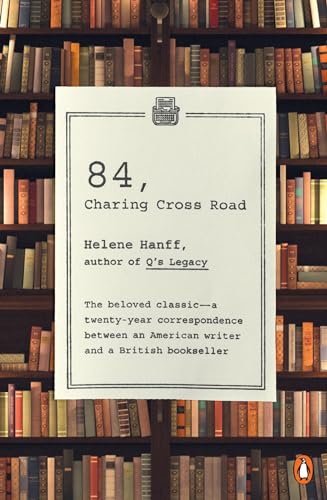
❤️1. 84, Charing Cross Road, Helene Hanff (1970); letters; audiobook re-read by Barbara Rosenblatt and others
I've made it a tradition to start the new year off with this wonderful testament to books and reading and friendships around books.

❤️2. Lady Susan, Jane Austen (1875); epistolary fiction; audiobook re-read by multiple narrators
Another one that I listen to at least once a year. It always puts me in a good mood.

3. Tea with Mr Rochester, Frances Towers (1949); short stories from my Persephone collection
This volume of short stories is the only collection of Frances Towers' writing and was published after her death. It's hard to describe her writing style, except to say that it's kind of ethereal and evocative. It takes concentration but is rewarding. My favorite was the title story, "Tea with Mr Rochester" about an adolescent girl who admires an older man from afar.
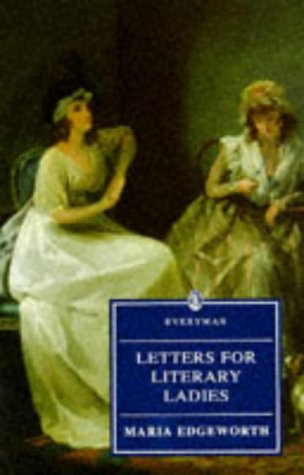
4. Letters for Literary Ladies, Maria Edgeworth (1795); letters/essays
This was a small volume first published in 1795. The first two letters are between two gentlemen friends. The first letter, "From a Gentleman to His Friend, upon the Birth of a Daughter", advises his friend that educating a woman can only bring unhappiness, with a long list of negatives. The response by his friend disagrees with every point and shows how a woman will be benefited by an education. The second set of letters are between two women, one of "sense" and the other of "sensibility," and concerns the marriage of the second. The last essay is a tongue-in-cheek argument on how a woman can win any argument with her husband.
Jane Austen admired Maria Edgeworth's work. I've read 3 of her novels and liked them all. In this volume I enjoyed the first set of letters the most, especially the way the arguments for education were expressed. The other letters and essay were interesting and funny, but not quite as spot-on as the first set.

5. A Murder is Announced, Agatha Christie (1950); mystery
A "murder game" becomes a real crime scene. Includes several characters who are living under a different name and/or different person's identity. Miss Marple gets involved (relatively) early in this one and provides the psychological rationale for the killer's actions. Although I didn't figure out the killer I did figure out the true background of Phillipa. I enjoyed this one more than I expected.

6. A Laodicean, Thomas Hardy (1881); fiction; the next book in the Thomas Hardy readalong challenge
This is a departure from rural Hardy and focuses on a decrepit castle in Wessex, its new wealthy female owner Miss Paula Power, and her two suitors, Mr Somerset (an architect) and Capt. De Stancy. The love triangle takes precedence as our suitors vie for her hand and the characters travel across Europe in pursuit of her. Lots of descriptions of architecture and an architect's work in this one as well as some rather sensational elements that kept me turning pages. In between Hardy has his characters argue the pros and cons of revering the aristocratic past vs. the benefits of progress and the new order.
Paula, the "Laodicean", got on my nerves after a while with her in inability to make up her mind. The love triangle seemed to take too long to resolve for me, and some details were sketchy, but the book was an interesting read and (surprise!) it did not end in complete misery.

7. The Moonstone, Wilkie Collins (1868); fiction; a re-read
This was a re-read and is an historical fiction novel of a stolen diamond from India, told in letters, documents and narratives. Set in 1848-1850, it has all the basic elements of a detective mystery as the genre would be known. The crime is investigated by both Sergeant Cuff, a hired detective from the Metropolitan Police and the main character, Franklin Blake, who has assembled all the documents two years after the crime. "Mesmerism" (hypnosis) and opium addiction are factors blurring the lines of the facts. Probably my favorite "narrator" was Gabriel, the house steward, whose testimony made me laugh out loud sometimes, especially when he quotes Robinson Crusoe. In subtle comments and documents, Collins takes a critical look at what it means "to steal" and the consequences of Britain's Imperialism in the 19th century.
I read this for my RL book club and led the group discussion. I liked this more than I did in previous readings, probably because I took copious notes and paid more attention to what was happening and why. For many years The Moonstone was thought to be the first English language full length detective novel until scholars discovered The Notting Hill Mystery, Charles Warren Adams (1863), which I read next.

8. The Notting Hill Mystery, Charles Warren Adams, aka Charles Felix (1863); mystery
I decided to read this book after reading introductory material on the last book I read, The Moonstone. For many years The Moonstone, published in 1868, was considered the first English-language detective novel, but recent scholarship as shown that The Notting Hill Mystery, first serialized in 1862-63, was a novel-length detective story that pre-dates The Moonstone.
Mr Henderson, an insurance investigator, is our narrator. He is investigating a large life insurance claim that appears to be questionable. He provides a basic narrative around letters, depositions, court documents, a marriage certificate and even a map to back up his investigation of possible murder(s). Like The Moonstone the story involves "mesmerism" (hypnosis) and takes some unusual turns and suppositions, so it's a bit hard to take seriously in the 21st century. On the other hand, it's presented in such an interesting structure that it had me turning pages to find out how the murders were committed. Although not up to our standards today, being the first of its kind gives the novel an added interest in the development of the detective novel.

9. A Year's Turning, Michael Viney (orig publ 1996; this edition 2022, with a new foreword by Viney); memoir/nature writing
Viney and his wife, both writers in Dublin, left their city life in the 1970s to live on a farm in a remote area of County Mayo on the Atlantic coast. Organized by months (January through December), Viney gives a smattering of life in that month in nature, coupled with his learning to adapt to living on a farm over many 20+ years.
The writing is exquisite, but often it meandered too much for me. Lots of terms for wildlife and plants and topography that were unknown to me, making the reading slow-going. This was an interlibrary loan book, so it had to be finished on time. If I can ever find a copy, I think I would read it again, slowly, over a year, one month at a time.
I wanted to get to more this month, but that's OK.
❤️1. 84, Charing Cross Road, Helene Hanff (1970); letters; audiobook re-read by Barbara Rosenblatt and others
I've made it a tradition to start the new year off with this wonderful testament to books and reading and friendships around books.

❤️2. Lady Susan, Jane Austen (1875); epistolary fiction; audiobook re-read by multiple narrators
Another one that I listen to at least once a year. It always puts me in a good mood.

3. Tea with Mr Rochester, Frances Towers (1949); short stories from my Persephone collection
This volume of short stories is the only collection of Frances Towers' writing and was published after her death. It's hard to describe her writing style, except to say that it's kind of ethereal and evocative. It takes concentration but is rewarding. My favorite was the title story, "Tea with Mr Rochester" about an adolescent girl who admires an older man from afar.
4. Letters for Literary Ladies, Maria Edgeworth (1795); letters/essays
This was a small volume first published in 1795. The first two letters are between two gentlemen friends. The first letter, "From a Gentleman to His Friend, upon the Birth of a Daughter", advises his friend that educating a woman can only bring unhappiness, with a long list of negatives. The response by his friend disagrees with every point and shows how a woman will be benefited by an education. The second set of letters are between two women, one of "sense" and the other of "sensibility," and concerns the marriage of the second. The last essay is a tongue-in-cheek argument on how a woman can win any argument with her husband.
Jane Austen admired Maria Edgeworth's work. I've read 3 of her novels and liked them all. In this volume I enjoyed the first set of letters the most, especially the way the arguments for education were expressed. The other letters and essay were interesting and funny, but not quite as spot-on as the first set.

5. A Murder is Announced, Agatha Christie (1950); mystery
A "murder game" becomes a real crime scene. Includes several characters who are living under a different name and/or different person's identity. Miss Marple gets involved (relatively) early in this one and provides the psychological rationale for the killer's actions. Although I didn't figure out the killer I did figure out the true background of Phillipa. I enjoyed this one more than I expected.

6. A Laodicean, Thomas Hardy (1881); fiction; the next book in the Thomas Hardy readalong challenge
This is a departure from rural Hardy and focuses on a decrepit castle in Wessex, its new wealthy female owner Miss Paula Power, and her two suitors, Mr Somerset (an architect) and Capt. De Stancy. The love triangle takes precedence as our suitors vie for her hand and the characters travel across Europe in pursuit of her. Lots of descriptions of architecture and an architect's work in this one as well as some rather sensational elements that kept me turning pages. In between Hardy has his characters argue the pros and cons of revering the aristocratic past vs. the benefits of progress and the new order.
Paula, the "Laodicean", got on my nerves after a while with her in inability to make up her mind. The love triangle seemed to take too long to resolve for me, and some details were sketchy, but the book was an interesting read and (surprise!) it did not end in complete misery.

7. The Moonstone, Wilkie Collins (1868); fiction; a re-read
This was a re-read and is an historical fiction novel of a stolen diamond from India, told in letters, documents and narratives. Set in 1848-1850, it has all the basic elements of a detective mystery as the genre would be known. The crime is investigated by both Sergeant Cuff, a hired detective from the Metropolitan Police and the main character, Franklin Blake, who has assembled all the documents two years after the crime. "Mesmerism" (hypnosis) and opium addiction are factors blurring the lines of the facts. Probably my favorite "narrator" was Gabriel, the house steward, whose testimony made me laugh out loud sometimes, especially when he quotes Robinson Crusoe. In subtle comments and documents, Collins takes a critical look at what it means "to steal" and the consequences of Britain's Imperialism in the 19th century.
I read this for my RL book club and led the group discussion. I liked this more than I did in previous readings, probably because I took copious notes and paid more attention to what was happening and why. For many years The Moonstone was thought to be the first English language full length detective novel until scholars discovered The Notting Hill Mystery, Charles Warren Adams (1863), which I read next.

8. The Notting Hill Mystery, Charles Warren Adams, aka Charles Felix (1863); mystery
I decided to read this book after reading introductory material on the last book I read, The Moonstone. For many years The Moonstone, published in 1868, was considered the first English-language detective novel, but recent scholarship as shown that The Notting Hill Mystery, first serialized in 1862-63, was a novel-length detective story that pre-dates The Moonstone.
Mr Henderson, an insurance investigator, is our narrator. He is investigating a large life insurance claim that appears to be questionable. He provides a basic narrative around letters, depositions, court documents, a marriage certificate and even a map to back up his investigation of possible murder(s). Like The Moonstone the story involves "mesmerism" (hypnosis) and takes some unusual turns and suppositions, so it's a bit hard to take seriously in the 21st century. On the other hand, it's presented in such an interesting structure that it had me turning pages to find out how the murders were committed. Although not up to our standards today, being the first of its kind gives the novel an added interest in the development of the detective novel.

9. A Year's Turning, Michael Viney (orig publ 1996; this edition 2022, with a new foreword by Viney); memoir/nature writing
Viney and his wife, both writers in Dublin, left their city life in the 1970s to live on a farm in a remote area of County Mayo on the Atlantic coast. Organized by months (January through December), Viney gives a smattering of life in that month in nature, coupled with his learning to adapt to living on a farm over many 20+ years.
The writing is exquisite, but often it meandered too much for me. Lots of terms for wildlife and plants and topography that were unknown to me, making the reading slow-going. This was an interlibrary loan book, so it had to be finished on time. If I can ever find a copy, I think I would read it again, slowly, over a year, one month at a time.
59kac522
On the TBR for February:
I am very slowly making my way through Les Miserables--I'm reading about 25 pages a day and am now about 25% through the book. I'd like to finish by the end of March. Along the way I've been listening to the podcasts I found at The Les Miserables Reading Complanion (https://sites.google.com/view/readlesmis/home-menu) and they have been helpful.
Completed
✔️Our Mutual Friend, Charles Dickens (1865); re-read on audiobook narrated by Simon Vance
✔️Facing Unpleasant Facts: Narrative Essays, George Orwell (2009)
✔️Mrs Miniver, Jan Struther (1939)
✔️Crossriggs, Jane & Mary Findlater (1908), from my Virago collection, a re-read
✔️Ten Days in a Mad House, Nellie Bly, for February RandomKIT (hospitals)
✔️Mary Olivier: A Life, May Sinclair (1919), from my Virago Collection
✔️Two on a Tower, Thomas Hardy (1882), next in the Hardy chronological read
✔️Fahrenheit 451, Ray Bradbury (1953), a re-read, for my RL book club
Currently Reading
Lost on the Lady Elgin, Valerie van Heest, for February Reading Through Time
Les Miserables, Victor Hugo (1862)
Les Miserables podcasts to supplement reading
Priorities
Consequences, E. M. Delafield, for DecadeCAT, from my Persephone collection
The Hotel, Elizabeth Bowen
Audio
Braiding Sweetgrass, Robin Wall Kimmerer, on audio when I'm caught up with the Les Mis podcasts
As time allows:
There is a Tide, Agatha Christie, next in my Christie chronological reading
Robinson Crusoe, Daniel Defoe, inspired by mentions in The Moonstone and also fits DecadeCAT
The Song of the Lark, Willa Cather, next in my Cather chronological reading and also fits DecadeCAT
Anna of the Five Towns, Arnold Bennett (1902), a short classic
I am very slowly making my way through Les Miserables--I'm reading about 25 pages a day and am now about 25% through the book. I'd like to finish by the end of March. Along the way I've been listening to the podcasts I found at The Les Miserables Reading Complanion (https://sites.google.com/view/readlesmis/home-menu) and they have been helpful.
Completed
✔️Our Mutual Friend, Charles Dickens (1865); re-read on audiobook narrated by Simon Vance
✔️Facing Unpleasant Facts: Narrative Essays, George Orwell (2009)
✔️Mrs Miniver, Jan Struther (1939)
✔️Crossriggs, Jane & Mary Findlater (1908), from my Virago collection, a re-read
✔️Ten Days in a Mad House, Nellie Bly, for February RandomKIT (hospitals)
✔️Mary Olivier: A Life, May Sinclair (1919), from my Virago Collection
✔️Two on a Tower, Thomas Hardy (1882), next in the Hardy chronological read
✔️Fahrenheit 451, Ray Bradbury (1953), a re-read, for my RL book club
Currently Reading
Lost on the Lady Elgin, Valerie van Heest, for February Reading Through Time
Les Miserables, Victor Hugo (1862)
Les Miserables podcasts to supplement reading
Priorities
Consequences, E. M. Delafield, for DecadeCAT, from my Persephone collection
The Hotel, Elizabeth Bowen
Audio
Braiding Sweetgrass, Robin Wall Kimmerer, on audio when I'm caught up with the Les Mis podcasts
As time allows:
There is a Tide, Agatha Christie, next in my Christie chronological reading
Robinson Crusoe, Daniel Defoe, inspired by mentions in The Moonstone and also fits DecadeCAT
The Song of the Lark, Willa Cather, next in my Cather chronological reading and also fits DecadeCAT
Anna of the Five Towns, Arnold Bennett (1902), a short classic
60threadnsong
Hello and Happy 2026! Glad to finally catch up with you on your thread for this year.
I am thrilled you are reading Les Misérables! I'm slowly reading it for the first time, in its original French, as a way for me to continue with my knowledge of this language. I loved the character of the Bishop and the struggles he goes through at the beginning. There are similar struggles throughout the book and that makes it so very relevant. It's a book I pick up and read on quiet weekend afternoons so that I can stay focused, hence the length of time I've taken reading it. The new translation sounds great, too.
For Christmas this year I received a copy of Castle Richmond in part because of your review. This book did make the good folks at my local bookstore scratch their heads since they could not figure out what my reading "themes" were when DH went by with my reading list. I look forward to reading it and posting a review.
Several of my favorite Dickens books were Bleak House and Barnaby Rudge. The latter is almost unknown in his work but oh my, the descriptions of the crowd are astounding.
Have a great rest of your reading month!
I am thrilled you are reading Les Misérables! I'm slowly reading it for the first time, in its original French, as a way for me to continue with my knowledge of this language. I loved the character of the Bishop and the struggles he goes through at the beginning. There are similar struggles throughout the book and that makes it so very relevant. It's a book I pick up and read on quiet weekend afternoons so that I can stay focused, hence the length of time I've taken reading it. The new translation sounds great, too.
For Christmas this year I received a copy of Castle Richmond in part because of your review. This book did make the good folks at my local bookstore scratch their heads since they could not figure out what my reading "themes" were when DH went by with my reading list. I look forward to reading it and posting a review.
Several of my favorite Dickens books were Bleak House and Barnaby Rudge. The latter is almost unknown in his work but oh my, the descriptions of the crowd are astounding.
Have a great rest of your reading month!
61kac522
>60 threadnsong: Oh, thank you for stopping by! I am about 1/3 through Les Mis now (almost finished with "Cosette") and this translation is so readable. And I'm enjoying the podcasts that I'm listening to. The professor spends time with themes in the book, with French history as well as the nuances of various words in French, like miserables, which can have two meanings in French. Or when the bishop tells Jean Valjean to be an "honest man", which she translates as either "truthful" OR a "man of honor" with slightly different connotations in 19th century France.
I hope you enjoy Castle Richmond; I've put it on my "to read again" list, but not sure when that will happen.
In my slow quest to read all of Dickens' main novels, Barnaby Rudge was the final one I read, and, oh my, it was so moving! Why didn't anyone tell me about this one--I'm amazed that more people don't mention it. I can't say it would be a favorite (like Bleak House or David Copperfield or Little Dorrit), but those riot scenes are breath-taking. I re-read Barnaby Rudge soon after the Jan 6 riots and those scenes in the book just brought it all back, they were so realistic.
One thing I wonder--do you think the book was named after Barnaby the father or Barnaby the son? Or both? It's interesting how Dickens has several father/son pairs, like David Copperfield, who was named after his father or Martin Chuzzlewit (grandfather and grandson) or Dombey and Son (father Paul and son Paul).
Anyway, enjoy your slow read of Les Miserables. I hope to finish by the end of March, but I'm not sure that's going to happen.
I hope you enjoy Castle Richmond; I've put it on my "to read again" list, but not sure when that will happen.
In my slow quest to read all of Dickens' main novels, Barnaby Rudge was the final one I read, and, oh my, it was so moving! Why didn't anyone tell me about this one--I'm amazed that more people don't mention it. I can't say it would be a favorite (like Bleak House or David Copperfield or Little Dorrit), but those riot scenes are breath-taking. I re-read Barnaby Rudge soon after the Jan 6 riots and those scenes in the book just brought it all back, they were so realistic.
One thing I wonder--do you think the book was named after Barnaby the father or Barnaby the son? Or both? It's interesting how Dickens has several father/son pairs, like David Copperfield, who was named after his father or Martin Chuzzlewit (grandfather and grandson) or Dombey and Son (father Paul and son Paul).
Anyway, enjoy your slow read of Les Miserables. I hope to finish by the end of March, but I'm not sure that's going to happen.
62Tess_W
I just love how you are methodically doing chronological readings of several authors. I wish to be as organized.
63kac522
>62 Tess_W: Thanks. It's a habit I developed from an LTer (lyzard) who hasn't been around for awhile, and was a meticulous "in order" reader. Generally, I may read one or two books from an author and then, if I decide it's an author I really enjoy, I go back and read the rest of their books in publication order. I think it gives me a better sense of how an author develops over time. I'm taking WAY too long for some of them (looking at you, Willa Cather!), but I hope to get to most of them at some point.
64dudes22
>63 kac522: - I won't say I do this with every author, but there are a few that I'm trying to read in order. For the same reason you mentioned. Sometimes, it's because I took a BB and decide to start at the beginning and work my way up to the BB. WHich is why it's taking me so long also. My author I need to concentrate on is Louise Erdrich.
65kac522
>64 dudes22: I've only read one or two books by Erdrich, but she's an author who I think has changed over time and tries different things in her work. I would imagine you will see her growth as a writer. Probably my longest commitment is Agatha Christie--not every book is a winner, but they're usually interesting from an historical context and they are quick reads. Still, with 50 years of novels, and often several per year, it's going slower than I anticipated. Too many other books in-between!
66MissBrangwen
>57 kac522: I read Helen by Maria Edgeworth and enjoyed it, and I have been meaning to read more by her since then.
>57 kac522: How interesting about The Notting Hill Mystery! I, too, thought that The Moonstone was the oldest English mystery. I hadn't expected that a book from the 19th century would be included in the British Library Crime Classics. I wonder if there are more?
>63 kac522: That is inspiring. I really like that method and may adopt it.
>57 kac522: How interesting about The Notting Hill Mystery! I, too, thought that The Moonstone was the oldest English mystery. I hadn't expected that a book from the 19th century would be included in the British Library Crime Classics. I wonder if there are more?
>63 kac522: That is inspiring. I really like that method and may adopt it.
67kac522
>66 MissBrangwen: Glad to hear you enjoyed Helen!--I recently downloaded Helen from Project Gutenberg, so hopefully I will get to it sooner than later.
The Edgeworth novels I've read are Castle Rackrent, Belinda and The Absentee. The first two were "group reads" led by lyzard and if you go the the books' "Community" tab, there is a link to our discussions. Liz gave us such a good background to the author and book and gave us analysis as we were reading along.
I don't know if there are any other older classics in the British Library collection; this just happened to be the edition that my library had available.
I don't always stick to my strict reading in order, but I try to keep to it. Once in a while a specific challenge or mood strikes me and I go "outside the box." 😉
The Edgeworth novels I've read are Castle Rackrent, Belinda and The Absentee. The first two were "group reads" led by lyzard and if you go the the books' "Community" tab, there is a link to our discussions. Liz gave us such a good background to the author and book and gave us analysis as we were reading along.
I don't know if there are any other older classics in the British Library collection; this just happened to be the edition that my library had available.
I don't always stick to my strict reading in order, but I try to keep to it. Once in a while a specific challenge or mood strikes me and I go "outside the box." 😉
68kac522
February reading wrap-up:
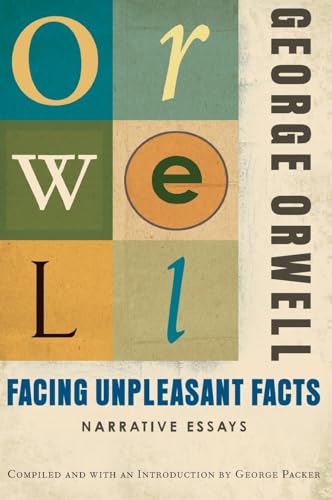
10. Facing Unpleasant Facts : Narrative Essays, George Orwell (2009); essays from the 1920s through 1950
George Orwell was first and foremost an essayist: he wrote hundreds of pieces of journalism, essays and short pieces. This collection of 27 narrative essays edited and selected by George Packer covers a selection from his first essay to his last published essay and all of them were accessible and interesting. They ranged from memoir to English food to politics and everything in-between. I think my favorites were the longest: his War-Time Diary from May to December 1940, and "Such, Such Sere the Joys", a poignant essay about Orwell's youth in a boarding school published after his death.
I had some trouble with some of the political content, as I'm not familiar with the nuances of political labeling (Leftist, Socialist, Communist, Right, etc.) as it applies to Britain and Europe in the 1930s and 1940s, but it didn't keep me from appreciating the basic thoughts in those essays. I plan to read All Art is Propaganda, a selection of his critical essays.

❤️11. Our Mutual Friend, Charles Dickens (1866); a re-read on audiobook read by Simon Vance
I believe this is the 4th time I've read this novel. The plot's too complicated to list here, but essentially it's about a man who pretends (for various reasons) to be someone else. And of course there are a myriad of side plots and characters that all seem to come together at the end. This time I noticed how many other characters pretend to be something that they're not, generally for bad or devious purposes. This is not my favorite Dickens, but I think it is his best crafted novel.
If you're interested and read the novel or aren't afraid of spoilers, I spent some time sorting through the characters here: https://www.librarything.com/topic/377436#9109269

12. Mrs Miniver, Jan Struther (1939, this edition 1942); fiction
Most people know this title from the 1942 film. Published just as the war was starting in Europe in Fall 1939, the book is a collection of articles Struther wrote for the The Times from 1937 to 1939 about a fictional "average" British woman and her life and thoughts. She hardly seemed "average" to me--several servants, two homes, etc. But it was still interesting, although I was less able to relate to her daily life. However, for some reason I was expecting this to be lighter stuff, but Struther actually ponders real concerns and inequalities that she sees around her. It ends Fall, 1939 as the family are fitted for gas masks and the war is becoming a reality, not some distant uncertainty. This 1942 edition added an additional piece by Struther set at Christmas, 1941. Overall it was interesting and it read very fast, as each chapter (article) is 4-5 pages.
I also watched the 1942 movie, which is mostly set during the war (not before) and has a completely different story line and feel from the book. The characters are basically the same, but they are now engulfed in war.

❤️13. Crossriggs, Jane & Mary Findlater (1908); fiction; a re-read
I read a library copy of this book back in 2022 and loved it. When I saw a copy in a used bookstore a few months ago, I grabbed it to re-read and I wasn't disappointed. This book was a roller-coaster of sorts: funny, sad, hopeful, despairing, all within the struggles of everyday people facing their small and not-so-small challenges that life puts in your way. We follow Alexandra Hope, about 30, who is living with her elderly father, "Old Hopeful", a "fruitarian" and all-round radical thinker. At the outset Alexandra's widowed sister and 5 young children from Canada join the family in their small house in the small village of Crossriggs. It is Alex who must find ways to make ends meet, and in these struggles we follow her good days and bad days, and her admirers and her secret loves. Through difficult situations Alex learns to follow her own path and it is a hopeful ending.
The introduction points out that it is thought that the Findlater sisters were influenced by Jane Austen's Emma, and some of those elements are apparent (hypochondriac widowed father, older calm sister). But this time I found Alex more like Jo March (from Little Women) than like Emma--Alex is determined to support her family with little resources. On re-reading this time I also found Alex sometimes annoying, as she often evades directly dealing with difficult situations. But I would still recommend this to anyone who loves this sort of story from the turn of the century, just for its enthusiasm and love of life.

14. Ten Days in a Mad-House: A Story of the Intrepid Reporter, Nellie Bly (1887); 19th century investigative reporting
Nellie Bly (real name: Elizabeth Cochrane Seaman) was a young reporter for the New York World when her editor asked her to investigate the living conditions at the notorious insane asylum on Blackwell's Island. She began by impersonating an insane person at a local boarding house, where the matron had her taken away by the police, brought before a judge and declared "insane." She was initially taken to Bellevue Hospital and then transferred to Blackwell's Island Asylum.
This book is based on her original newspaper articles that detailed the ill-treatment she received and the psychological and physical abuse of the hundreds of women inmates at the asylum. Inedible food, locked sleeping cells and regular beatings were all commonplace. She also found many women who, either because their English was limited or were destitute and very ill, were probably completely sane but were placed here because they had no where else to go. Her articles did eventually lead to additional funding and improvements at the asylum. Eye-opening and ground-breaking reporting by one of the very few young female reporters of her era.

15. Mary Olivier: A Life, May Sinclair (1919); fiction
This is the story of Mary's restricted life with her parents, focusing especially on a complex mother-daughter relationship, and apparently loosely based on Sinclair's own life. It was hard to like any of the characters, even poor Mary herself. Sinclair deep-dives into Mary's inner life, which felt overdone and repetitive to me.
Looking at comments of this book, there are loads of rave reviews. After I finished the novel I read the introduction by Jean Radford, who summed up my feelings about the novel: "The novel is too long; there are too many lovers lost; too much detail about her philosophical reading; too many scenes in which mother and daughter enact the same painful conflict." I loved Sinclair's Life and Death of Harriett Frean, but Mary Olivier just ended up feeling tedious.

❤️16. Two on a Tower, Thomas Hardy (1882); fiction
Hardy's seventh novel concerns a married woman who falls in love with a young man 10 years her junior while studying the stars together. Lots of plot twists and sensation-type elements in a stifling small town, which avoids blatant misery until the very end. Not the best Hardy novel, but it was a page-turner and Hardy gets in lots of astronomy which made the novel surprisingly interesting. Recommended if you'd like to read a Hardy novel that won't leave you completely devastated.
17. Fahrenheit 451, Ray Bradbury (1953); science fiction; a re-read for book club
This is the classic story set in the future about Guy Montag, a fireman whose job is to burn books. Montag slowly begins to see what destroying knowledge may mean for the future. Guy's wife spends her time in one room of the house where the walls are covered with screens--she calls this "her family"--not all that far away from today's social media explosion.
Bradbury's writing is stunning, but it took some time for me to get into the flow of it. This was my book club's selection for February and generated a lot of great discussion. The edition I read was the 60th anniversary edition, with 60+ pages of additional material which really enhanced my reading, including several pieces by Bradbury on the making of the novel.

❤️18. Anna of the Five Towns, Arnold Bennett (1902); fiction
This is a short novel with an interesting portrait of the Staffordshire pottery towns at the turn of the 20th century, focusing on Anna, a young woman and her tyrannic, miserly father who rules nearly every aspect of her life. There are several interesting scenes, including a highly detailed and descriptive chapter when Anna gets a tour of a pottery factory, following a lump of clay to finished dinner plate. Another scene records Anna's first trip outside the Five Towns area to the Isle of Man and her awe and wonder on the sea and the beauty of the island.
Bennett, who grew up in the area, gives us a portrait of a complex female character in an almost impossible situation, but doesn't flinch from a realistic ending. I enjoyed it more than I expected and I think it will stay with me for a long time. I plan to continue reading more of his "Five Towns" books.

19. Christine, Alice Cholmondeley pseud. of Elizabeth von Arnim (1917); epistolary novel
The story is told in fictional letters in 1914 from Christine, a teen-aged daughter studying violin in Germany, to her English mother. Christine arrives in Berlin in early 1914 to study with a renowned master, as she has been identified as having great talent. She has limited German, but she observes and reports on the people she meets and lives with in a boarding house. She practices hard and yet feels isolated until she meets a young soldier who shares her love of music. As war is declared in August 1914, she must find her way out of Germany.
This is loosely based on von Arnim's own daughter who became trapped while studying in Germany as war was declared, and eventually died of pneumonia there. There is very clear German stereotyping in this book, probably due to von Arnim's own experience with her estranged husband. This was an easy, flowing read, as von Arnim's writing always is, but there is a definite point of view that might be considered propaganda of its time.
10. Facing Unpleasant Facts : Narrative Essays, George Orwell (2009); essays from the 1920s through 1950
George Orwell was first and foremost an essayist: he wrote hundreds of pieces of journalism, essays and short pieces. This collection of 27 narrative essays edited and selected by George Packer covers a selection from his first essay to his last published essay and all of them were accessible and interesting. They ranged from memoir to English food to politics and everything in-between. I think my favorites were the longest: his War-Time Diary from May to December 1940, and "Such, Such Sere the Joys", a poignant essay about Orwell's youth in a boarding school published after his death.
I had some trouble with some of the political content, as I'm not familiar with the nuances of political labeling (Leftist, Socialist, Communist, Right, etc.) as it applies to Britain and Europe in the 1930s and 1940s, but it didn't keep me from appreciating the basic thoughts in those essays. I plan to read All Art is Propaganda, a selection of his critical essays.

❤️11. Our Mutual Friend, Charles Dickens (1866); a re-read on audiobook read by Simon Vance
I believe this is the 4th time I've read this novel. The plot's too complicated to list here, but essentially it's about a man who pretends (for various reasons) to be someone else. And of course there are a myriad of side plots and characters that all seem to come together at the end. This time I noticed how many other characters pretend to be something that they're not, generally for bad or devious purposes. This is not my favorite Dickens, but I think it is his best crafted novel.
If you're interested and read the novel or aren't afraid of spoilers, I spent some time sorting through the characters here: https://www.librarything.com/topic/377436#9109269

12. Mrs Miniver, Jan Struther (1939, this edition 1942); fiction
Most people know this title from the 1942 film. Published just as the war was starting in Europe in Fall 1939, the book is a collection of articles Struther wrote for the The Times from 1937 to 1939 about a fictional "average" British woman and her life and thoughts. She hardly seemed "average" to me--several servants, two homes, etc. But it was still interesting, although I was less able to relate to her daily life. However, for some reason I was expecting this to be lighter stuff, but Struther actually ponders real concerns and inequalities that she sees around her. It ends Fall, 1939 as the family are fitted for gas masks and the war is becoming a reality, not some distant uncertainty. This 1942 edition added an additional piece by Struther set at Christmas, 1941. Overall it was interesting and it read very fast, as each chapter (article) is 4-5 pages.
I also watched the 1942 movie, which is mostly set during the war (not before) and has a completely different story line and feel from the book. The characters are basically the same, but they are now engulfed in war.

❤️13. Crossriggs, Jane & Mary Findlater (1908); fiction; a re-read
I read a library copy of this book back in 2022 and loved it. When I saw a copy in a used bookstore a few months ago, I grabbed it to re-read and I wasn't disappointed. This book was a roller-coaster of sorts: funny, sad, hopeful, despairing, all within the struggles of everyday people facing their small and not-so-small challenges that life puts in your way. We follow Alexandra Hope, about 30, who is living with her elderly father, "Old Hopeful", a "fruitarian" and all-round radical thinker. At the outset Alexandra's widowed sister and 5 young children from Canada join the family in their small house in the small village of Crossriggs. It is Alex who must find ways to make ends meet, and in these struggles we follow her good days and bad days, and her admirers and her secret loves. Through difficult situations Alex learns to follow her own path and it is a hopeful ending.
The introduction points out that it is thought that the Findlater sisters were influenced by Jane Austen's Emma, and some of those elements are apparent (hypochondriac widowed father, older calm sister). But this time I found Alex more like Jo March (from Little Women) than like Emma--Alex is determined to support her family with little resources. On re-reading this time I also found Alex sometimes annoying, as she often evades directly dealing with difficult situations. But I would still recommend this to anyone who loves this sort of story from the turn of the century, just for its enthusiasm and love of life.

14. Ten Days in a Mad-House: A Story of the Intrepid Reporter, Nellie Bly (1887); 19th century investigative reporting
Nellie Bly (real name: Elizabeth Cochrane Seaman) was a young reporter for the New York World when her editor asked her to investigate the living conditions at the notorious insane asylum on Blackwell's Island. She began by impersonating an insane person at a local boarding house, where the matron had her taken away by the police, brought before a judge and declared "insane." She was initially taken to Bellevue Hospital and then transferred to Blackwell's Island Asylum.
This book is based on her original newspaper articles that detailed the ill-treatment she received and the psychological and physical abuse of the hundreds of women inmates at the asylum. Inedible food, locked sleeping cells and regular beatings were all commonplace. She also found many women who, either because their English was limited or were destitute and very ill, were probably completely sane but were placed here because they had no where else to go. Her articles did eventually lead to additional funding and improvements at the asylum. Eye-opening and ground-breaking reporting by one of the very few young female reporters of her era.

15. Mary Olivier: A Life, May Sinclair (1919); fiction
This is the story of Mary's restricted life with her parents, focusing especially on a complex mother-daughter relationship, and apparently loosely based on Sinclair's own life. It was hard to like any of the characters, even poor Mary herself. Sinclair deep-dives into Mary's inner life, which felt overdone and repetitive to me.
Looking at comments of this book, there are loads of rave reviews. After I finished the novel I read the introduction by Jean Radford, who summed up my feelings about the novel: "The novel is too long; there are too many lovers lost; too much detail about her philosophical reading; too many scenes in which mother and daughter enact the same painful conflict." I loved Sinclair's Life and Death of Harriett Frean, but Mary Olivier just ended up feeling tedious.

❤️16. Two on a Tower, Thomas Hardy (1882); fiction
Hardy's seventh novel concerns a married woman who falls in love with a young man 10 years her junior while studying the stars together. Lots of plot twists and sensation-type elements in a stifling small town, which avoids blatant misery until the very end. Not the best Hardy novel, but it was a page-turner and Hardy gets in lots of astronomy which made the novel surprisingly interesting. Recommended if you'd like to read a Hardy novel that won't leave you completely devastated.
17. Fahrenheit 451, Ray Bradbury (1953); science fiction; a re-read for book club
This is the classic story set in the future about Guy Montag, a fireman whose job is to burn books. Montag slowly begins to see what destroying knowledge may mean for the future. Guy's wife spends her time in one room of the house where the walls are covered with screens--she calls this "her family"--not all that far away from today's social media explosion.
Bradbury's writing is stunning, but it took some time for me to get into the flow of it. This was my book club's selection for February and generated a lot of great discussion. The edition I read was the 60th anniversary edition, with 60+ pages of additional material which really enhanced my reading, including several pieces by Bradbury on the making of the novel.

❤️18. Anna of the Five Towns, Arnold Bennett (1902); fiction
This is a short novel with an interesting portrait of the Staffordshire pottery towns at the turn of the 20th century, focusing on Anna, a young woman and her tyrannic, miserly father who rules nearly every aspect of her life. There are several interesting scenes, including a highly detailed and descriptive chapter when Anna gets a tour of a pottery factory, following a lump of clay to finished dinner plate. Another scene records Anna's first trip outside the Five Towns area to the Isle of Man and her awe and wonder on the sea and the beauty of the island.
Bennett, who grew up in the area, gives us a portrait of a complex female character in an almost impossible situation, but doesn't flinch from a realistic ending. I enjoyed it more than I expected and I think it will stay with me for a long time. I plan to continue reading more of his "Five Towns" books.

19. Christine, Alice Cholmondeley pseud. of Elizabeth von Arnim (1917); epistolary novel
The story is told in fictional letters in 1914 from Christine, a teen-aged daughter studying violin in Germany, to her English mother. Christine arrives in Berlin in early 1914 to study with a renowned master, as she has been identified as having great talent. She has limited German, but she observes and reports on the people she meets and lives with in a boarding house. She practices hard and yet feels isolated until she meets a young soldier who shares her love of music. As war is declared in August 1914, she must find her way out of Germany.
This is loosely based on von Arnim's own daughter who became trapped while studying in Germany as war was declared, and eventually died of pneumonia there. There is very clear German stereotyping in this book, probably due to von Arnim's own experience with her estranged husband. This was an easy, flowing read, as von Arnim's writing always is, but there is a definite point of view that might be considered propaganda of its time.
69kac522
On the TBR for March:
It's long, but so is March....
Completed
Sherlock Holmes: The Complete Novels and Stories, Volume II (Bantam Classic), Arthur Conan Coyle; on audiobook read by Simon Vance
The Hotel, Elizabeth Bowen, my complete the author challenge
Ayala's Angel, Anthony Trollope, my complete the author challenge
Reunion, Fred Uhlman
There is a Tide, Agatha Christie, my complete the author challenge
Sapphira and the Slave Girl, Willa Cather, Reading through Time--March
The Indomitable Mrs. Trollope, Eileen Bigland
Audiobook: The Mayor of Casterbridge, Thomas Hardy, for my Hardy challenge
Letters from Constance, Mary Hocking, March British Authors Challenge
Robinson Crusoe, Daniel Defoe, for RL book club
Still Glides the Stream, D. E. Stevenson
Currently Reading
Lost on the Lady Elgin, Valerie van Heest, for February Reading Through Time, about a Great Lakes ship disaster with connections to my family
Les Miserables, Victor Hugo--hit the half-way point, and hope to complete this month
Les Miserables podcasts to supplement reading
Braiding Sweetgrass, Robin Wall Kimmerer, on audio when I'm caught up with the Les Mis podcasts
Priorities
Jessie Phillips, Mrs Trollope, March British Authors Challenge
Greenmantle, John Buchan, Color/CoverCAT
Virginia, Ellen Glasgow, my Virago chronological read
DNFConsequences, E. M. Delafield, from my Persephone collection
As time allows:
Murder at the Vicarage, Agatha Christie, a re-read
The Night of Fear, Moray Dalton
Fenny, Lettice Cooper
Mandoa, Mandoa!, Winifred Holtby
Rough Hewn, Dorothy Canfield Fisher
They Were Sisters, Dorothy Whipple
All Things Wise and Wonderful, James Herriot
It's long, but so is March....
Completed
Sherlock Holmes: The Complete Novels and Stories, Volume II (Bantam Classic), Arthur Conan Coyle; on audiobook read by Simon Vance
The Hotel, Elizabeth Bowen, my complete the author challenge
Ayala's Angel, Anthony Trollope, my complete the author challenge
Reunion, Fred Uhlman
There is a Tide, Agatha Christie, my complete the author challenge
Sapphira and the Slave Girl, Willa Cather, Reading through Time--March
The Indomitable Mrs. Trollope, Eileen Bigland
Audiobook: The Mayor of Casterbridge, Thomas Hardy, for my Hardy challenge
Letters from Constance, Mary Hocking, March British Authors Challenge
Robinson Crusoe, Daniel Defoe, for RL book club
Still Glides the Stream, D. E. Stevenson
Currently Reading
Lost on the Lady Elgin, Valerie van Heest, for February Reading Through Time, about a Great Lakes ship disaster with connections to my family
Les Miserables, Victor Hugo--hit the half-way point, and hope to complete this month
Les Miserables podcasts to supplement reading
Braiding Sweetgrass, Robin Wall Kimmerer, on audio when I'm caught up with the Les Mis podcasts
Priorities
Jessie Phillips, Mrs Trollope, March British Authors Challenge
Greenmantle, John Buchan, Color/CoverCAT
Virginia, Ellen Glasgow, my Virago chronological read
DNF
As time allows:
Murder at the Vicarage, Agatha Christie, a re-read
The Night of Fear, Moray Dalton
Fenny, Lettice Cooper
Mandoa, Mandoa!, Winifred Holtby
Rough Hewn, Dorothy Canfield Fisher
They Were Sisters, Dorothy Whipple
All Things Wise and Wonderful, James Herriot
70Tess_W
>68 kac522: So many good ones here! However, I'll take a BB for Orwell, have read most of his, but was unaware of this one.
71kac522
>70 Tess_W: Thanks, Tess. I did enjoy most of the essays. I've ordered the other collection of essays by the same editor from the library called All Art is Propaganda, which collects some of his critical essays on language, authors, film and drama. Apparently the complete set of all of his essays runs to 3 or 4 volumes, so I appreciate these collections which are picked as representative and span his whole life-time. Not sure when I'll fit it in, but I'll worry about that when it comes in. :)
72threadnsong
I'm glad that you had a chance/reason to read Fahrenheit 451. It is quite prescient of the future and the extra pages in the version you mentioned in your review is a good reason for me to find a more current edition.
Robinson Crusoe is a book I read very, very early in life, and there is much that I missed. I'll be interested to read your review when you finish it.
Robinson Crusoe is a book I read very, very early in life, and there is much that I missed. I'll be interested to read your review when you finish it.
73kac522
>72 threadnsong: We had a good discussion on Fahrenheit 451; I read it some years ago, but it's a book that can always use a re-read. All those screens! How did Bradbury know???
I've never read Robinson Crusoe and just started reading tonight--again for book club discussion--and I'm about 40 pages in. I was not expecting all the references to slaves and the slave trade. The beginning is about his various voyages--first to see the world and then to escape a harsh master, and now, after several years establishing himself as a plantation owner in Brazil, to make some sort of slave trade deal.
I've never read Robinson Crusoe and just started reading tonight--again for book club discussion--and I'm about 40 pages in. I was not expecting all the references to slaves and the slave trade. The beginning is about his various voyages--first to see the world and then to escape a harsh master, and now, after several years establishing himself as a plantation owner in Brazil, to make some sort of slave trade deal.
74kac522
April has possibilities, possibilities, and even more possibilities:
Completed
Les Miserables, Victor Hugo (1862)
The Les Miserables Reading Companion Podcasts, Prof Briana Lewis--to supplement my Les Mis reading
The Gipsy in the Parlour, Margery Sharp (1953)
John Caldigate, Anthony Trollope (1879)
A Little Princess, Frances Hodgson Burnett (1905) -- for the DecadeCat--"00"s
Two Spring issues of Chicago History Magazine -- for the Reading through Time April theme of "Spring"
Miss Pym Disposes, Josephine Tey
The Woodlanders, Thomas Hardy (1887)
Cross Channel, Julian Barnes (1996) -- for the April monthly author read
Currently Reading
Lost on the Lady Elgin, Valerie van Heest -- nonfiction about the Great Lakes disaster, that I *need* to finish this month
All Things Wise and Wonderful, James Herriot
History Matters, David McCullough (posth. 2025), previously unpublished essays and speeches
Priorities
Virginia, Ellen Glasgow (1913) -- next in my Virago reading
The House of Mirth, Edith Wharton (1905) -- for the Decade Cat and next in my Wharton Chronological reading; a re-read
Stephen Fry in America: Fifty States and the Man Who Set Out To See Them All, Stephen Fry (2008)--for April BAC
Audio
Currently reading: Braiding Sweetgrass, Robin Wall Kimmerer (2013)
Library Books
Deborah, Esther Singer Kreitman -- fiction by the sister of I B Singer
And if time permits.....
The Song of the Lark, Willa Cather
Castle Rackrent and Ennui, Maria Edgeworth
A Pocketful of Rye, A. J. Cronin
DNF: Parable of the Sower, Octavia Butler (1993) -- for my RL book club
Enjoyed any of these? Let me know!!
Completed
Les Miserables, Victor Hugo (1862)
The Les Miserables Reading Companion Podcasts, Prof Briana Lewis--to supplement my Les Mis reading
The Gipsy in the Parlour, Margery Sharp (1953)
John Caldigate, Anthony Trollope (1879)
A Little Princess, Frances Hodgson Burnett (1905) -- for the DecadeCat--"00"s
Two Spring issues of Chicago History Magazine -- for the Reading through Time April theme of "Spring"
Miss Pym Disposes, Josephine Tey
The Woodlanders, Thomas Hardy (1887)
Cross Channel, Julian Barnes (1996) -- for the April monthly author read
Currently Reading
Lost on the Lady Elgin, Valerie van Heest -- nonfiction about the Great Lakes disaster, that I *need* to finish this month
All Things Wise and Wonderful, James Herriot
History Matters, David McCullough (posth. 2025), previously unpublished essays and speeches
Priorities
Virginia, Ellen Glasgow (1913) -- next in my Virago reading
The House of Mirth, Edith Wharton (1905) -- for the Decade Cat and next in my Wharton Chronological reading; a re-read
Stephen Fry in America: Fifty States and the Man Who Set Out To See Them All, Stephen Fry (2008)--for April BAC
Audio
Currently reading: Braiding Sweetgrass, Robin Wall Kimmerer (2013)
Library Books
Deborah, Esther Singer Kreitman -- fiction by the sister of I B Singer
And if time permits.....
The Song of the Lark, Willa Cather
Castle Rackrent and Ennui, Maria Edgeworth
A Pocketful of Rye, A. J. Cronin
DNF: Parable of the Sower, Octavia Butler (1993) -- for my RL book club
Enjoyed any of these? Let me know!!
75kac522
March reading wrap-up:

❤️20. Sherlock Holmes: The Complete Novels and Stories, Volume II, Arthur Conan Doyle (this edition 1986); novella and short stories; on audiobook narrated by Simon Vance
Volume II contains The Hound of the Baskervilles (1902); The Valley of Fear (1914); His Last Bow (1917) and The Case-Book of Sherlock Holmes (1927). I listened to this on audio read by Simon Vance. I've been listening to the complete works over the last year and half and have enjoyed it quite a bit. It's a great one to listen to between other books--easy to pick up and put down. I'm so glad I committed to this project as it brought a great deal of enjoyment over the past months. Now I have all of them to listen to again & again, when I need a break from other works.

21. The Hotel, Elizabeth Bowen (1927); fiction
The nameless hotel in this story is a famous vacation spot for British upper-class tourists on the Italian Riviera. There are a variety of characters, including widows, young women on the lookout for husbands, clerics on vacation and the occasional obscure young man. We focus on one young woman, Sydney, 21, who is bit too carefree and unconventional compared to the rest. Brought here by her cousin, she becomes friends with Mrs Kerr, an enterprising 40-something widow. Sydney is not without a few stray admirers along the way.
This is Bowen's first novel from 1927. The characters are, on the whole, hard to like and even harder to understand. The dialogue was sometimes difficult to follow--it felt like it was above or below or floating around its meaning, but perhaps I'm not smart enough to understand all the implications. Poor Mr Milton, who has become entranced with Sydney, was the only character who seemed to speak directly about anything.
I've read a couple of Elizabeth Bowen's novels (Friends and Relations, The Last September) and enjoyed them, and now have quite a few of her others unread on the shelf. I'm ambivalent about continuing with her books; I may try one more--The Death of the Heart looks to be her most popular--before I decide to give her up.

❤️❤️22. Ayala's Angel, Anthony Trollope (1881); fiction
What a delight to come "home" to Trollope! He is on his game in this wonderful story of two sisters, Ayala, 19 and Lucy, 21. Recently orphaned, they are each sent separately to homes of relations--outgoing Ayala to the wealthy Tringle family and quiet Lucy to the just-getting-by Dosetts. As they learn to adjust to these new surroundings, both girls are very unhappy and clash with their new guardians. The plot focuses more on Ayala, who is a dreamer and has imprinted in her mind the ideal husband--her "Angel of Light." She seems to attract suitors everywhere she goes, much to the disapproval of her Aunt Tringle and to Ayala's own disgust, as none measure up to her "Angel." Besides the two sisters, there are several other budding young couples in the Tringle family and beyond. In the end, it all works out to just about everyone's satisfaction.
This is a wonderful romantic comedy in Trollope's own off-hand style. The names alone had me laughing: Mr Tringle works for "Travers and Treason", counting his millions; Ayala's suitors include Colonel Stubbs, Captain Batsby, and her cousin "poor Tom" Tringle; a romantic walk is taken in Gobblegoose Wood. Just some of the funny and almost fairy-tale like names. There are laugh-out loud moments, but it's not without some serious thoughts about love and marriage and money. I loved this--it will be a favorite comforting re-read for many years to come.
❤️23. Reunion, Fred Uhlman (1971); fiction
This is a short novella set in 1930s Stuttgart, Germany, about the end of the friendship and childhood of two teen-aged boys: Hans, the son of a middle-class Jewish doctor, and Konradin, an upper-class schoolmate with whom Hans forms an intense friendship. Formed on common interests of coins and collecting, the book is told from the hindsight point of view of Hans some 30 years later, in a poetic and intense style. The forces of the times ultimately decide what happens to their friendship.
Fred Uhlman (1901-1985) was born in Stuttgart into a Jewish family and obtained a law degree in 1923. After Hitler took power in 1933, Uhlman left Germany for Paris, then Spain, finally settling in England in 1936 with no English. Here he married an English woman he had met in Spain and supported himself by painting. When the war began, he was interred on the Isle of Man as an enemy alien. After the war he continued to paint and featured in exhibitions. Besides Reunion, Uhlman wrote one other novel and a memoir, The Making of an Englishman (1960).
Many books have been written about this era, but this short book encapsulates so much in just a little over 100 pages. It was intense and a compelling look at everyday life in 1930s Germany.

24. There is a Tide, Agatha Christie (1948); mystery
The mystery was decent (several murders connected to many family members who feel their inheritance has been unfairly taken away from them), but in the end it seems no one is held responsible for 3 deaths, blackmailing, robbery or impersonating a deceased person. But the book was completely ruined for me in the last couple of pages when a woman, who has broken off her engagement, returns to her fiancee when she realizes that she really does love him because he shows his "manliness" by nearly strangling her to death in an uncontrollable rage. Excuse me??? Agatha, what were you thinking????

25. Sapphira and the Slave Girl, Willa Cather (1940); fiction
Set in western Virginia in 1856, Sapphira and her husband Henry own a mill, farm and large house, and have enslaved people inherited by Sapphira. They live in an area where slave ownership is not common and Henry is conflicted about slavery. The story centers around Nancy, a young slave in her late teens, whose mother and grandmother live and work on the premises. Sapphira has become irrationally jealous of Nancy and makes Nancy's life miserable.
This was Cather's last novel and is set in the area of western Virginia where she was born and where her mother grew up, and is supposedly loosely based on family stories Cather heard as a child. The characters are complicated and nuanced, and the plot had me turning pages. NOTE: The language used made me uncomfortable (the n-word and "darkies"), but it was probably reflective of the language at the time (1850s).

26. Letters from Constance, Mary Hocking (1991); fiction, from my Virago collection
Constance and Sheila have been close friends since school days. In 1939, as Constance prepares to join the WRNS and Sheila is off to university, they vow to keep in touch by letter. We only read Constance's letters to Sheila found in Sheila's desk after her death. (Constance, obeying Sheila's wishes, has burnt all the letters she received from Sheila.) But even with only one side of the correspondence we get full pictures of the two young women as they make their way through school and war, marriage and children, love and loss. The letters end with Sheila's death in 1986.
I've read 3 other novels by Mary Hocking and enjoyed them quite a bit. For whatever reason, I was not completely engaged in this book until close to the end of the book, when Constance tries to organize her thoughts about one of her sons who has gotten in trouble with the law. I liked Constance as a "narrator" but I think I might have liked this book better 20 or 30 years ago, and I'm not sure why. Nevertheless, I enjoyed it, but didn't love it like I wanted to.
27. Robinson Crusoe, Daniel DeFoe (1719); fiction; read for my RL book club
Although I vaguely knew bits of this story (deserted island, my man Friday), I had never read this classic or seen any of many movies based on the book. The story essentially begins when Crusoe, around age 18, defies his parents and longing for travel, enters into the sailing life. After many adventures (good and bad), he is the lone survivor of a shipwreck in 1659, swims to the shore of an island which he surmises to be some distance off the coast of South America. Soon he realizes he is probably the only human on the island, swims & recovers as much as he can from the disabled ship, and begins to make a life for himself. His work building a shelter, growing food and surviving over 20 years takes up about 2/3 of the book. Eventually some natives from the mainland arrive on the island and Crusoe rescues one man who is most probably going to be dinner for the rest. Crusoe names this native "Friday", teaches him English and is thankful for a human companion. The rest of the book details how Crusoe & Friday manage to leave the island.
This was surprisingly readable and quite philosophical in its way. Crusoe recovers several Bibles from the ship, and these he relies on heavily; he argues often with himself of what the right and moral course should be and credits Providence to his good luck and fortune in staying alive so many years. I enjoyed this book until about the last 20 pages or so, in which Crusoe, after returning to England, goes on another sailing adventure, which didn't seem to make sense to me and the book ends rather abruptly. The book has a lot to say about survival and perseverance.
My book club wanted to read this because of a book we had read in January, The Moonstone by Wilkie Collins (1868), in which one of the characters is often quoting from Robinson Crusoe. None of us had read it, although most were familiar with the story. I'm glad one classic led us to another classic that has remained influential for centuries.

28. The Indomitable Mrs. Trollope, Eileen Bigland (1953); biography
Better known as the mother of novelist Anthony Trollope, Frances (Fanny) Trollope (1780-1863) was a celebrated novelist in her time. Not only did she write dozens of books, she traveled extensively, including to America, and supported her husband and children with her writing. From this account, Fanny Trollope was a non-stop whirlwind until dementia slowed her down in her later years.
But these old biographies bother me, as we aren't told where the author got her information on the many day-to-day details. From letters? memoirs? There's no index or detail of sources, just a listing of all of Fanny's published works. For me it's hard to put any faith in the narrative without any documentation.
❤️29. The Mayor of Casterbridge, Thomas Hardy (1886); fiction
I've been reading Hardy's 14 novels in chronological order; I had read 8 of them years ago, including this one, which I've read at least 3 times before. The novel follows the adult life of Michael Henchard, a farm laborer, who becomes drunk at a fair and sells off his young bride and infant child to a passing sailor for 5 guineas. The next morning Henchard awakes from his stupor, repents his terrible deed and vows he will change his ways and pursue a productive life. He settles in the cathedral town of Casterbridge, builds up a grain business and eventually rises to mayor of the town. But one day nearly twenty years later, Henchard's past walks back into his life and thus starts his decline.
The Mayor of Casterbridge has always been my favorite Hardy novel, and so far in this chronological reading of his novels still remains my favorite. I particularly love Hardy's descriptions of Wessex and Casterbridge as a place with ancient roots and traditional values. The country people and customs were enjoyable. There are many twists and turns of the plot, which keeps the book at a fast pace. There is nothing in all of Hardy in the books up to this point to match the complex character study of Michael Henchard, at once kind and generous, then suddenly full of temper and rage, and finally overwhelmingly repentant. And this cycle repeats over and over. Hardy contrasts the old world (Henchard) with the new (Donald Farfrae, his young assistant), and makes us feel like we are looking back at a very ancient time; yet he was writing in 1886 about events circa 1846. Hardy's portrayal of women in this novel, especially Henchard's daughter Elizabeth Jane, felt well-rounded and sympathetic.
On this reading I listened to Simon Vance's narration and it moved me to tears many times. I also splurged on a new Oxford Classics edition, as my old Penguin was very beat up and had irritating spoiler-y notes, so I was not sad to part with it.

30. Still Glides the Stream, D. E. Stevenson (1959); fiction
Will Hastie and Patty Murray have known each other since childhood. Patty is recently engaged to her cousin Hugo, who is the typical Stevenson cad, while Will has returned home from the service to work the Hastie family farm. But there's a mystery about the death of Patty's brother (and Will's best friend) during the war, which takes Will on a trip to France. When Will returns from France, what he learns there unravels the Murray family.
Stevenson can communicate her love of Scotland so well and in this book contrasts her native land with a post-war France she doesn't quite understand or particularly like. Easy reading, a nice romance and perfectly forgettable.

❤️20. Sherlock Holmes: The Complete Novels and Stories, Volume II, Arthur Conan Doyle (this edition 1986); novella and short stories; on audiobook narrated by Simon Vance
Volume II contains The Hound of the Baskervilles (1902); The Valley of Fear (1914); His Last Bow (1917) and The Case-Book of Sherlock Holmes (1927). I listened to this on audio read by Simon Vance. I've been listening to the complete works over the last year and half and have enjoyed it quite a bit. It's a great one to listen to between other books--easy to pick up and put down. I'm so glad I committed to this project as it brought a great deal of enjoyment over the past months. Now I have all of them to listen to again & again, when I need a break from other works.

21. The Hotel, Elizabeth Bowen (1927); fiction
The nameless hotel in this story is a famous vacation spot for British upper-class tourists on the Italian Riviera. There are a variety of characters, including widows, young women on the lookout for husbands, clerics on vacation and the occasional obscure young man. We focus on one young woman, Sydney, 21, who is bit too carefree and unconventional compared to the rest. Brought here by her cousin, she becomes friends with Mrs Kerr, an enterprising 40-something widow. Sydney is not without a few stray admirers along the way.
This is Bowen's first novel from 1927. The characters are, on the whole, hard to like and even harder to understand. The dialogue was sometimes difficult to follow--it felt like it was above or below or floating around its meaning, but perhaps I'm not smart enough to understand all the implications. Poor Mr Milton, who has become entranced with Sydney, was the only character who seemed to speak directly about anything.
I've read a couple of Elizabeth Bowen's novels (Friends and Relations, The Last September) and enjoyed them, and now have quite a few of her others unread on the shelf. I'm ambivalent about continuing with her books; I may try one more--The Death of the Heart looks to be her most popular--before I decide to give her up.

❤️❤️22. Ayala's Angel, Anthony Trollope (1881); fiction
What a delight to come "home" to Trollope! He is on his game in this wonderful story of two sisters, Ayala, 19 and Lucy, 21. Recently orphaned, they are each sent separately to homes of relations--outgoing Ayala to the wealthy Tringle family and quiet Lucy to the just-getting-by Dosetts. As they learn to adjust to these new surroundings, both girls are very unhappy and clash with their new guardians. The plot focuses more on Ayala, who is a dreamer and has imprinted in her mind the ideal husband--her "Angel of Light." She seems to attract suitors everywhere she goes, much to the disapproval of her Aunt Tringle and to Ayala's own disgust, as none measure up to her "Angel." Besides the two sisters, there are several other budding young couples in the Tringle family and beyond. In the end, it all works out to just about everyone's satisfaction.
This is a wonderful romantic comedy in Trollope's own off-hand style. The names alone had me laughing: Mr Tringle works for "Travers and Treason", counting his millions; Ayala's suitors include Colonel Stubbs, Captain Batsby, and her cousin "poor Tom" Tringle; a romantic walk is taken in Gobblegoose Wood. Just some of the funny and almost fairy-tale like names. There are laugh-out loud moments, but it's not without some serious thoughts about love and marriage and money. I loved this--it will be a favorite comforting re-read for many years to come.
❤️23. Reunion, Fred Uhlman (1971); fiction
This is a short novella set in 1930s Stuttgart, Germany, about the end of the friendship and childhood of two teen-aged boys: Hans, the son of a middle-class Jewish doctor, and Konradin, an upper-class schoolmate with whom Hans forms an intense friendship. Formed on common interests of coins and collecting, the book is told from the hindsight point of view of Hans some 30 years later, in a poetic and intense style. The forces of the times ultimately decide what happens to their friendship.
Fred Uhlman (1901-1985) was born in Stuttgart into a Jewish family and obtained a law degree in 1923. After Hitler took power in 1933, Uhlman left Germany for Paris, then Spain, finally settling in England in 1936 with no English. Here he married an English woman he had met in Spain and supported himself by painting. When the war began, he was interred on the Isle of Man as an enemy alien. After the war he continued to paint and featured in exhibitions. Besides Reunion, Uhlman wrote one other novel and a memoir, The Making of an Englishman (1960).
Many books have been written about this era, but this short book encapsulates so much in just a little over 100 pages. It was intense and a compelling look at everyday life in 1930s Germany.

24. There is a Tide, Agatha Christie (1948); mystery
The mystery was decent (several murders connected to many family members who feel their inheritance has been unfairly taken away from them), but in the end it seems no one is held responsible for 3 deaths, blackmailing, robbery or impersonating a deceased person. But the book was completely ruined for me in the last couple of pages

25. Sapphira and the Slave Girl, Willa Cather (1940); fiction
Set in western Virginia in 1856, Sapphira and her husband Henry own a mill, farm and large house, and have enslaved people inherited by Sapphira. They live in an area where slave ownership is not common and Henry is conflicted about slavery. The story centers around Nancy, a young slave in her late teens, whose mother and grandmother live and work on the premises. Sapphira has become irrationally jealous of Nancy and makes Nancy's life miserable.
This was Cather's last novel and is set in the area of western Virginia where she was born and where her mother grew up, and is supposedly loosely based on family stories Cather heard as a child. The characters are complicated and nuanced, and the plot had me turning pages. NOTE: The language used made me uncomfortable (the n-word and "darkies"), but it was probably reflective of the language at the time (1850s).

26. Letters from Constance, Mary Hocking (1991); fiction, from my Virago collection
Constance and Sheila have been close friends since school days. In 1939, as Constance prepares to join the WRNS and Sheila is off to university, they vow to keep in touch by letter. We only read Constance's letters to Sheila found in Sheila's desk after her death. (Constance, obeying Sheila's wishes, has burnt all the letters she received from Sheila.) But even with only one side of the correspondence we get full pictures of the two young women as they make their way through school and war, marriage and children, love and loss. The letters end with Sheila's death in 1986.
I've read 3 other novels by Mary Hocking and enjoyed them quite a bit. For whatever reason, I was not completely engaged in this book until close to the end of the book, when Constance tries to organize her thoughts about one of her sons who has gotten in trouble with the law. I liked Constance as a "narrator" but I think I might have liked this book better 20 or 30 years ago, and I'm not sure why. Nevertheless, I enjoyed it, but didn't love it like I wanted to.
27. Robinson Crusoe, Daniel DeFoe (1719); fiction; read for my RL book club
Although I vaguely knew bits of this story (deserted island, my man Friday), I had never read this classic or seen any of many movies based on the book. The story essentially begins when Crusoe, around age 18, defies his parents and longing for travel, enters into the sailing life. After many adventures (good and bad), he is the lone survivor of a shipwreck in 1659, swims to the shore of an island which he surmises to be some distance off the coast of South America. Soon he realizes he is probably the only human on the island, swims & recovers as much as he can from the disabled ship, and begins to make a life for himself. His work building a shelter, growing food and surviving over 20 years takes up about 2/3 of the book. Eventually some natives from the mainland arrive on the island and Crusoe rescues one man who is most probably going to be dinner for the rest. Crusoe names this native "Friday", teaches him English and is thankful for a human companion. The rest of the book details how Crusoe & Friday manage to leave the island.
This was surprisingly readable and quite philosophical in its way. Crusoe recovers several Bibles from the ship, and these he relies on heavily; he argues often with himself of what the right and moral course should be and credits Providence to his good luck and fortune in staying alive so many years. I enjoyed this book until about the last 20 pages or so, in which Crusoe, after returning to England, goes on another sailing adventure, which didn't seem to make sense to me and the book ends rather abruptly. The book has a lot to say about survival and perseverance.
My book club wanted to read this because of a book we had read in January, The Moonstone by Wilkie Collins (1868), in which one of the characters is often quoting from Robinson Crusoe. None of us had read it, although most were familiar with the story. I'm glad one classic led us to another classic that has remained influential for centuries.

28. The Indomitable Mrs. Trollope, Eileen Bigland (1953); biography
Better known as the mother of novelist Anthony Trollope, Frances (Fanny) Trollope (1780-1863) was a celebrated novelist in her time. Not only did she write dozens of books, she traveled extensively, including to America, and supported her husband and children with her writing. From this account, Fanny Trollope was a non-stop whirlwind until dementia slowed her down in her later years.
But these old biographies bother me, as we aren't told where the author got her information on the many day-to-day details. From letters? memoirs? There's no index or detail of sources, just a listing of all of Fanny's published works. For me it's hard to put any faith in the narrative without any documentation.
❤️29. The Mayor of Casterbridge, Thomas Hardy (1886); fiction
I've been reading Hardy's 14 novels in chronological order; I had read 8 of them years ago, including this one, which I've read at least 3 times before. The novel follows the adult life of Michael Henchard, a farm laborer, who becomes drunk at a fair and sells off his young bride and infant child to a passing sailor for 5 guineas. The next morning Henchard awakes from his stupor, repents his terrible deed and vows he will change his ways and pursue a productive life. He settles in the cathedral town of Casterbridge, builds up a grain business and eventually rises to mayor of the town. But one day nearly twenty years later, Henchard's past walks back into his life and thus starts his decline.
The Mayor of Casterbridge has always been my favorite Hardy novel, and so far in this chronological reading of his novels still remains my favorite. I particularly love Hardy's descriptions of Wessex and Casterbridge as a place with ancient roots and traditional values. The country people and customs were enjoyable. There are many twists and turns of the plot, which keeps the book at a fast pace. There is nothing in all of Hardy in the books up to this point to match the complex character study of Michael Henchard, at once kind and generous, then suddenly full of temper and rage, and finally overwhelmingly repentant. And this cycle repeats over and over. Hardy contrasts the old world (Henchard) with the new (Donald Farfrae, his young assistant), and makes us feel like we are looking back at a very ancient time; yet he was writing in 1886 about events circa 1846. Hardy's portrayal of women in this novel, especially Henchard's daughter Elizabeth Jane, felt well-rounded and sympathetic.
On this reading I listened to Simon Vance's narration and it moved me to tears many times. I also splurged on a new Oxford Classics edition, as my old Penguin was very beat up and had irritating spoiler-y notes, so I was not sad to part with it.

30. Still Glides the Stream, D. E. Stevenson (1959); fiction
Will Hastie and Patty Murray have known each other since childhood. Patty is recently engaged to her cousin Hugo, who is the typical Stevenson cad, while Will has returned home from the service to work the Hastie family farm. But there's a mystery about the death of Patty's brother (and Will's best friend) during the war, which takes Will on a trip to France. When Will returns from France, what he learns there unravels the Murray family.
Stevenson can communicate her love of Scotland so well and in this book contrasts her native land with a post-war France she doesn't quite understand or particularly like. Easy reading, a nice romance and perfectly forgettable.
76MissBrangwen
Hi Kathy, I enjoyed catching up with your thread! You have read so many wonderful books. I have known about some and never heard about others, but as always I added several to my wish list. Concerning The Indomitable Mrs. Trollope, I agree that it is bothering if it is not clear what the sources are. That would really annoy me.
I don't remember if I wrote it here before, but I mean to read more by Willa Cather. So far I have read The Professor's House and My Ántonia, but I don't remember much about them because it was so long ago, so I might start by rereading those.
I don't remember if I wrote it here before, but I mean to read more by Willa Cather. So far I have read The Professor's House and My Ántonia, but I don't remember much about them because it was so long ago, so I might start by rereading those.
77japaul22
I have not read Ayala's Angel yet - I'll have to make sure to get to that one!
78kac522
>76 MissBrangwen: Hi Mirjam. That biography was written in the early 1950s, so I assume that documenting facts wasn't considered necessary. But by today's standards, it's not very credible. I'm sure she got her information from somewhere, it's just frustrating not to know where, so that you can refer to the original sources.
I've been slowly making my way through Cather's works. I read The Professor a few years ago, and it's kind of an odd one. There's a middle section that she wrote separately as a short story, and although it's interesting on its own, I'm not quite convinced it works well in the flow of the final book. My Antonia is also one I read so long ago that I need a re-read, too, and I'll be doing that at some point. So far I think my favorites are O Pioneers! and A Lost Lady.
>77 japaul22: It was so good, Jennifer, and so much fun to read--it was almost 700 pages and I flew through it in 4 days. (If only Les Mis went so fast!) I think it's the light touch, without losing a certain seriousness that made it so enjoyable. I only have 9 Trollope novels left to read and I'm most looking forward to Marion Fay, which I've heard is another good one.
I've been slowly making my way through Cather's works. I read The Professor a few years ago, and it's kind of an odd one. There's a middle section that she wrote separately as a short story, and although it's interesting on its own, I'm not quite convinced it works well in the flow of the final book. My Antonia is also one I read so long ago that I need a re-read, too, and I'll be doing that at some point. So far I think my favorites are O Pioneers! and A Lost Lady.
>77 japaul22: It was so good, Jennifer, and so much fun to read--it was almost 700 pages and I flew through it in 4 days. (If only Les Mis went so fast!) I think it's the light touch, without losing a certain seriousness that made it so enjoyable. I only have 9 Trollope novels left to read and I'm most looking forward to Marion Fay, which I've heard is another good one.
79threadnsong
Thank you for your review of Robinson Crusoe, and I also enjoyed learning the plot of The Mayor of Casterbridge. I also find it odd that a (now) middle-aged man, marooned on an island for 20 years, would seek once again to go off to sea. That does make for an odd ending.
80kac522
>79 threadnsong: Defoe is surprisingly readable. A few years back during Covid I read A Journal of the Plague Year, and it was incredibly relevant, even 3 centuries later!
The slow decline of Michael Henchard in The Mayor of Casterbridge is so well done by Hardy. It is sad, but it is not devastating (like some of his other works) because Hardy has shown Henchard's merits and faults, bit by bit. I still have a few more to read of Hardy's works, but so far this is his most complete and complex portrayal of a man's character in all of the ones I've read to date.
The slow decline of Michael Henchard in The Mayor of Casterbridge is so well done by Hardy. It is sad, but it is not devastating (like some of his other works) because Hardy has shown Henchard's merits and faults, bit by bit. I still have a few more to read of Hardy's works, but so far this is his most complete and complex portrayal of a man's character in all of the ones I've read to date.
81Tess_W
>75 kac522: Simon Vance is one of my favorite narrators and Hardy is one of my favorite authors. I've read 7 of his novels and except for Trumpet Major loved them all. Trumpet wasn't bad, just not nearly as good as the others. I rated The Mayor 5 stars.
I'm glad you liked Robinson Crusoe. I was 70ish before I read it! Seems like we are reading some of the same books as I've read Moonstone this year, also. Not as good as some other Collins that I've read.
I'm glad you liked Robinson Crusoe. I was 70ish before I read it! Seems like we are reading some of the same books as I've read Moonstone this year, also. Not as good as some other Collins that I've read.
82kac522
>81 Tess_W: I've just finished Hardy's The Woodlanders and I've got mixed feelings--haven't sorted them all out yet. Next up is a re-read of Tess, which I read some 40 years ago...
Yeah, Simon Vance could read the phone book (remember those?) and I'd listen. I never tire of him. I listened to him read the Complete Sherlock Holmes--originally on 50 CDs!--and didn't want it to end.
I think my favorite Wilkie Collins is The Woman in White, but I need to re-read it. I read Man and Wife and was surprised how much I enjoyed it. I have Armadale and No Name around here somewhere that I haven't read yet.
Yeah, Simon Vance could read the phone book (remember those?) and I'd listen. I never tire of him. I listened to him read the Complete Sherlock Holmes--originally on 50 CDs!--and didn't want it to end.
I think my favorite Wilkie Collins is The Woman in White, but I need to re-read it. I read Man and Wife and was surprised how much I enjoyed it. I have Armadale and No Name around here somewhere that I haven't read yet.
83Tess_W
>82 kac522: Thus far, The Woman in White has been my favorite, also. I have several Collins on my shelf to read, you have given me inspiration to do so: Jezebel's Daughter, Poor Miss Finch, The Two Destinies and Hide and Seek. I also have two Collins/Dickens collaborations to get to.
I well remember phone books and CD's! (even 8-tracks and cassettes). Just for fun the other day, I found a phone book at the library and copied 10 pages. I went to school and made a few more copies and distributed them to students and asked them to find a phone number. They had no clue--none at all! If I can find a dial phone for free, I will also take that in and see if anybody can figure out how to make a call.
I well remember phone books and CD's! (even 8-tracks and cassettes). Just for fun the other day, I found a phone book at the library and copied 10 pages. I went to school and made a few more copies and distributed them to students and asked them to find a phone number. They had no clue--none at all! If I can find a dial phone for free, I will also take that in and see if anybody can figure out how to make a call.
84kac522
>83 Tess_W: Did you see The Woman in White TV series that came out in 2018? https://en.wikipedia.org/wiki/The_Woman_in_White_(2018_TV_series)
I thought it was done well, but I think sometimes I get the book & the series confused, which is why I want to read the book again.
I did like a collection of ghost & mystery stories called Mad Monkton and Other Stories. Nearly all of them were good. But I thought the novel Dead Secret was just OK. A Rogue's Life is another clever short story/novella.
Oh boy don't get me started. Somewhere around here my husband has a huge box of cassettes, mostly folk music radio programs that he taped years ago. Your project with the students should be hilarious--dial phones were sort of curious technology, now that I think about it.
The CDs I buy now are from library sales and then copy them to the computer. I've gotten some interesting audiobooks that way.
I'm off to hit some independent bookstores for Independent Bookstore Day!
I thought it was done well, but I think sometimes I get the book & the series confused, which is why I want to read the book again.
I did like a collection of ghost & mystery stories called Mad Monkton and Other Stories. Nearly all of them were good. But I thought the novel Dead Secret was just OK. A Rogue's Life is another clever short story/novella.
Oh boy don't get me started. Somewhere around here my husband has a huge box of cassettes, mostly folk music radio programs that he taped years ago. Your project with the students should be hilarious--dial phones were sort of curious technology, now that I think about it.
The CDs I buy now are from library sales and then copy them to the computer. I've gotten some interesting audiobooks that way.
I'm off to hit some independent bookstores for Independent Bookstore Day!
85kac522
What's on the May pile?
Lots, as usual....
Completed
Audiobook: Braiding Sweetgrass by Robin Wall Kimmerer, read by the author.
When Cranes Fly South, Lisa Ridzen
The Eye of Love, Marjorie Sharp
Audiobook: Five Days in London May 1940, John Lukacs
Currently Reading
Tess of the D'Urbervilles, Thomas Hardy
Lost on the Lady Elgin, Valerie van Heest--MUST finish this in May
History Matters, David McCullough--just purchased this month and loving it
All Thing Wise and Wonderful, James Herriot--reading a chapter or two between other books, so a slow read
Priorities
LIBRARY BOOKS! I have way too many and I need to get these read:
Deborah, Esther Singer Kreitman
For Challenges:
South Riding, Winifred Holtby (for the DecadesCAT--the 30s)
Crooked Cross, Sally Carson (for the DecadesCAT--the 30s--set in Nazi Germany)
Rules of Civility, Amor Towles (Color/CoverKIT--turquoise/jewelry and DecadesCAT--set in the 30s)
Tender is the Night, F Scott Fitzgerald (DecadesCAT--the 30s and for my RL Book club)
Anne of Ingleside, L M Montgomery--next in the Anne series & published in 1939, so fits 30s DecadesCAT)
For my Author Challenges:
They Were Sisters, Dorothy Whipple
The American Senator, Anthony Trollope
If time permits...
Three Blind Mice, Agatha Christie
The Trees, Conrad Richter
And possibly start The Forsyte Saga by John Galsworthy (3 novels & 2 novellas), which I plan to read over the summer.
Lots, as usual....
Completed
Audiobook: Braiding Sweetgrass by Robin Wall Kimmerer, read by the author.
When Cranes Fly South, Lisa Ridzen
The Eye of Love, Marjorie Sharp
Audiobook: Five Days in London May 1940, John Lukacs
Currently Reading
Tess of the D'Urbervilles, Thomas Hardy
Lost on the Lady Elgin, Valerie van Heest--MUST finish this in May
History Matters, David McCullough--just purchased this month and loving it
All Thing Wise and Wonderful, James Herriot--reading a chapter or two between other books, so a slow read
Priorities
LIBRARY BOOKS! I have way too many and I need to get these read:
Deborah, Esther Singer Kreitman
For Challenges:
South Riding, Winifred Holtby (for the DecadesCAT--the 30s)
Crooked Cross, Sally Carson (for the DecadesCAT--the 30s--set in Nazi Germany)
Rules of Civility, Amor Towles (Color/CoverKIT--turquoise/jewelry and DecadesCAT--set in the 30s)
Tender is the Night, F Scott Fitzgerald (DecadesCAT--the 30s and for my RL Book club)
Anne of Ingleside, L M Montgomery--next in the Anne series & published in 1939, so fits 30s DecadesCAT)
For my Author Challenges:
They Were Sisters, Dorothy Whipple
The American Senator, Anthony Trollope
If time permits...
Three Blind Mice, Agatha Christie
The Trees, Conrad Richter
And possibly start The Forsyte Saga by John Galsworthy (3 novels & 2 novellas), which I plan to read over the summer.
86Tess_W
>85 kac522: I'm hoping to start the McCullough book, also. I'm hoping that I can assign a few chapters to my freshmen college class in the fall, if appropriate.
87kac522
>86 Tess_W: I'm finding that History Matters includes mostly speeches he gave or essays that never got published. They're OK for what they are--discovered after his death by his daughter and long-time research assistant among his papers.
For content I liked Brave Companions a lot better--these are all essays, too, but they're polished essays covering a diverse group of people in history. Some were essays he wrote for publication while he was working on a book of the same topic (for example, there are essays on the Panama Canal, the Brooklyn Bridge, Teddy Roosevelt, etc.). And some, I think, are on topics that he ran across while researching the books, but didn't include in the final publication.
For content I liked Brave Companions a lot better--these are all essays, too, but they're polished essays covering a diverse group of people in history. Some were essays he wrote for publication while he was working on a book of the same topic (for example, there are essays on the Panama Canal, the Brooklyn Bridge, Teddy Roosevelt, etc.). And some, I think, are on topics that he ran across while researching the books, but didn't include in the final publication.
88kac522
April reading wrap-up:

❤️31. The Gipsy in the Parlour, Margery Sharp (1953); fiction
Our narrator is a young girl from London (never named) who spends her summers in the early 1870s with her aunts and uncles on their large Devonshire farm. The uncles are the four Sylvester brothers: handsome but mostly silent. Three of the brothers are married to big, blonde, formidable countrywomen who effectively run the household. Our narrator becomes a special favorite of the aunts, even though they are sometimes blunt or gruff in their ways. The equilibrium in the household is turned upside-down when the youngest brother, Stephen, shows up unexpectedly with his bride-to-be. Fanny--slim, dark-haired and sophisticated--has arrived to get married, but suddenly becomes ill, goes into a "decline" and takes over the family's parlour as she languishes on the sofa. The Sylvester household will never be the same.
This started out slowly but ended up being delightful, with clever writing and dialogue. The narration is many years after the fact, with many insights (and hindsights). The men are very much in the background, but the women in this book are complex and interesting characters. Sharp also employs an unusual dialect for the aunts and uncles, which adds a certain charm to the narration. At first I wasn't sure where the story was going, but about half-way through it picked up quite a bit and I'm glad I stuck with it, as it ends to everyone's satisfaction.


32. Chicago History, Spring 1995, Volume XXIV, Number 1, Rosemary Adams, ed. (1995);
and
33. Chicago History, Spring 1996, Volume XXV, Number 1, Rosemary Adams, ed. (1996)
Chicago History is the quarterly journal published by the Chicago Historical Society. I have quite a few of these issues picked up through the years, and focused on two unread “Spring” issues to meet the Reading Through Time April Challenge theme of “Spring.”
The Spring 1995 issue featured 3 articles:
--"Chicago and the Rise of Brewery Architecture" by Susan K. Appel, which described the "golden age" of American brewery architecture. From the end of the Civil War until Prohibition, brewery architecture required certain engineering and technical knowledge of brewing. Chicago, because of its central location and railroad hub attracted a large number of these architects who designed projects throughout the United States and Canada. I thought the article was well-done and clear, following the history from the earliest men to the Prohibition era, when breweries were no longer being built.
--"The Past and the Promise" by Olivia Mahoney is a history in photographs and short descriptions of the Douglas/Grand Boulevard neighborhood in Chicago on the near South Side. Named for Stephen Douglas, who owned much of the land in the area, this later became the famous "Black Belt" of Chicago, sometimes called Bronzeville. I thought this was the most interesting of the articles, particularly because of the archival photographs and the detailed background to each.
--"Friendless Foundlings and Homeless Half-Orphans" by Joan Gittens is an excerpt from her book Poor Relations: The Children of the State in Illinois (1818-1990. This excerpt focuses on the orphaned and homeless children in the 19th century in Illinois. The article included devastating photographs of destitute children and descriptions appalling conditions and attitudes. However I had a hard time following it because it didn't seem to follow any particular structure and was not organized in any order. I think because it was an excerpt from a larger work, it didn't feel cohesive or logically put together. It was the longest article in this issue and the one I felt I got the least out of, except for the photographs. They told more of the story than the text did.
The Spring 1996 issue had 3 articles and all were about Abraham Lincoln:
--A history of the February 1909 Centennial celebration of the 100th anniversary of Lincoln's birth across the U.S.
--A photo essay of Lincoln memorabilia acquired by the Chicago Historical Society, from his death through 1995.
--Finally, a description of the 1858 Lincoln-Douglas debates was my favorite article. These debates were in 1858 for U.S. Senator from Illinois between challenger Abraham Lincoln and incumbent Stephen Douglas, and occurred in several localities throughout the state. The article focused on them as events: how they were organized, who came and how they got there, and descriptions of the crowds, using newspaper accounts and personal memoirs as source material. Needless to say, it was a far cry from our controlled TV debates of today! Although Lincoln lost the Senate election, the debates helped make him a national figure.

34. Les Miserable, Victor Hugo; translated from the French by Christine Donougher (1862); fiction
I started reading this in January and finished in early April. I feel completely incompetent to give this novel justice, but is much, much more than ex-convict Jean Valjean being chased by policeman Javert and the side romance of Marius and Cosette. Set in France circa 1815-1833, everything in this book is grounded in French history, particularly the long-term effects of the French Revolution. It is the story of the miserables--those who are abandoned by society that even the law treats unfairly.
I did love the beginning section featuring the Bishop's story, but once he leaves the plot I was less engaged, although he does over-shadow Jean Valjean's choices and actions for the rest of the book. On my own, I would not have understood much of the significance of this masterpiece without the help of The Les Miserables Reading Companion podcast
( https://sites.google.com/view/readlesmis/home-menu ), a series of 60 episodes, which goes chapter by chapter, explaining the themes, subtle meanings in the original French, historical & political backgrounds and author's background as reflected in the text. Overall I am glad I read it, slowly, and with help. I think I can say I appreciated what Hugo was trying to do more than I loved it.

35. A Little Princess, Frances Hodgson Burnett (1905); children’s fiction
Although I read The Secret Garden, I never read anything else by Frances Hodgson Burnett as a child. This book is about Sara Crewe, who has lived a comfortable life in India and is brought to England by her father for school. Sara is very good and very smart; she is given special notice by the headmistress Miss Minchin because of her wealth. But life for Sara changes when her father dies, her wealth is gone and she becomes a charity pupil.
I think if I had read this as a child I would have liked A Little Princess more than The Secret Garden, but as an adult I found Sara too perfect and the story too unbelievable. I re-read The Secret Garden a couple of years ago, and while not perfect, I think it has more interesting and realistic characters, as well as the wonderful descriptions of the garden. Both stories have Hodgson Burnett's "Magic" theme, which is more expanded in The Secret Garden.

❤️36. John Caldigate, Anthony Trollope (1879); fiction
John Caldigate, lured by gold, goes to Australia to make his fortune. His long sea voyage is made easy by a new acquaintance, Mrs. Smith. Some years later, Caldigate returns to England, having made money and sold his interest in a gold mine. He marries the girl of his dreams, but is soon confronted with accusations of dishonesty and bigamy by old "friends" from the gold mines. The rest of the story is John's legal issues & trial, how it affects his marriage and the importance of a postage stamp.
This was quite a fast-paced novel, almost sensational in its tone. The descriptions of mining in Australia when John arrives, were fascinating, and were based on Trollope's own experience visiting Australia's mines. However, we're used to Trollope letting us in on the true details of a story, but in this novel Trollope gives us few particulars of John's latter years in the mines, and we must learn them slowly as our other characters learn them. This was a bit frustrating because it was so unlike Trollope's normal story-telling, but certainly keeps the reader turning pages! John was not particularly likable as a young man, but I think he does gain wisdom as he ages. The character I loved was John's father, Mr Caldigate, who slowly comes to respect and appreciate his son. I had a hard time, though, with Mrs Bolton, the mother of John's wife, who was unbending in her religious beliefs. Overall, a solid Trollope novel, with many interesting bits and a few frustrating ones.

37. Miss Pym Disposes, Josephine Tey (1946); mystery
I wasn't engaged in this girls' school story, so for me it took too long (nearly 3/4 of the book!) to finally get to the mystery and by that time I had lost interest. And the resolution wasn't clear (at least to me), which I found frustrating, although I admit true mystery fans might find it intriguing.

38. The Woodlanders, Thomas Hardy (1887); fiction
Grace Melbury, the daughter of a local timber dealer, returns from boarding school. Years before she and the local apple farmer, Giles Winterborne, had pledged themselves to each other. But her father, who spent considerable money to send her away to improve her station, is not completely happy with this choice. When Winterborne is essentially ruined, Grace catches the fancy of the new doctor in town, Edred Fitzpiers, a highly educated man with noble lineage. Encouraged by her father, Grace agrees to marry Fitzpiers, though there are signs that he has a roving eye.
I don't know how to review this novel--I feel like I need to read it again to do it justice. I know there are some who consider this their favorite Hardy novel. But from the very beginning the novel had a feeling of doom for me. There are lovely descriptions of the woodlands and as always some interesting local characters. But for me Giles & another character, Marty South, are portrayed as too good, too true and too loyal to be believed. Grace, on the other hand, is portrayed as indecisive and inconstant, despite all the pressures, both internal and external, that are put upon her. I disliked Hardy's attitude toward Grace, but I’m finding that Hardy never seems to portray a main female character that we (or more accurately, Hardy himself) can trust.

39. Cross Channel, Julian Barnes (1996); short stories
A set of 10 short stories about Brits in France. Most were forgettable. The only one where I truly felt engaged was "Evermore", about an elderly British woman who makes the trip to France every year to visit her brother's WWI grave in a British cemetery in northern France. Her memories of her brother, of the war, and of her life dedicated to his memory was the most moving story in the collection for me.

40. The House of Mirth, Edith Wharton (1905); fiction
Lily Bart is 29 years old, with a lovely face, aristocratic ambitions but no fortune to support her glamorous New York life-style. Marriage is her only option, but every time an eligible man seems to materialize, Lily backs out. As her debts mount, her desperation only causes her to become shunned by the very people that she wishes to impress. We watch as Lily constantly weighs her ambitions vs. ethical behavior.
I tried to like Lily Bart, but I had a hard time with it. I understand what Wharton was doing--exposing the shallow and meaningless society, and how even those with sometimes good intentions are caught up in the rat race. It's beautifully written, but it is a story doomed from the beginning.

❤️31. The Gipsy in the Parlour, Margery Sharp (1953); fiction
Our narrator is a young girl from London (never named) who spends her summers in the early 1870s with her aunts and uncles on their large Devonshire farm. The uncles are the four Sylvester brothers: handsome but mostly silent. Three of the brothers are married to big, blonde, formidable countrywomen who effectively run the household. Our narrator becomes a special favorite of the aunts, even though they are sometimes blunt or gruff in their ways. The equilibrium in the household is turned upside-down when the youngest brother, Stephen, shows up unexpectedly with his bride-to-be. Fanny--slim, dark-haired and sophisticated--has arrived to get married, but suddenly becomes ill, goes into a "decline" and takes over the family's parlour as she languishes on the sofa. The Sylvester household will never be the same.
This started out slowly but ended up being delightful, with clever writing and dialogue. The narration is many years after the fact, with many insights (and hindsights). The men are very much in the background, but the women in this book are complex and interesting characters. Sharp also employs an unusual dialect for the aunts and uncles, which adds a certain charm to the narration. At first I wasn't sure where the story was going, but about half-way through it picked up quite a bit and I'm glad I stuck with it, as it ends to everyone's satisfaction.


32. Chicago History, Spring 1995, Volume XXIV, Number 1, Rosemary Adams, ed. (1995);
and
33. Chicago History, Spring 1996, Volume XXV, Number 1, Rosemary Adams, ed. (1996)
Chicago History is the quarterly journal published by the Chicago Historical Society. I have quite a few of these issues picked up through the years, and focused on two unread “Spring” issues to meet the Reading Through Time April Challenge theme of “Spring.”
The Spring 1995 issue featured 3 articles:
--"Chicago and the Rise of Brewery Architecture" by Susan K. Appel, which described the "golden age" of American brewery architecture. From the end of the Civil War until Prohibition, brewery architecture required certain engineering and technical knowledge of brewing. Chicago, because of its central location and railroad hub attracted a large number of these architects who designed projects throughout the United States and Canada. I thought the article was well-done and clear, following the history from the earliest men to the Prohibition era, when breweries were no longer being built.
--"The Past and the Promise" by Olivia Mahoney is a history in photographs and short descriptions of the Douglas/Grand Boulevard neighborhood in Chicago on the near South Side. Named for Stephen Douglas, who owned much of the land in the area, this later became the famous "Black Belt" of Chicago, sometimes called Bronzeville. I thought this was the most interesting of the articles, particularly because of the archival photographs and the detailed background to each.
--"Friendless Foundlings and Homeless Half-Orphans" by Joan Gittens is an excerpt from her book Poor Relations: The Children of the State in Illinois (1818-1990. This excerpt focuses on the orphaned and homeless children in the 19th century in Illinois. The article included devastating photographs of destitute children and descriptions appalling conditions and attitudes. However I had a hard time following it because it didn't seem to follow any particular structure and was not organized in any order. I think because it was an excerpt from a larger work, it didn't feel cohesive or logically put together. It was the longest article in this issue and the one I felt I got the least out of, except for the photographs. They told more of the story than the text did.
The Spring 1996 issue had 3 articles and all were about Abraham Lincoln:
--A history of the February 1909 Centennial celebration of the 100th anniversary of Lincoln's birth across the U.S.
--A photo essay of Lincoln memorabilia acquired by the Chicago Historical Society, from his death through 1995.
--Finally, a description of the 1858 Lincoln-Douglas debates was my favorite article. These debates were in 1858 for U.S. Senator from Illinois between challenger Abraham Lincoln and incumbent Stephen Douglas, and occurred in several localities throughout the state. The article focused on them as events: how they were organized, who came and how they got there, and descriptions of the crowds, using newspaper accounts and personal memoirs as source material. Needless to say, it was a far cry from our controlled TV debates of today! Although Lincoln lost the Senate election, the debates helped make him a national figure.

34. Les Miserable, Victor Hugo; translated from the French by Christine Donougher (1862); fiction
I started reading this in January and finished in early April. I feel completely incompetent to give this novel justice, but is much, much more than ex-convict Jean Valjean being chased by policeman Javert and the side romance of Marius and Cosette. Set in France circa 1815-1833, everything in this book is grounded in French history, particularly the long-term effects of the French Revolution. It is the story of the miserables--those who are abandoned by society that even the law treats unfairly.
I did love the beginning section featuring the Bishop's story, but once he leaves the plot I was less engaged, although he does over-shadow Jean Valjean's choices and actions for the rest of the book. On my own, I would not have understood much of the significance of this masterpiece without the help of The Les Miserables Reading Companion podcast
( https://sites.google.com/view/readlesmis/home-menu ), a series of 60 episodes, which goes chapter by chapter, explaining the themes, subtle meanings in the original French, historical & political backgrounds and author's background as reflected in the text. Overall I am glad I read it, slowly, and with help. I think I can say I appreciated what Hugo was trying to do more than I loved it.

35. A Little Princess, Frances Hodgson Burnett (1905); children’s fiction
Although I read The Secret Garden, I never read anything else by Frances Hodgson Burnett as a child. This book is about Sara Crewe, who has lived a comfortable life in India and is brought to England by her father for school. Sara is very good and very smart; she is given special notice by the headmistress Miss Minchin because of her wealth. But life for Sara changes when her father dies, her wealth is gone and she becomes a charity pupil.
I think if I had read this as a child I would have liked A Little Princess more than The Secret Garden, but as an adult I found Sara too perfect and the story too unbelievable. I re-read The Secret Garden a couple of years ago, and while not perfect, I think it has more interesting and realistic characters, as well as the wonderful descriptions of the garden. Both stories have Hodgson Burnett's "Magic" theme, which is more expanded in The Secret Garden.

❤️36. John Caldigate, Anthony Trollope (1879); fiction
John Caldigate, lured by gold, goes to Australia to make his fortune. His long sea voyage is made easy by a new acquaintance, Mrs. Smith. Some years later, Caldigate returns to England, having made money and sold his interest in a gold mine. He marries the girl of his dreams, but is soon confronted with accusations of dishonesty and bigamy by old "friends" from the gold mines. The rest of the story is John's legal issues & trial, how it affects his marriage and the importance of a postage stamp.
This was quite a fast-paced novel, almost sensational in its tone. The descriptions of mining in Australia when John arrives, were fascinating, and were based on Trollope's own experience visiting Australia's mines. However, we're used to Trollope letting us in on the true details of a story, but in this novel Trollope gives us few particulars of John's latter years in the mines, and we must learn them slowly as our other characters learn them. This was a bit frustrating because it was so unlike Trollope's normal story-telling, but certainly keeps the reader turning pages! John was not particularly likable as a young man, but I think he does gain wisdom as he ages. The character I loved was John's father, Mr Caldigate, who slowly comes to respect and appreciate his son. I had a hard time, though, with Mrs Bolton, the mother of John's wife, who was unbending in her religious beliefs. Overall, a solid Trollope novel, with many interesting bits and a few frustrating ones.

37. Miss Pym Disposes, Josephine Tey (1946); mystery
I wasn't engaged in this girls' school story, so for me it took too long (nearly 3/4 of the book!) to finally get to the mystery and by that time I had lost interest. And the resolution wasn't clear (at least to me), which I found frustrating, although I admit true mystery fans might find it intriguing.

38. The Woodlanders, Thomas Hardy (1887); fiction
Grace Melbury, the daughter of a local timber dealer, returns from boarding school. Years before she and the local apple farmer, Giles Winterborne, had pledged themselves to each other. But her father, who spent considerable money to send her away to improve her station, is not completely happy with this choice. When Winterborne is essentially ruined, Grace catches the fancy of the new doctor in town, Edred Fitzpiers, a highly educated man with noble lineage. Encouraged by her father, Grace agrees to marry Fitzpiers, though there are signs that he has a roving eye.
I don't know how to review this novel--I feel like I need to read it again to do it justice. I know there are some who consider this their favorite Hardy novel. But from the very beginning the novel had a feeling of doom for me. There are lovely descriptions of the woodlands and as always some interesting local characters. But for me Giles & another character, Marty South, are portrayed as too good, too true and too loyal to be believed. Grace, on the other hand, is portrayed as indecisive and inconstant, despite all the pressures, both internal and external, that are put upon her. I disliked Hardy's attitude toward Grace, but I’m finding that Hardy never seems to portray a main female character that we (or more accurately, Hardy himself) can trust.

39. Cross Channel, Julian Barnes (1996); short stories
A set of 10 short stories about Brits in France. Most were forgettable. The only one where I truly felt engaged was "Evermore", about an elderly British woman who makes the trip to France every year to visit her brother's WWI grave in a British cemetery in northern France. Her memories of her brother, of the war, and of her life dedicated to his memory was the most moving story in the collection for me.

40. The House of Mirth, Edith Wharton (1905); fiction
Lily Bart is 29 years old, with a lovely face, aristocratic ambitions but no fortune to support her glamorous New York life-style. Marriage is her only option, but every time an eligible man seems to materialize, Lily backs out. As her debts mount, her desperation only causes her to become shunned by the very people that she wishes to impress. We watch as Lily constantly weighs her ambitions vs. ethical behavior.
I tried to like Lily Bart, but I had a hard time with it. I understand what Wharton was doing--exposing the shallow and meaningless society, and how even those with sometimes good intentions are caught up in the rat race. It's beautifully written, but it is a story doomed from the beginning.
89threadnsong
>80 kac522: I read it during Covid as well, and it was just like reading the modern papers.
>88 kac522: I recently finished House of Mirth as a reading at bedtime book and really had a hard time understanding the nuances, sentences, just all the intrigue. Thank you for your review - I share your impression of Lily Bart. I suppose we all make decisions that we later come to regret, but Lily's seemed somehow more something. "Doomed" is a good word.
>88 kac522: I recently finished House of Mirth as a reading at bedtime book and really had a hard time understanding the nuances, sentences, just all the intrigue. Thank you for your review - I share your impression of Lily Bart. I suppose we all make decisions that we later come to regret, but Lily's seemed somehow more something. "Doomed" is a good word.
90kac522
>89 threadnsong: Yeah, understood. Maybe I'm getting old, but deliberately difficult writing is just rubbing me the wrong way lately. I'm committed to reading most of Wharton's major works, but I'm well aware I probably will not love most of them. I think her later writing (of what little I've read) is a bit more accessible.
Right now I'm struggling through Tender is the Night by F Scott Fitzgerald, and it feels the same--a lot of words, a lot of nuances and it's all supposed to have some deep meaning. I just don't want to work that hard these days. *sigh*.
On the other hand, I'm enjoying South Riding by Winifred Holtby--not an easy read, either. It started out slowly but it at least makes sense and has some compassion for the characters, even the unlikable ones. And it was published only a few years after Fitzgerald's.
Right now I'm struggling through Tender is the Night by F Scott Fitzgerald, and it feels the same--a lot of words, a lot of nuances and it's all supposed to have some deep meaning. I just don't want to work that hard these days. *sigh*.
On the other hand, I'm enjoying South Riding by Winifred Holtby--not an easy read, either. It started out slowly but it at least makes sense and has some compassion for the characters, even the unlikable ones. And it was published only a few years after Fitzgerald's.
91MissWatson
>90 kac522: Same here, I don’t to work so hard when reading these days. I’ll be putting off that Fitzgerald then, for the time being. Thanks for the heads-up.
92kac522
>91 MissWatson: I can work hard if there are characters that interest me or a plot that is well done. So far, I haven't found much to keep my interest. Plus, I'm just about half-way through the book and the racism and attitudes toward women haven't aged well, IMHO (page 73: "Like most women she liked to be told how she should feel...".) Others may just take it as indicative of the times. It's for my book club meeting on Wednesday, so I'm going to carry on, with a fair amount of skimming.
93MissWatson
>92 kac522: I can stomach quite a lot if the characters are great, but I haven’t found many of those lately.
94kac522
>93 MissWatson: Well, I finished. I did flip every page and read mostly the dialogue and some text. Perhaps if I read every word I'd have felt more invested in the characters. I'm not counting this as a book I finished, since I don't feel I did it justice. My copy had 400 pages and it felt (to me) 200 pages too long, but I know it is beloved by many. Tonight is our discussion and I will be interested to see how everyone else feels about it...I'll stay mostly quiet, I think.
95japaul22
>94 kac522: I also actively disliked Tender is the Night. Terrible characters and the plot/theme/writing did not make up for it.
96kac522
>95 japaul22: Thanks, Jennifer! I totally trust your judgment, so I feel at least I'm not way out in left-field!
Speaking of left-field, how's that baseball son of yours doing these days? Hopefully better than our Cubs.
Speaking of left-field, how's that baseball son of yours doing these days? Hopefully better than our Cubs.
97japaul22
>96 kac522: He is doing great! He had surgery last November on his wrist/base of thumb to remove a cyst and release the tendon sheath that runs up his forearm. It completely worked. After a couple months of recovery/rehab he tried out for the high school team on time in February and was the only player to start every single game. Now we roll into his summer travel season.
The whole thing was very stressful and sort of sad (missing 8 months of baseball), but I think in the end he is in a good place. He learned that he has many talents besides baseball and seems a little looser playing now than before. He was just so happy to get back out there.
Thanks for asking - and, yeah, lets get those Cubs back on track!
The whole thing was very stressful and sort of sad (missing 8 months of baseball), but I think in the end he is in a good place. He learned that he has many talents besides baseball and seems a little looser playing now than before. He was just so happy to get back out there.
Thanks for asking - and, yeah, lets get those Cubs back on track!
98kac522
>97 japaul22: Great to hear, Jennifer! So glad he's fully recovered and able to play and taking it in stride.
99MissWatson
>94 kac522: Thanks, Kathy. That one wil have to wait until I am in a more generous mood than I find myself in right now.
100kac522
>99 MissWatson: We had our book discussion last night, Birgit; I'd say I liked it the least, but nobody loved it. And everyone agreed it was way too long.
101rhondak101book
>100 kac522: Most of my current critiques of books are "it was too long." That goes for the older ones, like Tender is the Night, and more recent ones as well.
102rhondak101book
>88 kac522: I tried to read Miss Pym Disposes a couple of months ago. I gave up. I had just read The Singing Sands, and wanted more Tey (and I am running out!). Like you, I could not get into it. Maybe I will try again. Thanks for your comments. It is nice knowing that I am not alone.
103kac522
>101 rhondak101book: Yep, Rhonda, I just finished another one last night like that: South Riding by Winifred Holtby. And it was mostly the last few chapters that went on too much. But I'll give the author a lot of slack because she died a month after she finished writing it (and knew she was dying while writing). It very well could be that she intended to tighten up the ending more, but never got a chance to do that. It was published after her death.
I do sometimes like big books, but they need to be worth it. I love every bit of some of Dickens' mammoth tomes, but there was a lot in Les Miserables that could have been pared down for me. So it really depends.
I do sometimes like big books, but they need to be worth it. I love every bit of some of Dickens' mammoth tomes, but there was a lot in Les Miserables that could have been pared down for me. So it really depends.
104kac522
>102 rhondak101book: Right--I had a similar experience with Tey--I read The Daughter of Time and really enjoyed that one, so I picked up several of her books. I kept hoping Miss Pym would improve, but it never got there for me. I've got The Singing Sands on the TBR, so I'm glad to know that one worked for you. And I've heard good things about Brat Farrar, which I have. I also have The Man in the Queue and To Love and Be Wise, but haven't heard anything about either. Eventually I'll try them all.
105rhondak101book
>104 kac522:
The Daughter of Time is one of my favorite mysteries. I have re-read it multiple times.
I read Brat Farrar in my 20s and really liked it. I think I have re-read it at least once. I am pretty sure that I read The Man in the Queue and A Franchise Affair back then, too. (I am sure they could stand a re-read because I don't remember anything about them.) I have not read To Love and Be Wise or A Shilling for Candles.
Good Luck with your reading!
The Daughter of Time is one of my favorite mysteries. I have re-read it multiple times.
I read Brat Farrar in my 20s and really liked it. I think I have re-read it at least once. I am pretty sure that I read The Man in the Queue and A Franchise Affair back then, too. (I am sure they could stand a re-read because I don't remember anything about them.) I have not read To Love and Be Wise or A Shilling for Candles.
Good Luck with your reading!
106christina_reads
>104 kac522: Tey is hit or miss for me -- I really liked Brat Farrar, but I really did not like The Man in the Queue (not at all fair play, as I recall!).
107kac522
>105 rhondak101book: Thanks & good reading to you!
>106 christina_reads: Aha--I am warned 😉 Thanks for the feedback, Christina. Did you get on with Miss Pym Disposes?
>106 christina_reads: Aha--I am warned 😉 Thanks for the feedback, Christina. Did you get on with Miss Pym Disposes?
108christina_reads
>107 kac522: I haven't read Miss Pym Deposes yet, but I do plan to get to it at some point! I'll adjust my expectations accordingly. :)
109kac522
>108 christina_reads: If you like girls' boarding school stories with an edge, you'll probably be OK. It just didn't resonate with me at all.
110kac522
June Reading Plans
I've been participating in the DecadesCAT challenge this year and this month's prompt is "choose your own decade." I've decided to create a mini-challenge for myself: to read one book from all ten decades for the month of June. Since I average about 10 titles per month, I think this is doable. I've come up with 10 "primary" titles (mostly those that meet other challenges), one for each decade, and an alternative for each decade, to give myself some wiggle room if the mood strikes me or time restraints call for shorter books.
Here's my current list of 10 proposed reads for June and 10 alternates, listed by decade, with a BIG caveat that it's all subject to change!:
00s: The Man Who Was Thursday, G. K. Chesterton (1908) OR A Man of Property, John Galsworthy (1906) (first book in the Forsyte Saga)
10s: This is Happiness, Niall Williams (2019) OR Lost on the Lady Elgin, V van Heest (2010)
20s: Open the Door!, Catherine Carswell (1920) OR History Matters, David McCullough (2025)
30s: Anne of Ingleside, L. M. Montgomery (1939) OR Faster! Faster!, E. M. Delafield (1936)
40s: They Were Sisters, Dorothy Whipple (1943) OR The Trees, Conrad Richter (1940)
50s: Troy Chimneys, Margaret Kennedy (1953) OR Three Blind Mice, Agatha Christie (1950)
60s: The Johnstown Flood, David McCullough (1968) OR Martha in Paris, Margery Sharp (1962)
70s: The American Senator, Anthony Trollope (1877) OR The Innocents, Margery Sharp (1972)
80s: Marion Fay, Anthony Trollope (1882) OR A Writer's Eye, Paul Horgan (1988)
90s: The Well-Beloved, Thomas Hardy (1892) OR Through Connemara in a Governess Cart, E. Somerville & V. M. Ross (1893)
I have no planned order of reading (besides library due dates) except to alternate short/easy with long/hard books, which I do every month.
If you've read any of these, let me know! These are all new to me except The Johnstown Flood, which I am re-reading for my RL book club on audio.
I've been participating in the DecadesCAT challenge this year and this month's prompt is "choose your own decade." I've decided to create a mini-challenge for myself: to read one book from all ten decades for the month of June. Since I average about 10 titles per month, I think this is doable. I've come up with 10 "primary" titles (mostly those that meet other challenges), one for each decade, and an alternative for each decade, to give myself some wiggle room if the mood strikes me or time restraints call for shorter books.
Here's my current list of 10 proposed reads for June and 10 alternates, listed by decade, with a BIG caveat that it's all subject to change!:
00s: The Man Who Was Thursday, G. K. Chesterton (1908) OR A Man of Property, John Galsworthy (1906) (first book in the Forsyte Saga)
10s: This is Happiness, Niall Williams (2019) OR Lost on the Lady Elgin, V van Heest (2010)
20s: Open the Door!, Catherine Carswell (1920) OR History Matters, David McCullough (2025)
30s: Anne of Ingleside, L. M. Montgomery (1939) OR Faster! Faster!, E. M. Delafield (1936)
40s: They Were Sisters, Dorothy Whipple (1943) OR The Trees, Conrad Richter (1940)
50s: Troy Chimneys, Margaret Kennedy (1953) OR Three Blind Mice, Agatha Christie (1950)
60s: The Johnstown Flood, David McCullough (1968) OR Martha in Paris, Margery Sharp (1962)
70s: The American Senator, Anthony Trollope (1877) OR The Innocents, Margery Sharp (1972)
80s: Marion Fay, Anthony Trollope (1882) OR A Writer's Eye, Paul Horgan (1988)
90s: The Well-Beloved, Thomas Hardy (1892) OR Through Connemara in a Governess Cart, E. Somerville & V. M. Ross (1893)
I have no planned order of reading (besides library due dates) except to alternate short/easy with long/hard books, which I do every month.
If you've read any of these, let me know! These are all new to me except The Johnstown Flood, which I am re-reading for my RL book club on audio.
111japaul22
I loved the Forsyte Saga! This is Happiness was ok, but a little sleepy.
112kac522
>111 japaul22: Oh, I'm so glad to hear someone who enjoyed The Forsyte Saga. Except for the Masterpiece Theater series recently (which I didn't watch), I don't hear about people reading it very often. I have a one-volume tome (872 pages) that includes the 3 novels + interludes, which I hope I'll finish by the end of the summer.
I tried This is Happiness before, read about 20 pages, and it wasn't clicking. But this is one I hear so many people loving, that I thought I'd give it a second try. We'll see. I could use something to put me to sleep these days ;)
I tried This is Happiness before, read about 20 pages, and it wasn't clicking. But this is one I hear so many people loving, that I thought I'd give it a second try. We'll see. I could use something to put me to sleep these days ;)
113MissWatson
>110 kac522: Great plan! I have enjoyed A Man of Property, I remember a holiday on Tenerife in my parents’ apartment, where my sister read out bits of it (in German translation) that had us laughing out loud. A couple of British ladies next to us on the beach seemed to be quite surprised to think Forsythe could be funny.
114kac522
>113 MissWatson: Thanks, Birgit--let's hope this plan gets at least half-way accomplished! I'm looking forward to reading this tome now; the only Galsworthy I've read were 3 plays, which I enjoyed quite a bit.
115VivienneR
>110 kac522: A wonderful reading plan! Back in 2018 I re-read A Man of Property and decided to read the entire Forsyte Saga. I had read others before too, but that turned out to be one of my most enjoyable reading years.
116kac522
>115 VivienneR: Thanks, Vivienne--so good to have more positive thoughts! I will start it sooner rather than later....right now I have a couple of Margery Sharp novels that I got via Interlibrary Loan, so I need to read them and get them back.
117kac522
May Reading Wrap-up:

❤️41. Braiding Sweetgrass: Indigenous Wisdom, Scientific Knowledge and the Teachings of Plants, Robin Wall Kimmerer (2015); on audiobook, read by the author; nonfiction, biology, ecology, Native Americans
This is a wonderful combination of memoir, Native American culture, biology and ecology, all told in a poetic prose. Robin Wall Kimmerer is a professor of environmental biology and member of the Citizen Potawatomi Nation. The nature writing is outstanding. It was especially lovely to listen to her read the book; her voice is soft and calming and perfectly reflected the respect for nature she was conveying.
I was a little confused by the structure; it sort of rambled from one topic to another. And some of it is repetitive when emphasizing the philosophies of native cultures. But these are minor bits. Her message is important and needs to be read by all Americans.
42. When the Cranes Fly South, Lisa Ridzén, translated from the Swedish by Alice Menzies (2025); fiction
Bo is in his late 80s, living alone with his beloved dog and has a rotation of caretakers to help with everyday tasks. His wife is institutionalized with dementia. His son Hans visits occasionally and attempts to manage his father's care. The story is told in alternating parts of caretaker's notes and Bo's thoughts, dreams and memories. When his son suggests that Bo can no longer care properly for his dog, tensions rise and Bo begins to give up hope.
This was a realistic but emotional book. I sometimes felt manipulated, but I suppose it's just the content. Plus I don't understand why they didn't just hire somebody to walk the dog?? Oh well, then there wouldn't be a story.

❤️43. The Eye of Love, Margery Sharp (1957): fiction
It's 1932 and 9-year-old Martha is an orphan living with her middle-aged aunt, Miss Dolores Diver. Martha and Miss Diver get on well, although Martha is generally quiet and undemonstrative. Miss Diver has a devoted gentleman friend of 10 years, Mr Harry Gibson, a 50-something bachelor furrier, who visits often and has paid for the lease on Miss Diver's residence. When Mr Gibson's mother insists he consider marrying the wealthy Miranda Joyce, Mr Gibson reluctantly agrees, seeing the advantages of combining his business with the business of Miranda's father. How all is handled by Miss Diver, Mr Gibson and Martha follows.
I love Margery Sharp's writing--every sentence is a whimsical delight. When a librarian pushes too many books on Martha, our author provides this aside: "Interferingness--an adult vice." Martha will go on to teach herself drawing, while the adults work out the logistics of living and loving. Just a fun story, and the first in a trilogy.
44. Five Days in London, May 1940, John Lukacs (1999); on audiobook read by Ralph Cosham; nonfiction; WWII
This covers May 24-28, 1940, when Lukacs contends that new PM Winston Churchill coalesced the War Cabinet to support fighting the Nazis to the bitter end. Prior to these days Neville Chamberlain (the former PM) and Lord Halifax were somewhat leaning toward settling with Hitler. Lukacs uses notes, correspondence, memoirs and other official materials to tell the story of the relationship of these 3 men, their personalities, backgrounds and motives. He also spends time relating public opinion at the time from sources such as writers, other statesmen, local newspapers and the Mass-Observation reports that gathered public opinion.
This was probably too detailed for me and my ignorance of the men and times made it more difficult for me to understand the significance of Lukacs' research. However, I still enjoyed and appreciated his ability to describe each of the main players and their interactions with each other. I particularly enjoyed the public opinion parts of each chapter, and now have several other sources to follow-up about this period, including Nella's Last War by Nella Last, England's Hour by Vera Brittain and The Oaken Heart by Margery Allingham.
One drawback was that the audiobook narration by Ralph Cosham was uninspired, and it was difficult to tell when a footnote ended and the narrative resumed. Since Lukacs' footnotes were long, I think the book might have worked better for me if I had read it; I did consult it sometimes while listening and when the narration seemed confused.

45. Tess of the D'Urbervilles : a Pure Woman, Thomas Hardy (1891); fiction
Tess Durbeyfield, 16, is the daughter of a poor laborer/haggler who is prone to drink. When her father is told by a local clergyman that he is a descendant of the aristocratic D'Urberville family, Tess is urged by her parents to visit the newly arrived D'Urbervilles, comprised of a widow and her son, the heir. Not long after beginning employment with Mrs. D'Urberville, Tess becomes constantly harassed by the son, Alec, and within weeks is pregnant. She returns to her family to escape his abuses, eventually bearing a child that soon dies. From this point Tess's fate slowly declines because her "sin" has marked her forever in the eyes of society.
I believe I read this in the 1970s, but didn't remember much except some basic plot lines. Certainly one of the most poetic of Hardy's novels, one can feel the inevitable doom from the beginning. Although I felt great sympathy for Tess, I felt that Hardy was only partially in her corner. There are very few examples of Tess's own thoughts and feelings; we hear them all (except for several letters) from the narrator's perspective. Her "fall" is inevitable in Hardy's view, because she is part of "Nature" and therefore subject to the natural laws of sex and desire. Men are not accountable because they are only acting with their own natural instincts, and it is society, in its judgment, that is flawed. I found this reading torturous and was glad to be done with it.

❤️46. The Foolish Gentlewoman, Margery Sharp (1948); fiction
It is 1946 and Mrs Isabel Brocken, an elderly childless widow, returns to her large home in suburban London. Living with her are her nephew Humphrey, a WWII Australian vet; her household help Jacqueline Brown; and Mrs Poole the cook and her teen-aged daughter Grace. Newly arrived to live with Isabel is her late husband's brother, Simon Brocken, a curmudgeonly solicitor and manager of Isabel's affairs, who needs temporary lodging while his bombed home is being repaired. This assorted crew learn to get along reasonably well, mostly due to Isabel's excellent handling of all the diverse personalities. But Isabel is troubled by a wrong that she did to her distant relative Tilly Cuff more than 30 years ago, and Isabel is contemplating how to atone for it. Against her brother-in-law's advice, Isabel invites Tilly to stay; but the peaceful household will never be the same.
Margery Sharp is a sort of mid 20th century mix of Jane Austen, Barbara Pym and E. M. Delafield. Her writing is intelligent, witty and just plain interesting. Her characterizations are always multi-faceted: even characters that seem unlikeable have some redeeming qualities. This book was quite the page-turner for me: I finished it in 2 days. I was a bit puzzled with the ending; it wasanticlimactic, to say the least, but I think that was the point. It was reflecting the feeling of those post-war times, when returning men & women from the service were not sure what they'll do next, jobs were scarce, rationing was still in force and the social order was rapidly changing. After thinking about it for awhile, it was the right ending for the times.

❤️47. South Riding, Winifred Holtby (1936 post.); fiction
Set in southeast Yorkshire in 1933-34, this is a sprawling book about a mostly rural area and the challenges of economic and social pressures between the wars. There's a 6 page character list at the beginning of the book, which was most useful. The novel is divided into sections that are titled with areas of concern for the community: Education, Highways and Bridges, Public Health, Housing and Town Planning, etc. Each section follows people of the town involved or impacted by these areas, including poor folk, rich folk, men out to make money and men with ulterior motives.
Although filled with characters, the story concentrates on 3 people: Sarah Burton, the new headmistress of the girls' high school, just come from London with socialist ideas; Robert Carne, a conservative gentry farmer trying to keep his family's many-generations' farm afloat; and Mrs Beddows, the first (and only) woman alderman on the local council. There are parallels to some 19th century classics, like Middlemarch (the large cast and focus on one community) and Jane Eyre (the electric relationship between Miss Burton & Carne), with 20th century sensibilities.
Holtby knew she was dying as she wrote, and finished the last chapter just a month before she died. Her good friend Vera Brittain edited and had the novel published. A sweeping story of the 1930s that I know I need to read again to fully appreciate.

❤️48. Crooked Cross, Sally Carson (1934); fiction
This book tells the story of the Kluger family (father, mother and 3 adult children) from December 1932 to Summer 1933. The family, like many in their small southern German town, are barely making ends meet. Only the daughter Lexa, age 20, is working; father and the 2 sons have been out of work for some time, but recently Helmy has joined the Nazi party and is finally feeling a sense of purpose. His brother Erich will soon follow. Lexa is engaged to Moritz Weissmann, son of a Jewish father and Catholic mother and is employed as a doctor. They are waiting for a promotion for Moritz to finalize their wedding plans. The book follows the family and their friends through Summer 1933 as tensions rise outside and inside the family circle.
This is an amazing and unbelievably prophetic story of one average family during Hitler's rise to power. The characterizations and tense family dynamics kept me riveted to the story.
Author Sally Carson, British, was on an extended visit to friends in Bavaria during this time and began writing the novel in Germany and later finished it in England before its publication in 1934. It received solid reviews when released but has been long out of print until Persephone republished it in 2025. Carson went on to write two more books following the Kluger family into 1936. Sadly, Sally Carson died of cancer in 1941, never to see the fall of Nazism.

❤️41. Braiding Sweetgrass: Indigenous Wisdom, Scientific Knowledge and the Teachings of Plants, Robin Wall Kimmerer (2015); on audiobook, read by the author; nonfiction, biology, ecology, Native Americans
This is a wonderful combination of memoir, Native American culture, biology and ecology, all told in a poetic prose. Robin Wall Kimmerer is a professor of environmental biology and member of the Citizen Potawatomi Nation. The nature writing is outstanding. It was especially lovely to listen to her read the book; her voice is soft and calming and perfectly reflected the respect for nature she was conveying.
I was a little confused by the structure; it sort of rambled from one topic to another. And some of it is repetitive when emphasizing the philosophies of native cultures. But these are minor bits. Her message is important and needs to be read by all Americans.
42. When the Cranes Fly South, Lisa Ridzén, translated from the Swedish by Alice Menzies (2025); fiction
Bo is in his late 80s, living alone with his beloved dog and has a rotation of caretakers to help with everyday tasks. His wife is institutionalized with dementia. His son Hans visits occasionally and attempts to manage his father's care. The story is told in alternating parts of caretaker's notes and Bo's thoughts, dreams and memories. When his son suggests that Bo can no longer care properly for his dog, tensions rise and Bo begins to give up hope.
This was a realistic but emotional book. I sometimes felt manipulated, but I suppose it's just the content. Plus I don't understand why they didn't just hire somebody to walk the dog?? Oh well, then there wouldn't be a story.

❤️43. The Eye of Love, Margery Sharp (1957): fiction
It's 1932 and 9-year-old Martha is an orphan living with her middle-aged aunt, Miss Dolores Diver. Martha and Miss Diver get on well, although Martha is generally quiet and undemonstrative. Miss Diver has a devoted gentleman friend of 10 years, Mr Harry Gibson, a 50-something bachelor furrier, who visits often and has paid for the lease on Miss Diver's residence. When Mr Gibson's mother insists he consider marrying the wealthy Miranda Joyce, Mr Gibson reluctantly agrees, seeing the advantages of combining his business with the business of Miranda's father. How all is handled by Miss Diver, Mr Gibson and Martha follows.
I love Margery Sharp's writing--every sentence is a whimsical delight. When a librarian pushes too many books on Martha, our author provides this aside: "Interferingness--an adult vice." Martha will go on to teach herself drawing, while the adults work out the logistics of living and loving. Just a fun story, and the first in a trilogy.
44. Five Days in London, May 1940, John Lukacs (1999); on audiobook read by Ralph Cosham; nonfiction; WWII
This covers May 24-28, 1940, when Lukacs contends that new PM Winston Churchill coalesced the War Cabinet to support fighting the Nazis to the bitter end. Prior to these days Neville Chamberlain (the former PM) and Lord Halifax were somewhat leaning toward settling with Hitler. Lukacs uses notes, correspondence, memoirs and other official materials to tell the story of the relationship of these 3 men, their personalities, backgrounds and motives. He also spends time relating public opinion at the time from sources such as writers, other statesmen, local newspapers and the Mass-Observation reports that gathered public opinion.
This was probably too detailed for me and my ignorance of the men and times made it more difficult for me to understand the significance of Lukacs' research. However, I still enjoyed and appreciated his ability to describe each of the main players and their interactions with each other. I particularly enjoyed the public opinion parts of each chapter, and now have several other sources to follow-up about this period, including Nella's Last War by Nella Last, England's Hour by Vera Brittain and The Oaken Heart by Margery Allingham.
One drawback was that the audiobook narration by Ralph Cosham was uninspired, and it was difficult to tell when a footnote ended and the narrative resumed. Since Lukacs' footnotes were long, I think the book might have worked better for me if I had read it; I did consult it sometimes while listening and when the narration seemed confused.

45. Tess of the D'Urbervilles : a Pure Woman, Thomas Hardy (1891); fiction
Tess Durbeyfield, 16, is the daughter of a poor laborer/haggler who is prone to drink. When her father is told by a local clergyman that he is a descendant of the aristocratic D'Urberville family, Tess is urged by her parents to visit the newly arrived D'Urbervilles, comprised of a widow and her son, the heir. Not long after beginning employment with Mrs. D'Urberville, Tess becomes constantly harassed by the son, Alec, and within weeks is pregnant. She returns to her family to escape his abuses, eventually bearing a child that soon dies. From this point Tess's fate slowly declines because her "sin" has marked her forever in the eyes of society.
I believe I read this in the 1970s, but didn't remember much except some basic plot lines. Certainly one of the most poetic of Hardy's novels, one can feel the inevitable doom from the beginning. Although I felt great sympathy for Tess, I felt that Hardy was only partially in her corner. There are very few examples of Tess's own thoughts and feelings; we hear them all (except for several letters) from the narrator's perspective. Her "fall" is inevitable in Hardy's view, because she is part of "Nature" and therefore subject to the natural laws of sex and desire. Men are not accountable because they are only acting with their own natural instincts, and it is society, in its judgment, that is flawed. I found this reading torturous and was glad to be done with it.

❤️46. The Foolish Gentlewoman, Margery Sharp (1948); fiction
It is 1946 and Mrs Isabel Brocken, an elderly childless widow, returns to her large home in suburban London. Living with her are her nephew Humphrey, a WWII Australian vet; her household help Jacqueline Brown; and Mrs Poole the cook and her teen-aged daughter Grace. Newly arrived to live with Isabel is her late husband's brother, Simon Brocken, a curmudgeonly solicitor and manager of Isabel's affairs, who needs temporary lodging while his bombed home is being repaired. This assorted crew learn to get along reasonably well, mostly due to Isabel's excellent handling of all the diverse personalities. But Isabel is troubled by a wrong that she did to her distant relative Tilly Cuff more than 30 years ago, and Isabel is contemplating how to atone for it. Against her brother-in-law's advice, Isabel invites Tilly to stay; but the peaceful household will never be the same.
Margery Sharp is a sort of mid 20th century mix of Jane Austen, Barbara Pym and E. M. Delafield. Her writing is intelligent, witty and just plain interesting. Her characterizations are always multi-faceted: even characters that seem unlikeable have some redeeming qualities. This book was quite the page-turner for me: I finished it in 2 days. I was a bit puzzled with the ending; it was

❤️47. South Riding, Winifred Holtby (1936 post.); fiction
Set in southeast Yorkshire in 1933-34, this is a sprawling book about a mostly rural area and the challenges of economic and social pressures between the wars. There's a 6 page character list at the beginning of the book, which was most useful. The novel is divided into sections that are titled with areas of concern for the community: Education, Highways and Bridges, Public Health, Housing and Town Planning, etc. Each section follows people of the town involved or impacted by these areas, including poor folk, rich folk, men out to make money and men with ulterior motives.
Although filled with characters, the story concentrates on 3 people: Sarah Burton, the new headmistress of the girls' high school, just come from London with socialist ideas; Robert Carne, a conservative gentry farmer trying to keep his family's many-generations' farm afloat; and Mrs Beddows, the first (and only) woman alderman on the local council. There are parallels to some 19th century classics, like Middlemarch (the large cast and focus on one community) and Jane Eyre (the electric relationship between Miss Burton & Carne), with 20th century sensibilities.
Holtby knew she was dying as she wrote, and finished the last chapter just a month before she died. Her good friend Vera Brittain edited and had the novel published. A sweeping story of the 1930s that I know I need to read again to fully appreciate.

❤️48. Crooked Cross, Sally Carson (1934); fiction
This book tells the story of the Kluger family (father, mother and 3 adult children) from December 1932 to Summer 1933. The family, like many in their small southern German town, are barely making ends meet. Only the daughter Lexa, age 20, is working; father and the 2 sons have been out of work for some time, but recently Helmy has joined the Nazi party and is finally feeling a sense of purpose. His brother Erich will soon follow. Lexa is engaged to Moritz Weissmann, son of a Jewish father and Catholic mother and is employed as a doctor. They are waiting for a promotion for Moritz to finalize their wedding plans. The book follows the family and their friends through Summer 1933 as tensions rise outside and inside the family circle.
This is an amazing and unbelievably prophetic story of one average family during Hitler's rise to power. The characterizations and tense family dynamics kept me riveted to the story.
Author Sally Carson, British, was on an extended visit to friends in Bavaria during this time and began writing the novel in Germany and later finished it in England before its publication in 1934. It received solid reviews when released but has been long out of print until Persephone republished it in 2025. Carson went on to write two more books following the Kluger family into 1936. Sadly, Sally Carson died of cancer in 1941, never to see the fall of Nazism.
118dudes22
>117 kac522: - My book club read When the Cranes Fly South a couple of months ago. I live in a retirement community and since we're headed in Bo's direction, we had a pretty good discussion about what happened in the book. A lot of us have dogs too, which added to the discussion. Your question about hiring a dog walker was also mentioned in our group.
119kac522
>118 dudes22: Good to hear that it generated a lot of discussion--that's a good book for a book club! But you would think that by hiring a dog-walker, the son would feel more secure and Bo would be able to keep his dog--a win-win. Unless that's something that's not done in Sweden, I don't know.
What I didn't mention is that I did like the structure of the book--I thought the back & forth between the care-takers' notes and Bo's thoughts/story was well done. And despite it shifting in time, I didn't get confused about whether it was a memory or currently happening, and I think that takes great skill in how it is worded. I'm often left scratching my head in similar books where it toggles between past & present.
What I didn't mention is that I did like the structure of the book--I thought the back & forth between the care-takers' notes and Bo's thoughts/story was well done. And despite it shifting in time, I didn't get confused about whether it was a memory or currently happening, and I think that takes great skill in how it is worded. I'm often left scratching my head in similar books where it toggles between past & present.
120dudes22
>119 kac522: - There was a bit of discussion about the caretaker's notes and I don't think anyone said anything about the changes in time. I find I mostly have trouble with that sometimes when I'm listening to a book rather than reading it.
121kac522
>120 dudes22: I've learned that for me audiobooks work fine for nonfiction, but I have trouble listening to fiction on the first reading. So for fiction I only use audio for re-reading. Weird, but that's me.
122lowelibrary
>121 kac522: I also find the audiobooks work best for me with nonfiction, especially celebrity memoirs, where I can hear them telling their own stories.
123kac522
>122 lowelibrary: Yes, isn't that true? That's been some of my best "listening"--off the top of my head: Carol Burnett, Michele Obama, Ruth Bader Ginsburg (she didn't read all of it, but there were many excerpts of her speeches), and the book I read in April Braiding Sweetgrass, read by the author about Native American culture & biology, intertwined with memoir. (Now that I look at them--all women! What a surprise ;) )
124Tess_W
>121 kac522: Interesting, I'm just the opposite. I can do audio for fiction, but I must have print for non-fiction.
I took several BB's!
I took several BB's!
125kac522
>124 Tess_W: I can understand having print for nonfiction. Actually when I listen to nonfiction (except memoirs), I usually do have a copy of the print book on hand, to look at pictures, maps, etc. and to check on the spellings of names and places.
However, when listening to fiction, if I haven't read the book first, I feel lost without seeing the names of the people and places in print, and to look back if something (or someone) was mentioned before. Once I've read it, if I love the book I can listen to it many times without ever referencing the book.
Hope you found something you might like!
However, when listening to fiction, if I haven't read the book first, I feel lost without seeing the names of the people and places in print, and to look back if something (or someone) was mentioned before. Once I've read it, if I love the book I can listen to it many times without ever referencing the book.
Hope you found something you might like!
126kac522
Jane Austen July (a wonderful annual reading challenge on booktube) is upon us and, yes, of course, I have a pile of possibilities for the Challenges:
Challenge 1: Read a JA Novel: Mansfield Park, the group read this year. I'll be listening on audio, read by Juliet Stevenson--a many times re-read.
Challenge 2: Read a JA work that is not a novel: I'll be dipping into either some of JA's Letters or a few misc. pieces from the juvenilia.
Challenge 3: Read a Non-Fiction book about Austen or her time: Either a re-read of John Mullan's What Matters in Jane Austen?: Twenty Crucial Puzzles Solved or finish Lucy Worsley's Jane Austen at Home, which I started last JA July & didn't get very far.
✔️Challenge 4: Read a modern re-telling of a JA novel OR a historical novel set in her time: I've got Introducing Mrs. Collins, a new re-telling by Rachel Parris (2025) or possibly a re-read of Celia's House by D. E. Stevenson (1943), supposedly "inspired" by Mansfield Park.
Challenge 5: Read a work by a contemporary of Austen: I've got A Simple Story by Elizabeth Inchbald or Ennui by Maria Edgeworth; both authors were featured in Jane Austen's Bookshelf by Rebecca Romney, which I read last year.
There are also 2 challenges relating to the screen (movies, TV, online, etc.) which I haven't decided on yet.
Can't wait to dig into the pile...
Challenge 1: Read a JA Novel: Mansfield Park, the group read this year. I'll be listening on audio, read by Juliet Stevenson--a many times re-read.
Challenge 2: Read a JA work that is not a novel: I'll be dipping into either some of JA's Letters or a few misc. pieces from the juvenilia.
Challenge 3: Read a Non-Fiction book about Austen or her time: Either a re-read of John Mullan's What Matters in Jane Austen?: Twenty Crucial Puzzles Solved or finish Lucy Worsley's Jane Austen at Home, which I started last JA July & didn't get very far.
✔️Challenge 4: Read a modern re-telling of a JA novel OR a historical novel set in her time: I've got Introducing Mrs. Collins, a new re-telling by Rachel Parris (2025) or possibly a re-read of Celia's House by D. E. Stevenson (1943), supposedly "inspired" by Mansfield Park.
Challenge 5: Read a work by a contemporary of Austen: I've got A Simple Story by Elizabeth Inchbald or Ennui by Maria Edgeworth; both authors were featured in Jane Austen's Bookshelf by Rebecca Romney, which I read last year.
There are also 2 challenges relating to the screen (movies, TV, online, etc.) which I haven't decided on yet.
Can't wait to dig into the pile...
127japaul22
>126 kac522: I’ve been craving an Austen reread and have just not made time for it. Maybe Jane Austen July is a perfect excuse!
128kac522
>127 japaul22: I've got them all (incl. Lady Susan) on audio, so I listen in the car or doing a puzzle. After so many re-reads, if I miss a few bits, that's OK.
My major news is that after many, many months on the library hold list, Emma Lion #1 is "In Transit" to my branch for me--so won't be long now!
My major news is that after many, many months on the library hold list, Emma Lion #1 is "In Transit" to my branch for me--so won't be long now!
129kac522
Besides the Jane Austen challenges in >126 kac522:, I'm hoping to get some of these read:
✔️For the 250th: The American Spirit: Who We Are and What We Stand For, speeches by David McCullough (2017); on audio read by the author
Currently reading:
--Nella Last's War: The Second World War Diaries of Housewife, 49 for the RandomKIT WWII theme and Reading thru Time "Lives of Wives" theme
--Cousin Henry, Anthony Trollope (1879)
Priorities:
Library books:
--The Tin Flute, Gabrielle Roy, for the RandomKIT WWII theme and July Monthly Author
--The Lost Language of Oysters, Alexander McCall Smith, just for fun
For the 1970s DecadeCAT:
--Happy All the Time, Laurie Colwin (1978)
--All Things Wise & Wonderful, James Herriot (1978)--also fits WWII theme
Other books as time allows:
--Lucy Gayheart, Willa Cather
--Devoted Ladies, Molly Keane (Virago)
--Loving, Henry Green
--Hope in the Dark: Untold Histories, Wild Possibilities, Rebecca Solnit, essays (acquired 2026)
--An Unsuitable Attachment, Barbara Pym, a re-read
✔️For the 250th: The American Spirit: Who We Are and What We Stand For, speeches by David McCullough (2017); on audio read by the author
Currently reading:
--Nella Last's War: The Second World War Diaries of Housewife, 49 for the RandomKIT WWII theme and Reading thru Time "Lives of Wives" theme
--Cousin Henry, Anthony Trollope (1879)
Priorities:
Library books:
--The Tin Flute, Gabrielle Roy, for the RandomKIT WWII theme and July Monthly Author
--The Lost Language of Oysters, Alexander McCall Smith, just for fun
For the 1970s DecadeCAT:
--Happy All the Time, Laurie Colwin (1978)
--All Things Wise & Wonderful, James Herriot (1978)--also fits WWII theme
Other books as time allows:
--Lucy Gayheart, Willa Cather
--Devoted Ladies, Molly Keane (Virago)
--Loving, Henry Green
--Hope in the Dark: Untold Histories, Wild Possibilities, Rebecca Solnit, essays (acquired 2026)
--An Unsuitable Attachment, Barbara Pym, a re-read
130kac522
June Reading Part I:
Lots of reading in June, so the first of 2 parts:


49. Martha in Paris, Margery Sharp (1962); and
50. Martha, Eric and George, Margery Sharp (1964), fiction
These two books are the 2nd & 3rd books in the Eye of Love trilogy which I started in May. Set in Paris during the Vichy regime during WWII, Martha in Paris tells the story Martha, now age 18 and studying art at a famous studio in Paris, paid for by her patron Mr. Joyce. On her lunch hour in the Luxembourg Gardens, she meets Eric, an Englishman working for the Bank of London in Paris. He quickly falls in love with Martha, but Martha is only interested in her art and the warm bath available at Eric's house. Eric wants to get married, but Martha will have none of it, and cuts off all contact with Eric.
Book 3, Martha, Eric and George, begins some months later when Eric finds a "gift" on his Paris doorstep: a two-week-old newborn boy, with instructions on how to make formula, written in Martha's hand. Eric and his mother raise the child, George. Ten years later Eric is ready to re-marry but does not want to saddle his new bride with young George, who is only interested in cars. Eric now seeks out Martha for her to share responsibility for George.
A rather interesting tale about a woman painter whose passion for her art excludes all other attachments. At first Martha almost seemed like a classic example of Asperger's, which is on the autism spectrum. I didn't love these stories, but the books raise questions about love, commitments and pursuits of the passion of dedicated artists, regardless of gender.
❤️❤️51. Pride & Prejudice, Jane Austen (1813); fiction
A many times re-read on audiobook, read by Juliet Stevenson, to get me in the mood for Jane Austen July.
52. The American Senator, Anthony Trollope (1877): fiction
Mr Gotobed, an American Senator from a Western state, comes to observe English life at the invitation of his friend, John Morton, an English diplomat. Visiting Morton's home village, Mr Gotobed does not hold back on his American opinions of British activities and traditions when they seem to be without common sense. His outspoken behavior does not win him any friends during his stay.
Meanwhile Mr Morton is engaged to Arabella Trefoil, a beautiful woman approaching 30, who discovers a more "eligible" (i.e., much wealthier) potential match and schemes to entrap him, while still holding on to her original fiancee, just in case. And in the same village we are introduced to Mary Masters, a young woman who cannot accept her devoted suitor Mr Twentyman because although she likes him as a friend, she doesn't love him.
Trollope interweaves the two marriage plots with the Senator's plotline with his usual skill. As much as the Senator makes sense, his boorishness overshadows any point he tries to make. Arabella Trefoil gets deeper and deeper into lies, deception and desperate measures, while poor Mary Masters is continually berated by her step-mother because she won't accept Mr Twentyman.
There are many unlikable characters here, including the portrayal of several terrible mothers. The blatant materialism of the era and sometimes blind nod to tradition for tradition's sake are on display, although eventually the story settles most people to their satisfaction. Although I'm glad I read this in pursuit of reading all of Trollope's novels, this is not one I feel any need to re-read.
❤️53. The Innocents, Margery Sharp (1972); fiction
I'm on a Margery Sharp binge. Another different tone for Sharp: this is a first person narrative from an unnamed female narrator in her late 50s, and set from Summer 1939 to about 1946-7 in East Anglia. Cecilia and Robert are in the village for a cousin's funeral; they've been living in New York, but were interrupted on their extended European tour to attend the funeral services. They have brought their 3-year-old daughter, Antoinette. It's clear to our narrator that Antoinette is not a normal toddler: she has no language, is clumsy and seems distant from others. Our narrator calls her "an innocent." But although Robert has some reservations, the child's mother, Cecilia, beautiful and somewhat self-centered, refuses to believe that her child is anything but completely normal.
Antoinette seems to take to our narrator, and it's worked out that the child will stay with her in England while Robert & Cecilia continue their tour. Unfortunately it's Summer 1939 and while in Salzburg the couple are stranded with the Nazi invasion. Robert's New York company arranges a private flight to get the couple back to New York, but Antoinette is left in England with our narrator for the duration of the war. Our narrator gains the child's confidence and over the years makes some progress. But during this time Robert has died and Cecilia alone returns after the war to get the child. The rest of the story concerns the interactions between the narrator, Cecilia, Antoinette and people in the village.
I found this a very thoughtful, poignant novel; Sharp's normally wry humor is subdued here and the first person narrative makes the whole tone more introspective.
❤️54. A Writer's Eye : Field Notes and Watercolors, Paul Horgan (1988); essays and watercolors
I learned about author Paul Horgan from History Matters (see #55 below), a collection of essays by David McCullough. McCullough was a friend and admirer of Horgan, and wrote the Introduction to this volume. Horgan wrote fiction, histories and biographies, and when researching a book, he would make sketches of the people and places important to the work. More than just a transcription, he made his ink and watercolor drawings evoke the feeling of place, so that he could remember when putting those sensations into writing his narratives.
This book collects Horgan's drawings made while researching three of his works: Great River (1954) often considered his greatest achievement; Conquistadors in North American History (1963), sweeping history of Spanish in Mexico and the American West; and Lamy of Santa Fe: His Life and Times (1975), a biography of 19th century Archbishop Jean Baptiste Lamy of Santa Fe (the inspiration for Willa Cather's Death Comes for the Archbishop). Each drawing has accompanying narration and notes by Horgan, to put the scene in context of his research for the book.
These watercolors are beautiful and I can imagine they would be lovely to have beside you while reading Horgan's works. Many thanks to Linda (@laytonwoman3rd) for hitting me with this book bullet.
❤️55. History Matters, David McCullough (2025); essays and speeches collected by his daughter and research assistant
This is a collection of essays, speeches and previously unpublished pieces collected by McCullough's daughter Dorie McCullough Lawson and McCullough's research assistant Michael Hill. Combing through the author's files, they found these short pieces. They are inspiring and reflective; several are about McCullough's love of reading and the books he recommends that everyone read. The only thing wrong with this book was that it was too short--I wish there were more!
Also wonderful are the front and back endpapers which are watercolors McCullough did of his home in Massachusetts.
❤️56. Through Connemara in a Governess Cart, Edith Somerville & V. M. Ross (1893); travel
Edith Somerville and Violet Martin (V. M. Ross) were cousins born into aristocratic Anglo-Irish families. They met in their late 20s and became fast friends, eventually living together in County Cork and traveling throughout Europe. In this narrative, they tell of their time traveling in Connemara, County Galway, and all the adventures and misadventures along the way. It reminded me in a way of Jerome K. Jerome's Three Men in a Boat, except in a more wry & witty style, rather than outright comedy. There's also a definite feeling of class consciousness, as the women portray most of the rural people they meet as country bumpkin types. It was still an interesting, quick read of women traveling in the 1890s on their own in a cart with a troublesome mule.
Lots of reading in June, so the first of 2 parts:


49. Martha in Paris, Margery Sharp (1962); and
50. Martha, Eric and George, Margery Sharp (1964), fiction
These two books are the 2nd & 3rd books in the Eye of Love trilogy which I started in May. Set in Paris during the Vichy regime during WWII, Martha in Paris tells the story Martha, now age 18 and studying art at a famous studio in Paris, paid for by her patron Mr. Joyce. On her lunch hour in the Luxembourg Gardens, she meets Eric, an Englishman working for the Bank of London in Paris. He quickly falls in love with Martha, but Martha is only interested in her art and the warm bath available at Eric's house. Eric wants to get married, but Martha will have none of it, and cuts off all contact with Eric.
Book 3, Martha, Eric and George, begins some months later when Eric finds a "gift" on his Paris doorstep: a two-week-old newborn boy, with instructions on how to make formula, written in Martha's hand. Eric and his mother raise the child, George. Ten years later Eric is ready to re-marry but does not want to saddle his new bride with young George, who is only interested in cars. Eric now seeks out Martha for her to share responsibility for George.
A rather interesting tale about a woman painter whose passion for her art excludes all other attachments. At first Martha almost seemed like a classic example of Asperger's, which is on the autism spectrum. I didn't love these stories, but the books raise questions about love, commitments and pursuits of the passion of dedicated artists, regardless of gender.
❤️❤️51. Pride & Prejudice, Jane Austen (1813); fiction
A many times re-read on audiobook, read by Juliet Stevenson, to get me in the mood for Jane Austen July.
52. The American Senator, Anthony Trollope (1877): fiction
Mr Gotobed, an American Senator from a Western state, comes to observe English life at the invitation of his friend, John Morton, an English diplomat. Visiting Morton's home village, Mr Gotobed does not hold back on his American opinions of British activities and traditions when they seem to be without common sense. His outspoken behavior does not win him any friends during his stay.
Meanwhile Mr Morton is engaged to Arabella Trefoil, a beautiful woman approaching 30, who discovers a more "eligible" (i.e., much wealthier) potential match and schemes to entrap him, while still holding on to her original fiancee, just in case. And in the same village we are introduced to Mary Masters, a young woman who cannot accept her devoted suitor Mr Twentyman because although she likes him as a friend, she doesn't love him.
Trollope interweaves the two marriage plots with the Senator's plotline with his usual skill. As much as the Senator makes sense, his boorishness overshadows any point he tries to make. Arabella Trefoil gets deeper and deeper into lies, deception and desperate measures, while poor Mary Masters is continually berated by her step-mother because she won't accept Mr Twentyman.
There are many unlikable characters here, including the portrayal of several terrible mothers. The blatant materialism of the era and sometimes blind nod to tradition for tradition's sake are on display, although eventually the story settles most people to their satisfaction. Although I'm glad I read this in pursuit of reading all of Trollope's novels, this is not one I feel any need to re-read.
❤️53. The Innocents, Margery Sharp (1972); fiction
I'm on a Margery Sharp binge. Another different tone for Sharp: this is a first person narrative from an unnamed female narrator in her late 50s, and set from Summer 1939 to about 1946-7 in East Anglia. Cecilia and Robert are in the village for a cousin's funeral; they've been living in New York, but were interrupted on their extended European tour to attend the funeral services. They have brought their 3-year-old daughter, Antoinette. It's clear to our narrator that Antoinette is not a normal toddler: she has no language, is clumsy and seems distant from others. Our narrator calls her "an innocent." But although Robert has some reservations, the child's mother, Cecilia, beautiful and somewhat self-centered, refuses to believe that her child is anything but completely normal.
Antoinette seems to take to our narrator, and it's worked out that the child will stay with her in England while Robert & Cecilia continue their tour. Unfortunately it's Summer 1939 and while in Salzburg the couple are stranded with the Nazi invasion. Robert's New York company arranges a private flight to get the couple back to New York, but Antoinette is left in England with our narrator for the duration of the war. Our narrator gains the child's confidence and over the years makes some progress. But during this time Robert has died and Cecilia alone returns after the war to get the child. The rest of the story concerns the interactions between the narrator, Cecilia, Antoinette and people in the village.
I found this a very thoughtful, poignant novel; Sharp's normally wry humor is subdued here and the first person narrative makes the whole tone more introspective.
❤️54. A Writer's Eye : Field Notes and Watercolors, Paul Horgan (1988); essays and watercolors
I learned about author Paul Horgan from History Matters (see #55 below), a collection of essays by David McCullough. McCullough was a friend and admirer of Horgan, and wrote the Introduction to this volume. Horgan wrote fiction, histories and biographies, and when researching a book, he would make sketches of the people and places important to the work. More than just a transcription, he made his ink and watercolor drawings evoke the feeling of place, so that he could remember when putting those sensations into writing his narratives.
This book collects Horgan's drawings made while researching three of his works: Great River (1954) often considered his greatest achievement; Conquistadors in North American History (1963), sweeping history of Spanish in Mexico and the American West; and Lamy of Santa Fe: His Life and Times (1975), a biography of 19th century Archbishop Jean Baptiste Lamy of Santa Fe (the inspiration for Willa Cather's Death Comes for the Archbishop). Each drawing has accompanying narration and notes by Horgan, to put the scene in context of his research for the book.
These watercolors are beautiful and I can imagine they would be lovely to have beside you while reading Horgan's works. Many thanks to Linda (@laytonwoman3rd) for hitting me with this book bullet.
❤️55. History Matters, David McCullough (2025); essays and speeches collected by his daughter and research assistant
This is a collection of essays, speeches and previously unpublished pieces collected by McCullough's daughter Dorie McCullough Lawson and McCullough's research assistant Michael Hill. Combing through the author's files, they found these short pieces. They are inspiring and reflective; several are about McCullough's love of reading and the books he recommends that everyone read. The only thing wrong with this book was that it was too short--I wish there were more!
Also wonderful are the front and back endpapers which are watercolors McCullough did of his home in Massachusetts.
❤️56. Through Connemara in a Governess Cart, Edith Somerville & V. M. Ross (1893); travel
Edith Somerville and Violet Martin (V. M. Ross) were cousins born into aristocratic Anglo-Irish families. They met in their late 20s and became fast friends, eventually living together in County Cork and traveling throughout Europe. In this narrative, they tell of their time traveling in Connemara, County Galway, and all the adventures and misadventures along the way. It reminded me in a way of Jerome K. Jerome's Three Men in a Boat, except in a more wry & witty style, rather than outright comedy. There's also a definite feeling of class consciousness, as the women portray most of the rural people they meet as country bumpkin types. It was still an interesting, quick read of women traveling in the 1890s on their own in a cart with a troublesome mule.
131kac522
June Reading Part II:


57. The Man Who Was Thursday : a Nightmare, G. K. Chesterton (1908); fiction
Essentially this is a spy/thriller where everyone is not exactly what they seem. Until the last 20 pages or so, I enjoyed the mystery and the comic relief. I get that it wasgood vs. evil ("Gabriel"= Archangel vs. "Lucius" = Lucifer). But the last chapter was sort of surreal and seemed way over my head.
58. Three Blind Mice and Other Stories, Agatha Christie (1950); short stories
This collection features 9 short stories. My favorite was the title story, Three Blind Mice, which was later made into a famous play by Christie "The Mousetrap." It features a large old house converted into a hotel by a young couple on the night of their first paying guests, and then become snowbound. Meanwhile a murderer, who whistles "Three Blind Mice" is on the loose. The collection also features 4 stories with Miss Marple, "Strange Jest" and "Tape-Measure Murder" were the ones I liked best. There were 3 Poirot stories, my favorite being "The Third-Floor Flat" and there was 1 Harley Quin story, "The Love Detectives", which didn't quite work for me.
59. Anne of Ingleside, L. M. Montgomery (1939); fiction
Although this was the last book that L.M. Montgomery wrote in the Anne series (1939), chronologically it is the 6th book in the series, filling in the gaps after Anne's marriage and introduces her 6 children. The book begins with Anne pregnant with child #6 (Rilla) and over the course of the book we meet the other children: Jem, Walter, Nan & Di (twins) and Shirley (a boy). At the beginning of the book they range in age from 7 to 2; by the end of the book, the eldest, Jem, is 13 and the youngest, Rilla, is 6.
I'm so-so about this one. It has wonderful nature writing. What I most liked about the book is that we get stories about all of the children (except for Shirley) and how Anne helps them work through life's problems. We get a taste of Anne's life as the wife of a busy doctor and Susan, the live-in help, is also a fun character. What I didn't like is that overall there seemed to be a bitterness to the book, particularly about small-town life and gossip. There was one story in particular about a funeral for a terrible man that just seemed unnecessary. I'm hoping the last two books in the series, written in 1919 and 1921, are a bit more positive.
❤️60. The Johnstown Flood, David McCullough (1968); nonfiction on audiobook read by Edward Herrmann
This was a re-read for my RL Book club. The City of Johnston, Pennsylvania was effectively swept away in a huge flood on May 30-31, 1889. I'm still amazed at McCullough's ability to create a page-turner out of non-fiction material. I also appreciated how he structured the book: giving us the background of the man-made dam before going into the actual events of that disastrous Memorial Day holiday in 1889. Some great stories of heroes and a few cowards. McCullough, from Pittsburgh, brings a native's touch to the story.
❤️61. They Were Sisters, Dorothy Whipple (1943); fiction
This is the story of 3 sisters between the wars. Lucy, the eldest, has "mothered" her two younger sisters since the death of their mother. We watch as all 3 get married: Lucy marries a stable, genial man of few words; Charlotte is wildly in love with her jokester husband Geoffrey; and beautiful Vera marries the adoring Brian, who she doesn't love but he can support her in style. Lucy watches as her sisters have children, while she remains childless. And we watch the development of these marriages. Lucy's marriage is companionable, if a bit dull. Charlotte slowly disintegrates under the wrath of the tyrannic Geoffrey. And self-centered Vera prefers lavish parties and seems oblivious to the needs of her children and her bland husband. Lucy tries to mend things for her two sisters, but gradually realizes that the best she can do is attempt to make a difference in the lives of her young nieces, Judith and Sarah.
There are a lot of people to dislike in this book (right down to the cranky help), and a lot of pain; half-way through I wasn't sure I wanted to pick it up again. But it's Whipple so, as many have said, it's "compulsively readable" and there is something that always draws me to her writing, her characterizations and her astute observations on family dynamics. She has much to say about women trapped in loveless marriages; on the lack of opportunity for women not educated or trained for a career; and the changing social times in Britain leading up to the Second World War. In the end I did enjoy the book, because there is hope for the next generation.
❤️❤️62. Jane Eyre, Charlotte Bronte (1847); a re-read on audiobook, read by Juliet Stevenson
I've been re-reading Jane Eyre since I first read it as a young teen. I recently purchased the Oxford Classics Edition, so followed along with the notes and additional material while listening to Juliet Stevenson. It never fails to disappoint.
63. The Well-Beloved, Thomas Hardy (1897); fiction
**Apologies in advance for a very long write-up of a very short book.**
This is a fable-like story of Jocelyn Pierston, a sculptor, who pursues the ideal profile to sculpt, and, in women, is the pursuer of the "Well-Beloved": an ideal spirit that seems to inhabit one woman for a time, but when she is discovered to disappoint or have flaws, the "Well-Beloved" spirit flits and inhabits a new woman. The story is told in 3 sections: when Pierston is 20, 40 and 60 years of age. Among the several woman at 20 years, there is Avis, who disappoints Pierston because she won't resist social conventions, and she eventually marries someone else; when Pierston is 40, the spirit inhabits Avis' daughter (called Avis & about 20 years old), but she won't marry Pierston; and lastly when Pierston turns 60, the spirit inhabits the original Avis' grand-daughter (again called Avis & about 20 years old). If this sounds a bit creepy, it is; although Hardy seems to find nothing unusual in this story. To be fair, Pierston's main rationale at 60 to marry the grand-daughter, is to make up for his disappointing her grandmother 40 years before (or so he says).
I've been reading Thomas Hardy basically in chronological order, but I had put off reading The Well-Beloved because I'd had "Hardy"-fatigue after reading Tess: just one too many "perfect" women who disappoint their lovers for being flawed and human. But once I decided to tackle reading The Well-Beloved, it was relatively easy reading: the prose is clear and straight-forward and the 3-part structure (20, 40, 60 years) made it flow quickly. But it brought me to the realization that this was Hardy's rationale for all those women in his novels (especially Tess, but also Bathsheba, Eustacia Vye, Grace Melbury, Elfride Swancourt, to name a few) who never seem to "measure up" to their lovers' standards.
Hardy, the creator (like Pierston the sculptor), in his novels builds the perfect female character in the eyes of her various lovers, and then breaks her down with human flaws: indecision, inconstancy and "giving in" to social conventions, among others. I believe The Well-Beloved is, in a round-about way, explaining Hardy's own inability to accept women who aren't perfect, the same theme explored again & again in most of his novels (The Mayor of Casterbridge, from what I remember, is the one exception--no "perfect" woman in this story). I have yet to read Jude the Obscure, but now I feel I'll look at it in a different way. Hardy himself at age 70 married a woman almost 40 years his junior, so the apple didn't fall far from the (novelistic) tree.


57. The Man Who Was Thursday : a Nightmare, G. K. Chesterton (1908); fiction
Essentially this is a spy/thriller where everyone is not exactly what they seem. Until the last 20 pages or so, I enjoyed the mystery and the comic relief. I get that it was
58. Three Blind Mice and Other Stories, Agatha Christie (1950); short stories
This collection features 9 short stories. My favorite was the title story, Three Blind Mice, which was later made into a famous play by Christie "The Mousetrap." It features a large old house converted into a hotel by a young couple on the night of their first paying guests, and then become snowbound. Meanwhile a murderer, who whistles "Three Blind Mice" is on the loose. The collection also features 4 stories with Miss Marple, "Strange Jest" and "Tape-Measure Murder" were the ones I liked best. There were 3 Poirot stories, my favorite being "The Third-Floor Flat" and there was 1 Harley Quin story, "The Love Detectives", which didn't quite work for me.
59. Anne of Ingleside, L. M. Montgomery (1939); fiction
Although this was the last book that L.M. Montgomery wrote in the Anne series (1939), chronologically it is the 6th book in the series, filling in the gaps after Anne's marriage and introduces her 6 children. The book begins with Anne pregnant with child #6 (Rilla) and over the course of the book we meet the other children: Jem, Walter, Nan & Di (twins) and Shirley (a boy). At the beginning of the book they range in age from 7 to 2; by the end of the book, the eldest, Jem, is 13 and the youngest, Rilla, is 6.
I'm so-so about this one. It has wonderful nature writing. What I most liked about the book is that we get stories about all of the children (except for Shirley) and how Anne helps them work through life's problems. We get a taste of Anne's life as the wife of a busy doctor and Susan, the live-in help, is also a fun character. What I didn't like is that overall there seemed to be a bitterness to the book, particularly about small-town life and gossip. There was one story in particular about a funeral for a terrible man that just seemed unnecessary. I'm hoping the last two books in the series, written in 1919 and 1921, are a bit more positive.
❤️60. The Johnstown Flood, David McCullough (1968); nonfiction on audiobook read by Edward Herrmann
This was a re-read for my RL Book club. The City of Johnston, Pennsylvania was effectively swept away in a huge flood on May 30-31, 1889. I'm still amazed at McCullough's ability to create a page-turner out of non-fiction material. I also appreciated how he structured the book: giving us the background of the man-made dam before going into the actual events of that disastrous Memorial Day holiday in 1889. Some great stories of heroes and a few cowards. McCullough, from Pittsburgh, brings a native's touch to the story.
❤️61. They Were Sisters, Dorothy Whipple (1943); fiction
This is the story of 3 sisters between the wars. Lucy, the eldest, has "mothered" her two younger sisters since the death of their mother. We watch as all 3 get married: Lucy marries a stable, genial man of few words; Charlotte is wildly in love with her jokester husband Geoffrey; and beautiful Vera marries the adoring Brian, who she doesn't love but he can support her in style. Lucy watches as her sisters have children, while she remains childless. And we watch the development of these marriages. Lucy's marriage is companionable, if a bit dull. Charlotte slowly disintegrates under the wrath of the tyrannic Geoffrey. And self-centered Vera prefers lavish parties and seems oblivious to the needs of her children and her bland husband. Lucy tries to mend things for her two sisters, but gradually realizes that the best she can do is attempt to make a difference in the lives of her young nieces, Judith and Sarah.
There are a lot of people to dislike in this book (right down to the cranky help), and a lot of pain; half-way through I wasn't sure I wanted to pick it up again. But it's Whipple so, as many have said, it's "compulsively readable" and there is something that always draws me to her writing, her characterizations and her astute observations on family dynamics. She has much to say about women trapped in loveless marriages; on the lack of opportunity for women not educated or trained for a career; and the changing social times in Britain leading up to the Second World War. In the end I did enjoy the book, because there is hope for the next generation.
❤️❤️62. Jane Eyre, Charlotte Bronte (1847); a re-read on audiobook, read by Juliet Stevenson
I've been re-reading Jane Eyre since I first read it as a young teen. I recently purchased the Oxford Classics Edition, so followed along with the notes and additional material while listening to Juliet Stevenson. It never fails to disappoint.
63. The Well-Beloved, Thomas Hardy (1897); fiction
**Apologies in advance for a very long write-up of a very short book.**
This is a fable-like story of Jocelyn Pierston, a sculptor, who pursues the ideal profile to sculpt, and, in women, is the pursuer of the "Well-Beloved": an ideal spirit that seems to inhabit one woman for a time, but when she is discovered to disappoint or have flaws, the "Well-Beloved" spirit flits and inhabits a new woman. The story is told in 3 sections: when Pierston is 20, 40 and 60 years of age. Among the several woman at 20 years, there is Avis, who disappoints Pierston because she won't resist social conventions, and she eventually marries someone else; when Pierston is 40, the spirit inhabits Avis' daughter (called Avis & about 20 years old), but she won't marry Pierston; and lastly when Pierston turns 60, the spirit inhabits the original Avis' grand-daughter (again called Avis & about 20 years old). If this sounds a bit creepy, it is; although Hardy seems to find nothing unusual in this story. To be fair, Pierston's main rationale at 60 to marry the grand-daughter, is to make up for his disappointing her grandmother 40 years before (or so he says).
I've been reading Thomas Hardy basically in chronological order, but I had put off reading The Well-Beloved because I'd had "Hardy"-fatigue after reading Tess: just one too many "perfect" women who disappoint their lovers for being flawed and human. But once I decided to tackle reading The Well-Beloved, it was relatively easy reading: the prose is clear and straight-forward and the 3-part structure (20, 40, 60 years) made it flow quickly. But it brought me to the realization that this was Hardy's rationale for all those women in his novels (especially Tess, but also Bathsheba, Eustacia Vye, Grace Melbury, Elfride Swancourt, to name a few) who never seem to "measure up" to their lovers' standards.
Hardy, the creator (like Pierston the sculptor), in his novels builds the perfect female character in the eyes of her various lovers, and then breaks her down with human flaws: indecision, inconstancy and "giving in" to social conventions, among others. I believe The Well-Beloved is, in a round-about way, explaining Hardy's own inability to accept women who aren't perfect, the same theme explored again & again in most of his novels (The Mayor of Casterbridge, from what I remember, is the one exception--no "perfect" woman in this story). I have yet to read Jude the Obscure, but now I feel I'll look at it in a different way. Hardy himself at age 70 married a woman almost 40 years his junior, so the apple didn't fall far from the (novelistic) tree.
132kac522
Mid-Year Check-In on my Challenges--am I half-way there?:
A couple on track, the rest need attention:
Challenge I goal (>2 kac522:) 26 books from my ongoing "Complete the Author" Challenge: 19 completed; 73%👍
Challenge II goal (>3 kac522:) 13 books from my Virago collection: 5 completed; 38% 🤔
Challenge III goal (>4 kac522:) 78 books on my shelf before 2026: 35 completed; 45% 🤔
Challenge IV goal (>5 kac522:) 26 re-reads and 26 library books: 11 re-reads completed; 42% 🤔 and 16 library books completed; 62% 👍
Challenge V goal (>6 kac522:) 13 books purchased in 2026 and read in 2026: 5 completed; 38% 🤔
Oh, well....not quite where I wanted to be....so back to the books....
*If a book fits in more than 1 challenge, I count in both/all. The only exception is that I don't count a re-read (#5) as a book on my shelf (#4).
A couple on track, the rest need attention:
Challenge I goal (>2 kac522:) 26 books from my ongoing "Complete the Author" Challenge: 19 completed; 73%👍
Challenge II goal (>3 kac522:) 13 books from my Virago collection: 5 completed; 38% 🤔
Challenge III goal (>4 kac522:) 78 books on my shelf before 2026: 35 completed; 45% 🤔
Challenge IV goal (>5 kac522:) 26 re-reads and 26 library books: 11 re-reads completed; 42% 🤔 and 16 library books completed; 62% 👍
Challenge V goal (>6 kac522:) 13 books purchased in 2026 and read in 2026: 5 completed; 38% 🤔
Oh, well....not quite where I wanted to be....so back to the books....
*If a book fits in more than 1 challenge, I count in both/all. The only exception is that I don't count a re-read (#5) as a book on my shelf (#4).
133Tess_W
>131 kac522: I'm a Hardy fan but have not yet read The Well-Beloved. Putting it on my TBR list! Of the Hardy's I have read, Jude has been my least favorite.
134kac522
>133 Tess_W: It's relatively short and a lot of people hate it. In some ways I think it brings Hardy down to his essence.

