On This Page
Description
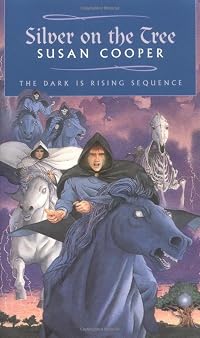
In this conclusion of the tale begun in "Over Sea, Under Stone," Will Stanton, the Welsh boy Bran, and the Drew children try to locate the crystal sword that alone can vanquish the strong forces of Dark.Tags
Recommendations






Member Recommendations
infiniteletters For everything there is a season
Member Reviews
All of the characters from the previous four books in Susan Cooper's marvelous Dark Is Rising Sequence—the three Drew siblings, Will Stanton, Bran Davies, Merriman, John Rowlands, the Black Rider of the Dark—come together in this fifth and final title, as events lead on to the final rising of the Dark, and the Light's great battle to defeat it for all time. Set in the same area of Wales as The Grey King, the book follows the children as they search for a sign from the Lady, before Will and Bran set out on a journey through the Lost Land, in order to seek the fabled crystal sword—the last Thing of Power needed to defeat the Dark. The final section of the book is devoted to a train ride through time to the Midsummer Tree, where the show more final battle rages...
I adored Susan Cooper's series as a child, reading and rereading it countless times, and while Silver On the Tree has never been my favorite of the five books—an honor belonging to The Dark Is Rising, although Greenwitch and The Grey King are also marvelous—I do think it is very good. I have always enjoyed the various story strands here, from Jane being the conduit for the Lady's message to Will and Bran's trek across the Lost Land, guided by Gwion (AKA Taliesin). I have also greatly appreciated certain specific episodes, from the meeting with Owain Glyndŵr to the heartbreaking revelations about Mrs. Rowlands and her true identity. That being said, I've never felt that the various pieces of story here fit together quite as well as they could, and the final confrontation has always felt a little lacking. All of these feelings and impressions were confirmed on this latest reread. I don't want to overstate the case, of course. This is still a wonderfully engaging work of fantasy fiction for children, full of Susan Cooper's rich blend of folkloric allusions and her powerful evocation of place. Although not my favorite, I do strongly recommend it to all readers who have read the previous installments of the series. show less
I adored Susan Cooper's series as a child, reading and rereading it countless times, and while Silver On the Tree has never been my favorite of the five books—an honor belonging to The Dark Is Rising, although Greenwitch and The Grey King are also marvelous—I do think it is very good. I have always enjoyed the various story strands here, from Jane being the conduit for the Lady's message to Will and Bran's trek across the Lost Land, guided by Gwion (AKA Taliesin). I have also greatly appreciated certain specific episodes, from the meeting with Owain Glyndŵr to the heartbreaking revelations about Mrs. Rowlands and her true identity. That being said, I've never felt that the various pieces of story here fit together quite as well as they could, and the final confrontation has always felt a little lacking. All of these feelings and impressions were confirmed on this latest reread. I don't want to overstate the case, of course. This is still a wonderfully engaging work of fantasy fiction for children, full of Susan Cooper's rich blend of folkloric allusions and her powerful evocation of place. Although not my favorite, I do strongly recommend it to all readers who have read the previous installments of the series. show less
I enjoyed this on rereading a lot more than I expected to. i remember being annoyed at the ending, but it kind of makes sense to me now. It might still annoy, but I think it's supposed to hurt and harden. The point of the books is this final battle between Light and Dark, both of which seem to be kinds of magic or influence, but ultimately the whole thing is a kind of housecleaning, leaving the world clear for humans to save or mess up as they will. This is achieved through a serious of quests and encounters, often taking place at different but oddly intersecting time periods, with almost decorous rules and restraints. It's all a bit odd and formalised, but hugely atmospheric and thrilling. I mean the climax is put on pause so that both show more sides can settle a dispute over whether the rules allow a particular player on the field, making it seem a bit like an argument at a children's football match about the birth date or place of residence of a star athlete. It's enjoyably unconventional, and the underlying theme of magic departing leaving humans to fend for themselves is a recurring one, but one whose power seems easier to appreciate when you're older. Bran's decision is genuinely moving, though, but the coerced amnesia still rankles, but then again the Light might have been the Good Guys, but they were always prepared to not be the Nice Guys when it suited them, which is something I like more about these books on rereading. I don't think you could get away with a book where the characters, however likeable, are mostly pushed around from one plot token to the next so passively. A bit more push-back against beloved Grummery would be called for, at a minimum. Still, I loved it. show less
Now that we've reached the finale of the Dark is Rising saga I can say pretty definitively that the titular book is the strongest in the series. It may not be the longest or the most action-filled, but it sets the stage with the mythology of Cooper's world far better than any of the subsequent novels - even this one. Here we see Will and his companions take their final stand against the forces of the Dark (and triumph), but somehow everything seemed a bit lost. In my opinion, this happened because Cooper had to draw so many storylines together to conclude in a logical way, and felt that she had to introduce a new stage for her players to act on: the Lost City. Unlike the previous settings, which were solidly set in reality but gained show more magical underpinnings, the Lost City was too fantastical for the otherwise realistic world she had created. Yes, they explained the back story of the City and its people, and even drew in a recognizable character (Taliesin, the mythical Welsh bard) to help us, but overall it was too strange and the quests that Will and Bran had to accomplish seemed a bit daft. The final battle with the Dark though was rather well done, since each character who we had come to know plays a part in fighting for their world, and it is the humans rather than the Old Ones who become crucial to the defence. Technically, I skipped reading the first novel in the series (Over Sea, Under Stone) as I always viewed it as a prequel to the true starting events of the Dark is Rising, so I still have to go back and read that again before I'm finally done again - and so the circle continues! show less
**This review won’t make much sense if you haven’t read the rest of the series**
This is the final book in The Dark is Rising series and I’ll admit, it was sad to say goodbye. Everything has been building to the final battle between the dark and the light and this book provided a satisfying conclusion. For me, the action sequences have never been the draw. It’s the relationships that make the series a success and in this book, all the characters are together for the first time. Of course, when everyone is finally together there’s a bit of rivalry, but that would happen with any group.
Will has really grown as a character, balancing his life as a young man and as an Old One can’t be easy, but it seems like he has matured. His show more role in the series is actually pretty tragic. It broke my heart when Will tells his brother who he really is and his brother doesn’t believe him. He then has to make him forget what he said. It seems like the people who fight for what’s right often lead such lonely lives.
This book features some wonderful new characters, like Gwion, and some intense scenes, like Will and Bran being chased by the skeletal horse. There’s also a great scene where Will and Merriman travel back in time to when the Romans were in Britain. Also, Jane’s role becomes vital in this book, because she and the Grey Lady are both females, so they have a special connection.
One of the aspects I’ve enjoyed the most from this series is the way the “Dark” attacks people. It’s not about violent attacks or brute force; instead they plant seeds of doubt and prey on people’s fears. They manipulate and tempt and those are much more effective ways of getting what you want. It’s much easier to stand strong against a physical attack than it is to resist the idea that you aren’t good enough or that someone has betrayed you.
One thing I wished I’d known about the series before I began it is that there is a central cast of characters, but they aren’t in every book. The main characters include Simon, Jane and Barney Drew, Merriman Lyon, Will Stanton, Bran and a few others. The first book features the Drew sibling, we don’t meet Will until the second book and the Drew siblings aren’t even in that one. Bran doesn’t show up until the fourth book, etc. It all comes together in the final book, but I think I would have enjoyed the second book much more if I had stopped waiting for the Drew siblings to appear.
All-in-all, I really enjoyed the whole series, especially the references to the Arthur/Merlin legend. I wish I’d read them when I was young, but I’m glad to discover them now.
“‘Why should some of the Riders of the Dark be dressed all in white and the rest all in black?’
Will said reflectively, ‘I don’t know. Maybe because the dark can only reach people at extremes, blinded by their own shining ideas or locked up in the darkness of their own heads.’” show less
This is the final book in The Dark is Rising series and I’ll admit, it was sad to say goodbye. Everything has been building to the final battle between the dark and the light and this book provided a satisfying conclusion. For me, the action sequences have never been the draw. It’s the relationships that make the series a success and in this book, all the characters are together for the first time. Of course, when everyone is finally together there’s a bit of rivalry, but that would happen with any group.
Will has really grown as a character, balancing his life as a young man and as an Old One can’t be easy, but it seems like he has matured. His show more role in the series is actually pretty tragic. It broke my heart when Will tells his brother who he really is and his brother doesn’t believe him. He then has to make him forget what he said. It seems like the people who fight for what’s right often lead such lonely lives.
This book features some wonderful new characters, like Gwion, and some intense scenes, like Will and Bran being chased by the skeletal horse. There’s also a great scene where Will and Merriman travel back in time to when the Romans were in Britain. Also, Jane’s role becomes vital in this book, because she and the Grey Lady are both females, so they have a special connection.
One of the aspects I’ve enjoyed the most from this series is the way the “Dark” attacks people. It’s not about violent attacks or brute force; instead they plant seeds of doubt and prey on people’s fears. They manipulate and tempt and those are much more effective ways of getting what you want. It’s much easier to stand strong against a physical attack than it is to resist the idea that you aren’t good enough or that someone has betrayed you.
One thing I wished I’d known about the series before I began it is that there is a central cast of characters, but they aren’t in every book. The main characters include Simon, Jane and Barney Drew, Merriman Lyon, Will Stanton, Bran and a few others. The first book features the Drew sibling, we don’t meet Will until the second book and the Drew siblings aren’t even in that one. Bran doesn’t show up until the fourth book, etc. It all comes together in the final book, but I think I would have enjoyed the second book much more if I had stopped waiting for the Drew siblings to appear.
All-in-all, I really enjoyed the whole series, especially the references to the Arthur/Merlin legend. I wish I’d read them when I was young, but I’m glad to discover them now.
“‘Why should some of the Riders of the Dark be dressed all in white and the rest all in black?’
Will said reflectively, ‘I don’t know. Maybe because the dark can only reach people at extremes, blinded by their own shining ideas or locked up in the darkness of their own heads.’” show less
"Well, this was exceedingly disappointing. Silver on the Tree encapsulates and highlights every single thing that was frustrating about the series as a whole: the vagueness of the plot, the lack of any real sense of danger, the quests that are not real quests and are more like stumbling unto things, the overwhelming sense that everything is pre-ordained even though everybody talks about free will, the lack of any character development, the romantic obsession with King Arthur.
Actually, I am still not really sure what exactly the Dark is. How is it rising? I mean, I understand, in theory, because evil is something we all know about; but I do not think this was transplanted into the pages that well – it almost feels like there is a show more reliance on pre-knowledge of tropes and ideas and because of this a lot of the world-building, if we can even call it that, is merely glossed over.
Speaking of the Dark and of Evil. There is one particular moment in this book that gave me cause for pause. The Drews witness a young boy being attacked because he is Indian. It is a very in-your-face moment that is later revealed to be a sign that the Dark is indeed rising – as though racism is a result of magical evil and not a social issue. Does this mean that if the Dark had not risen, there would no longer be racism in the world? I’d say this is not the intention here because the idea that humans can be both good and bad and have free will is reinforced throughout. But then I ask you, what is the point of the Dark? Either Racism is a result of the it rising or it’s a human thing. This series has no logic, sometimes.
Stuff happen because they must, tasks and quests are undertaken by rota and challenges are faced in the most anticlimactic way by people remembering things they already know “deep inside” or by reciting poems and singing. We are told over and over again that the main characters are protected and nothing will happen to them and as such, any sense of real menace is taken away and everybody just follows these rules and it is just so boring. The Drew siblings are brought back because they have an essential role to play and that role is… to hold a Sign? It was hinted throughout that Barney is special but that went absolutely nowhere. Worst of all: this is the last book in a series and after a long build up to the Dark rising, the ending comes and it is anticlimactic to the extreme. Did I get it right that the Dark would rise only if they got a mistletoe from a tree? Did that really happen?
Silver on the Tree is not only an unsatisfactory end to a series, in my opinion. I am glad I gave the series a chance and read it but I can’t really say I found this book specially good or interesting.
Interesting quotes that I didn't include in the review:
Actually, I am still not really sure what exactly the Dark is. How is it rising? I mean, I understand, in theory, because evil is something we all know about; but I do not think this was transplanted into the pages that well – it almost feels like there is a show more reliance on pre-knowledge of tropes and ideas and because of this a lot of the world-building, if we can even call it that, is merely glossed over.
Speaking of the Dark and of Evil. There is one particular moment in this book that gave me cause for pause. The Drews witness a young boy being attacked because he is Indian. It is a very in-your-face moment that is later revealed to be a sign that the Dark is indeed rising – as though racism is a result of magical evil and not a social issue. Does this mean that if the Dark had not risen, there would no longer be racism in the world? I’d say this is not the intention here because the idea that humans can be both good and bad and have free will is reinforced throughout. But then I ask you, what is the point of the Dark? Either Racism is a result of the it rising or it’s a human thing. This series has no logic, sometimes.
Stuff happen because they must, tasks and quests are undertaken by rota and challenges are faced in the most anticlimactic way by people remembering things they already know “deep inside” or by reciting poems and singing. We are told over and over again that the main characters are protected and nothing will happen to them and as such, any sense of real menace is taken away and everybody just follows these rules and it is just so boring. The Drew siblings are brought back because they have an essential role to play and that role is… to hold a Sign? It was hinted throughout that Barney is special but that went absolutely nowhere. Worst of all: this is the last book in a series and after a long build up to the Dark rising, the ending comes and it is anticlimactic to the extreme. Did I get it right that the Dark would rise only if they got a mistletoe from a tree? Did that really happen?
Silver on the Tree is not only an unsatisfactory end to a series, in my opinion. I am glad I gave the series a chance and read it but I can’t really say I found this book specially good or interesting.
Interesting quotes that I didn't include in the review:
The future cannot blame the present, just as the present cannot blame the past. The hope is always here, always alive, but only your fierce caring can fan it into a fire to warm the world." show less
Love - or the ability to forge relationships that create loyalty and sacrfice - this is the deciding factor between light and dark. It's not an uncommon theme in fantastical novels. In the end, what saves the light are those bonds forged as people loved. I liked two parts in particular - when John rejects his "wife's" claim of possession declaring that people are free to choose. And again in the end when Merriman tells the children that the earth is left to men, who must choose against their own worst selves in order to keep themselves in the light.
Well it all comes full circle here. The last book in the Dark is Rising series is done. Yet, why do I feel so empty? I thought at first perhaps that this was part of the cost of re-reading a book or series again, that you had read the first time when you were much younger. But no, because thinking back now--this must have been what the longing I felt was all about. Things finally draw to a conclusion at the end of this book, and life moves on, but there's still that lingering "But..." that I just want to end all my sentences with. This was supposed to be the last great adventure, and there are parts that I like and love, but there are too many other things in hindsight that weighed down those feelings and just left me feeling... show more underwhelmed.
I feel like magic in this series is a heavy burden. It doesn't come easily, and it doesn't even feel natural. It's a strain on everyone that uses it, and whenever it inevitably interferes with the normal world and people's lives, the solution is always wiping their memories. I don't know about you, but when I've fought that hard, struggled for so long, for a cause... I don't want my memories of what I fought for to be lost! And in a way, whenever they did that in previous books to other characters that started getting a hint of what was going on, I balked at it! I cringed and grit my teeth. How do you just do that?! Wipe my mind and pretend like it didn't happen! Like you're all too powerful for me to be of any use if I knew! I get it, the Light in this series is trying to protect humanity. But know what? We can fight for ourselves too! Otherwise you wouldn't have used Barney and Jane and Simon! It all started with them! And then we get everyone else just... treating them like they can't do anything in the long run. Worse, like they don't deserve the respect of remembering.
...you just don't do that. Messing with people's heads is one thing, but stealing their memories from them is taking away a part of who they are. Unless they willingly sought it, which I wouldn't praise or be happy about anyway, that's... not something you do.
But going back to this book in particular, things are as they've been in the last few books. We get the entire battle of Light and Dark fought and ended. And it's an obvious ending. One would think it would be. It's again filled with so much going on that you're basically being dragged along for the ride without even getting a chance to experience what's happening. The empathy whenever it comes to these magical things... just isn't there. Whenever we focus on Will or the Light's dealings, even the Dark's dealings, it's cold. Distant. Unfeeling. You can't find anything to cling to that'll give you any feelings at all. Just like Jane, Barney, and Simon throughout many parts of this book: You're just standing there, quietly, watching all the important people talk and completely ignore you. And that's what a lot of this series is when it's all summarized. That is why it gets Two Stars from me. Is it alright? Yeah. It is. But the only good parts, and I mean, the really, actually enjoyable parts, are with the Drew kids. Will, the Light, the Dark, and what have you... they just... make you feel bland.
I think if this story was written more from the Drew's adventures, it would have been far more pleasant and fun. But it just comes off as hard to connect to, full of fancy show and flashy stuff, but there's nothing really concrete or logical in the procession of anything. Things just HAPPEN because they DO and they come whenever they want. You're being dragged behind a speeding car, but you have no idea where you're going. They stop to ask your opinion every once in a blue moon, or during a pit stop, but then you're back in the trunk or something, stashed away until you're needed.
Eh. It's a shame. Because there's a lot of stuff here that is lovely, but it's got no substance. It's just there, and you don't feel anything for it.
So that's the conclusion for this series. It was fine. It was okay. But I wish you got a chance to actually feel like you experienced something worthwhile. Because you're hoping for it throughout the entire series and then... you just get... nothing really. Everything goes back to how it was before you ever started the series. As far as you're concerned, nothing's changed--because nothing feels like it changed.
Give these books a shot if you want. But they're not the best. Definitely not as magical as I once thought they were. Funny that, all my memories from when I was a kid were of the parts where the Drew's or Bran was involved. Huh. Guess it goes to show you what really matters~ And in this case, it's worth it only for them, but even then, just barely. Take it out of a library, but don't buy this at first go. It's not really worth your money, I'm sorry to say. show less
I feel like magic in this series is a heavy burden. It doesn't come easily, and it doesn't even feel natural. It's a strain on everyone that uses it, and whenever it inevitably interferes with the normal world and people's lives, the solution is always wiping their memories. I don't know about you, but when I've fought that hard, struggled for so long, for a cause... I don't want my memories of what I fought for to be lost! And in a way, whenever they did that in previous books to other characters that started getting a hint of what was going on, I balked at it! I cringed and grit my teeth. How do you just do that?! Wipe my mind and pretend like it didn't happen! Like you're all too powerful for me to be of any use if I knew! I get it, the Light in this series is trying to protect humanity. But know what? We can fight for ourselves too! Otherwise you wouldn't have used Barney and Jane and Simon! It all started with them! And then we get everyone else just... treating them like they can't do anything in the long run. Worse, like they don't deserve the respect of remembering.
...you just don't do that. Messing with people's heads is one thing, but stealing their memories from them is taking away a part of who they are. Unless they willingly sought it, which I wouldn't praise or be happy about anyway, that's... not something you do.
But going back to this book in particular, things are as they've been in the last few books. We get the entire battle of Light and Dark fought and ended. And it's an obvious ending. One would think it would be. It's again filled with so much going on that you're basically being dragged along for the ride without even getting a chance to experience what's happening. The empathy whenever it comes to these magical things... just isn't there. Whenever we focus on Will or the Light's dealings, even the Dark's dealings, it's cold. Distant. Unfeeling. You can't find anything to cling to that'll give you any feelings at all. Just like Jane, Barney, and Simon throughout many parts of this book: You're just standing there, quietly, watching all the important people talk and completely ignore you. And that's what a lot of this series is when it's all summarized. That is why it gets Two Stars from me. Is it alright? Yeah. It is. But the only good parts, and I mean, the really, actually enjoyable parts, are with the Drew kids. Will, the Light, the Dark, and what have you... they just... make you feel bland.
I think if this story was written more from the Drew's adventures, it would have been far more pleasant and fun. But it just comes off as hard to connect to, full of fancy show and flashy stuff, but there's nothing really concrete or logical in the procession of anything. Things just HAPPEN because they DO and they come whenever they want. You're being dragged behind a speeding car, but you have no idea where you're going. They stop to ask your opinion every once in a blue moon, or during a pit stop, but then you're back in the trunk or something, stashed away until you're needed.
Eh. It's a shame. Because there's a lot of stuff here that is lovely, but it's got no substance. It's just there, and you don't feel anything for it.
So that's the conclusion for this series. It was fine. It was okay. But I wish you got a chance to actually feel like you experienced something worthwhile. Because you're hoping for it throughout the entire series and then... you just get... nothing really. Everything goes back to how it was before you ever started the series. As far as you're concerned, nothing's changed--because nothing feels like it changed.
Give these books a shot if you want. But they're not the best. Definitely not as magical as I once thought they were. Funny that, all my memories from when I was a kid were of the parts where the Drew's or Bran was involved. Huh. Guess it goes to show you what really matters~ And in this case, it's worth it only for them, but even then, just barely. Take it out of a library, but don't buy this at first go. It's not really worth your money, I'm sorry to say. show less
Members
- Recently Added By
Lists

Favorite Childhood Books
1,651 works; 519 members

NPRs your favorites: 100 Best Ever Teen Novels
237 works; 49 members
Mensa for Kids Excellence in Reading Award Program (Grades 4-6)
64 works; 9 members

Bibliography for Among Others
159 works; 15 members
NPRs Ultimate Backseat Bookshelf: 100 Must-Reads for kids 9-14
222 works; 30 members

Books tagged favorites
390 works; 29 members

Childhood Favorites
427 works; 23 members

Speculative Fiction to Read
706 works; 32 members

Modern Arthurian Fiction
237 works; 16 members

Books I Own But Haven't Read
144 works; 2 members

Books Read in 2014
2,343 works; 89 members

Time travel -- children's/young adult fiction
231 works; 11 members

Books Read in 2015
3,299 works; 129 members

Folio Society
831 works; 48 members

A Rainbow of Books: Colors in the Title
570 works; 24 members

Books Read in 2021
5,361 works; 114 members
Author Information

41+ Works 44,961 Members
Susan Cooper was born in Buckinghamshire, England in May of 1935. She attended Slough Grammar School, and then went on to Somerville College and Oxford. She was the first woman to ever edit the University Magazine, the Cherwell. She graduated from Oxford with an MA in English and went to work for London's The Sunday Times as a reporter on the show more Atticus Column for Ian Flemming. She evenutally made it to features writer, during which time she wrote her first book, "Mandrake," a science fiction story for adults. Soon after the publication of "Mandrake," Cooper wrote the children's story "Over Sea, Under Stone" for a publishing house competition. It would later become the first of a five book series she would become famous for. She left England in 1963 to marry an American professor. Once there, she wrote two more books for adults, "Behind the Golden Gate" a study of America, and "Portrait of an Author" the biography of J. B. Priestley. In 1970, Cooper published "Dawn of Fear" an almost entirely autobiographical book about growing up as a child during the war. Even though Cooper wrote "Over Sea, Under Stone" as a entry for a publishing house competittion, she did not know at the time that it would be the first of her most famous copilation, "The Dark is Rising Series." In 1973 she wrote the second in the five book series, entitled "The Dark is Rising," published more than ten years after the first. In1974, Cooper published Greenwitch, book three, and book four, "The Grey King" a year later. "The Grey King" won the Newberry Medal in 1976. "Silver on the Tree" was the fifth and last book published, completing the series in 1977. After completing the "Dark is Rising" series, Cooper turned to writing for the theater, learning the style from Urjo Kareda at Tarragon Theatres in Toronto. She wrote for Jack Langstaff's "Revels." Her first major play was called "Foxfire," which was written in coolaboration with Hume Cronyn. The play eventually went to Broadway in 1983 and starred Hume Cronyn and Jessica Tandy, who won a Tony for her performance. Cooper then began working on "Seaward," but was interrupted by Jane Fonda, who wanted her to write the screenplay for Harriet Arnow's "The Dollmaker." She wrote the adaptation with Cronyn and won a Humanitas Award for it, while Jane Fonda won the Best Actress Emmy for her role. Cooper also got an Emmy nomination for her adaptation of "Foxfire" for television. "To Dance with the White Dog," a made for tv movie, was the last collaboration of Cooper, Cronyn and Tandy, Tandy having died in '94. IN the '80's and '90's, Cooper wrote the text for many children's picture books such as, "Jethro and the Jumbie" and "Danny and the Kings." 1993 marked her return to the Children's Book List with "The Boggart" and int's follow up "The Boggart and the Monster" in 1997. In 1996, Cooper published a collection of essays on children's literature entitled, "Dreams and Wishes." Over the course of her career, Cooper has written for newspapers, books for children and adults, screen[plays for television and cinema, and a Broadwat play. Today, she lectures on children's literture and continues to write. (Bowker Author Biography) show less
Some Editions
Awards and Honors
Series

Belongs to Publisher Series
Work Relationships
Common Knowledge
- Canonical title*
- Silver on the Tree
- Original title
- Silver on the Tree
- Original publication date
- 1977
- People/Characters
- King Arthur; the Black Rider; Bran Davies; Iestyn Davies; Barnabas "Barney" Drew; Jane Drew (show all 30); Simon Drew; Captain Humphrey Edwards; Owain Glyndŵr; Gwion (Taliesin); Gwyddno (King of the Lost Land); the Lady; Caradog Lewis; Merriman "Merry", "Gumerry" Lyon; Mr. Moore (Richie's father); Richie Moore; Captain Ieuan Morgan; Blodwen Rowlands (the White Rider); Captain Evan Rowlands; John Rowlands; Manny Singh; Alice Stanton; Barbara Stanton (Will's sister); James Stanton (Will's 6th brother); Mary Stanton (Will's sister); Paul Stanton (Will's brother, Robin's twin); Roger Stanton; Stephen Stanton (Will's 2nd brother); Will Stanton (Sign-Seeker); Taliesin
- Important places
- Aberdyfi, Gwynedd, Wales, UK; Buckinghamshire, England, UK; The Lost Land; Wales, UK; Cantre'r Gwaelod, Wales, UK
- Dedication
- For Margaret
- First words
- Will said, turning a page, "He liked woad."
- Quotations
- When the Dark comes rising, six shall turn it back;
Three from the circle, three from the track;
Wood, bronze, iron; water, fire, stone;
Five will return, and one go alone.
Iron for the birthday, bronze carrie... (show all)d long;
Wood from the burning, stone out of song;
Fire in the candle-ring, water from the thaw;
Six Signs the circle, and the grail gone before.
Fire on the mountain shall find the harp of gold
Played to wake the Sleepers, oldest of the old;
Power from the green witch, lost beneath the sea;
All shall find the light at last, silver on the tree.
On the day of the dead, when the year too dies,
Must the youngest open the oldest hills
Through the door of the birds, where the breeze breaks.
There fire shall fly from the raven boy,
And the silver eyes that see... (show all) the wind,
And the light shall have the harp of gold.
By the pleasant lake the Sleepers lie,
On Cadfan’s Way where the kestrels call;
Though grim from the Grey King shadows fall,
Yet singing the golden harp shall guide
To break their sleep and bid them ride.
When light from the lost land shall return,
Six Sleepers shall ride, six Signs shall burn,
And where the midsummer tree grows tall
By Pendragon’s sword the Dark shall fall.
Y maent yr mynyddoedd yn canu,
ac y mae’r arglwyddes yn dod.
Drake is no longer in his hammock, children, nor is Arthur somewhere sleeping, and you may not lie idly expecting the second coming of anybody now, because the world is yours and it is up to you. Now especially since man has ... (show all)the strength to destroy the world, it is the responsibility of man to keep it alive, in all its beauty and marvelous joy. - Last words
- (Click to show. Warning: May contain spoilers.)"We've got a long way to go."
- Disambiguation notice
- This LT work, Silver on the Tree, is Book 5 (of 5 Books) in Susan Cooper's The Dark Is Rising Sequence. Please distinguish it from other single titles in the series, and from any combination(s) of part or all o... (show all)f the series. Thank you.
*Some information comes from Common Knowledge in other languages. Click "Edit" for more information.
Classifications
- Genres
- Fiction and Literature, Fantasy, Kids, Tween
- DDC/MDS
- 823.914 — Literature & rhetoric English & Old English literatures English fiction 1900- 1901-1999 1945-1999
- LCC
- PZ7 .C7878 .S — Language and Literature Fiction and juvenile belles lettres Fiction and juvenile belles lettres Juvenile belles lettres
- BISAC
Statistics
- Members
- 5,488
- Popularity
- 2,436
- Reviews
- 70
- Rating
- (4.03)
- Languages
- 9 — Czech, Dutch, English, Finnish, German, Italian, Spanish, Swedish, Welsh
- Media
- Paper, Audiobook, Ebook
- ISBNs
- 53
- ASINs
- 27