On This Page
Description
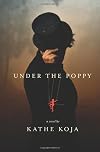
"From a wartime brothel to the intricate high society of 1870s Brussels, "Under the Poppy" is a breakout novel of childhood friends, a love triangle, puppet masters, and reluctant spies. Under the Poppy is a brothel owned by Decca and Rupert. Decca is in love with Rupert but he in turn is in love with her brother, Istvan. When Istvan comes to town, louche puppet troupe in tow, the lines of their age-old desires intersect against a backdrop of approaching war. Hearts are broken when old show more betrayals and new alliances - not just their own - take shape, as the townsmen seek refuge from the onslaught of history by watching the girls of the Poppy cavort onstage with Istvan's naughty puppets. With the war getting too close, Istvan and Rupert abandon the Poppy and find a place in high society where they try to avoid becoming more than puppets themselves in the hands of those they have helped before and who now want to use them again ..."--Jacket. show lessTags
Recommendations









Member Reviews
The unique narrative style of this novel is hard to adjust to initially, but it is almost impossible not to get caught up in the strings of puppet master Istvan and his lover Rupert. The pair of childhood friends, now grown, are surrounded by a motely crew of players, whores, military conspirists, and the social elite, who make for a dramatic mixture of plot twists and intrigues. Ironically, it's not the players or the whores who add the most drama to the mix, but the demanding General and conniving city officials who twist Istvan and Rupert into their war games and plays for power. Afterall, who better to trust with secrets than to those who are already at the centre of the city gossip mill with their brothel come theatre, and who are show more equally as disposable as the whores who frequent the upstairs rooms? What the General and Jurgen Vidor don't count on is the brutal and quick witted survival instinct of two boys who raised eachother among the perils of the urban streets. show less
(Re-posted from http://theturnedbrain.blogspot.com)
How did I even end up with this book? Do you know what it’s about? Puppets. Puppets! Fucking puppets man. I hate puppets. The creep me the hell out. And ‘Under the Poppy’ is just crammed full of them. In the literal sense, in that there is traveling genius puppeteer Istvan who has created and stolen a whole troupe of puppets with which he performs well received (and oft times risqué) shows all across 1800s Europe. But also in the metaphorical sense, in that Koja spends a lot of time examining who controls a mans strings, and what lengths one must go to cut them.
And it’s not just the puppets. This book? Is literary fiction. Do you see me reading literary fiction? No. I read show more about space ships and swords and post apocalyptic landscapes. And this book? Has none of those things. There’s nothing speculative at all, it’s not like, say, ‘The Book Thief’ where on the one hand it’s all literary but on the other hand it’s narrated by death, no, everything in ‘Under the Poppy’ is as it seems. (Except for Istvan’s creepy ass fucking puppets).
Again I ask, how did I end up with this puppet filled tome of magic-less literature? Actually, no, that’s not the right question. The right question how, given the abundance of puppets and lack of dragons, did I come to love this book so much? Because guys, seriously, I loved this book.
It barely even has a plot for crying out loud! Well, no, actually I think it does have a plot, I think it’s just that I wasn’t quite smart enough to follow it. Or maybe I was too distracted by the decadent prose to keep track of it? Ok, so, we’re in a brothel in the year eighteen something or other, somewhere in Europe, and there’s some sort of war going on. Rupert and Decca are the powners of said brothel, and it’s all business as usual until Decca’s brother Istvan (and his puppets) show up out of the blue. It turns out Dia is in love with Rupert, but Rupert loves Istvan, and Istvan loves Rupert too except that they’ve been parted for reasons most mysterious… Also they need to figure out a way to keep the brothel safe from the encroaching war.
At any given point in this book I was never entirely sure what was going in. There were a great many political machinations, and there a were a bunch of flashbacks to Rupert, Decca and Istvan’s childhoods as Oliver Twist-esque street urchins and then, just when I thought maybe I was getting the hang of it, the first half ends and the second half is basically a sequel set years in the future. Actually this second half was a lot easier for me to follow, and I don’t know if was written to be so, or if I was just settling into the unique grove of Koja’s prose.
In any case, it never really mattered to me that I was always a little lost. This book reminded me of a modernist painting, wherein the artist suggests what the subject is without ever actually coming out and painting. Koja hands nothing to the reader. She revels in the details, the smells and sounds of her European setting, and it’s from this that our understanding of what’s going on is formed. Each sentence is like a rich desert, layered and beautiful, and I don’t think I’ve ever enjoyed a book so much on a purely mechanical level.
The theme of masters and puppets is always at play in the book, although never obtrusively. I found that I didn’t notice it so much as I was reading, but after I was done I find myself thinking about what Koja was saying a lot. Who is the master of who, indeed.
Really there is nothing I didn’t love about this book. The ending was perfect and bittersweet, the characters to a one were exquisitely crafted, and the dialogue was a delight to read. It had that witty nature to it that only books set in bygone centuries seem to be able to get away with, like a well crafted dance that we’ve forgotten the steps to. Plus, Istvan and Rupert! Talk about your epic romance. Seriously.
What else can I say, but don’t let the disturbing puppets keep you from this truly amazing book. show less
How did I even end up with this book? Do you know what it’s about? Puppets. Puppets! Fucking puppets man. I hate puppets. The creep me the hell out. And ‘Under the Poppy’ is just crammed full of them. In the literal sense, in that there is traveling genius puppeteer Istvan who has created and stolen a whole troupe of puppets with which he performs well received (and oft times risqué) shows all across 1800s Europe. But also in the metaphorical sense, in that Koja spends a lot of time examining who controls a mans strings, and what lengths one must go to cut them.
And it’s not just the puppets. This book? Is literary fiction. Do you see me reading literary fiction? No. I read show more about space ships and swords and post apocalyptic landscapes. And this book? Has none of those things. There’s nothing speculative at all, it’s not like, say, ‘The Book Thief’ where on the one hand it’s all literary but on the other hand it’s narrated by death, no, everything in ‘Under the Poppy’ is as it seems. (Except for Istvan’s creepy ass fucking puppets).
Again I ask, how did I end up with this puppet filled tome of magic-less literature? Actually, no, that’s not the right question. The right question how, given the abundance of puppets and lack of dragons, did I come to love this book so much? Because guys, seriously, I loved this book.
It barely even has a plot for crying out loud! Well, no, actually I think it does have a plot, I think it’s just that I wasn’t quite smart enough to follow it. Or maybe I was too distracted by the decadent prose to keep track of it? Ok, so, we’re in a brothel in the year eighteen something or other, somewhere in Europe, and there’s some sort of war going on. Rupert and Decca are the powners of said brothel, and it’s all business as usual until Decca’s brother Istvan (and his puppets) show up out of the blue. It turns out Dia is in love with Rupert, but Rupert loves Istvan, and Istvan loves Rupert too except that they’ve been parted for reasons most mysterious… Also they need to figure out a way to keep the brothel safe from the encroaching war.
At any given point in this book I was never entirely sure what was going in. There were a great many political machinations, and there a were a bunch of flashbacks to Rupert, Decca and Istvan’s childhoods as Oliver Twist-esque street urchins and then, just when I thought maybe I was getting the hang of it, the first half ends and the second half is basically a sequel set years in the future. Actually this second half was a lot easier for me to follow, and I don’t know if was written to be so, or if I was just settling into the unique grove of Koja’s prose.
In any case, it never really mattered to me that I was always a little lost. This book reminded me of a modernist painting, wherein the artist suggests what the subject is without ever actually coming out and painting. Koja hands nothing to the reader. She revels in the details, the smells and sounds of her European setting, and it’s from this that our understanding of what’s going on is formed. Each sentence is like a rich desert, layered and beautiful, and I don’t think I’ve ever enjoyed a book so much on a purely mechanical level.
The theme of masters and puppets is always at play in the book, although never obtrusively. I found that I didn’t notice it so much as I was reading, but after I was done I find myself thinking about what Koja was saying a lot. Who is the master of who, indeed.
Really there is nothing I didn’t love about this book. The ending was perfect and bittersweet, the characters to a one were exquisitely crafted, and the dialogue was a delight to read. It had that witty nature to it that only books set in bygone centuries seem to be able to get away with, like a well crafted dance that we’ve forgotten the steps to. Plus, Istvan and Rupert! Talk about your epic romance. Seriously.
What else can I say, but don’t let the disturbing puppets keep you from this truly amazing book. show less
I've found it exceedingly difficult to write an adequate review of this book, since there is so much crammed into it, so many small threads and details and private desires and personal grief. Kathe Koja writes a ninteenth century European brothel like she has lived in one, and her prose is what makes Under the Poppy so fascinating. It is dizzying, ambiguous, spicy, nearly stream of consciousness at times. It is also what makes the novel a frustrating read at times, because it feels like thoughts go in circles and circles, and Decca on page 221 is in the exact same position as Decca on page 5. But Decca, Rupert, and Istvan are fascinating. And if you are interested in splendid writing, in brassy bravura fare, do check the book out. It show more may not be the type of book you read in a single sitting, but you sip it in bits and pieces, and bathe yourself in its lushness. show less
 This review was written for LibraryThing Early Reviewers.
Under the Poppy, Kathe Koje
Koje explores the effects of poverty, war, class conflict, and the power and limits of love in a bleak milieu. Her fictional Europe is fantastical, but not fantasy. The only magic is Istvan’s art - his puppets and cynical mockery - and ultimately, the redemptive power of love.
There are no hearts of gold at the Poppy, the brothel run by Decca, Istvan’s sister, and Rupert. There is thievery, scandal, conflict, and worry. When Istvan arrives, he threatens the brittle and static situation. The damaged characters fail miserably at communication, wounding each other all the more in the process. There were points at which I felt the work partook of horror more than fantasy, so dire becomes the situation.
And yet . show more . . and yet. . .Koje draws these mostly unlikeable characters so skillfully that I became immersed in the story.
This isn’t a world where male/male love goes unremarked. In fact, nothing goes unremarked by the “toffs”, or “quality”, Istvan’s sardonic reference to the upper class men who slum at the Poppy. Against a backdrop of approaching war, war’s deprivations and its’ aftermath, the Poppy and its denizens fight for their autonomy, whether money and property, or the open road.
The women characters are well drawn but feature mostly as helpmeets and co-conspirators secondary to the plot, which revolves around the relationship of Istvan and Rupert. The point of view changes constantly, rotating through the cast while concentrating on the two men, with an epistolary luster to the narrative from time to time.
This is beautifully written, but not a world I’d be in a rush to revisit. show less
Koje explores the effects of poverty, war, class conflict, and the power and limits of love in a bleak milieu. Her fictional Europe is fantastical, but not fantasy. The only magic is Istvan’s art - his puppets and cynical mockery - and ultimately, the redemptive power of love.
There are no hearts of gold at the Poppy, the brothel run by Decca, Istvan’s sister, and Rupert. There is thievery, scandal, conflict, and worry. When Istvan arrives, he threatens the brittle and static situation. The damaged characters fail miserably at communication, wounding each other all the more in the process. There were points at which I felt the work partook of horror more than fantasy, so dire becomes the situation.
And yet . show more . . and yet. . .Koje draws these mostly unlikeable characters so skillfully that I became immersed in the story.
This isn’t a world where male/male love goes unremarked. In fact, nothing goes unremarked by the “toffs”, or “quality”, Istvan’s sardonic reference to the upper class men who slum at the Poppy. Against a backdrop of approaching war, war’s deprivations and its’ aftermath, the Poppy and its denizens fight for their autonomy, whether money and property, or the open road.
The women characters are well drawn but feature mostly as helpmeets and co-conspirators secondary to the plot, which revolves around the relationship of Istvan and Rupert. The point of view changes constantly, rotating through the cast while concentrating on the two men, with an epistolary luster to the narrative from time to time.
This is beautifully written, but not a world I’d be in a rush to revisit. show less
Probably my favorite novel from 2010. A complex (alternate?) history of a brothel in Brussels or thereabouts battered by the whims of powerful men making big decisions. Koja is a wonderful writer, and I hope she's begun a new leg of her career and style here. What is especially interesting in this novel is the tension between political intrigue and romantic intrigue - and how they mirror and are caused by each other. Rupert is a rich character, though like many of the others in the novel, he evolves little over its progression. Loves new and old level him, and Koja writes better than anyone I know about the dual seductions of love and performance. I've heard that she's putting on a stage adaptation of this novel, and I really want to show more see it and rock out to it. show less
This was a much slower paced book than I was expecting based on the description. It was more of a slice-of-life in a particular era, in particular cities, than a gripping story of jealousy, war, and blackmail. A portrait of a day to day existance occasionally broken up by action. Not something I would care to read more than once, and as none of the characters caught my interest, I probably would not have finished it if I had not received it through ER. It wasn't bad and might please somebody else, but it bored me and I suspect others may assume as I did that it's a very different kind of book, based on the cover blurb.
This review was written for LibraryThing Early Reviewers.I was very interested when Kathe Koja's Under the Poppy was offered through LibraryThing's Early Reviewers program. Although I am unfamiliar with Koja's previous work, she has been nominated for and has won several awards and honors, including a 1991 Bram Stoker Award for her first novel, The Cipher. Under the Poppy is a novel meant for adults due to its subject matter--a historical tale set in the high society, theaters, and brothels of 1870s Belgium--and that is exactly what appealed to me. So, I was very happy when the Almighty Algorithm paired me up with Under the Poppy. I was even more excited when my review copy arrived and I discovered that Koja was a native of Detroit which really isn't that far from where I live now.
Located in show more an out-of-the-way town near Brussels is a unique brothel called Under the Poppy. In addition to its bawdy stage shows, the Poppy specializes in making its patrons' fantasies realities, adding elements of role-play instead of just providing a good fuck. The whores' performances in the front of the house and behind closed doors attract clients with sometimes dubious proclivities who are willing to pay good money to indulge in their perversions. Decca and Rupert, co-owners of the Poppy, take good care of the men and women who work there and they all form an odd sort of family. Decca is in love with Rupert while he is in love with her missing brother and puppet-master Istvan with whom he grew up on the streets. When Istvan suddenly appears at the Poppy and with war looming on the horizon, everyone's lives are thrown into turmoil. Even more troubles closely follow Istvan's arrival as dangerous and powerful men become involved with the affairs of the Poppy and its people.
I really wanted to see Rupert and Istvan happy together, but the time and place make their relationship difficult at best not to mention their own personal capriciousness and stubbornness getting in the way. Once they've been reunited, the war (which I assume was the Franco-Prussian war--I don't remember it ever being explicitly stated) only signifies the start of their troubles. At times the book conveys an almost overwhelming sense of dread and impending heartbreak. There's plenty of drama happening both onstage and off as the characters deal with blackmail, betrayal, and deceit. With an intricate web of manipulation and performance, it is difficult for the men to know who is really working the puppet strings in their lives, but it is certain that they are not always the ones in control. Ultimately though, Under the Poppy is a love story.
I loved the story, I loved the characters with all of their failings and charms, I loved the gritty setting. By all rights I should have loved Under the Poppy. But I didn't, and it was mostly because of the writing style. A large part of the novel is written in a highly-stylized, third-person present. While occasionally stunningly beautiful in its phrasing, overall I found it difficult to follow and the dialogue confused. However, the sections interspersed throughout the book narrated by secondary characters were marvelous. Looking beyond the style, I really did like Under the Poppy. Apparently there is also a stage production planned for the Detroit Opera House which I wouldn't mind seeing. Taking place in a historically vivid setting, Under the Poppy is an emotionally captivating story that is unfortunately hindered by its presentation in the novel.
Experiments in Reading show less
Located in show more an out-of-the-way town near Brussels is a unique brothel called Under the Poppy. In addition to its bawdy stage shows, the Poppy specializes in making its patrons' fantasies realities, adding elements of role-play instead of just providing a good fuck. The whores' performances in the front of the house and behind closed doors attract clients with sometimes dubious proclivities who are willing to pay good money to indulge in their perversions. Decca and Rupert, co-owners of the Poppy, take good care of the men and women who work there and they all form an odd sort of family. Decca is in love with Rupert while he is in love with her missing brother and puppet-master Istvan with whom he grew up on the streets. When Istvan suddenly appears at the Poppy and with war looming on the horizon, everyone's lives are thrown into turmoil. Even more troubles closely follow Istvan's arrival as dangerous and powerful men become involved with the affairs of the Poppy and its people.
I really wanted to see Rupert and Istvan happy together, but the time and place make their relationship difficult at best not to mention their own personal capriciousness and stubbornness getting in the way. Once they've been reunited, the war (which I assume was the Franco-Prussian war--I don't remember it ever being explicitly stated) only signifies the start of their troubles. At times the book conveys an almost overwhelming sense of dread and impending heartbreak. There's plenty of drama happening both onstage and off as the characters deal with blackmail, betrayal, and deceit. With an intricate web of manipulation and performance, it is difficult for the men to know who is really working the puppet strings in their lives, but it is certain that they are not always the ones in control. Ultimately though, Under the Poppy is a love story.
I loved the story, I loved the characters with all of their failings and charms, I loved the gritty setting. By all rights I should have loved Under the Poppy. But I didn't, and it was mostly because of the writing style. A large part of the novel is written in a highly-stylized, third-person present. While occasionally stunningly beautiful in its phrasing, overall I found it difficult to follow and the dialogue confused. However, the sections interspersed throughout the book narrated by secondary characters were marvelous. Looking beyond the style, I really did like Under the Poppy. Apparently there is also a stage production planned for the Detroit Opera House which I wouldn't mind seeing. Taking place in a historically vivid setting, Under the Poppy is an emotionally captivating story that is unfortunately hindered by its presentation in the novel.
Experiments in Reading show less
This review was written for LibraryThing Early Reviewers.Members
- Recently Added By
Lists

Gaslamp Fantasy
87 works; 15 members

New Weird Fiction
69 works; 12 members
Author Information

57+ Works 3,202 Members
Kathe Koja was born in Detroit, Michigan in 1960. Her first novel, The Cipher, won the Bram Stoker Award for Best First Novel in 1992 and the Locus Award. She also won a Deathrealm Award for Strange Angels. Her other adult novels include Bad Brains, Skin, Kink, and Under the Poppy. She also writes young adult novels including Straydog, Buddha Boy, show more The Blue Mirror, and Going Under. (Bowker Author Biography) show less
Awards and Honors
Awards
Series

Common Knowledge
- Canonical title
- Under the Poppy
- People/Characters
- Decca; Rupert Bok; Istvan
- Important places
- Brussels, Belgium; Under the Poppy Brothel
Classifications
- Genres
- Fiction and Literature, General Fiction, LGBTQ+, Historical Fiction, Fantasy, Romance
- DDC/MDS
- 813.54 — Literature & rhetoric American literature in English American fiction in English 1900-1999 1945-1999
- LCC
- PS3561 .O376 .U53 — Language and Literature American literature American literature Individual authors 1961-
- BISAC
Statistics
- Members
- 244
- Popularity
- 133,243
- Reviews
- 20
- Rating
- (3.27)
- Languages
- English
- Media
- Paper, Audiobook, Ebook
- ISBNs
- 4
- ASINs
- 4