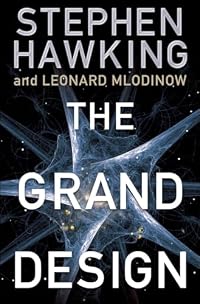
The Grand Design
by Stephen Hawking, Leonard Mlodinow
On This Page
Description
Along with Caltech physicist Mlodinow (The Drunkard's Walk), University of Cambridge cosmologist Hawking (A Brief History of Time) deftly mixes cutting-edge physics to answer three key questions-- Why is there something rather than nothing? Why do we exist? Why this particular set of laws and not some other?-- and explains that scientists are approaching what is called "M-theory," a collection of overlapping theories (including string theory) that fill in many (but not all) the blank spots show more in quantum physics. This collection is known as the "Grand Unified Field Theories." show lessTags
Recommendations
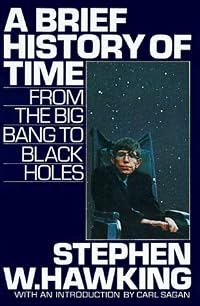
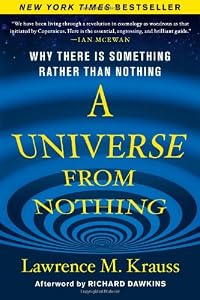
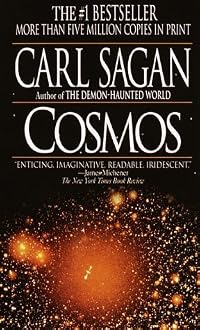
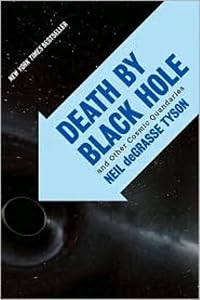

Member Recommendations
Limelite A lot more of the physics, but also exceptionally clear and graspable.
themulhern "Aristotle Leads the Way" has a more objective discussion of Greek scientific thought along with lots of great pictures.
Member Reviews
In which we meet yet another first-class scientist who wishes to self-identify as a second-class philosopher and a comedian from the back end of steerage.
Since few will buy A Grand Design for its wit we can forgive Stephen Hawking's appalling attempts to be funny, but it's not so easy to forgive his philosophical ignorance. Certain physical scientists might be better off unacquainted with the modern philosophy of science (though those who know it possess a welcome sense of perspective and humility). But not world-renowned cosmologists. Their field continually bumps up against the boundary of what science even is (and it doesn't have a "no-boundary condition", whatever that might be).
So when Stephen Hawking claims that "philosophy has show more not kept up with modern science, especially physics" it suggests not only a lack of perspective and humility, but that Hawking has been skipping on some required reading. Especially since, having written off the discipline, Hawking seems barely acquainted with it. He mentions few philosophers more recent than Rene Descartes (d. 1650). So it is hard to know who he thinks hasn't kept up.
Particularly when Hawking's first grand pronouncement is "model-dependent reality": the idea that there may be alternative ways to model the same physical situation with fundamentally different elements and concepts. "If [such different models] accurately predict the same events, one cannot be said to be more real than the other." Physics has, apparently, been forced into this gambit following recent failures to get unifying calculations to work themselves out. In any case it isn't quite the neat trick Hawking thinks it is.
Firstly, while model-dependent reality might be news to Stephen Hawking (he seems to think it the fruit of modern physics' womb) the philosophers he hasn't been reading have been talking about it for years, if not centuries, to the constant sound of scientists' excoriations. It is even part of Descartes' philosophical fabric (and, more tellingly, Darwin's , but picking a fight with modern evolutionists, while fun, is a story for another day). That is to say, it sounds like it is the physicists who are finally catching up with the philosophers and not the other way around.
Secondly, in the grand game of philosophers' football that Cosmology has become, the model-dependent reality play is something of a surrender before kick-off. For if it is true that the same phenomenon can be plausibly accounted for in multiple, "incommensurate" (© Thomas Kuhn) ways, then the hard question is not about the truth in itself of any model, but the criteria for determining which of the (potentially infinite) models available we should choose in the first place.
This question is not one for physics, but metaphysics. It necessarily exists outside any given model (© Paul Feyerabend). Here we meet our old friend, Occam's Razor. This isn't a scientific principle at all, but a pragmatic rule of thumb with no intellectual pedigree: all else being equal, take the simplest explanation. Occam's Razor is a favourite instrument for the torture of hapless Christians by grumpy biologists: all your tricksy afterlife wagers and so on fail because evolution is so much less complicated and has so much more explanatory value than the idea that an omniscient, intangible, invisible, omnipotent entity pulling strings we can't see to make the whole thing go.
But, alas, in seeking a grand unification of things that really aren't asking to be unified, cosmology reveals some almighty snags. Unification under Hawking's programme, if it is even possible, involves slaughtering some big old sacred cows. To name a few: causality, the conventional conception of space-time; the idea that scientific theories should be based on observable data and their outcomes testable. It bows to some truly heinous false idols too. For example: seven invisible space-time dimensions, a huge mass of invisible dark matter, an arbitrary cosmological constant, a potentially infinite array of unobservable universes which wink in and out of existence courtesy of a mathematically inferred "vacuum energy"). Hawking doesn't propose solutions to these problems, but seems to think they're a fair price for achieving grand unification.
I'm not so sure: other than intellectual bragging rights, the resulting unified theory has no obvious marginal utility. And it has political drawbacks: believing one's model to be the truth carries potentially unpleasant implications for the suppression of those who don't.
There are practical drawbacks, too. We are asked to reject existing theories, which still have quite a lot of utility, in favour of something that it infinitely harder to understand and work with. The accelerating expansion of the universe without any apparent acting force seems to violate Newton's second law of motion. Without an outrageous end-run, the first nanosecond of the Big Bang (wherein the universe is obliged to expand in size by ten squillion kilometres - i.e. far faster than the speed of light) seems to violate the fundamentals of general relativity. String theory requires seven necessarily unobservable space-time dimensions and/or entirely different universes, and even then doesn't yield a single theory but millions of the blighters, all slightly inconsistent with each other (hence the appeal to "model dependent reality).
From the camp which wielded Occam's Razor so heartily against the Christians, this seems a bit rich. If these are the options, then the razor might slice in favour of the big guy with the beard.
But these aren't the options. We could save a lot of angst, and perhaps could have avoided digging trillion dollar circular tunnel under Geneva, had we employed model dependent reality the way the philosophers saw it and not the scientists (and shouldn't we call a spade a spade and label it cognitive relativism, by the way?). Since it crossed the event horizon of observability modern cosmology has become arcane, stunt-mathematics. If there were a chance that it might deliver time-travel, hyperspace or a tool for locating wormholes to other galaxies or universes then one could see the point in this intellectual onanism. But none of that seems to be allowed. So we should therefore ask the question "but why? What's the point? What progress do you promise that we can't achieve some other way?" No one seems to be able to answer that question.
But if we park it, what's left of Stephen Hawking's latest book is some pretty ropey jokes. show less
Since few will buy A Grand Design for its wit we can forgive Stephen Hawking's appalling attempts to be funny, but it's not so easy to forgive his philosophical ignorance. Certain physical scientists might be better off unacquainted with the modern philosophy of science (though those who know it possess a welcome sense of perspective and humility). But not world-renowned cosmologists. Their field continually bumps up against the boundary of what science even is (and it doesn't have a "no-boundary condition", whatever that might be).
So when Stephen Hawking claims that "philosophy has show more not kept up with modern science, especially physics" it suggests not only a lack of perspective and humility, but that Hawking has been skipping on some required reading. Especially since, having written off the discipline, Hawking seems barely acquainted with it. He mentions few philosophers more recent than Rene Descartes (d. 1650). So it is hard to know who he thinks hasn't kept up.
Particularly when Hawking's first grand pronouncement is "model-dependent reality": the idea that there may be alternative ways to model the same physical situation with fundamentally different elements and concepts. "If [such different models] accurately predict the same events, one cannot be said to be more real than the other." Physics has, apparently, been forced into this gambit following recent failures to get unifying calculations to work themselves out. In any case it isn't quite the neat trick Hawking thinks it is.
Firstly, while model-dependent reality might be news to Stephen Hawking (he seems to think it the fruit of modern physics' womb) the philosophers he hasn't been reading have been talking about it for years, if not centuries, to the constant sound of scientists' excoriations. It is even part of Descartes' philosophical fabric (and, more tellingly, Darwin's , but picking a fight with modern evolutionists, while fun, is a story for another day). That is to say, it sounds like it is the physicists who are finally catching up with the philosophers and not the other way around.
Secondly, in the grand game of philosophers' football that Cosmology has become, the model-dependent reality play is something of a surrender before kick-off. For if it is true that the same phenomenon can be plausibly accounted for in multiple, "incommensurate" (© Thomas Kuhn) ways, then the hard question is not about the truth in itself of any model, but the criteria for determining which of the (potentially infinite) models available we should choose in the first place.
This question is not one for physics, but metaphysics. It necessarily exists outside any given model (© Paul Feyerabend). Here we meet our old friend, Occam's Razor. This isn't a scientific principle at all, but a pragmatic rule of thumb with no intellectual pedigree: all else being equal, take the simplest explanation. Occam's Razor is a favourite instrument for the torture of hapless Christians by grumpy biologists: all your tricksy afterlife wagers and so on fail because evolution is so much less complicated and has so much more explanatory value than the idea that an omniscient, intangible, invisible, omnipotent entity pulling strings we can't see to make the whole thing go.
But, alas, in seeking a grand unification of things that really aren't asking to be unified, cosmology reveals some almighty snags. Unification under Hawking's programme, if it is even possible, involves slaughtering some big old sacred cows. To name a few: causality, the conventional conception of space-time; the idea that scientific theories should be based on observable data and their outcomes testable. It bows to some truly heinous false idols too. For example: seven invisible space-time dimensions, a huge mass of invisible dark matter, an arbitrary cosmological constant, a potentially infinite array of unobservable universes which wink in and out of existence courtesy of a mathematically inferred "vacuum energy"). Hawking doesn't propose solutions to these problems, but seems to think they're a fair price for achieving grand unification.
I'm not so sure: other than intellectual bragging rights, the resulting unified theory has no obvious marginal utility. And it has political drawbacks: believing one's model to be the truth carries potentially unpleasant implications for the suppression of those who don't.
There are practical drawbacks, too. We are asked to reject existing theories, which still have quite a lot of utility, in favour of something that it infinitely harder to understand and work with. The accelerating expansion of the universe without any apparent acting force seems to violate Newton's second law of motion. Without an outrageous end-run, the first nanosecond of the Big Bang (wherein the universe is obliged to expand in size by ten squillion kilometres - i.e. far faster than the speed of light) seems to violate the fundamentals of general relativity. String theory requires seven necessarily unobservable space-time dimensions and/or entirely different universes, and even then doesn't yield a single theory but millions of the blighters, all slightly inconsistent with each other (hence the appeal to "model dependent reality).
From the camp which wielded Occam's Razor so heartily against the Christians, this seems a bit rich. If these are the options, then the razor might slice in favour of the big guy with the beard.
But these aren't the options. We could save a lot of angst, and perhaps could have avoided digging trillion dollar circular tunnel under Geneva, had we employed model dependent reality the way the philosophers saw it and not the scientists (and shouldn't we call a spade a spade and label it cognitive relativism, by the way?). Since it crossed the event horizon of observability modern cosmology has become arcane, stunt-mathematics. If there were a chance that it might deliver time-travel, hyperspace or a tool for locating wormholes to other galaxies or universes then one could see the point in this intellectual onanism. But none of that seems to be allowed. So we should therefore ask the question "but why? What's the point? What progress do you promise that we can't achieve some other way?" No one seems to be able to answer that question.
But if we park it, what's left of Stephen Hawking's latest book is some pretty ropey jokes. show less
"Philosophy is dead. Philosophy has not kept up with modern developments in science, particularly physics." From the first page Stephen Hawking destroys some cherished myths. You can read for yourself what he has to say about free will, but it is also somewhat shocking.
In a very short book, Hawking manages to take on the ultimate questions of life, the universe, and everything (the answer is not 42) and while he doesn't completely answer the questions, he makes a case for some answers to the "whys" that traditionally have been the realm of philosophers.
While there is no heavy mathematics in the book, it is a challenging read with a lot of topics which require one to think somewhat differently about the universe than most of us are used show more to. While I never re-read books, I will probably make an exception for this book, and feel that I need to re-read it to glean more understanding of the theories he presents.
All-in-all I highly recommend this book for those who want a greater understanding of modern physics, and the early scientists whose work has been built upon to produce modern physics. It is a concise history of physics with emphasis on the quest for a grand unified theory that will bring together all of the specific theories that apply in limited environments. show less
In a very short book, Hawking manages to take on the ultimate questions of life, the universe, and everything (the answer is not 42) and while he doesn't completely answer the questions, he makes a case for some answers to the "whys" that traditionally have been the realm of philosophers.
While there is no heavy mathematics in the book, it is a challenging read with a lot of topics which require one to think somewhat differently about the universe than most of us are used show more to. While I never re-read books, I will probably make an exception for this book, and feel that I need to re-read it to glean more understanding of the theories he presents.
All-in-all I highly recommend this book for those who want a greater understanding of modern physics, and the early scientists whose work has been built upon to produce modern physics. It is a concise history of physics with emphasis on the quest for a grand unified theory that will bring together all of the specific theories that apply in limited environments. show less
I read this immediately after reading The Universe in a Nutshell (2001). I read Black Holes and Baby Universes a few years ago. I have read Brian Greene's works, so felt rather up-to-date on where quantum physics was at. I found this book to be more accessible than Greene's work, and a more interesting read than Nutshell since Hawking is contemplating theoretical physics' meaning for philosophy. That philosophical bent is a real problem for physics since the scientific method, which Hawking holds favorably in The Grand Design, requires hypothesis testing. For more on these problems, and a large criticism of Hawking I plan to read Lee Smolin's The Trouble with Physics.
The author begins by stating that philosophy has not kept up with show more science, particularly modern physics. Hawking gives a brief history of science with an emphasis on physics and a look at how philosophy looking at science developed from Aristotle (rejected atoms b/c soulless) to Descartes (believed that the body was machine governed by laws, but the soul was not) to Newton (discovered many laws of the universe but held that God was free to intervene against them).
If there are natural laws, can/does God violate them to perform miracles? That's an important question, as is the question of free will and determinism. Where does free will come from? If physicists nail down a Theory of Everything, will everything be deterministic henceforth?
Hawking writes the laws of (this) universe arose from the big bang, and lengthily establishes what those laws are. But the universe has an infinite number of histories and contingencies. Wrap your head around this:
"the probability amplitude that the universe is now in a particular state is arrived at by adding up the contributions from all the histories that satisfy the no-boundary condition and end in the state in question. In cosmology, in other words, one shouldn't follow the history of the universe from the bottom up because that assumes there's a single history, with a well-defined starting point and evolution. Instead, one should trace the histories from the top down, backward from the present time...The histories that contribute to the Feynman sum don't have an independent existence, but depend on what is being measured. We create history by our observation, rather than our history creating us...histories in which the moon is made of cheese do not contribute to the present state of our universe, though they might contribute to others. That might sound like science fiction, but it isn't."
Hawking explains M-theory, p-branes, and other developments in quantum physics. The last pages of the book are the most important as Hawking contends that M theory explains how a universe can arise from nothing. But it does not lead to determinism in the sense that it would be mathematically impossible to calculate the movements of any one being. So, a theory of everything that is not what Hawking desired to find in Black Holes and Baby Universes.
This book seems much more consequential than Nutshell. I found it more entertaining and thought-provoking throughout. I would very much like to read Lee Smolin's The Trouble with Physics, a critique of Hawking's work. For now, 4 stars out of 5 show less
The author begins by stating that philosophy has not kept up with show more science, particularly modern physics. Hawking gives a brief history of science with an emphasis on physics and a look at how philosophy looking at science developed from Aristotle (rejected atoms b/c soulless) to Descartes (believed that the body was machine governed by laws, but the soul was not) to Newton (discovered many laws of the universe but held that God was free to intervene against them).
If there are natural laws, can/does God violate them to perform miracles? That's an important question, as is the question of free will and determinism. Where does free will come from? If physicists nail down a Theory of Everything, will everything be deterministic henceforth?
Hawking writes the laws of (this) universe arose from the big bang, and lengthily establishes what those laws are. But the universe has an infinite number of histories and contingencies. Wrap your head around this:
"the probability amplitude that the universe is now in a particular state is arrived at by adding up the contributions from all the histories that satisfy the no-boundary condition and end in the state in question. In cosmology, in other words, one shouldn't follow the history of the universe from the bottom up because that assumes there's a single history, with a well-defined starting point and evolution. Instead, one should trace the histories from the top down, backward from the present time...The histories that contribute to the Feynman sum don't have an independent existence, but depend on what is being measured. We create history by our observation, rather than our history creating us...histories in which the moon is made of cheese do not contribute to the present state of our universe, though they might contribute to others. That might sound like science fiction, but it isn't."
Hawking explains M-theory, p-branes, and other developments in quantum physics. The last pages of the book are the most important as Hawking contends that M theory explains how a universe can arise from nothing. But it does not lead to determinism in the sense that it would be mathematically impossible to calculate the movements of any one being. So, a theory of everything that is not what Hawking desired to find in Black Holes and Baby Universes.
This book seems much more consequential than Nutshell. I found it more entertaining and thought-provoking throughout. I would very much like to read Lee Smolin's The Trouble with Physics, a critique of Hawking's work. For now, 4 stars out of 5 show less
Stephen Hawking's A Brief History of Time reportedly was one of the most purchased, most displayed, and least read scientific books of the late 1980s. Although the book contained no mathematics and minimal technical vocabulary, many readers found its concepts difficult to comprehend. (In fact, none other than a spokesman for the Pope mistakenly proclaimed that it demonstrated the necessity for a belief in God as the divine entity that began the universe).
The Grand Design succeeds where that book arguably did not, and what's more, brings to a general readership the stunning implications of contemporary physics and cosmology. The book is clearly written, contains helpful diagrams, and enough corny humor to keep things light. Any show more difficulties in comprehension reflect the fact that the concepts themselves are counter-intuitive and far from easy to grasp. The universe turns out to be a very strange place indeed; and in fact, if the authors are correct, ours is but one of an infinite number of universes, in which every conceivable event has happened.
Given that The Grand Design removes the necessity for a divine creator, one may feel compelled to ask: what percentage of the infinite number of universes would include a god or gods? And then, an unrelated question. With an infinite number of universes (many of which apparently lasted no more than a few seconds), do we not have a process of natural selection operating on a cosmic scale, such that our universe exists because it has succeeded where others have failed? Wouldn't it be both funny and ironic if our universe's persistence for the past 13.7 billion years (just like our presence on this small planet in a tiny solar system) reflects a form of cosmic evolution and natural selection?
The Grand Design is a book that raises as many questions as it answers. It is a book that deserves to be read and understood, and if its radical implications take a while to sink in, we can take heart in the likelihood that our particular universe seems unlikely to disappear anytime soon. So far, at least, we're one of the lucky ones. show less
The Grand Design succeeds where that book arguably did not, and what's more, brings to a general readership the stunning implications of contemporary physics and cosmology. The book is clearly written, contains helpful diagrams, and enough corny humor to keep things light. Any show more difficulties in comprehension reflect the fact that the concepts themselves are counter-intuitive and far from easy to grasp. The universe turns out to be a very strange place indeed; and in fact, if the authors are correct, ours is but one of an infinite number of universes, in which every conceivable event has happened.
Given that The Grand Design removes the necessity for a divine creator, one may feel compelled to ask: what percentage of the infinite number of universes would include a god or gods? And then, an unrelated question. With an infinite number of universes (many of which apparently lasted no more than a few seconds), do we not have a process of natural selection operating on a cosmic scale, such that our universe exists because it has succeeded where others have failed? Wouldn't it be both funny and ironic if our universe's persistence for the past 13.7 billion years (just like our presence on this small planet in a tiny solar system) reflects a form of cosmic evolution and natural selection?
The Grand Design is a book that raises as many questions as it answers. It is a book that deserves to be read and understood, and if its radical implications take a while to sink in, we can take heart in the likelihood that our particular universe seems unlikely to disappear anytime soon. So far, at least, we're one of the lucky ones. show less
 This review was written for LibraryThing Early Reviewers.
The Grand Design is certainly designed to appeal to a wide market: the authors assume no knowledge of history or physics on the part of their readers. If you know what a photon is (70), or that Democritus proposed the atom (21), then you’re already a little ahead of the game that they offer. But writing at such a primer level entails great responsibility to be both engaging and accurate. As for being engaging, the book is full of what my Other Reader called lame professor jokes, the sort that aren’t really about the subject at hand and aren’t very funny, but seem intended to demonstrate that a presenter of essentially dry material actually has a sense of humor.
The press junket for The Grand Design has tended to play up its show more potential for conflict with religious world-views. Strangely, though, the text actually picks a fight with philosophers. In their opening page, Hawking and Mlodinow proclaim, "philosophy is dead. Philosophy has not kept up with modern developments in science, particularly physics." But what the authors think of as "science, particularly physics" is still what used to be called natural philosophy, for very good reason. Hawking and Mlodinow are really taking the traditional philosophical side--as opposed to the theological side--in the debate about how questions about natural origins should be answered. There's no doubt that Hawking and Mlodinow know their physics, but they evidently don't know religion or modern theoretical philosophy, and their attempts to pass judgment on those fields are unimpressive. For instance, in what is mostly a capable dash through the history of science, they remark that "at the time the Bible was written people believed the earth was flat." But "the time the Bible was written" was roughly a millennium that coincided with some of the developments in Greek cosmology discussed by Hawking and Mlodinow. It’s likely that some biblical authors thought the earth was flat; but for most, we don’t even know.
Read charitably, the central thesis announced at the outset of The Grand Design is that physics has made metaphysics obsolete. And certainly modern physics has made many earlier metaphysical solutions obsolete. It may even have substantially transformed some questions—particularly the ones about cosmic origins at stake in the later parts of this book. But it’s not true that the natural sciences have answered all or even most metaphysical queries. And if metaphysics as a whole is a wrong turn—as it may in fact be—then that needs to be concluded on the basis of a greater understanding of the history and contents of philosophy than Hawking and Mlodinow have on display.
At its close, the book is underwhelming. We are told that M-Theory is the only current candidate for a comprehensive theory of physical forces, and this theory implies a narrative of cosmic origins. But M-Theory hasn’t been empirically verified. So what is evidently supposed to be a sweeping declaration in the final paragraph has to be stated in the subjunctive. That’s not my kind of “great perhaps.” show less
The press junket for The Grand Design has tended to play up its show more potential for conflict with religious world-views. Strangely, though, the text actually picks a fight with philosophers. In their opening page, Hawking and Mlodinow proclaim, "philosophy is dead. Philosophy has not kept up with modern developments in science, particularly physics." But what the authors think of as "science, particularly physics" is still what used to be called natural philosophy, for very good reason. Hawking and Mlodinow are really taking the traditional philosophical side--as opposed to the theological side--in the debate about how questions about natural origins should be answered. There's no doubt that Hawking and Mlodinow know their physics, but they evidently don't know religion or modern theoretical philosophy, and their attempts to pass judgment on those fields are unimpressive. For instance, in what is mostly a capable dash through the history of science, they remark that "at the time the Bible was written people believed the earth was flat." But "the time the Bible was written" was roughly a millennium that coincided with some of the developments in Greek cosmology discussed by Hawking and Mlodinow. It’s likely that some biblical authors thought the earth was flat; but for most, we don’t even know.
Read charitably, the central thesis announced at the outset of The Grand Design is that physics has made metaphysics obsolete. And certainly modern physics has made many earlier metaphysical solutions obsolete. It may even have substantially transformed some questions—particularly the ones about cosmic origins at stake in the later parts of this book. But it’s not true that the natural sciences have answered all or even most metaphysical queries. And if metaphysics as a whole is a wrong turn—as it may in fact be—then that needs to be concluded on the basis of a greater understanding of the history and contents of philosophy than Hawking and Mlodinow have on display.
At its close, the book is underwhelming. We are told that M-Theory is the only current candidate for a comprehensive theory of physical forces, and this theory implies a narrative of cosmic origins. But M-Theory hasn’t been empirically verified. So what is evidently supposed to be a sweeping declaration in the final paragraph has to be stated in the subjunctive. That’s not my kind of “great perhaps.” show less
This review was written for LibraryThing Early Reviewers.So I was in an airport with very little time to spare before my flight, but knowing I had hours of transit yet before I'd be home and I'd just run out of book. The only airport bookstore I found was tiny and the books on the shelvers were all titles I could only imagine reading under extreme duress (or, rather, wouldn't want to be seen reading unless under extreme duress -- I'm such a snob), and I was on my way out of the store, despairing of having anything to entertain myself but my own over-active and troublesome imagination, but especially no shield against strangers and the rest of the world, when I saw the name Stephen Hawking in big, stark letters and I knew I was saved.
Just for background, without the influence of Stephen show more Hawking, I might not have a master's degree in physics. Really. I count four main influences (other than my parents) in my choice of a physics degree. The other three were teachers/professors. A boy who was enamored of me once sent me a copy of A Brief History of Time. It was a really good gift. Probably the best gift I ever got from a boyfriend before I met my husband, who buys me bookshelves. (I just checked, because I couldn't remember, and the book wasn't inscribed. That boy was kind of an idiot.)
This is a book of grand ideas on the nature of the universe -- that tries to establish an understanding of the scientific theories on the most basic and fundamental questions underlying the universe. So, you know, big. From grand unified theories to the big bang to string theory, with multi-verses, alternate histories, and the probability of a Chinese pope along the way. It goes about explaining all this with humor, some fabulous illustrations, and Hawking's trademark straight-forwardness, which assures that "all of this is understandable."
That said, I had my usual complaint about this book that I have about all science books written for a lay audience. That is, my understanding is always deepened when I can see the math. It's just how my brain works. Most lay readers, however, are terrified of equations, so it will remain a problem for me. It only really bothered me in the section on Feynman's sum over histories -- something never really covered in any of my classes, but which I'd like to understand better. Time to get myself a textbook?
I would say there is no better place to look for a small, easy-to-understand (but intelligent!) book on the current scientific understanding of the history and structure of the universe, were it not for the recent (maybe) discovery of the Higgs boson -- there's not so much on elementary particles here. Still recommended, anyway. show less
Just for background, without the influence of Stephen show more Hawking, I might not have a master's degree in physics. Really. I count four main influences (other than my parents) in my choice of a physics degree. The other three were teachers/professors. A boy who was enamored of me once sent me a copy of A Brief History of Time. It was a really good gift. Probably the best gift I ever got from a boyfriend before I met my husband, who buys me bookshelves. (I just checked, because I couldn't remember, and the book wasn't inscribed. That boy was kind of an idiot.)
This is a book of grand ideas on the nature of the universe -- that tries to establish an understanding of the scientific theories on the most basic and fundamental questions underlying the universe. So, you know, big. From grand unified theories to the big bang to string theory, with multi-verses, alternate histories, and the probability of a Chinese pope along the way. It goes about explaining all this with humor, some fabulous illustrations, and Hawking's trademark straight-forwardness, which assures that "all of this is understandable."
That said, I had my usual complaint about this book that I have about all science books written for a lay audience. That is, my understanding is always deepened when I can see the math. It's just how my brain works. Most lay readers, however, are terrified of equations, so it will remain a problem for me. It only really bothered me in the section on Feynman's sum over histories -- something never really covered in any of my classes, but which I'd like to understand better. Time to get myself a textbook?
I would say there is no better place to look for a small, easy-to-understand (but intelligent!) book on the current scientific understanding of the history and structure of the universe, were it not for the recent (maybe) discovery of the Higgs boson -- there's not so much on elementary particles here. Still recommended, anyway. show less
In The Grand Design, Stephen Hawking and Leonard Mlodinow address the questions of what is the nature of reality and whether the universe needs a “creator" to make sense. These issues traditionally have been part of the realm of philosophy, but the authors assert “philosophy is dead.” The answers they give to those deep conundrums are suggested by recent developments in physics, particularly the hyper-exotic concepts of what has become known as M-theory (discussed below).
The authors’ perception of reality is shaped by the assumptions of quantum physics as explained by Richard Feynman, whose “sum over histories” approach posits that any physical system has not one history but every possible history. In quantum theory, the show more unobserved past (like the future) is indefinite, and exists only as a spectrum of probabilities. To the authors, “the universe doesn’t have just a single history, but every possible history, each with its own probability; and our observations of its current state affect its past and determine the different histories of the universe.”
For the past century, scientists have attempted to articulate a single theory that encompasses both special relativity (which accurately describes observations of large systems like galaxies) and quantum physics (which describes events on an atomic or nuclear scale). Although special relativity and quantum theory are both very powerful in their respective domains, they appear logically inconsistent with one another. String theory and M-theory are attempts to resolve the inconsistencies. Both require the existence of multiple dimensions of space-time (10 and 11, respectively), only four of which are observable, time being the fourth. The other dimensions are tightly “curled up” in the visible dimensions. M-theory allows for “different universes with different apparent laws, depending on how the internal space is curled.”
Modern cosmology infers that there really was a “big bang,” and attempts to describe the state of the universe in its first nanoseconds of existence when it may have been as small as the Plank size: a billion-trillion-trillionth of a centimeter. The authors state, “So though we don’t yet have a complete quantum theory of gravity, we do know that the origin of the universe was a quantum event.”
In the early universe, quantum theory tells us that time would have been “warped” to such an extent that it behaved like “another dimension of space.” There were effectively four dimensions of space and none of time. Time as we know it did not exist. “That is beyond our experience, but not beyond our imagination, or our mathematics.” It’s beyond my imagination, but I trust it is not beyond Hawking’s mathematics.
At this point in the argument, the authors pull a little intellectual sleight of hand. I have to quote extensively here because their argument is quite arcane and don’t want to misstate it:
“If in the early universe all four dimensions behave like space, what happens to the beginning of time? The realization that time can behave like another direction of space means one can get rid of the problem of time having a beginning, in a similar way in which we got rid of the edge of the world. Suppose the beginning of the universe was like the South Pole, with degrees of latitude playing the role of time. As one moves north, the circles of constant latitude, representing the size of the universe, would expand. The universe would start at the South Pole, but the South Pole, is much like any other point. To ask what happened before the beginning of the universe would become a meaningless question, because there is nothing south of the South Pole….The realization that time behaves like space…removes the age-old objection to the universe having a beginning, but also means that the beginning of the universe was governed by the laws of science and doesn’t need to be set in motion by some god.”
The authors then apply Feynman’s sum over histories technique to the entire universe, a tricky proposition to say the least. They “add up all the histories that satisfy the no-boundary condition [described in the previous paragraph] and end at the universe we observe today….In this view, the universe appeared spontaneously, starting off in every possible way. Most of these correspond to other universes.” [!!!] Those other universes are “out there” so to speak, but they are not observable, even in principle, from this universe.
We do not know anything about the laws of nature that apply in those other universes, but there is no reason that they have to be similar to our own. There is a vast landscape of possible universes, but ones in which life like ours can exist must be quite rare. In fact, ours seems extremely fine tuned to make life possible. The authors conclude that this extreme fine tuning “can be explained by the existence of multiple universes.” We just happen to be in one where life is possible. This reasoning is sometimes called the “anthropic principle.” The existence of life does not require a designer because “a very simple set of laws can produce complex features similar to those of intelligent life.”
But why is there something rather than nothing? Well, “gravity shapes space and time [so] it allows space-time to be locally stable but globally unstable. On the scale of the entire universe, the positive energy of the matter can be balanced by the negative gravitational energy, and so there is no restriction on the creation of whole universes. Because there is a law like gravity, the universe can and will create itself from nothing….Spontaneous creation is the reason there is something rather than nothing….It is not necessary to invoke God to…set the universe going.” So there! The authors seem to answer the question of how the universe came to exist by saying that it was nothing special: it happens all the time—naturally.
The first three times I read this conclusion, something seemed very fishy to me. The authors seemed to assume that because they can treat a no-boundary condition mathematically, the beginning of the universe had to be just such an event, and to ask about what preceded that event is a “meaningless question.” But isn’t it also possible to describe mathematically a universe bounded by time? If so, the authors have not given an explanation that can claim to be unique. In fact, I think the authors’ ambitions were more modest: they had not attempted to provide a unique or necessary account or the origin of the universe. Rather, they attempted (and I think succeeded) to show that their account is plausible and sufficient. In so doing, they have argued cogently that it is not necessary to posit a pre-existing creator.
Evaluation: This book is written for a broad audience, including those who are mathematically illiterate. It contains no equations, although it does discuss probability amplitudes and the Heisenberg uncertainty principle. Nevertheless, it manages to elucidate some pretty recondite concepts. I recommend it highly for the scientifically and philosophically curious. show less
The authors’ perception of reality is shaped by the assumptions of quantum physics as explained by Richard Feynman, whose “sum over histories” approach posits that any physical system has not one history but every possible history. In quantum theory, the show more unobserved past (like the future) is indefinite, and exists only as a spectrum of probabilities. To the authors, “the universe doesn’t have just a single history, but every possible history, each with its own probability; and our observations of its current state affect its past and determine the different histories of the universe.”
For the past century, scientists have attempted to articulate a single theory that encompasses both special relativity (which accurately describes observations of large systems like galaxies) and quantum physics (which describes events on an atomic or nuclear scale). Although special relativity and quantum theory are both very powerful in their respective domains, they appear logically inconsistent with one another. String theory and M-theory are attempts to resolve the inconsistencies. Both require the existence of multiple dimensions of space-time (10 and 11, respectively), only four of which are observable, time being the fourth. The other dimensions are tightly “curled up” in the visible dimensions. M-theory allows for “different universes with different apparent laws, depending on how the internal space is curled.”
Modern cosmology infers that there really was a “big bang,” and attempts to describe the state of the universe in its first nanoseconds of existence when it may have been as small as the Plank size: a billion-trillion-trillionth of a centimeter. The authors state, “So though we don’t yet have a complete quantum theory of gravity, we do know that the origin of the universe was a quantum event.”
In the early universe, quantum theory tells us that time would have been “warped” to such an extent that it behaved like “another dimension of space.” There were effectively four dimensions of space and none of time. Time as we know it did not exist. “That is beyond our experience, but not beyond our imagination, or our mathematics.” It’s beyond my imagination, but I trust it is not beyond Hawking’s mathematics.
At this point in the argument, the authors pull a little intellectual sleight of hand. I have to quote extensively here because their argument is quite arcane and don’t want to misstate it:
“If in the early universe all four dimensions behave like space, what happens to the beginning of time? The realization that time can behave like another direction of space means one can get rid of the problem of time having a beginning, in a similar way in which we got rid of the edge of the world. Suppose the beginning of the universe was like the South Pole, with degrees of latitude playing the role of time. As one moves north, the circles of constant latitude, representing the size of the universe, would expand. The universe would start at the South Pole, but the South Pole, is much like any other point. To ask what happened before the beginning of the universe would become a meaningless question, because there is nothing south of the South Pole….The realization that time behaves like space…removes the age-old objection to the universe having a beginning, but also means that the beginning of the universe was governed by the laws of science and doesn’t need to be set in motion by some god.”
The authors then apply Feynman’s sum over histories technique to the entire universe, a tricky proposition to say the least. They “add up all the histories that satisfy the no-boundary condition [described in the previous paragraph] and end at the universe we observe today….In this view, the universe appeared spontaneously, starting off in every possible way. Most of these correspond to other universes.” [!!!] Those other universes are “out there” so to speak, but they are not observable, even in principle, from this universe.
We do not know anything about the laws of nature that apply in those other universes, but there is no reason that they have to be similar to our own. There is a vast landscape of possible universes, but ones in which life like ours can exist must be quite rare. In fact, ours seems extremely fine tuned to make life possible. The authors conclude that this extreme fine tuning “can be explained by the existence of multiple universes.” We just happen to be in one where life is possible. This reasoning is sometimes called the “anthropic principle.” The existence of life does not require a designer because “a very simple set of laws can produce complex features similar to those of intelligent life.”
But why is there something rather than nothing? Well, “gravity shapes space and time [so] it allows space-time to be locally stable but globally unstable. On the scale of the entire universe, the positive energy of the matter can be balanced by the negative gravitational energy, and so there is no restriction on the creation of whole universes. Because there is a law like gravity, the universe can and will create itself from nothing….Spontaneous creation is the reason there is something rather than nothing….It is not necessary to invoke God to…set the universe going.” So there! The authors seem to answer the question of how the universe came to exist by saying that it was nothing special: it happens all the time—naturally.
The first three times I read this conclusion, something seemed very fishy to me. The authors seemed to assume that because they can treat a no-boundary condition mathematically, the beginning of the universe had to be just such an event, and to ask about what preceded that event is a “meaningless question.” But isn’t it also possible to describe mathematically a universe bounded by time? If so, the authors have not given an explanation that can claim to be unique. In fact, I think the authors’ ambitions were more modest: they had not attempted to provide a unique or necessary account or the origin of the universe. Rather, they attempted (and I think succeeded) to show that their account is plausible and sufficient. In so doing, they have argued cogently that it is not necessary to posit a pre-existing creator.
Evaluation: This book is written for a broad audience, including those who are mathematically illiterate. It contains no equations, although it does discuss probability amplitudes and the Heisenberg uncertainty principle. Nevertheless, it manages to elucidate some pretty recondite concepts. I recommend it highly for the scientifically and philosophically curious. show less
This review was written for LibraryThing Early Reviewers.Members
- Recently Added By
Published Reviews
ThingScore 58
It is all entertaining stuff, skilfully assembled and described in a fairly droll manner. The wave-particle duality of particles is described as being as foreign as drinking a chunk of sandstone, for example. The book is also commendably brief and by and large illuminating about the complexities of modern cosmology.
added by mikeg2
It is all entertaining stuff, skilfully assembled and described in a fairly droll manner. The wave-particle duality of particles is described as being as foreign as drinking a chunk of sandstone, for example. The book is also commendably brief and by and large illuminating about the complexities of modern cosmology.
So read it to understand the universe. But if it is God you are after, my show more advice is to steer clear. show less
So read it to understand the universe. But if it is God you are after, my show more advice is to steer clear. show less
added by souloftherose
The real news about “The Grand Design,” however, isn’t Mr. Hawking’s supposed jettisoning of God, information that will surprise no one who has followed his work closely. The real news about “The Grand Design” is how disappointingly tinny and inelegant it is. The spare and earnest voice that Mr. Hawking employed with such appeal in “A Brief History of Time” has been replaced show more here by one that is alternately condescending, as if he were Mr. Rogers explaining rain clouds to toddlers, and impenetrable. show less
added by Shortride
Lists

Non-Fiction Worth Reading
1,015 works; 257 members

Atheism, humanism, freethought, &c. — Best nonfiction books in favour of
167 works; 14 members

Penguin Random House
458 works; 4 members
Author Information

133+ Works 54,619 Members
Stephen William Hawking was born in Oxford, England on January 8, 1942. He received a first class honors degree in natural science from Oxford University and a Ph.D. from Cambridge University. He was a theoretical physicist and has held the post of Lucasian Professor of Mathematics at Cambridge University from 1982 until his death. In 1974, he was show more elected a Fellow of the Royal Society, the world's oldest scientific organization. In 1963, he learned he had amyotrophic lateral sclerosis, a neuromuscular wasting disease also known as Lou Gehrig's disease. The disease confined him to a wheelchair and reduced his bodily control to the flexing of a finger and voluntary eye movements, but left his mental faculties untouched. He became a leader in exploring gravity and the properties of black holes. He wrote numerous books including A Brief History of Time: From the Big Bang to Black Holes, Black Holes and Baby Universes, On the Shoulders of Giants, A Briefer History of Time, The Universe in a Nutshell, The Grand Design, and Brief Answers to the Big Questions. In 1982, he was named a commander of the British Empire. A film about his life, The Theory of Everything, was released in 2014 and was based on his first wife Jane Hawking's book Traveling to Infinity: My Life with Stephen. He died on March 14, 2018 at the age of 76. (Bowker Author Biography) show less

20+ Works 13,894 Members
Leonard Mlodinow was born in Chicago, Illinois, in 1954. He received bachelor's degrees in math and physics and a master's degree in physics from Brandeis University and a PhD in theoretical physics from the University of California, Berkeley. He was a Bantrell Research Fellow in Theoretical Physics at the California Institute of Technology, and show more then became an Alexander von Humboldt fellow at the Max-Planck-Institute for Physics and Astrophysics in Munich, Germany. In the 1980s, he wrote for numerous television shows including MacGyver, Star Trek: the Next Generation, and Night Court. In 1993, he decided to switch to computer gaming and became producer, executive producer and designer of several award-winning games. From 1997 to 2003, he was the vice president for software development and then vice president and publisher for math education at Scholastic Inc. In 2005, he began teaching at the California Institute of Technology. He is now a full-time writer. His books include Euclid's Window, Feynman's Rainbow, A Briefer History of Time with Stephen Hawking, The Drunkard's Walk, The Grand Design with Stephen Hawking, and War of the Worldviews with Deepak Chopra. He has also written two children's books with Matt Costello: The Last Dinosaur and Titanic Cat. (Bowker Author Biography) show less
Some Editions
Awards and Honors
Series
Belongs to Publisher Series
Common Knowledge
- Canonical title*
- 大設計
- Alternate titles
- The Grand Design: New Answers to the Ultimate Questions of Life
- Original publication date
- 2010
- People/Characters
- Stephen Hawking; Anaximander; Thomas Aquinas; Aristarchus; Aristotle; John Conway (show all 24); Nicolaus Copernicus; Clinton Davisson; René Descartes; Arthur Eddington; Albert Einstein; Richard Feynman; Galileo Galilei; Lester Germer; God; Fred Hoyle; Edwin Hubble; Johannes Kepler; Pierre-Simon Laplace; James Clerk Maxwell; Isaac Newton; Ptolemy; Pythagoras; Thales of Miletus
- Important places
- Universe
- Important events
- Big Bang
- Epigraph
- None
- Dedication
- None
- First words
- We each exist for but a short time, and in that time explore but a small part of the whole universe.
- Last words
- (Click to show. Warning: May contain spoilers.)If the theory is confirmed by observation, it will be the successful conclusion of a search going back more than 3,000 years. We will have found the grand design.
- Publisher's editor
- Rashbaum, Beth; Harris, Ann
- Original language
- English
*Some information comes from Common Knowledge in other languages. Click "Edit" for more information.
Classifications
Statistics
- Members
- 3,803
- Popularity
- 4,154
- Reviews
- 113
- Rating
- (3.71)
- Languages
- 22 — Arabic, Catalan, Czech, Danish, Dutch, English, Estonian, Finnish, French, German, Italian, Japanese, Lithuanian, Polish, Romanian, Russian, Serbian, Spanish, Swedish, Turkish, Portuguese (Portugal), Chinese, traditional
- Media
- Paper, Audiobook, Ebook
- ISBNs
- 67
- ASINs
- 18
