On This Page
Description
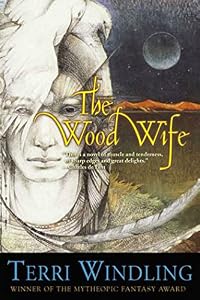
A woman writer moves into a house she inherited from a poet in the hills of Arizona. The man died in mysterious circumstances and Maggie Black wants to find out why. So begins a terrifying introduction to the Indian spirits which roam the hills and feed on people's creative juices.Tags
Recommendations










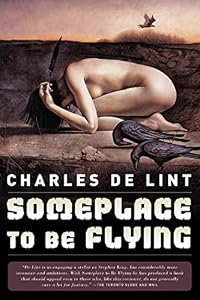
Member Recommendations
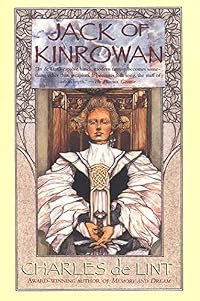
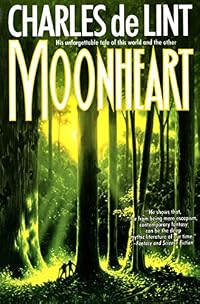
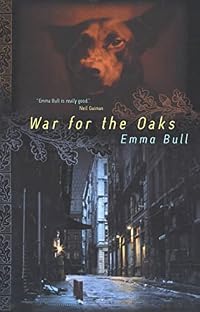
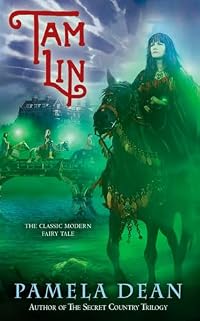
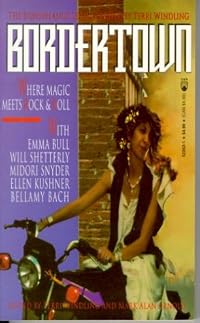
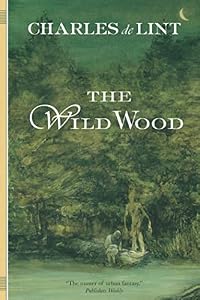
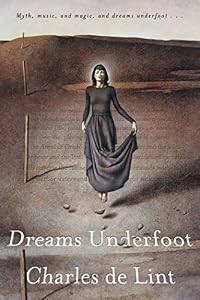
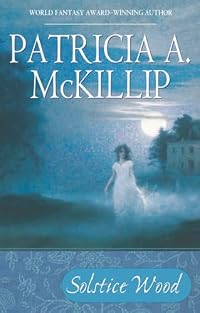
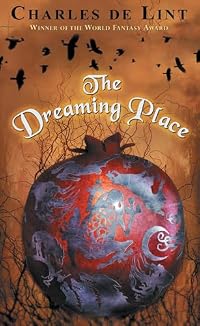
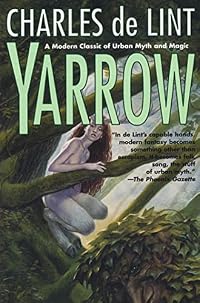
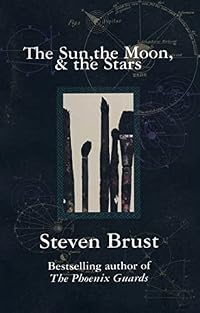
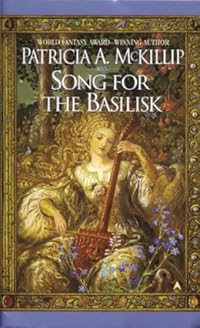
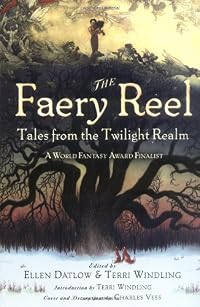
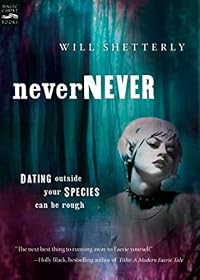
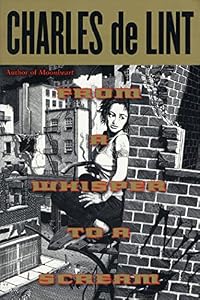
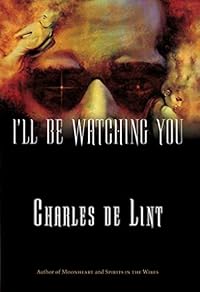
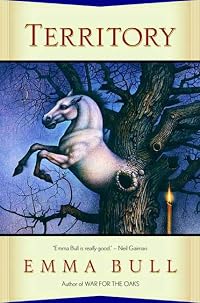
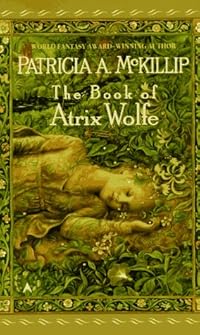
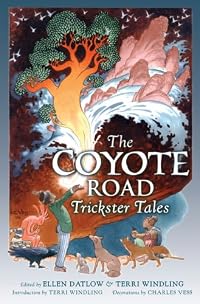
kmaziarz Both feature a woman coming to the desert and finding magic waiting for her there.
Sakerfalcon Older heroines who move to the Southwestern USA and discover secrets and magic. Both books evoke the landscape and its legends beautifully.
juniperSun both set in SW, involve magical realism
juniperSun Both treat the natural world as alive and intellignet. Both have a female protagonist living in rural Southwest US.
Member Reviews
[The Wood Wife], by Terri Windling, exposes the often unnoticed beauty of the desert, and, with it, a hidden world of spirits and shape-shifters.
Maggie Black takes up residence in Davis Cooper’s home in the high desert of the Rincon Mountains, which frame the eastern range of Tuscon, Arizona, hoping to use the old poet’s papers to write his biography. As Maggie sifts through Cooper’s things, she begins to see the magic and beauty of the hard land around her. With this newfound openness, Maggie is introduced to a world of creatures that live in a borderland between the seen and the unseen, changing forms to reflect those who gaze on them.
Few people see the beauty of the desert. It is, after all, a hard place, bristling everywhere show more with spiny cacti and rough stone, all baked by a blazing yellow heat. The needles and rocks and hard earthen crust, though, are only an outer protective layer for a subtle and delicate beauty. Windling expands on that dynamic, creating a whole world of eccentric, colorful creatures, seen only by those who are willing to open their hearts to the magic of the desert. Seeing these creatures and interacting with them, for Windling’s heroine, is only the first step in setting her life on a new path, one open to unseen possibility.
Nearly all of Windling’s characters are driven by creative pursuits; they are either musicians or poets or artists. She is clearly at home in such a world, and the beautiful, haunting prose of the novel only echoes her own wizardry. Windling creates a fantastic world in [The Wood Wife] that doesn’t read like fantasy because she convinces the reader to walk a path of discovery and openness along with the characters.
Bottom Line: Fantasy that doesn’t read like fantasy; a plea for wild and unnoticed beauty.
5 bones!!!!! show less
Maggie Black takes up residence in Davis Cooper’s home in the high desert of the Rincon Mountains, which frame the eastern range of Tuscon, Arizona, hoping to use the old poet’s papers to write his biography. As Maggie sifts through Cooper’s things, she begins to see the magic and beauty of the hard land around her. With this newfound openness, Maggie is introduced to a world of creatures that live in a borderland between the seen and the unseen, changing forms to reflect those who gaze on them.
Few people see the beauty of the desert. It is, after all, a hard place, bristling everywhere show more with spiny cacti and rough stone, all baked by a blazing yellow heat. The needles and rocks and hard earthen crust, though, are only an outer protective layer for a subtle and delicate beauty. Windling expands on that dynamic, creating a whole world of eccentric, colorful creatures, seen only by those who are willing to open their hearts to the magic of the desert. Seeing these creatures and interacting with them, for Windling’s heroine, is only the first step in setting her life on a new path, one open to unseen possibility.
Nearly all of Windling’s characters are driven by creative pursuits; they are either musicians or poets or artists. She is clearly at home in such a world, and the beautiful, haunting prose of the novel only echoes her own wizardry. Windling creates a fantastic world in [The Wood Wife] that doesn’t read like fantasy because she convinces the reader to walk a path of discovery and openness along with the characters.
Bottom Line: Fantasy that doesn’t read like fantasy; a plea for wild and unnoticed beauty.
5 bones!!!!! show less
“The night, blue lapis. The mountain, onyx. Saguaro, verdigris with a cooper dish of moon. The wind rustles dry mesquite. A coyote howls. A star falls. And the night cracks me open, with beauty sharp and poignant as grief. The night cracks me open, like a geode, exposing the crystal veins of God.”
I read this story at the very end of August, and in Minnesota that is the beginning of fall. The temperatures are dropping, squirrels are busy hiding their caches, and some trees are starting to drop leaves. Yes, we may still have some Indian summer left, but Fall has arrived, and Winter, that horrible and brutal force is just over the rise. As this story climaxes in the Fall, Allhollows’ eve to be exact, it seemed like the perfect time show more to read it. It was an unplanned, yet perfectly timed preparation for the change of season.
Terri Windling published this in 1996. It won the Mythopoeic Award for Novel of the Year. Terri herself is considered to play a major part in developing the Urban Fantasy Genre. She was also awarded the SFWA's Soltice Award in 2010, a life achievement award for "significant contributions to the speculative fiction field as a writer, editor, artist, educator, and mentor."
The book itself is both a love letter to the American Southwest and a delicate feminine fantasy of escaping the everyday and touching a world beyond our own. It’s lovingly written, interspersed with poetry, heartfelt letters, and multiple perspectives. I loved the intricate and thoughtful descriptions of the southwest – it’s landscapes, food, music, culture, and people. I’ve walked in the Tuscan desert and climbed scraggly hills in Phoenix and it vividly brought back rich memories. I asked Alexa to play the Eagles on Pandora while I read, and it was a great soundtrack to this novel.
If you’re looking for long forages into a fantasy world, this may not be the book for you. It’s a long, slow striptease and we are at least three-quarters through the story before we really get the slightest glimpse into the magical world beyond. That’s not a bad thing, Windling lays out an interesting set of characters and a storyline filled with little and big mysteries. The journey into the fantasy world is more of an event, than any lengthy part of the plot. This worked for me, as I fell for the characters and the mysterious plot points. What’s behind that locked door? How did Cooper die? What happened to Anna? I want to talk about the ending, but alas, no spoilers here.
A lovingly written spiritual, sensuous fantasy that slowly wanders through the plot like a lazy walk in the desert, admiring all the mysteries and beauty along the way. Not perfect, but Four and a half stars that I will round up to Five. show less
I read this story at the very end of August, and in Minnesota that is the beginning of fall. The temperatures are dropping, squirrels are busy hiding their caches, and some trees are starting to drop leaves. Yes, we may still have some Indian summer left, but Fall has arrived, and Winter, that horrible and brutal force is just over the rise. As this story climaxes in the Fall, Allhollows’ eve to be exact, it seemed like the perfect time show more to read it. It was an unplanned, yet perfectly timed preparation for the change of season.
Terri Windling published this in 1996. It won the Mythopoeic Award for Novel of the Year. Terri herself is considered to play a major part in developing the Urban Fantasy Genre. She was also awarded the SFWA's Soltice Award in 2010, a life achievement award for "significant contributions to the speculative fiction field as a writer, editor, artist, educator, and mentor."
The book itself is both a love letter to the American Southwest and a delicate feminine fantasy of escaping the everyday and touching a world beyond our own. It’s lovingly written, interspersed with poetry, heartfelt letters, and multiple perspectives. I loved the intricate and thoughtful descriptions of the southwest – it’s landscapes, food, music, culture, and people. I’ve walked in the Tuscan desert and climbed scraggly hills in Phoenix and it vividly brought back rich memories. I asked Alexa to play the Eagles on Pandora while I read, and it was a great soundtrack to this novel.
If you’re looking for long forages into a fantasy world, this may not be the book for you. It’s a long, slow striptease and we are at least three-quarters through the story before we really get the slightest glimpse into the magical world beyond. That’s not a bad thing, Windling lays out an interesting set of characters and a storyline filled with little and big mysteries. The journey into the fantasy world is more of an event, than any lengthy part of the plot. This worked for me, as I fell for the characters and the mysterious plot points. What’s behind that locked door? How did Cooper die? What happened to Anna? I want to talk about the ending, but alas, no spoilers here.
A lovingly written spiritual, sensuous fantasy that slowly wanders through the plot like a lazy walk in the desert, admiring all the mysteries and beauty along the way. Not perfect, but Four and a half stars that I will round up to Five. show less
I had remembered really enjoying this book from when I read it about 12 years ago. I had forgotten how much I liked it, enough that I'm nudging it into my Favorites list for this particular genre.
Windling takes the same basic American folklore stock as Charles de Lint and others have used and, like them, crafts it into a contemporary story where our world touches those myths. Coyote, Crow and other spirits walk just on the edge of our perception, seen only by a few. As is often true in folk tales, Windling populates her story with artists, their creative side drawing them closer to that other world and fragments from the works of Neruda, Borges and Rilke are woven into the tale, along with a bit of Windling's own poetry (which I rather show more enjoyed) as well as references to Kahlo, Miller and Nin.
There's a narrow path for stories that attempt contemporary fantasy. On one side lie stories where, despite the setting, there's no sense that it's really our world—Harry Dresden may claim to live in Chicago but...no...not really. To the other side lie those stories so rooted in reality that any magical elements seem intentionally to distort the tale. Neither is a bad thing; there are many enjoyable books written in both areas. However, because it's more rare, I enjoy a book that is unquestionably of this world and, yet, still has that sense of fey. This one does—there's never a moment of doubt that Davis Cooper was part of the hip scene in the 30s, or that Anna Naverra was an integral part of the Surrealist movement, or even that Maggie Black is a poet who has mislaid her muse in the commercial world of publishing. Yet, when Crow steps into view on the mountain, all I felt was, "Of course."
Part of it is the wonderful sense of locale that Windling creates. She lives in Arizona much of the year and her story evokes the beauty of the southwest, particularly the Rincon Mountains, rendering it seductive even to the non-native. By preference, I'm a creature of the American northeast, cool, well-forested, and abundantly watered. Yet, I couldn't help but be seduced by her words and want to go and experience the austere landscapes she portrayed.
The story she told and the setting would have been enough for me to enjoy this book, but I also appreciated in her distinctive vision of the spirits. If you imagine a continuum—someone like Jane Lindskold on the left with her mythical figures all too human, squabbling like the immature Gods of Olympus, through Charles de Lint in the center with his spirits otherworldly and remote but still capable of emotions we recognize, then Windling's creations sit over on the right. They are un-human in their concerns and motivations, neither good nor evil but amoral in the strictest sense. It felt chilling and right.
Is there anything I would change? Yes. I think some of the characters were underexposed, Tomás in particular. I would have liked her to stretch the ending a tiny bit, to turn the penultimate 25 pages into 50 and let us spend a little more time with the resolution. Yet, these are minor cavils and shouldn't detract from what I think is one of the better urban fantasy novels out there, one that really captures that fey sense.
I really wish she'd stop painting, stop editing, stop writing children's books, stop whatever else she's doing now and give us another novel such as this one. show less
Windling takes the same basic American folklore stock as Charles de Lint and others have used and, like them, crafts it into a contemporary story where our world touches those myths. Coyote, Crow and other spirits walk just on the edge of our perception, seen only by a few. As is often true in folk tales, Windling populates her story with artists, their creative side drawing them closer to that other world and fragments from the works of Neruda, Borges and Rilke are woven into the tale, along with a bit of Windling's own poetry (which I rather show more enjoyed) as well as references to Kahlo, Miller and Nin.
There's a narrow path for stories that attempt contemporary fantasy. On one side lie stories where, despite the setting, there's no sense that it's really our world—Harry Dresden may claim to live in Chicago but...no...not really. To the other side lie those stories so rooted in reality that any magical elements seem intentionally to distort the tale. Neither is a bad thing; there are many enjoyable books written in both areas. However, because it's more rare, I enjoy a book that is unquestionably of this world and, yet, still has that sense of fey. This one does—there's never a moment of doubt that Davis Cooper was part of the hip scene in the 30s, or that Anna Naverra was an integral part of the Surrealist movement, or even that Maggie Black is a poet who has mislaid her muse in the commercial world of publishing. Yet, when Crow steps into view on the mountain, all I felt was, "Of course."
Part of it is the wonderful sense of locale that Windling creates. She lives in Arizona much of the year and her story evokes the beauty of the southwest, particularly the Rincon Mountains, rendering it seductive even to the non-native. By preference, I'm a creature of the American northeast, cool, well-forested, and abundantly watered. Yet, I couldn't help but be seduced by her words and want to go and experience the austere landscapes she portrayed.
The story she told and the setting would have been enough for me to enjoy this book, but I also appreciated in her distinctive vision of the spirits. If you imagine a continuum—someone like Jane Lindskold on the left with her mythical figures all too human, squabbling like the immature Gods of Olympus, through Charles de Lint in the center with his spirits otherworldly and remote but still capable of emotions we recognize, then Windling's creations sit over on the right. They are un-human in their concerns and motivations, neither good nor evil but amoral in the strictest sense. It felt chilling and right.
Is there anything I would change? Yes. I think some of the characters were underexposed, Tomás in particular. I would have liked her to stretch the ending a tiny bit, to turn the penultimate 25 pages into 50 and let us spend a little more time with the resolution. Yet, these are minor cavils and shouldn't detract from what I think is one of the better urban fantasy novels out there, one that really captures that fey sense.
I really wish she'd stop painting, stop editing, stop writing children's books, stop whatever else she's doing now and give us another novel such as this one. show less
This is a very interesting and lush novel. “Lush” seems out of place as I write this, because the novel is set in the desert outside of Tucson, and the environment is definitely a major character. Maggie inherits the poet Jake Cooper’s property in the Rincon mountains, even though she’s never met him. Maggie moves out to the property and meets her natural and supernatural neighbors. Windling’s writing makes the desert come alive and seem magical, especially at night (which is when most of the interesting stuff happens). Reading this book made me want to go out the desert some night and explore, even though I hate the desert. Maggie moves out to the property to write a biography on Cooper. In the background is the nagging show more question of how Cooper died – how does one drown in the middle of the desert? Maggie quickly comes into contact with the supernatural inhabitants of the land. The supernatural characters aren’t malignant or benevolent – they’re indifferent. They don’t wear blatant signs that say “good guy” or “bad guy.” I liked that aspect of the novel – the interaction between the natural and the supernatural. One of the main characters is the trickster character, who takes a deep interest in Maggie. Windling’s writing is rather poetic, and poetry is a significant factor in this story. All in all, an excellent “urban fantasy” novel which shows that even the most barren of places can be magical and interesting. show less
This is a truly lovely book. It has a great atmosphere, is slow-paced yet engaging, and has compelling characters. It is a wonderful mixture of the mundane, the magical and the desert. I love how the story speaks of everyday life, and how the magical gets integrated with it, a bit like mixing up a batter with a spoon. At first there is only a little magic that is separate from the rest, then it becomes more and more, and in the end, it is indistinguishable from normal life, a part of it through and through. I very much liked the coyotes and the rabbit girl. This book reminded me strongly of Forests of the heart by Charles de Lint. I think most people who enjoy the one would also enjoy the other.
When the girl uncurled, she had been transformed, or else had transformed herself, into a grey hare, a desert jackrabbit, covered in a layer of dust.
When poet Davis Cooper is found dead in suspicious circumstances, Maggie Black, who had corresponded with Cooper for years but never met him, inherits his house in the Arizona desert near Tucson. She decides to live in the house for a while and write his biography. She gradually realises that the earth spirits of Cooper's poetry and his long-dead lover's paintings may not be imaginary and that some of the locals are more than they seem.
I had trouble getting into this book, but by the time I was half-way through I had been ensnared by the magic of the desert and its inhabitants, whether show more human, animal, or something in between. The way that Anna & Cooper's imagination had given forms to the earth spirits that had always been there reminded me of "Mythago Wood", whose mythic inhabitants come from the deepest recesses of the collective unconscious and can also be formed by people who get too involved with the wood.
I know the author was inspired by Brian Froud's paintings, but did she have to mention his name quite so often? I found it a bit irritating and for me it broke the spell of the story every time it happened. show less
When poet Davis Cooper is found dead in suspicious circumstances, Maggie Black, who had corresponded with Cooper for years but never met him, inherits his house in the Arizona desert near Tucson. She decides to live in the house for a while and write his biography. She gradually realises that the earth spirits of Cooper's poetry and his long-dead lover's paintings may not be imaginary and that some of the locals are more than they seem.
I had trouble getting into this book, but by the time I was half-way through I had been ensnared by the magic of the desert and its inhabitants, whether show more human, animal, or something in between. The way that Anna & Cooper's imagination had given forms to the earth spirits that had always been there reminded me of "Mythago Wood", whose mythic inhabitants come from the deepest recesses of the collective unconscious and can also be formed by people who get too involved with the wood.
I know the author was inspired by Brian Froud's paintings, but did she have to mention his name quite so often? I found it a bit irritating and for me it broke the spell of the story every time it happened. show less
A solid piece of storytelling and a pleasant entertaining read. Moments better than that, and moments (especially dialogue) that is a bit clunky, but I can't really complain as I did read it right through and was enjoying it. It's an interesting "take" on the urban/contemp type fantasy pioneered, really, by Charles de Lint, I think: the spirit world, faerie, or whatever you want to call it, interfacing with ours--some folks, especially those of the artistic musical literary bent finding it not that mysterious or threatening either. In this one the spirits are there, in this valley in the Rincon mountains of Arizona (near Tucson) but take on their form from the humans in their midst, and that can be good or bad depending on what is in show more your head. There's romance and danger and lots of poetry. ***1/2 show less
Members
- Recently Added By
Lists

Best Fantasy Novels
821 works; 361 members

Best Urban Fantasy
632 works; 78 members

Magic Realism
371 works; 51 members

Female Protagonist
1,056 works; 56 members

Speculative Fiction: Slipstream Literature
166 works; 16 members

Faerie Mythology
87 works; 12 members

Mythopoeic fantasy award winners - children literature
24 works; 1 member

What Makes This Book So Great
102 works; 16 members
Author Information

60+ Works 22,161 Members
Fairy and folklore scholar Terri Windling, five-time winner of the World Fantasy Award, has edited and written numerous fantasy works for both adults and children. She divides her time between Devon, England, and Tucson, Arizona. (Bowker Author Biography)
Some Editions
Awards and Honors
Awards
Notable Lists
Series

Belongs to Publisher Series
Common Knowledge
- Canonical title
- The Wood Wife
- Original publication date
- 1996
- Epigraph
- Who wants to understand the poem
Must go to the land of poetry.
—Johann Wolfgang von Goethe - Dedication
- The Wood Wife is for
Brian, Wendy, and Toby Froud,
with love.
And in memory of Herbert Emil Rasmussen
(1916-1994), who is greatly missed. - First words
- On the night that Davis Cooper died, coyotes came down from the hills to the town in the desert valley below.
- Last words
- (Click to show. Warning: May contain spoilers.)She looked out the window one last time, and saw that they were indeed.
- Publisher's editor
- Nielsen Hayden, Patrick
- Blurbers
- de Lint, Charles; Holdstock, Robert
Classifications
Statistics
- Members
- 1,087
- Popularity
- 23,359
- Reviews
- 43
- Rating
- (4.25)
- Languages
- English, French
- Media
- Paper
- ISBNs
- 8
- ASINs
- 2