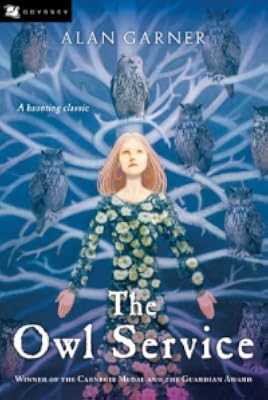
The Owl Service
by Alan Garner
On This Page
Description
The much-loved classic, finally in ebook. Winner of both the Guardian Award and the Carnegie Medal, this is an all-time classic, combining mystery, adventure, history and a complex set of human relationships. It all begins with the scratching in the ceiling. From the moment Alison discovers the dinner service in the attic, with its curious pattern of floral owls, a chain of events is set in progress that is to effect everybody's lives. Relentlessly, Alison, her stepbrother Roger and Welsh show more boy Gwyn are drawn into the replay of a tragic Welsh legend - a modern drama played out against a background of ancient jealousies. As the tension mounts, it becomes apparent that only by accepting and facing the situation can it be resolved. show lessTags
Recommendations















Member Recommendations
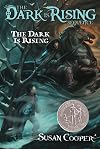
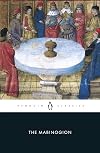
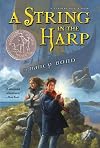

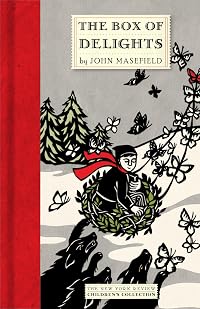
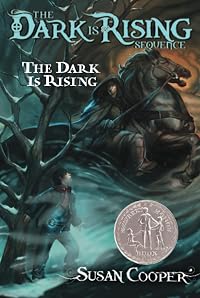
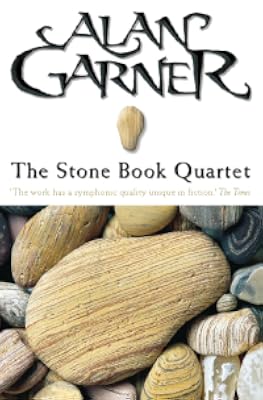
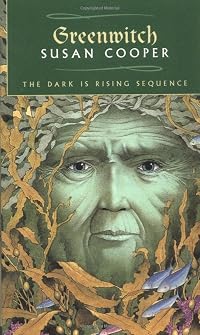
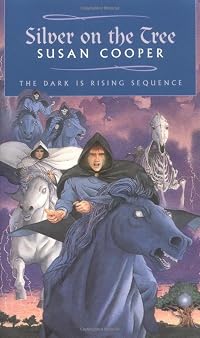
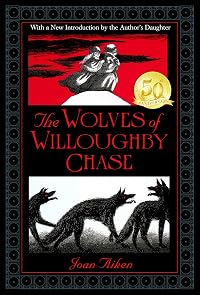
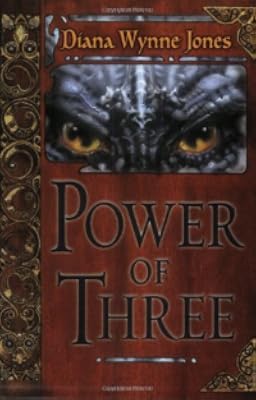
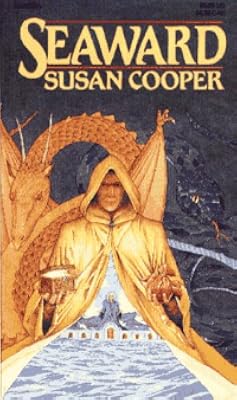
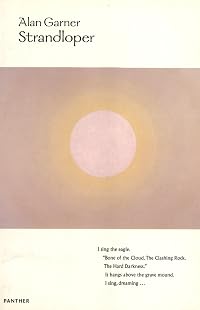
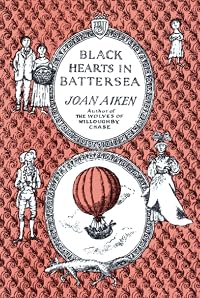
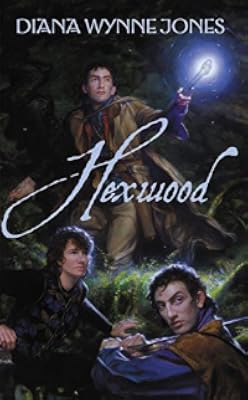
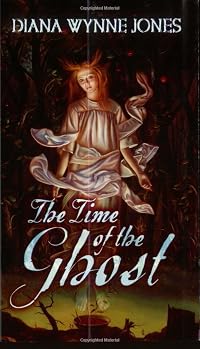
Sakerfalcon Both are books based on Welsh mythology, with teenage protagonists caught up by forces from the distant past.
11
Member Reviews
Something very medieval about this story (and of course it is a medieval story at its heart), but most modern interpretations of old tales re-invent them to be -- well -- modern. Cinderella becomes a feminist icon; Hansel and Gretel find their way back home. We like that safety.
There's not much safety in The Owl Service. Nobody gets to point any fingers, everyone is to blame for some wickedness or other, and the end of it is a moral story, in a way, except that it isn't at all.
"But none of them is all to blame. It is only together that they are destroying each other ... I think she is often longing for the time when she is flowers on the mountain, and it is making her cruel, as the rose is growing thorns."
Girl, same.
(it reminds me of show more Wuthering Heights. good luck figuring that one out.) show less
There's not much safety in The Owl Service. Nobody gets to point any fingers, everyone is to blame for some wickedness or other, and the end of it is a moral story, in a way, except that it isn't at all.
"But none of them is all to blame. It is only together that they are destroying each other ... I think she is often longing for the time when she is flowers on the mountain, and it is making her cruel, as the rose is growing thorns."
Girl, same.
(it reminds me of show more Wuthering Heights. good luck figuring that one out.) show less
This is a completely mad story, but also entertaining and really well told! A colleague asked if I had ever seen a series called The Owl Service, which was filmed in the 60s but still available to watch, and I had no idea. I was intrigued enough to look up the book, however!
In the Welsh valleys, a new family of father, son and stepdaughter (the mother is also there but never appears) are staying in an old house, a property inherited by the daughter, with the Welsh staff of housekeeper and her son and groundsman. Launching straight into the story, the daughter, Alison, hears scratching in the ceiling and when the son, Roger, goes to investigate, he finds nothing but a dinner service with an interesting pattern. Alison cleans up a plate show more and discovers the design of an owl made out of flowers. She becomes obsessed and starts tracing the owls and making them out of paper, which quickly disappear. The housekeeper is angry when she finds out about the plates and demands that Alison hand hers over - only for the pattern to also evaporate, leaving a plain white plate.
These spooky goings on are only the strong introduction of the relatively short novel, which also includes Welsh legends brought to life, class wars (Alison and Roger are very middle class, darling) and dark secrets. I think I loved most the author's afterword of how organic the story was, with legend, location and even his mother's dinner service coming together to form a simple tale. The dialogue is also very natural, for the 60s! Garner wrote the script for the TV adaptation too, so I might look that up after all. show less
In the Welsh valleys, a new family of father, son and stepdaughter (the mother is also there but never appears) are staying in an old house, a property inherited by the daughter, with the Welsh staff of housekeeper and her son and groundsman. Launching straight into the story, the daughter, Alison, hears scratching in the ceiling and when the son, Roger, goes to investigate, he finds nothing but a dinner service with an interesting pattern. Alison cleans up a plate show more and discovers the design of an owl made out of flowers. She becomes obsessed and starts tracing the owls and making them out of paper, which quickly disappear. The housekeeper is angry when she finds out about the plates and demands that Alison hand hers over - only for the pattern to also evaporate, leaving a plain white plate.
These spooky goings on are only the strong introduction of the relatively short novel, which also includes Welsh legends brought to life, class wars (Alison and Roger are very middle class, darling) and dark secrets. I think I loved most the author's afterword of how organic the story was, with legend, location and even his mother's dinner service coming together to form a simple tale. The dialogue is also very natural, for the 60s! Garner wrote the script for the TV adaptation too, so I might look that up after all. show less
Alison, Roger and Gwyn become trapped when the discovery of a box of old plates releases and old power that is exercised through the re-enactment of a triangle of love and betrayal and murder. Tensions fracture their friendship along lines of family and class and race in the stiflingly claustrophobic confines of a Welsh valley. Garner lets dialogue do a lot of the work, but the passages describing Gwyn's attempt to climb out of the valley and escape is as intense and horrible as even the celebrated tunnel scenes from Weirdstone. Emotions are scraped raw and bitter, but it's the increasingly loathsome Roger's hidden hurt that is the key to their release in the end. A powerful, resonant classic.
"Possessive parents rarely live long enough to see the fruits of their selfishness."
-- 1965 quote from Radio Times used as an epitaph for The Owl Service
We often unconsciously live our lives according to a script, seeing ourselves acting out a tragedy or a quest, a journey or overcoming major obstacles, human or otherwise. Sometimes those scripts follow a fairytale trope, such as the arc of the Cinderella story. More rarely do we mirror an ancient myth, but in The Owl Service that's exactly what Gwyn, Alison and Roger do, aided and abetted by the mysterious Huw.
The three youngsters, unwittingly at first, take the parts of Gronw, Blodeuwedd and Lleu from the Mabinogion tale of Math, the son of Mathonwy, but even when they become aware show more of the parallels they seem almost powerless to avoid a descent into darkness. And yet this is not just a simple updating of a medieval plot for modern times: the author also offers insights into psychology, family dynamics and social mobility, all contained within a strong sense of place, in North Wales.
The full Mabinogion story of Math includes a particularly troubling sub-narrative: a woman fashioned out of flowers to satisfy a man who's cursed not to know a human-born female; the woman has an affair with a third party; out of this come violent murders and magical transformations into an eagle, in one case, and an owl, in the other.
Garner locates his tale in a particular area of northwest Wales. Into it he places his three main protagonists: two English children, step-siblings, along with the father of one and the mother of the other (whose possessive presence is felt but never witnessed); then there is the Welsh boy, Gwyn, and the cook -- his troubled and troubling mother -- and the mysterious Huw whose job description at Bryn Hall is rather vague. The scene is set for misunderstandings and conflicts arising from distrust, past histories, cultural differences, social standings and personal chemistries. And we mustn't forget the landscape and house as major players in the plot.
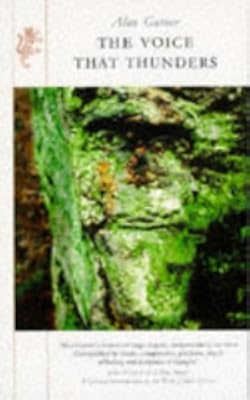
This is an intense novel of personal relationships and psychologies. Garner's text is largely made up of dialogue and action in a show-don't-tell fashion, which must have made it easier for him to adapt it as a TV script. However, his presence on set and on location for the ensuing production proved difficult, an uncomfortable experience he recounted in detail for a 1975 lecture at the Institute of Contemporary Arts, and published as 'Inner Time' in his essay collection The Voice that Thunders (The Harvill Press 1997). One of the keys to understanding Garner's upset during the filming came in a psychiatric session when he was simply asked:
"Was The Owl Service written in the past tense and the third person or in the present and the first?"
The author's strong identification with at least one of the characters--I suspect it was Gwyn, a local boy with academic aspirations and a searching mind--had given the narrative an authenticity arising from what Garner called a "primitive catastrophic process" which led to a kind of breakdown.
This is a complex tale, as intricate as any example of Celtic interlace, but to me it perfectly illustrates the psychic disruption that can grow out of adolescence. The author's use of traditional motifs from the original -- the owl, flowers, the pierced stone, the hunt, divine and semi-divine figures -- and their transformations within a contemporary setting made this a powerful piece of juvenile writing that continues to have a strong resonance half a century later. show less
One of my least favourite books from childhood, surpassed mostly by the other Alan Garners.
Our school was Very Keen on Alan Garner. So we had the obvious canon of them forced upon us. Which rarely works. Particularly so for the Owl Service. This is a novel mostly of teenage jealousies. If you're 11, you've not only not read the Mabinogion, you've not yet been jilted by your crush in favour of the posh kid either. So when we were forced to read this, we had neither of the reference points that Garner bridges between, so no wonder we didn't understand it. We probably thought it was about owls, or plates.
Much later, I decided to re-read Alan Garner (CS Lewis too, who came off rather worse for it). These days I live in a village where show more Merlin is sleeping under a hill nearby and our local cafe has a life-size carving of Blodeuwedd, because why wouldn't you? So I understood Garner's world rather better and this time round I loved it.
It's a "Young Adult" book. But that's not a kid's book. show less
Our school was Very Keen on Alan Garner. So we had the obvious canon of them forced upon us. Which rarely works. Particularly so for the Owl Service. This is a novel mostly of teenage jealousies. If you're 11, you've not only not read the Mabinogion, you've not yet been jilted by your crush in favour of the posh kid either. So when we were forced to read this, we had neither of the reference points that Garner bridges between, so no wonder we didn't understand it. We probably thought it was about owls, or plates.
Much later, I decided to re-read Alan Garner (CS Lewis too, who came off rather worse for it). These days I live in a village where show more Merlin is sleeping under a hill nearby and our local cafe has a life-size carving of Blodeuwedd, because why wouldn't you? So I understood Garner's world rather better and this time round I loved it.
It's a "Young Adult" book. But that's not a kid's book. show less
Imagine. It is the school holidays, you spend them in a Welsh cottage with your mother, step-brother and step-father, a surly Welsh housekeeper and her son. You hear rustling noises in the attic above your bedroom. Investigating, you find a stack of painted plates and bring some down. You look at the flower pattern, and suddenly it looks more like owls than flowers. Soon you see only the owls. You copy the pattern, cut out paper owls, and they vanish. The pattern mysteriously disappears off the plates. You watch, you are watched - the atmosphere is eerie, uncomfortable, dark and damp, nightmarish... This is a book for children - or young adults - but even at my old age I found it scary and unsettling. The story is based on legends of show more the Mabinogion, brought to almost modern times (first published 1967). A lot of the action is represented by rather disjointed dialogue, and you have to "gather" what is happening rather than understand it by descriptions, so it is sometimes hard to follow and I occasionally had to go back a few pages and re-read. A haunting book, which I want to read again once the feathers have settled.
Beautiful illustrations in this FS edition. show less
Beautiful illustrations in this FS edition. show less
The Owl Service is the kind of children’s book that isn’t written anymore, like The Little Prince or Harriet the Spy, books that are unpredictable and where you aren’t necessarily guaranteed a happy ending. I wish there were more of them published today.
That said, I went into this novel, first released in 1967, without knowing a thing about it other than that it was a British classic. Going into it cold is still the best way, but this is not a book for everyone. Alison; Gwyn, the cook’s son; and Alison’s snobby stepbrother Roger discover a set of dishes hidden away in an attic, dishes with a pattern of flowers that, on second look, look like an owl — the owl service of the title. Where the story goes from there was much show more different than anything I imagined, a story that was much, much better. show less
That said, I went into this novel, first released in 1967, without knowing a thing about it other than that it was a British classic. Going into it cold is still the best way, but this is not a book for everyone. Alison; Gwyn, the cook’s son; and Alison’s snobby stepbrother Roger discover a set of dishes hidden away in an attic, dishes with a pattern of flowers that, on second look, look like an owl — the owl service of the title. Where the story goes from there was much show more different than anything I imagined, a story that was much, much better. show less
Members
- Recently Added By
Lists

Favorite Childhood Books
1,651 works; 519 members

Best Children's Books You've Read
197 works; 75 members

Read the book and saw the movie
1,170 works; 195 members

Mythical Monsters of the World
199 works; 79 members

Carnegie Medal books I've read (shortlist and winners)
86 works; 16 members

Global Reads: Books Set in the United Kingdom and Ireland
109 works; 5 members

Childhood Favorites
427 works; 24 members

1960s, Best books published therein
254 works; 22 members

Llyfrau Cymraeg i blant
9 works; 1 member

Huxley's reading log 2017
45 works; 1 member

Books Read in 2007
326 works; 8 members

Love Triangles in Literature
108 works; 15 members

Wyrd as Folk
43 works; 4 members
Animals in the Title
498 works; 11 members

Books whose title names an object usually found in the kitchen
171 works; 14 members

Books Read in 2024
4,727 works; 128 members

Guilty Pleasures
223 works; 87 members

Books Read in 2022
5,226 works; 115 members

Main Character is aged 10-19
363 works; 6 members

Favorite Books from the 1960s
34 works; 3 members

Carnegie Medal Winners In Order
85 works; 1 member

Books Read in 2018
4,360 works; 110 members

David Pringle's Modern Fantasy: The 100 Best Novels
100 works; 5 members

Used books to buy next
565 works; 1 member

1960s
281 works; 16 members

In Our Time books
4,934 works; 2 members

Weird and Weirder Fiction
270 works; 35 members
Author Information

49+ Works 10,975 Members
Some Editions
Awards and Honors
Awards
Notable Lists
Series
Belongs to Publisher Series
Peacock Books (66)
Work Relationships
Is contained in
Has the adaptation
Is abridged in
Was inspired by
Has as a reference guide/companion
Common Knowledge
- Canonical title*
- Huuhkajalaakso
- Original title
- The Owl Service
- Original publication date
- 1967
- People/Characters
- Alison Bradley; Roger Bradley; Gwyn; Huw Halfbacon; Nancy; Clive Bradley (show all 7); Blodeuedd
- Important places
- Dinas Mawddwy, Gwynedd, Wales, UK; Wales, UK
- Related movies
- The Owl Service (1969 | IMDb)
- Epigraph
- -The owls are restless.
People have died here,
Good men for bad reasons,
Better forgotten.-
R.S. Thomas
I will build my love a tower
By the clear crystal fountain,
And on it I will build
All the flowers of the mountain.
Traditional
Possessive parents rarely live long enough to see the fruits of their selfishness.
Radio Times: 15 September 1965 - Dedication
- For Cinna
- First words
- "How's the bellyache, then?"
- Last words
- (Click to show. Warning: May contain spoilers.)And the room was full of petals from skylight and rafters, and all about them a fragrance, and petals, flowers falling, broom, meadowsweet, falling, flowers of the oak.
- Original language
- English
- Canonical DDC/MDS
- 823.087661
*Some information comes from Common Knowledge in other languages. Click "Edit" for more information.
Classifications
- Genres
- Fiction and Literature, Fantasy
- DDC/MDS
- 823.087661 — Literature & rhetoric English & Old English literatures English fiction By type Genre fiction Adventure fiction Speculative fiction Fantasy fiction High fantasy
- LCC
- PZ7 .G18417 .O — Language and Literature Fiction and juvenile belles lettres Fiction and juvenile belles lettres Juvenile belles lettres
- BISAC
Statistics
- Members
- 2,182
- Popularity
- 9,370
- Reviews
- 56
- Rating
- (3.77)
- Languages
- 6 — English, Finnish, German, Norwegian (Bokmål), Portuguese, Swedish
- Media
- Paper, Audiobook, Ebook
- ISBNs
- 43
- ASINs
- 22