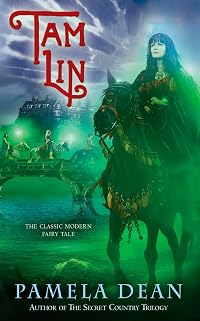
Tam Lin
by Pamela Dean
On This Page
Description
Fantasy. Romance. Historical Fiction. Young Adult Fiction. In the ancient Scottish ballad "Tam Lin," headstrong Janet defies Tam Lin to walk in her own land of Carterhaugh . . . and then must battle the Queen of Faery for possession of her lover’s body and soul. In this version of "Tam Lin," masterfully crafted by Pamela Dean, Janet is a college student, "Carterhaugh" is Carter Hall at the university where her father teaches, and Tam Lin is a boy named Thomas Lane. Set against the backdrop show more of the early 1970s, imbued with wit, poetry, romance, and magic, Tam Lin has become a cult classic—and once you begin reading, you’ll know why. This reissue features an updated introduction by the book’s original editor, the acclaimed Terri Windling. show lessTags
Recommendations







Member Recommendations
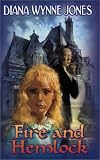
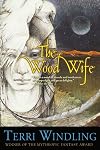
Member Reviews
I have two bones to pick with this book; well, actually, two bones. One small one with the author and a much larger one with the current publisher's marketing department.
The smaller bone first: I was a faculty child for my undergraduate years, and an English major (along with a block of Classics). Janet's relative lack of knowledge of the university (specifically, the faculty) where her father teaches Romantics (mine taught Hegel) keeps breaking my WSOD.
Of my five professors in first year, I was acquainted with three, not because I chose courses based in whether I knew who taught them (though I did choose sections in two courses by what I knew of them: of the two professors, one I had known for eight years, and one I knew of only by show more name) but just because one becomes familiar with one's father's SCR and departmental colleagues, not to mention the number of faculty members whose children had gone to high school with one. And all my teachers, all the dons, my head of college, knew who I was.
Janet, by comparison, knows the campus, but not the people. I have a very hard time seeing her as a faculty child.
As for the bigger bone: this book was originally published as an adult fantasy book as part of Tor's Fairy Tale series. It has been republished, and marketed, as a YA/teen book.
This is a book whose full enjoyment depends on things like knowing who Robert Armin was, or what the actual sound of Shakespeare's English was like. It helps if one knows Le Roman de la Rose, The Lady's Not For Burning, Tourneur, Summer's Last Will and Testament, classical tragedy, and Stoppard, or at least about them. These are not things which any plausible typical teen is going to know. (I did, in fact, know these things by 19, by which time I was in second year university, but I'm pretty sure that's not the slot envisaged by "teen literature".) There is no reasonable sense in which this book can be considered as aimed at anything other than an adult audience, and a fairly well-educated adult audience at that.
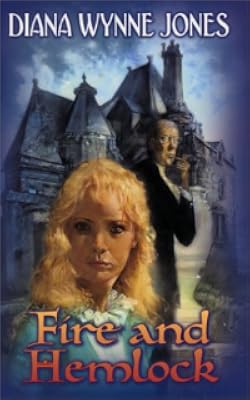
Overall, though, it's a delightful book, and better (I think) than Diana Wynne Jones' Fire and Hemlock, although Jones has a better structure, starting in medias res. The disparity in ages in Jones' version works against the story, whereas the undergraduate atmosphere of Dean's story actively helps the flow of the story.
There are two complaints I see about it which I want to answer.
First is the pacing and structure. As Jo Walton said regarding her experience of writing her Barrayaran/Shakespearian Tam Lin, the structure of the ballad mirrors the structure of the book, and is an integral part of the tale: that is, there is a long secular lead-up with the fairy ride coming only at the very end. Not only that, but Dean succeeds in making this book two parallel and intertwined stories: one stands up well with no Fairy Queen at all: it's the story Molly refers to when she says, in response to Janet's "It's only been three weeks.", "If you mean you and Thomas, it's been three years": Just excise a chapter and a half and you have a lovely, Gaudy Night-level nostalgic tale of University and a slowly developing love. The second tale is that of those who have been taken under hill, filtered through naive perspective of Janet: Nick's and Robin's story, one of separation from the world even in interaction with it; and that story has its climax with the full revelation of the unhumanness of the Faerie Queen.
The compression and extension of time reflect subjective experience: the non-routine highlighted, the routine passed over.
There is also the complaint that people do not talk like that: i.e. quote extended (or even short) bits of Shakespeare, Nashe, or Homer in general conversation, To which I must respond: I know such people, and I have been one of them. All it takes is a decent memory, reasonably wide reading, and an appropriate context. (In the book, of course, these elements have a double role). show less
The smaller bone first: I was a faculty child for my undergraduate years, and an English major (along with a block of Classics). Janet's relative lack of knowledge of the university (specifically, the faculty) where her father teaches Romantics (mine taught Hegel) keeps breaking my WSOD.
Of my five professors in first year, I was acquainted with three, not because I chose courses based in whether I knew who taught them (though I did choose sections in two courses by what I knew of them: of the two professors, one I had known for eight years, and one I knew of only by show more name) but just because one becomes familiar with one's father's SCR and departmental colleagues, not to mention the number of faculty members whose children had gone to high school with one. And all my teachers, all the dons, my head of college, knew who I was.
Janet, by comparison, knows the campus, but not the people. I have a very hard time seeing her as a faculty child.
As for the bigger bone: this book was originally published as an adult fantasy book as part of Tor's Fairy Tale series. It has been republished, and marketed, as a YA/teen book.
This is a book whose full enjoyment depends on things like knowing who Robert Armin was, or what the actual sound of Shakespeare's English was like. It helps if one knows Le Roman de la Rose, The Lady's Not For Burning, Tourneur, Summer's Last Will and Testament, classical tragedy, and Stoppard, or at least about them. These are not things which any plausible typical teen is going to know. (I did, in fact, know these things by 19, by which time I was in second year university, but I'm pretty sure that's not the slot envisaged by "teen literature".) There is no reasonable sense in which this book can be considered as aimed at anything other than an adult audience, and a fairly well-educated adult audience at that.
Overall, though, it's a delightful book, and better (I think) than Diana Wynne Jones' Fire and Hemlock, although Jones has a better structure, starting in medias res. The disparity in ages in Jones' version works against the story, whereas the undergraduate atmosphere of Dean's story actively helps the flow of the story.
There are two complaints I see about it which I want to answer.
First is the pacing and structure. As Jo Walton said regarding her experience of writing her Barrayaran/Shakespearian Tam Lin, the structure of the ballad mirrors the structure of the book, and is an integral part of the tale: that is, there is a long secular lead-up with the fairy ride coming only at the very end. Not only that, but Dean succeeds in making this book two parallel and intertwined stories: one stands up well with no Fairy Queen at all: it's the story Molly refers to when she says, in response to Janet's "It's only been three weeks.", "If you mean you and Thomas, it's been three years": Just excise a chapter and a half and you have a lovely, Gaudy Night-level nostalgic tale of University and a slowly developing love. The second tale is that of those who have been taken under hill, filtered through naive perspective of Janet: Nick's and Robin's story, one of separation from the world even in interaction with it; and that story has its climax with the full revelation of the unhumanness of the Faerie Queen.
The compression and extension of time reflect subjective experience: the non-routine highlighted, the routine passed over.
There is also the complaint that people do not talk like that: i.e. quote extended (or even short) bits of Shakespeare, Nashe, or Homer in general conversation, To which I must respond: I know such people, and I have been one of them. All it takes is a decent memory, reasonably wide reading, and an appropriate context. (In the book, of course, these elements have a double role). show less
What a strange, wonderful book. Ostensibly a retelling of the Scottish ballad "Tam Lin," this is really a story about college. The "Tam Lin" stuff is only very subtly there (until it is not subtle at all), but the weird things going on because of the seepage of Elfland into the small liberal arts college of the story do not stand out as odd, and eventually everything comes together. I only know about Tam Lin because Jo Walton talked about it in her What Makes This Book So Great (and I might have made a quite undignified noise and a very greedy grab when I came across it in a used-bookstore trawl last week. Thankfully, only husbeast, who is sympathetic to such things, was within close earshot). Walton says Dean "is doing college as magic show more garden. The whole experience of going to university is magical, in a sense, is a time away from other time, a time that influences people's whole lives but is and isn't part of the real world."* Agreed, and I thought throughout reading Tam Lin that Dean had captured that time perfectly: the world of reading and learning and of the subjects you're studying can (and persistently do, especially for a particular brand of student) seem far, far more real than anything outside the sphere the college throws up, and you often live in your friends' pockets in ways that will never again be not unhealthy. It is a world I sometimes suspect the 21st century is killing; I was struck with the notion while reading that I might have been part of the last group of students who could experience college in quite this way, who would see their college experience in the book.
Tam Lin takes place in the early seventies: there were no computers and no internet, each dorm floor had one telephone in the hall, and each dorm building had one TV in the lounge. Signing up for classes involved a paper form and tramping around campus to gather signatures and hand in that form in person. If one wanted to stay completely isolated from the outside world, one hardly needed to try. When I attended college in the early aughts, technology had already made avoiding anything beyond the insular, scholarly world of campus much harder (nearly everyone brought a computer to campus; we had (wired, omg) internet connections in our dorm rooms; every room had a phone; you were hard-pressed to find a room without a dizzying array of other distracting, worldly technologies: televisions, VCRs, DVD players, stereos, game consoles). But hardly anyone had a cellphone (and if they did, they were cell phones, which did little your room phone couldn't do), and social media, for all intents and purposes, did not exist (Facebook had not yet hit the 'net and neither had Twitter, Tumblr, Flickr, or Instagram. Even Myspace hadn't popped up yet). The easiest way to contact someone on campus was still to go knock on their door (and leave them a handwritten note if they weren't in). The registrar's office was computerized, but we still signed up for classes by filling out a form and tramping around campus after signatures. Not everyone then lived primarily within the world of campus (even to the extent they could) because not everyone wanted to. I'm sure this has always been true (campuses which became hotbeds of political dissent surely had thousands of students doing everything they could to avoid succumbing to an insular "college as magic garden") and I imagine small liberal arts colleges (especially those is small, semi-rural towns) have always been "better"** at creating this sort of environment than large universities, especially those in big cities.
I wonder, though, if college students today, who all carry (by 1970's standards) unfathomably powerful computers in their pockets and need never be more than a finger-swipe away from any and every aspect of the "outside" world they care to see, can ever really get to the "magic garden" of college that Dean describes, even if they want to. I suspect they cannot, and that strikes me as a bit of a tragedy. Not that our new technologies can't and don't do for us many wonderful things, but they, of course, leave some old ways of being tattered in their wake. This particular experience of college may be one of them, and that makes me doubly, triply, thrilled that there's a book like Tam Lin out there that captures so nicely what that purposely, delightedly isolated four-year-long sojourn into a kind of other world felt like. The retelling of "Tam Lin" gives the story something to hang itself on, something for it to do, but the book is really a snapshot of a piece of 20th-century life I suspect is largely gone.
*Page 64, for those of you following along. :-p
**Scare quotes because I suspect that only a small number of students at any school at any time actually think this kind of world is better. show less
Tam Lin takes place in the early seventies: there were no computers and no internet, each dorm floor had one telephone in the hall, and each dorm building had one TV in the lounge. Signing up for classes involved a paper form and tramping around campus to gather signatures and hand in that form in person. If one wanted to stay completely isolated from the outside world, one hardly needed to try. When I attended college in the early aughts, technology had already made avoiding anything beyond the insular, scholarly world of campus much harder (nearly everyone brought a computer to campus; we had (wired, omg) internet connections in our dorm rooms; every room had a phone; you were hard-pressed to find a room without a dizzying array of other distracting, worldly technologies: televisions, VCRs, DVD players, stereos, game consoles). But hardly anyone had a cellphone (and if they did, they were cell phones, which did little your room phone couldn't do), and social media, for all intents and purposes, did not exist (Facebook had not yet hit the 'net and neither had Twitter, Tumblr, Flickr, or Instagram. Even Myspace hadn't popped up yet). The easiest way to contact someone on campus was still to go knock on their door (and leave them a handwritten note if they weren't in). The registrar's office was computerized, but we still signed up for classes by filling out a form and tramping around campus after signatures. Not everyone then lived primarily within the world of campus (even to the extent they could) because not everyone wanted to. I'm sure this has always been true (campuses which became hotbeds of political dissent surely had thousands of students doing everything they could to avoid succumbing to an insular "college as magic garden") and I imagine small liberal arts colleges (especially those is small, semi-rural towns) have always been "better"** at creating this sort of environment than large universities, especially those in big cities.
I wonder, though, if college students today, who all carry (by 1970's standards) unfathomably powerful computers in their pockets and need never be more than a finger-swipe away from any and every aspect of the "outside" world they care to see, can ever really get to the "magic garden" of college that Dean describes, even if they want to. I suspect they cannot, and that strikes me as a bit of a tragedy. Not that our new technologies can't and don't do for us many wonderful things, but they, of course, leave some old ways of being tattered in their wake. This particular experience of college may be one of them, and that makes me doubly, triply, thrilled that there's a book like Tam Lin out there that captures so nicely what that purposely, delightedly isolated four-year-long sojourn into a kind of other world felt like. The retelling of "Tam Lin" gives the story something to hang itself on, something for it to do, but the book is really a snapshot of a piece of 20th-century life I suspect is largely gone.
*Page 64, for those of you following along. :-p
**Scare quotes because I suspect that only a small number of students at any school at any time actually think this kind of world is better. show less
I have been somewhat roundly and gleefully ravished by this book over the last couple days- I took it with me to a New Years' party and this morning, at around 4am, I cheerfully relinquished the last remaining pretense of sleep and went to make a plate of pasta in my underwear so I could finish it. I have actually had the sneaking suspicion it would have this effect on me for several years now, I think, and thusly put it off- look, everyone's got a thing, alright, and for whatever unknowable reason, mine's Tam Lin adaptations. Every time I think I've escaped them I find another one and they stick to my brain like treacle. Anyway, this was an easy and immediate five star, everything Pamela Dean's written is now on my kindle, I already show more want to reread it (but I'll hold off for a little). It made me work to piece everything together, always good with a ballad retelling, and it was Bisexual As Hell. show less
This book would be a top five contender for my favorite of all time. Other reviewers have mentioned that if you weren't or aren't a Classics or Lit major in college, then you won't understand A LOT of the book, and I guess that's true to some degree, but I just adore this book. Every time I pick it up, I get sucked in again like it's the first time I'm reading it. I've always loved the traditional ballad much for the same reason that Dean said she did: that the protagonist is a girl, and it is a girl, Janet, who does the saving, not the usual other way 'round. Plus, what book-lovin' gal wouldn't want a lover like Thomas Lane? I'll say no more, only that reading this story is more than worth it.
As always, very rich and complicated. I know how the story goes - I've read it probably a dozen times, not to mention the song - but as the relationships tangle and the oddities mount, I get lost in the story every time. Not my college experience, not my romantic experience, and I recognize possibly half the quotes and less than half of the references made. And yet. Pamela Dean is good at that - subsuming you into the worlds she creates. This particular e-edition was clearly scanned in and poorly checked - there are a lot of scannos, many of which would have been caught by a spell-checker. But few of them actually obstruct understanding.
I adored this book—an atmospheric college saga about adolescence, literature, and enchantment, told in a confident literary voice reminiscent of Dorothy L. Sayers. It would be the perfect book to curl up with on a stormy autumn evening, but it was quite compelling enough in late August.
Tam Lin tells its story with a lot of negative space—often the supernatural elements and emotional content are just beyond Janet's apprehension. You spend a lot of time dancing across the surfaces of her life, which I found incredibly effective, although it might bore some readers. I prefer my supernatural fiction shadowy and subtextual, just like unspoken desire, just like the meanings of the stories that Janet surrounds herself with as an English show more major. This understated approach to fantasy reminds me of Alan Garner's Owl Service, even though Tam Lin is far wordier.
It's such a sprawling octopus of a book that I plan on rereading it to decide how well all the threads hold together and why Dean chose to combine the elements she did. I will say that the ending was clever but didn't blow me away, but it's not really fair—I was comparing it to Fire and Hemlock, the other Tam Lin retelling about books and concealed emotional truths.
I do have to lodge a complaint that Dean retold Tam Lin on a college campus and didn't name one of the academic buildings Carter Hall. But maybe that would have been too obvious. show less
Tam Lin tells its story with a lot of negative space—often the supernatural elements and emotional content are just beyond Janet's apprehension. You spend a lot of time dancing across the surfaces of her life, which I found incredibly effective, although it might bore some readers. I prefer my supernatural fiction shadowy and subtextual, just like unspoken desire, just like the meanings of the stories that Janet surrounds herself with as an English show more major. This understated approach to fantasy reminds me of Alan Garner's Owl Service, even though Tam Lin is far wordier.
It's such a sprawling octopus of a book that I plan on rereading it to decide how well all the threads hold together and why Dean chose to combine the elements she did. I will say that the ending was clever but didn't blow me away, but it's not really fair—I was comparing it to Fire and Hemlock, the other Tam Lin retelling about books and concealed emotional truths.
I do have to lodge a complaint that Dean retold Tam Lin on a college campus and didn't name one of the academic buildings Carter Hall. But maybe that would have been too obvious. show less
This is one of those classic fantasy books on my TBR list forever. I finally got around to reading it, and am I glad I did. To be fair, this book barely has any overt fantasy, mainly in the last few pages, but it's set in the early seventies at a college in the Midwest. I'm from that era, so I appreciated the story anyway.
It's based on an old Scottish ballad, so there are actually a lot more fantasy references if you know the story. In the song, Janet Carter is pregnant by her lover Tam Lin who belongs to the Queen of Elfland. She must rescue him by pulling him from his horse and keeping hold of him as the Queen transforms him into different creatures, finally not dropping him as a burning brand.
Ms. Dean transplants the story to a show more college setting, which works very well. I'm not sure that a younger reader would appreciate the details she weaves into the story. Still, I delighted in the references to purple Mimeo sheets, checkbooks, political and music asides, and other iconic symbols of that time.
I also appreciated the quotes and references to other books and plays that were part of a college education (at least back then - do they even teach Latin and Greek in school anymore?). It took me back to my own college days when we left notes in Elvish for each other and shared music/books in free-for-all discussions late at night; there's a definite nostalgia element in reading this book for me.
The writing is lyrical, a descriptive love letter to the setting and the characters. The protagonist, Janet, is practical, testy, and strong. She deals with contraception, difficult roommates, and her studies. She wants to get the most out of her college years while constantly feeling she's missing things. She struggles with which courses she wants to take or the secrets her friends may be hiding, but also doesn't have the time to delve into them much. This leads to the first few years seeming stretched out and the ending feeling a bit rushed. It's not enough to bother me as I enjoyed the book immensely. Tam Lin is a throwback to the fantasy books I read in my youth by Charles de Lint, Patrica McKillip, Robin McKinley, or Terri Wilding. It may not be for everyone, but I'm firmly in the camp that loves this book and plan to reread it in future. show less
It's based on an old Scottish ballad, so there are actually a lot more fantasy references if you know the story. In the song, Janet Carter is pregnant by her lover Tam Lin who belongs to the Queen of Elfland. She must rescue him by pulling him from his horse and keeping hold of him as the Queen transforms him into different creatures, finally not dropping him as a burning brand.
Ms. Dean transplants the story to a show more college setting, which works very well. I'm not sure that a younger reader would appreciate the details she weaves into the story. Still, I delighted in the references to purple Mimeo sheets, checkbooks, political and music asides, and other iconic symbols of that time.
I also appreciated the quotes and references to other books and plays that were part of a college education (at least back then - do they even teach Latin and Greek in school anymore?). It took me back to my own college days when we left notes in Elvish for each other and shared music/books in free-for-all discussions late at night; there's a definite nostalgia element in reading this book for me.
The writing is lyrical, a descriptive love letter to the setting and the characters. The protagonist, Janet, is practical, testy, and strong. She deals with contraception, difficult roommates, and her studies. She wants to get the most out of her college years while constantly feeling she's missing things. She struggles with which courses she wants to take or the secrets her friends may be hiding, but also doesn't have the time to delve into them much. This leads to the first few years seeming stretched out and the ending feeling a bit rushed. It's not enough to bother me as I enjoyed the book immensely. Tam Lin is a throwback to the fantasy books I read in my youth by Charles de Lint, Patrica McKillip, Robin McKinley, or Terri Wilding. It may not be for everyone, but I'm firmly in the camp that loves this book and plan to reread it in future. show less
Members
- Recently Added By
Lists

Favorite Fairy Tale Retellings
210 works; 61 members

Best Fantasy Novels
821 works; 361 members

Best Urban Fantasy
632 works; 77 members

Recommended Faerie books
67 works; 22 members

Tam Lin Retellings
19 works; 7 members

Female Protagonist
1,056 works; 57 members

Books I've Read More Than Once
602 works; 49 members

Fantasy novels with a female protagonist
76 works; 15 members

Faerie Mythology
87 works; 13 members
Fantasy of manners
54 works; 4 members
Female Author
1,235 works; 67 members
1990s
309 works; 17 members

One Book, Many Authors
441 works; 40 members
Speculative Fiction to Read
706 works; 32 members
What Makes This Book So Great
102 works; 16 members

Recommended Speculative Fiction by Women and People of Color
298 works; 45 members

Favorite Books from the 1990s
32 works; 3 members

Top Five Books of 2016
795 works; 229 members

al.vick-wishlist-scifi-fant
181 works; 2 members
Books We Want To Read Again For The First Time
384 works; 160 members
Books We Love to Reread
688 works; 296 members
Our Favorite Comfort Reads
334 works; 200 members

Fiction With Familiar Settings
280 works; 93 members
Favorite Fairy Tales
269 works; 103 members

EGBERTINA'S List of childhood books worthy of merit or unspeakable delight
155 works; 6 members
Book Worlds We'd Like To Visit
322 works; 158 members
Books We Couldn't Put Down
443 works; 197 members

Best Books of the 20th Century
193 works; 5 members

Best Campus Novels
99 works; 18 members

Books discovered on LibraryThing
256 works; 36 members

Autumn books
31 works; 8 members

Books Read in 2020
4,379 works; 124 members
Books Read in 2018
4,360 works; 110 members
Five star books
1,756 works; 108 members
all aboard for malory towers (grownups)
28 works; 5 members

Stories Inspired by Other Fiction
127 works; 24 members

Swinging Seventies
255 works; 18 members

Academia in Fiction
158 works; 23 members

Modern Books for Young Adults
87 works; 11 members

Fiction with Men's Given Names in the Title
302 works; 10 members
Author Information

11+ Works 4,874 Members
Some Editions
Awards and Honors
Series
Belongs to Publisher Series
Work Relationships
Is a retelling of
Common Knowledge
- Canonical title
- Tam Lin
- Original publication date
- 1991
- People/Characters
- Janet Carter; Molly DuBois; Christina; Nicholas Tooley; Thomas Lane; Robert Armin (show all 10); Professor Medeous; Melinda Wolfe; Victoria Thompson; Danny Chin
- Important places
- Blackstock College, Minnesota, USA
- Dedication
- This book is for Terri Windling
- First words
- The year Janet started at Blackstock College, the Office of Residential Life had spent the summer removing from all the dormitories the old wooden bookcases that, once filled with books, fell over unless wedged.
Introduction: There is no satisfactory equivalent to the German word märchen, tales of magic and wonder such as those collected by the Brothers Grimm: Rapunzel, Hansel & Gretel, Rumpelstiltskin, The Six Swans, ... (show all)and other such familiar stories. - Last words
- (Click to show. Warning: May contain spoilers.)"In a minute," said Janet. "I'm writing you a poem."
- Blurbers
- Llewelyn, Morgan; Brust, Steven
Classifications
Statistics
- Members
- 2,052
- Popularity
- 10,136
- Reviews
- 78
- Rating
- (3.99)
- Languages
- English
- Media
- Paper, Ebook
- ISBNs
- 5
- ASINs
- 4