On This Page
Description
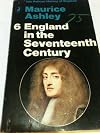
Originally published in 1952 but here reissuing the updated edition of 1978, this book has long been established as a classic and a central text for students of seventeenth-century English history. The book covers every aspect of English life from the arrival of James I in England to the death of Queen Anne. The chapters on political history are organized chronologically, interspersed with thematic chapters which analyse change and development in family and social life, literature and the show more arts, scientific and philosophical ideas and the growth of the first British Empire. show lessTags
Recommendations














Member Reviews
I love the feel of the 60s Pelican paperbacks, now that they are blue covered and yellow paged. This one was very in depth, covering the political background to the Civil War, as well as other social contexts of the time.
Comprehensive as far as I can tell!
Comprehensive as far as I can tell!
an overview of British history from the dawn of James I to the eclipse of Queen Anne. This traces the arc of the island nation from weak and divisive torn by religious strife and lacking a strong central government and reliable tax base to global economic power, naval superiority, and a center of advances in the arts and sciences.
Points of interest:
Cromwell on Barebones Parliament: "I am more troubled now with the fool than with the knave."
First public concerts date from Restoration: violin was introduced then.
Re James II's three questions of 1687:
i) Documents are now in Bodleian
ii) The enquiry only showed the King's enemies how strong they were.
In Anne's reign real wages were higher than at any time since the reign of Henry VI.
Tory government took great trouble to get Asiento clause at Utrecht - shows Whigs weren't alone in their concern for trade.
Definitely the most disappointing volume of the series which I have read. The chapters on political history are dreary and uninspired - no attempt to highlight the significant points or clarify the chain of cause and show more effect. He seems to think that scholasticism and reason are mutually incompatible, and O.J.G. Welsh has pointed out in the Tablet how her has got the Secret Treaty of Dover all wrong. The most interesting chapter I found to be the one called 'A Ferment of Ideas 1640-60', which 'placed' for me a number of people whose importance had always been rather obscure - Chilligworth, the Cambridge Platonists, and Harrington, in particular.
(notes written 1954) show less
Cromwell on Barebones Parliament: "I am more troubled now with the fool than with the knave."
First public concerts date from Restoration: violin was introduced then.
Re James II's three questions of 1687:
i) Documents are now in Bodleian
ii) The enquiry only showed the King's enemies how strong they were.
In Anne's reign real wages were higher than at any time since the reign of Henry VI.
Tory government took great trouble to get Asiento clause at Utrecht - shows Whigs weren't alone in their concern for trade.
Definitely the most disappointing volume of the series which I have read. The chapters on political history are dreary and uninspired - no attempt to highlight the significant points or clarify the chain of cause and show more effect. He seems to think that scholasticism and reason are mutually incompatible, and O.J.G. Welsh has pointed out in the Tablet how her has got the Secret Treaty of Dover all wrong. The most interesting chapter I found to be the one called 'A Ferment of Ideas 1640-60', which 'placed' for me a number of people whose importance had always been rather obscure - Chilligworth, the Cambridge Platonists, and Harrington, in particular.
(notes written 1954) show less
A useful book which I believe was required reading for a course on Tudor and Stuart England I took some years ago.
The Pelican History of England: 6
Ratings
Members
- Recently Added By
Author Information

32+ Works 1,257 Members
Series

Belongs to Publisher Series
Pelican Books (A268)
Common Knowledge
- Canonical title
- England in the Seventeenth Century
- Original publication date
- 1952
- Important places
- England, UK
- Important events
- 17th century; Stuart Era; English Civil War; Restoration of the Monarchy
- Blurbers
- Wedgwood, C. V.
Classifications
- Genres
- History, Nonfiction, General Nonfiction
- DDC/MDS
- 942.06 — History & geography History of Europe England and Wales England 1603–1714, House of Stuart and Commonwealth periods
- LCC
- DA375 — History of Europe, Asia, Africa and Oceania Great Britain History of Great Britain England History By period Modern, 1485-
- BISAC
Statistics
- Members
- 421
- Popularity
- 73,286
- Reviews
- 5
- Rating
- (3.32)
- Languages
- English, French
- Media
- Paper, Ebook
- ISBNs
- 10
- ASINs
- 29