On This Page
Description
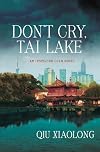
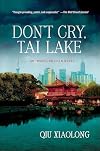
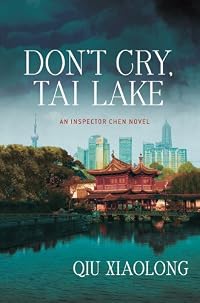
Offered a luxury vacation near Lake Tai, Chief Inspector Chen Cao is drawn into the murder investigation of a manufacturing plant director who had been accused of polluting the once-beautiful lake, a case that implicates the leader of a local ecological group.Tags
Recommendations















Member Recommendations
Member Reviews
I loved the early books in this series, but the last few have felt a touch too casual for me. Like the crime element is nearly unimportant compared to the other themes Xiaolong wishes to explore. Here, I would have loved a heightened sense of urgency in terms of the environmental concern or even the relationship concern if not the crime, but instead it feels as if the slow, red-tape-type concerns of the bureaucracy above the detective leak into everything else and affect a lack of urgency.
The writing was still lovely, the case and the characters still interesting, but it all felt so casual that I just didn't enjoy it as much as I'd like to. It was fine...but so far, it's probably my least favorite of the series.
The writing was still lovely, the case and the characters still interesting, but it all felt so casual that I just didn't enjoy it as much as I'd like to. It was fine...but so far, it's probably my least favorite of the series.
I enjoyed this mystery set in the Chinese city of Wuxi and featuring Inspector Chen, a poet, whose poetry is sprinkled liberally throughout the novel. This story is brimming with atmosphere providing a real sense of the place and culture of China. His boss has arranged for Chen to have a luxury vacation at the beautiful Tai Lake with instructions to write a report of the area. When the head of a chemical plant that pours toxic waste into the lake is murdered, it becomes Chen's unofficial investigation. The local police regard Chen as a celebrity who is welcomed as much for his star quality as his investigative skills. I could quibble about some coincidences leading to the solution but enjoyed the story - and Chen - enough to reading show more more of the series. show less
This is the fifth of the Inspector Chen Cao stories that I have read, and the one I enjoyed least. The fascinating thing about these books is the insight they give into contemporary China, especially the lives of ordinary people, and "Don't Cry, Tai Lake" still does that. It also deals with an issue, environmental pollution, that is undoubtedly of major concern in China, as elsewhere.
A lot of things annoyed me, however. Principally, various strained coincidences that the plot depends on and, even more, what I consider various weaknesses in the style of writing. Sometimes I wonder if Qiu's clichés and solecisms are a deliberate attempt to add to the 'foreign' atmosphere (as do the frequent references to Chinese classics and sayings), show more but I increasingly found myself more involved in the typos (in the ebook) and poor style than in the characters, location or plot. Maybe Qiu just needs a new editor! show less
A lot of things annoyed me, however. Principally, various strained coincidences that the plot depends on and, even more, what I consider various weaknesses in the style of writing. Sometimes I wonder if Qiu's clichés and solecisms are a deliberate attempt to add to the 'foreign' atmosphere (as do the frequent references to Chinese classics and sayings), show more but I increasingly found myself more involved in the typos (in the ebook) and poor style than in the characters, location or plot. Maybe Qiu just needs a new editor! show less
In Don't Cry, Tai Lake, Qiu Xiaolong's detective, Inspector Chen, investigates the murder of the head of a state-run chemical company that is about to go public. Chen is supposed to be on vacation--a vacation arranged for him by his mentor, Comrade Secretary Zhao. Apparently, Zhao wants to bring the lake's pollution to the attention of the Party, so he needs Chen to visit Wuxi and write a report on what he finds there (which in this case is murder).
Chen not only finds a murder mystery, but a romance, too, with a young environmental scientist, Shanshan. There is a air of nostalgia about the entire novel, partly because of Chen's own backstory, but also because of his frequent references to poetry, both Chinese and western. There is also show more the contrast between the appearance of the lake and its hidden but serious environmental problems because of China's boom in terms of development.
I enjoyed the book, not so much because of the mystery, but because of Chen himself as a character and because of his poetry. show less
Chen not only finds a murder mystery, but a romance, too, with a young environmental scientist, Shanshan. There is a air of nostalgia about the entire novel, partly because of Chen's own backstory, but also because of his frequent references to poetry, both Chinese and western. There is also show more the contrast between the appearance of the lake and its hidden but serious environmental problems because of China's boom in terms of development.
I enjoyed the book, not so much because of the mystery, but because of Chen himself as a character and because of his poetry. show less
Por una vez, la llamada de un alto cargo que recibe el inspector jefe Chen Cao, del Departamento de Policía de Shanghai, es para darle una buena noticia: le ofrecen unas vacaciones en el complejo privado que el partido tiene en Wuxi, a orillas del lago Tai. Pero a su llegada descubre que el lago, célebre por sus aguas cristalinas, está contaminado por residuos tóxicos procedentes de las fábricas de la zona. El director de una de esas fábricas, un empresario del que Pekín esperaba «grandes cosas», aparece asesinado, y al poco detienen a un activista medioambiental al que acusan del crimen. Chen conoce poco después a Shanshan, una bella joven, ansiosa por demostrar la inocencia del sospechoso. Y se ve obligado a actuar con show more cautela. Rodeado de corrupción, presiones políticas y rencores largo tiempo ocultos, Chen querrá desentrañar los motivos que se esconden tras el asesinato. show less
While it was a great mystery, I like how Qiu hit on the environmental issues and how as long as the area is thriving pollution is a problem for tomorrow not today. I enjoyed the story and the twists when you thought you knew who did it, another light was brought in to make you think otherwise. I enjoyed the connection of all the characters. A good read!
Anti-nuevo-capitalist, anti-bureaucratic, anti-corruption, pro-ecology tale of up-and-coming favored son, insider poet-detective. Plain, simple narrative--no nuances, just the facts, mam. Poetry (ancient and new) with traditional (and unknown to me) Chinese images. A view of the new China (from afar--author lives in the US)
Members
- Recently Added By
Author Information

42+ Works 5,348 Members
Qiu Xiaolong teaches Chinese Literature at Washington University.
Series

Work Relationships
Has the adaptation
Common Knowledge
- Canonical title
- Don't Cry, Tai Lake
- Original title
- Don’t Cry, Tai Lake
- Original publication date
- 2012-05
- People/Characters
- Chen Cao (Chief Inspector); Shanshan; Yu (Detective); Huang (Sergeant); Uncle Wang
- Important places*
- Tai Hu; Cina
- Dedication
- For the polluted lakes and rivers in China
- First words
- Chief Inspector Chen Cao of the Shanghai Police Bureau found himself standing in front of the gate to the Wuxi Cadre Recreation Center.
- Quotations
- Development is the one and only truth - Comrade Deng Xiaoping
- Last words
- (Click to show. Warning: May contain spoilers.)He wondered whether he would be able to take a nap on the train, feeling the onslaught of a splitting headache.
- Original language
- English
*Some information comes from Common Knowledge in other languages. Click "Edit" for more information.
Classifications
Statistics
- Members
- 240
- Popularity
- 134,957
- Reviews
- 13
- Rating
- (3.36)
- Languages
- 6 — English, Finnish, French, German, Italian, Spanish
- Media
- Paper, Ebook
- ISBNs
- 20
- ASINs
- 6