
On This Page
Description
Richard Adams's Watership Down was a number one bestseller, a stunning work of the imagination, and an acknowledged modern classic. In Shardik Adams sets a different yet equally compelling tale in a far-off fantasy world. Shardik is a fantasy of tragic character, centered on the long-awaited reincarnation of the gigantic bear Shardik and his appearance among the half-barbaric Ortelgan people. Mighty, ferocious, and unpredictable, Shardik changes the life of every person in the story. His show more advent commences a momentous chain of events. Kelderek the hunter, who loves and trusts the great bear, is swept up by destiny to become first devotee and then prophet, then victorious soldier, then ruler of an empire and priest-king of Lord Shardik-Messenger of God-only to discover ever-deeper layers of meaning implicit in his passionate belief in the bear's divinity. show lessTags
Recommendations





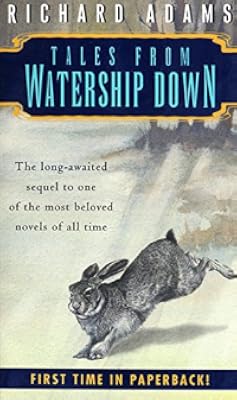
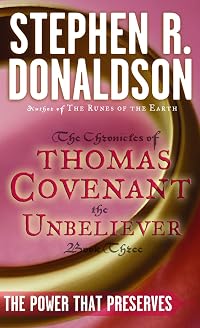


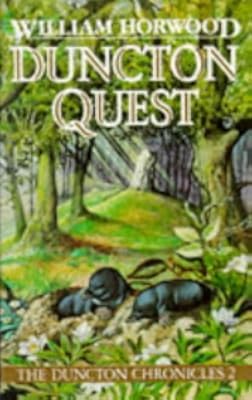


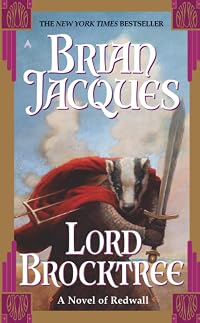










Member Recommendations


Member Reviews
This is a book to become lost in, a story that happens in our world and yet not in our world, bearing elements that are familiar and foreign at the same time. Adams' setting is a mystery, perhaps somewhere around Mesopotamia, perhaps before the first civilizations we know of have risen, but it is never made clear. At its center is Kenderick the Hunter who encounters the fabled Shardik, an enormous bear out of legend. This has repercussions both for his community and for himself.
It is effectively a straight-up fantasy novel with all the trimmings - action, adventure, intrigue - but it has never truly been marketed as such, for some reason. It does lack the quest motif, substituting a study of how religion guides us, or how it is used to show more manipulate others to do our bidding. Countless wars have been fought in the name of religion, and the actions of this fictional bear cult stand as metaphor for any one of them. Kelderick is portrayed as more given to rational self interest when the bear isn't around; this element is well done.
Adams' message seems to be "Woe betide those who believe they know the will of God", but the bear Shardik is a powerful symbol that leaves generous room for it to be interpreted in multiple ways. Whether it is a god's messenger on earth or only a titanic force of nature, it presents as "something greater than ourselves", and the story revolves around how people react to that, what they build around it, and what are the consequences. In my preferred view Shardik is merely a big dumb animal following its nature, and Bel-ka-Trazet knew what he was talking about. I'm impressed that I felt welcomed to read it that way and enjoy the story without a narrower view being forced upon me. I was neither spoon-fed nor gagged with one. show less
It is effectively a straight-up fantasy novel with all the trimmings - action, adventure, intrigue - but it has never truly been marketed as such, for some reason. It does lack the quest motif, substituting a study of how religion guides us, or how it is used to show more manipulate others to do our bidding. Countless wars have been fought in the name of religion, and the actions of this fictional bear cult stand as metaphor for any one of them. Kelderick is portrayed as more given to rational self interest when the bear isn't around; this element is well done.
Adams' message seems to be "Woe betide those who believe they know the will of God", but the bear Shardik is a powerful symbol that leaves generous room for it to be interpreted in multiple ways. Whether it is a god's messenger on earth or only a titanic force of nature, it presents as "something greater than ourselves", and the story revolves around how people react to that, what they build around it, and what are the consequences. In my preferred view Shardik is merely a big dumb animal following its nature, and Bel-ka-Trazet knew what he was talking about. I'm impressed that I felt welcomed to read it that way and enjoy the story without a narrower view being forced upon me. I was neither spoon-fed nor gagged with one. show less
Shardik is fantasy novel about a simple hunter who one day encounters a giant bear. After that first chance meeting, Kelderek’s fate becomes inextricably entwined with that of Shardik the Bear, the physical embodiment of the Power of God as worshipped by an Ortelgan cult. Adams never explicitly reveals whether or not Shardik is the actual embodiment of divinity. The characters themselves have differing opinions on whether Shardik is a divine creature or merely a savage animal. And there is no lack of savagery. Shardik kills many during the course of the story, if not indiscriminately then at least whimsically on more than one occasion, and being his worshipper in no way guarantees safety.
Although the story is basically about a man show more hunting a big bear, it’s also about worship, slavery, pride, humility, savagery, betrayal, forgiveness and contentment. It’s meandering and at times overflowing with flowery passages, particularly ones describing emotions, but it works. Although I prefer Maia the two novels complement one another, and I really enjoyed seeing the Beklan Empire from another point of view. show less
Although the story is basically about a man show more hunting a big bear, it’s also about worship, slavery, pride, humility, savagery, betrayal, forgiveness and contentment. It’s meandering and at times overflowing with flowery passages, particularly ones describing emotions, but it works. Although I prefer Maia the two novels complement one another, and I really enjoyed seeing the Beklan Empire from another point of view. show less
Adams is best-known for Watership Down, an excellent novel about rabbits. Two years after that book’s massive success, he published a… straight-up fantasy novel. It wasn’t published as such, of course. If anything, Penguin tried hard to pretend Adams had pretty much invented fantasy with their marketing for the novel. But Shardik is set in an invented land, at a technology level not far above Bronze Age, and is about a giant bear considered to be a god, or an avatar of a god, by a race of people. So it’s basically a fantasy novel. It just happens to be better written than is typical for genre fiction. The title refers to an ancient god of the Ortelgans, personified as a giant bear, who was kept on an island inhabited by show more priestesses. But the empire fell, the capital Bekla was conquered, and a new empire rose in its place. Shardik died and did not reappear. Generations later, a giant bear appears on the island the Ortelgans, now simple hunter folk, settled on after the fall of their empire. And they see it as the second coming of their god, and use it to take back Bekla and re-establish their empire. But they are not the people they once were. The novel mostly concerns Kelderek, the hunter who discovers Shardik, becomes his priest, and then the priest-king of Bekla. But it’s an empire doomed to failure, and Shardik escapes after an attempt on its life. Kelderek goes after him, and the two travel about the country – there’s a handy map, of course – both sinking further and further from what they were as the book progresses. Kelderek encounters enemies he made while priest-king, and evil people he helped create. It’s all a bit grim, and Adams has this weird trick of referencing culture that would be known to a well-educated Brit in the 1970s, which does sort of kill the immersion. You do not, after all, except to see a mention of Shakespeare in a secondary-world fantasy novel. I suspect I wanted to like Shardik more than I did. It felt like it didn’t try hard enough to be a fantasy, even though the world-building was generally good. The quality of the prose, however, was a definite bonus. show less
Although I read Watership Down many years ago, I am sure I remember the tone of it well. It was playful and endearing as befits a tale made up for children. Shardik is so unlike Watership Down it is difficult to believe it was written by the same author.
As I was reading it I was trying to remember what other work of literature it reminded me of. At first I thought it was the Lord of the Rings and, of course, Shardik shares some aspects of LOTR especially considering Adams is Oxford educated. But that analogy didn't seem quite right so then I wondered if it was the Wizard of Oz particularly when Kelderek was living in Bekla as the priest king. He was certainly as much a charlatan in that role as the Wizard was in his. But that book was show more definitely meant for children and Shardik is anything but a children's book. It wasn't until I read the dedication page again which includes a quotation (in Greek) from the Odyssey that it hit me. Kelderek is on a quest like Odysseus from the moment he encounters Shardik. There's even an enchanted isle with priestesses that figures prominently.
Some of the details, especially toward the end of the book, were almost too graphic to read. Adams certainly knew how to personify evil. And I felt so sorry for the poor bear! However, the secret message intended for Kelderek from Shardik and the message for all of the readers is certainly a valuable one. I'm very glad I finally took the time to read it. show less
As I was reading it I was trying to remember what other work of literature it reminded me of. At first I thought it was the Lord of the Rings and, of course, Shardik shares some aspects of LOTR especially considering Adams is Oxford educated. But that analogy didn't seem quite right so then I wondered if it was the Wizard of Oz particularly when Kelderek was living in Bekla as the priest king. He was certainly as much a charlatan in that role as the Wizard was in his. But that book was show more definitely meant for children and Shardik is anything but a children's book. It wasn't until I read the dedication page again which includes a quotation (in Greek) from the Odyssey that it hit me. Kelderek is on a quest like Odysseus from the moment he encounters Shardik. There's even an enchanted isle with priestesses that figures prominently.
Some of the details, especially toward the end of the book, were almost too graphic to read. Adams certainly knew how to personify evil. And I felt so sorry for the poor bear! However, the secret message intended for Kelderek from Shardik and the message for all of the readers is certainly a valuable one. I'm very glad I finally took the time to read it. show less
Perhaps Adams was rather tired of people saying "I loved your book about the Bunnies". I think he was, for then he wrote this book about how people view a brush with nature. A whole religion is built up by people whose contact with this one particular animal. It's a good novel visiting the worshipper's relation to his God, the public's reaction to meeting really motivated followers, and some of the acts empowered by the bear. It is also good about how people react with each other on any important topic, and a very good construction of an imagined world. The follow-up book "Maia" is set in the same place, and is more conventional fantasy.
This is a fantasy set in a pre-industrial, vaguely middle-eastern or South American world. A small, out-of-the-way cult is energised when their object of veneration, a gigantic bear, becomes real. The cult leaders see the coming of the bear as a vehicle to bring the world closer to God. Warlords and politicians co-opt the worship and fear of the bear to conquer the region. Over time political and military expediency dilute the original cult message and antagonise the conquered lands. An uprising results in the bear escaping and the man who originally found and captured the creature, once a lowly hunter and now the king of the empire, sets out at first to recapture the beast. Slowly he realises how corrupt his empire and his religion show more have become and he starts seeking redemption. A reconnection with the cult priestesses and an encounter with a child slave trader (child slavery is used here to represent the depravity of the empire) leads him to salvation.
Strong descriptive writing and a powerful evocation of nature shore up this book. Action set pieces are well done. The weakest element of the book is the depiction of the key characters who never seem real to me. show less
Strong descriptive writing and a powerful evocation of nature shore up this book. Action set pieces are well done. The weakest element of the book is the depiction of the key characters who never seem real to me. show less
As a child, I loved Watership Down, and so read Shardik when I was probably much too young for it. I was interested in reading it again as an adult, having loved Watership Down so much earlier in the year.
The concept is that God has come to earth as a giant bear / sent a giant bear as his messenger, to a simple tribe of island dwellers in the imaginary Beklan Empire. The book toys with the ambiguity of whether the bear is genuinely of God, or whether the naive and simple islanders are over-reacting to coincidence, but by the end of the 500 pages coincidence has piled on coincidence to the point where I would find it hard to write any plausible thesis where the bear is not controlled by a divine power, or at least an omnipotent author.
It show more falls into a lot of the cliches one would imagine a book written by a white Englishman in the 70s about a fantasy empire would. There are beautiful dusky priestesses, slavery, mystic rituals, etc etc.
It is also unbearably slow, after the sort of page turning YA fiction I've been whizzing through recently.
The only bit I remembered clearly from reading it as a child is the section where the hero is captured by the slave trader. It was one of the first and most striking books I'd read where the hero is completely subjected to someone Evil, and it's still powerful (if, with more critical eyes, slightly cliched slave-misery-lit)
But it is, in the end, a mostly-engaging fairy tale / allegory. The morals are a little heavy handed - people mess up when they pretend that their own desires for power are what God really wants, there is always forgiveness and a chance of redemption for those that seek it, what goes around comes around and what you inflict on others you will suffer yourself, and 'there isn't to be a deserted or unhappy child in the world. In the end, that's the world's only security: children are the future, you see. If there were no unhappy children then the future would be secure.' But they are good morals. show less
The concept is that God has come to earth as a giant bear / sent a giant bear as his messenger, to a simple tribe of island dwellers in the imaginary Beklan Empire. The book toys with the ambiguity of whether the bear is genuinely of God, or whether the naive and simple islanders are over-reacting to coincidence, but by the end of the 500 pages coincidence has piled on coincidence to the point where I would find it hard to write any plausible thesis where the bear is not controlled by a divine power, or at least an omnipotent author.
It show more falls into a lot of the cliches one would imagine a book written by a white Englishman in the 70s about a fantasy empire would. There are beautiful dusky priestesses, slavery, mystic rituals, etc etc.
It is also unbearably slow, after the sort of page turning YA fiction I've been whizzing through recently.
The only bit I remembered clearly from reading it as a child is the section where the hero is captured by the slave trader. It was one of the first and most striking books I'd read where the hero is completely subjected to someone Evil, and it's still powerful (if, with more critical eyes, slightly cliched slave-misery-lit)
But it is, in the end, a mostly-engaging fairy tale / allegory. The morals are a little heavy handed - people mess up when they pretend that their own desires for power are what God really wants, there is always forgiveness and a chance of redemption for those that seek it, what goes around comes around and what you inflict on others you will suffer yourself, and 'there isn't to be a deserted or unhappy child in the world. In the end, that's the world's only security: children are the future, you see. If there were no unhappy children then the future would be secure.' But they are good morals. show less
Members
- Recently Added By
Published Reviews
ThingScore 75
I have reread Shardik several times now, however, and what most impresses me most about it is the depth of the historical and sociological detail.
added by KarlNarveson
Lists

Best Fantasy Novels
821 works; 361 members
Speculative Fiction to Read
706 works; 32 members

Swinging Seventies
255 works; 18 members

Favorite Animal Fiction
359 works; 156 members

Books We Resisted Reading
178 works; 110 members
Author Information

87+ Works 39,703 Members
Richard George Adams was born in Newbury, England on May 9, 1920. He enrolled at the University of Oxford in 1938, but his studies were interrupted by World War II. During the war, he served with the British airborne forces in the Middle East and India. After the war, he returned to Oxford and received a degree in history in 1948. He joined the show more Ministry of Housing and Local Government and worked his way up over 20 years to a senior post in the clean-air section of the environmental department. He retired in 1974 to become a full-time writer. His first his novel, Watership Down, was published in 1972. It received the Carnegie Medal in Literature in 1972 and the Guardian Children's Fiction Prize in 1973. His other books include Shardik, The Plague Dogs, Traveller, and Tales from Watership Down. He also wrote an autobiography entitled The Day Gone By. He died on December 24, 2016 at the age of 96. (Bowker Author Biography) show less
Some Editions
Awards and Honors
Awards
Distinctions
Series

Belongs to Publisher Series
Work Relationships
Common Knowledge
- Canonical title
- Shardik
- Original title
- Shardik
- Original publication date
- 1974
- People/Characters
- Shardik (bear); Kelderek; Melathys; The Tuginda; Bel-ka-Trazet; Ta-Kominion (show all 7); Elleroth
- Important places
- Streels of Urtah (fictitious); Quiso (fictitious); Ortelga (fictitious); Bekla (fictitious); Beklan Empire (fictitious); Zeray (fictitious)
- Epigraph
- Behold, I will send my messenger. . . . But who may abide the day of his coming? And who shall stand when he appeareth? For he is like a refiner's fire. . . .
Mal. 3:1-2
Superstition and accident manifest the will of God.
C. G. Jung - Dedication
- To my onetime Ward in Chancery
ALICE PINTO
with sincere affection, always - First words
- Even in the dry heat of the summer's end, the great forest was never silent.
- Last words
- (Click to show. Warning: May contain spoilers.)"That's a beautiful fire."
- Original language
- English UK
Classifications
- Genres
- Fiction and Literature, Fantasy, General Fiction
- DDC/MDS
- 823.914 — Literature & rhetoric English & Old English literatures English fiction 1900- 1901-1999 1945-1999
- LCC
- PZ4 .A2163 .S — Language and Literature Fiction and juvenile belles lettres Fiction and juvenile belles lettres Fiction in English
- BISAC
Statistics
- Members
- 2,324
- Popularity
- 8,524
- Reviews
- 22
- Rating
- (3.54)
- Languages
- 10 — Danish, Dutch, English, Finnish, German, Italian, Polish, Russian, Spanish, Swedish
- Media
- Paper, Audiobook, Ebook
- ISBNs
- 39
- ASINs
- 37