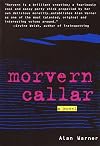
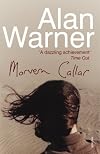
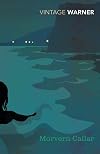
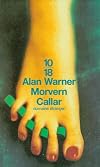
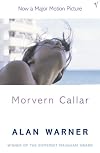
Morvern Callar
by Alan Warner
On This Page
Description
"It is off-season in a remote Highland sea port- 21-year-old Morvern Callar, a low-paid employee in the local supermarket, wakes one morning to find her strange boyfriend has committed suicide and is dead on their kitchen floor. Morvern's laconic reaction is both intriguing and immoral. What she does next is even more appalling. . . Brutal, erotic, jarringly poetic and rich in a blood-dark humour, Morvern Callar is a powerful debut novel from a new Scottish writer.Tags
Recommendations






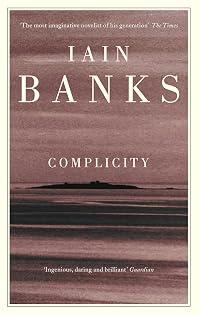

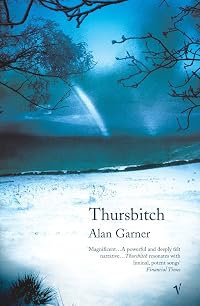
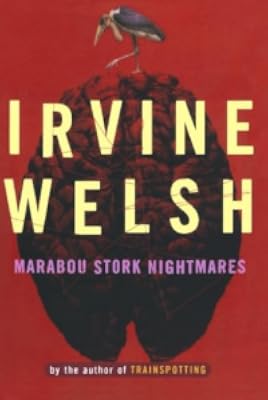
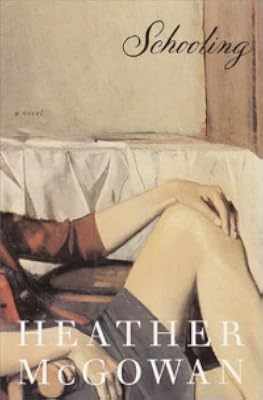



Member Recommendations
Member Reviews
First things first: Morvern Callar is not a 'nice' book, or at least, it is not populated by nice people. It's the sort of book such that if someone asks you if you're enjoying it, you'll probably say "no, but it's a good book". If you like to like your protagonists, or need your bad guys evil and your good guys angelic, put the book down and back slowly away.
Morvern is a woman who does some appalling things and she describes these things in the same breath as she talks about how she shaves her legs or which mix tape she likes. Although, while she does some deeply revolting things, is she a revolting person? Nearly all the characters commit similarly casual brutalities: watch out for the man with bandaged arms, the girl in the parade, show more the locals' pub stories and, most obviously, the opening suicide. Compare and contrast. Selfishness and violence manifest in many different ways in different people and Warner takes a refreshingly objective view of each.
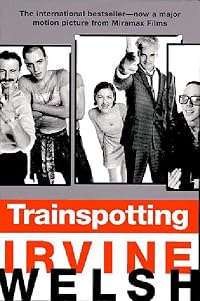
The other important aspect of this story is its telling in colloquial Scots. Warner's version is more subtle than, say, Irvine Welsh's in Trainspotting, but it has tremendous effect; as in making the story highly personal to Morvern and her voice (the novel is entirely first person narration), her own lack of self-justification is even more pronounced.
Also, I don't really know enough about it to say how this stands up as a comment on 90s raver culture, but I expect it would be an interesting extra layer, for those who could appreciate it. show less
Morvern is a woman who does some appalling things and she describes these things in the same breath as she talks about how she shaves her legs or which mix tape she likes. Although, while she does some deeply revolting things, is she a revolting person? Nearly all the characters commit similarly casual brutalities: watch out for the man with bandaged arms, the girl in the parade, show more the locals' pub stories and, most obviously, the opening suicide. Compare and contrast. Selfishness and violence manifest in many different ways in different people and Warner takes a refreshingly objective view of each.
The other important aspect of this story is its telling in colloquial Scots. Warner's version is more subtle than, say, Irvine Welsh's in Trainspotting, but it has tremendous effect; as in making the story highly personal to Morvern and her voice (the novel is entirely first person narration), her own lack of self-justification is even more pronounced.
Also, I don't really know enough about it to say how this stands up as a comment on 90s raver culture, but I expect it would be an interesting extra layer, for those who could appreciate it. show less
Alan Warner's first novel is difficult, desolate, aching, and constantly alternates between feverish and frigid. It reflects the isolation of rural Scottish littoral communities and both the ambivalence and consequence of abandoning one's station and leaving others behind to languish in the static traps of expectations and 'home'. For Warner, it's self-referential and self-negating at the same time; for me, it's realistic, grotesque, recognizable, and, at times, Banksian. It can be difficult to enjoy something that makes us so uncomfortable, but there's a great deal of truth-telling in the author's hyper-stylized and colloquial narration, despite the fact that many simply don't to want to acknowledge it. This is not by any means a show more beautiful story, but the taste it leaves sure is extraordinary. show less
I used the goldish lighter on a Silk Cut.
A lonely, beautiful novel whose narrative voice will wow you and unsettle you in equal measure. Morvern Callar is a twenty-one-year-old girl who works in a supermarket in a run-down Highlands port town (probably some version of Oban); she wakes one morning before Christmas to find that her boyfriend has killed himself in their apartment. The distant, carefully-described way she reacts to this event is, in a sense, at the heart of the novel's fascination, certainly its initial pull on the reader. Like someone from an Icelandic saga, she describes her actions but not her emotions; ‘a sort of feeling went across me’ is about the most we are ever given.
You might see her as numb or in shock; you show more might with equal justification find her psychotically detached. But she is riveting. By turns naïve and knowing, undereducated but sure of what she wants, her voice is direct, colloquial, dialectal, instantly believable.
It was a dead clear freezing day with bluish sky the silvery sun and you saw all breath.
Uninterested in art or literature (her dismissal of novels is one of the many ironies of this, a first novel), she is however encyclopaedic on contemporary dance music; the text is shot through with track titles and mixtape listings, and there are several hypnotic scenes in clubs that made me feel exhausted and about a hundred years old. When the book came out, Warner was pegged with Irvine Welsh as part of some imagined new wave of Scottish ‘rave novelists’ but, really, it's James Kelman's quotidian, Scots-inflected narrative voices that are the more obvious influence here.
The narrative voice in this case is amazingly unreflective for a novel, focused only on facts and descriptions. These come out in a patois all her own that makes heavy use of blurring suffixes like -ish and -y and nominalisations in -ness. ‘Stars were dished up across all bluey nighttimeness,’ she says, looking at the sky. But this idiom is still capable of all kinds of gentle insights:
I woke and felt queerish. I could tell it was nighttime by the type of voice on telly.
The ‘cross-writing’ in particular hasn't worked for everyone – Warner has been criticised in some quarters for lacking the skill, or even the moral right, to adopt the voice of a young woman. I don't agree, but I do think Morvern's obsession with her own anatomy, clothing and personal hygiene might lead you to guess that her author is a man. In some books this can be charming, but I confess here I did find it a little unsettling. Still, in general I would maintain that this kind of ‘appropriation’ or ‘colonisation’ is really the whole point of fiction, and it's certainly one of the central themes of this novel.
A film adaptation from Lynne Ramsay in 2002 did a great job of capturing the poetic beauty of the novel, but it committed the cardinal sin of making Morvern Callar English, which I couldn't understand – it's not just that you lose the Scottishness of the central voice, but that part of what the book seems to be about is quite specifically being Scottish, growing up there, leaving Scotland, how Scotland relates to Europe. These themes make it an appealing novel to revisit at the moment, though its qualities are likely to speak to you any time, anywhere.
And this despite the fact that Morvern Callar herself is rather a quiet presence in the book: another of its ironies is that her story can seem so articulate, and of something that could not be expressed in standard English, while she as a character is almost mute at times – numb with shock, overwhelmed by friends, silenced by society. ‘Callar,’ Morvern is told by a receptionist at a Spanish resort – ‘ah, it means, ah, silence, to say nothing, maybe.’ Maybe not. show less
A lonely, beautiful novel whose narrative voice will wow you and unsettle you in equal measure. Morvern Callar is a twenty-one-year-old girl who works in a supermarket in a run-down Highlands port town (probably some version of Oban); she wakes one morning before Christmas to find that her boyfriend has killed himself in their apartment. The distant, carefully-described way she reacts to this event is, in a sense, at the heart of the novel's fascination, certainly its initial pull on the reader. Like someone from an Icelandic saga, she describes her actions but not her emotions; ‘a sort of feeling went across me’ is about the most we are ever given.
You might see her as numb or in shock; you show more might with equal justification find her psychotically detached. But she is riveting. By turns naïve and knowing, undereducated but sure of what she wants, her voice is direct, colloquial, dialectal, instantly believable.
It was a dead clear freezing day with bluish sky the silvery sun and you saw all breath.
Uninterested in art or literature (her dismissal of novels is one of the many ironies of this, a first novel), she is however encyclopaedic on contemporary dance music; the text is shot through with track titles and mixtape listings, and there are several hypnotic scenes in clubs that made me feel exhausted and about a hundred years old. When the book came out, Warner was pegged with Irvine Welsh as part of some imagined new wave of Scottish ‘rave novelists’ but, really, it's James Kelman's quotidian, Scots-inflected narrative voices that are the more obvious influence here.
The narrative voice in this case is amazingly unreflective for a novel, focused only on facts and descriptions. These come out in a patois all her own that makes heavy use of blurring suffixes like -ish and -y and nominalisations in -ness. ‘Stars were dished up across all bluey nighttimeness,’ she says, looking at the sky. But this idiom is still capable of all kinds of gentle insights:
I woke and felt queerish. I could tell it was nighttime by the type of voice on telly.
The ‘cross-writing’ in particular hasn't worked for everyone – Warner has been criticised in some quarters for lacking the skill, or even the moral right, to adopt the voice of a young woman. I don't agree, but I do think Morvern's obsession with her own anatomy, clothing and personal hygiene might lead you to guess that her author is a man. In some books this can be charming, but I confess here I did find it a little unsettling. Still, in general I would maintain that this kind of ‘appropriation’ or ‘colonisation’ is really the whole point of fiction, and it's certainly one of the central themes of this novel.
A film adaptation from Lynne Ramsay in 2002 did a great job of capturing the poetic beauty of the novel, but it committed the cardinal sin of making Morvern Callar English, which I couldn't understand – it's not just that you lose the Scottishness of the central voice, but that part of what the book seems to be about is quite specifically being Scottish, growing up there, leaving Scotland, how Scotland relates to Europe. These themes make it an appealing novel to revisit at the moment, though its qualities are likely to speak to you any time, anywhere.
And this despite the fact that Morvern Callar herself is rather a quiet presence in the book: another of its ironies is that her story can seem so articulate, and of something that could not be expressed in standard English, while she as a character is almost mute at times – numb with shock, overwhelmed by friends, silenced by society. ‘Callar,’ Morvern is told by a receptionist at a Spanish resort – ‘ah, it means, ah, silence, to say nothing, maybe.’ Maybe not. show less
SPOILER ALERT, KINDA: you know the eponymous narrator's boyfriend kills himself from the first sentence, but much of the novel's punch lies in the way she reacts, so stop reading this now and just pick up the damn book. You can finish it in a day.
Morvern Callar is a short mordant chronicle of one person's shocking indifference to another person's death. Think of it as a downmarket Scottish version of The Stranger. Warner's main trick is to never let us settle on how we should feel about his protagonist. On the one hand, reacting to your boyfriend's suicide the way she does is beyond the pale, but on the other hand he was a cradle-robbing creep who had the gall to off himself where his girlfriend was bound to find the body. Morvern lies show more and steals without a hint of conscience, but her only victim is already dead. At many points the novel could have become merely a smug portrait of disaffection, or pointless miserablism, but Warner employs some strong touches that manage to keep it on the rails. First there's the sense of place: the bleakness of the northern port town setting is palpable, and the Scottish slang Morvern narrates in gives the prose a distinctive feel. Also, woven in with the usual blank generation business is an effective mediation on the power of money. The novel's greatest source of tension comes not from Morvern's attempts to conceal a dead body, but from watching her squander the windfall that drops into her lap. Finally there's Morvern herself, whose callow youthfulness is just likable enough to win our sympathy. Of course youth fades, and the final chapter's intimation that Morvern has caught her last lucky break elevates the novel to something near tragedy. show less
Morvern Callar is a short mordant chronicle of one person's shocking indifference to another person's death. Think of it as a downmarket Scottish version of The Stranger. Warner's main trick is to never let us settle on how we should feel about his protagonist. On the one hand, reacting to your boyfriend's suicide the way she does is beyond the pale, but on the other hand he was a cradle-robbing creep who had the gall to off himself where his girlfriend was bound to find the body. Morvern lies show more and steals without a hint of conscience, but her only victim is already dead. At many points the novel could have become merely a smug portrait of disaffection, or pointless miserablism, but Warner employs some strong touches that manage to keep it on the rails. First there's the sense of place: the bleakness of the northern port town setting is palpable, and the Scottish slang Morvern narrates in gives the prose a distinctive feel. Also, woven in with the usual blank generation business is an effective mediation on the power of money. The novel's greatest source of tension comes not from Morvern's attempts to conceal a dead body, but from watching her squander the windfall that drops into her lap. Finally there's Morvern herself, whose callow youthfulness is just likable enough to win our sympathy. Of course youth fades, and the final chapter's intimation that Morvern has caught her last lucky break elevates the novel to something near tragedy. show less
I don't know how I feel about this or what it was I just read.... This was a difficult read because I'm not Scottish. I don't know Scottish slang or shorthand and had to google phrases every other page (hint: greeting means crying... don't ask me why). The book is written as free flowing thought from the mind of a young twenty something Scottish gal. The book opens up with her finding the body of her boyfriend in her kitchen after he commits suicide. From there the book takes off into a weird spiral. After crying initially she leaves the body for a few days and chain-smokes and drinks her way through town with her best friend. She is the emotionally oddest character I have ever read. Beyond that there is: sex, raves, drugs, drunks, show more introductions to people with weird names, body disposal, and the horror of working at a shitty supermarket.
If you can handle reading Irvine Walsh (Trainspotting) and Scottish prose then I am sure you will love the book and understand what in the hell is going on. I finished it. It wasn't awful, but I'm still confused. Perhaps the movie adaptation will shed some light on what in the hell is going on. Not for light readers or those easily confused. show less
If you can handle reading Irvine Walsh (Trainspotting) and Scottish prose then I am sure you will love the book and understand what in the hell is going on. I finished it. It wasn't awful, but I'm still confused. Perhaps the movie adaptation will shed some light on what in the hell is going on. Not for light readers or those easily confused. show less
This is a perfect book to read when it's dark and gloomy and possibly storming outside. That is the prevailing mood in this book - brooding and depressed. The story follows the title character ("Morvern" is gaelic for "sea-gap", and "Callar" is slang for someone who doesn't talk) - a highschool dropout who works fulltime at the local supermarket - from the jarring moment when she awakes to discover her dead boyfriend in the kitchen, across the rave scene in 1990's Continental Europe, and back to her home in the port of Oban, Scotland. Don't read this expecting to be uplifted, or to find inspiration for your own life. But it is an interesting character study.
Morvern is obsessed with music (mostly listened through her walkman), and show more throughout the book she tells the reader exactly to what song/artist/album she's listening. I think it would be interesting to make a playlist of these songs, and read the book so that it makes a kind of soundtrack.
One thing I found problematic was the fluidity of the Scottish accent of the main character. Through the first 3/4 of the book, she has a very beautiful, regional Scottish accent full of slang and nicknames. In the last 1/4 of the book, once Morvern has left Scotland and is living in Continental Europe, she completely loses that accent. In fact, her internal dialogue reads more like American English. It hurts the authenticity of the character. The reason for this language change is not explored or explained. In fact, it reads like perhaps the author wrote the last 1/4 of the book either before or after the rest of it - and with a sizable gap of time in between.
Other than this issue with language, the book is rather enjoyable. Not a "fun" book, but a page-turning and entertaining one. show less
Morvern is obsessed with music (mostly listened through her walkman), and show more throughout the book she tells the reader exactly to what song/artist/album she's listening. I think it would be interesting to make a playlist of these songs, and read the book so that it makes a kind of soundtrack.
One thing I found problematic was the fluidity of the Scottish accent of the main character. Through the first 3/4 of the book, she has a very beautiful, regional Scottish accent full of slang and nicknames. In the last 1/4 of the book, once Morvern has left Scotland and is living in Continental Europe, she completely loses that accent. In fact, her internal dialogue reads more like American English. It hurts the authenticity of the character. The reason for this language change is not explored or explained. In fact, it reads like perhaps the author wrote the last 1/4 of the book either before or after the rest of it - and with a sizable gap of time in between.
Other than this issue with language, the book is rather enjoyable. Not a "fun" book, but a page-turning and entertaining one. show less
In rereading this book, one of the things that really strike me is it's distinct 90ies style, something that I didn't reflect over at all the first time I read it about five years ago. Warner's slightly detatched attention to detail seems very much a product of it's time. It's a prose where it's equally important to describe what brand of cigarette a person smokes and what colour the ligher is (every time) as to tell tall tales on a bar or go into detail on how it feels to slip in the blood of your boyfriend after finding his dead body.
For this book, told in first person by Morvern Callar herself (a rare choice for a male writer indeed!) this style works really well. Never is she letting us know how she feels or what she thinks, keeping show more the writing almost behavouristic. But in the descriptions of events and actions her emoptions are seeping through, and the little things like when she suddenly sobs once becomes strangely moving.
Beginning in a small Scottish harbour town (could be Oban or Ullapool and surely any number of places that I haven't visited) this book gives a very dignfied picture of life in a small working class community. It's not cute by a long shot, but this unpretty picture is also full of warmth and a kind of respect. You get the feeling the writer really knows this place, these people, well enough to not have to give us the full story. Morvern Callar is a story of coming of age, saying goodbye, but eventually also about coming home. The book starts with Morvern coming home from work to find her boyfriend having committed suicide, and her decision not to report his death but rather to hide his body (a choice that becomes strangely understandable, even without an explanation). She discovers he's left her some money and goes on a holiday only to have her horizones widened and her life eventually changed. The novel loses some momentum towards the end, but it's well worth reading. And Morvern in her silent intelligence and sensualism, is a very memorable character. show less
For this book, told in first person by Morvern Callar herself (a rare choice for a male writer indeed!) this style works really well. Never is she letting us know how she feels or what she thinks, keeping show more the writing almost behavouristic. But in the descriptions of events and actions her emoptions are seeping through, and the little things like when she suddenly sobs once becomes strangely moving.
Beginning in a small Scottish harbour town (could be Oban or Ullapool and surely any number of places that I haven't visited) this book gives a very dignfied picture of life in a small working class community. It's not cute by a long shot, but this unpretty picture is also full of warmth and a kind of respect. You get the feeling the writer really knows this place, these people, well enough to not have to give us the full story. Morvern Callar is a story of coming of age, saying goodbye, but eventually also about coming home. The book starts with Morvern coming home from work to find her boyfriend having committed suicide, and her decision not to report his death but rather to hide his body (a choice that becomes strangely understandable, even without an explanation). She discovers he's left her some money and goes on a holiday only to have her horizones widened and her life eventually changed. The novel loses some momentum towards the end, but it's well worth reading. And Morvern in her silent intelligence and sensualism, is a very memorable character. show less
Members
- Recently Added By
Lists

The Guardian's 1000 Novels Everyone Must Read
1,005 works; 550 members

International IMPAC Dublin Literary Award
179 works; 6 members

1,001 BYMRBYD Concensus
723 works; 27 members

BBC Radio 4 Bookclub
340 works; 13 members

Cooper
79 works; 1 member
Author Information

15+ Works 2,029 Members
Awards and Honors
Awards
Common Knowledge
- Canonical title*
- Rave girl
- Original publication date
- 1995
- People/Characters
- Morvern Callar
- Important places
- Oban, Argyll and Bute, Scotland, UK; Connel, Argyll and Bute, Scotland, UK; Spain
- Related movies
- Morvern Callar (2002 | IMDb)
- Epigraph
- Mr Clay in the same hesitating manner told him that he had in mind books and accounts, not of deals and bargains, but of other things which people at times had put down, and which other did at times read. The clerk reflected ... (show all)in this matter and repeated, no, he had never heard of such books.
Isak Dinesen, The Immortal Story. - Dedication
- This novel: for Heather Black, for Holger Czukay and Peter Brötzman. For Duncan McLean and remembering G. Cunningham (1965-1989).
- First words
- HE'D CUT His throat with the knife.
- Last words
- (Click to show. Warning: May contain spoilers.)I started the walking forwards into that night.
- Blurbers
- Hornby, Nick
- Original language
- English
*Some information comes from Common Knowledge in other languages. Click "Edit" for more information.
Classifications
Statistics
- Members
- 939
- Popularity
- 28,217
- Reviews
- 21
- Rating
- (3.49)
- Languages
- 6 — Dutch, English, French, German, Italian, Swedish
- Media
- Paper
- ISBNs
- 19
- ASINs
- 5