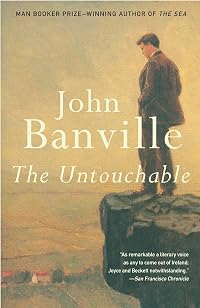
The Untouchable
by John Banville
On This Page
Description
The story of British Cold War spies told in the form of a memoir by Sir Victor Maskell, a respected art historian unmasked as an agent of the Soviet Union. He describes who they were and why they did it--why he did it--tracing their evolution from the original 1930s Cambridge university graduates to the present. By the author of Athena.Tags
Recommendations


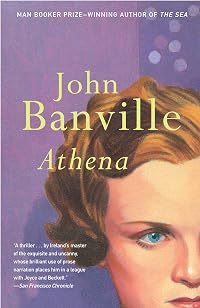







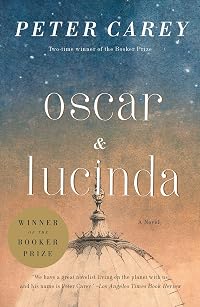
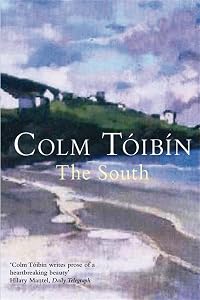
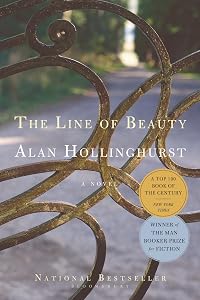

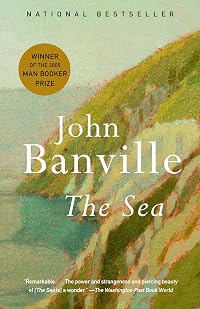


Member Recommendations

gtross If you enjoyed "The Untouchable" for its portrayal of upper middle class English life between the wars, during the Second World War, and after, then I think you would also enjoy the books that compose "A Dance to the Music of Time," as its characters are drawn largely from the same milieu. If, on the other hand, it's the spy plot and the whole Anthony Blunt roman à clef that you like, then you would probably be less pleased with "A Dance to the Music of Time."
Member Reviews
The novel is the memoir of Victor Maskell, scion of the estate of Carrickdrum in Northern Ireland, an Art Historian, expert on Poussin; and a spy for the USSR since his time at Cambridge in the 1930s. His journal is written down as if for Miss Serena Vandeleur, a journalist who comes to him after his exposure to the press long, long after the Security Services had become aware of his treacherous activities. He thus bears a more than superficial resemblance to Anthony Blunt but doubtless the parallels are not entirely exact.
The attention here is incidental but Banville has previously had painting and painters as a subject - as in The Sea, Athena, The Book of Evidence and Ghosts. The focus here (obviously drawn from Blunt's non-espionage show more career) is Poussin, specifically Maskell's prized possession, The Death of Seneca, but, in keeping with the book's theme of duplicity and subterfuge, there is a suggestion that the work is not genuine, or at least not by Poussin.
The novel is wonderfully written. Each sentence is in perfect balance; a work of art in itself, the text studded with unusual observations, “The silence that fell, or rather rose – for silence rises, surely?” or comments, “He was genuinely curious about people – the sure mark of the second-rate novelist,” and the occasional barb, “Trying for the common touch .. and failing ridiculously.” The literary allusions include a reference to Odysseus’s men drinking sea-dark wine.
There are subtle inferences to the insights of a spy, “He made the mistake of thinking that the way to be convincing is to put on a false front,” and the regrets of the trade, “It is odd, how the small dishonesties are the ones that snag in the silk of the mind,” and later, “It is the minor treacheries that weigh most heavily on the heart.” On encountering a tramp with a dog inside his coat Maskell tells us, "(I was) ashamed that I felt more sorrow for the dog than I did for the man. What a thing it is, the human heart."
Maskell claims almost from the outset to have been disenchanted with the USSR, a feeling to which his visit there in the 30s only contributed, and that his controllers consistently misunderstood England (as he puts it.) “Much of my time and energy ... was spent trying to teach Moscow to distinguish between form and content in English life.” Despite his betrayals he says, “I was nothing less than an old-fashioned patriot.” In mitigation he asks, “who could have remained inactive in this ferocious century?” and avers, "We should have had no mercy, no qualms. We would have brought down the whole world."
He receives the Order of the Red Banner (his medal glimpsed only once by him before being hidden away by his handler) for contributing to the Soviet victory at Kursk by transferring details, relayed from Bletchley, of a new German tank design. How much such information really affected that battle is of course debatable.
Some of the dialogue is representative of the times in which the book is set, “Mind if I turn off this nigger racket?” and "'What's the matter with the dago, sir?'" being cases in point.
One of Maskell’s defining features is his homosexuality (though he came to it late, after marriage to the sister of one of his University friends.) Of a lover of his he tells us, "Patrick had all the best qualities of a wife, and was blessedly lacking in two of the worst: he was neither female, nor fertile,” and further comments “(I ask myself..... if women fully realise how deeply, viscerally, sorrowfully, men hate them.)" He is of the opinion that in the fifties "to be queer was very bliss.... the last great age of queerdom." The "young hotheads" of the narrator's present day, "do not seem to appreciate, or at least seem to wish to deny, the aphrodisiac properties of secrecy and fear."
Part of his early protection from wider exposure was that he was sent by the King to Bavaria after the war to retrieve some potentially compromising papers. A distant relation, he refers sardonically to the Queen as Mrs W.
He has a jaundiced view of humanity and at one point he describes the American system as “itself, so demanding, so merciless, undeluded as to the fundamental murderousness and venality of humankind and at the same time grimly, unflaggingly optimistic.”
His observation about his work on Poussin, that he was trying "to pull together into a unity all the disparate strands of character and inspiration and achievement that make up this singular being," might be a description of the novel itself. In The Untouchable Banville has laid out for us a life in just such terms.
It is all a fascinating examination of the existence of a spy. As he ponders who it was who unmasked him - possibly twice - Maskell begins to question everything about his life but asides such as, "My memory is not as good as it's supposed to be. I may have misrecalled everything, got all the details wrong," and, "As to this - what? this memoir? this fictional memoir?" point to the unreliability of his account.
Brilliant stuff. show less
The attention here is incidental but Banville has previously had painting and painters as a subject - as in The Sea, Athena, The Book of Evidence and Ghosts. The focus here (obviously drawn from Blunt's non-espionage show more career) is Poussin, specifically Maskell's prized possession, The Death of Seneca, but, in keeping with the book's theme of duplicity and subterfuge, there is a suggestion that the work is not genuine, or at least not by Poussin.
The novel is wonderfully written. Each sentence is in perfect balance; a work of art in itself, the text studded with unusual observations, “The silence that fell, or rather rose – for silence rises, surely?” or comments, “He was genuinely curious about people – the sure mark of the second-rate novelist,” and the occasional barb, “Trying for the common touch .. and failing ridiculously.” The literary allusions include a reference to Odysseus’s men drinking sea-dark wine.
There are subtle inferences to the insights of a spy, “He made the mistake of thinking that the way to be convincing is to put on a false front,” and the regrets of the trade, “It is odd, how the small dishonesties are the ones that snag in the silk of the mind,” and later, “It is the minor treacheries that weigh most heavily on the heart.” On encountering a tramp with a dog inside his coat Maskell tells us, "(I was) ashamed that I felt more sorrow for the dog than I did for the man. What a thing it is, the human heart."
Maskell claims almost from the outset to have been disenchanted with the USSR, a feeling to which his visit there in the 30s only contributed, and that his controllers consistently misunderstood England (as he puts it.) “Much of my time and energy ... was spent trying to teach Moscow to distinguish between form and content in English life.” Despite his betrayals he says, “I was nothing less than an old-fashioned patriot.” In mitigation he asks, “who could have remained inactive in this ferocious century?” and avers, "We should have had no mercy, no qualms. We would have brought down the whole world."
He receives the Order of the Red Banner (his medal glimpsed only once by him before being hidden away by his handler) for contributing to the Soviet victory at Kursk by transferring details, relayed from Bletchley, of a new German tank design. How much such information really affected that battle is of course debatable.
Some of the dialogue is representative of the times in which the book is set, “Mind if I turn off this nigger racket?” and "'What's the matter with the dago, sir?'" being cases in point.
One of Maskell’s defining features is his homosexuality (though he came to it late, after marriage to the sister of one of his University friends.) Of a lover of his he tells us, "Patrick had all the best qualities of a wife, and was blessedly lacking in two of the worst: he was neither female, nor fertile,” and further comments “(I ask myself..... if women fully realise how deeply, viscerally, sorrowfully, men hate them.)" He is of the opinion that in the fifties "to be queer was very bliss.... the last great age of queerdom." The "young hotheads" of the narrator's present day, "do not seem to appreciate, or at least seem to wish to deny, the aphrodisiac properties of secrecy and fear."
Part of his early protection from wider exposure was that he was sent by the King to Bavaria after the war to retrieve some potentially compromising papers. A distant relation, he refers sardonically to the Queen as Mrs W.
He has a jaundiced view of humanity and at one point he describes the American system as “itself, so demanding, so merciless, undeluded as to the fundamental murderousness and venality of humankind and at the same time grimly, unflaggingly optimistic.”
His observation about his work on Poussin, that he was trying "to pull together into a unity all the disparate strands of character and inspiration and achievement that make up this singular being," might be a description of the novel itself. In The Untouchable Banville has laid out for us a life in just such terms.
It is all a fascinating examination of the existence of a spy. As he ponders who it was who unmasked him - possibly twice - Maskell begins to question everything about his life but asides such as, "My memory is not as good as it's supposed to be. I may have misrecalled everything, got all the details wrong," and, "As to this - what? this memoir? this fictional memoir?" point to the unreliability of his account.
Brilliant stuff. show less
“Espionage has something of the quality of a dream. In the spy’s world, as in dreams, the terrain is always uncertain. You put your foot on what looks like solid ground and it gives way under you and you go into a kind of free fall, turning slowly tail over tip and clutching on to things that are themselves falling. This instability, this myriadness that the world takes on, is both the attraction and the terror of being a spy.” – John Banville, The Untouchable
Seventy-two-year-old protagonist Victor Markell has been exposed as a spy and publicly disgraced. He tells his story to a woman who wants to write his biography. Markell was born in Northern Ireland, son a bishop, but lived in England much of his adult life. Most of the show more story takes place in WWII in the UK, and describes Victor’s life, including marriage and children, lifestyle once he determines he is gay, interest in art, journey to the Soviet Union, and passing of information to Soviet agents. Victor tells his life story in first person in the style of a fictional memoir.
If you are looking for a spy thriller, this is not it. This is a slowly developing character study of a not very likeable person and his unpleasant friends. It is filled with lots of alcohol consumption and sexual liaisons. Victor is vain and self-absorbed. He ignores his family and provides only the flimsiest rationale for his involvement in espionage.
The prose is the highlight of this book. Banville writes beautifully. For example, “How cunningly the grieving heart seeks comfort for itself, conjuring up the softest of sorrows, the most sweetly piercing recollections, in which it is always summer, replete with birdsong and the impossible radiance of a transfigured past. I leaned on a rock and gently wept, and saw myself, leaning, weeping, and was at once gratified and ashamed.”
The story could have been more fully developed and the first half is more compelling than the second. The plotline revolves around figuring out who betrayed Victor to the authorities, but the plot is secondary to the characterization and the writing. This is the second of Banville’s books I have read. While this one is worth reading, I much prefer, and highly recommend, The Sea. show less
Seventy-two-year-old protagonist Victor Markell has been exposed as a spy and publicly disgraced. He tells his story to a woman who wants to write his biography. Markell was born in Northern Ireland, son a bishop, but lived in England much of his adult life. Most of the show more story takes place in WWII in the UK, and describes Victor’s life, including marriage and children, lifestyle once he determines he is gay, interest in art, journey to the Soviet Union, and passing of information to Soviet agents. Victor tells his life story in first person in the style of a fictional memoir.
If you are looking for a spy thriller, this is not it. This is a slowly developing character study of a not very likeable person and his unpleasant friends. It is filled with lots of alcohol consumption and sexual liaisons. Victor is vain and self-absorbed. He ignores his family and provides only the flimsiest rationale for his involvement in espionage.
The prose is the highlight of this book. Banville writes beautifully. For example, “How cunningly the grieving heart seeks comfort for itself, conjuring up the softest of sorrows, the most sweetly piercing recollections, in which it is always summer, replete with birdsong and the impossible radiance of a transfigured past. I leaned on a rock and gently wept, and saw myself, leaning, weeping, and was at once gratified and ashamed.”
The story could have been more fully developed and the first half is more compelling than the second. The plotline revolves around figuring out who betrayed Victor to the authorities, but the plot is secondary to the characterization and the writing. This is the second of Banville’s books I have read. While this one is worth reading, I much prefer, and highly recommend, The Sea. show less
I heard that Banville was one of "the" Irish novelists and I was at a book sale and picked this one up for $2. I have to say, the man writes really well and is an expert with the somewhat amusing metaphor or simile. It's not really a spy novel with intrigue, tradecraft, and a thrilling plot. It's about an art historian who hands over useless info to the Russians. (An amusing -- but not by design -- section is about his recruitment; he's actually taken to the Kremlin and talked to by some important government functionary. Here is where Banvillle shows how little he knows about espionage.)
What it's really about is the character Maskell writing his memoir after he's been outed as an agent (he's 72 at the time). Here you need some show more suspension of disbelief as he recounts long conversations and details that no one would remember 40 years later; here's one I picked at random:
"Our footsteps plashed on the pavement, and as we walked from the light of one lamp to another our shadows stood up hastily to meet us and then fell down on their backs behind us."
It's atmospheric and perhaps symbolic, but unless you were writing this just after it happened, it's not something you'd recall 40 years on. In other words, if you're going for the detail, you don't use a first person narrator.
Although it seems he is dying of cancer (not a spoiler), there is nothing about how he is feeling. He's congenial with the people he feels nothing but contempt for. He's so pompously unpleasant a narrator that one feels absolutely no sympathy for him. In fact, there's no truly sympathetic character in the novel, and only one we could feel pity for: his ex-wife.
There are a number of characters based on real people. One of those is Querell, who is actually Graham Greene, and Maskell calls him a second-rate writer. I was interested in why Banville thought so, and I did a bit of research. In 1989, Banville was up for the Booker Prize and Greene was on the committee that made the decision. Greene was against awarding the prize to Banville, but was overruled and Banville got it.
And eight years later, Greene gets trashed by Banville in his book. Banville seems obsessed with prizes and has lamented recently about how it is now impossible for a white straight male novelist to win in this "woke" culture. show less
What it's really about is the character Maskell writing his memoir after he's been outed as an agent (he's 72 at the time). Here you need some show more suspension of disbelief as he recounts long conversations and details that no one would remember 40 years later; here's one I picked at random:
"Our footsteps plashed on the pavement, and as we walked from the light of one lamp to another our shadows stood up hastily to meet us and then fell down on their backs behind us."
It's atmospheric and perhaps symbolic, but unless you were writing this just after it happened, it's not something you'd recall 40 years on. In other words, if you're going for the detail, you don't use a first person narrator.
Although it seems he is dying of cancer (not a spoiler), there is nothing about how he is feeling. He's congenial with the people he feels nothing but contempt for. He's so pompously unpleasant a narrator that one feels absolutely no sympathy for him. In fact, there's no truly sympathetic character in the novel, and only one we could feel pity for: his ex-wife.
There are a number of characters based on real people. One of those is Querell, who is actually Graham Greene, and Maskell calls him a second-rate writer. I was interested in why Banville thought so, and I did a bit of research. In 1989, Banville was up for the Booker Prize and Greene was on the committee that made the decision. Greene was against awarding the prize to Banville, but was overruled and Banville got it.
And eight years later, Greene gets trashed by Banville in his book. Banville seems obsessed with prizes and has lamented recently about how it is now impossible for a white straight male novelist to win in this "woke" culture. show less
“Espionage has something of the quality of a dream. In the spy’s world, as in dreams, the terrain is always uncertain. You put your foot on what looks like solid ground and it gives way under you and you go into a kind of free fall, turning slowly tail over tip and clutching on to things that are themselves falling. This instability, this myriadness that the world takes on, is both the attraction and the terror of being a spy.” – John Banville, The Untouchable
Seventy-two-year-old protagonist Victor Markell has been exposed as a spy and publicly disgraced. He tells his story to a woman who wants to write his biography. Markell was born in Northern Ireland, son a bishop, but lived in England much of his adult life. Most of the show more story takes place in WWII in the UK, and describes Victor’s life, including marriage and children, lifestyle once he determines he is gay, interest in art, journey to the Soviet Union, and passing of information to Soviet agents. Victor tells his life story in first person in the style of a fictional memoir.
If you are looking for a spy thriller, this is not it. This is a slowly developing character study of a not very likeable person and his unpleasant friends. It is filled with lots of alcohol consumption and sexual liaisons. Victor is vain and self-absorbed. He ignores his family and provides only the flimsiest rationale for his involvement in espionage.
The prose is the highlight of this book. Banville writes beautifully. For example, “How cunningly the grieving heart seeks comfort for itself, conjuring up the softest of sorrows, the most sweetly piercing recollections, in which it is always summer, replete with birdsong and the impossible radiance of a transfigured past. I leaned on a rock and gently wept, and saw myself, leaning, weeping, and was at once gratified and ashamed.”
The story could have been more fully developed and the first half is more compelling than the second. The plotline revolves around figuring out who betrayed Victor to the authorities, but the plot is secondary to the characterization and the writing. This is the second of Banville’s books I have read. While this one is worth reading, I much prefer, and highly recommend, The Sea. show less
Seventy-two-year-old protagonist Victor Markell has been exposed as a spy and publicly disgraced. He tells his story to a woman who wants to write his biography. Markell was born in Northern Ireland, son a bishop, but lived in England much of his adult life. Most of the show more story takes place in WWII in the UK, and describes Victor’s life, including marriage and children, lifestyle once he determines he is gay, interest in art, journey to the Soviet Union, and passing of information to Soviet agents. Victor tells his life story in first person in the style of a fictional memoir.
If you are looking for a spy thriller, this is not it. This is a slowly developing character study of a not very likeable person and his unpleasant friends. It is filled with lots of alcohol consumption and sexual liaisons. Victor is vain and self-absorbed. He ignores his family and provides only the flimsiest rationale for his involvement in espionage.
The prose is the highlight of this book. Banville writes beautifully. For example, “How cunningly the grieving heart seeks comfort for itself, conjuring up the softest of sorrows, the most sweetly piercing recollections, in which it is always summer, replete with birdsong and the impossible radiance of a transfigured past. I leaned on a rock and gently wept, and saw myself, leaning, weeping, and was at once gratified and ashamed.”
The story could have been more fully developed and the first half is more compelling than the second. The plotline revolves around figuring out who betrayed Victor to the authorities, but the plot is secondary to the characterization and the writing. This is the second of Banville’s books I have read. While this one is worth reading, I much prefer, and highly recommend, The Sea. show less
A slow, introspective, dense but ultimately rewarding novel based on the life of one of the figures involved in the "Cambridge Spies" scandal. There's a lot going on here: Banville's book is both a character study of a cold, slightly unlikable academic, an interesting description of the habits of spies during the early years of the Cold War, and, perhaps most importantly, a nostalgic look back at the secretive, booze-soaked gay scene that existed in London at mid-century. At a thematic level, Banville spends a lot of time on secrecy: it's an open secret that Victor is both gay and a Communist, but the painstaking steps he has to take to keep these facades up are exhausting. Also, I think, "The Untouchable" speaks to what might be called show more the Eichmann question -- can evil be boring? Victor certainly is: he's egotistical, overly refined, and senses that he's not one of his era's leading lights. In many ways, he's excruciatingly ordinary, yet he knowingly sends a number of British informants to their deaths for a cause he seems to have relatively little faith in. Some readers might forget this for long stretches of the book, though. Many authors have hidden evil in their characters, but Banville has done so particularly well. Victor's unconcern for others shows through only rarely: the rest of the time, he seems normal enough.
As you might guess, "The Untouchable" is a very writerly sort of novel: readers who don't enjoy good prose for its own sake might grow bored by Victor's descriptions of weekends spent in suburban bars or Banville's descriptions of the colors present in a particular sunset. Even so, Banville's style also seems to fit his subject: Victor Maskel's only true passion is art, and he makes his only really valuable contribution to London's arts scene. One gets the feeling that he'd appreciate Banville's beautifully wrought -- which is to say painterly -- descriptive passages. How a passion for art might exist in an individual who seems to care so little for others, and, indeed, its ultimate value, is another mystery that the book wisely chooses to leave unresolved. As it is, "The Untouchable" is beautifully written and well-constructed, without really getting at he enigma that resides at its center. A perfect novel, I suspect, for a certain kind of reader. show less
As you might guess, "The Untouchable" is a very writerly sort of novel: readers who don't enjoy good prose for its own sake might grow bored by Victor's descriptions of weekends spent in suburban bars or Banville's descriptions of the colors present in a particular sunset. Even so, Banville's style also seems to fit his subject: Victor Maskel's only true passion is art, and he makes his only really valuable contribution to London's arts scene. One gets the feeling that he'd appreciate Banville's beautifully wrought -- which is to say painterly -- descriptive passages. How a passion for art might exist in an individual who seems to care so little for others, and, indeed, its ultimate value, is another mystery that the book wisely chooses to leave unresolved. As it is, "The Untouchable" is beautifully written and well-constructed, without really getting at he enigma that resides at its center. A perfect novel, I suspect, for a certain kind of reader. show less
I last read Banville nearly a decade ago. The Sea and The Newton Letter didn’t impress me much. This one was better than both of those put together, I thought.
Banville has the ability to get deeply inside a character and that makes him the perfect author to tackle the tale of the double-agent Victor Maskell. Once inside though, he is quite appropriately only showing you what he wants you to see.
This is not a novel for those who like to have everything told them up front. This is a slow burn. You’ll need patience to make any sense of obscure references dropped here and there. Were life longer, I’d recommend a second reading.
But once things start to warm up just before about halfway, you find yourself drawn in, a party to secrets show more you cannot unknow. But no one is going to have to die because they know more than they should. Although Maskell reveals both state and personal secrets, it’s not hard to see that in reality neither his Russian contacts nor his readers find it of any real value.
Maskell is thus revealed to be a less than reliable narrator which is, after all, only as it should be. Banville has struck the tone of this so perfectly that you’re left wondering whether Maskell is simply a pitiful peddler of his own self-important illusions or whether you too have just been deceived. show less
Banville has the ability to get deeply inside a character and that makes him the perfect author to tackle the tale of the double-agent Victor Maskell. Once inside though, he is quite appropriately only showing you what he wants you to see.
This is not a novel for those who like to have everything told them up front. This is a slow burn. You’ll need patience to make any sense of obscure references dropped here and there. Were life longer, I’d recommend a second reading.
But once things start to warm up just before about halfway, you find yourself drawn in, a party to secrets show more you cannot unknow. But no one is going to have to die because they know more than they should. Although Maskell reveals both state and personal secrets, it’s not hard to see that in reality neither his Russian contacts nor his readers find it of any real value.
Maskell is thus revealed to be a less than reliable narrator which is, after all, only as it should be. Banville has struck the tone of this so perfectly that you’re left wondering whether Maskell is simply a pitiful peddler of his own self-important illusions or whether you too have just been deceived. show less
Based on the first 80 or so pages, this is going to be amazing! A fascinating narrator, a compelling story (about the Cambridge spies), and an incredible gift for language.
Update: What a treat! I finished this a couple nights ago, and right now this is a really strong candidate for my best book this year. I don't want to give away anything, so suffice it to say that the story covers around 50 years, covers all kinds of wonderful and interesting ground, with a number of surprising twists and turns, and is thoroughly satisfying. And this author has a remarkable way with English. Here's a passage to give you an idea of what I mean:
"When we left the pub the rain had stopped. The night was blowy and bad-tempered, and the vast, wet darkness show more felt hollowed out by the wind. Sodden sycamore leaves lolloped about the road like injured toads. Hartmann turned up the collar of his coat and shivered. 'Ach, this weather!' He was on his way back to London, to catch the sleeper to Paris. He liked trains. I imagined him on the Blue Train with a gun in his hand and a girl in his bunk. Our footsteps plashed on the pavement, and as we walked from the light of one lamp to another our shadows stood up hastily to meet us and then fell down on their backs behind us."
Read that aloud! It's by no means the only great passage, but it's the one I remembered the page number for. I'll be reading more Banville in the near future, I think. show less
Update: What a treat! I finished this a couple nights ago, and right now this is a really strong candidate for my best book this year. I don't want to give away anything, so suffice it to say that the story covers around 50 years, covers all kinds of wonderful and interesting ground, with a number of surprising twists and turns, and is thoroughly satisfying. And this author has a remarkable way with English. Here's a passage to give you an idea of what I mean:
"When we left the pub the rain had stopped. The night was blowy and bad-tempered, and the vast, wet darkness show more felt hollowed out by the wind. Sodden sycamore leaves lolloped about the road like injured toads. Hartmann turned up the collar of his coat and shivered. 'Ach, this weather!' He was on his way back to London, to catch the sleeper to Paris. He liked trains. I imagined him on the Blue Train with a gun in his hand and a girl in his bunk. Our footsteps plashed on the pavement, and as we walked from the light of one lamp to another our shadows stood up hastily to meet us and then fell down on their backs behind us."
Read that aloud! It's by no means the only great passage, but it's the one I remembered the page number for. I'll be reading more Banville in the near future, I think. show less
Members
- Recently Added By
Published Reviews
ThingScore 100
There is much, much more to celebrate in this extraordinary book: prose of a glorious verve and originality, in the service of a richly painted portrait of a man and a period and a society and a political order -- the whole governed by an exquisite thematic design. Contemporary fiction gets no better than this.
added by aprille
Lists

1001 Books You Must Read Before You Die
1,448 works; 1,136 members

Recommend the 20 best books you've read in the last five years
2,168 works; 608 members

Best Spy Fiction
153 works; 102 members

Favourite Books
1,820 works; 316 members

Books Read in 2023
5,638 works; 147 members

One Book, Many Authors
441 works; 40 members

Julie Parson’s Old Books
52 works; 4 members

A's favorite novels
100 works; 3 members

A Good Read (Radio 4)
287 works; 1 member

History: Eastern Europe
97 works; 2 members
Page Turners
185 works; 11 members

Top Five Books of 2023
767 works; 317 members

Top Five Books of 2025
954 works; 304 members
Author Information

91+ Works 28,103 Members
Awards and Honors
Awards
Series
Belongs to Publisher Series
Common Knowledge
- Canonical title
- The Untouchable
- Original title
- The Untouchable
- Original publication date
- 1997
- People/Characters
- Victor Maskell; Nick Brevoort; Boy Bannister; Max Brevoort; Querell; Archie Fletcher (show all 11); Julian; Alastair Sykes; Serena Vandeleur; Baby; Vivienne
- Important places
- London, England, UK; University of Cambridge, Cambridge, Cambridgeshire, England, UK; Cambridge, Cambridgeshire, England, UK
- Dedication
- to Colm and Douglas
- First words
- First day of the new life.
- Last words
- (Click to show. Warning: May contain spoilers.)Father, the gate is open.
- Original language
- English
Classifications
Statistics
- Members
- 1,721
- Popularity
- 12,939
- Reviews
- 39
- Rating
- (3.93)
- Languages
- 10 — Catalan, Danish, Dutch, English, Estonian, French, German, Italian, Spanish, Portuguese (Portugal)
- Media
- Paper, Audiobook, Ebook
- ISBNs
- 49
- ASINs
- 10