On This Page
Description
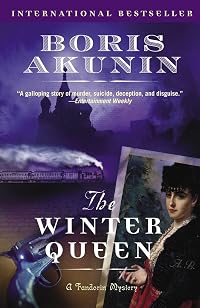
Moscow, May 1876: What would cause a talented young student from a wealthy family to shoot himself in front of a promenading public in the Alexander Gardens? Decadence and boredom, most likely, is what the commander of the Criminal Investigation Division of the Moscow Police thinks, but still he finds it curious enough to send the newest member of the division, Erast Fandorin, a young man of irresistible charm, to the Alexander Gardens precinct for more information. Fandorin is not satisfied show more with the conclusion that this is an open-and-shut case, nor with the preliminary detective work the precinct has done—and for good reason: The bizarre and tragic suicide is soon connected to a clear case of murder, witnessed firsthand by Fandorin. There are many unresolved questions. Why, for instance, have both victims left their fortunes to an orphanage run by the English Lady Astair? And who is the beautiful “A.B.,” whose signed photograph is found in the apparent suicide’s apartment? Relying on his keen intuition, the eager sleuth plunges into an investigation that leads him across Europe, landing him at the deadly center of a terrorist conspiracy of worldwide proportions. In this thrilling mystery that brings nineteenth-century Russia to vivid life, Akunin has created one of the most eagerly anticipated novels in years. From the Hardcover edition. show lessTags
Recommendations













Member Reviews
When Akunin started his Fandorin series, he wanted to explore all the different ways to write detective fiction. So he created Erast Fandorin - a young man who just started work in the police in Moscow in 1876. Akunin had always admitted that Fandorin is a collection of standard Russian heroes - and if one had read some of the Russian classics, it is more than obvious where certain character traits are coming from. Which does not make it less original - in a way it allows Akunin to explore those characters in new unexpected ways. This first novel is a conspiracy mystery - or an adventure one - whatever you prefer.
A young man who should have had everything to live for kills himself. Before long another man dies - and it starts looking show more like that suicide was anything but - despite everyone seeing Kokorin shoot himself. As the dead men are affluent enough, the police needs to investigate and Fandorin is thrown into the mystery - where he is trying not to stumble too much. The investigation takes him all the way to London (and back) - and leads to discovering a world conspiracy which noone ever thought about. Somewhere along the way, Erast manages to fall in love - with a girl who should have been above his station. The end of the novel comes as a shock - not because it is illogical but because one hopes that this is not where everything is going.
As much as I like Akunin, this had always been one of the books I never really liked. It is not even the revised history and the conspiracy - it relies on coincidences a bit too much for my taste and any twist you can think of will happen. If one wants to read the series, it does give the background of Fandorin that would put him on the path he is to follow later but... it is a weak novel in an otherwise enjoyable series. At the same time, on some level it actually works - in the way the action movies of the 80s and 90s work - it is popcorn fiction. But Russian at this time is fascinating. show less
A young man who should have had everything to live for kills himself. Before long another man dies - and it starts looking show more like that suicide was anything but - despite everyone seeing Kokorin shoot himself. As the dead men are affluent enough, the police needs to investigate and Fandorin is thrown into the mystery - where he is trying not to stumble too much. The investigation takes him all the way to London (and back) - and leads to discovering a world conspiracy which noone ever thought about. Somewhere along the way, Erast manages to fall in love - with a girl who should have been above his station. The end of the novel comes as a shock - not because it is illogical but because one hopes that this is not where everything is going.
As much as I like Akunin, this had always been one of the books I never really liked. It is not even the revised history and the conspiracy - it relies on coincidences a bit too much for my taste and any twist you can think of will happen. If one wants to read the series, it does give the background of Fandorin that would put him on the path he is to follow later but... it is a weak novel in an otherwise enjoyable series. At the same time, on some level it actually works - in the way the action movies of the 80s and 90s work - it is popcorn fiction. But Russian at this time is fascinating. show less
Ül a krimiíró a kocsmaasztalnál, és hullik a könnye, mint a záporeső. Odamegy hozzá a kollégája:
- Hát veled meg mi van?
- Ne is kérdezd...
- Jó, nem kérdezem - elindul a pult felé.
- Jól van, jól van, kérdezd meg inkább.
- Oké. Hát veled meg mi van?
- Semmi.
- Ne idegesíts.
- Bocs. Szóval egy recenzió...
- Aha. Lehúzták.
- Rosszabb. Azt írták, "aranyos".
- Huh. Durva. Vendégem vagy, mit iszol?
- Mindent. Krimiíró vagyok, nem?
Akunyin krimijei érzésem szerint nem is annyira bűntörténetek, hanem a krimik zsánerelemeivel felturbózott stílusgyakorlatok. Ezzel pedig nincs az ég adta egy világon semmi baj, főleg mert szövegileg remek produktumok, árad belőlük az orosz XIX. század franciás illata, amit show more kellemes mellékízekkel gazdagít, hogy közben van egy zseniális Eraszt Fandorinunk is, aki ebben a pszeudotolsztoji közegben üldözi a bűnt.
Az se gond, hogy ebben a kötetben Eraszt még nem annyira zseni - inkább a hebehurgya kifejezés illene rá. Végtére is minden detektív volt pelyhes kiskacsa, még a nagy Sherlock is biztos sután botorkált az élet ösvényén, mielőtt elméje teljes vértezetbe öltözött. Az eredettörténeteknek amúgy is nagy divatja van, az olvasót (mozirajongót) érdekli, hőse hogy lett az, aki, mert ez emberibbé teszi. Fandorin is letett már annyit az asztalra, hogy kapjon egy ilyet.
Csak az a krimiszál. Az ne lenne ennyire harmatos.
Van olyan, amikor az olvasó rájön, ki a tettes, párhuzamosan a detektívvel, vagy akár őt megelőzve. Ilyenkor általában jogos büszkeséget érez. Én rájöttem (előbb), de a büszkeségnek még a nyomát sem találtam magamban. Ez a "rejtély" ugyanis annyira egyosztatú, olyan kevés potenciális gyanúsítottal dolgozik a szerző, hogy inkább kihívás rosszul megtippelni az elkövetőt, mint jól. Aláírom, Fandorin még naiv és tapasztalatlan, de hát amit művel, túlmegy minden határon. Bántóan kevéssé támaszkodik sokat dicsért intuícióira és elemzőkészségére, nyomozati munkája kimerül abban, hogy "Nézd, itt egy feneketlen szakadék! Leugrom, hátha kimegy a bokám." És tényleg leugrik, és tényleg kimegy a bokája, de valahogy mégis megússza - logikai apparátus helyett a rohadt nagy mákjára támaszkodik*, ami engem mindig idegesít.
Ha az elkövető személye nem is annyira titok, a motivációja még lehet érdekes, és igaz is, hogy ebben az aspektusban Akunyin tudott újat mutatni. De hiába vetett fel érdekes dilemmákat, itt meg azt éreztem, hogy kényszeresen valami hatalmas nagyot akar markolni. James Bond betegsége ez, ő se elégszik meg kevesebbel: ha nem a világuralom megszerzése az ellenség célja, fel se kel reggel az ágyból**. Túl grandiózus az egész, ami ordító ellentétbe kerül azzal, hogy Fandorinunk egyszerűen még nincs kész. Gigantomán összeesküvés vs. tojásból éppen kikelt kiscsirke... valahogy nem passzol ez a két elem. Talán praktikusabb lett volna valami emberi léptékű bűntettel nyitni. Pedig mint szöveg, az Azazel helyenként kiemelkedő irodalmi minőség, ám mint történet, összeroppan saját nagyravágyása alatt.
Megjegyz.: Bár a fülszöveg szerint ez a legelső Fandorin-sztori, nekem inkább olyasfajta munkának tűnt, amit a kiégett krimiírók szoktak letenni az asztalra, amikor nyomozójuk már baromi népszerű lett, ők meg viszonylag kevés fáradtsággal szeretnének lehúzni róla még egy bőrt. Igen, így belegondolva: ez is az "eredettörténet" egyik lehetséges definíciója.
* Enyhe spoilerjel alatt mondom: azért a végkifejlet árnyalja kissé mindazt, amit Fandorin mákjáról mondtam. Ez mondjuk érdekes volt, meglepett, mint ahogy az is, hogy Akunyin mennyi nyitott kérdés hagyott a végén. De ez az összképen alig változtatott.
** Jó, hát ez amúgy nem James Bond találmánya. Doyle óta tudjuk, hogy minél zseniálisabbra van megírva a nyomozó, annál zseniálisabb bűnözőt kell mellé teremteni - Sherlock nem elégedhet meg holmi tyúklopásokkal, neki minimum a "bűn Napóleonjával" kell szembenéznie. Minden hőstörténetet némiképp a drogfüggés logikája mozgat: folyton emelni kell a dózist. Ha a protagonista szintet lép, az ellenfeleknek is így kell tenniük, különben unatkozni fogunk. És velük párhuzamosan az olvasó (néző) ingerküszöbe is csak nő és nő, a határ a csillagos ég. show less
- Hát veled meg mi van?
- Ne is kérdezd...
- Jó, nem kérdezem - elindul a pult felé.
- Jól van, jól van, kérdezd meg inkább.
- Oké. Hát veled meg mi van?
- Semmi.
- Ne idegesíts.
- Bocs. Szóval egy recenzió...
- Aha. Lehúzták.
- Rosszabb. Azt írták, "aranyos".
- Huh. Durva. Vendégem vagy, mit iszol?
- Mindent. Krimiíró vagyok, nem?
Akunyin krimijei érzésem szerint nem is annyira bűntörténetek, hanem a krimik zsánerelemeivel felturbózott stílusgyakorlatok. Ezzel pedig nincs az ég adta egy világon semmi baj, főleg mert szövegileg remek produktumok, árad belőlük az orosz XIX. század franciás illata, amit show more kellemes mellékízekkel gazdagít, hogy közben van egy zseniális Eraszt Fandorinunk is, aki ebben a pszeudotolsztoji közegben üldözi a bűnt.
Az se gond, hogy ebben a kötetben Eraszt még nem annyira zseni - inkább a hebehurgya kifejezés illene rá. Végtére is minden detektív volt pelyhes kiskacsa, még a nagy Sherlock is biztos sután botorkált az élet ösvényén, mielőtt elméje teljes vértezetbe öltözött. Az eredettörténeteknek amúgy is nagy divatja van, az olvasót (mozirajongót) érdekli, hőse hogy lett az, aki, mert ez emberibbé teszi. Fandorin is letett már annyit az asztalra, hogy kapjon egy ilyet.
Csak az a krimiszál. Az ne lenne ennyire harmatos.
Van olyan, amikor az olvasó rájön, ki a tettes, párhuzamosan a detektívvel, vagy akár őt megelőzve. Ilyenkor általában jogos büszkeséget érez. Én rájöttem (előbb), de a büszkeségnek még a nyomát sem találtam magamban. Ez a "rejtély" ugyanis annyira egyosztatú, olyan kevés potenciális gyanúsítottal dolgozik a szerző, hogy inkább kihívás rosszul megtippelni az elkövetőt, mint jól. Aláírom, Fandorin még naiv és tapasztalatlan, de hát amit művel, túlmegy minden határon. Bántóan kevéssé támaszkodik sokat dicsért intuícióira és elemzőkészségére, nyomozati munkája kimerül abban, hogy "Nézd, itt egy feneketlen szakadék! Leugrom, hátha kimegy a bokám." És tényleg leugrik, és tényleg kimegy a bokája, de valahogy mégis megússza - logikai apparátus helyett a rohadt nagy mákjára támaszkodik*, ami engem mindig idegesít.
Ha az elkövető személye nem is annyira titok, a motivációja még lehet érdekes, és igaz is, hogy ebben az aspektusban Akunyin tudott újat mutatni. De hiába vetett fel érdekes dilemmákat, itt meg azt éreztem, hogy kényszeresen valami hatalmas nagyot akar markolni. James Bond betegsége ez, ő se elégszik meg kevesebbel: ha nem a világuralom megszerzése az ellenség célja, fel se kel reggel az ágyból**. Túl grandiózus az egész, ami ordító ellentétbe kerül azzal, hogy Fandorinunk egyszerűen még nincs kész. Gigantomán összeesküvés vs. tojásból éppen kikelt kiscsirke... valahogy nem passzol ez a két elem. Talán praktikusabb lett volna valami emberi léptékű bűntettel nyitni. Pedig mint szöveg, az Azazel helyenként kiemelkedő irodalmi minőség, ám mint történet, összeroppan saját nagyravágyása alatt.
Megjegyz.: Bár a fülszöveg szerint ez a legelső Fandorin-sztori, nekem inkább olyasfajta munkának tűnt, amit a kiégett krimiírók szoktak letenni az asztalra, amikor nyomozójuk már baromi népszerű lett, ők meg viszonylag kevés fáradtsággal szeretnének lehúzni róla még egy bőrt. Igen, így belegondolva: ez is az "eredettörténet" egyik lehetséges definíciója.
* Enyhe spoilerjel alatt mondom: azért a végkifejlet árnyalja kissé mindazt, amit Fandorin mákjáról mondtam. Ez mondjuk érdekes volt, meglepett, mint ahogy az is, hogy Akunyin mennyi nyitott kérdés hagyott a végén. De ez az összképen alig változtatott.
** Jó, hát ez amúgy nem James Bond találmánya. Doyle óta tudjuk, hogy minél zseniálisabbra van megírva a nyomozó, annál zseniálisabb bűnözőt kell mellé teremteni - Sherlock nem elégedhet meg holmi tyúklopásokkal, neki minimum a "bűn Napóleonjával" kell szembenéznie. Minden hőstörténetet némiképp a drogfüggés logikája mozgat: folyton emelni kell a dózist. Ha a protagonista szintet lép, az ellenfeleknek is így kell tenniük, különben unatkozni fogunk. És velük párhuzamosan az olvasó (néző) ingerküszöbe is csak nő és nő, a határ a csillagos ég. show less
The Book Report: Young, orphaned Erast Fandorin has landed a comparatively cushy job for one whose comfortable future in czarist Russia was snatched away by the machinations of capitalists, beggaring and causing the suicide of his father: Erast is a fourteenth-class state functionary, serving a police official as amanuensis and errand-boy. It leads him into some odd alleyways, serving his about-to-retire master; his wit, his proficiency with language, his unquenchable curiosity lead his boss to allow, amused and indulgent of his junior's silly fascination with nothing criminal, Erast to investigate some odd goings-on among Moscow's Bright Young Things, including the suicide of a youth whose estate, over a million rubles, is left to show more elderly English philanthropist Baroness Adair.
That one fact, that odd itchy ill-fitting wool sock of a fact, unravels an international conspiracy touching every government in the world, though it is unclear that this conspiracy has any evil intent, at least to me. Erast, extremely young and naive at the outset of the book, ends it extremely young, concussed, and in no possible sense naive and inexperienced any more. How that comes about is a page-turning pleasure to read.
My Review: For once, I am glad I read the second book in the series before the first. I felt much more like I was investing my time wisely after reading Turkish Gambit than I might have had I read this book first. It's good, don't mistake me, but it's not as good as "Gambit" and it's not as clear and succinct, either.
But good golly Miss Molly, it's a ripping good read full of explosions, betrayals, and general all-around wickedness and sneakiness. It's got young love, it's got hopeless infatuation, it's got comradeship and affection, and even a *very* memorable wedding scene. I am completely entranced with its picture of czarist Russia; I am excited to discover the roots of some of Erast's oddities; and I hanker to see these books turned into movies or TV shows, like Montalbano has been. I really feel I can SEE the action as I'm reading, and that's usually so much less of an issue for me; but this series is supremely visual.
Read, and enjoy, and don't fear the commitment of time a new series requires, because like Rutledge, like Montalbano, there are a lot of 'em and they get better as time goes by. show less
That one fact, that odd itchy ill-fitting wool sock of a fact, unravels an international conspiracy touching every government in the world, though it is unclear that this conspiracy has any evil intent, at least to me. Erast, extremely young and naive at the outset of the book, ends it extremely young, concussed, and in no possible sense naive and inexperienced any more. How that comes about is a page-turning pleasure to read.
My Review: For once, I am glad I read the second book in the series before the first. I felt much more like I was investing my time wisely after reading Turkish Gambit than I might have had I read this book first. It's good, don't mistake me, but it's not as good as "Gambit" and it's not as clear and succinct, either.
But good golly Miss Molly, it's a ripping good read full of explosions, betrayals, and general all-around wickedness and sneakiness. It's got young love, it's got hopeless infatuation, it's got comradeship and affection, and even a *very* memorable wedding scene. I am completely entranced with its picture of czarist Russia; I am excited to discover the roots of some of Erast's oddities; and I hanker to see these books turned into movies or TV shows, like Montalbano has been. I really feel I can SEE the action as I'm reading, and that's usually so much less of an issue for me; but this series is supremely visual.
Read, and enjoy, and don't fear the commitment of time a new series requires, because like Rutledge, like Montalbano, there are a lot of 'em and they get better as time goes by. show less
May 1876. Moscow. Lizanda and her chaperone sitting on a bench near the Grotto on the Promenade witness a young student from a wealthy family use a revolver to shoot himself. Was the death really a suicide? Or a game of American roulette?
Erast Fandorin, clerk and civil servant fourteenth class, reports for duty to Brilling with the Criminal Investigation Division of the Moscow Police. He’s sent out to investigate. He quickly discovers this is no ordinary suicide when Fandorin witnesses a murder directly related to the event.
The plot is as twisted as The Manchurian Candidate by Richard Condon (1959); and historically situated in solving crimes as Sherlock Holmes (Sir Arthur Conan Doyle) with the intrigue of James Bond (Ian Fleming).
The show more telling is done with dry wit. It’s both a parody and a commentary on czarist society. Everyone is under surveillance by everyone else and the feeling is similar to the kind of peek-a-boo Boris and Natasha did in the old Rocky and Bullwinkle cartoons. The young clerk gets his first break when his boss gets him to buy and wear a Lord Byron corset. You can’t help but chuckle when he invokes the breathing practices of Indian Brahmin Chandra Johnson to resist the effects of chloroform when he falls into his adversary’s hands…and it works. While working undercover he wins a lot of money playing poker with a person of interest; and his boss lets him keep it.
Whereas Colombo played an aging, sloppy, and confused investigator whose ability to act stupid led criminals into his lair of justice, Fandorin is a young, intelligent, and rational investigator whose beginner’s luck, sheer coincidence, and lack of experience lead him to indirectly discover one clue after another as he follows the hot trail across Europe to London.
Three female characters take center stage in the plot. Lizanda is his “angel” and Amalia is the spirit of “Azazel,” the conspiracy. Lady Astair is the third. Super-Nanny to the street urchins and poor orphans of London. That’s right; a female Fagin to Fandorin’s Oliver. There is a shocking traumatic cliffhanger ending; enough said. Read it.
The Winter Queen is the first in a series of eleven detective novels by Boris Akunin and introduces detective Erast Fandorin to the American audience. Boris Akunin is the pen name of Grigory Chkhartishvili, a philogist, critic, essayist, translator of Japanese and author of two other series. Five of the Fandorin novels have been translated into English so far. The Sister Pelagia series has two titles translated to date. show less
Erast Fandorin, clerk and civil servant fourteenth class, reports for duty to Brilling with the Criminal Investigation Division of the Moscow Police. He’s sent out to investigate. He quickly discovers this is no ordinary suicide when Fandorin witnesses a murder directly related to the event.
The plot is as twisted as The Manchurian Candidate by Richard Condon (1959); and historically situated in solving crimes as Sherlock Holmes (Sir Arthur Conan Doyle) with the intrigue of James Bond (Ian Fleming).
The show more telling is done with dry wit. It’s both a parody and a commentary on czarist society. Everyone is under surveillance by everyone else and the feeling is similar to the kind of peek-a-boo Boris and Natasha did in the old Rocky and Bullwinkle cartoons. The young clerk gets his first break when his boss gets him to buy and wear a Lord Byron corset. You can’t help but chuckle when he invokes the breathing practices of Indian Brahmin Chandra Johnson to resist the effects of chloroform when he falls into his adversary’s hands…and it works. While working undercover he wins a lot of money playing poker with a person of interest; and his boss lets him keep it.
Whereas Colombo played an aging, sloppy, and confused investigator whose ability to act stupid led criminals into his lair of justice, Fandorin is a young, intelligent, and rational investigator whose beginner’s luck, sheer coincidence, and lack of experience lead him to indirectly discover one clue after another as he follows the hot trail across Europe to London.
Three female characters take center stage in the plot. Lizanda is his “angel” and Amalia is the spirit of “Azazel,” the conspiracy. Lady Astair is the third. Super-Nanny to the street urchins and poor orphans of London. That’s right; a female Fagin to Fandorin’s Oliver. There is a shocking traumatic cliffhanger ending; enough said. Read it.
The Winter Queen is the first in a series of eleven detective novels by Boris Akunin and introduces detective Erast Fandorin to the American audience. Boris Akunin is the pen name of Grigory Chkhartishvili, a philogist, critic, essayist, translator of Japanese and author of two other series. Five of the Fandorin novels have been translated into English so far. The Sister Pelagia series has two titles translated to date. show less
This is the first novel from the Erast Fandorin series of historical detective novels, written by Russian author Boris Akunin. Set in Czarist Russia with the naive but eager Fandorin as a young investigator with the Moscow police it is very much in the style of a Victorian mystery. Why would a university student shoot himself in the middle of the Alexander Gardens? Fandorin sets out to find the answer and soon lands in the middle of a far-reaching international conspiracy. Akunin effectively juxtaposes the comical innocence (with no lack of intelligence) of his hero against the decadence of nineteenth-century Moscow--aristocrats idling in gambling clubs while the winds of revolution freshen. In his debut, Fandorin comes across as an odd show more but appealing mix of Holmesian brilliance and Inspector Clousseauian bumbling. I enjoyed Akunin's style as he succeeded in aping the manner of, say, Thackeray, commenting on the foibles of his characters, giving the book a nineteenth-century tone that is part of it's appeal. show less
Watch out, Archie Goodwin - Erast Fandorin could easily replace you in the favourite detective stakes! A chance discovery, swapped for one of my own books, 'The Winter Queen' is one of the most intriguing, original, attractive novels of its genre I have come across recently. Fandorin has been described as part Sherlock Holmes, part James Bond, but in this debut, he is far too innocent and trusting to fall into either category (the cruel and devastating ending will no doubt change him in the next book, but hopefully not too much). He is very young, good-looking, intelligent and lucky, but also rather a tragic figure, which makes him a compelling character - fortunately, there are many more Erast Fandorin mysteries to read!
Boris Akunin's show more style - or perhaps the translation of it - adds to the enjoyment. The conspiracy plotline itself is difficult to keep track of, with new twists and traitors uncovered in practically every chapter, but the writing is very jaunty and nostalgic of old cosy detective novels. The dialogue is necessarily dramatic, but always tongue in cheek - 'American roulette' is claimed by the Russians after the notorious suicide in the park which begins the mystery, for example. Some of the Russian names can be difficult to grapple with at first, particularly the polite terms of address, but it's easy enough to skim over and get the gist. An understanding of the country's history might also be helpful, but knowing nothing about nineteenth century Russia does not detract from the story. Time and place are presented naturally in the telling, making this an informative as well as entertaining read. show less
Boris Akunin's show more style - or perhaps the translation of it - adds to the enjoyment. The conspiracy plotline itself is difficult to keep track of, with new twists and traitors uncovered in practically every chapter, but the writing is very jaunty and nostalgic of old cosy detective novels. The dialogue is necessarily dramatic, but always tongue in cheek - 'American roulette' is claimed by the Russians after the notorious suicide in the park which begins the mystery, for example. Some of the Russian names can be difficult to grapple with at first, particularly the polite terms of address, but it's easy enough to skim over and get the gist. An understanding of the country's history might also be helpful, but knowing nothing about nineteenth century Russia does not detract from the story. Time and place are presented naturally in the telling, making this an informative as well as entertaining read. show less
I read this book, the first in the series of 13 novels about the late 19th century Russian detective Erast Fandorin, when it first appeared some twenty years ago. I remember little about the plot, but I remember vividly how I felt — and how shocked I was at the ending. I have now read it for a second time.
Boris Akunin is a brilliant story-teller and also an excellent historian. His books are set in a real historical time and place (imperial Russia from 1876 to the Bolshevik coup d’etat in 1917). He’s been compared to Arthur Conan Doyle and Ian Fleming, but I think Akunin (whose real name is Grigory Chkhartishvili and who was born in Georgia) is a unique voice. One should not rush to compare his Fandorin to James Bond or Sherlock show more Holmes.
In this first book in the series we meet a very young Fandorin at the beginning of his career in the police, naive, prone to make mistakes, an incurable romantic and someone with truly amazing luck. Initially investigating the very public suicide of a student, Fandorin stumbles upon a vast international conspiracy — and no, it’s not the one you’re thinking of. A real pleasure to read and highly recommended. show less
Boris Akunin is a brilliant story-teller and also an excellent historian. His books are set in a real historical time and place (imperial Russia from 1876 to the Bolshevik coup d’etat in 1917). He’s been compared to Arthur Conan Doyle and Ian Fleming, but I think Akunin (whose real name is Grigory Chkhartishvili and who was born in Georgia) is a unique voice. One should not rush to compare his Fandorin to James Bond or Sherlock show more Holmes.
In this first book in the series we meet a very young Fandorin at the beginning of his career in the police, naive, prone to make mistakes, an incurable romantic and someone with truly amazing luck. Initially investigating the very public suicide of a student, Fandorin stumbles upon a vast international conspiracy — and no, it’s not the one you’re thinking of. A real pleasure to read and highly recommended. show less
Members
- Recently Added By
Published Reviews
ThingScore 75
He also reveals an unexpected moral subtlety. At the outset, The Winter Queen appears to display an alarming level of Russian xenophobia, in the form of an international conspiracy against Russia headed by an evil Englishwoman. But as the story progresses, so it emerges as something rather more complex. By the end, Fandorin – no longer the charming naïf but a saddened, white-haired figure show more – has solved the case, but in doing so has brought about a string of tragic consequences. He is faced by the uncomfortable question: has his sleuthing caused more unhappiness than it has cured? show less
added by passion4reading
Lists

Detective/Mystery Fiction set in the Gilded Age
12 works; 6 members

My E-Book Collection - Opinions Welcome
92 works; 10 members

MysteryCAT: Historical Crime
27 works; 7 members

Allie's Wishlist
217 works; 2 members

Urban Fiction
74 works; 7 members

Global Mysteries
90 works; 6 members

All Things Russia
459 works; 11 members

Further Russian Reading
19 works; 3 members

Books Read in 2021
5,361 works; 114 members

BBC World Book Club
265 works; 5 members
Best Mysteries With a Historical Setting
292 works; 160 members

My Favorite Russian Novels
37 works; 2 members

World Book Club (BBC World Service)
174 works; 1 member
Author Information

133+ Works 10,698 Members
Some Editions
Awards and Honors
Awards
Distinctions
Series

Belongs to Publisher Series
Work Relationships
Common Knowledge
- Canonical title
- The Winter Queen
- Original title
- Азазель
- Original publication date
- 1998
- People/Characters
- Erast Fandorin; Amalia Bezhetskaya; Ivan Franzevich Brilling; Count Hippolyte Alexandrovich; Yelizaveta von Evert-Kolokoltseva; Lady Astair
- Important places
- Moscow, Russia; London, England, UK; St. Petersburg, Russia
- Related movies
- Azazel (2002 | IMDb)
- First words
- On Monday the thirteenth of May in the year 1876, between the hours of two and three in the afternoon, on a day which combined the freshness of spring with the warmth of summer, numerous individuals in Moscow's Alexander Gard... (show all)ens unexpectedly found themselves eyewitnesses to the perpetration of an outrage which flagrantly transgressed the bounds of common decency.
- Last words
- (Click to show. Warning: May contain spoilers.)No, the attention of those he encountered, especially the ladies, was attracted by one particularly intriguing feature of his appearance: despite his obvious youth the bon viveur's temples were a stark white, as though they were thickly coated with hoar frost.
- Blurbers
- Rendell, Ruth; Furst, Alan
- Original language
- Russian
Classifications
- Genres
- Fiction and Literature, Mystery, Historical Fiction
- DDC/MDS
- 813 — Literature & rhetoric American literature in English American fiction in English
- LCC
- PG3478 .K78 .A9713 — Language and Literature Slavic languages and literatures. Baltic languages. Albanian language Slavic. Baltic. Albanian Russian literature Individual authors and works 1961-2000
- BISAC
Statistics
- Members
- 2,479
- Popularity
- 7,793
- Reviews
- 85
- Rating
- (3.61)
- Languages
- 26 — Catalan, Czech, Danish, Dutch, English, Estonian, Finnish, French, German, Greek, Hebrew, Hungarian, Icelandic, Italian, Lithuanian, Norwegian (Bokmål), Norwegian, Polish, Romanian, Russian, Croatian, Spanish, Swedish, Turkish, Ukrainian, Portuguese (Portugal)
- Media
- Paper, Audiobook, Ebook
- ISBNs
- 109
- ASINs
- 19