The Case Against Satan
by Ray Russell
On This Page
Description
Before The Exorcist and Rosemary's Baby, there was The Case Against Satan By the twentieth century, the exorcism had all but vanished, wiped out by modern science and psychology. But Ray Russell--praised by Stephen King and Guillermo del Toro as a sophisticated practitioner of Gothic fiction--resurrected the ritual with his classic 1962 horror novel, The Case Against Satan, giving new rise to the exorcism on page, screen, and even in real life. Teenager Susan Garth was "a clean-talking show more sweet little girl" of high school age before she started having "fits"--a sudden aversion to churches and a newfound fondness for vulgarity. Then one night, she strips in front of the parish priest and sinks her nails into his throat. If not madness, then the answer must be demonic possession. To vanquish the Devil, Bishop Crimmings recruits Father Gregory Sargent, a younger priest with a taste for modern ideas and brandy. As the two men fight not just the darkness tormenting Susan but also one another, a soul-chilling revelation lurks in the shadows--one that knows that the darkest evil goes by many names. For more than sixty-five years, Penguin has been the leading publisher of classic literature in the English-speaking world. With more than 1,500 titles, Penguin Classics represents a global bookshelf of the best works throughout history and across genres and disciplines. Readers trust the series to provide authoritative texts enhanced by introductions and notes by distinguished scholars and contemporary authors, as well as up-to-date translations by award-winning translators. show lessTags
Recommendations
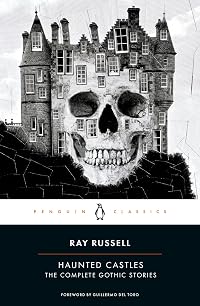
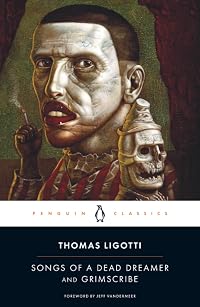
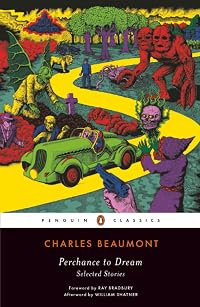
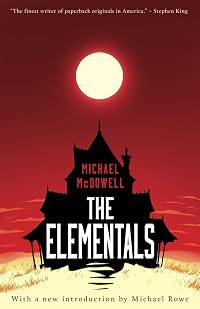


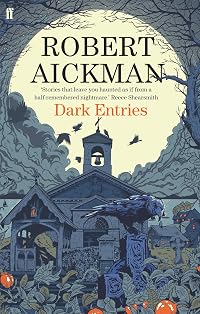


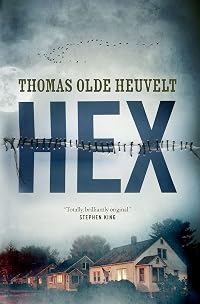
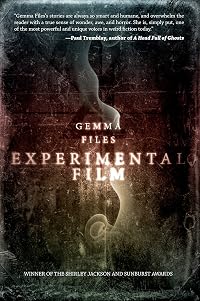
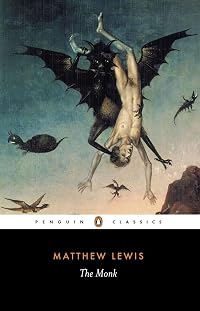








Member Recommendations
SomeGuyInVirginia Demonic possession of children.
Member Reviews
Ray Russell’s The Case Against Satan is a small book with a heavy weight. First published in the 1960s, it predates The Exorcist yet feels spiritually tangled with it—both as a product of its time and as a challenge to it. What starts as a simple exorcism story soon reveals its true shape: a parable of repression, power, and the dangerous conflation of faith and fear.
What makes this book so compelling isn’t just its eerie atmosphere or theological debate—it’s the pain simmering underneath. It’s the way a girl’s suffering is interpreted through the lenses of patriarchy and dogma. And it’s the question the book keeps whispering: who’s really being tormented here?
This is not a scream-filled horror story. It is quiet, show more restrained, and unsettling in the way a shadow moves when no one else sees it. There are moments that feel almost too real—if you’ve ever struggled with mental illness, or been told that your suffering was somehow spiritual, this book may hit closer than you'd expect. I’m grateful for content warnings. Books like this deserve a chance to be read when the reader is ready.
Russell’s prose is stark, but not without beauty. And there’s a kind of sad wisdom in its pages. The ending doesn’t offer full redemption, just a glimmer of possibility. Which, honestly, feels more honest than most horror stories dare to be.
Highly recommended for fans of theological horror, spiritual ambiguity, and quieter tales of possession that leave the door open for multiple readings.
Content Notes / Trigger Warnings
Mental illness & institutionalization
Religious trauma & spiritual abuse
Gendered power dynamics
Psychological distress presented as demonic possession show less
What makes this book so compelling isn’t just its eerie atmosphere or theological debate—it’s the pain simmering underneath. It’s the way a girl’s suffering is interpreted through the lenses of patriarchy and dogma. And it’s the question the book keeps whispering: who’s really being tormented here?
This is not a scream-filled horror story. It is quiet, show more restrained, and unsettling in the way a shadow moves when no one else sees it. There are moments that feel almost too real—if you’ve ever struggled with mental illness, or been told that your suffering was somehow spiritual, this book may hit closer than you'd expect. I’m grateful for content warnings. Books like this deserve a chance to be read when the reader is ready.
Russell’s prose is stark, but not without beauty. And there’s a kind of sad wisdom in its pages. The ending doesn’t offer full redemption, just a glimmer of possibility. Which, honestly, feels more honest than most horror stories dare to be.
Highly recommended for fans of theological horror, spiritual ambiguity, and quieter tales of possession that leave the door open for multiple readings.
Content Notes / Trigger Warnings
Mental illness & institutionalization
Religious trauma & spiritual abuse
Gendered power dynamics
Psychological distress presented as demonic possession show less
My memory of [b:The Exorcist|179780|The Exorcist|William Peter Blatty|https://d.gr-assets.com/books/1375168676s/179780.jpg|1945267] is clearer on the film—which I've watched at least once per decade since I was old enough to view it—than it is on the best-selling novel, which I read only once in high school, a few years after it was published in 1970. That said, [b:The Case Against Satan|24612020|The Case Against Satan|Ray Russell|https://d.gr-assets.com/books/1439904470s/24612020.jpg|44223119] from 1962 seems more cerebral than Blatty's novel or Friedkin's film, and less lurid.
Although present in the story, The Case's action doesn't come from showers of vomit and flurries of curses; the action is in the struggle between scientific show more rationality and theological faith within the mind of local parish priest Father Gregory. He and his Bishop perform the rites of exorcism on a troubled young girl who exhibits signs of either mental illness or demonic possession.
Along the way, the novel touches on conflicts and concurrences between Catholic doctrine and Freudianism, religious rapture and sexual ecstasy, crimes of commission and sins of omission, parental incest and clerical rape, the oddness of celibacy and the normalcy of small-town gossip, private failings and public faces, religious dogma and civil law.
Without spoiling anything, I can say that in the end, both the committed atheist and the devoutly religious can walk away from this story with their pre-conceptions of the nature of Evil unchanged. Or, as I'm certain Mr. Russell intended, they may close the book, yet find the barest hint of doubt remaining. show less
I'm a fan of Ray Russell's short stories and his work as an editor. This novel, however, has no place as a "Penguin Classic". It is notable, of course, for preceding William Peter Blatty's The Exorcist by several years, and there are similarities between the stories, with each drawing upon some real-life incidents. The similarity stops there. Now I'll admit that I read The Exorcist when I was a much more impressionable 14-year old who hadn't yet abandoned religion--and it scared the hell out of me. It is still the single scariest book I have ever read in my life, since it seemed to say that the devil could possess any one of us at any time. Russell's book, however, just tells the story using a set of stereotyped characters. It isn't in show more the least bit scary. It's like someone writing a term paper on exorcism, far removed from Blatty's work, since Blatty actually believed in this stuff. The Case Against the Devil is a short novel, so it won't take you long to read it. But do so only as a curiosity--don't look to be scared or even enlightened. I wouldn't even call it a noble failure. show less
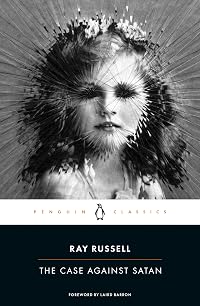
This was an interesting story, though, really, despite the excellent cover, it's not really that much of a horror novel. It starts reasonably strong, and with a scene that's somewhat shocking--bearing in mind it was published 53 years ago, so most of its shock factor has been superseded over the years--it then gets a bit tangled up in religion and belief for a bit. It doesn't circle back around to the matter at hand, the exorcism of Susan Garth, until about halfway, and doesn't really get started on it for another two-dozen pages past that, and it's over fairly quickly, leaving the rest of the novel a bit of a police procedural.
I believe this may be the crux of the issue for me. For such a slim novel--weighing in at 140 pages--it show more doesn't quite seem to know exactly where it wants to go. Ultimately, I agree with Laird Barron in his introduction to the novel: This is a story about truth. But it takes a few different paths to get there.
It's a well written novel with, at times, a bit of a Twilight Zone or Outer Limits feel to it. As I read this, going through the dialogue and the descriptive areas, I couldn't help but see it in black and white, with that slightly overdramatic music in the background.
It's a good story, but don't go in expecting scares. There's some horrible things contained between its covers, but not a lot of scares. show less
I believe this may be the crux of the issue for me. For such a slim novel--weighing in at 140 pages--it show more doesn't quite seem to know exactly where it wants to go. Ultimately, I agree with Laird Barron in his introduction to the novel: This is a story about truth. But it takes a few different paths to get there.
It's a well written novel with, at times, a bit of a Twilight Zone or Outer Limits feel to it. As I read this, going through the dialogue and the descriptive areas, I couldn't help but see it in black and white, with that slightly overdramatic music in the background.
It's a good story, but don't go in expecting scares. There's some horrible things contained between its covers, but not a lot of scares. show less
I'm done. This book is disgusting. It's mainly an excuse to work out some dude's struggles with his faith and his rather strong feelings about teenage girls. The plot moved along at a glacial pace, but it began to advance for a bit. That's when I thought it might get a little better. Unfortunately, it just got ridiculous and insulting again.
After reading some spoilers, I've decided that I'm just not up for this book. I'm well over 50% through, and it's ruining my spooky reading for October. I have to move on to something else that I will enjoy.
After reading some spoilers, I've decided that I'm just not up for this book. I'm well over 50% through, and it's ruining my spooky reading for October. I have to move on to something else that I will enjoy.
Maybe a bit dated now, it was considered shocking in 1962 but seems almost quaint by today's horror standards. A good ol' devil in the soul story that probably has a little too much Roman Catholic baggage for the average reader today. It's still a good story well told but the deep questions it wrestles with don't really seem so important when you are faced with berserk fanatics in the streets every day, It partakes of a simpler time when stories like this could really make you think. Now it's just a jolly good read and appropriately for Christmas time.
I was torn about whether or not I liked this or not. It's entertaining, and a quick read, but in the end, I have to say it's not actually good. My problem is mostly in the frankly ludicrous way the priests and bishops speak to each other. Their speech includes many clumsy explanations of Catholic theology. The most egregious example being when one explains to a *Bishop* the concept of transubstantiation. The dude is a bishop, he knows what that is without a priest explaining it. But the author is clearly trying to clumsily explain the concepts for non-Catholic readers who may not know them.
I also echo the reviewer who said the story ends much too neatly, with everyone getting a more or less happy endings, with all or almost all the show more loose ends easily tied up. show less
I also echo the reviewer who said the story ends much too neatly, with everyone getting a more or less happy endings, with all or almost all the show more loose ends easily tied up. show less
Members
- Recently Added By
Lists

Jones and Newman's Horror: Another 100 Best Books
100 works; 7 members

1960s
281 works; 16 members

Best Horror Mega-List
342 works; 6 members

Reedsydiscovery 100 Best Horror Books of All Time
100 works; 5 members

Devilish Books
15 works; 3 members

Most Popular Penguins
70 works; 5 members

Books Read in 2019
4,052 works; 110 members

BlackDog's Complete Paperbacks From Hell List
639 works; 3 members
Author Information

43+ Works 1,037 Members
Awards and Honors
Common Knowledge
- Canonical title
- The Case Against Satan
- Original publication date
- 1962
Classifications
Statistics
- Members
- 296
- Popularity
- 108,941
- Reviews
- 11
- Rating
- (3.65)
- Languages
- English, Korean, Spanish
- Media
- Paper, Ebook
- ISBNs
- 9
- ASINs
- 2