On This Page
Description
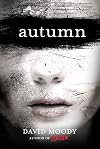
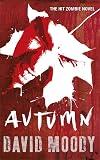
A hybrid of War of the worlds and Night of the living dead, chronicles the struggle of a small group of survivors forced to contend with a world torn apart by a deadly disease.Tags
Recommendations






Member Reviews
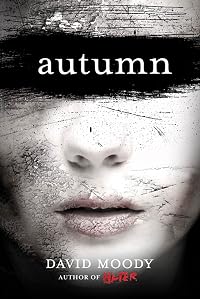
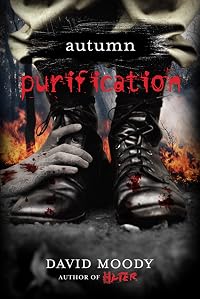
Autumn - David Moody *****
Although I have never really been a huge fan of the zombie/b movie type of book, I do like to dip into one now and again. The last I read was ‘Night of the Living Dead’ and thought it a really awful read. But when looking through a second hand book store I came across ‘Autumn’ and thought I would give it a try. Looking at the other reviews this seems to be very much a love it or hate it book with many ratings from the extremes of both sides. I suppose that it will depend what you are expecting to get from the read. If you approach it wanting some gritty drama or in depth plot then you will probably be disappointed, but if you are looking for some escapism into a cataclysmic world full of death and gore show more you will love it.
So what’s it about?
A deadly virus has struck the USA (maybe the world) that causes death within a few minutes. The unlucky individual has a very gory end that involves plenty of blood and pain. All across the country there are homes, work places and public areas where people are dropping like flies. Strangely though, there does seem to be the odd few that are immune to the disease. These survivors are spread far and wide and as they wander through the decimated landscape, start to gel together in groups. Whilst trying to decide what their next step should be an odd thing happens, some of the corpses begin to move; at first wandering aimlessly but with each passing day they seem to be getting more self aware and through the sheer numbers pose a threat. A decision needs to be made, do they stay holed up in a potential ‘safe’ house or should they make a break for open country where hopefully the undead will be less in number. But more importantly, what would you do?
Although described as a Zombie novel, this really does the book an injustice; it is as much about survival and the different ways in which people cope with a changing world (and undead walking around every corner). I can’t remember even seeing the word zombie except on the cover, so if you are fed up with the seemingly daft theme of ‘dead people trying to eat the living’ storyline, then Autumn offers something different.
I absolutely loved this book, the speech at times was a little wooden, but the writing was short, sharp and to the point. The atmosphere really does build and actually gets quite creepy at times. I cared what happened to the characters and found myself rooting for them, more than I usually do when reading a book, so much so that I went straight out and ordered the next books in the series. show less
Although I have never really been a huge fan of the zombie/b movie type of book, I do like to dip into one now and again. The last I read was ‘Night of the Living Dead’ and thought it a really awful read. But when looking through a second hand book store I came across ‘Autumn’ and thought I would give it a try. Looking at the other reviews this seems to be very much a love it or hate it book with many ratings from the extremes of both sides. I suppose that it will depend what you are expecting to get from the read. If you approach it wanting some gritty drama or in depth plot then you will probably be disappointed, but if you are looking for some escapism into a cataclysmic world full of death and gore show more you will love it.
So what’s it about?
A deadly virus has struck the USA (maybe the world) that causes death within a few minutes. The unlucky individual has a very gory end that involves plenty of blood and pain. All across the country there are homes, work places and public areas where people are dropping like flies. Strangely though, there does seem to be the odd few that are immune to the disease. These survivors are spread far and wide and as they wander through the decimated landscape, start to gel together in groups. Whilst trying to decide what their next step should be an odd thing happens, some of the corpses begin to move; at first wandering aimlessly but with each passing day they seem to be getting more self aware and through the sheer numbers pose a threat. A decision needs to be made, do they stay holed up in a potential ‘safe’ house or should they make a break for open country where hopefully the undead will be less in number. But more importantly, what would you do?
Although described as a Zombie novel, this really does the book an injustice; it is as much about survival and the different ways in which people cope with a changing world (and undead walking around every corner). I can’t remember even seeing the word zombie except on the cover, so if you are fed up with the seemingly daft theme of ‘dead people trying to eat the living’ storyline, then Autumn offers something different.
I absolutely loved this book, the speech at times was a little wooden, but the writing was short, sharp and to the point. The atmosphere really does build and actually gets quite creepy at times. I cared what happened to the characters and found myself rooting for them, more than I usually do when reading a book, so much so that I went straight out and ordered the next books in the series. show less
It all happened in an instant. First, a pain in the mouth. Then the throat would swell and and bleed, and death followed within seconds. And it spread from person to person almost too quickly to be believed, leaving a handful of survivors surrounded by hundreds, perhaps thousands or millions, of the dead.
For the few survivors holding up inside the flimsy walls of the Whitchurch Community Center, the worst is far from over. After a few days, some of the dead begin to rise, ambling about, bumping into walls and other objects like flies against a window. Carl, Michael and Emma decide that the group would be better off away from the Center, away from such a large amount of dead and the recently re-awakened. Unable to convince others to join show more them, they set off in search of a more secure location, but slowly realize that no place may be safe as the re-awakened begin to show a violent awareness of those still living.
In the blink of an eye, "Autumn" turns the world as we know it inside out, creating a very dark and bleak story of survival, with a subtle twist to the zombie tale. Rather than passing the infection with slow-moving bites, allowing characters to prepare and to fight, this one spreads like wildfire doused with gallons of jet fuel. Everyone is caught unaware and unprepared. The too-quick devastation takes a mental toll on the characters which adds a new psychological twist to the survival story.
I like that each of the main characters is forced to deal with the sudden loss: Carl refuses to let go of the memories of his wife and young daughter; Michael realizes that he'll never again see his friends and co-workers; and Emma, tries not to deal with events by locking herself in her room and pulling the covers over her head, hoping it will all go away. They show human frailties and struggle to find the strength to continue, which for me made them more believable and realistic.
What also adds to "Autumn"'s creep factor are the re-awakened. At first, they act like newborns, blind and not completely aware of their surroundings, but as the story moves along, they begin to learn, to be attracted to sound and to motion. It's that seeming ability to learn that makes these particular re-awakened more dangerous than other versions of the undead.
"Autumn" is the perfect book to get your adrenaline pumping, forcing you to stay up late and read page after page because you need to see what happens. Highly recommended!! show less
For the few survivors holding up inside the flimsy walls of the Whitchurch Community Center, the worst is far from over. After a few days, some of the dead begin to rise, ambling about, bumping into walls and other objects like flies against a window. Carl, Michael and Emma decide that the group would be better off away from the Center, away from such a large amount of dead and the recently re-awakened. Unable to convince others to join show more them, they set off in search of a more secure location, but slowly realize that no place may be safe as the re-awakened begin to show a violent awareness of those still living.
In the blink of an eye, "Autumn" turns the world as we know it inside out, creating a very dark and bleak story of survival, with a subtle twist to the zombie tale. Rather than passing the infection with slow-moving bites, allowing characters to prepare and to fight, this one spreads like wildfire doused with gallons of jet fuel. Everyone is caught unaware and unprepared. The too-quick devastation takes a mental toll on the characters which adds a new psychological twist to the survival story.
I like that each of the main characters is forced to deal with the sudden loss: Carl refuses to let go of the memories of his wife and young daughter; Michael realizes that he'll never again see his friends and co-workers; and Emma, tries not to deal with events by locking herself in her room and pulling the covers over her head, hoping it will all go away. They show human frailties and struggle to find the strength to continue, which for me made them more believable and realistic.
What also adds to "Autumn"'s creep factor are the re-awakened. At first, they act like newborns, blind and not completely aware of their surroundings, but as the story moves along, they begin to learn, to be attracted to sound and to motion. It's that seeming ability to learn that makes these particular re-awakened more dangerous than other versions of the undead.
"Autumn" is the perfect book to get your adrenaline pumping, forcing you to stay up late and read page after page because you need to see what happens. Highly recommended!! show less
Have been a fan of Moody's since first reading Hater, and was very excited to see the first part of the Autumn series being finally released here in the States. And Moody did not disappoint. This is a zombie novel, without ever even saying the word. Yet Moody does a superb job with the staging of his story. The undead don't change in nano seconds like in most stories/movies. Moody handles the change in degrees, first death, then rebirth, then slowly regaining senes to build into the inevitable. The way Moody presents all this very slowly over the span of weeks ratchets up the suspense. He lulls the survivors (and the reader) into a false sense of semi security, making the final chapters that much more intense. I really hope that this show more leads to the rest of the series being published as well, because this is just great writing. show less
 This review was written for LibraryThing Early Reviewers.
It’s been awhile since I’ve enjoyed a zombie book so I was quite happy to curl up with Autumn by David Moody and get lost in a world of disease and walking dead. This book definitely had the right amount of creepy for me. At first 99 percent of the population drops dead within 24 hours and while a small amount of survivors huddle together in shock and grief, they come to the realization that things are definitely going to get worse as after a few days the corpses become reanimated. At first slow and witless, as time goes by, they appear to regain many of their basic instincts along with a hatred of the living. The bright side for the living is that the creatures are continuing to decompose and eventually they should disintegrate.
I show more enjoyed this dark story but I was a little disappointed with the ending as everything was left up in the air but I will be continuing on with the series in order to see how the author resolves this bleak dystopian tale. show less
I show more enjoyed this dark story but I was a little disappointed with the ending as everything was left up in the air but I will be continuing on with the series in order to see how the author resolves this bleak dystopian tale. show less
In less than a day, 99% of the population died because of an unknown virus. The few survivors are shocked and gather together for safety in a community. Then some of the many corpses start to walk around. Most of the survivors start to panic and turn on each other, so Michael, Carl, and Emma decide to go off by themselves and find a safer place to stay. They find a secluded farm house in a rural area and opt to settle there for the time being. Then the walking corpses seem to be more aware and gather around people or things that make noise. The survivors don't know what to make of this new development, so they try to avoid the dead and make a new life for themselves. Then, they start to attack the survivors. Michael, Carl, and Emma show more realize the danger they are in. The walking dead keep coming in huge numbers and are attracted to the light from the house and every sound they make. Can they figure out a way to survive in this world full of corpses dead set on destroying them?
Autumn is a good, solid zombie book. The writing style and plot really drew me in from the very first pages. Others have complained that the pacing is too slow, but I disagree. The focus of the book isn't on the zombies, but the emotions and conflict between the human characters. It takes time to illustrate detailed characters, their different lives, and their connections with each other. This situation seemed much more plausible and realistic to me. The survivors are upset because practically everyone they know is dead and of course their minds aren't instantly going to go to zombie apocalypse. They are confused and don't really know what to do or why everything is happening. Emotions are running high, causing them to make unwise decisions and lash out at each other out of fear or anger. This is how people act in extreme situations. Michael, Carl, and Emma all have their own unique things to deal with and aren't perfect characters. They doubt themselves and agonize over what would be best to do. No one is confident in their course of action in this post-apocalyptic world. The survivors' actions made sense to me and illustrated what real people would do in a horrible situation.
This isn't your typical zombie book. There aren't gobs of blood and gore drenching every page, but there is definitely potential for more in the next book. I really enjoyed the quiet, slow burn of the book. It is reminiscent of John Ajvide Lindqvist's Handling the Undead. I would recommend this to zombie fans that don't mind a more casual pace and a more cerebral approach to the zombie genre. I can't wait until the next book comes out. show less
Autumn is a good, solid zombie book. The writing style and plot really drew me in from the very first pages. Others have complained that the pacing is too slow, but I disagree. The focus of the book isn't on the zombies, but the emotions and conflict between the human characters. It takes time to illustrate detailed characters, their different lives, and their connections with each other. This situation seemed much more plausible and realistic to me. The survivors are upset because practically everyone they know is dead and of course their minds aren't instantly going to go to zombie apocalypse. They are confused and don't really know what to do or why everything is happening. Emotions are running high, causing them to make unwise decisions and lash out at each other out of fear or anger. This is how people act in extreme situations. Michael, Carl, and Emma all have their own unique things to deal with and aren't perfect characters. They doubt themselves and agonize over what would be best to do. No one is confident in their course of action in this post-apocalyptic world. The survivors' actions made sense to me and illustrated what real people would do in a horrible situation.
This isn't your typical zombie book. There aren't gobs of blood and gore drenching every page, but there is definitely potential for more in the next book. I really enjoyed the quiet, slow burn of the book. It is reminiscent of John Ajvide Lindqvist's Handling the Undead. I would recommend this to zombie fans that don't mind a more casual pace and a more cerebral approach to the zombie genre. I can't wait until the next book comes out. show less
This review was written for LibraryThing Early Reviewers.Zombies are one group of supernatural/unnatural beings I love to read about, next to (terrifying) vampires and werewolves. I had read online that Autumn is a very good zombie series, it just took me a while to find it in store (I detest ordering online).
One day, in England (but probably everywhere in the world), people get sick and die within minutes. The disease spreads extremely quickly. We read about this, viewed through the eyes of a few survivors who seem to be immune. Their horror starts with just about everybody around them dropping dead (in the streets, behind the wheel of a moving car) and resources failing (power outage, no running water). But then, after a few days, things get a lot worse.
I really liked that the people in the show more book are as clueless about what is happening as we are. They find out and react at the same moment as we, the readers, do. They have to deal with their emotions and try to survive the best they can. The zombies in this book aren’t completely similar to the archetype zombie, but because the story doesn’t really end with a solution and only about a week or two have passed, who knows where this series is going. A very good, intense zombie book, four out of five stars. show less
One day, in England (but probably everywhere in the world), people get sick and die within minutes. The disease spreads extremely quickly. We read about this, viewed through the eyes of a few survivors who seem to be immune. Their horror starts with just about everybody around them dropping dead (in the streets, behind the wheel of a moving car) and resources failing (power outage, no running water). But then, after a few days, things get a lot worse.
I really liked that the people in the show more book are as clueless about what is happening as we are. They find out and react at the same moment as we, the readers, do. They have to deal with their emotions and try to survive the best they can. The zombies in this book aren’t completely similar to the archetype zombie, but because the story doesn’t really end with a solution and only about a week or two have passed, who knows where this series is going. A very good, intense zombie book, four out of five stars. show less
I first read this book in Jan 2012 - loved it, bought and read the entire Autumn series. I have decided to re-read it (a very rare thing for me) and I am reminded why I love this series. It is very readable - not at all confusing - and really describes how people would react in the event of a zombie apocalypse (or so I think.)
I have read many zombie novels, but this one (and the subsequent volumes) are the best. I also enjoyed the "Hater" series by David Moody and he is one of my favorite horror authors. But I doubt that he will surpass the "Autumn" series. If you have not tried, it you should - you will not be disappointed. I off to volume 2: Autumn : the city. DonB
I have read many zombie novels, but this one (and the subsequent volumes) are the best. I also enjoyed the "Hater" series by David Moody and he is one of my favorite horror authors. But I doubt that he will surpass the "Autumn" series. If you have not tried, it you should - you will not be disappointed. I off to volume 2: Autumn : the city. DonB
Members
- Recently Added By
Lists

Top Five Books of 2015
811 works; 241 members
Author Information

33+ Works 3,107 Members

David Moody is a LibraryThing Author, an author who lists their personal library on LibraryThing.
Series

Common Knowledge
- Canonical title
- Autumn
- Original publication date
- 2010-10-07
- People/Characters
- Emma Mitchell; Carl Henshawe; Michael Collins (Autumn); Stuart Jeffries; Annie Nelson; Jessica Short (show all 8); Kate James; Philip Evans
- Important places
- Northwich, Cheshire, England, UK; Chester, Cheshire, England, UK; Penn Farm, Cheshire, England, UK; Whitchurch Community Center, Cheshire, England, UK
- First words
- Prologue: Billions died in less than twenty-four hours.
Chapter One: Carl Henshawe was over three-quarters of the way home before he realized anything had happened. - Last words
- (Click to show. Warning: May contain spoilers.)We lay there in the darkness and waited for morning.
- Blurbers
- Maberry, Jonathan; Simmons, Wayne; Wellington, David
Classifications
Statistics
- Members
- 538
- Popularity
- 55,420
- Reviews
- 47
- Rating
- (3.46)
- Languages
- English, German, Spanish
- Media
- Paper, Ebook
- ISBNs
- 10
- ASINs
- 4