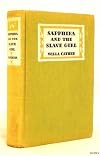
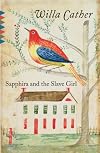
Sapphira and the Slave Girl
by Willa Cather 
On This Page
Description
Sapphira Dodderidge, a Virginia lady of the 19th century, marries beneath her and becomes irrationally jealous of Nancy, a beautiful slave. One of Cather's later works. Classic Literature. Historical Fiction. Literature. Fiction.Tags
Recommendations
















Member Reviews
59. Sapphira and the Slave Girl by Willa Cather
published: 1940
format: 295-page paperback (2010 Vintage)
acquired: June
read: Nov 30 – Dec 15
time reading: 5 hr 49 min, 1.2 min/page
rating: 4
locations: 1850’s rural Virginia, near Winchester, Va
about the author born near Winchester, VA, later raised in Red Cloud, NE. December 7, 1873 – April 24, 1947
Cather's final novel has the affect of a nostalgic look at slavery. I really don't know how else to put it. This book is largely a non-critical exploration of a well run Virginia planation house with twenty slaves. The master of the house is wheel-chair bound Sapphira, who inherited her twenty-odd slaves. Her husband married in, is against the idea of slavery, but generally keeps to the side show more of these things. The slaves all have a role, set partially by conditioning, partially temperament. There is a level of comfort and security in these roles. And when everything is going well, there is a kind of mutual affection between owner and slave, even pride. This is all...well, really disturbing.
Cather seems very interested in roles, and in how rigid this whole system is. There is no simple way to mess with things if you're against slavery, and there no benefit to try if you're enslaved. Freedom is not a ticket to a better life, but a fragile existence severed from family and the basic life security the planation provides. When Henry offers to buy a slave and free him and set up in a profession, the slave, a skilled miller, balks at the problems this will cause and the loss of his family. Sapphira herself is actually trapped in her role of master - although she may not see it that way exactly.
This all takes place in 1856 Virginia, very close to the town of Winchester, where she was born in 1873. That is, this, what she is describing, is the world her parents' grew up in.
I liked this novel. It's clearly not her best work, but whatever its flaws and limitations, and there are many, it has Cather's voice and her integrity. She is not re-writing history, or white washing crimes. This is her view of how this world could have been, and therefore part of how we got wherever we are now. And, thinking it through, this theme of people trapped within their world, living lives within larger forces, is actually one that kind of pervades through all her work. It's just more foregrounded here.
I'm gratefully not done with Willa Cather yet. Next year I plan to read through her short stories, and the one novel that I missed, her first, titled [Alexander's Bridge].
2020
https://www.librarything.com/topic/322920#7354163 show less
published: 1940
format: 295-page paperback (2010 Vintage)
acquired: June
read: Nov 30 – Dec 15
time reading: 5 hr 49 min, 1.2 min/page
rating: 4
locations: 1850’s rural Virginia, near Winchester, Va
about the author born near Winchester, VA, later raised in Red Cloud, NE. December 7, 1873 – April 24, 1947
Cather's final novel has the affect of a nostalgic look at slavery. I really don't know how else to put it. This book is largely a non-critical exploration of a well run Virginia planation house with twenty slaves. The master of the house is wheel-chair bound Sapphira, who inherited her twenty-odd slaves. Her husband married in, is against the idea of slavery, but generally keeps to the side show more of these things. The slaves all have a role, set partially by conditioning, partially temperament. There is a level of comfort and security in these roles. And when everything is going well, there is a kind of mutual affection between owner and slave, even pride. This is all...well, really disturbing.
Cather seems very interested in roles, and in how rigid this whole system is. There is no simple way to mess with things if you're against slavery, and there no benefit to try if you're enslaved. Freedom is not a ticket to a better life, but a fragile existence severed from family and the basic life security the planation provides. When Henry offers to buy a slave and free him and set up in a profession, the slave, a skilled miller, balks at the problems this will cause and the loss of his family. Sapphira herself is actually trapped in her role of master - although she may not see it that way exactly.
This all takes place in 1856 Virginia, very close to the town of Winchester, where she was born in 1873. That is, this, what she is describing, is the world her parents' grew up in.
I liked this novel. It's clearly not her best work, but whatever its flaws and limitations, and there are many, it has Cather's voice and her integrity. She is not re-writing history, or white washing crimes. This is her view of how this world could have been, and therefore part of how we got wherever we are now. And, thinking it through, this theme of people trapped within their world, living lives within larger forces, is actually one that kind of pervades through all her work. It's just more foregrounded here.
I'm gratefully not done with Willa Cather yet. Next year I plan to read through her short stories, and the one novel that I missed, her first, titled [Alexander's Bridge].
2020
https://www.librarything.com/topic/322920#7354163 show less
Sapphira and the Slave girl was my classic club spin book result. I am currently on something of a Cather kick, this is the second Willa Cather novel I have read this month, and I now have four other Cather novels tbr. Willa Cather is perhaps best known for her novels which portray the Nebraskan frontier life that she knew growing up. However the first eight years of Willa Cather’s life were spent in Back Creek Valley, Virginia, and it is to this community that she pays homage in her final novel. Sapphira and the Slave girl, has elements of family autobiography about it – Willa Cather herself making a somewhat surprise appearance in the epilogue of the novel, as a five year old child who witnesses the return of a runaway slave. show more Willa Cather’s maternal grandmother had assisted in the woman’s escape, just as Cather’s character Rachel Blake does in the novel. The Virginian community that Willa Cather was born into – like that of the community in this novel, was not a traditionally slave owning one. Willa Cather’s own family represented both sides of this bitter divide. So on to the novel itself, it is 1856 and Sapphira Colbert is one of the few Virginians who own slaves. She is an ageing woman, disabled by dropsy, her mill owner husband has little to do with the slaves and would much rather free them, but views them as Sapphira’s property which she brought with her into their marriage. Sapphira presides over her property absolutely with the help of her maid Till, who has been with Sapphira’s family many years. Henry, Sapphira’s husband has taken to spending more and more time at the mill, often sleeping there, and young slave Nancy often goes down to the mill to clean up Henry’s room. Henry comes to enjoy her gentle, quiet presence, appreciating the wild flowers Nancy places in a jar on his window sill.
“The miller, in his bed, heard her come and go. He lay still and prayed earnestly, for his daughter and for Nancy. Not a sparrow falleth to the ground without thy knowledge. He would never again hear that light footstep outside his door. She would go up out of Egypt to a better land. Maybe she would be like the morning star, this child; the last star of night…She was to go out from the dark lethargy of the cared for and irresponsible; to make her own way in this world where nobody is altogether free and the best that can happen to you is to walk your own way and be responsible to God only.”
Overhearing a conversation between two of the other women slaves in her household Sapphira begins to have concerns about the relationship between her husband and Nancy, Till’s beautiful daughter. Sapphira demonstrates the power she unjustly holds over these people, and Willa Cather brilliantly depicts the awful contradictions of slave owners who actually seem to believe they care for the slaves they own, and have earned their loyalty. Sapphira of course holds sway over these human beings – their fate is completely in her hands, and yet we see Sapphira tolerating the absences and laziness of one slave, and deeply saddened over the death of the elderly Jezebel whose dreadful story of capture from Africa is told in flashback. However there is also a definite feeling of wistful nostalgia in the novel, nostalgia for a time already in the distant past for Cather herself. Cather was certainly against the practice of slavery – already abolished by the time she was born, however I think maybe, that when one has grown up hearing the stories of a time long before that of our own, there is a tendency to see it with a slight rosy glow, and it is this taint of nostalgia that leaves an impression. Sapphira’s daughter, Rachel Blake, is a young widow, recently returned to Back Creek from Washington, with her two young daughters, she lives nearby. Rachel and her mother don’t really see eye to eye, Rachel has been influenced by her politician husband, and the abolitionist postmistress and a sympathetic preacher she has been befriended by. When Sapphira invites her husband’s nephew Martin to stay, a man known for his rakish behaviour, Rachel becomes convinced it is with the deliberate intention of ruining Nancy. It is to Rachel that Nancy runs for help, as she finds it increasingly hard to keep out of Martin Colbert’s way. Rachel’s decision to help Nancy will set her against her mother, but change Nancy’s life forever. I am not going to go on about the fact that there is language used in this novel that we would find deeply offensive and inappropriate now – that surely is a given. The novel is set in the 1850’s and was first published in 1940 – but I think Cather’s intention is clear enough. She was not writing an angry treatise on slavery – her novel is a retrospective of a society and a time thankfully long over but which concerned the generation of her grandparents, and about which she was brought up hearing stories of. Cather’s depiction of the Old South, and the relationship between an old, white woman and her black slaves who are her legal property – is beautifully poignant, the sense of time and place so absolutely spot on, that the Back Creek Valley of Cather’s grandparents’ day envelops the reader completely. I loved this novel, it may not be perfect – but it was a definite five star read for me, and my Cather kick, continues, threatening to turn into a definite obsession. show less
“The miller, in his bed, heard her come and go. He lay still and prayed earnestly, for his daughter and for Nancy. Not a sparrow falleth to the ground without thy knowledge. He would never again hear that light footstep outside his door. She would go up out of Egypt to a better land. Maybe she would be like the morning star, this child; the last star of night…She was to go out from the dark lethargy of the cared for and irresponsible; to make her own way in this world where nobody is altogether free and the best that can happen to you is to walk your own way and be responsible to God only.”
Overhearing a conversation between two of the other women slaves in her household Sapphira begins to have concerns about the relationship between her husband and Nancy, Till’s beautiful daughter. Sapphira demonstrates the power she unjustly holds over these people, and Willa Cather brilliantly depicts the awful contradictions of slave owners who actually seem to believe they care for the slaves they own, and have earned their loyalty. Sapphira of course holds sway over these human beings – their fate is completely in her hands, and yet we see Sapphira tolerating the absences and laziness of one slave, and deeply saddened over the death of the elderly Jezebel whose dreadful story of capture from Africa is told in flashback. However there is also a definite feeling of wistful nostalgia in the novel, nostalgia for a time already in the distant past for Cather herself. Cather was certainly against the practice of slavery – already abolished by the time she was born, however I think maybe, that when one has grown up hearing the stories of a time long before that of our own, there is a tendency to see it with a slight rosy glow, and it is this taint of nostalgia that leaves an impression. Sapphira’s daughter, Rachel Blake, is a young widow, recently returned to Back Creek from Washington, with her two young daughters, she lives nearby. Rachel and her mother don’t really see eye to eye, Rachel has been influenced by her politician husband, and the abolitionist postmistress and a sympathetic preacher she has been befriended by. When Sapphira invites her husband’s nephew Martin to stay, a man known for his rakish behaviour, Rachel becomes convinced it is with the deliberate intention of ruining Nancy. It is to Rachel that Nancy runs for help, as she finds it increasingly hard to keep out of Martin Colbert’s way. Rachel’s decision to help Nancy will set her against her mother, but change Nancy’s life forever. I am not going to go on about the fact that there is language used in this novel that we would find deeply offensive and inappropriate now – that surely is a given. The novel is set in the 1850’s and was first published in 1940 – but I think Cather’s intention is clear enough. She was not writing an angry treatise on slavery – her novel is a retrospective of a society and a time thankfully long over but which concerned the generation of her grandparents, and about which she was brought up hearing stories of. Cather’s depiction of the Old South, and the relationship between an old, white woman and her black slaves who are her legal property – is beautifully poignant, the sense of time and place so absolutely spot on, that the Back Creek Valley of Cather’s grandparents’ day envelops the reader completely. I loved this novel, it may not be perfect – but it was a definite five star read for me, and my Cather kick, continues, threatening to turn into a definite obsession. show less
This was Willa Cather’s last published novel, and not her best. In it, she returned to her Virginia roots and attempted to write a novel about slavery. Sort of. Set in 1856, the eponymous Sapphira is the wife of a mill owner, and rationalizes her black “servants” by not actually buying or selling them. Just, you know, enslaving and demeaning them over generations. Oh, okay. No problem.
Sapphira’s husband, Henry, is a spineless character who has essentially moved his residence to the mill he operates. He seems vaguely opposed to slavery but relies on the family’s “servants” to care for his needs. Sapphira’s widowed daughter Rachel is opposed to slavery and keeps her distance, living several miles away with her two show more daughters. The “servants” are all stereotypically happy in their work, taking pride in making the silver shine and all that. When Henry’s nephew comes to visit and begins to prey upon Nancy, a mixed-race slave of questionable parentage, it seems the only solution is to whisk her away to Canada via the Underground Railroad.
Meh. This novel plods along from one event to another, with no dramatic tension whatsoever. Conflicts and relationship issues are hinted at but left unresolved. Anti-slavery sentiment is expressed, but only half-heartedly, and the narrative is littered with pejoratives that come across as part of Cather’s vocabulary rather than “just” the voice of her characters. Why did I persist to the end? Who knows. show less
Sapphira’s husband, Henry, is a spineless character who has essentially moved his residence to the mill he operates. He seems vaguely opposed to slavery but relies on the family’s “servants” to care for his needs. Sapphira’s widowed daughter Rachel is opposed to slavery and keeps her distance, living several miles away with her two show more daughters. The “servants” are all stereotypically happy in their work, taking pride in making the silver shine and all that. When Henry’s nephew comes to visit and begins to prey upon Nancy, a mixed-race slave of questionable parentage, it seems the only solution is to whisk her away to Canada via the Underground Railroad.
Meh. This novel plods along from one event to another, with no dramatic tension whatsoever. Conflicts and relationship issues are hinted at but left unresolved. Anti-slavery sentiment is expressed, but only half-heartedly, and the narrative is littered with pejoratives that come across as part of Cather’s vocabulary rather than “just” the voice of her characters. Why did I persist to the end? Who knows. show less
Oh, it's nice to get back to something really good after all those non-girly books I had to read over vacation. Willa Cather is a true literary gem. Why isn't she more widely read today?
Anyway, this is a sort of historical novel concerning a Virginia family just before the civil War. They live in the hills of Virginia, not too far from Winchester. Mrs. Colbert, Sapphira, grew up rich and privileged. Her servants are all slaves. Mr. Colbert is a miller, not really of the class or pretentiousness of his spouse. He has some reservations regarding slavery, and would probably turn the slaves free were they not technically his wife's "property". At some point, Sapphira turns against her personal maid, Nancy, aka "the slave girl". She thinks show more Nancy has something going on with her spouse. She contrives first to sell Nancy, but her spouse blocks that move, because in those days women had agency only through the good grace of their spouses. Then, she contrives to get rid of Nancy by having one of her roguish relatives come visit and have him try to "fool" Nancy, i.e. "seduce" her (well, rape, actually, but that wasn't a word used in polite company in olden times). So, how to save Nancy?
It's rather an interesting account of attitudes people had back in the day toward the humanity or not of others, and once again demonstrates that inherited wealth and privilege can so readily make one an asshole. show less
Anyway, this is a sort of historical novel concerning a Virginia family just before the civil War. They live in the hills of Virginia, not too far from Winchester. Mrs. Colbert, Sapphira, grew up rich and privileged. Her servants are all slaves. Mr. Colbert is a miller, not really of the class or pretentiousness of his spouse. He has some reservations regarding slavery, and would probably turn the slaves free were they not technically his wife's "property". At some point, Sapphira turns against her personal maid, Nancy, aka "the slave girl". She thinks show more Nancy has something going on with her spouse. She contrives first to sell Nancy, but her spouse blocks that move, because in those days women had agency only through the good grace of their spouses. Then, she contrives to get rid of Nancy by having one of her roguish relatives come visit and have him try to "fool" Nancy, i.e. "seduce" her (well, rape, actually, but that wasn't a word used in polite company in olden times). So, how to save Nancy?
It's rather an interesting account of attitudes people had back in the day toward the humanity or not of others, and once again demonstrates that inherited wealth and privilege can so readily make one an asshole. show less
This could have been a much better novel if Cather had written it in a first-person voice, although doing so would have forced her to focus more on a selected story line and just a few characters. The book actually works quite well in the Epilogue, when it shifts momentarily to the first-person voice of the then-five-year-old child who witnesses the return of Nancy; but when writing in a third-person omniscient, Cather tends too much to "telling" and not "showing" even to the extent of occasionally sounding on the point of breaking the fourth wall.
Sapphira, the wife of a mill owner, has brought to the marriage several slaves. When Sapphira unjustly suspects that her husband may improperly favor Nancy, a young slave girl, she begins a campaign to ruin Nancy. Her efforts include forcing the attentions of her husband's immoral nephew on Nancy, resulting in several instances in which Nancy barely escapes rape. Sapphira's daughter's aid to Nancy brings about an irreparable rift between mother and daughter.
Cather writes clearly and poignantly of the hopeless predicament of slaves, even those whose owners are supposedly kind and generous. Believing herself a righteous and good woman, Sapphira unthinkingly and almost playfully seeks to destroy Nancy's life, such as it is. Her husband is show more fully aware of what his wife is doing, and believes himself to be a progressive anti-slaver, yet he does nothing to contervene his wife's actions.
This book is one of Cather's lesser known works. I heard about it on LT, and I recommend it. show less
Cather writes clearly and poignantly of the hopeless predicament of slaves, even those whose owners are supposedly kind and generous. Believing herself a righteous and good woman, Sapphira unthinkingly and almost playfully seeks to destroy Nancy's life, such as it is. Her husband is show more fully aware of what his wife is doing, and believes himself to be a progressive anti-slaver, yet he does nothing to contervene his wife's actions.
This book is one of Cather's lesser known works. I heard about it on LT, and I recommend it. show less
This was Willa Cather's last novel published by Knopf in 1940. It is the story of a family and a story of slavery--Cather placed the story in pre-Civil War Virginia--where she spent the first few years of her life. The story revolves around a family and their slaves. Sapphira came from a wealthy family and brought into the marriage a group of slaves. At the point of the story, Sapphira is ill with edema. She and her husband, a Mill Owner, have been married long enough to have a grown daughter who is herself a widow with young children. There are also the slaves themselves including Nancy, a mixed race and beautiful young girl who Sapphira decides needs to go.
While the ending was wrapped up a little too tidily, the middle of the book is show more a good exploration of what it meant and what it means to be a man vs a woman and white vs black in America. Nancy is an entirely sympathetic character and I especially liked Rachel, Sapphira's grown daughter who is a widow. Rachel is a nurse and spends most of the novel walking between the world of rich whites and poor blacks and whites. It is especially fascinating to see how she can walk into and out of situations that others cannot, simply because of her race and her class. show less
While the ending was wrapped up a little too tidily, the middle of the book is show more a good exploration of what it meant and what it means to be a man vs a woman and white vs black in America. Nancy is an entirely sympathetic character and I especially liked Rachel, Sapphira's grown daughter who is a widow. Rachel is a nurse and spends most of the novel walking between the world of rich whites and poor blacks and whites. It is especially fascinating to see how she can walk into and out of situations that others cannot, simply because of her race and her class. show less
Members
- Recently Added By
Author Information

154+ Works 46,168 Members
Willa Siebert Cather was born in 1873 in the home of her maternal grandmother in western Virginia. Although she had been named Willela, her family always called her "Willa." Upon graduating from the University of Nebraska in 1895, Cather moved to Pittsburgh where she worked as a journalist and teacher while beginning her writing career. In 1906, show more Cather moved to New York to become a leading magazine editor at McClure's Magazine before turning to writing full-time. She continued her education, receiving her doctorate of letters from the University of Nebraska in 1917, and honorary degrees from the University of Michigan, the University of California, Columbia, Yale, and Princeton. Cather wrote poetry, short stories, essays, and novels, winning awards including the Pulitzer Prize for her novel, One of Ours, about a Nebraska farm boy during World War I. She also wrote The Professor's House, My Antonia, Death Comes for the Archbishop, and Lucy Gayheart. Some of Cather's novels were made into movies, the most well-known being A Lost Lady, starring Barbara Stanwyck. In 1961, Willa Cather was the first woman ever voted into the Nebraska Hall of Fame. She was also inducted into the Hall of Great Westerners in Oklahoma in 1974, and the National Women's Hall of Fame in Seneca, New York in 1988. Cather died on April 24, 1947, of a cerebral hemorrhage, in her Madison Avenue, New York home, where she had lived for many years. (Bowker Author Biography) show less
Willa Cather has a Legacy Library. Legacy libraries are the personal libraries of famous readers, entered by LibraryThing members from the Legacy Libraries group.
Some Editions
Series
Belongs to Publisher Series
Impedimenta (114)
Virago Modern Classics (237)
Work Relationships
Is contained in
Later Novels: A Lost Lady / The Professor's House / Death Comes for the Archbishop / Shadows on the Rock / Lucy Gayheart / Sapphira and the Slave Girl by Willa Cather
Common Knowledge
- Canonical title
- Sapphira and the Slave Girl
- Original publication date
- 1940
- People/Characters
- Sapphira Colbert; Nancy; Henry Colbert; Till; Rachel Blake
- Important places
- Virginia, USA
- First words
- Henry Colbert, the miller, always breakfasted with his wife—beyond that he appeared irregularly at the family table.
- Last words
- (Click to show. Warning: May contain spoilers.)"She
wasn't raised that way. Mrs. Matchem, down at the old place, never got
over it that Miss Sapphy didn't buy in Chestnut Hill an' live like a lady,
'stead a' leavin' it to run down under the Bushwells, an' herself comin'
out here where nobody was anybody much."
Classifications
Statistics
- Members
- 763
- Popularity
- 36,949
- Reviews
- 17
- Rating
- (3.69)
- Languages
- English, French, German, Spanish
- Media
- Paper, Audiobook, Ebook
- ISBNs
- 27
- ASINs
- 37