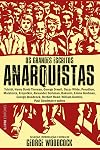
The Anarchist Reader
by George Woodcock (Editor)
On This Page
Tags
Recommendations




















Member Reviews
I did have this but not sure if I still do. I have not read more than snippets of it.
Ratings
Members
- Recently Added By
Author Information

George Woodcock was born in Winnipeg, Canada on May 8, 1912. He was educated in England, and returned to Canada in 1949. He was a poet, critic, and essayist. During his lifetime, he wrote and edited almost 150 books. His works included Anarchism, The Anarchist Reader, The Crystal Spirit, and Canada and the Canadians. He was the founding editor of show more Canadian Literature, the first journal to look solely at Canada's literary world. He also founded the anarchist literary journal Now in 1940. He died from coronary problems on January 28, 1995 at the age of 82. (Bowker Author Biography) show less
Some Editions
Series
Belongs to Publisher Series
Work Relationships
Is an abridged version of
Common Knowledge
- Canonical title
- The Anarchist Reader
- Original title
- The Anarchist Reader; Anarchy-Anarchist (Sebastian Faure) (Sebastian Faure); Anarchy Defined (Errico Malatesta) (Errico Malatesta); The Birth of Anarchy: the Death of Property (Pierre-Joseph Proudhon) (Pierre-Joseph Proudhon); Disobedience: Man's Original Virture (Oscar Wilde) (Oscar Wilde); Anarchism and the Religious Impulse (Herbert Read) (Herbert Read) (show all 64); Church and State (Michael Bakunin) (Michael Bakunin); The State and the Sacred (Max Stirner) (Max Stirner); Normal Politics and Psychology of Power (Paul Goodman) (Paul Goodman); War is the Health of the State (Randolph Bourne) (Randolph Bourne); The Indefensible Constitution (Lysander Spooner) (Lysander Spooner); The Ullusion of Universal Suffrage (Michael Bakunin) (Michael Bakunin); Parliamentary Isolation (Pierre-Joseph Proudhon) (Pierre-Joseph Proudhon); The Uselessness of Laws (Peter Kropotkin) (Peter Kropotkin); The Violence of Laws (Leo Tolstoy) (Leo Tolstoy); On Punishment (William Godwin) (William Godwin); Prison and its Effects (Peter Kropotkin) (Peter Kropotkin); On Property (William Godwin) (William Godwin); The Tyranny of the Clock (George Woodcock) (George Woodcock); To Karl Marx (Pierre-Joseph Proudhon) (Pierre-Joseph Proudhon); Perils of the Marxist State (Michael Bakunin) (Michael Bakunin); State Socialism and Anarchism (Benjamin Tucker) (Benjamin Tucker); The Failure of the Russian Revolution (Emma Goldman) (Emma Goldman); The Principle of the Revolution (Pierre-Joseph Proudhon) (Pierre-Joseph Proudhon); Revolution and Insurrection (Max Stirner) (Max Stirner); Anarchist Action (Nicolas Walter) (Nicolas Walter); Affinity Groups (Murray Bookchin) (Murray Bookchin); Revolution and Social Reality (Alex Comfort) (Alex Comfort); Anarchism and Violence (Peter Kropotkin) (Peter Kropotkin); The Violence of the Lawful World (Alexander Berkman) (Alexander Berkman); An Assassin's Attempt (Alexander Berkman) (Alexander Berkman); A Terrorist's Defence (Emile Henry) (Emile Henry); Civil Disobedience (Henry David Thoreau) (Henry David Thoreau); Resistance to Military Service (Leo Tolstoy) (Leo Tolstoy); Syndicalism Defined (George Woodcock) (George Woodcock); Syndicalism: An Advocacy (Pierre Monatte) (Pierre Monatte); Syndicalism: An Anarchist Critique (Errico Malatesta) (Errico Malatesta); The Paris Commune, 1871 (Peter Kropotkin) (Peter Kropotkin); Makhno's Anarchism in practism (Peter Arshinov) (Peter Arshinov); Anarchists in the Spanish Civil War (Bueneventura Durutti with Pierre van Paasen) (Bueneventura Durutti with Pierre van Paasen); Barcelona, 1936 (George Orwell) (George Orwell); An Adalusian Commune (Franz Borkenau) (Franz Borkenau); A Commune in Aragon (Gaston Leval) (Gaston Leval); A Song for the Spanish Anarchists (Herbert Read) (Herbert Read); Paris 1968 (Murray Bookchin) (Murray Bookchin); The Evils of National Education (William Godwin) (William Godwin); Education through Desire (William Godwin) (William Godwin); Alternatives to Miseducation (Paul Goodman) (Paul Goodman); An Aesthetic Approach to Education (Herbert Read) (Herbert Read); The Old Society - and the New (Pierre-Joseph Proudhon) (Pierre-Joseph Proudhon); The Dissolution of Government (William Godwin) (William Godwin); Arranging our Lives (Leo Tolstoy) (Leo Tolstoy); What is Authority? (Michael Bakunin) (Michael Bakunin); The Revolution and the Nation (Pierre-Joseph Proudhon) (Pierre-Joseph Proudhon); Topless Federations (Colin Ward) (Colin Ward); Reflections on Decentralism (Goerge Woodcock) (Goerge Woodcock); The Organization of Production (James Guillaume) (James Guillaume); Lazy Men and Dirty Work (Alexander Berkman) (Alexander Berkman); Work and the Machine (William Morris) (William Morris); The Time Store (Josiah Warren) (Josiah Warren); Exchange and Distribution (James Guillaume) (James Guillaume); On the Wage System (Peter Kropotkin) (Peter Kropotkin); Crime in a Free World (Peter Kropotkin) (Peter Kropotkin); Anarchism and Ecology (Murray Bookchin) (Murray Bookchin)
- Original publication date
- 1977
- Epigraph
- "Whoever puts his hand on me to govern me is an usurper and a tyrant; I declare him my enemy."
Pierre-Joesph Proodhon - First words
- Anarchism is a word about which there have been many confusions. Anarchy is very often mistakenly regarded as the equivalent of chaos, and an anarchist is thought of as at best a nihilist - a man who has abandoned all princip... (show all)les - and at worst a mindless terrorist.
- Quotations
- It is obvious that freedom will be restored to humanity, and that the true interests of society - whether of groups, of local organizations or of all the individuals who compose society - will find true satisfaction only when... (show all) there are no more States.
(p.81, from Michael Bakunin, 1910, Oeuvres Vol.IV)
The abolition of the Church and the State must be the first and indispensable condition of the true liberation of society...
(p.82, from Michael Bakunin, 1910, Oeuvres Vol.IV)
Laws are rules, made by people who govern by means of organized violence, for non-compliance with which the non-complier is subjected to blows, to loss of liberty, or even to being murdered.
(p.118, from Leo Tolstoy, 1900,... (show all) The Slavery of Our Times)
To be governed is to be watched over, inspected, spied on, directed, legislated over, regulated, docketed, indoctrined, preached at, controlled, assessed, weighed, censored, ordered about, by men who have neither right, nor k... (show all)nowledge, nor virtue. That is government, that is its justice, that is its morality.
(Pierre-Joseph Proudhon)
Government lays its hands upon the spring that is in society and puts a stop to its motions. It gives substance and permanence to its errors. It reverses the genuine propensities of mind, and instead of suffering us to look f... (show all)orward, teaches us to look backward for perfection. It prompts us to seek the public welfare, not in innovation and improvement, but in a timid reverence for the decisions of our ancestors, as if it were the nature of mind always to degenerate and never to advance. (William Godwin, 1793, Political Justice) - Last words
- (Click to show. Warning: May contain spoilers.)Freed from an oppressive routine, from paralysing repressions and insecurities, from the burdens of toil and false needs, from the trammels of authority and irrational compulsion, individuals will finally, for the first time in history, be in a position to realize their potentialities as members of the human community and the natural world.
(Murray Bookchin, 1974, "Post-Scarcity Anarchism")
Classifications
Statistics
- Members
- 137
- Popularity
- 238,015
- Reviews
- 1
- Rating
- (3.65)
- Languages
- English, Portuguese
- Media
- Paper, Ebook
- ISBNs
- 6
- ASINs
- 2