On This Page
Description
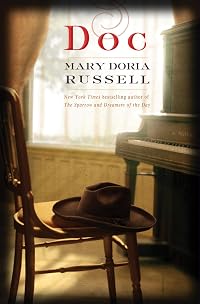
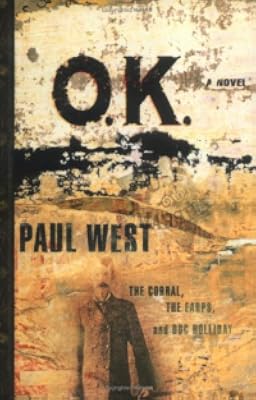
After the burned body of a mixed-blood boy, Johnnie Sanders, is discovered in 1878 Dodge City, Kansas, part-time policeman Wyatt Earp enlists the help of his professional-gambler friend Doc Holliday.Tags
Recommendations











Member Recommendations
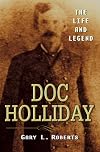
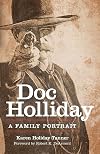
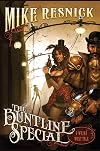
mysterymax A fanciful steampunk version of the Earp and Doc Holliday story.
by Iudita
Member Reviews
I had the distinct pleasure of hearing Ms. Russell speak last October at the Great Lakes Independent Booksellers Association's trade show. She freely admitted that she had developed a crush on John Henry Holliday and gave many reasons for why she did so. After reading Doc, one understands exactly why she was so giddy. It is definitely deserved.
Through extensive research, including learning how to ride horses, read Greek and Latin, and play classical piano, Ms. Russell dispels all legends and exaggerations told about Doc Holliday and instead shows him to be the well-educated southern gentleman and trained dentist that somehow never gets mentioned in retellings of the story of the O.K. Corral. His struggles to combat his tuberculosis and show more eventual career as a professional gambler get particular attention. Focusing on his childhood and life prior to moving to Tombstone, AZ, the reader gets a comprehensive picture of the man behind the myth, as well as realizing just how much myth there is around the man.
Holliday's story is one of tragedy. Born right before the Civil War into southern gentility, he watched his life turn upside with the coming of the War. His beloved mother died shortly thereafter. Just as he was about ready to start life on his own at age 21, he was given a death sentence in the form of a diagnosis of tuberculosis - the same thing that killed his mother. Fleeing the humid climate of his home prolonged his life, but it also filled him with a profound sense of loneliness and of desolation that he combated, along with his disease, for the rest of his life.
Ms. Russell's words bring the man to life in a way that is just as vivid as any movie. His southern gentility, wit and grace leap off the page, and a reader is left wanting to be a better person if only because JHH remained one in spite of his slow, agonizing death and rough lifestyle. The poignancy of his relationship with Morgan and with Kate brings another facet to the man, as they become the family he so desperately misses. While this is a work of fiction, there is more history than fiction, and Ms. Russell does an excellent job of not only showing which characters are real and which are not but of blending the two seamlessly. For fans of historical fiction, Doc is definitely this spring's must-read.
Thank you to Ms. Russell and GLiBA for my advanced copy! show less
Through extensive research, including learning how to ride horses, read Greek and Latin, and play classical piano, Ms. Russell dispels all legends and exaggerations told about Doc Holliday and instead shows him to be the well-educated southern gentleman and trained dentist that somehow never gets mentioned in retellings of the story of the O.K. Corral. His struggles to combat his tuberculosis and show more eventual career as a professional gambler get particular attention. Focusing on his childhood and life prior to moving to Tombstone, AZ, the reader gets a comprehensive picture of the man behind the myth, as well as realizing just how much myth there is around the man.
Holliday's story is one of tragedy. Born right before the Civil War into southern gentility, he watched his life turn upside with the coming of the War. His beloved mother died shortly thereafter. Just as he was about ready to start life on his own at age 21, he was given a death sentence in the form of a diagnosis of tuberculosis - the same thing that killed his mother. Fleeing the humid climate of his home prolonged his life, but it also filled him with a profound sense of loneliness and of desolation that he combated, along with his disease, for the rest of his life.
Ms. Russell's words bring the man to life in a way that is just as vivid as any movie. His southern gentility, wit and grace leap off the page, and a reader is left wanting to be a better person if only because JHH remained one in spite of his slow, agonizing death and rough lifestyle. The poignancy of his relationship with Morgan and with Kate brings another facet to the man, as they become the family he so desperately misses. While this is a work of fiction, there is more history than fiction, and Ms. Russell does an excellent job of not only showing which characters are real and which are not but of blending the two seamlessly. For fans of historical fiction, Doc is definitely this spring's must-read.
Thank you to Ms. Russell and GLiBA for my advanced copy! show less
Doc Holliday and Wyatt Earp are names that are linked together with gunfights and dust and the US West. In Doc Russell takes a look at their lives away from the O.K. Corral. How they came to know one another and their histories, together and apart. It is a story of violence, gambling, prostitution, dentistry, and tuberculosis, among many other things. And I loved it.
I bought this book back in 2012, when it was released in paperback, because I have loved all Russell's other books. But for some reason it sat on my shelf. And sat on my shelf, and I never even looked at it. But I spotted it while browsing and decided now was the time. So I picked it up.
And I loved it. So much.
I'm a quasi-fan of the western story. I think it can be a show more great setting, but it is also such a made-up time and place. Full of stories of hero cowboys and settlers who were responsible for murdering and displacing so many Native Americans. The whole Manifest Destiny thing was just such a horrendous belief that a lot of stories ignore. And too often the stories revolve around the white man, ignoring the women who faced the same, if not more hardships, and using all other races as either supporting cast or the villains of the piece. And this is the story of one of those white men, Doc Holliday, so it could very easily have been one of those stories.
Instead Russell uses Doc to explore the whole society of Dodge City. It is, still, the story of Doc himself, so yes, it does revolve around a white man. But at least here we really get to see a lot of what the women had to go through. And, to a lesser extent, how a black man or a Chinese man, or anyone not a white man, had no value to many.
I really loved the way Holliday points out to Wyatt what he should have realised, that the women of Dodge City, prostitutes or wives, all have stories of their own. Their own past and history, and often those pasts weren't very pleasant.
It is just such a wonderfully written book that reading Doc felt like being enveloped in the pages. And in such beautifully told, moving story. Yes, there is violence and death, illness and more death, but somehow it was just such an enjoyable read. I am really tempted to begin it all over again, but my Mount TBR will not let me. Not yet. It is a book that I think will seriously reward a reread. And a reread after that.
It will, however, disperse and romantic notions you may have about "the consumption". In some novels tuberculosis is depicted as almost a romantic death, that is not how it appears here. It is a horrible, painful, miserable death, that follows a painful, distressing illness. And one for which, back then, there was no cure.
As to whether the book is true? Well, that I don't know, but Russell has done a lot of research and it is certainly true to the spirit of the story. Maybe the facts aren't always correct, but when are they ever? show less
I bought this book back in 2012, when it was released in paperback, because I have loved all Russell's other books. But for some reason it sat on my shelf. And sat on my shelf, and I never even looked at it. But I spotted it while browsing and decided now was the time. So I picked it up.
And I loved it. So much.
I'm a quasi-fan of the western story. I think it can be a show more great setting, but it is also such a made-up time and place. Full of stories of hero cowboys and settlers who were responsible for murdering and displacing so many Native Americans. The whole Manifest Destiny thing was just such a horrendous belief that a lot of stories ignore. And too often the stories revolve around the white man, ignoring the women who faced the same, if not more hardships, and using all other races as either supporting cast or the villains of the piece. And this is the story of one of those white men, Doc Holliday, so it could very easily have been one of those stories.
Instead Russell uses Doc to explore the whole society of Dodge City. It is, still, the story of Doc himself, so yes, it does revolve around a white man. But at least here we really get to see a lot of what the women had to go through. And, to a lesser extent, how a black man or a Chinese man, or anyone not a white man, had no value to many.
I really loved the way Holliday points out to Wyatt what he should have realised, that the women of Dodge City, prostitutes or wives, all have stories of their own. Their own past and history, and often those pasts weren't very pleasant.
It is just such a wonderfully written book that reading Doc felt like being enveloped in the pages. And in such beautifully told, moving story. Yes, there is violence and death, illness and more death, but somehow it was just such an enjoyable read. I am really tempted to begin it all over again, but my Mount TBR will not let me. Not yet. It is a book that I think will seriously reward a reread. And a reread after that.
It will, however, disperse and romantic notions you may have about "the consumption". In some novels tuberculosis is depicted as almost a romantic death, that is not how it appears here. It is a horrible, painful, miserable death, that follows a painful, distressing illness. And one for which, back then, there was no cure.
As to whether the book is true? Well, that I don't know, but Russell has done a lot of research and it is certainly true to the spirit of the story. Maybe the facts aren't always correct, but when are they ever? show less
I've never been interested in the Wild West, the western genre (books or film), or this particular cast of characters (Doc Holliday, Wyatt Earp, Bat Masterson, etc.). In fact, I've always avoided it like the plague and will probably continue to do so in the future. However, Russell makes late 19th Century Dodge, Kansas, come alive in the most fascinating and delightful way, where even a skeptic such as myself is swept into the time and place. I was enchanted. Of course, rather than an action-packed Western, this is an in-depth character study of the charming, well-educated, consumptive, Southern gentleman Doc Holliday and the earnest, moralistic, somewhat dimwitted, but yet oddly likable lawman Wyatt Earp. The supporting characters are show more well-fleshed out too.
The novel focuses on the origins of the Holliday/Earp friendship a few years prior to the Gunfight at the OK Corral in Tombstone, Arizona (which I had heard of, but knew nothing about, before looking it up when reading this novel) and how such an unlikely friendship blossomed between such fundamentally different personalities out of necessity and just the basic need for human bonding and camaraderie in a hostile environment. It also touches on the theme of reinvention, where almost every character gets second and third leases on life in the chaotic anonymity of a dangerous frontier town. On a side note, I found the exploration of the racial and regional tensions following the aftermath of the Civil War/Reconstruction quite interesting too and not something I had thought much about when considering the Wild West. Highly recommended, even if you think the subject matter won't interest you. show less
The novel focuses on the origins of the Holliday/Earp friendship a few years prior to the Gunfight at the OK Corral in Tombstone, Arizona (which I had heard of, but knew nothing about, before looking it up when reading this novel) and how such an unlikely friendship blossomed between such fundamentally different personalities out of necessity and just the basic need for human bonding and camaraderie in a hostile environment. It also touches on the theme of reinvention, where almost every character gets second and third leases on life in the chaotic anonymity of a dangerous frontier town. On a side note, I found the exploration of the racial and regional tensions following the aftermath of the Civil War/Reconstruction quite interesting too and not something I had thought much about when considering the Wild West. Highly recommended, even if you think the subject matter won't interest you. show less
Mary Doria Russell is an extraordinary writer and researcher. I had the privilege of hearing her speak during her promotional tour for this novel and was incredibly impressed by her depth of knowledge, her fastidious sense of fairness and accuracy, and above all her passion. All of these things are showcased through the quality of her novels. Though they are sometimes difficult to read -- my experience of 'The Sparrow' was one of both wonder and horror -- Russell's novels are always worth the effort. This particular novel -- a piece of historical fiction centered on one Doc Holliday (you may have heard of him) -- tends to be overly prosy, particularly in the beginning and toward the end. The reader can definitely tell that Russell did show more enough research to write the definitive biography on Doc Holliday, if she'd wanted to.
Once the story gets moving -- and that happens right about the time that Holliday meets his equally famous confederate, Wyatt Earp -- the pace and prose pick up and one is carried into the American West of the 1870s. The novel -- unlike almost every story ever told about Holliday -- does not focus on the gunfight at the OK Corral, or any time spent in Tombstone. Instead, it builds the reader's understanding of Holliday and his unusual pack of friends by starting with their early histories and the initial days of their friendship. We learn about Doc and Wyatt, sure, but also Wyatt's brothers and -- even more unusually -- the women in their lives, who form key connections and motivations.
The primary narrative plot itself is a bit of a murder mystery, believe it or not, but that mystery is often forgotten as the reader meanders through the fields and plains of the characters' lives. Ultimately, the novel is very much about humanity -- about bonds, about love, and about what humans beings are in spite of what society expects or asks them to be. Perhaps for the first time in fiction, John Henry Holliday comes across as a real person, with real feelings and reasons, real beauty as well as those oft-discussed flaws. Wyatt Earp and his brothers are also fleshed out here -- not just as steel-jawed lawmen with guns, but as people -- men who are sometimes at a loss with their women, boys who remember the abuse of their father, friends who are trying to do right by their fellow men. There is a particular delight in the way that Russell has fleshed out these historical figures. What makes this novel even more special is that you can rely on Russell's detail and accuracy (she even lists all the characters at the beginning of the book and carefully denotes the few who are not actual historical personages), and can therefore feel -- at the end of the novel -- that you truly have learned something.
Though this sometimes reads too much like a biography -- and that may be an issue for some fiction readers -- I can unreservedly recommend this novel to anyone fond of meticulous historical fiction as well as to readers of historical non-fiction. The depth of understanding and realism here are well worth the patience it may take to get through the opening pages. A rewarding experience. show less
Once the story gets moving -- and that happens right about the time that Holliday meets his equally famous confederate, Wyatt Earp -- the pace and prose pick up and one is carried into the American West of the 1870s. The novel -- unlike almost every story ever told about Holliday -- does not focus on the gunfight at the OK Corral, or any time spent in Tombstone. Instead, it builds the reader's understanding of Holliday and his unusual pack of friends by starting with their early histories and the initial days of their friendship. We learn about Doc and Wyatt, sure, but also Wyatt's brothers and -- even more unusually -- the women in their lives, who form key connections and motivations.
The primary narrative plot itself is a bit of a murder mystery, believe it or not, but that mystery is often forgotten as the reader meanders through the fields and plains of the characters' lives. Ultimately, the novel is very much about humanity -- about bonds, about love, and about what humans beings are in spite of what society expects or asks them to be. Perhaps for the first time in fiction, John Henry Holliday comes across as a real person, with real feelings and reasons, real beauty as well as those oft-discussed flaws. Wyatt Earp and his brothers are also fleshed out here -- not just as steel-jawed lawmen with guns, but as people -- men who are sometimes at a loss with their women, boys who remember the abuse of their father, friends who are trying to do right by their fellow men. There is a particular delight in the way that Russell has fleshed out these historical figures. What makes this novel even more special is that you can rely on Russell's detail and accuracy (she even lists all the characters at the beginning of the book and carefully denotes the few who are not actual historical personages), and can therefore feel -- at the end of the novel -- that you truly have learned something.
Though this sometimes reads too much like a biography -- and that may be an issue for some fiction readers -- I can unreservedly recommend this novel to anyone fond of meticulous historical fiction as well as to readers of historical non-fiction. The depth of understanding and realism here are well worth the patience it may take to get through the opening pages. A rewarding experience. show less
 This review was written for LibraryThing Early Reviewers.
Even if you don't think you'd like westerns, even if you don't like biographies, try this one. Mary Doria Russell, and narrator Mark Bramhall have given us a very fresh, unadorned look at Doc, his lady friend Kate, the Earp brothers, and the bustling, smelly, muddy, smoked filled saloons and bawdy houses of Dodge City. Her research into the symptoms and effects of tuberculosis and her descriptions of the hard life of cattle rustling, early dental procedures, and law enforcement in "the wild west" give us a picture we didn't get on TV. Mark Bramhall's ability to give us a distinct voice for each character, a coquettish European accent for Kate, a guttural German for the Augustinian priest, a gentle Georgian drawl for Doc, Irish brogues show more for several of the women, and western twangs for the Earps was incredibly powerful and kept me riveted for the full sixteen hours.
Doc's long slow losing battle with TB was something I had been vaguely aware of, but the personalities of each of the others was new and interesting. It was an eye-opener for those of us steeped in whatever version of the shoot-out at the OK Corral we have inherited. Russell has done a wonderful job in setting the record back onto a more historically accurate track in a very enjoyable read along the way. show less
Doc's long slow losing battle with TB was something I had been vaguely aware of, but the personalities of each of the others was new and interesting. It was an eye-opener for those of us steeped in whatever version of the shoot-out at the OK Corral we have inherited. Russell has done a wonderful job in setting the record back onto a more historically accurate track in a very enjoyable read along the way. show less
Yes, this is every bit as good as all the warblers say it is. The story of John Henry Holliday (Doc, we always call him), the legendary gun-fighter who really wasn't one, but who could by God shoot, among other things. The first sentences of the book set the tone, and tell the reader what to expect... "He began to die when he was twenty-one, but tuberculosis is slow and sly and subtle. The disease took 15 years to hollow out his lungs so completely they could no longer keep him alive. In all that time he was allowed a single season of something like happiness." This is the story of that season, Doc's days in Dodge, where he practiced some real fine dentistry, dealt a ruthless game of faro to keep money in his pocket, forged an uneasy show more friendship with Wyatt Earp and shared his love of classic literature and music with Kate Harony, a prostitute of possibly noble Hungarian heritage. He also learned to Live as much as his stricken lungs would allow, and pursued the truth about the death of a young boy whose fate no one else seemed to care about. However many versions of the Earp/Holliday legend you've read or seen, I guarantee Russell's characterizations will blank those others right out, and THIS is what you will believe about these men. No Val Kilmer, no Kurt Russell, no Hugh O'Brian, no Cesar Romero, no Kirk Douglas...the real deal in my mind now and forever more will live in the pages of Doc. And, btw, this woman can tell a story. I'm thrilled she turned her talents to this one. show less
Doc primarily takes place in Dodge City, Kansas in 1878 where John Henry “Doc” Holliday is hoping to make enough money gambling to open a dentistry practice with his cousin. The majority of the story is true, but the book is a historical fiction novel about the life and times of Holliday, known in history for his association with the Earp brothers. He and the Earps are famous for the shootout at the O.K. Corral in Tombstone, but that is not the focus of "Doc." Russell begins and ends her book with single chapters that give the highlights of Doc's life before and after her story's setting in Dodge City, Kansas.
Doc, a Georgia native suffering from tuberculosis, moves west for his health, making his way to Dodge City to play poker and show more work as a faro dealer. There he takes up with the Earps, a prostitute named Kate, and a mixed race boy named Johnny Sanders, whose death in a suspicious barn fire lead both Doc and Wyatt to investigate why everyone else was able to escape the fire in the Famous Elephant Barn but this young man died.
The author fills her story with a wealth of both fictional and historical characters to create a riveting look into some of the most interesting personalities in the Old West, including the Earps and Bat Masterson. There is plenty of rich historical data included with the fictional portions of this story and the two meld together to make the story very real.
Doc Holliday was a very complex person. In this novel we get a detailed picture of a loquacious, tubercular man who seems always just a step away from death. He was a highly educated and cultured Southern gentleman with a weakness for sartorial affectations and a love of fine literature, beautiful music, and foreign languages. He also knows that he is a dying man. At one point he meets a young woman who doesn't yet know she has tuberculosis but Doc recognizes her symptoms. He discourages her visits to him while he is ill because he feels he is “the ghost of Christmases yet to come.” Doc's tuberculosis is almost a character of its own.
The interaction between the characters and the beautiful turns of phrase makes this book a wonderful reading experience. The old west and Doc Holliday vividly come to life as do all of the characters. Kate, who was also known as Katie Elder and “Big Nose” Kate, worked as a prostitute even as she was living with him. She maintained a complex relationship with Doc who considered her his intellectual equal.
I loved this book and would highly recommend it for a fascinating look at the complicated man behind his legend. show less
Doc, a Georgia native suffering from tuberculosis, moves west for his health, making his way to Dodge City to play poker and show more work as a faro dealer. There he takes up with the Earps, a prostitute named Kate, and a mixed race boy named Johnny Sanders, whose death in a suspicious barn fire lead both Doc and Wyatt to investigate why everyone else was able to escape the fire in the Famous Elephant Barn but this young man died.
The author fills her story with a wealth of both fictional and historical characters to create a riveting look into some of the most interesting personalities in the Old West, including the Earps and Bat Masterson. There is plenty of rich historical data included with the fictional portions of this story and the two meld together to make the story very real.
Doc Holliday was a very complex person. In this novel we get a detailed picture of a loquacious, tubercular man who seems always just a step away from death. He was a highly educated and cultured Southern gentleman with a weakness for sartorial affectations and a love of fine literature, beautiful music, and foreign languages. He also knows that he is a dying man. At one point he meets a young woman who doesn't yet know she has tuberculosis but Doc recognizes her symptoms. He discourages her visits to him while he is ill because he feels he is “the ghost of Christmases yet to come.” Doc's tuberculosis is almost a character of its own.
The interaction between the characters and the beautiful turns of phrase makes this book a wonderful reading experience. The old west and Doc Holliday vividly come to life as do all of the characters. Kate, who was also known as Katie Elder and “Big Nose” Kate, worked as a prostitute even as she was living with him. She maintained a complex relationship with Doc who considered her his intellectual equal.
I loved this book and would highly recommend it for a fascinating look at the complicated man behind his legend. show less
Members
- Recently Added By
Lists

Best Historical Fiction
620 works; 261 members

Best Contemporary Literary Fiction (Around the Last 30 Years)
388 works; 124 members

Recommend the 20 best books you've read in the last five years
2,168 works; 606 members

Top Five Books of 2013
1,562 works; 721 members

ALA The Reading List
490 works; 28 members

Historical Fiction
889 works; 91 members

Top Five Books of 2022
736 works; 272 members

Reading Group 2012 Fall
8 works; 1 member

Books Set in Kansas
19 works; 7 members
Literary Travelogue of the United States Challenge
133 works; 6 members

Books Read in 2016
4,666 works; 197 members

Must-Read Books About the Southwest
98 works; 2 members

Historical Figures in Fiction
51 works; 5 members

Books With Our Favorite First Lines
168 works; 104 members
Author Information

8+ Works 17,786 Members
Some Editions
Awards and Honors
Awards
Distinctions
Notable Lists
Series

Common Knowledge
- Original title
- Doc
- Original publication date
- 2011-05-03
- People/Characters
- Doc Holliday; Wyatt Earp; Big Nose Kate
- Important places
- Dodge City, Kansas, USA
- Epigraph
- This book is fiction, but there is always a chance that such a work of fiction may throw some light
on what has been written as fact.
—E. HEMINGWAY, A MOVEABLE FEAST - Dedication
- For Art Nolan, who told me what Wyatt knew; for Eddie Nolan, who showed us what John Henry had to learn; for Alice McKey Holliday, who raised a fine young man; with thanks to Bob Price and Gretchen Batton.
- First words
- He began to die when he was twenty-one, but tuberculosis is slow and sly and subtle.
- Quotations
- Ignore it, deny it, or fight it, change was inevitable.
He was, he believed, no longer prone to the paralyzing bouts of homesickness that used to overwhelm him, when the yearning for all he had lost was so powerful that his only defense was to hold himself still until the sorrow w... (show all)ashed through him and left him empty again.
The heat was building under the roof of the hotel, but the air was dry and not so hard on him as the murderous swelter of a Southern summer. He closed his eyes and listened to the strangely lulling concert that Dodge in dayli... (show all)ght produced. The brassy bellow of cattle, the timpani of hooves. A cello section of bees buzzing in the hotel eaves. The steady percussion of hammers: carpenters shingling the roof of a little house going up on a brand-new street extending north from Front.
The sunset beyond shone vermilion through the dust.
If you knew what was what, you made damn sure there was money sewn into seams, or gems hidden in hems—
"The law can relieve a man of guilt," Doc told him quietly, "but not of his remorse."
"Dick, if you want a hill in Kansas, you have to by-God build it yourself," he remarked.
Now, with Dick Naylor beneath him, he felt himself a joyful boy once more: privileged to share in the athletic power of a large and dangerous animal willing to be controlled by the small, frail strength of a mere human being.
For the first time since she moved in, he wished that Mattie would talk more, for his own thoughts were loud in his mind.
They strolled toward town, stopping now and then to let him catch his breath and to gaze upward, for the west Kansas sky is black velvet on clear, cool December nights, and the Milky Way is strung across it like the diamond n... (show all)ecklace of a crooked banker's mistress.
"You keep joking about dying, and I wish you'd quit. It's like you're trying to get used to the idea," Morg said. "Making friends with it, almost." - Last words
- (Click to show. Warning: May contain spoilers.)Calypso did the best she could.
- Canonical DDC/MDS
- 813.54
Classifications
Statistics
- Members
- 1,541
- Popularity
- 14,889
- Reviews
- 180
- Rating
- (4.12)
- Languages
- English
- Media
- Paper, Audiobook, Ebook
- ISBNs
- 8
- ASINs
- 5
