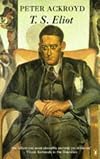
T.S. Eliot: A Life
by Peter Ackroyd
On This Page
Description
Within his lifetime T.S. Eliot came to be considered the greatest poet of his generation and perhaps the most important poet of this century. Two decades after his death, his reputation, unlike that of many of his contemporaries, remains as secure as ever. His influence has been profound: virtually every poet writing in English in the last fifty years owes a debt to him. Eliot achieved great success during his life. He won the Nobel Prize for Literature, he was an influential magazine and show more book editor, he spoke widely on religion and social issues. But he was also a very private man who remained something of a mystery even to his closest friends. This is only one of a number of paradoxes in Eliot's life. Perhaps chief among them, as this biography demonstrates, was Eliot's insistence on the impersonality of great poetry while at the same time his own work was suffused with his experience and personality. In fact, as Peter Ackroyd points out, "His private choices and obsessions became emblematic of, and in some sense determined our understanding of, the twentieth-century tradition." Eliot insisted on the importance of literary tradition, yet he had no real predecessors or successors. Along with Pound, Joyce, and Woolf, he helped give birth to modernism in literature, but then later in his career he abandoned it. From this biography -- the first authoritative, comprehensive life of Eliot ever published -- we can at last understand the relationship of Eliot's life and work, the better to appreciate his artistic achievement. With this book we now have the first detailed account of Eliot's deeply troubled first marriage, as well as reliable descriptions of the solitude and misery of his middle years and the fulfillment and joy he found late in life in his second marriage. Scrupulously researched, elegantly written and insightful, T.S. Eliot is an accomplished portrait of an extraordinary figure. It will be an essential book for anyone who wants to understand one of the most important writers of the century. - Back cover. In the twentieth century, no Anglo-American poet or critic has matched the influence of Thomas Stearns Eliot. Despite his political and religious conservatism, Eliot was among the most innovative of the literary modernists, a figure to be reckoned with by admirers and critics alike. In his Whitbread Prize-winning biography, Peter Ackroyd delves into the work and mind of a man who redefined the very terms of modern poetry. show lessTags
Recommendations















Member Reviews
I hardly ever read poetry, but for some reason T.S. Eliot's poetry speaks to me. Perhaps it's because, like Eliot, I used to work at a bank in the City of London, and the feeling of his poems is the exact feeling I had as a 'Hollow Man' looking at the masses of other Hollow Men crossing London Bridge to the Waste Land of the City. "I had not thought death had undone so many" - lines like that just express so much for me.
So I was happy to be able to borrow this biography of T.S. Eliot from my neighbours. It was quite a depressing read, but fascinating. Eliot was apparently very cold and detached from his emotions, sexually repressed, withholding of emotion, distrustful of the passionate side of him, and stuck for much of his life in a show more disastrous marriage with Vivien, who was perpetually ill and mentally unstable.
His writing depended a lot on other literature, feeding on others' work, adapting it and using it in hiw own. "His was an imagination which went to literature for that which life could not give - a sense of order and significance, and the possibility of dramatic intensity."
I was struck by how much of a record we have of people's lives and thoughts in those days, through letters and other paper archives - there's even a record of what books Eliot borrowed from his local library in 1917. Today, how much will there be for future historians to draw on? Nobody writes letters any more. Emails and blogs and websites could theoretically be retained forever, but are in practice deleted frequently. Not to mention tweets, texts, instant messages, etc.
I was also interested in how small and accessible 'literary' society seemed in those days. Even before Eliot was famous, he was mixing quite easily with the likes of Ezra Pound (who mentored him and edited the Waste Land), the Woolfs, James Joyce, etc etc. Eliot came from a privileged background so clearly that was important, but I was interested in how easily he seemed to get 'in', and how everybody seemed to know everybody.
His poetry was written sproadically, partly due to other commitments - his work at the bank and then as a publisher at Faber & Faber, his own poor health and that of his wife, their eventual breakup (Eliot split from her in a very cowardly way, going to America for a year and then just avoiding her when he got back to London and getting his lawyer to write to her and explain everything). For some years, there's almost nothing in the biography apart from a catalogue of worries and difficulties and ailments.
His conversion to Anglo-Catholicism surprised many, given his scepticism and ironic distance from any idea. But his sister Ada thought that it was a way for him to withdraw from the world even further, seeing it as unreal and merely "acting" in it while maintaining a separate, inner world of mysticism. He was also seeking some kind of order and tradition to cling to. He became increasingly preoccupied with the absurdity of most activities and the deceitfulness of human affections. Even his writing didn't seem to give him much pleasure - in his letters there are repeated references to poetry as something dark and viscous that clogs him up and has to be evacuated.
At the end of his life, however, he did seem to find happiness. He married his secretary Valerie Fletcher in 1957 and lived a simple, domestic life of semi-retirement with her until his death in 1965. After he died, Valerie said, "He felt he had paid too high a price to be a poet, that he had suffered too much." show less
So I was happy to be able to borrow this biography of T.S. Eliot from my neighbours. It was quite a depressing read, but fascinating. Eliot was apparently very cold and detached from his emotions, sexually repressed, withholding of emotion, distrustful of the passionate side of him, and stuck for much of his life in a show more disastrous marriage with Vivien, who was perpetually ill and mentally unstable.
His writing depended a lot on other literature, feeding on others' work, adapting it and using it in hiw own. "His was an imagination which went to literature for that which life could not give - a sense of order and significance, and the possibility of dramatic intensity."
I was struck by how much of a record we have of people's lives and thoughts in those days, through letters and other paper archives - there's even a record of what books Eliot borrowed from his local library in 1917. Today, how much will there be for future historians to draw on? Nobody writes letters any more. Emails and blogs and websites could theoretically be retained forever, but are in practice deleted frequently. Not to mention tweets, texts, instant messages, etc.
I was also interested in how small and accessible 'literary' society seemed in those days. Even before Eliot was famous, he was mixing quite easily with the likes of Ezra Pound (who mentored him and edited the Waste Land), the Woolfs, James Joyce, etc etc. Eliot came from a privileged background so clearly that was important, but I was interested in how easily he seemed to get 'in', and how everybody seemed to know everybody.
His poetry was written sproadically, partly due to other commitments - his work at the bank and then as a publisher at Faber & Faber, his own poor health and that of his wife, their eventual breakup (Eliot split from her in a very cowardly way, going to America for a year and then just avoiding her when he got back to London and getting his lawyer to write to her and explain everything). For some years, there's almost nothing in the biography apart from a catalogue of worries and difficulties and ailments.
His conversion to Anglo-Catholicism surprised many, given his scepticism and ironic distance from any idea. But his sister Ada thought that it was a way for him to withdraw from the world even further, seeing it as unreal and merely "acting" in it while maintaining a separate, inner world of mysticism. He was also seeking some kind of order and tradition to cling to. He became increasingly preoccupied with the absurdity of most activities and the deceitfulness of human affections. Even his writing didn't seem to give him much pleasure - in his letters there are repeated references to poetry as something dark and viscous that clogs him up and has to be evacuated.
At the end of his life, however, he did seem to find happiness. He married his secretary Valerie Fletcher in 1957 and lived a simple, domestic life of semi-retirement with her until his death in 1965. After he died, Valerie said, "He felt he had paid too high a price to be a poet, that he had suffered too much." show less
Biographies are funny things. One might think that the more charismatic the subject, the more thrilling the biography and that, vice versa, a boring subject makes for a dull read. Peter Ackroyd's biography of poet, playwright and critic Thomas Stearns Eliot is proof of the fallacy of such a conclusion. This is not to say that Eliot is a tedious subject. An intensely private man, he was a great poet and his personal life had its moments, including a penchant for wearing apple-green face paint on occasions. However, he was somewhat aloof and his day jobs of bank clerk and publisher hardly make the blood race. Ackroyd's blood races though with admiration and understanding of a great poet and a very human man, and the biographer's skill as show more a writer and literary critic is such that he can make the reader's pulse quicken too. Somewhat hampered by the Eliot estate's refusal to allow him to quote Eliot's works or letters, Ackroyd nonetheless manages to collect together a vast amount of information. This, together with his intelligent approach to his poetry, gives a real insight into the quiet Anglophile. Of course, much of the book is taken up with his first marriage to Vivienne but there is none of the tabloid glee that comes with minor scandals in the telling of this difficult and ultimately doomed relationship. The book is a must-read for any fan of Eliot or Ackroyd and frankly for anyone who likes a good book. Ackroyd's too good a writer to take this cheap shot, but fortunately I'm not, so I end with this comment on the death of a great artist: This is the way a life ends, not with a bang but a whisper. show less
T.S. Eliot was one of the great poets in the English language during the twentieth century. He grew up in St. Louis and after graduating from college, moved to England. He loved his new country so much that he eventually became a subject of the English king. He wrote noted poems and plays over his lifespan. He also worked as a banker and as an editor for a publishing firm.
The author of this biography (Peter Ackroyd) is an Englishman who is one of the great historians of our time. Compared to his later writings on a multi-volume history of England, this relatively early work seems relatively superficial. It describes a poet of great emotion and depth in relatively simple terms. Perhaps this is due to Eliot’s nature, but surely some of show more it is due to Ackroyd’s youth. Fortunately for us, Ackroyd grew as a writer as he aged, and his writing on the history of England is simply majestic. Nonetheless, this work on Eliot was obviously written in Ackroyd’s youth.
What is this book’s value? Anyone who reads Murder in the Cathedral, Notes on a Christian Culture, The Waste Land, or anything else written by T.S. Eliot will wonder what sort of a human being produced such varied and ingenious works as these. Ackroyd’s biography will elucidate such curiosities. It peaks beneath the curtain into Eliot’s personal life. It brings to light his two marriages, his friendships, his religious conversion, his love of England, and his intellectual development in stark terms. Eliot’s story is well-researched as demonstrated by the comprehensive bibliography.
As told in this biography, Eliot was often asked what such-and-such a line in his poetry “meant” – as if there were some simple symbology at play. Eliot usually demurred and left the questioner wondering. Despite its shortcomings, this tale fills in some of those questions. It does not give us a definitive word on what opaque works like The Waste Land “truly mean” (if there is an answer to that question at all). Instead, it helps us see clearly the creative person behind the works, and it fulfills that job quite well. show less
The author of this biography (Peter Ackroyd) is an Englishman who is one of the great historians of our time. Compared to his later writings on a multi-volume history of England, this relatively early work seems relatively superficial. It describes a poet of great emotion and depth in relatively simple terms. Perhaps this is due to Eliot’s nature, but surely some of show more it is due to Ackroyd’s youth. Fortunately for us, Ackroyd grew as a writer as he aged, and his writing on the history of England is simply majestic. Nonetheless, this work on Eliot was obviously written in Ackroyd’s youth.
What is this book’s value? Anyone who reads Murder in the Cathedral, Notes on a Christian Culture, The Waste Land, or anything else written by T.S. Eliot will wonder what sort of a human being produced such varied and ingenious works as these. Ackroyd’s biography will elucidate such curiosities. It peaks beneath the curtain into Eliot’s personal life. It brings to light his two marriages, his friendships, his religious conversion, his love of England, and his intellectual development in stark terms. Eliot’s story is well-researched as demonstrated by the comprehensive bibliography.
As told in this biography, Eliot was often asked what such-and-such a line in his poetry “meant” – as if there were some simple symbology at play. Eliot usually demurred and left the questioner wondering. Despite its shortcomings, this tale fills in some of those questions. It does not give us a definitive word on what opaque works like The Waste Land “truly mean” (if there is an answer to that question at all). Instead, it helps us see clearly the creative person behind the works, and it fulfills that job quite well. show less
This is a thorough and well-written biography of one of the outstanding poets of the twentieth century. I enjoyed it as an adjunct to my reading Eliot's poetry.
2603 T. S. Eliot: A Life, by Peter Ackroyd (read 8 May 1994) This is a 1984 biography. Eliot was born in the same month as my father and died in the month before he did. Eliot led a mostly unhappy life, but my impression that he worked in a bank was correct only till the late twenties, after which he was associated with a publisher. later Faber & Faber. He at least was free from the prediliction to the silliness so prevalent in the 1930's among English writers: a blindness to Communism. This is a good book, not too abstruse.
Ratings
Members
- Recently Added By
Published Reviews
ThingScore 75
Ackroyd as a rule effaces himself and concentrates on his difficult subject - Eliot the multiple role-player, the chilly yet much loved companion, the complaining stoic. And he very easily surpasses his predecessors in his understanding of the poems, and of the general pattern of Eliot's career as a poet - the habitual undertaking of enterprises so novel that they might never, for lack of show more bearings, be concluded, or could reach their maturity only through the intervention of another hand, as in the case of The Waste Land. show less
added by InigoMontoya
Lists

In Our Time books
4,934 works; 2 members
Author Information

90+ Works 31,852 Members
Peter Ackroyd was born in London in 1949. He graduated from Cambridge University and was a Fellow at Yale (1971-1973). A critically acclaimed and versatile writer, Ackroyd began his career while at Yale, publishing two volumes of poetry. He continued writing poetry until he began delving into historical fiction with The Great Fire of London show more (1982). A constant theme in Ackroyd's work is the blending of past, present, and future, often paralleling the two in his biographies and novels. Much of Ackroyd's work explores the lives of celebrated authors such as Dickens, Milton, Eliot, Blake, and More. Ackroyd's approach is unusual, injecting imagined material into traditional biographies. In The Last Testament of Oscar Wilde (1983), his work takes on an autobiographical form in his account of Wilde's final years. He was widely praised for his believable imitation of Wilde's style. He was awarded the British Whitbread Award for biography in 1984 of T.S. Eliot, and the Whitbread Award for fiction in 1985 for his novel Hawksmoor. Ackroyd currently lives in London and publishes one or two books a year. He still considers poetry to be his first love, seeing his novels as an extension of earlier poetic work. (Bowker Author Biography) Peter Ackroyd is the award-winning author of four biographies, most recently the national bestseller "The Life of Thomas More", as well as ten novels, including "Chatterton" & "Hawksmoor". He lives in London, where he is at work on his next book, "London: The Biography. (Publisher Provided) Peter Ackroyd is a bestselling writer of both fiction and nonfiction. He lives in London. (Publisher Provided) show less
Awards and Honors
Awards
Common Knowledge
- Canonical title*
- T. S. Eliot
- Original title
- T. S. Eliot: A Life
- Original publication date
- 1984
- People/Characters
- T. S. Eliot
- Dedication
- For Richard Stone
- First words
- Thomas Stearns Eliot, in his last years, declared that there had been only two periods of his life when he had been happy - during his childhood, and during his second marriage. This will be in large part an account of the ye... (show all)ars between, the years in which he wrote his poetry. (Prelude)
Eliot was born in St Louis, Missouri, on 26 September 1888. - Last words
- (Click to show. Warning: May contain spoilers.)On the memorial tablet to him in the church are the words, 'Remember Thomas Stearns Eliot, poet.' His dates of birth and death are added, together with two phrases: 'In my beginning is my end' and 'In my end is my beginning.' Both have been chronicled in this book, and perhaps we can say now of Eliot what he once said of another poet, 'We also understand the poetry better when we know more about the man.'
- Original language
- English
*Some information comes from Common Knowledge in other languages. Click "Edit" for more information.
Classifications
Statistics
- Members
- 493
- Popularity
- 61,217
- Reviews
- 5
- Rating
- (3.88)
- Languages
- 7 — English, Finnish, French, German, Italian, Japanese, Polish
- Media
- Paper
- ISBNs
- 12
- ASINs
- 3