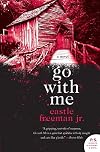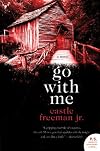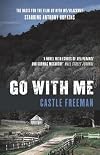
Go with Me
by Castle Freeman
On This Page
Description
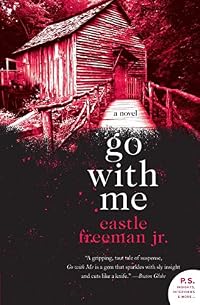
NOW A MAJOR MOTION PICTURE STARRING ANTHONY HOPKINSSet in the unforgiving Vermont wilderness, this is a “gripping, taut tale of suspense . . . that sparkles with sly insight and cuts like a knife”—for fans of Cormac McCarthy (The Boston Globe)
The Vermont hill country is the stark, vivid setting for this gripping and entertaining story of bold determination. The local villain, Blackway, is making life hellish for Lillian, a young woman from parts elsewhere. Her boyfriend has show more fled the state in fear, and local law enforcement can do nothing to protect her. She resolves, however, to stand her ground, and to fight back. A pair of unlikely allies—Lester, a crafty old-timer, and Nate, a powerful but naive youth—join her cause, understanding that there is no point in taking up the challenge unless you’re willing to “go through.”
In this modern-day drama, a kind of Greek chorus—wry, witty, digressive; obsessively, amusingly reminiscent; skeptical, opinionated, and not always entirely sober—enriches the telling of this unforgettable tale as the reader follows the threesome’s progress on their dangerous, suspenseful quest.
. show less
Tags
Recommendations























Member Recommendations
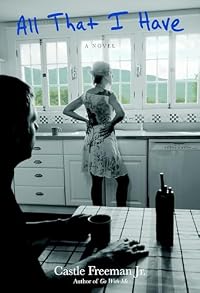
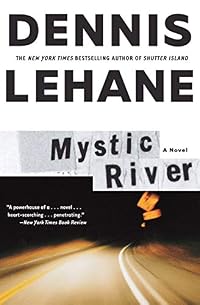
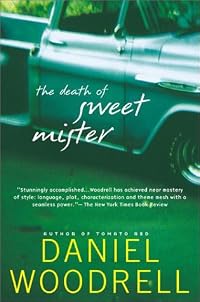
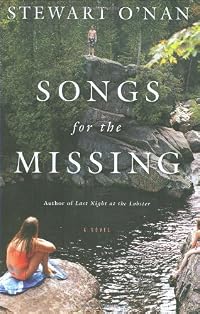
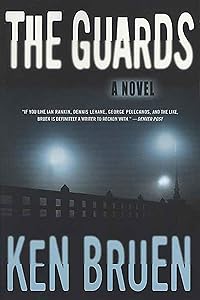
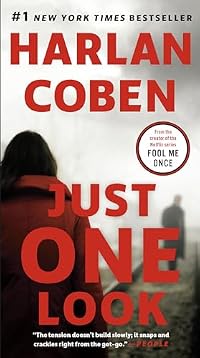
wvlibrarydude The old men sitting around telling stories compared very well in method of telling story. If you liked this aspect of either book, then check out the other one.

Member Reviews
Recently I came across [All That I Have] and loved it, so I scurried to find another of [[Castle Freeman]]'s novels. Then I waited, afraid I wouldn't love it as much as the first.
But this one is even better. I am in awe, actually. Everything about the novel is so right, all the ingredients I love, including strangers riding around in a car together all day: the structure, the characters, the theme, the dialogue, the SETTING! Are all rural places the same? Well, they share commonalities, for sure, but Freeman knows Vermont. Really knows. There's a reason this state is still underpopulated, besides it being winter 7 months of the year, it is beautiful, but great swathes are not suitable for anything but admiring from afar. Even logging show more in those forests is treacherous and hard. That came across in [All That I Have] too. There is nothing cute and cuddly about this version of Vermont either. There is beauty, there is community, there is humor aplenty and there is danger and suspense. All in 155 pages. A young woman comes to the sheriff (retired in [All That I Have] wanting him to do something about a man who is stalking her, Blackway. Well, Blackway is the local villain, disliked and feared, but . . . well . . . Blackway, so you leave him alone, stay out of his way. The sheriff tells her to go look for this fella, Scotty Cavanaugh at the old chair factory. She does that and finds two knights, one old and one young, in tarnished, no, in NO armor but cunning and muscle to help her. They will find Blackway and they will take care of him. At the chair factory a greek chorus of older men spend the day chatting, playing cards, musing, and . . . there are delicious hints of divine (or semi-divine) intervention. And even some romantical nudging of two young people who just might suit.
Describing a man at one of those off in the middle of nowhere country bars that is only for drinking and fighting: "He was a big one, all right: six and a half feet and in no way skinny, with a long tangled beard that hung from his chin to his chest. The beard was black at the sides and gray down the middle and made the man look like he was in the act of eating a skunk headfirst."
Humor: "[The Fort] was not the kind of bar where you stopped for a drink on your way home from work. It was the kind of bar where you stopped for many drinks on your way to work, until soon enough they fired you and you could spend your whole day at the Fort."
A total joy. ***** show less
But this one is even better. I am in awe, actually. Everything about the novel is so right, all the ingredients I love, including strangers riding around in a car together all day: the structure, the characters, the theme, the dialogue, the SETTING! Are all rural places the same? Well, they share commonalities, for sure, but Freeman knows Vermont. Really knows. There's a reason this state is still underpopulated, besides it being winter 7 months of the year, it is beautiful, but great swathes are not suitable for anything but admiring from afar. Even logging show more in those forests is treacherous and hard. That came across in [All That I Have] too. There is nothing cute and cuddly about this version of Vermont either. There is beauty, there is community, there is humor aplenty and there is danger and suspense. All in 155 pages. A young woman comes to the sheriff (retired in [All That I Have] wanting him to do something about a man who is stalking her, Blackway. Well, Blackway is the local villain, disliked and feared, but . . . well . . . Blackway, so you leave him alone, stay out of his way. The sheriff tells her to go look for this fella, Scotty Cavanaugh at the old chair factory. She does that and finds two knights, one old and one young, in tarnished, no, in NO armor but cunning and muscle to help her. They will find Blackway and they will take care of him. At the chair factory a greek chorus of older men spend the day chatting, playing cards, musing, and . . . there are delicious hints of divine (or semi-divine) intervention. And even some romantical nudging of two young people who just might suit.
Describing a man at one of those off in the middle of nowhere country bars that is only for drinking and fighting: "He was a big one, all right: six and a half feet and in no way skinny, with a long tangled beard that hung from his chin to his chest. The beard was black at the sides and gray down the middle and made the man look like he was in the act of eating a skunk headfirst."
Humor: "[The Fort] was not the kind of bar where you stopped for a drink on your way home from work. It was the kind of bar where you stopped for many drinks on your way to work, until soon enough they fired you and you could spend your whole day at the Fort."
A total joy. ***** show less
I absolutely loved Freeman's book of linked stories, Round Mountain, which I read a few years ago. I immediately acquired Go with Me but for some unfathomable reason I left it languishing on shelf. I finally read it and it did not disappoint. This is a cool mix of Cormac McCarthy and Daniel Woodrell, with dialogue worthy of Elmore Leonard at his best. Lean, mean and starkly funny at times. At 170 pages, it will be over before you know it and you will be aching for more.
Castle Freeman, Jr. is a very good writer. So good that you never notice that his writing is any good at all; you're too busy following the rapidly moving plot, in which the tension is gradually mounting and things are about to go very wrong. You don't even notice the pitch perfect tone of the dialog because it sounds just like ordinary people sound, while talking about ordinary things. The cadences and patterns fall so perfectly that they are invisible and all you notice is a couple of old guys shooting the breeze.
In Go with Me, Lillian sits in her old car in the parking lot behind the sheriff's office. Armed with a paring knife, she waits to tell him that Blackaway's after her. He's killed her cat and he's coming after her. The show more sheriff sends her to the old mill to ask Scottie for help. What she gets isn't him, but an unlikely pair of protectors who set out for the backwoods of the lost towns to find Blackaway and get him to leave her alone.
Go With Me is a short book, but it's full of atmosphere and foreboding. There's not a wasted word in the book and each character is fully fleshed out in so few words, they shouldn't feel as fully alive as they do. Set in a forgotten corner of rural Vermont, Go With Me is close to perfect. show less
In Go with Me, Lillian sits in her old car in the parking lot behind the sheriff's office. Armed with a paring knife, she waits to tell him that Blackaway's after her. He's killed her cat and he's coming after her. The show more sheriff sends her to the old mill to ask Scottie for help. What she gets isn't him, but an unlikely pair of protectors who set out for the backwoods of the lost towns to find Blackaway and get him to leave her alone.
Go With Me is a short book, but it's full of atmosphere and foreboding. There's not a wasted word in the book and each character is fully fleshed out in so few words, they shouldn't feel as fully alive as they do. Set in a forgotten corner of rural Vermont, Go With Me is close to perfect. show less
“Go with Me” is a fast-paced, dialogue-driven moderate-suspense drama. This 2008 novel is set in the woods of Vermont and begins with the sheriff finding Lillian asleep in her car with a kitchen knife outside of the court house. She is being stalked by the local thug, Blackway, who has broken into her car and killed her cat. The sheriff can’t do anything about it and instead sends her to Whizzer and his band of friends. Amongst them, the elder Lester and the muscular Nate the Great join Lillian to help resolve this, but first, they need to find him. And what will happen when they do?
The book’s chapters alternated between the trio looking for Blackway and the gang back in the old Mill house that Whizzer owns. The trio find show more cohorts of Blackway and muscle or trick them for clues of his whereabouts. Meanwhile, the gang’s dialogue slowly reveals their backstories, especially that of wily Lester who knows all the “tricks”. Whizzer and his friends have a Robin Hood vibe, mocking, prodding each other, finishing each other’s sentences and will have each other’s back. Lester and Nate, though different in age, also had the same chemistry. In contrast, I was quite annoyed by Lillian’s character, asking for help but never trusted their decisions and questioned each step. I would have ditched her long time ago! Lol.
I found the book enjoyable, appreciating the wry humor the most. Though the rapid dialogue was part of the enjoyment, it also made the book feel like a script at times. Sure enough, a quick search revealed this was made into a movie, titled “Blackway”.
One thing I didn’t need to learn – a tree with a conveniently located knothole is called a “woods wife”. show less
The book’s chapters alternated between the trio looking for Blackway and the gang back in the old Mill house that Whizzer owns. The trio find show more cohorts of Blackway and muscle or trick them for clues of his whereabouts. Meanwhile, the gang’s dialogue slowly reveals their backstories, especially that of wily Lester who knows all the “tricks”. Whizzer and his friends have a Robin Hood vibe, mocking, prodding each other, finishing each other’s sentences and will have each other’s back. Lester and Nate, though different in age, also had the same chemistry. In contrast, I was quite annoyed by Lillian’s character, asking for help but never trusted their decisions and questioned each step. I would have ditched her long time ago! Lol.
I found the book enjoyable, appreciating the wry humor the most. Though the rapid dialogue was part of the enjoyment, it also made the book feel like a script at times. Sure enough, a quick search revealed this was made into a movie, titled “Blackway”.
One thing I didn’t need to learn – a tree with a conveniently located knothole is called a “woods wife”. show less
A friend has been bugging me to read this author for quite some time. In hindsight I can only ask: what took me so long?
Lillian is found sleeping in her car behind the sheriff's office, her hand wrapped around a kitchen paring knife. Blackaway, the town criminal has been menacing her - broken her car's windshield, killed her cat. She fears for her life, and wants the sheriff to do something about it, but he says he can't help her because he can't arrest the guy on something he hasn't actually done yet. The sheriff suggests she might talk to Scottie down at the old chair factory, he might be able to help.
Lillian is determined to confront the bastard and goes to the factory looking for someone to go with her, but doesn't find Scottie. show more Instead two unlikely guys offer to go with her - a wily, old ex-logger and a not-too-terribly-bright giant of a young man. She has more than a few reservations, to say the least, but this is what she's has. Here is where the story splits: Lillian and her companions head off to find the guy, a challenge in and of itself. Meanwhile, back at the chair factory, the owner, in his wheelchair, and his buddies sit around drinking beer and yakking, serving as a kind of Greek chorus, filling in the background on everything.
This very short novel, a modern tale of chivalry, is an odd, clever mix of suspense and wit. One finds oneself terrified on behalf of this odd trio as they get closer and closer to Blackaway. His characters use a local vernacular laced with wit and irony, where sometimes few words can say much (especially the chorus back at the factory...). This novel unearths a part of Vermont mostly hidden from the tourists, a part that's disappearing. Freeman has brought it vividly to life in this riveting, short tale. show less
Lillian is found sleeping in her car behind the sheriff's office, her hand wrapped around a kitchen paring knife. Blackaway, the town criminal has been menacing her - broken her car's windshield, killed her cat. She fears for her life, and wants the sheriff to do something about it, but he says he can't help her because he can't arrest the guy on something he hasn't actually done yet. The sheriff suggests she might talk to Scottie down at the old chair factory, he might be able to help.
Lillian is determined to confront the bastard and goes to the factory looking for someone to go with her, but doesn't find Scottie. show more Instead two unlikely guys offer to go with her - a wily, old ex-logger and a not-too-terribly-bright giant of a young man. She has more than a few reservations, to say the least, but this is what she's has. Here is where the story splits: Lillian and her companions head off to find the guy, a challenge in and of itself. Meanwhile, back at the chair factory, the owner, in his wheelchair, and his buddies sit around drinking beer and yakking, serving as a kind of Greek chorus, filling in the background on everything.
This very short novel, a modern tale of chivalry, is an odd, clever mix of suspense and wit. One finds oneself terrified on behalf of this odd trio as they get closer and closer to Blackaway. His characters use a local vernacular laced with wit and irony, where sometimes few words can say much (especially the chorus back at the factory...). This novel unearths a part of Vermont mostly hidden from the tourists, a part that's disappearing. Freeman has brought it vividly to life in this riveting, short tale. show less
I avidly follow book news, and I couldn’t help but notice that there’s been an avalanche of stellar reviews for Go With Me by Castle Freeman, Jr. I just had to see what all the fuss was about, so I bought the book and soon found myself lost inside a classic tale about a damsel in distress, the villain that threatens her, and the men who rescue her.
I don’t think I can add much to the ongoing praise, other than to say that I wholeheartedly agree. This is one exceptionally fine backwoods thriller—a work with an abundance of humor and a lyrical sense of place that takes your breath away! If you want to examine a novel in which there appears to be absolutely no extraneous words, action, or character, this is the one. The pacing and show more dialogue are near-perfect, and the characters are so real they easily make your own world seem artificial by comparison. To open this book is to fall right in and become part of another world.
Possibly the only unique comment I can add is to help explain the purpose of one of the minor characters, a man named Conrad. He appears as just one of a handful of men who form the “Greek chorus” out at Wizzer’s place. But at the end, Conrad jumps out at you inexplicably when he gets his own unique chapter—a chapter that is quiet unlike much that has come before. At first this seemed odd, especially in a novel where there are no unnecessary words. The careful reader has to ask himself: Why give Conrad his own chapter? What’s the author trying to say with this short diversion?
All it took to find the answer was to go back and reread all of Conrad’s dialogue. In a book that is only 160 pages long, that’s actually easy. So, if you want to do that yourself, be my guest. If you don’t, read on. Nothing I say gives away the plot; it only sheds light on one of the underlying thematic messages.
Conrad plays the role of the outsider. He plays our part, for we are outsiders, too. Whenever the guys at Wizzer’s get to talking, Conrad is always the one who’s a little bit confused. He’s the one asking the questions. If the book didn’t have Conrad, there wouldn’t be so much explaining going on and we, the reader, wouldn’t know essential back-story.
Conrad is not a native Vermont backwoodsman. He didn’t spend his life living around the other men in the story. Conrad is married to Betsy, Wizzer’s younger sister by more than half a generation. His wife says that their house used to be the town’s schoolhouse. Conrad’s amazed to learn how everything around the town used to be something else. Everything’s seemed to have changed but Wizzer’s—his place is almost exactly as it’s been for generations.
The men get to talking about what might someday become of Wizzer’s place—the one place that hasn’t changed. They wisecrack that they could turn it into a museum, pick it up and drop it down in the middle of Sturbridge Village, along with the whole lot of them. They could charge admission and “let the tourists look at us.” It is Conrad who breaks their humor with a comment that only an outsider could make: “This is not Disneyland business, you know. This is no stage set. This is the real thing.”
And, yes, by now we know: it is the real thing.
In Conrad’s chapter, “The Ground,” we find Betsy, his wife, watching television news. She’s watching what’s supposed to be the real thing—the news—but by comparison to all that’s come before, the reader finds it surrealistic, distorted, otherworldly.
The chapter closes with Conrad explaining to his wife a strange feeling he’s having: “that Wizzer and the rest of them are all sitting inside a spaceship. A rocket ship. They’re in there, and the ship is traveling. It’s moving. It’s going so fast. It’s going at light speed, you know? And so, the men who are on it don’t get old, do they? That’s what Einstein said. Isn’t it? They don’t change. Time doesn’t pass for them. Time stretches. It stretches, or it shrinks. Or something. They’re out of time. You know?”
It is through Conrad that Freeman shares with us his loving lament for a culture and people on the brink of extinction. Even if Conrad doesn’t, we know that the world is changing. The culture of the Vermont backwoodsman—like all other cultures worldwide that are rooted tenaciously in endangered ecosystems or outmoded economic systems—are doomed. And the questions left unasked: Are we better off? Are we leaving the better, more real world behind? show less
I don’t think I can add much to the ongoing praise, other than to say that I wholeheartedly agree. This is one exceptionally fine backwoods thriller—a work with an abundance of humor and a lyrical sense of place that takes your breath away! If you want to examine a novel in which there appears to be absolutely no extraneous words, action, or character, this is the one. The pacing and show more dialogue are near-perfect, and the characters are so real they easily make your own world seem artificial by comparison. To open this book is to fall right in and become part of another world.
Possibly the only unique comment I can add is to help explain the purpose of one of the minor characters, a man named Conrad. He appears as just one of a handful of men who form the “Greek chorus” out at Wizzer’s place. But at the end, Conrad jumps out at you inexplicably when he gets his own unique chapter—a chapter that is quiet unlike much that has come before. At first this seemed odd, especially in a novel where there are no unnecessary words. The careful reader has to ask himself: Why give Conrad his own chapter? What’s the author trying to say with this short diversion?
All it took to find the answer was to go back and reread all of Conrad’s dialogue. In a book that is only 160 pages long, that’s actually easy. So, if you want to do that yourself, be my guest. If you don’t, read on. Nothing I say gives away the plot; it only sheds light on one of the underlying thematic messages.
Conrad plays the role of the outsider. He plays our part, for we are outsiders, too. Whenever the guys at Wizzer’s get to talking, Conrad is always the one who’s a little bit confused. He’s the one asking the questions. If the book didn’t have Conrad, there wouldn’t be so much explaining going on and we, the reader, wouldn’t know essential back-story.
Conrad is not a native Vermont backwoodsman. He didn’t spend his life living around the other men in the story. Conrad is married to Betsy, Wizzer’s younger sister by more than half a generation. His wife says that their house used to be the town’s schoolhouse. Conrad’s amazed to learn how everything around the town used to be something else. Everything’s seemed to have changed but Wizzer’s—his place is almost exactly as it’s been for generations.
The men get to talking about what might someday become of Wizzer’s place—the one place that hasn’t changed. They wisecrack that they could turn it into a museum, pick it up and drop it down in the middle of Sturbridge Village, along with the whole lot of them. They could charge admission and “let the tourists look at us.” It is Conrad who breaks their humor with a comment that only an outsider could make: “This is not Disneyland business, you know. This is no stage set. This is the real thing.”
And, yes, by now we know: it is the real thing.
In Conrad’s chapter, “The Ground,” we find Betsy, his wife, watching television news. She’s watching what’s supposed to be the real thing—the news—but by comparison to all that’s come before, the reader finds it surrealistic, distorted, otherworldly.
The chapter closes with Conrad explaining to his wife a strange feeling he’s having: “that Wizzer and the rest of them are all sitting inside a spaceship. A rocket ship. They’re in there, and the ship is traveling. It’s moving. It’s going so fast. It’s going at light speed, you know? And so, the men who are on it don’t get old, do they? That’s what Einstein said. Isn’t it? They don’t change. Time doesn’t pass for them. Time stretches. It stretches, or it shrinks. Or something. They’re out of time. You know?”
It is through Conrad that Freeman shares with us his loving lament for a culture and people on the brink of extinction. Even if Conrad doesn’t, we know that the world is changing. The culture of the Vermont backwoodsman—like all other cultures worldwide that are rooted tenaciously in endangered ecosystems or outmoded economic systems—are doomed. And the questions left unasked: Are we better off? Are we leaving the better, more real world behind? show less
This was a fun, well-written tale about a woman looking for help to deal with the town bully/kingpin who's stalking her. The town sheriff is no help, but points her to the local rowdy boys. She hooks up with one of the old boys there, and a young tough, who agree to solve her problem. The rest of their day is mostly taken up on a Homeresque journey trying to locate the bad guy in one of his gritty haunts. The writing is punchy and colored with a strong feel for small town Northeast.
3 bones!!!
3 bones!!!
Members
- Recently Added By
Lists

Books Read in 2026
1,699 works; 62 members
Author Information

16+ Works 676 Members
Castle Freeman is the award-winning author of two previous novels, a story collection and a collection of essays. He has been the lead essayist for The Old Farmer's Almanac since 1982, and lives in Newfane, Vermont. His previous books include My Life and Adventures, Judgement Hill and The Bride of Ambrose. His work has featured in an anthology of show more Best American Short Stories. show less
All Editions
Some Editions
Awards and Honors
Awards
Series
Belongs to Publisher Series
dtv (14622)
Work Relationships
Has the adaptation
Common Knowledge
- Canonical title
- Go with Me
- Original title
- Go with Me
- Original publication date
- 2008; 2015-10-13; 2012
- People/Characters
- Sheriff Ripley Wingate; Langdon Taft; Homer Patch; Dangerfield; Blackway; Calpurnia (show all 20); Clay Makepeace; Polly; Lillian; Angela Patch, nee Browning; Wizzer; Captain George; Lester Speed; Caroline Patch; Nate the Great; Quentin Patch; Coop; D.B.; Conrad; Betsy
- Important places
- Vermont, USA
- Related movies
- Blackway (2015 | IMDb)
- Epigraph
- "Marvel have I," said the damsel, "what manner of man ye be, for it may never be other but that ye be come of gentle blood, for so foully and shamefully did never woman revile a knight as I have done you, and ever courteously... (show all) ye have suffered me, and that comes never but of gentle blood."
--Sir Thomas Malory,
Le Morte d'Arthur,
"The Tale of Sir Gareth of Orkney" - Dedication
- for
Christina Ward
For Stona Fitch - First words
- Midsummer: The long days begin in bright, rising mist and never end.
Cooking right along, with the top down and the breeze whistling past his hairy, slightly pointed ears, on a fresh new mission, feeling fit and frisky in the warm early-spring afternoon, Dangerfield, the account man, the close... (show all)r, motored into the valley at the wheel of his beloved MGA, a classic like its driver.
Two kids, a boy and a girl, high schoolers playing truant, were riding in the back of Clay's Wagoneer.
Sharp at seven Tuesday morning, Clemmie, barefoot in her robe, was standing at the kitchen counter putting cream in her coffee when the squawker went. - Last words
- (Click to show. Warning: May contain spoilers.)"I wouldn't be surprised," said Whizzer.
(Click to show. Warning: May contain spoilers.)We’re working on it, said his superior.
(Click to show. Warning: May contain spoilers.)His hair was mostly gone, and his skin was the color of the old snow that lingered in the woods, the snow the deer had lain on. "Sure, you can," Clay said.
(Click to show. Warning: May contain spoilers.)Epilogue: She hadn’t been speaking to Taft, but it was Taft who turned to her with what Polly thought was an odd little smile, and said, “Very hard.” - Blurbers
- Benedict, Pinckney; Maguire, Gregory; Huddle, David
- Original language
- English
Classifications
Statistics
- Members
- 400
- Popularity
- 77,326
- Reviews
- 24
- Rating
- (3.63)
- Languages
- English, French, German, Spanish
- Media
- Paper, Audiobook, Ebook
- ISBNs
- 17
- ASINs
- 8