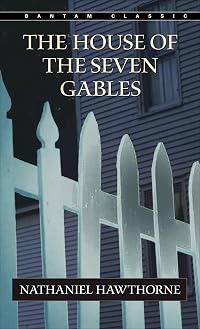
The House of Seven Gables
by Nathaniel Hawthorne
On This Page
Description
In the mid 1800s, Pyncheon is still a revered namesake in Salem, with the gloomy Pyncheon mansion serving as a stark reminder of the family's upper-class history. However, the house, unique for its seven gables, has a dark and deadly past. Its current occupant, the older and unmarried Hepzibah Pyncheon, is all but destitute and unwilling to accept any assistance from her wealthy but unrelenting cousin, Judge Jaffrey Pyncheon.Tags
Recommendations












Member Reviews
“The aspect of the venerable mansion has always affected me like a human countenance, bearing the traces not merely of outward storm and sunshine, but expressive also, of the long lapse of mortal life, and accompanying vicissitudes that have passed within”...
Anthropomorphic from the first page, a theme of that will be revisited and augmented throughout, this is how Nathaniel Hawthorne describes the structure that can be considered the title character in his 1851 novel The House of the Seven Gables. The opening chapter is so full of Gothic dread and supernatural nuance that readers attuned to weird fiction are immediately drawn in. Hawthorne spells out the accursed nature of the House, and the foreboding undercurrent in an eerie, show more ominous tone. And when Maule’s curse upon Colonel Pynchon is brought to bear so quickly upon the old family patriarch, we know that this is a most powerful curse indeed, to be carried across generations to come. But that level of intensity is not sustained throughout the novel. The plot is scant, and slow to develop. But Hawthorne shows his literary skills with illuminating characterizations, most notably the portrait of the old maid Hepzibah: a remarkable insight into the clockwork of misery and fear, insecurity and pain, anxiety and misgivings inside this tragic figure; and young Phoebe, who embodies sunshine, light, life, and hope, thereby standing in stark contrast to Hepzibah (and the house itself). Hawthorne’s writing is quite wordy, and while it sometimes enables that aforementioned depth of characterization, more often it seems unnecessarily labored. Recommended as an interesting, if flawed, early effort in the annals of supernatural literature. show less
Anthropomorphic from the first page, a theme of that will be revisited and augmented throughout, this is how Nathaniel Hawthorne describes the structure that can be considered the title character in his 1851 novel The House of the Seven Gables. The opening chapter is so full of Gothic dread and supernatural nuance that readers attuned to weird fiction are immediately drawn in. Hawthorne spells out the accursed nature of the House, and the foreboding undercurrent in an eerie, show more ominous tone. And when Maule’s curse upon Colonel Pynchon is brought to bear so quickly upon the old family patriarch, we know that this is a most powerful curse indeed, to be carried across generations to come. But that level of intensity is not sustained throughout the novel. The plot is scant, and slow to develop. But Hawthorne shows his literary skills with illuminating characterizations, most notably the portrait of the old maid Hepzibah: a remarkable insight into the clockwork of misery and fear, insecurity and pain, anxiety and misgivings inside this tragic figure; and young Phoebe, who embodies sunshine, light, life, and hope, thereby standing in stark contrast to Hepzibah (and the house itself). Hawthorne’s writing is quite wordy, and while it sometimes enables that aforementioned depth of characterization, more often it seems unnecessarily labored. Recommended as an interesting, if flawed, early effort in the annals of supernatural literature. show less
Uma história de horror não precisa ter monstros, violência extrema e muito sangue para prender – ou afugentar – o leitor. Basta criar uma atmosfera de desconforto emocional, e é isso que faz “A Casa das Sete Torres”. Publicado em 1851, o romance do escritor norte-americano Nathaniel Hawthorne narra uma maldição que persegue uma família por quase 200 anos.
A história começa com um homem sendo acusado de feitiçaria, e chega ao presente com uma herdeira da família Pyncheon, idosa e solitária, habitando a antiga casa. Há apenas um inquilino vivendo em uma das torres, mas o contato entre eles é esporádico. Outros personagens vão surgindo, e algumas pitadas sutis de sobrenatural vão se agregando à trama em meio à show more densa atmosfera gótica criada pelo autor.
Bruxaria, solidão, cobiça, culpa, mentes atormentadas são temas que temperam a narrativa. A tensão é quebrada por um menino em um dos trechos mais saborosos da história – perdoem o trocadilho. E, claro, há lugar para amor e paixão. Justiça? Deixo essa resposta para os leitores.
Fato é que Hawthorne escreveu “A Casa de Sete Torres” inspirado na história da própria família. Há uma casa com essa característica em Salem, Massachusetts, onde o autor nasceu, e essa casa pertencia a Susanna Ingersol, sua prima. E não é coincidência o fato de que foi nessa cidade da Nova Inglaterra, Estados Unidos, que ocorreu a caça às Bruxas de Salem, em 1692. Antepassados de Hawthorne estiveram envolvidos na acusação de bruxaria a 200 pessoas. Catorze mulheres e cinco homens foram executados por enforcamento, uma idosa por apedrejamento.
A obra fez sucesso no seu lançamento, décadas mais tarde exerceu grande influência na obra de H. P. Lovecraft e teve várias adaptações para a televisão e cinema.
Curiosidade: A família Pyncheon também existiu, e é dela que descende o escritor norte-americano Thomas Pynchon.
Li “A Casa de Sete Torres” na tradução de Lígia Autran Rodrigues Pereira. show less
A história começa com um homem sendo acusado de feitiçaria, e chega ao presente com uma herdeira da família Pyncheon, idosa e solitária, habitando a antiga casa. Há apenas um inquilino vivendo em uma das torres, mas o contato entre eles é esporádico. Outros personagens vão surgindo, e algumas pitadas sutis de sobrenatural vão se agregando à trama em meio à show more densa atmosfera gótica criada pelo autor.
Bruxaria, solidão, cobiça, culpa, mentes atormentadas são temas que temperam a narrativa. A tensão é quebrada por um menino em um dos trechos mais saborosos da história – perdoem o trocadilho. E, claro, há lugar para amor e paixão. Justiça? Deixo essa resposta para os leitores.
Fato é que Hawthorne escreveu “A Casa de Sete Torres” inspirado na história da própria família. Há uma casa com essa característica em Salem, Massachusetts, onde o autor nasceu, e essa casa pertencia a Susanna Ingersol, sua prima. E não é coincidência o fato de que foi nessa cidade da Nova Inglaterra, Estados Unidos, que ocorreu a caça às Bruxas de Salem, em 1692. Antepassados de Hawthorne estiveram envolvidos na acusação de bruxaria a 200 pessoas. Catorze mulheres e cinco homens foram executados por enforcamento, uma idosa por apedrejamento.
A obra fez sucesso no seu lançamento, décadas mais tarde exerceu grande influência na obra de H. P. Lovecraft e teve várias adaptações para a televisão e cinema.
Curiosidade: A família Pyncheon também existiu, e é dela que descende o escritor norte-americano Thomas Pynchon.
Li “A Casa de Sete Torres” na tradução de Lígia Autran Rodrigues Pereira. show less
Hawthorne's follow-up to the masterpiece that is The Scarlet Letter feels more self-indulgent and less cohesive and fully developed than its predecessor. As a novel, it is constructed mostly of pictures than of characters that live and breathe--and what vivid pictures they are.
The characters of Phoebe and Holgrave serve as a tribute to his marriage-Phoebe is even the nickname he has for his wife, Sophia. But Holgrave is not much of a hero- though charming and enigmatic. We can imagine him very clearly as a young, beatnik Nathaniel who once lived in a Utopian experimental community and was friends with Henry David Thoreau. Phoebe is an idealized portrait embodying all of his wife's attributes. At the center of the novel stands poor show more Clifford and poor Hepzibah, siblings linked by the shackles of a gloomy old house. Within these shadows: Judge Pyncheon, a double for the murdered Pyncheon of the past, central to the curse and old negative energy that pervades this Gothic abode.
Hawthorne is exorcising his own ancestral past and the past of the inhabitants of Salem and the injustices that murdered so many witches and "wizards." The echo, God will give you blood to drink, reverberates and is given to the wizard Maule but was an actual quote by one of the condemned witches of Salem.
Still, what a treasure-trove of Symbolism and what Hawthorne is best at. Even the chickens in the backyard are a symbol....of hierarchies and class distinctions. Poor Hepzibah still sees herself as "a proper lady" but alas the world around her is a-changing.
This is a novel about the passing of the Old and the dawning of the New. And seen by its details, Hawthorne is brilliant. In one scene, he conjures the spirit world with an aliveness that is marvelous. Yet all the parts do not fit together as a cohesive whole in a way that would be more satisfying. The House of the Seven Gables is itself a symbol and a portrait more than a story.
There is so much to analyze here. It encompasses much of Hawthorne's philosophical musings on American culture and it prophesies somewhat the future--the New Dawn that was coming. It is a part of Transcendentalist literature and I feel much of what Hawthorne has to say is valid. show less
The characters of Phoebe and Holgrave serve as a tribute to his marriage-Phoebe is even the nickname he has for his wife, Sophia. But Holgrave is not much of a hero- though charming and enigmatic. We can imagine him very clearly as a young, beatnik Nathaniel who once lived in a Utopian experimental community and was friends with Henry David Thoreau. Phoebe is an idealized portrait embodying all of his wife's attributes. At the center of the novel stands poor show more Clifford and poor Hepzibah, siblings linked by the shackles of a gloomy old house. Within these shadows: Judge Pyncheon, a double for the murdered Pyncheon of the past, central to the curse and old negative energy that pervades this Gothic abode.
Hawthorne is exorcising his own ancestral past and the past of the inhabitants of Salem and the injustices that murdered so many witches and "wizards." The echo, God will give you blood to drink, reverberates and is given to the wizard Maule but was an actual quote by one of the condemned witches of Salem.
Still, what a treasure-trove of Symbolism and what Hawthorne is best at. Even the chickens in the backyard are a symbol....of hierarchies and class distinctions. Poor Hepzibah still sees herself as "a proper lady" but alas the world around her is a-changing.
This is a novel about the passing of the Old and the dawning of the New. And seen by its details, Hawthorne is brilliant. In one scene, he conjures the spirit world with an aliveness that is marvelous. Yet all the parts do not fit together as a cohesive whole in a way that would be more satisfying. The House of the Seven Gables is itself a symbol and a portrait more than a story.
There is so much to analyze here. It encompasses much of Hawthorne's philosophical musings on American culture and it prophesies somewhat the future--the New Dawn that was coming. It is a part of Transcendentalist literature and I feel much of what Hawthorne has to say is valid. show less
I wish I had been able to read this more slowly & with time to savor and reflect. Brilliantly written story, full of digressions and nature-inspired metaphors, touching on ideas of hereditary personality traits, whether a single evil act outweighs many good ones, and public opinion versus self-knowledge. I especially loved the character descriptions:
Colonel Pyncheon: "Endowed with common sense, as massive and hard as blocks of granite, fastened together by stern rigidity of purpose, as with iron clamps, he followed out his original design, probably without so much as imagining an objection to it."
Hepzibah Pyncheon: "She dwelt too much alone--too long in the Pyncheon house--until her very brain was impregnated with the dry rot of its show more timbers."
Clifford Pyncheon: "He was probably accustomed to a sad monotony of life, not so much flowing in a stream, however sluggish, as stagnating in a pool around his feet." show less
Colonel Pyncheon: "Endowed with common sense, as massive and hard as blocks of granite, fastened together by stern rigidity of purpose, as with iron clamps, he followed out his original design, probably without so much as imagining an objection to it."
Hepzibah Pyncheon: "She dwelt too much alone--too long in the Pyncheon house--until her very brain was impregnated with the dry rot of its show more timbers."
Clifford Pyncheon: "He was probably accustomed to a sad monotony of life, not so much flowing in a stream, however sluggish, as stagnating in a pool around his feet." show less
It's been decades since I read my paperback copy of The House of the Seven Gables, but I had read the "Classics Illustrated" comic book version several times when I was young, and I remembered that better.
The novel takes place during the mid-1800s, but the story of the Pyncheon family and its troubles goes back to the 1600s, when greedy Colonel Pyncheon coveted farmer Matthew Maule's little plot of land. The colonel was probably the reason Maule was tried and hanged for being a witch. Pyncheon acquired the land and had the house with its seven gables built upon it. Matthew Maule's son, Thomas, built it. Before Maule died, he told the colonel that God would give him blood to drink. (That part of the novel reminded me of King Ahab of show more Israel coveting Naboth's vineyard, which Naboth refused to sell. Queen Jezebel had Naboth falsely accused and executed. The Prophet Elijah pronounced doom upon the royal couple and every male in or belonging to Ahab's family. There was even a line about the dogs licking up Ahab's blood where they licked up Naboth's.)
Hepzibah Pyncheon has a lifetime interest in the house, which suffers from both wet and dry rot. She's so poor that she opens a little shop (fortunately, one of her ancestors had one built in the house, a 'shameful' deed the New England aristocratic family hasn't used since his death). Hepzibah is what would be described as late middle aged in our time, but she's old for back then. Because she has never married, she's an 'old maid'. I spent the novel wishing someone would take an ugly old turban from her head and getting her a pair of glasses so she won't seem to be scowling as she tries to see.
Hepzibah's beloved brother, Clifford, has been released after spending 30 years in prison for a murder he never committed that wasn't a murder to begin with. Clifford had been a beautiful young man with a love of beauty, but his ordeal has left him childlike. Hepzibah is devoted to him, but he won't even look at her because she's so wrinkled. She's developed a harsh croak in her throat, which makes her attempt to read aloud to him almost unbearable for Clifford. It's pretty obvious that Hawthorne had a lot of sympathy for Clifford, but I don't like him.
Fortunately for the siblings, their fresh, young, beautiful cousin Phoebe Pyncheon has come up from the country to stay with them after her mother remarried. This cheerful girl has a knack for making things homey and attractive. She's also much better at running the shop.
The Pyncheons have a lodger, Holcome, who earns his bread by taking daguerreotypes, an early form of photography. He has revolutionary ideas, but is not indifferent to Phoebe's charms. Uncle Venner, a poor man who tends to gardens and is a natural optimist, has befriended Hepzibah for years. His friendship circle grows to take in Clifford, Phoebe, and Holcome.
The most respected member of the Pyncheon family is Judge Jaffrey Pyncheon, who would have been Jaffrey Pyncheon II while his uncle Jaffrey was alive. (Clifford supposedly murdered Uncle Jaffrey.) He's a hard, cold man who fakes being benevolent. Clifford is terrified of him. Hepzibah hates him because she has a shrewd idea that he framed Clifford. Phoebe is repulsed when the judge tries to kiss her, as her cousin. The judge is the spitting image of their ancestor, the colonel.
There is a story within the story that Holcome tells Phoebe about how Matthew Maule II, grandson of the first Matthew, unintentionally causes the death of beautiful Alice Pyncheon, daughter of Gervase Pyncheon, the colonel's grandson. It's a sad story. Alice's ghost is supposed to haunt the house, playing upon her beloved harpsichord.
I think Hawthorne was paid by the word, because he certainly uses a lot of them to tell his story. My memory of the "Classics Illustrated" adaptation ensured I knew what had happened with Judge Pyncheon, and the author annoyed me considerably by how long it took him to reveal it. I had to wait a long time for the memorable scene with the ghosts, too.
Clifford's chat with a fellow train passenger late in the tale was good for a snicker because he was so very wrong in what he thought trains would mean for humankind.
It's still a good story despite Hawthorne dragging some scenes out. As for Ms. Alexander's narration, her voice is so soothing that it took me five days to get through the first CD because I kept falling asleep. show less
The novel takes place during the mid-1800s, but the story of the Pyncheon family and its troubles goes back to the 1600s, when greedy Colonel Pyncheon coveted farmer Matthew Maule's little plot of land. The colonel was probably the reason Maule was tried and hanged for being a witch. Pyncheon acquired the land and had the house with its seven gables built upon it. Matthew Maule's son, Thomas, built it. Before Maule died, he told the colonel that God would give him blood to drink. (That part of the novel reminded me of King Ahab of show more Israel coveting Naboth's vineyard, which Naboth refused to sell. Queen Jezebel had Naboth falsely accused and executed. The Prophet Elijah pronounced doom upon the royal couple and every male in or belonging to Ahab's family. There was even a line about the dogs licking up Ahab's blood where they licked up Naboth's.)
Hepzibah Pyncheon has a lifetime interest in the house, which suffers from both wet and dry rot. She's so poor that she opens a little shop (fortunately, one of her ancestors had one built in the house, a 'shameful' deed the New England aristocratic family hasn't used since his death). Hepzibah is what would be described as late middle aged in our time, but she's old for back then. Because she has never married, she's an 'old maid'. I spent the novel wishing someone would take an ugly old turban from her head and getting her a pair of glasses so she won't seem to be scowling as she tries to see.
Hepzibah's beloved brother, Clifford, has been released after spending 30 years in prison for a murder he never committed that wasn't a murder to begin with. Clifford had been a beautiful young man with a love of beauty, but his ordeal has left him childlike. Hepzibah is devoted to him, but he won't even look at her because she's so wrinkled. She's developed a harsh croak in her throat, which makes her attempt to read aloud to him almost unbearable for Clifford. It's pretty obvious that Hawthorne had a lot of sympathy for Clifford, but I don't like him.
Fortunately for the siblings, their fresh, young, beautiful cousin Phoebe Pyncheon has come up from the country to stay with them after her mother remarried. This cheerful girl has a knack for making things homey and attractive. She's also much better at running the shop.
The Pyncheons have a lodger, Holcome, who earns his bread by taking daguerreotypes, an early form of photography. He has revolutionary ideas, but is not indifferent to Phoebe's charms. Uncle Venner, a poor man who tends to gardens and is a natural optimist, has befriended Hepzibah for years. His friendship circle grows to take in Clifford, Phoebe, and Holcome.
The most respected member of the Pyncheon family is Judge Jaffrey Pyncheon, who would have been Jaffrey Pyncheon II while his uncle Jaffrey was alive. (Clifford supposedly murdered Uncle Jaffrey.) He's a hard, cold man who fakes being benevolent. Clifford is terrified of him. Hepzibah hates him because she has a shrewd idea that he framed Clifford. Phoebe is repulsed when the judge tries to kiss her, as her cousin. The judge is the spitting image of their ancestor, the colonel.
There is a story within the story that Holcome tells Phoebe about how Matthew Maule II, grandson of the first Matthew, unintentionally causes the death of beautiful Alice Pyncheon, daughter of Gervase Pyncheon, the colonel's grandson. It's a sad story. Alice's ghost is supposed to haunt the house, playing upon her beloved harpsichord.
I think Hawthorne was paid by the word, because he certainly uses a lot of them to tell his story. My memory of the "Classics Illustrated" adaptation ensured I knew what had happened with Judge Pyncheon, and the author annoyed me considerably by how long it took him to reveal it. I had to wait a long time for the memorable scene with the ghosts, too.
Clifford's chat with a fellow train passenger late in the tale was good for a snicker because he was so very wrong in what he thought trains would mean for humankind.
It's still a good story despite Hawthorne dragging some scenes out. As for Ms. Alexander's narration, her voice is so soothing that it took me five days to get through the first CD because I kept falling asleep. show less
A spooky classic for October. This reminds me of a Shirley Jackson's 'The Haunting of Hill House' but with more to say about the human mind and situation than I remember from Hill House. The psychology that Hawthorne presents here for his characters is most impressive. No matter who the character, Hawthorne can seamlessly create an inner life: what comes with Hepzibah's solitude. The prison of the mind that comes after the incarceration of Clifford. At times I could relate to Hepzibah, Clifford and Phoebe. The ending seems to wrap a little too conveniently and perfectly for everyone, but Hawthorne's delving into so many minds was worth it. So much more here than "the wrongdoing of one generation lives into the successive ones".
The House of Seven Gables by Nathaniel Hawthorne
Hawthorne’s gothic tale is a study in original sin, moral corruption, and redemption. Several generations of the Pyncheon family are cursed by an ancestor’s obsession with wealth and power. Each new generation falls into a common pattern of greed and manipulation, bankrupt of the redeeming qualities of love and humility. Redemption is won when a few simple and pure members of the family overcome the baser urges of their kin, banding together to care for one another.
This is not a book to speed through. There are no quick characterizations. There is no rollercoaster plot. Hawthorne’s prose, while dense and slow, is rich and absorbing. He meticulously designs his characters, sometimes show more pausing for whole chapters to pore over one person’s thoughts and feelings. The resulting experience is engrossing, with the dark mood of the story folded into every line.
Bottom line: An absorbing and moody read, rich in meticulous detail and show less
Hawthorne’s gothic tale is a study in original sin, moral corruption, and redemption. Several generations of the Pyncheon family are cursed by an ancestor’s obsession with wealth and power. Each new generation falls into a common pattern of greed and manipulation, bankrupt of the redeeming qualities of love and humility. Redemption is won when a few simple and pure members of the family overcome the baser urges of their kin, banding together to care for one another.
This is not a book to speed through. There are no quick characterizations. There is no rollercoaster plot. Hawthorne’s prose, while dense and slow, is rich and absorbing. He meticulously designs his characters, sometimes show more pausing for whole chapters to pore over one person’s thoughts and feelings. The resulting experience is engrossing, with the dark mood of the story folded into every line.
Bottom line: An absorbing and moody read, rich in meticulous detail and show less
Members
- Recently Added By
Lists

1001 Books You Must Read Before You Die
1,448 works; 1,136 members

The Guardian's 1000 Novels Everyone Must Read
1,005 works; 549 members

Classics you know you should have read but probably haven't
421 works; 407 members

Best Gothic Fiction
110 works; 31 members

Favourite 19th century fiction
257 works; 62 members

Best Family Stories
241 works; 22 members
Folio Society
831 works; 50 members

150 Best Novels Selected by Brander Matthews (1883)
150 works; 7 members

Unread books
1,063 works; 87 members

1964 College Preparatory Reading List
202 works; 8 members

Western World's Greatest Books - Project Gutenberg
295 works; 15 members

Best high-school English books reread later in life
30 works; 21 members

Out of Copyright
244 works; 14 members

Houses and Buildings as Characters in Fiction
182 works; 29 members
LibraryThingers' 1001 Books You Must Read Before You Die
442 works; 30 members

Dark Books for Winter Reading
71 works; 11 members

New England Books
101 works; 10 members

1,001 BYMRBYD Concensus
723 works; 27 members

Books You Read During High School (For School)
301 works; 52 members
Daria Morgendorffer's Bookshelf
70 works; 5 members

Newark Public Library's 1904 List of a Thousand of the Best Novels
98 works; 6 members
The American Experience
173 works; 18 members
19th Century
190 works; 16 members

Publisher's Weekly Bestsellers Prior to 1895 in Chronological Order
95 works; 6 members
100 World Classics
99 works; 15 members
Lovecraft's 'Supernatural Horror in Literature' Reading List
216 works; 8 members
Best of American Literature
146 works; 9 members

One Book, Many Authors
441 works; 40 members

Books With Numbers in the Title
308 works; 13 members

the old and the restless
62 works; 14 members

Find
10 works; 1 member
CCE 1000 Good Books List
1,033 works; 12 members
Victorian Period
113 works; 10 members

Books Read in 2015
3,299 works; 129 members
F. B. Perkins' List of 100 Best Fiction
100 works; 5 members

1850s
17 works; 2 members
Ghosts
278 works; 18 members
Trinity College Booklist (1951): Class Ten, English Literature
358 works; 5 members

recalling favorites...
105 works; 2 members

Books I Own But Haven't Read
144 works; 2 members
American Lit for Eng 11 Research Project
368 works; 6 members

Recommended Reading : 600 Classics Reviewed, Editors of Salem Press, 2015
634 works; 6 members

Books Read in 2024
4,727 works; 128 members

Alexander Palacios' Favorite Books
1 work; 1 member

Greatest Books, allegedly
484 works; 9 members

AP Lit
363 works; 6 members

Which house?
423 works; 16 members
School Made Us Read It
380 works; 196 members
Works in the game of Authors
44 works; 2 members

Authors from the United States
245 works; 3 members
Jones & Newman: Best Horror Books Further Recommended Reading
577 works; 4 members

Tagged 19th Century
104 works; 7 members
Books available on Open Library
171 works; 4 members

Books Read in 2018
4,360 works; 110 members
Fiction (Mostly) in Selective Bibliography of American Literature 1775-1900
431 works; 3 members
I Could Live There
185 works; 12 members

Ambleside Books
459 works; 18 members

Biggest Disappointments
606 works; 163 members

Tonikat reading completed on Librarything journals
329 works; 2 members

Merrill's English Texts
59 works; 2 members
In Our Time books
4,934 works; 2 members

Favorite Long Books
330 works; 42 members
Talk Discussions
Past Discussions
(M47'12) The House of the Seven Gables, Nathaniel Hawthorne in World Reading Circle (October 2012)
Author Information

Nathaniel Hawthorne was born on July 4, 1804 in Salem, Massachusetts. When he was four years old, his father died. Years later, with financial help from his maternal relatives who recognized his literary talent, Hawthorne was able to enroll in Bowdoin College. Among his classmates were the important literary and political figures Horatio Bridge, show more Henry Wadsworth Longfellow, and Franklin Pierce. These friends supplied Hawthorne with employment during the early years after graduation while Hawthorne was still establishing himself as a legitimate author. Hawthorne's first novel, Fanshawe, which he self-published in 1828, wasn't quite the success that he had hoped it would be. Not willing to give up, he began writing stories for Twice-Told Tales. These stories established Hawthorne as a leading writer. In 1842, Hawthorne moved to Concord, Massachusetts, where he wrote a number of tales, including "Rappaccini's Daughter" and "Young Goodman Brown," that were later published as Mosses from an Old Manse. The overall theme of Hawthorne's novels was a deep concern with ethical problems of sin, punishment, and atonement. No one novel demonstrated that more vividly than The Scarlet Letter. This tale about the adulterous Puritan Hester Prynne is regarded as Hawthorne's best work and is a classic of American literature. Other famous novels written by Hawthorne include The House of Seven Gables and The Blithedale Romance. In 1852, Hawthorne wrote a campaign biography of his college friend Franklin Pierce. After Pierce was elected as President of the United States, he rewarded Hawthorne with the Consulship at Liverpool, England. Hawthorne died in his sleep on May 19, 1864, while on a trip with Franklin Pierce. (Bowker Author Biography) show less
Some Editions
Awards and Honors
Notable Lists
Series
Belongs to Publisher Series
Penguin American Library (PAL5)
AMSCO Literature Series (HSG-S)
Imprint Society (1970)
Mirmanda (15)
The Pocket Library (PL-15)
Airmont Classics (16)
Limited Editions Club (S:6.07)
Rowohlt Jahrhundert (36)
Pocket Books (52)
Manesse Bibliothek der Weltliteratur (1954 + 2004)
Everyman's Library (176)
The World's Classics (273)
Work Relationships
Is contained in
The Scarlet Letter / The House of Seven Gables / The Blithedale Romance / Twenty Short Stories by Nathaniel Hawthorne
Collected Novels: Fanshawe/The Scarlet Letter/The House of the Seven Gables/The Blithedale Romance/The Marble Faun by Nathaniel Hawthorne
The Collected Supernatural and Weird Fiction of Nathaniel Hawthorne, Volume 1 by Nathaniel Hawthorne
Has the adaptation
Common Knowledge
- Canonical title
- The House of the Seven Gables; The House of Seven Gables
- Original title
- The House of the Seven Gables: A Romance; The House of the Seven Gables
- Original publication date
- 1851
- People/Characters
- Hepzibah Pyncheon (old maid | current inhabitant of the ancestral mansion); Holgrave (Hepzibah's lodger | makes daguerreotypes); Matthew Maule I (farmer hanged as a witch so Colonel Pyncheon could get his land); Phoebe Pyncheon (daughter of Arthur, young cousin to the current Pyncheons); Jaffrey Pyncheon (judge, named for his uncle Jaffrey, whose wealth he inherited); Clifford Pyncheon (Hepzibah's brother | wrongfully imprisoned for murder) (show all 18); Baker (a baker in Salem, Mass.); Minstrel's Monkey; Ned Higgins (buys gingerbread at Hepzibah's shop); Alice Pyncheon (Gervase's daugher | played the harpsichord); Colonel Pyncheon (built the house of the 7 gables on Matthew Maule I's land); Uncle Venner (friend to Hepzibah, Clifford, Phoebe, & Holcome); Gervase Pyncheon (Colonel Pynchon's grandson); Thomas Maule (Matthew I's son, built the house of the 7 gables); Matthew Maule II (named for his grandfather | mesmerized Alice); minstrel boy (Italian); Chanticleer (Hepzibah's rooster); Chanticleer's two hens
- Important places
- House of the Seven Gables, Salem, Massachusetts, USA; Salem, Massachusetts, USA; Massachusetts, USA
- Important events
- Salem witch trials; 17th century; 19th century
- First words
- Half-way down a by-street of one of our New England towns, stands a rusty wooden house, with seven acutely peaked gables facing towards various points of the compass, and a huge, clustered chimney in the midst.
When a writer calls his work a Romance, it need hardly be observed that he wishes to claim a certain latitude, both as to its fashion and material, which he would not have felt himself entitled to assume had he professed to b... (show all)e writing a Novel. (Preface by the Author)
Hawthorne wrote his second novel, The House of the Seven Gables, during the fall and winter of 1850-1851, while he was living in Lenox, Massachusetts. (Afterword) - Last words
- (Click to show. Warning: May contain spoilers.)And wise Uncle Venner, passing slowly from the ruinous porch, seemed to hear a strain of music, and fancied that sweet Alice Pyncheon -- after witnessing these deeds, this by-gone woe, and this present happiness, of her kindred mortals -- had given one farewell touch of a spirit's joy upon her harpsichord, as she floated heavenward from the HOUSE OF THE SEVEN GABLES!
(Click to show. Warning: May contain spoilers.)HE would be glad, therefore, if - especially in the quarter to which he alludes - the book may be read strictly as a Romance, having a great deal more to do with the clouds overhead than with any portion of the actual soil of the County of Essex. (Preface by the Author)
(Click to show. Warning: May contain spoilers.)The best Clifford can have, and Hawthorne mercifully gives it to him (as he had not given it to Hester in The Scarlet Letter), is a quiet contentment that is delicately balanced, and is scarcely more substantial than the soap bubbles that Clifford had blown from the balcony window of the House of the Seven Gables. (Afterword) - Blurbers
- James, Henry; Poe, Edgar Allan
- Original language
- English; English US
- Canonical DDC/MDS
- 813.3
- Canonical LCC
- PS1861
- Disambiguation notice
- This is the main work for The House of the Seven Gables by Nathaniel Hawthorne. It should not be combined with any adaptation, abridgement, etc.
ISBN 0809598752 is a Wildside Press publication.
Classifications
Statistics
- Members
- 9,686
- Popularity
- 1,067
- Reviews
- 118
- Rating
- (3.53)
- Languages
- 19 — Arabic, Catalan, Czech, Danish, Dutch, English, Estonian, Finnish, French, German, Greek, Hungarian, Italian, Polish, Portuguese, Romanian, Russian, Spanish, Swedish
- Media
- Paper, Audiobook, Ebook
- ISBNs
- 443
- UPCs
- 4
- ASINs
- 357