
Cathy N. Davidson
Author of Now You See It: How the Brain Science of Attention Will Transform the Way We Live, Work, and Learn
About the Author
Cathy N. Davidson directs the Futures Initiative at CUNY. She is the author of many books, including Now You See It, and has written for The Wall Street Journal and Fast Company, among others. Davidson lives in New York City.
Works by Cathy N. Davidson
Now You See It: How the Brain Science of Attention Will Transform the Way We Live, Work, and Learn (2011) 350 copies, 13 reviews
The New Education: How to Revolutionize the University to Prepare Students for a World In Flux (2017) 118 copies, 3 reviews
Field Notes #21st Century Literacies: A Guide to New Theories, Methods, and Practices for Open Peer Teaching and Learning (2013) 5 copies
Associated Works
Charlotte Temple (1791) — Editor, some editions; Introduction, some editions — 483 copies, 9 reviews
Ungrading: Why Rating Students Undermines Learning (and What to Do Instead) (Teaching and Learning in Higher Education) (2020) — Contributor — 121 copies, 3 reviews
Creme de la Femme: The Best of Contemporary Women's Humor (1997) — Contributor — 42 copies, 2 reviews
Tagged
Common Knowledge
Members
Reviews
The New Education: How to Revolutionize the University to Prepare Students for a World In Flux by Cathy N. Davidson
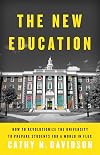
I can feel the capital letters and italics. Davidson is a person who is entirely sincere about the need to Innovate and Revolutionize and Engage higher education with 21st Century Challenges. She sees big looming problems ahead for colleges, which haven't been substantially reorganized in centuries. However, to meet these problems all she has are good wishes and a handful of anecdotes.
The book begins cannily enough, with the story of a wealthy college graduate unprepared for the tough job show more market following a financial collapse. This isn't some Millennial, rather she begins with Charles Eliot, a young man who in the wake of the Panic of 1857 would seek to reform higher education as a long-serving president of Harvard, essentially inventing the modern university of departments, majors, standardized testing, and courses designed to filter unprepared students. Her history of the university basically ends with the Industrial Revolution, with only cursory overviews of the research revolution and academic-military-industrial complex of the Cold War, the university as a center of resistance during Vietnam, and pretty much anything that's happened since 1980s, aside from austerity driven budget cuts.
Davidson decries higher education as it exists today, a system that burdens students with debt and has a shockingly high amount of failure, one that serves to insulate the 1% rather than drive an engine of economic mobility. She's right that the conventional set of assignments; tutorial driven problem sets, content-recitation multiple choice questions, and essays to be read only by the instructor. She's right to note that the increasing adjunctification means that the most youngest and most connected teachers have little incentive to rock the boat.
But beyond that? She points to some stuff that her CUNY school as done to improve graduation rates from an abysmal ~10% to a merely mediocre ~50%. And she points to innovative units at Kansas State, ASU, and Georgetown as new models. But ultimately it's just a reiteration of "we need flexible and engaging curricula", while glossing over the fact that real learning is often hard. Incorporating new modes of thinking, new facts, new skills, into your personal repertoire is one of the hardest things imaginable. I strongly believe that the best classes don't require any sort of exotic standards. Can you read pdfs? Do you have someone to talk about them with? Do you have something to write with? Okay, let's go. If you're willing to do the work. Enthusiasm is no substitute for effort. Knowledge is cumulative, and without an approach that balances the "why" and the "how", you either get appliers who know how to find an answer without understanding what it means, or people who invent the universe from first principles to bake an apple pie.
There are opportunities for solid, data driven work in this space. I recommend Arum and Roska's Academically Adrift for having both a better thesis, and better evidence. show less
The book begins cannily enough, with the story of a wealthy college graduate unprepared for the tough job show more market following a financial collapse. This isn't some Millennial, rather she begins with Charles Eliot, a young man who in the wake of the Panic of 1857 would seek to reform higher education as a long-serving president of Harvard, essentially inventing the modern university of departments, majors, standardized testing, and courses designed to filter unprepared students. Her history of the university basically ends with the Industrial Revolution, with only cursory overviews of the research revolution and academic-military-industrial complex of the Cold War, the university as a center of resistance during Vietnam, and pretty much anything that's happened since 1980s, aside from austerity driven budget cuts.
Davidson decries higher education as it exists today, a system that burdens students with debt and has a shockingly high amount of failure, one that serves to insulate the 1% rather than drive an engine of economic mobility. She's right that the conventional set of assignments; tutorial driven problem sets, content-recitation multiple choice questions, and essays to be read only by the instructor. She's right to note that the increasing adjunctification means that the most youngest and most connected teachers have little incentive to rock the boat.
But beyond that? She points to some stuff that her CUNY school as done to improve graduation rates from an abysmal ~10% to a merely mediocre ~50%. And she points to innovative units at Kansas State, ASU, and Georgetown as new models. But ultimately it's just a reiteration of "we need flexible and engaging curricula", while glossing over the fact that real learning is often hard. Incorporating new modes of thinking, new facts, new skills, into your personal repertoire is one of the hardest things imaginable. I strongly believe that the best classes don't require any sort of exotic standards. Can you read pdfs? Do you have someone to talk about them with? Do you have something to write with? Okay, let's go. If you're willing to do the work. Enthusiasm is no substitute for effort. Knowledge is cumulative, and without an approach that balances the "why" and the "how", you either get appliers who know how to find an answer without understanding what it means, or people who invent the universe from first principles to bake an apple pie.
There are opportunities for solid, data driven work in this space. I recommend Arum and Roska's Academically Adrift for having both a better thesis, and better evidence. show less
Now You See It: How the Brain Science of Attention Will Transform the Way We Live, Work, and Lea rn by Cathy N. Davidson
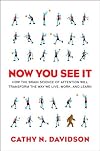
Davidson begins with a fascinating premise. What if we seriously considered the ways in which we think, especially the ways in which we selectively pay attention to and ignore the world around us, and then formed our educational and workplace environments around our brains, rather than trying to hammer our polygonal personalities into round holes?
It's an idea so simple you'll be shocked you didn't have it. Anybody who's in school or the workplace will tell that something is rotten in the show more state of Denmark, and as Davidson reveals, our standardized test obsessed education system is the historical legacy of a system designed to take farm kids and immigrants and get them ready for assembly line industrial jobs. The modern office complex, with cubicles and corner offices and HR departments, is the white collar equivalent. The problem is that standardized education is pointless and alienating, it lacks rigor, relevance, and relationships, and assembly line careers are as dead as the Edsel. Rather, the future is collaborative and creative. Videogames and internet culture are far better models for productive endeavors than the old top-heavy bureaucracies.
Davidson's exploration of education, and her own experiences as a professor at Duke teaching radically new classes is very well done. Unlike certain people (Jane McGonigal *cough* *cough*) she isn't drinking her own kool-aid. The periphrial material, on the science of attention and on new business models, is less inspiring, more in the genre of 'superficial TED-talks a la Malcolm Gladwell and Howard Rheingold' (why isn't that a real genre yet?) But the central message of the book, that standardized tests measure only what they measure, and not anything externally worthwhile, is something that should be hammered into the heads of every politician, educator, and parent on the planet. Your kids know what's up, why don't know? show less
It's an idea so simple you'll be shocked you didn't have it. Anybody who's in school or the workplace will tell that something is rotten in the show more state of Denmark, and as Davidson reveals, our standardized test obsessed education system is the historical legacy of a system designed to take farm kids and immigrants and get them ready for assembly line industrial jobs. The modern office complex, with cubicles and corner offices and HR departments, is the white collar equivalent. The problem is that standardized education is pointless and alienating, it lacks rigor, relevance, and relationships, and assembly line careers are as dead as the Edsel. Rather, the future is collaborative and creative. Videogames and internet culture are far better models for productive endeavors than the old top-heavy bureaucracies.
Davidson's exploration of education, and her own experiences as a professor at Duke teaching radically new classes is very well done. Unlike certain people (Jane McGonigal *cough* *cough*) she isn't drinking her own kool-aid. The periphrial material, on the science of attention and on new business models, is less inspiring, more in the genre of 'superficial TED-talks a la Malcolm Gladwell and Howard Rheingold' (why isn't that a real genre yet?) But the central message of the book, that standardized tests measure only what they measure, and not anything externally worthwhile, is something that should be hammered into the heads of every politician, educator, and parent on the planet. Your kids know what's up, why don't know? show less
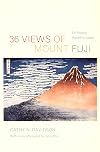
Davidson spent a year with Japan with her husband, Ted. Together, they have jobs teaching English while trying to learn all things Japanese. They make friends who help them with their quest. During this time of total immersion, Davidson becomes intimate with Japanese customs, so much so that when she and Ted are faced with tragedy and their Japanese friends break with tradition for their sake, Davidson is embarrassed and uncomfortable for them. This break from normal protocol touched me. show more Davidson went back to Japan a total of four times with varying lengths of stay. She and Ted contemplated a move to Japan only to decide the language barrier was too great to conquer. This bothered Davidson. Her inability to learn the language bothered her and shattered her confidence so much so she had to put the books she had written in front of her to reaffirm she is a smart woman.
I promise you, you will walk away with a deepened appreciation for Japanese culture. I did not know Tokyo is chaotic and disorganized in purpose. Streets are unnamed to anonymize people's addresses. How do things get delivered? show less
I promise you, you will walk away with a deepened appreciation for Japanese culture. I did not know Tokyo is chaotic and disorganized in purpose. Streets are unnamed to anonymize people's addresses. How do things get delivered? show less
The New Education: How to Revolutionize the University to Prepare Students for a World In Flux by Cathy N. Davidson
This book is completely inspiring. So much resonates for me in terms of the daily work I do in Higher Ed, and there’s a vision here—that I share— for the future of a HigherEd that is learner-driven and alive with humanity.
Lists
Awards


You May Also Like


Associated Authors
Statistics
- Works
- 19
- Also by
- 8
- Members
- 1,418
- Popularity
- #18,140
- Rating
- 3.6
- Reviews
- 26
- ISBNs
- 64
- Languages
- 2
