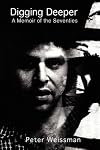
Digging Deeper - A Memoir Of The Seventies
by Peter Weissman 
On This Page
Description
Digging Deeper begins where the author's psychedelic memoir, I Think, Therefore Who Am I? ended. In the first chapter, "Rehabilitation," he reenters a world he once took for granted, and from there takes the reader on a coast-to-coast trip, sardonically observing himself as he presents a slice of the sixties generation negotiating the seventies in discrete, short stories: the compromises implicit in partnership and marriage and the struggle to lead a creative life.Tags
Recommendations




















Member Recommendations
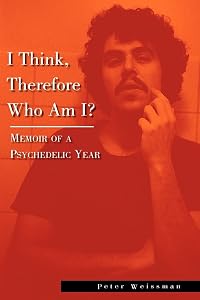
clarabel Digging Deeper picks up where I Think, Therefore Who Am I? ends. The narrator is the same, but he's different too, after moving out of the drug world of the sixties and into his mid-twenties. The second book expands the portrait of the younger man as he encounters circumstances and situations common to his generation.
Member Reviews
What does rehabilitation for a young Brooklyn native, Peter Weissman, who had dropped acid almost every day for a year, and yet somehow avoided Syd Barrett’s fate, look like? Like the kind of pathetically maudlin rehab witnessed on Celebrity Rehab, or like the in-your-face, confrontational rehab of Intervention? Neither, turns out. Sometimes, rehab isn't about going to rehab. Take Digging Deeper's opening chapter, “Rehabilitation,” as proof. Rehabilitation for Weissman didn't mean cutting out drugs completely (though he did quit LSD) insomuch as it meant making a decision to reenter ordinary life. A decision to reconnect with people rather than remain that starving, sometimes homeless, romantic easy rider without a ride.
Meet the show more flat-affected, socially awkward (and “awkward” is putting it mildly), and unkempt, Peter Weissman -- or Weissman’s narrator, I should specify -- his younger, alter-egoish, or quasi-doppelgangerish, or whomever or whatever you’d prefer calling the speaker of Weissman's meta-memoir, Digging Deeper, since Weissman, at times, is actually a character and not the narrator in Digging Deeper; a character who is writing a novel about the aftermath and recovery of a certain young man's psychedelic year, a year not dissimilar to that which was chronicled in Weissman's brilliant first autobiography, I Think, Therefore Who Am I?.
Readers who enjoy Raymond Carver or Denis Johnson, if they're like me, will like Peter Weissman. His pared-down, precise, photographic style is reminiscent of theirs. As is his philosophy and spirituality, the latter, especially of Johnson. I happen to like Peter Weissman a lot -- and not just because he's a friend, but a writer who's writing speaks to me like the voice of a friend, a confidante, and would, I suspect, even if I hadn't known him all these years on the web.
Digging Deeper proves that Weissman survived the Sixties with his mind intact. He survived, yes. And he survived the Seventies, too, but did he really live them? Seemed like he mostly lived his life through Noreen, who had a seizure disorder, and suffered from various resultant anxieties. Peter was a good man who temporarily sacrificed his life -- his dreams of being a full time writer -- so that his wife, with her own problems that made her ill-equipped for the nine-to-five world, could pursue her dreams of being an artiste. I say "artiste" because she wasn't very good at it, though believed she was. Noreen took advantage of Peter's magnanimity, and rarely, if ever, reciprocated his self-sacrifice. An irony in the relationship is that the real artist in the doomed marriage was always Peter; Noreen was more of a con-artist. Maybe not at first in their early days together, maybe not always, but by the end, hell yes she was. Peter eventually realized this. In the meantime, however, he put food on the table for the two of them, working as a postal carrier.
Can't you just see an ex-hippie being a successful and happy postal carrier? But he did it -- and did it his way, a maverick mail carrier -- returning undelivered mail to the post office because he was fed up getting screwed by spineless supervisors who schlepped extra mail bundles off on him (half of it literally junk) when the regular carriers went out "sick". Returning undelivered mail was a cardinal sin among carriers, and if he hadn't been such an efficent postal worker otherwise, would've been enough to get him automatically canned. His own personal credo was that he would not work more than ten hours in a day, no matter what. Didn't exactly endear him to his supervisors, or make him a hero among his fellow mail carriers, whom, I should mention, at this particular Oakland post office, were predominately non-Caucasians, but it was a deal Weissman had made with himself -- and that on top of the raw deal that brought him to the post office in the first place -- and he would not renege on himself. Weissman cleverly identified his colleagues' cultural backgrounds through the spot-on colloquialisms of their spicy, streetwise dialogue. The passages here are some of my favorite scenes in the book. Not to mention the obsessive, hysterical hyper-analysis of odds and betting in "Racetrack Meditations" -- a chapter so funny and philosophical its worthy of its own review.
Over time, after a trip through Europe left them broke -- broke emotionally as well as fiscally, close to broke with love for one another, they landed at Noreen's father's palatial compound, in a cottage out by the gardens. Noreen's father worked for a manufacturer that was the very antithesis of what made Peter Weissman tick-- the man made napalm for a living. Made a living in killing. I hope Weissman will someday return to this section at the cottage on the compound, in his last days with Noreen (though the two by then rarely spent time together) and describe in greater detail his interactions -- I won't call it a "relationship" -- with his father-in-law, because whether ice-cold or raging hurricane, the disdain the two men felt for one another was obvious, and I would've enjoyed seeing more of their conflict fleshed out. Takes a skilled writer to leave a reader wanting more. Fact is, too, I just didn't want the experience of reading Peter Weissman's second memoir, Digging Deeper, to ever end. show less
Meet the show more flat-affected, socially awkward (and “awkward” is putting it mildly), and unkempt, Peter Weissman -- or Weissman’s narrator, I should specify -- his younger, alter-egoish, or quasi-doppelgangerish, or whomever or whatever you’d prefer calling the speaker of Weissman's meta-memoir, Digging Deeper, since Weissman, at times, is actually a character and not the narrator in Digging Deeper; a character who is writing a novel about the aftermath and recovery of a certain young man's psychedelic year, a year not dissimilar to that which was chronicled in Weissman's brilliant first autobiography, I Think, Therefore Who Am I?.
Readers who enjoy Raymond Carver or Denis Johnson, if they're like me, will like Peter Weissman. His pared-down, precise, photographic style is reminiscent of theirs. As is his philosophy and spirituality, the latter, especially of Johnson. I happen to like Peter Weissman a lot -- and not just because he's a friend, but a writer who's writing speaks to me like the voice of a friend, a confidante, and would, I suspect, even if I hadn't known him all these years on the web.
Digging Deeper proves that Weissman survived the Sixties with his mind intact. He survived, yes. And he survived the Seventies, too, but did he really live them? Seemed like he mostly lived his life through Noreen, who had a seizure disorder, and suffered from various resultant anxieties. Peter was a good man who temporarily sacrificed his life -- his dreams of being a full time writer -- so that his wife, with her own problems that made her ill-equipped for the nine-to-five world, could pursue her dreams of being an artiste. I say "artiste" because she wasn't very good at it, though believed she was. Noreen took advantage of Peter's magnanimity, and rarely, if ever, reciprocated his self-sacrifice. An irony in the relationship is that the real artist in the doomed marriage was always Peter; Noreen was more of a con-artist. Maybe not at first in their early days together, maybe not always, but by the end, hell yes she was. Peter eventually realized this. In the meantime, however, he put food on the table for the two of them, working as a postal carrier.
Can't you just see an ex-hippie being a successful and happy postal carrier? But he did it -- and did it his way, a maverick mail carrier -- returning undelivered mail to the post office because he was fed up getting screwed by spineless supervisors who schlepped extra mail bundles off on him (half of it literally junk) when the regular carriers went out "sick". Returning undelivered mail was a cardinal sin among carriers, and if he hadn't been such an efficent postal worker otherwise, would've been enough to get him automatically canned. His own personal credo was that he would not work more than ten hours in a day, no matter what. Didn't exactly endear him to his supervisors, or make him a hero among his fellow mail carriers, whom, I should mention, at this particular Oakland post office, were predominately non-Caucasians, but it was a deal Weissman had made with himself -- and that on top of the raw deal that brought him to the post office in the first place -- and he would not renege on himself. Weissman cleverly identified his colleagues' cultural backgrounds through the spot-on colloquialisms of their spicy, streetwise dialogue. The passages here are some of my favorite scenes in the book. Not to mention the obsessive, hysterical hyper-analysis of odds and betting in "Racetrack Meditations" -- a chapter so funny and philosophical its worthy of its own review.
Over time, after a trip through Europe left them broke -- broke emotionally as well as fiscally, close to broke with love for one another, they landed at Noreen's father's palatial compound, in a cottage out by the gardens. Noreen's father worked for a manufacturer that was the very antithesis of what made Peter Weissman tick-- the man made napalm for a living. Made a living in killing. I hope Weissman will someday return to this section at the cottage on the compound, in his last days with Noreen (though the two by then rarely spent time together) and describe in greater detail his interactions -- I won't call it a "relationship" -- with his father-in-law, because whether ice-cold or raging hurricane, the disdain the two men felt for one another was obvious, and I would've enjoyed seeing more of their conflict fleshed out. Takes a skilled writer to leave a reader wanting more. Fact is, too, I just didn't want the experience of reading Peter Weissman's second memoir, Digging Deeper, to ever end. show less
A rose, a lily, and sometimes a weed.
People change as they get older, assimilate experience in light of numerous factors and in accordance with a kernel of character that eventually flowers into something recognizable: a rose, a lily, and sometimes a weed.
[Digging Deeper] is the continuation of a journey begun in the psychedelic memoir [I Think, Therefore Who Am I?]. Peter, the narrator of the memoir, describes this process of change while taking a close look at his wife. But his razor-sharp, critical mind was most likely cutting into his own psyche more than anyone else’s. At that moment, which of the three represented you, Peter – the rose, the lily, or the weed?
At the end of [I Think, Therefore Who Am I?], Peter has survived show more one last bad trip, complete with cold sweat, auditory hallucinations, and a fairly severe case of paranoia. With the experience, Peter confronts an abiding and overwhelming fear of being wiped from the face of the earth in anonymity. As we join him again in [1Digging Deeper], he is living in virtually the exact void he feared: commuting on a train with vacant-faced, lost souls; working in an anonymous building, in an anonymous cubicle; hiding behind a newspaper for fear that he will be forced to speak to someone.
What changes his life is Noreen – a woman he spent a couple of days with months before, helping her through her own bad acid trip. Noreen sends Peter a letter, begging for his help, begging him to let her visit him. When she does, she invites herself into his apartment and into his life. Peter realizes what a powerful thing it is to be needed, and he surrenders to everything that comes with the revelation. Living again, if not purposefully at least more actively, working as a mail carrier to support Noreen and her art, Peter longs to abandon everything in pursuit of writing. But the longing can’t overcome his fear of what such a choice will mean about who he is – in the early stages of his writing, he can’t even commit to more than just one page in a sitting, asking himself later, Because I was self-conscious about seriously considering myself a writer?
Things finally come to a head while the couple is living with Noreen’s parents in a servant’s cottage, Peter maintaining the grounds in exchange for room and board. The two bring a dog home from the pound and, in addition to his other duties, Peter is left to raise, care for, and chase after the mutt. Peter finally confronts Noreen about the inequalities of their marriage, Peter always providing and giving – Noreen always expecting and taking. At the climax of the argument, Noreen slaps Peter and tells him that he is making his own choices in life. Peter retrieves the glasses she’s knocked from his face and, finally making a choice for himself, leaves Noreen.
The introspective self-loathing and doubt of [I Think, Therefore Who Am I?] is still here in Weissman’s follow-up, but with a twist. Even in the midst of his meandering, go-with-the-flow life, he is testing, beginning to engage those bits of himself he wants to give voice, beginning to be a more willful participant than just a bystander sometimes caught up with the events around him. In some ways, taking Noreen in, even though it later became a fairly co-dependent relationship, was the first step towards living instead of experiencing. More examples of that type of behavior are revealed in his jab as a mail carrier. For example, Peter warns several people on his route that their mail is being monitored by unknown government forces. Later, he intercepts religious come-ons targeting the elderly and soft-minded for donations. He takes them home and burns them in his fireplace at home. These choices connect Peter to the world around him as a participant rather than as an observer who simply reacts.
Perhaps the most moving aspect of Weissman’s memoirs is how personal they are. Aren’t all memoirs necessarily personal? Well, no. Many are regurgitations of facts and events, set down on paper to cement the subject’s place in history or some other similarly selfish goal. But Weissman’s narrative is deeply personal and internally driven, more of a meditation on himself and his place in the world than an account of his life. After several chapters, you feel like you’ve been sitting on a porch, sharing a beer, and listening to him ruminate about his life.
Of course, nothing in [Digging Deeper] is more personal than Peter’s struggle to write. At one point, about to critique a friend’s work, he writes, When you present your work, it’s like baring your persona to critical inspection. For Peter, the writing is his persona – and both are equally on display for criticism. It’s a courageous choice. But that’s the one piece of advice Peter remembers and recounts from a writing group he attended, But why fear the images our minds create? … It’s no excuse. We have to let the images penetrate, to batter us – if it comes to that. Anything else is cowardly.
[Digging Deeper] is a smoother book, both in the writing and in the narrative. Weissman has grown considerably as a writer by the time this book is published. The writing is as intelligent and edgy as [I Think, Therefore Who Am I?] but it is more polished. There is less trouble deciphering what Peter is grappling with and where he is going. But these changes in the book likely echo changes in the man. He has grown up. Not the growing up of compromise but of refinement in thought and character. In Peter’s words, There is such a thing as growing up; a notion I’d resisted for years. Of accepting responsibility and doing things you wouldn’t choose to if you had a choice. But disclaim whatever it is that sparks youthful enthusiasm and you lsoe something essential. I spoke to the teenager that evening and the man he’d become, and was relieved.
Peter flowers alright. After leaving Noreen, he meets her again at a play written by a mutual friend. He has an inclination to sprint across the street and run away, an inclination that he follows several times in [I Think, Therefore Who Am I?]. But this time, he stands his ground and speaks his mind, telling her how she had mistreated him and abused his good-naturedness all those years. I’m still not sure what Peter would say at this moment in his life about whether he was the rose, the lily, or the weed – but I’m sure he would’ve felt the roots seeking further depths in the earth beneath him.
Bottom Line: A deeply personal and courageous memoir.
5 bones!!!!! show less
People change as they get older, assimilate experience in light of numerous factors and in accordance with a kernel of character that eventually flowers into something recognizable: a rose, a lily, and sometimes a weed.
[Digging Deeper] is the continuation of a journey begun in the psychedelic memoir [I Think, Therefore Who Am I?]. Peter, the narrator of the memoir, describes this process of change while taking a close look at his wife. But his razor-sharp, critical mind was most likely cutting into his own psyche more than anyone else’s. At that moment, which of the three represented you, Peter – the rose, the lily, or the weed?
At the end of [I Think, Therefore Who Am I?], Peter has survived show more one last bad trip, complete with cold sweat, auditory hallucinations, and a fairly severe case of paranoia. With the experience, Peter confronts an abiding and overwhelming fear of being wiped from the face of the earth in anonymity. As we join him again in [1Digging Deeper], he is living in virtually the exact void he feared: commuting on a train with vacant-faced, lost souls; working in an anonymous building, in an anonymous cubicle; hiding behind a newspaper for fear that he will be forced to speak to someone.
What changes his life is Noreen – a woman he spent a couple of days with months before, helping her through her own bad acid trip. Noreen sends Peter a letter, begging for his help, begging him to let her visit him. When she does, she invites herself into his apartment and into his life. Peter realizes what a powerful thing it is to be needed, and he surrenders to everything that comes with the revelation. Living again, if not purposefully at least more actively, working as a mail carrier to support Noreen and her art, Peter longs to abandon everything in pursuit of writing. But the longing can’t overcome his fear of what such a choice will mean about who he is – in the early stages of his writing, he can’t even commit to more than just one page in a sitting, asking himself later, Because I was self-conscious about seriously considering myself a writer?
Things finally come to a head while the couple is living with Noreen’s parents in a servant’s cottage, Peter maintaining the grounds in exchange for room and board. The two bring a dog home from the pound and, in addition to his other duties, Peter is left to raise, care for, and chase after the mutt. Peter finally confronts Noreen about the inequalities of their marriage, Peter always providing and giving – Noreen always expecting and taking. At the climax of the argument, Noreen slaps Peter and tells him that he is making his own choices in life. Peter retrieves the glasses she’s knocked from his face and, finally making a choice for himself, leaves Noreen.
The introspective self-loathing and doubt of [I Think, Therefore Who Am I?] is still here in Weissman’s follow-up, but with a twist. Even in the midst of his meandering, go-with-the-flow life, he is testing, beginning to engage those bits of himself he wants to give voice, beginning to be a more willful participant than just a bystander sometimes caught up with the events around him. In some ways, taking Noreen in, even though it later became a fairly co-dependent relationship, was the first step towards living instead of experiencing. More examples of that type of behavior are revealed in his jab as a mail carrier. For example, Peter warns several people on his route that their mail is being monitored by unknown government forces. Later, he intercepts religious come-ons targeting the elderly and soft-minded for donations. He takes them home and burns them in his fireplace at home. These choices connect Peter to the world around him as a participant rather than as an observer who simply reacts.
Perhaps the most moving aspect of Weissman’s memoirs is how personal they are. Aren’t all memoirs necessarily personal? Well, no. Many are regurgitations of facts and events, set down on paper to cement the subject’s place in history or some other similarly selfish goal. But Weissman’s narrative is deeply personal and internally driven, more of a meditation on himself and his place in the world than an account of his life. After several chapters, you feel like you’ve been sitting on a porch, sharing a beer, and listening to him ruminate about his life.
Of course, nothing in [Digging Deeper] is more personal than Peter’s struggle to write. At one point, about to critique a friend’s work, he writes, When you present your work, it’s like baring your persona to critical inspection. For Peter, the writing is his persona – and both are equally on display for criticism. It’s a courageous choice. But that’s the one piece of advice Peter remembers and recounts from a writing group he attended, But why fear the images our minds create? … It’s no excuse. We have to let the images penetrate, to batter us – if it comes to that. Anything else is cowardly.
[Digging Deeper] is a smoother book, both in the writing and in the narrative. Weissman has grown considerably as a writer by the time this book is published. The writing is as intelligent and edgy as [I Think, Therefore Who Am I?] but it is more polished. There is less trouble deciphering what Peter is grappling with and where he is going. But these changes in the book likely echo changes in the man. He has grown up. Not the growing up of compromise but of refinement in thought and character. In Peter’s words, There is such a thing as growing up; a notion I’d resisted for years. Of accepting responsibility and doing things you wouldn’t choose to if you had a choice. But disclaim whatever it is that sparks youthful enthusiasm and you lsoe something essential. I spoke to the teenager that evening and the man he’d become, and was relieved.
Peter flowers alright. After leaving Noreen, he meets her again at a play written by a mutual friend. He has an inclination to sprint across the street and run away, an inclination that he follows several times in [I Think, Therefore Who Am I?]. But this time, he stands his ground and speaks his mind, telling her how she had mistreated him and abused his good-naturedness all those years. I’m still not sure what Peter would say at this moment in his life about whether he was the rose, the lily, or the weed – but I’m sure he would’ve felt the roots seeking further depths in the earth beneath him.
Bottom Line: A deeply personal and courageous memoir.
5 bones!!!!! show less
Peter Weissman’s I Think, Therefore Who Am I? took place during the Summer of Love. It was an intimate exploration of the Sixties, the most glorified or vilified decade in recent history, depending on how far one lives from Real America™ (patent pending). His second volume of memoirs, Digging Deeper: a Memoir of the Seventies, chronicles Weissman’s life during a decade not liked by anyone, except perhaps the occasional roaming hipster burnishing his or her sense of ironic superiority.
The memoir begins with Weissman crawling from the muck of hallucinogenic incoherence. Weissman’s inability to speak to others provides a dark comedic undertone to the opening chapters. Through willpower and workplace demands, Weissman transitions show more from an introverted state brought about by his extensive experimentation with drugs. One of Weissman’s first jobs is for a marketing research firm. Verbal connections established through the short-term exchanges he has over the phone.
While working he meets Noreen again (she appeared in his previous volume of memoirs). She helps Weissman in his reintegration to society. Then, like clockwork, the pair become a couple and then a married couple. One of the underlying themes in Digging Deeper is negotiating with “Normal Society.” Weissman, a Red Diaper Baby, faces additional challenges, since the Sixties weren’t simply an extended vacation by rich college kids to take lots of drugs and sleep around (at least according to historians siding with the conservative victors). The Sixties brought with it a revolutionary promise. The promise remained unfulfilled, resulting in the cavalcade of characters Weissman profiles in Digging Deeper. He works with disgruntled Postal Service employees, dines with wannabe artists, and spiritual con artists. Realizing the revolution has been lost or simply co-opted, Weissman chronicles these engagements and negotiations with a detached precision leavened with cynical observations.
Weissman and Noreen eventually move to the Bay Area. He works at the Post Office with a multiracial work force, including a patchwork of black and white supervisors and managers reflecting the explosive calculus of affirmative action. The Post Office scenes have the flavor of Barney Miller-meet-the Wire, where race, class, and capital expose the fissures of the socioeconomic system in its latter years of global dominance. The sequence where he delivers mail to wealthy patrons of an apartment complex is especially cutting, the shrill spoiled scions of money old and new sounding like the entitled dingbats from Arrested Development. (For added irony, Noreen is the daughter of a major chemical magnate. The magnate prides himself in his part in developing napalm, one of Vietnam’s more horrifying legacies.) However, Weissman’s rage against the capitalist machine isn’t exactly pure. Unable to work on his writing, supporting his wife, and dealing with the frustrations of everyday coalesce into his need to get a hobby. That hobby is horseracing.
I Think, Therefore Who Am I? gave a street-level view of adolescent exploration during the Summer of Love. Digging Deeper expands on that vision, examining a decade rather than a year, and showing the travails of growing up. Forced from the Eden of psychedelic visions and personal experimentation, Weissman has to perform that alchemical miracle of turning sweat into greenbacks.
http://driftlessareareview.wordpress.com/2011/06/19/digging-deeper-a-memoir-of-t... show less
The memoir begins with Weissman crawling from the muck of hallucinogenic incoherence. Weissman’s inability to speak to others provides a dark comedic undertone to the opening chapters. Through willpower and workplace demands, Weissman transitions show more from an introverted state brought about by his extensive experimentation with drugs. One of Weissman’s first jobs is for a marketing research firm. Verbal connections established through the short-term exchanges he has over the phone.
While working he meets Noreen again (she appeared in his previous volume of memoirs). She helps Weissman in his reintegration to society. Then, like clockwork, the pair become a couple and then a married couple. One of the underlying themes in Digging Deeper is negotiating with “Normal Society.” Weissman, a Red Diaper Baby, faces additional challenges, since the Sixties weren’t simply an extended vacation by rich college kids to take lots of drugs and sleep around (at least according to historians siding with the conservative victors). The Sixties brought with it a revolutionary promise. The promise remained unfulfilled, resulting in the cavalcade of characters Weissman profiles in Digging Deeper. He works with disgruntled Postal Service employees, dines with wannabe artists, and spiritual con artists. Realizing the revolution has been lost or simply co-opted, Weissman chronicles these engagements and negotiations with a detached precision leavened with cynical observations.
Weissman and Noreen eventually move to the Bay Area. He works at the Post Office with a multiracial work force, including a patchwork of black and white supervisors and managers reflecting the explosive calculus of affirmative action. The Post Office scenes have the flavor of Barney Miller-meet-the Wire, where race, class, and capital expose the fissures of the socioeconomic system in its latter years of global dominance. The sequence where he delivers mail to wealthy patrons of an apartment complex is especially cutting, the shrill spoiled scions of money old and new sounding like the entitled dingbats from Arrested Development. (For added irony, Noreen is the daughter of a major chemical magnate. The magnate prides himself in his part in developing napalm, one of Vietnam’s more horrifying legacies.) However, Weissman’s rage against the capitalist machine isn’t exactly pure. Unable to work on his writing, supporting his wife, and dealing with the frustrations of everyday coalesce into his need to get a hobby. That hobby is horseracing.
I Think, Therefore Who Am I? gave a street-level view of adolescent exploration during the Summer of Love. Digging Deeper expands on that vision, examining a decade rather than a year, and showing the travails of growing up. Forced from the Eden of psychedelic visions and personal experimentation, Weissman has to perform that alchemical miracle of turning sweat into greenbacks.
http://driftlessareareview.wordpress.com/2011/06/19/digging-deeper-a-memoir-of-t... show less
It's a different beast than Weissman's previous novel, I Think, Therefore Who Am I?, but the two go well together--kind of Homer in reverse, where the long strange psychedelic year of ITTWAI is the Odyssey, life as a journey, and this is the Iliad, the hero settling into the long grindy war of the mundane, bearing up under the struggle to find an adult place in the world that makes sense. ITTWAI is full of the mythic characters of youth; Digging Deeper is about a guy who works at the post office and has no time to write.
But if I had to choose which of the books ultimately seems more true, I'd choose this one. That's no slight on the first book, which is more other stuff, for instance more exotic with the way it conjures a well lost show more world--as I say, I think the two cover each other's flanks. But Digging Deeper takes a long, hard, honest look at things that don't have mythic scope: like the emotional attrition of being made to feel that you should be grateful for your soulmulching job, knowing that in real life the guy who goes mental like at the end of Office Space is less hero than danger to himself and others and trying to find ways and places to take a stand and maintain your self-respect even though you're standing on a slippery pile of mail and they're dropping more every second. Young Peter does it, and without coming across as all elbows, either--you're left with an impression of a decent, shy kid who just doesn't want to be trod on. Who makes some powerful symbolic moves in that respect--mildly letting his supervisor know that he won't work more than ten hours a day; refusing to deliver junk mail; letting people know that the post office is spying on them--that are right admirable. What this is in part is a story about the plight of the worker in 20th-century America that doesn't get all lachrymose or use words like "plight".
The private side is strong, too. The awkwardness of friendships a-birthing; their inevitable awkward or volatile death; the inextricability of the one from the other and the feeling sometimes that it would be easier to not even think about people and their needs and just go with coalitions of the willing if you want to talk, as if that doesn't make you the lonely guy at the bus stop at best and a monster at worst. Weisssman--Peter, I should call him, because I know him and all--does a great job of sketching figures from his youth in a memorable way that I feel like somehow makes more sense as a kind of namaste gesture than it would be if you thought once a year at Christmas "I really should call Colin" or whatever. The young richie-rich artist couple, addicted to pretty things, foreclosing their own bohemia. Jeremy the goofy guru, walking on that girl's back to cure her headache andeverybody's like wincing in unison. The father-in-law, proud as punch of his role in the development of napalm, bone certain that the world is unfolding as it should.
I'm in no position to say, of course, how true to life the marriage at the centre of the book is rendered here, and of course we get only one side. But it feels true, and sensitive and fair. The desire to help, that leads us all into trouble because it always becomes a responsibility. The recognition that ties of history, lust affection mutual understanding hatred all of that, tie you to a stranger. The way that leads, almost mathematically, to betrayal, because that seems like the only way to get out of feeling beholden. The anger of the betrayed party compounded at being turned loose, abandoned, when they were only there mortgaging themselves out of a sense of responsibility. "I can't live with you or without you"--that's a mythic story, a parabola. "I can't live with you, but I don't know how to leave"--that's real life.
There's this great moment toward the end where Young Peter's marriage to Noreen is over and I think they both know it but they are treading water until they figure out what to do, and they're staying with her parents and Peter is landscaping some to approximate rent, and he sees himself as a character out of Tolstoy, a kind of constant gardener who (as I interpret it) would live out his life in a cottage on a Russian estate, an object of curiosity to the noble scions who never learn that he's Auntie Noreen's first husband and he just never left because he couldn't shake the inertia and the sense that everywhere else was much the same anyway. But that would be fiction, and in real life you pull up your socks and get on with it at some point--here, occasioned by a powerfully rendered fight that hit some tender places--and of course you're not some Tolstoy character simple enough to be metaphorically interpreted and summed up in a hundred words, you're a real guy. This is the memoir of a real guy. show less
But if I had to choose which of the books ultimately seems more true, I'd choose this one. That's no slight on the first book, which is more other stuff, for instance more exotic with the way it conjures a well lost show more world--as I say, I think the two cover each other's flanks. But Digging Deeper takes a long, hard, honest look at things that don't have mythic scope: like the emotional attrition of being made to feel that you should be grateful for your soulmulching job, knowing that in real life the guy who goes mental like at the end of Office Space is less hero than danger to himself and others and trying to find ways and places to take a stand and maintain your self-respect even though you're standing on a slippery pile of mail and they're dropping more every second. Young Peter does it, and without coming across as all elbows, either--you're left with an impression of a decent, shy kid who just doesn't want to be trod on. Who makes some powerful symbolic moves in that respect--mildly letting his supervisor know that he won't work more than ten hours a day; refusing to deliver junk mail; letting people know that the post office is spying on them--that are right admirable. What this is in part is a story about the plight of the worker in 20th-century America that doesn't get all lachrymose or use words like "plight".
The private side is strong, too. The awkwardness of friendships a-birthing; their inevitable awkward or volatile death; the inextricability of the one from the other and the feeling sometimes that it would be easier to not even think about people and their needs and just go with coalitions of the willing if you want to talk, as if that doesn't make you the lonely guy at the bus stop at best and a monster at worst. Weisssman--Peter, I should call him, because I know him and all--does a great job of sketching figures from his youth in a memorable way that I feel like somehow makes more sense as a kind of namaste gesture than it would be if you thought once a year at Christmas "I really should call Colin" or whatever. The young richie-rich artist couple, addicted to pretty things, foreclosing their own bohemia. Jeremy the goofy guru, walking on that girl's back to cure her headache andeverybody's like wincing in unison. The father-in-law, proud as punch of his role in the development of napalm, bone certain that the world is unfolding as it should.
I'm in no position to say, of course, how true to life the marriage at the centre of the book is rendered here, and of course we get only one side. But it feels true, and sensitive and fair. The desire to help, that leads us all into trouble because it always becomes a responsibility. The recognition that ties of history, lust affection mutual understanding hatred all of that, tie you to a stranger. The way that leads, almost mathematically, to betrayal, because that seems like the only way to get out of feeling beholden. The anger of the betrayed party compounded at being turned loose, abandoned, when they were only there mortgaging themselves out of a sense of responsibility. "I can't live with you or without you"--that's a mythic story, a parabola. "I can't live with you, but I don't know how to leave"--that's real life.
There's this great moment toward the end where Young Peter's marriage to Noreen is over and I think they both know it but they are treading water until they figure out what to do, and they're staying with her parents and Peter is landscaping some to approximate rent, and he sees himself as a character out of Tolstoy, a kind of constant gardener who (as I interpret it) would live out his life in a cottage on a Russian estate, an object of curiosity to the noble scions who never learn that he's Auntie Noreen's first husband and he just never left because he couldn't shake the inertia and the sense that everywhere else was much the same anyway. But that would be fiction, and in real life you pull up your socks and get on with it at some point--here, occasioned by a powerfully rendered fight that hit some tender places--and of course you're not some Tolstoy character simple enough to be metaphorically interpreted and summed up in a hundred words, you're a real guy. This is the memoir of a real guy. show less
Is Digging Deeper really a memoir? Or maybe it's a bildungsroman? How about a short story collection? Any votes for a philosophical novel? One cannot really pigeonhole this book, as it is all these things, and more.
When you erase all of the standard responses and expected behaviors which everyone learns and adopts to get along in society, what do you end up with? You get Peter at the beginning of Digging Deeper. A year of living psychedelically has stripped off these layers and transformed Peter into a pure existence Zen machine.
I really like that first chapter Peter. He is a fascinating character. He is an enigma to his workmates at his job at some nameless company. He is obviously not one of them, as he does not engage in the normal show more small talk and workplace banter. But his Zen-like state makes him a good listener, and so he becomes the target on which to dump all of their problems. It’s not until one of the more annoying employees finally wears out his otherwise limitless patience when he accesses and executes the appropriate phrase to shut her up and get rid of her. It reminded me of that scene in Terminator, where Arnold’s computer brain runs through the possible responses to the smartass remark from the cleaning man (and no, Peter doesn’t say, “Fuck off, asshole”--although I wish he had.) For me, this moment initiated the beginning of Peter’s reintegration back into society.
The remainder of the book is a chronicle of Peter trying to discover who he really is, and his place in the world. He gets married. He develops friendships. He gets a regular job as a mailman. He starts to write. Mr. Weissman relates these experiences in chapters that could easily stand as wonderfully written stories all on their own, and in a poetic prose that flows free and effortlessly. His writing draws you into his world. He does this by introducing bigger-than-life characters, characters that you will not soon forget. And by not over-writing a scene; he leaves spaces, doesn’t try to explain everything. Yes, you do find yourself with questions that are left unanswered. But in asking these questions, and trying to answer them, you end up inserting yourself into the story. I felt as if I were right there casing envelopes at the post office with him, or dodging a hotel-keeper for rent in Amsterdam.
As I said, I really enjoyed first chapter Peter. Part of me wishes he could've maintained that pristine, existential self. But if he had, he would not have taken up writing. And we wouldn't have this wonderful book to read. Or the book which preceded Digging Deeper, which is “I Think, Therefore Who Am I.” I have yet to read it, but I am looking forward to reading it soon, because if it is anything like Digging Deeper, I know I will enjoy it--as well as any others else Mr. Weissman decides to share with us. show less
When you erase all of the standard responses and expected behaviors which everyone learns and adopts to get along in society, what do you end up with? You get Peter at the beginning of Digging Deeper. A year of living psychedelically has stripped off these layers and transformed Peter into a pure existence Zen machine.
I really like that first chapter Peter. He is a fascinating character. He is an enigma to his workmates at his job at some nameless company. He is obviously not one of them, as he does not engage in the normal show more small talk and workplace banter. But his Zen-like state makes him a good listener, and so he becomes the target on which to dump all of their problems. It’s not until one of the more annoying employees finally wears out his otherwise limitless patience when he accesses and executes the appropriate phrase to shut her up and get rid of her. It reminded me of that scene in Terminator, where Arnold’s computer brain runs through the possible responses to the smartass remark from the cleaning man (and no, Peter doesn’t say, “Fuck off, asshole”--although I wish he had.) For me, this moment initiated the beginning of Peter’s reintegration back into society.
The remainder of the book is a chronicle of Peter trying to discover who he really is, and his place in the world. He gets married. He develops friendships. He gets a regular job as a mailman. He starts to write. Mr. Weissman relates these experiences in chapters that could easily stand as wonderfully written stories all on their own, and in a poetic prose that flows free and effortlessly. His writing draws you into his world. He does this by introducing bigger-than-life characters, characters that you will not soon forget. And by not over-writing a scene; he leaves spaces, doesn’t try to explain everything. Yes, you do find yourself with questions that are left unanswered. But in asking these questions, and trying to answer them, you end up inserting yourself into the story. I felt as if I were right there casing envelopes at the post office with him, or dodging a hotel-keeper for rent in Amsterdam.
As I said, I really enjoyed first chapter Peter. Part of me wishes he could've maintained that pristine, existential self. But if he had, he would not have taken up writing. And we wouldn't have this wonderful book to read. Or the book which preceded Digging Deeper, which is “I Think, Therefore Who Am I.” I have yet to read it, but I am looking forward to reading it soon, because if it is anything like Digging Deeper, I know I will enjoy it--as well as any others else Mr. Weissman decides to share with us. show less
I believe this book could stand on its own, but a great deal of its impact would be lost without having read its predecessor, I Think, Therefore Who Am I? Memoir of a Psychedelic Year. This second book, set in the next decade on, draws from the old one, adds a new context to it, and even depicts Peter's early forays into actually writing it.
In the first book, we're reading about the detached inner life of someone entirely self-absorbed, despite many interactions with different characters who loom up larger than life, and then melt away - while in Digging Deeper, we're reading about a man who, rehabilitated from hallucinatory drugs, is learning to make real social connections with other people, taking a genuine interest in the world show more around him. It's interesting how despite this, the first book shows (to me anyway) more about the times and society of 1967 - the hippy world of drugs, free love, and collective yearning for something non-existent, while Digging Deeper tells us more about the man, Peter. I suspect this apparent contradiction has something to do with the reflections and thoughts of the older Peter who, writing about his younger self, brings a deeply thought-out context to himself as he was then.
This matter of making social connections is not to say that Young Peter, the protagonist of this book, is a selfless extrovert - far from it. He's a complicated character indeed, a mix of opposites. Within his marriage, he is self-absorbed and inward-looking to a fault, and at the same time yielding, undemanding, astonishingly generous. As a postman, he is a caring observer and analyser of people, of the prickly social and racial relationships that bristle complicatedly around him - and he is also insular, self-protective, setting himself aloofly apart. He can be self-deceptive and deeply honest almost in the same moment; self deprecating and yet annihilatingly critical of others in the same thought.
There are elements of a coming of age in the two books combined - ITTWAI is about a very young man trying to find (or perhaps lose) himself. DD is about a much more mature young man, who comes to certain conclusions about himself and his identity, and is setting about establishing that identity. Peter of Digging Deeper sees life as a much bigger thing than he did in the small and yet infinite space created by hallucinatory drugs in the first memoir. In this second book, we find him coming to understandings about his own character that were evident in the earlier book, but which Young Peter had not thought about for himself yet.
There's a searching, probing feel to the book as a whole, which increases towards the end. This, like ITTWAI, feels like the author is still trying to find something - an answer to a question his life still hasn't solved. The Peter of Digging Deeper is not as sad and empty as the Peter of I Think, Therefore Who Am I? but there's an underlying element in both books, which I can't really understand or describe, but perhaps could be called disappointment or disillusionment.
Near the end of the book, Peter and his wife travel to Europe - it's a very poignant part, in which the two of them are running away from their own unhappiness: the unfulfilling marriage, the deadening job, the sameness of existence. And they keep on running, shades of the earlier Peter on drugs, as if further on, somewhere, if one keeps at it, there's something worth discovering ahead somewhere. But as long as Peter runs away, whether via drugs or via desperate poverty-dogged European travel, a decision, or an answer, can't be found until he stops and faces things as they really are. Which in the end he does, and the very end of the book takes on a new note - firmer, clearer, though not much happier.
So this is a personal book - a man writing about his own life and exploring his own history. Why should we, outsiders, want to read it? Well, for many reasons. Because through reading this, one man's journey into his own past, we explore our own past and present through comparison and imitation. Because, quite simply, the discrete stories within the novel are interesting, fresh, sometimes funny, sometimes sad, and somehow important. Because there's a kind of wisdom in the older Peter who narrates his past to us, a wisdom worth discovering. Because each person or character we meet is another perspective on a complicated world, which in the end is our world as well as Peter's. This is not a book one reads to escape from life; rather it helps one think about life, to analyse it, and maybe even learn from it. If we read it with honesty, this is as much a book about ourselves as it is about Peter Weissmann. show less
In the first book, we're reading about the detached inner life of someone entirely self-absorbed, despite many interactions with different characters who loom up larger than life, and then melt away - while in Digging Deeper, we're reading about a man who, rehabilitated from hallucinatory drugs, is learning to make real social connections with other people, taking a genuine interest in the world show more around him. It's interesting how despite this, the first book shows (to me anyway) more about the times and society of 1967 - the hippy world of drugs, free love, and collective yearning for something non-existent, while Digging Deeper tells us more about the man, Peter. I suspect this apparent contradiction has something to do with the reflections and thoughts of the older Peter who, writing about his younger self, brings a deeply thought-out context to himself as he was then.
This matter of making social connections is not to say that Young Peter, the protagonist of this book, is a selfless extrovert - far from it. He's a complicated character indeed, a mix of opposites. Within his marriage, he is self-absorbed and inward-looking to a fault, and at the same time yielding, undemanding, astonishingly generous. As a postman, he is a caring observer and analyser of people, of the prickly social and racial relationships that bristle complicatedly around him - and he is also insular, self-protective, setting himself aloofly apart. He can be self-deceptive and deeply honest almost in the same moment; self deprecating and yet annihilatingly critical of others in the same thought.
There are elements of a coming of age in the two books combined - ITTWAI is about a very young man trying to find (or perhaps lose) himself. DD is about a much more mature young man, who comes to certain conclusions about himself and his identity, and is setting about establishing that identity. Peter of Digging Deeper sees life as a much bigger thing than he did in the small and yet infinite space created by hallucinatory drugs in the first memoir. In this second book, we find him coming to understandings about his own character that were evident in the earlier book, but which Young Peter had not thought about for himself yet.
There's a searching, probing feel to the book as a whole, which increases towards the end. This, like ITTWAI, feels like the author is still trying to find something - an answer to a question his life still hasn't solved. The Peter of Digging Deeper is not as sad and empty as the Peter of I Think, Therefore Who Am I? but there's an underlying element in both books, which I can't really understand or describe, but perhaps could be called disappointment or disillusionment.
Near the end of the book, Peter and his wife travel to Europe - it's a very poignant part, in which the two of them are running away from their own unhappiness: the unfulfilling marriage, the deadening job, the sameness of existence. And they keep on running, shades of the earlier Peter on drugs, as if further on, somewhere, if one keeps at it, there's something worth discovering ahead somewhere. But as long as Peter runs away, whether via drugs or via desperate poverty-dogged European travel, a decision, or an answer, can't be found until he stops and faces things as they really are. Which in the end he does, and the very end of the book takes on a new note - firmer, clearer, though not much happier.
So this is a personal book - a man writing about his own life and exploring his own history. Why should we, outsiders, want to read it? Well, for many reasons. Because through reading this, one man's journey into his own past, we explore our own past and present through comparison and imitation. Because, quite simply, the discrete stories within the novel are interesting, fresh, sometimes funny, sometimes sad, and somehow important. Because there's a kind of wisdom in the older Peter who narrates his past to us, a wisdom worth discovering. Because each person or character we meet is another perspective on a complicated world, which in the end is our world as well as Peter's. This is not a book one reads to escape from life; rather it helps one think about life, to analyse it, and maybe even learn from it. If we read it with honesty, this is as much a book about ourselves as it is about Peter Weissmann. show less
I've been to a lot of racetracks in my 62 years. As a matter of fact, one of my first jobs was at the Detroit Race Course. My uncle Jerry, a trainer, introduced me to the mysteries of the turf, etc., so I can speak with some authority when I say that I am almost 100% certain that the betters that I have crossed paths with never, or hardly ever ponied up to make their wagers with their heads swimming with Kierkegaardian logic-chopping, and if they were familiar with Talmudic analysis then I'm a monkey's uncle. Not to mention that the only pil-pul-ing they did had to do with taking their morning after headache away as they counted the imaginary bills on their bedroom dresser.
Suffice it to say, that our author is hardly the typical show more racetrack yahoo, no matter how much he might protest, otherwise. Hell, he can split hairs with the hair-splittingest Thomist. He can out quibble the quibblingest renegade Jesuit in search of a Heavenly Tri-fecta, or even one at Santa Anita. Here's an example from p. 210, our author in full trot:
So now I study my three possible winners, and focussing first on the one I know I'd like to see win, disclaim personal interest in ATTACHMENT, the horse who comes from behind. Is this ostentatious disclaimer a trick of the mind, a pirouette around the long held belief that my intelligence and abilities were for so long misunderstood? And is the rejection thus as much of an attachment as embracing the animal would be? That is, has it led me to oppose a horse out of the same biases that attract me to it? Have I actually disengaged, seen this horse (and myself) for what it is, or through overcompensation short-shrifted the animal.
I 'm not sure . . .
Maimonides was hardly more self-knowing. Pascal never made a shrewder wager.
The RACETRACK MEDITATION is just one of many fine chapters in DIGGING DEEPER by Peter Weissman. It shows our author at the peak of his form. It matters little whether the track is fast or slow, the reader knows with certainty that if he places his bet on our memoirist he will be cashing his ticket at the window almost every time. show less
Suffice it to say, that our author is hardly the typical show more racetrack yahoo, no matter how much he might protest, otherwise. Hell, he can split hairs with the hair-splittingest Thomist. He can out quibble the quibblingest renegade Jesuit in search of a Heavenly Tri-fecta, or even one at Santa Anita. Here's an example from p. 210, our author in full trot:
So now I study my three possible winners, and focussing first on the one I know I'd like to see win, disclaim personal interest in ATTACHMENT, the horse who comes from behind. Is this ostentatious disclaimer a trick of the mind, a pirouette around the long held belief that my intelligence and abilities were for so long misunderstood? And is the rejection thus as much of an attachment as embracing the animal would be? That is, has it led me to oppose a horse out of the same biases that attract me to it? Have I actually disengaged, seen this horse (and myself) for what it is, or through overcompensation short-shrifted the animal.
I 'm not sure . . .
Maimonides was hardly more self-knowing. Pascal never made a shrewder wager.
The RACETRACK MEDITATION is just one of many fine chapters in DIGGING DEEPER by Peter Weissman. It shows our author at the peak of his form. It matters little whether the track is fast or slow, the reader knows with certainty that if he places his bet on our memoirist he will be cashing his ticket at the window almost every time. show less
Members
- Recently Added By
Author Information

4 Works 151 Members
Peter Weissman is a LibraryThing Author, an author who lists their personal library on LibraryThing.
Common Knowledge
- Important places
- Westport, Connecticut, USA; Amsterdam, North Holland, Netherlands; New York, New York, USA; Berkeley, California, USA; Oakland, California, USA; Brooklyn, New York, New York, USA
- Disambiguation notice
- I am the author of "I Think, Therefore Who Am I"
Classifications
Statistics
- Members
- 36
- Popularity
- 800,529
- Reviews
- 11
- Rating
- (4.44)
- Languages
- English
- Media
- Paper
- ISBNs
- 1