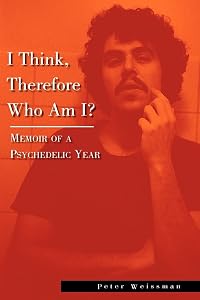
I Think, Therefore Who Am I?
by Peter Weissman 
On This Page
Description
The philosopher Rene Descartes declared, "I think, therefore I am." But who is this I that thought posits? In anecdotal style, the narrator of this nonfiction novel relates an odyssey of discovery and confusion, catalyzed by psychedelic drugs, over a year's time: the hippie era of 1967. With humor and passion he tells a story of wrestling with meaning and his own identity. Each chapter is a self-contained story, discrete links in a plotline propelled by epiphanies and vanities, from "Before show more Almost Everything Changed" and his "Czechoslovak Awakening," with its two fateful capsules, to his "Dark Night of the Soul" and beyond. He explores life as myth, witnesses the solution to the paradoxical mystery of waves and particles, ruminates on the difference between truth and fact, and experiences a sense of liberation that gradually becomes something else. He delves into chivalrous love, a child's anticipation of the adult world, the tao of momentary observation; sees a miracle, loses himself in the crowded crash pads of Haight-Ashbury, seeks answers in astrology and infatuation, wrestles with the capriciousness of his myriad selves, and forty years later, looking back, figures a few things out. show lessTags
Recommendations























Member Recommendations

ashleybessbrown An equally excellent evocation of maniacally accelerated personal evolution through repeated death-rebirth amidst a carousel of mythological characters - lovers, dealers, hustlers, sages, good-hearted and less so, or as Craddock puts it (I paraphrase) "an acidhead amongst a tribe of acidheads". Good luck finding a copy though- they're scarce! But try your best regardless.
20
anonymous user Same time and place, both narrators influenced by drugs, often with humorous results, though the memoir is a more serious work.
20
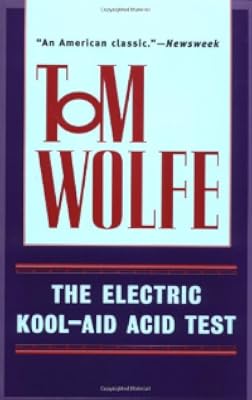
orlando85 This book goes inside the LSD drug world, by someone who actually experienced it. It goes well with Wolfe, who talks about that world as a journalist.

clarabel Digging Deeper begins where this book ends. It delves into the results, if you will, of the author's psychedelic memoir, as well as his "rehabilitation," as he ironically labels it, into society. An original, personal history of the 1970s.
Member Reviews
Weissmans novel has got some rave reviews on Librarything and as an evocation of the life of a two bit drug dealer and user in New York then it would seem to be both accurate and insightful. However by choosing to write this as an autobiographical novel he is putting himself (His younger self) in the spotlight. The young Peter Weissman comes from a middle class family, a college boy who is in no danger from the Vietnam draft. He questions his parents cultural values and drops out of college. He is fortunate to find himself dropping out at a time when a lively counter culture movement is in existence and he dabbles in the protest movement, not it appears from any great conviction to change the world but because others are doing similar show more things. He discovers drugs then freely available to a middle class boy with change in his pockets and soon gets sucked in to the drug culture. He becomes alienated from non drug users and embraces the world of looking for the next high, which is the real meaning of life for a self absorbed perhaps susceptible addictive personality.
The sixties counter culture was a time of tremendous energy especially in the arts, and in the protest movements, but it was also a time of burgeoning consumerism and drugs were very much part of it. For Peter Weissman and his associates the energy and excitement of making new things happen passed them by, as they sink into a drug induced torpor. (Hell they could not get off their backsides to change an LP when it got stuck). Peter would have been one of those people that you would go out of your way to avoid, boring, rambling completely lost in their own space. He soon becomes a dealer in drugs very much at the street level, but he never stops to think about the harm he may do to others, his only thought is getting enough money to score. He would have the reader believe that he is a good natured “regular Joe” who finds himself struggling to survive in a world of high powered drug dealers and petty thieves. Well maybe.
For readers who lived during those heady years of the late 1960’s, and were into the youth/counter culture, Weissman’s book brings back memories. The realism is gripping even if that realism is seen through the prism of mind altering drugs. I immediately became absorbed in his book, but it goes on too long. As a document about getting it together until the next score it is spot on, but following Peter from one crash pad to another is like reliving too many afternoons in Notting Hill Gate. There is an afterword written probably in 2006 in which Peter reflects on possible sitings of characters he knew in 1967 and his book ends with thoughts about Artie who he may have seen in South Carolina and he wonders if he was gay, as he sees him with an older man, Peter wishes him happy but says “I moved up the street without a backward glance”. Without a backward glance seems typical of the man, whose younger uncaring self has overtones of misogyny and racism. I think the book could have done with a few backward glances.
Peters book is very well written with some memorable descriptive writing. A document of his times, which seems to be painfully honest. There are plenty of novelists who use their own life experiences as subject matter for their novels, but Peter Weissman chooses to make himself the subject of his novel. You need to be pretty much up your own arse to write in this way and this is what I did not like about the book, so an ungenerous 3.5 stars from me. show less
The sixties counter culture was a time of tremendous energy especially in the arts, and in the protest movements, but it was also a time of burgeoning consumerism and drugs were very much part of it. For Peter Weissman and his associates the energy and excitement of making new things happen passed them by, as they sink into a drug induced torpor. (Hell they could not get off their backsides to change an LP when it got stuck). Peter would have been one of those people that you would go out of your way to avoid, boring, rambling completely lost in their own space. He soon becomes a dealer in drugs very much at the street level, but he never stops to think about the harm he may do to others, his only thought is getting enough money to score. He would have the reader believe that he is a good natured “regular Joe” who finds himself struggling to survive in a world of high powered drug dealers and petty thieves. Well maybe.
For readers who lived during those heady years of the late 1960’s, and were into the youth/counter culture, Weissman’s book brings back memories. The realism is gripping even if that realism is seen through the prism of mind altering drugs. I immediately became absorbed in his book, but it goes on too long. As a document about getting it together until the next score it is spot on, but following Peter from one crash pad to another is like reliving too many afternoons in Notting Hill Gate. There is an afterword written probably in 2006 in which Peter reflects on possible sitings of characters he knew in 1967 and his book ends with thoughts about Artie who he may have seen in South Carolina and he wonders if he was gay, as he sees him with an older man, Peter wishes him happy but says “I moved up the street without a backward glance”. Without a backward glance seems typical of the man, whose younger uncaring self has overtones of misogyny and racism. I think the book could have done with a few backward glances.
Peters book is very well written with some memorable descriptive writing. A document of his times, which seems to be painfully honest. There are plenty of novelists who use their own life experiences as subject matter for their novels, but Peter Weissman chooses to make himself the subject of his novel. You need to be pretty much up your own arse to write in this way and this is what I did not like about the book, so an ungenerous 3.5 stars from me. show less
Somehow, after all these years, Peter Weissman has managed to uncannily capture the texture, the rhythm and the dialogue of stoned young people living in NYC's East Village in 1967. At a time when books on the sixties have become more common as the protagonists reach their sixties, Weissman's work is unusual in depicting the life of an everyday hippie, not a Weatherman or a celebrity.
Anyone coming of age in the late sixties drug culture will recognize the daily characters and settings of Peter's hippie life with a sense of amazement - here they are again! While this is cast as a "coming of age" story, by the time Peter goes to California and returns, the drugs have overwhelmed any sense of growing up. Luckily, Weissman has a sense of show more humor, and I found myself laughing out loud again and again, which was good because, while the supporting cast goes through every kind of change, Peter himself seems to be heading in one direction, - from "a sorry scene... reminiscent of the thirties" in California to being "frozen in a particular purgatory" back East on his return, despite his recurrent hope that they're all on the brink of a new and more meaningful reality.
While the humor is wonderful, it's the epilogue which makes it work in the end. Since Weissman wrote the book we know he escaped with his brains intact, but it takes the epilogue for us to really believe it. As a sixty year old myself I loved the book and found it provided a rare and gritty assist to looking back and trying to make sense anew of those years. I highly recommend it to my peers and I can't help but suspect there's an audience as well among today's kids in their twenties. show less
Anyone coming of age in the late sixties drug culture will recognize the daily characters and settings of Peter's hippie life with a sense of amazement - here they are again! While this is cast as a "coming of age" story, by the time Peter goes to California and returns, the drugs have overwhelmed any sense of growing up. Luckily, Weissman has a sense of show more humor, and I found myself laughing out loud again and again, which was good because, while the supporting cast goes through every kind of change, Peter himself seems to be heading in one direction, - from "a sorry scene... reminiscent of the thirties" in California to being "frozen in a particular purgatory" back East on his return, despite his recurrent hope that they're all on the brink of a new and more meaningful reality.
While the humor is wonderful, it's the epilogue which makes it work in the end. Since Weissman wrote the book we know he escaped with his brains intact, but it takes the epilogue for us to really believe it. As a sixty year old myself I loved the book and found it provided a rare and gritty assist to looking back and trying to make sense anew of those years. I highly recommend it to my peers and I can't help but suspect there's an audience as well among today's kids in their twenties. show less
“You tossed a blanket from the bed,
You lay upon your back, and waited;
You dozed, and watched the night revealing
The thousand sordid images
Of which your soul was constituted;
They flickered against the ceiling.
-Preludes by T.S. Eliot
The struggle for identity, the search for meaning in life, is universal and timeless. What changes is the backdrop against which the journey is painted.
1967 – American youth are in revolt against the world of their parents, the generation who fought World War II and returned to prosperity and order. Whether real or a forced delusion, the naïveté of the 1950’s has eroded – sex and drug use and militant non-conformity have forced their way into the light of day. And into this vacuum of cultural and show more individual identity strolls Peter, ambling down the alphabet avenues in search of meaning, identity, and another dose of LSD.
Peter is the hero, or anti-hero perhaps, of [I Think, Therefore Who Am I?], subtitled Memoir of a Psychedelic Year. He spends the year 1967 hanging out in various pads in New York, consuming various narcotics, and discussing the meaning of it all with his peers. While it may sound like not a lot happens, the book is driven by Peter’s obsessive, self-critical search to figure out his place in the world. That he believes dosing LSD will call down revelation and clarity seems just another symptom of a larger search among a generation set adrift by the destruction of all the conventions of identity established by the generations that preceded them.
The malaise is probably best-described by Peter’s oldest friend, Mark, as he debates about the value of tripping, “What bothers me is, what if a person changes because they get high all the time, and your friends, let’s say – and you’re your family – no longer think the way you do? You see what I mean? It’s not the different opinions that bother me – well, it’s not just that – but what if whatever connects us to the people we know disappears? What then?” The problem facing Mark and Peter and all of their friends was that, LSD or not, all of those things that had connected them up to that point in time were disappearing, were changing for all time, before their very eyes. For me, Peter’s pursuit of LSD, and a great deal of other experiences, was a journey that has been repeated millions of times over the centuries, just with different tools. Indeed, beyond drugs, Peter dabbles in Buddhism, political and social protest, religion, astrology, philosophy, communal living, love and relationships, and even in old friendships. All the time, he is searching for an identity in a world shifting under his feet. Finally, in his last bad trip, in a cold sweat, amid auditory hallucinations, Peter begins to understand his fear, not just of dying but of perishing, being wiped from the face of the earth without memory – like the lonely man who had died in the apartment he was renting, only discovered when the stench penetrated the walls.
What uncovered this book’s undertones for me was a recent reading of W. Somerset Maugham’s classic [Of Human Bondage]. Maugham’s hero, Philip, searches for meaning in religion, art, labor, pleasure, and relationships before finally calculating that “the simplest pattern, that in which a man was born, worked, married, had children, and died, was likewise the most perfect.” Similarly, Peter, during his final bad trip, argues with himself over a life he never led but imagined, happily married and domestic with a full refrigerator and a closet stocked with blankets. The parallels between the two books, the two heroes obsessively searching for meaning and identity, were startling, especially when I learned that Weissman had never read Maugham’s book. Though set in drastically different times and cultures, both of these stories give beautiful voice to a universal experience.
Beyond the fine story-telling, Weissman’s prose is smart and melodic. He is the kind of author who can repeatedly use words that send you to the shelves for a dictionary but never make you feel like he is showing off. The vivid descriptions that break Peter’s ambling and contemplation masterfully root the account in time and place. But ultimately what makes Weissman’s account of his psychedelic year so readable is his ability to recount his tumultuous inner life with such honesty. Let’s face it, not many of us have lived that life – but all of us have experienced his doubt and his yearning.
Bottom Line: A psychedelic memoir, but really a memoir that mirrors a universal search for meaning and identity.
4 ½ bones!!!!! show less
You lay upon your back, and waited;
You dozed, and watched the night revealing
The thousand sordid images
Of which your soul was constituted;
They flickered against the ceiling.
-Preludes by T.S. Eliot
The struggle for identity, the search for meaning in life, is universal and timeless. What changes is the backdrop against which the journey is painted.
1967 – American youth are in revolt against the world of their parents, the generation who fought World War II and returned to prosperity and order. Whether real or a forced delusion, the naïveté of the 1950’s has eroded – sex and drug use and militant non-conformity have forced their way into the light of day. And into this vacuum of cultural and show more individual identity strolls Peter, ambling down the alphabet avenues in search of meaning, identity, and another dose of LSD.
Peter is the hero, or anti-hero perhaps, of [I Think, Therefore Who Am I?], subtitled Memoir of a Psychedelic Year. He spends the year 1967 hanging out in various pads in New York, consuming various narcotics, and discussing the meaning of it all with his peers. While it may sound like not a lot happens, the book is driven by Peter’s obsessive, self-critical search to figure out his place in the world. That he believes dosing LSD will call down revelation and clarity seems just another symptom of a larger search among a generation set adrift by the destruction of all the conventions of identity established by the generations that preceded them.
The malaise is probably best-described by Peter’s oldest friend, Mark, as he debates about the value of tripping, “What bothers me is, what if a person changes because they get high all the time, and your friends, let’s say – and you’re your family – no longer think the way you do? You see what I mean? It’s not the different opinions that bother me – well, it’s not just that – but what if whatever connects us to the people we know disappears? What then?” The problem facing Mark and Peter and all of their friends was that, LSD or not, all of those things that had connected them up to that point in time were disappearing, were changing for all time, before their very eyes. For me, Peter’s pursuit of LSD, and a great deal of other experiences, was a journey that has been repeated millions of times over the centuries, just with different tools. Indeed, beyond drugs, Peter dabbles in Buddhism, political and social protest, religion, astrology, philosophy, communal living, love and relationships, and even in old friendships. All the time, he is searching for an identity in a world shifting under his feet. Finally, in his last bad trip, in a cold sweat, amid auditory hallucinations, Peter begins to understand his fear, not just of dying but of perishing, being wiped from the face of the earth without memory – like the lonely man who had died in the apartment he was renting, only discovered when the stench penetrated the walls.
What uncovered this book’s undertones for me was a recent reading of W. Somerset Maugham’s classic [Of Human Bondage]. Maugham’s hero, Philip, searches for meaning in religion, art, labor, pleasure, and relationships before finally calculating that “the simplest pattern, that in which a man was born, worked, married, had children, and died, was likewise the most perfect.” Similarly, Peter, during his final bad trip, argues with himself over a life he never led but imagined, happily married and domestic with a full refrigerator and a closet stocked with blankets. The parallels between the two books, the two heroes obsessively searching for meaning and identity, were startling, especially when I learned that Weissman had never read Maugham’s book. Though set in drastically different times and cultures, both of these stories give beautiful voice to a universal experience.
Beyond the fine story-telling, Weissman’s prose is smart and melodic. He is the kind of author who can repeatedly use words that send you to the shelves for a dictionary but never make you feel like he is showing off. The vivid descriptions that break Peter’s ambling and contemplation masterfully root the account in time and place. But ultimately what makes Weissman’s account of his psychedelic year so readable is his ability to recount his tumultuous inner life with such honesty. Let’s face it, not many of us have lived that life – but all of us have experienced his doubt and his yearning.
Bottom Line: A psychedelic memoir, but really a memoir that mirrors a universal search for meaning and identity.
4 ½ bones!!!!! show less
The setting for 'I think, therefore who am I?' is the lower east side of Manhattan in 1967 in the area of Houston St. and alphabet city and the lower numbered east side streets of that area all the way up to Tompkins Square Park. Weissman's memoir details his life and friendships as a young man growing up amidst the squalor of the times and in the heyday of the anti-Vietnam war counterculture years.
New York City for me has always had a vibe about it that is unique to the place. As it happens I was in the Coast Guard in the early 80's and was stationed on Governor's Island off the tip of Manhattan and some of my friends and I would often go into the same area of Houston St. and Alphabet city to score for hash and sensemilla. The 80's show more though seem to have been a much less innocent time than what Weissman describes. One of the most interesting things for me in any case is to compare the different experiences 15 years can make keeping in mind that Weissman lived there day in and day out and we would go in and out of that same area about once a week or so. There are lots of drugs being used in this book as well but it is much more about experimenting and sharing and a lot less of the 'for profit' motive that drove the bus by the time I got to see the next part of the show.
What strikes me as well is the honest effort that Weissman makes to render his life back then. Over the course of that year he suffers a number of setbacks--which have an effect on his behavior at times. He doesn't always paint himself in a good light. For the most part he has a grounded moral--though liberal and secular viewpoint. He is the stuff that the 60's protest movements were made of. At times though his desperate situations in regards to shelter, food, drugs can lead him to be dishonest and calculating with his friends and other associates--and so Weissman clearly is trying to see himself as exactly as he was. It seems to me that when I look back at myself many years ago it is not just the looking back but the looking back at another person who just happened to be me--almost as a mentally challenged little brother. I feel affection for him as I shake my head and wonder sometimes how stupid he (or I) could have been in different situations but at the same time I also think how right I was about certain things and how much more the thinking of 'adults' is driven by their own cynicism. There is a balance between the two and if I were to guess--I'd say that part of the reason that Mr. Weissman wrote this book is to find and reach that balance.
The other thing to remark about is that Weissman is really a good writer. His descriptions of the area and living conditions are excellent and detailed. His characterizations of people have depth--their psycologies are insightful and his tones and use of language fit his material like a glove. It has that built in self critique that gives it a real ring of truth. There is coherence from chapter to chapter and the book moves along at a nice steady pace. From my own POV--I'm not the biggest or best memoir reader. At the end of the day I'm a fiction guy and I have a tendency to look for fictional devices even in non-fictional works-- and Weissman does have some impressive creative writing skills by the way. I did find this to be an interesting and very enjoyable read and I'd have no problem recommending it to anyone interested in reading about NYC or the sixties. show less
New York City for me has always had a vibe about it that is unique to the place. As it happens I was in the Coast Guard in the early 80's and was stationed on Governor's Island off the tip of Manhattan and some of my friends and I would often go into the same area of Houston St. and Alphabet city to score for hash and sensemilla. The 80's show more though seem to have been a much less innocent time than what Weissman describes. One of the most interesting things for me in any case is to compare the different experiences 15 years can make keeping in mind that Weissman lived there day in and day out and we would go in and out of that same area about once a week or so. There are lots of drugs being used in this book as well but it is much more about experimenting and sharing and a lot less of the 'for profit' motive that drove the bus by the time I got to see the next part of the show.
What strikes me as well is the honest effort that Weissman makes to render his life back then. Over the course of that year he suffers a number of setbacks--which have an effect on his behavior at times. He doesn't always paint himself in a good light. For the most part he has a grounded moral--though liberal and secular viewpoint. He is the stuff that the 60's protest movements were made of. At times though his desperate situations in regards to shelter, food, drugs can lead him to be dishonest and calculating with his friends and other associates--and so Weissman clearly is trying to see himself as exactly as he was. It seems to me that when I look back at myself many years ago it is not just the looking back but the looking back at another person who just happened to be me--almost as a mentally challenged little brother. I feel affection for him as I shake my head and wonder sometimes how stupid he (or I) could have been in different situations but at the same time I also think how right I was about certain things and how much more the thinking of 'adults' is driven by their own cynicism. There is a balance between the two and if I were to guess--I'd say that part of the reason that Mr. Weissman wrote this book is to find and reach that balance.
The other thing to remark about is that Weissman is really a good writer. His descriptions of the area and living conditions are excellent and detailed. His characterizations of people have depth--their psycologies are insightful and his tones and use of language fit his material like a glove. It has that built in self critique that gives it a real ring of truth. There is coherence from chapter to chapter and the book moves along at a nice steady pace. From my own POV--I'm not the biggest or best memoir reader. At the end of the day I'm a fiction guy and I have a tendency to look for fictional devices even in non-fictional works-- and Weissman does have some impressive creative writing skills by the way. I did find this to be an interesting and very enjoyable read and I'd have no problem recommending it to anyone interested in reading about NYC or the sixties. show less
I didn’t quite roll my eyes when I saw the cover and title of Peter Weissman’s memoir, I Think, Therefore Who Am I? That didn’t happen until I reached the eighth paragraph on page one and read this sentence, “A certain gradation of light filtering through a window would stir me, propel me back downstairs a few hours later and through the gray streets.” I could hear the author murmuring, “gradation of light, a 'certain' gradation of light.” If I kept reading, it would be to see just how pretentious this memoir could get. But I kept reading and soon I saw the light. There’s a sublime scene in The Producers when Springtime for Hitler is premiering on Broadway. The curtains go up, the play begins and audience is stunned into show more open-mouthed silence by the audacity of the bad taste—and then someone laughs, and someone else laughs and the entire audience is howling. The play is FUNNY. Springtime for Hitler is so bad that it’s funny. Two-thirds through the I Think, Therefore Who Am I?’s second chapter, “My Czechoslovak Awakening,” I had my Springtime for Hitler realization. This book is FUNNY and extraordinarily well written.
The narrator’s friend Tom has just told the Peter that he’d just obtained a long awaited drug, but Peter’s excitement is dampened when Tom reveals a couple of ordinary looking pills, “...like those for sinus congestion.”. Then Tom discloses their origin: Czechoslovakia.
“Czechoslovakia!
The word exploded in my head, stranding the two of us in America, the wrong side of the Iron Curtain, where it seemed these capsules had been smuggled from so we could be free too.”
The incomparable Roger De Bris directed Springtime for Hitler, but it was Mel Brooks, writer and director of The Producers, who intentionally made Springtime unintentionally funny. In his episodic memoir, Weissman skillfully calls up from that “Psychedelic Year” 1967, a cast of self-absorbed and self-congratulatory characters who reveal larger truths than the ones they seek in Dope 101.
Peter and his friend Mark’s quest to end war and score drugs, to find truth and get laid, to create Utopia and find a place to crash is authentic. Weissman’s memoir or nonfiction novel is a meticulous recreation of 1967 and its frontrunners. Their cosmic observations, their disdain for muggles (well, HP Muggles), their obliviousness to employment (Maynard Krebs set the stage five years earlier with “Work?!!” but Krebs at least recognized the concept, even if to reject it). “A certain gradation of light filtering through the window...” is well-wrought hip speak/hip thought. As the narrator admits, “Day after day I smoked one joint after the other, inflating the ordinary to the poetic.”
Steinbeck’s Tortilla Flat, chronicling the lives of several California paisanos during hard times, eventually met with harsh criticism for its portrayal of Mexican Americans, but Steinbeck’s intention was to parallel the lives of his characters with Arthurian legend: Danny, Pilon, Pablo and Jesus were Depression era knights. Weissman has nothing like this in mind in his depiction of Tom, Mark, Leo and himself. This ain't no disco. This ain't no allegory.
A terrific chapter is “Day at the Beach,” when the boys decide to get out of the city and spend a day at Jones Beach. They look forward to an exotic afternoon. When they get there the beach is windy, empty, and hot.
“We’d brought a blanket, which we spread not far from the water, using our sandals to anchor it against the hot wind before sitting down, an oasis of three in a desert of space.
We sat awhile in the bright daze, then Michael, who couldn’t help but fidget , began to play with a handful of sand, and kept at it, transferring the grains from hand to hand, trying not to lose any. Tom, who had no compulsion to do anything, sat with his long legs drawn up, scanning the wide-open emptiness. And I stared at the water, thinking.”
Afraid to go into the choppy water, forgetting to bring lotion, unable to light cigarettes because the wind keeps blowing out the matches, the three sit in the hot wind and sun, enduring, until,
“Eventually we’d had enough, and trudged back across the burning sand to the boardwalk.”
Further down the beach and a few decades into the future Bret and Jemaine are tuning their guitars for an open air concert.
Not all of the book has that comic edge.
One sad episode concerns the arrival of Martha from Minnesota in the chapter of the same name. Martha is naïve, earnest, gentle, generous, giving and hard-working, which is to say totally out of tune with the times. She becomes an embarrassment. Hopelessly unhip, she’s treated badly by Peter, who doesn’t much care that he could hurt her, and never expresses remorse. Honest stuff, Weissman.
In my favorite episode in the book, “Summer of Love,” Peter travels to San Francisco for The Summer of Love. He soon hears about the “Biggest be-in west of the Mississipi! Today! At Golden Gate Park!” With a “bounce in his step” (great detail, great writing) Peter heads off for Haight Street. Nirvana. Hippies everywhere. He moves with sidewalk crowd. “I floated more than walked, enveloped in a bubble of well-being, anointed by the liquid sun, dazzled by the spectacle.
“This is the high point of my life!”
Peter reaches the corner of Haight and Ashbury. He gazes at the street signs. “It brought tears to my eyes, and I imagined a plaque affixed to the building there, in some distant year, “THE FUTURE BEGAN HERE, to which I’d point with pride and tell my unborn children: “I was there, at that moment.”
The best of all possible worlds.
In that same chapter, Peter, ravenous at the be-in and disappointed by the food the Diggers (a SF group that provided free food and clothing to all comers) are distributing, wanders to the margins of the field and there sees an older man on a blanket. Peter’s gaze falls on containers of food spread out across the blanket. The man watches Peter and then offers him food, which Peter wolfs down. When Peter stops eating, the man says, “You must’ve been hungry.”
“I looked at him more carefully now, as he regarded me with mild curiosity. I could see he didn’t expect gratefulness, and some lucid part of me appreciated his indifferent generosity. But seeing the liver spots on his bald head, the crow’s feet at his eyes, the ordinary clothes he wore, I all but dismissed him, because he clearly wasn’t one of us.”
Brutal. Bravo. show less
The narrator’s friend Tom has just told the Peter that he’d just obtained a long awaited drug, but Peter’s excitement is dampened when Tom reveals a couple of ordinary looking pills, “...like those for sinus congestion.”. Then Tom discloses their origin: Czechoslovakia.
“Czechoslovakia!
The word exploded in my head, stranding the two of us in America, the wrong side of the Iron Curtain, where it seemed these capsules had been smuggled from so we could be free too.”
The incomparable Roger De Bris directed Springtime for Hitler, but it was Mel Brooks, writer and director of The Producers, who intentionally made Springtime unintentionally funny. In his episodic memoir, Weissman skillfully calls up from that “Psychedelic Year” 1967, a cast of self-absorbed and self-congratulatory characters who reveal larger truths than the ones they seek in Dope 101.
Peter and his friend Mark’s quest to end war and score drugs, to find truth and get laid, to create Utopia and find a place to crash is authentic. Weissman’s memoir or nonfiction novel is a meticulous recreation of 1967 and its frontrunners. Their cosmic observations, their disdain for muggles (well, HP Muggles), their obliviousness to employment (Maynard Krebs set the stage five years earlier with “Work?!!” but Krebs at least recognized the concept, even if to reject it). “A certain gradation of light filtering through the window...” is well-wrought hip speak/hip thought. As the narrator admits, “Day after day I smoked one joint after the other, inflating the ordinary to the poetic.”
Steinbeck’s Tortilla Flat, chronicling the lives of several California paisanos during hard times, eventually met with harsh criticism for its portrayal of Mexican Americans, but Steinbeck’s intention was to parallel the lives of his characters with Arthurian legend: Danny, Pilon, Pablo and Jesus were Depression era knights. Weissman has nothing like this in mind in his depiction of Tom, Mark, Leo and himself. This ain't no disco. This ain't no allegory.
A terrific chapter is “Day at the Beach,” when the boys decide to get out of the city and spend a day at Jones Beach. They look forward to an exotic afternoon. When they get there the beach is windy, empty, and hot.
“We’d brought a blanket, which we spread not far from the water, using our sandals to anchor it against the hot wind before sitting down, an oasis of three in a desert of space.
We sat awhile in the bright daze, then Michael, who couldn’t help but fidget , began to play with a handful of sand, and kept at it, transferring the grains from hand to hand, trying not to lose any. Tom, who had no compulsion to do anything, sat with his long legs drawn up, scanning the wide-open emptiness. And I stared at the water, thinking.”
Afraid to go into the choppy water, forgetting to bring lotion, unable to light cigarettes because the wind keeps blowing out the matches, the three sit in the hot wind and sun, enduring, until,
“Eventually we’d had enough, and trudged back across the burning sand to the boardwalk.”
Further down the beach and a few decades into the future Bret and Jemaine are tuning their guitars for an open air concert.
Not all of the book has that comic edge.
One sad episode concerns the arrival of Martha from Minnesota in the chapter of the same name. Martha is naïve, earnest, gentle, generous, giving and hard-working, which is to say totally out of tune with the times. She becomes an embarrassment. Hopelessly unhip, she’s treated badly by Peter, who doesn’t much care that he could hurt her, and never expresses remorse. Honest stuff, Weissman.
In my favorite episode in the book, “Summer of Love,” Peter travels to San Francisco for The Summer of Love. He soon hears about the “Biggest be-in west of the Mississipi! Today! At Golden Gate Park!” With a “bounce in his step” (great detail, great writing) Peter heads off for Haight Street. Nirvana. Hippies everywhere. He moves with sidewalk crowd. “I floated more than walked, enveloped in a bubble of well-being, anointed by the liquid sun, dazzled by the spectacle.
“This is the high point of my life!”
Peter reaches the corner of Haight and Ashbury. He gazes at the street signs. “It brought tears to my eyes, and I imagined a plaque affixed to the building there, in some distant year, “THE FUTURE BEGAN HERE, to which I’d point with pride and tell my unborn children: “I was there, at that moment.”
The best of all possible worlds.
In that same chapter, Peter, ravenous at the be-in and disappointed by the food the Diggers (a SF group that provided free food and clothing to all comers) are distributing, wanders to the margins of the field and there sees an older man on a blanket. Peter’s gaze falls on containers of food spread out across the blanket. The man watches Peter and then offers him food, which Peter wolfs down. When Peter stops eating, the man says, “You must’ve been hungry.”
“I looked at him more carefully now, as he regarded me with mild curiosity. I could see he didn’t expect gratefulness, and some lucid part of me appreciated his indifferent generosity. But seeing the liver spots on his bald head, the crow’s feet at his eyes, the ordinary clothes he wore, I all but dismissed him, because he clearly wasn’t one of us.”
Brutal. Bravo. show less
This book seems to make reviewers write something about their own lives - it's such a relentless exploration of the author's own experience, that it somehow requires at least a token attempt from the reader to do the same, both while we read it, and afterwards.
Almost everything in this book is about things completely outside of my experience. I am a child of the 1980s, and came of age around the turn of the century. I'm the unadventurous, somewhat naive daughter of working class parents, and grew up in suburban and semi-rural Australia. I've never been wealthy, but nor have I ever gone hungry. I haven't even been drunk, let alone stoned. I've had normal problems, a normal tertiary education, and have now, only a few years older than the show more Peter Weissman of 1967, settled into a relatively normal job. Apart from our ages, it's difficult for me to find any external similarities between my life and that of the young Peter Weissman, in his dirty, desperate, hopeful, reckless back-street city life; teetering on the edge of losing everything and at the same time, that close to gaining nirvana.
The all-pervading sense I got from this memoir, and thus from the era it's about, is that everyone, Peter and all his widely varying hippy acquaintances, all have this sense of desperately trying to find... something. I'm not sure exactly what; probably they weren't either. To me, an outsider, it seems to characterise the hippie era - this belief in something vast and wonderful: peace, or something like it - and the desperate, hopeful, despairing effort to attain it.
The book itself seems to be a continuation of that quest for something. Meaning, I guess. Truth. Identity. The detailed accuracy and relentless exploration, not only of what happened, but for what it meant; or failing that, exactly what it felt like, gives the book a sort of contemplative feeling of immediacy. We're right there in young Peter's head - confused, dazzled, inspired, and always at least partially lost. The young Peter stumbles through his psychedelic year with no idea of where he's going, or why. His interactions with others are usually confused - everyone he meets is, to young Peter, a mystery... but the older Peter writing the book brings an insight to this, revealing among other things that most of these people were just as confused as he was. And as the book goes on, there's a subtle shift generated by the way other people seem to perceive the young Peter. They take his cautious and often baffled silence for contemplative wisdom, and we get a sense that Peter is beginning to build his identity out of that perception.
There's a feeling of disconnect that's very strong in the book. Most of the people in it seem to believe in that hippie ideal of everything belonging to everyone, sharing the love, etc - and they put it into practice. And yet nowhere in the book is a genuine connection with another person. Love for the vast humankind there may be, especially when on a high, but love for individuals simply doesn't happen. People who have seemed close, maybe even trustworthy, at some point in the book just get up and walk away. Peter does it himself. I found it alienating, and a strange paradox to the hippie ideal.
Both structure and language of this book are beautifully crafted. It has depth beyond a mere description of past events. It's in-your-face honest, and through our discovery of the Weissman of 1967, we can't help seeing something of ourselves - our vulnerability, our confusion, our forging of identity in an alienating world.
A good memoir needs to be about either something unique, or something universal. This one is about both. I recommend it. show less
Almost everything in this book is about things completely outside of my experience. I am a child of the 1980s, and came of age around the turn of the century. I'm the unadventurous, somewhat naive daughter of working class parents, and grew up in suburban and semi-rural Australia. I've never been wealthy, but nor have I ever gone hungry. I haven't even been drunk, let alone stoned. I've had normal problems, a normal tertiary education, and have now, only a few years older than the show more Peter Weissman of 1967, settled into a relatively normal job. Apart from our ages, it's difficult for me to find any external similarities between my life and that of the young Peter Weissman, in his dirty, desperate, hopeful, reckless back-street city life; teetering on the edge of losing everything and at the same time, that close to gaining nirvana.
The all-pervading sense I got from this memoir, and thus from the era it's about, is that everyone, Peter and all his widely varying hippy acquaintances, all have this sense of desperately trying to find... something. I'm not sure exactly what; probably they weren't either. To me, an outsider, it seems to characterise the hippie era - this belief in something vast and wonderful: peace, or something like it - and the desperate, hopeful, despairing effort to attain it.
The book itself seems to be a continuation of that quest for something. Meaning, I guess. Truth. Identity. The detailed accuracy and relentless exploration, not only of what happened, but for what it meant; or failing that, exactly what it felt like, gives the book a sort of contemplative feeling of immediacy. We're right there in young Peter's head - confused, dazzled, inspired, and always at least partially lost. The young Peter stumbles through his psychedelic year with no idea of where he's going, or why. His interactions with others are usually confused - everyone he meets is, to young Peter, a mystery... but the older Peter writing the book brings an insight to this, revealing among other things that most of these people were just as confused as he was. And as the book goes on, there's a subtle shift generated by the way other people seem to perceive the young Peter. They take his cautious and often baffled silence for contemplative wisdom, and we get a sense that Peter is beginning to build his identity out of that perception.
There's a feeling of disconnect that's very strong in the book. Most of the people in it seem to believe in that hippie ideal of everything belonging to everyone, sharing the love, etc - and they put it into practice. And yet nowhere in the book is a genuine connection with another person. Love for the vast humankind there may be, especially when on a high, but love for individuals simply doesn't happen. People who have seemed close, maybe even trustworthy, at some point in the book just get up and walk away. Peter does it himself. I found it alienating, and a strange paradox to the hippie ideal.
Both structure and language of this book are beautifully crafted. It has depth beyond a mere description of past events. It's in-your-face honest, and through our discovery of the Weissman of 1967, we can't help seeing something of ourselves - our vulnerability, our confusion, our forging of identity in an alienating world.
A good memoir needs to be about either something unique, or something universal. This one is about both. I recommend it. show less
My LibraryThing auto-recs for I Think, Therefore Who Am I? come up with a bunch of the most obvious books you'd think of if all you knew about Weissman's memoir was that it was set in the sixties and "about drugs". Naked Lunch, Steal This Urine Test, Timothy Leary's book, and so on (no Tom Wolfe, thankfully). But that shit is so surface, and really doesn't do justice to this insightful and (subtly) unusual little book. It's not a "drug memoir" by any means--it's the evocation of a time and place, the weird, unforeseeable agglomeration of a certain group of people in New York in 1967, and the way it felt to be there, and some of the shit that went down, and an attempt to recover and preserve and explore it all through words.
It's show more tentative, that is to say, and in a cool way. I get lost in Weissman's prose, sentences like octopodes, a million little wriggling comma-offset clauses that meander their way less to a conclusion than to a stopping point, to a "this sentence, this weird beast, is what it is" (in case you're wondering, this is a good thing). It's like tearing open a bag of marbles in a Bowery flophouse sometimes, and watching them spill out and hit the floor with a crash and roll under the couch (I guess "sofa", given our milieu? Is that the usual American word?) and the radiator, and you go chasing after the ones that interest you, but seven chapters later you find another one while scrounging change to buy lunch or weed--Arnie Glickmarble or the unfulfilled promise of that real indepth investigation of the Bhagavad Gita that you always wanted to get tomarble turn up and you remember that day you took acid and spilled the bag in the first place. In that sense, I liked the final postscripty "how much we've changed, how little we've learned"-y postscript chapter--those vivid unsynthesizable moments of a beautiful human youth, to mention nothing of a killer hip human youth at the counterculture's moment of infinite speed, Ground Zero 1967, and how they recur and recur and recur like friendly ghosts for the rest of your life.
Which isn't to romanticize this hippie era that I never actually experienced, or to suggest that Weissman does. (I seem not to be giving myself space to do the necessary here, so this seems like a good opportunity to shoehorn in the needful disclosure that the author is a friend of mine, more or less[?], or at least somebody that I have had some laffs with on the internet.) Au contraire, to the degree that there's a unifying mood here (and how often does real-life history have a unifying mood, a narrative thrust?), it's neither druggy nor sexy (and I'll cop that my own personal idealized imaginary sixties gives a more prominent place than the real sixties--perhaps--and certainly Weissman's psychedelic year, do to the FREE LOVE) nor rock/rolly nor even expand-your-mind-blow-open-the-doors-op-perceptiony. In fact, it's kind of attenuated and awkward, bourgeois-shy, a bunch of basically decent middle-class kids from places like Long Island jumping headlong, with the American optimism of a generation that had it all, into a pseudo-criminal, petty-countercultural world that grew up overnight like a bamboo forest full of new freaky delights. That's the hidden story here, and it's super interesting--those moments of total noncomprehension, misapprehension, the slow but sure recognition that every man is in one sense an island, and that no awakening pharmaceutical or astrological or whatever will blow away our hangups and defense mechanisms, because that's what a human is. I mean, that's what I see here, anyway--a young man coming to terms with the limits, as well as the potential, of human sympathy--and that's a pretty decent return for the investment of a psychedelic year.
In that sense I'll leave you with perhaps a less expected touchstone for I Think, Therefore Who Am I?: Irvine Welsh's Trainspotting. An American Trainspotting, of course, which means that instead of a bunch of working-class wasters with zero conception that there might be a way out of Leith and the stifling grasp of family and criminality and the harder-edged heroin culture you grew up with, you have a bunch of young Americans making their personal pilgrimages to NYC or Haight-Ashbury and experimenting with possible futures, discovering their limits, figuring out--indeed--"Who am I?", what works for me, what feels right, where am I going. And there's a dark night and a grey dawn, but they're not the junk-sick endless emptiness of Welsh's skagboys--more the sad-tinged recognition that reality can't underwrite the promise of infinite transformation; the inexorable return to the real after a singular historical moment of radical, but as it turns out not boundless, optimism. show less
It's show more tentative, that is to say, and in a cool way. I get lost in Weissman's prose, sentences like octopodes, a million little wriggling comma-offset clauses that meander their way less to a conclusion than to a stopping point, to a "this sentence, this weird beast, is what it is" (in case you're wondering, this is a good thing). It's like tearing open a bag of marbles in a Bowery flophouse sometimes, and watching them spill out and hit the floor with a crash and roll under the couch (I guess "sofa", given our milieu? Is that the usual American word?) and the radiator, and you go chasing after the ones that interest you, but seven chapters later you find another one while scrounging change to buy lunch or weed--Arnie Glickmarble or the unfulfilled promise of that real indepth investigation of the Bhagavad Gita that you always wanted to get tomarble turn up and you remember that day you took acid and spilled the bag in the first place. In that sense, I liked the final postscripty "how much we've changed, how little we've learned"-y postscript chapter--those vivid unsynthesizable moments of a beautiful human youth, to mention nothing of a killer hip human youth at the counterculture's moment of infinite speed, Ground Zero 1967, and how they recur and recur and recur like friendly ghosts for the rest of your life.
Which isn't to romanticize this hippie era that I never actually experienced, or to suggest that Weissman does. (I seem not to be giving myself space to do the necessary here, so this seems like a good opportunity to shoehorn in the needful disclosure that the author is a friend of mine, more or less[?], or at least somebody that I have had some laffs with on the internet.) Au contraire, to the degree that there's a unifying mood here (and how often does real-life history have a unifying mood, a narrative thrust?), it's neither druggy nor sexy (and I'll cop that my own personal idealized imaginary sixties gives a more prominent place than the real sixties--perhaps--and certainly Weissman's psychedelic year, do to the FREE LOVE) nor rock/rolly nor even expand-your-mind-blow-open-the-doors-op-perceptiony. In fact, it's kind of attenuated and awkward, bourgeois-shy, a bunch of basically decent middle-class kids from places like Long Island jumping headlong, with the American optimism of a generation that had it all, into a pseudo-criminal, petty-countercultural world that grew up overnight like a bamboo forest full of new freaky delights. That's the hidden story here, and it's super interesting--those moments of total noncomprehension, misapprehension, the slow but sure recognition that every man is in one sense an island, and that no awakening pharmaceutical or astrological or whatever will blow away our hangups and defense mechanisms, because that's what a human is. I mean, that's what I see here, anyway--a young man coming to terms with the limits, as well as the potential, of human sympathy--and that's a pretty decent return for the investment of a psychedelic year.
In that sense I'll leave you with perhaps a less expected touchstone for I Think, Therefore Who Am I?: Irvine Welsh's Trainspotting. An American Trainspotting, of course, which means that instead of a bunch of working-class wasters with zero conception that there might be a way out of Leith and the stifling grasp of family and criminality and the harder-edged heroin culture you grew up with, you have a bunch of young Americans making their personal pilgrimages to NYC or Haight-Ashbury and experimenting with possible futures, discovering their limits, figuring out--indeed--"Who am I?", what works for me, what feels right, where am I going. And there's a dark night and a grey dawn, but they're not the junk-sick endless emptiness of Welsh's skagboys--more the sad-tinged recognition that reality can't underwrite the promise of infinite transformation; the inexorable return to the real after a singular historical moment of radical, but as it turns out not boundless, optimism. show less
Members
- Recently Added By
Published Reviews
ThingScore 100
Five stars. Made my day.
added by copyedit52
Lists

Books Read in 2009
464 works; 11 members
Author Information

4 Works 151 Members
Peter Weissman is a LibraryThing Author, an author who lists their personal library on LibraryThing.
Common Knowledge
- Important places
- East Village, Manhattan, New York, New York, USA; Haight-Ashbury, San Francisco, California, USA
- Epigraph
- "The one true vocation for man is to find out what is real."
—J. Krishnamurti - First words
- People hung out on the corner, smoking cigarettes, cars and trucks clattering by on the cobblestone avenue as Mark and I shuffled past, looking at Wechsler's column in the Post.
- Quotations
- As I passed the narrow stone church, a semblance of awesome respect rose within me like a genuflection. Not that religion mattered. It was the aesthetics of the slim Gothic structure that moved me, the striving built into the... (show all) brick, the faith that erected it. It said: There's something more. Which stirred me because I had no clear idea what that something was.
- Last words
- (Click to show. Warning: May contain spoilers.)It left me feeling good about him, and I moved up the street without a backward glance, glad to see him happy, if in fact it was him.
Classifications
Statistics
- Members
- 96
- Popularity
- 336,192
- Reviews
- 29
- Rating
- (4.44)
- Languages
- English, Italian
- Media
- Paper
- ISBNs
- 3