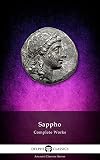
The Complete Works of Sappho
by Sappho of Lesbos
On This Page
Description
Sappho, the earliest and most famous Greek woman poet, sang her songs around 600 BCE on the island of Lesbos. Of the little that survives from the approximately nine papyrus scrolls collected in antiquity, all is translated here: substantial poems, fragments, single words - and, notably, five stanzas of a poem that came to light in 2014. Also included are new additions to five fragments from the latest discovery, and a nearly complete poem published in 2004. The power of Sappho's poetry - show more her direct style, rich imagery, and passion - is apparent even in these remnants. Diane Rayor's translations of Greek poetry are graceful and poetic, modern in diction yet faithful to the originals. The full range of Sappho's voice is heard in these poems about desire, friendship, rivalry, family, and 'passion for the light of life'. In the introduction and notes, internationally respected Sappho scholar André Lardinois presents plausible reconstructions of Sappho's life and work, the importance of the recent discoveries in understanding the performance of her songs, and the story of how these fragments survived. show lessTags
Recommendations












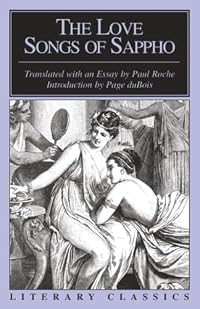




Member Reviews
This collection consists of three translations of the surviving fragments of the ancient Greek poetess Sappho. Only one complete poem survives by her, and that a short one. Even from many of the intriguing fragments consisting of only a line or a few words, her use of imagery is impressive. What a pity we have probably less than one tenth of her original corpus, and much of that second hand through the reporting of later writers.
The three translations here, from 1907, 1910 and 2011, are very different, with the fragments divided differently and in different orders, so it is rather hard for an amateur like me to see how they relate to each other. Still this is a remarkable collection of words penned over two and a half millennia ago.
The three translations here, from 1907, 1910 and 2011, are very different, with the fragments divided differently and in different orders, so it is rather hard for an amateur like me to see how they relate to each other. Still this is a remarkable collection of words penned over two and a half millennia ago.
Ratings
Members
- Recently Added By
Published Reviews
added by AngelsAngladaLibrary
Author Information

206+ Works 6,701 Members
Sappho, whom Plato (see Vols. 3 and 4) called "the tenth Muse," was the greatest of the early Greek lyric poets. She was born at Mytilene on Lesbos and was a member---perhaps the head---of a group of women who honored the Muses and Aphrodite. Her family was aristocratic; it is said that she was married and had a daughter. Her brilliant love show more lyrics, marriage songs, and hymns to the gods are written in Aeolic dialect in many meters, one of which is named for her---the Sapphic. Mostly fragments survive of the nine books she is thought to have authored. Her verse is simple and direct, exquisitely passionate and vivid. Catullus, Ovid, and Swinburne (see Vol. 1) were among the many later poets she influenced. (Bowker Author Biography) show less
Awards and Honors
Notable Lists
Series
Belongs to Publisher Series
Common Knowledge
- Canonical title
- The Complete Works of Sappho
- Original language*
- Grec
*Some information comes from Common Knowledge in other languages. Click "Edit" for more information.
Classifications
Statistics
- Members
- 25
- Popularity
- 1,070,172
- Reviews
- 1
- Rating
- (3.75)
- Languages
- Catalan, English
- Media
- Paper, Ebook
- ISBNs
- 2
- ASINs
- 1