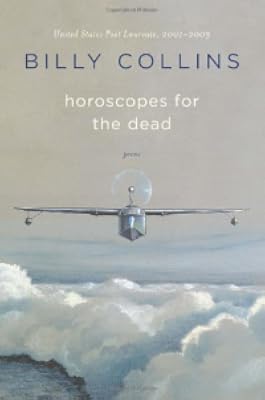
Horoscopes for the Dead: Poems
by Billy Collins
On This Page
Description
In this new collection, "America's most popular poet" covers the everlasting themes of love and loss, life and death, youth and aging, solitude and union.Tags
Recommendations








Member Reviews
Too accessible. I admire what he's done to popularize poetry, but these seem trite, and I don't have the patience to read any poetry that doesn't spark for me. DNF'd after the title poem: I was hoping for something metaphysical, something either horrifying or fantastic, but it turns out to be just reading the horoscopes in the newspaper for someone known but dead... I can't even say 'lost' instead of 'dead' because no sense of mourning came through to me.
I tend to prefer my poetry...loud. Shouting, ringing, echoing - that kind of thing. It's why I love Poe's assonance and onomatopoeia. It's why I love Hamby's proper nouns with their capitalization and weight. Most other poetry pales in comparison. Modern poetry, for the most part, can be too simple for my taste, like the sickly simpering cousin to the greats. And while for me Billy Collins tends to fall into that latter category most of the time, this particular collection is not wholly without merit.
Published in 2011, Horoscopes for the Dead is a personal and deeply relatable collection dedicated to remembering persons and things lost to time. The first poem, "Grave," sets the tone and establishes for the reader a somewhat sardonic show more humor with recurrent images of cemeteries, empty chairs and mossy shade. Combined with hyperbole, this humor acts as a mechanism to both show love, and deflect pain.
While there is no thru-line, per say, the feeling of loss and longing is evident throughout the book. The titular poem - which opens the second part of the collection - is the most resounding in terms of feeling and relatability. The idea that we mark someone's presence even after they're gone, and that, in loss, we sometimes live in parallels of what-ifs - ghosts of possibilities, as it were - is a confessional token of humanity that its oft written about, but so rarely portrayed as honestly as Collins did here. It reminded me of a Facebook page that I follow - a memorial page for a relation of mine who passed away suddenly a couple of years ago. Gone but ever-immortalized online where we all wait for her next update, regardless of her absence.
That being said, the collection falls short of great in my humble opinion. The deviances into Florida are offensive to me simply because of my feelings about Florida, but are otherwise digestible. But there are some pieces (i.e. "Table Talk," "Lakeside," and "Returning the Pencil to Its Tray") that didn't seem to fit - they're clunky and awkward and resemble poems in as much as they are structured like one, but otherwise have no internal rhythm, neither buoyancy nor gravity, and which simply do not mix well with the others, but which the author deemed appropriate for this collection despite every instinct that I personally would have otherwise. Come for the poems about death and loss, but don't get tricked into staying for the less worthy off-topic meanderings of the modern poet.
www.theliterarygothamite.com show less
Published in 2011, Horoscopes for the Dead is a personal and deeply relatable collection dedicated to remembering persons and things lost to time. The first poem, "Grave," sets the tone and establishes for the reader a somewhat sardonic show more humor with recurrent images of cemeteries, empty chairs and mossy shade. Combined with hyperbole, this humor acts as a mechanism to both show love, and deflect pain.
While there is no thru-line, per say, the feeling of loss and longing is evident throughout the book. The titular poem - which opens the second part of the collection - is the most resounding in terms of feeling and relatability. The idea that we mark someone's presence even after they're gone, and that, in loss, we sometimes live in parallels of what-ifs - ghosts of possibilities, as it were - is a confessional token of humanity that its oft written about, but so rarely portrayed as honestly as Collins did here. It reminded me of a Facebook page that I follow - a memorial page for a relation of mine who passed away suddenly a couple of years ago. Gone but ever-immortalized online where we all wait for her next update, regardless of her absence.
That being said, the collection falls short of great in my humble opinion. The deviances into Florida are offensive to me simply because of my feelings about Florida, but are otherwise digestible. But there are some pieces (i.e. "Table Talk," "Lakeside," and "Returning the Pencil to Its Tray") that didn't seem to fit - they're clunky and awkward and resemble poems in as much as they are structured like one, but otherwise have no internal rhythm, neither buoyancy nor gravity, and which simply do not mix well with the others, but which the author deemed appropriate for this collection despite every instinct that I personally would have otherwise. Come for the poems about death and loss, but don't get tricked into staying for the less worthy off-topic meanderings of the modern poet.
www.theliterarygothamite.com show less
Whenever a new collection of poetry by Billy Collins appears, I drop everything on my TBR list and read. I have already been through this volume three times, and I absolutely love nearly every poem in it.
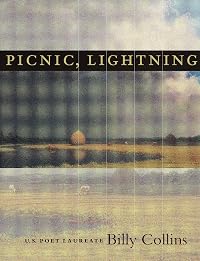
I met Mr. Collins last year in Louisville, KY, and had him sign a paperback copy of the collection, Picnic, Lightening, which has my favorite Collins poem in it, “Shoveling Snow with the Buddha.” As I have written before, if I can ever write a poem that someone who knows says, “It reminds me of Billy Collins,” I will consider myself a poet.
About 20 poems are starred, and it was quite a struggle to emerge with one to reproduce here, but I did it. “Two Creatures” represents everything I love about poetry, everything I love show more about Billy Collins, and everything I aspire to in my own work:
"The last time I looked, the dog was lying
on the freshly cut grass
but now she has moved under the picnic table.
I wonder what causes her to shift
from one place to another,
to get up for no apparent reason from her spot
by the stove, scratch one ear,
then relocate, slumping down
on the other side of the room by the big window,
or I will see her hop onto the couch to nap
then later find her down
on the Turkish carpet, her nose in the fringe.
The moon rolls across the night sky
and stops to peer down on the earth,
and the dog rolls through these rooms
and onto the lawn, pausing here and there
to sleep or to stare up at me, head in her paws,
to consider the scentless pen in my hand
or the open book on my lap.
And because her eyes always follow me,
she must wonder, too, why
I shift from place to place,
from the couch to the sink
or the pencil sharpener on the wall –
two creatures bound by the wonderment
though unlike her, I have never once worried
after letting her out the back door
that she would take off in the car
and leave me to die
behind the solid locked doors of this house." (53-54)
No comment necessary. If you read this and don’t get it, I am sorry. Keep trying. Perhaps one day, it will settle into your mind, and you will know. 5 stars.
--Jim, 5/1/11 show less
I met Mr. Collins last year in Louisville, KY, and had him sign a paperback copy of the collection, Picnic, Lightening, which has my favorite Collins poem in it, “Shoveling Snow with the Buddha.” As I have written before, if I can ever write a poem that someone who knows says, “It reminds me of Billy Collins,” I will consider myself a poet.
About 20 poems are starred, and it was quite a struggle to emerge with one to reproduce here, but I did it. “Two Creatures” represents everything I love about poetry, everything I love show more about Billy Collins, and everything I aspire to in my own work:
"The last time I looked, the dog was lying
on the freshly cut grass
but now she has moved under the picnic table.
I wonder what causes her to shift
from one place to another,
to get up for no apparent reason from her spot
by the stove, scratch one ear,
then relocate, slumping down
on the other side of the room by the big window,
or I will see her hop onto the couch to nap
then later find her down
on the Turkish carpet, her nose in the fringe.
The moon rolls across the night sky
and stops to peer down on the earth,
and the dog rolls through these rooms
and onto the lawn, pausing here and there
to sleep or to stare up at me, head in her paws,
to consider the scentless pen in my hand
or the open book on my lap.
And because her eyes always follow me,
she must wonder, too, why
I shift from place to place,
from the couch to the sink
or the pencil sharpener on the wall –
two creatures bound by the wonderment
though unlike her, I have never once worried
after letting her out the back door
that she would take off in the car
and leave me to die
behind the solid locked doors of this house." (53-54)
No comment necessary. If you read this and don’t get it, I am sorry. Keep trying. Perhaps one day, it will settle into your mind, and you will know. 5 stars.
--Jim, 5/1/11 show less
In my mind’s eye, I picture Billy Collins as an ordinary man doing ordinary things: drinking his coffee, reading the newspaper, looking out the window, walking the dog, mowing his yard, washing his car, making macaroni and cheese – I almost said, “writing ordinary poems.” What I meant, of course, was writing poems about ordinary things. That’s what he does best. Accessible poems, he calls them. Poems that one can read and understand on first reading – poems that do not exploit erudite allusions, implicit, unstated themes, or intentional ambiguities, as much modern poetry does. His latest published collection, horoscopes for the dead (Random House, 2011) is his ninth, and he has edited three anthologies, including two he did show more as Poet Laureate of the United States: Poetry 180 (Random House, 2003) and 180 More Extraordinary Poems for Every Day, by which he means one for every day of the school year (Random House, 2005).
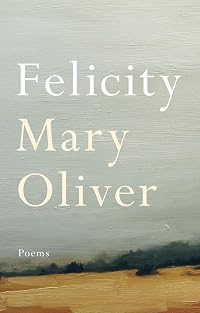
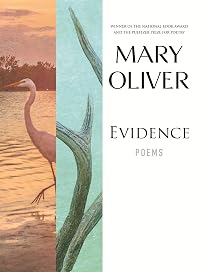
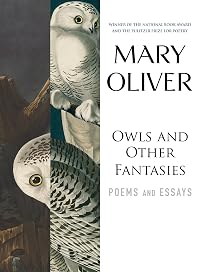
So if he were to publish his collected works, or if I were to edit a selection of his poems, the title might very well be Extraordinary Poems about Ordinary Things. But what makes them “extraordinary”? Many of his colleagues in the modern poetry establishment, holding positions in colleges and universities around the country, would probably say they aren’t. But the New York Times has called him the most popular poet in the USA, and Random House gave him a six-figure advance for three poetry books, a feat unheard of in the current publishing world. Just look at the poetry section of any bookstore you patronize: Homer and Dante are still likely to be the poets with the most books on the shelves (bookstore managers know what will sell and what won’t); the 13th century Persian Jalalahdin Rumi in modern translations will rank right up there with them; so will that old favorite Kahlil Gibran. But among living poets, Collins will almost always head the list, along with Mary Oliver, whose “accessible” poems are not unlike those of Collins in form and appeal.
Why? What makes Collins’ work extraordinary? Using horoscopes as an example and myself as a typical reader (maybe questionable), let me speculate just a bit. I’m reading along, and almost immediately I say, “Yep, that’s just the way it is.” He’s caught me to a tee and put me in a poem – just an ordinary guy doing (or thinking) ordinary things. But he got it just right. The second poem in horoscopes (I could use the first, but I want to talk about it later for a different reason) is “The Straightener.”
Even as a boy I was a straightener.
My parents would likely have denied that, and my wife certainly would. They all see me perfectly comfortable in a clutter of books, papers, junk, etcetera. But they didn’t see me deciding what to put in my desk drawer and how to arrange everything just so, where to shelve my books and in what order, what to keep in my filing cabinet and how everything should be labeled. They don’t understand that I have to keep all the magazines we receive for years – and in chronological order. Just one missing, and I’m discombobulated. They don’t know that, when I put dirty dishes in the dishwasher or shelve them after they’re clean, I must always put them in the same place, the cups here, the glasses there, the small plates on the left, the large plates on the right. They don’t see me (I try to hide this from everyone) going through the trash every Monday night, making sure all the glass and plastic and metal objects are in the proper blue bag of recyclables; how all the paper (even cereal boxes, the rolls left from toilet tissue, credit card receipts, scraps from my wife’s scrapbook) has to be in the proper container for recycling paper; how all the vegetable scraps, peelings, eggshells, wilted flowers, and the like must be taken to the compost bin. Yep, I’m a straightener and always have been.
Today, for example, I will devote my time
to lining up my shoes in the closet,
pair by pair in chronological order
and lining up my shirts on the rack by color
Yep, all that, too. Except my shoes are separated into sneakers, sandals, everyday slippers, casual, dress, formal – then by color. Those rarely used go on the high, nearly unreachable top shelf. All the others go on the floor or the bottom shelves. But the shirts by color – definitely.
. . . if I can avoid doing my taxes
or phoning my talkative aunt
on her eighty-something birthday.
Ok, ok, straighteners can be procrastinators. That’s a whole ‘nuther matter.
So there you have it. Finding oneself in a poem may not be all that extraordinary, but you’ll have to admit, it’s pleasant, a bit surprising, and kinda reassuring. However, Collins almost always gets in a little twist, usually at the very end, to send you away thinking. “Hmm, never thought of it that way.” “Whoa, am I like that?” “Aha, now I see, or at least I think I do.” The last two lines of “The Straightener,” for example, brought forth this response from me: “No, not, I don’t think so – well, maybe, maybe.”
to put off having to tell you, dear,
what I really think and what I now am bound to do.
Oh, sure, all that straightening isn’t because I’m a neatnik. No way. It’s a distraction, a way to “put off” something, or in my case to compensate for disorder by simulating order. Straightening little, unimportant things while procrastinating big, important things – that, after all, is the me in this poem. See, the ordinary just took a bounce toward the extraordinary – the complexity of simple things, the subtle undercurrents of what seems so obvious.
One more example, this one perhaps less subtle but even more poignant in the twist at the end. It’s “Two Creatures,” and you have to read the whole poem to see how the poet builds you up with ordinary details, just in order to slip one in on you – but with just one more ordinary detail. The two creatures are a man and his dog. And you must understand that just as I was writing that sentence, I was interrupted. My rat terrier, who keeps me on schedule (“straightens” out my daily life, if you will), jumped on my lap between me and the laptop, letting me now in no uncertain terms that it was time for his medicine and the treat with which the medicine is disguised. So I stop writing and comply. Now, he’s relaxed, letting me tap away on my little keyboard, but in about an hour, he’ll jump on my lap again, telling me it’s time for me to take him outside for the last time tonight, then put him to bed, giving him one more treat. Then by twisting and turning, he’ll say, “Sir, if you would please, get on your pj’s, turn out the light, and get in bed yourself, so I can settle down at your feet for a night’s rest.” We understand each other very well. Collins writes, with many common, everyday details:
I wonder what causes her [his dog] to shift
from one place to another . . . .
Then later, with another round of specifics, he says,
And because her eyes always follow me,
she must wonder, too, why
I shift from place to place . . . .
Now, that’s me in this poem, me and my dog, too, “two creatures bound by wonderment.” But then, in his last five lines, he wallops me once again. I already have felt just a wee bit guilty when we leave our terrier behind to go shopping or out to eat or to the theater. “We’ll be back,” we assure him, and he makes himself at home in my comfortable Laz-E-Boy recliner. But from now on, I’ll see it from the dog’s point of view, “behind the solid locked doors of this house.”
So it’s common, everyday, ordinary things that set Billy Collins to writing: taking a walk in Florida (“then I saw two ladies dressed in lime-green and pink”), hearing a squirrel, seeing a mouse hide in the crevice of a rock, speculating on his grandfather’s baldness (and his own – well, there I am again!), seeing weeds and wildflowers by the roadside, being a guest in someone’s home, seeing a sunrise, learning by telephone that his dog does not have cancer after all, “working on a second bottle of wine.” And that’s just Part One. Always with just a bit of a twist.
But I still haven’t pinned it down: why one might call these poems extraordinary. Most of them are light, even humorous, straightforward, uncomplicated, down-to-earth. That’s part of what makes them appealing. Yet, creeping around beneath the surface, only occasionally letting itself be seen and heard, there is always another motif, deeper, more profound, even melancholic or unsettling. In this volume, the recurrent theme is elegiac. “Memento Mori,” for example, goes at it backwards and ends with a punch line, an elaborate joke. The poems lift one up to a recognition of “so many reminders of my mortality”: like “the sweet weeds / and the mouthfuls of colorful wildflowers” by the roadside. Then it plops one down with a “sign over the door of this bar in Cocoa Beach.” You gotta read it to hear the punch line.
The very first poem in the book is also light and self-effacing, even though the title is “Grave” and the gist of the poem is a gentle, elegiac reminder that grief is never over. It lingers on and on. The poem begins,
What do you think of my new glasses
I asked as I stood under a shade tree
before the joined grave of my parents.
It ends with Silence, “only deeper and softer, like petals, at its farthest edge.” I have just this past week visited the graves of my parents in New Hope Cemetery, out in the countryside of Tennessee, from which I could see the hill on which we lived all those years ago. How I wished I could speak with them, just one more time, and how aware I was of Silence. “It’s a Ford Escape,” I heard myself saying. “We traded our purple pick-up for it during the Cash-for-Clunkers program.” They were survivors of the Great Depression; they would want to know I’m being economical even in my affluence. The conversations go on, don’t they?
Each of the four parts of this collection begins with a whimsically elegiac poem of this nature: Part Three, “The Chairs That No One Sits In,” and Part Four, “Cemetery Ride,” simply reading the names and dates on the headstones of Palm Cemetery in Florida: “the Lyons / the Campbells, the Dunlaps, and the Davenports, / Arthur and Ethel who outlived him by 11 years,” Annie Sue Simms and Theodosia S. Hawley, Bill Smith and Clarence Augustus Coddington. How much (and how little!) just the names and dates convey.
But Part Two opens with the title poem: “Horoscopes for the Dead.” The speaker reads the horoscope in the newspaper every day; the poem is addressed to a Pisces who has “disappeared for good.”
But you will be relieved to learn
that you no longer need to reflect carefully before acting,
nor do you think more of others,
and never again will creative work take a back seat
to the business responsibilities that you never really had.
The horoscope is one kind of fiction; poetry is another. In each we find ourselves, and yet find ourselves to be ultimately unknown. How well we are known! How well we are never known! To be remembered is not to be remembered but to be reinvented. “And you stay just as you are,” the speaker concludes, having “pierced the enormous circle of the zodiac.” As light and whimsical as this poem is, as all Collins’ poems are, it also pierces “the enormous circle” in which we are enclosed day to day and frees us from the merely ordinary in the wholly [holy] ordinary.
In a way, the poet is always writing about writing, about poetry, what it is or should be, what his is or isn’t. Collins does this too – here and there, all through the collection. For example, in “Good News” (about his dog not having cancer), he has just said, “everything took on a different look”:
For example (and that’s the first and last time
I will ever use those words in a poem) . . . .
In “Poem on the Three-Hundredth Anniversary of the Trinity School,” he suffers writer’s block and cannot write a word.
I must have picked up the wrong pen,
The one that had no poem lurking in its vein of ink.
He is befuddled, feeling “like a blind horse / Harnessed to an oaken pole that turns a millstone.” But that image from the past calls up other images from the past, one after another, clear and perceptible. And, of course, the images are the poem, though no poem was ever written – not formally, or consciously, or deliberately. Poetry, he seems to be asserting, is always there, in the simple things, as in the harmony of the spheres.
As the collection draws to a close, these references to writing and to the nature of poetry seem to recur more frequently and with greater intensity. In “Bread and Butter,” about the sound of the ocean waves, he confesses
And now something tells me I should make
more out of all that, moving down
and inward where a poem is meant to go.
But no, not now: “this time I want to leave it be.” He lets the simple images with which he began remain simple. In “Poetry Workshop Held in a Former Cigar Factory in Key West,” he resists the temptation to use cigar making as a metaphor for writing:
Not once did I imply that tightly rolling an intuition
into a perfectly shaped, handmade thing . . . .
Oops, I think he just turned cigar making into a metaphor for writing poetry. What’s more I think this image catches better than I have been able to with all my prose what makes these poems about ordinary things so extraordinary: they roll an intuition into a perfectly shaped, handmade thing (tight, concise, simple, plain, accessible, yet profound).
The last poem in the collection, appropriately, is “Returning the Pencil to Its Tray.”
Just looking around
will suffice from here on in.
Who said I had to always play
the secretary of the interior?
Oh, but he does. He just did. “Just looking around will suffice.” Seeing ordinary, everyday, commonplace things – really seeing them, genuinely, authentically – and responding with an inner eye: that’s what poetry is.
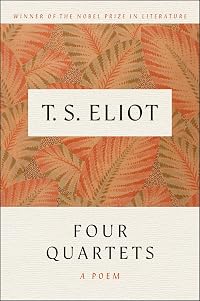
At least that’s what it is to Billy Collins. Though he was born and reared in New York, the good ole country boy in me thinks of him as having once been Billy Ray or Billy Joe or Billy Bob. Somehow, somewhere he grew out of that. But he never quite grew up, not into William (god forbid!) or Will or even Bill. He’s still Billy. Just plain Billy. He could never have been a T.S. Eliot or an e e cummings or an Allen Ginsberg, or Robert Lowell or Howard Nemerov or James Dickey. Certainly not Frank O’Hara or Charles Bukowski, or even A.R. Ammons or Frank Bidart. Just plain Billy. And that, I’m convinced, is where poetry needed to go at the turn of the century.
He speaks of the poet’s ambition to write “3 flawless poems in a lifetime if you’re lucky.” One thinks of John Keats (“Ode on a Grecian Urn,” “Eve of St. Agnes,” and “Bright Star”) or Samuel Taylor Coleridge (“Rime of the Ancient Mariner,” “Kublai Khan,” and “Dejection: An Ode”). I’m not sure whether Collins has produced his Big Three yet. Only time will tell. What he has done instead is to give poetry back to the people, plain, ordinary people. It had been lost to them. Modern poetry, indeed, had shunned them, dismissed them, demeaned them. For them to have poetry once is a gift outright: an extraordinary feat.
Now my rat terrier – his name is Peanut – is telling me that it’s time to call it a day. We’re suffering a heat wave these days, but tonight there’s the hint of a cool breeze. I look up at the moon and the stars: Peanut sniffs around for a rabbit or a field mouse. There just might be a poem out there somewhere, but it would take a Billy Collins to find it. However, the gift that his poems about ordinary things give us is the realization that there’s always a poem out there somewhere – or as he demonstrates in “Gold,” a recognition that the ordinary (“the sun begins to rise / and reflects off the water”) always harbors a possible entrance into the extraordinary (“the rings of light that Dante / deploys in the final cantos of the Paradiso / to convey the presence of God”). show less
So if he were to publish his collected works, or if I were to edit a selection of his poems, the title might very well be Extraordinary Poems about Ordinary Things. But what makes them “extraordinary”? Many of his colleagues in the modern poetry establishment, holding positions in colleges and universities around the country, would probably say they aren’t. But the New York Times has called him the most popular poet in the USA, and Random House gave him a six-figure advance for three poetry books, a feat unheard of in the current publishing world. Just look at the poetry section of any bookstore you patronize: Homer and Dante are still likely to be the poets with the most books on the shelves (bookstore managers know what will sell and what won’t); the 13th century Persian Jalalahdin Rumi in modern translations will rank right up there with them; so will that old favorite Kahlil Gibran. But among living poets, Collins will almost always head the list, along with Mary Oliver, whose “accessible” poems are not unlike those of Collins in form and appeal.
Why? What makes Collins’ work extraordinary? Using horoscopes as an example and myself as a typical reader (maybe questionable), let me speculate just a bit. I’m reading along, and almost immediately I say, “Yep, that’s just the way it is.” He’s caught me to a tee and put me in a poem – just an ordinary guy doing (or thinking) ordinary things. But he got it just right. The second poem in horoscopes (I could use the first, but I want to talk about it later for a different reason) is “The Straightener.”
Even as a boy I was a straightener.
My parents would likely have denied that, and my wife certainly would. They all see me perfectly comfortable in a clutter of books, papers, junk, etcetera. But they didn’t see me deciding what to put in my desk drawer and how to arrange everything just so, where to shelve my books and in what order, what to keep in my filing cabinet and how everything should be labeled. They don’t understand that I have to keep all the magazines we receive for years – and in chronological order. Just one missing, and I’m discombobulated. They don’t know that, when I put dirty dishes in the dishwasher or shelve them after they’re clean, I must always put them in the same place, the cups here, the glasses there, the small plates on the left, the large plates on the right. They don’t see me (I try to hide this from everyone) going through the trash every Monday night, making sure all the glass and plastic and metal objects are in the proper blue bag of recyclables; how all the paper (even cereal boxes, the rolls left from toilet tissue, credit card receipts, scraps from my wife’s scrapbook) has to be in the proper container for recycling paper; how all the vegetable scraps, peelings, eggshells, wilted flowers, and the like must be taken to the compost bin. Yep, I’m a straightener and always have been.
Today, for example, I will devote my time
to lining up my shoes in the closet,
pair by pair in chronological order
and lining up my shirts on the rack by color
Yep, all that, too. Except my shoes are separated into sneakers, sandals, everyday slippers, casual, dress, formal – then by color. Those rarely used go on the high, nearly unreachable top shelf. All the others go on the floor or the bottom shelves. But the shirts by color – definitely.
. . . if I can avoid doing my taxes
or phoning my talkative aunt
on her eighty-something birthday.
Ok, ok, straighteners can be procrastinators. That’s a whole ‘nuther matter.
So there you have it. Finding oneself in a poem may not be all that extraordinary, but you’ll have to admit, it’s pleasant, a bit surprising, and kinda reassuring. However, Collins almost always gets in a little twist, usually at the very end, to send you away thinking. “Hmm, never thought of it that way.” “Whoa, am I like that?” “Aha, now I see, or at least I think I do.” The last two lines of “The Straightener,” for example, brought forth this response from me: “No, not, I don’t think so – well, maybe, maybe.”
to put off having to tell you, dear,
what I really think and what I now am bound to do.
Oh, sure, all that straightening isn’t because I’m a neatnik. No way. It’s a distraction, a way to “put off” something, or in my case to compensate for disorder by simulating order. Straightening little, unimportant things while procrastinating big, important things – that, after all, is the me in this poem. See, the ordinary just took a bounce toward the extraordinary – the complexity of simple things, the subtle undercurrents of what seems so obvious.
One more example, this one perhaps less subtle but even more poignant in the twist at the end. It’s “Two Creatures,” and you have to read the whole poem to see how the poet builds you up with ordinary details, just in order to slip one in on you – but with just one more ordinary detail. The two creatures are a man and his dog. And you must understand that just as I was writing that sentence, I was interrupted. My rat terrier, who keeps me on schedule (“straightens” out my daily life, if you will), jumped on my lap between me and the laptop, letting me now in no uncertain terms that it was time for his medicine and the treat with which the medicine is disguised. So I stop writing and comply. Now, he’s relaxed, letting me tap away on my little keyboard, but in about an hour, he’ll jump on my lap again, telling me it’s time for me to take him outside for the last time tonight, then put him to bed, giving him one more treat. Then by twisting and turning, he’ll say, “Sir, if you would please, get on your pj’s, turn out the light, and get in bed yourself, so I can settle down at your feet for a night’s rest.” We understand each other very well. Collins writes, with many common, everyday details:
I wonder what causes her [his dog] to shift
from one place to another . . . .
Then later, with another round of specifics, he says,
And because her eyes always follow me,
she must wonder, too, why
I shift from place to place . . . .
Now, that’s me in this poem, me and my dog, too, “two creatures bound by wonderment.” But then, in his last five lines, he wallops me once again. I already have felt just a wee bit guilty when we leave our terrier behind to go shopping or out to eat or to the theater. “We’ll be back,” we assure him, and he makes himself at home in my comfortable Laz-E-Boy recliner. But from now on, I’ll see it from the dog’s point of view, “behind the solid locked doors of this house.”
So it’s common, everyday, ordinary things that set Billy Collins to writing: taking a walk in Florida (“then I saw two ladies dressed in lime-green and pink”), hearing a squirrel, seeing a mouse hide in the crevice of a rock, speculating on his grandfather’s baldness (and his own – well, there I am again!), seeing weeds and wildflowers by the roadside, being a guest in someone’s home, seeing a sunrise, learning by telephone that his dog does not have cancer after all, “working on a second bottle of wine.” And that’s just Part One. Always with just a bit of a twist.
But I still haven’t pinned it down: why one might call these poems extraordinary. Most of them are light, even humorous, straightforward, uncomplicated, down-to-earth. That’s part of what makes them appealing. Yet, creeping around beneath the surface, only occasionally letting itself be seen and heard, there is always another motif, deeper, more profound, even melancholic or unsettling. In this volume, the recurrent theme is elegiac. “Memento Mori,” for example, goes at it backwards and ends with a punch line, an elaborate joke. The poems lift one up to a recognition of “so many reminders of my mortality”: like “the sweet weeds / and the mouthfuls of colorful wildflowers” by the roadside. Then it plops one down with a “sign over the door of this bar in Cocoa Beach.” You gotta read it to hear the punch line.
The very first poem in the book is also light and self-effacing, even though the title is “Grave” and the gist of the poem is a gentle, elegiac reminder that grief is never over. It lingers on and on. The poem begins,
What do you think of my new glasses
I asked as I stood under a shade tree
before the joined grave of my parents.
It ends with Silence, “only deeper and softer, like petals, at its farthest edge.” I have just this past week visited the graves of my parents in New Hope Cemetery, out in the countryside of Tennessee, from which I could see the hill on which we lived all those years ago. How I wished I could speak with them, just one more time, and how aware I was of Silence. “It’s a Ford Escape,” I heard myself saying. “We traded our purple pick-up for it during the Cash-for-Clunkers program.” They were survivors of the Great Depression; they would want to know I’m being economical even in my affluence. The conversations go on, don’t they?
Each of the four parts of this collection begins with a whimsically elegiac poem of this nature: Part Three, “The Chairs That No One Sits In,” and Part Four, “Cemetery Ride,” simply reading the names and dates on the headstones of Palm Cemetery in Florida: “the Lyons / the Campbells, the Dunlaps, and the Davenports, / Arthur and Ethel who outlived him by 11 years,” Annie Sue Simms and Theodosia S. Hawley, Bill Smith and Clarence Augustus Coddington. How much (and how little!) just the names and dates convey.
But Part Two opens with the title poem: “Horoscopes for the Dead.” The speaker reads the horoscope in the newspaper every day; the poem is addressed to a Pisces who has “disappeared for good.”
But you will be relieved to learn
that you no longer need to reflect carefully before acting,
nor do you think more of others,
and never again will creative work take a back seat
to the business responsibilities that you never really had.
The horoscope is one kind of fiction; poetry is another. In each we find ourselves, and yet find ourselves to be ultimately unknown. How well we are known! How well we are never known! To be remembered is not to be remembered but to be reinvented. “And you stay just as you are,” the speaker concludes, having “pierced the enormous circle of the zodiac.” As light and whimsical as this poem is, as all Collins’ poems are, it also pierces “the enormous circle” in which we are enclosed day to day and frees us from the merely ordinary in the wholly [holy] ordinary.
In a way, the poet is always writing about writing, about poetry, what it is or should be, what his is or isn’t. Collins does this too – here and there, all through the collection. For example, in “Good News” (about his dog not having cancer), he has just said, “everything took on a different look”:
For example (and that’s the first and last time
I will ever use those words in a poem) . . . .
In “Poem on the Three-Hundredth Anniversary of the Trinity School,” he suffers writer’s block and cannot write a word.
I must have picked up the wrong pen,
The one that had no poem lurking in its vein of ink.
He is befuddled, feeling “like a blind horse / Harnessed to an oaken pole that turns a millstone.” But that image from the past calls up other images from the past, one after another, clear and perceptible. And, of course, the images are the poem, though no poem was ever written – not formally, or consciously, or deliberately. Poetry, he seems to be asserting, is always there, in the simple things, as in the harmony of the spheres.
As the collection draws to a close, these references to writing and to the nature of poetry seem to recur more frequently and with greater intensity. In “Bread and Butter,” about the sound of the ocean waves, he confesses
And now something tells me I should make
more out of all that, moving down
and inward where a poem is meant to go.
But no, not now: “this time I want to leave it be.” He lets the simple images with which he began remain simple. In “Poetry Workshop Held in a Former Cigar Factory in Key West,” he resists the temptation to use cigar making as a metaphor for writing:
Not once did I imply that tightly rolling an intuition
into a perfectly shaped, handmade thing . . . .
Oops, I think he just turned cigar making into a metaphor for writing poetry. What’s more I think this image catches better than I have been able to with all my prose what makes these poems about ordinary things so extraordinary: they roll an intuition into a perfectly shaped, handmade thing (tight, concise, simple, plain, accessible, yet profound).
The last poem in the collection, appropriately, is “Returning the Pencil to Its Tray.”
Just looking around
will suffice from here on in.
Who said I had to always play
the secretary of the interior?
Oh, but he does. He just did. “Just looking around will suffice.” Seeing ordinary, everyday, commonplace things – really seeing them, genuinely, authentically – and responding with an inner eye: that’s what poetry is.
At least that’s what it is to Billy Collins. Though he was born and reared in New York, the good ole country boy in me thinks of him as having once been Billy Ray or Billy Joe or Billy Bob. Somehow, somewhere he grew out of that. But he never quite grew up, not into William (god forbid!) or Will or even Bill. He’s still Billy. Just plain Billy. He could never have been a T.S. Eliot or an e e cummings or an Allen Ginsberg, or Robert Lowell or Howard Nemerov or James Dickey. Certainly not Frank O’Hara or Charles Bukowski, or even A.R. Ammons or Frank Bidart. Just plain Billy. And that, I’m convinced, is where poetry needed to go at the turn of the century.
He speaks of the poet’s ambition to write “3 flawless poems in a lifetime if you’re lucky.” One thinks of John Keats (“Ode on a Grecian Urn,” “Eve of St. Agnes,” and “Bright Star”) or Samuel Taylor Coleridge (“Rime of the Ancient Mariner,” “Kublai Khan,” and “Dejection: An Ode”). I’m not sure whether Collins has produced his Big Three yet. Only time will tell. What he has done instead is to give poetry back to the people, plain, ordinary people. It had been lost to them. Modern poetry, indeed, had shunned them, dismissed them, demeaned them. For them to have poetry once is a gift outright: an extraordinary feat.
Now my rat terrier – his name is Peanut – is telling me that it’s time to call it a day. We’re suffering a heat wave these days, but tonight there’s the hint of a cool breeze. I look up at the moon and the stars: Peanut sniffs around for a rabbit or a field mouse. There just might be a poem out there somewhere, but it would take a Billy Collins to find it. However, the gift that his poems about ordinary things give us is the realization that there’s always a poem out there somewhere – or as he demonstrates in “Gold,” a recognition that the ordinary (“the sun begins to rise / and reflects off the water”) always harbors a possible entrance into the extraordinary (“the rings of light that Dante / deploys in the final cantos of the Paradiso / to convey the presence of God”). show less
horoscopes for the dead by Billy Collins is a collection of his recent poetry. I've read a lot of his prior to this, and I suppose some of the "newness" of his style has worn off. So many of these poems seemed slight to me, anchored by some observation in his daily life - e.g. what to make of two chairs near a lake that no one ever sits in. Some observations were intriguing - what do birds make of another bird specie's cries, do they understand them, or is it like listening to people speaking a foreign language? A man or a woman can and sometimes will abandon a dog, but a dog will never abandon them. A sky reflected in a mirror, his daughter's drawing of a scallion.
But I kept wishing he'd dig his teeth into something meatier - social show more ills, poverty, war. He does take on war briefly: "There was talk of war this morning . . . but there's nothing I can do about that/except to continue my walk in the woods/conversing with my hand-" Conversing with what?! Well, he's made his hand into "the head of a duck/the kind that would cast a silhouetted/profile on a white screen . . . so benign an activity that if everyone did this/perhaps there would be no wars . . ." Hmm, a man in the woods talking to his duck head hand is a little too far out there for me.
But picking one like that from a good collection is unfair, and my longing for more "depth" could be my mistake, not his. He's like some of the ancient Chinese and Japanese poets, e.g. Wang Wei, Ryokan, Basho, Han Shan, making beautifully crafted poems based on simple observations. Centuries and centuries later, we're still reading all of those poets.
And there are times in this book when he took me somewhere new and wonderful, like "the department of dark and pouring rain." I loved matching up Zeno's paradox, that an object moving through space never reaches its destination because it's always limited to cutting the distance to its goal in half, with St. Sebastian - did the arrows ever reach him? All this while Collins is ordering a dinner in a restaurant.
He first captured my heart years ago with his humor. Yes, poetry need not always be solemn and reading it need not be like doing your chores. I'm still shakiing my head over his remarkable poem based on enthusiastic product descriptions in a Victoria's Secret catalog. Masterful. And he has some laugh out loud ones here, like his riff on overhearing a conversation, "She said like give me a break." Not, give me a break, but like give me a break. What exactly does that mean? I also got a kick out of this one, entitled, "Feedback":
The woman who wrote from Phoenix
after my reading there
to tell me they were all still talking about it
just wrote again
to tell me that they had stopped.
So maybe the fairest thing to say is there are some hits and some misses in this collection. At one point he says a poet is lucky if he creates three flawless poems in a lifetime. In my view he's already exceeded that. He remains our most accessible poet, and spending time with him once again may not have been flawless, but it was a pleasure. show less
But I kept wishing he'd dig his teeth into something meatier - social show more ills, poverty, war. He does take on war briefly: "There was talk of war this morning . . . but there's nothing I can do about that/except to continue my walk in the woods/conversing with my hand-" Conversing with what?! Well, he's made his hand into "the head of a duck/the kind that would cast a silhouetted/profile on a white screen . . . so benign an activity that if everyone did this/perhaps there would be no wars . . ." Hmm, a man in the woods talking to his duck head hand is a little too far out there for me.
But picking one like that from a good collection is unfair, and my longing for more "depth" could be my mistake, not his. He's like some of the ancient Chinese and Japanese poets, e.g. Wang Wei, Ryokan, Basho, Han Shan, making beautifully crafted poems based on simple observations. Centuries and centuries later, we're still reading all of those poets.
And there are times in this book when he took me somewhere new and wonderful, like "the department of dark and pouring rain." I loved matching up Zeno's paradox, that an object moving through space never reaches its destination because it's always limited to cutting the distance to its goal in half, with St. Sebastian - did the arrows ever reach him? All this while Collins is ordering a dinner in a restaurant.
He first captured my heart years ago with his humor. Yes, poetry need not always be solemn and reading it need not be like doing your chores. I'm still shakiing my head over his remarkable poem based on enthusiastic product descriptions in a Victoria's Secret catalog. Masterful. And he has some laugh out loud ones here, like his riff on overhearing a conversation, "She said like give me a break." Not, give me a break, but like give me a break. What exactly does that mean? I also got a kick out of this one, entitled, "Feedback":
The woman who wrote from Phoenix
after my reading there
to tell me they were all still talking about it
just wrote again
to tell me that they had stopped.
So maybe the fairest thing to say is there are some hits and some misses in this collection. At one point he says a poet is lucky if he creates three flawless poems in a lifetime. In my view he's already exceeded that. He remains our most accessible poet, and spending time with him once again may not have been flawless, but it was a pleasure. show less
This was a gift from my best friend for Christmas, but I didn't read it until last night/this morning while in a really space in my head -- it turned out to be exactly what I needed. It's gorgeous and I smiled over and over about the references to Dante and John and everything. I haven't read Billy Collins before, but I'm definitely sure there will be many more in my future if I have anything to say about it.
Collins is apparently considered very accessible, which is just fine by me. Some of the poems are OK, some are wonderful
Members
- Recently Added By
Lists

Favorite Recent Poetry: 1980-2022
178 works; 70 members
Author Information

42+ Works 12,837 Members
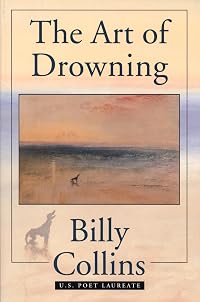
Billy Collins has published six collections of poetry, including Questions About Angels and The Art of Drowning, Picnic, Lightning, his latest, sold more than 25,000 copies in its first year. He teaches at Lehman College of the City University of New York and at Sarah Lawrence College. He was named U.S. Poet Laureate in June 2000. (Bowker Author show more Biography) Billy Collins was born in New York City in 1941. He earned a BA from the College of the Holy Cross, and both an MA and PhD from the University of California-Riverside. Collins conducted summer poetry workshops at University College Galway and is the Poet in Residence at Burren College of Art in Ireland. He is also a professor of English at Lehman College (CUNY). In 1992, Collins was chosen to be the Literary Lion of the New York Public Library. He was named U.S. Poet Laureate in 2001 and held the title until 2003. Collins then served as Poet Laureate for the State of New York from 2004 until 2006. His poetry has appeared in anthologies, textbooks and periodicals including Poetry, The American Poetry Review, The American scholar, Harper's, The Paris Review and The New Yorker. He is the author of six books of poetry including "The Art of Drowning." His poems have also been selected to appear in The Best American Poetry of 1992, 1993 and 1997. His works have won various awards including the Bess Hokin Prize, the Frederick Bock Prize, the Oscar Blumenthal Prize and the Levinson Prize, all awarded by Poetry. He has received fellowships from the New York Foundation for the Arts, the National Endowment for the Arts and the Guggenheim Foundation. His collection of poems entitled Aimless Love made numerous best-seller lists in 2013. (Bowker Author Biography) show less
Awards and Honors
Awards
Common Knowledge
- Original publication date
- 2011
Classifications
Statistics
- Members
- 540
- Popularity
- 55,172
- Reviews
- 14
- Rating
- (3.85)
- Languages
- English
- Media
- Paper, Ebook
- ISBNs
- 5
- ASINs
- 3