On This Page
Description
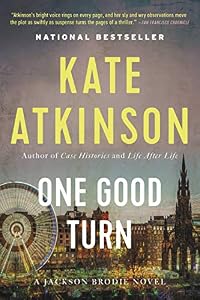
Fiction. Mystery. Suspense. HTML:On a beautiful summer day, crowds lined up outside a theater witness a sudden act of extreme road rage: a tap on a fender triggers a nearly homicidal attack. Jackson Brodie, ex-cop, ex-private detective, new millionaire, is among the bystanders.The event thrusts Jackson into the orbit of the wife of an unscrupulous real estate tycoon, a washed-up comedian, a successful crime novelist, a mysterious Russian woman, and a female police detective. Each of them show more hiding a secret, each looking for love or money or redemption or escape, they all play a role in driving Jackson out of retirement and into the middle of several mysteries that intersect in one sinister scheme.
Kate Atkinson "writes such fluid, sparkling prose that an ingenious plot almost seems too much to ask, but we get it anyway," writes Laura Miller for Salon. With a keen eye for the excesses of modern life, a warm understanding of the frailties of the human heart, and a genius for plots that turn and twist, Atkinson has written a novel that delights and surprises from the first page to the last. show less
Tags
Recommendations
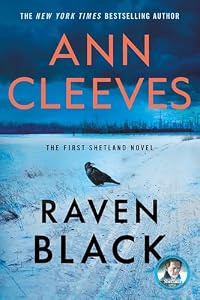
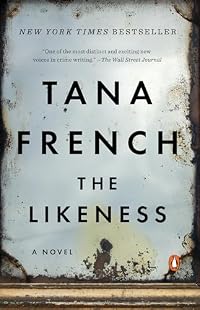
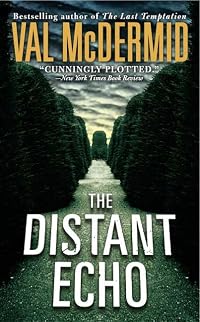

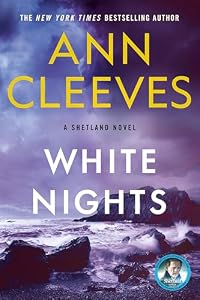









Member Recommendations

charl08 Both novels have a strong sense of place as they describe crimes that are not straightforward, and involve complex characters, challenging 'crime' genre.
Member Reviews
Kate Atkinson's second Jackson Brodie novel, “One Good Turn” (2006), reminds me of a typical episode of Seinfeld, the 1990's situation comedy. No, it's not funny. Rather there are several characters with their individual subplots that turn out to be connected in surprising ways. Coincidences abound, yet because they are deliberate and expertly crafted, these coincidences are not as objectionable as they might be in some other novel. The way the different stories tie together is the whole point.
The story starts with a road rage incident in Edinburgh, one driver attacking another with a baseball bat. Martin, a lonely and ordinarily passive crime writer, intervenes, saving a man's life while putting his own life in danger. Brodie, a show more former cop and former private investigator, also happens to be on hand. He is in Edinburgh with Julia, a mismatched girlfriend who is appearing in a play.
Soon there are murders, seemingly unrelated to that road rage incident. A female cop doesn't know whether Brodie is a criminal, a witness or really an ex-cop with more insight than she has, but she falls for him anyway. Meanwhile her teenage son somehow winds up with the only copy of Martin's missing book.
Another subplot concerns a crooked homebuilder in a coma and a wife who hopes he never recovers. And there is so much else going on, including repeated references to Russian dolls, which turn out to be an apt metaphor for the entire novel.
Atkinson took a chance building a story around coincidence, when that is something most quality writers take pains to avoid. And she gets away with it. show less
The story starts with a road rage incident in Edinburgh, one driver attacking another with a baseball bat. Martin, a lonely and ordinarily passive crime writer, intervenes, saving a man's life while putting his own life in danger. Brodie, a show more former cop and former private investigator, also happens to be on hand. He is in Edinburgh with Julia, a mismatched girlfriend who is appearing in a play.
Soon there are murders, seemingly unrelated to that road rage incident. A female cop doesn't know whether Brodie is a criminal, a witness or really an ex-cop with more insight than she has, but she falls for him anyway. Meanwhile her teenage son somehow winds up with the only copy of Martin's missing book.
Another subplot concerns a crooked homebuilder in a coma and a wife who hopes he never recovers. And there is so much else going on, including repeated references to Russian dolls, which turn out to be an apt metaphor for the entire novel.
Atkinson took a chance building a story around coincidence, when that is something most quality writers take pains to avoid. And she gets away with it. show less
Jackson Brodie returns for a second novel full of mysteries that overlap and intertwine. The answer to the question of: "can Kate Atkinson repeat what she did in the first novel without feeling like she's simply retreading old ground" is a resounding: "YES." Once again she takes several seemingly unrelated stories, at first, and then as she explores them she builds a spider web of connections that has them running back and forth through each other. If that's all she did, she would simply be a master plotter, coming up with as complicated a set of stories to build a single novel out of as I've ever seen. But on top of that she's an excellent writer. Characters we meet get fleshed out over the course of hundreds of pages, revealing show more insight and backstory, so you get a complete picture that explains their role in the larger novel and puts context to their motivations and actions. These aren't just stock characters that serve to forward the plot. These are real people who simply encounter plot unintentionally. You walk away from the novel thinking, wow, what a coincidence that all of those things were connected, for sure. But you don't mind it so much because it didn't feel forced. And I mean, sure, okay, it's unlikely that all of these elements would have crossed over in "real life" but then again you don't read fiction because you're looking for a simulacrum of real life. These are so much more fun. I can't wait to read the next one.
And let me just say that Jackson's story, his thread that weaves through this, is far from the most interesting one. Atkinson introduces new characters that are far more entertaining. Much like the first novel, Jackson serves as simply one story line of many. She brings back one other character from the first novel (Julia, now Jackson's girl friend/lover) while introducing a completely new flock of fascinating elements. It's almost as if Atkinson, herself, doesn't like Jackson very much. She deliberately gives him the least important role in the novel. In the first book, of course, he solved all the mysteries in the end. In this book he only helps. I'm fascinated by how she's decided to use him. Or abuse him, which might be a better term for what she's doing. show less
And let me just say that Jackson's story, his thread that weaves through this, is far from the most interesting one. Atkinson introduces new characters that are far more entertaining. Much like the first novel, Jackson serves as simply one story line of many. She brings back one other character from the first novel (Julia, now Jackson's girl friend/lover) while introducing a completely new flock of fascinating elements. It's almost as if Atkinson, herself, doesn't like Jackson very much. She deliberately gives him the least important role in the novel. In the first book, of course, he solved all the mysteries in the end. In this book he only helps. I'm fascinated by how she's decided to use him. Or abuse him, which might be a better term for what she's doing. show less
As a grizzled old reader of many, many moons, I thought that I had seen all forms of whodunnit: then, I found Kate Atkinson's amazing Jackson Brodie series.
Our sleuth is only in evidence for small portions of the book; each character is given space to develop and there is a marvellous blend, at the end of the book in which the reason for and those guilty of the crimes are revealed. The greatest compliment to the author's skill is that a series of events that, were I to list them here, would appear preposterous, seem to be the most obvious and reasonable explanation in Ms Atkinson's literary opus.
In this book, I love the final, almost throw away denouement that dots the final ''i''.
BRILLIANT!!!
Our sleuth is only in evidence for small portions of the book; each character is given space to develop and there is a marvellous blend, at the end of the book in which the reason for and those guilty of the crimes are revealed. The greatest compliment to the author's skill is that a series of events that, were I to list them here, would appear preposterous, seem to be the most obvious and reasonable explanation in Ms Atkinson's literary opus.
In this book, I love the final, almost throw away denouement that dots the final ''i''.
BRILLIANT!!!
This woman could get to be an addiction with me. I love the way she manages multiple story lines without unnecessary confusion--you know it's all going to come together eventually and watching it happen is so much fun. In this one our man Jackson Brodie spends most of his time on the wrong side of things---the law, his girlfriend, his own psyche. He starts by finding, then losing, a dead body. Nobody believes any of it. And it doesn't get better for a long time. Then he meets Detective Inspector Louise Monroe, who can't figure him out but can't quite bring herself to handcuff him and throw him in the slammer, which she suspects is what she ought to do if she wants to save her career. There are raunchy teenage boys, ("essence of show more testosterone and feet"); crazy Russian girls who are terrific house cleaners but probably also prostitutes (or assassins?); a man with a baseball bat; a missing corporate slimeball; a black garbage bag full of money; many humorous touches....and a nifty surprise at the end. Oh, and Edinburgh--let's not forget how much of a character the city is in this novel. A romp, that's what I'd call One Good Turn. Pure escapist pleasure. show less
The most playful of the Jackson Brodie books, set in Edinburgh during the Festival and taking the opportunity to tease a few noted local crime writers along the way. Needless to say, the canine residents of the city who didn't have the presence of mind to leave town when Ms Atkinson arrived come to satisfyingly sticky ends, but the real point of the impossibly complicated plot seems to be to challenge our ideas about the ethical conventions of crime fiction. We have good acts with evil consequences, evil acts with good consequences, and every other possible permutation. Weak characters perform heroic acts; heroic characters connive at crimes, and so on to the ultra-ironic conclusion. Great fun, but never insensitive.
We get a couple of show more interesting new characters in the shape of Martin, the wimpish ex-teacher who writes "jolly" murder mysteries, and Gloria, the suburban housewife who's on the verge of going Thelma-and-Louise. The police officer who acts as Jackson Brodie's foil, Louise Monroe, starts off a little bit too much like Rebus's Siobhan, but soon develops into something more interesting. All in all, a worthy follow-up to Case Histories. show less
We get a couple of show more interesting new characters in the shape of Martin, the wimpish ex-teacher who writes "jolly" murder mysteries, and Gloria, the suburban housewife who's on the verge of going Thelma-and-Louise. The police officer who acts as Jackson Brodie's foil, Louise Monroe, starts off a little bit too much like Rebus's Siobhan, but soon develops into something more interesting. All in all, a worthy follow-up to Case Histories. show less
Kate Atkinson, when she moonlights as a crime novelist, takes with her a Dickensian delight in scrambling her characters in the kind of intricate, coincidence-laden plot that marks her “literary” fiction. Going Dickens one better, she limits her cast of characters to a few, for the most part previously unknown to each other.
In the novel that introduced her detective Jackson Brodie, Case Histories, three discrete stories are intertwined. In this second Brodie adventure, there is only one case, but it involves several side-plots and is narrated from the perspective of at least six characters. One is adopted only once, and a second appears twice, bookending the plot. But the remaining four interweave from chapter to chapter throughout show more the book. No two successive chapters continue the same narrative perspective. This sometimes requires a bit of narrative back-and-fill, especially as the book races to its conclusion.
The shifting narrative perspective allows Atkinson to make her characters “rounder” than in conventional genre fiction. One means she uses is interior monologue, in which one thought leads tangentially to another in the manner of stream-of-consciousness. These monologues often involve the memories of her characters, but they also go off on tangents about their likes and (more often) pet peeves. These may or may not reflect the views of the author, but I get the feeling that they were fun to write, and the best of them reveal insights into each character.
One image recurs in the book: matryoshka dolls. Toward the end of the book, Atkinson has her protagonist, Jackson, ruminate on them: “Boxes within boxes, dolls within dolls, worlds within worlds, everything was connected. Everything in the whole world.” Apparently, these dolls are meant as a metaphor for the book’s construction, but that feels overdone.
One way in which I think the image does apply is in the gender-bending the author engages in. Atkinson has created a male alter ego, whereas one of the characters in this book, the hapless, hopelessly non-literary (yet wildly successful) Martin, lives by his series of books about a female detective, Nina Riley. Boxes within boxes indeed.
Jackson’s meditation on the interconnectivity of the plot also leads him to wonder if he’s in a fiction. A nice pomo touch.
A good detective story needs a surprise in the end; when you reach the final pages, you have to rethink everything that came before. This one has a couple. The lesser of the two is very-well done. I didn’t see it coming, but when it did, I savored how well-prepared it had been. As for the major twist, even after going through the entire plot in my mind, it still feels arbitrary to me.
This didn’t lessen my enjoyment of the book, however. Kate Atkinson is a wonderful writer, and I’ll continue on to the rest of her books. show less
In the novel that introduced her detective Jackson Brodie, Case Histories, three discrete stories are intertwined. In this second Brodie adventure, there is only one case, but it involves several side-plots and is narrated from the perspective of at least six characters. One is adopted only once, and a second appears twice, bookending the plot. But the remaining four interweave from chapter to chapter throughout show more the book. No two successive chapters continue the same narrative perspective. This sometimes requires a bit of narrative back-and-fill, especially as the book races to its conclusion.
The shifting narrative perspective allows Atkinson to make her characters “rounder” than in conventional genre fiction. One means she uses is interior monologue, in which one thought leads tangentially to another in the manner of stream-of-consciousness. These monologues often involve the memories of her characters, but they also go off on tangents about their likes and (more often) pet peeves. These may or may not reflect the views of the author, but I get the feeling that they were fun to write, and the best of them reveal insights into each character.
One image recurs in the book: matryoshka dolls. Toward the end of the book, Atkinson has her protagonist, Jackson, ruminate on them: “Boxes within boxes, dolls within dolls, worlds within worlds, everything was connected. Everything in the whole world.” Apparently, these dolls are meant as a metaphor for the book’s construction, but that feels overdone.
One way in which I think the image does apply is in the gender-bending the author engages in. Atkinson has created a male alter ego, whereas one of the characters in this book, the hapless, hopelessly non-literary (yet wildly successful) Martin, lives by his series of books about a female detective, Nina Riley. Boxes within boxes indeed.
Jackson’s meditation on the interconnectivity of the plot also leads him to wonder if he’s in a fiction. A nice pomo touch.
A good detective story needs a surprise in the end; when you reach the final pages, you have to rethink everything that came before. This one has a couple. The lesser of the two is very-well done. I didn’t see it coming, but when it did, I savored how well-prepared it had been. As for the major twist, even after going through the entire plot in my mind, it still feels arbitrary to me.
This didn’t lessen my enjoyment of the book, however. Kate Atkinson is a wonderful writer, and I’ll continue on to the rest of her books. show less
Things you should know about reading Kate Atkinson:
1. She uses commas where one would expect semi-colons, probably because if she didn't there would be a semi-colon in every other sentence. It's a very weird effect at first, but I got used to it.
2. She writes sentences about people wondering things which make you think the character is just thinking that, and then the other character responds to it and you realize Character A was actually speaking out loud. I found this irritating.
3. If a dog is mentioned, you know it is not going to end well. I think someone once told me that there are always dogs in Kate Atkinson books and they always die. Indeed, this book featured a (vicious) dog dying, mention of a dog being horribly killed in one show more character's past, and a very sad cat death. And the included excerpt of the next book in the series came flying out of the gate with a dog being killed while trying to defend its family. This sort of thing is Not Easy on me. I have a distinct memory of cheering as my mother choked her way through Beth March's death (even as a child I had no patience with characters being aggressively perfect at me), but to this day if you want to make me burst into tears in public you just have to whisper "Where the Red Fern Grows," in my ear. I am actually crying a little bit just from typing it.
And yet I ordered the three other Jackson Brodie books the second I put this one down. Atkinson's writing is that good. Brisk, clean, and so funny. Maybe lovingly mocking Scotland isn't as funny to someone not of Scottish origin, but when she described the Scottish religion as "alcohol, football, [and] feeling badly done by," I knew this woman had me locked in.
This book, and the others in the series, are classified as mysteries. I would not have called this one that: it is very reminiscent of Ruth Rendell's books, in which Bad Things happen and there is usually one character involved with the law and investigating, but the point of the book is the character development and the way that the banalities of life intersect to create small individual tragedies. In Rendell the characters are all deeply disturbed and the tragedies are horrifying; Atkinson handled the same sort of layout very differently. I felt that she truly cared for each of her characters, and there was always the sense in this book that good is possible, that where there's life there's hope. This is made explicit at the end, in a lovely "yes, my life has just fallen apart, but that creates possibilities, and I'm still alive, and I'm driving north listening to country music," passage that was utterly what I needed to read right now.
I don't want to describe the plot, really, because it's very complicated and full of surprises and I don't think I could do it justice without spoilers. (It's not a spoiler that the cat dies: the minute you meet that cat you know it's not going to see the final page.) I just want to say that I kind of loved this book, and look forward to reading the others. show less
1. She uses commas where one would expect semi-colons, probably because if she didn't there would be a semi-colon in every other sentence. It's a very weird effect at first, but I got used to it.
2. She writes sentences about people wondering things which make you think the character is just thinking that, and then the other character responds to it and you realize Character A was actually speaking out loud. I found this irritating.
3. If a dog is mentioned, you know it is not going to end well. I think someone once told me that there are always dogs in Kate Atkinson books and they always die. Indeed, this book featured a (vicious) dog dying, mention of a dog being horribly killed in one show more character's past, and a very sad cat death. And the included excerpt of the next book in the series came flying out of the gate with a dog being killed while trying to defend its family. This sort of thing is Not Easy on me. I have a distinct memory of cheering as my mother choked her way through Beth March's death (even as a child I had no patience with characters being aggressively perfect at me), but to this day if you want to make me burst into tears in public you just have to whisper "Where the Red Fern Grows," in my ear. I am actually crying a little bit just from typing it.
And yet I ordered the three other Jackson Brodie books the second I put this one down. Atkinson's writing is that good. Brisk, clean, and so funny. Maybe lovingly mocking Scotland isn't as funny to someone not of Scottish origin, but when she described the Scottish religion as "alcohol, football, [and] feeling badly done by," I knew this woman had me locked in.
This book, and the others in the series, are classified as mysteries. I would not have called this one that: it is very reminiscent of Ruth Rendell's books, in which Bad Things happen and there is usually one character involved with the law and investigating, but the point of the book is the character development and the way that the banalities of life intersect to create small individual tragedies. In Rendell the characters are all deeply disturbed and the tragedies are horrifying; Atkinson handled the same sort of layout very differently. I felt that she truly cared for each of her characters, and there was always the sense in this book that good is possible, that where there's life there's hope. This is made explicit at the end, in a lovely "yes, my life has just fallen apart, but that creates possibilities, and I'm still alive, and I'm driving north listening to country music," passage that was utterly what I needed to read right now.
I don't want to describe the plot, really, because it's very complicated and full of surprises and I don't think I could do it justice without spoilers. (It's not a spoiler that the cat dies: the minute you meet that cat you know it's not going to see the final page.) I just want to say that I kind of loved this book, and look forward to reading the others. show less
Members
- Recently Added By
Published Reviews
ThingScore 75
Provocative, entertaining and beautifully written. It’s not quite the tour de force that her Case Histories (2004) was, but this latest affords the happy sight of seeing Atkinson stretch out into speculative territory again.
added by davidcla
Lists

Best 21st Century Books (So Far)
670 works; 86 members

Best Crime Fiction
262 works; 39 members

Female Author
1,235 works; 67 members

Books Read in 2014
2,341 works; 86 members

Best Crime Fiction
48 works; 3 members

Books Read in 2017
4,248 works; 130 members

Books Set in Scotland
19 works; 5 members

Books About Murder
313 works; 7 members

Books With Numbers in the Title
308 works; 13 members

Books Read in 2016
4,666 works; 199 members

Detective Stories
343 works; 5 members

Most Popular Books Tagged Scotland
35 works; 2 members

Thrillers to read
21 works; 2 members
Author Information

37+ Works 52,539 Members
Kate Atkinson was born in York, and studied English Literature at the University of Dundee. She earned her Masters Degree from Dundee in 1974. She then went on to study for a doctorate in American Literature but she failed at the viva (oral examination) stage. After leaving the university, she took on a variety of jobs from home help to legal show more secretary and teacher. Her first novel, Behind the Scenes at the Museum, won the 1995 Whitbread Book of the Year ahead of Salman Rushdie's The Moor's Last Sigh and Roy Jenkins's biography of William Ewart Gladstone. It went on to be a Sunday Times bestseller. Since then, she has published another five novels, one play, and one collection of short stories. Her work is often celebrated for its wit, wisdom and subtle characterisation, and the surprising twists and plot turns. Her most recent work has featured the popular former detective Jackson Brodie. In 2009, she donated the short story Lucky We Live Now to Oxfam's 'Ox-Tales' project, four collections of UK stories written by 38 authors. Atkinson's story was published in the 'Earth' collection. In March 2010, Atkinson appeared at the York Literature Festival, giving a world-premier reading from an early chapter from her forthcoming novel Started Early, Took My Dog, which is set mainly in the English city of Leeds. Atkinson's bestselling novel, Life after Life, has won numerous awards, including the COSTA Novel Award for 2013. The follow-up to Life After Life is A God in Ruins and was published in 2015. This title won a Costa Book Award 2015 in the novel category. (Bowker Author Biography) show less
Awards and Honors
Series

Work Relationships
Is contained in
Common Knowledge
- Canonical title
- One Good Turn
- Original title
- One Good Turn
- Original publication date
- 2006-10-11
- People/Characters
- Jackson Brodie; Julia Land; Martin Canning; Gloria Hatter; Louise Monroe; Tatiana (show all 13); Paul Bradley; Archie Monroe; Graham Hatter; Sophia; Richard Mott; Terrence Smith; Hamish
- Important places
- Edinburgh, Scotland, UK
- Related movies
- Case Histories (2011 | TV Series | Episodes 3 & 4 | IMDb)
- Epigraph*
- Male parta, male dilabuntun
(Wat oneervol is verkregen, wordt oneervol verkwist.)
Cicero, Philippicae, 11, 27 - Dedication*
- Voor Debbie, Glynis, Judith, Lynn, Penny, Sheila en Tessa.
Voor hoe we waren en voor hoe we zijn - First words
- He was lost. He wasn't used to being lost.
- Quotations
- Every day was a gift, she told herself, that was why it was called the present.
He knew he would have to do something proactive, he was not a person to whom things simply happened. His life had been lived in some kind of neutral gear, he had never broken a limb, never been stung by a bee, never be... (show all)en close to love or death. He had never strived for greatness, and his reward had been a small life.
The matronly cashmere seemed to confirm something that Gloria had suspected for some time, that she had gone straight from youth to old age and had somehow managed to omit the good bit in between.
They always had a chocolate log on Christmas Day. Gloria made a roulade mix, no flour, only eggs and sugar but heavy with expensive chocolate, and when it was cooked she rolled it up with whipped cream and chestnut puree and ... (show all)decorated it with chocolate butter cream, scored and marked to look like wood, and then sprinkled it with icing-sugar snow. Finally she cut ivy from the garden, frosted it with egg white and sugar and then twined it round the log. - Last words
- (Click to show. Warning: May contain spoilers.)"Congratulations, Mrs Hatter," he said. "Our business is concluded."
*Some information comes from Common Knowledge in other languages. Click "Edit" for more information.
Classifications
Statistics
- Members
- 4,869
- Popularity
- 2,875
- Reviews
- 229
- Rating
- (3.76)
- Languages
- 12 — Danish, Dutch, English, Finnish, French, German, Greek, Italian, Polish, Russian, Spanish, Swedish
- Media
- Paper, Audiobook, Ebook
- ISBNs
- 60
- ASINs
- 22