On This Page
Description
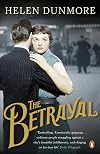
Leningrad, 1952. Andrei, a young doctor, and Ana, a nursery school teacher, know their happiness is precarious. When Andrei treats the child of a senior secret police officer, it becomes painfully clear that his own fate, and that of his family, is bound to the child's.Tags
Recommendations





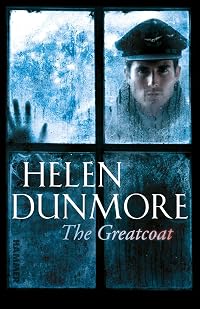










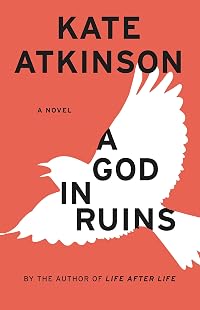
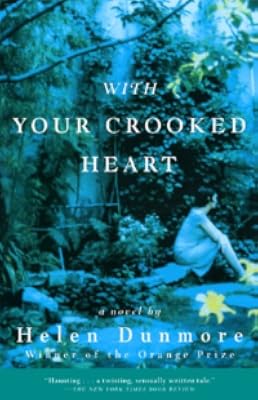

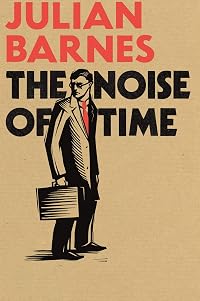
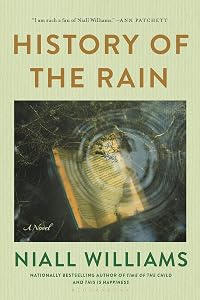


Member Recommendations
wandering_star One autobiographical and one fictional tale of what it was like to fall victim to Stalin's purges. Dunmore lists "Journey Into The Whirlwind" as one of the books she referred to when writing "The Betrayal".

Member Reviews
Helen Dunmore has done it again. She has taken a page from Russian history and created a compelling novel that you just can’t put down. The Betrayal picks up roughly eleven years after The Siege. The war is over and the people of Leningrad are trying to rebuild their lives and their city. With over 1,500,000 dead and 1,400,000 evacuated, that is a difficult enough task. But 1952-53 is also the time of Stalin’s last Party purge before his death: The Doctor’s Plot.
The book begins with Anna still working at the nursery and living in her parents’ apartment, but she is now married to Andrei. He is still at the hospital and still a bit naïve. Kolya is sixteen and a typical difficult teenager. Andrei is asked to consult on a show more colleague’s case, the son of a senior member of the secret police, and the tension begins.
Those familiar with Soviet history and the final insane days of Stalin will be able to guess at much of the plot. But what made The Betrayal so interesting to me was not the historical aspect, or even the dramatic tension, although that was a fun ride. Instead, Dunmore’s book provides something that I have been unable to get from either history or memoirs: a dual perspective on the same events. Usually, the persecution is depicted from the victim’s point of view, or sometimes from that of a family member. Here we get both Andrei’s perspective as the accused and Anna’s as the desperate wife.
I found The Betrayal to be an engaging historical novel which addresses some larger moral issues. If you lived under such a regime, would you be able to be “heroically disinterested” in preserving your own life? Or would you sell out your moral convictions in order to see your family live another day? Where is the line between being reasonable and being in collusion with the enemy? With what small step does it begin? show less
The book begins with Anna still working at the nursery and living in her parents’ apartment, but she is now married to Andrei. He is still at the hospital and still a bit naïve. Kolya is sixteen and a typical difficult teenager. Andrei is asked to consult on a show more colleague’s case, the son of a senior member of the secret police, and the tension begins.
Those familiar with Soviet history and the final insane days of Stalin will be able to guess at much of the plot. But what made The Betrayal so interesting to me was not the historical aspect, or even the dramatic tension, although that was a fun ride. Instead, Dunmore’s book provides something that I have been unable to get from either history or memoirs: a dual perspective on the same events. Usually, the persecution is depicted from the victim’s point of view, or sometimes from that of a family member. Here we get both Andrei’s perspective as the accused and Anna’s as the desperate wife.
I found The Betrayal to be an engaging historical novel which addresses some larger moral issues. If you lived under such a regime, would you be able to be “heroically disinterested” in preserving your own life? Or would you sell out your moral convictions in order to see your family live another day? Where is the line between being reasonable and being in collusion with the enemy? With what small step does it begin? show less
I could barely put this book down. A sequel to Dunmore's spectacular The Siege, The Betrayal continues the story of Anna, her young brother Kolya (now a teenager), and her now-husband Andrei, nearly 10 years after the horrific Siege of Leningrad and the deaths of her father and his friend Marina (among 1 1/2 million others in the city alone). Now it is the early 50s, and an aging Stalin still controls the Soviet Union.
The story unfolds with an ever-present sense of foreboding as Andrei, a doctor in a children's hospital, agrees reluctantly to examine the very ill son of a very powerful and dangerous man. We see how well-placed fear affects different people and their actions and we watch Anna cope with the inanity of bureaucratic demands show more in her job working with toddlers in a day-care center and with the demands of memory in the apartment she grew up in, where her father, a writer, suffered from an earlier round of purges. At the same time, we see how the powers-that-be have tried to erase the memory of what Leningraders experienced during the siege and we see the differences between the lives of ordinary people and those who have found favor with the Soviet hierarchy. But throughout this all, we are propelled forward by the characters and their lives. The book puts a human face on the horrors of life in Soviet Russia.
The story takes place at the time of the infamous "Doctor's plot." As with The Siege, Dunmore provides a bibliography at the end of works she read to learn about the era and the people. Her research is admirable, but her writing more so. With Andrei, we lie in bed, awake, at two in the morning and hear the car slow down and stop in front of the apartment building. show less
The story unfolds with an ever-present sense of foreboding as Andrei, a doctor in a children's hospital, agrees reluctantly to examine the very ill son of a very powerful and dangerous man. We see how well-placed fear affects different people and their actions and we watch Anna cope with the inanity of bureaucratic demands show more in her job working with toddlers in a day-care center and with the demands of memory in the apartment she grew up in, where her father, a writer, suffered from an earlier round of purges. At the same time, we see how the powers-that-be have tried to erase the memory of what Leningraders experienced during the siege and we see the differences between the lives of ordinary people and those who have found favor with the Soviet hierarchy. But throughout this all, we are propelled forward by the characters and their lives. The book puts a human face on the horrors of life in Soviet Russia.
The story takes place at the time of the infamous "Doctor's plot." As with The Siege, Dunmore provides a bibliography at the end of works she read to learn about the era and the people. Her research is admirable, but her writing more so. With Andrei, we lie in bed, awake, at two in the morning and hear the car slow down and stop in front of the apartment building. show less
This is the sequel to the author's magnificent novel The Siege, which I read last summer. It is the early 1950s, towards the end of Stalin's long rule. Siege survivors Anna and Andrei are now married and living with Anna's now teenage brother Kolya. Anna is a nursery school teacher and Andrei still works in the hospital in Leningrad that he kept attending even in the bleakest mid-winter days of the terrible siege. Andrei's professional life is thrown into turmoil when he is asked to advise on a case of a child's swollen leg. This seemingly minor event turns out tragically both medically and politically, for the child is the only son of a senior official in the Ministry of State Security, the forbidding S I Volkov, and many medical show more personnel are reluctant to get involved, the Hippocratic oath being perverted by the all-pervasive fear of becoming involved in any way with the secret police. The child's swelling turns out to be a tumour and he has to have his leg amputated. Later secondary cancer turns up in the boy's lungs and it is too late to save him. Volkov's natural horror as a parent is compounded by the political authority he possesses, and both Andrei and the surgeon who operated on the boy, Dr Brodskaya, are caught up in the maelstrom. Brodskaya is Jewish and the novel's plot mirrors the horrible real life events of the last months of Stalin's life when, in the so-called Doctors' Plot, a number of doctors, most of them Jewish, were arrested and charged with the medical murder of several top Soviet politicians who had died in the previous few years, including Andrei Zhdanov, Leningrad's leader during the siege. Andrei finds himself suspended from duty and later arrested and taken to the notorious Lubyanka in Moscow. Anna, pregnant with her and Andrei's child, struggles to find help on the outside but retains her freedom and takes refuge in the countryside with an old family friend. After a final meeting in prison with Volkov, who tries to persuade Andrei to sign a statement that he was hoodwinked by Brodskaya's "plotting" to cause his son's cancer to spread, Andrei is sent to the gulag in Siberia, not far from his home city, Irkutsk. The novel ends with Volkov's suicide as his son lies dying, followed by Stalin's own death. Anna faces the future with a little more hope than Andrei will eventually be released from the wrongful charges in the somewhat more liberal atmosphere (in real life, the arrested doctors were released very soon afterwards). This is another brilliant novel from Helen Dunmore. show less
Having just completed my reading of The Siege, I decided to read this second novel while all the details of the first were fresh in my mind. So, I picked up Anna and Andrei’s story, finding them well-settled with Kolya in Leningrad, Anna at the nursery school and Andrei working at the hospital. The starving days of the Siege are over, but that tragedy is just around the corner for anyone in Stalin’s Russia is no surprise. It comes for Anna and Andrei, in the form of a highly placed political figure's sick child that Andrei is forced to treat.
This family sees the danger ahead of them, but in a society that fosters nothing but fear, there is no place to hide. You can walk the line carefully, but the danger is real and about you show more always.
There’s no protection in making yourself small and hoping to become invisible. All you do is make yourself small.
Having survived the Siege, the war, the starvation and the specter of death on every park bench, the world they now inhabit might be even more threatening and frightening. At least when the Germans were attacking the city, the enemy was known, identifiable. In post-war Leningrad the enemy could be a neighbor who wants your larger apartment, a colleague who wants to escape scrutiny himself, or someone you don't know who simply takes notice of you and learns your name.
Why do we think that the present is stronger than the past? They are not even separate. The past is alive, waiting. She and Andrei turned away from it because they had to, but it only grew more powerful. Part of her will never leave that frozen room.
Anna is living in a world that expects, in truth, demands, that she bury her past in a fictional account that is rosier; that she deny her hardships and the struggles of those she loved, because to acknowledge them is seen as casting an aspersion on the government or the system. The horror of the past seems to be over, but horror is horror in whatever form it takes. Life is a tight wire, balanced above a precipice, and all it takes to make the walker fall is a gentle wind.
What they face and how they struggle to survive is laid out in the starkest prose, with a fear that is palpable. I not only felt the fear, but the helplessness, the inability to know who to trust, the need for everyone to say and do only that which would save themselves, if they could even decipher what that might be. There is no rhyme or reason, and a lie that is an impossibility can convict you as easily as a truth. This is an entire country of citizens living with the peril of betrayal, with such an uncertainty that it is miraculous that anyone dreamed to survive it. show less
This family sees the danger ahead of them, but in a society that fosters nothing but fear, there is no place to hide. You can walk the line carefully, but the danger is real and about you show more always.
There’s no protection in making yourself small and hoping to become invisible. All you do is make yourself small.
Having survived the Siege, the war, the starvation and the specter of death on every park bench, the world they now inhabit might be even more threatening and frightening. At least when the Germans were attacking the city, the enemy was known, identifiable. In post-war Leningrad the enemy could be a neighbor who wants your larger apartment, a colleague who wants to escape scrutiny himself, or someone you don't know who simply takes notice of you and learns your name.
Why do we think that the present is stronger than the past? They are not even separate. The past is alive, waiting. She and Andrei turned away from it because they had to, but it only grew more powerful. Part of her will never leave that frozen room.
Anna is living in a world that expects, in truth, demands, that she bury her past in a fictional account that is rosier; that she deny her hardships and the struggles of those she loved, because to acknowledge them is seen as casting an aspersion on the government or the system. The horror of the past seems to be over, but horror is horror in whatever form it takes. Life is a tight wire, balanced above a precipice, and all it takes to make the walker fall is a gentle wind.
What they face and how they struggle to survive is laid out in the starkest prose, with a fear that is palpable. I not only felt the fear, but the helplessness, the inability to know who to trust, the need for everyone to say and do only that which would save themselves, if they could even decipher what that might be. There is no rhyme or reason, and a lie that is an impossibility can convict you as easily as a truth. This is an entire country of citizens living with the peril of betrayal, with such an uncertainty that it is miraculous that anyone dreamed to survive it. show less
This powerful story takes place in the early 1950s, a few years after the 900-day siege of Leningrad related in Dunmore's last book, The Siege. The paranoid Stalin saw enemies everywhere, and in what became known as "The Doctor's Plot" he believed Soviet leaders were being killed off by doctors. His response was a purge similar to those inflicted on artists, writers, musicians and scientists. Although the aftermath of the tragedy has long since been disclosed by historians Dunmore has tenderly portrayed the personal experience of ordinary people exposed to brutality and fear. The story is riveting as we hope for the best for Anna and Andrei while knowing the history and outcome of Stalin's regime. In prose that is restrained yet show more elegant, Dunmore has produced a literary triumph that reveals a merciless period of history yet inspires admiration for the human spirit. Be prepared to stay up all night because The Betrayal is impossible to put down. show less
In The Betrayal, Helen Dunmore continues the story she started in her earlier novel, The Siege. The war is over and Anna and Andrei have settled into a fairly normal life in Leningrad. Kolya, Anna’s sixteen year old brother is showing signs of having all the growing pains of any teenager. Finally, after many unsuccessful attempts, Anna is pregnant and she and Andrei are looking forward to the birth of the child they never thought they’d have. Life seems o be going along very smoothly for them. And then catastrophe strikes. Andrei is dragged into a case at the hospital where the son of a very high ranking KGB officer is being treated for cancer.
The story goes on from here, and even though the initial complicating factor is pretty show more predictable, Dunmore has you on the edge of your seat throughout most of the book. This is Stalin’s Russia and Dunmore does a masterful job describing it and painting a picture of a desperate people, afraid of being caught saying the wrong thing to the wrong people. She also gives us a taste of a Soviet prison and doesn’t hold back any gruesome details.
Yet as grim as the picture is that emerges from this description, Dunmore offers us some hope. And this what makes her last two books so wonderful. That hope that she offers is so important for future reads. This is a must read. Impeccably researched and written lyrically. Highly recommended. show less
The story goes on from here, and even though the initial complicating factor is pretty show more predictable, Dunmore has you on the edge of your seat throughout most of the book. This is Stalin’s Russia and Dunmore does a masterful job describing it and painting a picture of a desperate people, afraid of being caught saying the wrong thing to the wrong people. She also gives us a taste of a Soviet prison and doesn’t hold back any gruesome details.
Yet as grim as the picture is that emerges from this description, Dunmore offers us some hope. And this what makes her last two books so wonderful. That hope that she offers is so important for future reads. This is a must read. Impeccably researched and written lyrically. Highly recommended. show less
I had a very difficult time getting through this book. Perhaps it might have been easier if I had read the first book – The Siege. Anyway this book is extremely well-written with very real characters, but the story is so very sad and depressing. The book is set in the Soviet Union in the 50’s. Stalin is still in power and Soviet Russia is at the height of communism. The book shows how afraid people were all the time, and with good reason. Anyone could be arrested on the most trumped up charge. The jails and Siberian camps were full of ordinary citizens who had been accused of treason or worse. The book focuses on one family and shows how these unfounded accusations tear up a normal working class family living in Leningrad. The show more husband (a doctor) is sent to prison because one of the higher-ups in government wants someone to pay for his son because he is dying of cancer. The book is so realistic and so very heart-rending. Ms. Dunmore is a very good writer. show less
 This review was written for LibraryThing Early Reviewers.
Members
- Recently Added By
Published Reviews
added by lucyknows
Lists

Favourite Booker Prize contenders
73 works; 21 members
Booker Prize
491 works; 62 members

Books about Russia and the former USSR
67 works; 12 members

Man Booker Prize Longlist 2010
12 works; 2 members
Author Information

70+ Works 8,509 Members
Helen Dunmore was born in Beverley, England on December 12, 1952. She received a degree in English from the University of York in 1973. She taught English in Finland before moving to Bristol, England, where she taught literature and creative writing. She was a poet, novelist, and children's author. Her collections of poetry include The Apple Fall, show more The Raw Garden, and Inside the Wave. Her books include Talking to the Dead, Your Blue-Eyed Boy, House of Orphans, The Greatcoat, The Siege, The Betrayal, The Lie, and Birdcage Walk. She won the McKitterick Prize for debut novelists in 1994 for Zennor in Darkness, the inaugural Orange Prize for Fiction in 1996 for A Spell of Winter, and the Costa Award for Poetry in 2017 for Inside the Wave. She died of cancer on June 5, 2017 at the age of 64. (Bowker Author Biography) show less
Awards and Honors
Series

Common Knowledge
- Canonical title
- The Betrayal
- Original publication date
- 2010
- People/Characters
- Andrei Alekseyev; Anna Levin; Kolya Levin
- Important places
- Leningrad, USSR; USSR
- Dedication
- To Patrick and Alexa
- First words
- It's a fresh June morning, without a trace of humidity, but Russov is sweating.
- Last words
- (Click to show. Warning: May contain spoilers.)Among them was Andrei.
Classifications
Statistics
- Members
- 418
- Popularity
- 74,202
- Reviews
- 42
- Rating
- (3.94)
- Languages
- English, French, Hebrew, Norwegian (Bokmål)
- Media
- Paper, Audiobook, Ebook
- ISBNs
- 18
- ASINs
- 4