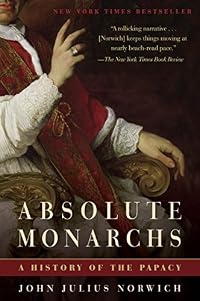
Absolute Monarchs: A History of the Papacy
by John Julius Norwich
On This Page
Description
NEW YORK TIMES BESTSELLERIn a chronicle that captures nearly two thousand years of inspiration and intrigue, John Julius Norwich recounts in riveting detail the histories of the most significant popes and what they meant politically, culturally, and socially to Rome and to the world. Norwich presents such popes as Innocent I, who in the fifth century successfully negotiated with Alaric the Goth, an invader civil authorities could not defeat; Leo I, who two decades later tamed (and show more perhaps paid off) Attila the Hun; the infamous “pornocracy”—the five libertines who were descendants or lovers of Marozia, debauched daughter of one of Rome’s most powerful families; Pope Paul III, “the greatest pontiff of the sixteenth century,” who reinterpreted the Church’s teaching and discipline; John XXIII, who in five short years starting in 1958 instituted reforms that led to Vatican II; and Benedict XVI, who is coping with today’s global priest sex scandal. Epic and compelling, Absolute Monarchs is an enthralling history from “an enchanting and satisfying raconteur” (The Washington Post). show less
Tags
Recommendations








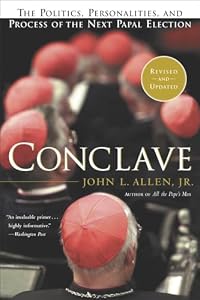

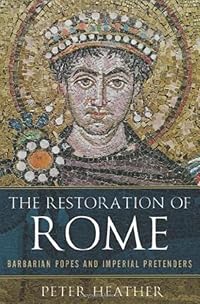
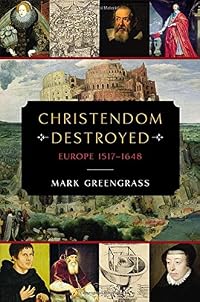
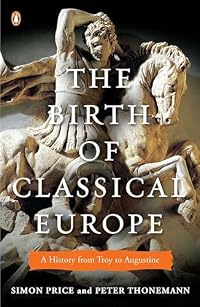
Member Recommendations


Member Reviews
I was quite devastated when I leant of the death in 2018 of John Julius Norwich, my favourite purveyor of popular history for many years. His books on Byzantium, Venice and the Normans have been among my often-read favourites, and I still have one last unread pleasure waiting on my shelf, his final book on the history of France. The Popes has been on my must-read list for a few years, but somehow has evaded me until now. And its is quite as grand as his others. No other modern popular historian I know quite catches the sweep of history, the triumphs and tragedies of so many great figures across enormous spans of history, with such elegant grace. Norwich likes to deal in centuries and millennia rather than decades (Byzantium covered 1000 show more years, Venice 1200, The Normans was quite abbreviated by Norwich standards - not quite 200 years. This one covers a massive 2000 years, from St Peter to Benedict XVI, sweeping through the centuries, dotting down for periods of varying lengths depending on the perceived significance of the designated pontiff. The ever-changing nature of the papacy and its response to the changing world is always on show. From Peter through the shadowy popes of then pagan era, where being pope could and often did mean martyrdom, years after Constantine when a Church suddenly elevated to state religion struggled with questions of doctrine, through the collapse of the Empire and the influx of pagan tribes, the first fissures between Western and Eastern churches, the terrible debauchery of the so-called "pornocracy" of the 9th and 10th centuries, the final still unhealed schism between the Roman and Orthodox churches in 1054, the struggles between pope and the emperors of the church's own creation, the Holy Roman Empire, the nadir of the papacy in Renaissance Rome, when an era of artistic and scientific flowering coincided with the most infamous names in Church history - the Borgias, the della Roveres, the Farneses, which led directly to the shock of the Reformation and the fightback of the Counter-Reformation, the religious wars of Europe, the French Revolution, Napoleon, the Risorgimento, World War I, World War II and finally the modern era where the Church, despite being under attack from science, humanism and individualism, still commands the allegiance of a 6th of the world's population. A superbly readable book in its scale, its humanity, its occasionally caustic wit, the ironic touches and sometimes scathing criticism. Its an intensely human history, its 500 odd pages will fly by. Truly great reading. show less
A history of the Papacy is not an easy chore as the institution has been in existence in one form or another for 2000 years, but author Julius Norwich manages to do so in a coherent and entertaining fashion. The first 1000 years of the Papacy focused on getting the church established, its rivalry with the Eastern Orthodox Church and squabbles over arcane issues of doctrine that no one would care about today, but which often led to warfare between rival factions in the church. The next 500 or so dealt with the Pope trying to establish his power over the temporal powers of Europe with decreasing success as nation states became steadily more powerful than the church. The same period saw the rise of Islam and the Crusades against its power show more in the MidEast (highly unsuccessful) and the battle against its incursion into Europe (ultimately successful) And finally the last 400 or so years dealt with the rise of Protestantism, the Church's loss of temporal power and it's battle against modernism in almost any form.
With few exceptions, the Popes were mostly poor leaders and venal in the extreme. They were constantly looking to line their own (and their families') pockets with wealth and high office. Nepotism and simony were accepted practices, and vows of celibacy were largely ignored. Matters of faith seemed to take a decidedly second place to matters of temporal power.
Once the 19th Century was underway, the Papacy quickly lost any influence it once had over international events. Napoleon started things off with his Empire at the beginning of the century and the unification movements in both Germany and Italy finished the job, with the Papacy just left with Vatican City at the beginning of the 20th Century. Is it any wonder, the Popes weren't fond of the modern age?
Norwich does not spare the Popes of the last 100 years. Pius XI legitimizes Mussolini and Pius XII did virtually nothing to protest Hitler's extermination of the Jews. The one bright spot was Pope John XXIII who instituted the Second Vatican Council and Pope Paul VI who carried on its work after the death of Pope John XXIII in 1963. Pope John Paul I in 1978 gave every indication that he would extend the reforms of Vatican II even farther, but he died just 33 days after taking office and Norwich heavily suggests that he was murdered by reactionary elements in the Curia. Certainly the next two Popes were far more traditional in their doctrinaire outlook.
The book, written in 2011 ends with Pope Benedict XVI, so we will have to leave it to another historian to judge the influence of Pope Francis. This is an interesting book that peels away the holy pomposity that surrounds the Papacy and shows the Popes as the men they were - warts and all. show less
With few exceptions, the Popes were mostly poor leaders and venal in the extreme. They were constantly looking to line their own (and their families') pockets with wealth and high office. Nepotism and simony were accepted practices, and vows of celibacy were largely ignored. Matters of faith seemed to take a decidedly second place to matters of temporal power.
Once the 19th Century was underway, the Papacy quickly lost any influence it once had over international events. Napoleon started things off with his Empire at the beginning of the century and the unification movements in both Germany and Italy finished the job, with the Papacy just left with Vatican City at the beginning of the 20th Century. Is it any wonder, the Popes weren't fond of the modern age?
Norwich does not spare the Popes of the last 100 years. Pius XI legitimizes Mussolini and Pius XII did virtually nothing to protest Hitler's extermination of the Jews. The one bright spot was Pope John XXIII who instituted the Second Vatican Council and Pope Paul VI who carried on its work after the death of Pope John XXIII in 1963. Pope John Paul I in 1978 gave every indication that he would extend the reforms of Vatican II even farther, but he died just 33 days after taking office and Norwich heavily suggests that he was murdered by reactionary elements in the Curia. Certainly the next two Popes were far more traditional in their doctrinaire outlook.
The book, written in 2011 ends with Pope Benedict XVI, so we will have to leave it to another historian to judge the influence of Pope Francis. This is an interesting book that peels away the holy pomposity that surrounds the Papacy and shows the Popes as the men they were - warts and all. show less
Extremely and unnecessarily detailed. Surprisingly boring given the subject matter.
Understanding how power was established via the catholic church in rome is integral to understanding the rise of Europe and the tyranny, oppression and genocide that followed.
This has subtle and annoying sexist, xenophobic and racist undercurrents. Western Europeans are described more favorably than Eastern Europeans, Asians and the ever present and ever generic 'Muslims'. At one point the author goes into great detail describing an asian nation as unwashed, eating uncooked meat, etc. I laughed out loud. Europeans during this period and for the next THOUSAND years are famously unwashed and their food is shit. A major driver of colonialism is the hunt for show more cheaper spices with which to help their nasty ass food.
This continues into colonization where in addition to how to swim, grow cash crops for trade and eventually inoculate against illness West Africans and the Indigenous Peoples of the Americas will teach Europeans to wash their nasty asses. In fact we are living out the effects of the carelessness and nastiness of Europeans. As global warming continues to be driven to by colonialism: which equates to theft and genocide. By Europeans of all flavors.
Just don't be an asshole dude🤷🏽♀️ show less
Understanding how power was established via the catholic church in rome is integral to understanding the rise of Europe and the tyranny, oppression and genocide that followed.
This has subtle and annoying sexist, xenophobic and racist undercurrents. Western Europeans are described more favorably than Eastern Europeans, Asians and the ever present and ever generic 'Muslims'. At one point the author goes into great detail describing an asian nation as unwashed, eating uncooked meat, etc. I laughed out loud. Europeans during this period and for the next THOUSAND years are famously unwashed and their food is shit. A major driver of colonialism is the hunt for show more cheaper spices with which to help their nasty ass food.
This continues into colonization where in addition to how to swim, grow cash crops for trade and eventually inoculate against illness West Africans and the Indigenous Peoples of the Americas will teach Europeans to wash their nasty asses. In fact we are living out the effects of the carelessness and nastiness of Europeans. As global warming continues to be driven to by colonialism: which equates to theft and genocide. By Europeans of all flavors.
Just don't be an asshole dude🤷🏽♀️ show less
Like all books by Norwich, this was a pleasure to read. In one big swoop from Saint-Peter to Ratzinger, the author provides the reader with clarity (not obvious with all those popes and their numerals), expansive historical background, anecdotes and more - all beautifully written. Norwich is more sure-footed when talking about the Middle Ages, and hence some later passages (like the ones about the Italian Risorgimento) feel a bit soulless; but that is more than compensated by brilliant chapters on Napoleon's attitude towards the Catholic Church and an analysis of Pius XII's behaviour towards the Nazis. Highly recommended.
Perfectly good airport history. I'm stuck at around page 150 of Norwich's condensed history of the Byzantines, so I wasn't expecting much from this. But I've learned something very important about Mr. Norwich: if he's writing about things you know even reasonably well (e.g., for me, the early Byzantine emperors), he's almost insufferable. This might just be a by-product of Great Man history in general, which is that it has very little to say about anything. Also, he's very boring in short bursts.
However, if I can settle in for a couple of hours and read about things I don't know all that well (e.g., the Renaissance papacy), he's immensely entertaining. I have no idea how this is possible, but Norwich is somehow more readable over two show more hour stretches than he is over half an hour. He'll follow every narrative, no matter how tangential, if it promises to be amusing.
Other reviewers have complained that he's too much of a liberal, too this-worldly, to do justice to the popes; that's arrant nonsense. He's very even handed, except when dealing with popes who monstrosity leaves no room for even-handedness; or, naturally, when dealing with Pius XII. Pius XII, like almost every other Pope (and non-Jewish person) before him, was a rabid anti-Semite, but had the misfortune of being the last rabid anti-Semite to hold a position of power. Thus, the holocaust is somehow his fault. This is not to excuse his anti-semitism, nor anyone else's. It is to suggest that, as an airport historian, Norwich might be a little too easily swayed by contemporary political imperatives.
Anyway, highly enjoyable, provided you know little to nothing about the topic at hand; immensely irritating, however, if you do more than a smidgeon. show less
However, if I can settle in for a couple of hours and read about things I don't know all that well (e.g., the Renaissance papacy), he's immensely entertaining. I have no idea how this is possible, but Norwich is somehow more readable over two show more hour stretches than he is over half an hour. He'll follow every narrative, no matter how tangential, if it promises to be amusing.
Other reviewers have complained that he's too much of a liberal, too this-worldly, to do justice to the popes; that's arrant nonsense. He's very even handed, except when dealing with popes who monstrosity leaves no room for even-handedness; or, naturally, when dealing with Pius XII. Pius XII, like almost every other Pope (and non-Jewish person) before him, was a rabid anti-Semite, but had the misfortune of being the last rabid anti-Semite to hold a position of power. Thus, the holocaust is somehow his fault. This is not to excuse his anti-semitism, nor anyone else's. It is to suggest that, as an airport historian, Norwich might be a little too easily swayed by contemporary political imperatives.
Anyway, highly enjoyable, provided you know little to nothing about the topic at hand; immensely irritating, however, if you do more than a smidgeon. show less
A very interesting, highly engaging, and well-researched book about every single Pope, from the "first Pope" St. Peter to the first days of Pope Benedict XVI. No Pope is omitted, even the anti-popes make it in. It's fascinating how each of the men who held this high office were different. Each brought their own approach to the Papacy and were in varying degrees either successes or failures. Some used the office to get what they could out of it, while others genuinely sought to make a positive difference in the world.
Mixed in with the statistics of each Pope's reign are nuggets of biographical gold, stories that make each Pope human. At times, some of the history could get a bit stale. However, if you press on, you'll be show more rewarded.
Recommended for those interested in Popes, the history of Catholicism, and history in general. show less
Mixed in with the statistics of each Pope's reign are nuggets of biographical gold, stories that make each Pope human. At times, some of the history could get a bit stale. However, if you press on, you'll be show more rewarded.
Recommended for those interested in Popes, the history of Catholicism, and history in general. show less
This is a very ambitious project—attempting to cover some 2000 years of history and more than 250 pontificates in less than 500 pages. While it's very readable, and Norwich did fill in some of the gaps in my knowledge (pretty much from the end of the Middle Ages to Vatican II), Absolute Monarchs isn't a successful book overall. Norwich writes well and with occasional bursts of the wry humour which made his history of Byzantium so enjoyable to read, but perhaps unsurprisingly given its scope, the book does drag at points and is very much confined to considering the papacy as a political institution.
That this isn't an area of Norwich's particular expertise is also evident just from looking at the bibliography, which relies heavily on show more older scholarship, largely English-language monographs. Why does Norwich use the Cambridge Medieval History (1911-36), one wonders, rather than the New Cambridge Medieval History (1995-2005), its updated successor, which would provide him with much more up-to-date scholarship upon which to draw? Why Kantorowicz on Frederick II, and not Abulafia? I was left with the impression that Norwich's research for Absolute Monarchs was confined to whichever books he had to hand in his own private collection and didn't stray very far from that. So a relatively quick read if you're interested in the history of the papacy over the longue durée, but not one which can be regarded as authoritative. show less
That this isn't an area of Norwich's particular expertise is also evident just from looking at the bibliography, which relies heavily on show more older scholarship, largely English-language monographs. Why does Norwich use the Cambridge Medieval History (1911-36), one wonders, rather than the New Cambridge Medieval History (1995-2005), its updated successor, which would provide him with much more up-to-date scholarship upon which to draw? Why Kantorowicz on Frederick II, and not Abulafia? I was left with the impression that Norwich's research for Absolute Monarchs was confined to whichever books he had to hand in his own private collection and didn't stray very far from that. So a relatively quick read if you're interested in the history of the papacy over the longue durée, but not one which can be regarded as authoritative. show less
Members
- Recently Added By
Published Reviews
ThingScore 100
If you were raised Catholic, you may find it disconcerting to see an institution you were taught to think of as the repository of the faith so thoroughly deconsecrated. Norwich says little about theology and treats doctrinal disputes as matters of diplomacy. As he points out, this is in keeping with many of the popes themselves, “a surprising number of whom seem to have been far more show more interested in their own temporal power than in their spiritual well-being.” For most of their two millenniums, the popes were rulers of a large sectarian state, managers of a civil service, military strategists, occasionally battlefield generals, sometimes patrons of the arts and humanities, and, importantly, diplomats. They were indeed monarchs. (But not, it should be said, “absolute monarchs.” Whichever editor persuaded Norwich to change his British title, “The Popes: A History,” may have done the book a marketing favor but at the cost of accuracy: the popes’ power was invariably shared with or subordinated to emperors and kings of various stripes. In more recent times, the popes have had no civil power outside the 110 acres of Vatican City, no military at all, and even their moral authority has been flouted by legions of the faithful.) show less
added by jimroberts
Lists

Best Biographies
216 works; 26 members

Books Read in 2015
3,298 works; 126 members
Author Information

100+ Works 12,598 Members
John Julius Norwich was born in the United Kingdom on September 15, 1929. He served in the Royal Navy before receiving a degree in French and Russian at New College, Oxford. After graduation, he joined the H. M. Foreign Service and served in Belgrade, Beirut, and as a member of British delegation to the Disarmament Conference in Geneva. In 1954, show more he inherited the title of Viscount Norwich. In 1964, he resigned from the Foreign Service to become a writer. He was a historian, travel writer, and television personality. His books included The Normans in the South, A History of Venice, The Italian World, Venice: A Traveller's Companion, 50 Years of Glyndebourne: An Illustrated History, A Short History of Byzantium, Absolute Monarchs: A History of the Papacy, Sicily: An Island at the Crossroads of History, and A History of France. He and H. C. Robbins Landon wrote Five Centuries of Music in Venice. Norwich was the host of the BBC radio panel game My Word! from 1978 to 1982. He wrote and presented more than 30 television documentaries including Maestro, The Fall of Constantinople, Napoleon's Hundred Days, Cortés and Montezuma, Maximilian of Mexico, The Knights of Malta, The Treasure Houses of Britain, and The Death of the Prince Imperial in the Zulu War. In 1993, he was appointed CVO for having curated an exhibition at the Victoria and Albert Museum to mark the 40th anniversary of the Queen's accession to the throne. In 2015, he was awarded the Biographers' Club award for his lifetime service to biography. He died on June 1, 2018 at the age of 88. (Bowker Author Biography) show less
Some Editions
Awards and Honors
Distinctions
Common Knowledge
- Original title
- The Popes: A History
- Alternate titles
- Absolute Monarchs: A History of the Papacy; History of the Papacy
- Original publication date
- 2011
- People/Characters
- Isabella II of Jerusalem (aka Yolande of Brienne); William II, The Good, King of Sicily; William I, The Bad, King of Sicily; Urban II, Pope (Blessed, Odo of Châ | | tillon or Otho de Lagery, 1035?-July 1099); Urban IV, Pope (Jacques Pantalé | | on, c.1195-1264); Urban V, Pope (Blessed, Guillaume de Grimoard, 1310-1370) (show all 203); Urban VI, Pope (Bartolomeo Prignano, c. 1318-1389); Urban VIII, Pope (Maffeo Vincenzo Barberini, 1568-1644); Victor IV, Antipope; Victor Emmanuel II of Italy; Sixtus IV, Pope (Francesco della Rovere, 1414-1484); Sixtus V, Pope (Felice Piergentile, 1521-1590); Sigismund of Luxembourg, Holy Roman Emperor; Ascanio Maria Sforza; Girolamo Savonarola (1452-1498); Francisco I de Saldanha da Gama; Richard I, King of England; Richard II, Count of Aversa and Prince of Capua; Roger I, Count of Sicily; Roger II, King of Sicily; Robert, King of Naples; Robert I, Count of Aversa and Prince of Capua; Reginald Pole; Sebastião José de Carvalho e Melo, 1st Marquis of Pombal; Pius II, Pope (Enea Silvio Bartolomeo Piccolomini, 1405-1464); Pius III, Pope (Francesco Todeschini, 1439-1503); Pius IV, Pope (Giovanni Angelo Medici, 1499-1565); Pius V, Pope (Saint, Antonio Ghislieri later Michele Ghislieri, 1504-1572); Pius VI, Pope (Count Giovanni Angelo Braschi, 1717-1799); Pope Pius VII; Pius VIII, Pope (Francesco Saverio Maria Felice Castiglioni, 1761-1830); Pius IX, Pope (Beatified, Giovanni Maria Mastai Ferretti, 1792&ndash | 1878); Pius X, Pope (Saint, born Giuseppe Melchiorre Sarto, 1835-1914); Pius XI, Pope (Ambrogio Damiano Achille Ratti, 1922-1939); Pius XII, Pope (Venerable, Eugenio Maria Giuseppe Giovanni Pacelli, 1939 to 1958); Photios I, Patriarch of Constantinople; Philip II, King of France (aka Philip Augustus); Philip II, King of Spain; Philip IV, King of France; Philip V, King of Spain; Petrarch (Francesco Petrarca, 1304-1374); Paschal II, Pope (Ranierius, 1050 to 1055-1118); Pelagius II, Pope (579-590); Paul III, Pope (1534&ndash | 1549); Paul IV, Pope (Gian Pietro Carafa, 1476-1559); Paul V, Pope (Camillo Borghese, 1550-1621); Paul VI, Pope (Saint, Giovanni Battista Enrico Antonio Maria Montini, 1897&ndash | 1978); Peter Abelard; Alexander III, Pope (Roland, ca. 1105-1181); Alexander VI, Pope (Rodrigo de Borja or Borgia, 1431-1503); Alexander VIII, Pope (Pietro Vito Ottoboni, 1610-1691); Gil Álvarez Carrillo de Albornoz; Anacletus II, Antipope (Pietro Pierleoni, died 1138); Anastasius Bibliothecarius, Antipope (Anastasius the Librarian, c. 810-c. 878); Giacomo Antonelli; Arnold of Brescia; Attila the Hun; Flavius Belisarius; Bernard of Clairvaux; Basilios Bessarion; Boniface VIII, Pope (Benedetto Caetani, c. 1230 -1303); Boniface IX, Pope (Pietro Tomacelli, c. 1350-1404); Cesare Borgia; Giovanni Borgia, 2nd Duke of Gandia; Lucrezia Borgia (Lucrè | ce or Lucretia, 1480-1519); Camillo Benso di Cavour; Celestine III, Pope (Giacinto Bobone, c. 1106-1198); Celestine V, Pope (Saint, Pietro Angelerio, 1215-1296); Djem Sultan; Michael I Cerularius; Charlemagne; Charles III, King of Spain; Charles V, Holy Roman Emperor (1500&ndash | 1558); Charles VI, Holy Roman Emperor; Charles VIII, King of France; Charles Albert, King of Sardinia-Piedmont; Charles I of Anjou, King of Sicily and Naples; Clement III, Antipope (Guibert or Wibert of Ravenna, c.1029-1100); Clement III, Pope (Paolo Scolari, 1130-1191); Clement V, Pope (Raymond Bertrand de Got, c. 1264-1314); Clement VI, Pope (Pierre Roger, 1291-1352); Clement VII, Pope (Giulio de' Medici, 1478-1534); Clement VII, Antipope (Robert of Geneva , 1342-1394); Clement VIII, Pope (Ippolito Aldobrandini, 1536-1605); Clement IX, Pope (Giulio Rospigliosi, 1600-1669); Clement XI, Pope (Giovanni Francesco Albani, 1649-1721); Clement XIII, Pope (Carlo della Torre di Rezzonico, 1693-1769); Clement XIV, Pope (Giovanni Vincenzo Antonio Ganganelli, 1705-1774); Pompeo Colonna, Viceroy of Naples; Conrad III of Hohenstaufen, King of Germany; Ercole Consalvi; Constance, Queen Regnant of Sicily; Constantine The Great (Flavius Valerius Aurelius Constantinus); Edward I, King of England; Elizabeth I, Queen of England; Eugene or Eugenius III, Pope (Blessed, Bernardo Pignatelli, or Paganelli, Bernardo da Pisa, c. 1080 -1153); Eugene or Eugenius IV, Pope (Gabriele Condulmerca, c.1383-1447); Ferdinand II of Aragon; Ferdinand II, King of Naples; François I, King of France; Francis II, Holy Roman Emperor; Frederick II, Holy Roman Emperor; Frederick the Great, King of Prussia; Frederick III, Holy Roman Emperor; Frederick I, Holy Roman Emperor (aka Barbarossa); Giuseppe Garibaldi; Pietro Gasparri; Edward Gibbon; Francesco II Gonzaga, Marquess of Mantua; Gregory I The Great, Pope (Saint, ca. 540-604, Gregorian chant); Gregory VII, Pope (Saint, Hildebrand of Sovana, c.1015/1020-1085, Gregorian Reform); Gregory IX, Pope (Ugolino di Conti | 1145? to 22 August 1241); Gregory XI, Pope (Pierre Roger de Beaufort | c. 1329-1378); Gregory XII, Pope (Angelo Corraro, Corario, or Correr, c.&thinsp | 1327-1417); Gregory XIII, Pope (Ugo Boncompagni,1502-1585, Gregorian calendar); Robert Guiscard, Duke of Apulia; Pietro Gasparri; Gregory XVI, Pope (Bartolomeo Alberto Cappellari, 1765-1846); Adrian I, Pope (or Hadrian Ic. 700-795); Adrian IV, Pope (or Hadrian IV, Nicholas Breakspear or Brekespear, c.1100-1159); Henry II, King of England; Henri II, King of France (1519-1559); Henry III, King of England; Henry III, Holy Roman Emperor; Henri IV, King of France; Henry IV, Holy Roman Emperor (1050-1106); Henry V, Holy Roman Emperor; Henry VI, Holy Roman Emperor; Henry VIII, King of England; Adolf Hitler; Honorius III, Pope (Cencio Savelli, c. 1150 -1227); Jan Hus; Innocent II, Pope (Gregorio Papareschi,died 1143); Innocent III, Pope (Lotario dei Conti di Segni or Lothar of Segni, 1198-1216); Innocent VIII, Pope (Giovanni Battista Cybo or Cibo, 1432-1492); Innocent X, Pope (Giovanni Battista Pamphilj or Pamphili,1574-1655); Innocent XI, Pope (Blessed, Benedetto Odescalchi, 1611-1689); Irene of Athens, Empress of Byzantium; Isabella I, Queen of Castile and León; Joanna I, Queen of Naples; John XII, Pope (Octavian, c.930/937-964); John XXII, Pope (Jacques Duè | ze or d'Euse, 1244-1334); John XXIII, Pope (Saint, Angelo Giuseppe Roncalli, 1881 - 1963); John VIII Palaeologus, Emperor of Byzantium; John of Salisbury, Bishop of Chartres; John Paul I, Pope (Blessed, Albino Luciani, 1912 -1978); Pope John Paul II (Saint, Karol Jozef Wojtyla, 1920 to 2005); Julius II, Pope (Giuliano della Rovere, 1443-1513); Justinian I, Emperor of Byzantium; Leo I The Great, Pope (Saint, 400-461); Leo IV, Pope (Saint, 790-855); Leo IX, Pope (Saint, Bruno von Egisheim-Dagsburg, 1002-1054); Leo X, Pope (Giovanni di Lorenzo de' Medici, 1475-1521); Leo XIII, Pope (Gioacchino Vincenzo Raffaele Luigi Pecci, 1810-1903); Leopold I, Holy Roman Emperor; Lothair I, Holy Roman Emperor; Louis XII, King of France; Louis XIV, King of France (1638-1715); Louis XV, King of France; Martin Luther (1483-1546); Maria Theresa Walburga Amalia Christina, Holy Roman Empress; Martin V, Pope (Otto or Oddone Colonna 369-1431); Mary I, Queen of England (1516 - 1558); Maximilian I, Holy Roman Emperor; Giuseppe Mazzini; Giuliano de' Medici; Lorenzo de' Medici; Klemens Wenzel Nepomuk Lothar, Prince von Metternich-Winneburg zu Beilstein; Michelangelo Buonarroti; Benito Mussolini; Napoleon Bonaparte (Emperor of the French); Napoleon III; Nicholas I the Great, Pope (Saint, c.800-867); Nicholas II, Pope (c. 990/995-1061); Nicholas V, Pope (Tommaso Parentucelli,1397-1455); Otto I, Holy Roman Emperor; John I, Pope (Saint, died 526); Benedict I, Pope (Bonosus, died 579); Benedict III, Pope (died 858); Benedict V, Pope (died 965); Benedict VI, Pope (died June 974); Benedict VII, Pope (died 983); Benedict VIII, Pope (Theophylact, c. 980-1024); Benedict IX, Pope (Theophylactus of Tusculum, c.&thinsp | 1012-c.&thinsp | 1056); Benedict XI, Pope (Beatified, Nicola Boccasini or Niccolò | | of Treviso, 1230-1404); Benedict XII, Pope (Jacques Fournier, 1285-1342); Benedict XIII, Pope (Pietro Francesco Orsini, later Vincenzo Maria Orsini, 1649&ndash | 1730); Benedict XIII, Antipope (Pedro Martí | | nez de Luna y Pé | | rez de Gotor, 1328&ndash | 1423); Benedict XIV, Pope (Prospero Lorenzo Lambertini, 1675-1758); Benedict XV, Pope (Giacomo Paolo Giovanni Battista della Chiesa, 1854-1922); Benedict XVI, Pope (Joseph Aloisius Ratzinger, 1927-2022); Boniface VI, Pope (d. 896); Boniface VII, Antipope (Franco Ferrucci, d. 895); Boniface VIII, Pope (Benedetto Caetani, c.1230-1303); Boniface IX, Pope (Pietro Tomacelli, c.1350-1404); Paschal III, Antipope (Guido of Crema, c.1110-1168); Agapetus I, Pope (Saint, 489/490-536); Christopher, Antipope (reign 903-904); Clement IV, Pope (Gui Foucois or Guy le Gros, 1190-1268); Clement X, Pope (Emilio Bonaventura Altieri, 1590-1676); Clement XII, Pope (Lorenzo Corsini, 1652-1740); Damasus I Pope (Saint, or Damasus of Rome, c. 305-384); Damasus II, Pope (Poppo de' Curagnoni, died 1048)
- Important places
- Rome, Italy; Papal States, Italy; Vatican City, Rome, Italy; St. Peter's Basilica, Vatican City; Anagni, Italy; Benevento, Italy (show all 18); Sutri, Italy; Ravenna, Italy; Palermo, Italy; Constantinople, Byzantine Empire; Naples, Italy; Avignon, France; Milan, Italy; Aquileia, Italy; Pavia, Italy; Perugia, Italy; Capua, Italy; Viterbo, Italy
- Important events
- Fall of Constantinople; Crusades; Iconoclastic Controversy
- Dedication
- For Allegra, who first suggested this book
- First words*
- Het is allemaal begonnen, zo wordt algemeen aangenomen, met de heilige Petrus.
- Last words*
- (Click to show. Warning: May contain spoilers.)Als hij zijn Kerk nu zou kunnen zien, zou St. Petrus er beslist trots op zijn
- Blurbers
- Trevor-Roper, Hugh
- Original language
- English
*Some information comes from Common Knowledge in other languages. Click "Edit" for more information.
Classifications
- Genres
- Religion & Spirituality, History, Nonfiction, General Nonfiction, Biography & Memoir
- DDC/MDS
- 262.13 — Religion Christian organization, social work & worship Ecclesiology Ministry Papacy; Primacy
- LCC
- BX955.3 .N67 — Philosophy, Psychology and Religion Christian Denominations Christian Denominations Catholic Church History
- BISAC
Statistics
- Members
- 1,025
- Popularity
- 25,124
- Reviews
- 28
- Rating
- (3.53)
- Languages
- Dutch, English, Portuguese, Spanish
- Media
- Paper, Audiobook, Ebook
- ISBNs
- 19
- ASINs
- 11