
On This Page
Description
Sam Vimes, watch commander of Ankh-Morpork, is at long last taking a much-needed (and well deserved) vacation. But, of course, this is Discworld®, where nothing goes as planned-and before Vimes can even change his cardboard-soled boots for vacationer's slippers, the gruff watch commander soon finds himself enmeshed in a fresh fiasco fraught with magic, cunning, daring, and (for the reader more than for poor Vimes) endless hilarity. Did he really expect time off? As Vimes himself says in show more Feet of Clay, 'there's some magical creature called 'overtime,' only no one's even seen its footprints.' Following Unseen Academichals, Terry Pratchett delivers an enthralling new tale from a place of insuperable adventure: Discworld.Discworld® is a registered trademark. show lessTags
Recommendations






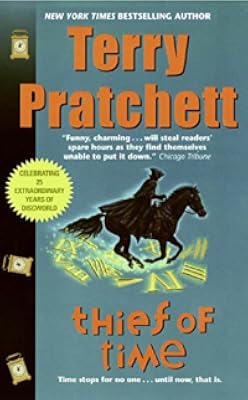
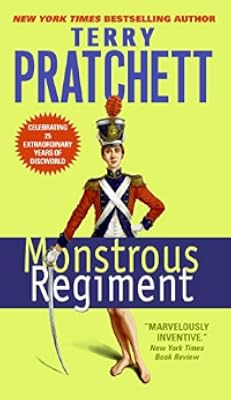
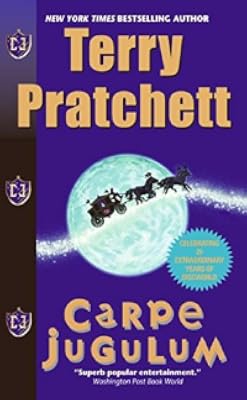
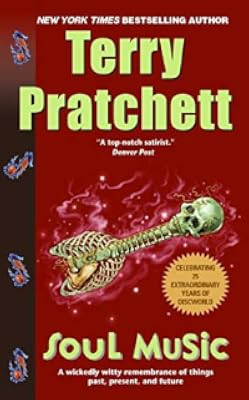
Member Recommendations
Member Reviews
The City Watch have always been my favourite Discworld characters and ‘Snuff’ was an absolute delight from start to finish. Ostensibly the tale of Vimes being sent on holiday against his will, it combines moments of hilarious absurdity with a moving and meaningful plot about acceptance. Although Vimes’ adventures in the countryside dominate, the narrative also darts back to Ankh-Morpork to check on the rest of the Watch. Among the multitude of lines to make me laugh out loud were these, about Sergeants Nobby and Colon:
Other joys include Jane Austen’s cameo, little Sam’s obsession with poo, Vimes’ valet Willikins who is essentially Assassin Jeeves, the dramatic boat chase, the pig magazine, Vimes getting Flutter to turn King’s evidence, Wee Mad Arthur in general, Sybil’s masterful grasp of politics, Vimes copying Vetinari’s intimidation techniques, and sundry excellent bits of dialogue. Pratchett’s skill with names reached new heights with the sea captains: Captain Haddock made me smile, then Captain Murderer made me laugh every time Vimes repeated it in disbelief. Bewilderforce and Bewildred were likewise utter genius.
As with the best of Discworld novels, ‘Snuff’ makes you grin at puns and references while advancing powerful and subtle points about exploitation and empathy. I’ve said it before and I’ll say it again: fantasy novels only work for me if they can convincingly show why the status quo exists and how it can change. Pratchett was especially brilliant at this. Discworld novels are optimistic without naivety, showing how technological and social change can make a world more inclusive to everyone’s benefit. All this and a stream of irresistible puns. show less
And not least, oh my word not least, they were lucky. Many a crime had been solved because things that had fallen on them, tried to kill them, tripped one of them up, been found floating in their lunch, and in oneshow more
case had tried to lay its eggs up Nobby’s nose.
Other joys include Jane Austen’s cameo, little Sam’s obsession with poo, Vimes’ valet Willikins who is essentially Assassin Jeeves, the dramatic boat chase, the pig magazine, Vimes getting Flutter to turn King’s evidence, Wee Mad Arthur in general, Sybil’s masterful grasp of politics, Vimes copying Vetinari’s intimidation techniques, and sundry excellent bits of dialogue. Pratchett’s skill with names reached new heights with the sea captains: Captain Haddock made me smile, then Captain Murderer made me laugh every time Vimes repeated it in disbelief. Bewilderforce and Bewildred were likewise utter genius.
As with the best of Discworld novels, ‘Snuff’ makes you grin at puns and references while advancing powerful and subtle points about exploitation and empathy. I’ve said it before and I’ll say it again: fantasy novels only work for me if they can convincingly show why the status quo exists and how it can change. Pratchett was especially brilliant at this. Discworld novels are optimistic without naivety, showing how technological and social change can make a world more inclusive to everyone’s benefit. All this and a stream of irresistible puns. show less
"Another Sam Vimes and the City Watch novel, poor Sam has to take a vacation in the country, but wherever a policeman goes, crime is sure to follow. Pratchett explores themes of law, human rights, the mind of the killer and the cop who chases him, and privilege. Funny, smart, and moving (as usual) this one feels a bit like covering old ground, but I will gladly walk the same cobblestones (or country lanes) with Sam until I know where I am by the feel of the stones through my boots."
This didn't do much for me; Snuff is the weakest of the eight City Watch novels by a clear margin. Part of my objection is a little unfair: I don't know if Pratchett meant for this to be the last one, but it doesn't feel satisfying for the final one to mostly take place outside of the city and largely not involve the majority of the Watch. Aside from a few scenes, it's all Vimes all the time meaning we don't get closure on long-running subplots, especially Carrot and Angua.
But even on its own terms, this didn't work for me. Both Willikins and Sybil felt out of character, and the book was full of elements that didn't seem to go anywhere. The opening has a big focus on what Lord Vetinari is up to that as far as I could tell turned out to show more be irrelevant, and a subplot about a Jane Austen spoof just gets forgotten. The big climax is good, but then the book just keeps on going.
But even a weak Pratchett is filled with strong moments. The rehabilitation of the goblins is great, and I love any scene where Vimes punctures others' pretensions and/or argues his way into being in authority. So, a frustrating way to go out: glimpses of greatness, but no one wants a series's last installment to be its weakest. show less
But even on its own terms, this didn't work for me. Both Willikins and Sybil felt out of character, and the book was full of elements that didn't seem to go anywhere. The opening has a big focus on what Lord Vetinari is up to that as far as I could tell turned out to show more be irrelevant, and a subplot about a Jane Austen spoof just gets forgotten. The big climax is good, but then the book just keeps on going.
But even a weak Pratchett is filled with strong moments. The rehabilitation of the goblins is great, and I love any scene where Vimes punctures others' pretensions and/or argues his way into being in authority. So, a frustrating way to go out: glimpses of greatness, but no one wants a series's last installment to be its weakest. show less
This Discworld novel revolves around the snuff trade, slave labour and Vimes taking a holiday for the first time in his career, and visiting his vast country estate (originally his wife's) for the first time too.
Vimes is not keen on the idea of a holiday, but warms considerably to the idea when he stumbles on a vicious crime, the murder of a goblin. His righteous sense of justice has virtually never been more active, especially given that law in the countryside is rather absent. So there follows a very dramatic murder mystery plot, where Vimes comes to terms with his role as lord of the manor, while balancing his natural vocation as a copper.
This was definitely one of the finest of the Discworld novels, perhaps second only to Monstrous show more Regiment. There are some wonderful moments where the idiosyncracies of the country come head to head with Vimes' down to earth and highly moral inclinations, as well as some high drama. Pratchett seems at his best when tackling the great themes of injustice: in Monstrous Regiment is was equal rights for women and here it is slavery and racism, mirroring the plight of black people in our world.
One of the more wonderful aspects of the book (amidst a large collection) is the further development of the Vimes' personal butler, Willikins, who is in his element lording over the rest of the servants in the country estate, as well as unleashing his street viciousness when necessary.
At times the euphoric resolutions brought me close to tears here, probably enhanced by the growing fear that each of these fantastically entertaining novels might be the last one available. show less
Vimes is not keen on the idea of a holiday, but warms considerably to the idea when he stumbles on a vicious crime, the murder of a goblin. His righteous sense of justice has virtually never been more active, especially given that law in the countryside is rather absent. So there follows a very dramatic murder mystery plot, where Vimes comes to terms with his role as lord of the manor, while balancing his natural vocation as a copper.
This was definitely one of the finest of the Discworld novels, perhaps second only to Monstrous show more Regiment. There are some wonderful moments where the idiosyncracies of the country come head to head with Vimes' down to earth and highly moral inclinations, as well as some high drama. Pratchett seems at his best when tackling the great themes of injustice: in Monstrous Regiment is was equal rights for women and here it is slavery and racism, mirroring the plight of black people in our world.
One of the more wonderful aspects of the book (amidst a large collection) is the further development of the Vimes' personal butler, Willikins, who is in his element lording over the rest of the servants in the country estate, as well as unleashing his street viciousness when necessary.
At times the euphoric resolutions brought me close to tears here, probably enhanced by the growing fear that each of these fantastically entertaining novels might be the last one available. show less
Sir Terry’s latest Discworld novel tackles, as more than one of his past books has, racism. In the past it’s been trolls and golems; in this book, it’s goblins. Goblins are even less lovable, it seems, than beings made of stone or from animated clay. They are hard to understand (some say they can’t talk), they eat disgusting things, and worst of all, they stink to high heaven. Oh, and their religion involves saving all their earwax, toenail clippings and snot. But they are sentient beings for all that, as Commander Sam Vimes of the Ankh-Morpork Watch quickly learns.
Commander Vimes- Sir Vimes, the Duke of Ankh, as been ordered- er, persuaded- that he needs a vacation by his wife, Lady Sibyl. They have vast family holdings in the show more countryside, and it’s time that their son, six year old Sam, sees them. This, in Vimes the elder’s opinion, is just about the worst possible fate. He’s a city boy, doesn’t understand the country, and doesn’t like having to deal with the rich and noble people that his wife’s station puts him in contact with. He’s a cop, a street cop.
But a if a cop looks long enough he’ll find a crime, and Sam isn’t in the country very long before this turns out to be true. One person has disappeared, possibly murdered, and Vimes framed for it. Goblins are going missing. Smuggling is going on, and overlooked because of who is doing it. There follows a nonstop adventure, with numerous people involved in chicanery and lots of subplots.
This book is a bit different from past Discworld novels. It’s not a joke a minute story. It’s funny, all right, but not in the same, manic, way. There is irony, sarcasm and just plain silliness, thankfully! Vimes is different than he was in the past, too. But Vimes is an older man now, and I see the change as being growth rather than diminishment. The social messages are a little bit more heavy handed, but not heavy handed to the point of being annoying. Like “I Too Shall Wear Midnight”, it strikes me as a little more thoughtful and grounded. It’s not my favorite Discworld book (the Tiffany Aching ones, and any with the Luggage in them, take the honors for me), but it’s certainly well crafted and worthwhile. show less
Commander Vimes- Sir Vimes, the Duke of Ankh, as been ordered- er, persuaded- that he needs a vacation by his wife, Lady Sibyl. They have vast family holdings in the show more countryside, and it’s time that their son, six year old Sam, sees them. This, in Vimes the elder’s opinion, is just about the worst possible fate. He’s a city boy, doesn’t understand the country, and doesn’t like having to deal with the rich and noble people that his wife’s station puts him in contact with. He’s a cop, a street cop.
But a if a cop looks long enough he’ll find a crime, and Sam isn’t in the country very long before this turns out to be true. One person has disappeared, possibly murdered, and Vimes framed for it. Goblins are going missing. Smuggling is going on, and overlooked because of who is doing it. There follows a nonstop adventure, with numerous people involved in chicanery and lots of subplots.
This book is a bit different from past Discworld novels. It’s not a joke a minute story. It’s funny, all right, but not in the same, manic, way. There is irony, sarcasm and just plain silliness, thankfully! Vimes is different than he was in the past, too. But Vimes is an older man now, and I see the change as being growth rather than diminishment. The social messages are a little bit more heavy handed, but not heavy handed to the point of being annoying. Like “I Too Shall Wear Midnight”, it strikes me as a little more thoughtful and grounded. It’s not my favorite Discworld book (the Tiffany Aching ones, and any with the Luggage in them, take the honors for me), but it’s certainly well crafted and worthwhile. show less
This is one of the Sam Vimes/City Watch books (though it's not set in Ankh-Morpork), and so I was bound to like it! In trademark Terry Pratchett style, he includes small details early in the book that take on major significance later (like 1. the way Vetinari enjoys reading musical scores but doesn't get any joy out of hearing them performed, and 2. a book Commander Vimes had read as a child that included a scary picture of a goblin face). Lady Sybil plays her usual role as socialite extraordinaire and knows how to win hearts and minds (and knows how to seduce Commander Vimes). Commander Vimes' man (Wilikins) is here, and there is a new character (a young man by the name of Feeney Upshot) who is a likable and promising character. Even show more Young Sam Vimes (junior) -- 6 yrs old in this book --has a role in this plot.
Unfortunately, some of the pivotal events in the story are awkwardly contrived and many questions are left unanswered. For example,Who exactly is Stinky the goblin? Why does he have a blue aura? Can other people see it too? How does Stinky know about the scary goblin picture Commander Vimes had seen as a child? How was it that Stinky had moments of un-goblinesque eloquence?
About the Summoning Dark: does it witness everything that happens in the dark of night? Can Commander Vimes call on it at will for information? If not, what are the limitations and the cost to Commander Vimes of using the Summoning Dark at will? If so, doesn't this make Commander Vimes' job as a copper so much easier? Indeed, doesn't it make some of the events in the book unnecessary? Commander Vimes could have found Stratford just by asking the Summoning Dark for the murderer's whereabouts.
There were also little things that niggled at me. Most notable, I've never known an alcoholic to be able to nonchalantly spend time in a bar, no matter how many years he's been sober. It's really not that easy.
But Young Sam Vimes' fascination with poo (aka poop) and the very methodical, scientific way he was going about studying poo was truly delightful! Special kudos to Commander Vimes and Lady Sybil for letting the boy follow his curiosity.
As with many of his books, Terry Pratchett uses this novel as a way to lecture his readers on different subjects: redemption, the nature of land ownership and people's relationship to the land (a topic which he lectures about in greater detail in Carpe Jugulum, slavery, rights and responsibilities (including our obligation to step in if we see moral wrongdoing). You can read this novel as an allegory of the enslavement of Africans or as an allegory of the Holocaust. My favorite line:
There is no race so wretched that there is not something out there that cares for them, Mr Vimes.
-- said by Stinky, "the wretched little goblin," on page 281 of my hardcover edition.
The writing in this book is not as heavy on puns and absurdism as some of his other books (e.g. The Last Continent). It is action-driven, though the character of Feeney Upshot has a distinctive character arc. The writing is smooth and I sped through the pages to get to the end, though the last 75 or so pages is just wrap-up as Pratchett puts a happy ending on the various threads of the story. This book has some of the City Watch characters I know and love, but since the story takes place outside of Ankh-Morpork, their roles are small.
This is not my favorite Discworld book, but I definitely liked it and would recommend it.
~bint show less
Unfortunately, some of the pivotal events in the story are awkwardly contrived and many questions are left unanswered. For example,
About the Summoning Dark: does it witness everything that happens in the dark of night? Can Commander Vimes call on it at will for information? If not, what are the limitations and the cost to Commander Vimes of using the Summoning Dark at will? If so, doesn't this make Commander Vimes' job as a copper so much easier? Indeed, doesn't it make some of the events in the book unnecessary? Commander Vimes could have found Stratford just by asking the Summoning Dark for the murderer's whereabouts.
There were also little things that niggled at me. Most notable, I've never known an alcoholic to be able to nonchalantly spend time in a bar, no matter how many years he's been sober. It's really not that easy.
But Young Sam Vimes' fascination with poo (aka poop) and the very methodical, scientific way he was going about studying poo was truly delightful! Special kudos to Commander Vimes and Lady Sybil for letting the boy follow his curiosity.
As with many of his books, Terry Pratchett uses this novel as a way to lecture his readers on different subjects: redemption, the nature of land ownership and people's relationship to the land (a topic which he lectures about in greater detail in Carpe Jugulum, slavery, rights and responsibilities (including our obligation to step in if we see moral wrongdoing). You can read this novel as an allegory of the enslavement of Africans or as an allegory of the Holocaust. My favorite line:
There is no race so wretched that there is not something out there that cares for them, Mr Vimes.
-- said by Stinky, "the wretched little goblin," on page 281 of my hardcover edition.
The writing in this book is not as heavy on puns and absurdism as some of his other books (e.g. The Last Continent). It is action-driven, though the character of Feeney Upshot has a distinctive character arc. The writing is smooth and I sped through the pages to get to the end, though the last 75 or so pages is just wrap-up as Pratchett puts a happy ending on the various threads of the story. This book has some of the City Watch characters I know and love, but since the story takes place outside of Ankh-Morpork, their roles are small.
This is not my favorite Discworld book, but I definitely liked it and would recommend it.
~bint show less
In one of his most serious books (which is still pretty funny), Pratchett takes on the heavy subject of slavery and racism, and how very decent people can participate in it simply by being ignorant, and how we can ignore wonderful things happening literally under our own nose. Good thing we have Commander Vimes, who while not good at explaining why something is right, he can always feel it in his guts - and make others feel it, too.
Members
- Recently Added By
Published Reviews
ThingScore 100
Pratchett is a master storyteller. He is endlessly inventive, even when telling a routine kind of tale. He gives you more information and more story than you need, just because he can, and this is completely satisfying. He is a master of complex jokes, good bad jokes, good dreadful jokes and a kind of insidious wisdom about human nature (and other forms of alien nature). I think his mad show more footnotes are there because he can't stop his mind whirring, and our whirring minds go with him. I read his books at a gallop and then reread them every time I am ill or exhausted. show less
added by riverwillow
Lists

Best Satire
188 works; 29 members

Books Read in 2023
5,638 works; 147 members

Mind Expanding Books by hackerkid
581 works; 8 members

Books Read in 2014
2,343 works; 89 members

Genre Benders: Comic Fantasy
97 works; 16 members

Books Read in 2017
4,249 works; 130 members

Books Read in 2015
3,299 works; 126 members

Books Read in 2020
4,379 works; 124 members

Books Set in Small Towns and Villages
278 works; 16 members
Books Read in 2016
4,666 works; 199 members

Books Read in 2022
5,226 works; 115 members

Huxley's reading log 2017
45 works; 1 member

Books We Love to Reread
688 works; 296 members

Books Read in 2013
1,630 works; 51 members

Books Read in 2012
816 works; 34 members

2010s
241 works; 3 members

Books Read in 2012 (Numbered)
168 works; 6 members

Allie's Wishlist
217 works; 2 members

Genre Benders: Fantasy + Mystery
108 works; 16 members

Alphabetical Books
211 works; 3 members
Talk Discussions
Past Discussions
The New Book - Snuff in All Things Discworldian - The Guild of Pratchett Fans (April 2012)
Snuff: The Spoiler Thread in All Things Discworldian - The Guild of Pratchett Fans (April 2012)
Author Information

422+ Works 580,957 Members
Terry Pratchett was on born April 28, 1948 in Beaconsfield, United Kingdom. He left school at the age of 17 to work on his local paper, the Bucks Free Press. While with the Press, he took the National Council for the Training of Journalists proficiency class. He also worked for the Western Daily Press and the Bath Chronicle. He produced a series show more of cartoons for the monthly journal, Psychic Researcher, describing the goings-on at the government's fictional paranormal research establishment, Warlock Hall. In 1980, he was appointed publicity officer for the Central Electricity Generating Board with responsibility for three nuclear power stations. His first novel, The Carpet People, was published in 1971. His first Discworld novel, The Colour of Magic, was published in 1983. He became a full-time author in 1987. He wrote more than 70 books during his lifetime including The Dark Side of the Sun, Strata, The Light Fantastic, Equal Rites, Mort, Sourcery, Truckers, Diggers, Wings, Dodger, Raising Steam, Dragons at Crumbling Castle: And Other Tales, and The Shephard's Crown. He was diagnosis with early onset Alzheimer's disease in 2007. He was knighted for services to literature in 2009 and received the World Fantasy award for life achievement in 2010. He died on March 12, 2015 at the age of 66. (Bowker Author Biography) show less
Some Editions
Awards and Honors
Awards
Series


Belongs to Publisher Series
Work Relationships
Contains
Common Knowledge
- Canonical title*
- Steife Prise
- Original title
- Snuff
- Original publication date
- 2011-10
- People/Characters
- Sam Vimes; Lady Sybil Ramkin Vimes; Young Sam Vimes; Havelock Vetinari (Patrician of Ankh-Morpork); Chief Constable Feeney Upshot; Fred Colon (show all 37); Nobby Nobbs; Felicity Beedle; Tears of the Mushroom; Captain Carrot; Inspector A. E. Pessimal; Lord Gravid Rust; Ted Flutter; Angua von Überwald; Constable Wee Mad Arthur; Constable Precious Jolson; Acting Captain Haddock; Lieutenant Perdix; Captain Murderer; Mr. Stump; Detritus; Lady Margolotta; Colonel Charles Augustus Makepeace; Letitia Makepeace; Miss. Pickerings; Knatchbull Harrington; William de Worde; Mr. Coffin; William Butler; Ariadne Gordon; Emily Gordon; Mavis Gordon; Fleur Gordon; Amanda Gordon; Jane Gordon; Hermione Gordon; Mad Jack Ramkin
- Important places
- Ankh-Morpork, Discworld; Howondaland, Discworld; Quirm, Discworld
- Dedication
- For Rob... for in between his days off.
For Emma... for helping me understand goblins.
And for Lyn... for always. - First words
- The goblin experience of the world is the cult or perhaps religion of Unggue.
- Quotations
- Vimes never understood where those explosive 'What's came from. After all, he thought, what's the point of just barking out 'What!' for absolutely no discernible reason? And as for "What, what!?" well, what was that all about... (show all)? What? 'What?' seemed to be tent pegs hammered into the conversation, but what the hell for? What?
Lady Sybil took the view that her darling husband's word was law for the City Watch while, in her own case, it was a polite suggestion to be graciously considered.
[said by Willikins] This is a stiletto I'm holding to your throat and it ain't no ladies' shoe, this is the real thing, the cutting edge, as it were. You are a little twit, and I ain't the commander and I will slice you to th... (show all)e bone if you make a move. Got that? Now don't nod your head! Good, we are learning, aren't we? Now, my lad, the commander here is trusted by Diamond King of Trolls and the Low King of the Dwarfs, who would only have to utter a word for your measly carcass to come under the caress of a large number of versatile axes, and by Lady Margolotta of Uberwald, who trusts very few people, and by Lord Veterinari of Ankh-Morpork, who doesn't trust anybody. Got that? Don't nod! And you, my little man, have the damn nerve to doubt his word. I'm an easygoing sort of fellow, but that sort of thing leaves me right out of sorts, I don't mind telling you. You understand? I said, do you understand? Oh, all right, you can nod now. [...] - Last words
- (Click to show. Warning: May contain spoilers.)The title of the book was Pride and Extreme Prejudice.
- Original language
- English
*Some information comes from Common Knowledge in other languages. Click "Edit" for more information.
Classifications
Statistics
- Members
- 5,949
- Popularity
- 2,174
- Reviews
- 187
- Rating
- (3.98)
- Languages
- 11 — Chinese, Czech, Dutch, English, Estonian, Finnish, French, German, Polish, Russian, Spanish
- Media
- Paper, Audiobook, Ebook
- ISBNs
- 51
- UPCs
- 1
- ASINs
- 27
