On This Page
Description
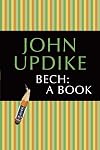
Fiction. Literature. HTML:The Jewish American novelist Henry Bech—procrastinating, libidinous, and tart-tongued, his reputation growing while his powers decline—made his first appearance in 1965, in John Updike’s “The Bulgarian Poetess.” That story won the O. Henry First Prize, and it and the six Bech adventures that followed make up this collection. “Bech is the writer in me,” Updike once said, “creaking but lusty, battered but undiscourageable, fed on the blood of ink and show more the bread of white paper.” As he trots the globe, promotes himself, and lurches from one woman’s bed to another’s, Bech views life with a blend of wonder and cynicism that will make followers of the lit-biz smile with delight and wince in recognition. show lessTags
Recommendations





















Member Reviews
Published in 1970, Bech: A Book chronicles the exploits of Jewish American writer Henry Bech who, though still relatively young (around 40), finds his initially promising literary career on a distressing downward trajectory. Updike’s Bech is a not-so-rare phenomenon: the precocious young literary star whose subsequent output has not come close to matching the critical and popular success of his first novel. That novel, Travel Light, was a surprise hit. It established his credentials and, having breached the halls of academia, continues to generate discussion and (better yet) sales. But after a second novel (Brother Pig) was greeted with bewilderment, a collection of miscellaneous pieces (When the Saints) that was widely ignored, and a show more third novel (The Chosen) that was panned and failed to catch on with readers, poor Bech finds himself suffering from severe writers block and starting to share his readers’ bewilderment. Updike’s collection of smartly amusing tales that follow our hapless hero through a “cultural exchange” tour of several Soviet-controlled states (Russia, Bulgaria) and visits to London and a Virginia girls’ college is filled with droll observations about the literary life and often hilarious situational comedy. As Updike portrays him, Henry Bech is a man at a creative crossroads. Recently a literary heavyweight, he retains a recognizable name and more-or-less secure reputation, but his star has slipped a few notches and he’s no longer in demand like he used to be. Since he’s not writing he must, in order to maintain a level of income, accept whatever invitations come his way. He is also at sea when it comes to women. He’s preoccupied by sex and easily forms alliances but has difficulty with emotional honesty and avoids commitment like the plague. His greatest fear, vividly evoked, is that his best days are behind him. His greatest frustration is that even though he’s not producing anything, he is still a writer, burdened with a febrile mind awash with ideas that he’s unable to bring to fruition. Frustratingly, no one is interested in his later work: all anyone wants to talk about is Travel Light. Updike presents Bech as a man hobbled by self-doubt, dubious of his accomplishments and uncertain of his legacy, but because of his first book is still subject to warm welcomes and lavish praise that he’s pretty sure he doesn’t deserve. In the final story, “Bech Enters Heaven,” he is ushered with great ceremony into the hallowed ranks of an unnamed Academy, a body of iconic artists who are being honoured, it seems, for having the audacity to still be alive. The prose throughout is sharp, inspired, and endlessly imaginative. Bech: A Book is Updike at his most wittily sardonic. show less
I'm not sure how close to autobiographical Bech is to Updike. I image there's some interchange and it's intentional, but I'm not an Updike scholar, so I won't go too far out on that limb. I'm willing to bet however, that when Bech came out, it was something that ruffled the feathers of polite society even if it would be considered tame today.
The book is funny in a non laugh-out-loud way. It's Updike, so the writing is brilliant as I expected, but I wasn't too enthralled with the story of a middle-aged writer, past the prime of his art, and his exploration of the world only open through his past success. It was alright. However, there were three different passages that made the entire book worth reading. If you plan on reading it, don't show more read further here. If you don't and you're curious, here you go:
Talking about one of his soon-to-be mistresses:
"He was on the dark side of the earth in a cab with a creature whose dress held dozens of small mirrors. Her legs were white like knives, crossed and recrossed. A triangular bit of punctuation where the thighs ended. The cab moved through empty streets, past wrought-iron gates inked onto the sky and granite museums frowning beneath the weight of their entablatures, across the bright loud gulch if Hyde Park Corner and Park Lane, into darker quieter streets."
"In short, one loses heart in the discovery that one is not being read. That the ability to read, and therefor to write, is being lost, along with the ability to listen, to see, to smell, and to breathe. That all the windows of the spirit are being nailed shut."
"And to think that all the efforts of his life--his preening, his lovemaking, his typing--boiled down to the attempt to displace a few sparks to bias a few circuits, within some random other scoops of jelly that would, in less time that it takes the Andreas Fault to shrug or the tail-tip star of Scorpio to crawl an inch across the map of Heaven, be utterly dissolved. The widest fame and most enduring excellence shrank to nothing in this perspective." show less
The book is funny in a non laugh-out-loud way. It's Updike, so the writing is brilliant as I expected, but I wasn't too enthralled with the story of a middle-aged writer, past the prime of his art, and his exploration of the world only open through his past success. It was alright. However, there were three different passages that made the entire book worth reading. If you plan on reading it, don't show more read further here. If you don't and you're curious, here you go:
Talking about one of his soon-to-be mistresses:
"He was on the dark side of the earth in a cab with a creature whose dress held dozens of small mirrors. Her legs were white like knives, crossed and recrossed. A triangular bit of punctuation where the thighs ended. The cab moved through empty streets, past wrought-iron gates inked onto the sky and granite museums frowning beneath the weight of their entablatures, across the bright loud gulch if Hyde Park Corner and Park Lane, into darker quieter streets."
"In short, one loses heart in the discovery that one is not being read. That the ability to read, and therefor to write, is being lost, along with the ability to listen, to see, to smell, and to breathe. That all the windows of the spirit are being nailed shut."
"And to think that all the efforts of his life--his preening, his lovemaking, his typing--boiled down to the attempt to displace a few sparks to bias a few circuits, within some random other scoops of jelly that would, in less time that it takes the Andreas Fault to shrug or the tail-tip star of Scorpio to crawl an inch across the map of Heaven, be utterly dissolved. The widest fame and most enduring excellence shrank to nothing in this perspective." show less
Updike is probably my favourite author of all time. This didn't engage me in the same way as his novels, but it certainly IS brilliantly written, sophisticated and very amusing at times.
In snapsots of his life, the reader follows Henry Bech, a 40 something New York Jewish author (one feels that much of Bech is Updike), as he visits the Communist bloc on a book tour; tries pot; is inveigled into holding a seminar at an elite ladies' university, and gets received into the echelons of literature.
Snarky and observant...or sadly recognising the beginning of age, of - maybe- his best work being behind him, it's predictably great writing.
In snapsots of his life, the reader follows Henry Bech, a 40 something New York Jewish author (one feels that much of Bech is Updike), as he visits the Communist bloc on a book tour; tries pot; is inveigled into holding a seminar at an elite ladies' university, and gets received into the echelons of literature.
Snarky and observant...or sadly recognising the beginning of age, of - maybe- his best work being behind him, it's predictably great writing.
One of Updike's most sophisticated entertainments, with delightful surprises on every page. As an alter ego, Henry Bech is a sort of anti-Updike. From the metropolis, Jewish, never went to college, served in the military, a confirmed bachelor, and suffering from writer's block. Bech is also an Updikean vehicle for satirizing the New York literary scene, and American letters in general.
A passive character, aimless and blocked, Bech wanders the world of writers and literary fests without joy. The stories satirize literary chat and the airless world of writer's symposiums.
Bech is no match for Enderby.
Bech is no match for Enderby.
John Updike really, really had a way with words, and this book is no exception to such examples of his writing. "his scraped heart flinched" really stuck with me. While I did enjoy this volume (first published 1970), it is a short-story collection, all of which centers around a fictional author, Henry Bech. I am more a fan of the novel form than short stories, hence this mid-rating.
Ordinarily John Updike is an author I enjoy, as in his "Rabbit, Run". But this story of an American writer travelling through Europe, although well-written, failed to move or interest me in any way. It is one of those books that English teachers love, but I was happy to just finish it. I keep it out of respect for the author and the skill that went into it, but the characters did not particularly intrigue me, especially Bech.
Members
- Recently Added By
Published Reviews
Tras una novela de éxito, la carrera de Henry Bech, escritor norteamericano entrado en la cuarentena, comienza a languidecer. Ahora, mediada la atribulada década de los años sesenta, para huir de la parálisis creativa, acepta participar en unos «intercambios culturales» promovidos por el Departamento de Estado que lo llevarán a Rusia, Rumania o Bulgaria, cuando el Telón todavía era de show more acero. Pero ni las bondades del deshielo soviético ni la sucesión de esperpénticos encuentros –un choque de civilizaciones avant la lettre, con hilarantes confusiones por problemas de traducción o equívocos en los flirteos– consiguen sacarlo de su embotamiento. Como tampoco le ayudarán mucho los incidentes que salpican su vida de vuelta a Occidente: desde una visita al Londres más chic de la década prodigiosa a unas conferencias en una universidad femenina del profundo Sur o los vaivenes sentimentales en su amada Nueva York. show less
added by Pakoniet
Lists

Books referenced in Jim Holt's Why Does the World Exist?
119 works; 1 member

National Book Award Finalists - Fiction
377 works; 12 members
Author Information

341+ Works 53,437 Members
American novelist, poet, and critic John Updike was born in Reading, Pennsylvania on March 18, 1932. He received an A.B. degree from Harvard University, which he attended on a scholarship, in 1954. After graduation, he accepted a one-year fellowship to study painting at the Ruskin School of Drawing and Fine Art in Oxford, England. After returning show more from England in 1955, he worked for two years on the staff of The New Yorker. This marked the beginning of a long relationship with the magazine, during which he has contributed numerous short stories, poems, and book reviews. Although Updike's first published book was a collection of verse, The Carpentered Hen and Other Tame Creatures (1958), his renown as a writer is based on his fiction, beginning with The Poorhouse Fair (1959). During his lifetime, he wrote more than 50 books and primarily focused on middle-class America and their major concerns---marriage, divorce, religion, materialism, and sex. Among his best-known works are the Rabbit tetrology---Rabbit, Run (1960), Rabbit Redux (1971), Rabbit Is Rich (1981), and Rabbit at Rest (1988). Rabbit, Run introduces Harry "Rabbit" Angstrom as a 26-year-old salesman of dime-store gadgets trapped in an unhappy marriage in a dismal Pennsylvania town, looking back wistfully on his days as a high school basketball star. Rabbit Redux takes up the story 10 years later, and Rabbit's relationship with representative figures of the 1960s enables Updike to provide social commentary in a story marked by mellow wisdom and compassion in spite of some shocking jolts. In Rabbit Is Rich, Harry is comfortably middle-aged and complacent, and much of the book seems to satirize the country-club set and the swinging sexual/social life of Rabbit and his friends. Finally, in Rabbit at Rest, Harry arrives at the age where he must confront his mortality. Updike won the Pulitzer Prize for both Rabbit Is Rich and Rabbit at Rest. Updike's other novels range widely in subject and locale, from The Poorhouse Fair, about a home for the aged that seems to be a microcosm for society as a whole, through The Court (1978), about a revolution in Africa, to The Witches of Eastwick (1984), in which Updike tries to write from inside the sensibilities of three witches in contemporary New England. The Centaur (1963) is a subtle, complicated allegorical novel that won Updike the National Book Award in 1964. In addition to his novels, Updike also has written short stories, poems, critical essays, and reviews. Self-Consciousness (1989) is a memoir of his early life, his thoughts on issues such as the Vietnam War, and his attitude toward religion. He was elected to the American Academy of Arts and Letters in 1977. He died of lung cancer on January 27, 2009 at the age of 76. (Bowker Author Biography) John Updike was born in 1932, in Shillington, Pennsylvania. Since 1957 he has lived in Massachusetts. His novels have won the Pulitzer Prize, the National Book Award, the National Book Critics Circle Award, & the Howells Medal. (Publisher Provided) John Updike was born in 1932 and attended Harvard College and the Ruskin School of Drawing and Fine Art in Oxford, England. Form 1955 to 1957 he was a staff member of The New Yorker, which he contributed numerous writings. Updike's art criticism has appeared in publications including Arts and Antiques, The New Republic, The New York Times Book Review, and Realites, among many others. He is the author of such best-selling novels as Rabbit Run and Rabbit is Rich. His many works of fiction, poetry and criticism have been awarded the Pulitzer Prize, the National Book Award, the American Book Award, and the National Book Critics Circle Award. For the past 40 years he has lived in Massachusetts. (Publisher Provided) John Updike is the author of some 50 books, including collections of short stories, poems, & criticism. His novels have won the Pulitzer Prize, the National Book Award, the National Book Critics Circle Award, & the Howells Medal. Born in Shillington, Pennsylvania, in 1932, he has lived in Massachusetts since 1957. (Publisher Provided) show less
Some Editions
Awards and Honors
Series

Belongs to Publisher Series
Gallimard, Folio (1630)
Common Knowledge
- Original publication date
- 1970
- People/Characters
- Henry Bech; Ekaterina "Kate" Alexandrovna Ryleyeva ("Rich in Russia"); Athanase Petrescu ("Bech in Rumania | or, The Rumanian Chauffeur"); Vera Glavanakova ("The Bulgarian Poetess"); Wendell Morrison ("Bech Takes Pot Luck"); Norma Latchett (show all 11); Bea Latchett; Ruth Eisenbraun ("Bech Panics"); Jorgen Josiah "Goldy" Goldschmidt ("Bech Swings?"); Tuttle ("Bech Swings?"); Merissa Merrill ("Bech Swings?")
- Publisher's editor
- Jones, Judith
Classifications
Statistics
- Members
- 566
- Popularity
- 52,163
- Reviews
- 10
- Rating
- (3.45)
- Languages
- 6 — Dutch, English, French, Norwegian (Bokmål), Spanish, Swedish
- Media
- Paper, Ebook
- ISBNs
- 15
- ASINs
- 18