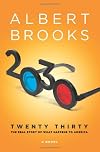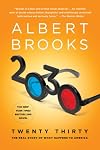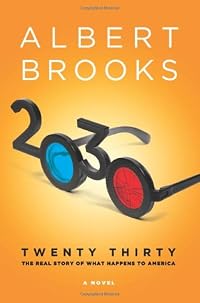
2030: The Real Story of What Happens to America
by Albert Brooks
On This Page
Description
Is this what's in store?June 12, 2030, started out like any other day in memory-and by then, memories were long. Since cancer had been cured fifteen years before, America's population was aging rapidly. That sounds like good news, but consider this: millions of baby boomers, with a big natural predator picked off, were sucking dry benefits and resources that were never meant to hold them into their eighties and beyond. Young people around the country simmered with resentment toward "the show more olds" and anger at the treadmill they could never get off of just to maintain their parents' entitlement programs. But on that June 12th, everything changed: a massive earthquake devastated Los Angeles, and the government, always teetering on the edge of bankruptcy, was unable to respond.The fallout from the earthquake sets in motion a sweeping novel of ideas that pits national hope for the future against assurances from the past and is peopled by a memorable cast of refugees and billionaires, presidents and revolutionaries, all struggling to find their way. In 2030, the author's all-too-believable imagining of where today's challenges could lead us tomorrow makes for gripping and thought-provoking listening. show lessTags
Recommendations







Member Recommendations
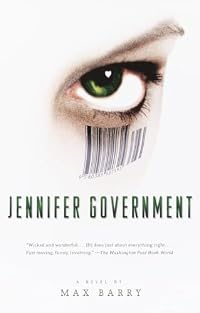
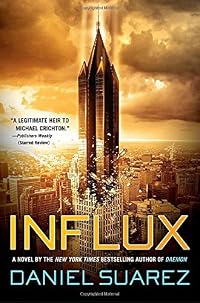
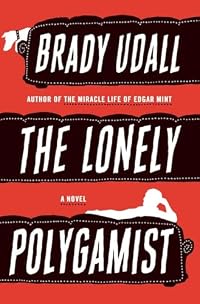
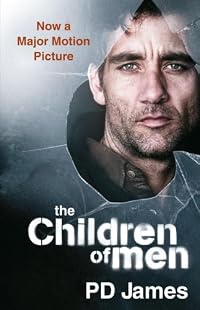
hairball Exploration of similar themes with somewhat similar outcomes. The two are a really obvious pair.
Member Reviews
Brooks' idea about American society in the year 2030 is spot on. I could absolutely see this happening, which is pretty depressing. In Brooks' future, most ailments have been cured and people are living to be 120 or so. The generation gap is a bigger chasm than ever, and the "olds" hold most of the wealth and power. The middle-aged can't get ahead and the young are resentful. Brooks follows a representative of each age group, as well as the President, until their stories intertwine for the big finale. My only complaint is that said finale is not as big as I would have liked, and that it left me wondering what happens next. I hope he's got a sequel in there, but enough of the storylines were tied up that I kind of don't think so.
As show more always, Brooks is witty, cerebral, and realistic. I was figuratively laughing through tears at several points. He really has a good idea of what go on inside people's heads, and makes you sympathize with every character, even ones in direct opposition to each other. You get the sense that everyone's doing the best they can with what they have to work with, instead of a good guys vs. bad guys tale. Again, I really enjoyed this; I am always a fan of Albert Brooks. show less
As show more always, Brooks is witty, cerebral, and realistic. I was figuratively laughing through tears at several points. He really has a good idea of what go on inside people's heads, and makes you sympathize with every character, even ones in direct opposition to each other. You get the sense that everyone's doing the best they can with what they have to work with, instead of a good guys vs. bad guys tale. Again, I really enjoyed this; I am always a fan of Albert Brooks. show less
Only a few pages into Albert Brooks’s 2030:The Real Story of What Happens to America, I was struck by how logical his version of 2030 America felt to me. Based on what 2011 America is like, it is very easy to see how America could find herself in the middle of a generational civil war by 2030 – or sooner. Let us just hope that the rest of Brook’s vision is not as likely a predictor of the country’s future.
By 2030, thanks to China’s financing of America’s lifestyle, things are still looking good in America. Cancer has been cured and people are living longer, and more comfortably, than ever before. A score of other new drugs have even made it possible for the elderly to look and feel better than they did when they were in show more their forties and fifties. The cliché that “60 is the new 40” is, in fact, now an understatement of the truth about aging in America.
And then it happens: Los Angeles is leveled by “the big one,” an earthquake so damaging that the government cannot even begin to rebuild the devastated infrastructure of one of its largest cities without a loan of trillions of dollars from China. But this time the Chinese refuse, correctly pointing out that there is no way America could ever pay back the money.
China is not the only creditor weary of supporting a lifestyle in which it, for the most part, does not share. America’s young have reached their own breaking point, and they see only a bleak future for themselves if they have to finance the extended lifetimes of those who came before them. The “olds” sense the resentment directed their way but, despite the increased security measures most of them take, they are more and more often being targeted by assassins willing to die for the cause.
This is Albert Brooks’s first novel and, while it does display a little of the kind of humor the author is famous for, readers should recognize coming in that this is not a comedy. Brooks tells his story through the eyes of several main characters from both sides of the equation: an American president faced with doing something unthinkable if it will save the country; an 80-year-old survivor of the earthquake with no place to go; a young woman burdened by the huge medical bills left behind by her deceased father; a wealthy young man determined to strike back at the elderly; and a Chinese billionaire holding the key to the future of California – and America.
2030 is more warning than comedic farce. This is one road we both could be headed down, America and Europe. Let’s hope that Brooks’s vision does not become our reality.
Rated at: 4.0 show less
By 2030, thanks to China’s financing of America’s lifestyle, things are still looking good in America. Cancer has been cured and people are living longer, and more comfortably, than ever before. A score of other new drugs have even made it possible for the elderly to look and feel better than they did when they were in show more their forties and fifties. The cliché that “60 is the new 40” is, in fact, now an understatement of the truth about aging in America.
And then it happens: Los Angeles is leveled by “the big one,” an earthquake so damaging that the government cannot even begin to rebuild the devastated infrastructure of one of its largest cities without a loan of trillions of dollars from China. But this time the Chinese refuse, correctly pointing out that there is no way America could ever pay back the money.
China is not the only creditor weary of supporting a lifestyle in which it, for the most part, does not share. America’s young have reached their own breaking point, and they see only a bleak future for themselves if they have to finance the extended lifetimes of those who came before them. The “olds” sense the resentment directed their way but, despite the increased security measures most of them take, they are more and more often being targeted by assassins willing to die for the cause.
This is Albert Brooks’s first novel and, while it does display a little of the kind of humor the author is famous for, readers should recognize coming in that this is not a comedy. Brooks tells his story through the eyes of several main characters from both sides of the equation: an American president faced with doing something unthinkable if it will save the country; an 80-year-old survivor of the earthquake with no place to go; a young woman burdened by the huge medical bills left behind by her deceased father; a wealthy young man determined to strike back at the elderly; and a Chinese billionaire holding the key to the future of California – and America.
2030 is more warning than comedic farce. This is one road we both could be headed down, America and Europe. Let’s hope that Brooks’s vision does not become our reality.
Rated at: 4.0 show less
An interesting book but it had an irritating habit of dumping large amounts of information instead of telling a story. I wish the story had been more important than the predictions of what the world might look like. This was closer to 2.5 stars than 3.
The title of Albert Brooks novel, Twenty Thirty, refers to the year in which this dystopian tale takes place. I've enjoyed Albert Brooks since I first saw him almost 40 years ago on The Flip Wilson Show. In his first novel, Brooks tells a story which is both frighteningly realistic, and funny as hell. By the title year, cancer has been cured, removing the biggest predatory threat to mankind. Many other health advances have also occurred, and the result is that 80 is the new 50. There is great resentment for "the olds" among younger people, as the entitlement safety net stretches to the breaking point. Then, in 2030, The Big One finally hits LA. 9.1 on the richter scale. The city and its suburbs are demolished; and the Government show more realizes that the money to repair and rebuild simply doesn't exist. Hilarity ensues. The book reminds me a lot of Christopher Buckley. It is a low-level satire, and thoroughly enjoyable. I'm glad I read it. show less
This highly entertaining book with a great cast of characters gives a possible view of our economy and healthcare system 20 years in the future. The story grabbed me from the start, and I was in suspense throughout wondering how this would all turn out. It doesn't matter whether you are liberal or conservative, you'll be intrigued by the story and the ending. A book that will stay with you long after you've finished it. Highly recommended.
With a title like "2030," there's a good chance that many who read this novel will automatically draw comparisons to "1984" and its string of projected incidents which have become reality. And indeed, the premise of "2030" draws strongly on the indications of today American society -- financial chaos, the consequences of extended life through healthcare and higher standards of living, the shrinking working generation and the burgeoning senior and retirees. In this novel, one of the primary movements is amongst the young people, who are shouldering the burden of caring for the "olds" and are now rebelling against the costs of education, of healthcare, having been told that they must take out loans which can never be repaid in their show more current situations -- something that could have been lifted from the headlines describing any of the recent Occupy movements. Add into the plot a devastating earthquake which destroys the infrastructure and wealth of an entire coast; a push by a medical genius to solve problems of aging such that people could live to be over one hundred fifty years old; and a political system thoroughly broken by greed and egocentricism, and you have a pretty good picture of Brooks' fictional future America.
Reading this book is a little painful because it does reflect some of the current lines of thinking that I've heard tossed about, even in passing or in jest. Seeing how these ideas might play out, even in fiction, is horrifying. One interesting conversations in the novel is about halfway through, when the leader of the young organization Enough is Enough meets with an older Dr. Masters, who specializes in mercy euthanasia for the functionally brain dead and terminally ill. It is a fascinating book, and well worth reading. show less
Reading this book is a little painful because it does reflect some of the current lines of thinking that I've heard tossed about, even in passing or in jest. Seeing how these ideas might play out, even in fiction, is horrifying. One interesting conversations in the novel is about halfway through, when the leader of the young organization Enough is Enough meets with an older Dr. Masters, who specializes in mercy euthanasia for the functionally brain dead and terminally ill. It is a fascinating book, and well worth reading. show less
I really really wanted to love this book. Great premise, characters have interesting bios, but something is off. Pacing is stilted, and author Albert Brooks does too much telling not enough showing -- making it hard to care about these people, who come off rather flat. Makes me realize how much it takes for an author to make characters really come alive. Brooks' view of the future is absolutely fascinating, however, and quite anxiety-provoking, because it's realistic enough to be...true? Could we be vulnerable to land-grabbing countries because the U.S. debt will be so out of control?
Members
- Recently Added By
Lists

Biggest Disappointments
606 works; 168 members
Author Information

15+ Works 808 Members
Albert Lawrence Brooks was born Albert Lawrence Einstein, but changed his surname so as not to be confused with the famous physicist. He was born on July 22, 1947 and is an American actor. He attended Carnegie Mellon in Pittsburgh, but dropped out after one year to focus on his comedy career. Brooks has starred in many comedic roles in such films show more as Unfaithfully Yours, Broadcast News, Defending your Life, I'll Do Anything and The In-Laws. He was nominated for an Academy Award in 1987 for Best Supporting Actor in his role played in Broadcast News. In 2011, he published a fiction novel entitled 2030. (Bowker Author Biography) show less
Awards and Honors
Distinctions
Common Knowledge
- Original publication date
- 2011-05-10
- People/Characters
- Brad Miller; Sam Mueller; Kathy Bernard; Stewart Bernard; Herb Fine; Jack Eller (show all 8); Brian Nelson; Matthew Bernstein (President of the United States)
- Dedication
- For my wife, Kimberly, and my children, Jacob and Claire
- First words
- It was a normal day, or so it seemed.
Classifications
Statistics
- Members
- 567
- Popularity
- 51,708
- Reviews
- 37
- Rating
- (3.33)
- Languages
- English, Korean
- Media
- Paper, Audiobook, Ebook
- ISBNs
- 11
- ASINs
- 5