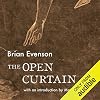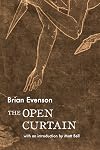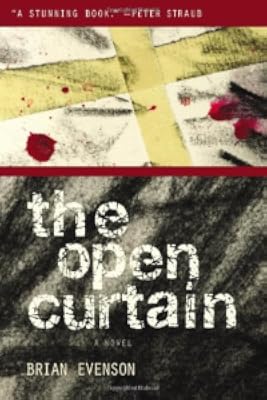
The Open Curtain
by Brian Evenson
On This Page
Description
A taut, otherworldly, and moving literary thriller investigating the contemporary aftermath of Mormonism's shrouded and violent past. When Rudd, a troubled teenager, embarks on a school research project, he runs across the secret Mormon ritual of blood sacrifice, and its role in a 1902 murder committed by the grandson of Brigham Young. Along with his newly discovered half-brother, Rudd becomes swept up in the psychological and atavistic effects of this violent, antique ritual. As the past show more and the present become an increasingly tangled knot, Rudd is found-with minor injuries and few memories-at the scene of a multiple murder on a remote campsite. Lyndi, the daughter of the victims, tries to help Rudd recover his memory and, together, they find a strength unique to survivors of terrible tragedies. But Rudd, desperate to protect Lyndi and unable to let the past be still, tries to manipulate their Mormon wedding ceremony to trick the priests (and God) by giving himself and Lyndi new secret names-names that match the killer and the victim in the one hundred-year-old murder. The nightmare has just begun... show lessTags
Recommendations











Member Recommendations
Member Reviews
I have perhaps become spoiled by my time splashing in the shallows of genre fiction, seduced by the promise of easy entertainment and little cognitive output. This is not to say that either fantasy or science-fiction are, on the whole, mindless. Of course not. We have seen over the past decade (or a bit more), the ascension of Tolkien to literary classic, and, if sci-fi remains somewhat ghettoized, it nonetheless has shown its potential for inspiring scientists and technologists and raising questions about urgent social issues. But, and of course there's a but, most genre fiction is of little value beyond the amusement it initially offers the reader. The mid-range of SFF, in which (I think) I most often wade, can be hit or miss, and, show more consequently my brain...thing has atrophied...or something. In any case, when presented these days with a novel that can be identified both as genre (horror) and literature, I am befuddled. Intimidated. Unequal to the task. Thus was my experience with Brian Evenson's The Open Curtain (Coffee House Press, 2006).
The plot is simple enough. Rudd, whom, the reader will quickly learn, is a troubled adolescent, discovers that he has a "long lost" half-brother, Lael. "Lyle?" You might ask, as will every other character in the novel. "No," Rudd calmly repeats, "Lael." Rudd is both attracted to and repulsed by Lael, who is a manipulative bully. Rudd severs ties with him, only to be drawn back to him when they both become fascinated by the 1902 murder of a woman committed by Brigham Young's grandson. The boys see in the murder the rite of "Blood Atonement," a violent ritual, the existence of which the Church of Latter Day Saints denies.
Without going into too much detail (no spoilers!) Rudd ends up the lone survivor of the violent murder; the other victims are a family unrelated to Rudd. It's at this point that the reader encounters Lynn--whose family was killed. Lynn begins visiting Rudd in the hospital, where he lies in a coma. She becomes obsessed with watching over Rudd, protecting him, since he was the last person to see her family alive, and may be able to identify the killer. Rudd awakens. Eerily, a love affair blooms between the two, and Rudd moves in with Lynn. With increasing horror, the reader questions every decision Lynn makes, as it is clear that Rudd is, to put it mildly, "not quite right." The ending imagery of the second section is nightmarish.
The third section of the novel--well, I won't go into much detail. Suffice it to say that it is surreal, and jumbled, and confusing, perhaps the best a sane person can do to imagine what it might be like in the mind of a man who is not sane. (Confession: I was helped along here by handy notes and marks left in the margins by the previous reader.)
And, really, it's that last scene in the second section, and the entirety of the third section, that made me question my ability to do The Open Curtain justice. I recall thinking, while not yet very far into the third section, thinking, "Just what the f*** is going on?" It's startling, and puzzling, and, I realized, it's meant to be. Evenson isn't a lazy writer, and he's not merely messing with his readers' brains. Rather, he's using the vehicle of his story, and the literary devices that comprise it, to demonstrate for readers what it might be like to be mad. It's shocking, and disorienting, and confusing, and troubling--as it should be.
Can I effectively describe the subtle ways in which Evenson draws his characters, how he makes them real? Probably not. They are all, in their own ways, busy making the wrong decisions, even as the reader's frustration builds. No, Rudd, don't go visit Lael. Lynn, please stop trying to "fix" Rudd. Hooper Young--well, I'll let you get to Hooper on your own.
Evenson closes The Open Curtain with an Afterword that (blessedly) sheds light on his intent. Evenson was raised Mormon, and the book is, he says, his "farewell" to to the LDS, from which he increasingly felt estranged, and from which he ultimately requested excommunication. Most people would simply walk away; that Evenson requested to be cast out speaks to the strength of his feelings. Indeed, Evenson avers that there is at the heart of Mormonism a kernel of violence that, he feels, colors the entire faith. The Open Curtain is about a Mormon ritual (of questionable historicity), and, more generally, religious violence. Devoted members of the LDS, or readers with especially weak stomachs (gore is present, but not excessive) are advised to steer clear of this book.
When I first heard of Evenson and The Open Curtain, it was a reference made in an article about the "new Gothic." I haven't been able to rediscover the piece that first piqued my attention. But now, having finally had the opportunity to read The Open Curtain, I better understand the reference; the book is brimming with darkness, madness, and violence--all in the best possible way. Evenson bends readers' minds. I look forward to whatever phantasmagoria he pursues next. Highly recommended. show less
The plot is simple enough. Rudd, whom, the reader will quickly learn, is a troubled adolescent, discovers that he has a "long lost" half-brother, Lael. "Lyle?" You might ask, as will every other character in the novel. "No," Rudd calmly repeats, "Lael." Rudd is both attracted to and repulsed by Lael, who is a manipulative bully. Rudd severs ties with him, only to be drawn back to him when they both become fascinated by the 1902 murder of a woman committed by Brigham Young's grandson. The boys see in the murder the rite of "Blood Atonement," a violent ritual, the existence of which the Church of Latter Day Saints denies.
Without going into too much detail (no spoilers!) Rudd ends up the lone survivor of the violent murder; the other victims are a family unrelated to Rudd. It's at this point that the reader encounters Lynn--whose family was killed. Lynn begins visiting Rudd in the hospital, where he lies in a coma. She becomes obsessed with watching over Rudd, protecting him, since he was the last person to see her family alive, and may be able to identify the killer. Rudd awakens. Eerily, a love affair blooms between the two, and Rudd moves in with Lynn. With increasing horror, the reader questions every decision Lynn makes, as it is clear that Rudd is, to put it mildly, "not quite right." The ending imagery of the second section is nightmarish.
The third section of the novel--well, I won't go into much detail. Suffice it to say that it is surreal, and jumbled, and confusing, perhaps the best a sane person can do to imagine what it might be like in the mind of a man who is not sane. (Confession: I was helped along here by handy notes and marks left in the margins by the previous reader.)
And, really, it's that last scene in the second section, and the entirety of the third section, that made me question my ability to do The Open Curtain justice. I recall thinking, while not yet very far into the third section, thinking, "Just what the f*** is going on?" It's startling, and puzzling, and, I realized, it's meant to be. Evenson isn't a lazy writer, and he's not merely messing with his readers' brains. Rather, he's using the vehicle of his story, and the literary devices that comprise it, to demonstrate for readers what it might be like to be mad. It's shocking, and disorienting, and confusing, and troubling--as it should be.
Can I effectively describe the subtle ways in which Evenson draws his characters, how he makes them real? Probably not. They are all, in their own ways, busy making the wrong decisions, even as the reader's frustration builds. No, Rudd, don't go visit Lael. Lynn, please stop trying to "fix" Rudd. Hooper Young--well, I'll let you get to Hooper on your own.
Evenson closes The Open Curtain with an Afterword that (blessedly) sheds light on his intent. Evenson was raised Mormon, and the book is, he says, his "farewell" to to the LDS, from which he increasingly felt estranged, and from which he ultimately requested excommunication. Most people would simply walk away; that Evenson requested to be cast out speaks to the strength of his feelings. Indeed, Evenson avers that there is at the heart of Mormonism a kernel of violence that, he feels, colors the entire faith. The Open Curtain is about a Mormon ritual (of questionable historicity), and, more generally, religious violence. Devoted members of the LDS, or readers with especially weak stomachs (gore is present, but not excessive) are advised to steer clear of this book.
When I first heard of Evenson and The Open Curtain, it was a reference made in an article about the "new Gothic." I haven't been able to rediscover the piece that first piqued my attention. But now, having finally had the opportunity to read The Open Curtain, I better understand the reference; the book is brimming with darkness, madness, and violence--all in the best possible way. Evenson bends readers' minds. I look forward to whatever phantasmagoria he pursues next. Highly recommended. show less
I'm not entirely sure how I stumbled across Evenson or his book. To be sure, Evenson is a very good writer. Excellent, really. This is a portrait of psychological disturbance & you, the reader, get dragged down with it. The last section is almost post-modern in style (which I very much liked); it offers insight into & the confusion of a cracked & (very) troubled mind. From The Believer magazine:
Even so, it's one of show more those books where you read some, think "I should probably just stop/walk away now," but then continue reading. I don't know which way to rate this. I can't unsee it (& I did choose to continue the book) & he is definitely a talented writer. But, other than the writing style of the last section, I can't really say I liked the book. I dreaded it. I read it anyway (in one afternoon). I can admire the work it takes for a writer to pull you along, even when you're not sure you want to be there. Am I now a part of the psychological twisting?
I know very little about Mormonism & this book revolves heavily on that, including focus on the real-life murder of Anna Pulitzer by William Hooper Young (grandson of Brigham Young). The idea of blood atonement also comes heavily into play. There is actually a postscript from the author where he talks about his upbringing in the Mormon Church, how he ended up leaving it, & eventually asked them to excommunicate him. I think this book may be part of the author's wrestling of the demons of strict religious belief & how that may affect an unspooling mind.
Gothic. Creepy. Disturbing.
I have a headache now. show less
"The final fifty pages of Brian Evenson’s new novel, The Open Curtain, contain some of the most stunning and virtuosic fiction I have ever read. Seriously. The ending is so perfectly executed that I’m not even going to review it for you for fear of compromising your enjoyment of unforgettable artistic achievement."I agree.
Even so, it's one of show more those books where you read some, think "I should probably just stop/walk away now," but then continue reading. I don't know which way to rate this. I can't unsee it (& I did choose to continue the book) & he is definitely a talented writer. But, other than the writing style of the last section, I can't really say I liked the book. I dreaded it. I read it anyway (in one afternoon). I can admire the work it takes for a writer to pull you along, even when you're not sure you want to be there. Am I now a part of the psychological twisting?
I know very little about Mormonism & this book revolves heavily on that, including focus on the real-life murder of Anna Pulitzer by William Hooper Young (grandson of Brigham Young). The idea of blood atonement also comes heavily into play. There is actually a postscript from the author where he talks about his upbringing in the Mormon Church, how he ended up leaving it, & eventually asked them to excommunicate him. I think this book may be part of the author's wrestling of the demons of strict religious belief & how that may affect an unspooling mind.
Gothic. Creepy. Disturbing.
I have a headache now. show less
I had a hard time getting into this one, though the writing was flawless, as usual. Then I was hate-reading it, not relating-to nor empathizing with any of the characters, and pretty confused. Then I loved it, was riveted, "got it" and respected Evenson anew. I ended up in a 4-star place. So, not as perfect as other works of his, but still very worthy, particularly for a fan. I chalk up the unevenness to the amount of time it apparently took him to write, as the afterword explains, coming back to it years after it's initial germination.
Weird fiction, as only Brian Evenson can produce. And I mean that as a compliment.
Weird fiction, as only Brian Evenson can produce. And I mean that as a compliment.
A somewhat jarring if predictable plot development knocks this own down a bit for me, even if it is not so unreasonable upon further consideration....Minus one star if you have no interest in Mormons, minus two stars if you actually are a Mormon.
recommend reading or watching Under the Banner of Heaven as well re: blood atonement
Members
- Recently Added By
Published Reviews
ThingScore 100
The ending is so perfectly executed that I’m not even going to review it for you for fear of compromising your enjoyment of unforgettable artistic achievement. Instead, I’m going to limit my discussion to the first part of the novel, before the grand finale. Trust me on this, OK? After you’ve read the book, send me an email and we can talk about it then.
added by paradoxosalpha
Lists

Spooky United States: The Scariest Books Set in Each State
50 works; 3 members
Author Information

62+ Works 4,094 Members
Brian Evenson is the author of five books of fiction. He is a senior editor for Conjunctions magazine and the director of creative writing at the University of Denver. Evenson lives in Denver
Awards and Honors
Common Knowledge
- Original publication date
- 2006
- Epigraph
- Beside myself, separated, I tried to annihilate myself, but I remained, and felt myself to be immortal.
Bonaventure
These perfect and private things, walling us
in, have imperfect and public endings--
Water and wind and flight, remembered
words and the act of love
Are but interruptions. And the world, like
a beast, impatient... (show all) and quick,
Waits only for those that are dead. No death
for you. You are involved.
Weldon Kees - First words
- Rudd found the letters early one Saturday morning among his dead father's dead things, kept in five collapsing boxes his mother had been meaning to throw out.
Classifications
Statistics
- Members
- 249
- Popularity
- 131,011
- Reviews
- 7
- Rating
- (3.70)
- Languages
- English, French, Italian
- Media
- Paper, Audiobook, Ebook
- ISBNs
- 7
- ASINs
- 4