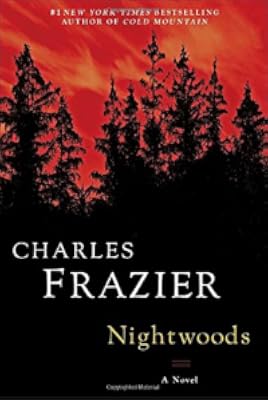
Nightwoods
by Charles Frazier
On This Page
Description
Named the guardian of her murdered sister's troubled twins, Luce struggles to build a family with the children before being targeted by the twins' father--her sister's killer--who believes that the children are in possession of a stolen cache of money.Tags
Recommendations


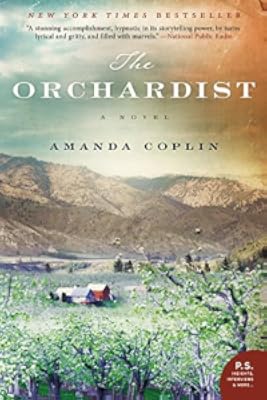
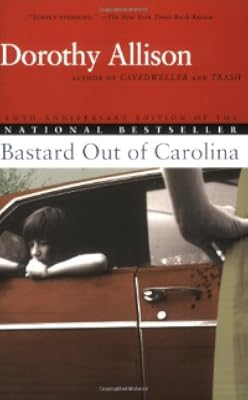



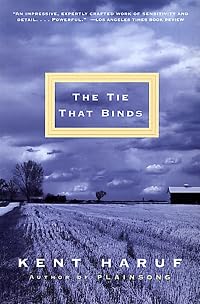
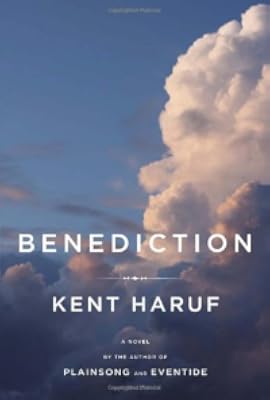
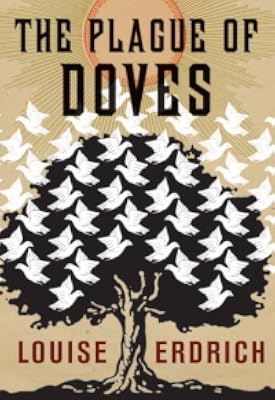


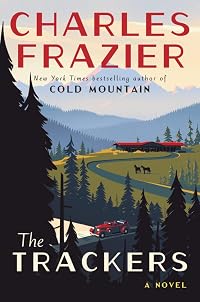
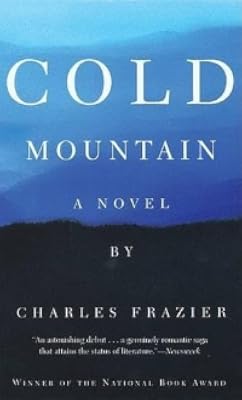
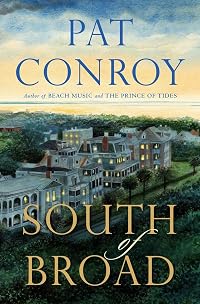
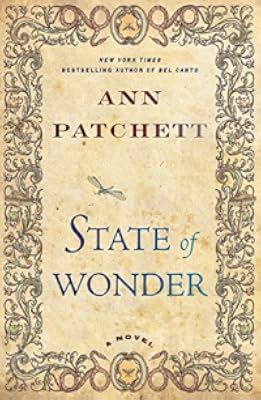
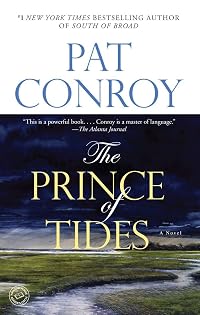
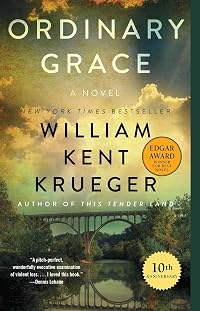
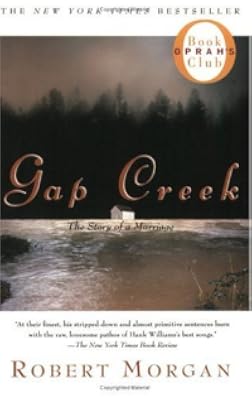










Member Recommendations

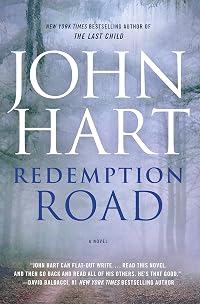
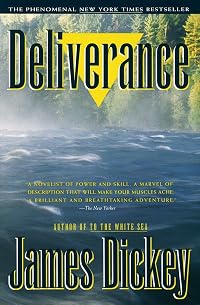
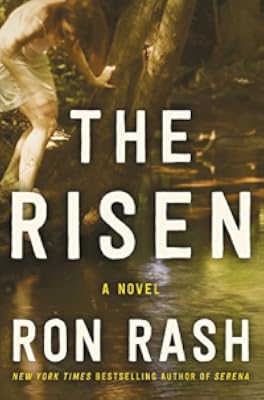
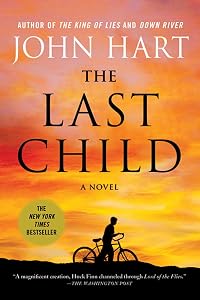
readaholic12 Beautiful descriptive prose, North Carolina mountain setting, unusual characters, very touching.

arkgirl1 Remote setting and beautiful descriptions of the natural world around.

readaholic12 Rural North Carolina setting, descriptive prose, female protagonist.

Member Reviews
Beautiful prose. A direct style. Haunting evocative images arise from the novel. Charles Frazier is clearly a master of words. Charles Frazier's first novel, "Cold Mountain" really knocked me out when I read it a dozen or more years ago. Frazier is not a prolific writer so I was really looking forward to this when I heard it was coming out.
It is a dark story. It made me sad. Our main character, Luce, is a common sense kind of person. I was drawn to her immediately. I wanted better for Luce, who has taken on an undeserved burden. Luce has not had an easy life, but she was now living a quiet life by herself away from the crowds as the caretaker of an old lodge in the rural North Carolina mountains, until she is given custody of the two show more feral children of her recently murdered sister. They are not only feral but pyromaniacs of a bad sort. And then on top of that, the sick twisted murderer, her sister's husband "Bud", gets a "get out of jail free" card and comes a lookin. Not a sweet story. Many people, in their lives, take on undeserved burdens. So this appeared to be Luce's burden and story. Luce had a simple outlook on life, which we are told early on: "All her life, the main lesson Luce had learned was that you couldn't count on anybody. So she guessed you could work hard to make yourself who you wanted to be and yet find that the passing years had transformed you beyond your own recognition. End up disappointed in yourself, despite your best efforts."
At first I had to force myself to read this book slow. It would be all too easy to read this in a rush, because the story pulls one into it powerfully. But I wanted to drink in this writing. I wanted to keep the taste on my mental tongue and savor it. But the book itself sort of slowed itself down and it was easy to read a chapter or two at a time and reflect before picking the story back up.
The book had such a dark tone to it that the romance that came in the second part of the novel surprised me and was a good touch. More than that. So what exactly was this story? We have wonderful descriptions of a rural off the track life and environment. But is this just another "bad things happen to good people" story? For a good part of the story I rather disliked the two children who more or less upended Luce's life. Their good for nothing father was pure scum. I eventually gained a bit of sympathy for the children when they finally began to open up. There are some well drawn supporting characters in the novel also. In some small way this dark powerful novel pleased me. I think maybe this story tells us that even in dark times there can be an unfailing spirit. We can pull up strength to persevere and even transform ourselves. This book is going to be in my head for a long time. Recommended.
I received an ARC of Nightwoods through the LibraryThing early reviewer program. I do not think this influenced my review. show less
It is a dark story. It made me sad. Our main character, Luce, is a common sense kind of person. I was drawn to her immediately. I wanted better for Luce, who has taken on an undeserved burden. Luce has not had an easy life, but she was now living a quiet life by herself away from the crowds as the caretaker of an old lodge in the rural North Carolina mountains, until she is given custody of the two show more feral children of her recently murdered sister. They are not only feral but pyromaniacs of a bad sort. And then on top of that, the sick twisted murderer, her sister's husband "Bud", gets a "get out of jail free" card and comes a lookin. Not a sweet story. Many people, in their lives, take on undeserved burdens. So this appeared to be Luce's burden and story. Luce had a simple outlook on life, which we are told early on: "All her life, the main lesson Luce had learned was that you couldn't count on anybody. So she guessed you could work hard to make yourself who you wanted to be and yet find that the passing years had transformed you beyond your own recognition. End up disappointed in yourself, despite your best efforts."
At first I had to force myself to read this book slow. It would be all too easy to read this in a rush, because the story pulls one into it powerfully. But I wanted to drink in this writing. I wanted to keep the taste on my mental tongue and savor it. But the book itself sort of slowed itself down and it was easy to read a chapter or two at a time and reflect before picking the story back up.
The book had such a dark tone to it that the romance that came in the second part of the novel surprised me and was a good touch. More than that. So what exactly was this story? We have wonderful descriptions of a rural off the track life and environment. But is this just another "bad things happen to good people" story? For a good part of the story I rather disliked the two children who more or less upended Luce's life. Their good for nothing father was pure scum. I eventually gained a bit of sympathy for the children when they finally began to open up. There are some well drawn supporting characters in the novel also. In some small way this dark powerful novel pleased me. I think maybe this story tells us that even in dark times there can be an unfailing spirit. We can pull up strength to persevere and even transform ourselves. This book is going to be in my head for a long time. Recommended.
I received an ARC of Nightwoods through the LibraryThing early reviewer program. I do not think this influenced my review. show less
 This review was written for LibraryThing Early Reviewers.
It has been a very long time since I read Cold Mountain but remember Frazier's prose, the way that natural world played its role in his story. And, I remember having a pretty knock down drag out argument over the ending.
I think the ending of Nightwoods is a little more definitive but Frazier isn't one for making it completely clear. What he does do well is spin a tale full of suspense and fear and past violence coming full force into the presence. He reveals details on his own timeline, just at the moment when they will, he knows, hit you the hardest, wrapped up as you are in the story.
Luce lives as a hermit in the old Lodge on the lake, seemingly contented with the "reimbursements" she receives for her life of solitude. These are show more mostly a deep connection with and gratitude towards the natural world. But she opens that solitary life to her niece and nephew after her sister dies. The children have been deeply wounded but Luce, with her patience and lack of expectations, works with them gently. Eventually, the world finds them and Frazier's tale spins fast and sometimes shockingly towards its end.
A five star read if there ever was one.
Read for the American Author Challenge show less
I think the ending of Nightwoods is a little more definitive but Frazier isn't one for making it completely clear. What he does do well is spin a tale full of suspense and fear and past violence coming full force into the presence. He reveals details on his own timeline, just at the moment when they will, he knows, hit you the hardest, wrapped up as you are in the story.
Luce lives as a hermit in the old Lodge on the lake, seemingly contented with the "reimbursements" she receives for her life of solitude. These are show more mostly a deep connection with and gratitude towards the natural world. But she opens that solitary life to her niece and nephew after her sister dies. The children have been deeply wounded but Luce, with her patience and lack of expectations, works with them gently. Eventually, the world finds them and Frazier's tale spins fast and sometimes shockingly towards its end.
A five star read if there ever was one.
Read for the American Author Challenge show less
[Nightwoods] begins with this scenario---a woman named Luce has taken in twins--a boy and a girl--who do not speak. Gradually we learn that their mother was Luce's sister, who met a tragic end at the hands of a man who also may have abused the children. It is unclear whether the children used language before witnessing their mother's murder, but they are certainly traumatized now, and Luce is guided by pure instinct in her efforts to protect them and give them a sense of security. Her lifestyle is unconventional, to say the least, but it suits her, and gives the children a freedom they seem to appreciate. Unfortunately, they have a great affinity for and fascination with fire. There's a Faulknerian feel to these kids which Frazier must show more have fully intended. I was reminded of Byron Snopes' half-Indian children in Faulkner's [The Town] the minute I met them. Those little demons didn't speak, and were not to be trusted with matches either. Frazier's children, however, are more fearful than fearsome, unless you're a rooster. This book has an incredible sense of place, vivid characters, a gripping story, plenty of suspense and a bit of romance. A couple reviewers have used the term "Appalachian gothic" to describe it; that diminishes its strengths, I think. show less
Frazier's novel of the intersection of several lives in mid-twentieth century Appalachia is gorgeously written on the sentence level. Every few pages or so I had to stop and reread a sentence to fully take in the lyricism or the just-so way he put something. The descriptions of place and of nature are also exquisitely well done. This is not a nice story, though, and we spend a good deal of time in the heads of and in the company of characters (one in particular) whose deep unpleasantness wore on me, and not in ways I found intriguing or compelling. I also felt held at a distance from some of the other characters--especially the twin children around whom much of the plot entwines--in a way that read a touch literary and unrealistic. This show more was, I think, very much a your-mileage-may-vary kind of read. There was so much here to like and admire, and readers a little less sensitive to awful characters may respond more favorably toward the whole novel than I did. show less
‘’And that’s why we look back on that time so fondly from the dimmer years to come. Remembering the days when we were like Greek gods. Mighty and idiotic.’’
Cold Mountain by Charles Frazier remains one of my most memorable and beloved reads after tons and tons of books. For me, this novel is the measure by which I rate every book set during the Civil War. Unlike a popular tearjerker melodrama full of spoiled characters, Cold Mountain won me over with its poetic language and gritty reality. I’m pleased to say that Nightwoods is another beautiful example of Frazier’s talent.
The story is set in the 1950s, a time of change and transformation for the society in the USA. In North Carolina, in the haunting, mystical, rough show more Appalachian, Luce lives alone in an old lodge whose owner has died. Her life changes-once again- when two children are handed over to her. A boy and a girl that can only be characterised as ‘’eerie’’ but in truth, they have survived an unthinkable experience. Two men, Stubblefield and Bud, manage to make the once peaceful life of Luce even more turbulent.
This is all I can say about the plot because Frazier has created a story that is anything but simple. The premise may sound common, but the way the past and the present are intertwined affecting Luce’s life is so complex and the development of the story is brought about by unpredictable factors. The characters’ actions and past life are revealed layer by layer and the chapters often begin with new background information and revelations that leave you staring in shock. God knows how many times I sat up on my seat in the Tube to re-read what I had already read in disbelief….
Frazier’s writing is extremely powerful. In a story that is bleak and agonizing and full of cruel injustice done to those whom society considers as the weakest links (and of course, I’m talking about women and children) there are bright moments of beauty. The serenity of nature and seclusion. The little daily snippets that give life to the narrative. The description of the operators’ night shift.The beautiful Appalachian nature is a presence that influences the development of the characters and the plot. The passage where Frazier has Luce describing the changing of the seasons is one of the most beautiful paragraphs I’ve ever read. I could hear the crackling of the woodfire, I could smell the newborn flowers. I could feel the sultry summer evenings. I could see the changing pumpkins and the apples until the coming of winter when everything start again. I saw myself and my feelings as a teacher in two short passages that you will allow me to insert here:
‘’A teacher has six hours a day for nine months of one year. And thirty children to deal with at a time. You do your best and you expect the same from them. Then you pass them to the next grade and hope to do better with another bunch.’’
‘’First day of school every year, even now, I look out at those little faces, every one needing something from me, and I start feeling like I can’t breath thinking about the hundred and eight days ahead. I’ve learned to remember there will be good days and bad days. For me and for them. Many rivers to cross between fall and spring.’’
A good book doesn’t win you by plot and characters exclusively. It wins your heart when you can feel and see certain parts of yourself reflected in the process. This is what distinguishes the books that are just ‘’good’’ from the books that stay with you.
Frazier knows how to create characters to support his plan and attract the readers’ attention and sympathy. Or anger. In my opinion, the central characters are the two children whose eerie and dark, watchful eyes speak volumes. Luce is a fascinating heroine. Her fight to live her life according to her rules against the oppression of patriarchy, the bravery in front of hardship and malice, the honest way of facing everything and everyone. Stubblefield is an excellent counterpart. A man of the world, as brave as Luce and a little bit naive which makes him all the more realistic. Bud is not a cardboard villain. Far from it. Frazier gives voice to the man’s troubled thoughts as he tries to understand the terrible course his life has followed. He is one of those ‘’bad guys’’ whose chapters you anticipate with a mix of dread and excitement, struggling to understand the darkness. For me, the real ‘’bad guy’’ of the story was Luce’s mother, Lola. One of the most despicable characters you’ll ever come across. And, naturally, the men of the law, the ones who are supposed to protect society, once more demonstrate the certainty of having the mental capacity of an amoeba. At least, amoebas are useful in something…
Frazier’s talent is such that manages to turn an old radio playing jazz songs in the darkness into a character. Enough said…The way I see it, Nightwoods is a modern American classic…
‘’A cool November day, blue sky and sunlight thin and angling, even at noon. Leaves entirely off most trees, but still hanging tough and reddish brown on the oaks.’’
My reviews can also be found on https://theopinionatedreaderblog.wordpress.com show less
Cold Mountain by Charles Frazier remains one of my most memorable and beloved reads after tons and tons of books. For me, this novel is the measure by which I rate every book set during the Civil War. Unlike a popular tearjerker melodrama full of spoiled characters, Cold Mountain won me over with its poetic language and gritty reality. I’m pleased to say that Nightwoods is another beautiful example of Frazier’s talent.
The story is set in the 1950s, a time of change and transformation for the society in the USA. In North Carolina, in the haunting, mystical, rough show more Appalachian, Luce lives alone in an old lodge whose owner has died. Her life changes-once again- when two children are handed over to her. A boy and a girl that can only be characterised as ‘’eerie’’ but in truth, they have survived an unthinkable experience. Two men, Stubblefield and Bud, manage to make the once peaceful life of Luce even more turbulent.
This is all I can say about the plot because Frazier has created a story that is anything but simple. The premise may sound common, but the way the past and the present are intertwined affecting Luce’s life is so complex and the development of the story is brought about by unpredictable factors. The characters’ actions and past life are revealed layer by layer and the chapters often begin with new background information and revelations that leave you staring in shock. God knows how many times I sat up on my seat in the Tube to re-read what I had already read in disbelief….
Frazier’s writing is extremely powerful. In a story that is bleak and agonizing and full of cruel injustice done to those whom society considers as the weakest links (and of course, I’m talking about women and children) there are bright moments of beauty. The serenity of nature and seclusion. The little daily snippets that give life to the narrative. The description of the operators’ night shift.The beautiful Appalachian nature is a presence that influences the development of the characters and the plot. The passage where Frazier has Luce describing the changing of the seasons is one of the most beautiful paragraphs I’ve ever read. I could hear the crackling of the woodfire, I could smell the newborn flowers. I could feel the sultry summer evenings. I could see the changing pumpkins and the apples until the coming of winter when everything start again. I saw myself and my feelings as a teacher in two short passages that you will allow me to insert here:
‘’A teacher has six hours a day for nine months of one year. And thirty children to deal with at a time. You do your best and you expect the same from them. Then you pass them to the next grade and hope to do better with another bunch.’’
‘’First day of school every year, even now, I look out at those little faces, every one needing something from me, and I start feeling like I can’t breath thinking about the hundred and eight days ahead. I’ve learned to remember there will be good days and bad days. For me and for them. Many rivers to cross between fall and spring.’’
A good book doesn’t win you by plot and characters exclusively. It wins your heart when you can feel and see certain parts of yourself reflected in the process. This is what distinguishes the books that are just ‘’good’’ from the books that stay with you.
Frazier knows how to create characters to support his plan and attract the readers’ attention and sympathy. Or anger. In my opinion, the central characters are the two children whose eerie and dark, watchful eyes speak volumes. Luce is a fascinating heroine. Her fight to live her life according to her rules against the oppression of patriarchy, the bravery in front of hardship and malice, the honest way of facing everything and everyone. Stubblefield is an excellent counterpart. A man of the world, as brave as Luce and a little bit naive which makes him all the more realistic. Bud is not a cardboard villain. Far from it. Frazier gives voice to the man’s troubled thoughts as he tries to understand the terrible course his life has followed. He is one of those ‘’bad guys’’ whose chapters you anticipate with a mix of dread and excitement, struggling to understand the darkness. For me, the real ‘’bad guy’’ of the story was Luce’s mother, Lola. One of the most despicable characters you’ll ever come across. And, naturally, the men of the law, the ones who are supposed to protect society, once more demonstrate the certainty of having the mental capacity of an amoeba. At least, amoebas are useful in something…
Frazier’s talent is such that manages to turn an old radio playing jazz songs in the darkness into a character. Enough said…The way I see it, Nightwoods is a modern American classic…
‘’A cool November day, blue sky and sunlight thin and angling, even at noon. Leaves entirely off most trees, but still hanging tough and reddish brown on the oaks.’’
My reviews can also be found on https://theopinionatedreaderblog.wordpress.com show less
In a valley of the Appalachian Mountains sometime in the 1960′s, Luce lives as a caretaker to a large abandoned lodge. Across the lake is the town where she was raised but the distance is great enough to isolate her from the judging townspeople and her drug-addled father. Her solitude is broken when her murdered sister’s twins are dropped at her door step. The children are silent pyromaniacs that have no doubt witnessed untold horrors by the hand of their step father, the freed murderer of their mother.
Nightwoods brings Frazier’s writing at least 100 years forward in time from his previous books. On hearing of the novel’s 1960s period setting, I wondered how a more contemporary tale would suit Frazier’s indisputable talents show more as a historic tale-spinner. The novel offers an edgy, blood-limned, grim fairy tale, fenced round by the search of a troubled almost-family looking for closures and healing. It all comes lovingly dressed in the same sharp period detail you expect from Frazier, in full service to suspense, revenge and redemption.
Nightwoods is dark and foreboding with the setting of the wild mountains becoming a character if its own. I love the writing and believe that Charles Frazier can write with the best of them, but I'm afraid I found this book quite a struggle. It is exceptionally well written with lovely prose and the whole thing is extremely atmospheric, but something about it just failed to engage me. It is very slow in pace, which I normally don't mind at all and many people have enjoyed it hugely and I am quite prepared to accept that the fault here lies with me rather than the book so don't let me put you off, but for me it just didn't quite work. It turned out to be a mediocre read. show less
Nightwoods brings Frazier’s writing at least 100 years forward in time from his previous books. On hearing of the novel’s 1960s period setting, I wondered how a more contemporary tale would suit Frazier’s indisputable talents show more as a historic tale-spinner. The novel offers an edgy, blood-limned, grim fairy tale, fenced round by the search of a troubled almost-family looking for closures and healing. It all comes lovingly dressed in the same sharp period detail you expect from Frazier, in full service to suspense, revenge and redemption.
Nightwoods is dark and foreboding with the setting of the wild mountains becoming a character if its own. I love the writing and believe that Charles Frazier can write with the best of them, but I'm afraid I found this book quite a struggle. It is exceptionally well written with lovely prose and the whole thing is extremely atmospheric, but something about it just failed to engage me. It is very slow in pace, which I normally don't mind at all and many people have enjoyed it hugely and I am quite prepared to accept that the fault here lies with me rather than the book so don't let me put you off, but for me it just didn't quite work. It turned out to be a mediocre read. show less
This review was written for LibraryThing Early Reviewers.Luce lives in the lodge belonging to her late employer. She's actually "squatting" now, but lacking another place to go, she remains. She loves solitude. After her sister's murder, she takes in her delinquent niece and nephew. Although the situation does not meet state standards, the social worker in charge overlooks it. Frazier's well-drawn characters draw readers into the story even if that story does not resonate. The author invokes the Appalachian region's natural beauty, making full use of it to create an atmosphere appropriate to the action.
Members
- Recently Added By
Published Reviews
ThingScore 25
Among James Fenimore Cooper’s many literary offenses, Mark Twain charged, was “surplusage.” The word’s undue thickness perfectly matches its meaning. It also feels of a piece with Cooper’s own prose, and likewise Charles Frazier’s: elegantly archaic-sounding, rough-cut and contrived.
added by Shortride
Lists

Southern Fiction
212 works; 52 members
Author Information

11+ Works 20,476 Members
Awards and Honors
Awards
Distinctions
Common Knowledge
- Canonical title
- Nightwoods
- Original title
- Nightwoods
- Original publication date
- 2011
- People/Characters
- Luce; Maddie; Frank; Delores; Stubblefield
- Important places
- North Carolina, USA; Appalachia, USA
- First words
- Luce's new stranger children were small and beautiful and violent. She learned early that it wasn't smart to leave them unattended in the yard with the chickens.
- Quotations
- Don't chase it, and it will come back. Stubblefield
- Last words
- (Click to show. Warning: May contain spoilers.)Fled into the distance or absorbed into the landscape, which does not punish or reward but cleanses all bones equally.
- Original language*
- Anglais (Etats-Unis) (Etats-Unis)
*Some information comes from Common Knowledge in other languages. Click "Edit" for more information.
Classifications
Statistics
- Members
- 1,271
- Popularity
- 19,258
- Reviews
- 91
- Rating
- (3.78)
- Languages
- 5 — Chinese, English, French, German, Portuguese
- Media
- Paper, Audiobook, Ebook
- ISBNs
- 30
- ASINs
- 15
