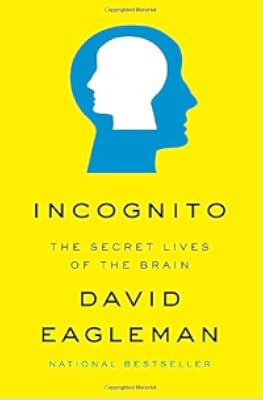
Incognito: The Secret Lives of the Brain
by David Eagleman
On This Page
Description
"This book will shine light on some of the hard-to-reach places in the brain, showing the ways in which we are not the ones driving the boat. Why does the conscious mind know so little? What do visual illusions unmask about the machinery running under the hood? How much of our lives are determined by choices and behaviors that are hard-wired, unconscious, and beyond our control? Do we have any management over who we find gorgeous or repugnant? How is it possible to get angry at yourself: who show more exactly, is mad at whom? If the drunk Mel Gibson is an anti-Semite and the sober Mel Gibson is authentically apologetic, is there a real Mel Gibson? Why did Supreme Court Justice William Douglas claim that he was able to play football and go hiking, when everyone could see that he was paralyzed after his stroke? Why do people willingly give up their money to banks for Christmas accounts (and why don't monkeys do this)? Why do patients on Parkinson's medications become compulsive gamblers? Why do athletes follow routines, like bouncing the ball three times before taking a free throw? Why did Charles Whitman suddenly kill his family and shoot forty six others from the UT Austin tower, and what did this have to do with his brain? How much of who we are is in the genes, and how much in the environment? Does free will exist or not, and how does that affect our view of blameworthiness and credit? The emerging understanding of the brain drastically changes our view of ourselves, shifting us from an intuitive sense that we are at the center of the operations, to a more sophisticated, illuminating, and wondrous view of the situation"-- show lessTags
Recommendations







Member Recommendations

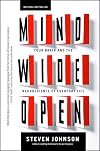
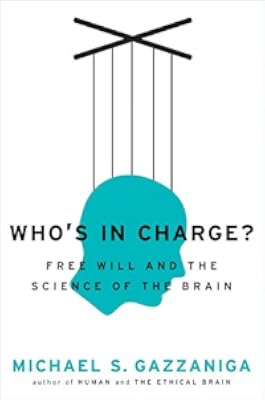
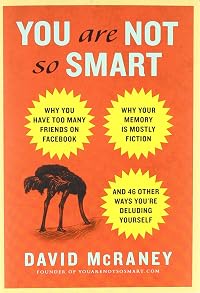
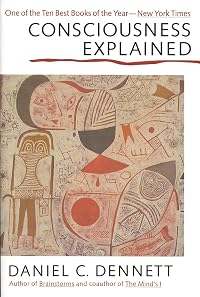
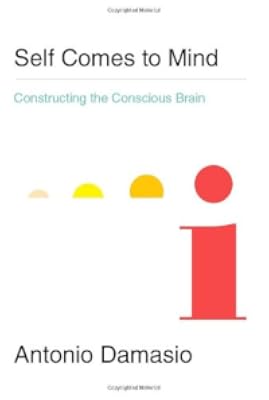
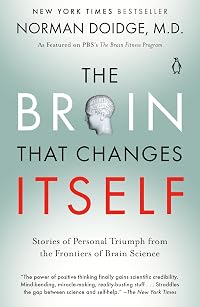
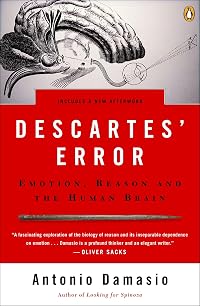
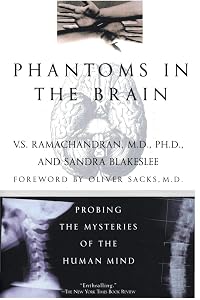
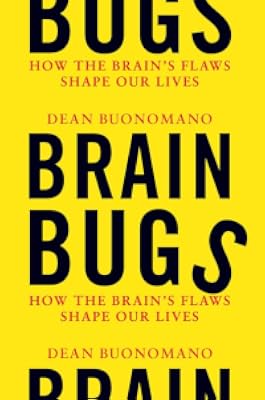
BookshelfMonstrosity If you like well-researched yet easy-to-read books about human nature, the brain, and one's subconscious and conscious, you may want to read Mind Wide Open.
Member Reviews
Recently seen on The Colbert Report, David Eagleman, took to comparing the organ mass in our heads to a 'neural Parliament', with different sides battling it out to be the one that gets to dictate how a person decides what to do next. This is just one of many points made about the brain and its relation to the human body that ultimately tends toward a question of what exactly free-will is and whether or not humans exercise it when they go about their daily routine.
Like many answers Incognito purports to tackle, it's one giant gray area of yes and no answers.
Eagleman starts off by comparing the brain to a newspaper. His definition of a functioning newspaper is to give analysis of headline-grabbing agendas. When a person opens the paper, show more they may not want the full story, rather, just the one or two lines that give a summary of what the story's about. The conscious brain (the part of consciousness we think we're controlling when we're awake), he states, acts similarly, with the details of our life's thoughts and decisions taking place below the conscious purview of our mind. Eagleman uses this as a jumping-off point to relate several instances of weird behavior, normally excoriated in our modern society, to explain that such behavior isn't necessarily a choice.
Take, for example, the case of a pedophile he writes about. A married man in his thirties, he had shown no tendancies toward such leud behavior in his life up until then, which were also accompanied by an increasing number of headaches. Suddenly, he was consumed by his habit, spending every waking hour looking at images and, eventually, locating an underage prosititute. When his wife finally took him to get a brain scan, a nickel-sized mass compressing his amygdala (next to the hippocampus region) was discovered. Once removed, the behavior subsided immediately. When the cancer was discovered to have not been fully burned away, the pedophilic thoughts returned. Again, once the tumor was gone for good, so were the thoughts and the man (named Alex...not real name, obviously) was able to resume his normal life again.
Cases like the one above illustrate a good point Eagleman makes about the kinds of people that fill our prisons. How many of them are suffering from some unknown tumor or brain-damage that still allows them to function (somewhat) normally? How can we go about prosecuting criminals without the full range of facts?
Ultimately, Eagleman stresses the importance of not adopting a fully reductionist point of view when it comes to how the brain operates. Sure, people who have Huntington's disease can be reduced to the single mutated gene that causes them to flail their arms and lose bodily function, but in many other cases dealing with disease or psychological maladies the problem can be seen as having elements of environmental origin in addition to badly aligned brain chemisty. It's not enough to merely have the bad genes that predispose a person toward a certain disease or condition. They also must have possesed enough life experiences that drove them to the disease along with carrying those specific genes.
Eagleman's book is one that not only delves into the murky waters surrounding the brain's development but also traces its history from the early 1600's and onward and the context of historical/scientific discoveries (and their subsequent dismissal from the public at large when trying to convince others that man isn't at the center of the universe, just as the earth wasn't). He's careful, though, not to let our ignorance of how the brain truly does its job operate as an easy answer for criminals to argue at their next parole hearing, but I believe he does show sympathies in regarding how dismissive our legal system tends to be. The quest for the true definition of how our brain works is far from over, but there are definitely enough ideas provided in this book for one to become aquainted with a modern view of the subconscious mind without any fingerpointing. Great read!! show less
Like many answers Incognito purports to tackle, it's one giant gray area of yes and no answers.
Eagleman starts off by comparing the brain to a newspaper. His definition of a functioning newspaper is to give analysis of headline-grabbing agendas. When a person opens the paper, show more they may not want the full story, rather, just the one or two lines that give a summary of what the story's about. The conscious brain (the part of consciousness we think we're controlling when we're awake), he states, acts similarly, with the details of our life's thoughts and decisions taking place below the conscious purview of our mind. Eagleman uses this as a jumping-off point to relate several instances of weird behavior, normally excoriated in our modern society, to explain that such behavior isn't necessarily a choice.
Take, for example, the case of a pedophile he writes about. A married man in his thirties, he had shown no tendancies toward such leud behavior in his life up until then, which were also accompanied by an increasing number of headaches. Suddenly, he was consumed by his habit, spending every waking hour looking at images and, eventually, locating an underage prosititute. When his wife finally took him to get a brain scan, a nickel-sized mass compressing his amygdala (next to the hippocampus region) was discovered. Once removed, the behavior subsided immediately. When the cancer was discovered to have not been fully burned away, the pedophilic thoughts returned. Again, once the tumor was gone for good, so were the thoughts and the man (named Alex...not real name, obviously) was able to resume his normal life again.
Cases like the one above illustrate a good point Eagleman makes about the kinds of people that fill our prisons. How many of them are suffering from some unknown tumor or brain-damage that still allows them to function (somewhat) normally? How can we go about prosecuting criminals without the full range of facts?
Ultimately, Eagleman stresses the importance of not adopting a fully reductionist point of view when it comes to how the brain operates. Sure, people who have Huntington's disease can be reduced to the single mutated gene that causes them to flail their arms and lose bodily function, but in many other cases dealing with disease or psychological maladies the problem can be seen as having elements of environmental origin in addition to badly aligned brain chemisty. It's not enough to merely have the bad genes that predispose a person toward a certain disease or condition. They also must have possesed enough life experiences that drove them to the disease along with carrying those specific genes.
Eagleman's book is one that not only delves into the murky waters surrounding the brain's development but also traces its history from the early 1600's and onward and the context of historical/scientific discoveries (and their subsequent dismissal from the public at large when trying to convince others that man isn't at the center of the universe, just as the earth wasn't). He's careful, though, not to let our ignorance of how the brain truly does its job operate as an easy answer for criminals to argue at their next parole hearing, but I believe he does show sympathies in regarding how dismissive our legal system tends to be. The quest for the true definition of how our brain works is far from over, but there are definitely enough ideas provided in this book for one to become aquainted with a modern view of the subconscious mind without any fingerpointing. Great read!! show less
It took me rather a long time into reading this before I realised that this was an author with whom I was already acquainted. A few years ago, I read Eagleman’s fictional short story collection: ‘Sum’. So, as I started to thoroughly enjoy ‘Incognito’ the puzzle pieces fell into place and I found myself being led through his equally masterful (yet this time nonfictional) work.
I love learning about the brain, be it neuroscience or psychology and I have been lucky enough to read some great books on both subjects - this, another to add to the list. 'Incognito' is concerned with consciousness and in particular, the misconception people have of how responsible it is in governing the rest of the brain, how we 'are not the ones show more driving the boat'. Eagleman serves up astounding evidence in the form of patient histories, science experiments and case studies that illuminate how the hidden depths of the brain and our subconscious are responsible for far more than we can imagine. One investigation he recounts, involved playing a sort of reveal and reward card game, complete with an underlying pattern built into it. The test subject is anticipated to decipher the pattern after a certain amount of goes. What was incredible however, was that in monitoring brain activity, the scientists were able to show that the subconscious had spotted the pattern in substantially fewer moves than the consciousness had.
Towards the end of the book, Eagleman’s ideas culminate in an advocation for reform of the criminal justice system, in such that neuroscience should be used as a tool to aid successfully rehabilitating criminals. This isn’t to absolve them of wrongdoing but rather to understand the mind that perpetrates the crime so that effective strategies can be put in place to better support reintegration into society (and conversely the awareness that incarceration has limited success in retraining brains with criminal desires or indifference to common laws, to behave in a more socially acceptable manner). For example, instead of locking people away for drug addiction, there are current technologies which can isolate and visualise your brain’s desires. With this visualisation, you can learn, through trial and error, to affect the desire - to want it less - having instant feedback on the effectiveness of what you were trying. In essence, addicts can teach themselves techniques to curb their desires using neuroscience technology empowering them to stop reoffending.
It's books like this that you hope everyone reads, that you hope are on curriculums around the world and most importantly in the read pile of people who have sway in the world’s affairs. What I got from it is that consciousness is not to be trusted, that looking deeper is always better and taking time to understand the behaviour not react to the behaviour is paramount. As a teacher, I'd find it so helpful to scan the brains of kids we were teaching - in essence, to see the barriers to their learning, look for lack of development, have a better idea of how best to provide and nurture the children. Current technology is far, far, far away from being able to provide anywhere near as close a picture as this so for now, books like this will suffice. 5/5 show less
I love learning about the brain, be it neuroscience or psychology and I have been lucky enough to read some great books on both subjects - this, another to add to the list. 'Incognito' is concerned with consciousness and in particular, the misconception people have of how responsible it is in governing the rest of the brain, how we 'are not the ones show more driving the boat'. Eagleman serves up astounding evidence in the form of patient histories, science experiments and case studies that illuminate how the hidden depths of the brain and our subconscious are responsible for far more than we can imagine. One investigation he recounts, involved playing a sort of reveal and reward card game, complete with an underlying pattern built into it. The test subject is anticipated to decipher the pattern after a certain amount of goes. What was incredible however, was that in monitoring brain activity, the scientists were able to show that the subconscious had spotted the pattern in substantially fewer moves than the consciousness had.
Towards the end of the book, Eagleman’s ideas culminate in an advocation for reform of the criminal justice system, in such that neuroscience should be used as a tool to aid successfully rehabilitating criminals. This isn’t to absolve them of wrongdoing but rather to understand the mind that perpetrates the crime so that effective strategies can be put in place to better support reintegration into society (and conversely the awareness that incarceration has limited success in retraining brains with criminal desires or indifference to common laws, to behave in a more socially acceptable manner). For example, instead of locking people away for drug addiction, there are current technologies which can isolate and visualise your brain’s desires. With this visualisation, you can learn, through trial and error, to affect the desire - to want it less - having instant feedback on the effectiveness of what you were trying. In essence, addicts can teach themselves techniques to curb their desires using neuroscience technology empowering them to stop reoffending.
It's books like this that you hope everyone reads, that you hope are on curriculums around the world and most importantly in the read pile of people who have sway in the world’s affairs. What I got from it is that consciousness is not to be trusted, that looking deeper is always better and taking time to understand the behaviour not react to the behaviour is paramount. As a teacher, I'd find it so helpful to scan the brains of kids we were teaching - in essence, to see the barriers to their learning, look for lack of development, have a better idea of how best to provide and nurture the children. Current technology is far, far, far away from being able to provide anywhere near as close a picture as this so for now, books like this will suffice. 5/5 show less
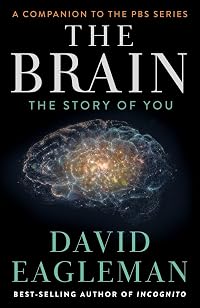
David Eagleman truly is an engaging writer! I had read his The Brain: The Story of You, and, if I hadn't learn much then (the topic is of particular interest to me, so there was nothing new as far as I was personally concerned) I nevertheless remained curious enough to pick this 'Incognito'. It actually reads like a follow up going more in depth -intentionally or not.
The author still presents the brain not as a passive machine simply receiving data and stimuli to act upon, but, as an active agent constructing its own perception of our surrounding world. Discussing its plasticity, our sensory perceptions, how memories are shaped, or, again, the effects of split-brains operations, he indeed carries on shedding new lights on the show more functioning of this amazing organ. I particularly like his exposé of how the human brain might be made up, not simply of modules each highly specialised for specific tasks (an idea which has been challenged) but, on the contrary, competing somehow. Their interaction points indeed to an interesting view regarding consciousness:
'I propose that a useful index of consciousness is the capacity to successfully mediate conflicting zombie systems. The more an animal looks like a jumble of hardwired input-output subroutines, the less it gives evidence of consciousness; the more it can coordinate, delay gratification, and learn new programs, the more conscious it may be.'
Sadly, on consciousness he kind of leave it there (well, it still is all very speculative so it's difficult to blame him for that!).
Unlike in his previous book, though, where he had quickly brushed over the question of free will, he here takes the time to delve a bit more into it; especially when assessing the concept of 'blameworthiness' in the justice system. It's interesting, especially when defending rehabilitation over punishment (a view I agree with to a certain extend). However, I felt his take was based as much on his own personal opinion than the actual science -yes, our wiring plays a part in our behaviours, but it shouldn't take away personal responsibility. After all, not all damaged people turn out the same! But, neither him nor myself are legal minds, so I guess our views here are equally limited...
You could challenge his take on free will, but, apart from that, here's a captivating book about the functioning of the brain. Clear. Easy to read. Engaging. show less
The author still presents the brain not as a passive machine simply receiving data and stimuli to act upon, but, as an active agent constructing its own perception of our surrounding world. Discussing its plasticity, our sensory perceptions, how memories are shaped, or, again, the effects of split-brains operations, he indeed carries on shedding new lights on the show more functioning of this amazing organ. I particularly like his exposé of how the human brain might be made up, not simply of modules each highly specialised for specific tasks (an idea which has been challenged) but, on the contrary, competing somehow. Their interaction points indeed to an interesting view regarding consciousness:
'I propose that a useful index of consciousness is the capacity to successfully mediate conflicting zombie systems. The more an animal looks like a jumble of hardwired input-output subroutines, the less it gives evidence of consciousness; the more it can coordinate, delay gratification, and learn new programs, the more conscious it may be.'
Sadly, on consciousness he kind of leave it there (well, it still is all very speculative so it's difficult to blame him for that!).
Unlike in his previous book, though, where he had quickly brushed over the question of free will, he here takes the time to delve a bit more into it; especially when assessing the concept of 'blameworthiness' in the justice system. It's interesting, especially when defending rehabilitation over punishment (a view I agree with to a certain extend). However, I felt his take was based as much on his own personal opinion than the actual science -yes, our wiring plays a part in our behaviours, but it shouldn't take away personal responsibility. After all, not all damaged people turn out the same! But, neither him nor myself are legal minds, so I guess our views here are equally limited...
You could challenge his take on free will, but, apart from that, here's a captivating book about the functioning of the brain. Clear. Easy to read. Engaging. show less
Very enjoyable, in the vein of the book, I'm sure there is some deep wired routine in our brains that loves reading and hearing all about it's tricks and intricacies.
Also very interesting for the last two chapters which take it from just a collection of interesting stories about the brain and actually apply it (to how we think about crime and rehabilitation) and where science should go from here into the future. Though it was a bit jarring to go from the light stories to that kind of deep thinking, in the end it sealed the deal.
Enjoyed all the brief references for AI potential research sprinkled throughout. Bonus points for the nature vs nurture talk and the idea that if we really started complete blank slate we would be overwhelmed show more with all the possibilities. show less
Also very interesting for the last two chapters which take it from just a collection of interesting stories about the brain and actually apply it (to how we think about crime and rehabilitation) and where science should go from here into the future. Though it was a bit jarring to go from the light stories to that kind of deep thinking, in the end it sealed the deal.
Enjoyed all the brief references for AI potential research sprinkled throughout. Bonus points for the nature vs nurture talk and the idea that if we really started complete blank slate we would be overwhelmed show more with all the possibilities. show less
OK so when I said I liked Incognito better than Livewire, it ended up being not by that much. It certainly held my attention for more of the book and I spent less of my time being irritated by it, but there was a tiresome amount of ableist language (the R-word, for one, and talking about people being “confined” to wheelchairs, and inspiration-porn-style phrases like “he didn’t let being blind stop him from climbing Mount Everest”) and author spent a lot of time near the end advancing a position, then saying saying “I’m not saying that Blah”. On the one hand such careful summarizing demonstrates scrupulousness about ensuring that his position is crystal clear, but on the other it shows that the position is at risk of show more being misinterpreted. Also, this book was published in 2011, and I’m sure there is much more recent information about the brain that’s even more exciting. I’ll test this theory by reading The Emotional Brain, by Dean Burnett (published 2023). show less
I probably would have enjoyed this more if I hadn't just read "Sleights of Mind." Many of the same studies and anecdotes are used and this one doesn't reveal magic tricks, so it didn't hold up as well. Still, it's very interesting and he raises ethical issues at the end that are going to have me thinking for a while.
What started off interesting became very competitive towards the latter half of the book, in a way that felt like it was just filling up pages unnecessarily. The last two chapters could have easily been only a page or three each. While I generally love reading about psychology and its neuroscience intersections, this compilation relied heavily on explaining already disproven postulations for content, reserving only a fraction of the text for current research trends and theories. While I did learn a number of fascinating anecdotes (again, mostly of incorrect conjecturing), the best part of this book were Eagleman's scientific applications for well-known literary references. Love reaching across that cross-genre divide!
Members
- Recently Added By
Lists

A Brilliant List of Science Books for People Who Want Their Minds Blown
16 works; 3 members

Non-Fiction Worth Reading
1,016 works; 256 members

KayStJ's to-read list
1,616 works; 11 members

Psychology
6 works; 1 member
Author Information

17+ Works 5,324 Members
David Eagleman received undergraduate degrees in British and American literature from Rice University in 1993. He received a PhD in neuroscience at Baylor College of Medicine in 1998, followed by a postdoctoral fellowship at the Salk Institute. He is currently a neuroscientist at Baylor College of Medicine, where he directs the Laboratory for show more Perception and Action and the Initiative on Neuroscience and Law. He has written several nonfiction books including Wednesday Is Indigo Blue: Discovering the Brain of Synesthesia, Incognito: The Secret Lives of the Unconscious Brain, Live-Wired: The Dynamically Reorganizing Brain, and Cognitive Neuroscience. He has also written a work of fiction entitled Sum: Tales from the Afterlives. His articles have appeared in numerous publications including Science, Nature, the New York Times, Discover Magazine, Slate, Wired, and New Scientist. (Bowker Author Biography) show less
Some Editions
Awards and Honors
Distinctions
Notable Lists
Work Relationships
Has as a student's study guide
Common Knowledge
- Alternate titles
- Incognito
- Original publication date
- 2011
- Epigraph
- Man is equally incapable of seeing the nothingness from which he emerges and the infinity in which he is engulfed.
Blaise Pascal, Pensées - First words
- Take a close look at yourself in the mirror.
- Last words
- (Click to show. Warning: May contain spoilers.)It is the most wondrous thing we have discovered in the universe, and it is us.
- Blurbers
- Lehrer, Jonah; Kelly, Kevin
Classifications
Statistics
- Members
- 1,974
- Popularity
- 10,715
- Reviews
- 49
- Rating
- (3.78)
- Languages
- 16 — Czech, Danish, Dutch, English, Finnish, French, German, Italian, Lithuanian, Polish, Portuguese, Romanian, Russian, Slovenian, Spanish, Turkish
- Media
- Paper, Audiobook, Ebook
- ISBNs
- 45
- ASINs
- 14