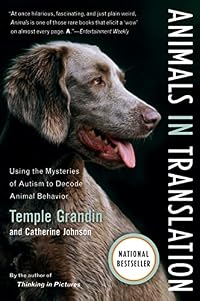
Animals in Translation: Using the Mysteries of Autism to Decode Animal Behavior
by Temple Grandin, Catherine Johnson
On This Page
Description
Why would a cow lick a tractor? Why are collies getting dumber? Why do dolphins sometimes kill for fun? How can a parrot learn to spell? How did wolves teach man to evolve? Temple Grandin draws upon a long, distinguished career as an animal scientist and her own experiences with autism to deliver an extraordinary message about how animals act, think, and feel. She has a perspective like that of no other expert in the field, which allows her to offer unparalleled observations and show more groundbreaking ideas. People with autism can often think the way animals think, putting them in the perfect position to translate "animal talk." Grandin is a faithful guide into their world, exploring animal pain, fear, aggression, love, friendship, communication, learning, and, yes, even animal genius. The sweep of Animals in Translation is immense and will forever change the way we think about animals. show lessTags
Recommendations

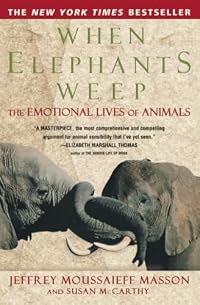
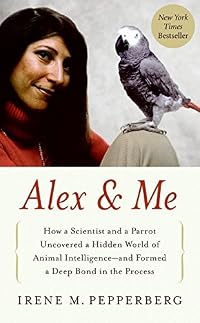


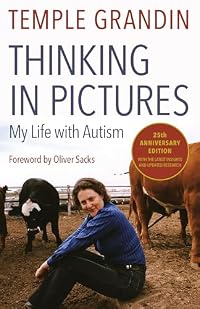


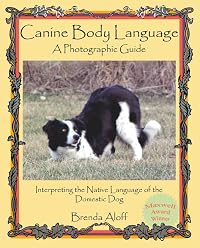

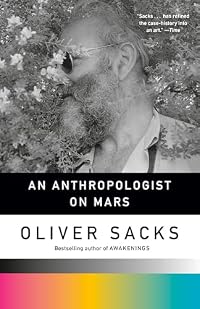
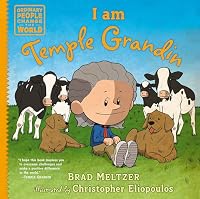
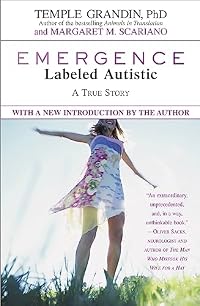
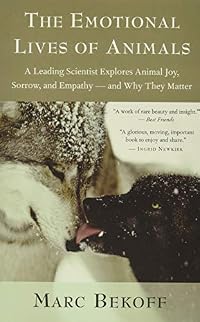
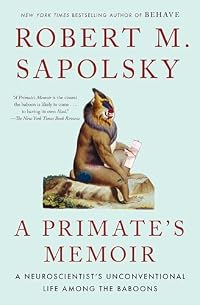
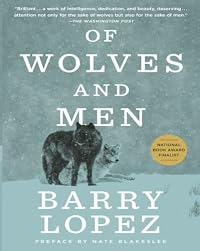

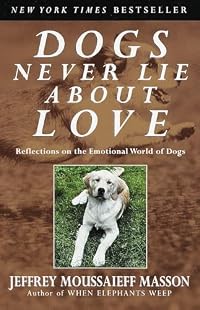

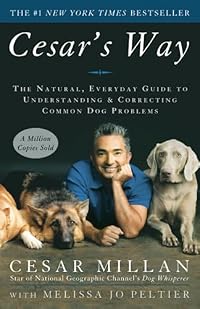
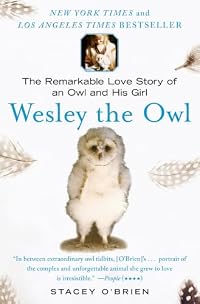
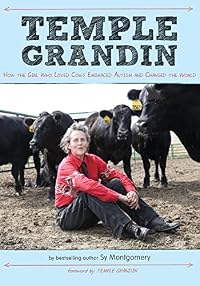
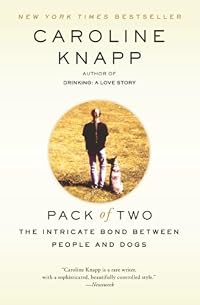
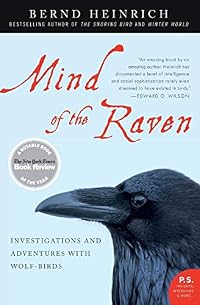


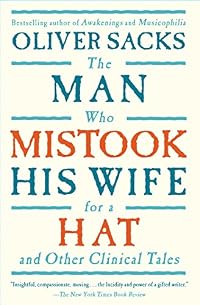
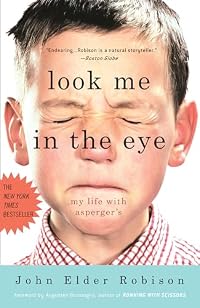

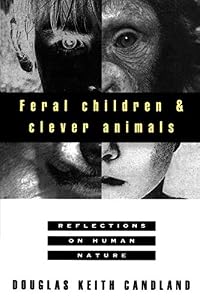
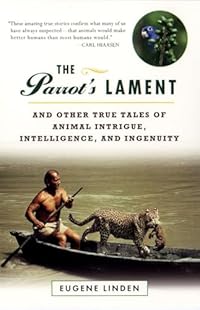

Member Recommendations
MyriadBooks For those who were as fascinated by the human behavior as the animal behavior.
PaperbackPirate Animals in Translation was referenced in this book.
by anonymous user
Member Reviews
Despite the title, this isn't a book about how to understand animals (or people for that matter.. ). It is a very deep and engaging discussion about the process (and philosophy, art, science and spirit) of understanding across boundaries of cognition, reflection, instinct and sentiment. It is as much about what we don't know as about what we do know (or think we know), and there's never a point where the authors step beyond profoundly good (cautious) observation and research. And yet what might be a dry subject to some, is constantly brought alive and immediate by Temple Grandin's extraordinary ability to bring her experience of autism to bear on the subject. I can't say that that my sympathy with her experience doesn't colour my show more judgement, but to my mind this book is a stand-out in the literature on ethology, worth reading alongside E.O. Wilson's 'Biophilia' and the work of Singer, Sacks, de Waal and others in that field.
I'm not sure how Grandin and Johnson divided up the duties on this book - Grandin's 'left-field' thinking is apparent on every page (and every page is worth reading), but if Johnson did nothing more than craft the story then she deserves surpassing credit for making this the sort of book that you read at one sitting and then wish there was more of it. Oliver Sacks, who wrote one of the most deservedly famous articles about autism ('An Anthropologist on Mars') described this book as "deeply moving and fascinating". In the plethora of favourable reviews of this book - and this one included - nobody has said it better. Hugely recommended if you are interested in ethology, or in just what it is to be human. show less
I'm not sure how Grandin and Johnson divided up the duties on this book - Grandin's 'left-field' thinking is apparent on every page (and every page is worth reading), but if Johnson did nothing more than craft the story then she deserves surpassing credit for making this the sort of book that you read at one sitting and then wish there was more of it. Oliver Sacks, who wrote one of the most deservedly famous articles about autism ('An Anthropologist on Mars') described this book as "deeply moving and fascinating". In the plethora of favourable reviews of this book - and this one included - nobody has said it better. Hugely recommended if you are interested in ethology, or in just what it is to be human. show less
Just fascinating. The subtitle of this book is "Using the Mysteries of Autism to Decode Animal Behavior". Temple Grandin, who is autistic, made a career in designing humane systems for handling animals in slaughter houses, poultry farms, breeding stables and kennels, and other situations where the needs of production have often resulted in appalling, frightening conditions for the animals involved. She has also advised the operators of such facilities on behavioral issues because she understands the animal mind in a way "neuro-typical" humans do not. In this books she explains the ways in which animals and autistic humans see things similarly, and how this has helped her see the world through animal eyes. There is a lot of brain show more science, human and animal psychology, common sense and uncommon wisdom, humor and heart in this book. Grandin says people always wonder how she could work for the meat-packing industry when she loves animals. Her answer is that she doesn't see the human race converting to vegetarianism any time soon (and that she herself was highly motivated to do so but found herself physically incapable of sticking to it), that most of the animals we eat "wouldn't exist if human beings hadn't bred them into being"...and that therefore we "owe them a decent life and a decent death, and their lives should be as low-stress as possible. That's my job." "If we're interested in animals, then we need to study animals for their own sake, and on their own terms, to the extent that it's possible. What are they doing? What are they feeling? What are they thinking? What are they saying? Who are they? And: what do we need to do to treat animals fairly, responsibly, and with kindness?" She applies these questions to ALL animals---pets, dairy cows, egg-producing chickens, animals raised for food, animals studied in labs and in the wild, birds, squirrels, elephants, snakes---without limits. A formal review said this is "one of those rare books that elicit a 'wow' on almost every page." Ask my husband how many times I made him "just listen to this!" while reading it. show less
I was totally hooked from the very beginning of this book. It provides many insights into neuroscience (both animals and human), animal behaviors, and how an autistic person's mind works. Grandin draws on both her personal experience as an autistic and her professional experience as a Ph.d. in Animal Science to allow those of us who are "cursed" with normal minds a glimpse into another way of viewing the world around us.
While many may be turned off by her work with the USDA and the slaughtering industry, one must still admire her dedication to improving conditions to an optimal level for the animals.
The book is careful to delineate between established and proven research and Grandin's own personal observations and hypotheses regarding show more certain animal behaviors.
I wouldn't normally review a book that I am only half-way through reading, but this one is so captivating, informative, and thought provoking up to this point, that even if the rest of the book is totally disappointing, I would still consider it a great read. Entertainment Weekly explains it best in its blurb when it states that this "is one of those rare books that elicit a 'wow' on almost every page." show less
While many may be turned off by her work with the USDA and the slaughtering industry, one must still admire her dedication to improving conditions to an optimal level for the animals.
The book is careful to delineate between established and proven research and Grandin's own personal observations and hypotheses regarding show more certain animal behaviors.
I wouldn't normally review a book that I am only half-way through reading, but this one is so captivating, informative, and thought provoking up to this point, that even if the rest of the book is totally disappointing, I would still consider it a great read. Entertainment Weekly explains it best in its blurb when it states that this "is one of those rare books that elicit a 'wow' on almost every page." show less
This book was a whole lot more interesting and informative than I expected it to be. I am dubious about any deep connection between autism and animal minds; I think Grandin may be generalizing a bit from her fairly unusual experience. But this book has a huge wealth of anecdote about animals from an observant, intelligent, and educated person who is deeply interested in them. It also has some wierd but actually useful analogies to computer software. I plan to read her other book, "Animals Make Us Human", which I originally avoided because I feared the dim sentimentality that the title of the book seemed to promise. I realize now that the book's thesis is at least related to our shared human and canine evolutionary heritage, and although show more this co-evolution seems to me quite speculative, the book may be much more interesting and substantial than I had imagined. show less
You know, I thoroughly enjoyed this book.
I read great swaths of it five years ago or more, enjoyed them immensely but never finished the book. It's been sitting on my to-read shelf forever and I finally picked it up to finish it. Oddly enough, I read [a:Temple Grandin|1567|Temple Grandin|https://d.gr-assets.com/authors/1241222068p2/1567.jpg]'s [b:Thinking in Pictures|103408|Thinking in Pictures My Life with Autism|Temple Grandin|https://d.gr-assets.com/books/1320507943s/103408.jpg|1775856] before finishing this book. Autism isn't an especially deep interest of mine, cognitive ehtology is. It's funny how life works.
[b:Animals in Translation|7366|Animals in Translation Using the Mysteries of Autism to Decode Animal Behavior|Temple show more Grandin|https://d.gr-assets.com/books/1426808115s/7366.jpg|10490] will likely forever be controversial. The idea that animals and autistic people have similar cognition is going to be controversial and politically charged regardless of who you are. Nevertheless, the observations that Temple Grandin makes are compelling and ultimately, not all that insulting. She's not comparing autistic people to animals in a negative way, instead she's stating that due to changes in brain chemistry and make up both perceive the world in a way that's different from normal functioning people. She then backs her statement up with personal experiences, observations, and what at that time were recent studies. I'd be interested to hear what she thinks of her hypothesis now, though I doubt much has changed in the intervening years.
She credits animals with being far more intelligent than we believe, simply intelligent in different ways. Is a dog's ability to predict a person's seizure before it happens a sign of intelligence? They are responding to signs too subtle for us to predict. What about a magpie pretending to have a broken wing to distract a predator? What about the way ravens and wolves interact? Or the migration patterns of birds? The social structure of horses? Did we domesticate wolves, or did they domesticate us? Did we learn music from birds or vice versa? Is music, ultimately, how animals communicate?
I found the book fascinating and a good starting point for anyone interested in animal thought and behavior. While it will likely forever remain controversial, as Temple Grandin rightly points out, this field is controversial to begin with. Very few people are willing to admit just how intelligent and emotional animals can be and give further ground to them in such a way. Humans want to remain special, and bit by bit these studies are making it more evident that humans, truthfully, aren't. I don't think many people want to deal with the ramifications of that. show less
I read great swaths of it five years ago or more, enjoyed them immensely but never finished the book. It's been sitting on my to-read shelf forever and I finally picked it up to finish it. Oddly enough, I read [a:Temple Grandin|1567|Temple Grandin|https://d.gr-assets.com/authors/1241222068p2/1567.jpg]'s [b:Thinking in Pictures|103408|Thinking in Pictures My Life with Autism|Temple Grandin|https://d.gr-assets.com/books/1320507943s/103408.jpg|1775856] before finishing this book. Autism isn't an especially deep interest of mine, cognitive ehtology is. It's funny how life works.
[b:Animals in Translation|7366|Animals in Translation Using the Mysteries of Autism to Decode Animal Behavior|Temple show more Grandin|https://d.gr-assets.com/books/1426808115s/7366.jpg|10490] will likely forever be controversial. The idea that animals and autistic people have similar cognition is going to be controversial and politically charged regardless of who you are. Nevertheless, the observations that Temple Grandin makes are compelling and ultimately, not all that insulting. She's not comparing autistic people to animals in a negative way, instead she's stating that due to changes in brain chemistry and make up both perceive the world in a way that's different from normal functioning people. She then backs her statement up with personal experiences, observations, and what at that time were recent studies. I'd be interested to hear what she thinks of her hypothesis now, though I doubt much has changed in the intervening years.
She credits animals with being far more intelligent than we believe, simply intelligent in different ways. Is a dog's ability to predict a person's seizure before it happens a sign of intelligence? They are responding to signs too subtle for us to predict. What about a magpie pretending to have a broken wing to distract a predator? What about the way ravens and wolves interact? Or the migration patterns of birds? The social structure of horses? Did we domesticate wolves, or did they domesticate us? Did we learn music from birds or vice versa? Is music, ultimately, how animals communicate?
I found the book fascinating and a good starting point for anyone interested in animal thought and behavior. While it will likely forever remain controversial, as Temple Grandin rightly points out, this field is controversial to begin with. Very few people are willing to admit just how intelligent and emotional animals can be and give further ground to them in such a way. Humans want to remain special, and bit by bit these studies are making it more evident that humans, truthfully, aren't. I don't think many people want to deal with the ramifications of that. show less
I do love Grandin's work, both in the ideas in and writing style of her books, and in the fact that she makes me feel less guilty for being a carnivore because she's done so much work for feedlots and slaughterhouses.
This book really is a must read. I love the structure of each argument, in particular. Now, bear in mind that I was too engrossed in reading to take notes, so my example may not be exactly accurate, but it could go something like this:
First, she'd say something axiomatic, like, we all know that baby animals like cuddles. Then she'd point out research to support that, like, the famous experiment where baby monkeys were given two wire mothers, one with milk, one wrapped with toweling, and they'd get desperately hungry before show more leaving the softer mother (even though it was neither alive nor furred nor scented...). Then she'd talk about newer, lesser-known research, often based on neuro-science instead of just observational psychology, and/or about her experiences as an autistic person or about other autistic people she's known. Or she'd talk about experiences in her career, or with friends' pets, about different kinds of reactions animals have to nurturing touch or lack thereof. And finally she'd theorize about what is actually going on in everyone's different kinds of brains, and what all those ideas, if integrated together, could be saying about the insufficiently acknowledged intelligence of animals, and about the best ways to treat animals, and autistic people, respectfully and humanely.
I love particularly her examples of what kinds of jobs the people with autism can excel at, and her insistence that dogs are being over- and mis-bred, for example breeders are killing collies' intelligence and giving Border Collies a bad reputation for makers of mischief by not ensuring they have *jobs* to suit their nature.
Sorry - I don't think that was particularly coherent. Read the book yourself, really. She's much easier to understand than I am.
Still not convinced? Ok.
In the section on prairie dogs, she introduces Dr. Con Slobodchikoff, who speculates that instead of looking for animal language in our closest genetic relatives, the primates, we should look at animals with the greatest need for language in order to stay alive." Quite an eye-opening idea, eh? Read the rest of that section and you'll probably find yourself not only unsurprised, but nodding in agreement.
Or, how about this statement. I'll give you no context - you'll have to read it yourself to believe it. "We're just leaving it up to animals like the seizure alert [service] dogs to invent their own jobs."
One of the most important things *I* got out of the book was clarity about my opinion of anthropomorphism. I always have known I'm not a fan. Otoh, I've also felt that critters are smarter, at least in some ways, than we give them credit for being. Now I can integrate my attitude thus: by perceiving animals through our own experience, and by giving them humanoid motivations and beliefs, we're blinding ourselves to being able to understand their true natures.
In other words, don't say, "That chimp is as smart as a 3 year old human." Say instead, "That chimp has the vocabulary of an average 2 year old child and can solve addition & subtraction problems typically solvable by 4 year old children." (Not Grandin's example, but my own synthesis.)
I only have two minor quibbles. Grandin doesn't define 'animals' in the same sense I usually see it. She usually means mammals and birds only - but, confusingly, sometimes means social insects or even reptiles. Second, she sometimes over-generalizes to include other people with autism as being very like her, whereas she and I both know that ASD manifests differently in different people.
I've read a lot of psychology and popular neuro-science books lately, and a lot of books by and about people who are autistic, and in none of them did I learn as much as I did from this. Of course, they may have laid the foundation to help me get more out of this work, but I do believe that if you only want to read one book on any of the subjects covered here, this would be a great choice." show less
This book really is a must read. I love the structure of each argument, in particular. Now, bear in mind that I was too engrossed in reading to take notes, so my example may not be exactly accurate, but it could go something like this:
First, she'd say something axiomatic, like, we all know that baby animals like cuddles. Then she'd point out research to support that, like, the famous experiment where baby monkeys were given two wire mothers, one with milk, one wrapped with toweling, and they'd get desperately hungry before show more leaving the softer mother (even though it was neither alive nor furred nor scented...). Then she'd talk about newer, lesser-known research, often based on neuro-science instead of just observational psychology, and/or about her experiences as an autistic person or about other autistic people she's known. Or she'd talk about experiences in her career, or with friends' pets, about different kinds of reactions animals have to nurturing touch or lack thereof. And finally she'd theorize about what is actually going on in everyone's different kinds of brains, and what all those ideas, if integrated together, could be saying about the insufficiently acknowledged intelligence of animals, and about the best ways to treat animals, and autistic people, respectfully and humanely.
I love particularly her examples of what kinds of jobs the people with autism can excel at, and her insistence that dogs are being over- and mis-bred, for example breeders are killing collies' intelligence and giving Border Collies a bad reputation for makers of mischief by not ensuring they have *jobs* to suit their nature.
Sorry - I don't think that was particularly coherent. Read the book yourself, really. She's much easier to understand than I am.
Still not convinced? Ok.
In the section on prairie dogs, she introduces Dr. Con Slobodchikoff, who speculates that instead of looking for animal language in our closest genetic relatives, the primates, we should look at animals with the greatest need for language in order to stay alive." Quite an eye-opening idea, eh? Read the rest of that section and you'll probably find yourself not only unsurprised, but nodding in agreement.
Or, how about this statement. I'll give you no context - you'll have to read it yourself to believe it. "We're just leaving it up to animals like the seizure alert [service] dogs to invent their own jobs."
One of the most important things *I* got out of the book was clarity about my opinion of anthropomorphism. I always have known I'm not a fan. Otoh, I've also felt that critters are smarter, at least in some ways, than we give them credit for being. Now I can integrate my attitude thus: by perceiving animals through our own experience, and by giving them humanoid motivations and beliefs, we're blinding ourselves to being able to understand their true natures.
In other words, don't say, "That chimp is as smart as a 3 year old human." Say instead, "That chimp has the vocabulary of an average 2 year old child and can solve addition & subtraction problems typically solvable by 4 year old children." (Not Grandin's example, but my own synthesis.)
I only have two minor quibbles. Grandin doesn't define 'animals' in the same sense I usually see it. She usually means mammals and birds only - but, confusingly, sometimes means social insects or even reptiles. Second, she sometimes over-generalizes to include other people with autism as being very like her, whereas she and I both know that ASD manifests differently in different people.
I've read a lot of psychology and popular neuro-science books lately, and a lot of books by and about people who are autistic, and in none of them did I learn as much as I did from this. Of course, they may have laid the foundation to help me get more out of this work, but I do believe that if you only want to read one book on any of the subjects covered here, this would be a great choice." show less
Temple Grandin is autistic and brilliant. She is known for her work with animals, in particular cattle; she's designed half of the livestock-handling facilities in the United States. In this book with Cathrine Johnson, she explores the viewpoints of animals themselves in contrast with autistic and normal people. The results are astonishing. The subject sounds dry, but the writing is not. Through citations of scientific studies and personal experience, Grandin makes the case for animal brilliance. I could note any numbers of especially intriguing information in this book:
- Rapist roosters are becoming more prevalent because as chickens have been bred for bigger breasts, they have lost other important genetic material such as mating show more dances. Some roosters also murder the hen after the rape.
- Albinos are highly unusual in nature, and with reason - they have more flaws and nervous problems. This is becoming more prevalent with Dalmatians, which are being bred to be as white as possible, but are having increasing health issues that are harming the integrity of the breed.
- How animals handle pain, and why: if a prey animal shows pain, it makes them likely to be culled by a predator. Certain breeds are more tolerable of pain, such as Labradors, because they are a type of dog designed to jump into ice-cold water. This pain tolerance is why they handle young children so well.
- A leucotomy is similar to a lobotomy but only severs the connections to the frontal lobe instead of removing it entirely. The 1949 Nobel Prize winner developed the procedure to assist people dealing with severe, chronic pain. These patients still felt the tremendous pain, constantly, but after the operation they no longer cared. They could finally function in their daily lives and the pain just didn't matter anymore.
In case you couldn't tell, this is an awesome book to completely geek-out with. I couldn't wait to share facts like these with my husband and my mom. In addition, since my son is autistic, I learned more about seeing the world through his viewpoint, something that presents a daily challenge in my household. I can only hope he grows up and experiences as much success as Temple Grandin. show less
- Rapist roosters are becoming more prevalent because as chickens have been bred for bigger breasts, they have lost other important genetic material such as mating show more dances. Some roosters also murder the hen after the rape.
- Albinos are highly unusual in nature, and with reason - they have more flaws and nervous problems. This is becoming more prevalent with Dalmatians, which are being bred to be as white as possible, but are having increasing health issues that are harming the integrity of the breed.
- How animals handle pain, and why: if a prey animal shows pain, it makes them likely to be culled by a predator. Certain breeds are more tolerable of pain, such as Labradors, because they are a type of dog designed to jump into ice-cold water. This pain tolerance is why they handle young children so well.
- A leucotomy is similar to a lobotomy but only severs the connections to the frontal lobe instead of removing it entirely. The 1949 Nobel Prize winner developed the procedure to assist people dealing with severe, chronic pain. These patients still felt the tremendous pain, constantly, but after the operation they no longer cared. They could finally function in their daily lives and the pain just didn't matter anymore.
In case you couldn't tell, this is an awesome book to completely geek-out with. I couldn't wait to share facts like these with my husband and my mom. In addition, since my son is autistic, I learned more about seeing the world through his viewpoint, something that presents a daily challenge in my household. I can only hope he grows up and experiences as much success as Temple Grandin. show less
Members
- Recently Added By
Lists

Best Books About Animals
143 works; 46 members

Animals and Science
4 works; 1 member

Favourite Books
1,817 works; 316 members

Books about Animals
86 works; 4 members

Favorite Animal Non-Fiction
293 works; 144 members
Author Information

46+ Works 9,514 Members
Temple Grandin was born August 29, 1947 in Boston, Massachusetts. She is a bestselling author, doctor and professor of Animal Science at Colorado State University, and leader of both the animal welfare and autism advocacy movements. Grandin was diagnosed with autism in 1950. She was immediately placed in a structured nursery, had speech therapy, show more and had a nanny spend hours playing turn-based games with her. At the age of four, she began talking and her progress continued. In 1970, Grandin received her bachelor's degree in psychology from Franklin Pierce College in Rindge, New Hampshire. She received her master's degree in animal science from Arizona State University in 1975, and in 1989, she received a Ph.D. in animal science from the University of Illinois at Urbana-Champaign. Grandin, being a high-functioning autistic, is widely-known for her work in autism advocacy. She has been featured on major televisions programs such as the Today Show and ABC's Primetime Live. She has also been featured in Time magazine, People magazine, Forbes, and the New York Times. Grandin was the subject of the Horizon documentary "The Woman Who Thinks Like a Cow" and was described by Oliver Sacks in the title of his narrative book: An Anthropologist on Mars. Grandin's bestselling book: Thinking in Pictures is scheduled to be released as an HBO film in 2009. Grandin's Animals in Translation and Animals Make Us Human have also been bestsellers. Grandin lives in Colorado, but has speaking engagements on autism and cattle handling around the world. show less
3+ Works 2,550 Members
Some Editions
Awards and Honors
Awards
Distinctions
Common Knowledge
- Canonical title
- Animals in Translation: Using the Mysteries of Autism to Decode Animal Behavior
- Alternate titles
- Animals in Translation
- Original publication date
- 2005
- People/Characters
- Nicholas Dodman; Joseph LeDoux; Jaak Panksepp; Irene Pepperberg; Susan Schaller; B. F. Skinner
- Dedication
- For the animals
-- Temple Grandin
For Jimmy, Andrew, and Christopher
-- Catherine Johnson - First words
- ① MY STORY
People who aren't autistic always ask me about the moment I realized I could understand the way animals think. - Last words
- (Click to show. Warning: May contain spoilers.)Being close to animals brings some of it back.
- Blurbers
- McConnell, Patricia; Sacks, Oliver; Dodman, Nicholas; Roberts, Monty; Shoumatoff, Alex; Solomon, Andrew (show all 8); Thomas, Elizabeth Marshall; Pert, Candace B., Ph.D.
Classifications
Statistics
- Members
- 2,516
- Popularity
- 7,575
- Reviews
- 70
- Rating
- (4.07)
- Languages
- 8 — Dutch, English, French, German, Greek, Hebrew, Italian, Spanish
- Media
- Paper, Audiobook, Ebook
- ISBNs
- 31
- ASINs
- 12
