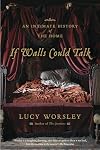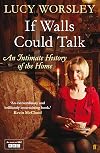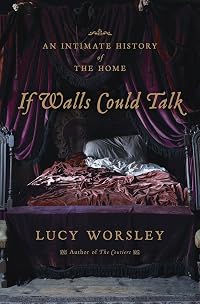
If Walls Could Talk: An Intimate History of the Home
by Lucy Worsley
On This Page
Description
Why did the flushing toilet take two centuries to catch on? Why did medieval people sleep sitting up? When were the two "dirty centuries?" Why did gas lighting cause Victorian ladies to faint? Why, for centuries, did rich people fear fruit? In her brilliantly and creatively researched book, Lucy Worsley takes us through the bedroom, bathroom, living room, and kitchen. She covers the history of each room and explores what people actually did in bed, in the bath, at the table, and at the show more stove-from sauce stirring to breastfeeding, teeth cleaning to masturbation, getting dressed to getting married-providing a compelling account of how the four rooms of the home have evolved from medieval times to today. show lessTags
Recommendations


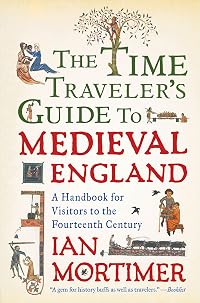
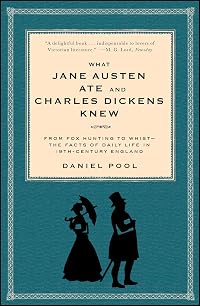
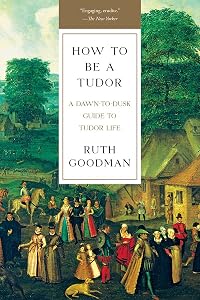
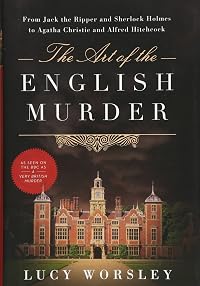
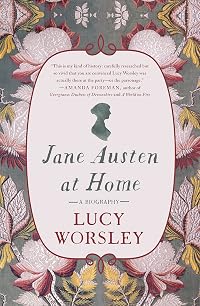
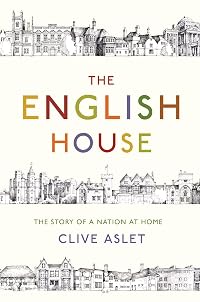
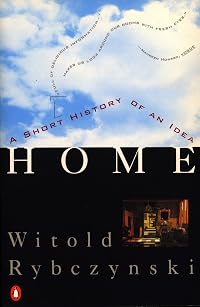
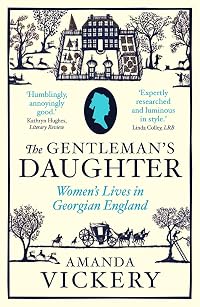
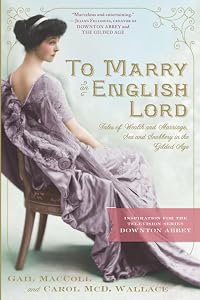




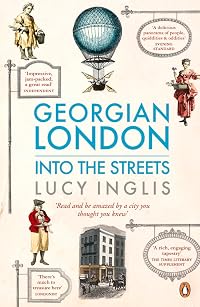
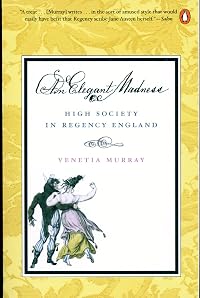
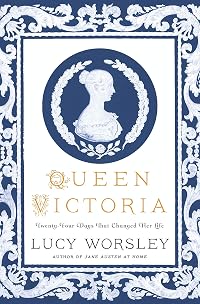


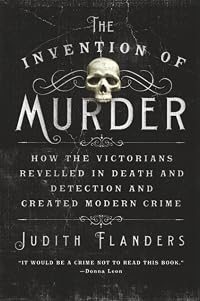


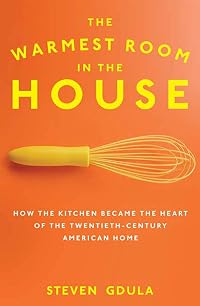
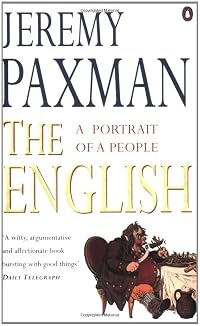
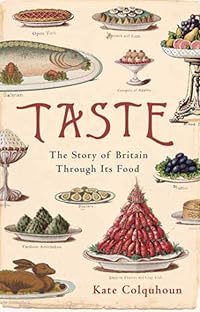


Member Recommendations
Member Reviews
I haven't watched the TV series associated with 'If Walls Could Talk', but can imagine it was both fun and fascinating. This wide-ranging book is concerned with how the use of rooms in the UK home has changed over the centuries. It touches on many areas of social, political, and technological history, intersecting with more specific history books like [b:At Day's Close: Night in Times Past|722892|At Day's Close Night in Times Past|A. Roger Ekirch|https://i.gr-assets.com/images/S/compressed.photo.goodreads.com/books/1348957892l/722892._SX50_.jpg|4067791] and [b:Brilliant: The Evolution of Artificial Light|8147489|Brilliant The Evolution of Artificial Light|Jane show more Brox|https://i.gr-assets.com/images/S/compressed.photo.goodreads.com/books/1389068232l/8147489._SY75_.jpg|12946917]. I would have been delighted had it been twice as long with a great deal more detail, although I enjoyed what there was a great deal. The structuring by room (bedroom, bathroom, living room, kitchen) worked very well. One important theme is how technologies were only taken up once social and practical conditions allowed it. For example, the flushing toilet existed for several centuries before becoming popular, as wide adoption required piped water infrastructure. I was fascinated to learn about London's early piped water infrastructure, consisting of above-ground pipes made of elm wood. With no pumps, this allowed for only a limited, low pressure water supply to those who could afford it. An impressive achievement nonetheless. Other labour-saving technologies like washing machines spread only when it became expensive and difficult to employ servants. This history broadly chronicles falling numbers of people and rising numbers of machines in the home.
Worsley draws upon a wide range of sources and includes an appealing selection of illustrations. Her writing style is very readable and engaging. The areas that particularly interested me tended to be those I hadn't really read about before. The history of vegetables and fruit eaten in Britain was intriguing. I hadn't realised that sweet potatoes arrived here before standard potatoes. Nor that raw fruit and vegetables were (reasonably enough) considered risky in Medieval and Tudor times, thus repeatedly cooked before being eaten. I also didn't know that bathhouses were popular in medieval times, before falling into disfavour in Tudor times and staying there for several centuries. Moreover, having fleas in your clothes was considered unavoidable, while lice were a sign of poor personal hygiene.
One of the pleasures of reading history books is observing how they have aged. 'If Walls Could Talk' was published in 2012, yet I noted two examples of this. Worsley comments briefly on the future of the home, mentioning 'when the oil runs out' several times. That phrasing sounds strangely old-fashioned to my ears, now we know that there is far more oil than we can possibly burn without locking in catastrophic climate change. Now I'd be inclined to say, 'when we stop burning fossil fuels'. Secondly and more significantly, there is the pandemic's impact. At one point, Worsley comments on how miasma theory used to influence building design in centuries past. Given that COVID-19 has brought back the fear of miasma with actual scientific support, I wonder if fresh air will once again become a vital home design consideration. Moreover, the return of work to the home during successive lockdowns recalls the centuries before factories, offices, and the Industrial Revolution. In the 21th century, though, home working remains controlled and structured by capitalism despite this ostensible decentralisation of location. Rooms in our homes have had to take on new and unexpected roles in the past year. My living room/kitchen/dining room (the same room) became my lecture room, office, and library. I've since moved my office into the box room, having realised its small size and absence of windows are if anything advantageous to concentration. This space was previously a spare bedroom for visitors, which obviously hasn't been required for a year. It will be fascinating to observe the long-term consequences of the pandemic for our homes and how we live in them. show less
Worsley draws upon a wide range of sources and includes an appealing selection of illustrations. Her writing style is very readable and engaging. The areas that particularly interested me tended to be those I hadn't really read about before. The history of vegetables and fruit eaten in Britain was intriguing. I hadn't realised that sweet potatoes arrived here before standard potatoes. Nor that raw fruit and vegetables were (reasonably enough) considered risky in Medieval and Tudor times, thus repeatedly cooked before being eaten. I also didn't know that bathhouses were popular in medieval times, before falling into disfavour in Tudor times and staying there for several centuries. Moreover, having fleas in your clothes was considered unavoidable, while lice were a sign of poor personal hygiene.
One of the pleasures of reading history books is observing how they have aged. 'If Walls Could Talk' was published in 2012, yet I noted two examples of this. Worsley comments briefly on the future of the home, mentioning 'when the oil runs out' several times. That phrasing sounds strangely old-fashioned to my ears, now we know that there is far more oil than we can possibly burn without locking in catastrophic climate change. Now I'd be inclined to say, 'when we stop burning fossil fuels'. Secondly and more significantly, there is the pandemic's impact. At one point, Worsley comments on how miasma theory used to influence building design in centuries past. Given that COVID-19 has brought back the fear of miasma with actual scientific support, I wonder if fresh air will once again become a vital home design consideration. Moreover, the return of work to the home during successive lockdowns recalls the centuries before factories, offices, and the Industrial Revolution. In the 21th century, though, home working remains controlled and structured by capitalism despite this ostensible decentralisation of location. Rooms in our homes have had to take on new and unexpected roles in the past year. My living room/kitchen/dining room (the same room) became my lecture room, office, and library. I've since moved my office into the box room, having realised its small size and absence of windows are if anything advantageous to concentration. This space was previously a spare bedroom for visitors, which obviously hasn't been required for a year. It will be fascinating to observe the long-term consequences of the pandemic for our homes and how we live in them. show less
So, fun facts: I came across this book when I was doing some research about the history of closets (my curiosity in which was sparked by a Sims build video I was making at the time), and was excited to pick it up immediately. It does in fact have a chapter just about closets, which was fascinating, but also looks at every other room in the modern home, and then devotes a chapter each to the different things we do in them. It follows these developments starting in the middle ages and basically stops in about the 1970s, with some exceptions, because the changes in them after that point are negligible compared to the changes that came before.
While I really enjoyed the depth of research that went into this book, and was impressed by show more Worsley’s hands-on experience with a lot of it (she is one of the curators at the Historic Royal Palaces and apparently maintains a good chunk of British history), I was a little disappointed that it’s limited to English history only. That’s not the fault of the author, of course, but I probably should have realized this before I picked it up. I would LOVE to read a similar book about the history of homes in the United States, but I have not found one yet. Based on what she discussed here, I feel like parts of the U.S. were modernized sooner than in the U.K., partially because of the climate, and partially because of new development and construction vs. renovating older buildings. At any rate I still thoroughly enjoyed this--to answer my original question, I had suspected that closets were mostly a U.S. thing, and according to Worsley I was correct. Closets originated as a place of prayer and often included a shrine and other personal objects, to enable the user to escape from the world. Over the ages they slowly morphed into a room for storing clothes. It would seem that Americans prefer to keep more clothing than everyone else, because they remain popular here while the rest of the developed world transitioned to using bureaus and drawers. show less
While I really enjoyed the depth of research that went into this book, and was impressed by show more Worsley’s hands-on experience with a lot of it (she is one of the curators at the Historic Royal Palaces and apparently maintains a good chunk of British history), I was a little disappointed that it’s limited to English history only. That’s not the fault of the author, of course, but I probably should have realized this before I picked it up. I would LOVE to read a similar book about the history of homes in the United States, but I have not found one yet. Based on what she discussed here, I feel like parts of the U.S. were modernized sooner than in the U.K., partially because of the climate, and partially because of new development and construction vs. renovating older buildings. At any rate I still thoroughly enjoyed this--to answer my original question, I had suspected that closets were mostly a U.S. thing, and according to Worsley I was correct. Closets originated as a place of prayer and often included a shrine and other personal objects, to enable the user to escape from the world. Over the ages they slowly morphed into a room for storing clothes. It would seem that Americans prefer to keep more clothing than everyone else, because they remain popular here while the rest of the developed world transitioned to using bureaus and drawers. show less
Lucy Worsley provides a fascinating view of the evolution of the typical single room abode from the Middle Ages, to the present, in which a home would not be complete without at least one bathroom, a kitchen, bedroom(s) and a living room.
Focusing mostly on the experiences in Great Britain, Worsley nonetheless captures trends from Europe and the US. She provides insights on the societal changes that precipitated the notion of "privacy", the desire for furnishings, cleanliness ( and lack thereof during the "dirty centuries"), technological innovation, the evolution of manners and everything in between.
Full of marvelous details, Worsley's historical account did make me very grateful to be living in the 21st century.
Focusing mostly on the experiences in Great Britain, Worsley nonetheless captures trends from Europe and the US. She provides insights on the societal changes that precipitated the notion of "privacy", the desire for furnishings, cleanliness ( and lack thereof during the "dirty centuries"), technological innovation, the evolution of manners and everything in between.
Full of marvelous details, Worsley's historical account did make me very grateful to be living in the 21st century.
IF WALLS COULD TALK is a fascinating social history of the home. Written in a very chatty and informal manner, it is a breezy read that even the most history-adverse will find fun and easy to get through.
A few caveats, however:
1) This is about the BRITISH home. Actually, to be even more specific, it is about the ENGLISH home, as Scotland, Wales and Ireland are barely mentioned.
American (not to mention non-Western hemisphere) domestic dwellings and habits evolved differently. And while the United States is mentioned more often than other European or indeed, other UK countries, many of the conclusions drawn pertain specifically to England. For example, Worsley ends her chapter on bed furnishings with a rapturous appreciation for Terence show more Conran (a kind of British Swinging Sixties Martha Stewart, with more emphasis on home furnishings than crafts) and the ubiquitous duvet, which has made top sheets, blankets and bedspreads obsolete.
Which comes as news to American households, where the top sheet still holds sway. And while duvets are certainly common, bedspreads and quilts are also still very much in use. And did you know Americans store their hopes and dreams in closets? Here I thought my closets mostly held clothes, bed linens - have to store the top sheets somewhere - and far too much junk. (British homes, in general, don't have closets. Yes, it shocked me, too, when I moved there. But Worsley never mentions the British equivalent, which is the box room.)
Having lived in London for five years, I spotted the differences immediately. Alas, Worsley seems to have little knowledge of the US, aside from that gleaned from Thanksgiving episodes of American sitcoms shown on British telly, so her US references and conclusions are a bit off.
Still, if you are at all interested in English social history (and I am), this book is a must.
2) This book is about the HOME. Y'know, the place where you do all the things in private that you would not dream of doing in public (although Worsley does walk through how the notion of privacy - and therefore the home - has changed over the centuries).
Therefore, Worsley is not squeamish about activities that take place in the home. And that includes sex, masturbation, bodily waste evacuation, farting, bathing, childbirth, death, and many more topics that were deemed too indelicate for Victorian female ears. Luckily, while I am female, I am not Victorian, and I thought Worsley did a splendid job of walking the line between being forthright but nowhere near gross. We're all human, and these are basic human functions. And it's fascinating how social mores and ideas of acceptable social behavior have changed over time.
However, if your ears and eyes would prefer to read like it is 1888, then perhaps this isn't the book for you. show less
A few caveats, however:
1) This is about the BRITISH home. Actually, to be even more specific, it is about the ENGLISH home, as Scotland, Wales and Ireland are barely mentioned.
American (not to mention non-Western hemisphere) domestic dwellings and habits evolved differently. And while the United States is mentioned more often than other European or indeed, other UK countries, many of the conclusions drawn pertain specifically to England. For example, Worsley ends her chapter on bed furnishings with a rapturous appreciation for Terence show more Conran (a kind of British Swinging Sixties Martha Stewart, with more emphasis on home furnishings than crafts) and the ubiquitous duvet, which has made top sheets, blankets and bedspreads obsolete.
Which comes as news to American households, where the top sheet still holds sway. And while duvets are certainly common, bedspreads and quilts are also still very much in use. And did you know Americans store their hopes and dreams in closets? Here I thought my closets mostly held clothes, bed linens - have to store the top sheets somewhere - and far too much junk. (British homes, in general, don't have closets. Yes, it shocked me, too, when I moved there. But Worsley never mentions the British equivalent, which is the box room.)
Having lived in London for five years, I spotted the differences immediately. Alas, Worsley seems to have little knowledge of the US, aside from that gleaned from Thanksgiving episodes of American sitcoms shown on British telly, so her US references and conclusions are a bit off.
Still, if you are at all interested in English social history (and I am), this book is a must.
2) This book is about the HOME. Y'know, the place where you do all the things in private that you would not dream of doing in public (although Worsley does walk through how the notion of privacy - and therefore the home - has changed over the centuries).
Therefore, Worsley is not squeamish about activities that take place in the home. And that includes sex, masturbation, bodily waste evacuation, farting, bathing, childbirth, death, and many more topics that were deemed too indelicate for Victorian female ears. Luckily, while I am female, I am not Victorian, and I thought Worsley did a splendid job of walking the line between being forthright but nowhere near gross. We're all human, and these are basic human functions. And it's fascinating how social mores and ideas of acceptable social behavior have changed over time.
However, if your ears and eyes would prefer to read like it is 1888, then perhaps this isn't the book for you. show less
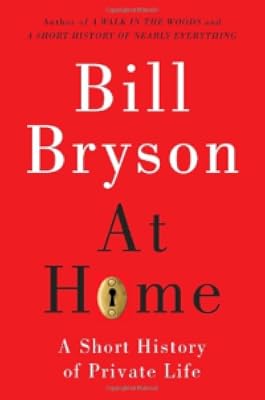
One can tell when reading this book that the author had a great time and a fascination for her subject. Although comparisons can be made to Bryson's "At Home", I found this book to be less rambling and more centered. She takes the major rooms of the house and traces them and everything that goes on in them from dressing, underwear (or lack of such)to chamber pots. She also traces the different time periods and shows how they and the people in them have changed. It is mostly her writing style though that draws the reader in and makes them privy to all she chooses to impart, with a great deal of humor thrown in.
Fascinating social history of British domestic life as seen through rooms and the activities that went on in them. Almost every page has something that tempts you to read it aloud to anyone who will stay long enough.
Very much reflects Worsley's personality, she has a breezy affable style and this book is exactly that, its like having a delightful over a cuppa with a friend. I think a lot more people would be interested in history if they were brought it to it by someone like Worsley, she brings the past to life, and shows what people, both high and low, were really like. To tell the truth, there's nothing in here that startlingly new, but it is all presented so entertainingly that's its hard to find fault. Lovely stuff.
Members
- Recently Added By
Lists

Best Library Reads of 2013
114 works; 1 member
Author Information

40+ Works 4,198 Members
Lucy Worsley, Ph.D., is Chief Curator at Historic Royal Palaces, the charity that manages the Tower of London, Hampton Court Palace, Kensington Palace, the Banqueting House in Whitehall, and Kew Palace in England. Please visit www.lucyworsley.com.
Some Editions
Awards and Honors
Common Knowledge
- Canonical title
- If Walls Could Talk: An Intimate History of the Home
- Original publication date
- 2011 (UK) (UK)
- Important places
- England, UK
- Epigraph
- What I want to know is, in the Middle Ages, did they do anything for Housemaid's Knee? What did they put in their hot baths after jousting?
H. G. Wells, Tono-Bungay, 1909 - First words
- Why did the flushing toilet take two centuries to catch on? (Introduction)
- Last words
- (Click to show. Warning: May contain spoilers.)It's comforting to think that the world has not yet ended, and that the pleasures of home life are perennial:
To be happy at home is the ultimate result of all ambition. (Dr Johnson) - Blurbers
- Foreman, Amanda
Classifications
- Genres
- History, Nonfiction, General Nonfiction, Art & Design
- DDC/MDS
- 306.850942 — Society, government, & culture Social sciences, sociology & anthropology Social Behavior - Dating, Marriage, Divorce Marriage, partnerships, unions; family Family History, geographic treatment, biography Europe England & Wales
- LCC
- HQ615 .W68 — Social sciences The family. Marriage, Women and Sexuality The Family. Marriage. Women The family. Marriage. Home
- BISAC
Statistics
- Members
- 735
- Popularity
- 38,592
- Reviews
- 25
- Rating
- (3.85)
- Languages
- English, Spanish
- Media
- Paper, Audiobook, Ebook
- ISBNs
- 12
- ASINs
- 8