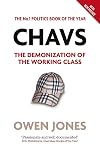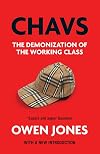
Chavs: The Demonization of the Working Class
by Owen Jones
On This Page
Description
"In this groundbreaking investigation, Owen Jones explores how the working class has gone from 'salt of the earth' to 'scum of the earth'. Moving through Westminster 's lobbies and working-class communities from Dagenham to Dewsbury Moor, Jones lays bare the ignorance and prejudice at the heart of the chav caricature, and reveals a far more complex reality: the increasing poverty and desperation of people left abandoned by the aspirational, society-fragmenting policies of both the Tories and show more the New Labour. A damning indictment of the media and political establishment, Chavs is an illuminating, disturbing portrait of inequality and class hatred in modern Britain."--P. [4] of cover. show lessTags
Recommendations






























Member Reviews
Chavs, despite coming out over a decade ago, is still prescient—though the author recycles the same argument often and reading may make you feel a bit of déjà-vu.
Jones (broadly, in my opinion) appropriately diagnoses the cause of working class denigration, both on a physical economic level but also on a cultural level, due to Thatcher-era policies breaking down trade unions and allowing council estates to be privately bought without new housing to replace it.
The book excels in the personal stories of working class Britons and is sympathetic to the realities of their lives, and is unafraid to cast appropriate blame on New Labour (and its middle-class liberal establishment) for their effective abandonment of the working class in the show more face of Thatcher's destructive policies. As someone who grew up working class as well (like free lunch, single parent, substance abuse blah blah blah), it is always refreshing to find an author who actually takes the time to understand our points of view, and why they do not always line up with the established "correct" leftist opinion.
I've rated 3 stars as it was a bit repetitive and just too much of a polemic if we're being honest. It won't necessarily convince those on the other side, if you know what I mean. If you're looking for a robust argument against the excesses of the wealthy, go read As Gods Among Men: A History of the Rich in the West. show less
Jones (broadly, in my opinion) appropriately diagnoses the cause of working class denigration, both on a physical economic level but also on a cultural level, due to Thatcher-era policies breaking down trade unions and allowing council estates to be privately bought without new housing to replace it.
The book excels in the personal stories of working class Britons and is sympathetic to the realities of their lives, and is unafraid to cast appropriate blame on New Labour (and its middle-class liberal establishment) for their effective abandonment of the working class in the show more face of Thatcher's destructive policies. As someone who grew up working class as well (like free lunch, single parent, substance abuse blah blah blah), it is always refreshing to find an author who actually takes the time to understand our points of view, and why they do not always line up with the established "correct" leftist opinion.
I've rated 3 stars as it was a bit repetitive and just too much of a polemic if we're being honest. It won't necessarily convince those on the other side, if you know what I mean. If you're looking for a robust argument against the excesses of the wealthy, go read As Gods Among Men: A History of the Rich in the West. show less
Jones documents how successive British governments, from Thatcher onwards, have pursued policies that had serious negative effects on the working class, by accelerating the shift away from manufacturing industry, enacting repressive measures against trade unions, cutting welfare benefits and support for public services (especially education), shifting from income tax to VAT, selling off most of the (council-owned) social housing stock, and so on. These policies have often been sold to the electorate on the back of patently untrue assertions that "we're all middle-class now" and accompanied by equally misleading propaganda about "welfare scroungers", "workshy single parents" and so on, echoing a negative stereotype of feckless show more working-class people as "chavs" propagated by right-wing newspapers, TV game-shows, and the rest.
In reality, of course, there is still a large section of British society that thinks of itself as "working-class". Since the annihilation of manufacturing, most of them work in retail, catering, call-centres, construction, agriculture and the like, often in jobs that are less fulfilling, less secure, and far less well-paid than the jobs their parents had in factories and mines. Those who are unemployed, Jones urges, are unemployed not because they are feckless and idle, but because there is a structural shortage of jobs, especially in former industrial towns. And most of them feel let down by the political establishment, which has less and less contact with them and their concerns. Even the Labour Party has few MPs with working-class roots these days, a result of the professionalisation of politics and the "unpaid intern" system, which effectively closes off political careers to those whose parents can't support them in unpaid jobs (in London!) whilst they gain experience. And the same goes for journalism and the law.
Jones also argues that social mobility in general is far less significant than it used to be (other people dispute this, and it's not easy to find an agreed definition of social mobility anyway). The education system is "rigged" by the middle classes to make sure their own kids have access to good schools and university places, leaving the schools most working-class kids attend marginalised; the cost of university education has become so high that few young people from working-class backgrounds can see the benefit of saddling themselves with student loans they won't necessarily ever be able to pay off.
All this demonization and exclusion of working-class people has created a political vacuum that right-wing nationalist parties have moved into. From the interviews and canvassing he's done in working-class neighbourhoods, Jones concludes that the people who vote for the likes of UKIP and the BNP usually don't support the explicitly racist parts of their platforms, but they do respond to the way those parties seem to be listening to their concerns, unlike Labour and the Conservatives. Worries about immigration (competition for housing and services, possible undercutting of pay rates) don't necessarily equate to racism, and Jones argues that the notion of an "embittered white working class" is both false and counter-productive: working-class districts (and working-class families) tend to be more mixed ethnically than elsewhere, and it's often second-generation immigrants who are most worried about the effect of newcomers.
It all sounds pretty convincing, even if it is quite at odds with my experience of British society. I grew up in an environment where the line between "working-class" and "middle-class" was fluid and hard to pin down, and where no-one would have dreamed of mocking the class, or the type of work, that most of their neighbours and relatives were associated with. Or of voting for anyone, under any circumstances, who didn't have "Labour" after their name on the polling card. Even at university, I don't remember anyone expressing disrespect for working-class people, and most people I knew were at most a couple of generations away from miners and factory workers. Except the drunken public-school prats we all laughed at, who are now running the country. But I moved away from the UK about the time Jones must have started primary school, so I've probably missed a lot. show less
In reality, of course, there is still a large section of British society that thinks of itself as "working-class". Since the annihilation of manufacturing, most of them work in retail, catering, call-centres, construction, agriculture and the like, often in jobs that are less fulfilling, less secure, and far less well-paid than the jobs their parents had in factories and mines. Those who are unemployed, Jones urges, are unemployed not because they are feckless and idle, but because there is a structural shortage of jobs, especially in former industrial towns. And most of them feel let down by the political establishment, which has less and less contact with them and their concerns. Even the Labour Party has few MPs with working-class roots these days, a result of the professionalisation of politics and the "unpaid intern" system, which effectively closes off political careers to those whose parents can't support them in unpaid jobs (in London!) whilst they gain experience. And the same goes for journalism and the law.
Jones also argues that social mobility in general is far less significant than it used to be (other people dispute this, and it's not easy to find an agreed definition of social mobility anyway). The education system is "rigged" by the middle classes to make sure their own kids have access to good schools and university places, leaving the schools most working-class kids attend marginalised; the cost of university education has become so high that few young people from working-class backgrounds can see the benefit of saddling themselves with student loans they won't necessarily ever be able to pay off.
All this demonization and exclusion of working-class people has created a political vacuum that right-wing nationalist parties have moved into. From the interviews and canvassing he's done in working-class neighbourhoods, Jones concludes that the people who vote for the likes of UKIP and the BNP usually don't support the explicitly racist parts of their platforms, but they do respond to the way those parties seem to be listening to their concerns, unlike Labour and the Conservatives. Worries about immigration (competition for housing and services, possible undercutting of pay rates) don't necessarily equate to racism, and Jones argues that the notion of an "embittered white working class" is both false and counter-productive: working-class districts (and working-class families) tend to be more mixed ethnically than elsewhere, and it's often second-generation immigrants who are most worried about the effect of newcomers.
It all sounds pretty convincing, even if it is quite at odds with my experience of British society. I grew up in an environment where the line between "working-class" and "middle-class" was fluid and hard to pin down, and where no-one would have dreamed of mocking the class, or the type of work, that most of their neighbours and relatives were associated with. Or of voting for anyone, under any circumstances, who didn't have "Labour" after their name on the polling card. Even at university, I don't remember anyone expressing disrespect for working-class people, and most people I knew were at most a couple of generations away from miners and factory workers. Except the drunken public-school prats we all laughed at, who are now running the country. But I moved away from the UK about the time Jones must have started primary school, so I've probably missed a lot. show less
An outstanding read that isn't at its heart about chavs at all. During my visit to Manchester and Liverpool, I could observe, to my horror, the strange customs and dress code of the British working/under class. In contrast to Orwell's Road to Wigan Pier, the working class is no longer invisible in the street. They even have reality TV show vehicles like "Geordie Shore" to beam their behaviors across the globe. In contrast to their visibility in life and in the media, politics is ignoring this lost generation completely.
Jones' claims that this is the consequence of the Thatcher revolution which broke the trade unions and conquered the mind of New Labour. Politics has ceased competing for working class votes. The working class which still show more accounts for over 50 percent of all jobs has answered by not voting at all (the so-called sofa option) or voting for protest candidates (who usually are ineffective and do not last long in politics). Owen's description of the English political landscape is smart and the absence of a nutty left to balance the nutty right a misfortune for sound governance. Between Tories, Lib-Dems and Labour, English voters are offered three flavors that may taste a bit different but contain much the same ingredients and perform whatever the City of London demands. No wonder that the areas that profit least from such politics such as Wales and Scotland increasingly seek to go their own way. I hope that the author will present a follow-up book soon. show less
Jones' claims that this is the consequence of the Thatcher revolution which broke the trade unions and conquered the mind of New Labour. Politics has ceased competing for working class votes. The working class which still show more accounts for over 50 percent of all jobs has answered by not voting at all (the so-called sofa option) or voting for protest candidates (who usually are ineffective and do not last long in politics). Owen's description of the English political landscape is smart and the absence of a nutty left to balance the nutty right a misfortune for sound governance. Between Tories, Lib-Dems and Labour, English voters are offered three flavors that may taste a bit different but contain much the same ingredients and perform whatever the City of London demands. No wonder that the areas that profit least from such politics such as Wales and Scotland increasingly seek to go their own way. I hope that the author will present a follow-up book soon. show less
A very passionate call for the return of class politics, Jones' book will be read by nods of agreement by anyone with a flicker of belief in social justice. The only problem is of course that only the already converted will actually read this; but thats the same for all polemics.
Jones' argues that the working class have become acceptable targets for ridicule and victimisation and its hard to argue with him. Starting from Thatcher's destruction of British manufacturing as a price worth paying to emasculate the trade unions, the myth of "aspiration", the identification of the working class with lack of aspiration and ambition and indeed with being a "non working class" , the developing weasel narrative that poverty is mainly the fault of show more the poor, the domination of media channels by the wealthy, the lack of actual social mobility other than amongst the very rich - these are all themes Jones explores well and at length. Mainly I agree with him. The Shannon Matthews and Madeline McCann cases, and their very different treatments in the press based on the class of the families is particularly well handled
The reasons this book doesn't get 5 stars from me are partly literary and partly interpretative. From a literary perspective there is sone repetition here - basically we have heard all Jones' arguments (and are in agreement) by around page 150. The rest feels like filler or a restating of the obvious. Secondly he needs a greater range of sources - Larry Elliott and Polly Toynbee of The Guardian are quoted often, but their opinions are already well known. We need to hear from a greater rage of right wing sources too, rather than Simon Fuller and the eccentric David Davis. But his discussions with "ordinary people" are well done
From an interpretative point of view, I would pick a number of nits. I don't think football hooliganism - and its very important part in making the population scared of young working class men from industrial towns, even if many perpetrators were not working class - is given enough attention. Thatcher's crack down on football hooligans was applauded by most - and set up a political mood where crackdown was an acceptable and appropriate policy. The break up of the miners strike was a short step from there. I also disagree with his image of the mining village and working class towns based around one industry as social utopia - most miners hated mining and were very eager for their children not to follow their footsteps. The difference of course is that mining, factory work, what Jones call "decent jobs" were at least SOMETHING. Now they have been replaced by the shopping centre, the call centre or nothing at all. The was nothing wrong with getting rid of nasty, dirty jobs in unprofitable industries - the tragedy was to replace them with nothing.
But on the whole warmly recommended. It would be nice if some Conservatives would read it. But they wont show less
Jones' argues that the working class have become acceptable targets for ridicule and victimisation and its hard to argue with him. Starting from Thatcher's destruction of British manufacturing as a price worth paying to emasculate the trade unions, the myth of "aspiration", the identification of the working class with lack of aspiration and ambition and indeed with being a "non working class" , the developing weasel narrative that poverty is mainly the fault of show more the poor, the domination of media channels by the wealthy, the lack of actual social mobility other than amongst the very rich - these are all themes Jones explores well and at length. Mainly I agree with him. The Shannon Matthews and Madeline McCann cases, and their very different treatments in the press based on the class of the families is particularly well handled
The reasons this book doesn't get 5 stars from me are partly literary and partly interpretative. From a literary perspective there is sone repetition here - basically we have heard all Jones' arguments (and are in agreement) by around page 150. The rest feels like filler or a restating of the obvious. Secondly he needs a greater range of sources - Larry Elliott and Polly Toynbee of The Guardian are quoted often, but their opinions are already well known. We need to hear from a greater rage of right wing sources too, rather than Simon Fuller and the eccentric David Davis. But his discussions with "ordinary people" are well done
From an interpretative point of view, I would pick a number of nits. I don't think football hooliganism - and its very important part in making the population scared of young working class men from industrial towns, even if many perpetrators were not working class - is given enough attention. Thatcher's crack down on football hooligans was applauded by most - and set up a political mood where crackdown was an acceptable and appropriate policy. The break up of the miners strike was a short step from there. I also disagree with his image of the mining village and working class towns based around one industry as social utopia - most miners hated mining and were very eager for their children not to follow their footsteps. The difference of course is that mining, factory work, what Jones call "decent jobs" were at least SOMETHING. Now they have been replaced by the shopping centre, the call centre or nothing at all. The was nothing wrong with getting rid of nasty, dirty jobs in unprofitable industries - the tragedy was to replace them with nothing.
But on the whole warmly recommended. It would be nice if some Conservatives would read it. But they wont show less
Oh, where to start on this one? If ever a book captured the spirit of 2011, Chavs: The Demonization of the Working Class by Owen Jones must surely be it. Filled with indignation and outrage over the selfish, capitalist indulgences of the British middle and upper classes, Jones passionately champions the suffering masses against the largely derogative and dismissive image of them presented by the media and politicians.
Despite some issues with Jones’ basic arguments, I had a huge amount of fun reading this book. It appealed to so many of my sides: economics geek, history geek, and, of course, politics geek. Jones writes like a young idealist on a tear, passionate, outraged, and absolutely convinced of the moral rightness of his show more arguments. I have no doubt that many of his readers will come away equally convinced, equally outraged. Indeed, this almost seems like required reading for the ‘Occupy’ protestors.
Full review: http://thecaptivereader.wordpress.com/2011/11/03/chavs-the-demonization-of-the-w... show less
Despite some issues with Jones’ basic arguments, I had a huge amount of fun reading this book. It appealed to so many of my sides: economics geek, history geek, and, of course, politics geek. Jones writes like a young idealist on a tear, passionate, outraged, and absolutely convinced of the moral rightness of his show more arguments. I have no doubt that many of his readers will come away equally convinced, equally outraged. Indeed, this almost seems like required reading for the ‘Occupy’ protestors.
Full review: http://thecaptivereader.wordpress.com/2011/11/03/chavs-the-demonization-of-the-w... show less
A polemic that wears its leftwing politics unashamedly (and largely legitimately) on its sleeve. This is a solid review of the excesses of Thatcherism, how gravely it damaged working-class culture in the 1980s, and its upshot in Britain today - where a working-class rump has gone from being viewed as 'salt of the earth' to 'scum of the earth'. Some discussion of globalisation would have been useful (after all, Thatcher's economic policies and smashing of the trade unions didn't take place in a national vacuum), but overall this is a fairly convincing read.
I really enjoyed reading this thought-provoking book about discourses about working-class people and issues that they in particular face in British politics and media. I think it would have been even better if it had spent some time right at the beginning to discuss the range of meanings that the term "working class" has and how those might have shifted over time.
Members
- Recently Added By
Lists

Non-Fiction Worth Reading
1,015 works; 261 members

Fiction about the Working Class
74 works; 10 members
Author Information

5+ Works 1,469 Members
Some Editions
Awards and Honors
Common Knowledge
- Original publication date
- 2011-07-15
- Important places
- Dewsbury Moor, West Yorkshire, England, UK; Ashington, Northumberland, England, UK; Longbridge, West Midlands, England, UK; Dagenham, Essex, England, UK
- First words
- It's an experience we've all had.
- Last words
- (Click to show. Warning: May contain spoilers.)Ridiculed or ignored though they may be, they will do so again.
- Blurbers
- Carey, John; Pickett, Kate; Wilkinson, Richard
- Original language
- English
- Canonical DDC/MDS
- 305.5620941
Classifications
- Genres
- Sociology, General Nonfiction, Nonfiction, Politics and Government, History
- DDC/MDS
- 305.5620941 — Society, government, & culture Social sciences, sociology & anthropology Social group - Age, Gender, Ethnicity People by social and economic levels Lower, alienated, excluded classes Working class History, geographic treatment, biography Europe British Isles
- LCC
- HD8391 .J66 — Social sciences Industries. Land use. Labor Industries. Land use. Labor Labor. Work. Working class By region or country
- BISAC
Statistics
- Members
- 713
- Popularity
- 39,854
- Reviews
- 16
- Rating
- (3.84)
- Languages
- 6 — Dutch, English, German, Spanish, Swedish, Turkish
- Media
- Paper, Audiobook, Ebook
- ISBNs
- 14
- ASINs
- 8