On This Page
Description
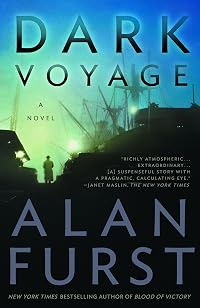
“In the first nineteen months of European war, from September 1939 to March of 1941, the island nation of Britain and her allies lost, to U-boat, air, and sea attack, to mines and maritime disaster, one thousand five hundred and ninety-six merchant vessels. It was the job of the Intelligence Division of the Royal Navy to stop it, and so, on the last day of April 1941 . . .”May 1941. At four in the morning, a rust-streaked tramp freighter steams up the Tagus River to dock at the port of show more Lisbon. She is the Santa Rosa, she flies the flag of neutral Spain and is in Lisbon to load cork oak, tinned sardines, and drums of cooking oil bound for the Baltic port of Malmö.
But she is not the Santa Rosa. She is the Noordendam, a Dutch freighter. Under the command of Captain Eric DeHaan, she sails for the Intelligence Division of the British Royal Navy, and she will load detection equipment for a clandestine operation on the Swedish coast–a secret mission, a dark voyage.
A desperate voyage. One more battle in the spy wars that rage through the back alleys of the ports, from elegant hotels to abandoned piers, in lonely desert outposts, and in the souks and cafés of North Africa. A battle for survival, as the merchant ships die at sea and Britain–the last opposition to Nazi German–slowly begins to starve.
A voyage of flight, a voyage of fugitives–for every soul aboard the Noordendam. The Polish engineer, the Greek stowaway, the Jewish medical officer, the British spy, the Spaniards who fought Franco, the Germans who fought Hitler, the Dutch crew itself. There is no place for them in occupied France; they cannot go home.
From Alan Furst–whom The New York Times calls America’s preeminent spy novelist–here is an epic tale of war and espionage, of spies and fugitives, of love in secret hotel rooms, of courage in the face of impossible odds. Dark Voyage is taut with suspense and pounding with battle scenes; it is authentic, powerful, and brilliant. show less
Tags
Recommendations















Member Reviews
Alan Furst excels in writing dark, atmospheric books set in and around World War II, and Dark Voyage is an excellent example of his writing. The hero of this book is Dutch sea captain, Eric DeHaan, and he is recruited in 1941 by the Dutch Naval Intelligence. Disguising his ship as a neutral Spanish freighter, a series of missions are completed for the British Navy. Starting in the Mediterranean Sea with assisting a British commando unit in North Africa, then delivering munitions to the island of Crete, the ship is finally sent to the Baltic Ocean to rescue an assorted group of refugees.
Perfectly capturing the atmosphere of the era and the nautical feel of a merchant marine ship, Dark Voyage is an expert blend of meticulous research and show more exciting story. From the port of Tangier to the days at sea, we are taken on an intense and richly detailed adventure. Although important history is unfolding in the background, this is a very human story of a variety of people caught up in a desperate situation.
Dark Voyage has a slightly different feel from some of the other books by Alan Furst that I have read, probably because there is more action in this book. This is an espionage story with a cast of assorted Europeans pressed into service, putting their lives on the line. This was an intense, exciting read that I fully enjoyed. show less
Perfectly capturing the atmosphere of the era and the nautical feel of a merchant marine ship, Dark Voyage is an expert blend of meticulous research and show more exciting story. From the port of Tangier to the days at sea, we are taken on an intense and richly detailed adventure. Although important history is unfolding in the background, this is a very human story of a variety of people caught up in a desperate situation.
Dark Voyage has a slightly different feel from some of the other books by Alan Furst that I have read, probably because there is more action in this book. This is an espionage story with a cast of assorted Europeans pressed into service, putting their lives on the line. This was an intense, exciting read that I fully enjoyed. show less
Furst writes immersive, atmospheric historical fiction set around the beginnings of the second World War. This one is before the United States has entered the war and the Germans have been absolutely devastating merchant ships that England depends on. Starts slow and not a page turner for quite a while but don't let that scare you off as a reader. You get some setup and background that people would decry was missing if it wasn't there. When was the last time you had dinner in Tangier?
If you want a WWII espionage novel different than most, here you go. This is a seagoing one. Holland was overrun by the Germans and a Dutch merchant vessel is sometimes repainted and re-flagged to appear as a Spanish freighter. Characters come and go and I show more didn't quite connect to the characters as I usually do, other than the Dutch Captain who I became quite fond of as the story unfolds. I don't want to reveal important elements of the story, but I hope I meet the Captain again in a later book. I really admired him and will miss him. At the end of the novel we do not know the fate of the Captain and crew. show less
If you want a WWII espionage novel different than most, here you go. This is a seagoing one. Holland was overrun by the Germans and a Dutch merchant vessel is sometimes repainted and re-flagged to appear as a Spanish freighter. Characters come and go and I show more didn't quite connect to the characters as I usually do, other than the Dutch Captain who I became quite fond of as the story unfolds. I don't want to reveal important elements of the story, but I hope I meet the Captain again in a later book. I really admired him and will miss him. At the end of the novel we do not know the fate of the Captain and crew. show less
Usually, in a World War II espionage spy novel by Furst, the reader spends time with only the protagonist throughout the story; perhaps a secondary character or two also stick around for most of the book. But this time, the action focuses on Capt. Eric DeHaan of the Dutch freighter Noordendam and the ship's crew, a group that covers a number of nationalities and languages. The time is spring of 1941, and DeHaan and the Noordendam are enlisted to aid the war effort against Germany by having the ship pose as a Spanish freighter in order to engage in top secret missions, smugglers saboteurs and arms. DeHaan is a typical Furst hero, an ordinary man who, due to circumstances, finds himself in extraordinary situations, needing to rely on his show more intelligence and instinct for survival to complete his missions. He also needs to rely on his crew, and by the end of the book, I had grown quite fond of all of them. I don't consider Furst's novels to be pageturners, but they are compelling thanks to the realism, a product of the author's extensive research. This one is no exception. show less
My favorite of the many books by this author I've read. The ship's captain is indelibly drawn, and Furst draws the several wonderful locales utterly specifically. His balance here among despair, glory, bliss, and everyday labor--always a strong point!--is particularly fine.
In May, 1941, a creaky old cargo ship, the Santa Rosa, ties up in the port of Lisbon to load cork, canned goods, and cooking oil bound for the port of Malmo on the Baltic Sea. But the Santa Rosa is really the Dutch ship Noordendam, and her captain Eric DeHaan, has been commissioned by the Dutch government in exile to work with the British secret service.
DeHaan is the typical Furst hero - a world weary msn of middle age who nonetheless, is a dedicated anti-fascist and not only brave, but also compassionate, especially towards his motley international crew who are all fugitives from something or other. Furst perfectly portrays the role of the spy steamer - long periods of fairly mundane work followed by bursts of abject terror. This book show more will have you on the edge of your chair from beginning to end. show less
DeHaan is the typical Furst hero - a world weary msn of middle age who nonetheless, is a dedicated anti-fascist and not only brave, but also compassionate, especially towards his motley international crew who are all fugitives from something or other. Furst perfectly portrays the role of the spy steamer - long periods of fairly mundane work followed by bursts of abject terror. This book show more will have you on the edge of your chair from beginning to end. show less
It's all here. It's Furst. There are spies, World War II is unfolding. There are people finding physical consolation if not romance to escape their surroundings. There's historical accuracy with the places, the physical things they deal with and use. The surprise for me is the nautical setting. Furst is comfortable at sea as well as on land. Yes it's all overtaken by the unfolding events. They are small pieces unable to move the universe in the direction they would like it to go. I missed Polanyi but there were Dutch stand-ins. WWII was an equal opportunity abuser. Definitely worth the read.
I hated the ending when I finished the book. And when I woke up the next morning I thought it was perfect.
Members
- Recently Added By
Published Reviews
ThingScore 75
Near the middle of Alan Furst's new novel, ''Dark Voyage,'' Busby Berkeley's 1933 musical ''Footlight Parade'' is screened on the deck of a tramp freighter sailing from Tangier to Lisbon. The projector runs too fast, and the wind off the water distorts the sheet serving as the screen. Not all the crew speak English but they speak the lingua of the movie. It's a fun-house midnight matinee, and show more a strangely poetic one.
That fast-forwarded film on a flapping screen in front of a polyglot crew could almost be a metaphor for the odd shapes and rhythms Furst has brought to another familiar genre, the World War II espionage thriller. ''Dark Voyage'' is the eighth of his wonderful spy novels, and there are passages that could be passed off as the work of both a meticulous narrative craftsman at the top of his game and a symbolist poet. Flip the book open at random and pull out a sentence: ''A white city, and steep; alleys, souks and cafes, their patrons gathering for love and business as the light faded away''; ''Tile floor, bare wooden tables, a few customers, more than one reading a newspaper with dinner''; ''He had once, in some forgotten port, watched sailors in the Soviet Navy as they smeared paint on with their hands''; ''Black, oval cigarettes with gold rims, and heavy perfume''; ''By then it was very late, the tables mostly deserted, and the propriétaire opened the door for them as they left, letting in the cool April night.'' . . . show less
That fast-forwarded film on a flapping screen in front of a polyglot crew could almost be a metaphor for the odd shapes and rhythms Furst has brought to another familiar genre, the World War II espionage thriller. ''Dark Voyage'' is the eighth of his wonderful spy novels, and there are passages that could be passed off as the work of both a meticulous narrative craftsman at the top of his game and a symbolist poet. Flip the book open at random and pull out a sentence: ''A white city, and steep; alleys, souks and cafes, their patrons gathering for love and business as the light faded away''; ''Tile floor, bare wooden tables, a few customers, more than one reading a newspaper with dinner''; ''He had once, in some forgotten port, watched sailors in the Soviet Navy as they smeared paint on with their hands''; ''Black, oval cigarettes with gold rims, and heavy perfume''; ''By then it was very late, the tables mostly deserted, and the propriétaire opened the door for them as they left, letting in the cool April night.'' . . . show less
added by PLReader
Lists

Best Spy Fiction
153 works; 102 members

Books Read in 2023
5,547 works; 145 members

Books Read in 2016
4,666 works; 199 members
Author Information

26+ Works 16,480 Members
Furst received a B.A. from Oberlin College in 1962 and an M.A. from Penn State in 1967. Before becoming a full-time novelist, Furst worked in advertising and wrote magazine articles, most notably for Esquire, and as a columnist for the International Herald Tribune His early novels (1976-1983) achieved limited success. However, the 1988 publication show more of Night Soldiers inspired by a 1984 trip to Eastern Europe on assignment for Esquire revitalized his career. It was the first of his highly original novels about espionage in Europe before and during the Second World War. Born in New York on February 20, 1941, he lived for long periods in France, especially Paris where he was awarded a Fulbright teaching fellowship. In 2011, the Tulsa Library Trust in Tulsa, Oklahoma selected Furst to receive its Helmerich Award, a literary prize given annually to honor a distinguished author's body of work He also made The New York Times Best Seller List in 2012 with his title The Mission to Paris and Midnight in Europe in 2014. Furst again made the New York Times Bestseller in 2016 with his novel a Hero of France. (Publisher Provided) Alan Furst is an American author of spy novels. He was born in New York City on February 20, 1941, and was raised on the Upper West Side of Manhattan. Furst received a B.A. from Oberlin College in 1962 and an M.A. from Penn State in 1967. His novels are set just prior to and during the Second World War. Titles include: Night Soldiers, Kingdom of Shadows (which won the 2001 Hammett Prize), Blood of Victory, Spies of the Balkans and Mission to Paris. In 2011, the Tulsa Library Trust in Tulsa, Oklahoma, selected Furst to receive its Helmerich Award, a literary prize given annually to honor a distinguished author's body of work. Furst made The New York Times Best Seller List in 2012 with his title The Mission to Paris and Midnight in Europe in 2014. Furst again made the New York Times Bestseller in 2016 with his novel A Hero of France. (Bowker Author Biography) show less

Alan Furst is a LibraryThing Author, an author who lists their personal library on LibraryThing.
Some Editions
Awards and Honors
Awards
Distinctions
Series

Common Knowledge
- Canonical title
- Dark Voyage
- Original title
- Dark Voyage
- Original publication date
- 2004
- People/Characters
- Eric DeHaan; Noordendam/Santa Rosa; Maria Bromen; S. Kolb
- Important places
- Baltic Sea; North Africa
- Important events
- World War II (1939 | 1945); World War II, Eastern Front (1941-06-22 | 1945-05-05); Operation Barbarossa (1941-06-22 | 1941-12-05)
- Epigraph
- In the first nineteenth months of European war, from September, 1939, to March of 1941, the island nation of Britain and her allies lost, to U-boat, air, and sea attack, to mines and maritime disaster, one thousand, five hund... (show all)red and ninety-six merchant vessels.
It was the job of the Intelligence Division of the Royal Navy to stop it, and so, on the last day of April, 1941 . . . [sic.] - First words
- In the port of Tangier, on the last day of April, 1941, the fall of the Mediterranean evening was, as always, subtle and slow.
- Last words
- (Click to show. Warning: May contain spoilers.)But, in the end, they found nothing, and she was never seen again.
- Blurbers
- Yardley, Jonathan
- Original language
- English US
Classifications
Statistics
- Members
- 960
- Popularity
- 27,545
- Reviews
- 28
- Rating
- (3.79)
- Languages
- English, German, Spanish
- Media
- Paper, Audiobook, Ebook
- ISBNs
- 31
- ASINs
- 7