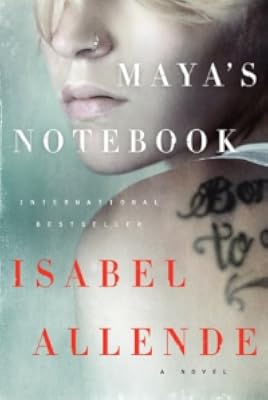
Maya's Notebook
by Isabel Allende
On This Page
Description
Maya's Notebook is a startling novel of suspense from New York Times bestselling author Isabel Allende.This contemporary coming-of-age story centers upon Maya Vidal, a remarkable teenager abandoned by her parents. Maya grew up in a rambling old house in Berkeley with her grandmother Nini, whose formidable strength helped her build a new life after emigrating from Chile in 1973 with a young son, and her grandfather Popo, a gentle African-American astronomer.
When Popo dies, Maya goes off show more the rails. Along with a circle of girlfriends known as "the vampires," she turns to drugs, alcohol, and petty crime—a downward spiral that eventually leads to Las Vegas and a dangerous underworld, with Maya caught between warring forces: a gang of assassins, the police, the FBI, and Interpol.
Her one chance for survival is Nini, who helps her escape to a remote island off the coast of Chile. In the care of her grandmother's old friend, Manuel Arias, and surrounded by strange new acquaintances, Maya begins to record her story in her notebook, as she tries to make sense of her past and unravel the mysteries of her family and her own life.
. show less
Tags
Recommendations





Member Reviews
Soy Maya Vidal, diecinueve años, sexo femenino, soltera, sin un enamorado, por falta de oportunidades y no por quisquillosa, nacida en Berkeley, California, pasaporte estadounidense, temporalmente refugiada en una isla al sur del mundo. Me pusieron Maya porque a mi Nini le atrae la India y a mis padres no se les ocurrió otro nombre, aunque tuvieron nueve meses para pensarlo. En hindi, maya significa “hechizo, ilusión, sueño”, nada que ver con mi carácter. Atila me calzaría mejor, porque donde pongo el pie no sale más pasto. Mi historia comienza en Chile con mi abuela, mi Nini, mucho antes de que yo naciera, porque si ella no hubiera emigrado, no se habría enamorado de mi Popo ni se habría instalado en California, mi padre show more no habría conocido a mi madre y yo no sería yo, sino una joven chilena muy diferente. show less
Maya Vidal is an appealing narrator. She is tough, smart, articulate and resourceful, although her voice is often inconsistent. At times she seems inappropriately wise while at others she is more immature than one would expect a 20 year old to be. Maya tells her personal history in this tale of loss and redemption. Her story focuses not only on the monumental mistakes she makes during her adolescence, but also on her family history and eventual redemption on a remote Chilean island. The story oscillates from abandonment by her parents as a child to rescue by her grandparents and happiness in later childhood, acting out in adolescence leading to another period of abandonment and utter depravity in Las Vegas, followed by a second rescue show more and ultimate redemption in Chile orchestrated once again be her grandmother. The plot also oscillates between languid development in Chiloe and page-turning rapidity during the Las Vegas period. Allende has obvious biases when it comes to Chilean history and politics but this part of the novel was interesting and seemed necessary to completely explain her grandmother’s history. show less
Adorei! Não estava à espera de gostar tanto deste livro mas fui surpreendida pela positiva. O excerto na contracapa atraiu a minha atenção e 'O Caderno de Maya' teve lugar garantido na pilha de livros que levei da biblioteca.
Achei as personagens muito bem construídas e 'reais' e nota-se o interesse e as origens sul-americanas da autora na descrição do povo de Chiloé e nas tradições da ilha chilena. Para mim este livro foi uma mistura de thriller, aventura, auto-descoberta e romance. O facto de ser escrito na primeira pessoa faz com que o leitor se identifique de certo modo com Maya e que queira saber o que lhe acontece no final. Também à medida que ia lendo fui aprendendo mais sobre aspetos difíceis como o mundo da show more toxicodependência, da corrupção e escravidão e dos abusos sexuais que afetam um grande número de pessoas.
'O Caderno de Maya' tirou-me da minha zona de conforto e fez-me viajar. Uma leitura excelente! show less
Achei as personagens muito bem construídas e 'reais' e nota-se o interesse e as origens sul-americanas da autora na descrição do povo de Chiloé e nas tradições da ilha chilena. Para mim este livro foi uma mistura de thriller, aventura, auto-descoberta e romance. O facto de ser escrito na primeira pessoa faz com que o leitor se identifique de certo modo com Maya e que queira saber o que lhe acontece no final. Também à medida que ia lendo fui aprendendo mais sobre aspetos difíceis como o mundo da show more toxicodependência, da corrupção e escravidão e dos abusos sexuais que afetam um grande número de pessoas.
'O Caderno de Maya' tirou-me da minha zona de conforto e fez-me viajar. Uma leitura excelente! show less
I always love reading Isabel Allende's books, and this was no exception. I had the pleasure of attending a Q&A with Isabel Allende in Winston-Salem, NC last year, shortly after this book was published. It is a disgrace it took me this long to pick it up and actually read it!
A slight departure from many of her earlier books, Maya's Notebook only has a touch of magical realism. It is also written from the perspective of a 19 year old girl, who spiraled downwards into drinking, drugs, and crime in the years following the death of her beloved grandfather. The story is told mostly from her perspective, after her grandmother sends her into exile on a remote Chilean island, both to protect her from criminal goons and give her a safe sanctuary show more to rehabilitate. The descriptions of the Chiloé Archipelago are lyrical and in the style I have come to know and love from this author.
The story is partly a coming-of-age story, partly a crime/mystery thriller, but mostly an honest and open portrayal of addiction and grief. Unfortunately, a topic Ms Allende knows all to well: three of her stepchildren have struggled with addiction; two have died, the second one passed away the same month Maya's Notebook was published in the United States. show less
A slight departure from many of her earlier books, Maya's Notebook only has a touch of magical realism. It is also written from the perspective of a 19 year old girl, who spiraled downwards into drinking, drugs, and crime in the years following the death of her beloved grandfather. The story is told mostly from her perspective, after her grandmother sends her into exile on a remote Chilean island, both to protect her from criminal goons and give her a safe sanctuary show more to rehabilitate. The descriptions of the Chiloé Archipelago are lyrical and in the style I have come to know and love from this author.
The story is partly a coming-of-age story, partly a crime/mystery thriller, but mostly an honest and open portrayal of addiction and grief. Unfortunately, a topic Ms Allende knows all to well: three of her stepchildren have struggled with addiction; two have died, the second one passed away the same month Maya's Notebook was published in the United States. show less
Maya Vidal is a troubled teenager from Berkeley. After the death of her beloved grandfather, she spirals into addiction and crime. Her grandmother eventually sends her to a remote island off the coast of Chile to escape a dangerous past. It is told through diary entries, and the narrative moves between past and present. It also delves into Chile’s history of human rights abuses under Pinochet's regime.
After reading many of Isabel Allende’s work, I was not prepared for this one. Allende’s normal fluid writing and storytelling is missing. It jumps from scene to scene without warning, which feels choppy, almost chaotic. I liked parts of it, mostly the segments set on the island, where Maya finds solace in its natural rhythms and the show more wisdom of the residents. However, parts of it are extremely brutal, including graphic descriptions of rapes, addictions, and drug-related violence.
I do not think we needed a thriller from Isabel Allende, and this is my least favorite of her books. I disliked both the structure and the over-the-top storyline. I do not think the notebook format worked at all. It reads very much as a novel, and not the way a diary would be written, especially by a teen. I imagine Maya’s journey is supposed to be optimistic, since she overcomes many challenges and self-destructive tendencies, and Allende is one of my favorite authors, but this book just didn’t work for me. show less
After reading many of Isabel Allende’s work, I was not prepared for this one. Allende’s normal fluid writing and storytelling is missing. It jumps from scene to scene without warning, which feels choppy, almost chaotic. I liked parts of it, mostly the segments set on the island, where Maya finds solace in its natural rhythms and the show more wisdom of the residents. However, parts of it are extremely brutal, including graphic descriptions of rapes, addictions, and drug-related violence.
I do not think we needed a thriller from Isabel Allende, and this is my least favorite of her books. I disliked both the structure and the over-the-top storyline. I do not think the notebook format worked at all. It reads very much as a novel, and not the way a diary would be written, especially by a teen. I imagine Maya’s journey is supposed to be optimistic, since she overcomes many challenges and self-destructive tendencies, and Allende is one of my favorite authors, but this book just didn’t work for me. show less
Nineteen-year-old Maya Vidal of Berkeley, California, is a natural blonde (“with hair dyed four primary colors”), single (“due to a lack of opportunities rather than by choice”), loves to play soccer, and is currently in Chile, “the country of my grandmother Nidia Vidal, where the ocean takes bites off the land and the continent of South America strings out into islands”. More specifically Chiloe, an archipelago with about two hundred thousand inhabitants. She is also on the run from the FBI, Interpol, and a Las Vegas criminal gang, as she explains to Manuel Arias, an old friend of her grandmother’s who has agreed to give her refuge.
So other than the Chilean setting, it’s not exactly your typical Isabel Allende fare show more there. It’s a very different Allende, at least from the impression I have from the few books I’ve read of her thus far (although I should note that I’ve not read any of her books published in the last decade) – more contemporary than her usual historical fiction, with no dabbling in the magic realism that she is known for.
Maya is such an interesting, flawed and honest character. And the narration, in the form of her journal, draws the reader right in to her life, her troubles, her emotions.
Maya was more or less raised by her grandparents, her mother having abandoned her not long after she was born, her father, a pilot, is seldom at home. And so her world falls apart after her beloved grandfather Popo dies. Her Nini ages overnight and locks herself in her grief, not really noticing when Maya drinks “whatever she could get her hands on, from gin to cough syrup, smoked marijuana, was dealing ecstasy, acid, and tranquilizers, stole credit cards, and had set up a scam inspired by a television program in which FBI agents pretended to be underage girls to trap depraved men on the Internet”.
But after an accident involving a car and a drug- and alcohol-addled Maya on a bike, Maya gets sent to an academy for unmanageable teenagers in Oregon. Little does everyone know that things are just going to get worse.
These flashbacks are interspersed with Maya’s current sober exile in the sleepy Chilean town, with no cellphone, no email access – by choice that is, she’s probably the only disconnected resident in town. She assists Arias, an anthropologist and sociologist, with research for his book on magic, and teaches English and basic computer skills at the school. The town and its inhabitants grow on her. And she begins to discover herself and her family’s history in Chile.
Maya is such an unforgettable character. Sure, there were plenty of times that I wanted to grab her by the shoulders and shake her to her senses – she is after all, only 19 but has been through so much. But she has a big heart, and quite a story to tell. And Allende has done such an excellent job capturing Maya’s voice – at times tough and full of angst, at others so vulnerable, so delicate.
Maya’s Notebook was one of my favourite reads of April – spanning Berkeley, Las Vegas, Oregon, Chile, well-stocked with unconventional characters, full of life, full of heart.
Originally posted at http://olduvaireads.wordpress.com/2013/05/13/tlc-book-tours-mayas-notebook/ show less
So other than the Chilean setting, it’s not exactly your typical Isabel Allende fare show more there. It’s a very different Allende, at least from the impression I have from the few books I’ve read of her thus far (although I should note that I’ve not read any of her books published in the last decade) – more contemporary than her usual historical fiction, with no dabbling in the magic realism that she is known for.
Maya is such an interesting, flawed and honest character. And the narration, in the form of her journal, draws the reader right in to her life, her troubles, her emotions.
Maya was more or less raised by her grandparents, her mother having abandoned her not long after she was born, her father, a pilot, is seldom at home. And so her world falls apart after her beloved grandfather Popo dies. Her Nini ages overnight and locks herself in her grief, not really noticing when Maya drinks “whatever she could get her hands on, from gin to cough syrup, smoked marijuana, was dealing ecstasy, acid, and tranquilizers, stole credit cards, and had set up a scam inspired by a television program in which FBI agents pretended to be underage girls to trap depraved men on the Internet”.
But after an accident involving a car and a drug- and alcohol-addled Maya on a bike, Maya gets sent to an academy for unmanageable teenagers in Oregon. Little does everyone know that things are just going to get worse.
These flashbacks are interspersed with Maya’s current sober exile in the sleepy Chilean town, with no cellphone, no email access – by choice that is, she’s probably the only disconnected resident in town. She assists Arias, an anthropologist and sociologist, with research for his book on magic, and teaches English and basic computer skills at the school. The town and its inhabitants grow on her. And she begins to discover herself and her family’s history in Chile.
Maya is such an unforgettable character. Sure, there were plenty of times that I wanted to grab her by the shoulders and shake her to her senses – she is after all, only 19 but has been through so much. But she has a big heart, and quite a story to tell. And Allende has done such an excellent job capturing Maya’s voice – at times tough and full of angst, at others so vulnerable, so delicate.
Maya’s Notebook was one of my favourite reads of April – spanning Berkeley, Las Vegas, Oregon, Chile, well-stocked with unconventional characters, full of life, full of heart.
Originally posted at http://olduvaireads.wordpress.com/2013/05/13/tlc-book-tours-mayas-notebook/ show less
Maya Vidal is a 19 year old woman who grew up with her grandparents in Berkeley, but now finds herself in a remote part of Chile, where her grandmother was from. She seems normal enough initially, having survived being abandoned by her parents and growing up in a diverse and hippie atmosphere, but being loved. However as her ‘notebook’ gradually reveals, Maya’s world began to fall apart at age 15 with the death of her grandfather, a kindly, gentle man who was her father figure.
Her descent from there is shocking and steep. Maya sinks into seemingly every possible depravity with severe drug and alcohol abuse, puts herself into danger in many ways and suffers horrifying consequences, and ultimately ends up on the streets in Las show more Vegas, strung out and wanted by very dangerous people. At each step along the way, just when you think she’s hit rock bottom, she sinks still lower. It’s not a book for the faint of heart, and is tough to read at times.
The book describes some of the culture of Chile and its recent history, which politically swung from one extreme to another when Salvador Allende, a Marxist fairly elected in 1970 and who then began appropriating private property , was overthrown in a bloody coup in 1974. The dictator Augusto Pinochet then took power for 16 years, suppressing and persecuting dissidents. This is the backdrop, the history that the elders share and which had them losing loved ones and dispersing, with Maya’s grandmother fleeing to Toronto, and then later settling in Berkeley. Her gruff old friend who Maya stays with, Manuel Arias, has a mysterious past which is also gradually revealed over the course of the book.
The writing is reasonably good and the story held my interest, but it was too dark for my taste, even with the lightness and naturalness of Maya’s time in Chile that is interspersed throughout the narrative. I was also not a huge fan of the ending, which seemed a bit contrived and tidy.
Quotes:
On Berkeley:
“My Nini felt right in her element in Berkeley, that gritty, radical, extravagant city, with its mix of races and human pelts, with more geniuses and Nobel Prize winners than any other city on earth, saturated with noble causes, intolerant in its sanctimoniousness.”
On Chile, and religion:
“The priest, however, always comes to say mass every Sunday, to keep the Pentecostals and evangelicals from getting the upper hand. According to Manuel, that wouldn’t be easy, because the Catholic Church is more influential in Chile than it is in the Vatican. He told me that this was the last country in the world to legally approve the right to divorce and the law they’ve got is very complicated. It’s actually easier to murder your husband or wife than divorce them, so no one wants to get married and most children are born out of wedlock. They don’t even talk about abortion, which is a rude word, though it’s widely practiced. Chileans venerate the Pope, but they don’t heed him sexual matters and their consequences, because he’s a well-off, elderly celibate, who hasn’t worked a day in his life, and doesn’t really know much about it.”
On life, and happy endings:
“My Nini has always been annoyed by the contrived need for a happy ending to stories for children; she believes that in life there are no endings, just thresholds, people wandering here and there, stumbling and getting lost.”
On pain:
“In the three years that have passed since the death of my grandfather, I’ve very rarely talked about him. This cased me quite a few problems with the psychologists in Oregon, who tried to force me to ‘resolve my grief’ or some similar trite platitude. There are people like that, people who think all grief is the same and that there are formulas and stages to overcoming it. My Nini’s stoic philosophy is more suitable: ‘Since we’re going to suffer, let’s clench our teeth,’ she said. Pain, like that, pain of the soul, does not go away with remedies, therapy, or vacations; you simply endure it deep down, fully, as you should.” show less
Her descent from there is shocking and steep. Maya sinks into seemingly every possible depravity with severe drug and alcohol abuse, puts herself into danger in many ways and suffers horrifying consequences, and ultimately ends up on the streets in Las show more Vegas, strung out and wanted by very dangerous people. At each step along the way, just when you think she’s hit rock bottom, she sinks still lower. It’s not a book for the faint of heart, and is tough to read at times.
The book describes some of the culture of Chile and its recent history, which politically swung from one extreme to another when Salvador Allende, a Marxist fairly elected in 1970 and who then began appropriating private property , was overthrown in a bloody coup in 1974. The dictator Augusto Pinochet then took power for 16 years, suppressing and persecuting dissidents. This is the backdrop, the history that the elders share and which had them losing loved ones and dispersing, with Maya’s grandmother fleeing to Toronto, and then later settling in Berkeley. Her gruff old friend who Maya stays with, Manuel Arias, has a mysterious past which is also gradually revealed over the course of the book.
The writing is reasonably good and the story held my interest, but it was too dark for my taste, even with the lightness and naturalness of Maya’s time in Chile that is interspersed throughout the narrative. I was also not a huge fan of the ending, which seemed a bit contrived and tidy.
Quotes:
On Berkeley:
“My Nini felt right in her element in Berkeley, that gritty, radical, extravagant city, with its mix of races and human pelts, with more geniuses and Nobel Prize winners than any other city on earth, saturated with noble causes, intolerant in its sanctimoniousness.”
On Chile, and religion:
“The priest, however, always comes to say mass every Sunday, to keep the Pentecostals and evangelicals from getting the upper hand. According to Manuel, that wouldn’t be easy, because the Catholic Church is more influential in Chile than it is in the Vatican. He told me that this was the last country in the world to legally approve the right to divorce and the law they’ve got is very complicated. It’s actually easier to murder your husband or wife than divorce them, so no one wants to get married and most children are born out of wedlock. They don’t even talk about abortion, which is a rude word, though it’s widely practiced. Chileans venerate the Pope, but they don’t heed him sexual matters and their consequences, because he’s a well-off, elderly celibate, who hasn’t worked a day in his life, and doesn’t really know much about it.”
On life, and happy endings:
“My Nini has always been annoyed by the contrived need for a happy ending to stories for children; she believes that in life there are no endings, just thresholds, people wandering here and there, stumbling and getting lost.”
On pain:
“In the three years that have passed since the death of my grandfather, I’ve very rarely talked about him. This cased me quite a few problems with the psychologists in Oregon, who tried to force me to ‘resolve my grief’ or some similar trite platitude. There are people like that, people who think all grief is the same and that there are formulas and stages to overcoming it. My Nini’s stoic philosophy is more suitable: ‘Since we’re going to suffer, let’s clench our teeth,’ she said. Pain, like that, pain of the soul, does not go away with remedies, therapy, or vacations; you simply endure it deep down, fully, as you should.” show less
Members
- Recently Added By
Published Reviews
ThingScore 50
The prioritising of story over voice suggests that it's not the aim of Maya's Notebook to plunge the reader into the grim existence of a real-life Maya; this is a tale of revelations and resolutions, and the plot is more answerable to its own turns than to the brutal possibilities of reality. Despite the observations about the number of young people lost to street violence, crime and slavery, show more or because of them, the driving force of this novel is ultimately resilience – the power of love and acceptance to face down terrible things. show less
added by ozzer
Lists

Bibliotherapy: Family and Personal Social Issues
174 works; 5 members

Realistic Fiction: Social System
32 works; 1 member
Author Information

89+ Works 84,881 Members
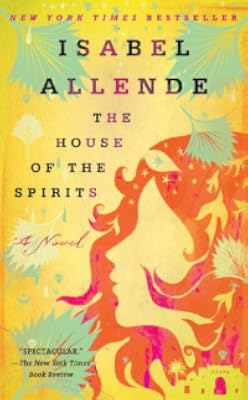
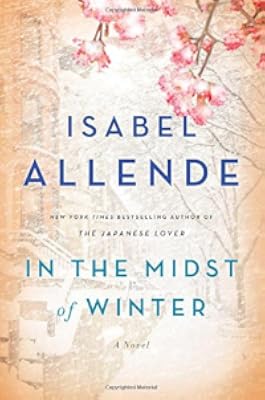
Isabel Allende was born in 1942 in Lima, Peru, the daughter of a Chilean diplomat. When her parents separated, young Isabel moved with her mother to Chile, where she spent the rest of her childhood. She married at the age of 19 and had two children, Paula and Nicolas. Her uncle was Salvador Allende, the president of Chile. When he was overthrown show more in the coup of 1973, she fled Chile, moving to Caracas, Venezuela. While living in Venezuela, Allende began writing her novels, many of them exploring the close family bonds between women. Her first novel, The House of the Spirits, has been translated into 27 languages, and was later made into a film. She then wrote Of Love and Shadows, Eva Luna, and The Stories of Eva Luna, all set in Latin America. The Infinite Plan was her first novel to take place in the United States. She explores the issues of human rights and the plight of immigrants and refugees in her novel, In The Midst of Winter. In Paula, Allende wrote her memoirs in connection with her daughter's illness and death. She delved into the erotic connections between food and love in Aphrodite: A Memoir of the Senses. In addition to writing books, Allende has worked as a TV interviewer, magazine writer, school administrator, and a secretary at a U.N. office in Chile. She received the 1996 Harold Washington Literacy Award. She lives in California. Her title Maya's Notebook made The New York Times Best Seller List in 2013. (Bowker Author Biography) show less
Some Editions
Awards and Honors
Awards
Distinctions
Notable Lists
Series
Belongs to Publisher Series
Common Knowledge
- Canonical title
- Maya's Notebook
- Original title
- El Cuaderno de Maya
- Original publication date
- 2011
- People/Characters
- Maya Vidal; Nini - Nidia Vidal-Ditson; Popo - Paul Ditson II; Marta Otter; Andres 'Andy'; Bradon Leeman (show all 21); Freddy; Joe Martin; Chino; Officer Arana; Mike O'Kelly; Olympia Pettiford; Manuel Arias; Blanca Schnake; Felipe Vidal; Father Lyons; Dona Ignacia; Daniel Goodrich; Juanito Correlas; Don Lionel Schnake; Eduvigis Correlas
- Important places
- Berkeley, California, USA; Las Vegas, Nevada, USA; Chiloé, Chile
- Epigraph
- Tell me, what else should I have done?
Doesn't everything die at last, and too soon?
Tell me, what is it you plan to do
with your one wild and precious life?
-Mary Oliver, "The Summer Day" - Dedication
- A los adolescentes de mi tribu: Alejandro, Andrea, Nicole, Sabrina, Aristotelis y Achilleas
For the teenagers of my tribe:
Alejandro, Andrea, Nicole, Sabrina, Aristotelis, and Achilleas - First words
- A week ago my grandmother gave me a dry-eyed hug at the San Francisco airport and told me again that if I valued my life at all, I should not get in touch with anyone I knew until we could be sure my enemies were no longer lo... (show all)oking for me.
- Last words
- (Click to show. Warning: May contain spoilers.)If my depraved grandma doesn't start printing money herself or sell the plates to some criminals, she'll leave them to me in her will, along with my Popo's pipe.
- Publisher's editor
- Ottewell, Miranda
- Original language
- Spanish
Classifications
- Genres
- Fiction and Literature, General Fiction
- DDC/MDS
- 863.64 — Literature & rhetoric Spanish Literature Spanish fiction 20th Century 1945-2000
- LCC
- PQ8098.1 .L54 .C83 — Language and Literature French, Italian, Spanish and Portuguese literatures Spanish literature Provincial, local, colonial, etc. Spanish America
- BISAC
Statistics
- Members
- 1,332
- Popularity
- 18,128
- Reviews
- 69
- Rating
- (3.62)
- Languages
- 13 — Bulgarian, Danish, Dutch, English, French, German, Italian, Norwegian (Bokmål), Portuguese, Romanian, Spanish, Swedish, Turkish
- Media
- Paper, Audiobook, Ebook
- ISBNs
- 74
- ASINs
- 19