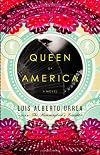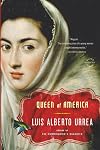

On This Page
Description
At turns heartbreaking, uplifting, fiercely romantic, and riotously funny, QUEEN OF AMERICA tells the unforgettable story of a young woman coming of age and finding her place in a new world. Beginning where Luis Alberto Urrea's bestselling The Hummingbird's Daughter left off, QUEEN OF AMERICA finds young Teresita Urrea, beloved healer and "Saint of Cabora," with her father in 1892 Arizona. But, besieged by pilgrims in desperate need of her healing powers, and pursued by assassins, she has no show more choice but to flee the borderlands and embark on an extraordinary journey into the heart of turn-of-the-century America. Teresita's passage will take her to New York, San Francisco, and St. Louis, where she will encounter European royalty, Cuban poets, beauty queens, anxious immigrants and grand tycoons-and, among them, a man who will force Teresita to finally ask herself the ultimate question: is a saint allowed to fall in love? show lessTags
Recommendations
















Member Reviews
I don't understand why more LTers haven’t read and loved this book. It's the sequel to the equally well-written story of one of the author's ancestors in The Hummingbird's Daughter. Teresita, aka The Saint of Cabora because of her healing skills, has to flee Mexico with her father Tomas because of the dictator's fear of her power. They are hounded by assassins and the ubiquitous pilgrims who want to touch her or just gaze upon her to get her blessing. Teresita did not consider herself a saint but believed that God used her as a medium for His healing. She was also a blossoming young woman who was swept away by the first love of her life with disastrous results. This led to a falling-out with her eccentric father and her journey across show more America starting in San Francisco and ending up in New York City. What a great way to see the country at the turn-of-the-century.
I listened to the book narrated by the author which led an air of authenticity and also helped me with the Spanish words. Urrea brings the past to life in a way that balances the tragedy, humor, and the different cultures of Mexico and the United States. He is a fine author who transported me to a different time and several different locales. He can write the gritty stuff well but also has a tenderness that eases his readers into the metaphysical and, yes, even a few love scenes. I wish I had his wonderful way with words to do justice to this intriguing tale of exile, courage, and faith. show less
I listened to the book narrated by the author which led an air of authenticity and also helped me with the Spanish words. Urrea brings the past to life in a way that balances the tragedy, humor, and the different cultures of Mexico and the United States. He is a fine author who transported me to a different time and several different locales. He can write the gritty stuff well but also has a tenderness that eases his readers into the metaphysical and, yes, even a few love scenes. I wish I had his wonderful way with words to do justice to this intriguing tale of exile, courage, and faith. show less
Urrea picks up where he left off in The Hummingbird’s Daughter and continues the story of his great aunt, Teresita Urrea, “The Saint of Cabora” or “Mexican Joan of Arc,” who fled the 1892 uprising in Mexico with her father, Tomas, to the relative safety of Arizona. But the Mexican government, fearing that she was still fomenting revolutions sent a series of assassins to kill her. And yet pilgrims continued to flock to her, for the tales of her healing powers would not abate.
Trying to find her way she travels across America, from Arizona to Texas, California, St Louis, and New York. She encounters physicians, journalists, famous politicians and tycoons, even European royalty. She also finds love … of a sort … sometimes show more with decidedly unworthy men. She begins as a naïve, sheltered young woman who wants nothing but to gather herbs and help the women of her area as a midwife / healer. Teresita is in turns sheltered and looked after, abused, taken advantage of, earning and taking charge of her celebrity, and finding peace. She is best served when she listens to the women around her.
As always, Urrea’s writing is full of the mystical and includes many references to indigenous culture (here the Yaqui). Set against the backdrop of historical events in the late 19th and early 20th centuries, he gives us a woman who has earned a place in history and legend. show less
Trying to find her way she travels across America, from Arizona to Texas, California, St Louis, and New York. She encounters physicians, journalists, famous politicians and tycoons, even European royalty. She also finds love … of a sort … sometimes show more with decidedly unworthy men. She begins as a naïve, sheltered young woman who wants nothing but to gather herbs and help the women of her area as a midwife / healer. Teresita is in turns sheltered and looked after, abused, taken advantage of, earning and taking charge of her celebrity, and finding peace. She is best served when she listens to the women around her.
As always, Urrea’s writing is full of the mystical and includes many references to indigenous culture (here the Yaqui). Set against the backdrop of historical events in the late 19th and early 20th centuries, he gives us a woman who has earned a place in history and legend. show less
Like sweet nothings whispered by my lover to leave my marriage bed, to dalliance with her, I listened, spending the day enamored with Teresita, ‘Saint of Cabora’, until my wife accused me of an affair with the book and then I could not leave it alone until it was done and dusted.
Intended as a sequel to his other work, The Hummingbird’s Daughter, this novel stands alone in its own glory. Here, Urrea takes us on a journey with young Teresita, accompanied by her willful father, Tomas, as they leave their family ranch in Mexico where she is adored by many as a saint and pursued by others who saw her as the leader of rebellion, of change. Her father’s politics and her laying on of hands to heal caused mixed reactions in all they show more touched.
Along with their entourage, publishing mogul and rebel-rouser Don Lauro Aguirre and Segundo the trusted friend, the family moves to protect the Saint and to allow her to find the weary pilgrims, the sick and dying and instill hope whether it be in Yaquis, native to the area, or the son of rich businessmen travelling from afar, Teresita uses her powers, embodied in her after a near death experience as a child, as well as her healer’s knowledge of plants and roots, to heal all and sundry.
In an historical journey through Tucson, El Paso, San Francisco and back East to New York City we learn with great detail how this great land was tethered by rail and how commerce and religion where joined through newspapers to spread the word. We learn how a revered healer can be seen as a witch under other religious customs and we follow their plight through all its trials and tribulations. Not since John Galworthy wrote about the Forsyths has a saga of a family been so documented.
From his humble beginnings to now revered storyteller, this masterpiece elevates Urrea to a class above his peers, a first class, nay master class writer, who lays the narrative with poetic license at our feet, painting postcards with paragraphs. If Teresita is the Queen then surely, today, Urrea is King. show less
Intended as a sequel to his other work, The Hummingbird’s Daughter, this novel stands alone in its own glory. Here, Urrea takes us on a journey with young Teresita, accompanied by her willful father, Tomas, as they leave their family ranch in Mexico where she is adored by many as a saint and pursued by others who saw her as the leader of rebellion, of change. Her father’s politics and her laying on of hands to heal caused mixed reactions in all they show more touched.
Along with their entourage, publishing mogul and rebel-rouser Don Lauro Aguirre and Segundo the trusted friend, the family moves to protect the Saint and to allow her to find the weary pilgrims, the sick and dying and instill hope whether it be in Yaquis, native to the area, or the son of rich businessmen travelling from afar, Teresita uses her powers, embodied in her after a near death experience as a child, as well as her healer’s knowledge of plants and roots, to heal all and sundry.
In an historical journey through Tucson, El Paso, San Francisco and back East to New York City we learn with great detail how this great land was tethered by rail and how commerce and religion where joined through newspapers to spread the word. We learn how a revered healer can be seen as a witch under other religious customs and we follow their plight through all its trials and tribulations. Not since John Galworthy wrote about the Forsyths has a saga of a family been so documented.
From his humble beginnings to now revered storyteller, this masterpiece elevates Urrea to a class above his peers, a first class, nay master class writer, who lays the narrative with poetic license at our feet, painting postcards with paragraphs. If Teresita is the Queen then surely, today, Urrea is King. show less
Like sweet nothings whispered by my lover to leave my marriage bed, to dalliance with her, I listened, spending the day enamored with Teresita, ‘Saint of Cabora’, until my wife accused me of an affair with the book and then I could not leave it alone until it was done and dusted.
Intended as a sequel to his other work, The Hummingbird’s Daughter, this novel stands alone in its own glory. Here, Urrea takes us on a journey with young Teresita, accompanied by her willful father, Tomas, as they leave their family ranch in Mexico where she is adored by many as a saint and pursued by others who saw her as the leader of rebellion, of change. Her father’s politics and her laying on of hands to heal caused mixed reactions in all they show more touched.
Along with their entourage, publishing mogul and rebel-rouser Don Lauro Aguirre and Segundo the trusted friend, the family moves to protect the Saint and to allow her to find the weary pilgrims, the sick and dying and instill hope whether it be in Yaquis, native to the area, or the son of rich businessmen travelling from afar, Teresita uses her powers, embodied in her after a near death experience as a child, as well as her healer’s knowledge of plants and roots, to heal all and sundry.
In an historical journey through Tucson, El Paso, San Francisco and back East to New York City we learn with great detail how this great land was tethered by rail and how commerce and religion where joined through newspapers to spread the word. We learn how a revered healer can be seen as a witch under other religious customs and we follow their plight through all its trials and tribulations. Not since John Galworthy wrote about the Forsyths has a saga of a family been so documented.
From his humble beginnings to now revered storyteller, this masterpiece elevates Urrea to a class above his peers, a first class, nay master class writer, who lays the narrative with poetic license at our feet, painting postcards with paragraphs. If Teresita is the Queen then surely, today, Urrea is King. show less
Intended as a sequel to his other work, The Hummingbird’s Daughter, this novel stands alone in its own glory. Here, Urrea takes us on a journey with young Teresita, accompanied by her willful father, Tomas, as they leave their family ranch in Mexico where she is adored by many as a saint and pursued by others who saw her as the leader of rebellion, of change. Her father’s politics and her laying on of hands to heal caused mixed reactions in all they show more touched.
Along with their entourage, publishing mogul and rebel-rouser Don Lauro Aguirre and Segundo the trusted friend, the family moves to protect the Saint and to allow her to find the weary pilgrims, the sick and dying and instill hope whether it be in Yaquis, native to the area, or the son of rich businessmen travelling from afar, Teresita uses her powers, embodied in her after a near death experience as a child, as well as her healer’s knowledge of plants and roots, to heal all and sundry.
In an historical journey through Tucson, El Paso, San Francisco and back East to New York City we learn with great detail how this great land was tethered by rail and how commerce and religion where joined through newspapers to spread the word. We learn how a revered healer can be seen as a witch under other religious customs and we follow their plight through all its trials and tribulations. Not since John Galworthy wrote about the Forsyths has a saga of a family been so documented.
From his humble beginnings to now revered storyteller, this masterpiece elevates Urrea to a class above his peers, a first class, nay master class writer, who lays the narrative with poetic license at our feet, painting postcards with paragraphs. If Teresita is the Queen then surely, today, Urrea is King. show less
I didn't love this book as much as it's predecessor, [b:The Hummingbird's Daughter|91289|The Hummingbird's Daughter|Luis Alberto Urrea|http://d.gr-assets.com/books/1344268741s/91289.jpg|88082], but it was still very good. It's just such a different book; where HBD was the epitome of magical realism, QoA is more historical fiction. Perhaps that difference is due to being set in the U.S. instead of Mexico, or to Teresita growing up, or to the increased historical material.
The first third or so of QoA moves very slowly, reflective of how Teresita's life is just treading water at that point, trying to keep ahead of assassins sent by the Mexican government and trying to coexist with her father, Tomas, who has given up everything for her and show more whose resentment is growing. There are a few bait and switch moments in this first part that add a little excitement, but overall it was almost painfully slow at times...especially since I read this immediately after HBD.
Then things pick up speed and (for Teresita) spin out of control, forcing Teresita away from her home and family. Overall, this book made me really sad -- Teresita lost so much, including herself. Knowing she was a real person just makes it that much sadder. show less
The first third or so of QoA moves very slowly, reflective of how Teresita's life is just treading water at that point, trying to keep ahead of assassins sent by the Mexican government and trying to coexist with her father, Tomas, who has given up everything for her and show more whose resentment is growing. There are a few bait and switch moments in this first part that add a little excitement, but overall it was almost painfully slow at times...especially since I read this immediately after HBD.
Then things pick up speed and (for Teresita) spin out of control, forcing Teresita away from her home and family. Overall, this book made me really sad -- Teresita lost so much, including herself. Knowing she was a real person just makes it that much sadder. show less
For me, this sequel to THE HUMMINGBIRD’S DAUGHTER, although I enjoyed it and appreciated plot, character development and depiction of place and time, did not achieve the same level of excellence as THD. There were times it dragged and my attention drifted. Perhaps I just wasn’t interested in learning the biographical details of the second half of this historical fiction version of Teresita Urrea’s life. I do, however, highly recommend THD even if you choose not to read this sequel.
Live, love and laugh along with the Queen of America and her menagerie of characters.
As a first time reader of this authors work, I was quite surprised by Urrea's writing style. His Queen of America is definitely not what I expected, in fact it was better than I expected. The main character of this book, Teresita, on who the story is based, actually existed, although most of the book is fiction. Urrea has a pre-sequel to this book, which I have not yet read, however this did not affect my reading of Queen of America, as it did not read like a sequel. I actually was completely surprised to learn Teresita was actually a real healer in her time back in the early 1900's instead of a fictitious character. This I did not note until after I show more read the notes and acknowledgement section at the end of the book.
Urrea's quirky style of writing and his list of characters remind me of a western-style movie with comedy scattered throughout. Teresita, her family, and friends are all characters one quickly feels comfortable with and the ongoing saga made it was difficult to put this book down. Being of Hispanic descent but not Mexican, I understood some of the Mexican words scattered throughout the book, while other times I had no idea what the word might mean. However, this did not in any way keep me from enjoying this book and I laughed out loud many times throughout this book. At other times it I was so caught up in the characters it was as if I was family. Teresita seems like the average poor Mexican, however, she also has a gift of what this generation may call healing of the hands. A term that back in the 1900's was considered by some to be witchcraft and at times she is ostracized for it. This book was an amazing adventure of love, laughter, pain and sorrow as Teresita lives her life, at times traveling across the continental United States. Urrea's words seem to carry you, when you feel the heat of the desolate desert or the scraping of the horse between your legs, while winding through the hills of Arizona. At other times you are riding on a windowless, dusty train through hills and valleys of the Old West with awe and wonder at the first glimpse of a creek bed or river, or maybe even the ocean. What may happen next? The wonders seem to never cease for what Teresita's next contingency may be. Yet in the end, Teresita finds exactly what she is longing for. show less
As a first time reader of this authors work, I was quite surprised by Urrea's writing style. His Queen of America is definitely not what I expected, in fact it was better than I expected. The main character of this book, Teresita, on who the story is based, actually existed, although most of the book is fiction. Urrea has a pre-sequel to this book, which I have not yet read, however this did not affect my reading of Queen of America, as it did not read like a sequel. I actually was completely surprised to learn Teresita was actually a real healer in her time back in the early 1900's instead of a fictitious character. This I did not note until after I show more read the notes and acknowledgement section at the end of the book.
Urrea's quirky style of writing and his list of characters remind me of a western-style movie with comedy scattered throughout. Teresita, her family, and friends are all characters one quickly feels comfortable with and the ongoing saga made it was difficult to put this book down. Being of Hispanic descent but not Mexican, I understood some of the Mexican words scattered throughout the book, while other times I had no idea what the word might mean. However, this did not in any way keep me from enjoying this book and I laughed out loud many times throughout this book. At other times it I was so caught up in the characters it was as if I was family. Teresita seems like the average poor Mexican, however, she also has a gift of what this generation may call healing of the hands. A term that back in the 1900's was considered by some to be witchcraft and at times she is ostracized for it. This book was an amazing adventure of love, laughter, pain and sorrow as Teresita lives her life, at times traveling across the continental United States. Urrea's words seem to carry you, when you feel the heat of the desolate desert or the scraping of the horse between your legs, while winding through the hills of Arizona. At other times you are riding on a windowless, dusty train through hills and valleys of the Old West with awe and wonder at the first glimpse of a creek bed or river, or maybe even the ocean. What may happen next? The wonders seem to never cease for what Teresita's next contingency may be. Yet in the end, Teresita finds exactly what she is longing for. show less
Members
- Recently Added By
Author Information

25+ Works 6,945 Members
Luis Alberto Urrea is the author of many books of nonfiction and poetry. He has won the Christopher Award, the Western States Book Award, and most recently, the American Book Award.
Awards and Honors
Awards
Series

Common Knowledge
- Original publication date
- 2011-12
- People/Characters
- Teresita Urrea
Classifications
Statistics
- Members
- 246
- Popularity
- 132,640
- Reviews
- 15
- Rating
- (3.69)
- Languages
- English
- Media
- Paper, Audiobook, Ebook
- ISBNs
- 11
- ASINs
- 4