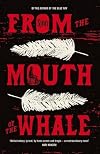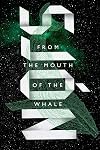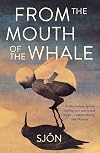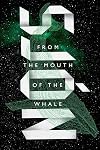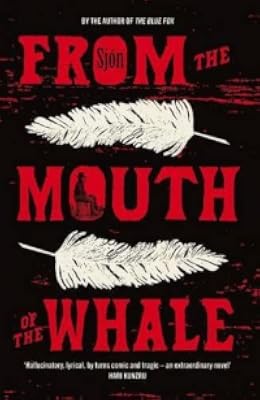
From the Mouth of the Whale
by Sjón
On This Page
Description
The year is 1635. Iceland is a world darkened by superstition, poverty and cruelty. Men of science marvel over a unicorn's horn, poor folk worship the Virgin in secret and both books and men are burnt. Jona Palmason, a poet and self-taught healer, has been condemned to exile for heretical conduct, having fallen foul of the local magistrate. Banished to a barren island, Jonas recalls his exorcism of a walking corpse on the remote Snjafjoll coast, the frenzied massacre of innocent Basque show more whalers at the hands of local villagers and the deaths of his three children. show lessTags
Recommendations














Member Recommendations
Member Reviews
I usually avoid "stream of consciousness" novels, but this one intrigued me since it was from Iceland. And, I was not disappointed. The author makes this style work with his blend of gritty detail and abstract philosophy. There are also sections of dialogue (some imagined) that break up Jonas's monologue.
Jonas Palmerson has been convicted of sorcery in 17th century Iceland and banished to an uninhabited island. While he is there, the author takes us inside Jonas's mind -- his thoughts and memories. This paints for the reader a vivid image of life in the 17th century. And, we see the tension between religion and science that continues in some quarters today.
The author blends real memories with hallucinations in a way that allow us to show more learn more about Jonas and his beliefs. Very well done. show less
Jonas Palmerson has been convicted of sorcery in 17th century Iceland and banished to an uninhabited island. While he is there, the author takes us inside Jonas's mind -- his thoughts and memories. This paints for the reader a vivid image of life in the 17th century. And, we see the tension between religion and science that continues in some quarters today.
The author blends real memories with hallucinations in a way that allow us to show more learn more about Jonas and his beliefs. Very well done. show less
 This review was written for LibraryThing Early Reviewers.
I get very annoyed with all those TV shows set in the Middle Ages that are full of clean bodies, white teeth, dust-free floors and brightly-lit rooms. This is not a problem that From the Mouth of the Whale suffers from. Its appeal lies primarily in the dirt under its fingernails; it revels in the mess and violence and, also, the transcendence of its pre-modern milieu. It's a novel that smells of unwashed bodies and sea-salt.
We're shown this world through the travels, visions and tribulations of Jónas Pálmason, a scholar-cum-magician-cum-natural-philosopher in seventeenth-century Iceland – ‘this unlovely splat of lava in the far north of the globe,’ as he calls it. Exiled by his political enemies to a remote uninhabited island show more off the coast (all islands are off the coast, Warwick), he reminisces about his life, research and the metaphysics of this worldly existence.
Importunate with his own kind, garrulous with others…So might one describe the purple sandpiper and so men describe me…
This is Jónas's voice – gruff and wordy and distinctive, marked by blurry, shifting thought processes and studded with practical knowledge, with flora and fauna, and with a worldview of almost Cabbalistic mysticism.
Jónas is a fictional creation, but the quote above, where he compares himself to a purple sandpiper, is a clue to his real-life model, Jón Guðmundsson ‘The Learned’ (1574–1651). The old name in Icelandic for a purple sandpiper is fjölmóður, which was also the name of an epic poem that Jón wrote about his life. I can't find an English translation but it seems to have included major stories from this book including the exorcism of a ghost and the coming of Basque ships to Iceland; in a sense, this may be seen as a kind of expansive novelisation of Jón's poem.
The real star of the English version of this book is its translator Victoria Cribb, who has produced something that feels natural and yet genuinely odd in all the right ways. An Old Norse scholar, she has said in interviews that she's not very comfortable translating most modern fiction and isn't sure of what the English terms are for a lot of social media or technology vocab. But here, in a world of old manuscripts, fishing traditions and magico-scientific theorising, she is clearly in her element.
Though short, it's a thick, silty book that I felt I could wade right into; at the start I loved the experience, but I did find it a little exhausting towards the end just because there is not a lot in the way of plot to give the narrative focus. Rather, it expands in different directions according to occult criteria, its chief objective, perhaps, not to give shape to a story but to find formal connections between disparate parts of the world:
The antlers of a hart, coral, spread fingers, birch twigs, a loosely knotted fishing net, crystals, river deltas, ivy, mackerel clouds, women's hair…diverse as these phenomena are, they all revolve around the invisible joints, their opposite forms touch even though they are far apart…
It's a strange, windswept, mind-expanding little book, and I'd recommend it to anyone looking for a short but bracing read. show less
We're shown this world through the travels, visions and tribulations of Jónas Pálmason, a scholar-cum-magician-cum-natural-philosopher in seventeenth-century Iceland – ‘this unlovely splat of lava in the far north of the globe,’ as he calls it. Exiled by his political enemies to a remote uninhabited island show more off the coast (all islands are off the coast, Warwick), he reminisces about his life, research and the metaphysics of this worldly existence.
Importunate with his own kind, garrulous with others…So might one describe the purple sandpiper and so men describe me…
This is Jónas's voice – gruff and wordy and distinctive, marked by blurry, shifting thought processes and studded with practical knowledge, with flora and fauna, and with a worldview of almost Cabbalistic mysticism.
Jónas is a fictional creation, but the quote above, where he compares himself to a purple sandpiper, is a clue to his real-life model, Jón Guðmundsson ‘The Learned’ (1574–1651). The old name in Icelandic for a purple sandpiper is fjölmóður, which was also the name of an epic poem that Jón wrote about his life. I can't find an English translation but it seems to have included major stories from this book including the exorcism of a ghost and the coming of Basque ships to Iceland; in a sense, this may be seen as a kind of expansive novelisation of Jón's poem.
The real star of the English version of this book is its translator Victoria Cribb, who has produced something that feels natural and yet genuinely odd in all the right ways. An Old Norse scholar, she has said in interviews that she's not very comfortable translating most modern fiction and isn't sure of what the English terms are for a lot of social media or technology vocab. But here, in a world of old manuscripts, fishing traditions and magico-scientific theorising, she is clearly in her element.
Though short, it's a thick, silty book that I felt I could wade right into; at the start I loved the experience, but I did find it a little exhausting towards the end just because there is not a lot in the way of plot to give the narrative focus. Rather, it expands in different directions according to occult criteria, its chief objective, perhaps, not to give shape to a story but to find formal connections between disparate parts of the world:
The antlers of a hart, coral, spread fingers, birch twigs, a loosely knotted fishing net, crystals, river deltas, ivy, mackerel clouds, women's hair…diverse as these phenomena are, they all revolve around the invisible joints, their opposite forms touch even though they are far apart…
It's a strange, windswept, mind-expanding little book, and I'd recommend it to anyone looking for a short but bracing read. show less
One of the stranger works of historical fiction I've read, this stream-of-consciousness tale moves through territory of history, fable, story, poetry, and forays into the speculative at a frightening pace, but is carried along by a tough lyricism that all but demands a reader keep going. It feels like this book might be one which could benefit from a second and even a third read, but so much of what I enjoyed here was in the 'experience' and poetry of the first reading, I suspect I'm more likely to try one of Sjon's other works. This one was an interesting one, certainly, but covered so much territory that the reading felt more fragmented and wandering than I really would have liked.
The hunter, we learn, is Lucifer and he is standing before his father who is holding something that is outlawed in heaven: there laying in his hand was man.
“ there you lay in his hand, with your knees tucked under your chin, breathing so fast and so feebly that you quivered like the pectoral fin of a minnow.Our Father rested His fingertip against your spine and tilted His hand carefully so that you uncurled and rolled over on to your back. I stepped forward to take a better look at you. You scratched your nose with your curled fist, sneezed, oh so sweetly, and fixed on me those egotistical eyes – mouth agape. And I saw that this mouth would never be satisfied, that its teeth would never stop grinding, that its tongue would never show more tire of being bathed in the life-blood of other living creatures. Then your lips moved. You tried to say your first word, and that word was: ‘I’.
”
This was Lucifer's introduction to man and his father wants him to join his brothers and bow before him. He refuses to bow before what he sees as his fathers pet and is cast out of heaven, but leaves Man a parting gift – a vision of himself.
In the main section of the book, we are in 17th-century Iceland, and our hero is Jónas Pálmason the Learned, a self-taught naturalist, poet and healer, who has been sentenced to a strange form of exile, stranded on an island with the threat of death on any who helps him leave. As the book unfolds we learn of his life, of how as a youth, who having learnt from the writings of a Dr Bombastus (Paracelsus), was acquainted with and knew the prescription for most female maladies. He bartered that knowledge for Ravens heads, which according to Bombastus, contains a special stone that can cure most blood illnesses, called a bezoar.
In a country that had violently became Lutheran after the reformation, Jonas with his mix of book learning & pagan lore, falls foul of the authorities and is charged with sorcery and necromancy, although these charges appear to be have been the most convenient ones to silence him with, as the main problem is that he threatens the status quo with his ideology.
Whilst researching for this book, I learnt that it is based in part on the autobiographical writings of Jon Gudmundsson, also known as “the Learned”, he was a farmers son from the Strandir region (Northwest Iceland). At twenty years of age he was an excellent scribe and seems to have been well known for paintings and carvings, although nothing has survived to the present. Today he is known for his autobiographical writing, including works mentioning the arrival of Spanish (Basque) whalers and the killing of a group of whalers by the Icelanders*.
I also learned that in 1617 King Christian IV of Denmark decreed that all sorcery, whether white or black, was evil and illegal. He also decreed that it was to be harshly suppressed throughout his domain. In 1630 this had reached Iceland and was read out in the Althing** in Icelandic translation and became law. It was even debated whether it was a suitable or legitimate subject for scientific study. In 1627 a priest named Gudmundur Einarsson, wrote a treatise called “Hugras” denouncing Jon Gudmundsson as an emissary of the devil, sent to fool the people by habituating them to lesser forms of sorcery and he also castigates The Sheriffs of Iceland (syslummen) for neglecting the 1617 decree. In 1637 Gudmundsson was sentenced in the Icelandic parliament to permanent exile for practising white magic & misuse of God’s name, but King Christian IV, stepped in and lightened the sentence, permitting him to reside in eastern Iceland.
Sjon seems to have taken these dry historical facts mixed them up with the natural lore of his country, then spun the lot through some giant kaleidoscope, not once but many times, that he is a poet is also beyond dispute the writing is wonderful,
http://parrishlantern.blogspot.co.uk/2012/03/from-mouth-of-whale-by-sjon.html show less
“ there you lay in his hand, with your knees tucked under your chin, breathing so fast and so feebly that you quivered like the pectoral fin of a minnow.Our Father rested His fingertip against your spine and tilted His hand carefully so that you uncurled and rolled over on to your back. I stepped forward to take a better look at you. You scratched your nose with your curled fist, sneezed, oh so sweetly, and fixed on me those egotistical eyes – mouth agape. And I saw that this mouth would never be satisfied, that its teeth would never stop grinding, that its tongue would never show more tire of being bathed in the life-blood of other living creatures. Then your lips moved. You tried to say your first word, and that word was: ‘I’.
”
This was Lucifer's introduction to man and his father wants him to join his brothers and bow before him. He refuses to bow before what he sees as his fathers pet and is cast out of heaven, but leaves Man a parting gift – a vision of himself.
In the main section of the book, we are in 17th-century Iceland, and our hero is Jónas Pálmason the Learned, a self-taught naturalist, poet and healer, who has been sentenced to a strange form of exile, stranded on an island with the threat of death on any who helps him leave. As the book unfolds we learn of his life, of how as a youth, who having learnt from the writings of a Dr Bombastus (Paracelsus), was acquainted with and knew the prescription for most female maladies. He bartered that knowledge for Ravens heads, which according to Bombastus, contains a special stone that can cure most blood illnesses, called a bezoar.
In a country that had violently became Lutheran after the reformation, Jonas with his mix of book learning & pagan lore, falls foul of the authorities and is charged with sorcery and necromancy, although these charges appear to be have been the most convenient ones to silence him with, as the main problem is that he threatens the status quo with his ideology.
Whilst researching for this book, I learnt that it is based in part on the autobiographical writings of Jon Gudmundsson, also known as “the Learned”, he was a farmers son from the Strandir region (Northwest Iceland). At twenty years of age he was an excellent scribe and seems to have been well known for paintings and carvings, although nothing has survived to the present. Today he is known for his autobiographical writing, including works mentioning the arrival of Spanish (Basque) whalers and the killing of a group of whalers by the Icelanders*.
I also learned that in 1617 King Christian IV of Denmark decreed that all sorcery, whether white or black, was evil and illegal. He also decreed that it was to be harshly suppressed throughout his domain. In 1630 this had reached Iceland and was read out in the Althing** in Icelandic translation and became law. It was even debated whether it was a suitable or legitimate subject for scientific study. In 1627 a priest named Gudmundur Einarsson, wrote a treatise called “Hugras” denouncing Jon Gudmundsson as an emissary of the devil, sent to fool the people by habituating them to lesser forms of sorcery and he also castigates The Sheriffs of Iceland (syslummen) for neglecting the 1617 decree. In 1637 Gudmundsson was sentenced in the Icelandic parliament to permanent exile for practising white magic & misuse of God’s name, but King Christian IV, stepped in and lightened the sentence, permitting him to reside in eastern Iceland.
Sjon seems to have taken these dry historical facts mixed them up with the natural lore of his country, then spun the lot through some giant kaleidoscope, not once but many times, that he is a poet is also beyond dispute the writing is wonderful,
http://parrishlantern.blogspot.co.uk/2012/03/from-mouth-of-whale-by-sjon.html show less
Icelandic author Sjón’s latest novel follows the life of Jónas Pálmason, an Icelandic man sentenced to live out his life on a bleak and uninhabited island after being convicted of outlawry for practicing the arts of sorcery and necromancy. The novel, which is set in the years 1635-1639 when Jónas is in his mid-sixties, is Jónas’s poetic and surreal stream of consciousness touching on the major events of his life, including laying to rest a troublesome ghost who haunts a remote village and meeting and falling in love with his wife.
Aside from a brief trip to Copenhagen to plead his case, the whole of Jónas’s story is confined to his island. After years of solitude, Jónas’s identity has merged with that of his desolate show more surroundings:
“I am the brother of all that divides, all that curls, all that intertwines, all that waves … after the day’s rain showers the web of the world becomes visible … the moment night falls, the beads of moisture glitter on its silver strings … nature is whole in its harmony.”
Jónas’s weighty and formal voice makes his story feel almost Biblical, calling to mind the universal conflict between innovation and repression. And, like that of many visionaries throughout history, Jónas’s tale is filled with loathsome villains “who every day outlive their victims, sprawling in their high seats and thrones, gorging themselves on meat, dripping with grease, from the livestock that grew fat on the green grass in meadows tended with diligence by innocent, God-fearing souls; congratulating themselves on having stripped this man of his livelihood and that woman of her breadwinner.” Victoria Cribb is to be commended for capturing Sjón’s unique voice in her English translation, a difficult task to be sure.
While this is undeniably a fictional account of a man living during the 17th century, it shares few characteristics with those novels described as historical fiction. This is not a realistic rendering of a specific historical time and place so much as it is an exploration into the ravaged mind of a persecuted man. Reading From the Mouth of the Whale is like studying one of those gruesome Goya paintings of the interior of an early 19th century madhouse: a fascinating, if unsettling, experience.
This review also appears on my blog Literary License. show less
Aside from a brief trip to Copenhagen to plead his case, the whole of Jónas’s story is confined to his island. After years of solitude, Jónas’s identity has merged with that of his desolate show more surroundings:
“I am the brother of all that divides, all that curls, all that intertwines, all that waves … after the day’s rain showers the web of the world becomes visible … the moment night falls, the beads of moisture glitter on its silver strings … nature is whole in its harmony.”
Jónas’s weighty and formal voice makes his story feel almost Biblical, calling to mind the universal conflict between innovation and repression. And, like that of many visionaries throughout history, Jónas’s tale is filled with loathsome villains “who every day outlive their victims, sprawling in their high seats and thrones, gorging themselves on meat, dripping with grease, from the livestock that grew fat on the green grass in meadows tended with diligence by innocent, God-fearing souls; congratulating themselves on having stripped this man of his livelihood and that woman of her breadwinner.” Victoria Cribb is to be commended for capturing Sjón’s unique voice in her English translation, a difficult task to be sure.
While this is undeniably a fictional account of a man living during the 17th century, it shares few characteristics with those novels described as historical fiction. This is not a realistic rendering of a specific historical time and place so much as it is an exploration into the ravaged mind of a persecuted man. Reading From the Mouth of the Whale is like studying one of those gruesome Goya paintings of the interior of an early 19th century madhouse: a fascinating, if unsettling, experience.
This review also appears on my blog Literary License. show less
Oh, I wanted to like this book. Oh, I tried to like this book… but it did not work for me. I do believe that there is a right time for a book, and this one maybe came at the wrong time. I usually don’t mind “stream of consciousness” but I really found it hard to follow it here. The narrator’s voice jumped and changed from long fantastic flows into historical accounts (I did like those – they were a reprieve) to mystical meanderings. I would get lost and as much as I tried and paid attention, I could not find my way around this story.
Other reviewers mentioned that they never read anything like this book before. I do agree with them there, but a novelty is not necessary a pleasurable experience.
I am giving it 3 stars show more though, because I have a great attraction and sympathy for characters/people that suffer from what I call The Cassandra Syndrome: Those that are able to see a situation, or are historically ahead of their time, but their knowledge is not welcomed. On the contrary, they are cursed and banned by the very people that they could have helped.
I would still recommend this book, but only to those people that can stare at a disco light without getting a migraine, or yet a seizure. The psychedelic feeling would be very much alike, I assure you. show less
Other reviewers mentioned that they never read anything like this book before. I do agree with them there, but a novelty is not necessary a pleasurable experience.
I am giving it 3 stars show more though, because I have a great attraction and sympathy for characters/people that suffer from what I call The Cassandra Syndrome: Those that are able to see a situation, or are historically ahead of their time, but their knowledge is not welcomed. On the contrary, they are cursed and banned by the very people that they could have helped.
I would still recommend this book, but only to those people that can stare at a disco light without getting a migraine, or yet a seizure. The psychedelic feeling would be very much alike, I assure you. show less
It took me a little while to understand the story because it is so lyrical and uses imagery and metaphors. I tried to take it too literal in the beginning, but when I let that go and embraced the poetry, I enjoyed it. Although it was bleak and with little hope, it was the small things that gave life beauty and a reason to carry on.
This review was written for LibraryThing Early Reviewers.Members
- Recently Added By
Published Reviews
ThingScore 100
Med den här vackra romanen står det klart att Sjón både vill och kan bli en sorts isländsk nationalförfattare
added by Jannes
Lists

International IMPAC Dublin Literary Award
179 works; 6 members

Authors from Iceland
2 works; 1 member

Books Read in 2023
5,547 works; 145 members

Historical Fiction Lovers
88 works; 4 members

Tall tales
25 works; 1 member
Author Information

32+ Works 2,643 Members
Some Editions
Awards and Honors
Common Knowledge
- Canonical title
- From the Mouth of the Whale
- Original title
- Rökkurbýsnir
- Original publication date
- 2008
- People/Characters
- Jonas Palmason; Sigridur Thorolfsdottir; the Ole Worm
- Important places
- Iceland; Snjafjoll, Iceland
- Epigraph
- 'Soon it seemed to him that the stars had become men,
the men stars, the stones beasts,
the clouds plants...'
Novalis, The Novices of Sais - First words
- PRELUDE: I was on my way home from the hunt.
A medium-sized fellow ... Beady brown eyes set close to his beak within pale surrounds ... The itself quite long, thick and powerful, with a slight downward curve at the end, dark in colour but lighter at the top. - Last words
- (Click to show. Warning: May contain spoilers.)The great fish slams its jaw shut, gives a splash of its tial and disappears once more into the deep.
- Blurbers
- Kunzru, Hari; Diaz, Junot
Classifications
- Genres
- Fiction and Literature, General Fiction, Historical Fiction
- DDC/MDS
- 839.6935 — Literature & rhetoric German & related literatures Other Germanic literatures Old Norse, Old Icelandic, Icelandic, Faroese literatures Modern West Scandinavian; Modern Icelandic Modern Icelandic fiction 21st Century
- LCC
- PT7511 .S62 .R6513 — Language and Literature German, Dutch and Scandinavian literatures Modern Icelandic literature Individual authors or works 19th-20th centuries
- BISAC
Statistics
- Members
- 453
- Popularity
- 67,421
- Reviews
- 32
- Rating
- (3.23)
- Languages
- 8 — Danish, Dutch, English, Finnish, German, Icelandic, Spanish, Swedish
- Media
- Paper, Ebook
- ISBNs
- 15
- ASINs
- 6